Kalicharan (1976)

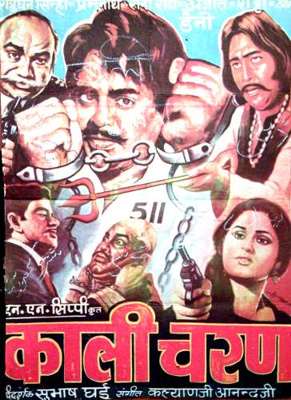
Kalicharan poster

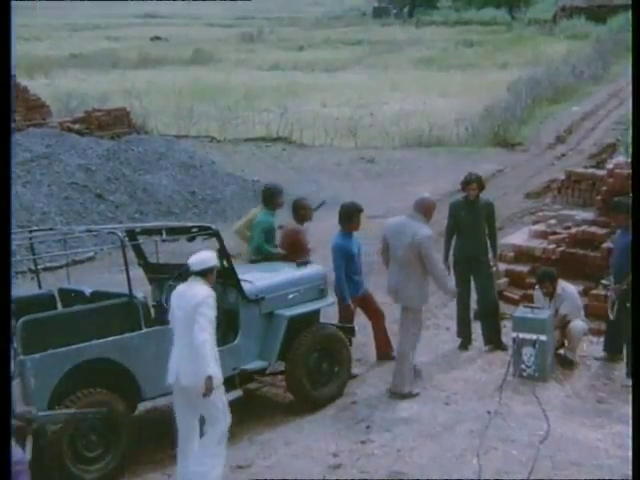
Kalicharan is a modest film in many respects. Subhash Ghai directed with masala verve while Jainendra Jain wrote a fairly staid screenplay, sometimes seemingly at odds with each other. Relying more on the cast than on gimmickry, there are still some surprises.

Prabhakar (Shatrughan Sinha) is an outstanding policeman on the trail of a mysterious crimelord. He deduces that the man known as Lion is none other than respectable businessman Din Dayal (Ajit), a close friend of his boss and father figure I.G. Khanna (Prem Nath).  Prabhakar is ambushed and has a serious car accident, which eventually kills him, but not before he leaves a cryptic note. I.G. Khanna is mourning the loss of his protégé and wondering how to break the news to his own daughter Anju (Alka) who saw Prabhakar as a brother. Then there is the question of Prabhakar’s kids, Pinky and Chinky (Master Bittoo and some other kid). Fate brings retired jailer David (David Abraham) into the picture. He recognises the corpse of Prabhakar as his prisoner Kalicharan. So I.G. Khanna does the only sensible thing. He gets Kalicharan released from jail, takes him to Simla and tries to train him to act as Prabhakar. Of course Kalicharan had his own troubled past, but in true masala style, all paths lead to Lion.

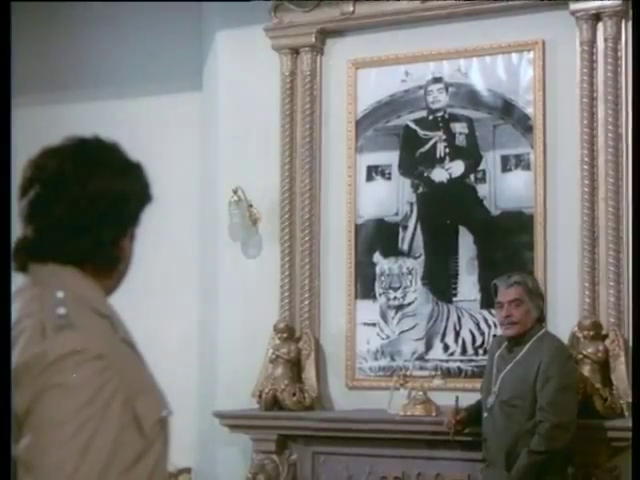
Kalicharan-the denKalicharan-its a tiger Lion

Well they might have lead to Lion a lot sooner if Lion could consistently tell the difference between a lion and a tiger as a decorative motif.

Shatrughan Sinha has the power to out-ham almost any other actor in almost every film he has made. I have an equally amazing power, that of being able to forget Shotgun is in almost any film. I love Aa Gale Lag Ja and Kaala Patthar and yet am always mildly surprised when he turns up. Anyway. He plays both Prabhakar and Kalicharan with bluster and supreme self-confidence.

There is little to distinguish between the two characters other than the dialogue they utter and he makes minimal efforts to differentiate them (a grimace here, a furrowed brow there). I was more impressed by his costumes. Some appeared to have been provided by the upholstery department.
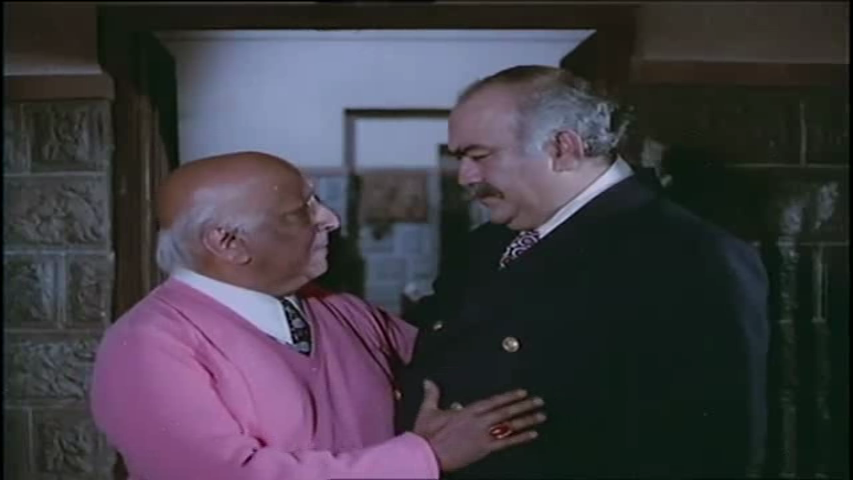
Kalicharan-David and Prem Nath

Prem Nath was that rare man who out-hammed Shotgun in this instance. Almost all of his dialogue is delivered as a shout, and if there was an award for Most Enthusiastic Cursing, he would romp it in for his use of “BASTAAAAAARD!”. He was also ambushed by the wardrobe team a couple of times but it’s not like there was any subtlety being smothered by his outfits.

Reena Roy’s Sapna is an educated girl who swears profusely and decides to take revenge for her brother’s death. Sapna just gets on with things. Including this dance which she invited Prabhakar/Kalicharan to attend as it might give him more hope for his life and make him less depressed.

The wardrobe department seemed to be fascinated by Sapna and tried out many looks, not all of them successful.
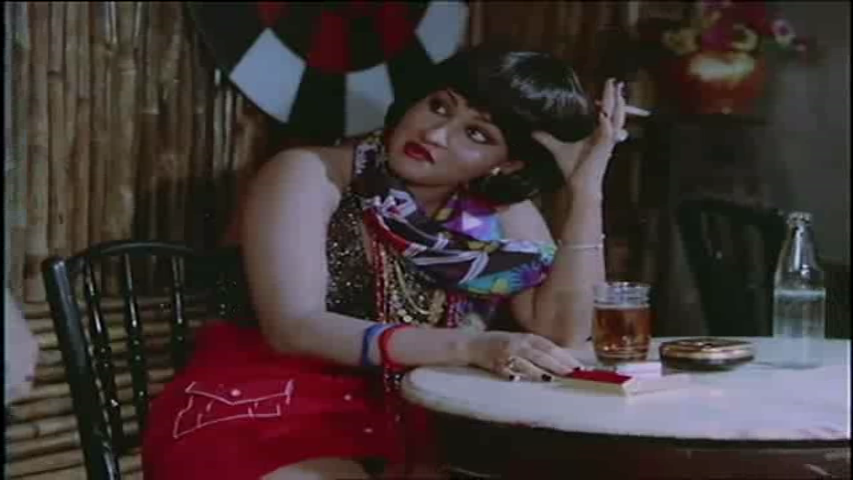
Kalicharan-Sapna as a bad girl

I was amused by her undercover bad gal attire. But Reena Roy managed to overcome the fabric based challenges and her performance is both well-constructed and masala appropriate.
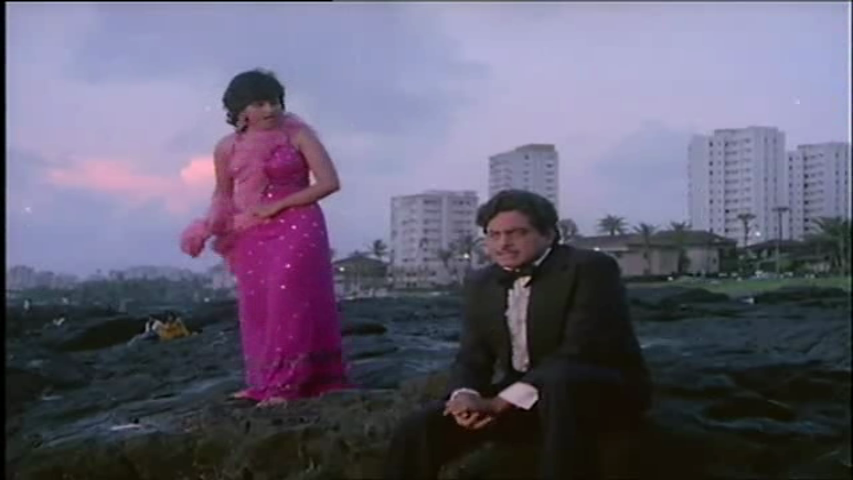
Kalicharan-more outfits

She is generally good even in a terrible film, and makes the most of the opportunities to expand her character beyond the standard dialogues.
Kalicharan-Alka

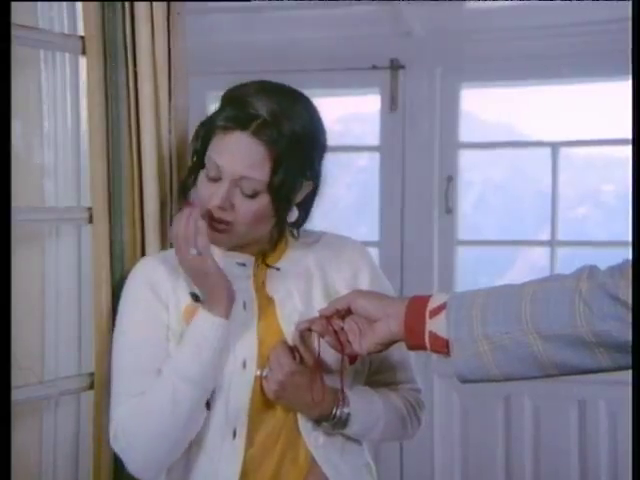
Alka was less memorable as Anju, the saree wearing good girl and sister figure, but she was more of a plot device than a character.  She called on Kalicharan’s humanity when I.G. Khanna was more intent on curbing the criminals’ baser instincts. Oh the transformative power of tying a rakhee!
Kalicharan-Danny DenzongpaKalicharan-one legged Trishul fight

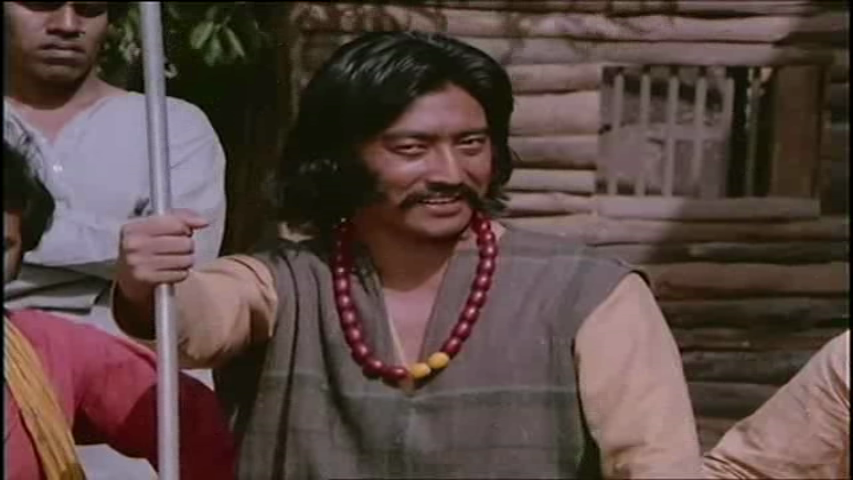
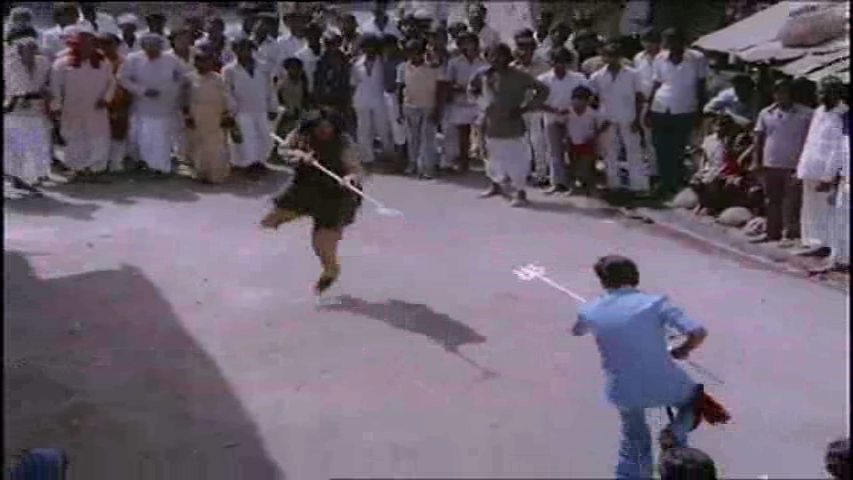
Danny Denzongpa has a small role as a one legged bootlegger, Shaka. I love Danny as a villain with heart of gold. Plus seeing him hop around trying to stab Shotgun with a trishul was quite fabulous. Kalicharan was such a manly man’s man that to level the playing field he also fought on one leg.

Kalicharan-Danny and Shotgun

That is the stuff masala bromance is made of.

Kalicharan-ShettyKalicharan-Shetty and co

Shetty is the stuff masala villainy is made of, and this role is one of many cookie cutter bad guys he played so effortlessly. He is at the start and finish of Kalicharan’s life of crime, the career goon who will do anything without qualm. Of course, Shetty also provided Shotgun with a tragic back story as his motivation for going off the rails.

Ajit is suave and slimy as the urbane mastermind with an excess of phones and a deficit of scruples. I’m not sure the fluffy dog says “Evil Mastermind” but he seemed interested in proceedings. Din Dayal/Lion remains in the background for most of the film, but rapidly loses his cool as Kalicharan draws closer. I’ve seen his tiger strewn den before in Fakira and maybe something else.

Kalyanji-Anandji provided the soundtrack and the background score is great. Brassy, dramatic and a bit funky, the music lopes along and lifts the energy of the action scenes.

But of all the things I was expecting in the club item, Father Christmas was not one. The other songs are less successful but I blame some of that on the lyricist who decided that what we needed was lots of “lalalala’s” a few ‘OoohAaaahOOoohAaahhh” choruses and a repetitive “KALicharan KaaaalicharAN KalicharAN” vocal.

The action is directed in a fast and pacey style while Shotgun’s delivery is ponderous and he may as well have been carrying a sign that said ‘Look at me!’. But you need a certain amount of swagger to carry off this sort of role, and its knitwear, and he has that. There is an excellent transformation scene when Kalicharan first dons the police tunic. He twirls around, standing on what I picture to be a lazy susan, as I.G. Khanna looks on admiringly. And that is about it for special effects in this film. The compulsory fight in a godown full of things stacked up only to be knocked over is very entertaining. And there are clues hidden in books. A nice low tech solution to criminal communications.

Good masala films often reflect on social issues and personal integrity and while I don’t think this is a great film, Kalicharan also examines some big ideas. Redemption is a theme – from the titular hero’s transformation to smaller decisions made by the likes of Shaka. Sapna’s brother was killed for dobbing on Lion but his friend eventually tipped off the good guys in return. Respect and responsibility were often mentioned as things required in order to live a decent life. Kalicharan was a kind of Pygmalion as Khanna and David argued over whether a criminal could be reformed.

Most masala films also rely on needlessly elaborate schemes. Din Dayal hires a mute assassin with theatrical flair (who I think is in a few Telugu films as a baddie too) to go after Kalicharan. Shetty has an array of backup plans that require, say, a train to destroy a warehouse when a bomb is just not destructive enough. And a bit more communication and a lot less manly man brooding would probably have resolved things a bit sooner. But everyday common sense is not what I watch these films for. I did like the insistence that people have responsibilities as well as rights and that not everyone is a lost cause.

If you have low Shotgun tolerance, this is not for you. But if you like him or at least don’t break out into hives at his appearance, then give it a whirl. Reena Roy is delightful as usual. Subhash Ghai trots out some classic filmi moments, and had the good sense to include Helen and lots of balloons. 3 stars!
Naiyaandi

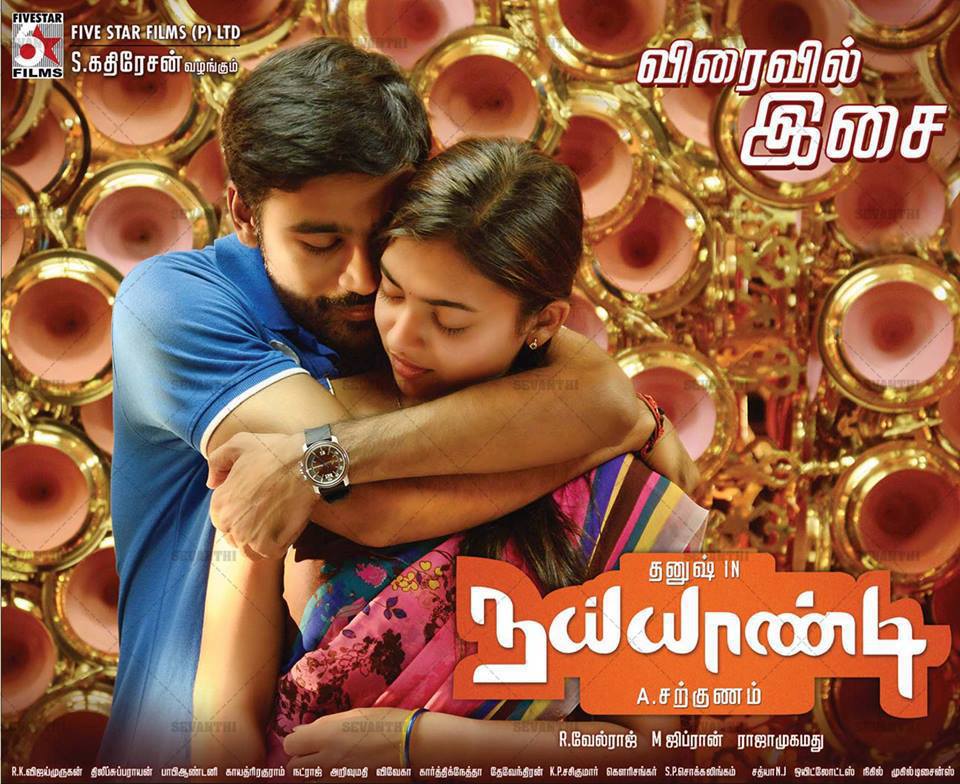
Naiyaandi I’m a huge Dhanush fan, so despite the negative reviews it was inevitable that I would make the effort to see his latest film in the theatre.  And to be honest I don’t think it was quite as bad as reviewers have described, although it is still fairly terrible.  Naiyaandi is billed as a comedy and at least for the guys beside me in the cinema it delivered as promised, since they were literally rolling around in their seats laughing.  But I can’t work out if Sarkunam actually wanted to make a comedy or an action masala flick as the film ends up combining aspects of both genres without ever managing to form a coherent whole.  Naiyaandi is more like watching a TV comedy show with a series of skits, some of which work, and some which don’t, interspersed with the odd fight scene.  It does have a few funny moments, mainly in the second half but generally this is one to skip and wait for the DVD.

Naiyaandi Naiyaandi

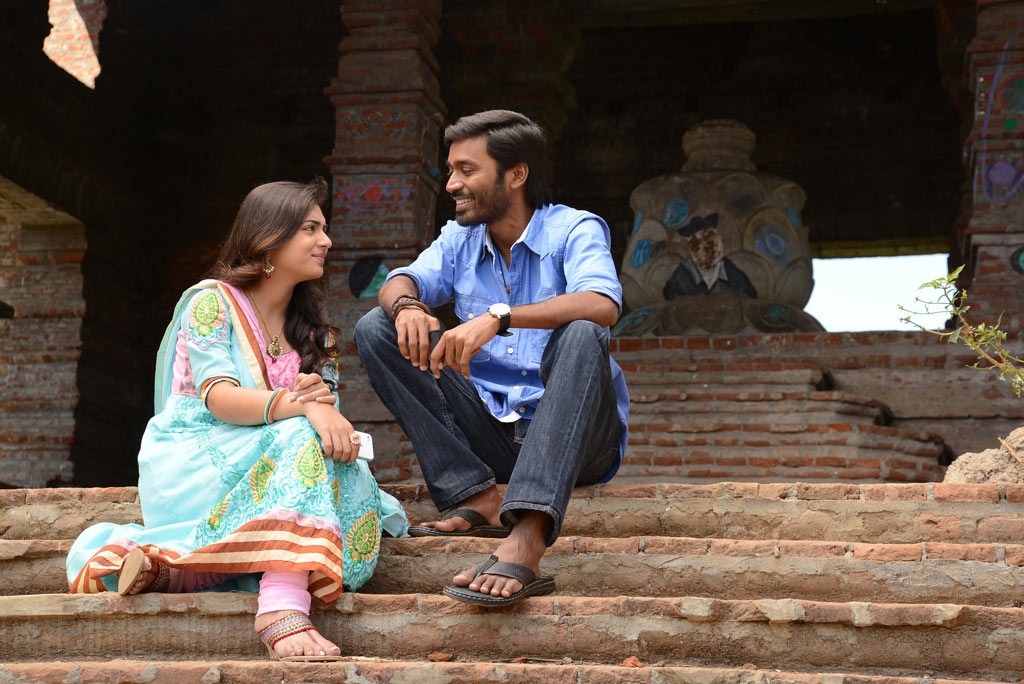
Naiyaandi begins by introducing Meera Krishnan as a desperate mother trying to find a bride for the eldest of her three sons.  Her dilemma is quickly explained when the eldest son is introduced (Sriman), sporting an impressive paunch and seemingly well past marriageable age.  Matters look almost as bleak for the second son (Sathyan), however there is perhaps more hope for the younger son Chinna Vandu (Dhanush) who is much younger (and thinner) than his two brothers. For some unexplained reason, Chinna Vandu doesn’t live with the rest of the family, but rather lives with his uncle (Imman Anachi) in a small village and spends his time lazing around with his friends.  This also involves mooning after Vanaroja (Nazriya Nazim) who is visiting the village to spend time with her grandmother (Sachu).

On the surface Vanaroja should be fairly sensible; she’s apparently a dentist and comes from a loving and wealthy family, but she has irritatingly stupid habits which make her seem childish and inane, and generally she has the personality of wet tofu.  After a few days of being followed by Chinna Vandu, who uses more and more ridiculous methods of trying to attract her attention, Vanaroja decides that she has fallen in love with her stalker and plans to marry him.  Even though he appears to have no job prospects and she knows little about his family. Seriously – no-one is this dumb – even in a ‘comedy’!

Naiyaandi Naiyaandi 4

At this point Sarkunam seems to feel that the story needs a villain, so provides one in Vamsi Krishna whose psychotic determination to marry Vanaroja is perplexingly stubborn given that he’s only met her briefly.  However since his sole purpose is to provide a reason for our hero to abscond with the girl, presumably his lack of rationale doesn’t really matter.  Vamsi Krishna does the usual villain shtick, but it’s all very half-hearted and he’s neither menacing enough to be truly evil, or too over-dramatic to be funny.

Naiyaandi Naiyaandi

Things do improve in the second half where Vanaroja and Chinna Vandu are trying to hide the fact that they have become married from the rest of his family.  The only way to allow them to disclose their relationship is apparently to get Chinna Vandu’s two elder brothers married off, but this could be more difficult than ever since both brothers have their hearts set on Vanaroja.  Sriman and Sathyan provide some much needed comedy, which generally hits the mark and is actually pretty funny.  Whether it’s Sriman pulling in his stomach every time he sees Vanaroja, or Sathyan trying to get her to read his poetry, the two work well with each other (and with Dhanush) to make this section of the film more entertaining.

Nazriya Nazim doesn’t have much scope, but she is also better in the second half and actually seems to develop some personality as she dodges the two brothers while simultaneously contriving to meet Chinna Vandu in secret. Unfortunately this doesn’t last, and the final scenes are clichéd and ridiculously over the top without managing to raise many laughs. This is the first time I’ve seen Nazriya Nazim but she didn’t impress, although that is probably more due to her uninspiring and clichéd character which didn’t give her any opportunity to make an impact.

Naiyaandi

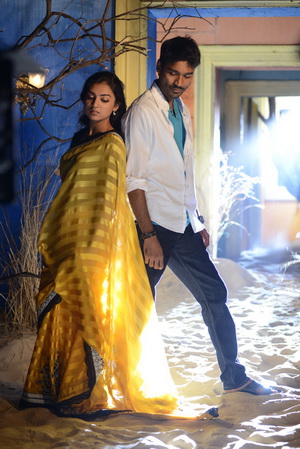
To add to the disappointment of an unimaginative storyline, the songs are uniformly terrible with bizarre choreography and obviously shot on a tight budget.  At least that’s the only explanation I have for the cheap and nasty costumes worn by the backing dancers in Switzerland.  Dhanush wears a succession of outlandish outfits which don’t suit him at all, and both he and Nazriya get little opportunity to actually dance.  I can’t decide if this was supposed to be part of the comedy or if the songs were meant to be taken ‘seriously’, but this is where the FF button and the film on DVD would be appreciated.

NaiyaandiNaiyaandi

However, despite the terrible storyline, unfunny dialogue from Soori and Imman Anachi in the first half and nonsensical villain, there are a few things to enjoy about the film – even if only briefly.  Sriman and Sathyan are genuinely funny and the older Tamil songs that accompany some of their deranged imaginings are a good touch.  I did laugh for most of the second half of the film and it does seem better written with wittier dialogue.  Even the fight scenes are better.  Dhanush is fine in his role and always watchable, but the character here doesn’t require him to do anything special and such an unremarkable role is particularly disappointing after his impressive performance in Mariyaan.  Overall Naiyaandi is worth a watch for Sriman and Sathyan and the latter part of the film, but I think I’d recommend waiting for the DVD and judicious use of the FF button.

Ramayya Vastavayya (2013)

Ramayya Vasthavayya

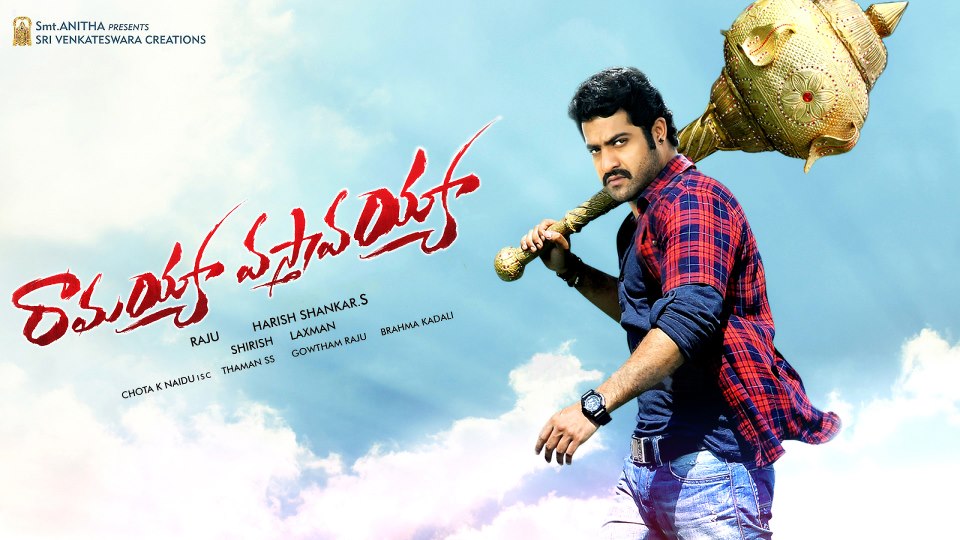
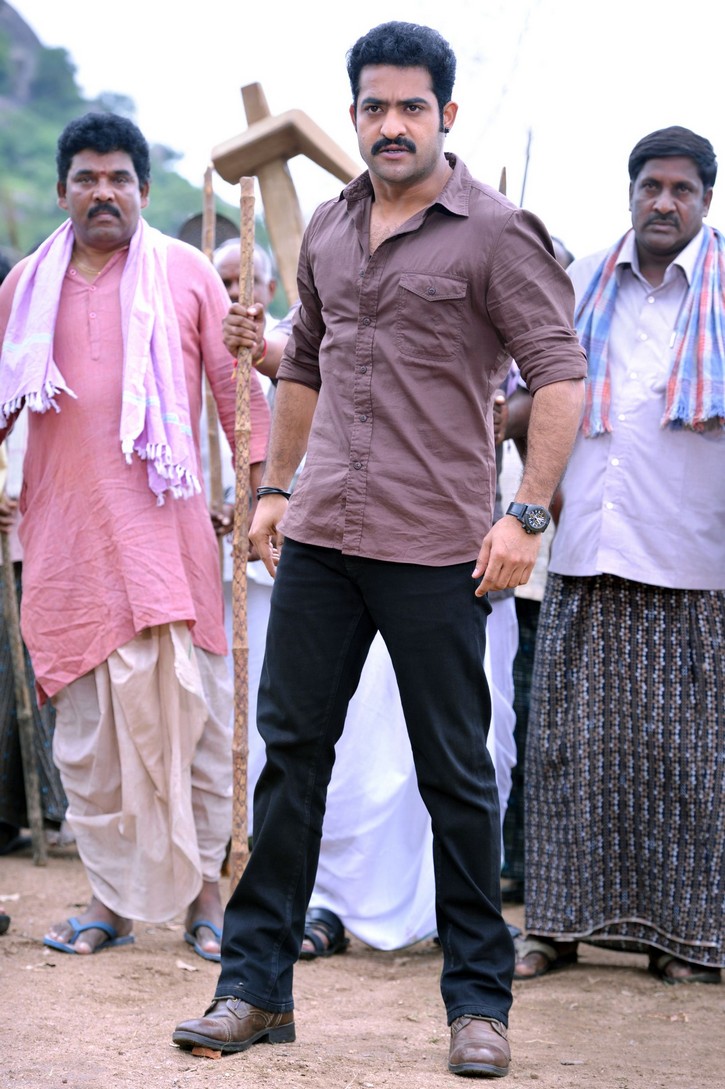
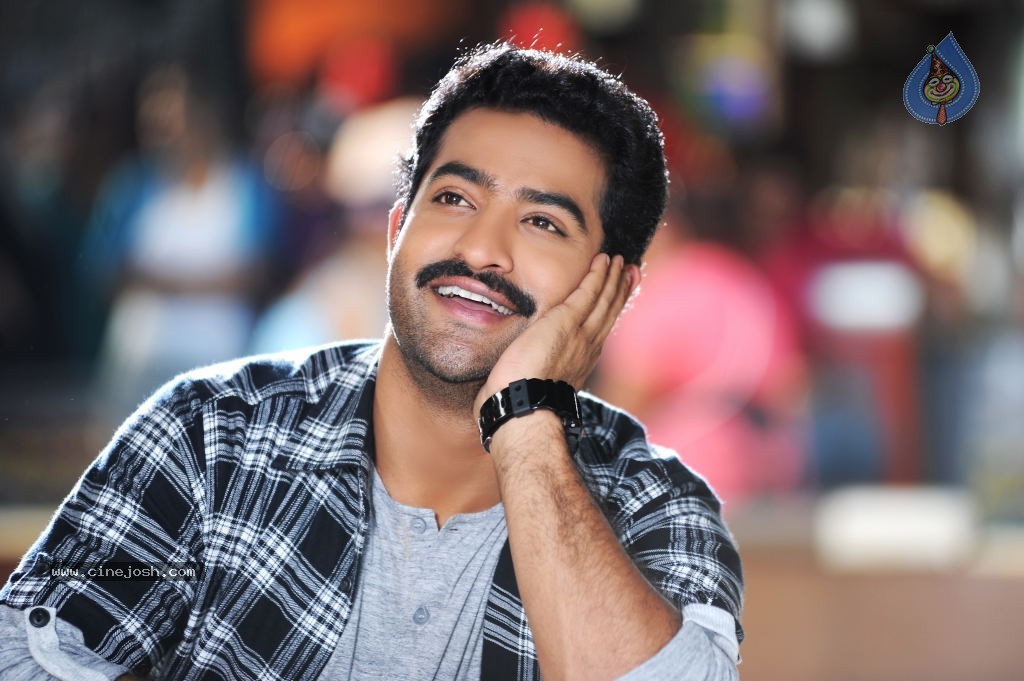
It seems like a very long time since the last NTR Jr. film and since I read some speculation about Tarak’s ‘new look’ I was interested to see exactly what Harish Shankar had come up with.  However the ‘new look’ is really just the old look, except for the odd moment on horseback which I admit was pretty cool.  And there were some groovy new shades.  But otherwise Ramayya Vastavayya sticks to the same old formula with the usual faces reprising roles they have played a million times before. Ultimately not even the actors seem to be able to rustle up much enthusiasm and although Tarak and Samantha both work hard and deliver good performances, the film is still let down by the clichéd storyline and stereotypical characters.

Ramayya VasthavayyaRamayya VasthavayyaRamayya Vasthavayya


The first half of the film is generally entertaining since it focuses on the developing romance between Nandu (NTR Jr) and Akshara (Samantha).  The romance aspect was perhaps enhanced by the fans behind throwing rose petals along with the usual strips of paper, but at least it made for a pleasingly more fragrant trip back to the old Chinatown cinemas in Melbourne.  As I’ve come to expect (yawn), Nanu sees Akshara one day while hanging out with his buddies at a coffee shop and falls instantly in love.  Akshara is not quite so sure and the ensuing comedy as Nandu tries to win her heart with a variety of schemes is amusing enough to overcome the usual discomfort of the’ stalking = true love’ theme.  

 Ramayya VasthavayyaRamayya Vasthavayya

Rohini Hattangadi pops up as an aunt of some sort to Akshara and her older sister and although her role is small and fairly gratuitous she still steals the limelight every time she appears.Presumably to appeal to a wider audience, there are numerous references back to classic films, the most blatant being Tarak’s entry scene.  Most of these are fairly obvious and seem contrived to ‘fit’ into the storyline, and I’m sure there are more that I missed (hopefully more subtle) by not understanding the dialogue.  

Samantha looks gorgeous and there is only one attempt by the notorious Telugu shoe designer to make her look ridiculous so I’m presuming she must be a favourite with wardrobe.  However, Akshara is a standard Telugu heroine, whose only purpose is to make the hero look good and is otherwise completely one dimensional, which seems a complete waste of Samantha’s talents. Still, she does get to dance and there is good chemsitry between Samantha and NTR Jr. which makes their interactions more enjoyable to watch.

Tarak’s Nandu seems a fairly typical hero – there are the requisite commanding dialogues laced with a modicum of modesty and comedy, excellent dancing skills and the ability to defeat numerous opponents by the mere flexing of a muscle or two accompanied by a snarling grimace.  As always, Tarak delivers exactly what is expected of him with plenty of animation and charisma, but since he’s playing the same character he has played in his last few films it feels stale and completely predictable.  The only really up side are the songs which feature better than usual choreography and excellent dancing from both Tarak and the backing dancers.  I loved the addition of spectacles as part of the costumes for one of the songs and the music by S. Thaman was generally catchy and effective, and at least better than the recent crop of new releases.

Ramayya Vasthavayya

After the interval, Nandu moves on from bouncing people off wall, floors and sundry items of furniture to hacking people apart with increasingly bloodier and even more poorly choreographed fight scenes.  I’m not sure who is responsible for the action for Ramayya Vastavayya, but they seem to have taken inspiration from episodes of Tom and Jerry rather than anything that remotely resembles a feasible fight scenario.  The gore content rises but it’s so ridiculous that even the various severing of limbs has little impact, particularly since the fights are so obviously staged and formulaic to begin with.

Ramayya Vasthavayya

The second half also moves the action to the countryside for Akshara’s sister’s wedding and attempts to explain the antipathy between Akshara’s father Nagabhushanam (Mukesh Rishi) and two assassins (Ajay – yay!) who tried to kill him at the beginning of the film.  This involves a lengthy flashback with Shruti Haasan as Nandu’s previous fiancée Amullu, but it’s dull, overlong and Shruti and NTR Jr. have absolutely zero chemistry together.  To make matters worse, P. Ravi Shankar appears as a stereotypical evil and lecherous politician with mannerisms straight out of the ‘Villains for Dummies’ handbook and, inevitably, Kota Srinivasa Rao appears as his equally evil father. Doesn’t he ever get tired of playing the same role?  Adding to the stereotypes, Tanikella Bharani appears as Amullu’s father, Saranya Ponvannan as her mother and M.S. Narayan briefly appears in a throwaway role which adds absolutely nothing to the plot.  Harish Shankar tries to evoke American crime shows by tying together moments from the first half with explanations later in the film, but it looks clumsy and is generally ineffective.

Ramayya VasthavayyaRamayya Vasthavayya

Ramayya Vastavayya disappointingly doesn’t cover any new ground and Harish Shankar sticks to a very well-worn formula without adding anything novel.  With such a tired screenplay and an abrupt change of pace in the second half, it’s really only the songs that appeal despite generally good performances from the actors.  NTR Jr. is as good as ever, but even with his energy and the appeal of two heroines Ramayya Vasthavayya is really a film solely for the fans.  Still, it’s worth watching at least once for the dancing, which is excellent and much better than the film deserves.