Mardaani

Mardaani

Mardaani is a crime drama from director Pradeep Sarkar and writer Gopi Puthran based around the investigation of a drug smuggling business and child trafficking ring in India. What makes it rather more unusual is that the cop chasing after the bad guys isn’t the usual rough, tough and unbeatable hero, but instead is the equally rough and tough but rather more pragmatically sensible Rani Mukerjee. As Senior Inspector Shivani Shivaji Roy, Rani takes on a crime boss and his gang when a young street vendor she has previously rescued goes missing. It’s a straight police procedural drama for most of the film but does veer off into overly melodramatic action for the last 15 minutes or so, presumably to add more commercial appeal. However Rani is superb, Tahir Raj Bhasin is excellent as the villain of the piece and overall the film works as an action thriller that is more realistic than most.

The film opens with the apprehension of a criminal by Mumbai’s Crime Branch, and the raid and subsequent capture nicely illustrate the rapport Inspector Shivani has with her team and the respect they have for her. They all joke together on the way to the raid but police officers Jafar and Morey still obey every order without question once the action begins. Dressed in a sari and noticeably understated make-up, Shivani is a cop who follows the rules when necessary, but also knows just how far rules can be bent without causing any visible stretch marks. She’s equally capable whether she’s on duty as a police officer, or at home looking after her family and is smart enough to reason her way through a case rather than bludgeoning her way to a result. The end product is a more realistic police officer and a more probable investigative team, at least as far as the world of cinema is concerned.

Shivani is married to Dr Bikram Roy (Jisshu Sengupta) and the couple look after her orphaned niece Meera (Avneet Kaur), giving Shivani a realistic and stable home life as well as illustrating that she is more than just a kick-arse cop with excellent multi-tasking skills. The person Shivani seems to care about most though is Pyaari (Priyanka Sharma), a girl Shivani rescued and placed in an orphanage and school after Pyaari’s uncle tried to sell her on the streets. When Pyaari disappears, Shivani accepts Meera’s assertion than Pyaari has been kidnapped, and given the truly frightening statistics given at the end of the film it does seem the most likely scenario. Shivani quickly establishes that one of the men associated with the orphanage is implicated in Pyaari’s disappearance and her subsequent investigations lead her to a drug dealer who is also part of the gang. From here it’s a short step to Vakil (Anil George), and the realisation that she has stumbled upon a large and well organised drug smuggling and human trafficking ring. Vakil is the face of the organisation and the man the drug dealers think is in charge, but standing in the shadows behind Vakil is the real boss, Karan (Tahir Raj Bhasin).

One of the reasons why the film works so well is the developing relationship between Shivani and Karan and the careful steps they take to outwit each other. Karan calls Shivani when her investigation begins to impinge on his organisation, and their subsequent phone conversations become an integral part of the story. At one point Karan introduces himself as Walter White, a nod to the Breaking Bad character, and a clear indication that he considers himself a criminal mastermind. Generally Bhasin plays Karan with an aura of cool authority mixed with genuine menace as he orders his various lackeys around and keeps track of his business empire. In scenes where the kidnapped girls are stripped, showered and basically dehumanised, it’s obvious Karan sees them purely as merchandise to be sold, a tactic that moves the film away from tacky voyeurism into a sinister and shockingly more realistic place. However when he calls Shivani, she refers to him as ‘the kid’ and remains cool and calm, refusing to rise to his threats or attempts at intimidation and it’s Karan who struggles to keep his composure. Shivani remains professional when dealing with Karan despite her fears for Pyaari, and it’s only towards the end that her self-control slides and she embarks on a more vigilante style of action.

While the film didn’t need quite so much focus on the plight of the girls, their abuse and degradation is effective in building outrage that is later used as a justification for Shivani’s unconventional method to bring Karan to justice. The film also loses some credibility when Rani morphs into a more typical filmi-hero and channels her inner Salman Khan for the last few scenes, taking the law into her own hands. It dulls the effect of the rest of the film, although there is some satisfaction is seeing the abused get their own back on their abusers. There is also a tendency for the film to become rather preachy towards the end with Shivani lecturing the police chief in Delhi when he is reluctant to pursue the human traffickers, but the statistics that play over the end credits are likely an indication of the point Pradeep Sarkar was trying to make. The details about the massive numbers of children who go missing and the extent of the child sex-trade are chilling and anything that raises awareness, and hopefully subsequent prosecutions and a downward change in these figures is welcome. It’s not all about ‘the message’ though, and for the most part the film is an action thriller with an engaging storyline.

Mardaani keeps to a standard storyline, but the plot is well structured with realistic characters and feasible action that keeps the film believable. Rani and Bhasin are the standouts but the support cast are all good, although the young actresses playing the girls do become overly dramatic at times. It suits the situation though and at least none of the scenes with the girls are remotely suggestive but rather reflect the brutality of the kidnappers instead. The film is a different approach to a police drama and while it’s not an overtly feminist film it is good to have a strong female character as the lead, particularly when she takes on a more traditionally masculine role so successfully. Worth watching for Rani, a more realistic storyline (at least until near the end) and Tahir Raj Bhasin, who will hopefully live up to the promise he shows here. 3 ½ stars.
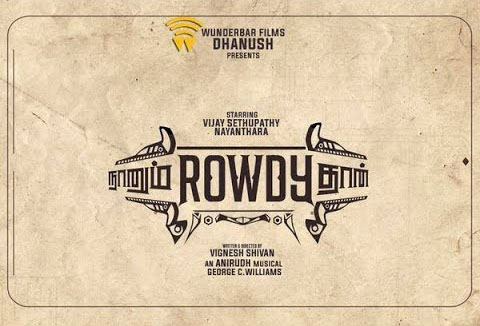
Naanum Rowdy Dhaan

Naanum Rowdy Dhaan

I’m loving the recent ‘new wave’ in Tamil comedy that seems to be producing hit after hit and some very funny films. Naanum Rowdy Dhaan is the latest release from writer/director Vignesh Shivan and it’s a perfect example of the genre, mixing a good story with great dialogue and brilliant performances from a very competent cast. As an added bonus the film even has grammatically correct English subtitles (I’m going to assume that they were accurate too), ensuring I was laughing at the right moments – or at least along with everyone else.

The story is set in Pondicherry, which is another plus for me since it’s only a few years since I visited and quite a few of the locations were familiar. Pandi (Vijay Sethupathi) first appears onscreen as a young boy (Surya Vijay Sethupathi – Vijay’s son?) sitting in a jail, occupied with filling in the front of a school notebook with his interesting ambition (given his current location) of joining the police force. However all is not as it seems. Pandi is the son of the police inspector (Raadhika Sarathkumar) and the real occupant of the cell is Raja, played by one of my favourite ‘bad guys’, Rajendran. Yay! While waiting for his lawyer and get-out-of-jail-free card, Raja tells the young Pandi a story about a rowdy and a cop, when Pandi asked which is the better job prospect. The subsequent tale has the effect of changing Pandi’s mind about his career choice and he carefully changes the word in his notebook from police to rowdy.

So it’s a little surprising then when we see grown up Pandi to find he is going through a battery of tests to become a police officer, although he spends most of his time telling others how much better rowdyism is compared to law enforcement. But once away from the testing area Pandi is indeed a rowdy. Well, kind of.

Because Pandi isn’t a very rowdy-like rowdy.

Along with his gang of friends he has a lair painted with fluorescent paint on the walls that lists fees for various acts of violence, but when it comes down to it he doesn’t actually do any of these things. Instead the gang enacts a drama, getting people to pretend to have been beaten up or injured and then sending a photo of the ‘injury’ to the client. Pandi’s biggest success is arbitrating in a schoolboy squabble and most of his ‘swagger’ is an elaborate act without any real substance.

But then he meets Kadambari and gets involved in the search for her missing father. Kadambari is hearing impaired after an injury and her father is a police officer on the cusp of retirement. It turns out that the story Raja told at the start of the film was based in fact with the rowdy, Killivalavan (Parthiban) getting the better of police officer Ravikumar (Azhagam Perumal). Kadambari wants her revenge and since true love means killing your girlfriends enemy, Pandi takes on the job. Or at least offers to hold Killivalavan while Kadambari stabs him to death. A true gentleman!

The jokes come thick and fast from the numerous attempts to kill Killivalavan (or at least get him to apologise) to Raja’s gun that has a silencer that mews like a cat. The dialogue is very funny and the cast all do a good job in delivering their lines for maximum effect. Even Nayantara, who has a brilliantly comedic scene when she is kidnapped by another rowdy (Anandaraj) which had everyone in the cinema in stitches. Generally Nayantara is much better here than she was in Masss, giving her character plenty of personality and managing good chemistry with her co-star. She does well with the comedy too, and shows just what a good actress she can be when given the chance.

Vijay Sethupathi looks amazingly different here from his previous roles such as Soodhu Kavvum or Idharkuthane Aasaipattai Balakumara. Without his beard he appears years younger and seems to have shed some bulkiness along with the age which suits his character well. He still has the same great timing and flair for comedy though, working well with RJ Balaji in the role of Pandi’s long suffering friend. Balaji plays it straight but has plenty of witty comments and his delivery is perfectly timed. Together the two make a great pair and the dialogue between them is written so well as to appear natural and unforced – something which is rare in most comedies. Pandi tries very hard to be a tough guy, and when push comes to shove he proves he can hold his own, but he’d much rather just show the ‘tude rather than court any confrontation, while Balaji wants nothing to do with ‘real’ rowdyism at all.

Anirudh Ravichander provides the music and the soundtrack fits into the mood of the story well. Vijay Sethupathi skilfully avoids any actual dancing, and the songs themselves work well to move the romance story forward. George C Williams is the man behind the cinematography and as in his earlier films, he has a sure touch with the camera ensuring the film looks perfect too. Overall Naanum Rowdy Dhaan is an excellent entertainer combining action and comedy with a dash of romance. Recommended for Vijay Sethupathi, Nayantara and a very funny screenplay.

Kanche

Kanche

Varun Tej takes on the role of a soldier in the Second World War so effortlessly in Kanche that it’s hard to believe this is only his second movie. His performance is one of the highlights of a film that has at its heart a simple love story but uses a more ambitious setting to deliver a deeper social message based on the literal and psychological ‘fences’ of the title.  The story starts in Thirties India and moves to the battle torn landscape of Italy during the Second World War using flashback sequences to keep the focus on Dhrupati Hari Babu (Varun Tej) and his romance with Seetha Devi (Pragya Jaiswal). It’s an unusual backdrop for an Indian film and despite a tendency towards melodrama in the second half Kanche is one of the better films I’ve seen this year and well worth catching in the cinema if you can.

The story starts when Hari meets Seetha while they are both studying in Madrasapattinam and Hari is working part-time as a waiter in a social club. Hari is outspoken but respectful with a twinkle in his eye, while Seetha is the perfect lady, always looking absolutely stunning in elegant saris, sparkling jewellery and perfect make-up. I was a little surprised at how liberal her thinking was for a wealthy and presumably somewhat sheltered girl in 1936, but Pragya has just a touch of aloofness which gives more authenticity to her role and she certainly looks the part. The couple have sparkling chemistry together and the romance moves along with a freshness that belies the familiarity of the story. Varun plays Hari with the perfect mix of serious scholar and carefree larrikin to make him an appealing character, and gives an immediate contrast with later scenes where he is more introspective and self-contained as a soldier in the Indian Army.

Although Seetha is from a royal family and Hari is the son of the local barber, their romance blossoms while they are away from home. When they return from college however their relationship seems doomed to failure since social norms decree that Seetha must marry a man from her own class. Seetha and Hari try to enlist the help of Seetha’s brother Eeshwar Prasad (Nikitin Dheer) but he is firmly on the side of tradition and opposes the match almost more vigorously than Seetha’s father. Nikitin plays Eeshwar with a permanent sneer that looks painful to maintain and becomes almost comical with each reappearance. There are whiffs of a more rational and intelligent man but they don’t seem to be able to make it past the facial grimace and Eeshwar is too one dimensional to be completely convincing here. Sowcar Janaki has more scope as Seetha’s mother, trying to get her daughter to conform while at the same time acknowledging that as a woman she has little influence and no effective assistance to offer. I love the subtle message that Krish adds here about the role of women in Indian society which is just as effective as his more obvious statements about social divides later in the film.

The class divide isn’t enough drama for Krish though, and he adds in inter-caste rivalries in the village which increase the tension and lead to literal fences being constructed alongside the invisible social barriers to keep different groups of villagers apart. The village is split by class, caste and gender which makes for a lot to expect Hari to fix in the final half of the film!

The romance is told as flashback sequences interspersed with events on the battlefields in Italy and although the love story follows a predictable path, the rest of the film is rather more unexpected. Eeshwar is now Hari’s commanding officer and still hasn’t lost the sneer or his enmity towards Hari although the two avoid each other as much as possible. Krish doesn’t fall into the trap of making Eeshwar a vindictive bully and Nikitin does a better job in these scenes, making Eeshwar an honourable and decent man behind the curled upper lip. As events unfold, Eeshwar is forced to depend on Hari when he is captured by the German army along with the other commanding officers. Hari and a few other soldiers set out to rescue them but find themselves confronted by Nazi atrocities in a small town they pass through and need to adjust their plans accordingly.

There are a number of more subtle messages that are almost lost as Krish hammers home the point that anything can be achieved through co-operation and mutual trust. The camaraderie between the soldiers – British and Indian – is unexpected and an interesting counterpoint to the more usual rivalry and prejudice seen in other films. Hari’s letters to Seetha also provide a different view of the war and her unseen presence provides support for Hari as he struggles with the realities of the conflict.

One of my pet hates in films with foreign characters is the usually poor quality of the performances, however here the actors are good and generally appropriately cast. The commanding German officer and a family of bakers in a small Italian village are particularly effective and add credibility to this part of the film, while the various British soldiers are also all good in their roles.  The dubbing is however not as successful with a definite miss on some of the British army accents making the British General sounding more like an East End butcher rather than an officer of the British Army. There is also some confusion with the Italian villagers who speak variously in oddly accented Italian and German, although this is mostly drowned out by the Telugu voice-over. Still, overall the foreigners are much better than usual and are convincingly part of the film storyline rather than simply extras in the background for added flavour.

The pace in the second half is slower and the particularly in the final scenes the action becomes overly dramatic where less really would have been more compelling. The end is also heavy on the films message of peaceful co-existence through mutual respect and tolerance, even adding a baby called Hope just in case there could be anyone who missed the point. However despite the awkward melodrama and overly drawn out final fight scene, the story is still powerful and Varun is impressive right to the end. Definitely an actor to look out for.

With good performances, an interesting story and some clever dialogue, Kanche demonstrates Krish’s ability to think outside the norms of Telugu cinema and deliver another great film. Don’t miss it!