Gair Kaanooni

Gair-Kanooni-Title Gair Kaanooni is a cracktastic masala film that I overlook far too often. Director Prayag Raj was responsible for the story or screenplay of many of my favourites – Ajooba, Mard, Geraftaar, Coolie, Suhaag, Dharam Veer, Parvarish, Amar Akbar Anthony – so that should tell you what you need to know about plot and logic. Plus it has a killer cast.

This slideshow requires JavaScript.

Just look at the lineup in the opening credits! (Question: Who is Sunny Bee? I love them just for the name but know nothing about them.)

Gair-Kanooni-Don't moveGair-Kanooni-they start revenge young

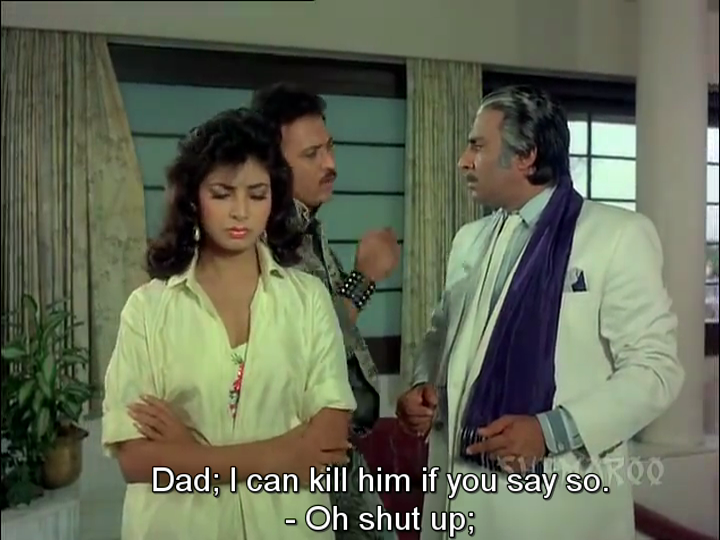
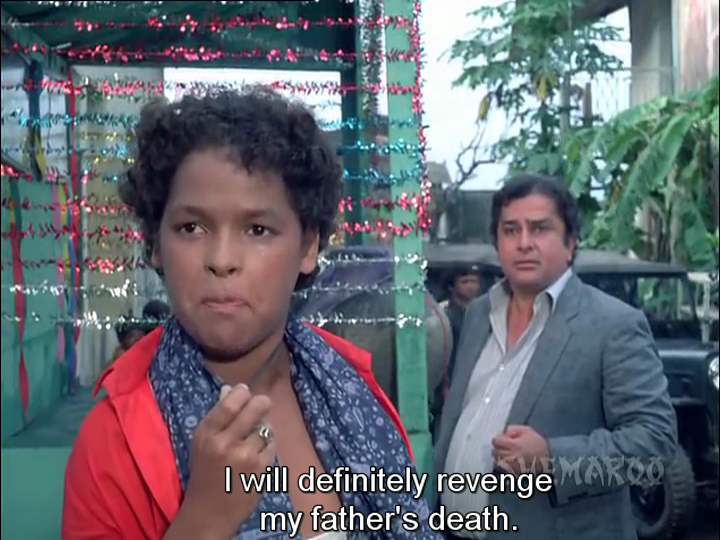
Kapil Khanna (a portly Shashi Kapoor) is a zealous policeman out to bring down underworld don D’Costa (Ranjeet). He leans on an informer, and sadly the goodhearted crook Azam Khan (Rajinikanth) is killed (stabbed AND electrocuted) by D’Costa and Dalal (Kader Khan) leaving an orphaned son. Meanwhile Mrs Khanna and Mrs Dalal are both in the maternity hospital. When Mrs Dalal has a baby girl, D’Costa repays his friend by switching the ‘worthless’ girl for a newborn boy – The Khanna’s son. Oh lord. Three kiddies to keep track of and we haven’t even started…Kapil Khanna rejects the infant girl and demands his son back. He will not accept his ‘daughter’ and sends her off to be raised by strangers, paying what he needs to but not giving her any familial affection or contact. Travel through time and we have Laxmi (Sri Devi), a petty thief introduced in a lovely song as she fleeces worshippers at a temple. Hey, she is Laxmi after all (or so she reasons). Om Narayan is the son of Kapil Khanna who has been raised by Jutawala Dalal, and Rajinikanth is back as Azam’s son Akbar Khan. Of course they cross paths and naturally, vengeful hijinks ensue.
Gair-Kanooni-Kapil KhannaGair-Kanooni-Shashi and Sri Devi

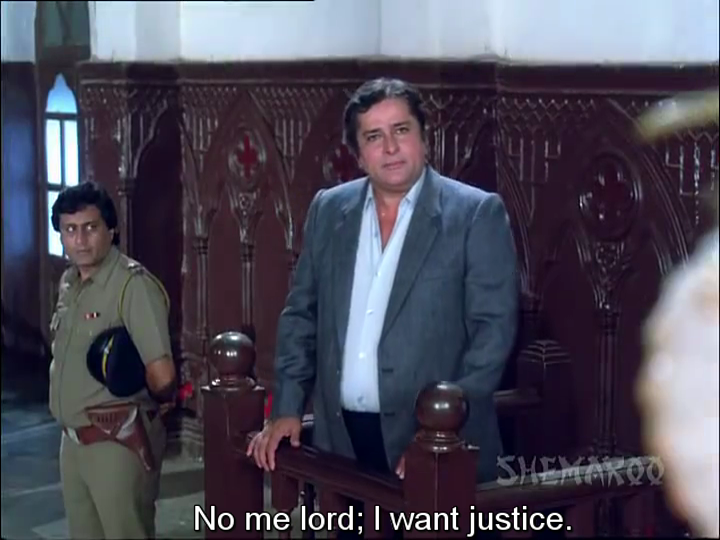
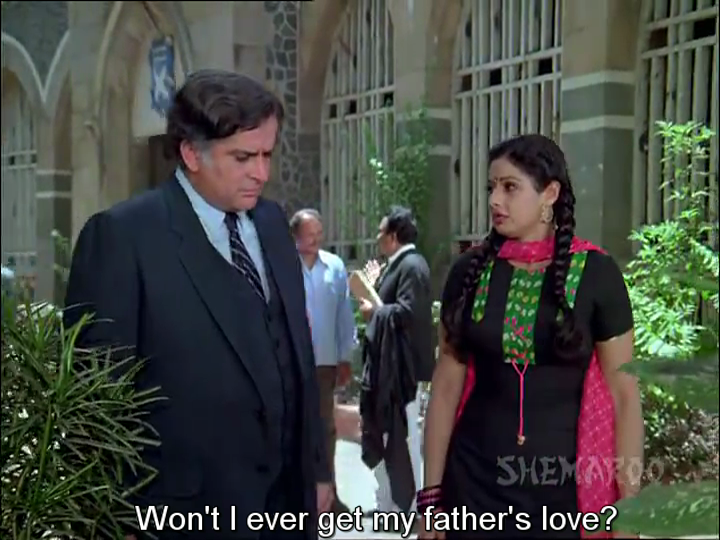
Shashi is, dare I say, a bit past it as Kapil Khanna but he knows his way around and has mastered the art of bromance. There is lots of “Yeh jhoot hai!” and insistence on setting things right. Kapil cannot accept Laxmi as, to him that means giving up on his son and leaving his wife’s last wish unfulfilled. Shashi kind of phones it in but every now and then he shows a gleam of vintage Kapoor masala style. I like his scenes with Rajinikanth, especially when they compete with dialogues to see who can be more pompous.
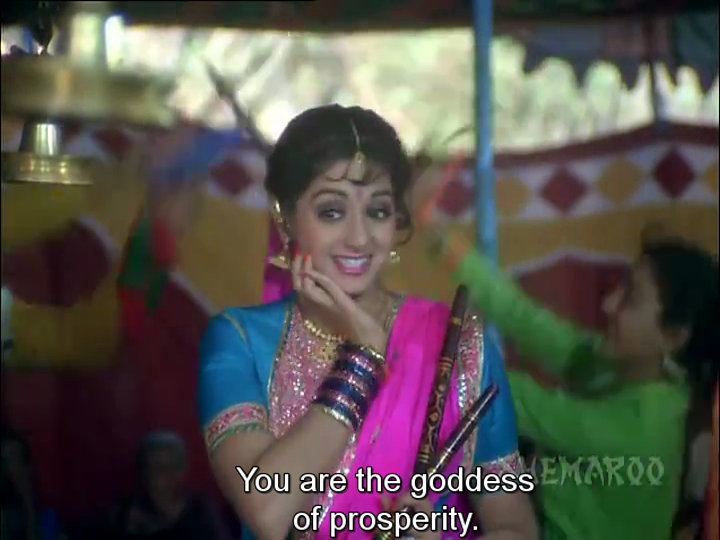
Gair-Kanooni-Sri Devi as LaxmiGair-Kanooni-Laxmi is her namesake

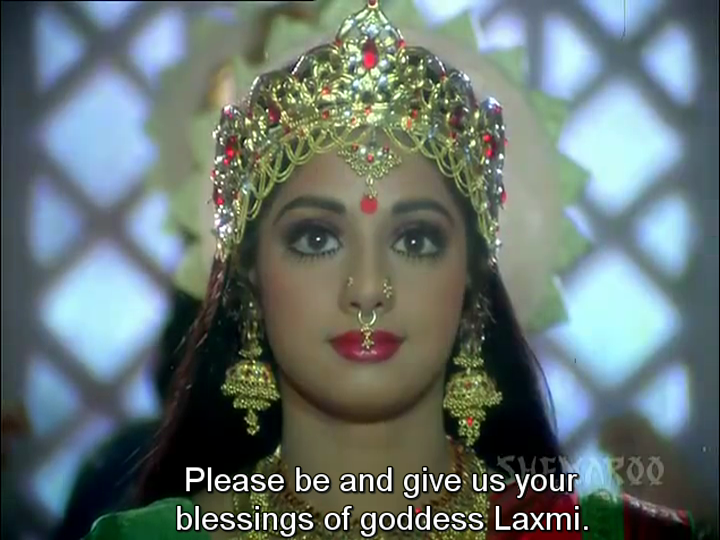
Sri Devi is perfectly cast as Laxmi. Fostered by Bantho (Aruna Irani) and Nathulal (Satyendra Kapoor) Laxmi imbibes her guardians’ world view and skillset. (Nathulal is the man who went to jail for killing Azaam Khan, just in case we needed a Sign that there were going to be Coincidences and Revelations.) Laxmi makes her money via illegal means but she is not a bad person at heart. Similar to other roles Sri Devi essayed – Kumari in S.P Parasuram, Seema in Roop Ki Rani Choron Ka Raja and even Seema in Mr India – Laxmi is brave, funny and generally smart with interludes of ditziness. Her focus is on getting by and doing what she needs to do to survive.

Gair-Kanooni-Sri Devi

Laxmi falls for Om but their romance is a lesser subplot compared to the goings on between the villains. She describes him at one point as her friend and her future husband, which I liked.

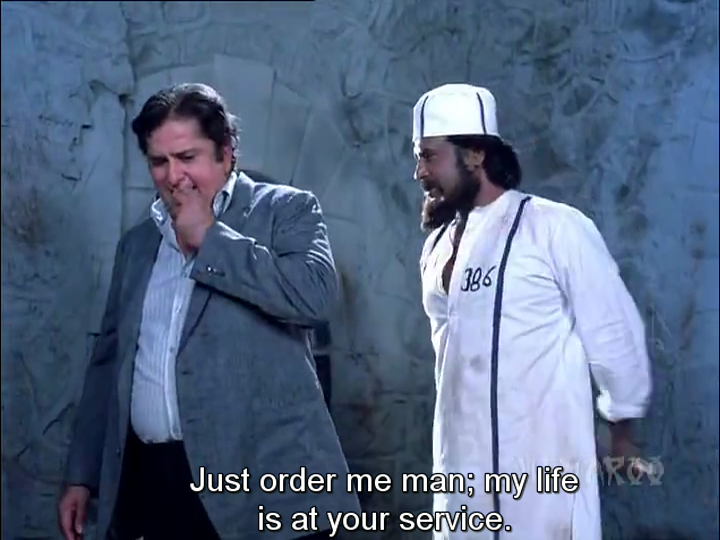
That song has to be one of the most eye-popping introductions ever. Govinda is partly overshadowed by Rita’s (Kimi Katkar’s) hideous skirt, but still! Om and his dad have a scam whereby he accepts dowry and then weasels out of the marriage. Like Laxmi, Om isn’t an actively bad person but he doesn’t try too hard to stay on the straight and narrow. Generally he sails through all fine and dandy until he falls in love for real. At least Laxmi had an equally flexible approach to ethics so they were well suited. Govinda is a great choice in this kind of role – lots of colour and movement. It needs an actor who just goes all in for the entertainment factor and he does that, boots and all.
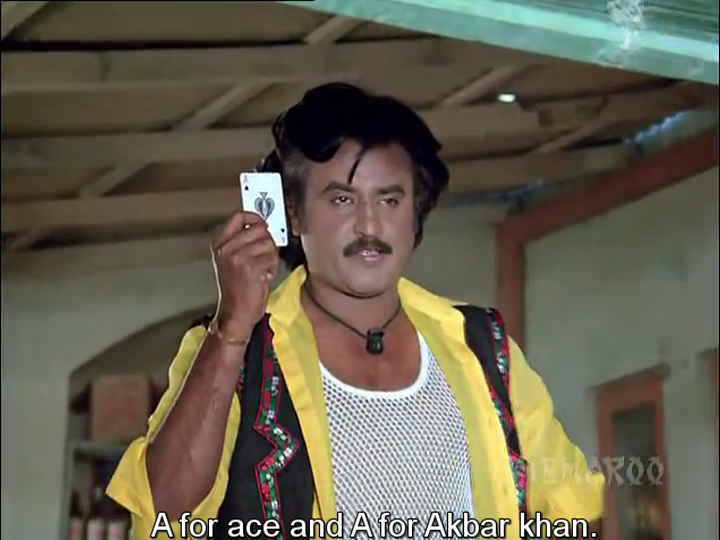
Gair-Kanooni-Shashi and RajnikanthGair-Kanooni-Rajini as Akbar

Often I feel Hindi film-makers missed the point of Rajini – they either cast him as a bit of an idiot (like in Hum) or a grim chain-smoking vengeful type. He is such a great actor and he can handle any kind of filmi ridiculousness with aplomb. Initially I expected his appearance as Aazam to be it, and was lamenting the wasted opportunity. But who better to play vengeful son of Rajnikanth than Rajini himself! Akbar is the grown up son and soon gets tangled up with the plot, quickly finding out who the real bad guys are. Rita (Kimi Katkar) falls for him despite his harsh criticism of her morals as apparently evinced by her skirt length and his generally bleak outlook on life.

Rajini gets to declaim elaborate threats and back them up with flashy fighting (choreographed by Judo Rathnam, who did such amusing work in Geraftaar). I especially love one dramatic escape where he launches himself head first through a breeze-block wall. Amazing. Dancing is not his forte however so it is good that the total entertainment burden does not rest on his shoulders.

Ranjeet and Kader Khan play their usual villainous types and they are truly, irredeemably, despicable. D’Costa and Dalal are locked in a dysfunctional relationship where neither likes or trusts the other but just can’t walk out. There is a large supporting cast but they are a bit lost behind the histrionics of the main protagonists.

Gair-Kanooni-Govinda and KimiGair-Kanooni-soot free Kimi Katkar is feisty and over-accessorised as Doctor Rita, and I like her spirited self defence and addiction to ruffles. Tej Sapru has a very small role as D’Costa’s son Tony, prone to acid wash denim and hissy fits when he isn’t allowed to go kill people. Aruna Irani is memorable as Bantho who takes pride in her adopted daughter’s thieving abilities.

Gair-Kanooni-Shashi and Govinda

There are misunderstandings, confrontations and tearful confessions galore. The song lyrics often express what is happening or how characters see things, which I find refreshing and relevant compared to some modern efforts. Plus it must be helpful to the other characters to have things explained so melodically. Resolution arrives through forced proximity (jail is good like that) and … ‘tribal’ disco.

That song wasn’t such a good idea really, but it is memorable. Plus a kidnap and forced kidney donation brings the rest of the family together. And I have left out so much!

Sure, Shashi Kapoor in blackface is unnerving but Sri Devi and Govinda, a Bappi Lahiri soundtrack and Rajnikanth in dual roles make this pretty special. See it for the cast, the song picturisations and the the plot that hits the point of ridiculousness and accelerates, cheering itself on towards WTFery. 3 ½ stars!

Gair-Kanooni-no words

Kalicharan (1976)

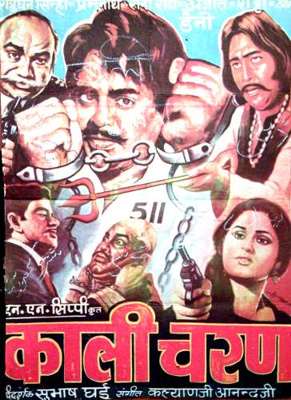
Kalicharan poster

Kalicharan is a modest film in many respects. Subhash Ghai directed with masala verve while Jainendra Jain wrote a fairly staid screenplay, sometimes seemingly at odds with each other. Relying more on the cast than on gimmickry, there are still some surprises.

Prabhakar (Shatrughan Sinha) is an outstanding policeman on the trail of a mysterious crimelord. He deduces that the man known as Lion is none other than respectable businessman Din Dayal (Ajit), a close friend of his boss and father figure I.G. Khanna (Prem Nath).  Prabhakar is ambushed and has a serious car accident, which eventually kills him, but not before he leaves a cryptic note. I.G. Khanna is mourning the loss of his protégé and wondering how to break the news to his own daughter Anju (Alka) who saw Prabhakar as a brother. Then there is the question of Prabhakar’s kids, Pinky and Chinky (Master Bittoo and some other kid). Fate brings retired jailer David (David Abraham) into the picture. He recognises the corpse of Prabhakar as his prisoner Kalicharan. So I.G. Khanna does the only sensible thing. He gets Kalicharan released from jail, takes him to Simla and tries to train him to act as Prabhakar. Of course Kalicharan had his own troubled past, but in true masala style, all paths lead to Lion.

Kalicharan-the denKalicharan-its a tiger Lion

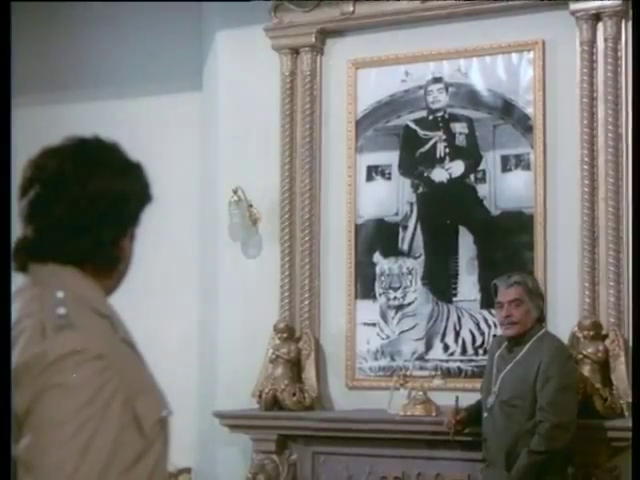
Well they might have lead to Lion a lot sooner if Lion could consistently tell the difference between a lion and a tiger as a decorative motif.

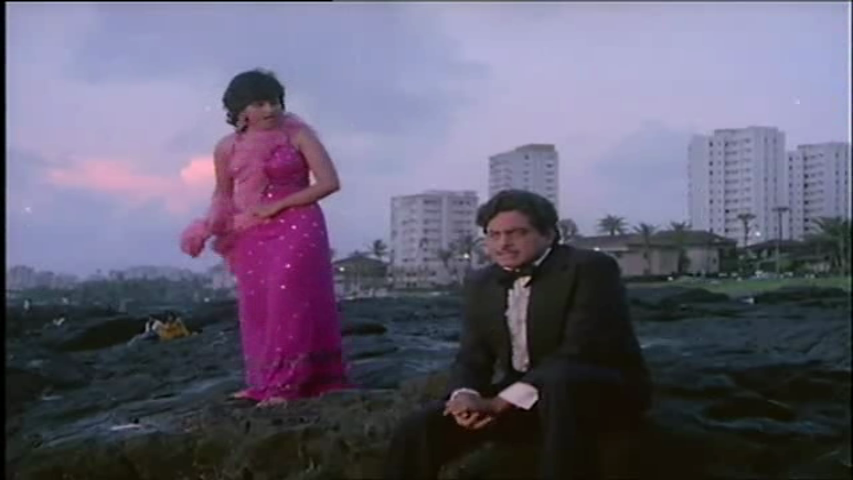
Shatrughan Sinha has the power to out-ham almost any other actor in almost every film he has made. I have an equally amazing power, that of being able to forget Shotgun is in almost any film. I love Aa Gale Lag Ja and Kaala Patthar and yet am always mildly surprised when he turns up. Anyway. He plays both Prabhakar and Kalicharan with bluster and supreme self-confidence.

There is little to distinguish between the two characters other than the dialogue they utter and he makes minimal efforts to differentiate them (a grimace here, a furrowed brow there). I was more impressed by his costumes. Some appeared to have been provided by the upholstery department.

Kalicharan-David and Prem Nath

Prem Nath was that rare man who out-hammed Shotgun in this instance. Almost all of his dialogue is delivered as a shout, and if there was an award for Most Enthusiastic Cursing, he would romp it in for his use of “BASTAAAAAARD!”. He was also ambushed by the wardrobe team a couple of times but it’s not like there was any subtlety being smothered by his outfits.

Reena Roy’s Sapna is an educated girl who swears profusely and decides to take revenge for her brother’s death. Sapna just gets on with things. Including this dance which she invited Prabhakar/Kalicharan to attend as it might give him more hope for his life and make him less depressed.

The wardrobe department seemed to be fascinated by Sapna and tried out many looks, not all of them successful.

Kalicharan-Sapna as a bad girl

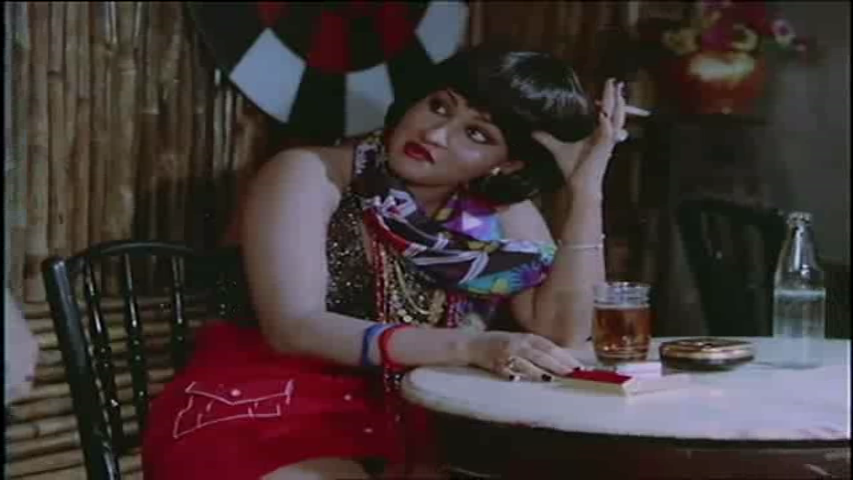
I was amused by her undercover bad gal attire. But Reena Roy managed to overcome the fabric based challenges and her performance is both well-constructed and masala appropriate.

Kalicharan-more outfits

She is generally good even in a terrible film, and makes the most of the opportunities to expand her character beyond the standard dialogues.

Kalicharan-Alka

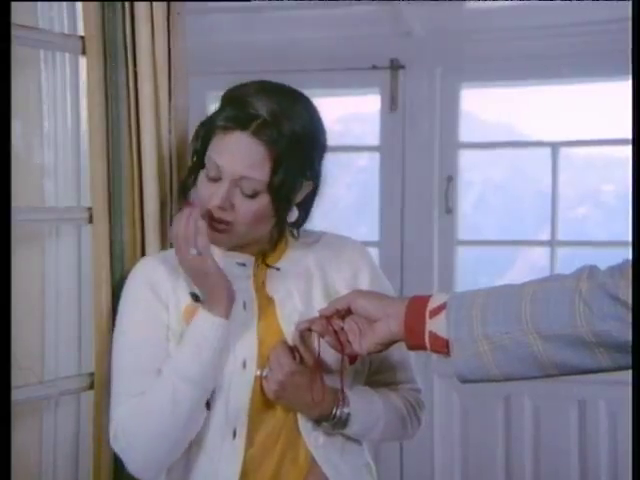
Alka was less memorable as Anju, the saree wearing good girl and sister figure, but she was more of a plot device than a character.  She called on Kalicharan’s humanity when I.G. Khanna was more intent on curbing the criminals’ baser instincts. Oh the transformative power of tying a rakhee!

Kalicharan-Danny DenzongpaKalicharan-one legged Trishul fight

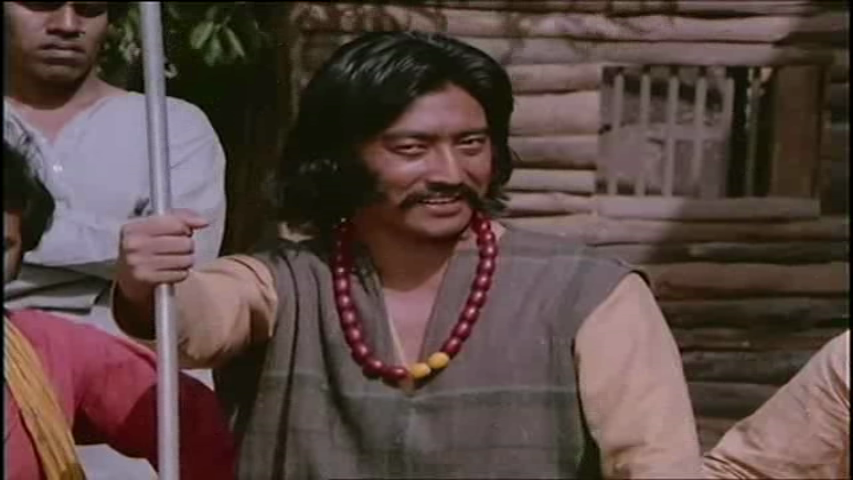
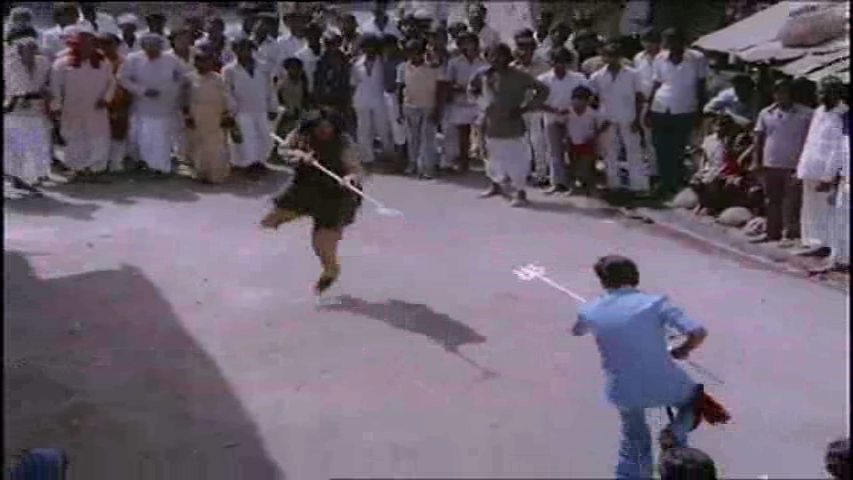
Danny Denzongpa has a small role as a one legged bootlegger, Shaka. I love Danny as a villain with heart of gold. Plus seeing him hop around trying to stab Shotgun with a trishul was quite fabulous. Kalicharan was such a manly man’s man that to level the playing field he also fought on one leg.

Kalicharan-Danny and Shotgun

That is the stuff masala bromance is made of.

Kalicharan-ShettyKalicharan-Shetty and co

Shetty is the stuff masala villainy is made of, and this role is one of many cookie cutter bad guys he played so effortlessly. He is at the start and finish of Kalicharan’s life of crime, the career goon who will do anything without qualm. Of course, Shetty also provided Shotgun with a tragic back story as his motivation for going off the rails.

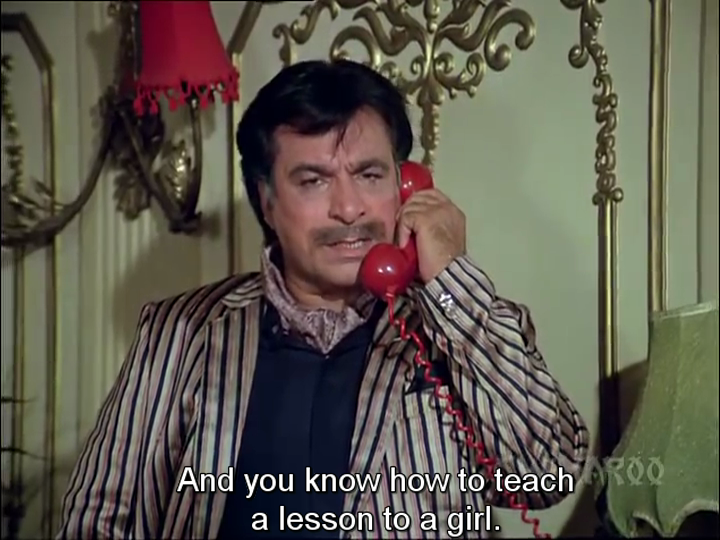
Ajit is suave and slimy as the urbane mastermind with an excess of phones and a deficit of scruples. I’m not sure the fluffy dog says “Evil Mastermind” but he seemed interested in proceedings. Din Dayal/Lion remains in the background for most of the film, but rapidly loses his cool as Kalicharan draws closer. I’ve seen his tiger strewn den before in Fakira and maybe something else.

Kalyanji-Anandji provided the soundtrack and the background score is great. Brassy, dramatic and a bit funky, the music lopes along and lifts the energy of the action scenes.

But of all the things I was expecting in the club item, Father Christmas was not one. The other songs are less successful but I blame some of that on the lyricist who decided that what we needed was lots of “lalalala’s” a few ‘OoohAaaahOOoohAaahhh” choruses and a repetitive “KALicharan KaaaalicharAN KalicharAN” vocal.

The action is directed in a fast and pacey style while Shotgun’s delivery is ponderous and he may as well have been carrying a sign that said ‘Look at me!’. But you need a certain amount of swagger to carry off this sort of role, and its knitwear, and he has that. There is an excellent transformation scene when Kalicharan first dons the police tunic. He twirls around, standing on what I picture to be a lazy susan, as I.G. Khanna looks on admiringly. And that is about it for special effects in this film. The compulsory fight in a godown full of things stacked up only to be knocked over is very entertaining. And there are clues hidden in books. A nice low tech solution to criminal communications.

Good masala films often reflect on social issues and personal integrity and while I don’t think this is a great film, Kalicharan also examines some big ideas. Redemption is a theme – from the titular hero’s transformation to smaller decisions made by the likes of Shaka. Sapna’s brother was killed for dobbing on Lion but his friend eventually tipped off the good guys in return. Respect and responsibility were often mentioned as things required in order to live a decent life. Kalicharan was a kind of Pygmalion as Khanna and David argued over whether a criminal could be reformed.

Most masala films also rely on needlessly elaborate schemes. Din Dayal hires a mute assassin with theatrical flair (who I think is in a few Telugu films as a baddie too) to go after Kalicharan. Shetty has an array of backup plans that require, say, a train to destroy a warehouse when a bomb is just not destructive enough. And a bit more communication and a lot less manly man brooding would probably have resolved things a bit sooner. But everyday common sense is not what I watch these films for. I did like the insistence that people have responsibilities as well as rights and that not everyone is a lost cause.

If you have low Shotgun tolerance, this is not for you. But if you like him or at least don’t break out into hives at his appearance, then give it a whirl. Reena Roy is delightful as usual. Subhash Ghai trots out some classic filmi moments, and had the good sense to include Helen and lots of balloons. 3 stars!
Dor (2006)

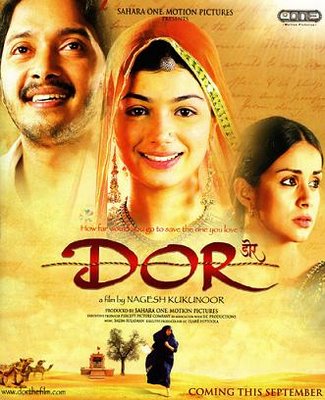
Dor

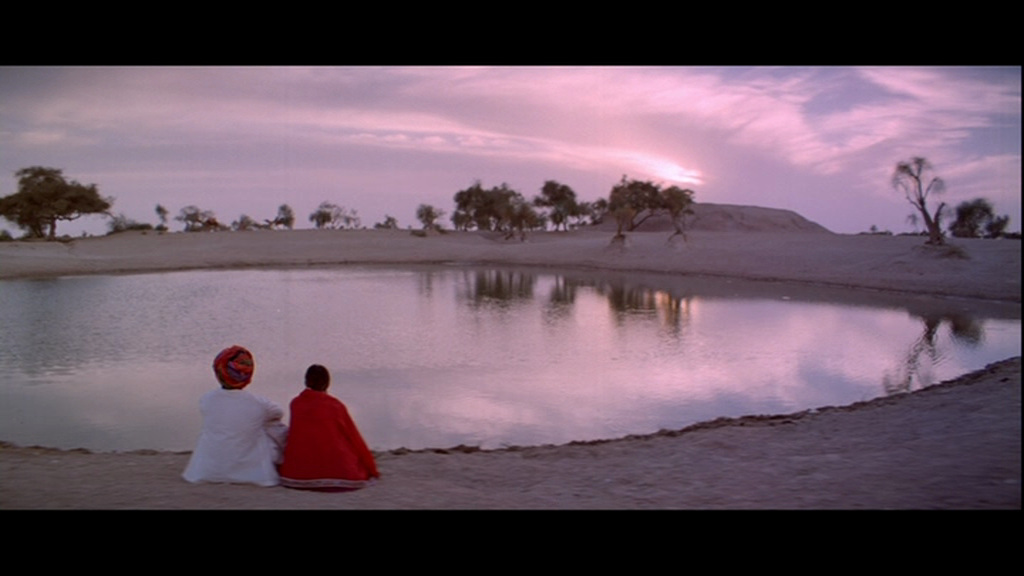
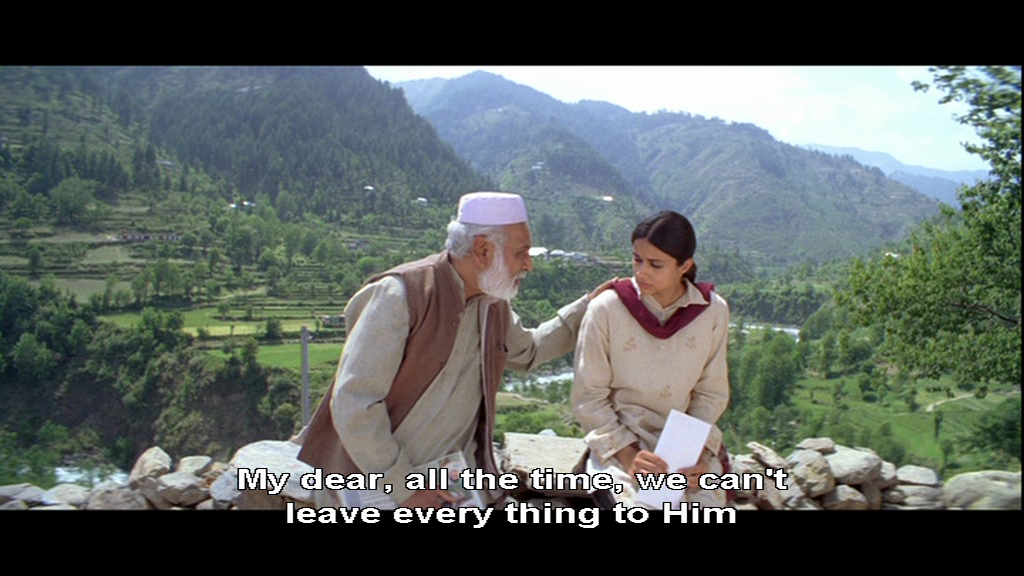
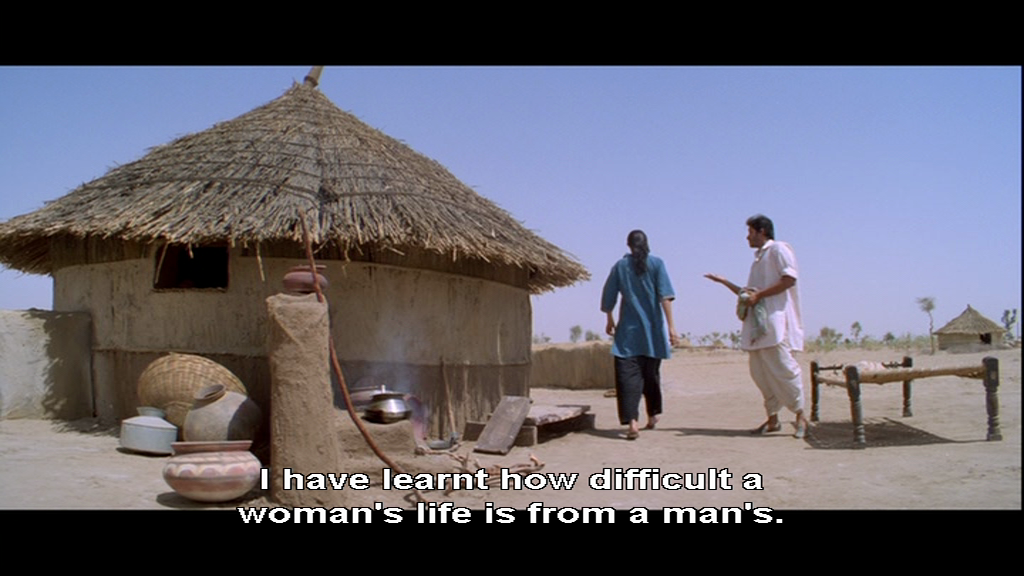
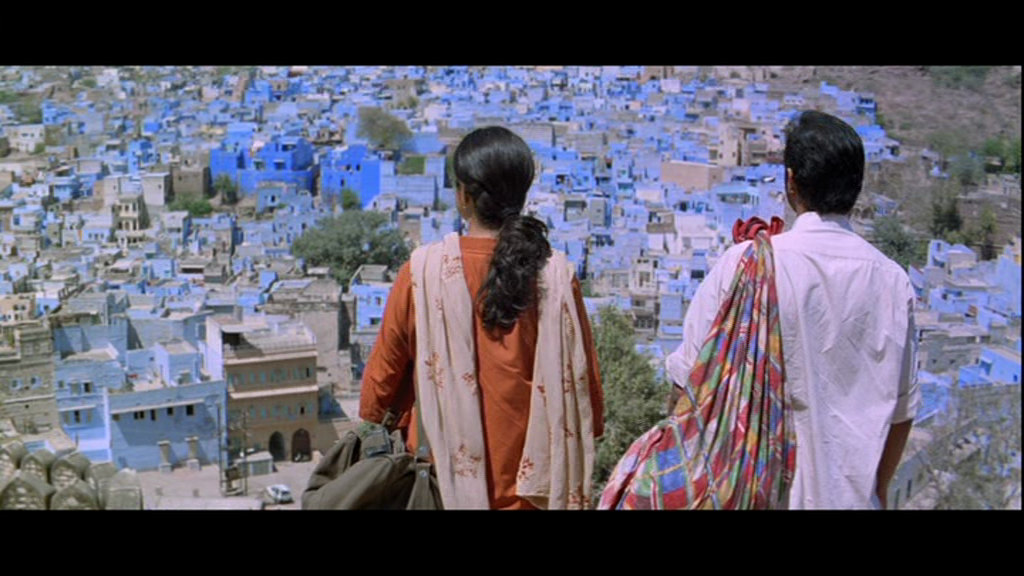
Dor is one of those rare gems in Indian cinema – a film with strong female characters and an engaging story that keeps you hooked right to the end. There are excellent performances from all the cast and the visuals are stunning with beautiful shots of Himachal Pradesh and Rajasthan.  It’s a story that contains many aspects of love and friendship, but it also shines a light on the life of women in rural India and the harsh realities of losing the protection of a husband in a patriarchal society. 

The film tells the story of Zeenat (Gul Panag) and Meera (Ayesha Takia), two completely different women in matters of personality and culture, and how their lives become intertwined.  Despite their many differences the two women also have some commonality as they are both recently married and their husbands have left to work in the Middle East.  In the opening scenes, director and writer Nagesh Kukunoor uses similar events in the lives of the two women to illustrate differences in their temperament and situation which rather neatly gives the bare bones of the plot, as well as introducing the characters.

DorDorDorDor

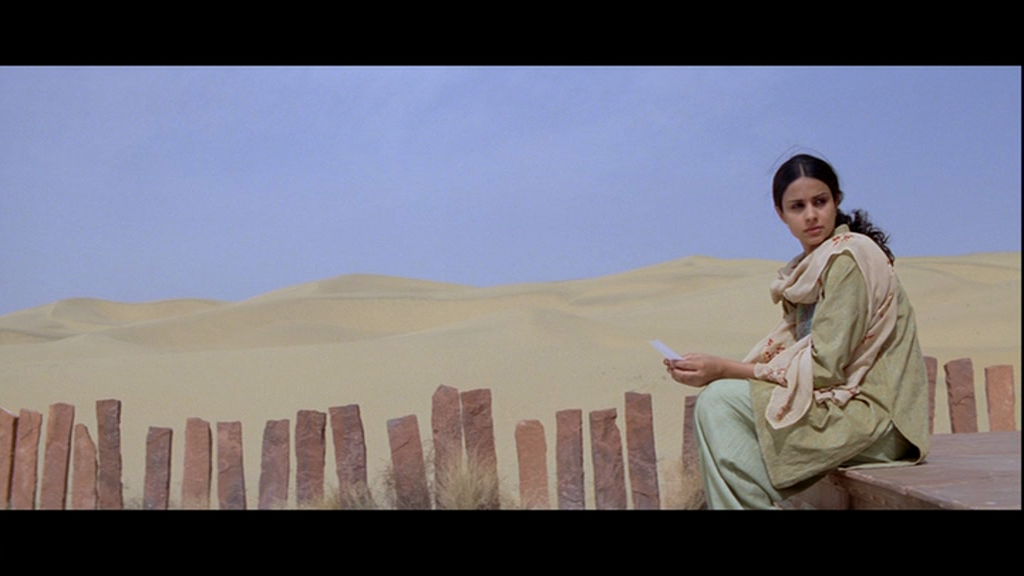
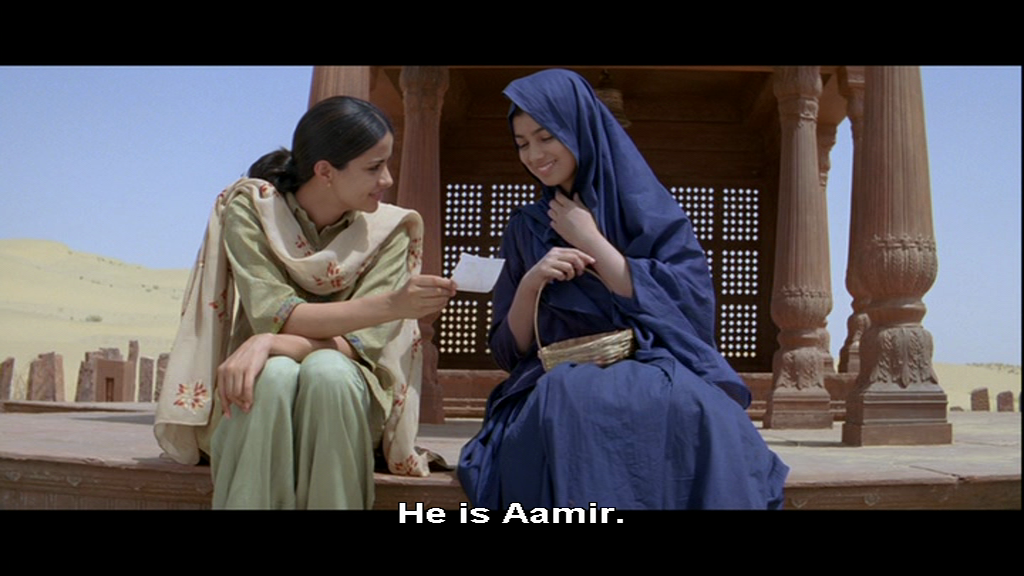
Gul Panag suits the character of Zeenat and perfectly captures her stubborn independence.  Zeenat is a Muslim woman from a small town in Himachal Pradesh who is determined to live life on her own terms and maintain her freedom.  For example, when her suitor Aamir (Rushad Rana) comes courting Zeenat rejects his advances in favour of repairing her house – personally I would have put him to work! This down-to-earth practicality and lack of sentimentality is repeated throughout the film which has the effect of making the few romantic moments much sweeter as a result of their rarity.

Despite her independent nature, Zeenat does love Aamir and when word comes that he has been detained in prison for the suspected crime of killing his room-mate, she immediately springs to his defence.  Zeenat is convinced that the death must have been an accident and is dismayed to learn that Aamir has been sentenced to death unless she can obtain a pardon from the wife of the dead man.  Zeenat has a close relationship with the local Imam and takes his advice on how to track down the young woman who may be the means to Aamir’s freedom. 

DorDorDorDor

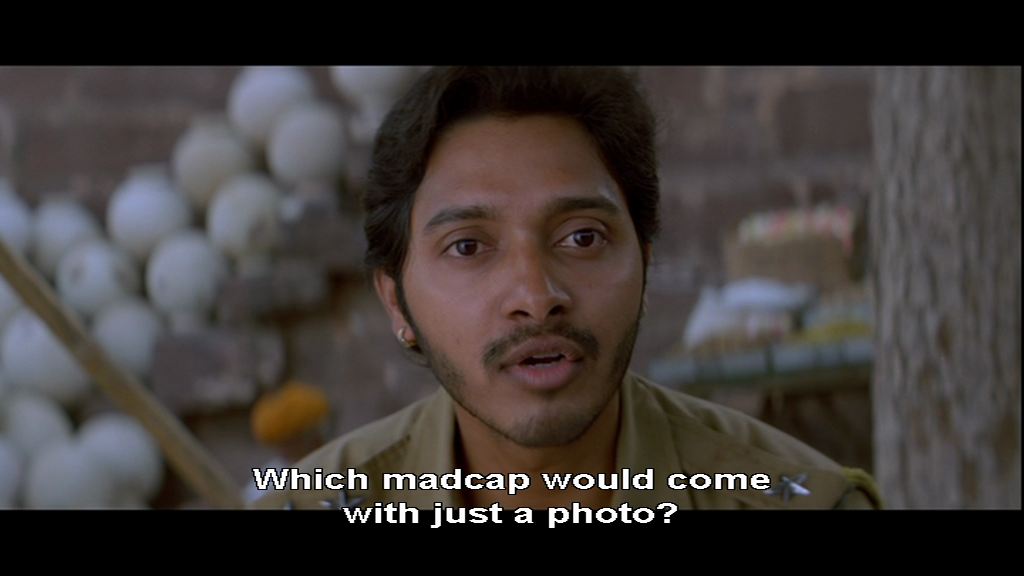
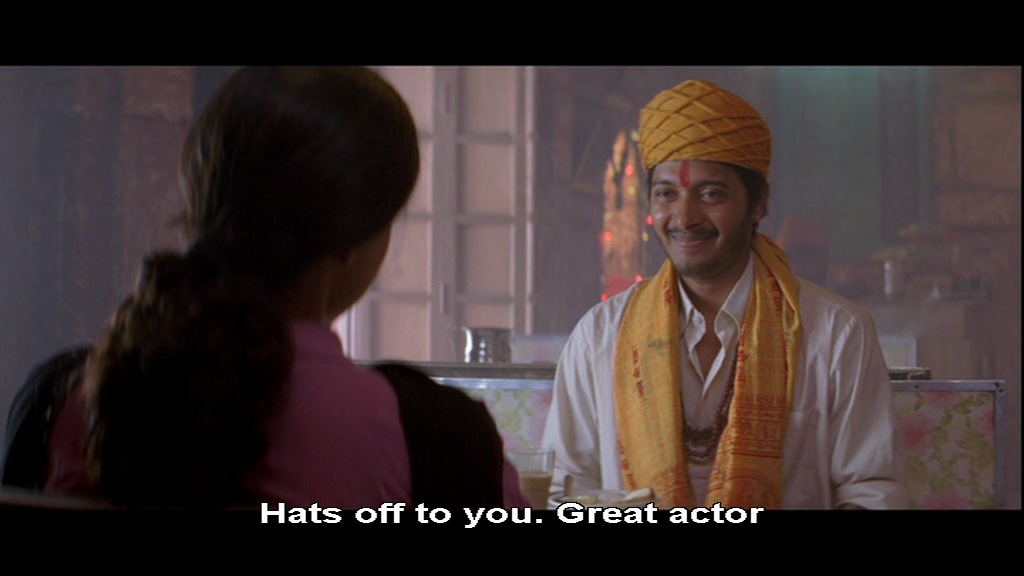
Although she doesn’t know anything about the woman’s whereabouts, Zeenat heads off to Rajasthan with a small bag, a photograph of the two men and a huge amount of determination and optimism.  Her faith in the universe seems to be answered when she meets up with a Behroopiya (Shreyas Talpade) despite the fact that at their first meeting he tricks and robs her.  However it is the Behroopiya who does manage to lead her in the right direction to find Meera. 

DorDorDorDor

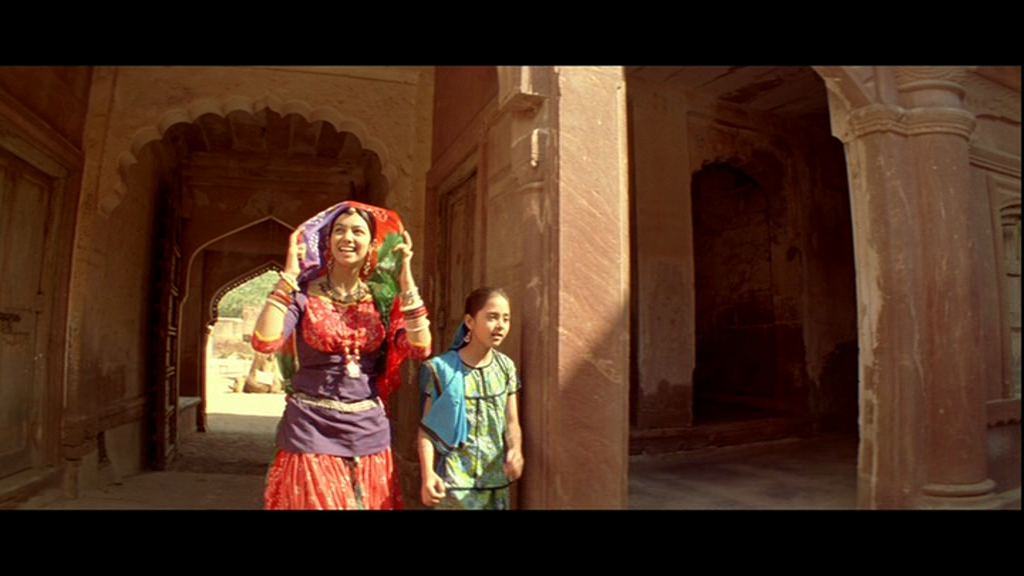
Throughout the opening scenes with Zeenat, we are also introduced to Meena and her very different outlook on life.  Meera is happily married to Shankar (Anirudh Jaykar) and has no problems living within the confines of a strictly traditional family in Rajasthan.  Ayesha Takia portrays Meena as young and innocent, flirting as she dances joyously for her husband, and becoming upset that he is leaving to work abroad.  Her youth is also shown in her pride that it is her husband who is earning the money which will buy back the family’s ancestral home.  However as the story progresses and Meena finds out that Shankar has been killed, she exhibits maturity along with strength and resilience as her world crumbles around her.

DorDorvlcsnap-2013-09-28-17h50m19s6Dor

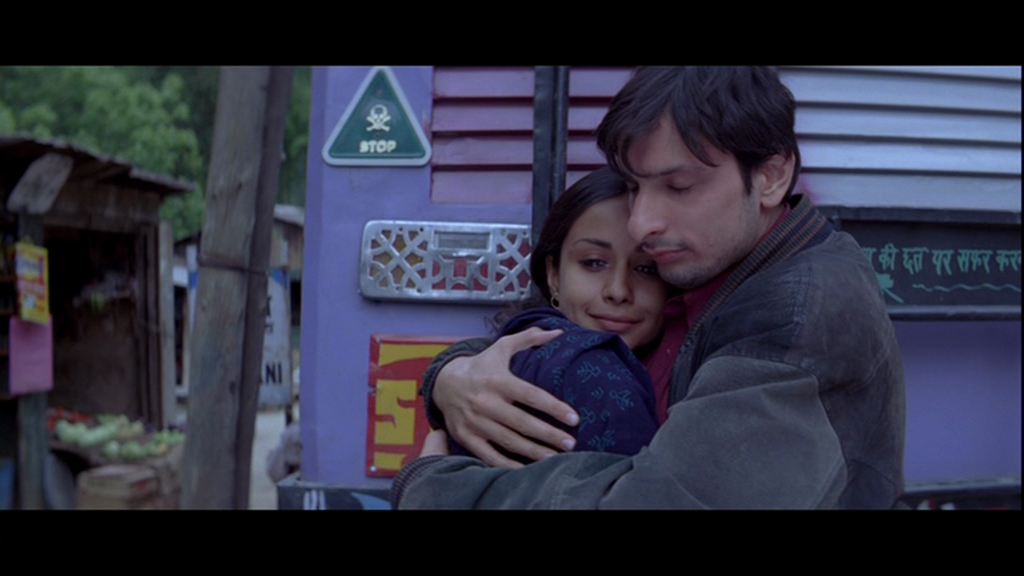
Ayesha Takia is very impressive in a role that demands  her character go through a major upheaval in her life and cope with the aftermath.  She makes the transition from young wife to virtual living non-entity as a widow very naturally and brings out every emotion as Meera has to deal with her new status in life.  Her reaction to the suitcase of her husbands clothes is perfectly nuanced and her moments of joy as she discovers friendship are beautifully acted.  It’s not surprising that she won a number of awards for her performance here.  One of my favourite moments is when she dances in the desert with Zeenat and the Behroopiyah – perfect!

Although at times the contrasts between the two women seems a little too contrived, for the most part the juxtaposition of their different lives works well. The grief and devastation shown by Meera for the double blows of the death of her husband and her loss of freedom is realistically portrayed while Zeenat’s self-contained grief is tempered with her determination and drive to save her husband at all costs.  Both actors seem very well suited to their roles, and Shreyas Talpede adds just the right amount of comic relief as the Behroopiya.  This character appears to be some kind of a guardian angel or possibly just an embodiment of Zeenat’s subconscious, as he watches over Zeenat and gives her advice.  It’s effective, especially when added into the more dream-like landscape of Rajasthan. 

DorDorDor

DorThere is one misstep in the film with the director playing a sleazy businessman who is renting the house in Rajasthan.  His repellent suggestion to Meera’s father in law feels filmi and false compared to the rest of the screenplay, although otherwise both Girish Karnad and Prateeksha Lonkar are excellent in the roles of Meera’s in-laws.

The background score by Salim – Sulaiman Merchant is beautiful and although there are no song and dance numbers the dancing within the film is spontaneous and just wonderful. This is another excellent song which shows Zeenat’s journey from Himachal Pradesh along with Meera’s symbolic journey from wife to widow.

Although not credited, Dor is based on a Malayalam film Perumazhakkalam which perhaps explains the quality of the story.  I’m still trying to track down a copy of this original film with English subtitles as it also won numerous awards and I’d like to compare the two.  However, Dor is still an enchanting film and the two leads ensure that the quality of the acting is as impressive as the screenplay and Sudeep Chatterjee’s gorgeous cinematography.  Although there is an underlying theme relating to the plight of women and their lack of value in some parts of India, it’s counterbalanced by Zeenat’s fierce independence and fighting spirit, so Dor never feels too preachy or morally worthy.  it’s a simple tale, beautifully told and I thoroughly recommend it.  4 ½ stars.

Dor