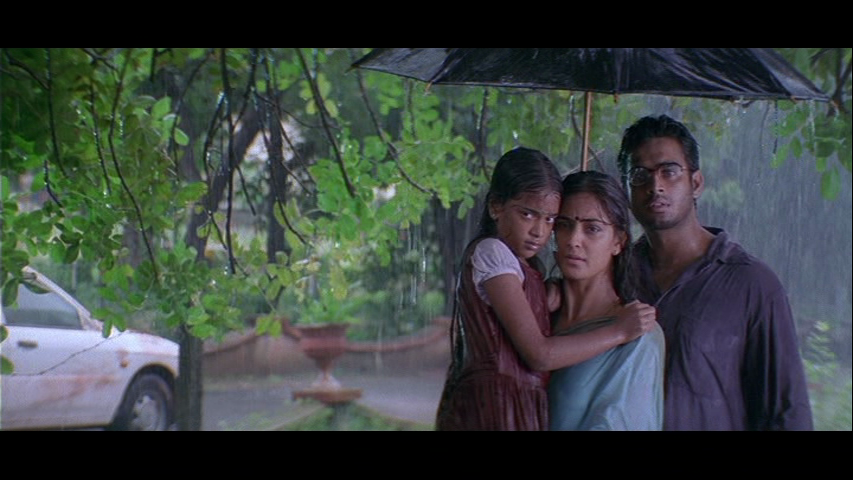
Madrasapattinam

I picked up Madrasapattinam with a little trepidation; after all Indian historical films featuring a cast heavy on English actors don’t usually bode well. But I was pleasantly surprised as, although there are tinges of Lagaan and a few cringe-worthy moments, overall Madrasapattinam fares somewhat better than expected. There is still the issue of almost uniformly ‘evil English’ and ‘good Indian’ characters, meaning most of the supporting cast are very one-dimensional. However the leads give good enough performances that apart from one notable exception, I could ignore the clichés and just enjoy how beautiful the film looks.

The film begins with the elderly Amy Wilkinson determined to return to India and find a man she last saw some 60 years previously. Ostensibly she wants to return a Thali necklace given to her as she feels it does not belong to her. As she is also quite seriously ill she travels with her increasingly whiney and irritatingly useless granddaughter Catherine who is supposed to be looking after her. To aid her search Amy has a photograph she took in 1945 but little else other than a name.

When they arrive in Chennai Amy starts to relive her time in India, when she was the young daughter of the Governor, and this is when the film really comes alive.  The young Amy is picked up at the station by the Commissioner of Police, Robert Ellis (Alexx O’Nell), and straight away he’s my biggest problem with this film. Why does every English bad guy have to be the most evil and despicable person on screen? It’s very obvious from the first time we meet him that this is a man with absolutely no redeeming features whatsoever and it’s difficult to keep watching and not just skip his scenes. In my opinion he could have been made much more interesting if he was just thoughtless and greedy rather than consistently evil, but sadly he’s just vile and repulsive and it’s very obvious from the very beginning how he is going to behave throughout the film.

On the trip to the Governor’s residence Amy meets Parithi (Arya) in classic ‘meet the hero’ style since she sees him running to save a donkey from the path of her runaway car. Parithi works as a dhobi and in his spare time he wrestles with local trainer Ayyakanu; a man with an impressive moustache who isn’t afraid to get down and dirty in the ring himself. Added to Partithi’s ability to run, wrestle and save animals is his most perfect feature – he can iron. Naturally Amy falls in love with her ‘brave man’ as he fights against the English plans to build a golf course on the area where the villagers work and live. It becomes a personal vendetta between evil Robert and Parithi as they are both also competing for Amy’s attention and since they are playing by different rules you know that it’s not going to end well.

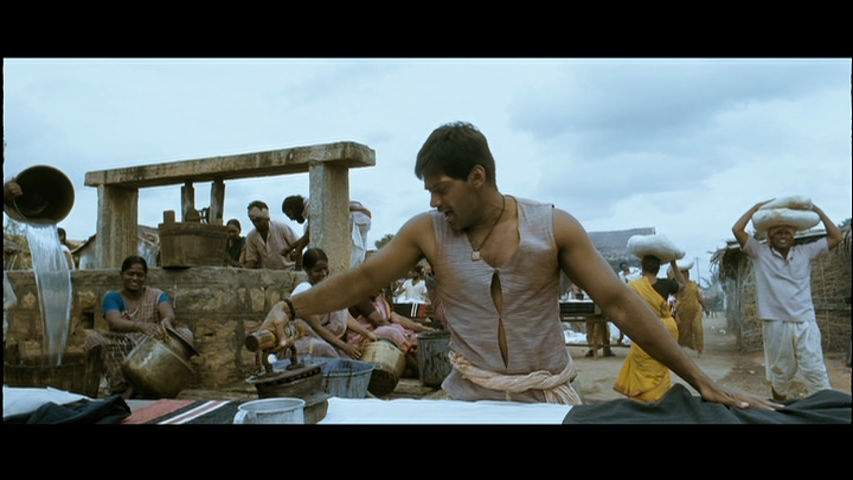
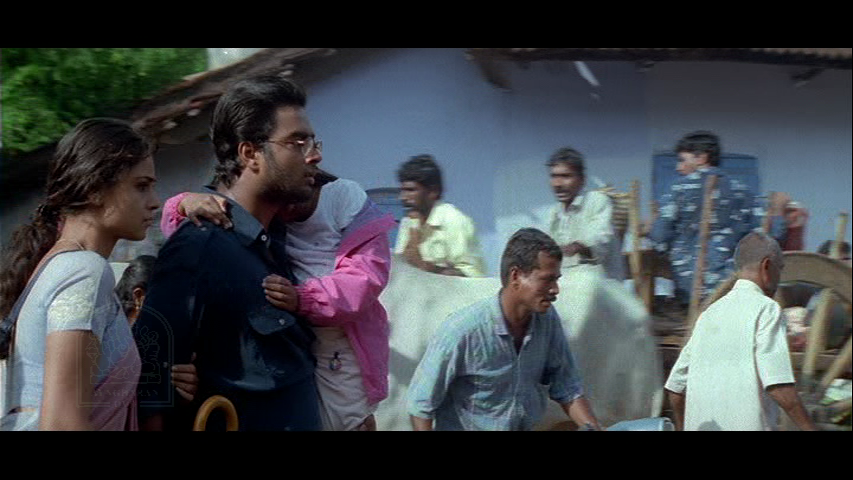
Amy and Parithi meet each other in secret, and there are some lovely scenes as they struggle to overcome their language barrier. They have an ingenious if somewhat laborious method of communication, as Amy draws pictures on her clothes of where and when they will meet which Parithi then has to launder off. Amy spends much of her time in the village with her camera, and the villagers seem to love her just as much as she loves them. However when Indian Independence finally arrives it means the end of her romance unless she can escape with Parithi. Their plans are naturally foiled by evil Robert who chases them through the Independence celebrations determined that if he can’t marry Amy then no-one will.

The romance between Amy and Parithi is the best part of the film. Amy Jackson is stunningly beautiful and is convincing as a young English girl in the post-war period. She is nicely restrained in her scenes with Parithi, but charmingly natural with Parithi’s sister Selvi and the village children. Arya is excellent as the strong and mostly silent Parithi who is determined not to back down in the face of the English oppression.

There are many genuinely funny scenes which are well integrated into the narrative, and these help the film from getting too bogged down in all the drama of the fight for the village and the seemingly doomed romance. Tension is well build up in the chase scenes although these could have been cut a little without losing too much of the suspense. Cochin Hanifa as the translator Nambi and Nassar as Ayyakanu are the best of the supporting actors but the story revolves around Amy and Partithi and no-one else has an awful lot to do.

The film does look beautiful with well constructed sets which seem to be representative of 1940’s Madras, particularly to someone like me who’s only ever seen the modern version from 1990 onwards. There are one or two instances of rather dodgy CGI but these are fleeting and don’t really disrupt the story so they are ignorable. The end credits feature old pictures of Madras landmarks followed by their current appearance which really was fascinating. One anachronism for me was one of the actors had an apparent artificial eye. While this was possible from the time period, I don’t really think it’s all that likely that a dhobi would have had access to this especially post WWII where prosthesis were a luxury. But that’s just my obsession and I’ll just see how many people spot him.
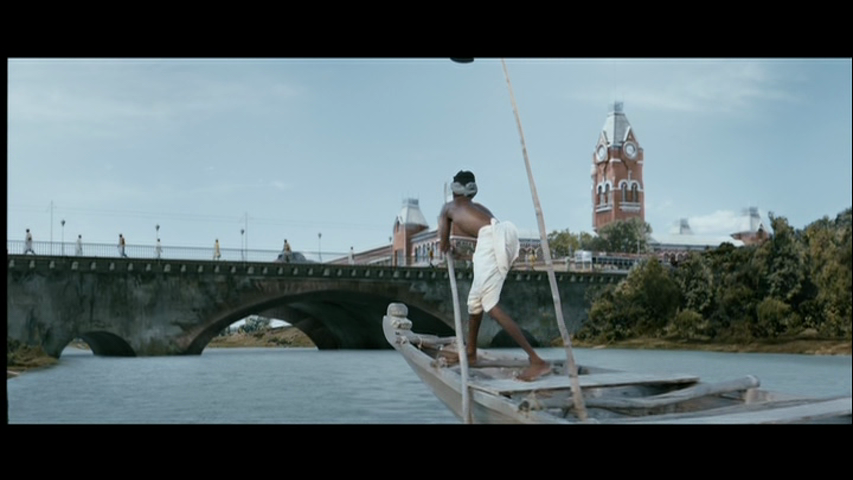
The modern day scenes are somewhat hampered by an incredibly wooden performance from Lisa Lazarus as Amy’s granddaughter although Carole Trungmar is rather better as the elderly Amy and her periods of abstraction fit her character well. The story is compelling and the final scenes in the present day give a satisfying conclusion. While the soundtrack by G. V. Prakash Kumar is perfectly adequate it doesn’t stand out as particularly memorable. The first song is set in the dhobi village by the river and I’m sure intentionally, is very reminiscent of Ghanana Ghanana Ghir from Lagaan, although in this case they are asking the rain not to come. The rest of the songs have less dancing than I would have preferred but we do get the opportunity to see Arya in an outfit that looks as if he has just escaped from a totally different period film as consolation.

While evil Robert and the standard ‘English opression’ storyline did annoy me in this film, the romance is quite charming and I think the two leads manage to carry the story well. The parts of this film that I like, I really do like very much but the parts that I don’t like, I really do dislike very much. Which means a lot of fast forwarding when rewatching. As far as historical romances go it’s certainly not the worst I’ve seen and I give it 3 stars, although one of those is for a hero who can iron!

Temple says: I don’t have the same issue with evil Robert that Heather does. He shouts, snarls, twitches, bullies his underlings, has a pit full of decomposing bodies in his backyard and constructs overly elaborate revenge plans. In short, he’s like almost every other filmi villain. I do have an issue with the atrocious acting by the guy who plays Amy’s father. Distractingly bad. Given to long….pauses. For no reason. And delivered other lines. Like this. Staccato. Caroline Trungmar was not impressive as the older Amy as she seemed catatonic for most of the film but her Titanic inspired role was mostly to sit and look like she was remembering so I may be a bit harsh in my judgement. The tradition of really bad acting by white extras seems to be alive and well and was embraced by many in this cast.  As they were mostly caricatures rather than fully developed characters I don’t know that a more nuanced performance would have been much help. The Indian supporting cast were all pretty good, and Cochin Hanifa is lots of fun as are Parithi’s friends.

I was more distracted by the indeterminate historical period of the costumes and dialogues. As the film starts in 1945, the European costumes are often very wrong indeed and the dialogue sounds as though some of it was lifted from Dickens rather than a comparatively modern family. And the Europeans’ manners at the dance…well.

But the film is really about Parithi and Amy and if you can enjoy their developing love story, then it is a pleasant enough timepass. Arya is excellent as the strong silent type, prone to flexing and ironing. Who could ask for more? Ok well, if you want more, he also wrestles.  Amy Jackson looked more like a footballer’s girlfriend than a 1940s heroine but I think she is one of the least embarrassing gori love interests in an Indian historical film that I have seen. Their interactions are simple and often Amy follows Parithi about as he works, allowing us to observe the villagers life and see the diverse supporting characters in play. They have a nice rapport, and the scenes with Selvi (Parithi’s sister) are genuinely touching.

The look of old Madrasapattinam is very picturesque and the olden days scenes are pretty and dominated by sepia tones that help keep the mood of past times. The modern city of Chennai is a contrast in grey and blue, cold and confusing. This feels very much like a pastiche of Lagaan and Titanic with a dash of Kisna and it is entertaining rather than informative.

I give this 3 stars – for a good looking film, with good looking stars and a positive message that men who iron are heroes.

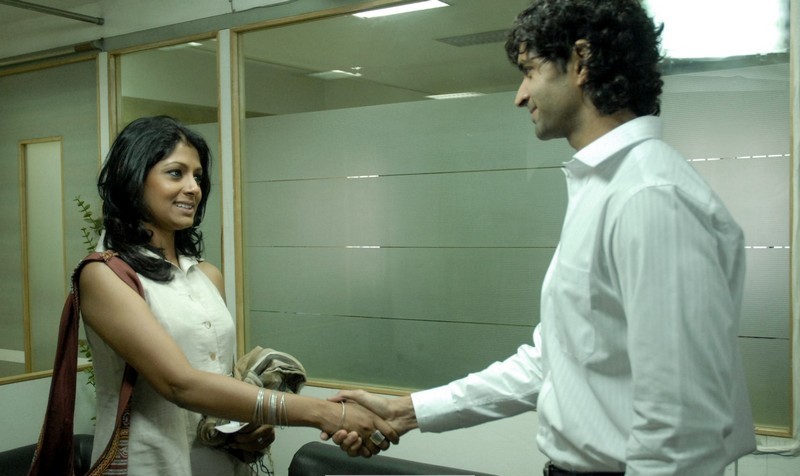
I Am

While Bollywood has just started to show kissing scenes and Hollywood is slowly integrating gay storylines into films, director Onir has moved much further ahead with his latest film. I Am is a confronting and thought-provoking collection of 4 stories which deal with subjects commonly not spoken about in public and rarely seen in mainstream film. In addition to its subject matter, the film is novel in that funding was partly achieved through social networking and has over 400 producers. Onir and Sanjay Suri initiated a page on Facebook where people were invited to sign up to help finance the film or volunteer their time. Manish Malhotra for example designed the costumes for free and many of the actors did not receive any remuneration. Also, somewhat unusually, there are three directors who appear as actors in the film; Anurag Kashyap, Anurag Basu and Nandita Das. I Am has won acclaim in a number of film festivals, a number of awards already, and luckily for us premiered in Australia as the closing film for the Indian Film Festival. As an added bonus, Onir and Juhi Chawla were present at the screening I attended in Melbourne to introduce the film and to take part in a Q and A session afterwards. My favourite actress, a director whose previous work I’ve enjoyed and his brand new film all adds up to a perfect way to spend an evening.

The four stories are loosely linked together by friendships, connections and chance meetings between the characters, and this works well as a connecting thread without feeling too contrived. The first story is Afia’s (Nandita Das)and deals with her determination to have a child by herself after her divorce.  Her friend Megha (Juhi Chawla) speaks as the’ voice of society’ condemning Afia for what she perceives as selfishness and the story raises a number of questions around the issues of single parenthood and artificial insemination versus adoption. The debates between Afia and Megha are honest and natural and the conversations Afia has with a number of her male acquaintances as she looks for a sperm donor ring embarrassingly true. Onir described Afia’s story as the most ‘Bollywood’ and it does follow a more traditional story telling path compared to the rest of the film.  I don’t relate to this story personally as Afia’s decisions would not be mine, although I mainly agree with her right to choose.

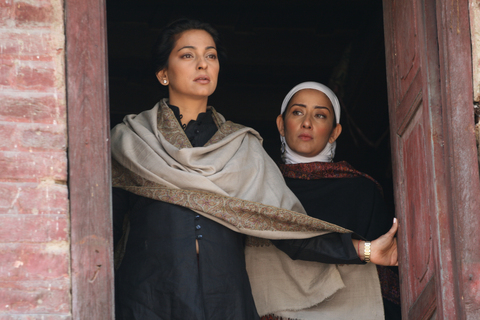
The second story is Megha’s own and describes a trip she makes back to Srinigar for business, having left the area some twenty years before with her family as part of the Kashmiri Pandit evacuation. She stays with her childhood friend Rubina (Manisha Koirala) and the contrast between the two women; one who was forced to leave and one who had to stay, forms the focus of this section. The suffering on both sides is evident and Rubina envies Megha’s freedom of living in Delhi away from the continual threat of fighting. Megha in turn resents having had to flee the violent attacks on her family.  Srinigar looks very similar to my home town of Belfast in the seventies, with bombed out buildings, soldiers everywhere and the ubiquitous presence of barbed wire.  But behind the rubble there is still beauty in the landscape and Onir manages to capture this equally as well as the devastation. This was a very touching story and I was surprised to read in the statistics at the end of the film just how many people were displaced as this is something I know very little about.

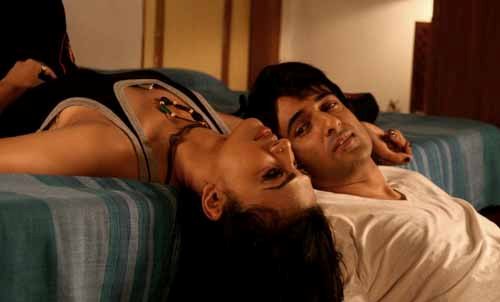
The third story is that of film maker Abhimanyu (Sanjay Suri) and deals with the taboo subject of child abuse. We see that Abhi was abused by his step father as a child and this is his story about finally being able to speak up about his childhood. Abhi has recurrent dreams of his mother and many of the scenes also have a dream like quality as if Abhi can only bear to relive them a step removed. There is a well-defined contrast between Abhi’s party life style and large group of casual friends and the scenes where he confronts his past with his close friend Apama.  Throughout the story Abhi is conflicted about his sexuality and his childhood experiences have had an obvious effect on his ability to form relationships. This is a very difficult subject to film but Onir and Sanjay manage to deal with it sensitively and the story is well told.

 The final story is the most shocking for me in many ways, not because it features men kissing, but because of the events that follow. This is Omar’s story and explains how Section 377 of the Indian Penal Code is used to extort money – and more – from homosexual men. Omar is a hustler picked up in a bar by Jai before they are spotted by a corrupt cop. The confrontation is graphic and detailed, and it’s very disturbing to know that it is based on true accounts.  Onir expressed his amazement during the Q and A session that the film got through the censors without getting any visual cuts (mainly referring to this story) and I am amazed along with him. Some of the dialogue was muted, however the subtitles were abundantly clear as to the viciousness of the scene depicted despite the many ****’s. Rahul Bose as Jai was incredible in this and was able to effectively portray subtle changes in Jai’s mannerisms as a consequence of his experience. I am very impressed with his performance as he really made me believe this story, much as I didn’t want to.

The film starts with an easy to digest story and ends with a truly sickening one. The progression is deliberate and the style of shooting changes along with the dialogue delivery. Afia’s story is shot with open angles and plenty of space, but by the time we reach Omar’s story the style is much more closed in and claustrophobic. The dialogue becomes more graphic in each story as does the action on-screen. I find it hard to describe my feelings about this film – I can’t say that I enjoyed it, because I felt too uncomfortable while watching.  And it’s not a film to be enjoyed as such anyway. It is brilliantly filmed – the actors are outstanding and the stories themselves are very well written and I can appreciate it as a work of art. It would be more accurate to say that I enjoyed the experience and think that the film is excellent, just not one for everyone’s tastes. Thought-provoking and challenging, I Am gets 4½ stars.

Kannathil Muthamittal

I watched Kannathil Muthamittal when a number of people recommended it to me after I worked in refugee camps in Sri Lanka. I think that my experiences there have really coloured my view of the film as I do focus more on Shyama’s story and less on the main characters. That said, I think the story is well told and the actors all do a good job – it’s just not the story I wanted to see.  It’s a classic Mani Ratnam film with strong female characters, great cinematography and attention to detail, so it’s no surprise that the film won six National Awards.

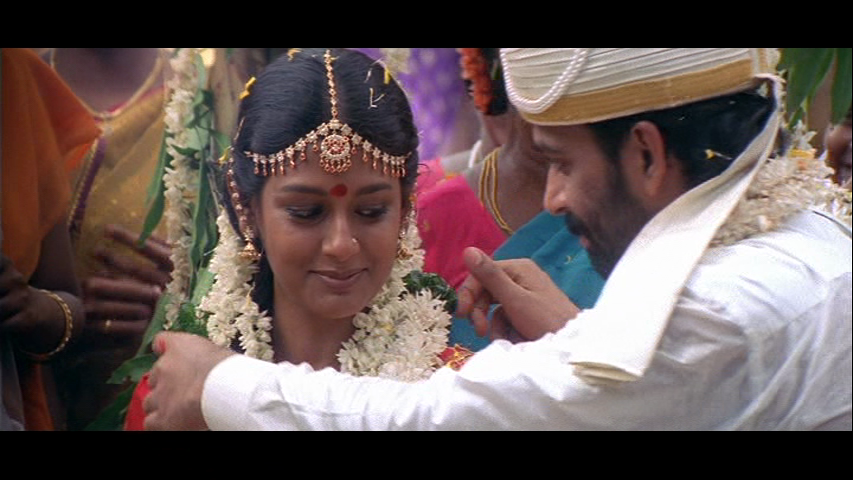
The film opens with the wedding of Shyama (Nandita Das) and Dileepan (J. D. Chakravarthi) in their village located in northern Sri Lanka. Despite this happy start it’s not long before Shyama is pregnant and on a boat heading for a refugee camp in India while her husband is missing, presumably fighting for the LTTE. Once she gives birth in the refugee camp, Shyama leaves her daughter behind and heads back to Sri Lanka to try and find her husband.

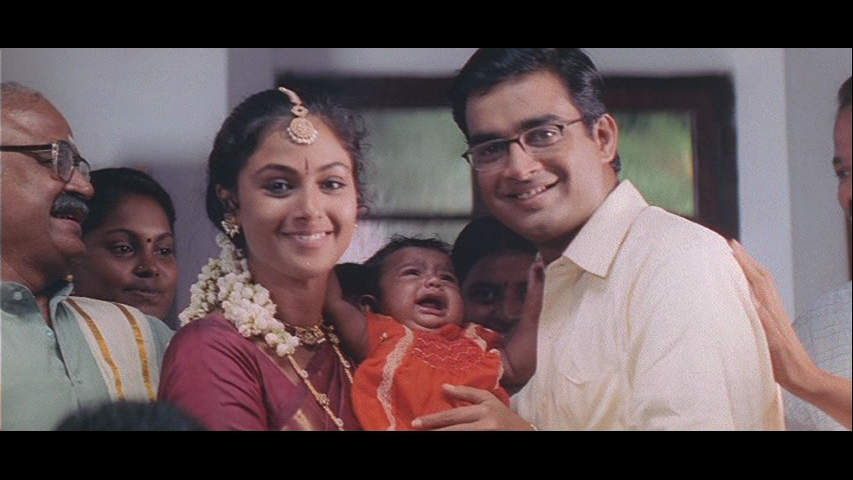
From here the film skips forward in time to introduce G. Thiruchelvan or Thiru (Madhavan) and his family, as seen through the eyes of his adopted daughter Amudha. Convincingly played by P S Keerthana, she appears to be a typical precocious 9 year old; playing with her friends at school, teasing her two younger brothers and very definitely the princess in the family. The story of her adoption is told in flashback and shows the development of the romance between Thiru and Indra (Simran).  I really like this part of the story as the two leads play their parts well and the intertwining of the adoption story and the romance is really sweet.

After she is told by her father on her ninth birthday that she is adopted, Amudha becomes moody and withdrawn and finally demands a chance to meet her real mother in Sri Lanka. For some inexplicable reason her parents accede to her demands and the family head off to the war-torn nation, although they did have the good sense to leave their other two sons behind.

The scenes in Sri Lanka make me cry every time I watch this film. I have seen the same mix of resignation and total despair on people’s faces that is shown here when a village is evacuated. I worked on the East Coast and regularly travelled between LTTE and government controlled areas. The incredibly young soldiers with their automatic weapons shown in the film is very much true to what I experienced and for me this total realism clashes with the more idealistic search for Shyama. Mani Ratnam wisely doesn’t attempt to explain any of the conflict, only showing its effects on Indra and Thiru as they realise why Shyama left her baby behind.

Amudha becomes bratty and rude as she deals with her feelings of alienation from her family and as a consequence I lose much of my sympathy for her. I also disagree with her parents’ decision to try and find her birth mother, no matter how essential it is to the plot. However both Simran and P S Keerthana convey their conflicting emotions and fluctuating relationship well and Indra’s  inner conflict as she worries about her two sons left behind in India is effectively depicted. Although Amudha is irritating the young actor does hold her own against the more experienced cast and it may be more due to the over emotional story that I lose interest in her search. Madhavan’s character, although impressive in the beginning, seems to have little impact in the latter half of the film and Prakash Raj is wasted in his role as the doctor taking the family around Colombo. So while I enjoy the first half of the film, the second half tends to drag with the adoption story and the peripheral action is more engaging . Some of Amudha’s rebellion in this section could have been cut without losing the feeling of her isolation and separation from the rest of the family. The ending is also a little disappointing but Mani Ratnam shows restraint in not turning the final scenes into melodrama, which could easily have occurred given the subject matter.

What I do like about the film is that it looks beautiful and is well shot by cinematographer Ravi K Chanran. Lighting is used to good effect as the early scenes in the family home are filled with warmth in contrast to the rain and grey skies in the later part of the film. While the background score of the film by A. R. Rahman is both beautiful and haunting, some of the songs are a little intrusive. The story doesn’t really need dance numbers and they seem to interrupt rather than move the film forward.

This isn’t a film I particularly enjoy watching, probably more because of the memories it evokes, although I can see why it won awards and I do think it’s generally well acted. It’s just that I would have preferred to see more of Shyama’s story and less of the family drama.  3 stars from me, mainly for the first half.

Temple says: This is one of the first Tamil films I saw a few years ago, and I was prompted to pick it up because of the storyline and for Madhavan.

Thiru (Madhavan) fell in love with the idea of giving Amudha a home and family, and I always feel that if Indra hadn’t agreed, then someone else would have been procured to play wifey. His decisions all revolve around what he wants – the way he courts Indra, the adoption, telling Amudha and persisting when it was clear she wasn’t ready for this birthday surprise, and on it goes.  The job of explaining and reassuring was left mostly to Indra, and she had to bear the emotional burden of seeing her little girl in torment as she herself struggled to cope. Simran is lovely as Indra, but her character is surprisingly weak considering the way she met Maddy, and her being a news anchor. I expected more backbone, but the women in Mani Ratnam films are often written like this – a strong outline and not a lot of finer detail to make them seem more real.

I was adopted and my mother told me every day, long before I even knew what words were, so it would never come as a shock to me and to make it clear that ‘adoption’ isn’t a dirty word. My perspective is coloured by that and while I can understand the bratty Amudha wanting to know her own story, I will never understand her adoptive parents taking her into a war zone no matter how much she sulked.  Still, the treatment of her story in terms of her developing understanding, the legal adoption process, and the fallout once the truth emerged was handled in a much more credible manner than many other films with orphans scattered around the streets, under cabbage leaves, going free to a good home.

The prologue was excellent in setting the scene, but beyond that Shyama and Dileepa didn’t really fit. The context of the Sri Lankan conflict added another dimension, but also made the second half of the film too dramatic and improbable when they went looking for Shyama. So although a fascinating and moving topic, here it is just used as a background for the  family weepfest.

The soundtrack works well in the film, but I find the songs bland. The picturisations are beautiful, most are very stylised, however I can only take so much fabric blowing around and children running on the beach. They suit the mood of the film, but having seen them before, I made a cup of tea during a couple of songs this time. I felt the same about the story device for the flashback – the handwriting and drawings became a distraction and took my focus off the action. Pretty visuals just aren’t enough to keep the film on track.

When Mani Ratnam wants to belt you over the head with a message about peace, unity, love and what makes a family, he can make Bono seem subtle. I give it 3 stars.