Lakshyam

Lakshyam is a highly entertaining mishmash of romance, comedy, action, politics and family drama. It succeeds largely because of the casting – Jagapathi Babu, Gopichand and Anushka in particular do a fine job – and some skilful writing and direction that balance all the elements.

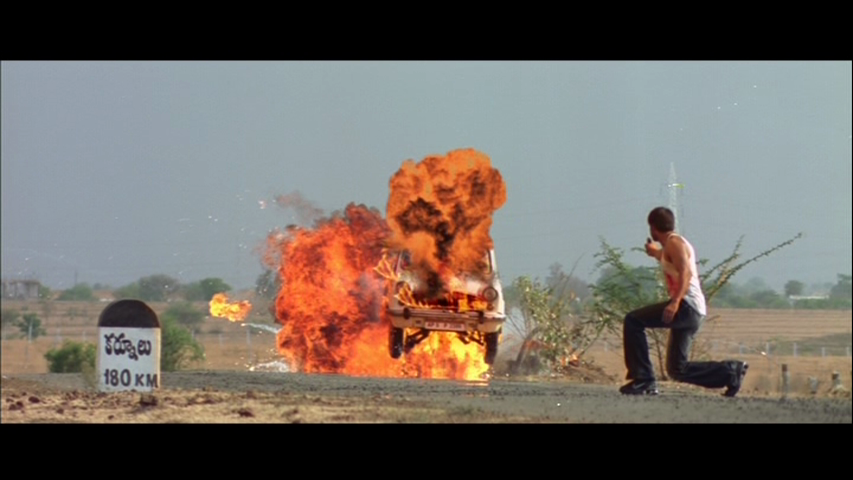
The film opens with a girl running away from her own wedding. She looks so pretty and pristine as she scoots off across town, eventually making a rendezvous with a bloody and battered man. I was intrigued by the look of happy pride on her face when he efficiently blew up a car, shot a policeman and then hopped on the back of her moped. I wondered how they got to this point, and what was going to happen next. With a bit of time travel, we get to the chronological start of the story. The film is very well constructed, and the flashback and current day sequences flow well. There are some pleasingly playful references to filmi clichés and the cast seem to enjoy the improbable shenanigans.

Anushka is Indu, a modern uppity type of college girl. She has a very specific list of demands for a prospective husband and seems to think it is perfectly reasonable to share this with a young child on the train. Pinky immediately decides to set Indu up with her uncle, Chandu. He has his own, very different, list of required qualities and even the kid knows it’s not likely to work.

Anushka is one of my favourite current day actresses (yes, actress not ‘heroine’), and she is quite good in this role. Her character has some silly and selfish moments, but underneath it she is a likeable young woman. At the very least she knows when to apologise for her mistakes, so she is not too bratty. Indu is a Telugu heroine so of course if anything goes wrong she is reliant on any and every man within 20 metres of her for help and a solution. But the helpless female act is balanced with Indu cheekily pretending to be a gangleader’s sister and using his name to get her own way. This leads her into conflict with the cool dude on campus, Chandu. So she calls her little train friend’s uncle to sort him out. Yes – Chandu again. So there is a romantic comedy of errors as Chandu takes on Chandu and tries to bluff his way through. The silliness is increased with Brahmi and Venu Madhav battling each other for control of the student canteen.
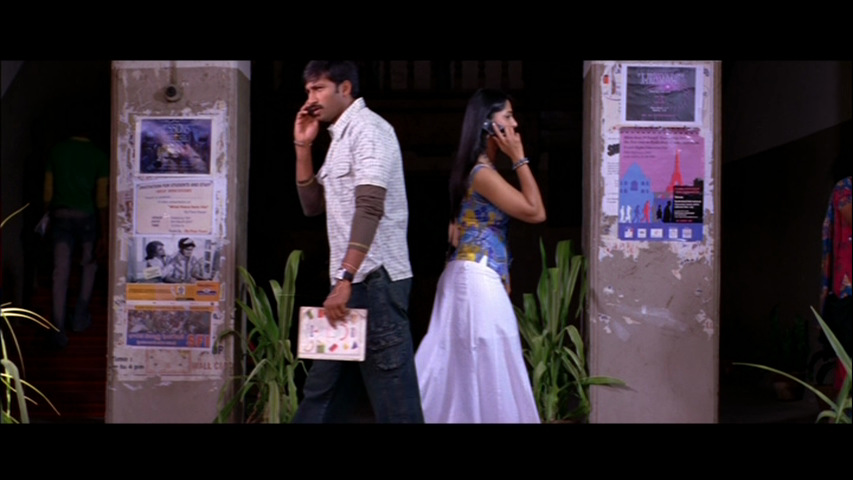
My reason for picking this film a while ago was that I hadn’t seen Gopichand in a lead role and I was curious. He does well and seems to be a good generalist in terms of Hero Skills. He can act a bit, dance a bit, fight a bit, and has an engaging onscreen presence. His introduction scene is vintage hero stuff – he is chained and dangling upside down in a police lockup. But with a single bound he frees himself and escapes to wreak havoc. The college romance scenes don’t work quite so well as the later more energetic action sequences but he and Anushka do have chemistry and he gets right into hamming it up. And let me applaud a song with a backup dancing Spiderman.There is not enough of it around.

Chandu and Indu eventually fall in love and actually tell each other so they then just have to deal with all the usual obstacles – telling his family, her disapproving dad, and of course a crazed psychopath who happens to be a mad inventor. Chandu also gets caught in the fallout of his brother’s activities. He is a man of action, and takes a direct approach to solving problems. Although I did like that he sometimes cowed his opponent just with a graphic description of what he would do, so had no need of the actual biffo. You can have your cake and eat it too – a non-violent solution that incorporates a violent fantasy sequence. Gopichand is well able to match the changing tone of the film from the fluffy  romance to the revenge driven action and drama.
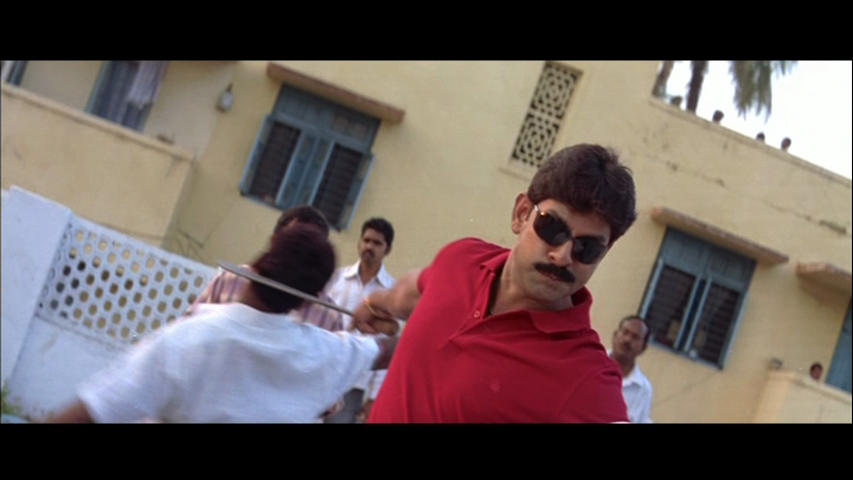
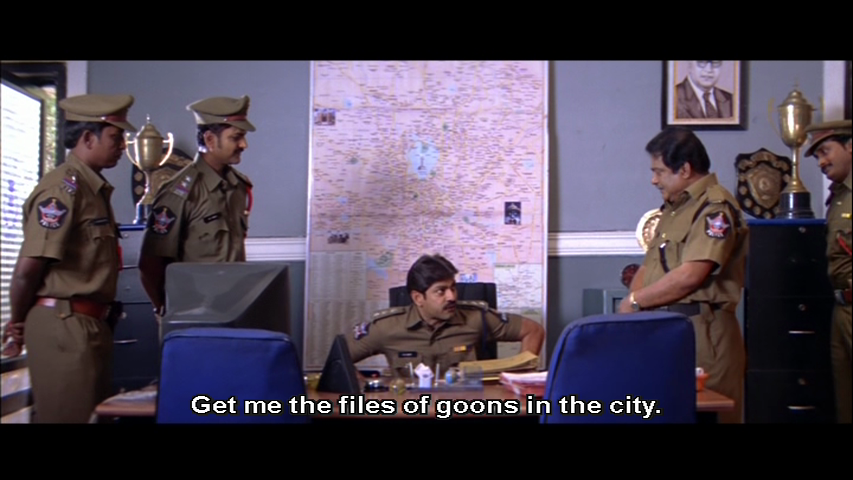
Chandu’s brother is Inspector Bose – Jagapathi Babu. He is an honest, crusading policeman and of course is wildly unpopular with the underworld. Newly transferred to Hyderabad, Bose takes on Section Shankar, Indu’s ‘brother’, a thug protected by senior police. I like Jagapathi Babu and this role is a good fit for him. Bose is a cop but also a family man and has a competitive relationship with his brother and his journalist father (Kota Srinivasa Rao) so there is lots of scope for his offbeat style.
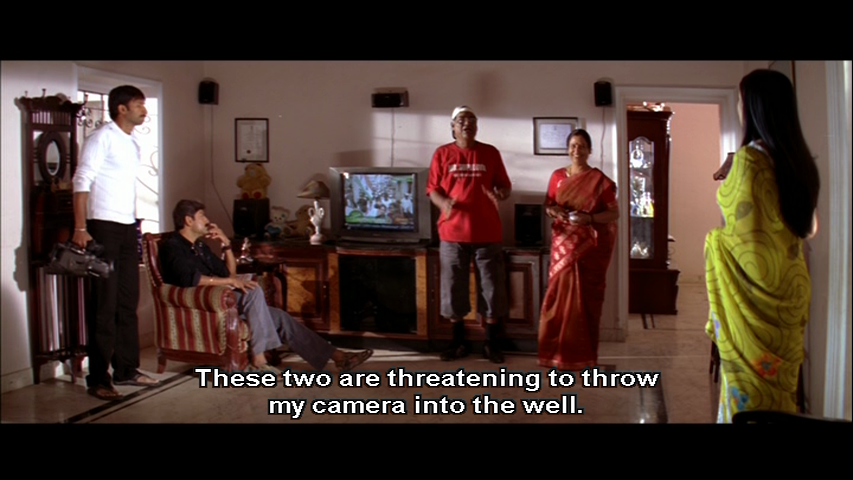
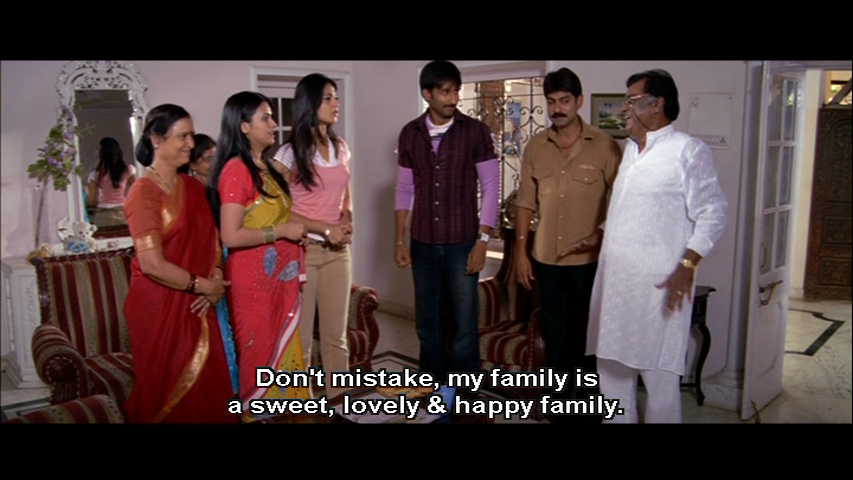
The brothers have different approaches but are not forced into a separation or battle for whose philosophy should win, and I really liked seeing that more natural sibling rivalry. They were great mates as well as brothers, and the family scenes were fun. Bose and his wife (Kalyani) have a very affectionate relationship, and it is a nice domestic environment. But Bose also has a kickarse side and Jagapathi Babu gets his own action sequences, including some excellent use of coconuts as both defense and offense. He is also the victim of one of the most elaborate assassination attempts I can recall seeing. I was muttering “What? He’s not dead – yet? What!” as the drama kept unfurling.

It’s interesting that once again the law is shown as helpless in the face of crime and they rely on people like Chandu to get things done. Dharmavarapu Subramanyam is cast as an honest cop, and his comedic skills are used to help the story as a bumbling but good guy. Even Ashish Vidyarthi as the DIG makes it clear that the police need to rely on subterfuge to even compete let alone succeed, so there is an oddly defeatist note to the brother’s battle with Section Shankar and his corrupt cop associate (Devaraj).
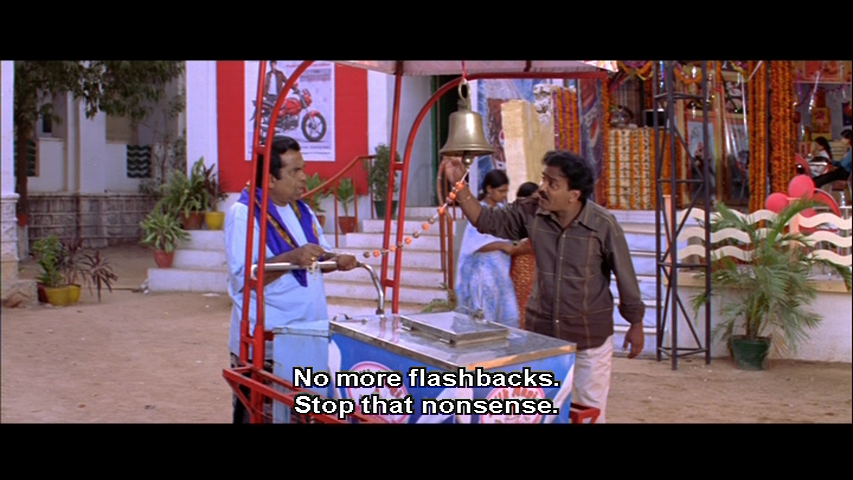
I was moderately alarmed when I read the long list of ‘comedy uncles’ in the cast, but Srivas and writers Gopimohan and M Rathnam do an excellent job of balancing the story elements and allowing a lot of the humour to emerge in a more natural style. Kota Srinivasa Rao is in good form as the newsman father who believes he might possibly be in charge of his household. Venu Madhav and Brahmi have a running battle which keeps them from bogging down the rest of the story, and when they do interact with the rest of the characters it is usually fun. And there are some amusing touches – a fixer for Section Shankar has gunfire as his ringtone, one rowdy knocks himself out in a fight, and there are lots of little reactions and one-liners that liven things up.

The song picturisations are nothing out of the ordinary and neither is Mani Sharma’s music, but they are executed and placed well. Anushka is not much of a dancer although she does give her dance performances some energy and excellent facial expressions. I would say Gopichand’s natural genre might be ‘uncle dance’ and he does it pretty well. He certainly looked like he had fun dancing, and it added another degree of contrast to his vengeful brother aspect. And he seemed quite unperturbed by some of the shirts bestowed upon him.

Lakshyam does strain the credibility muscles more than a few times, but it is such an entertaining and well paced effort that I just go with the flow. The cast are good and are given characters with a little bit more depth than I expected. There are convoluted schemes, a deathtrap, peculiar decision making – all the trappings of a good potboiler. The writing is clever and kept me smiling if not laughing out loud. And the baddies got their various comeuppances in suitable style. It was all quite satisfying.

Give it a go! 3 ½ stars.

Subhalekha

Once again, dodgy VCD quality and no subtitles mean that I have probably made up a lot of the story. But it is the characters (and actors) who made Subhalekha so enjoyable for me, not just the plot.

It’s a K. Viswanath film, so there is a message. In this case it is dowry, shown in this film as an outdated and bad practice. This is illustrated through montages of newspaper stories as well as incidents in the story. He targets men in particular castes and professions and their demands for a high price, particularly when they have no financial need. But he doesn’t go completely filmi and say love is all you need. Arranged marriage is not the issue – it’s the financial pressure of high dowry demands that can cause massive debt and stress on families. The relationships in the film develop in a believable way (well, most of them), and it seems that the marriages based on mutual respect and affection will probably work out. There is also some very nice character based humour to enliven the story, and I really enjoyed it.

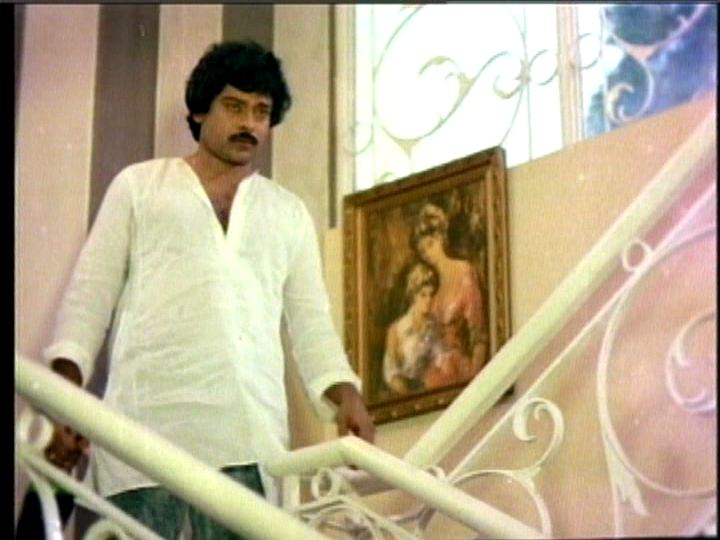
Murthi (Chiranjeevi) is a waiter at a big hotel. He is naturally helpful and generous but not a push over. Unless the one menacing him is a dog. I’ve noticed something in a few Telugu films now – the overdubbing of animals by what is clearly a guy in a studio saying ‘Raaargh’. But don’t take my word for it.

Chiru dances his way to safety, catching the eye of Rao (Arun), an industrialist staying at the hotel. As a result, Rao casts Murthi as the hero of an advert for Allwyn fridges. This clip shows Chiru’s experiments in various classical dance styles, and is that ad within the film.

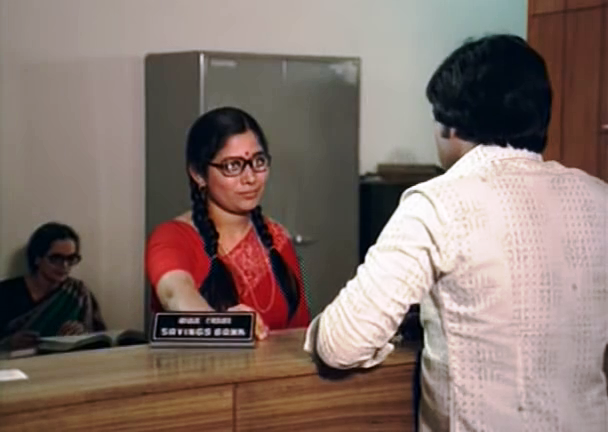
I like the exuberance, the vague attempt at accuracy and the expression on Chiru’s face throughout. I just love watching him dance. I laughed a lot in one scene when a lady in the bank started babbling over the ‘lovely, beautiful, wonderful’ Allwyn Hero when he came in to cash a cheque.

That would be me! And I’d totally buy that fridge.

Murthi exudes music and energy, singing his way through the day and even using song as conversation. He seems to be reasonably educated and working as a waiter was probably not his dream, but he does it well and picks up on opportunities. He deals with family problems, negotiates corrupt officialdom and is an everyman. Chiranjeevi gives Murthi a genial and easy going charm, with glimpses of the pride and self confidence that keep him going. That earnest vulnerability is worlds away from the mass hero style, and so endearing.

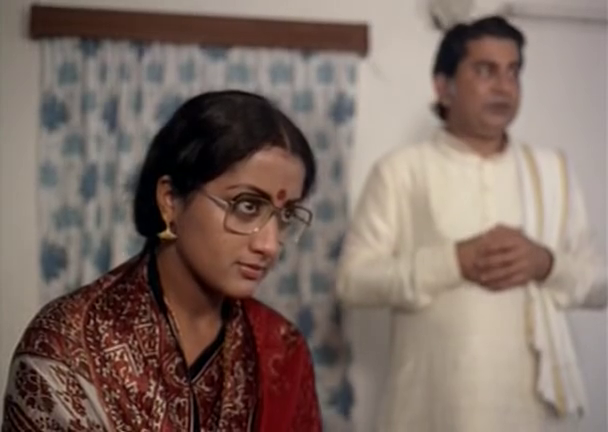
Also in the bank and checking Murthi out is Sujatha (Sumalatha). She is a serious young lady, a college lecturer, not a glossy glam heroine. She is due to be married to Mohan (Girish). The wedding negotiations stall over dowry. Her intended is from a rich family and has no need of money. Her father is forced to agree to the price, but Sujatha delivers a dressing down to prospective father-in-law Adisseshaya (Kaikala Satyanarayana) and the marriage is off. I really liked Sumalatha in Khaidi and she is impressive in this role too.  While being primped for her meeting with Mohan she brushes off her sister saying she wants to be what she is. Sujatha is resourceful, copes with setbacks and sometimes needs help, and is never a doormat. She and Chiranjeevi make a good couple, and I really liked their little disagreements and playful scenes.

Sujatha is sacked from her job and her parents throw her out when they decide she is having an affair with Murthi. Murthi is delighted she stood up for herself against the politician who refused to help his family. So he helps her find accommodation and they live in an idyllic version of poverty, with him acting as Sujatha’s household help. After insulting Adisseshaya, Murthi also loses his job, copping a beating along the way. Murthi uses his connections with Rao to get them both jobs – they never just give up. He might look after Sujatha, but she is an independent woman with her own earnings and a sense of worth. Murthi wants to see her settled, so approaches Rao who agrees to marry Sujatha. All this despite me knowing that Murthi loves her and she loves him. But I had faith it would all be set to rights.

It isn’t just the central couple that have their moments. Sujatha’s sister Lakshmi (Tulasi) is an impulsive and extroverted girl. She spots the ultra groovy Murali (‘Subhalekha’ Sudhakar), Adisseshaya’s other son – really, how could you miss him in those trousers? She is smitten and he cannot resist. They are mostly a comedy diversion, but since their antics are actually moving the plot along I quite liked them. Plus Murali’s dance moves are just hilarious (as is the decor in his room). Even though the sight of him made me giggle, Murali is a strong willed young man and sticks to his guns. Murali and Lakshmi conspire to prove a point and sort their families out, showing surprising sneakiness. I dither between thinking they are perfect for each other and wondering what will happen when disco dies or their hormones settle. But I enjoyed most of their scenes and thought they both had fun with their characters.

Mohan –the original groom for Sujatha – also has a surprise for his dad. While everyone was running around like headless chickens, he went and got married to Murthi’s sister. He did what he thought was right, and avoided his father’s veto by not asking for permission. The younger generation in the film are educated and have opportunities, so they are able to challenge outmoded practices.

The film is firmly anchored in realism and there is very little glamour or fancy apart from the characters’ own mild daydreams. The houses, workplaces and clothes all seem appropriate and not too new. There are nice interior details, and someone in the hotel had a thing for feature walls. The humour is integrated into the story and characters and there is little pointless comedic shtick. When Murthi returns to his village, he sees a line of people outside his home, and suspects something bad has happened. But they are only lining up for food his grandmother (Nirmalamma) is giving out. The scene unfolds beautifully with tears, overacting, and laughs, showing Murthi at home and his relationship with his family. Rallapalli and Allu Ramalingaiah have smallish roles but provide good foils for Murali and Murthi. I really liked the way the story plays out, and how the different characters all come back into the picture at the end.

KV Mahadevan’s music is pleasant. I never wanted to fast forward through the songs but I really can’t recall any individual melodies. This is not a big song and dance type of movie and the music does match the story and mood. I can only assume the lyrics also reflected what was going on.

This is such a restrained and well judged film I had to check again that it was indeed the same director that made the far less sensible Aapathbandhavudu! The last few minutes lost me a little as the story was resolved by booming voiceover while the action continued. I would have preferred letting the characters do the talking, but it is a satisfying film.

See it for a nicely balanced romance with a social message and of course for the excellent Chiranjeevi. 4 ½ stars! (A small deduction for the dire picture quality which annoyed me greatly).

Heather says:

Right from the very opening scene Subhalekha is a mesmerising film and surely only Chiranjeevi could make a small incident with a dog into such an entrancing piece of cinema. The story flows smoothly from one scene to the other and despite my very poor quality VCD copy, the quality of the film editing stands out. It’s very disappointing that Subhalekha isn’t available with subtitles, as although the basic story is relatively easy to follow, I am sure that I missed so much from not understanding the dialogues. There are quite a few long speeches where, although the general idea comes across due to the way the character speaks, it’s very frustrating not to know the details, especially since everything points to the dialogues being well written.

Chiranjeevi is excellent as the faithful and kind-hearted Murthi but Sumalatha puts in just as strong a performance. I found her scenes when she defies her prospective father in law gripping, despite the fact that I didn’t understanding a word! As much as I enjoyed the developing relationship between Murthi and Sujatha, the romance between Sujatha’s younger sister Lakshmi and Mohan’s brother Murali was easier to understand and probably for that reason their interactions were some of my favourite moments in the film. With his snazzy clothes and the huge over-sized glasses, so typical of the times, ‘Subhalekha’ Sudhakar was perfect in his role as the hip and trendy younger brother, and Tulasi was lovely as the rather feisty and adventurous Lakshmi. I also appreciated the quarrels between Murali and his father, and the declarative way Murali ended every argument with “I love her!” made me grin every time. I enjoyed all of the songs in this film, but my favourite was one pictured on Lakshmi and Murali as they cavorted around on the beach. It was only just overshadowed by Chiru’s excellent fridge advertising which was brilliant but not quite long enough for me. Just a little Chiru classical dance is never enough and I wanted more!

Films with a social message can often end up with too much preaching and not enough actual story, but that certainly isn’t the case here. The characters all seem to have genuine reasons for acting the way they do, even Adisseshaya is following convention rather than just being difficult and greedy (although of course he is that too), and it is all feels true to life. I do wish though that more discussions in real life could be held in the form of song in the way that Murthi communicates here.

This is such an excellent film that I am amazed it hasn’t been restored and re-released with subtitles. Despite the often poor quality of the VCD, Subhalekha is well worth a watch for some great performances and a well told story. Plus of course no-one does shy and bashful as well as Chiru! 4 ½ stars.


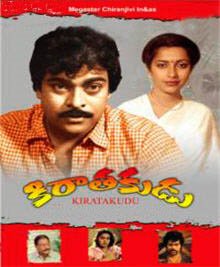
Kirathakudu (1986)

If Kirathakudu didn’t have Chiru and Suhasini in the leads I am not sure I would have persisted. The first hour or so is very trying indeed. But then I would have missed out on an unexpected reworking of John Carpenter’s 1981 classic, “Escape From New York”. If I see Chiru plus subtitles, the DVD is an automatic purchase so I didn’t read anything about the film before I watched it. There is a voiceover about criminals and the government, but the concept wasn’t well translated in the subtitles. Imagine my delighted confusion when it started to seem somewhat familiar.

Chiranjeevi is Charan, a poor rich boy who just wants his father (Kongara Jaggaiah) to show him some affection. Charan spends his time winning every possible sporting and aeronautical trophy, beating people up, carousing and brooding in his room.

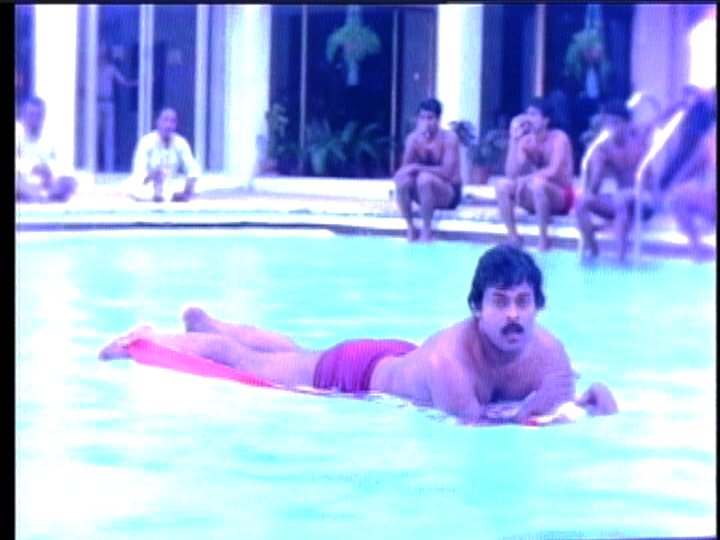
I enjoyed this sporting montage greatly, although it has prompted me to make a statement critical of Chiranjeevi.

His swimming style is splashy and inefficient and he would not have won a race against the under 9s in my swimming club. There – I’ve said it.

Maybe it’s not about winning the race, but about looking stylish on a lilo.

And making bad art.

He is a renaissance man, albeit one with questionable taste, a very bad temper and poor impulse control. He drinks heavily, and I think I was supposed to find this appearance a warning – but he looks so good!

Charan sees a quite unimpressive statue in a local emporium and runs afoul of Swetha (Suhasini) who has purchased the one of a kind piece. His reaction to finding out he can’t have it is extreme.

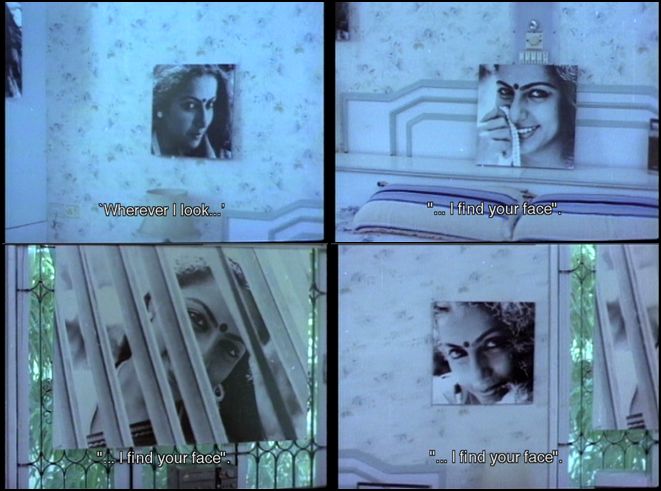
Swetha is a psychology student, and daughter of the local police chief. She is smart, self assured and is not intimidated by Charan. She is also a raging narcissist from the looks of her house – pictures of her adorn almost every wall.

It is interesting that Swetha is given career aspirations and a brain, and yet the dialogues are often very disparaging of women. Suhasini is such a graceful and intelligent actress that I was pleased to see her in a reasonably involved role. She is drawn to Charan both as an interesting psychological study and because he is Chiru – those eyes!

Charan goes off the rails due to the influence of vampy Hamsa (Silk Smitha). Only Chiru could make Charan watchable as he broods, rants and sooks over why his daddy doesn’t love him and then commits crimes as a cry for attention.  Showing that she is smarter than most people in the film, Swetha finds Charan’s hideout and dobs him in to the police. He kidnaps her in a dramatic getaway and their forced proximity accelerates the already budding love.

Having been ruined by a tramp, he feels that the love of a good woman will let him live like a decent person. Yes. Surely it would be unreasonable to expect him to take responsibility or just grow up. She then takes on the burden of reforming Charan and settles in for a lifetime of prison visits. I found their song fantasies quite amusing – Swetha was all flowers and pretty colours, while Charan was much more, um, hands on. One thing they did have in common was their terrible taste in art.

Silk Smitha is Hamsa.

Well, Silk’s arse does most of the work thanks to the constant upskirting camera, but she sneaks the rest of herself into shot occasionally. Hamsa is a Bad Girl who entraps Charan and forces him to turn smuggler (bad) and wear pleather (not so bad). Again, I had to growl a bit at Charan crawling out of her bed the morning after and treating Hamsa like dirt for giving him what he wanted.

Mothers in the film are sacred but women who have sex are evil  – so I wondered briefly about how these idiots thought babies were made. I am not exactly sure why sleeping with Hamsa would be enough to place Charan under Snake’s control, especially given his cavalier attitude to the law and society, but it seems he was besmirched and that was it. The bad girl is usually a thankless role, but Silk gets a few pithy lines and an excellent confrontational cheerleading dance.

The second half of the film took a sharp turn towards awesome. Maybe because Chiru changed into this outfit?

The police need Charan’s help to take on Snake and rescue his dad (and the Top Secret papers) as they could not get into the badlands themselves. When Charan stole a car ferry and chuffed off about 10 seconds ahead of the cops, he managed to hide the ferry within walking distance of a sari shop and judging by the number of Swetha’s outfit changes, remain undetected for days. The man is a genius and I can see why the police appealed to him.

Armed with an array of gadgets and with deadly time release microcapsules implanted in his neck, Charan sets off to save the day. He lands a glider on top of a skyscraper in the crime quadrant, on a mission to rescue his father and protect Indian national security. He had to take a glider as there was no way in by land. In a puzzling development, Swetha and Baby (the cab driver played by Nutan Prasad) decide they have to follow him, and drive in through the front gate in a taxi, sedately avoiding the bombs planted along the route. While the residents look like a left over mob from a B grade post apocalypse horror movie, Swetha is able to glide around in her pristine sari without being spotted. The scenes in this second half are more closely aligned to the original film and the mood is both darker and more absurd.

Snake (Kannada Prabhakar) is the kingpin in the sealed off criminal zone. While John Carpenter recreated Manhattan as his prison colony, Snake has to make do with a warehouse complex a few minutes from the downtown area. He has possibly the best DIY lair and henchmen I’ve seen to date, and I enjoyed deciphering the very random graffiti.

Snake is also a psycho killer on a very short fuse.

This guy is quite fascinating.

He plays his role of chief henchman with a blend of odd chicken inspired noises and statue postures, and walks with what I can only describe as a slow-mo mince. While wearing a dress (maybe toga).Who is he?

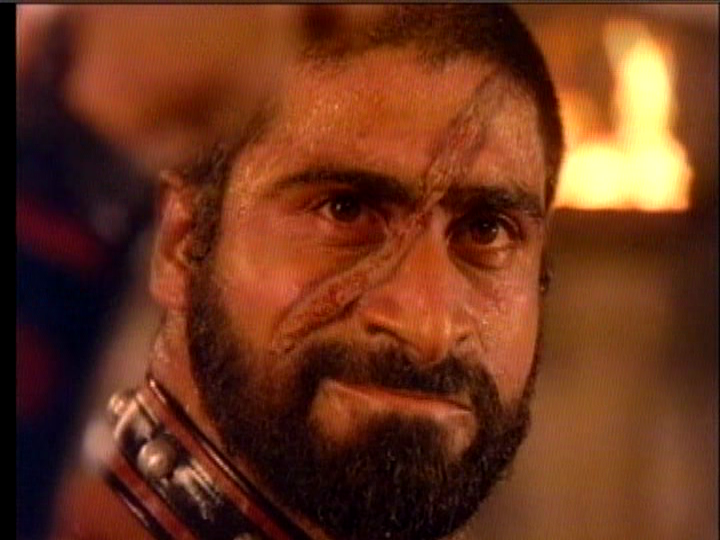
And the guy who would have been played by Bob Christo in a Hindi version of this is back! Last seen in Adavi Donga (the apple peeler Wolverine claws guy) here he is sporting a fake scar and some hideous trousers.
How does it end? Is there any doubt?

It’s a film by A Kodandarami Reddy so I expected crazy, and the second half delivers. I did have to chant the ‘it was made in 1985’ mantra a few times, but even allowing for that I was irritated by some of the dialogue relating to women and their evil powers. Grow up guys! Yandamoori Veerendranath gets a writing credit, but this is a reasonably faithful remake with the addition of loads of sentiment and a message about good family values.

Chiru and Suhasini inject a bit of class into their scenes, and the WTFery dial is set to 11. I’m totally biased due to Chiranjeevi but I’d give this a cautious 3 stars, for the curiosity value of the remake and for the dystopian second half.

Here is a snippet of Silk’s big song number – it is interspersed with the final action sequence so I won’t give away all the surprises!