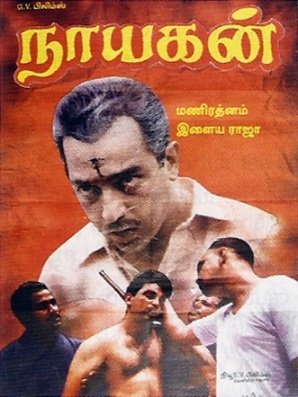
Nayakan (1987)

Nayakan

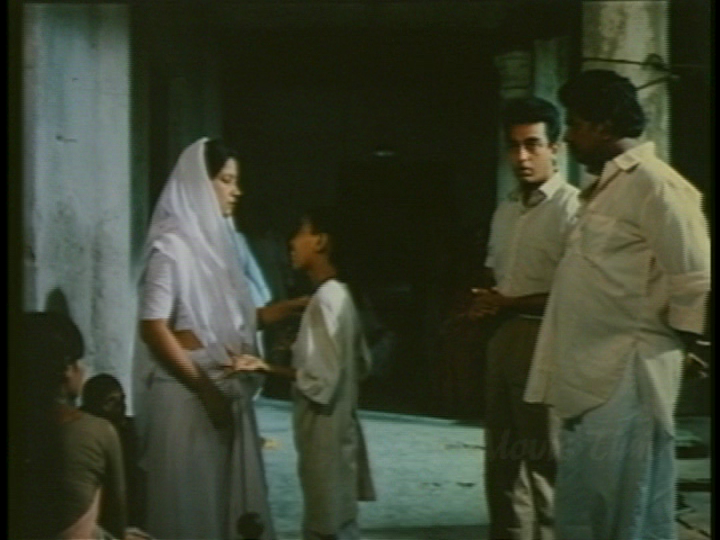
This film has been on my ‘must see’ list for a while but it proved very difficult to track down a copy.  Even then I ended up with a Telugu dub without subtitles, and when I did manage to download subs they were somewhat selective in the translation, declining to translate any of the Hindi, and a bit hit and miss with the rest. However they did at least provide translations of Ilaiyaraaja’s wonderful songs which are definitely high points of the film.  Nayakan is one of Mani Ratnam’s earlier films, and is the movie that brought him to the attention of the cinematic world outside the Southern film industry.  It’s based on the story of Varadarajan Mudaliar, aka Vardhabhai, one of the notorious gangsters who controlled the underworld in Mumbai during the 70’s and 80’s.  There are also shades of Coppola’s The Godfather, but essentially Nayakan is a very Indian story, full of emotion and seeped in the violence and grime of the slums of the city.  Kamal Hassan won a National Award for his performance as did P.C. Sriram for cinematography and Thotta Tharani for best art direction, all of which were very justly earned.  The film also features Saranya Ponvannan in her screen début and a generally notable cast including Nasser, Janagaraj, Delhi Ganesh and Tinnu Anand.  But above all this is Kamal Haasan’s film and he is riveting in a stand-out performance which sees him grow from a young man to an ageing don in the slums of Mumbai.

NayakanNayakan


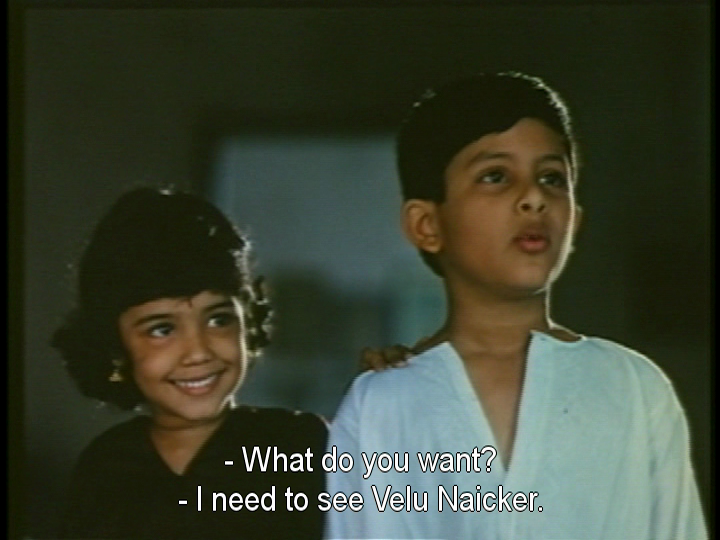
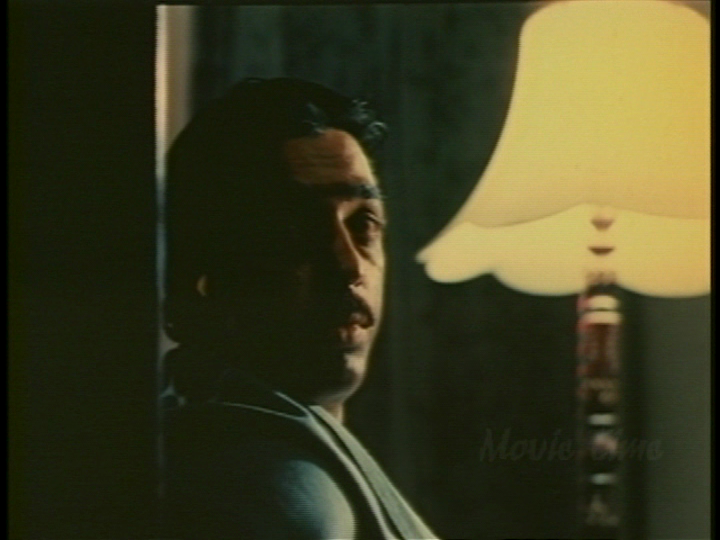
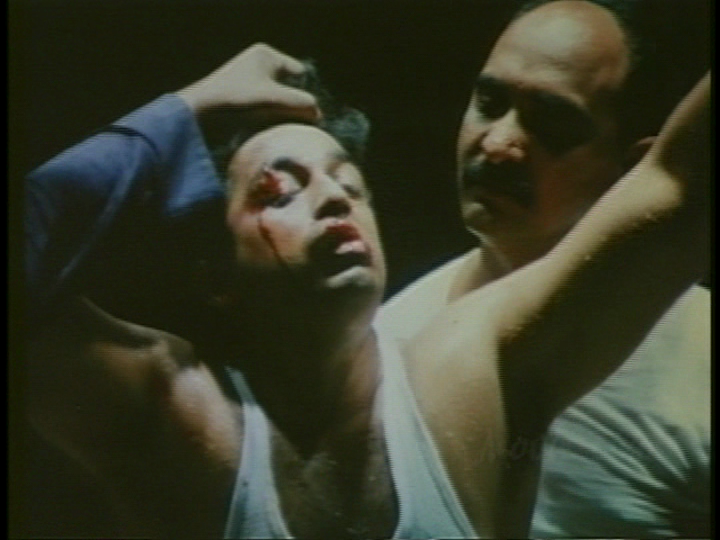
The film starts with the young Velu Nayakar being used by the police to track down and kill his father, a prominent anti-government unionist. It’s a brutal introduction and it’s certainly apt as the film doesn’t shy away from showing the violence associated with the underworld.  The poignant refrain of Thenpaandi Cheemayile comes from the beating the young child suffers, and the song is reprised throughout the film to underscore the importance of pivotal scenes in Velu Nayakar’s life.  This clip shows two of the versions and, although they both occur much later in the film it’s not really the song rather than the images I wanted to include.  However it is worth noting the cinematography and the way P.C. Sriram uses light so effectively in these two snippets.  The song is sung by Ilaiyaraaja and Kamal Haasan himself.

Velu arrives in Mumbai and is adopted by a small time smuggler who instils in Velu the concept that any slightly less than legal act isn’t wrong if it helps someone.  Over time Velu starts to stand up for the rights of the Tamil people who live in the slums, but it is the murder of his adopted father by a police officer that tips the balance and sets him against the law as he takes his revenge.  However even this act is tempered when Velu comes to understand that the dead police officer has a mentally retarded son and he gives Kelkar’s widow money to ensure that both she and her son will survive.

NayakanNayakanNayakanNayakan


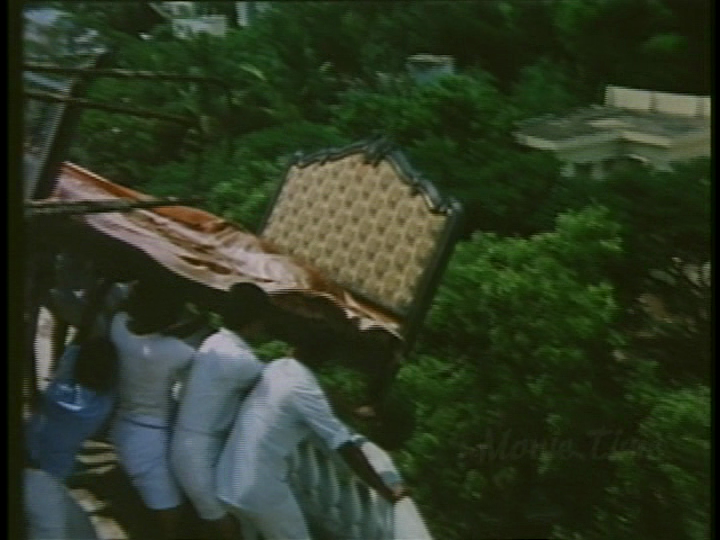
This dichotomy occurs throughout the film where Velu is shown as a very human character who smuggles and murders but also helps out when members of his community are arrested or when a child is seriously ill.  He’s a man who makes mistakes and pays dearly for them, but he’s also someone who is trying to make life just a little better for the people around him.  One such instance is when the slum is about to be bulldozed to make way for a factory.  Velu organises a gang of the locals and goes to the developer’s house, tearing it apart to drive home the point that these are people’s homes which are being destroyed, not just a piece of land. It also looks like a lot of fun as the gang rips apart furnishings and throws furniture from the roof!

NayakanNayakan


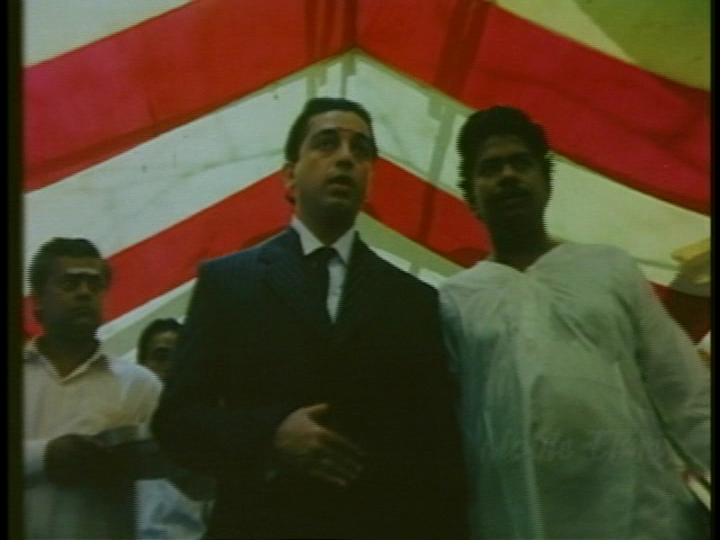
Velu isn’t a don who drives around in the cavalcades of vehicles more commonly seen in Southern Indian films, but instead he has a fleet of ambulances and lives in a house which is easily accessible for the people of the slum, making Velu Nayakan a more realistic and believable character.  There are a few odd moments however, such as an item-style dance number on a boat, and an instance where Velu does appear to be channelling the Godfather given his choice of natty pin-striped suit.  
NayakanNayakan


More commonly however the dim lighting and traditional dress suit the more modest and unassuming Velu, who seems more embarrassed than anything by the adulation he receives.

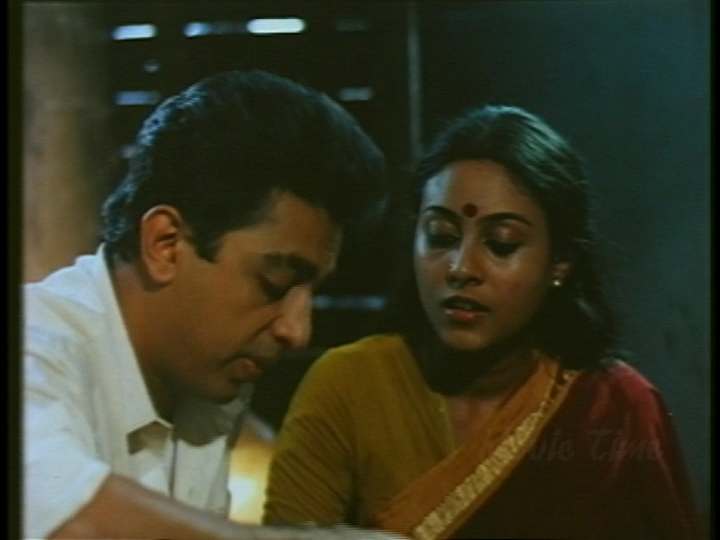
Mani Ratnam’s screenplay is most effective in describing the relationships between Velu and the other characters, in particular those of his immediate family.  His first meeting with Neela (Saranya Ponvannan), who becomes his wife, is beautifully acted and filmed as the two meet in a brothel.  Velu and his friend Selvam (Janagaraj) end up at the brothel after smuggling success and while Selvam appears to have been there before, Velu looks a little more uncomfortable and out of place.  He does manage to enjoy this great song though before heading upstairs for some more intimate amusement.

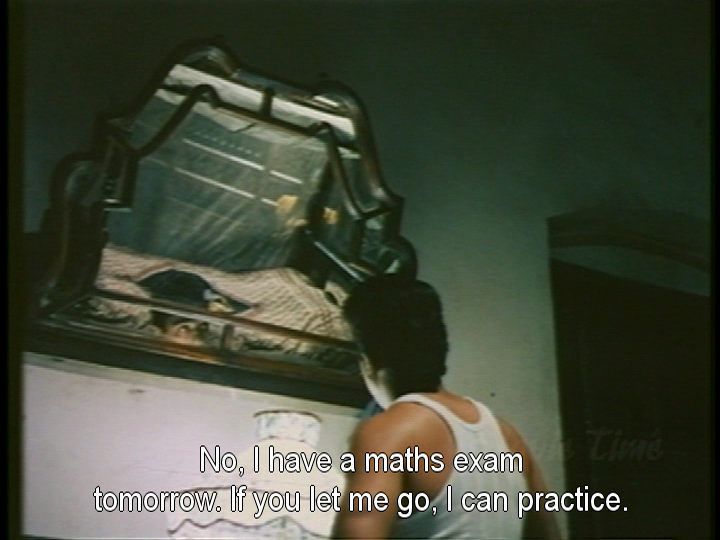
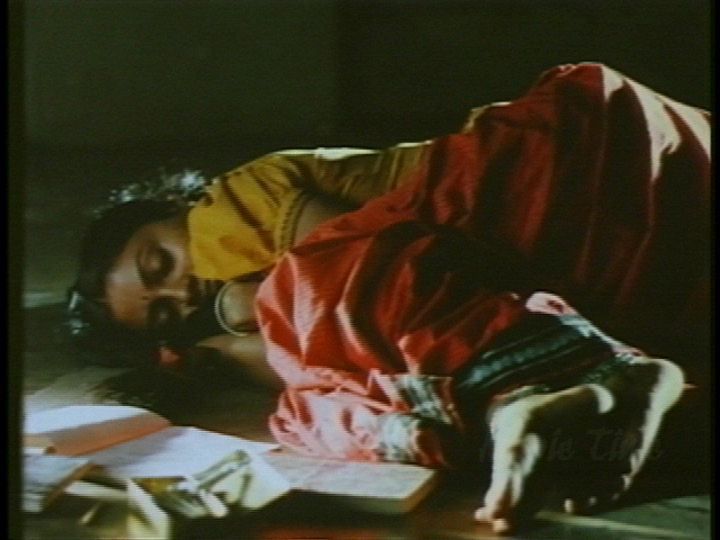
When Velu gets upstairs, Neela is waiting in the room and almost the first thing she does is ask if she can leave early to study for her exams.  Velu’s reaction is as awkward and confused as would be expected and Kamal Haasan shows this in his indecision as to whether he should lie on the bed or sit on the chair as she studies.  Even his hesitancy the next morning, when he’s not sure if he should wake Neela or not, nicely illustrates Velu’s more compassionate side and this is brought out again when the couple do eventually marry.  Saranya is dignified as Neela, despite starting out in a brothel and she brings a very warm and sympathetic presence into the harsh reality of the slums.
NayakanNayakanNayakanNayakan


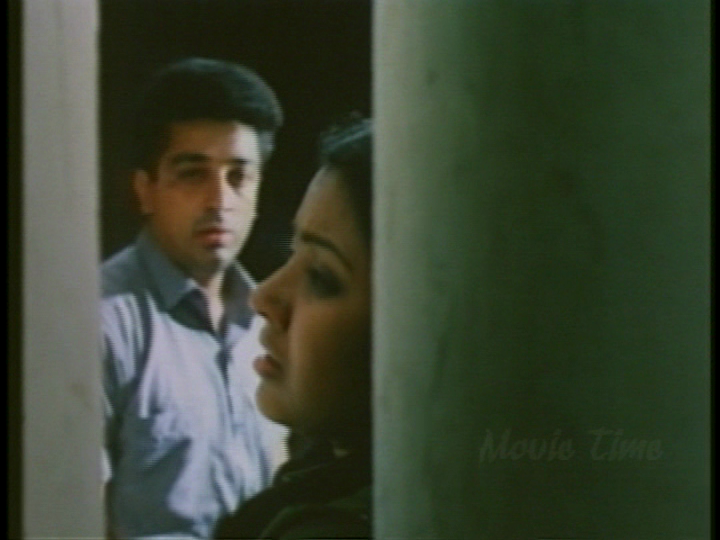
P.C. Sriram makes good use of the set here as initially Velu stands in the light while the mirror shows a shadowy figure through the curtains of the bed in the darkness of the room beyond. It’s very effective and throughout the film there is a similar use of light and shadow with many shots framed by pillars, doorways or other architectural features.

NayakanNayakanNayakanNayakan


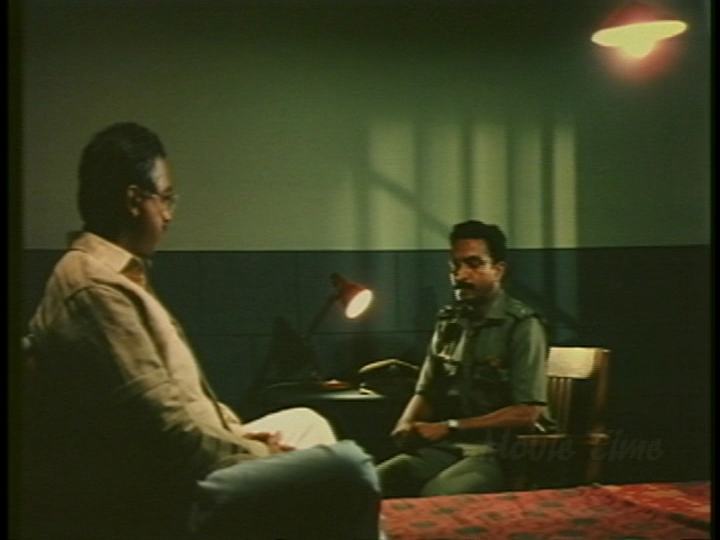
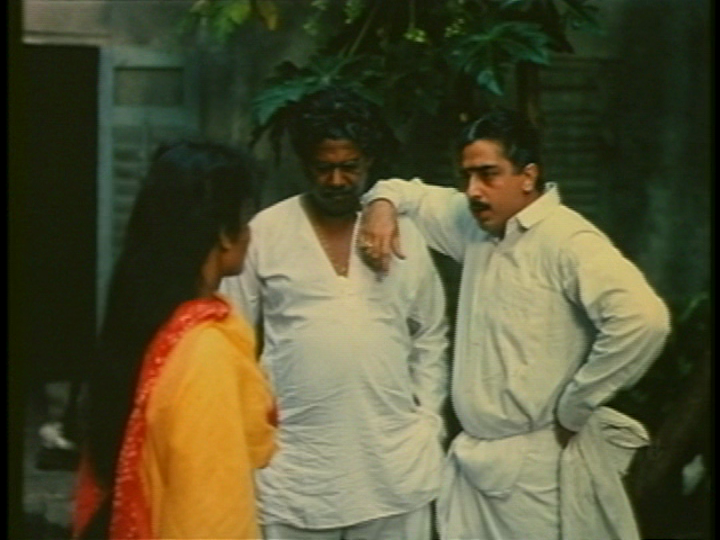
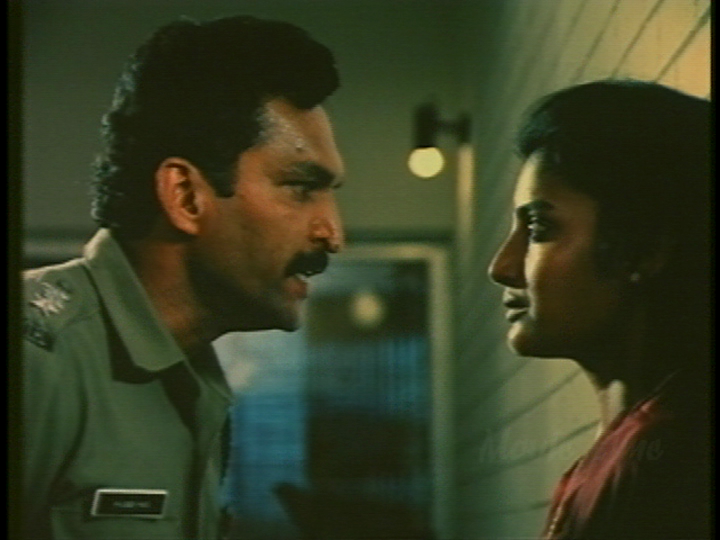
The best scenes in the film are those between Velu’s son Surya (Nizhalgal Ravi) and daughter Charumati (Karthika).  Surya hero worships his father just as much as do the local people in the slum, and he wants nothing more than to be like him. He stands in for his father when a member of the community comes to Velu for help and he sees nothing wrong with the life of a gangster.  However Charu has a very different opinion and eventually she leaves her father after some very emotive scenes where Charu repudiates her father’s lifestyle.  She feels that his style of life is entirely wrong no matter how many people he helps, and Velu is helpless in the face of her rejection.  Kamal Haasan and Karthika are absolutely brilliant together in these scenes and also later on when Charu turns up later married to Velu’s new nemesis, the new Assistant Commissioner (Nasser).  Charu refuses to allow her father to see his grandson in another tear jerker moment, although the most poignant scene in the film between Velu and his grandson is reserved for the end.
NayakanNayakan


There are many small moments and clever touches in the film which make it so enthralling.  From the joy seen at the Holi celebrations to the despair when Neela dies and her sari unravels in Velu’s hands, each scene is full of little details which add to the drama.  Kamal Haasan provides much of the emotion and driving force in the film, but all the actors are excellent even in the minor roles. Tinnu Anand deserves special mention for his small but important role as Ajith Kelkar, the grown up mentally retarded son of the police officer, and Nasser is very effective in his short time on screen towards the end of the film.

Beautifully haunting music, gritty realistic scenes and an outstanding performance by Kamal Haasan make this a film well worth hunting down, and it really deserves to be restored and released with English subtitles.  Nayakan is an absolute classic from Mani Ratnam, and it’s one I thoroughly recommend. A full 5 stars.

Padayappa

Padayappa

Many thanks to regular readers Violet and KB for suggesting Padayappa (1999) when I asked for Ramya Krishnan film recommendations. I believe that director K.S. Ravikumar cast her after seeing Ammoru, and I understand why. Padayappa has an amazing cast, an often incredible story, and all the trappings of a revenge drama custom built for superstar hero Rajinikanth. It also has a strong female antagonist that was perfect for Ramya Krishnan, who won the Tamil Filmfare Best Actress for the role. The support cast includes such talented actors as Sivaji Ganesan and Soundarya, along with Manivannan, Lakshmi, Nasser and even a brief appearance by Prakash Raj.

Padayappa (Rajinikanth) comes home to attend a family wedding. He falls in love with poor but honest Vasundhara (Soundarya) however overseas educated rich girl Nilambari (Ramya Krishnan) decides she must have him for herself. Her branch of the family is riddled with self-serving weaklings and their machinations help hasten the death of Padayappa’s father, played by legendary actor Sivaji Ganesan. Padayappa stays in the village to support his mother and sister, sort out the cheating relatives, and also to try and woo Vasundhara. The conflict between Nilambari and everyone who gets in her way is the main focus, although there are the obligatory comedy tracks and lots of rousing speeches.

Padayappa-SuperstarPadayappa-Padayappa the hero

In Padayappa Rajinikanth is Superstar Rajni the Hero rather than using his considerable acting skills for a fully developed character that required any subtlety. The thing I always find admirable about Rajni is that he commits to the role and to the style of film he is in, and that conviction makes even the most preposterous shenanigans seem somehow right.

Padayappa is moral, righteous and has absolutely no self-doubt. He has all the trademark Rajni mannerisms from the snappy salute with whooshing sound effects, the cigar trick, the ability to force his enemies to attack him one by one and at a pace that allows him to win, the power to make multiple cars explode just by looking at them. There is some light and shade as Padayappa gets all silly and tongue-tied around Vasundhara, or as he grieves for his family’s losses but he is less a character and more a personification of Heroic Values.

Padayappa-against the oddsPadayappa-Flexing

Confession – I am so fond of Rajni that I really don’t care that his fight scenes are implausible or his ‘dancing’ quite terrible. But I could have done without the shirtless flexing.

I rarely take issue with the (usually considerable) age gap between Rajni and his heroines. Maybe it’s because I discovered him comparatively recently so to me he has always been an elder statesman of film. And to some extent his reputation overshadows any character he plays.  He’s Rajinikanth!

Padayappa-NilambariPadayappa-Ramya Krishnan 2

Nilambari is compelling yet totally unlikeable. A spoilt girl who never took no for an answer, Nilambari often does things more likely to be done by the hero – she stalks the hero, she grabs him and kisses him in front of everyone at a wedding then saunters off casually, she torments her rival (the lowly Vasundhara) and threatens anyone who tries to obstruct her.

Padayappa-Ramya Krishnan 3Padayappa-Nilambari and Vasundhara

Ramya Krishnan gave Nilambari a beautiful façade over a twisted and arrogant core. It is great to see an actress capable of such expression and subtlety and who is not afraid to reveal the ugliness of a character’s dark side. She took it up to Rajinikanth and more than held her own in their confrontational scenes.

Padayappa-beauty status and talentPadayappa-contrast

Nilambari’s outfits improved but her attitude never did.

There is a village tradition that couples should only marry when both want to, either through love or mutual agreement. Padayappa rebukes Nilambari saying a good woman should be well-mannered and demure, so it’s not exactly progressive but I liked seeing girls get a voice too.

Padayappa-Soundarya (2)Padayappa-awkward

Vasundhara (Soundarya) is Padayappa’s ideal woman. She is a servant in Nilambari’s household, but her family used to be wealthy. Devout and domesticated as well as very pretty, Vasundhara obviously likes Padayappa too. She and Rajni seem to have nice rapport and the courtship is more about shy conversations and sideways glances. It’s quite cute if predictable. Soundarya does well to build up a character that is only lightly sketched out by the screenplay and dialogue. I did yell at Vasundhara a couple of times to STOP TRUSTING NILAMBARI. Luckily her devotion earns her some snake assisted escapes from near certain death.

Padayappa-Soundarya

Soundarya also does an excellent job of dancing around Rajni in their songs together. She often has a cheeky smile on her face, so Vasundhara might have a colourful fantasy life to balance her dutiful side.

Padayappa-wedding wishesPadayappa-promise

The dynamic between Padayappa and Nilambari was interesting as this is an instance where the hero is quite passive. Padayappa doesn’t do anything to torment or punish Nilambari other than be happily married to the one he loves. She is insignificant to him, and that is what drives her insane.

The song picturisations have all the colour and excitement I expected. AR Rahman’s music is a good fit and his use of recurring motifs helps express the characters inner lives.

Minsara Poove sees Nilambari dancing her feelings for Padayappa as he sings for Vasundhara. It’s very pretty, apart from the bits that are happening in Nilambari’s fantasy. She really needed a better dream wardrobe designer. Suthi Suthi is colourful, with giant puppets and lots of costume changes for Soundarya and Rajni. Kikku Yerudhey is a little out of place in terms of the story and I think it was only there to get Rajni prancing about with lots of young girls (Padayappa’s daughter’s school friends) and drunk uncles. Or maybe just to let the director make his trademark cameo appearance.

Padayappa-carnage

There are fight scenes, cars stunts, a murderous cow (not a euphemisism for Nilambari) and all manner of excitement as well as the revenge and drama.

Padayappa-the dating advice committeePadayappa-advice gone wrong

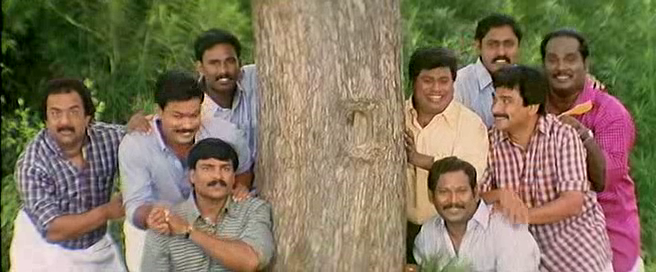
Padayappa’s friends are largely there to provide comic interruptions but they also do an excellent line in relationship advice and support (and hiding behind trees).

Padayappa-Sivaji Ganesan and Lakshmi

The legendary Sivaji Ganesan had a small but pivotal role as Padayappa’s father and was still quite magnetic. Lakshmi made the most of her big scenes as the surprisingly fierce mother. The always excellent Manivannan made his character despicable and yet pitiful while Nasser was just despicable.

Padayappa-Prakash Raj

And a quite svelte Prakash Raj was a nice bonus as a police officer. The casting budget for this film must have been enormous.

At almost 3 hours Padayappa does drag occasionally but just as I was thinking that surely things must settle down, K.S. Ravikumar would ramp up the action. See it for a classic village family revenge masala style story with a first class cast and loads of colour and movement. 4 stars!

Thalaivaa (2013)

Thalaivaa

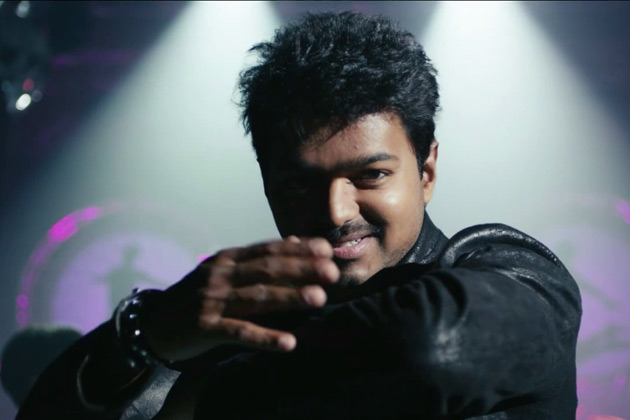
Thalaivaa is the latest release for Vijay, and although it’s not as instantly entertaining as his last film Thuppakki, it’s still a mostly enjoyable watch.  Vijay is excellent (although he doesn’t tread any new ground), and impressive performances by Santhanam and Amala Paul add to the overall impact, but it’s really Sathyaraj who steals the show as the reluctant saviour of the people.  Thalaivaa is also the latest film to release here in Melbourne with English subtitles, and I can only hope that this trend will continue.  Thanks to the Powers That Be in Chennai who have finally started to distribute subtitled films to locations outside of the US and UK – please can you start on the smaller releases now too?

A.L. Vijay’s Thalaivaa is really a story of two halves.  It starts off with some political shenanigans in Mumbai which sets up the story for the rest of the film.  Ratnam (Nasser) is a political leader who is targeted by his opponents during a riot.  However he is saved, along with his young son by Ramadurai (Sathyaraj), who pays for his brief foray into politics when he himself is later ambushed and his wife killed.  Ramadurai hands his son over to Ratnam in the hope that he will have a better and safer life overseas, while Ramadurai stays and fights for the rights of the underprivileged Tamil people in Mumbai.  After such a serious and well-constructed beginning, the film suddenly changes direction completely as we move to Sydney where Viswa (Vijay) and his ‘brother’ Logu (Santhanam) are running a water bottling company.

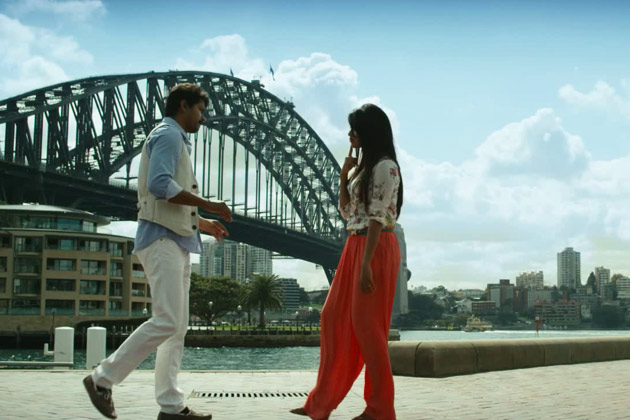
ThalaivaaVijay and Santhanam

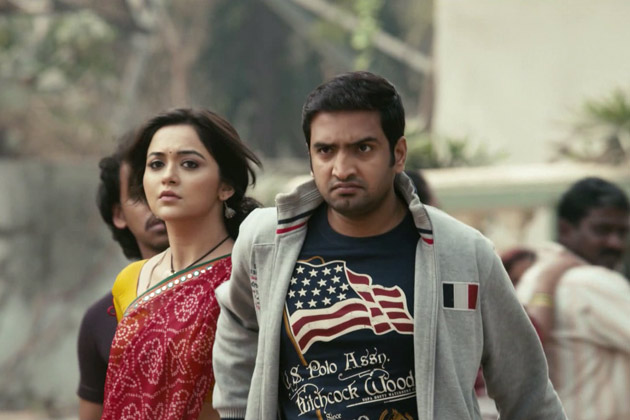
Although Viswa seems to be doing incredibly well with his small company given his expensive apartment with views of the bridge and waterfront, he also has ambitions to make the big time as a dancer.  The first half is light-hearted and there is plenty of humour as Viswa and Logu compete for the affections of Meera (Amala Paul), the daughter of one of their bottled water customers (Ponvannan).  Sydney provides a picturesque backdrop for the songs, although the entire dance competition storyline is very contrived and unrealistic, not that there is anything unusual in that. However the really dumb entrance by Meera chasing a CGI butterfly is offset by her feisty and assured character who even gets to show off her dancing skills and proves to be just as good as the guys.  Amala Paul is excellent as Meera and manages to create a believable personality with just a few scenes.  Sadly she has much less screen-time in the second half and her character becomes even more clichéd, but she does a good job with her limited material, and she looks stunning too.

ThalaivaaThalaivaa

Inevitably Meera and Viswa fall in love, but Meera’s father insists on meeting Ramadurai before the wedding can go ahead.  However Ramadurai is now Anna, an underworld figure who rules the slum areas of Mumbai and ensures his own brand of justice for his people.  As such, he’s wanted by the police, and Viswa’s arrival into Mumbai is a major headache for his father and his loyal followers.

Anna

There is an unexpected plot twist after Viswa lands in Mumbai and the film changes tack again into a more typical mass-style thriller with the expected chase sequences through back alleyways and eventual, rather predictable final showdown fight scene.  Viswa ends up taking over his father role and his transition from carefree dancer and small businessman to serious leader of the people isn’t well developed and seems rather too abrupt.   Abhimanyu Singh plays Viswa’s main rival Bhima and his character is also majorly underdeveloped despite a good starting premise.  I’d like to see Abhimanyu Singh do more than just flex and grimace at the camera as he seems to have done in his last few films, since he has played more nuanced characters in the past, and played them well too.  However, we don’t get any real depth from his character here and it makes absolutely no sense that the political power brokers decide to back such a demented thug with his wholesale plans of indiscriminate violence.  But back him they do, and despite a few unexpected twists, the story winds its way through the standard formula of good guy looking out for the welfare of the people vs. uncaring thug, only interested in power.

ThalaivaaThalaivaa

The second half drags in places as we tick off each point on the ‘standard Tamil thriller storyboard’, although there are some excellent scenes amid all the clichés which liven up proceeding again.  But its uneven and even the best efforts of Vijay, Santhanam and Sathyaraj can’t stop the feeling that we’ve seen all this before.

Thalaivaa

Still, the film is well shot by experienced cinematographer Nirav Shah with good use of the cityscape in Sydney, and equally good cinematography in the dock and slum areas of Mumbai.  The choreography is well suited to Vijay and Amala who share good chemistry together.  The songs by G. V. Prakash Kumar are generally catchy, apart from a more political song in the second half which could have been shorter.  Ragini Nandwani also puts in a good performance as a second love interest, and the rest of the cast provide able support to the main leads.ThalaivaaThalaivaa

Overall Thalaivaa is rather less than the sum of its parts, but there are enough individually good scenes along with polished and assured performances to make it mostly entertaining.  The story really needs to be sharper to offset the stereotypical characterisations but I still came away feeling that Thalaivaa is worth seeing on the big screen.  Watch for Sathyaraj, Vijay and those dance scenes around Darling Harbour and Circular Quay which really are excellent.