Bhookailas


Bhookailas is replete with all the necessary elements for fine entertainment; great actors, beautiful music, lots of excellent dancing, fabulous sets and most important, a good story. It’s not just a fluffy fairytale or fantasy though as there is some philosophy underneath the gilding. But more than anything, it is a great entertainment and a pleasure to watch. (The Volga DVD has good subtitles and the picture quality is fine on screen although poor in screencaps.)
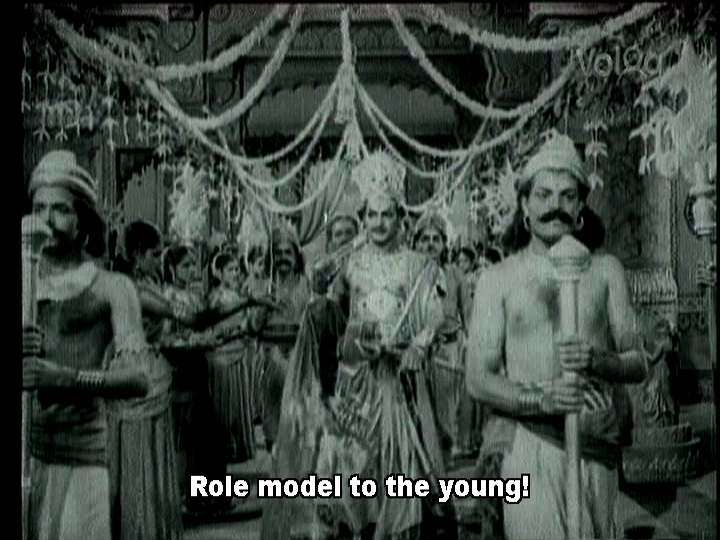

Ravana (NTR) has conquered the human world and is at a loose end. Being a magnanimous ruler, he asks his brother demons what they want as a reward for this victory. His generals suggest a sleeping festival (excellent!), peace and justice for all, and finally that he declare war on heaven as the gods are worthy opponents for demons, not like frail humans. In order to avert this war which Ravana will likely win, the sage Narada (ANR) starts conniving and scheming to keep Ravana from invading.


Ravana is brave, intelligent, principled but very impulsive and has little self control. NTR is in his element as the larger than life Ravana. He creates a sympathetic character but one whose flaws are all too evident. The character spans broad comedy, doe eyed romance and the aggressive assurance of unchallenged leadership. Ravana is easily manipulated by Narada, Vishnu, Parvathi, his own mother and Ganesh among others.
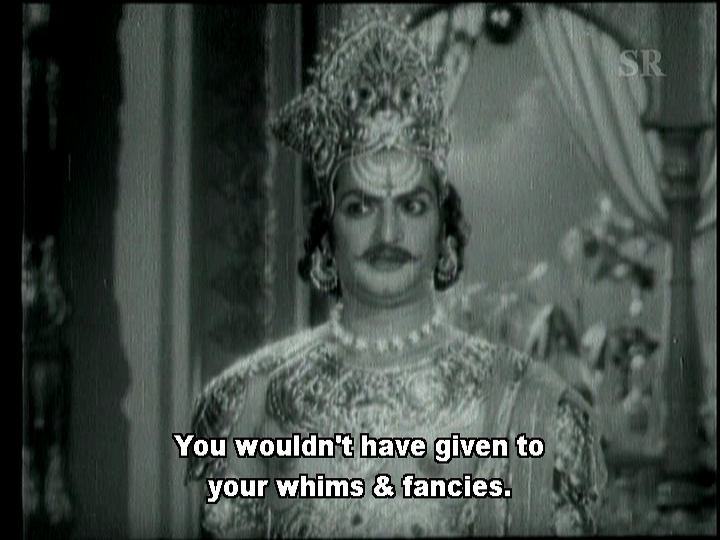
His lack of insight and self awareness brings him undone when he has the potential to rival the gods should he focus his will. So he is like lots of men we all know- asked to bring back one specific item from the shops, and coming back with either nothing or something completely random.
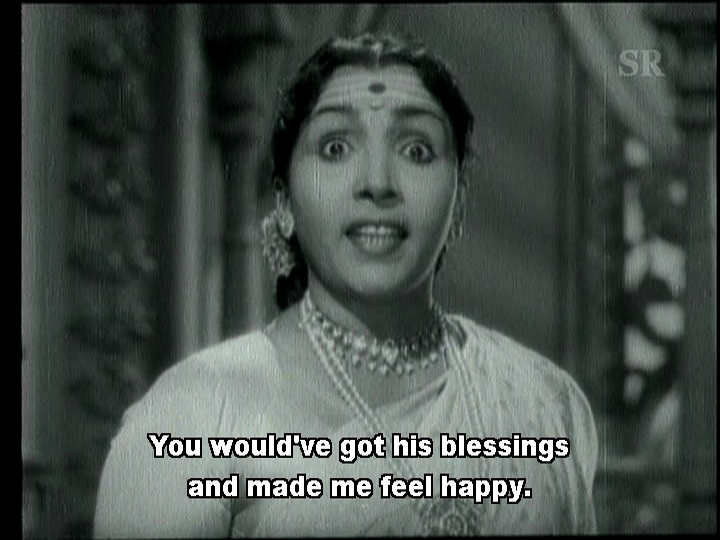
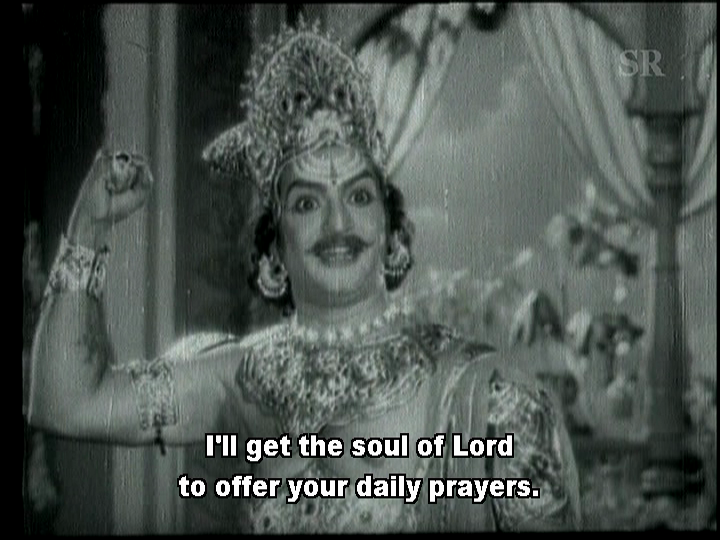
Ravana’s mother Kaikasi (Hemalatha) is a devotee of Shiva. When her prayers are disrupted to stop her gaining Shiva’s benediction, she charges Ravana with making Shiva answer her prayer. He is a total mummy’s boy. He takes it one step further and promises to bring back Shiva’s atmalingam, his soul, for her to pray to. When he decides to beseech Shiva through rigorous penance, not even Helen can distract him.

But he loses this focus and falls under an illusion that sends him off on a tangent. Ravana’s quest to win back that blessing from Shiva takes many detours thanks to Narada.
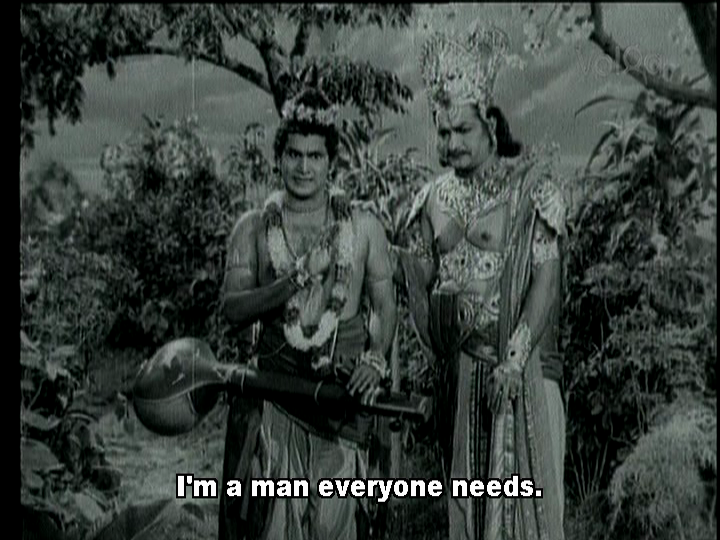

Narada (ANR) is intent on maintaining the status quo. He plays on the susceptible Ravan and the change resistant gods. He puts the wind up heaven with dire predictions about what will happen should Ravana succeed. He stirs up Ravana’s impulsive and suspicious nature to manipulate him. ANR’s performance is lots of fun with a supercilious eyebrow here, a self serving whinge there, and a whole lot of economy with the truth. He sabotages Ravana’s request for a boon from Shiva, using illusion to persuade Ravana to ask for Parvathi as his reward. But the plan doesn’t play out exactly as Narada hoped, and he scrambles from drama to catastrophe and back again with only his wit and sophistry to help him navigate between the gods and demons. The gadfly tactic manoeuvres the protagonists, sets up conflict and also provides some of the more comedic moments.
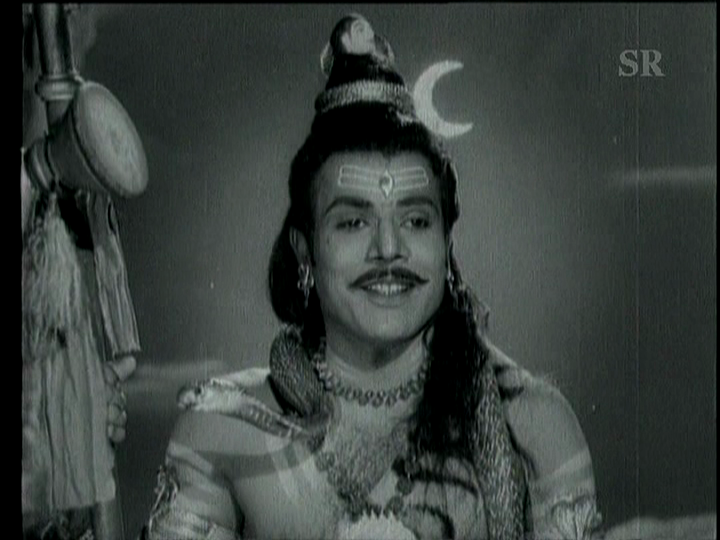

Shiva’s alert and active snake companion was a highlight. The snake is quite interested in the proceedings. I was picturing the person responsible for snake directing and the bag of tricks they must have employed. Occasionally the snake would have a snooze and seemed to be waiting for someone to do something entertaining. Nagabhushanam portrays Shiva in a more paternal style, taking an indulgent approach to his devotees most of the time.
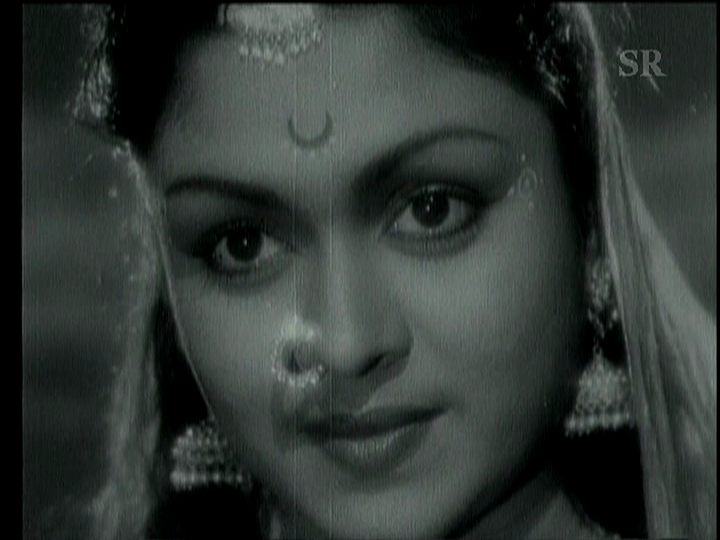
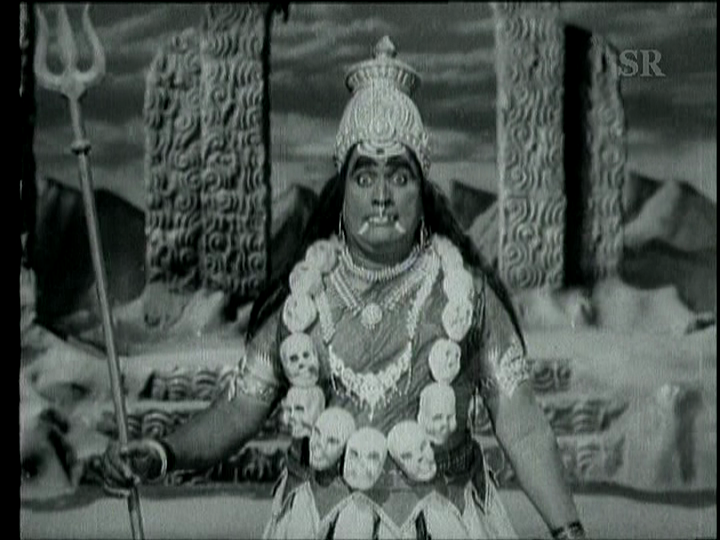
Parvathi (B Saroja Devi) is beautiful and stately and her role requires little more than that. Parvathi is used as a pawn in the game Narada is playing with Ravana, and despite her power she finds herself being carted around from pillar to post. But finally after prompting from the ever helpful sage, she uses her own power of illusion to break free. Apparently Ravana couldn’t see her inner beauty.

Mandodari (Jamuna) is Mayasura’s daughter, and persuades herself to fall for Ravana. Jamuna is lovely but she looks a little too mature and knowing to be totally convincing as the young and inexperienced princess. Her handmaidens joke about how Ravana will be a bucktoothed crosseyed hunchback and then tease her when they see she has feelings. Mandodari is very privileged and enjoys the finest things in her father’s lavishly decorated aquatic themed underwater kingdom.

But she has a hard time of it when she gets the husband she wants and discovers he was under the impression he had married the goddess Parvathi. Mandodari is another unwitting player in Narada’s plan to keep the three kingdoms in their proper place.
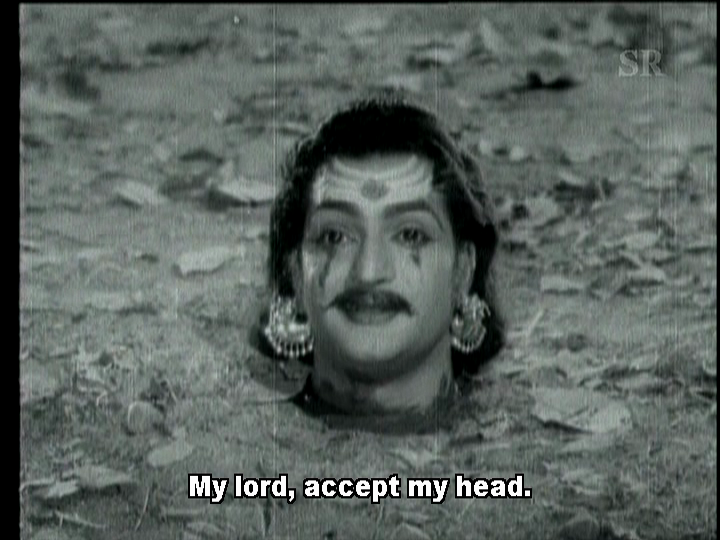
After all the trickery and deceit, Ravana offers penance in very dramatic style, cutting off his own head. It makes the acts of contrition my school priests used to dish out look pathetic. Ravana wins forgiveness but fails to triumph thanks to his inability to stay on task. Again. He neglects an instruction, disregards a warning and jeopardises the very thing he had struggled for.

His flaws were his undoing and they were all things he could control or learn to manage. Luckily his failure created something very special for the human world, so the film ends on a cheery note.
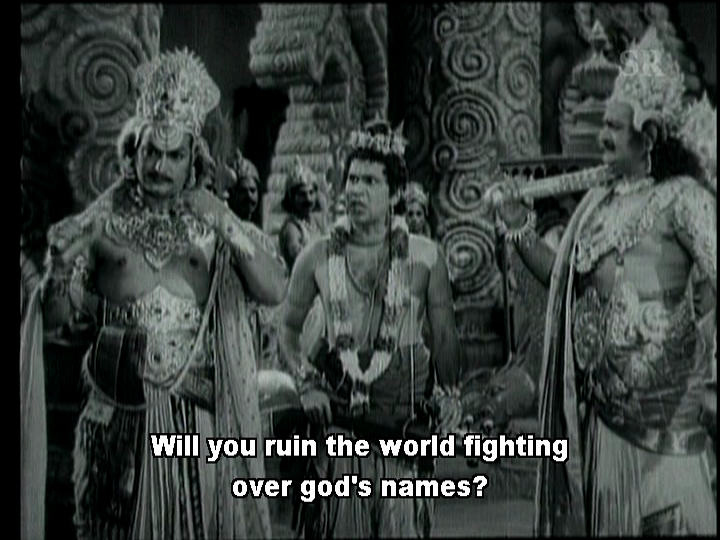
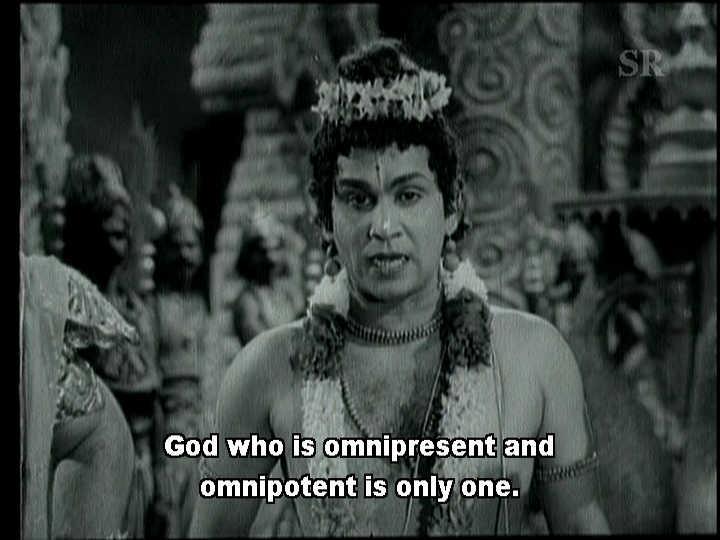
The animosity between would-be in-laws Ravana and Mayasura (an ebullient S.V Ranga Rao) is due to their worship of different gods – Shiva and Vishnu. There are some very pointed references to this, including Narada rebuking them for not realising that god is one and omnipotent. I wondered if this speech was in response to current day issues or purely part of the story. It seemed to be directed straight down the barrel of the camera which made me think it was at least partly commentary aimed at the audience.
The songs are particularly enjoyable, even more so with the bonus of excellent dancers. The songs are directly linked to the story so expand on things or underline issues. In Mayasura’s palace Kamala Laxman performs a very elegant dance depicting Vishnu’s avatars, while Gopi Krishna dances in a more wild and entranced style in devotion to Shiva.

The visual effects are simple, and the use is restrained, so they also enhance the atmosphere of a world outside of human reality.
As with many of the devotional, religious and mythological films from the 50s and 60s that I’ve seen, you don’t need to know anything about the main characters as a preqrequisite to enjoy the story. Bhookailas is beautifully self-contained, and K. Shankar has structured it to make the story accessible and entertaining. Watch this for the rattling good story, the wonderful actors and the visual riches. 5 stars!

Heather says: I found Bhookailas to be an interesting film as it shows Ravana from a totally different point of view. NTR’s demon king is depicted more in his ‘devoted follower of Shiva’ character rather than the more traditional ‘Ravana as the embodiment of all evil’ and for most of the film he is heroic and really quite dashing. It’s quite a change as I think this is the first film I have seen where Ravana hasn’t been just the villain that everyone is supposed to hate and it does make for a fascinating story.

NTR is excellent in his role and his depiction of Ravana’s all-conquering and all-powerful king is very believable. His devotion to Shiva is well shown but even better is his colossal arrogance which NTR hits just right, and when Ravana loses his temper there is a real edge which brings out his demonic nature clearly. However, Although I really liked NTR here, the standout performance for me was ANR. He is brilliant in his depiction of the sage Narada, and I think that this is probably the best characterisation of the trouble making sage I have seen. Narada’s frequent nods, winks and knowing looks are very well done, and he excels in causing trouble for trouble’s sake. ANR hits the character perfectly and his mannerisms and facial expressions make his scenes very enjoyable to watch.  The interactions between Narada and Ravana are also very well written, and both actors work very well together to bring their characters to life.

As Temple has mentioned, there is very little scope for any of the female roles here, and Hemalatha as Kaikasi probably has the role with the most substance. I enjoyed her performance and her exasperation at her impetuous son was excellently done. I wasn’t very impressed with Jamuna’s Mandodari and all her simpering, but I did love the underwater palace where she lived. Seeing Helen pop up in a song was a lovely surprise, and I was suitably impressed that Ravana was able to ignore her wonderful dancing as he meditated. Great music, fantastic performances and a thoroughly entertaining story make Bhookailas very well worth watching and I thoroughly recommend it. 4 stars.

Howrah Bridge (1958)

Hurrah for Helen!

The only thing I knew about Howrah Bridge was that it featured Helen’s famous item number Mera Naam Chin Chin Chu, and that was the reason I picked it up in a collection of classic Black and White films. Although Helen’s appearance is a highlight, there is plenty more to enjoy, including great performances by Madhubala, Ashok Kumar and Om Prakash as well as some beautiful songs featuring Asha Bhosle and Mohammad Rafi. The story moves along at a steady pace without any unnecessary diversions from the main plot and despite knowing ‘whodunit’ from the opening scenes there is still intrigue and anticipation as events don’t unfold quite as expected.

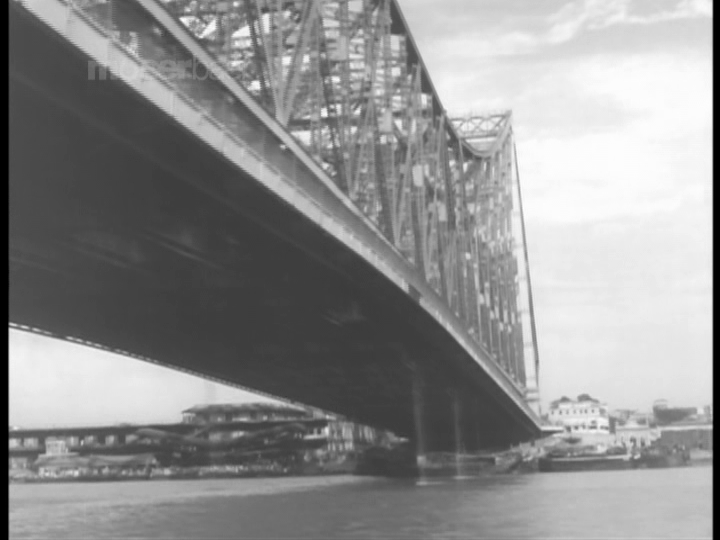
Howrah Bridge is an Indian take on film noir, although the story is perhaps not as dark and the characters less ambiguous than in the classic American films of the forties and fifties. However it follows the basic path of a crime drama with a leading lady of somewhat questionable background, and a villain who happily disposes of anyone who stands between him and his fortune. The lighting is generally subdued in film noir style and director Shakti Samanta makes excellent use of shadows to highlight the more dramatic moments in the film. While most of the action takes place in a number of seedy hotels and dimly lit streets in Calcutta, Howrah Bridge appears from time to time and looms effectively over the characters as well as providing the location for the climax chase.

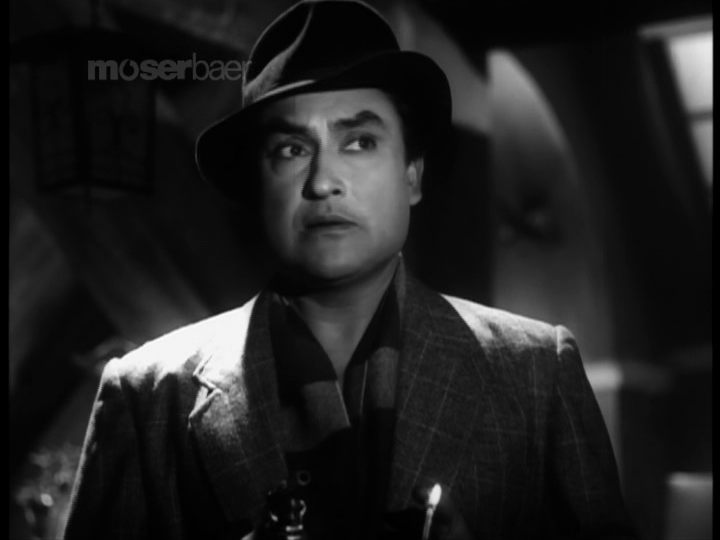
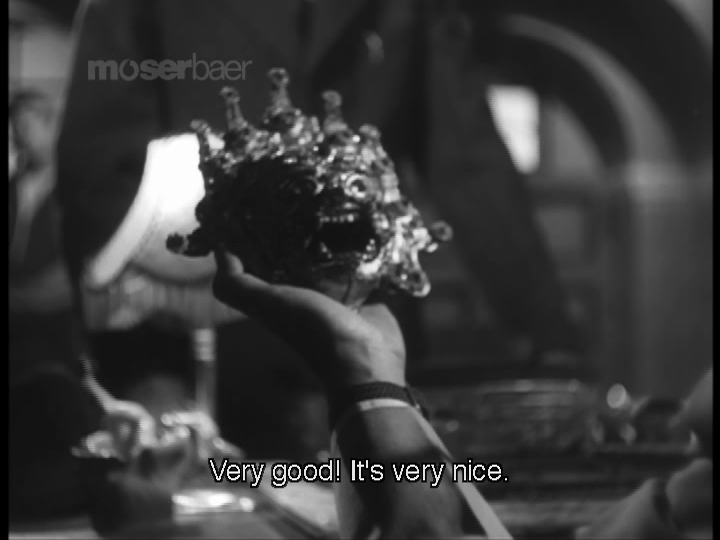
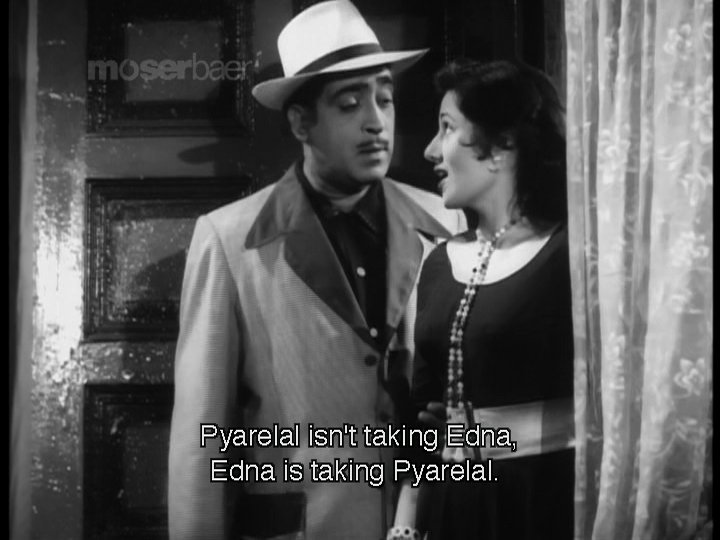
The film starts with the theft of an heirloom from Prem Kumar’s family in Rangoon. It turns out that the jewel encrusted dragon mask has been stolen by eldest son Madan (Chaman Puri), who has taken it to Calcutta to sell to the villainous Mr Chang (Madan Puri). Mr Chang wants the dragon but doesn’t want to pay for it, so he arranges for his chief henchman Pyarelal (K.N. Singh) to dispose of Madan and steal the dragon. Hearing of his brother’s murder, Prem Kumar (Ashok Kumar) heads to Calcutta to try to recover his family heirloom and en route he meets up with Uncle Joe (Dhumal) and his beautiful niece Edna (Madhubala) who sings and dances in Joe’s hotel. Prem is dismissive of Edna and her dancing while she is piqued by his resistance to her charms which gives her at least one reason to pursue Prem when she meets him again in Calcutta.

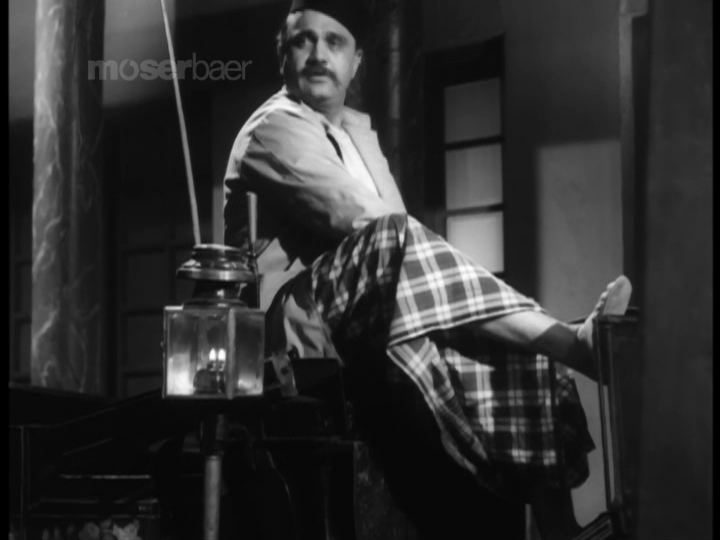
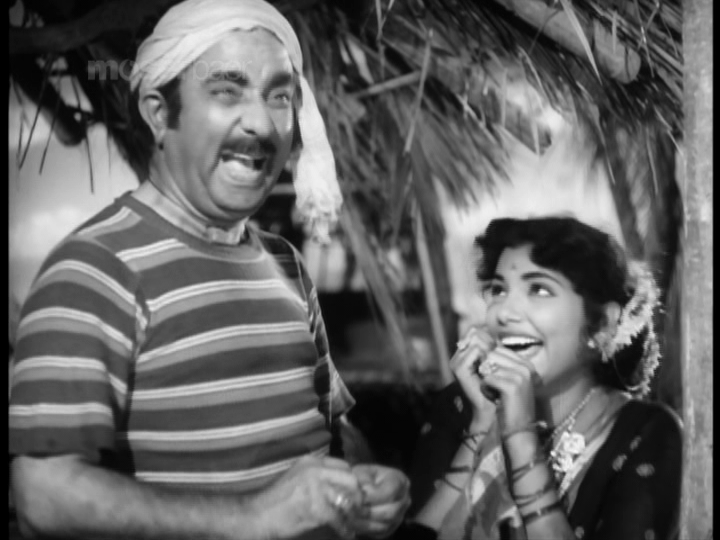
Prem hooks up with Tangewala and old employee Shyamu (Om Prakash) and together they attempt to unravel the mystery surrounding Madan’s death and the disappearance of the dragon mask. This involves Prem assuming the name of Rakesh and following in his brother’s footsteps on the night of his murder while Shyamu uses the opportunity to get commissions from as many people as possible along the way. Added in to the mix of characters are Shyamu’s opium smoking nephew Bhiku who saw the murderers on Howrah Bridge, and his cheerful fiancée Chhamia who add some more conventional Bollywood drama to the story. I always love shots of newspapers and did pause to read the other headlines and the ads!

Madhubala plays the role of an Anglo-Indian, perhaps to explain her Western style clothing and account for her less than respectable position as a singer and dancer in her Uncle’s hotel. While she doesn’t do very much dancing, she is convincing as a singer doing her best to entertain the crowd and attract the attention of Prem. She looks beautiful in swishy skirts and Chinese tunics, and gives Edna charm and vulnerability despite her profession and unsavoury connections to the local criminals.

Some of the noir element creeps in here as Edna obviously knows about the various shady deals going on between Uncle Joe and Mr Chang. Her attempts to lure Prem to the hotel seem initially to be to expose him to some theft or extortion attempt perhaps in revenge for his previous treatment of her. Prem is also less than honest as he encourages Edna’s advances to learn more about the smuggling gang run by Mr Chang and Pyarelal. But that’s about it for any noir-ish character ambiguity and rather quickly a real and genuine attraction forms between the two. After a few cups of tea and a boat trip on the river (a Bollywood staple always guaranteed to result in romance) Edna confesses her love for Prem. While Prem does take a little longer to declare his love, the relationship feels warm and affectionate with excellent chemistry between the two actors.  Ashok Kumar is always a very competent actor and here he shows his romantic side while Madhubala looks gorgeous and seems to relish her role as Edna turns sleuth and starts to help Prem with his investigation.

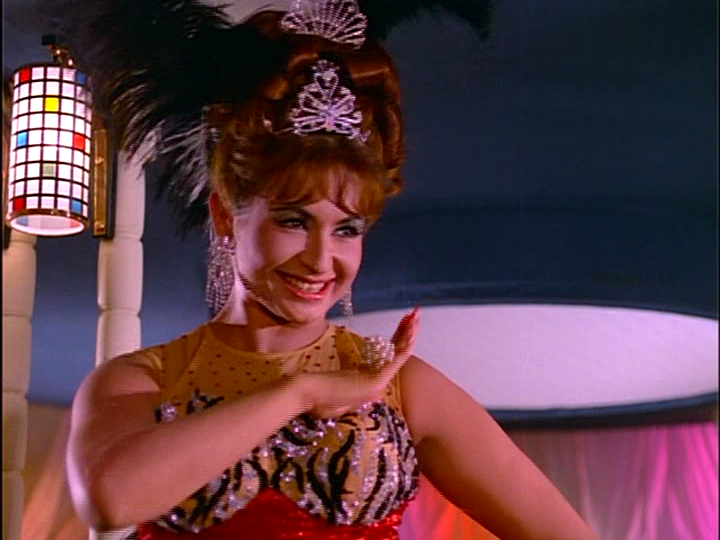
The other characters all fit their parts well. Madan Puri’s Mr Chang is an interesting villain and somewhat different from the usual swaggering, self-confident bully seen in most Bollywood films. He has a limp and walks with a cane, demonstrates a number of affected mannerisms and speaks Hindi softly in a high-pitched voice with a touch of an accent to accentuate his Chinese origin. Chang demonstrates a cold and callous nature when he casually orders the deaths of various lackeys he feels may be a threat but becomes agitated and afraid when he knows that the cops are on his trail. It’s an excellent portrayal and provides a good contrast to K.N. Singh as Pyarelal who plays his role as a more conventional gangster very competently. The oriental touches suit the overall look of the film and of course Helen is perfect (and looks so very young and totally stunning too) as the wonderful Chin Chin Chu when she dances in Mr Chang’s hotel.

The music by O.P Nayyar fits the feel of the film perfectly and ranges from romantic duets to a very jaunty song Shyamu sings as he drives through Calcutta. Mehmood and his sister Minoo Mumtaz also pop up in a fun song at a wedding where Mehmood indulges in some excellent uncle dancing.

I really enjoyed Howrah Bridge and wasn’t surprised to find that it was directed by one of my favourite directors from this era. I liked the touches of film noir and the variation between light and shade in Chandu’s cinematography, although it’s possible some of the dim lighting may just be due to some deterioration in the film with age. Madhubala is always a pleasure to see in any film and she tends to steal the show whenever she appears. While Ashok Kumar is an actor I enjoy watching, he really does suit this type of role and I think this made me appreciate his performance rather more than usual. I was a little disappointed that despite secret doors and an intricate hiding place for his safe, Mr Chang didn’t have a suitably villainous lair, but the dimly lit room with its statues and heavy furniture was probably more in keeping with his character. It’s not the most exciting story but with excellent performances by some of the most renowned actors of the day, it’s a film worth watching for more than just Helen’s fab appearance. I give Howrah Bridge 4 stars.
Temple says:

I am a huge admirer of Ashok Kumar and have been gradually working my way through his filmography. Of course, Helen in any appearance also pushes a film up the to-be-watched pile. And I’d watch Madhubala if she was watching paint dry so I had high hopes when I first watched this. Sadly, the stars and the songs are really the only highlights for me. Ashok Kumar and Madhubala have a delightful chemistry and their scenes together crackle with life and are full of emotion. Unfortunately the story is not particularly interesting as it is obvious what will happen and who will do what. The pace is leisurely at best, and there is just not enough tension as things plod along so my attention kept skipping to what I knew was going to happen down the track. I found the villains characterisations particularly unimpressive and they lacked purpose – they were just generic bad guys and the addition of all the silly mannerisms did nothing to make Chang more credible or threatening. I do like a lot of the supporting cast, especially Om Prakash, but they generally aren’t doing enough in terms of the story to hold my interest. The songs are excellent, and Madhubala can certainly work the camera!

I watched the movie again last week and I found it quite dull. Unless Ashok or Madhubala was on screen, preferably both, or it was one of the fabulous songs I was itching for the fast forward. I am happy I have seen it as it is often referenced as a classic of its era, but it’s not a favourite for me and I think it is just an OK film. I would recommend or rewatch a number of other films released around the same time – for instance the thriller 12 O’Clock, Madhumati or for a change of pace, Chalti Ka Naam Gaadi – over this. 3 stars.
Jewel Thief

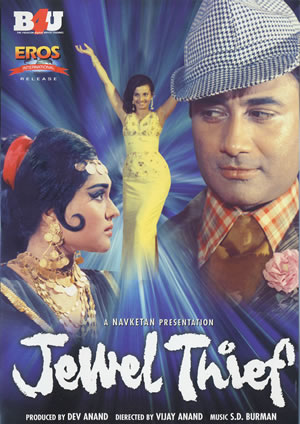
I always enjoy Vijay Anand’s Jewel Thief, mostly for the glorious presence of Tanuja, Vyjayanthimala, Helen and Faryal. The style is groovy Sixties cool, the music is fab and funky and the story is packed with incidents and coincidences.

SD Burman’s soundtrack is brilliant, and the dream playback ensemble of Lata, Asha, Mohd Rafi and Kishore Kumar does the material justice. The title sequence sets the tone; a swinging big band with Krupa-esque drums over an old school cut and paste montage of newspaper headlines that are stuck over real news stories.

Is it just me, or do these display mannequins look just a little like Nargis?

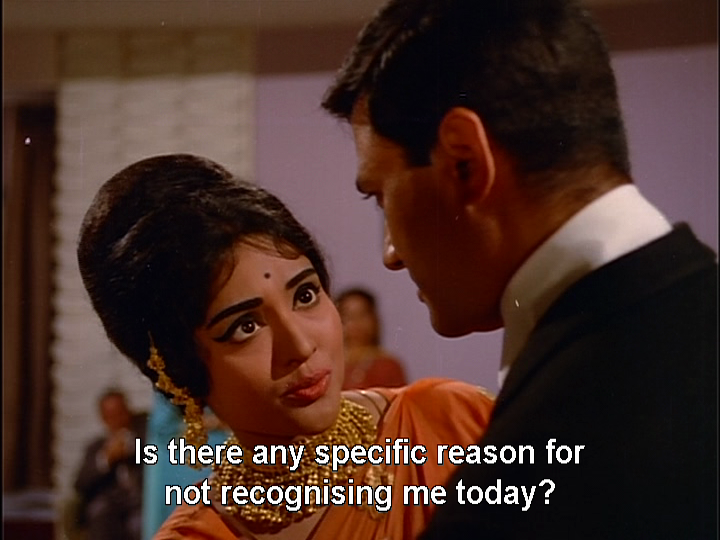
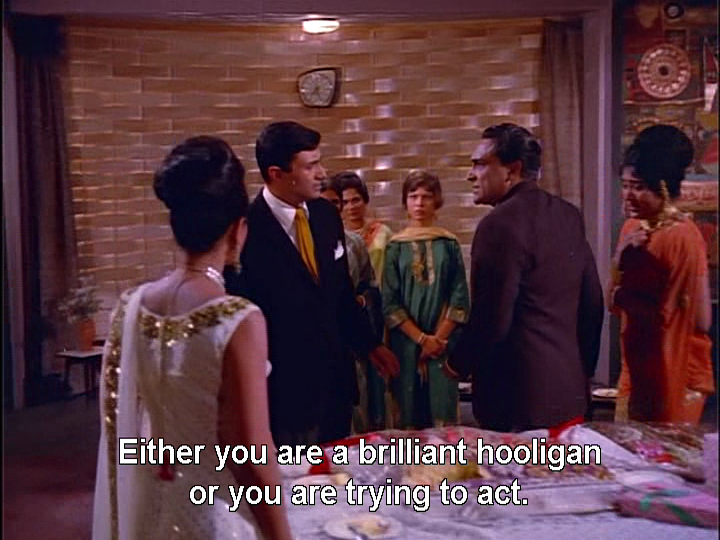
Vinay (Dev Anand) arrives at a jewellers looking for work. His skills dazzle Mr Visambhar Das and his flirting impresses daughter Anju (Tanuja) so he gets the job.  Soon after, he is mistaken for a man called Amar by a number of strangers. At Anju’s birthday party he is confronted by Shalu (Vyjayanthimala) who claims the mysterious Amar is her fiancée and that Vinay is indeed Amar.

This leads to the least suspenseful proof of identity scene ever as Vinay takes over one full minute to remove a shoe and prove he doesn’t have six toes. Did I mention the subtitles on this original DVD are quite peculiar?

Shalu’s brother Arjun Singh is played by the wonderful Ashok Kumar. Arjun seems to want to throw Vinay and Shalu together despite her apparent engagement to another man. He has hidden motives, and gradually more is revealed about his character. It’s a fun performance, and I do have a soft spot for all of the Kumar boys.

Anju and Shalu vie for Vinay’s affections, which results in some awesome outfits and extreme eyeliner. Tanuja is fun and bubbly, and plays her headstrong character with great gusto. Anju seems to have very few restrictions on her activities but isn’t spoiled by being indulged.

Shalu is the weeping wronged woman, and wants to recreate Vinay in Amar’s image which he initially rejects.  However Shalu is flirtatious and yet reserved, a combination Vinay cannot seem to resist.

Vinay plays both women and seems to have no qualms about his situation. He takes for granted that the girls find him irresistible and will tolerate his peccadilloes. Dev Anand has so many idiosyncrasies that I can never forget it is Dev Anand I am watching. However I do like his seemingly genuine enjoyment of Tanuja’s antics in Raat Akeli Hai, Bujh Gaye Diye. And hurrah for the interior design excellence at Anju’s house which we get to tour in that song. I love the fridge, but the bar steals the show.

Things become more tangled as it appears Amar and Vinay are impersonating each other, sometimes inadvertently. Amar aka the Prince is the Jewel Thief. He is a ladies’ man and a ruthless criminal by all accounts, although one with appalling fashion sense. No one seems sure of which side anyone is one. The plot becomes more and more convoluted, even as nothing really happens.

Amar has better taste in women than expected given his shocking taste in clothes. What’s not to love about Helen (playing a character called Helen) making her entrance in a sparkly zebra chicken ensemble complete with crystal beaded tights?

This was one of my first Helen films and whenever I describe vintage Bollywood, I draw on that image. Helen also loves her fridge, to the point of not locating it behind the nifty concealed revolving bar. It reminded me of my grandmother’s kitchen which was built before whitegoods were common so our fridge was plonked against a wall. It took me back to the exciting day when Nan got her first ever washing machine. Sadly I grew up without the groovy bar, but we did have a fair collection of 70s kitsch.

Julie (Faryal) doesn’t seem to have a fridge, but she did have a drinks trolley in one scene.  She is part of the gang and draws Vinay further into their murky designs. With Faryal wearing the entire budget for a key jewel heist scene, I can totally understand why the art team recycled the Nargis busts in the background.

It is a treat to have multiple vamps and heroines of this calibre in a film that lets them all shine. The ladies drive much of the action, providing the clues, motivation and manipulation that ensure Vinay continues to swagger limply in pursuit of Amar. Anju Mahendru also has a small but crucial role as Neena, yet another babe who runs rings around our hero. They are strong, individual women and I love seeing Helen and Faryal do more than an item number. For a fun and informative discussion of vamps, please listen to this excellent podcast by netvixens Beth, Amrita and Memsaab at Masala Zindabad.

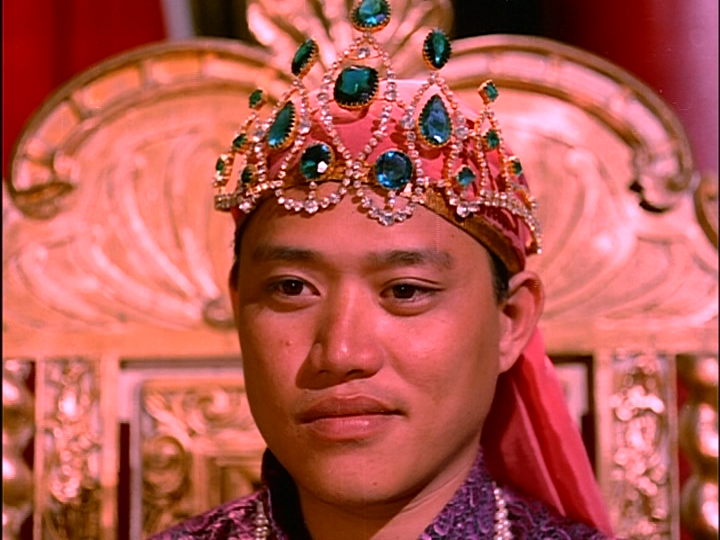
The action moves to Gangtok as Vinay pursues Amar. Dev Anand is slick and superficial; Vinay looks the smooth man of the world but is never really convincing as a man of action. Luckily his dad (Hussain) is a police commissioner so he has resources to call on. Even more complexity in the plot is revealed as Vinay is taken hostage. (It was very thoughtful to provide the lads and ladies of the gang with table tennis. Such a wholesome recreation for evil doers!) The gang is working on one big heist that doesn’t seem to be worth it given that they are making ample money from the smaller crimes that attract less attention. The targeted crown is a bit more Miss Universe than I expected for a prince in Sikkim.

Amar continues to elude Vinay and his dad, but there is plenty else of interest going on. Vyjayanthimala wears a sari covered in furry bobbles for a start, but she has the consolation of a lovely song to emote to.


Helen and Julie create confusion as Vinay does a lot of overacting, sometimes intentionally. In a fantastic filmi architectural coincidence the old palace tunnel system was handily located under the captives’ quarters. All it took was Shalu, a rope made from a sari, her handy chisel and mallet plus the good scissors and they were off and running for freedom. The film is full of great secret rooms, sliding panels and amazing design features. But it wouldn’t be truly masala  if the hero escaped right away, and the director had invested in some hi-tech memory modification equipment, so the action returns for more mind altering shenanigans.

And then the deservedly famous Hoton Me Aisi Baat in which Dev Anand has the very good sense to restrict his dancing to posing and scuttling out of Vyjayanthimala’s way.

I don’t want to give the ending away completely but the Jewel Thief’s complex plan comes unstuck remarkably easily. Anju takes her turn at helping Vinay fight the good fight, and all loose ends are tied up in a delightful final scene.

Vijay Anand has created one of my favourite retro masala films. There is so much to enjoy visually, so many fun performances, and great music and dance numbers. What more could I ask for? 4 and ½ stars! (extra points for Helen, small deduction for Dev Anand’s hats).

Heather says:  Jewel Thief was one of my early ‘oldies’ film purchases and I’m pretty sure I bought it because of Helen. Of course not only does Jewel Thief have the incomparable Helen but also the amazing Vyjayanthimala, Tanuja and Ashok Kumar along with Dev Anand. I’m not usually a great Dev Anand fan as I find him much too affected, but he seems to suit the James Bond-esque role he plays here fairly well. He does look to be too old to be a wayward son of the police commissioner though and his mannerisms make it hard to forget that he is Dev Anand rather than the character, but I still think this is still one of his best films.

The best part of this film for me is the music – the soundtrack is fantastic and as Temple has mentioned it has the dream team of playback singers. This is a film where I’d heard and loved the songs before I saw the movie, and they only got better with watching. The sets are fantastic too with plenty of hidden rooms and tunnels as well as some very inspired décor in Helen and Anjali’s apartments – so much to appreciate.

I also love the totally fab costumes. The red dupatta with white fluffy spots all over it that Vyjayanthimala is wearing in the song above is a particular fave, and Tanuja has a great selection of outfits.  Naturally Helen shines (and sparkles!) in that department as well, and one of the gang has a rather eye catching black jacket with large white pockets. Where do they find this stuff – actually I do know the answer to that as I went shopping in Chennai earlier this year! Dev Anand is a little too ‘corduroy’ in some scenes for me (clothes and attitude), but his collection of hats helps to make up for that. I particularly like that the jewellery was by Parikh Novelty house, which sounds exactly where I need to go shopping, and that there was just so much of it!

The story aims to be a mystery/thriller and I think in general it works fine for the mystery but not quite so well in the thriller part. There just isn’t very much suspense – at least not once we get past the sock removal. (Just as an aside, I seem to have a different copy toTempleas I have rather more boring subtitles which sadly refer only to toes.) But perhaps I’m just too distracted by the costumes, the jewellery, the interiors and the dancing! The story moves along well though and there are plenty of twists which generally make sense, even if the final scheme does turn out to be more complicated than it really needed to be. Adding in electro-shock treatment was particularly inspired, and I did enjoy Dev Anand’s grimacing throughout the procedure. Brilliant!

All the actors are excellent throughout and it is a real treat to see so many great performers together in a better than usual story. The end is just a little disappointing, but there is still plenty to enjoy in this very stylish film . 4 stars from me.