Goliyon Ki Raasleela Ram-Leela

ram-leela-poster

Goliyon Ki Raasleela Ram-Leela* is mostly what I expected from Sanjay Leela Bhansali. It’s visually lush, with opulent sets, stunning landscapes, gorgeous costumes and lovely people to wear them. The movie opens with a looong stream of credits for Bhansali (producer, writer, director, editor, music director) including acknowledgement that Ram-Leela is inspired by Shakespeare’s Romeo and Juliet. Knowing the story and probable ending in advance raises the question – will the journey be worth it? Well, yes. I was pleasantly surprised to find myself entertained and interested most of the time.

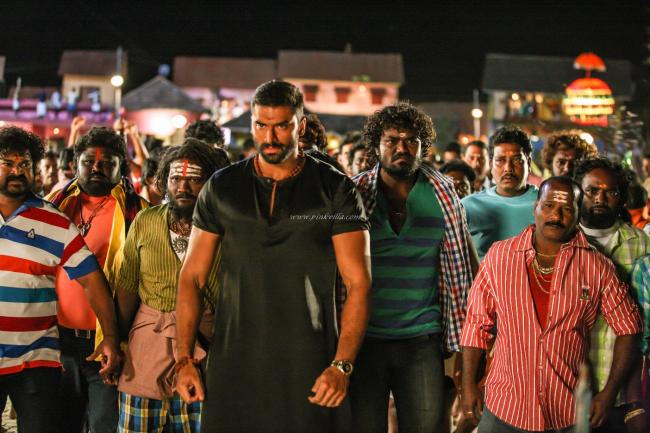
Ram gives Ranveer Singh the opportunity to play both the prancing peacock and the traumatised young man who has been immersed in violence all his life. He makes a Rajnikanth-esque entrance, and springs straight into Tattad Tattad.

The choreography is disappointing – a friend calls it the Dandruff Song because of all the hairography. But based on audience reaction, they got the amount of shirtless shimmying about right. And his chest-oiler must have been working overtime, yet they were not named in the end credits which seems a sad oversight. Ram is obsessed with sex, with enjoying his life (especially sex) and has a cunning plan to take revenge on the enemy Sanedas (by having sex with their womenfolk). He admits that his thinking apparatus may be located in his pants. But Ram is also the one voice asking whether his side, the Rajadaris, should try to stop the cycle of killing. He is a mercurial creature, a natural leader but one with an unpopular message. I really liked Ranveer’s energy, his slightly self-mocking delivery of the deliberately cheesy lines, and his passionate sincerity when he confronted Leela.

Ram Leela Deepika

Deepika Padukone looks stunning and she has also crafted a good performance. This story is very familiar and requires logic suspension which means that the chemistry has to glide over any plotholes. I’ve often felt she struggled to show warmth with some co-stars, not so here. Sparks fly from Leela’s first sight of Ram in a rain of colours at Holi to the verbal sparring as they trade rhyming couplets. Leela is as interested in pursuing this relationship as he is, and she is not afraid to initiate intimacy or sort him out when he misbehaves. She also seems a bit smarter than Ram, and more cognisant of long term consequences. Deepika is convincing throughout, whether playing the giddy Leela falling in lust, dancing her heart out, or as the saddened serious young woman confined by the past.

The minor roles are interesting, especially the key female characters. Supriya Pathak is impressive as Baa, Leela’s mother and the leader of the Sanedas. Ultimately she is the one who will have to decide for the future, and she is a powerful, brooding presence. Richa Chadda plays another of her smart women in a regressive male dominated world (think Fukrey, Gangs of Wasseypur) and she is excellent as Leela’s sister-in-law Raseela. Barkha Bisht plays Ram’s sister-in-law Kesar, and she is equally good. The sisters-in-law give voice to the emotions of both sides. Both are widowed in the same stupid macho incident, and both women remain integral to the story long after their husbands are gone. Sharad Kelkar and Gulshan Devaiah round out the more significant male support roles. I was delighted to see Raza Murad as the Sarpanch even though his role was largely to provide ‘As you know Bob …” exposition. Abhimanyu Singh’s career mystifies me. He’s a terrible actor. He even overacts when he is supposed to be dead! And seeing Priyanka Chopra’s lacklustre item number made me grateful Deepika got the lead.

Ram-Leela Holi

The costumes are not just gorgeous, they reveal something about the characters. Leela wears a modern lehenga but the underskirt is a traditional patterned fabric. Kesar’s dark shawl signifies her position, but it’s lined with a light patterned fabric. Baa wears masses of ostentatiously heavy jewellery, showing her wealth and the strength to hold on to it.

ram leela guns everyhwere

Ram wears floral shirts edged with multi-coloured mini pom-poms and his holster is brightly embroidered. And there are guns EVERYWHERE. Like Leela, he carries his heritage with him. Many of the dances are garba style (showing off the excellent costumes) and most centre around religious celebrations (more colourful folkloric costumes). Everyone lives in old style houses but all the ladies whip out phones to film Ram strutting his stuff.  There is a sense of the ‘modern’ world invading this village where families have feuded for 500 years.

Ram Leela set design

Despite being less hidebound in their views, it doesn’t take much to make Ram and Leela each accuse each other of being a typical Rajadari or Saneda, just like ‘them’ as things turn sour. You don’t have to scratch the surface too hard to reach the inculcated mistrust and stereotypes. But after a cracking start, Bhansali loses control in the second half where the repetition of crisis and non-resolution becomes a little tedious.

I can’t help comparing this to Sunil Dutt’s stunning Reshma aur Shera and Baz Luhrmann’s excellent Romeo + Juliet, and while I like Ram Leela it comes up well short of both. Dutt expressed the tragedy and beauty of a doomed love in Rajasthan with fewer filmi tricks and greater emotional impact and maturity. Luhrmann stuck closely to Shakespeare and was still playful and original. Bhansali gestures towards Romeo and Juliet, mostly in the balcony scene which he recreated quite closely down to the dialogue. But he refers to iconic scenes in his own films as much as he does Shakespeare. He needs to curb the self-indulgence, and to edit with more eye to the story.

I’d definitely recommend seeing this in a cinema for the beauty and visual impact. The songs alone are worth a look and I had fun guessing which choreographer did which. I expected this to look great, and often that is all I get from Bhansali films as I just don’t connect with them. I didn’t expect Ram-Leela to be quite so entertaining and engaging.

*None of the marketing material or cinema listings here in Australia seem to have been changed so the film is still listed as Ram Leela. 

What? You want to see the colourful embroidery and outfits in detail? Here you go. Because I care.

Ram Leela everyone needs a smartphone

Heather says: I wasn’t expecting to enjoy this as much as I did. Sure, I knew it would be beautiful and I’ve been enjoying the soundtrack, but the performances from all the actors put this a notch above the usual SLB film.  Deepika in particular was a revelation and she seems to have been steadily improving with each film.  I used to find her wooden and somewhat tedious, but she really sparkles here in a role that gives her scope to show a number of different emotions as well as the smoking hot chemistry with Ranveer that Temple has mentioned. Phew!  I’ve only seen Ranveer once before and from his initial appearance in  Tattad Tattad I was expecting him to be woeful, but such is not the case.  He rises to the occasion (cough, cough) and is so much better than the 70’s porn star outfits suggest.  His swagger and bravado are just part of his persona and his Ram is full of passion and joy. Best of all though are the support female characters played by Supriya Pathak, Barkha Bisht and Richa Chadda.  As Temple has described, all had meaty roles that allowed them to be real people with varying emotions and motivations which gave more layers to the film.

However, as with every SLB film I’ve seen, Ram Leela could have done with a heavier hand with editing and the last hour had moments where it really did start to drag.  Still – the costumes are sumptuous, the scenery is beautiful and the performances were of a high enough standard that I completely agree with Temple that this is one to see on the big screen.  Ram Leela was much more entertaining than I expected and I thoroughly recommend it as one of the better Hindi films I’ve seen this year.

Chennai Express

chennai-express-poster

I had very low expectations of Chennai Express, mostly due to Rohit Shetty’s idea of humour. I expected something along the lines of “a typical filmi Rahul type wanders into a Tamil film. Hijinks ensue.” And that is what I got. Not entirely successful, but amusing enough with loads of colour and movement, Chennai Express is a good timepass.

Chennai-Express-it starts

Shah Rukh plays this Rahul as an anti-Rahul. Where the KKKG model Rahul would have made his grandfather’s last wish a priority, this one tries to skive off. Rahul has lived in comfort all of his 40 years and yet feels no obligation to family. He is an unappealing manchild clearly in need of a wakeup call. A series of misadventures see him trapped on the Chennai Express, headed straight for a showdown with a Tamil don and his family. Shah Rukh has no qualms about making Rahul a shallow idiot to start with and there is an air of self-parody about some of his preening and posing. I particularly liked the sly humour when Meenamma (Deepika Padukone) guesses he must be 50, or maybe even older. Shah Rukh does all his familiar shtick from hair ruffling, décolletage sniffing (you know the move), arm flinging, to the eyes welling with tears. Of course it wouldn’t be an SRK film without a far too long speech about some social issue. While I appreciated the content (women should be able to make choices for themselves) it was rather undermined by the context (blokes beating each other to a pulp so Rahul might win the right to give Meena her choice). Shah Rukh isn’t perfect, and he does ham wildly at times but he also has the courage to show off those spindly legs in a lungi.

chennai-express-Deepika and SRK danceChennai-Express_Deepika as Meenamma

Deepika gives one of her better performances as Meenamma (leaving aside her much criticised accent which didn’t bother me that much). From her DDLJ style entry (and one of the funnier scenes that ensued) and her cheerful explanation that her father (the excellent Sathyaraj) is a renowned don, Meenamma made an impression. Deepika always looks pretty but often fails to convey chemistry with her co-stars. She seems to have overcome that as her scenes with Shah Rukh are lively, often fun and even moving. She has worked on her dancing too and appeared to good effect in the big production numbers. And her wardrobe was just lovely although I’m not sure where all the sarees kept coming from. Generous village ladies I guess.

Chennai-Express-Rahul and MeenammaChennai-Express-Love starts

Initially dismissive of each other, there is no insta-love. Their relationship develops through forced proximity and dealing with external threats.  A series of events open each character’s eyes to their feelings and the triggers for these changes make sense within the story. Meena is the first to fall but she has reservations about Rahul and isn’t overcome by silliness just because her heart flutters. The romance works for me as it isn’t the primary motivation from the start, despite Rahul’s pathetic flirting.

As I expected, the comedy is often too broad and overplayed for my tastes. But there were some wittier scenes that I really liked. Rahul and Meenamma communicate in front of their abductors by singing in Hindi to Bollywood songs, many from SRK films. When Meena finds out Rahul is a mithaiwala or tries to guess his age, Deepika’s reactions seemed spontaneous and very funny. But it is hit and miss. Heather found several things funny that I would edit out (e.g. Meenamma’s ‘nightmare’) and other audience members were just about wetting themselves in scenes that had me checking my watch. I liked the product placements that were often done in tongue-in-cheek style.

CHENNAI EXPRESS - Rowdieschennai-express-village scenes

There is a lot of chatter about the South Indian stereotypes portrayed. Well, there is just about every stereotype present and the North Indians were less than perfect. Rahul was arrogant, ignorant and not really interested in Tamil culture, assuming people were quaint caricatures or savages. The Tamil rowdies were played by the guys who play Tamil rowdies in almost every film; swarthy, stocky and spiral permed as always. The ‘other’ South stereotypes also appeared – salt of the earth villagers with hearts of gold. There was even a comedy Punjabi policeman. No one was safe. Maybe it is just that years of watching Indian film portrayals of fat people, coloured people, white people, disabled people, what was the other one … oh yes, women, has eroded my sensibilities. Rohit Shetty gave some standards his own fun twist too – like trading a convoy of white Sumos for a fleet of colourful 4WDs.

chennai-express_Sathyaraj

The supporting cast are largely playing the same roles they play in their own film industry so that was fun to see. Nikitin Dheer was perfectly fine as Meenamma’s unwanted prospective groom but I couldn’t help wishing they cast favourite “That Guy” Subbaraju. Maybe he refused on the grounds that singing Chamak Challo would be bad for his image.

Hooray for item numbers! Priyamani and her back up dudes were fantastic. I especially liked the enthusiasm of the guy in the yellow scarf who appears between SRK and Priyamani and the guy in the stripey mesh singlet. Who cares if the song lyrics are stupid? Vishal-Shekhar had me wanting to hit replay and dance! SRK struggling to keep up with the chunky backing dancers and looking like a fish out of water may not have been intentional but it suited Rahul. He looks happy and absolutely knackered in the behind the scenes bits in that clip.

chennai-express-extravaganza

The other songs were visually extravagant and included all the other SI film staples that couldn’t fit in the narrative. The much vaunted tribute to Rajinikanth is a dud. While Rajini is not much of a dancer, there was little of his style in the number. The fight scenes and car stunts are what I’d expect from a Hindi director with a big budget and a couple of Tamil DVDs on the coffee table; spectacular but a bit slower and more laboured than if this was a real South film. And like many South Indian films, this is visually gorgeous.

I liked more than I disliked about Chennai Express, but apart from the songs I don’t think I would watch it again. Despite all the Tamil references, this reminds me more of a Telugu film as – spoiler – no one is raped and there are lots of survivors at the end. Worth a watch, more so if you’re a Shah Rukh fan.

Heather says: I also had really low expectations for this film which is possibly why I enjoyed Chennai Express as much as I did.  For a change I even liked Deepika and I thought she did particularly well in the comedy scenes.  Perhaps it’s only when she appears opposite Shah Rukh that she actually manages to act.  I also laughed much more than I was expecting – after all I don’t think I’ve been amused by a Rohit Shetty film before either.  Chennai Express is really very funny, despite the humour mostly being very broad and largely based on various caricatures.    However as Temple mentions, there was some more subtle humour and the references to many older films were witty and often poked fun at SRK more than at any particular stereotype.

I enjoyed the music and dancing more on screen too, since I hadn’t been terribly impressed with the soundtrack on first listening.  The highlight was definitely Priyamani and watching Shah Rukh trying to keep up, but most of the songs were well pictured and enjoyable.  Any song is always much better with the addition of elephants in my opinion!  Overall the film looks beautiful, although it really could have been almost anywhere in the south and only the language placed the film in Tamil Nadu.

Chennai Express is not one of my favourite Shah Rukh Khan films, but definitely not his worst, and there are a few scenes I would like to watch again. Not the lungi dance tribute to Rajni over the end credits though – I’d recommend leaving when the credits start to roll!

Om Shanti Om

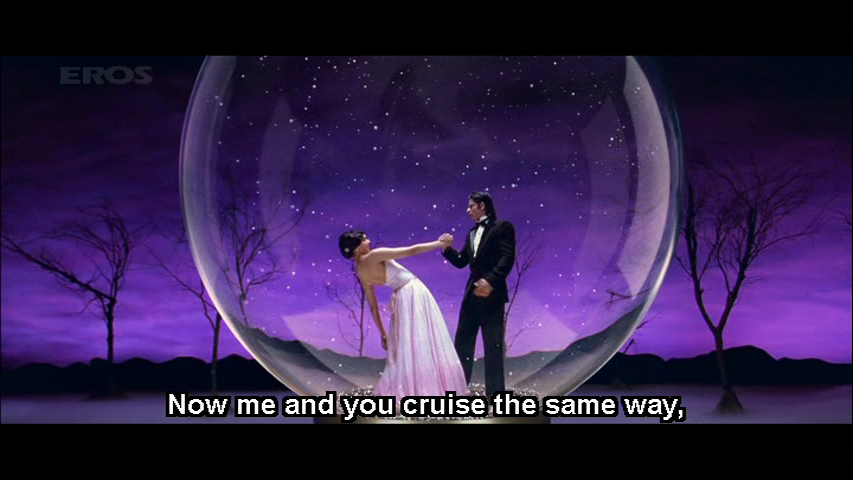
Farah Khan is one of the very few directors currently working in Bollywood who is making our kind of masala movie.  We loved Main Hoon Na and since her next project, Tees Maar Khan, is about to release it seems fitting to start our Christmas silly season with one of the last great masala films we saw in the cinema – Om Shanti Om (OSO).

SRK plays Om Prakash Makhija, a junior artiste who, along with his friend Pappu (Shreyas Talpade), is struggling for work in Hindi films in the seventies. The film opens with a wonderful take on Rishi Kapoor’s Om Shanti Om from Karz which foreshadows the reincarnation romance drama musical about to unfold.  There is some clever use of the original footage and we felt right from the beginning that we were going to love this! The retro setting also lets Farah Khan and Red Chillies show off some fab CGI work in their tribute to past filmi legends.

Om falls in love with one of the big stars of the time, Shantipriya or Shanti, played by Deepika Padukone.  Naturally, since this is after all Bollywood, such a romance is destined to face obstacles, as Shantipriya is a big star and Om is a nobody.

There are some wonderful scenes where Om woos Shanti, both heart-wrenchingly romantic and hilarious, particularly the scenes when he pretends to be a Southern Indian film star breaking into Bollywood. This was fun at the time, but even better now that we have had the opportunity to see where Farah took her inspiration from! Shanti is secretly married to sleazy Mukesh Mehra (Arjun Rampal) and this of course presents both a barrier to Om’s happiness, and a great opportunity for some excellent SRK emoting.

Inevitably, Om discovers Shantipriya’s secret and his heart is broken.  Again Farah Khan manages to take some poignant moments and intersperse them with some classic filmi devices to make the resulting song both sad and funny.

Since Om is the hero, he still fights to save Shanti when Mukesh determines she must die to protect his own career.  Om is badly injured in the confrontation and dies (eventually) in a nearby hospital, at the exact same time as big star Rajesh Kapoor’s wife is delivered of a son. A son who has a mysterious birthmark that looks a lot like a significant tattoo. Yes!

This baby grows into Om Kapoor; a spoilt self-indulgent actor resting on his father’s laurels and a trial to all who know him. Adored by his fans, he feels that he can do no wrong until he remembers his past life, grows up a little and resolves to bring about justice for his lost love, Shantipriya.

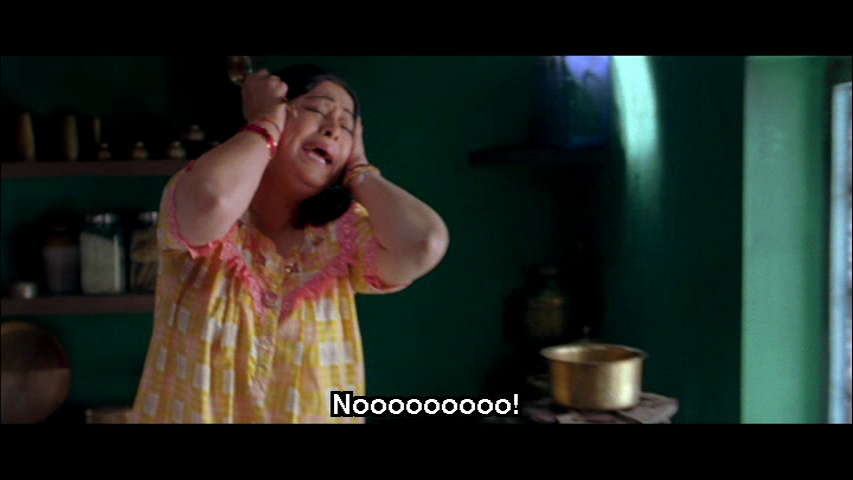
There is plenty of comedy, particularly for anyone who knows something about the films, actors and different factions in Bollywood.  There are many sly digs at the industry’s predilection for nepotism, all tongue in cheek and very funny! SRK is not exempt from Farah’s sharp wit: as he arrives for a film shoot, one of the bystanders comments “I thought he’d be taller”. Kirron Kher is in fine form as Om’s ‘filmi’ mother, and she has some fabulous scenery chewing moments. Shreyas Talpade and SRK have some fun scenes together and really seemed to enjoy hamming it up as junior artistes.

Although a lot of the humour is contained in the dialogues, there are plenty of physical gags, and even the sad scenes have an element of comedy.  While Farah Khan is poking fun at the very typical filmi devices, she is also acknowledging these older films that she clearly loves.  OSO is a paean to these masala greats and we were inspired to track down many of the scenes she referenced.

There is also plenty of drama.  While most of the scenes are deliberately over-acted to get as many laughs as possible, there were some genuinely moving moments.  The scenes between Om and his ‘filmi ma’ and his friendship with Pappu were given as much care and emotion as the romantic scenes with Shanti and the confrontations with Mukesh.  The film loses momentum a little towards the end, but only for a moment and it soon picks up the pace with the final Andrew Lloyd-Webber inspired showdown.

The entire film seems to have been written to display SRK at his best.  He brings every nuance of the role to life and manages seemingly effortlessly to turn scenes from happy to sad to totally ridiculous and have us following along accepting every ridiculous turn of the plot.

This was Deepika Padukone’s debut film and Farah Khan seems to have gotten much more out of her than any directors since.  Although she is wooden in her earlier scenes as Shantipriya, she suits her modern day character of Sandy better and she comes to life in the songs.

The support actors, in particular Shreyas Talpade and Arjun Rampal are well cast in their roles. Being a Farah Khan film, of course the songs are exceptionally well choreographed and filmed.  One of the things we appreciate Farah for is her determination that her leading men should be objectified as much as, if not a little more than, the glamorous heroines. She outdoes herself with Dard-e-Disco which has hilariously bad lyrics (apparently she kept telling Javed Akhtar to make his lyrics worse) and is full of gratuitous shots of SRK in, emerging from, and being doused with, water.

Any good masala film must also have great costumes, and OSO delivers in this regard.  The outfits from the 70’s are thoroughly of their period and stunning in their garishness and we loved them.  Shantipriya wears some beautiful clothes and the depiction of Om as an actor means we get to see him in an array of costumes.  There are plenty of fight scenes too, with the best reserved for the Southern Indian film episode.

Much of the film industry seems to have got behind Farah with her multi-starrer song Deewangi Deewangi.  It was a fantastic feat to get so many actors to take part, and we had great fun spotting some of the stars of yesteryear and their signature moves.  The satire on the Filmfare awards was partly filmed during the actual ceremony and it is very good humoured of both Filmfare and the array of famous actors to take part. We weren’t quite so enamoured of Bappi Lahiri’s singing on the red carpet but he is a legend in his own blinged up disco way.

The story of OSO is perhaps predictable, but the great performances and the exceptional production values more than make up for that.  We are quite sure that there are a lot more jokes in there that we just didn’t get, despite repeated viewings.  At the end of this film, we both looked at each other immediately said  ‘What the fish? Again – we want to watch it again!’

Heather says: I think I saw this film at least 5 times in the cinema. Farah is excellent at showcasing her obvious love of cinema, and while she pokes fun at the entire industry it’s not with any malice. As a director she seems to know exactly what her audience wants and then delivers. Although her story doesn’t make much sense that’s not what I remember from the film. Its much more about the humour, the costumes and the excellent performances on screen. Being a huge SRK fan I can (and have) watched him in really dreadful bad films, but it is so refreshing to watch him where the director knows how to get the very best out of every scene. I totally loved the songs by Vishal-Shekkar, and they still make me smile and dance when I play them to-day. The continual references back to older films were a huge plus, and the clever re-working of old clips in Dhoom Tana was fantastic! Everything works well together; the casting is right, fantastic songs and costumes, great choreography and all tied together by a great script. Om Shanti Om is exactly what masala means for me, including the lack of logic in the plot! Please Farah, can we have some more? 5 stars

Temple says: This film is like the very best kind of Easter Egg hunt. Everywhere you look there are sparkly little treats and jokes, and beautiful tributes to other much-loved films. I really enjoyed the nod to every filmi cliche that could possibly be used, and the cheerful ransacking of seminal images from Hindi films of the past. I also loved seeing Pyarelal back up in the credits and on the red carpet! The performances really were very good, from the headline stars to the smallest special appearance and I felt that all the performers shared a love of the 70s film industry and it’s products, so they seemed to give it their best. For all the cheesy fluff, the film-making team also did a very intelligent thing with the Om Shanti equation in the modern era by not making it a romance. Om had no intention of, um, completing his earlier relationship with the newer model, just of seeing justice done for his past life’s true love. It made me a lot more willing to sit through repeated viewings of the slightly draggy second half as there wasn’t that squick factor. I also enjoyed seeing SRK revel in his ability to portray unpleasant characters – he was cold, calculating and quite repellent as OK in some scenes, and got to use more than his lauded five expressions.

Farah Khan has great attention to detail and everything from the costumes (where on earth did they find all those fabulous fabrics?)  to the music suited her vision perfectly. And the now trademark exuberant closing credits were a perfect finish to a great journey and sent the cinema audience out on a high. I loved being swept up in this, and feeling that little bit clever for recognising some of the references. Would you appreciate this film if you knew nothing about its source materials? Yes, I think so. It has so much colour, energy, heart and humour that there is something for everyone. Well, no machetes but I can’t really begrudge that tiny lack. And I was certainly inspired to go find or re-watch some of the classic scenes pilfered for use in OSO. Farah Khan as brand ambassador for Masala Pradesh? She’s got my vote! 5 stars!