Rockstar

Imtiaz Ali’s involvement persuaded me that Rockstar would be worth seeing despite my reservations about Ranbir Kapoor (I’m still bitter after enduring Saawariya and Bachna Ae Haseena). Plus I had a free pass, and a few hours to kill.

There are some things that are outstanding. The visual design, sets and locations are beautiful. I loved the scenes at the Hazrat Nizamuddin Dargah with their beautiful lighting and haunting music, and Ranbir shone in those introspective moments. The songs, which I didn’t particularly like before seeing the film, work a treat. The music and lyrics extend the story and characters, and so do the picturisations. I misted up a little seeing Shammi Kapoor on a cinema screen for my first time. He is Ustad Jameel Khan, a renowned musician who supports and mentors Ranbir’s character. There is a sweet scene as they ‘duet’ on ‘The Dichotomy of Fame’ and I don’t think Ranbir had to try hard to look like he was moved too.

There were even some ridiculous and some beautiful costumes so I was pleased on both counts.

But there are some significant problems, most of which stem from the writing and direction.

Ranbir is Janardhan aka JJ aka Jordan. He is supposed to be a simple innocent boy but comes across as socially retarded, he is a misfit in his slap-happy family, and drifting through college. He is a musician but is told that until he has suffered he can’t be great. JJ decides to fall for the college hot chick so she can break his heart. Despite the stupid premise that manufactured pain equals great art, the dialogue in these early scenes is quite funny and flows well. Eventually JJ and Heer (Nargis Fakhri) become friends. JJ is by turns clueless and a bit manipulative – on the one hand taking Heer too literally at times, but then admitting he fakes being drunk when he goes out partying. They sneak into a tacky soft porn flick, get drunk, and generally work through Heer’s idea of a bucket list before she marries and relocates to Prague.

Jordan, as he is now known, becomes increasingly famous and unhappy.

Ranbir tries, maybe too hard, to break from his usual lightweight charmer persona and is mostly surly. Imtiaz Ali wants us to find Jordan sympathetic but I couldn’t after a point. While I get that he is supposed to be inarticulate away from his music, Jordan is a self absorbed and often aggressive man. Jordan realises he is in love with Heer for real. Kicked out of his unhappy home, and down on his luck, he stays at the dargah. Thrown a life line by college canteen manager Mr Khatana and Ustad Jameel Khan, he is signed by Platinum Records boss Mr Dhingra (Piyush Mishra). With his success growing, Jordan negotiates a gig at a very fake looking Eurojam music festival in Prague – what a coincidence.

He pursues Heer and will not take no for an answer. To be fair, she is sending very mixed signals but it is all about what Jordan wants. He doesn’t exactly force her, but he refuses to accept her ‘No’ and is aggressive in his pursuit. He has no concern about her marriage other than how it gets in his way. Heer succumbs and they have an affair which doesn’t end well. His declarations of love were all about his feelings and desires, how he needed her to make him happy and complete.


Even his band was just a bunch of shadowy blokes up the back of the stage – there was no creative dynamic, no camaraderie. Separated from Heer, Jordan descends further into his morass of self pity and destructive behaviour.

Maybe his vile gold brocade dinner jacket was a sign. They certainly interpreted Rockstar as ‘someone with no dress sense’. JJ wears simple jeans and kurtas when he is with Heer, but gets a bit late era George Harrison meets Frank Zappa on his own. Was that meant to prove he needed her to be a good boy (and remember to wash his hair)? Ranbir did well with the physical transformation of Jordan and his best scenes were probably in the songs where he could just be the Rockstar, demanding the spotlight yet still showing ambivalence about fame and success.

Heer is self absorbed and indecisive, creating most of her own problems. She not only jeopardises her marriage, she is also afflicted with a blood disorder and told she will die. Of course the only cure is Jordan’s Magical Healing Cock. Yes, a doctor may despair but shagging Jordan is all it takes to restore her vitality. Well, until she is further punished for her transgressions by being separated from Jordan (and his MHC) and being made dangerously ill by the resulting pregnancy. Ah the wages of sin. When she collapses, her mother’s reaction is to scream for someone to call Jordan! Yes – like a quickie in the emergency ward would cure Heer. Nargis Fakhri was out of her depth once the love story took centre stage, although her scene joking about eloping with JJ before her wedding was funny and poignant. Heer needed a bit more oomph, less shrieking in place of emoting, and better writing. I’m trying not to mention her collagen plumped lips but they do arrive in shot before the rest of her face a few times, and may contribute to her inability to articulate the dialogue.

Filmi clichés abound, and some are quite clumsy.  If you’re going to hire someone who can’t dance, why introduce them as college hot chick by staging a dance show? There was another misstep with a ’tribute’ to Shammi in Kashmir where Ranbir showed he really doesn’t have any of the panache of his uncle.

The arena style gigs looked good even if Ranbir’s guitar was never plugged in, and the audiences were too well behaved. But then there was no sense of how Jordan created – we see him listening attentively to all these influences and then songs just emerge fully formed.  I would have liked to see more attention given to the musician rather than just worshipping the performer. It might have made Jordan more interesting or likeable.

Had it been a study of the effects of fame on an artist, this might have been compelling. The love story that is supposed to be the core of this film left me cold. I don’t feel I have enough understanding of Rumi to make an informed comment, but my gut reaction was that Imtiaz Ali has missed the point of the quotes he used in his film. I don’t recall Rumi defining love as possession, and that is what this story does. The early friendship is enjoyable, if very unlikely, but just when I should have been wanting them to get together I started to think the opposite. And there are so few other characters in the film to give any relief from this pair. Even the end credits bunch people into his family, her friends, his band…it is all about Jordan and to a lesser extent, Heer. So if you don’t care for their grand romance what else do you have?

The audience I saw the film with was small – maybe 50 people. Several didn’t come back after intermission, and another dozen or so crept out during the second half. Their only cheers were reserved for Shammi-ji and AR Rahman and I think that was about right. Rockstar had a lot of great ingredients, but I was left thinking that with less indulgent writing, a different focus and a bit more editing, it could have been so much better.
Kandukondain Kandukondain

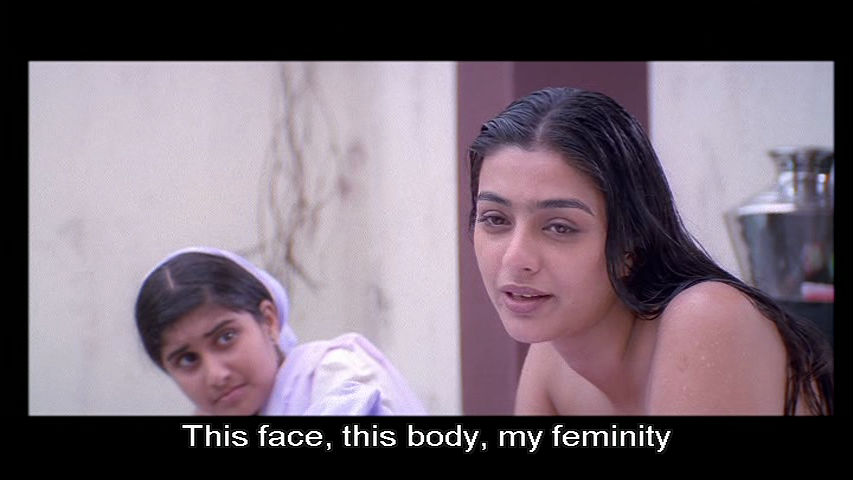
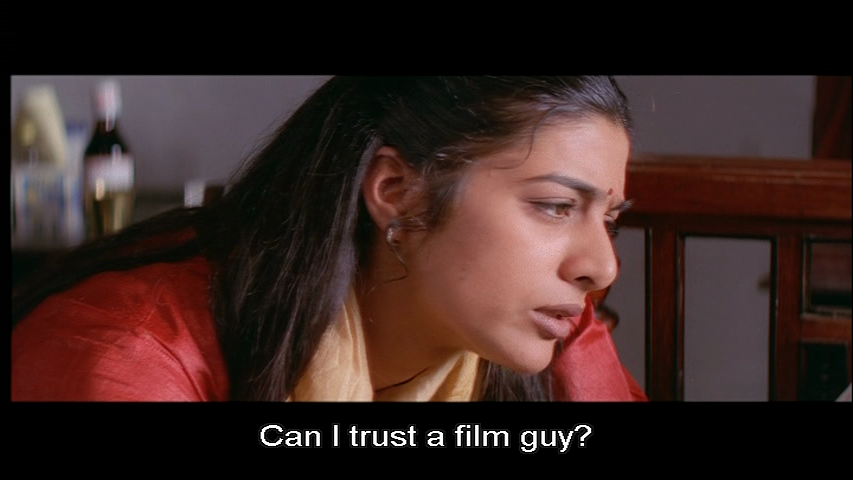
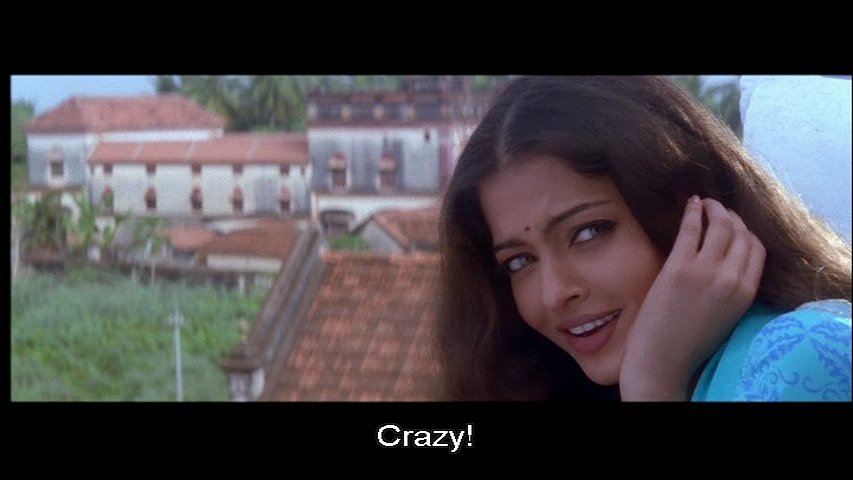
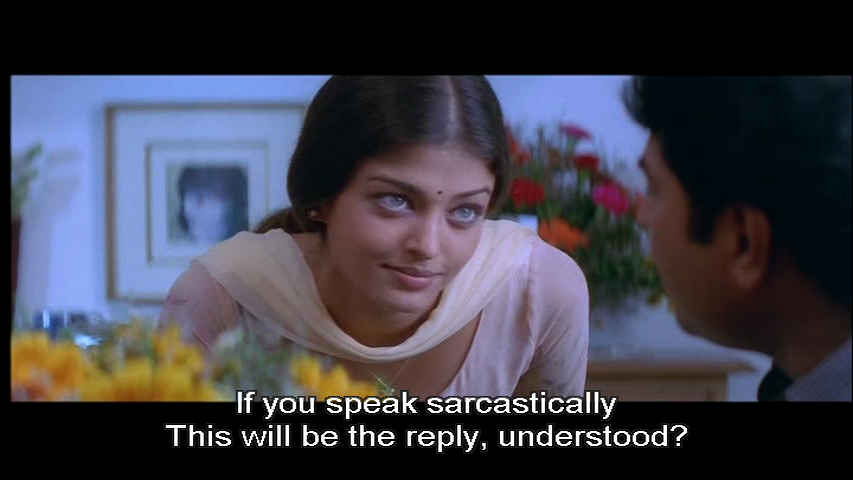
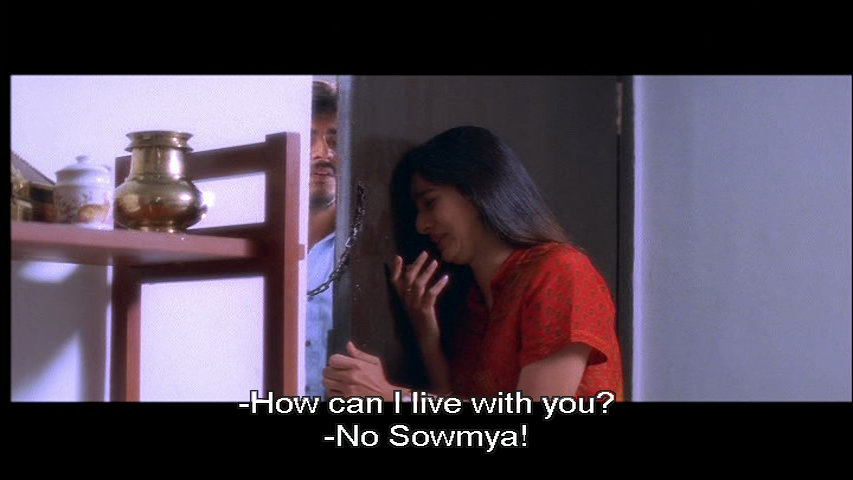
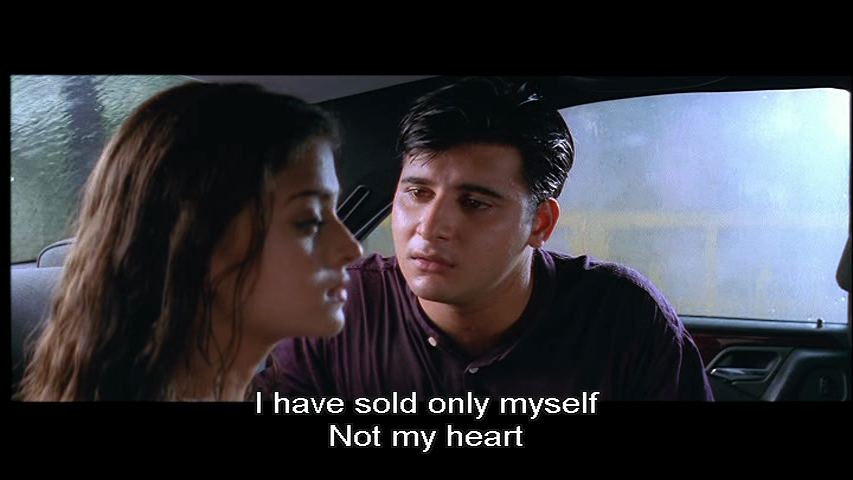
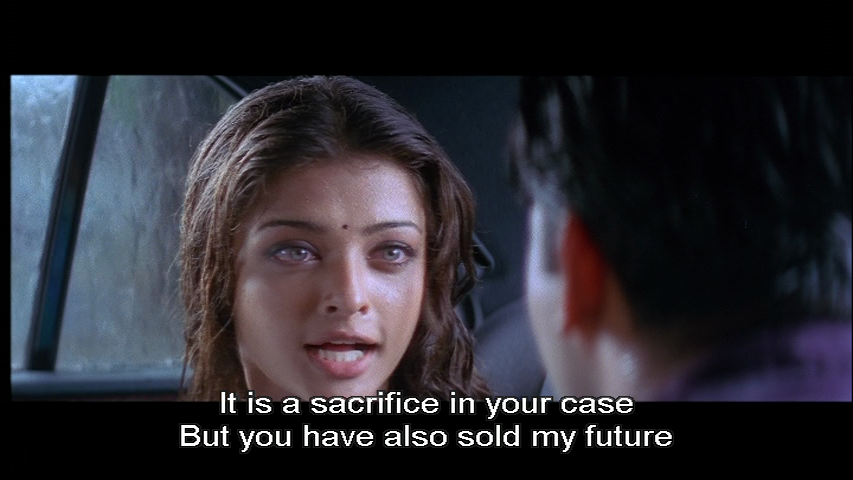
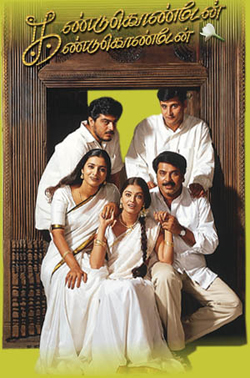
Kandukondain Kandukondain is an adaptation of Jane Austen’s Sense and Sensibility and one of the first Tamil films I saw. It’s still one of my favourites, largely due to the good performances and the strong screenplay. Tabu and Aishwarya Rai play the sisters – sensible, thoughtful Sowmya, and the mercurial Meenakshi. Rajiv Menon retains some of the novel’s ambiguity about whose way is ultimately better, and he and dialogue writer Sujatha focus on the characters and how they develop.

The heroines’ characters required little adaptation. Regency heroines and filmi ones tend to spend a lot of time waiting for the right man or angling for a suitable husband so it probably wasn’t much of a challenge. The suitably ladylike occupations of music and teaching are retained which happily allows for more songs than one might expect from Jane Austen. The female characters in the film are memorable, distinct and very appealing. And I do like the image of big burly film directors reading Austen or Georgette Heyer for their inspiration!

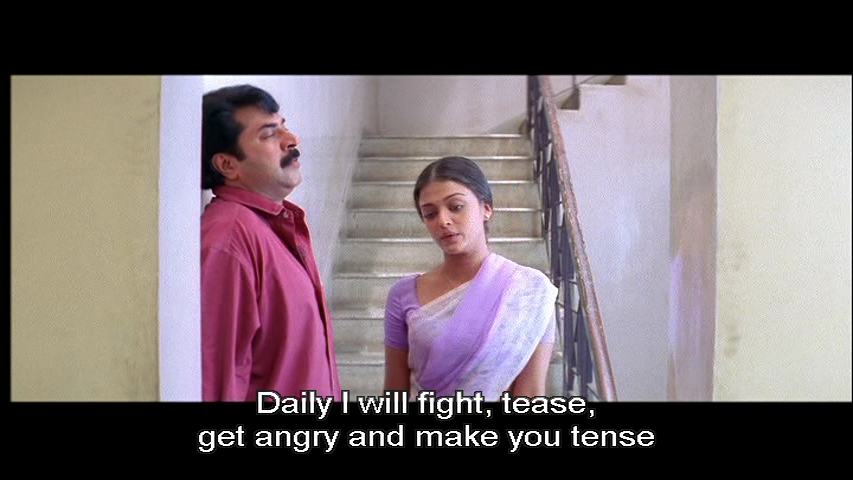
Tabu has a lovely gravity that makes Sowmya very sympathetic. There are small things that make her seem so real – in scenes talking to her ailing grandfather Tabu’s face was sweet and serene, but the sudden slight tension in her throat gave away her real feelings. Tabu’s performance was wonderful, and I totally believed it when Sowmya decided to open her heart to a persistent suitor only to find that she may have been mistaken.

True Love rarely runs smoothly and there are obstacles, real and imagined, that try Sowmya’s patience and resilience, challenging her apparent acceptance of her lot in life. Her confusion and disappointment over Manohar was palpable.

Sowmya thinks that her bad luck has relegated her to a life of service and domesticity in the family home. Her journey towards accepting that she has a right to her own love and happiness is one of the elements of the novel that I enjoyed. She avoids being a stereotypical Regency novel spinster – she is intelligent, personable and has a sense of fun. Sowmya also has a decent job and shows determination in pursuing a career and financial independence.

This is one of the films that made me decide Aishwarya is a capable actor but needs a director who can coach her. She has a lively spark that suited this version of Marianne Dashwood, and Meenu’s feisty streak was always in evidence. The opening song shows off Meenakshi’s extrovert nature, features some excellent dancers and lets Aish show off her animal impressions including a valiant attempt at tiger face.

Aish and Tabu had great rapport and details like the way they leaned in to speak to each other, or would catch each others hand as they talked were really charming. But Meenakshi wasn’t all sweetness.

When she was angry she let fly, and Aish was excellent in those high energy dramatic scenes. Meenu confronted her mother over a family secret, and threw Bala’s love back in his face with no compunction. But she wasn’t malicious so much as impulsive and emotional, and I think the script and the performance combined to show this clearly.

Meenu grows to realise that love encompasses respect and friendship, not just passionate attraction to a dream hero. She doesn’t exactly become her sensible sister but she decides what she needs from her life partner and chooses to look beyond the obvious. When Srikanth makes an offer he thinks she won’t refuse, things become crystal clear to Meenu. She sets about getting her way with all the vigour she had previously put into avoiding Bala.

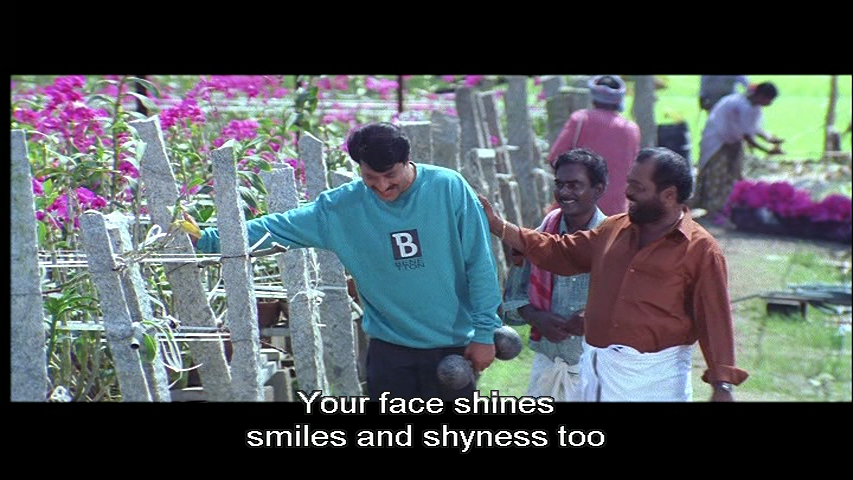
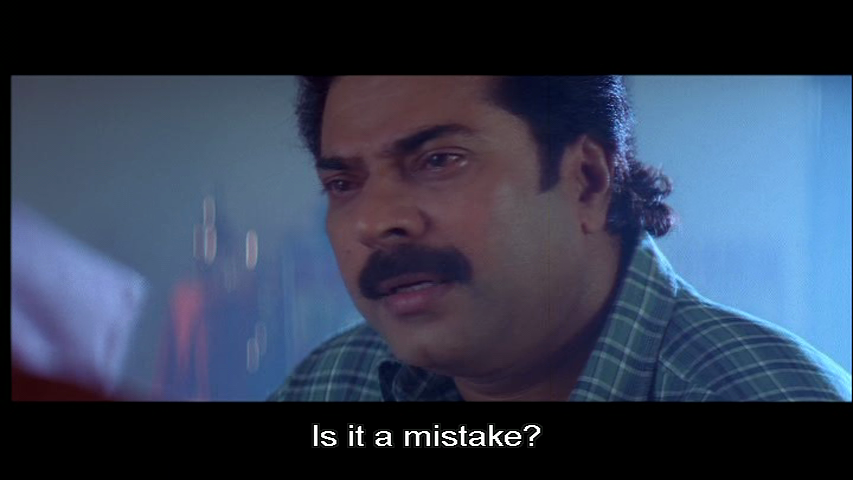
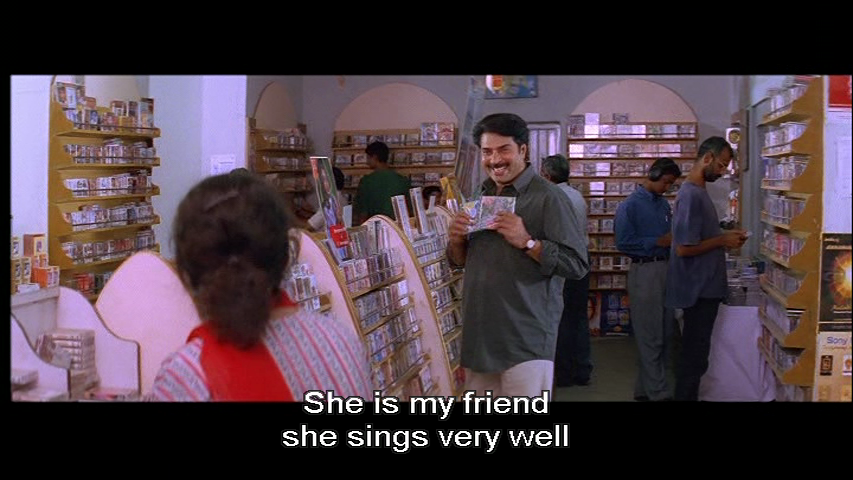
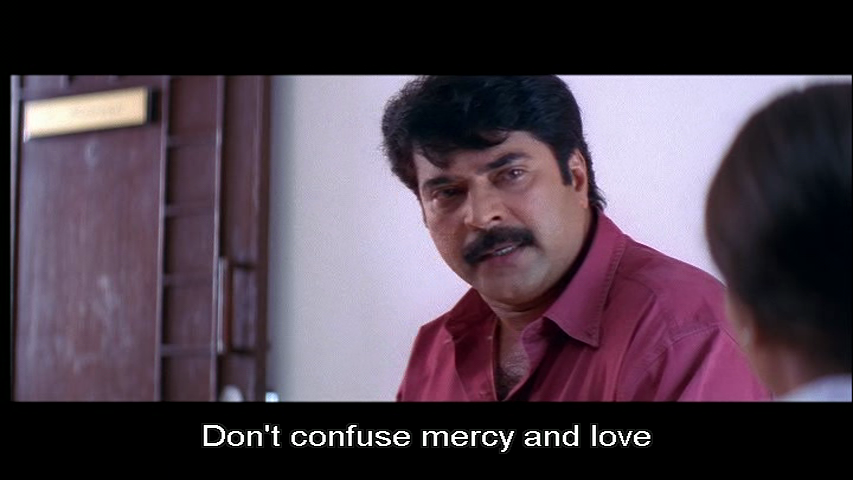
Mammootty is excellent as the embittered drunk with a loosely fitted prosthetic leg, Bala (based on Colonel Brandon). Living with his war injuries and a sense of disillusionment he seems intent on pissing his life away. He is drawn to Meenakshi’s beauty but I think it is her fiery temper and cheeky disrespect that really captures him. Mammootty transforms from angry man to shy boy and then seems to regain his love of life and enjoyment of people, resuming a full and happy life with no booze and less anger.

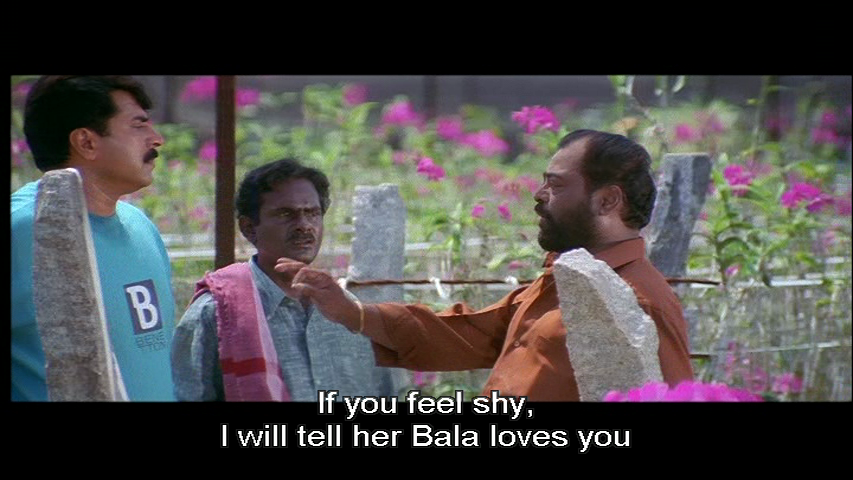
Unlike Colonel Brandon, he has loyal sidekick Sivagnanam (the excellent Manivannan) to provide strategic advice and moral support. The ‘talk to the hand’ scene was sweet and very funny. Bala had the maturity and patience to deal with Meenu, and the intelligence to realise that she would come round or not but he couldn’t force it.

He helps the family from decency, not to buy Meenu’s favour. His thoughtfulness and generosity made Bala a hero. And of course he does save her life.

When it looks like Bala might see his dreams come true, Mammootty shows the underlying vulnerability gradually give way to joy. It’s such a well judged performance and he supports Aish beautifully.

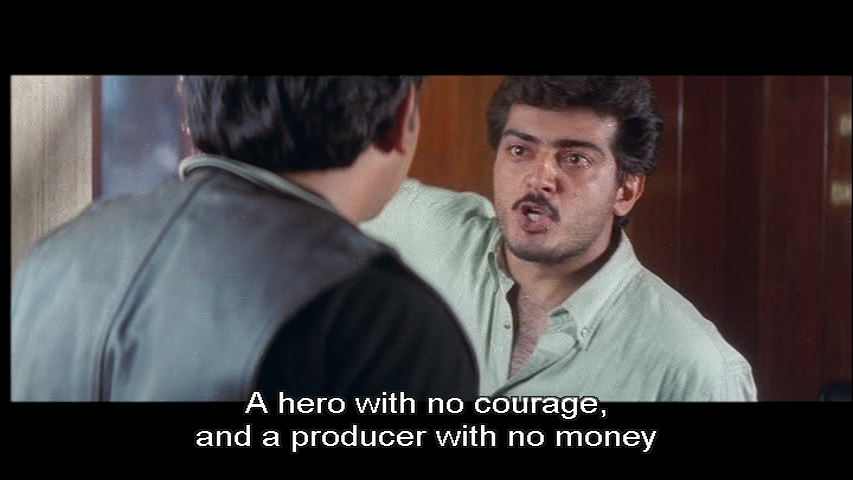
Ajith is hampered by the least successful storyline. In the novel Edward Ferrars is gentry with strong principles and a secret engagement he is unable to break, torn by his love for Elinor and his duty. Making Manohar an ambitious film director didn’t carry the same limitations and so he came across as more selfish and whiny than noble.

Manohar made the decision to leave Sowmya until he had made his first film. There was no need to make such a choice and it was silly. I struggled to see him as the right man for smart sensible Sowmya. The supposed ‘other woman’, the top actress and action hero Nandini Verma (Pooja Batra) was lots of fun but again her occupation and personality didn’t match the dynamic from the novel and it fizzled. Instead of being worried about being forced to marry an unsuitable woman and lose the one he loved, Manohar often looked quite content with his situation.

Well, until the day he decided he was finally ready to claim Sowmya. Ajith was adequate in the role but the lack of credible tension in his story left me unconvinced.

Srikanth (Abbas) was perfect for the film’s Mr Willoughby. I don’t think he is at all attractive but his entrepreneurial character and silly floppy hair fit the style of the society man on the make. And talk about making an entrance…

The wet shirt scene was completely unnecessary and did him no favours in the inevitable comparison. Srikanth was self centred, self satisfied and avoided responsibility. His relationship with Meenu was based on his surface appeal and her dreamy silly notions and very pretty face.  Srikanth was devoid of substance and sense, and seemed genuinely shocked when things fell apart.

The supporting cast are all very good. Shamili as little sister Kamala, Srividya as the mother who wanted the best for her girls and Manivannan as Bala’s friend were all great. Rajiv Menon and dialogue writer Sujatha gave the support actors lots to do which helped reinforce the domestic feel. Bala’s mother (I think) is obsessed with weddings, and long suffering Sivagnanam even gets the family cats married to keep her quiet. Thankfully the comedy is centred on necessary characters and incidents.

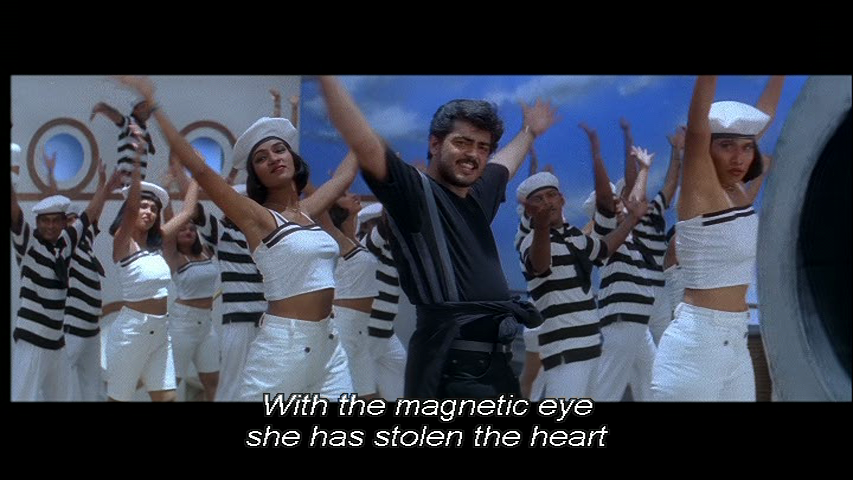
The soundtrack is lovely but the song picturisations are a mixed bag. Some look amazing and others are like something from a high school rock eisteddfod. Some have a bit of both!

Cinematographer Ravi K Chandran made the most of the lovely rural locations, and also captured the more enclosed and subdued lighting of the city. He certainly made his leading ladies look stunning.

It’s a beautiful film, with a quality AR Rahman soundtrack and some excellent performances. And it’s one of the more successful adaptations of a novel I know well and am very fond of.  4 stars!

Heather says: I’m generally not a fan of adaptations of Jane Austin. I fell in love with her books as a child, in fact Sense and Sensibility was the first I read, and so far nothing on either the big or small screen has lived up to my expectations. Kandukondain Kandukondain is no exception, although I do think it is one of the best adaptations I have seen.  Despite that, I failed to connect with the characters and although the whole film looks beautiful and has some lovely songs in the soundtrack, it’s not a film I really enjoyed.

Kandukondain Kandukondain is shot to make the best use of scenery and to accentuate colour in the landscapes as might be expected from someone with Rajiv Menon’s background.  The indoor scenes look just as good and I like the way the colour and light of the first half gives way to duller lighting when they move to Chennai and the family have to fend for themselves. In fact this is the best part of the film for me as I enjoyed Sowmya’s search for work which felt very realistic. Meenakshi’s singing and her career problems were also well depicted and I loved the way that Mahalakshmi was also secretly working. At this point I was able to forget any Jane Austin links and the characters started to come alive. But then the film went back to the respective love stories and I lost interest  again. I didn’t feel that the original characters from the book were well adapted into modern-day romances. While I thought the lives of the sisters were modernised and well written into an Indian setting, the men, (with the exception of Major Bala) seemed to be poor copies of the Jane Austin characters and I didn’t like them at all. Ajith was fine as the film director but like Temple I had problems with his decision not to marry until he had made his first film. Or rather not so much the reluctance to marry until he was established, which did have some legitimacy, but rather the long separation without any contact which just seemed ridiculous. Abbas looked too much like Tony Hadley from Spandau Ballet for me to be able to see him without grinning. Especially when he donned a cloak in one of the songs! His character isn’t supposed to be likeable but I couldn’t even find him charming here, and Meenakshi’s devotion to him was only based on his ability to recite poetry. Again this follows the book to some extent but there is so much more to the whole romance than that and for me it wasn’t well brought out in the film. Aishwarya was absolutely stunning as Meenakshi, but I thought there was too much beauty and not enough depth in her portrayal. However I think this is more the fault of the character she played rather than a problem with her performance, which was actually quite natural and one of her best. Despite the changes in the story, I wasn’t able to forget that Meenakshi was basically Marianne from the book and in that context she wasn’t my mental view of that character. Although Sowmya was a more individual character and I thought that Tabu gave a good performance, I couldn’t connect with her at all. By the end I really didn’t care if she managed to get married or not despite having originally felt some sympathy for her. I wanted her to get on with her life on her own terms and not be so reliant on a rather weak man. But then, that’s often a problem with both film and regency romance heroines. The one character that I really enjoyed watching was Major Bala. Mammootty was fantastic and I did empathise with his situation and his attempts to win Meenakshi. His performance was the definite stand out and his interactions with his friend Sivagnanam were some of my favourite moments in the film.

There is nothing really wrong with Kandukondain Kandukondain and I’m sure I would have enjoyed it more if I’d been able to just forget about Sense and Sensibility. But I would much rather read the original book again rather than watch the film.   It still gets 3 stars from me but they are nearly all for Mammootty and a beautiful soundtrack.


Kannathil Muthamittal

I watched Kannathil Muthamittal when a number of people recommended it to me after I worked in refugee camps in Sri Lanka. I think that my experiences there have really coloured my view of the film as I do focus more on Shyama’s story and less on the main characters. That said, I think the story is well told and the actors all do a good job – it’s just not the story I wanted to see.  It’s a classic Mani Ratnam film with strong female characters, great cinematography and attention to detail, so it’s no surprise that the film won six National Awards.

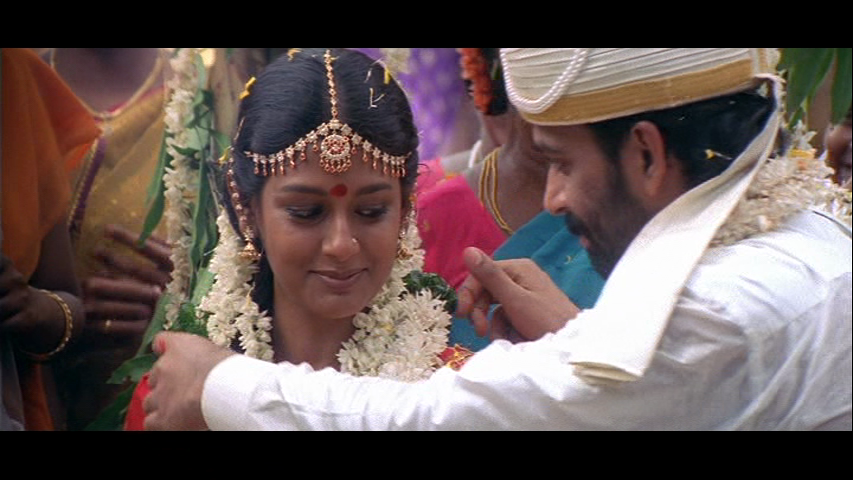
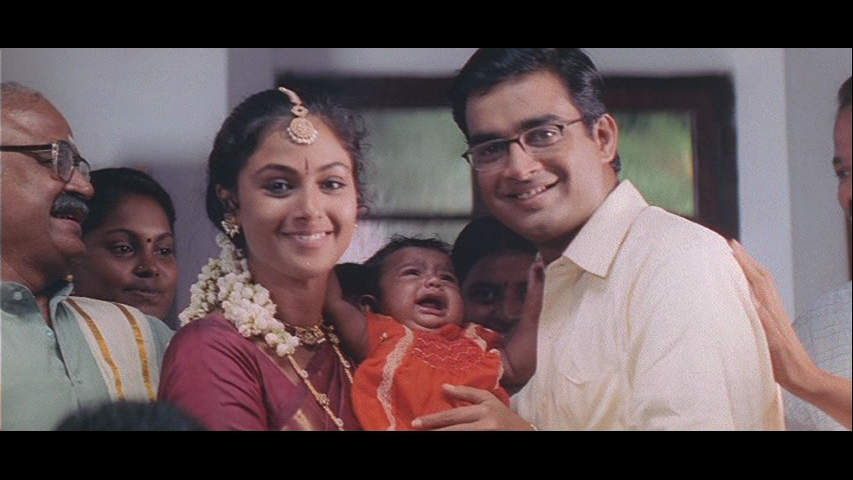
The film opens with the wedding of Shyama (Nandita Das) and Dileepan (J. D. Chakravarthi) in their village located in northern Sri Lanka. Despite this happy start it’s not long before Shyama is pregnant and on a boat heading for a refugee camp in India while her husband is missing, presumably fighting for the LTTE. Once she gives birth in the refugee camp, Shyama leaves her daughter behind and heads back to Sri Lanka to try and find her husband.

From here the film skips forward in time to introduce G. Thiruchelvan or Thiru (Madhavan) and his family, as seen through the eyes of his adopted daughter Amudha. Convincingly played by P S Keerthana, she appears to be a typical precocious 9 year old; playing with her friends at school, teasing her two younger brothers and very definitely the princess in the family. The story of her adoption is told in flashback and shows the development of the romance between Thiru and Indra (Simran).  I really like this part of the story as the two leads play their parts well and the intertwining of the adoption story and the romance is really sweet.

After she is told by her father on her ninth birthday that she is adopted, Amudha becomes moody and withdrawn and finally demands a chance to meet her real mother in Sri Lanka. For some inexplicable reason her parents accede to her demands and the family head off to the war-torn nation, although they did have the good sense to leave their other two sons behind.

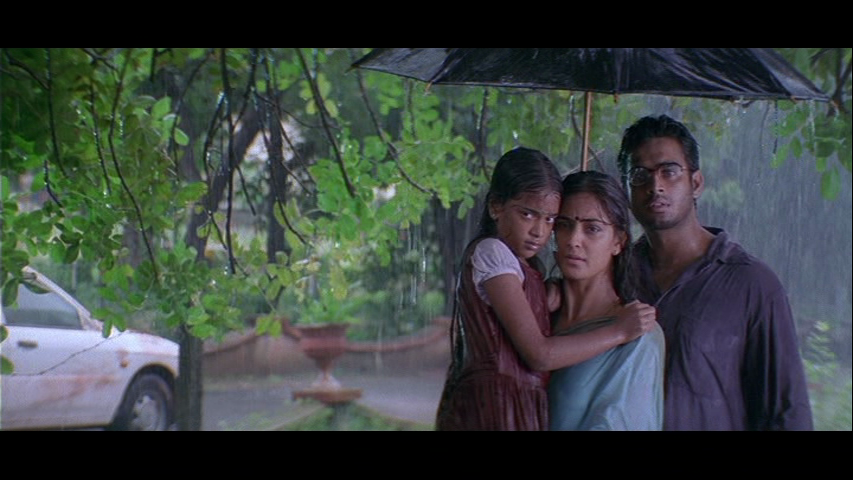
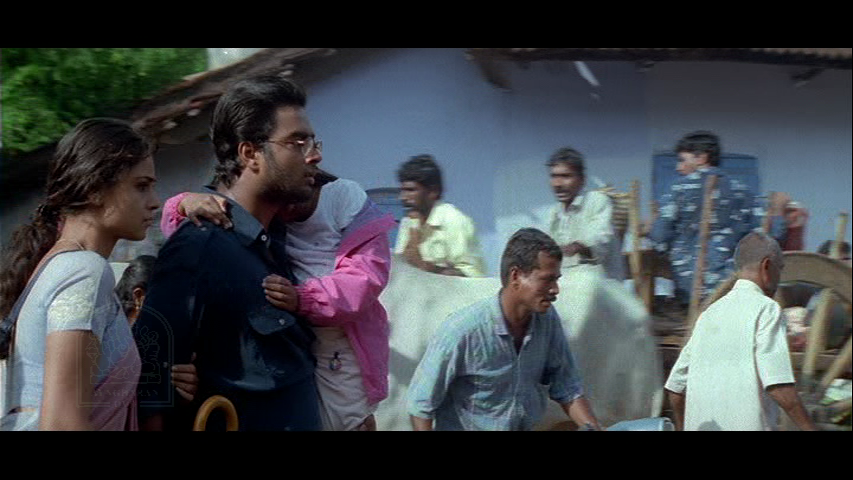
The scenes in Sri Lanka make me cry every time I watch this film. I have seen the same mix of resignation and total despair on people’s faces that is shown here when a village is evacuated. I worked on the East Coast and regularly travelled between LTTE and government controlled areas. The incredibly young soldiers with their automatic weapons shown in the film is very much true to what I experienced and for me this total realism clashes with the more idealistic search for Shyama. Mani Ratnam wisely doesn’t attempt to explain any of the conflict, only showing its effects on Indra and Thiru as they realise why Shyama left her baby behind.

Amudha becomes bratty and rude as she deals with her feelings of alienation from her family and as a consequence I lose much of my sympathy for her. I also disagree with her parents’ decision to try and find her birth mother, no matter how essential it is to the plot. However both Simran and P S Keerthana convey their conflicting emotions and fluctuating relationship well and Indra’s  inner conflict as she worries about her two sons left behind in India is effectively depicted. Although Amudha is irritating the young actor does hold her own against the more experienced cast and it may be more due to the over emotional story that I lose interest in her search. Madhavan’s character, although impressive in the beginning, seems to have little impact in the latter half of the film and Prakash Raj is wasted in his role as the doctor taking the family around Colombo. So while I enjoy the first half of the film, the second half tends to drag with the adoption story and the peripheral action is more engaging . Some of Amudha’s rebellion in this section could have been cut without losing the feeling of her isolation and separation from the rest of the family. The ending is also a little disappointing but Mani Ratnam shows restraint in not turning the final scenes into melodrama, which could easily have occurred given the subject matter.

What I do like about the film is that it looks beautiful and is well shot by cinematographer Ravi K Chanran. Lighting is used to good effect as the early scenes in the family home are filled with warmth in contrast to the rain and grey skies in the later part of the film. While the background score of the film by A. R. Rahman is both beautiful and haunting, some of the songs are a little intrusive. The story doesn’t really need dance numbers and they seem to interrupt rather than move the film forward.

This isn’t a film I particularly enjoy watching, probably more because of the memories it evokes, although I can see why it won awards and I do think it’s generally well acted. It’s just that I would have preferred to see more of Shyama’s story and less of the family drama.  3 stars from me, mainly for the first half.

Temple says: This is one of the first Tamil films I saw a few years ago, and I was prompted to pick it up because of the storyline and for Madhavan.

Thiru (Madhavan) fell in love with the idea of giving Amudha a home and family, and I always feel that if Indra hadn’t agreed, then someone else would have been procured to play wifey. His decisions all revolve around what he wants – the way he courts Indra, the adoption, telling Amudha and persisting when it was clear she wasn’t ready for this birthday surprise, and on it goes.  The job of explaining and reassuring was left mostly to Indra, and she had to bear the emotional burden of seeing her little girl in torment as she herself struggled to cope. Simran is lovely as Indra, but her character is surprisingly weak considering the way she met Maddy, and her being a news anchor. I expected more backbone, but the women in Mani Ratnam films are often written like this – a strong outline and not a lot of finer detail to make them seem more real.

I was adopted and my mother told me every day, long before I even knew what words were, so it would never come as a shock to me and to make it clear that ‘adoption’ isn’t a dirty word. My perspective is coloured by that and while I can understand the bratty Amudha wanting to know her own story, I will never understand her adoptive parents taking her into a war zone no matter how much she sulked.  Still, the treatment of her story in terms of her developing understanding, the legal adoption process, and the fallout once the truth emerged was handled in a much more credible manner than many other films with orphans scattered around the streets, under cabbage leaves, going free to a good home.

The prologue was excellent in setting the scene, but beyond that Shyama and Dileepa didn’t really fit. The context of the Sri Lankan conflict added another dimension, but also made the second half of the film too dramatic and improbable when they went looking for Shyama. So although a fascinating and moving topic, here it is just used as a background for the  family weepfest.

The soundtrack works well in the film, but I find the songs bland. The picturisations are beautiful, most are very stylised, however I can only take so much fabric blowing around and children running on the beach. They suit the mood of the film, but having seen them before, I made a cup of tea during a couple of songs this time. I felt the same about the story device for the flashback – the handwriting and drawings became a distraction and took my focus off the action. Pretty visuals just aren’t enough to keep the film on track.

When Mani Ratnam wants to belt you over the head with a message about peace, unity, love and what makes a family, he can make Bono seem subtle. I give it 3 stars.