The Sapphires

The Sapphires has just been released and I highly recommend it if you get the chance to see it. It boasts a strong cast, a story inspired by real indigenous Australian women, groovy 60s music and fashion, romance and drama, set against the backdrop of the Vietnam War.

You don’t really need to know the history or politics of the era to enjoy the film, although there are some elements that might not make as much sense. Director Wayne Blair and writer Tony Briggs (the real life inspirations for The Sapphires are his mum and aunties) focus on the individuals and their interpersonal conflict and growth. It shows an aspect of my country’s complicated history and legacy that is sometimes overlooked but presents it in a simple way that is all about the people, not  a movement. Their stories reflect larger issues, but there is little tub-thumping.

The characters are introduced in a couple of delightfully brief and precise scenes. Bossy Gail, highly charged Cynthia and young Julie are sisters on the remote Cummeragunja mission. They enter a talent competition emceed by drifter Dave Lovelace, and lose to a talentless white woman who murders a Seekers song. They lose because they are black and it is clear they aren’t welcome. In an ‘only in movies’ decision, they join forces with Dave and line up an audition to entertain the troops in Vietnam. In Melbourne for the gig, they go track down their long lost cousin. Kay was taken from her mother by the mission people and represents the experience of the stolen generation. Tupperware parties are a long way from life on the mission and Kay is embarrassed by her country cousins at first. Tensions flare but the girls get through the auditions and head to Saigon.

Their experience in Vietnam is limited to glimpses as they travel and encounters with the US servicemen in the clubs and bases where they perform. I didn’t mind that the war was almost peripheral as it suited the scale of the story, and the way the girls reacted very much reflected their characters and experience. This is their story, told in highly entertaining style.


Gail is an aggressive woman with a chip on her shoulder, often using threats of violence or actual violence to get her way. But she is also a loving sister and friend, and her smile is radiant when she is happy. The reasons for Gail’s behaviour are revealed as she becomes less guarded. Her relationship with Dave adds another dimension to Gail’s character and through him we get to learn more about what drives her. Deb Mailman is one of my favourite actresses and speaks volumes with just a look.  Her eyes would sparkle with hilarity when Dave tried to be cool and I completely believed her grief when she sang the blues. She is perfect as the bossy and abrasive Gail.

Chris O’Dowd plays Dave Lovelace as the stereotypical drunk Irishman who sorts himself out when he finds a purpose. He appoints himself as the group’s manager and stops them singing Country & Western which is reason enough to love him. Dave explains the negative influence of Country music as follows – Country music is all about people who have lost everything and then sit around whining whereas soul music is about people who have lost everything but are fighting to get it back. And that is a part of the story, the fight to repair yourself and to ultimately be happy. His performance is in the lackadaisical style I expect from Chris O’Dowd, but no less charming for being predictable. Dave’s asides and one-liners are fun and his dance moves are tragic.

Kay (Shari Sebbens), Cynthia (Miranda Tapsell) and Julie (Jessica Mauboy, an Australian Idol runner-up) complete the main enesmble. They get a bit less of the spotlight in the film but I think they all have enough time to develop their characters.  Kay was forcibly removed from her family and raised as a white girl. She doesn’t know where she fits in but won’t be bullied by Gail who thinks Kay isn’t black enough. Cynthia is a boy crazy diva and lives life to the fullest. She is outrageous and adds a dash of wild energy to the group. Jessica Mauboy’s acting was generally good but it was her singing (she sang for herself) that really lifted her performance.

The support cast is a mix of familiar and new faces. I liked Judith Lucy as the hard faced bitch who runs the local pub. Kylie Belling and Lynette Narkle are lovely as the sisters’ mother and grandmother. The family home is warm and ramshackle, with welcoming couches on the veranda, surrounded by carefully tended plants and always full of people. It’s a visual cue to the strength of country and belonging for the girls. Kay needs to return home physically and emotionally and Gail needs to welcome Kay back before she can forgive herself. Julie is a single mum, and even though she runs away to follow her sisters there is little recrimination about leaving her son behind. He is with his grandparents and extended family in that loving and inviting home, and it will all be waiting there for her.

Lest this sound too syrupy the film ends on a high spiked with some tongue in cheek humour, and a bit of a dance.

There are a few clunky scenes although they do serve a purpose in moving the drama along so I forgave them. I liked the energy of the film, the laconic humour and thoroughly Australian language, and I love the music (well, except the country and western) and the fashions of the era.

I read some reviews that criticise The Sapphires for being too lightweight and not showing more of the political context. I disagree. Life can be sad and make you cry and it can be fun and colourful. People can find acceptance and happiness where they least expect it. Not every film has to make an overt statement, and if you pay attention there are some neat observations in The Sapphires. Enjoy it for what it is, and see some wonderful Australian talent.  3 ½ stars!

Julayi

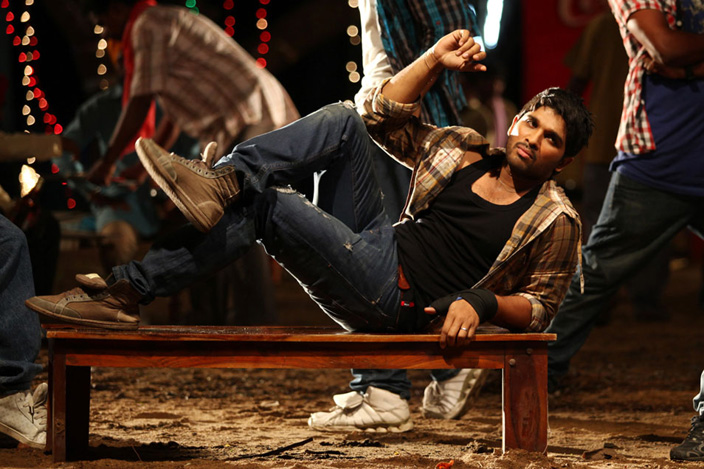
Trivikram films tend to focus as much on the dialogue as on the action, so it was inevitable that I missed the comedy that had the rest of the audience laughing and cheering through most of Julayi. Not that it really mattered. There was still plenty of great dancing, excellent action scenes, ample screen time for my favourite actor Allu Arjun, and a relatively easy to follow (if somewhat unbelievable) plot giving another enjoyable ‘adventure without subtitles’.

Ravi (Allu Arjun) starts as many a Telugu hero seems to do, by having an argument with his father (Tanikella Bharani in his customary role). Taking a cue from Chiru’s ‘money is easy to make’ speech from Challenge on a TV in the background, the argument seems to be based around Ravi’s lack of commitment to the conventional way to earn a living and ends with Ravi heading out to a gambling club. Since it’s raining heavily he cadges a lift, which just happens to be with a gang on their way to rob a bank. Because stopping to give someone a lift on the way to commit a major crime doesn’t seem like a risky thing to do at all – right?

Luckily for Ravi they seem happy to drop him off on a corner but that is their first big mistake. Ravi has awesome intuition, amazing powers of observation and a seemingly photographic memory and is able to lead the police to the site of the bank theft in time to partially foil the robbers’ escape. Head gangster Bittu (Sonu Sood) has already decimated his own gang, presumably to ensure a larger slice of the money, and Ravi helps lower the number still further by taking out one of Bittu’s trusted gang members (Shafi in a very brief appearance). This seems to spell war between the two, although the apparent destruction of the money and ensuring that Bittu is arrested and his plan foiled are also key contenders for the ensuing rivalry between Bittu and Ravi.

The bank heist is an odd mixture of some excellent ideas, such as the smooth way the robbers disable the cameras as they move through the building, and some gaping plot holes which just don’t make sense. This lack of logic reoccurs throughout the film where there is never any explanation for Ravi’s astounding ability to apparently read Bittu’s mind and predict how, where and when he will strike next. The police are also very ready to fall in with Ravi’s plans and have no objections any time he kills one of the gang. I was almost expecting that Ravi would be revealed as some sort of super-agent which might have explained the nonchalance towards his ever increasing body count and the willingness of everyone to follow his lead. But no, nothing quite so logical is allowed to intrude into the plot, or at least not that I could understand.

Sonu Sood is his usual impressive self as the villain Bittu, although he has a tendency to start cold and menacing but then over-do it just a tad and become almost comic. He too has amazing powers since he is able to interpret the sign language of his deaf henchwoman without even looking at what she is signing. It’s a talent she seems to share since she rarely looks at his replies either but at least she has better survival skills than the rest of the gang. To add some further complications, Bittu is collaborating with local MLA Kota Srinivasa Rao, who’s done some dodgy deal to cheat his investors and seems to be in it for the money. It’s the same crooked statesman role that Kota plays so well that now I don’t ever expect to see him without there being some dodgy deal involved.

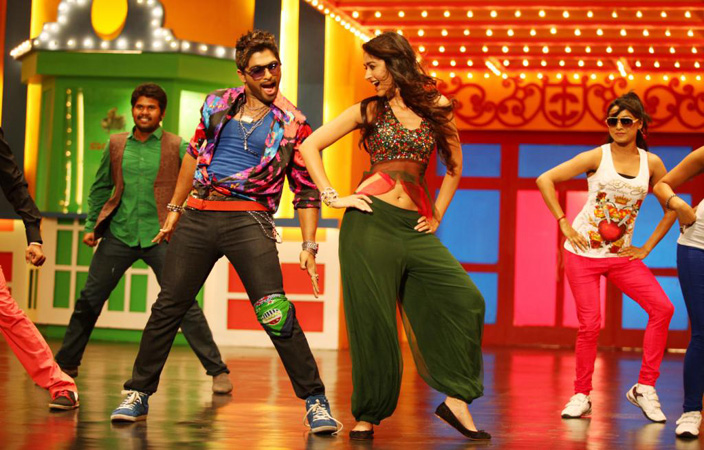
The action moves to Hyderabad when Ravi is sent to ACP Sitaram (Rajendra Prasad) as part of a witness protection scheme. Ravi falls in love with a girl he sees at the bus-stop which results in a succession of songs, in fact almost the entire soundtrack one after the other, as Ravi attempts to win Madhu’s heart. Ileana started off well as Madhu and I liked her glasses and general look, but after Ravi takes her shopping and persuades her into contact lenses and Western clothes she just looks too thin and out of proportion. Although none of her outfits are terrible, the majority aren’t very flattering either and the curse of the Telugu film shoe designer strikes once again with a terrible pair of black boots.

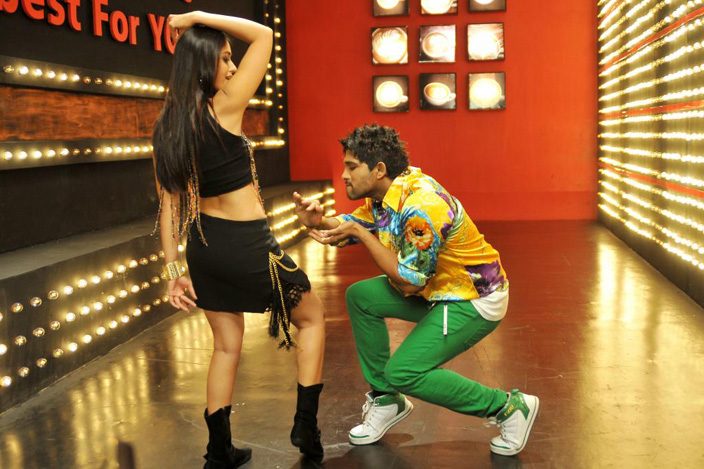
Bunny and Ileana have very little chemistry together and although there are some better moments in the songs, the romance never really takes off. The songs by Devi Sri Prasad are mainly pictured on Bunny who is energetic and wonderful to watch in better than usual choreography. For a change there are no special ‘feature moves’ – no sign of ‘the worm’ – and Bunny is given free rein to do what he does so well and just dance.  He also shows commitment to shiny multicoloured shirts which I did appreciate.

Every single possible comedy uncle turns up but thankfully their comedy is well integrated into the main plot and kept to a minimum. Trivikram seems to use most of the humour in snappy dialogues between  Bunny and Rajendra Prasad which were well appreciated by the audience. There is plenty of ‘action’ Bunny but a lot more ‘funny’ Bunny and both Allu Arjun and Rajendra Prasad work well together in these scenes. In fact the only major fail is Bunny’s hair which varies from OK in the frequent rain scenes (because it is flat and plastered to his head!) to really quite terrible with spikes at the back and flattened matting at the front. There is no hair continuity either and it becomes quite a distraction in a number of scenes as the number and position of the spikes varies – or perhaps I’m just becoming a little too obsessed. There is also the matter of his coloured contact lenses, but I’ll leave that rant for another time!

The film does look great, with some good use of locations in Dubai and reasonable special effects. The sets are also well dressed although Temple and I did have a discussion about the large assortment of really ugly ornaments that appeared on every desk. But there was commitment to family photographs and I did like the large picture of Michael Jackson in Ravi’s room. I liked the soundtrack before I saw the film and although it doesn’t sound too different from previous DSP soundtracks the music fits in with the general feel of the film. The songs could have been better paced though as there did seem to be a lot in the first half – not that I’m really complaining as watching Bunny dance is always worthwhile.

Julayi has plenty of action and strong performances from most of the cast which helps keep attention away from all the plot holes. Its slick and well filmed to make the most of Peter Hein’s excellently choreographed fight scenes. Definitely worth catching on the big screen if you can although I think this is a film that I will appreciate more with subtitles. Hopefully this doesn’t disappear into the same DVD black hole as Khaaleja and we do see a DVD release soon.

Beru

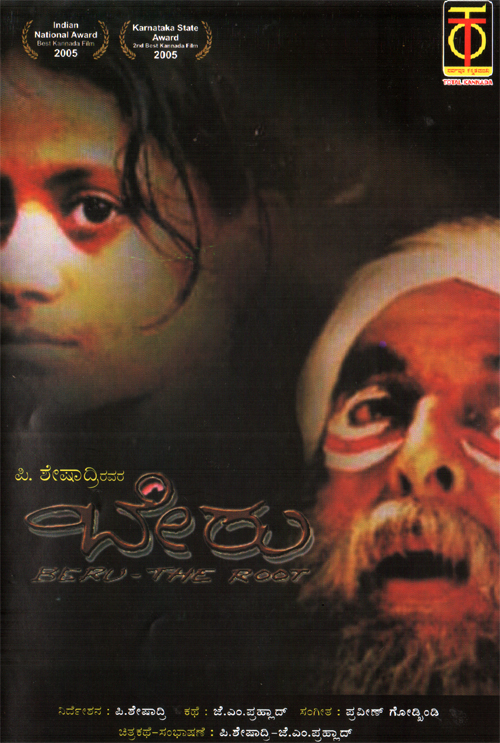
Beru deals with the theme of corruption in local government, but rather than looking at political scheming and the wheeling and dealing of men in charge, the action here focuses on a small rural office and local concerns. Director P. Sheshadri has a background in journalism and documentary film making which is perhaps why he focuses on day-to-day life in a rural community in such a realistic manner. His attention to detail and well-developed characters make Beru an engaging film despite the sometimes heavy-handed symbolism used to get his point across.

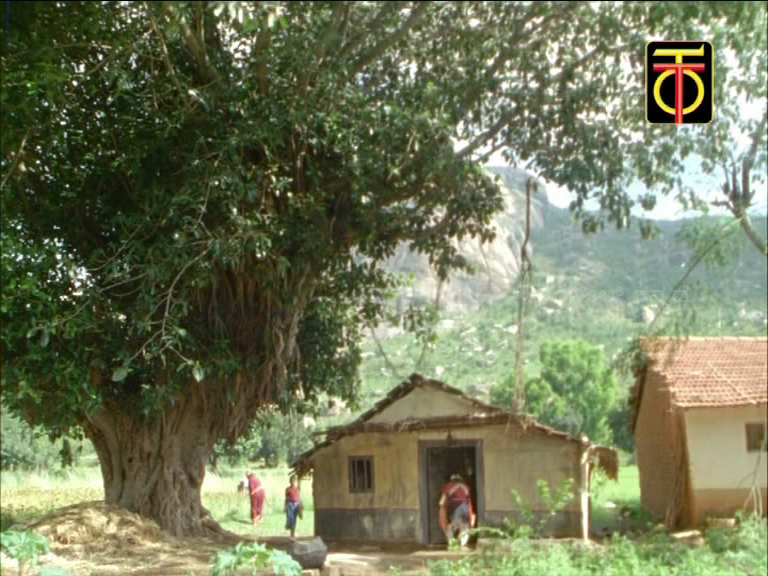
The Root of the title refers literally to the root of a large tree which is threatening the home of local folk artist Goravayya (Venkata Rao) but also symbolically to the deep-seated corruption within the local government office. The film shows that this corruption is so deeply entrenched at even the most fundamental level of administration that by the end it seems totally impossible that such dishonesty can ever be eradicated. However it’s not all doom and gloom. There is plenty of humour in the dialogue by writer J.M. Prahlad and even in some of the more trivial problems faced by the central characters.

Venkateshiah (H.G. Dattathreya) is the head clerk in the government office in Karadigudda and has been filling in for the role of chief officer while they wait for a replacement from Mysore. He is nearing retirement and has the burden of 2 more daughters to marry on what he considers to be a meagre salary.

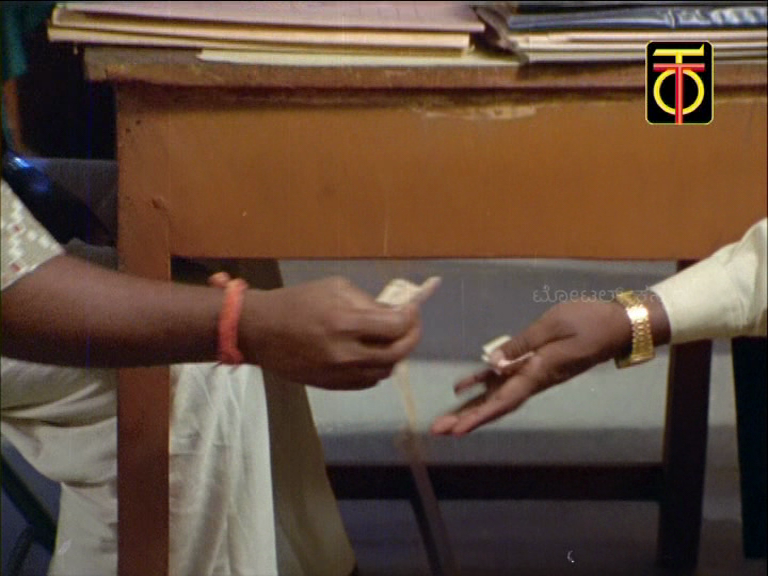
Nothing within the office seems to be done without money passing hands and, as always seems to be the case with any government, reams and reams of paperwork. But with the arrival of new and enthusiastic chief officer Raghunandan (Sucheendra Prasad) it seems as if things may change. Symbolically on his arrival Raghunandan orders the office to be thoroughly cleaned, even going to the extent of taking out his own handkerchief to dust a picture of Gandhi. He’s young, almost painfully honest and his opening speech to his staff is full of ideals, which from their expressions seem unlikely to gain much ground. Once Raghunandan starts going through the books he finds more and more evidence of petty fraud and indications that bureaucracy frequently has taken the place of common sense.

His wife Suma (Neeta) is equally appalled by the government residence that they have been allocated. She is unable to cope with invasions of the local wildlife, and also feels lonely and isolated since she is more used to city life. Raghunandan on the other hand seems to love the local countryside and appears to relish the idea of life away from the crowds of Mysore for a few years. The relationship between Raghunandan and Suma helps to define their characters and also provides a contrast to that of Venkateshiah and his wife, although in the end both wives encourage their husbands in their various deceptions.

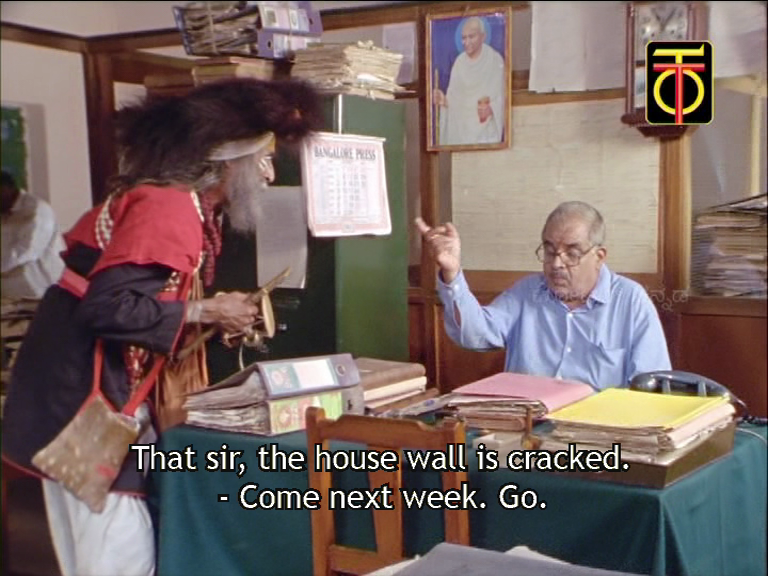
At the same time, local folk-singer and Gorava dancer Goravayya is trying to get permission to cut the root of a tree which is threatening to destroy his house. Goravayya has adopted an orphan Gowri and the two go from house to house begging and giving blessings in the name of Shiva. As part of her investiture Gowri has taken oaths not to lie or steal emphasising the vast difference between Goravayya and the government officials he is attempting to deal with. He is a simple man living a simple life and won’t even consider cutting the tree root without permission from the appropriate authority, But every time he tries to approach Venkateshiah or anyone else from the office, he is brushed aside as his problem is not considered important.

After just a few days in his new job, Raghunandan receives word that the minister will be coming to visit and he is required to survey the local inspection bungalow (IB) where the minister will stay. However no-one seems to know anything about the IB, including its location, despite the fact that over the preceding years funds have been sent for both its renovation and upkeep.

Raghunandan refuses to be fobbed off with excuses that the IB is dilapidated and needs to be replaced and insists on finding out the truth. But what he discovers sets his own path down the slippery slope of dishonesty as he succumbs to appeals from his wife and Venkateshiah’s family to hide the truth. He sinks deeper and deeper into the murk of corruption as he tries to deal with increasingly pressing demands from his head office.

Goravayya is enticed to help with promises that this will ensure a speedy resolution to his problem but it becomes very clear that Venkateshiah never had any thought in his head other than to save his own skin.

What appeals about this film is the ordinariness of the characters who react in very human and realistic ways. I believe in the inherent selfishness of people and this is exactly how the majority of the characters act to a greater or lesser extent.  Sucheendra is excellent as the meticulous and fastidious Raghunandan. I think he captures the essence of his character in the way that he always has a glass of water on his desk sitting on a coaster, with another coaster on top to keep out dust and flies. Having a drink of water then becomes something of a ritual and this is the type of attention to detail by Sheshadri that I appreciated. Raghunandan seems to be the quintessential government official in the way he uses a bell to summon the porter or his typist and is totally oblivious to the activities in the main office since he only deals with his immediate subordinate Venkateshiah. I had a summer job in the civil service back when I was a student and this bureaucratic hierarchy is quite familiar!

Dattathreya is also impressive as Venkateshiah and my changing feelings towards his character are a reflection of how well he portrayed the role. Venkateshiah initially appears as a man beset by financial problems which he uses to justify his misappropriation of funds and I initially felt sorry for him. But as he struggles to keep his job and entreats Raghunandan to save his retirement fund, his innate selfishness becomes more and more apparent until by the end his actions are quite revolting. The one jarring note is the way Raghunandan seems to go along with Venkateshiah’s final plans as this didn’t seem to fit into my reading of his character, even allowing for his fall from grace.

All the other actors are excellent in their roles and despite his very simple nature I loved Goravayya and the way he cared for Gowri.  There are only a few songs and they are mainly folk-songs pictured on Goravayya and Gowri which generally fits the story. This song explains why he dresses the way he does and he sings it to Suma after he has frightened her by suddenly appearing at her house. Awesome costume too!

I thoroughly enjoyed this film and can appreciate Sheshadri’s attempt to show just how deeply entrenched corruption seems to be in every aspect of government. Good performances and some lovely shots of the countryside by Ramchandra help to make the most of a simple but effective story. 4 ½ stars.

Temple says:

Beru is heavy handed in visual imagery and the corruption rife in local government is illustrated in many ways – some very effective and some also tedious and repetitive. The rural setting is lovely and the setting and small scale is a highlight. There are some excellent performances but the characters are not by and large people I could care about and their plight was largely self created.

Goravayya and Gowri represent simplicity and honesty, and both the characters and actors are appealing. Thank heaven for that as the rest of the characters are pretty repellent. Raghunandan is a career man who wants to keep his hands clean and make his way up the food chain. While he mouths lines about serving the people, he has nothing to do with the general populace or his staff and spends his time alone in his office or isolated in his home. The slightest whiff of trouble for his own career has him covering his butt and the rules are discarded.  Suma uses family connections to protect Raghunandan’s career and he accepts that easily despite his supposed principles that made him refuse an offer to get him a better posting. Venkateshayya is reprehensible, a craven cheat and liar, yet the film gives implicit approval to at least some of his actions.

I don’t think anyone would be terribly surprised that there is corruption in any government. The many meaningless and unproductive layers of bureaucracy in the Indian civil service are legendary. I was hoping the film would do something more interesting than just cast up examples, but P Sheshadri repeatedly states the obvious without taking it anywhere. Beru drifts somewhere between being a message film and a misery memoir. The message could be ‘Don’t get caught’ or perhaps ‘God helps those who help themselves’. The end effect is a lot like listening to two hours of whinging by a bunch of largely unlikeable and self centred people. 3 stars.