Gair Kaanooni

Gair-Kanooni-Title Gair Kaanooni is a cracktastic masala film that I overlook far too often. Director Prayag Raj was responsible for the story or screenplay of many of my favourites – Ajooba, Mard, Geraftaar, Coolie, Suhaag, Dharam Veer, Parvarish, Amar Akbar Anthony – so that should tell you what you need to know about plot and logic. Plus it has a killer cast.

This slideshow requires JavaScript.

Just look at the lineup in the opening credits! (Question: Who is Sunny Bee? I love them just for the name but know nothing about them.)

Gair-Kanooni-Don't moveGair-Kanooni-they start revenge young

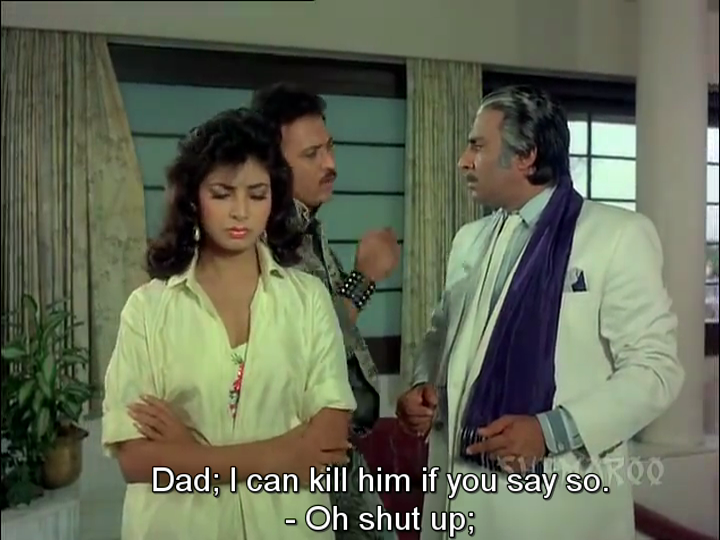
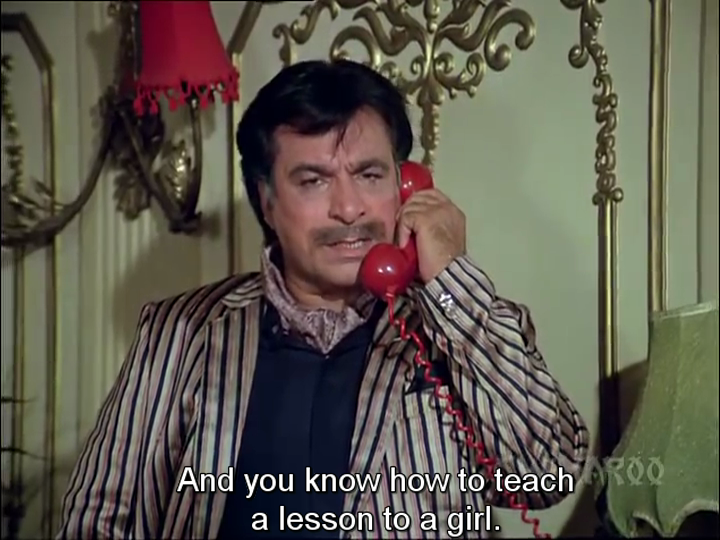
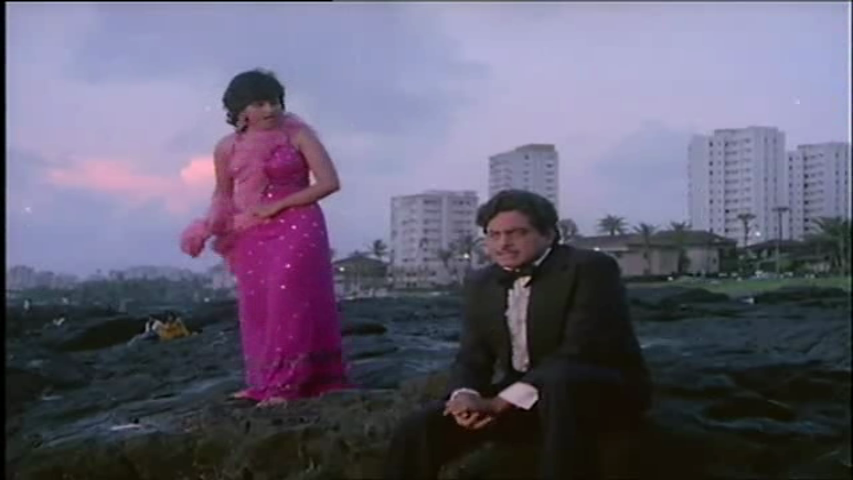
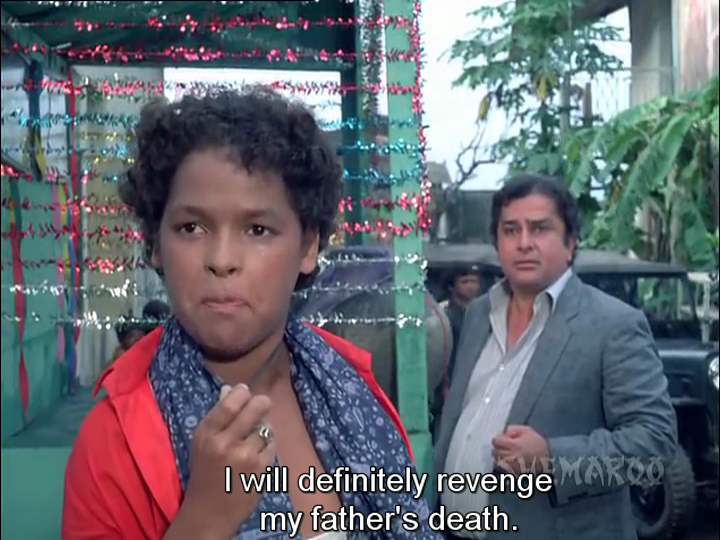
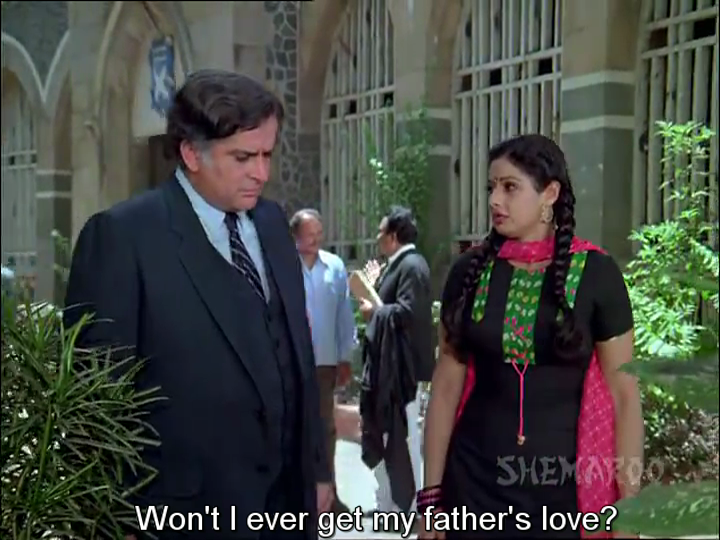
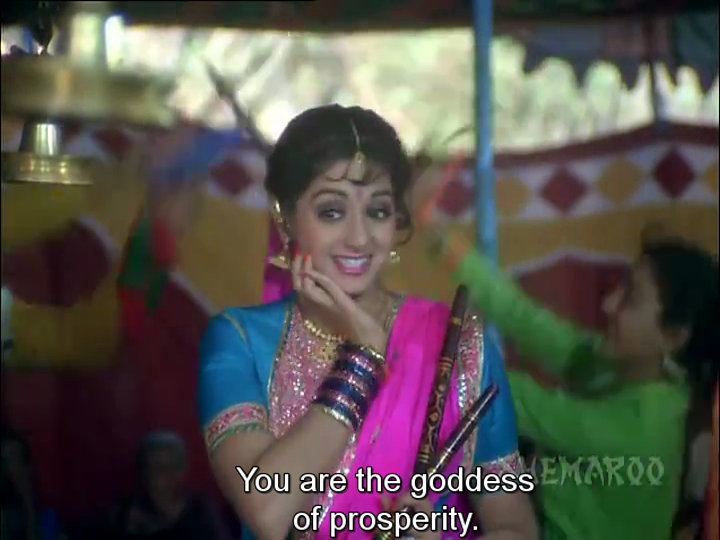
Kapil Khanna (a portly Shashi Kapoor) is a zealous policeman out to bring down underworld don D’Costa (Ranjeet). He leans on an informer, and sadly the goodhearted crook Azam Khan (Rajinikanth) is killed (stabbed AND electrocuted) by D’Costa and Dalal (Kader Khan) leaving an orphaned son. Meanwhile Mrs Khanna and Mrs Dalal are both in the maternity hospital. When Mrs Dalal has a baby girl, D’Costa repays his friend by switching the ‘worthless’ girl for a newborn boy – The Khanna’s son. Oh lord. Three kiddies to keep track of and we haven’t even started…Kapil Khanna rejects the infant girl and demands his son back. He will not accept his ‘daughter’ and sends her off to be raised by strangers, paying what he needs to but not giving her any familial affection or contact. Travel through time and we have Laxmi (Sri Devi), a petty thief introduced in a lovely song as she fleeces worshippers at a temple. Hey, she is Laxmi after all (or so she reasons). Om Narayan is the son of Kapil Khanna who has been raised by Jutawala Dalal, and Rajinikanth is back as Azam’s son Akbar Khan. Of course they cross paths and naturally, vengeful hijinks ensue.
Gair-Kanooni-Kapil KhannaGair-Kanooni-Shashi and Sri Devi

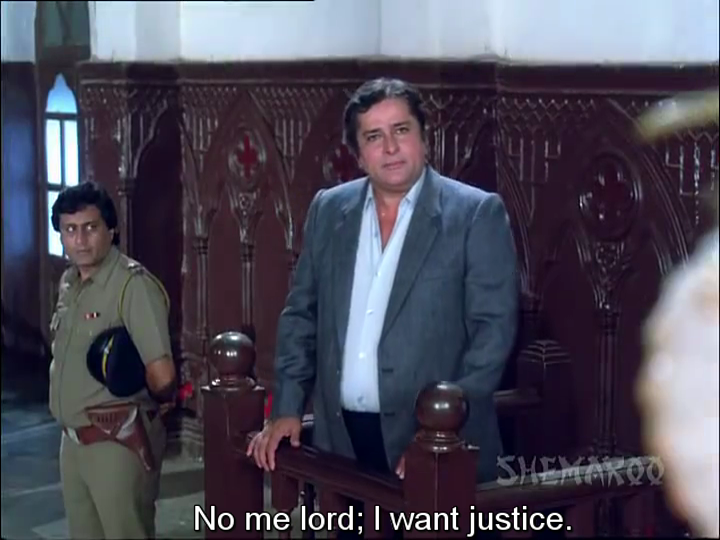
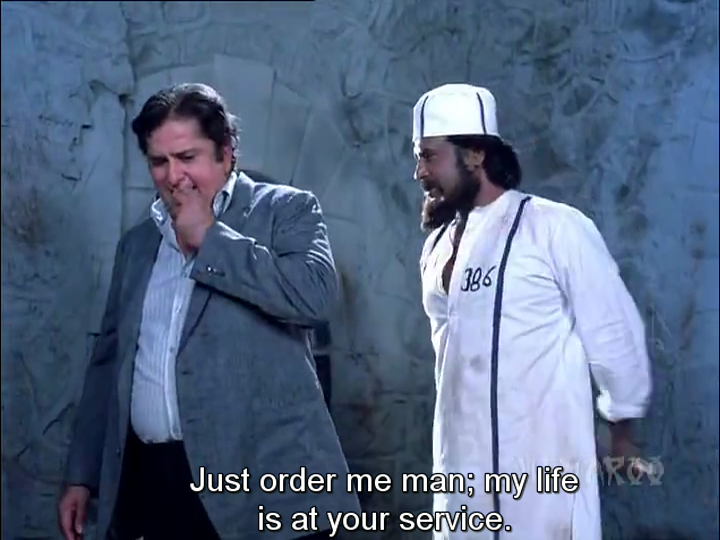
Shashi is, dare I say, a bit past it as Kapil Khanna but he knows his way around and has mastered the art of bromance. There is lots of “Yeh jhoot hai!” and insistence on setting things right. Kapil cannot accept Laxmi as, to him that means giving up on his son and leaving his wife’s last wish unfulfilled. Shashi kind of phones it in but every now and then he shows a gleam of vintage Kapoor masala style. I like his scenes with Rajinikanth, especially when they compete with dialogues to see who can be more pompous.
Gair-Kanooni-Sri Devi as LaxmiGair-Kanooni-Laxmi is her namesake

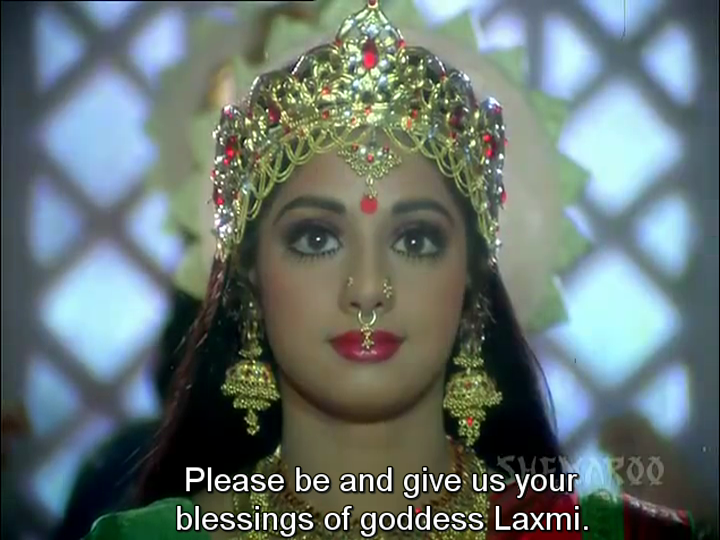
Sri Devi is perfectly cast as Laxmi. Fostered by Bantho (Aruna Irani) and Nathulal (Satyendra Kapoor) Laxmi imbibes her guardians’ world view and skillset. (Nathulal is the man who went to jail for killing Azaam Khan, just in case we needed a Sign that there were going to be Coincidences and Revelations.) Laxmi makes her money via illegal means but she is not a bad person at heart. Similar to other roles Sri Devi essayed – Kumari in S.P Parasuram, Seema in Roop Ki Rani Choron Ka Raja and even Seema in Mr India – Laxmi is brave, funny and generally smart with interludes of ditziness. Her focus is on getting by and doing what she needs to do to survive.

Gair-Kanooni-Sri Devi

Laxmi falls for Om but their romance is a lesser subplot compared to the goings on between the villains. She describes him at one point as her friend and her future husband, which I liked.

That song has to be one of the most eye-popping introductions ever. Govinda is partly overshadowed by Rita’s (Kimi Katkar’s) hideous skirt, but still! Om and his dad have a scam whereby he accepts dowry and then weasels out of the marriage. Like Laxmi, Om isn’t an actively bad person but he doesn’t try too hard to stay on the straight and narrow. Generally he sails through all fine and dandy until he falls in love for real. At least Laxmi had an equally flexible approach to ethics so they were well suited. Govinda is a great choice in this kind of role – lots of colour and movement. It needs an actor who just goes all in for the entertainment factor and he does that, boots and all.
Gair-Kanooni-Shashi and RajnikanthGair-Kanooni-Rajini as Akbar

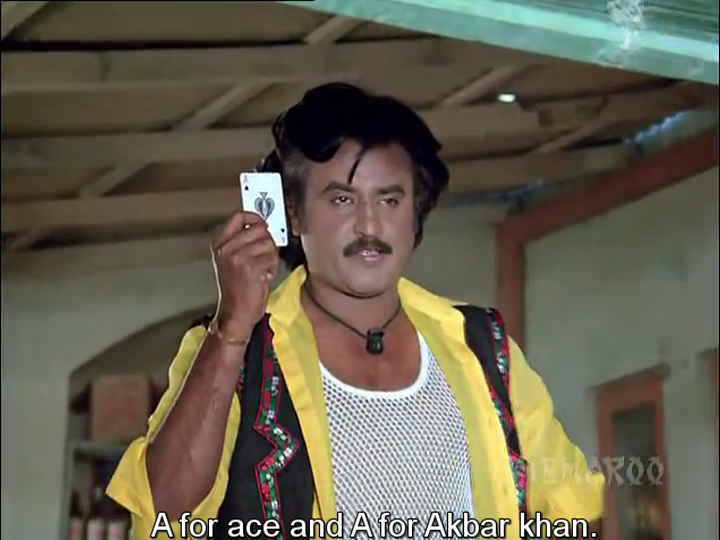
Often I feel Hindi film-makers missed the point of Rajini – they either cast him as a bit of an idiot (like in Hum) or a grim chain-smoking vengeful type. He is such a great actor and he can handle any kind of filmi ridiculousness with aplomb. Initially I expected his appearance as Aazam to be it, and was lamenting the wasted opportunity. But who better to play vengeful son of Rajnikanth than Rajini himself! Akbar is the grown up son and soon gets tangled up with the plot, quickly finding out who the real bad guys are. Rita (Kimi Katkar) falls for him despite his harsh criticism of her morals as apparently evinced by her skirt length and his generally bleak outlook on life.

Rajini gets to declaim elaborate threats and back them up with flashy fighting (choreographed by Judo Rathnam, who did such amusing work in Geraftaar). I especially love one dramatic escape where he launches himself head first through a breeze-block wall. Amazing. Dancing is not his forte however so it is good that the total entertainment burden does not rest on his shoulders.

Ranjeet and Kader Khan play their usual villainous types and they are truly, irredeemably, despicable. D’Costa and Dalal are locked in a dysfunctional relationship where neither likes or trusts the other but just can’t walk out. There is a large supporting cast but they are a bit lost behind the histrionics of the main protagonists.

Gair-Kanooni-Govinda and KimiGair-Kanooni-soot free Kimi Katkar is feisty and over-accessorised as Doctor Rita, and I like her spirited self defence and addiction to ruffles. Tej Sapru has a very small role as D’Costa’s son Tony, prone to acid wash denim and hissy fits when he isn’t allowed to go kill people. Aruna Irani is memorable as Bantho who takes pride in her adopted daughter’s thieving abilities.

Gair-Kanooni-Shashi and Govinda

There are misunderstandings, confrontations and tearful confessions galore. The song lyrics often express what is happening or how characters see things, which I find refreshing and relevant compared to some modern efforts. Plus it must be helpful to the other characters to have things explained so melodically. Resolution arrives through forced proximity (jail is good like that) and … ‘tribal’ disco.

That song wasn’t such a good idea really, but it is memorable. Plus a kidnap and forced kidney donation brings the rest of the family together. And I have left out so much!

Sure, Shashi Kapoor in blackface is unnerving but Sri Devi and Govinda, a Bappi Lahiri soundtrack and Rajnikanth in dual roles make this pretty special. See it for the cast, the song picturisations and the the plot that hits the point of ridiculousness and accelerates, cheering itself on towards WTFery. 3 ½ stars!

Gair-Kanooni-no words

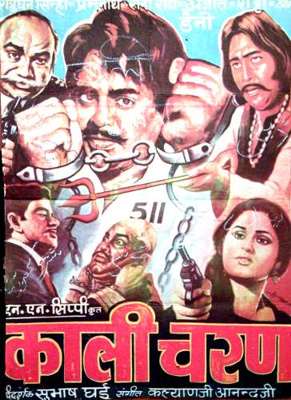
Kalicharan (1976)

Kalicharan poster

Kalicharan is a modest film in many respects. Subhash Ghai directed with masala verve while Jainendra Jain wrote a fairly staid screenplay, sometimes seemingly at odds with each other. Relying more on the cast than on gimmickry, there are still some surprises.

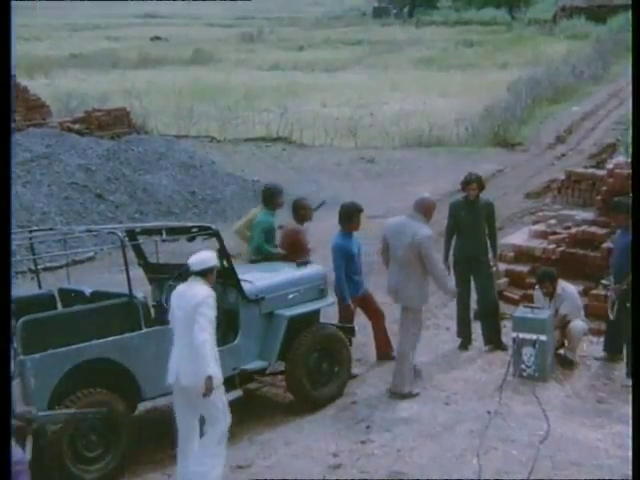
Prabhakar (Shatrughan Sinha) is an outstanding policeman on the trail of a mysterious crimelord. He deduces that the man known as Lion is none other than respectable businessman Din Dayal (Ajit), a close friend of his boss and father figure I.G. Khanna (Prem Nath).  Prabhakar is ambushed and has a serious car accident, which eventually kills him, but not before he leaves a cryptic note. I.G. Khanna is mourning the loss of his protégé and wondering how to break the news to his own daughter Anju (Alka) who saw Prabhakar as a brother. Then there is the question of Prabhakar’s kids, Pinky and Chinky (Master Bittoo and some other kid). Fate brings retired jailer David (David Abraham) into the picture. He recognises the corpse of Prabhakar as his prisoner Kalicharan. So I.G. Khanna does the only sensible thing. He gets Kalicharan released from jail, takes him to Simla and tries to train him to act as Prabhakar. Of course Kalicharan had his own troubled past, but in true masala style, all paths lead to Lion.

Kalicharan-the denKalicharan-its a tiger Lion

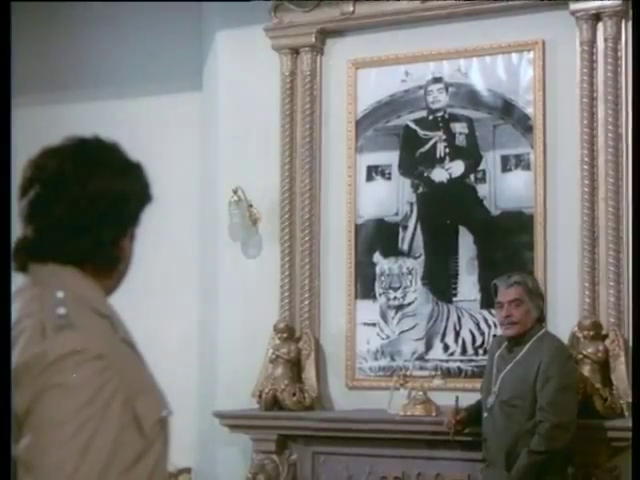
Well they might have lead to Lion a lot sooner if Lion could consistently tell the difference between a lion and a tiger as a decorative motif.

Shatrughan Sinha has the power to out-ham almost any other actor in almost every film he has made. I have an equally amazing power, that of being able to forget Shotgun is in almost any film. I love Aa Gale Lag Ja and Kaala Patthar and yet am always mildly surprised when he turns up. Anyway. He plays both Prabhakar and Kalicharan with bluster and supreme self-confidence.

There is little to distinguish between the two characters other than the dialogue they utter and he makes minimal efforts to differentiate them (a grimace here, a furrowed brow there). I was more impressed by his costumes. Some appeared to have been provided by the upholstery department.

Kalicharan-David and Prem Nath

Prem Nath was that rare man who out-hammed Shotgun in this instance. Almost all of his dialogue is delivered as a shout, and if there was an award for Most Enthusiastic Cursing, he would romp it in for his use of “BASTAAAAAARD!”. He was also ambushed by the wardrobe team a couple of times but it’s not like there was any subtlety being smothered by his outfits.

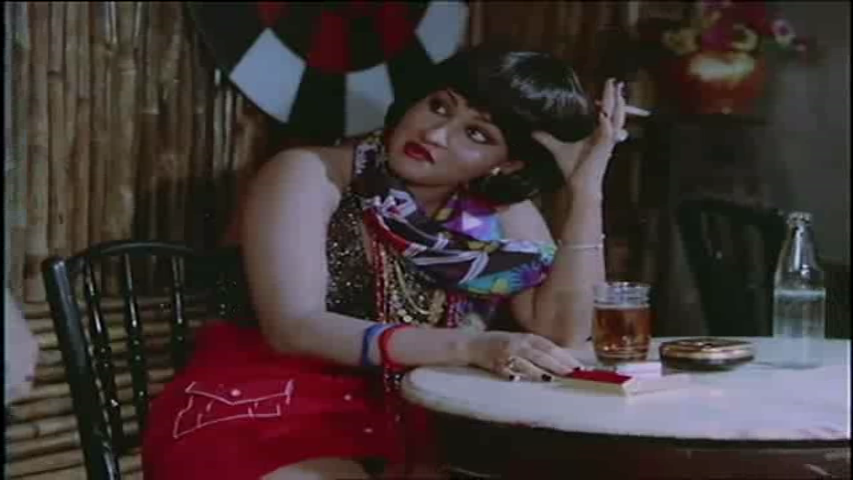
Reena Roy’s Sapna is an educated girl who swears profusely and decides to take revenge for her brother’s death. Sapna just gets on with things. Including this dance which she invited Prabhakar/Kalicharan to attend as it might give him more hope for his life and make him less depressed.

The wardrobe department seemed to be fascinated by Sapna and tried out many looks, not all of them successful.

Kalicharan-Sapna as a bad girl

I was amused by her undercover bad gal attire. But Reena Roy managed to overcome the fabric based challenges and her performance is both well-constructed and masala appropriate.

Kalicharan-more outfits

She is generally good even in a terrible film, and makes the most of the opportunities to expand her character beyond the standard dialogues.

Kalicharan-Alka

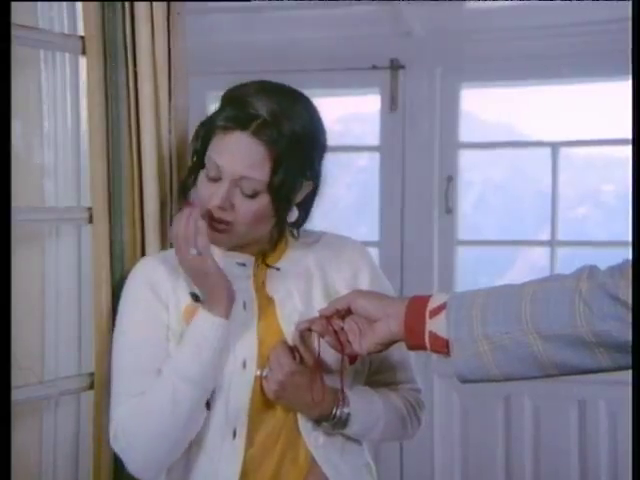
Alka was less memorable as Anju, the saree wearing good girl and sister figure, but she was more of a plot device than a character.  She called on Kalicharan’s humanity when I.G. Khanna was more intent on curbing the criminals’ baser instincts. Oh the transformative power of tying a rakhee!

Kalicharan-Danny DenzongpaKalicharan-one legged Trishul fight

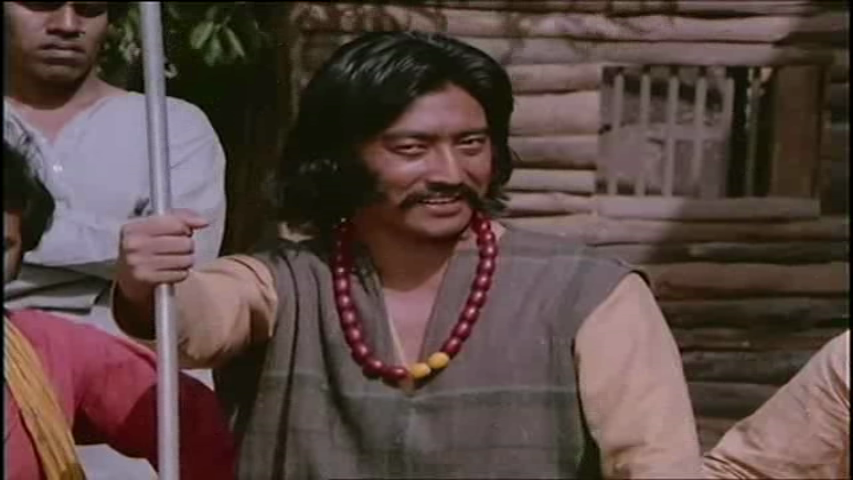
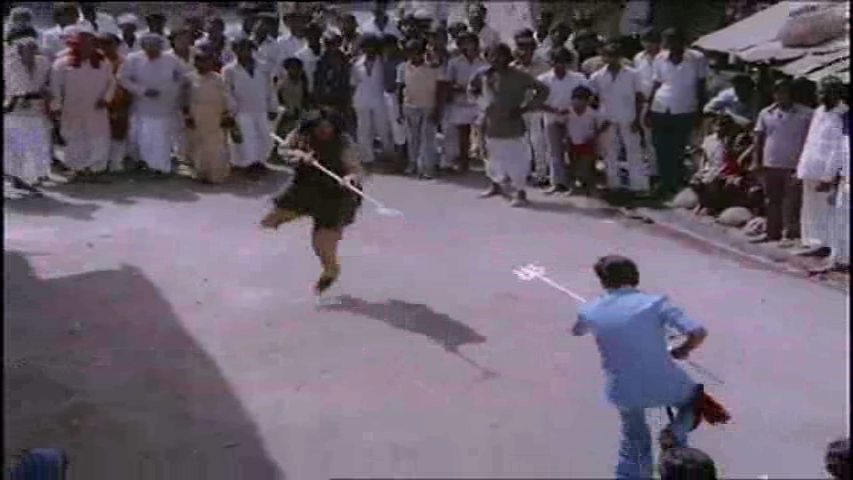
Danny Denzongpa has a small role as a one legged bootlegger, Shaka. I love Danny as a villain with heart of gold. Plus seeing him hop around trying to stab Shotgun with a trishul was quite fabulous. Kalicharan was such a manly man’s man that to level the playing field he also fought on one leg.

Kalicharan-Danny and Shotgun

That is the stuff masala bromance is made of.

Kalicharan-ShettyKalicharan-Shetty and co

Shetty is the stuff masala villainy is made of, and this role is one of many cookie cutter bad guys he played so effortlessly. He is at the start and finish of Kalicharan’s life of crime, the career goon who will do anything without qualm. Of course, Shetty also provided Shotgun with a tragic back story as his motivation for going off the rails.

Ajit is suave and slimy as the urbane mastermind with an excess of phones and a deficit of scruples. I’m not sure the fluffy dog says “Evil Mastermind” but he seemed interested in proceedings. Din Dayal/Lion remains in the background for most of the film, but rapidly loses his cool as Kalicharan draws closer. I’ve seen his tiger strewn den before in Fakira and maybe something else.

Kalyanji-Anandji provided the soundtrack and the background score is great. Brassy, dramatic and a bit funky, the music lopes along and lifts the energy of the action scenes.

But of all the things I was expecting in the club item, Father Christmas was not one. The other songs are less successful but I blame some of that on the lyricist who decided that what we needed was lots of “lalalala’s” a few ‘OoohAaaahOOoohAaahhh” choruses and a repetitive “KALicharan KaaaalicharAN KalicharAN” vocal.

The action is directed in a fast and pacey style while Shotgun’s delivery is ponderous and he may as well have been carrying a sign that said ‘Look at me!’. But you need a certain amount of swagger to carry off this sort of role, and its knitwear, and he has that. There is an excellent transformation scene when Kalicharan first dons the police tunic. He twirls around, standing on what I picture to be a lazy susan, as I.G. Khanna looks on admiringly. And that is about it for special effects in this film. The compulsory fight in a godown full of things stacked up only to be knocked over is very entertaining. And there are clues hidden in books. A nice low tech solution to criminal communications.

Good masala films often reflect on social issues and personal integrity and while I don’t think this is a great film, Kalicharan also examines some big ideas. Redemption is a theme – from the titular hero’s transformation to smaller decisions made by the likes of Shaka. Sapna’s brother was killed for dobbing on Lion but his friend eventually tipped off the good guys in return. Respect and responsibility were often mentioned as things required in order to live a decent life. Kalicharan was a kind of Pygmalion as Khanna and David argued over whether a criminal could be reformed.

Most masala films also rely on needlessly elaborate schemes. Din Dayal hires a mute assassin with theatrical flair (who I think is in a few Telugu films as a baddie too) to go after Kalicharan. Shetty has an array of backup plans that require, say, a train to destroy a warehouse when a bomb is just not destructive enough. And a bit more communication and a lot less manly man brooding would probably have resolved things a bit sooner. But everyday common sense is not what I watch these films for. I did like the insistence that people have responsibilities as well as rights and that not everyone is a lost cause.

If you have low Shotgun tolerance, this is not for you. But if you like him or at least don’t break out into hives at his appearance, then give it a whirl. Reena Roy is delightful as usual. Subhash Ghai trots out some classic filmi moments, and had the good sense to include Helen and lots of balloons. 3 stars!

Navarathri

Navarathri-Savitri in Navarathri

Savitri starred in both the 1964 Tamil Navrathri (dir. A.P Nagarajan) and the 1966 Telugu remake (dir. Tatineni Ramarao) and she is lovely as ever. What makes it particularly difficult to choose one over the other film is her leading men – Sivaji Ganesan (1964) and Akkineni Nageswara Rao (1966) – who each bring their own style to the proceedings. So I won’t pick.

That is so pretty with the Golu, the girls dancing and their sarees. The Telugu song is a bit more sparkly so I always pick that one.

Savitri is Nalina (Tamil) or Radha (Telugu). I’m going to just refer to her as Savitri throughout. After that lovely happy song, Savitri is told her father has fixed her marriage. She is already in love, and has no idea that her dad has unwittingly accepted a proposal from her boyfriend. Oh the drama. She runs to see the boy, only to be told he has gone to get married. She runs away, unable to face life as another man’s wife. Her character spends 9 nights wandering. She encounters different characters, all played by the leading man, who represent different aspects of human behaviour and emotion. These are named slightly differently in each film so I will just list them by night.

The film is more of an allegory than a realistic portrayal. Despite having lots of detail presented about who these men are, there is not a lot of depth to all the characters. The actors focus on the key emotion of the episode rather than trying to create nuances. Sivaji Ganesan is charismatic and is always instantly recognisable in this tour de force. ANR is generally better suited to low-key roles, but he also plays the various men as types. It is highly entertaining and stylised.

Night 1. A flamboyant widower interrupts Savitri as she contemplates suicide and drags her back to his house. Both ANR and Sivaji played this character as an eccentric, lonely man. The widower is devoted to his dead wife and little daughter (played by Kutty Padmini in both versions, I think). When compared flounce for flounce, there is little to separate the actors in this episode. I kept thinking of Snagglepuss.

Night 2. Tricked by a brothel madam, Savitri has to fend off a drunkard with a sob story. Savitri is determined, fierce and has a good throwing arm. Sivaji played this role as a wild eyed, plaid pants wearing letch with mood swings. ANR did a gorgeous self-parody as a self-pitying Devdas and for that, he wins my vote.

Night 3. Picked up by the police, Savitri is taken to a mental hospital. Both actors play the doctor as gently considerate and interested in why she was faking madness. I enjoyed ANR’s reactions to Savitri’s odd gesticulations and speeches. Sivaji is more of a generic saint in a white wig. Placed in a ward with several other women exhibiting different manias, Savitri joins in the various set pieces each inmate delivers and their song and dance medley. The Telugu patients (including Suryakantam, Chhaya Devi, Jamuna and Jayalalithaa) are funny and energetic, and I recognised most of the songs they used so I enjoyed their section a lot.  Manorama features in the Tamil film where the dancing and singing is more subdued but still fun. I’m usually averse to using the mentally ill as comedy fodder, but there was something good-natured and kind in this episode that helped me put my qualms aside.

Night 4. Frightened that the police had come for her, Savitri runs again. She meets a lurking gunman, out for revenge against the men who tortured and killed his brother. Savitri tries to persuade him to stop but he is killed by his enemies. It’s his character who has the most obvious demons to fight in this Navarathri. Both ANR and Sivaji play him with swagger and bluster. ANR had a little more vulnerability while Sivaji showed more of the wounded pride and ferocity. Both died spectacularly and both had to deal with interesting makeup and costumes. I guess it depends on whether you prefer a stripy t-shirt or a stripy lungi.

Night 5. Savitri contemplates suicide again. She is saved by a kindly villager and his sister who worry that she had been possessed by an evil spirit. A comedy conman arrives to fleece her poor but honest benefactors and Savitri decides to give him a taste of his own medicine. Nagesh originated the role in the Tamil verison while Relangi played in the Telugu film. I prefer Relangi in almost any role to Nagesh in most things! I think ANR does poor man with heart of gold so very well.  For this section, the Telugu film is the winner for me.

Night 6. Savitri sees an old man crawling along a path and goes to help. A formerly rich man, he is now a leper and shunned by all his family and associates. Savitri doesn’t let her revulsion at his physical state stop her from behaving with compassion and integrity. I really like that at around this stage in the movie, Savitri has stopped just passively absorbing help and is not only thinking about how to sort out her own life but is actively supporting other people. The makeup department were a bit more effective in 1966, and ANR does vulnerability so well. The Telugu film gets my points for this episode.

Night 7. A theatrical company is in need for an actress after theirs elopes. Savitri agrees to help them and the play goes on. I don’t think anyone can beat Sivaji Ganesan in Ye Historical Outfits and he looks like he has a ball in this turn as the rural actor/director. ANR is very good and his dancing has a higher comedy value, but the portentous dialogues flow so nicely in the Tamil film. Savitri is lovely in both films as she matches her leading man step for step.

Night 8. Whoever thought either of these men should wear short shorts should be given a severe talking to. Playing a policeman playing a hunter ANR and Sivaji both opt for a braying laugh, military bluff heartiness and those shorts. I think they used the same footage of the tiger in both films. Savitri masquerades as a man. She is not even slightly convincing, but her expressions are funny and her Telugu characterisation is enjoyably pompous. I think Sivaji’s shorts are both more terrifying (baggy, poor camera angles) and hilarious (baggy, poor camera angles). The Tamil film is a little more dramatic and better paced at this stage so I prefer that.

Night 9. In which we discover that intended groom/disappearing boyfriend Anand or Venu (Telugu) is of course Sivaji or ANR. Savitri has nice rapport with both actors and the reconciliation scenes were both funny and heartfelt by turn.  The wedding goes ahead and all the ‘other men’ turn up (except the dead gunman). Happiness prevails!

This slideshow requires JavaScript.

I slightly prefer the Telugu soundtrack by Chalapathi Rao T as it is a little more filmi and festive but the songs in the Tamil film are quite soulful so it does depend on my mood. I have the Telugu DVD with subtitles but have only seen the Tamil film without (it’s on Youtube). The stories are identical but of course, the dialogues will differ somewhat. Despite having different directors, there are only differences in a few scenes. It’s interesting to see so little of the second director in the remake – when I first saw the films I assumed AP Nagarajan did both.

I have some minor doubts. How did Savitri keep finding new sarees with impeccably tailored blouses? And she seemed to be wandering in circles yet no one could find her. But nothing detracted from enjoying her journey and her realisation that she could go home and be happy.

I really like both films, and have rewatched them a couple of times. Savitri is brilliant as Nalina/Radha and despite the focus being on the men, her performance is varied and her characterisation develops beautifully. Both Sivaji and ANR are in fine form and make the task of playing nine roles seem effortless. Choose your favourite cast, choose on language, choose the songs you like most, choose your own adventure! 4 stars!