Double Seat (2015)

Sameer Vidwans’ Double Seat tells the story of newlyweds Amit (Ankush Choudhary) and Manjiri (Mukta Barve) starting out their married life in Mumbai, a city where space comes at a premium.

The film opens with a montage of a luxury resort honeymoon passing in lazy days, huge beds with drifts of crisp white linens, peace, and privacy. And then Amu and Manjiri arrive at his home in a chawl in Mumbai where they share a very compact apartment with his parents and brother Alpesh. Amu seems content with the way he lives, but maybe he just needed some encouragement. Manjiri is a pocket rocket, excited by achieving her dream of moving to Mumbai and her career in insurance sales. She sees nothing wrong with taking the occasional calculated risk and having aspirations. And so as they get to know each other, the dream of getting their own home is born.

I like the way the relationship between Amit and Manu is portrayed. They genuinely like each other and they’re dead keen to spend time alone together. They get around the limited privacy by texting each other, even in the same room, with little in jokes and hints. They get each other’s humour and enjoy talking about their hopes and dreams. They go out on late night dates, checking out the homes of the rich and famous, and talking about wonders like having a bath in your flat. Amit never wants Manjiri to change. He enjoys her cheerful blend of ambition and pragmatism, and encourages her. I loved how achievable and relatable some of her dreams were – like getting her first pair of jeans or learning to drive. She doesn’t want things out of greed as much as she wants to make the most out of her opportunities. Being so close to his parents, who are very warm towards her, still has an effect on Manjiri as time passes. She becomes a little less demonstrative and more concerned about what other people might think. She still gives as good as she gets, but she seems stifled.

Amit sees that change and doesn’t like it one bit, partly because it’s killing his nascent sex life. But he too has been squashing some of his aspirations and wishes in order to avoid causing ructions at home. I love the way Amu raises the subject of getting their own place, and how it’s what he needs and not just a thing to make his new wife happy. And then Manju falls pregnant. Both actors deliver likeable and well calibrated characterisations. When things take a turn for the worse Ankush Choudhary nails the blend of self-pity and fear that drives Amit to behave in a disappointing way. Mukta Barve gives Manjiri a spirit and energy that dims at times but is never really overcome. And I liked seeing a nod to realistic pregnancy with Manjiri looking more and more tired and uncomfortable as her due date drew closer.

Nothing ever runs that smoothly, or we wouldn’t have a 2 hour 20 minute film. There are a couple of incidents and scenes in the latter part of the film that I felt were a bit too clunky, but by and large the focus stays on the relationships and domestic life. Amu and Manjiri have some issues but realise they need commitment and communication to resolve their problems. And when financial woes hit, there is little blame or hysteria. Instead of wailing and moaning, Manju tells Amit to get his tears out today because tomorrow they start anew. But he has to remember he has not failed and he did nothing wrong by trying. Some people are a tad more dramatic than others, and some take a little longer to show up with practical support, but they get through things by coming together.

Vandana Gupte as Amit’s mother is delightful. She is very supportive of Manjiri having a job, but she is accustomed to certain rules for living so there is a little bit of friction between the kids and her husband. She usually aims her complaints at Amit though, expecting him to communicate the expectations to Manjiri. She bonds with her daughter-in-law over the mega popular soap Chhakuli Mami. And when she accepts the move will happen, she gets right on board to help the kids out. Her entrepreneurial spirit fires up and she takes to business like a duck to water. Vidyadhar Joshi is the mercurial and comfortable self-centred father and good at showing the wounded dignity that lies under some of his more inflammatory remarks. He’s not bad, he’s not horrible, he’s really quite friendly and tolerant to a point. But when his son wants move up in the world it exposes a tension between the generations and opens up a lot of anger and disappointment that Amit has been dutifully suppressing. He does come round to seeing that his son just wants to fulfil a dream. And as an almost full time dreamer himself, that is something dad can understand.
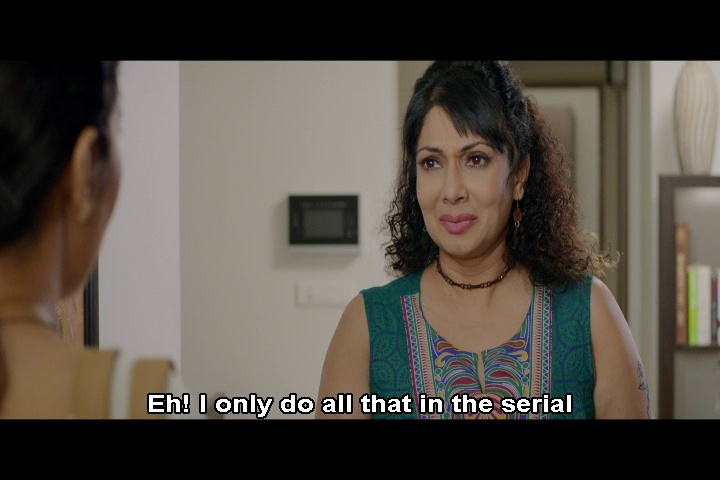
The remaining support cast are all good. I liked the contrast between Amit’s policeman buddy (Sandeep Pathak) and his wife with Amit and Manjiri’s relationship. Asawari Joshi plays the lead on the addictive soapy and appears as a kind of chain-smoking guardian angel for Manjiri. Shivani Rangole has a small role as Sapna whose proud and supportive grandfather was intent she complete her studies and get a good job.

This reminded me a little of the excellent Love and Shukla, although I like the couple’s dynamic more in Double Seat. See it for a thoughtful and engaging exploration of evolving values and relationships in the big city hustle. 4 stars!

Hichki

Siddharth P Malhotra directed and co-wrote this adaptation of an autobiography by Brad Cohen. While there are absolutely no surprises in this classic underdog story, the film made some changes to the book including making the lead a woman.

Rani Mukherjee delivers a rock solid performance as Naina Mathur, a part time animator who wants to be a teacher. She also has Tourette’s Syndrome. I have reservations about casting non-disabled actors in roles where the character has a disability, and I am all for real representation. But in the Hindi film industry where being visibly different (old, fat, dark, pale, disabled etc) is often the trigger for some very unfunny shenanigans, this film does a pretty good job of portraying Naina as a woman with a neurological condition and a rich and satisfying life, not as a sideshow. I read the director and Rani did quite a bit of work on getting her portrayal of the symptoms right. So is this at least some kind of progress? I tend to think so in this context but of course it is far from the end goal of inclusion and real diversity. It seems so long since Marlee Matlin won her Oscar and yet. Here we are.

Naina wants to be a teacher because she once had a teacher who inspired her, made school a place of acceptance, and helped her accept herself. She wants to be that teacher for other kids and to show that she was herself worthy. St Notker’s needs a teacher for their terrible 9F class, the slum kids nobody wants at the fancy private school. They are desperate and Naina is determined.

Naina lives at home with her brother and mother, in a happy middle class household. Her father left the family, partly because of his own issues at having a disabled child. I love her mum and brother. They seem so affectionate and relaxed. They get her, even though they know she is doing it tough and they can’t fully understand her, they make sure they are there for her.

Naina meets each stupid comment or startled reaction head on and with practiced charm. She has both vocal and motor tics, and Rani modulates the timing and severity to show the effect of stress or high emotion. Her anxiety before interviews, the techniques she uses to minimise or delay her tics, her habitual façade of good humour are all tied to Naina’s life and challenges, not just an acting improv challenge. Rani’s expressions were subtle but conveyed the stress she felt when a tic was imminent and the toll people’s judgements took. When she was in full flight with her class, her tics flowed into the back and forth of their chatter and subsided or became part of her own jokey delivery. Naina’s relationship with her dad (Sachin) is strained as he is ableist and patronising where she just wants to be treated the same as her brother. Their conversations have a grinding banality with none of her customary humour or energy.

The kids were painted much more broadly. There are boys who refuse to trust outsiders, bright girls who could do so much with their lives, the quiet one, the hip hop dude, the nerd who is great at maths thanks to his gambling sideline. All the usual pranks and hijinks ensued. I did appreciate that when middle class Naina took a picturesque stroll through the slum where the kids lived, she saw supportive parents and families who wanted their kids to do well. They may not have turned up at Parent Teacher meetings but it was not for lack of interest. Sure it’s cheesy but I am quite tired of the misery porn genre and I liked that Malhotra didn’t make all of his kids have terrible lives full of dramatic suffering. Class and group dynamics can do as much to hold kids back as outright abuse can. There’s a bit of magical thinking around how disadvantaged children can overcome setbacks by working hard and being positive, but generally the logic was pretty sound if the delivery is a little sugar coated.

Every hero needs a villain, and the honours go to Neeraj Kabi as Mr Wadia. He is a protector of the status quo, a gatekeeper against the influx of undeserving poor. He hates everything Naina stands for, but despite this is one of the few teachers at the school who will actually speak to her. He constantly tries to get her kids expelled and his students, the golden children of 9A, follow his lead. I’d like to make his final speech compulsory viewing for all actors who have to deliver a big emotional capitulation. He nails the emotion but doesn’t get stuck in the cheese.

Although the story was super predictable, the film played with my expectations in a few ways. I had a giggle at Naina’s mum being played by Supriya Pilgaonkar who is maybe 10 years older than Rani, which surely reinforces Rani as a genuine box office Hero. And although Naina’s dad and her student Aatish did have some character development and growth, they weren’t given the red carpet treatment just for catching up to the rest of the world. Instead when it came time for a tangible recognition of excellence, it was the girls who were rewarded for their capability and persistence. I was particularly fond of fiery little Oru (Sparsh Khanchandani) and shy unless he was rapping Ashwin (Benjamin Yangal). The soundtrack by Jasleen Royal is integrated into the drama with just a few montages to hammer the message home. Songs that involve the students tend to have a more improvised and frenetic beat where other songs suit Naina’s introspection and exploration. It’s a shame to have Rani and no big dance number but it just wouldn’t have worked within the film. So it’s just as well they did a promo track to add some colour and movement and hit you over the head with that message again!

I am always keen to see films with great female characters who have agency. I wasn’t blown away by the tried and true story but I was delighted by Rani. It’s also nice to see a film that is gently subversive in a mild and family friendly way. 3 ½ stars!

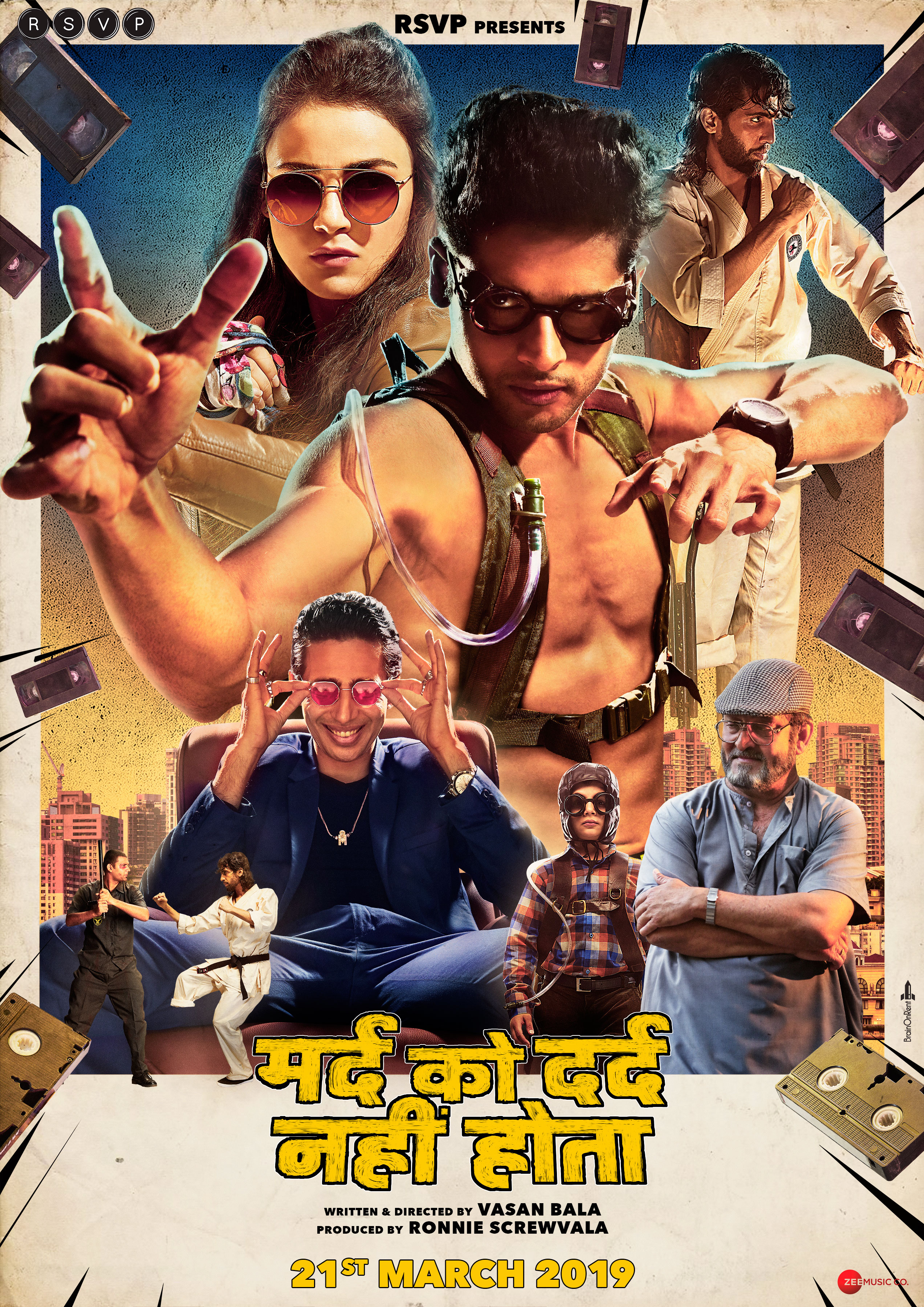
Mard Ko Dard Nahi Hota

Vasan Bala takes all the required masala ingredients and tosses them around. And throws in some real talk about love, loss and growing up, wrapped up in offbeat humour, visual gags, movie references, and tons of Hong Kong film style action.

I knew I was probably going to like this film from the get go when the hero flashes back to when he was still in utero…with his parents watching Chiru dancing to It’s A Challenge in Aaj Ka Goonda Raj!

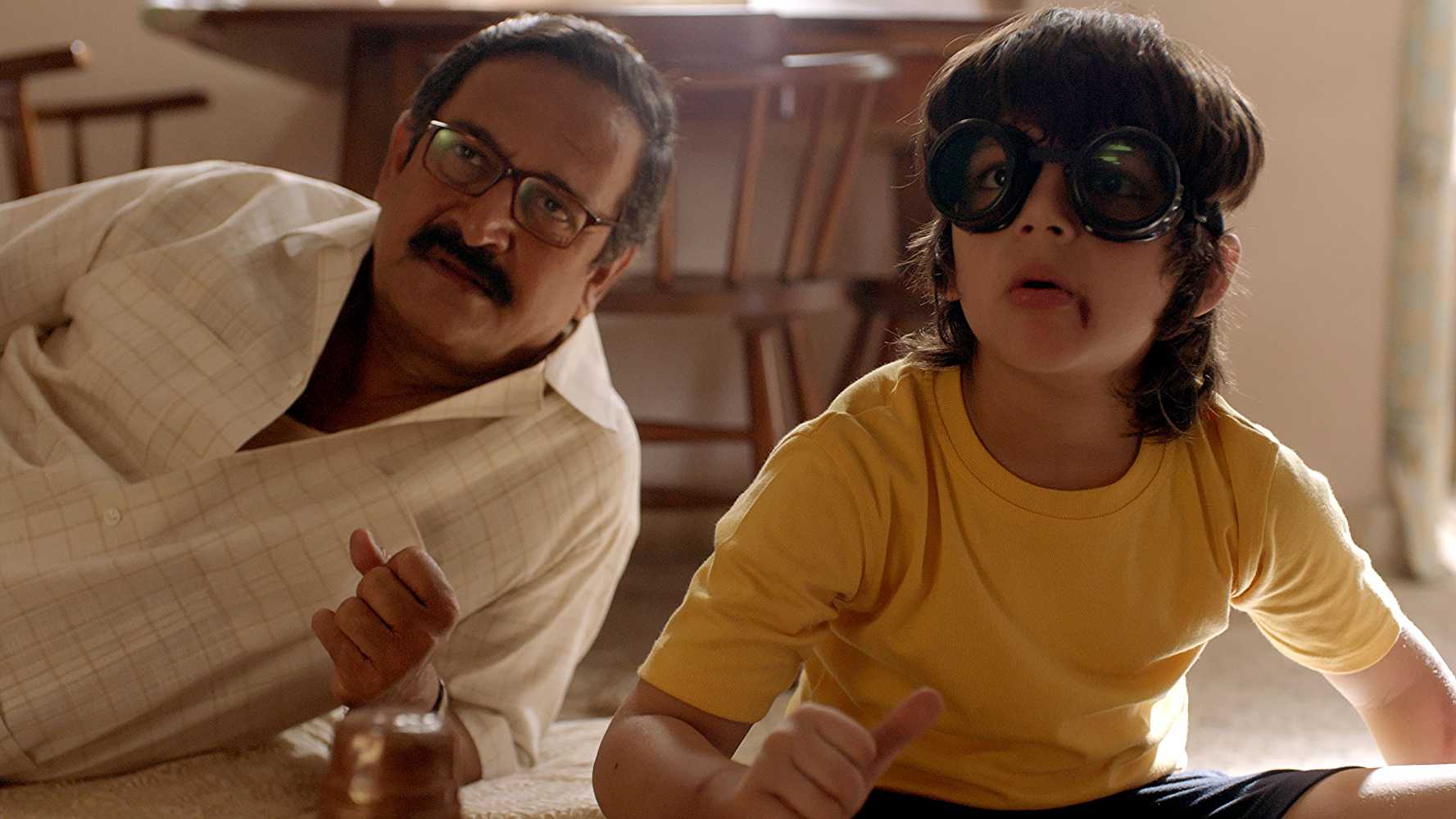
Surya grows up under the care of his dad (Jimit Trivedi) and granddad (Mahesh Manjrekar) after his mother is killed in a bungled theft. He has congenital pain insensitivity and according to the movie medicine, will probably die by the age of 4. So his anxious dad almost literally wraps him in cotton wool. His only childhood friend is Supri, a neighbour who is his opposite in many ways. She never says anything but she feels pain. Her abusive drunk dad is the opposite of Surya’s too. Ajoba feeds Surya a diet of action and masala movies to try and teach him what pain means and how to recognise injuries, and insists that he stay well hydrated. There is some sense in teaching the kid how his body works and what could go wrong but it didn’t help his emotional development. Both kids become obsessed with Karate Man, a one-legged karate master who once beat 100 men in a single fight. Surya believes that life will conform to the rules of films, and he is a hero – the next Karate Man. So when people treat him as a villain, he is bewildered and annoyed. The family moves out of town to his grandfather’s house and Surya loses touch with Supri.

Adult Surya (Abhimanyu Dassani) quotes his grandfather who said “Behind every mind blowing story are some pretty bad decisions”. He is an unreliable narrator, often rewriting scenes on the fly or drifting into a filmi fantasy before the world crashes in. He is as influenced by Bruce Lee and the Terminator films as he is by Amitabh and Rajinikanth. And he’s not particularly bright so he is almost guaranteed a succession of mind blowing stories. Dassani has classic chocolate hero looks, an exuberant acrobatic physicality, and an expression of intense innocence that can be hilarious or can make me want to deliver the one tight slap he sometimes needed.

Supri (Radhika Madan) re-enters his life in a beautifully choreographed fight underscored by Kishore Kumar singing “Nakhrewali”. I really loved that rather than race in to take over, he watched her kicking arse and was utterly enchanted by her skills and strength. It took a while for them to recognise each other but Karate Man divided them and brought them back together. Radhika Madan clearly worked hard for this role. She does a lot of physical action and portrays Supri as strong but not invincible, and not just a comedy prop for the men in fight scenes. I liked her performance a lot and found her character a necessary and welcome counterpoint to Surya’s more cartoonish perspective. She is resilient, and a sound thinker who doesn’t carry shame or guilt that isn’t hers to own.

Supri’s life was no fairytale. I cringed to hear her dad tell her boyfriend Atul to just slap her if she was difficult. It so unusual for films to even hint at domestic violence issues that I was pleasantly surprised when Supri and her mum had some real talk. Ma doesn’t want Supri to throw her life away on a bad marriage but Supri is struggling to know what else to do. She doesn’t earn, they need money for medical care, and she simply doesn’t know where to start. Mother and daughter talk about their feelings and the demands of life and there is no drama, just love. Supri says her mum sacrificed to nurse an abusive husband back to health so it is her turn now. But Ma is an interesting woman and she says she can’t break her internal programming to keep supporting her husband, but she doesn’t want Supri to follow in her footsteps. She encourages her to get out and live her own life.

Gulshan Devaiah rounds out the main cast in a brilliant dual role performance. We get the history of Mani and Jimmy in a funky flashback as one becomes a cliché drunk karate master and the other a cliché psychotic villain. How good is this retro funk sound?

Gulshan hits all the right notes in both roles and he commits. I loved his Karate Man style and if there was an award for best use of citrus fruit in a fight sequence, he would win it hands down. Mani is Supri’s mentor although he knows Atul is giving her grief and pushes her away for her own good. He reluctantly acquires Surya as a sidekick on his quest to get the locket back. Jimmy is grandiose, verbose, and constantly disappointed and dismayed by his goons and their lack of style. And when they are together, it’s like they’re both 9 years old again.

The film comes across as a loving tribute to movies and action, not just a piss take. It’s often laugh out loud funny, with a succession of blink and you’ll miss them references. Karan Kulkarni and Dipanjan Guha riff on some classic sounds and the songs are generally well placed. I loved the use of old filmi songs in the background, and the hoardings and murals that featured movie stars. Apart from being lovely it helped fuse Surya’s inner life to the world where this action was taking place. Bala uses some visual gimmicks to allow viewers to be aware of what was going on in real time, but the fight scenes are real and very physical with none of the bad CGI so prevalent. At its heart the movie is full of old school mass goodness.

The movie is on Netflix so you have no excuse. 4 stars!