Muta Mestri

Muta Mestri is a masala film with a message, featuring Chiru with director A Kodandarami Reddy, and dialogues by the Paruchuri brothers. Overall the blend of ideas and drama and action is balanced. The action is full throttle, the dancing energetic, the ladies outfits are frequently hideous and the message is generally one I can get on board with. What works, works well but there are some heavy handed moments and a few assumptions around values that left me cold.

Chiranjeevi is the very patriotic Subhash Chandra Bose, the ‘Labour Contractor’ at a local market. He gets an excellent introduction when Sukkamma bets Brahmi a nudie run that the porters can’t unload waiting trucks in less than 10 minutes.

Whenever Bose arrives by bike, he just lets the bike careen off into the distance. It oozes confidence and a dash of silliness which is perfect for this role. Oh and she loses the bet.

The market is a harmonious community of men, women, Hindus and Muslims all working together. There are some statements to the effect of unity equalling strength.

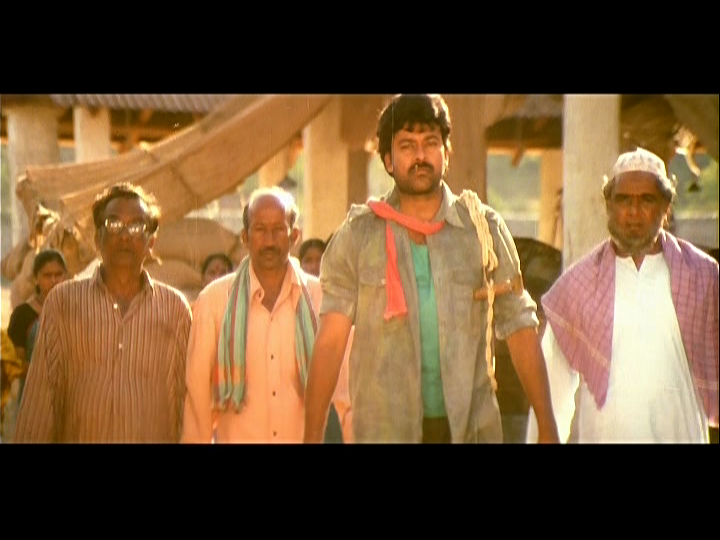
Allu Ramalingaiah plays a teacher who educates the children about Independence, Gandhian principles and the like and regulars Brahmi and Ali lurk in the support cast too. It’s the India that should be, according to the vision of this film. Kasim is one of the more prominent support characters and he and his son are well liked. They celebrate their Hindu friends’ festivals and the Hindus respect and understand Muslim religious practice. Indeed, knowledge of prayer times sparks a crucial plot development towards the end of the film. Diversity is shown as beneficial, not just something to be tolerated.
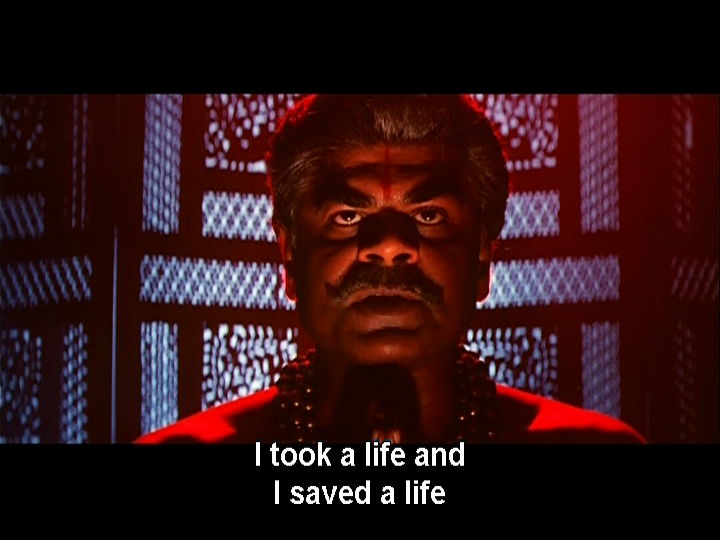
Atma (Sharat Saxena) is the villain of the piece. He is more of an ascetic style of villain, believing he has a relationship with god that allows him room to negotiate indulgence for bad deeds. He wants to use the land the market is on for a new development. The market folks turn to Bose for help and he stages a non-violent protest outside Atma’s house.

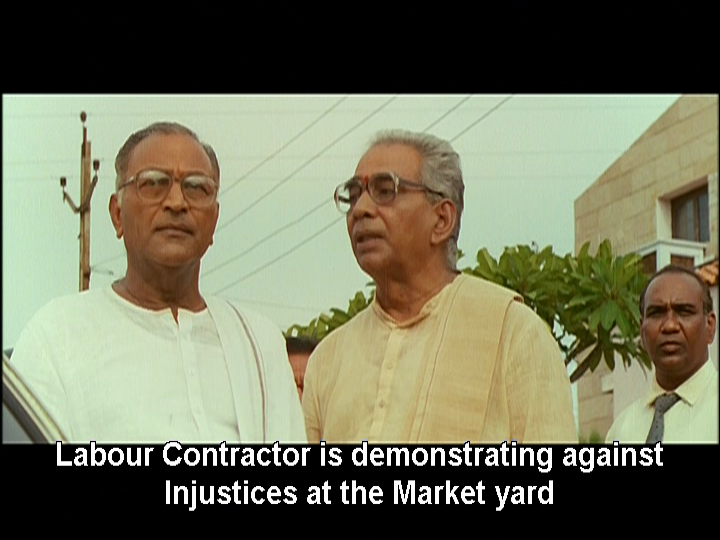
Bose allies with MLA Sundaraiah and the CM (Gummadi) and eventually moves into politics – a position that Atma wanted for his son Dilip. Dilip is the kind of baddie who pulls up outside a school and plays loud crappy music to drown out the pure sweet sound of innocent school children singing the national anthem. And adding insult to injury, he then dances badly in the street. Obviously Bose wil deal with him severely.
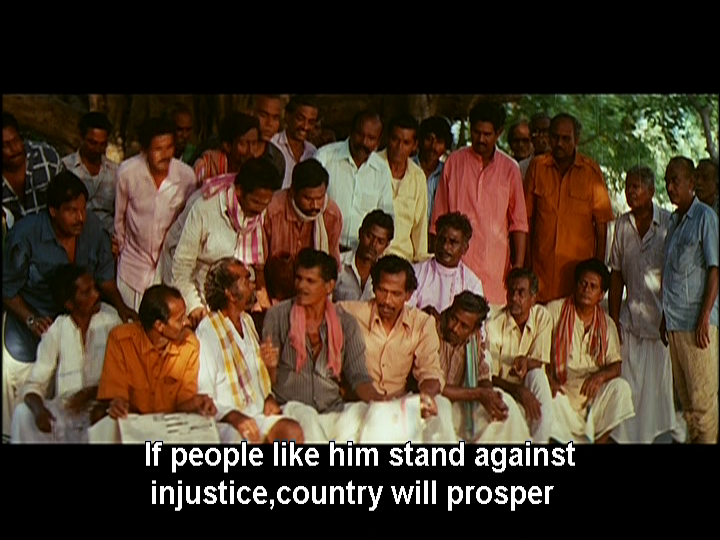
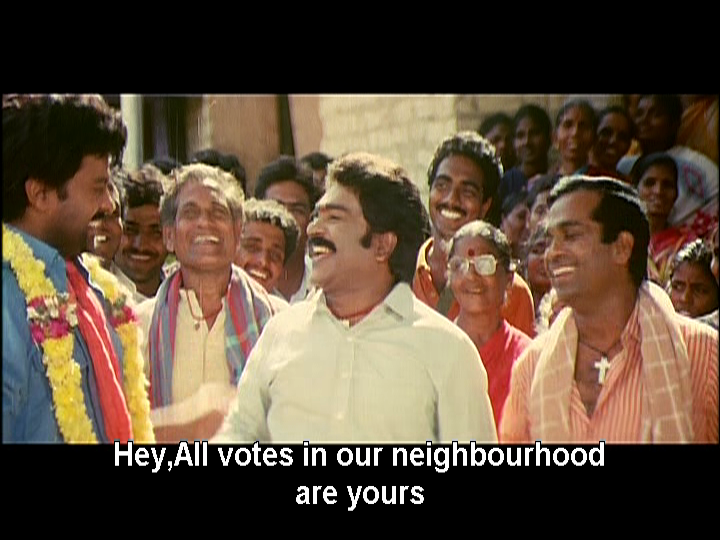
Bose brings a direct and action oriented approach to politics. There is a great sequence of Bose being wheeled from one photo op to another with the emphasis on being seen to feed orphans or plant trees rather than actually doing it. Bose reprimands his advisors and starts making his own decisions based on what he sees as right. He upsets the applecart and the CM loves him for it, as do the people. This is a major theme in the story and there are recurring examples. The film also makes a point about the quality of people in politics, and the shift from people who wanted to change the world to those who just want to profit from it. People have a responsibility to try and fix things, not just leave them for someone else to clean up. For all the idealism Bose spouts, it’s a deeply cynical film.
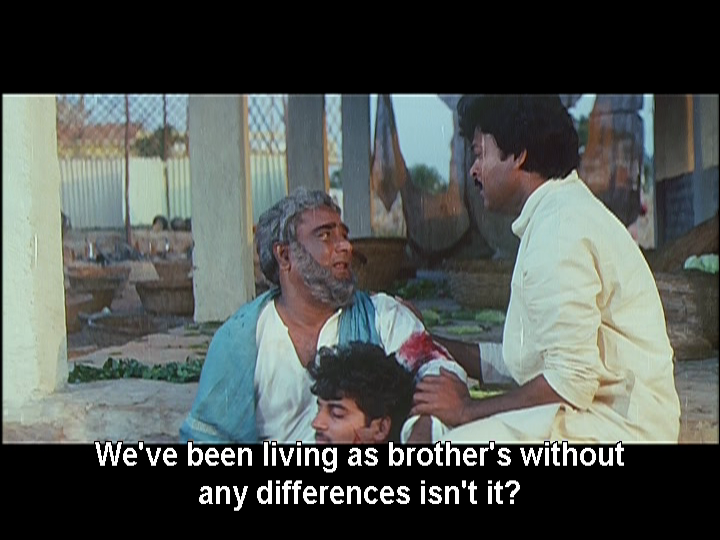
Atma realises that the only way to hurt Bose is to attack his loved ones and discredit him. Bose realises that he can’t sort out Atma while he is part of the government. It is a similar idea to the cop/vigilante issue raised in other films. Justice is located outside of the legal system and good men can do illegal things as long as they are doing them for the ‘right’ reasons.

The action scenes are energetic and impressive, and Chiru is in excellent form. The fights are fast and athletic, and suit his character’s style. Actually, Bose has multiple fight styles and uses them to entertain people watching him belting the daylights out of the baddies. I liked Bose’s interactions with the other guys at the market and Chiru has a gleam in his eye when he gets into the rousing speeches. His dancing is excellent, and especially when he has the opportunity to go for it.  A lot of the comedy is Bose bumbling his way through the intricacies of political life, and the hassles of being a chick magnet so it isn’t too intrusive even if it is very silly. Chiranjeevi looks great in simple working attire, although he does veer into acid wash denim territory which is less pleasing. The song costumes are an outlet for the frustrated wardrobe team. I keep saying this, but Chiranjeevi is such an accomplished actor. He finds opportunities to give his character more depth and complexity than a mass film may require, making the overall result more engaging and credible.

There are some things I took issue with. Bose’s sister Jhansi gets home late from college and because he sees the neighbours watching, Bose slaps her. There is a tearful repentance that follows, and the upshot is that avoiding reputational damage is the responsibility of women. That scene will come back to haunt Bose in a major way but it left a bad taste in my mouth, especially when Jhansi basically apologised for making him feel the need to hit her. Grrrr. At the same time, Bujamma (Meena) is very forward in chasing Bose and there is no penalty for that. So his sister has to be perfect and virginal but he will marry who he chooses and think no less of her for trying to get her hands on him before the wedding. Sigh.

All of the females in the film are given short shrift. Bujamma is, as Bose repeatedly tells her, loud, crass and stinks of fried food from her snack stall. She keeps trying to transform herself to be more like what he wants but cannot change her nature. Some of it is quite funny, as in a challenge to stay silent for 24 hours, but some of the dialogues are just plain mean. Meena is pretty and lively enough as Bujamma although her performance is a bit grating. Kalpana (Roja) is Bose’s secretary, and as Bujamma sees her the main rival for Bose. Roja doesn’t get much to do apart from stand around and look decorative although she is afflicted with ‘comedy’. Brahmi decides to help Bujamma keep Bose and Kalpana apart by telling Kalpana that after six…she’d better watch out.

Despite that excellent piece of advice, it’s a stupid and unnecessary diversion as Kalpana keeps fantasising about Bose’s possible sexual advances and fainting all over the place.  Although it did lead to this song:

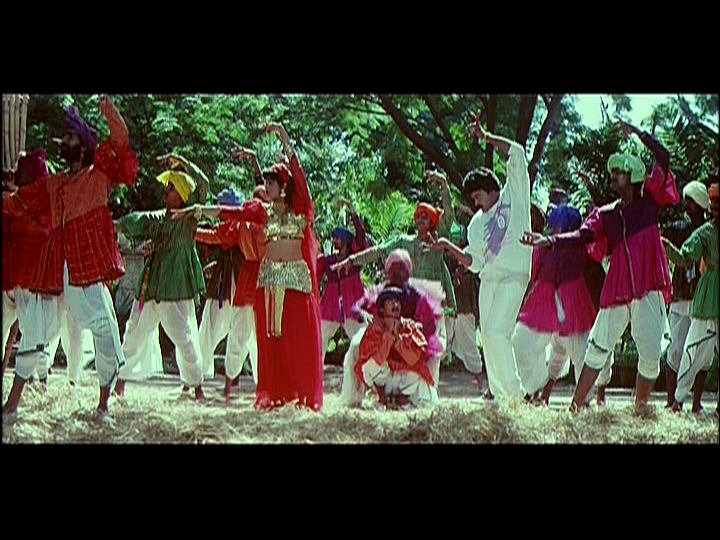
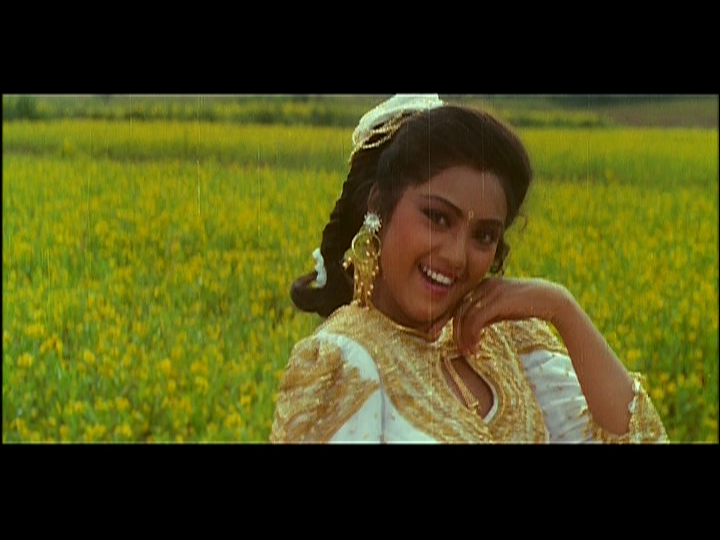
She seems to think that was a nightmare. Ahem. (Note – if you want the film on DVD, the Moser Baer DVD doesn’t include that song but the EVP one does.) Koti’s music is not particularly memorable but the picturisations and costumes made an impression. If that isn’t enough costume WTFery for you, please be my guest:


Despite an escape plan that uses a detailed model, Bose catches up and Atma and Dilip are dealt with in excellent and elaborate style.

If ‘cross-country arse-kicking’ was an Olympic event, Bose would have taken gold (and possibly also silver and bronze). Justice is done, at least for some.

It’s an entertaining enough film, but not quite enough to make me want to watch it too often. There is some substance lurking under the cheese, but I have issues with the treatment of Jhansi in a film that was otherwise very positive about equality and community. See it for Chiru’s dancing, the outfits and the come-uppances. 3 ½ stars.
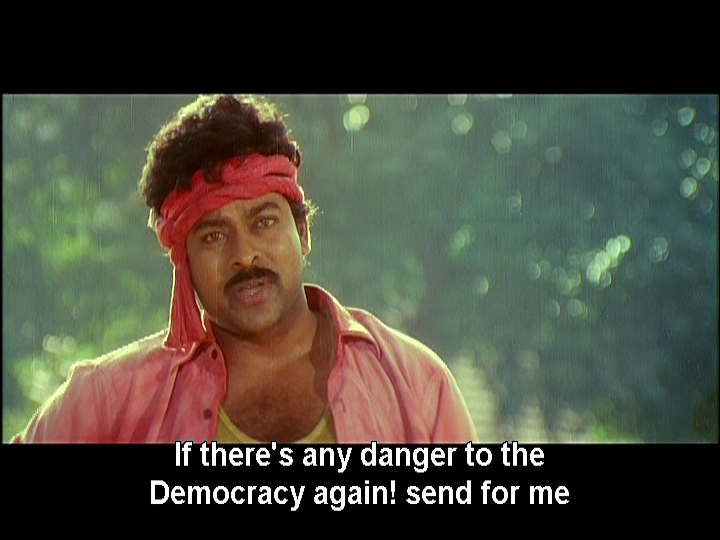
Kondaveeti Donga

One of the indicators of an excellent masala film is when I could pick holes in it but just don’t want to. Kondaveeti Donga sees Chiranjeevi teaming up again with director A Kodandarami Reddy in a story by Yandamoori Veerendranath and the result is glorious. It’s so good I want to share every little detail and yet give nothing away so you can enjoy it as it happens. The first 15 minutes is pure breathless insanity and then the film really takes off.

Raja (Chiranjeevi) is a graduate returning to his village home. That might explain why the subtitles say ‘coz. He’s so modern and citified. Raja is an orphan, adopted by village strongman Satyanarayana Kaikala. The local people funded his education, and he is back to repay them by working to make their lives better. He finds a mysterious tiger reservation has annexed the prime farming land, and the villagers are all in debt to bigwig Rao Gopal Rao and his creepy son Narasimham (Mohan Babu). Raja tries to fight for their rights in the courts but fails. He so disappoints the villagers that one of them drops dead in the court room, adding to the guilt trip. Raja decides he must deliver justice since the law won’t, even though the illiterate villagers were clearly swindled. Inspired by an old story his adoptive father used to tell, Raja becomes the Kondaveeti Donga!

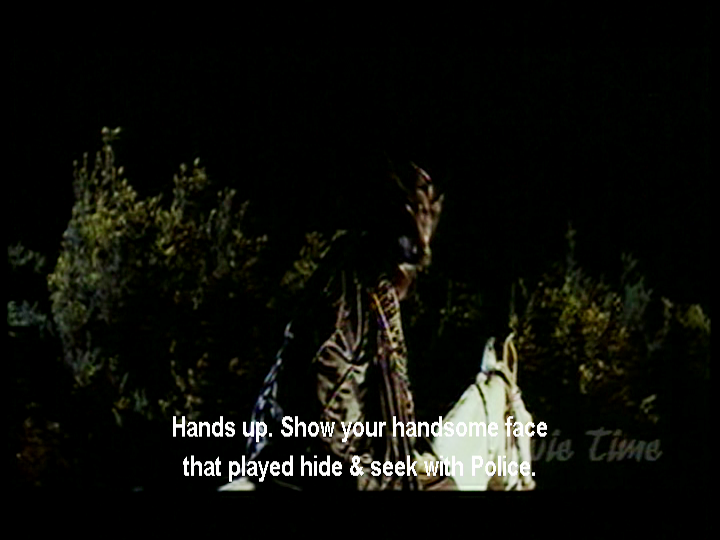
Raja declaims some cracking dialogues and bowls the ladies and bad guys over at every turn. It is a brilliant role for Chiru as it needs his swagger and charisma to make the larger than life Kondaveeti Donga come to life and he makes the most of the less action driven scenes. He wears a nice sheer face mask which fails to disguise him at all, charging around the countryside on his white horse and accompanied by his trusty dog.

There are excellent fight scenes, one including tree dwelling ninjas, tigermen and a man with very long metal arms, and a great sequence on a speeding train.

There is romance, dancing and eccentric wardrobe as the ladies live out their fantasies in songs with the obliging Raja. He is a decent bloke who genuinely cares about his adoptive family and friends. Even as he surrendered to the police, he took time to give his dog and horse a little goodbye cuddle. Awwwww.  And they deserve a hug.

The dog is particularly useful as he not only disguises himself as the Kondaveeti Donga on horseback, he also saves his friend the horse from near certain death. There is only one horse stunt that made me cover my eyes so extra points for that too.

In case Chiru as Zorro isn’t enough to tempt you (what are you – nuts?!?) there is so much more.

Amrish Puri as an evil mystic with an excellent lair. The symbolism is quite eclectic. The beak on that peacock drawbridge must have been heavily reinforced as it hits the ground with a satisfying thunk. The lair is one of those that can only be reached by water, a long arduous trek or ride, or maybe a brisk walk from the office. There are some geographical inconsistencies that put me in mind of Howl’s Moving Castle. Gadra also has a crocodile pit AND cage full of bloodthirsty cheetahs, and still finds time for his day job.

Sharada as a vengeful woman with exacting standards in machete purchasing. I love Sharada’s intensity and she has an elegance that shines through.  Like Chiru, she can inject a bit of quality into the drama and shenanigans in even the silliest script. Sambhavi is strong, resourceful and driven by a thirst for revenge. She has an iron will that even Gadra cannot overcome and she does an excellent ‘death stare’ that is almost on par with Amrish Puri.

Vijayashanti plays an undercover policewoman who poses as a snake charmer to uncover illegal activities. Srilekha is tough, has tunnel vision when it comes to the law, and is not afraid of conflict. Vijayashanti is great in this kind of role, being pretty and feisty and often very funny. Srilekha doesn’t quite join the dots and see that she is out to arrest Raja, perhaps being too distracted by his charm and laid back dance moves. Srilekha changes, most noticeably when she swaps her snug police uniform for pretty sarees. Ah, the influence of True Love!

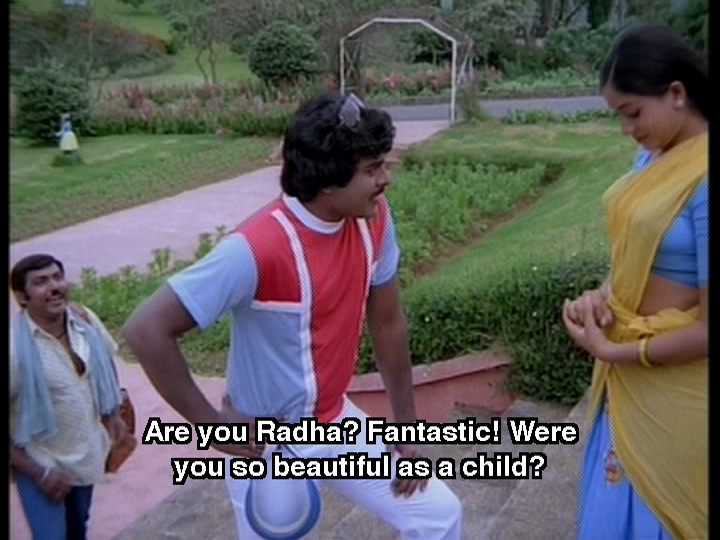
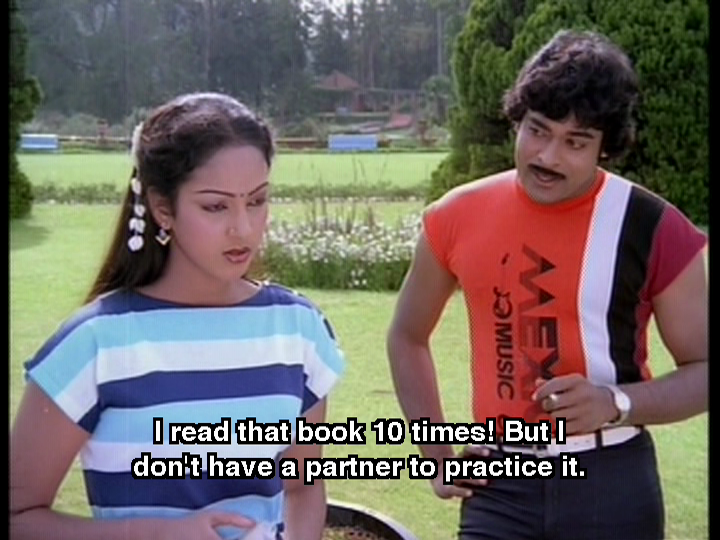
Radha  is lovely as her sister Srikanya. Now Srikanya is a gynaecologist according to the subtitles, but she seems to perform general bullet removal surgery as well as tracking down the reason for so many villagers dying of anaemia (hint – they were literally paying a debt with their own blood). In many respects she is the opposite of her sister; reserved, soft-hearted and girly. But Srikanya is intelligent and independent in her career, so she isn’t just a piece of fluff. She falls instantly and hard for the thief, seeing him as a saviour.

Thanks to a bindi with extra stickum, she works out Raja is the mysterious Kondaveeti Donga. She keeps his secret even from her family as she believes in his cause, and despite being the softer of the sisters she holds her ground under threat. When medical fakery is needed, Srikanya is cool in a crisis.

Despite being an unashamedly masala potboiler, there is some nice depth to the ‘good’ characters. Some key supporting characters find forgiveness and a kind of peace. There is a love triangle between Raja, Srilekha and Srikanya. Most of the romancing is confined to the songs which are usually a depiction of the girls’ fantasies.  The drama develops between the two ladies, with one oblivious and one heartbroken and all too aware, the romance adding another tension to their already opposing views.  Their close sibling bond and strong personalities informed their behaviour not just the love for an irresistible hero.
Nagendra Babu plays an enigmatic loner who wanders the wood in search of unseen justice (that’s what he says). Brahmanandam has a small role and Allu Ramalingaiah plays the crooked subordinate to the bad guys. Most of the humour comes from Chiru and Vijayashanti and the naff rapey jokes are left to Mohan Babu and the bad guys. There are lots of small details and symbols scattered through the film and I really enjoyed that extra dimension.

And there were some subtitles that kept me thinking. Often thinking WTF? but thinking nonetheless.

Ilayaraja’s soundtrack is excellent. There is a heroic ‘look out evil-doers’ anthem, some romantic duets and a couple of upbeat sparkly costumed numbers. Something for all occasions!


This film has everything I want in masala entertainment. The casting is perfect with Chiru at his mass best, the story rattles along, the action is crazy, and the songs are highly entertaining. 5 stars!

Sangarshana (1983)

I like a good socialist masala film. Sangarshana has surprisingly long interludes of sensible decision making and logical plot progression, plus loads of dancing and a very good cast. It’s highly entertaining and while the plot is fairly basic, it’s more rounded out than I expected. Lest that all sound a bit too straightforward, there are mysterious mute women, children separated at birth, a comic sideplot that hinges on romantic sabotage, family dramas, medical emergencies, flying somersaults, fight scenes and a bit of conflict resolution through disco.

Dilip (Chiranjeevi) returns from America to live with his wealthy industrialist dad (Satyanarayana Kaikala). He is a nice enough guy but used to the easy life, and can’t really understand the struggle of workers in his family factory. He believes his dad is a good guy and that the workers should trust him and remember their station in life. Eventually Dilip comes to realise that his father is more interested in money than in the means by which he obtains it. To make matters worse, the local site manager (Rao Gopal Rao) reneges on offers of compensation for injured employees and overacts wildly.

My post grad studies were in Industrial Relations and I can confidently state that I never encountered that reaction to a workplace accident in any of the cases I studied.

Dilip renews his relationship with his childhood friends Shivam (Sivakrishna) and Radha (Vijayashanti) and their father, the supervisor Mr Krishnamurthy (Gummadi).

When he isn’t prancing about reminiscing with Radha, lifelong snappy dresser Dilip is prancing about romancing Rekha (Nalini) the daughter of his dad’s local business manager. Life is all twirling around on hilltops and dancing around trees. But then other issues start to take over. Shivam starts a union and tries to get fairer conditions for the other workers. Some of his demands seemed a bit out there (workers compensations is fine, but three months bonus?), and fights the good fight. Unionisation is not ideal for the owners as regulation and systems may bring their smuggling sideline to light, and they certainly don’t want to reduce their profits.

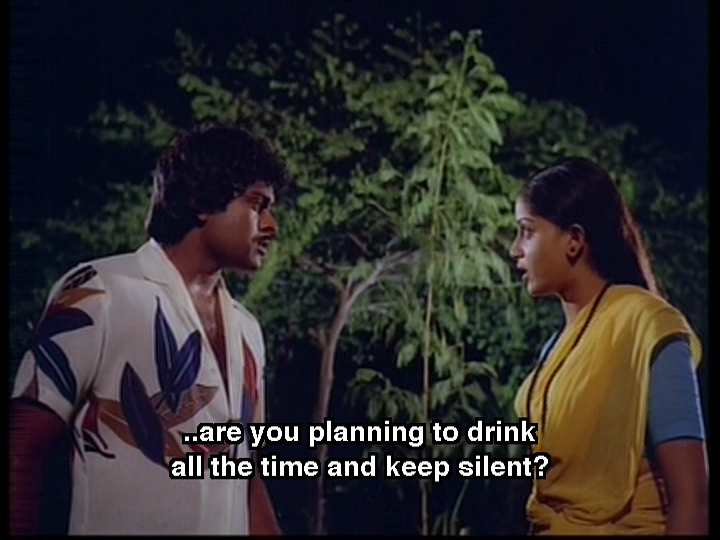
Once Dilip realises the extent of the illegal activities and his father’s role in the shady doings, things start to get nasty. He is thrown out of home, his relationship with Rekha is threatened as her father coerces her to give up Dilip, and there is much drinking and crying.

When Dilip is framed for Shivam’s murder, Chiru dials up the heroics as he becomes a furious young man and makes his enemies sorry they ever crossed that line.

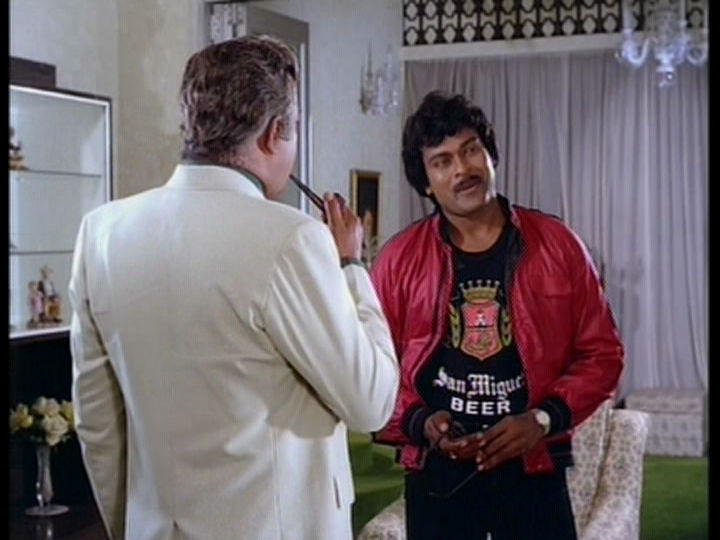
Chiranjeevi is very good as the showy Dilip who brings back expensive gifts and spouts some terrible English dialogues. He manages to be vain and likeable and the transition from easy confidence to anger and hurt betrayal is excellent. He is deliberately cheesy in some romantic scenes, adding a comic spark,  but brings genuine warmth and pathos when it is needed.

Oh those outfits make me weep, especially the poor backing dancers. But look at Chiru go! He dances up a storm and is handy in a fight. No wonder the ladies are lining up!

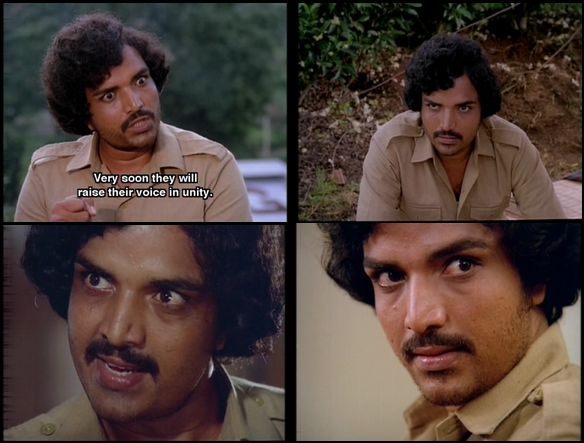
Sivakrishna has one expression for 80% of the film but since he plays an angry young man that works well enough. Allu Ramalingaiah is Varahamurthy, the comedy religious advisor who abets Rao Gopal Rao in his schemes. Varahamurthy has his own ideas about marrying his son Chalpai off to rich and lovely Rekha, while Chalpai has the hots for a voluptuous local girl. Those shenanigans constitute the comedy side plot and aren’t quite as painful as they might have been, although I did forward through most of it on a re-watch. Annapurna plays the mysterious mute woman who holds the key to a tangled family saga. Her revelations relieve Dilip of his sense of familial loyalty, and make him determined to bring his father and cohorts to justice.

Vijayashanti is beautiful as simple village girl Radha. She loves Dilip and has a fair number of song induced fantasies about their love. But she is a sensible and nice girl who doesn’t let romantic notions carry her away. Radha is committed to her family and to doing the right thing, and doesn’t hesitate to call Dilip on his weakness when he is wallowing in drunkenness. When she sees that rich Rekha is more Dilip’s type Radha has a talk to herself and decides she has to move on. See? Sensible.

Nalini gets less emotional range but more hideous fashionable outfits as Rekha. Rekha is pretty, a bit spoilt, but once she decides Dilip is The One, she doesn’t back away without putting up a fight. Literally – check her out in this clip.

Nalini is good but didn’t make as strong an impression as Vijayashanti despite the biffo.

K Chakravarthy provided a range of songs that suited the mood and the characters. Radha and Dilip have more traditional duets while Rekha gets a more Westernised treatment. The choreography is energetic and certainly suits Chiru who gives it his all.

I love watching that song. It comes at a high point in the story and what I really enjoy is the slightly ragged energy that makes it look like people were having fun dancing and not just thinking about it as a scene.   

The interior sets are quite fabulous. Someone on the team decided that more is more in some cases, and I enjoyed playing ‘name that knick knack’ or ‘spot the repo old master’. The dedication to clashing patterns is also quite noticeable.

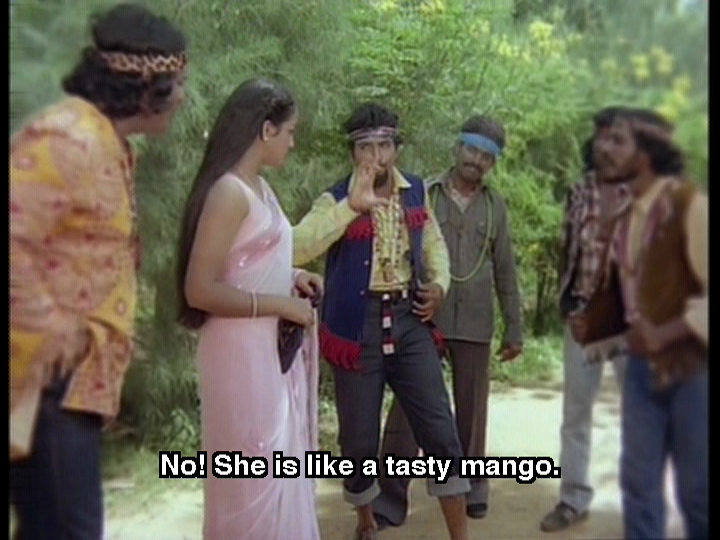
The western costumes are very 80s while the rowdies dress like a blind costume designer’s hippie fantasy.

One of my few quibbles with the film is that, as a result of what I assume is slacking off by the footwear team, Dilip often wore a pair of quite drab brown ankle boots that just didn’t go with his outfits.

The plot is quite cohesive and the lead characters are engaging.  Occupational health and safety, security for families of workers, a fair go and collective bargaining are things I have an interest in, so while this is very filmi it does throw some ideas around. Issues are explored in conversations, but nothing too heavy. The actors deliver good performances with the right balance of craziness and heart. Director K Murali Mohana Rao keeps things moving along and the story plays to Chiranjeevi’s strengths. 4 stars!