Midhunam (2012)

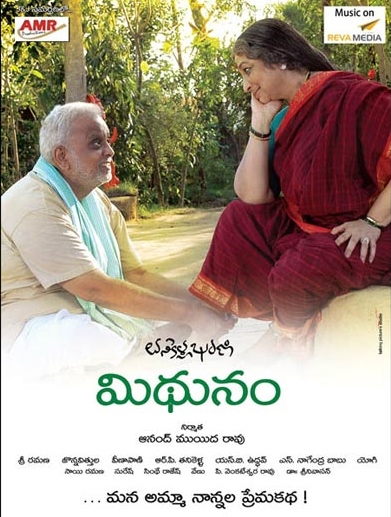
Midhunam Poster Over the past few years of watching Telugu films I’ve seen Tanikella Bharani on-screen in many roles, but most usually as the sensible father or responsible authority figure providing support to the hero or heroine. He appears as such a natural actor and fits those roles so well that I was surprised to find out that he is also an accomplished writer, dramatist, poet and now film director. In Midhunam, Tanikella Bharani has adapted a short story by Sri Ramana, writing the screenplay and dialogue and also directing the film. It’s a lovely little story about an elderly couple living alone in the country that focuses on relationships and shows that love doesn’t fade with the passing of time. It’s rather unusual in that there are only two actors for the whole two hours, and the film concentrates on their day to day activities and interactions without any momentous dramas or major events. It’s beautifully done, and is well worth a watch for a well-drawn picture of a happy marriage and a glimpse of rural life.

Appadaasu (S.P Balasubrahmanyam) and his wife Buchchi (Lakshmi) live by themselves on a small farm in the country. They have five grown up children who have moved to the USA but who keep in contact with their parents by phone. The couple seem to prefer their solitude and isolation, with Appadaasu shouting at a persistent caller who keeps knocking on his door, and yelling at his son down the phone when he calls unexpectedly. Buchchi on the other hand does seem to miss her children, but doesn’t have any wish to move away from her home despite the hard work it takes to keep everything maintained. She keeps a mobile phone hidden in one of her pots in the kitchen to talk to her children without her husband’s interference, although this seems more to be a way of outfoxing her husband rather than actually something that is completely necessary.

The couple squabble incessantly about literally everything, but their arguments seem to be more as a result of knowing each other too well and being very comfortable with each other rather than from any genuine acrimony. They are like small children, pushing at each other until they get a reaction, but not taking any of it too seriously. It feels comfortable and natural, just like any married couple after a number of years together. There is also a lot of laughter as they play tricks on each other and each tries to get the upper hand. Buchchi seems to be the more sensible one but she strands her husband on a top shelf by removing the ladder so that she can make coconut chutney in peace, and teases him later on by dressing a scarecrow in his clothes. Their love for each other shines through all of the bickering and teasing, and is the central thread around which everything else is woven.

Appadaasu is a man who takes his food seriously and much of the film is either about growing food, the preparation of food or eating.

The couple harvest everything they need from their farm, and they have impressive crops which do look very appetising. In fact the major focus on food might be one of the reasons why I enjoyed this film so much! At one point one of the sons proposes that the family come home for a wedding, and Buchchi immediately starts cooking enough food to feed an army. This is accompanied a song which celebrates pickles amongst many other traditional foods and is just mouthwatering!

There is an old radio on the wall and the programs and old songs are incorporated into the film, adding to the story. Both Appadaasu and Buchchi have conversations with their cow Savithri, who is almost a third member of their family and serves as a sounding board for some of Appadaasi’s ideas.  In between all the cooking and eating, Appadaasu expounds his philosophy that retirement from his teaching job doesn’t mean that he doesn’t work. He makes sandals, cleans cotton, throws pots and does a myriad of other tasks that emphasise his practical nature and willingness to do whatever he feels his wife wants. Actually asking and doing what his wife really wants naturally isn’t an option, and Buchchi makes sure that Appadaasu knows when he’s missed the point completely.

S.P.  Balasubrahmanyam is perfect in the role of Appadaasu. He’s cheeky and mischievous but also appears suitably serious when necessary. His expressions are wonderful and he fits the part of a cantankerous but loving husband perfectly. Lakshmi is also well cast as Buchchi and is the ideal partner for S.P. Balasubrahmanyam. The two have great chemistry together and the rhythm of their dialogue sounds as if they really have been together for years. That’s down to some good writing too, but the body language, delivery and tone from both actors ensures that they do appear to have grown old together and are very familiar with each other as a result. The use of older songs helps set the mood of the story, as does the beautiful location and wonderful farmhouse. I’ve just spent a week staying at a farmhouse near Tanjore, and much of the décor was just the same as my own recent experience. The film feels authentic due to this and many other small touches which is part of why it works so well. The cinematography by Rajendra Prasad Tanikella (a relative?) is also outstanding with beautiful use of light during the night scenes and great shots of the farm and surrounds.

This is a sweet film that simply follows the ups and downs of life for an older couple and shows how a marriage might be after more than 50 years together. It’s charming and yet meaningful with the contrast between Appadaasu and Buchchi’s life and the imagined lives of their children overseas just one of the ideas explored. There is jealousy, anger, forgiveness, tenderness, love and sacrifice, all mixing together to add colour and life to the description of a successful partnership and just what that partnership really means. A beautiful film that deserves a wide audience. 4 stars.
Ramayya Vastavayya (2013)

Ramayya Vasthavayya

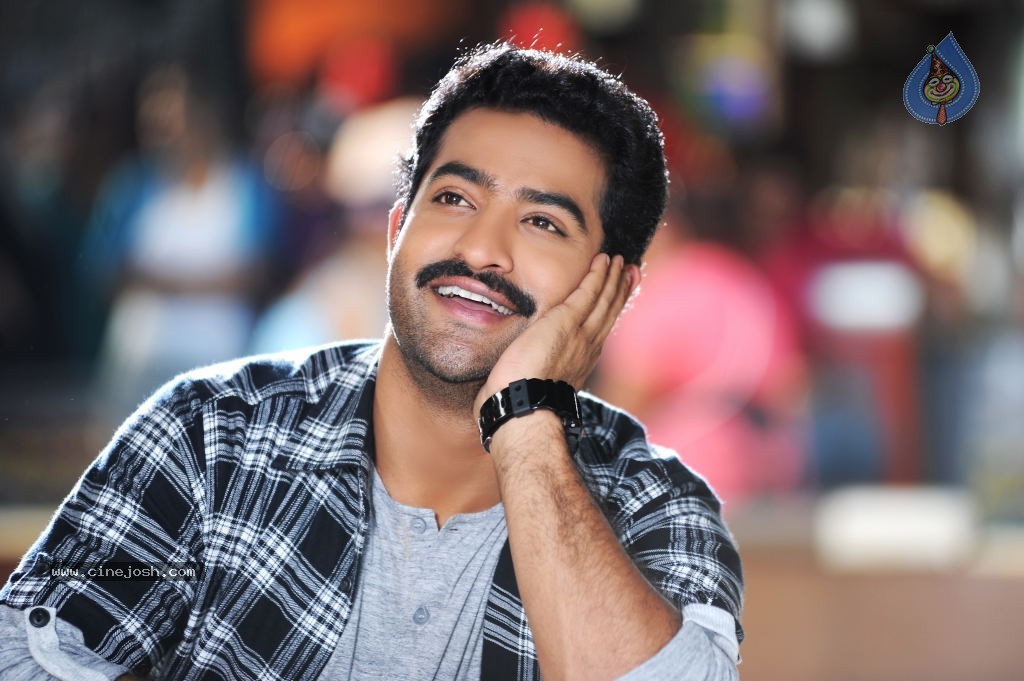
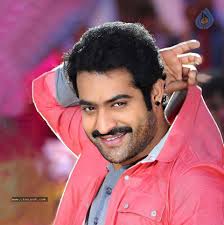
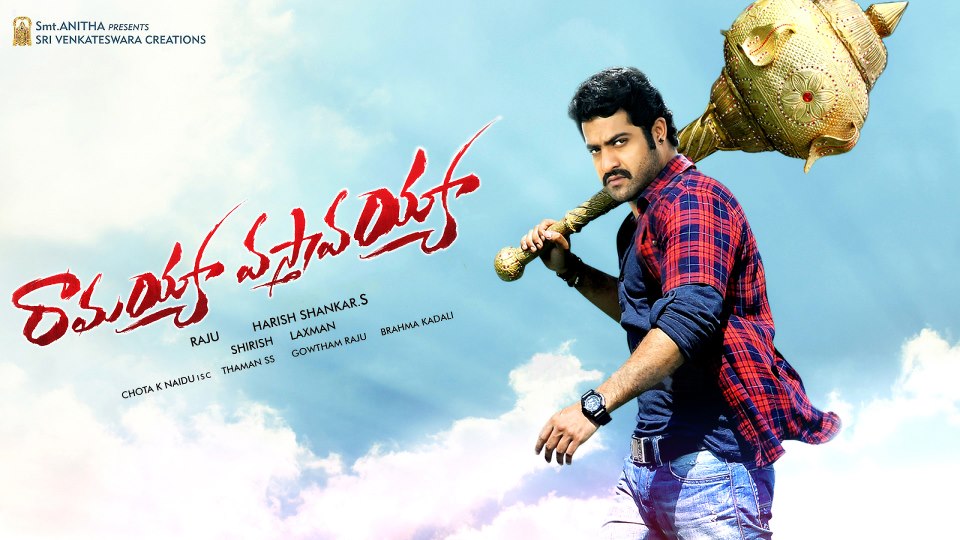
It seems like a very long time since the last NTR Jr. film and since I read some speculation about Tarak’s ‘new look’ I was interested to see exactly what Harish Shankar had come up with.  However the ‘new look’ is really just the old look, except for the odd moment on horseback which I admit was pretty cool.  And there were some groovy new shades.  But otherwise Ramayya Vastavayya sticks to the same old formula with the usual faces reprising roles they have played a million times before. Ultimately not even the actors seem to be able to rustle up much enthusiasm and although Tarak and Samantha both work hard and deliver good performances, the film is still let down by the clichéd storyline and stereotypical characters.

Ramayya VasthavayyaRamayya VasthavayyaRamayya Vasthavayya


The first half of the film is generally entertaining since it focuses on the developing romance between Nandu (NTR Jr) and Akshara (Samantha).  The romance aspect was perhaps enhanced by the fans behind throwing rose petals along with the usual strips of paper, but at least it made for a pleasingly more fragrant trip back to the old Chinatown cinemas in Melbourne.  As I’ve come to expect (yawn), Nanu sees Akshara one day while hanging out with his buddies at a coffee shop and falls instantly in love.  Akshara is not quite so sure and the ensuing comedy as Nandu tries to win her heart with a variety of schemes is amusing enough to overcome the usual discomfort of the’ stalking = true love’ theme.  

 Ramayya VasthavayyaRamayya Vasthavayya

Rohini Hattangadi pops up as an aunt of some sort to Akshara and her older sister and although her role is small and fairly gratuitous she still steals the limelight every time she appears.Presumably to appeal to a wider audience, there are numerous references back to classic films, the most blatant being Tarak’s entry scene.  Most of these are fairly obvious and seem contrived to ‘fit’ into the storyline, and I’m sure there are more that I missed (hopefully more subtle) by not understanding the dialogue.  

Samantha looks gorgeous and there is only one attempt by the notorious Telugu shoe designer to make her look ridiculous so I’m presuming she must be a favourite with wardrobe.  However, Akshara is a standard Telugu heroine, whose only purpose is to make the hero look good and is otherwise completely one dimensional, which seems a complete waste of Samantha’s talents. Still, she does get to dance and there is good chemsitry between Samantha and NTR Jr. which makes their interactions more enjoyable to watch.

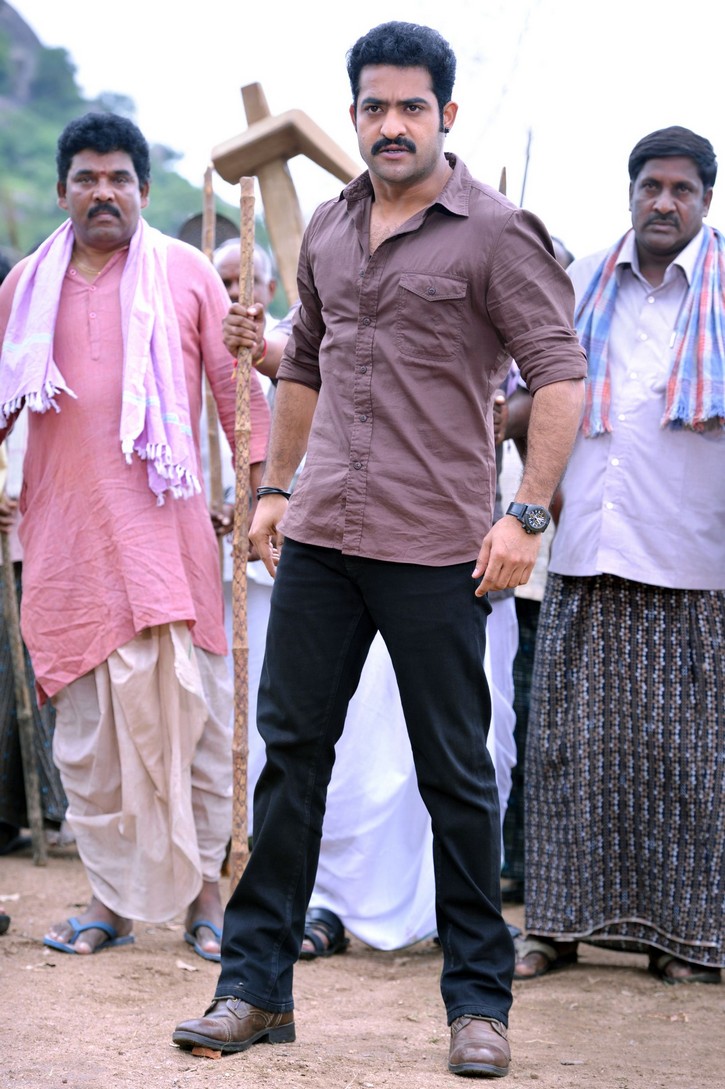
Tarak’s Nandu seems a fairly typical hero – there are the requisite commanding dialogues laced with a modicum of modesty and comedy, excellent dancing skills and the ability to defeat numerous opponents by the mere flexing of a muscle or two accompanied by a snarling grimace.  As always, Tarak delivers exactly what is expected of him with plenty of animation and charisma, but since he’s playing the same character he has played in his last few films it feels stale and completely predictable.  The only really up side are the songs which feature better than usual choreography and excellent dancing from both Tarak and the backing dancers.  I loved the addition of spectacles as part of the costumes for one of the songs and the music by S. Thaman was generally catchy and effective, and at least better than the recent crop of new releases.

Ramayya Vasthavayya

After the interval, Nandu moves on from bouncing people off wall, floors and sundry items of furniture to hacking people apart with increasingly bloodier and even more poorly choreographed fight scenes.  I’m not sure who is responsible for the action for Ramayya Vastavayya, but they seem to have taken inspiration from episodes of Tom and Jerry rather than anything that remotely resembles a feasible fight scenario.  The gore content rises but it’s so ridiculous that even the various severing of limbs has little impact, particularly since the fights are so obviously staged and formulaic to begin with.

Ramayya Vasthavayya

The second half also moves the action to the countryside for Akshara’s sister’s wedding and attempts to explain the antipathy between Akshara’s father Nagabhushanam (Mukesh Rishi) and two assassins (Ajay – yay!) who tried to kill him at the beginning of the film.  This involves a lengthy flashback with Shruti Haasan as Nandu’s previous fiancée Amullu, but it’s dull, overlong and Shruti and NTR Jr. have absolutely zero chemistry together.  To make matters worse, P. Ravi Shankar appears as a stereotypical evil and lecherous politician with mannerisms straight out of the ‘Villains for Dummies’ handbook and, inevitably, Kota Srinivasa Rao appears as his equally evil father. Doesn’t he ever get tired of playing the same role?  Adding to the stereotypes, Tanikella Bharani appears as Amullu’s father, Saranya Ponvannan as her mother and M.S. Narayan briefly appears in a throwaway role which adds absolutely nothing to the plot.  Harish Shankar tries to evoke American crime shows by tying together moments from the first half with explanations later in the film, but it looks clumsy and is generally ineffective.

Ramayya VasthavayyaRamayya Vasthavayya

Ramayya Vastavayya disappointingly doesn’t cover any new ground and Harish Shankar sticks to a very well-worn formula without adding anything novel.  With such a tired screenplay and an abrupt change of pace in the second half, it’s really only the songs that appeal despite generally good performances from the actors.  NTR Jr. is as good as ever, but even with his energy and the appeal of two heroines Ramayya Vasthavayya is really a film solely for the fans.  Still, it’s worth watching at least once for the dancing, which is excellent and much better than the film deserves.

Cameraman Gangatho Rambabu

CGRCameraman Gangatho Rambabu sees Puri Jagannadh teaming up again with Powerstar Pawan Kalyan for a tale about one man’s crusade against corrupt politicians with a little help from sidekick Cameraman Ganga.  I first saw CGR in the cinema without subtitles, but since the audience seemed to be appreciative of the dialogue I thought it might improve the film if I could understand what was being said.  And to some extent the DVD subtitles do help, although they also serve to highlight the silliness of the female lead character and a general condescension towards women throughout the story which is less enjoyable.  CGR is a straightforward good guy vs. bad guys story which relies on the Power Star’s presence to keep the action ticking along, but there are a few good fight scenes and some well written interactions between Pawan Kalyan and Prakash Raj in their respective roles which make it worth a watch.

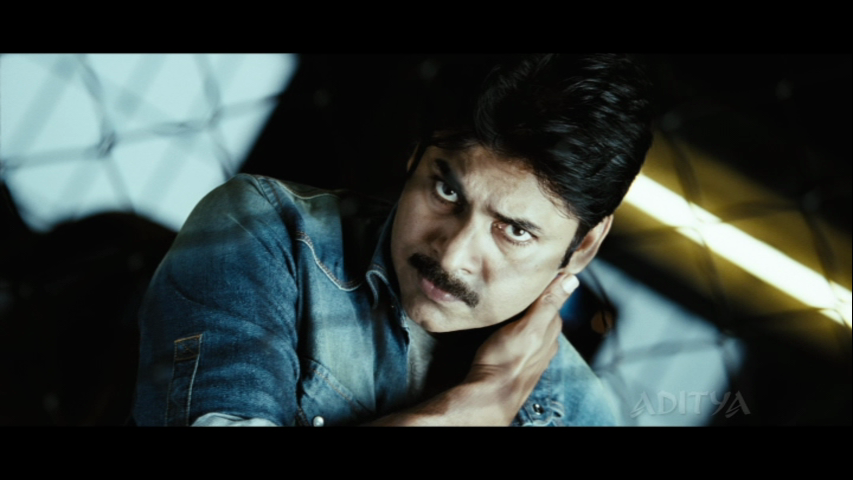
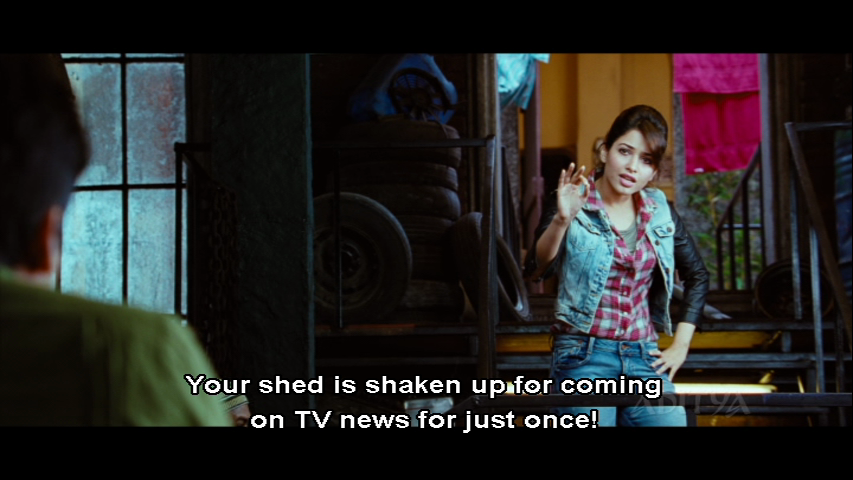
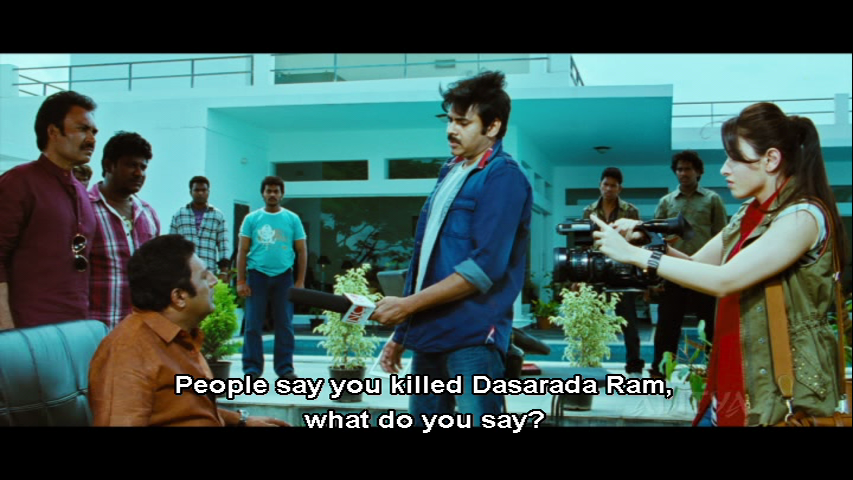
CGRCGRCGRCGRRambabu (Pawan Kalyan) is a mechanic who has superhero tendencies to fight crime, a large mural of Che Guevara on his apartment wall and an idealistic view of a utopian world which he tries to make reality.  To that end he races off to beat wrongdoers into submission whenever he hears of injustice or petty crime on the news and provides assistance to widows, orphaned children and marginalised members of society whether they want it or not. Rambabu’s determination to break up a fight between two rival student groups leads him to feature on the news himself and brings him to the attention of cameraman Ganga (Tamannah).  After a brief meeting, Ganga decides that Rambabu would be perfect as a journalist and despite a conspicuous lack of any training, her station head agrees wholeheartedly giving Rambabu carte blanche to do whatever he wants as a reporter on the news channel.

CGRCGRCGRCGR

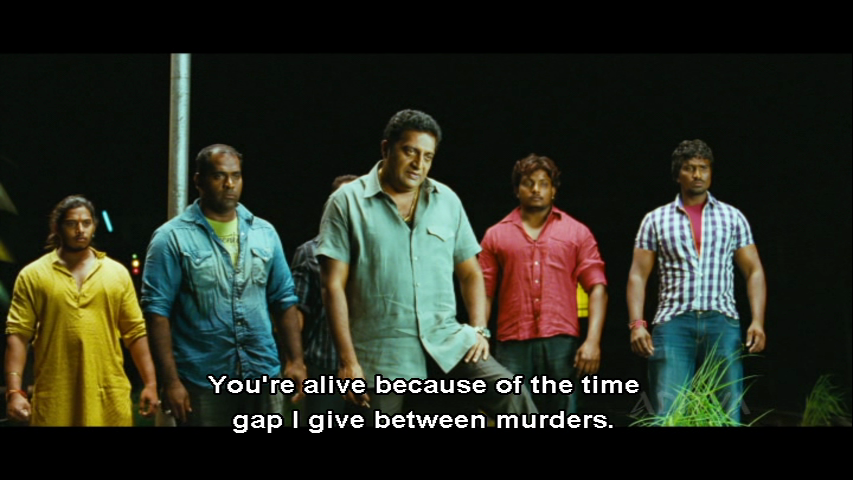
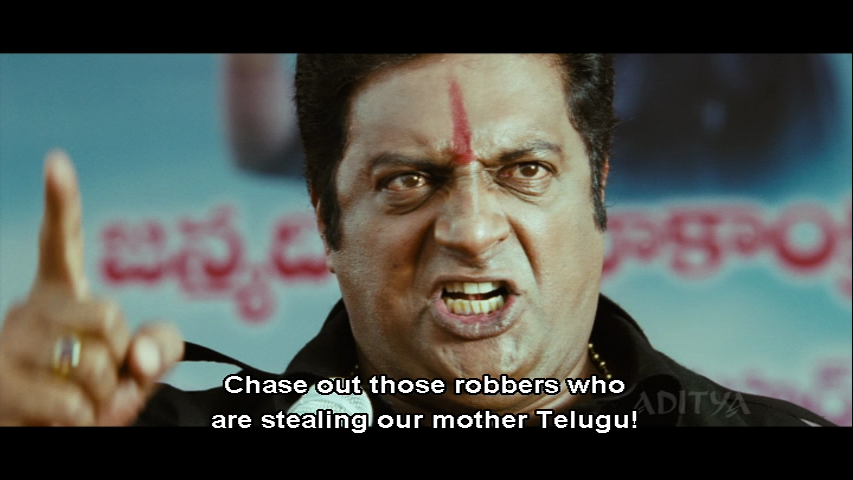
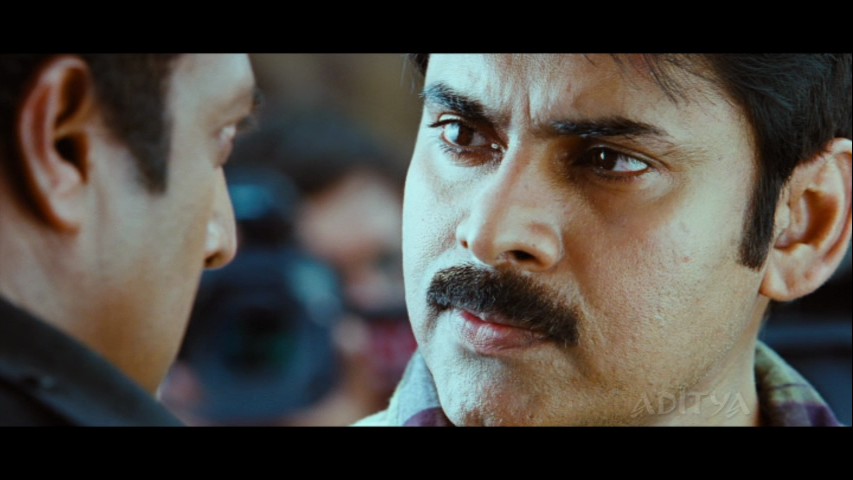
Inevitably this brings him into conflict with politician Jawahar Naidu (Kota Srinivasa Rao) who is prepared to do anything to win back the role of Chief Minister from the incumbent Chandrasekhara Reddy (Nasser).  This looks promising, but since both politicians are one-dimensional caricatures of absolute black and white they end up as rather ineffective characters.  Jawahar Naidu is evil with no redeeming features, prepared to murder, lie and cheat his way back into power while Chandrasekhara Reddy is painted as the perfect CM who is kind, compassionate and honest although at one stage he does confess to an ambition to hang onto his top spot.  Added in to the mix is Jawahar’s equally amoral son Rana (Prakash Raj) who takes over his father’s manifesto when Jawahar suffers paralysis and has to withdraw from active campaigning.  The real battle is the one that develops between Rana and Rambabu and the scenes between these two are generally the best in the film.  Prakash Raj is excellent as he sneers and schemes his way to political success and Pawan Kaylan is zealous and righteous in appropriate amounts as he counters Rana’s various plots.

CGRCGRCGRCGR

Tanikella Bharani also puts in an impressive performance as Jawahar’s brother-in-law and right hand man. He is obsequious and just a little bit creepy as he fawns over Jawahar while making sure that self-preservation is still his number one policy. I also have to mention the excellent décor in Jawahar’s house which was beautiful and made a welcome contrast to his bombastic, over-emotional and over-acted speeches.

CGRCGR

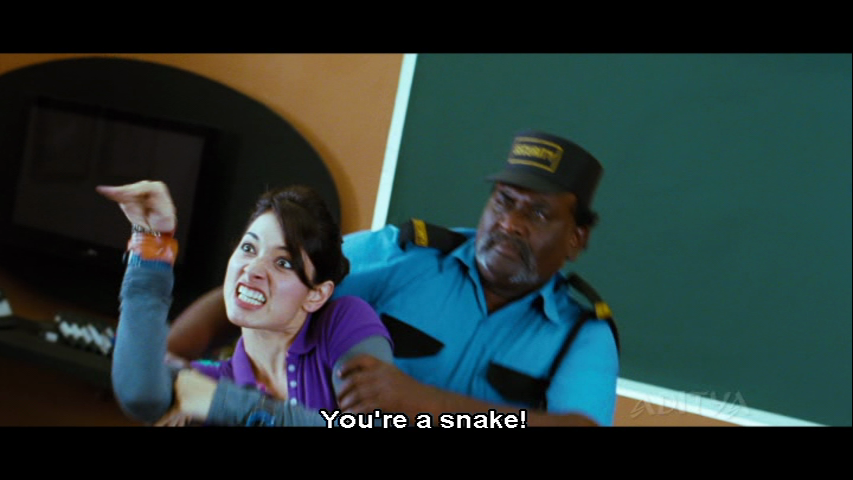
What don’t work as well are the interactions between Rambabu and his various work colleagues including Cameraman Ganga.  Although Ganga has equal billing on the title, in reality the character is only peripherally involved with the action of the story, and her main role is in a rather clunky romance with Rambabu.  Ganga is bratty and immature and her hearty attempts to appear as a “woman in a male dominated career” are unimpressive and implausible.  Her reaction to her rival Smitha (Gabriela Bertante) is also rather too ingenuous although I like Ganga’s accusation that Smitha is a snake.  Smitha does show a number of snaky characteristics but sadly that’s as far as any possible naga connection goes.

CGRvlcsnap-2013-05-28-07h09m45s220

 Smitha is the owner of a rival TV station who snaps Rambabu up when Jawahar forces him out of the news channel. Although I liked the overall idea of Smitha’s character and was hoping for a sharp, slightly unethical businesswoman to add another layer to the plot, the execution failed miserably and Smitha’s character was wasted as basically another love interest.

Ali appears as the head of social interest at the TV channel and there are some inane attempts at comedy which fall very flat.  Later comedy scenes with Brahmi are better, although the placement of some of these seems odd as they break into the action and slow down the film momentum just when it begins to take off in the second half.   The music by Mani Sharma is also nothing special but isn’t helped by lacklustre choreography.  Scarlett Wilson appears in a forgettable item number while the other songs are mainly pictured on Tamannah and Pawan Kalyan.  However this one featuring Gabriela is a little more interesting, since she does get to wear a large hat which seems to fit rather well with the giant mushrooms in the background and I think does help reinforce the snake connection.

The opening titles over news reels of various marches, speeches and events suggests that CGR will be a political thriller, but instead it’s a standard mass movie which doesn’t manage to break out of the usual mould.  There are some good ideas in here but the film needed better editing as it’s too long with too many irrelevant side issues which detract from the main story.  The inability of corrupt politicians Jawahar and Rana to make effective comebacks when questioned by Rambabu feels very contrived since surely politicians should be excellent wordsmiths – or at the very least have PR people who can write their speeches and stop them from speaking out of turn, while Nasser’s Chandrasekhara Reddy is improbably perfect .  The characterisation of Ganga is also irritating and Tamannah is capable of much better than this overacted and disappointing performance from her.

Cameraman Gangatho Rambabu works as a mass masala film, not as a political message movie despite Rambabu socialistic tendencies,  and as such the performances by Pawan Kalyan and Prakash Raj ensure that it’s entertaining enough for a one-time watch. It just could have been so much better. 3 stars.

CGR