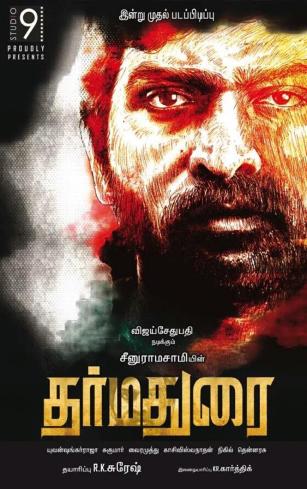
Dharma Durai (2016)

Dharma Durai poster

Seenu Ramasamy’s Dharma Durai tells the story of a doctor from a small village, his highs and lows and his final redemption through the love of a good woman – of course! The film has a slow start and even after the main character is established the pacing is occasionally uneven and erratic, but it has excellent performances from the main leads, a good story and plenty of thought provoking themes around social justice, caste, dowry and responsibility. However, it’s not as nearly as heavy as that sounds and even though the story is about an alcoholic, there are plenty of light hearted moments making the film an overall entertaining as well as a thought-provoking watch.

The film starts in the village where Dharma Durai (Vijay Sethupathi) roams around making a nuisance of himself, mainly to the embarrassment and general detriment of his brothers. Dharma is an alcoholic which explains his rather erratic behaviour, although it did take me a while to realise that alcohol addiction was the problem. It’s not immediately obvious and Vijay Sethupathi is subtle in his portrayal of a drunk, so it’s not until a village event that the full extent of his alcoholism is made clear.

Dharma accuses his brothers of cheating the villagers with the chit fund they run and seems intent on making life difficult for them, to the extent that I started to sympathise with the family, even though their method of dealing with Dharma is fairly extreme. The brothers decide to lock Dharma up in a shed until they can decide what to do with him, and the signs are clear that Dharma is not destined for a long and happy life. Dharma’s only well- wisher is his mother Pandiyamma (Radhika Sarathkumar) and in classic filmi style she arranges a way for him to escape his temporary prison.

Once he escapes the village, Dharma goes back to Madurai and the medical college where he had studied to become a doctor. The film moves into flashback as we relive Dharma’s years as a student and his romance with fellow student Stella (Srushti Dange). I would love to know if medical students in India really do wear white coats and stethoscopes round their necks all the time. It seems odd to me but at least means that they are easy to recognise as medical students rather than trainee engineers or something else entirely!

Dharma is a good student despite a tendency to spout poetry at the least provocation, and ultimately he follows his professor’s advice to return home and work for the village. After all, it’s the common people who have paid for his degree so he is morally obligated to go back and serve these people. The ethical message here is hammered home a little too much, and the students are all somewhat unnaturally altruistic, but overall the flashback is a pleasant interlude that shows Dharma is a much better light and starts to explain his past.

Back in the present day Dharma tries to track down his old friends – Stella and her friend Subhashini (Tamannaah) who also had an unrequited crush on Dharma. These were the last people he felt who really cared about him, and eventually he does manage to meet up with Subhashini and relates the series of events which led to him becoming an alcoholic.

This is the best part of the film and the flashback to the love story between Dharma and villager Anbuselvi (Aishwarya Rajesh) is beautifully done. Aishwarya is easily the best of the female leads and her characterisation of a farmer’s daughter is simply perfect. Anbuselvi is more than she first seems and it’s no surprise that Dharma is immediately smitten. Vijay and Aishwarya have wonderful onscreen chemistry and Sukumar’s excellent cinematography makes this golden time appear even more radiant as the two romance each other through song.

What makes Dharma Durai interesting is the clash between new and old. Dharma is college educated but comes back to his old village to work as he feels that is his duty. But once back at home, his modern ideas don’t sit well with his brothers’ ideas of caste and dowry and that leads to the serious conflict between them. There is also the contrast between Dharma’s old love – the beautiful and traditional Anbuselvi, and his new romance with the more modern and well educated Subhashini. Subhashini has a shiny new medical clinic of her own, but also has an ex-husband to deal with and her own share of past issues that make it difficult for her to reach out to Dharma. The only real downside to the story is the contrived and unlikely method that Seenu Ramasamy uses to get Dharma back to the village at the end. It’s all a little too far-fetched and unlikely, but why should we let any of that get in the way of a good ending!

One other issue is that the story has a few too many stops and starts as it moves from one portion of Dharma’s life to the next and as a result not all the scenes flow smoothly. The moral messages tend to be over-emphasised which also slow down the narrative and move attention away from the characters. However, once the camera is focusing on Dharma and Anbuselvi, or Dharma and Subhashini the film comes alive again and draws us back into the story. Vijay Sethupathi is wonderful throughout, and his Dharma is the absolute essence of a village boy done good for most of the film. Tamannaah is also excellent as Subhashini, although she doesn’t click quite as well with Vijay as Aishwarya, but her depiction of a career woman with a very definite set of values is nicely done. Radhika Sarathkumar is very good as Dharma’s long suffering mother while Rajesh makes a brief but notable appearance as the college professor. The portrayal of village life and a rural clinic is also very well done – I’m sure that I have seen many of those patients in my trips into rural Tamil Nadu on a health camp each year, which probably adds to the whole authentic vibe I got from the film.

Dharma Durai is an interesting story that just needs a little tighter editing to move proceedings along more consistently. The songs are good, the cinematography excellent and both Vijay Sethupathi and Aishwarya Rajesh are on top form, making a perfect match. Worth watching for their performances and for Tamannaah Bhatia and the rest of the cast who all do their part in bringing this fascinating slice of village melodrama to life.
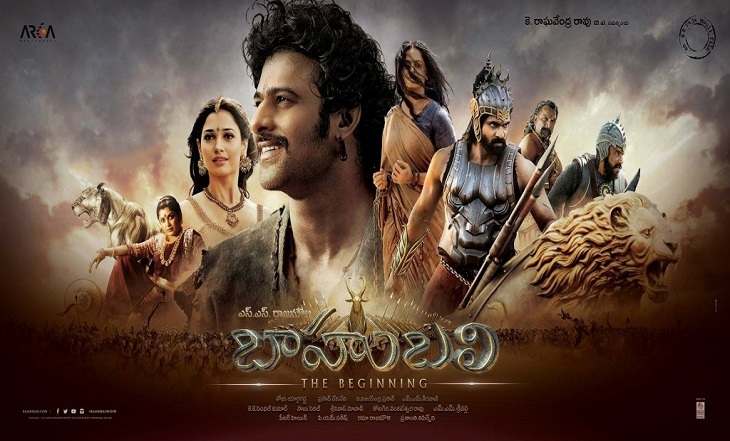
Baahubali

Baahubali-Poster

Baahubali is reminiscent of classics like Patala Bhairavi and Gulebakavali Katha, with long lost princes, secluded kingdoms, stunning visuals and swashbuckling action. Rajamouli builds steadily to the cliffhanger climax with some fun, flirting, fighting and flashbacks along the way.

A baby is saved by the sacrifice of a majestic woman. He grows up happy and ignorant in a small village, but is always drawn to the high mountains. He tries to scale the massive waterfall to reach the peaks but always fails. Until one day a vision of a beautiful woman leads him to success and he stumbles into the kingdom of Mahishmati. Grown up and frequently shirtless Shivudu (Prabhas) meets his dream love Avanthika (Tamannaah). She is a warrior on a mission to rescue Devasena (Anushka Shetty), held captive for over 25 years by ruthless king Bhallaladeva (Rana Daggubati). Bhalla hates Devasena because she once chose his rival, the legendary Baahubali. And Shivudu is the very image of Baahubali. Hmmmm.

The majestic woman was Sivagami, the queen mother, played by the stunning and regal Ramya Krishnan in an extended flashback.

I was so excited to see her in the cast, and even more so that she has a substantial role. Sivagami is reasonable but ruthless, her eyes blaze with power, and her word is the law. She rules the kingdom and Ramya Krishnan commands every scene she is in. Sivagami has a nice dynamic with Kattappa (Sathyaraj), her enforcer and bodyguard. Sathyaraj doesn’t need a lot of dialogue to build a strong characterisation, and as the story unfolds Kattappa becomes more complex and ambiguous. This royal family has some baggage.

There is always a point where a Telugu film hero pushes all others aside so he can do the hero-ing. I quite liked that when Shivudu tells Avanthika that her dreams are now his so he will go free Devasena for her, he actually had no skin in the game and really was doing it to help her. Sure, he had had some run ins with the kingdom guards but he didn’t know who he was or that he might have a more personal interest in the outcome. Avanthika drugged him to give herself a head start and he didn’t reproach her for that either. It was more of a partnership, with Shivudu acknowledging that she wasn’t going to give up just because she had been distracted by his flexing.

Baahubali-Tamanna

I have high hopes that by the time the second movie starts Avanthika’s ankle is healed and she will resume arse-kicking, and will be motivated by having something to fight for rather than a cause to sacrifice herself for. I also liked that Avanthika’s nihilism was displaced somewhat by an appreciation of beauty and her acceptance of love even if it is a filmi cliche.

The subtitle team gave Shivudu an unexpectedly genteel aspect as he frequently said things like ‘oh my!’ and ‘oh my goodness!” which didn’t seem all that warrior like. Prabhas is so genial and his dialogue delivery sounds a bit too modern and mumbly for a genre piece, but he totally commits to the role and does the best dance-fight-makeover I have seen. While I objected to Avanthika being forcibly partially stripped (mostly due to the inclement weather), I did appreciate that Shivudu had a steady hand with the eyeliner. And that Rajamouli had Prabhas cavorting under a waterfall as much as Tamannaah did. Prabhas and Tamannaah make a nice looking couple but I am more interested in seeing how their story ends.

Rana was very impressive, both for his ye olden days shirtless physique and his performance. Rana gave Bhallaladeva enough smirking nastiness to be delightfully hateful but also showed he was a smart and fearless warrior who legitimately had reason to expect he could be king. Bhalla might not go out of his way to remove Baahubali, but he would take advantage of a situation if fate presented. His scenes with Devasena were imbued with the weight of years of brooding and venom and he declaimed the spiteful dialogue with fiery precision. Anushka gave as good as she got so I am looking forward to their backstory being developed in the next film and seeing a bit less of her dodgy weather-beaten makeup.

Baahubali-Kalakeya

The Kalakeya are Ooga Booga natives complete with dodgy “tribal’ accoutrements, falling somewhere on the Mad Max to Lord of the Rings tribal baddies spectrum. They presumably can’t speak Telugu because they are Orc-ish, and I guess choosing another regional language would have opened up various cans of worms so the faux Bushman-esque dialogue may be a smarter workaround than it seemed.

The action scenes are awesome and the final battle is truly spectacular. While there is a heavy reliance on war machines and fancy armaments (I loved Bhalla’s Lawn Mower of Death), the stakes are still very personal. Kalakeya tries to stop Baahubali by literally throwing more people at the problem. It’s a cheesy idea played totally straight and it just about took the roof off the theatre when Baahubali emerged from under the pile of bodies.

The production design is beautiful and this is well worth seeing in a cinema just for the gorgeous fairy tale design and for all the things. The waterfall! The CGI is sometimes clunky but it does create the right impression even if specific moments are not seamless. I am not sure what I think about the watermark that appeared on screen whenever a CGI animal was in the shot. I wasn’t fooled for a second by the bull that Rana wrestled but I admit I was paying more attention to his shoulders than the bovine opponent. A fight scene in the ice and snow is poetic and deadly like a masala-fied  Zhang Yimou, and the subsequent toboggan escape is pure Bond. There were about 20 shoemakers credited in the end titles. After some discussion Heather and I decided that it must be hard to make shoes that don’t look like shoes but that still do the trick. Bravo cobblers! Take a bow goldsmiths!

MM Keeravani’s soundtrack left minimal impression on me as I was caught up in the story and visuals. The item number Manohari was a stand-out; sensual, saucy, and a bit silly. The girls got handsy with Prabhas as as lots of drunk guys swayed past on ropes or acted as platforms for the ladies. He was more like a prop for the girls, and they used his lanky frame to excellent effect.

Rajamouli has a knack for casting. I’d never thought of Sunil as a leading man but Maryada Ramanna proved otherwise, and we all know the real star of Eega. Casting Ramya Krishnan as Sivagami is genius, and while I was slightly disappointed that Anushka had so little time on screen in this first film I am very VERY excited about seeing her character in the finale. The support cast are all pretty solid and the multitude of characters are distinct and memorable from Shivudu’s villager family to the minor royals and the forces out to liberate Devasena. Oh, and Rajamouli himself, finally venturing out of the end credits and into the main film.

SS Rajamouli has a great sense of how to translate narrative into visuals and how to build the world he needs to tell his story. Baahubali is truly grand and still totally masala, true to its Telugu roots. See it!

Heather says: Baahubali is an epic film in every sense of the word and I loved every minute! It really is sweeping fantasy adventure on a gigantic scale and I will need to watch it again (and again!) to fully appreciate all the amazing detail. From the sheer immenseness of the towering waterfall in the opening scenes and the lavish Kingdom of Mahishmati to the delicate design of the jewelry and everything in between, the film looks amazing – due no doubt to the cast of thousands mentioned in the end credits. But it’s not just a visual spectacle, as Rajamouli breathes life into a classic mix of mythology and folklore to provide an entertaining and captivating story, naturally along with a good dash of derring-do and plenty of flexing of muscles!

I’m a big fan of Prabhas and he really came into his own once he got a sword in his hand. I was quite impressed by his rock-climbing technique too, although he did seem to miss a few good cracklines that might have made his ascent somewhat easier. However it’s not all just about the muscle flexing, and Prabhas does have plenty of likeable charm throughout and adopts a suitably commanding presence on the battlefield. Rana was every bit as good and he seemed to relish the occasional ambiguity of his character even while embracing the dark side.As Temple mentions, Peter Hein’s action is excellent on every level, and the epic battle scene in the second half is simply superb. I prefer to think of Bhallaladeva’s device as the spinning scythes of doom, perhaps betraying my love of LOTR, but there is plenty of other weaponry to make my inner fantasy nerd happy.

Rajamouli is also to be congratulated for including four strong female characters who all have important roles to play in the story and who don’t fade into the background when the hero appears. Ramya Krishnan surely must have the best eyes in the business and her imperial mannerisms were perfectly delivered. I think I need to adopt her attitude for my lectures – my word is the law! Great also to see Tamannaah’s warrior role wasn’t just an excuse to let her run around in skimpy attire and wave a sword, inappropriate winter clothing aside. She did get to do some real fighting and looked appropriately fierce when required. Like Temple I was disappointed in Anushka’s make-up but I’m definitely looking forward to learning more about her character and Sathyaraj’s excellent Kattappa in the conclusion. With amazing production and excellent performances from all the cast, plus Rajamouli’s legendary story telling skills, Baahubali is not to be missed. Just make sure you see if in the cinema for the full effect. All I can add is roll on part 2!

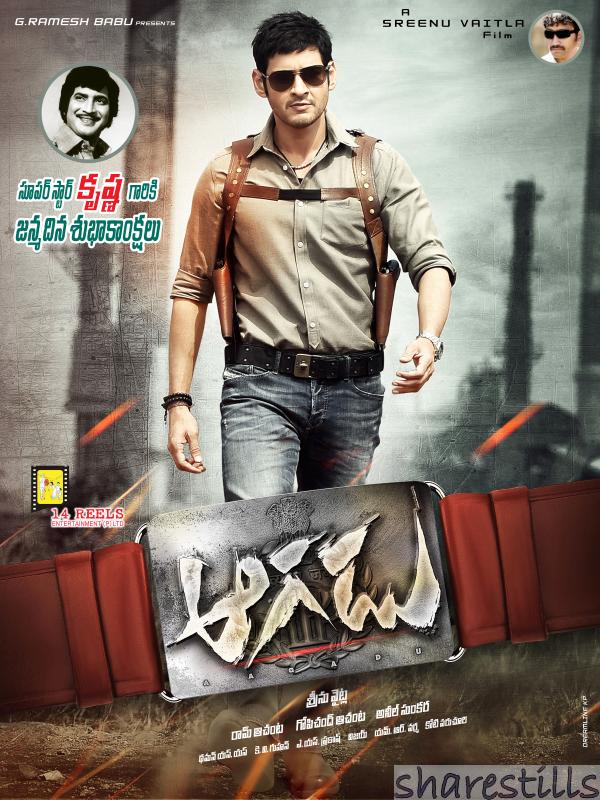
Aagadu (2014)

Aagadu

After the major disappointment of missing 1-Nenokkadine, it felt as if it had been a very long time since I’d been able to indulge in the wonders of Mahesh on the big screen. As an added bonus Aagadu was being shown in my local cinema, the wonderful single-screened art deco Astor, which has the luxury of a dress circle and velveteen-couches for lounging while waiting to get into the auditorium. Plus the bonus of subtitles!

Going to the Astor is always an ‘experience’ and even more so for Mahesh.  There were massive posters with accompanying garlands, samosas for sale in the foyer, and even that rarest of things – allocated seating! Regular visitors to Telugu film nights in Melbourne will understand what revelation this was – no pushing and shoving to get in and try to find a seat that hasn’t been ‘saved’ by the first twenty people through the doors? Not this time! First night, first show and there was an orderly ticket collection queue, a leisurely stroll to your seat (with ushers!) and plenty of time to soak up the atmosphere with the sell-out crowd.

Aagadu

Aagadu sees Mahesh reunited with Dookudu director Srinu Vaitla, although the partnership doesn’t deliver such an entertaining film this time round.  Along with a number of familiar faces in similar roles, the usual mass themes pop up time and time again, so the plot feels tired even before it gets past the first half hour.  Still, it starts off well enough. Young Shankar is rescued from the streets by Police Inspector Raja Ram (Rajendra Prasad) who adopts him into his household based on Shankar’s non-tolerance approach to crime. Naturally this family relationship doesn’t last long, and Shankar is cast off by Raja Ram in suitably dramatic fashion after taking the blame for something he didn’t do.

Aagadu

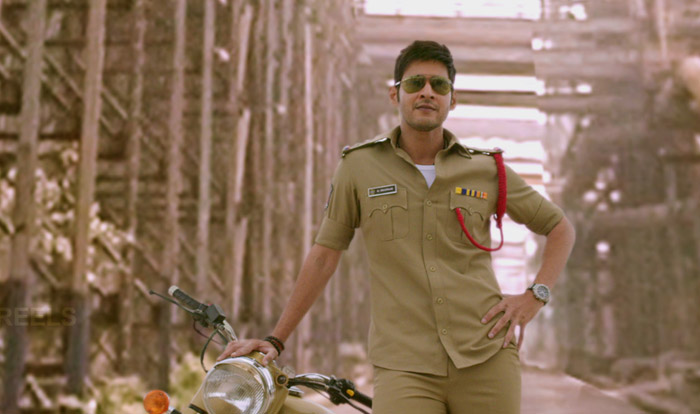
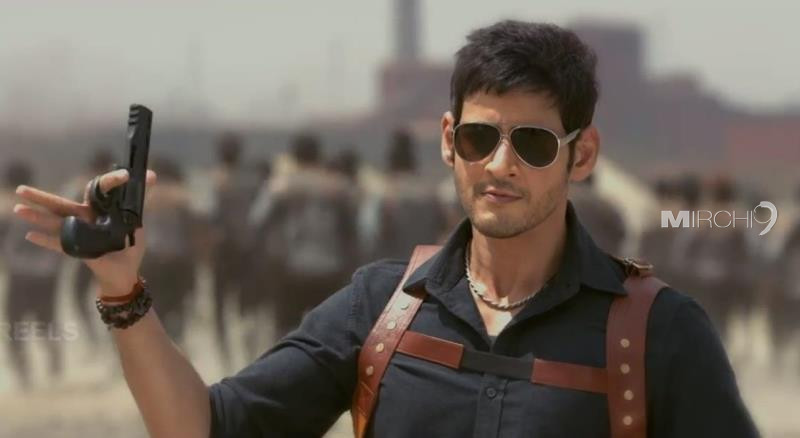
Despite these early troubles Shankar follows in his adopted father’s footsteps and grows up to be ‘Encounter Shankar’; a man so feared that the mere mention of his name is enough to turn big, bad gangsters into quivering cowards.  As expected once he appears on-screen, Mahesh Babu throws villainous thugs around with gay abandon while indulging in snappy dialogues and keeping his uniform creases sharp. Mahesh is in his element here and it shows. He looks even more baby-faced than ever as he single-handedly beats various thugs into submission and revels in his indestructible super-cop persona.  Pretty similar to the way he did in Dookudu really.  The opposing gangsters have learnt nothing and still tend to attack one at a time (they can’t ever watch any movies or they would know better), and there are plenty of barrels, containers, and various other items for them to crash into. The outcome is always a forgone conclusion but it is the getting there that counts, and the action scenes are excellent.

Aagadu

Encounter Shankar is sent to Bokkapatnam, where crime lord Damodar (Sonu Sood) is terrorising the locals and keeping the police firmly under his own control. Sonu Sood seems a little off his game here and is never quite menacing enough to be the big bad movie villain needed to offset Mahesh’s heroic cop. An early attempt to give him a ‘quirk’ falls flat and apart from one or two moments of sneering he’s a bland and relatively innocuous character.  Srinu Vaitla seems determined to include as much humour as possible, but his inclusion of the gangsters into the comedy motif works against any possible build-up of menace and just isn’t particularly funny.  Even Damodar’s gangster lieutenants are roped in with Raghu Babu, Posani Krishna Murali and Prabhas Seenu dropping their initial villainous personae for dumb comedy routines that do nothing to help the story.

AagaduAagadu

There is more comedy in the form of M.S. Narayana who is reasonably amusing as a data broker, although the best comedy moments go to Mahesh as he befuddles the villains with reprises of his own movies.  These gangsters really don’t seem to get out to the cinema much!  The usual suspects turn up in the support cast including Nasser who seems wasted in a role as a mildly corrupt cop, while CinemaChaat favourite Ajay fares a little better in a more serious than usual role and Vennela Kishore has a reasonable role as Encounter Shankar’s main assistant.  Brahmi turns up late in the film and it says a lot that he is sorely needed to bring some relief into an otherwise dull and predictable second half.  He plays a broker who ends up as the fall guy for the police operation, but it’s really just the usual slapstick with the addition of a reasonably funny dance mix from recent films, although even that seems a copy of a similar scene from Dookudu.

Aagadu

Tamanna plays the love interest and starts off as a relatively feisty character that seems to have potential. Unfortunately it doesn’t last, and after she succumbs to Shankar’s trite dialogue she is rewarded by relegation to appearing only in the songs.  There is absolutely zero chemistry between Tamanna and Mahesh but she does get to wear some pretty skirts and twirl around mountains and deserts while Mahesh does some enigmatic walking, so it all works out OK in the end.  I liked the soundtrack and the catchy songs are all well-choreographed and pictured, often with some very enthusiastic backing dancers.  Shruti Haasan makes an appearance in a rather athletic item number which got just as many cheers as Mahesh’s entrance, but Bhel Puri has some of the best costumes.  The backing dancers get to morph from Marvin the Martian to Jack Sparrow while Mahesh sports his classic shirt and jacket combination, although I’m not so sure about his red number with go-faster white stripes.

Overall Aagadu is disappointing, as Srinu Vaitla rehashes ideas from his previous movies and includes too much comedy and an excessive amount of punch dialogue in his formulaic screenplay.  The first half is entertaining enough, but the second half drags until the fast, final showdown which is over almost before it begins.  Mahesh is very watchable and almost manages to carry the entire film with his charismatic screen presence, but even his excellent performance and the best attempts of the rest of the cast aren’t enough to lift Aagadu above average. Best watched in a packed cinema with a large group of Mahesh fans, but in their absence, still worth watching for Mahesh, good action scenes at the start and the songs.


Temple says:

Aagadu is similar to other Mahesh films, particularly Dookudu, only longer and much less entertaining.

I found the first half quite dull as the slapstick and comedy uncles piled up and yet the plot never shifted gears.  The ‘comedy’ is broad and overstated – not Mahesh’s finest work. He can be very funny but Aagadu plods along, reusing the same shtick too many times, and Sankar lacks the sarcastic spark Mahesh has brought to other films (like Khaleja or The Businessman). The excessive punch dialogues were meant to be a running gag, but instead seemed a gratuitous reminder of how many other good films I could have been watching instead.  And it’s not an easy film for a new fan as the jokes are very Mahesh-centric, including a nice tribute to his dad, and would largely go over the head of anyone who wasn’t familiar with the oeuvre. The second half is more successful as Sankar FINALLY starts enacting his plans for revenge. Plus I quite enjoyed seeing Brahmi get slapped around. If I had to watch his tedious antics, I was glad to have the vicarious satisfaction of the tight slap.

Despite high production values the CGI work is often poor, both in execution and judgement, and breaks the effect of otherwise excellent action choreography. There is one scene where suddenly Sankar is CGI’d onto a tabletop during a fight and he may as well have been surrounded by a dotted line with a legend saying ‘cut here’. And the subtitles, much as I appreciate the effort, were a bit dodgy. ‘Frightended’ was a highlight, and anarchy had clearly swept through the personal pronoun department. Although I liked the description “Pant. Shirt. Shirt. Shirt.”as I think that is indeed how Mahesh dresses.

Well, at least the Astor has excellent choc-tops. And I hope that nice man The Mahesh Fan and I were talking to after the movie found his way to Doncaster.