Shahid

Shahid

I didn’t know much about human rights lawyer Shahid Azmi before watching Hansal Mehta’s film, and I’m not entirely sure that I know a lot more about the real man even after watching.  There is a disclaimer at the start, which flashes past very quickly but suggests that the film is a dramatised version of events in the life of the murdered lawyer rather than a strict doco-style exposé.  But whatever the true story, the film is a fascinating look at a man who refused to back down and spent most of his career standing up for people who would otherwise never have had a voice.  Shahid may be a romanticised and somewhat sanitised account, but it still delivers its message and brings the Indian judicial system squarely into the limelight.
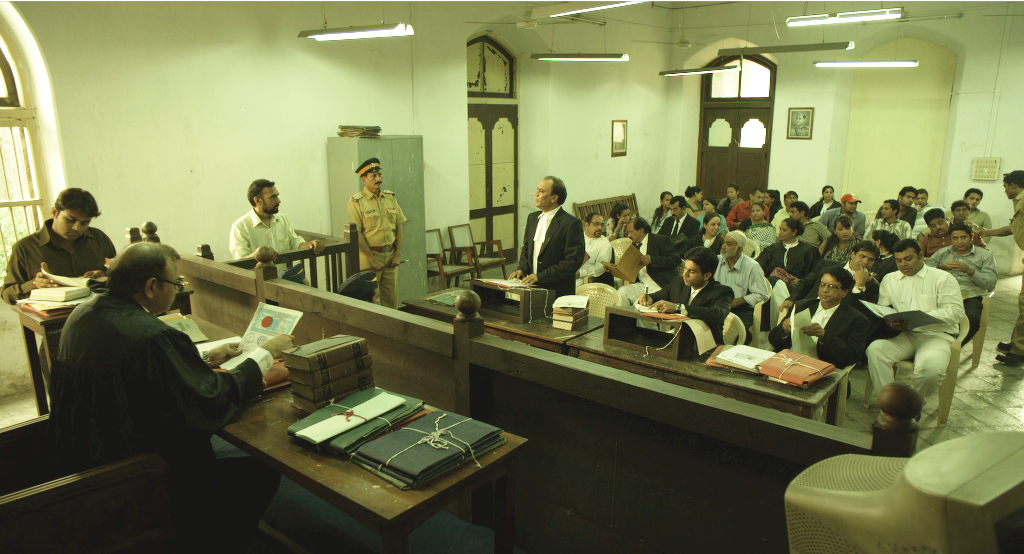

Court sceneShahid

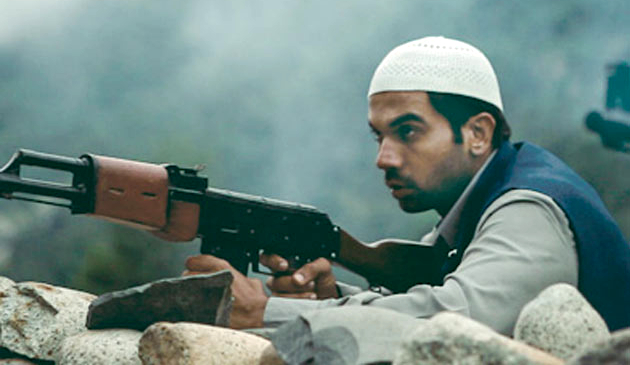
The film starts with the end of Shahid Azmi’s life, at the moment when he is shot by persons unknown in his office.  It then moves immediately back several years to the early 90’s when a young Shahid is caught up in the violence of an attack on his community in Mumbai.  As a result Shahid ends up in a terrorist training camp, although the why and how he got there is never shown and the whole episode is quickly glossed over during the credit sequence.  However Shahid’s revulsion at the violence of the camp is clearly shown although his escape from the over-zealous terrorists is only briefly mentioned.  On his return to his family, Shahid is arrested and eventually tricked into signing a confession which results in time spent in jail.  Interestingly Kay Kay Menon plays one of his mentors in the jail, which seemed odd since I’m more used to seeing him play a more negative role.  However, he’s very effective in the role of War saab who persuades Shahid to make the most of his time in jail and get an education.
Shahid Shahid

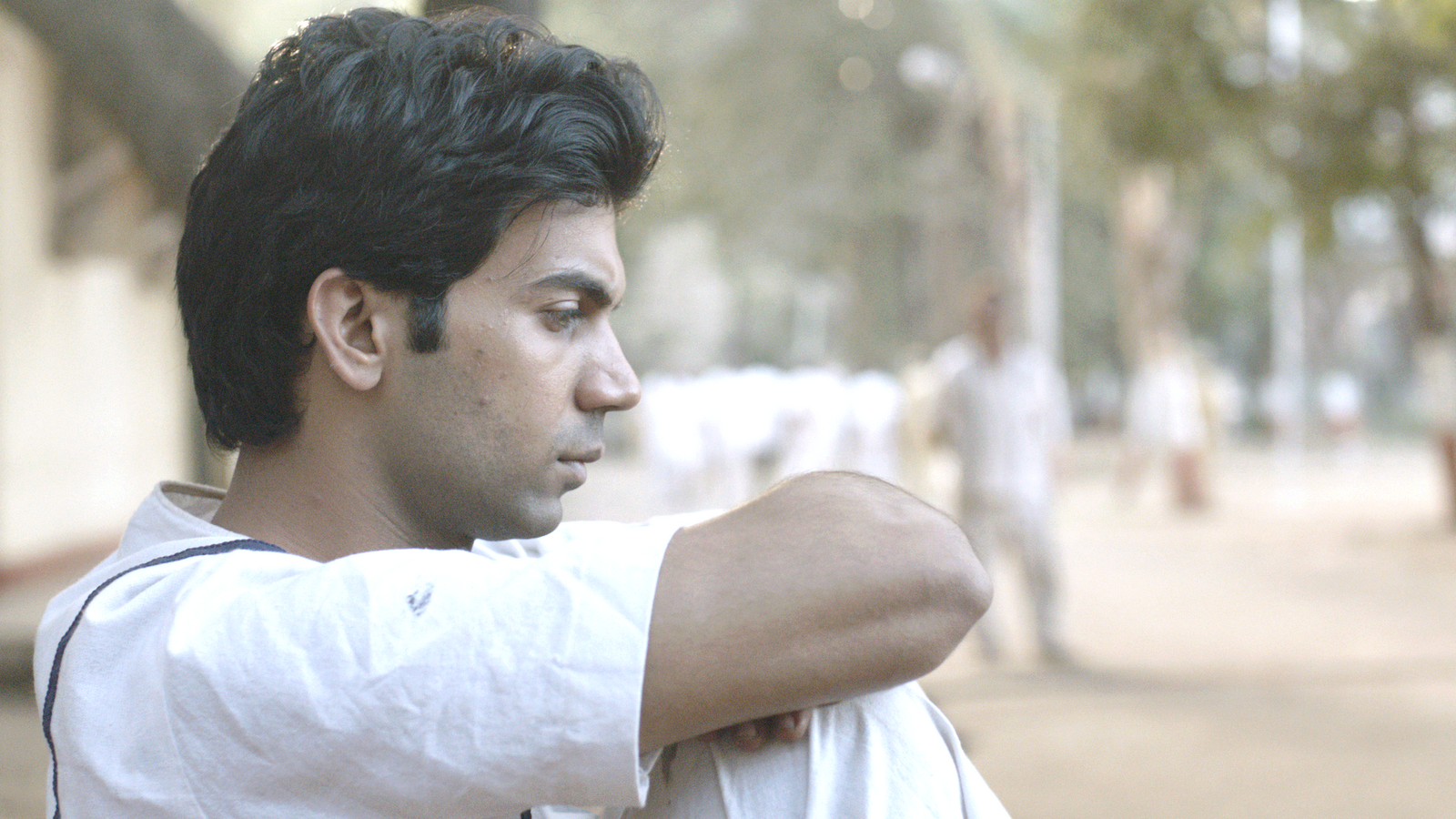
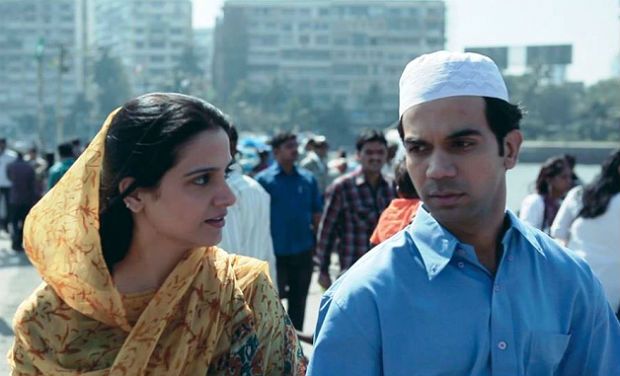
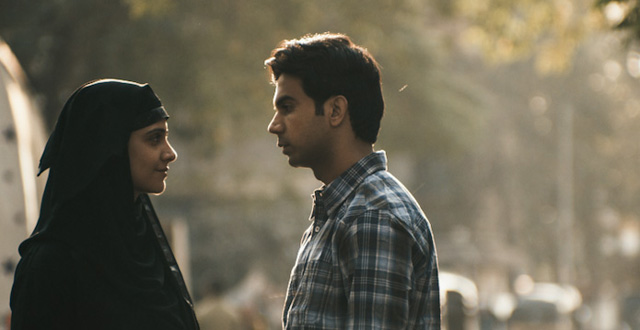
This he does, finally becoming a lawyer and taking on cases for clients like his younger self – people with no money who have been imprisoned on terrorist charges without any real evidence.  It’s compelling viewing, mainly due to an excellent performance by Raj Kumar Yadav who is charismatic and very believable as the passionate young lawyer.  He starts off small and works for a criminal lawyer Maqbool Menon (Tigmanshu Dhulia) which is where he meets Mariam (Prabhleen Sandhu), a client who needs help with a property case.  In the process of fighting her case, Shahid falls in love and this is the only part of the film that feels in any way filmi, as the two walk along the beach and share some classic Bollywood romantic moments together.

Prabhleen Sandhu starts off well, but after her marriage I expected her to show more frustration with Shahid’s absorption with his career but instead she is very passive.  Mariam also doesn’t show much fear or apprehension about the death threats made to her husband, and the couple’s final showdown feels contrived compared to the rest of the film.  This could just be down to the writers, but her performance was stilted in parts, particularly in comparison to the other actors.
ShahidShahid

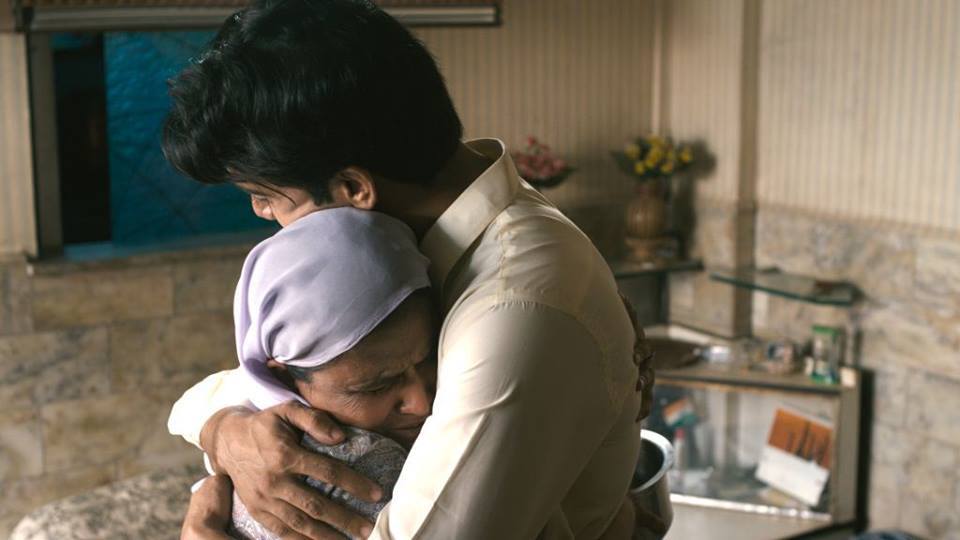
Mariam is divorced with a young son and Shahid is reluctant to tell his more traditionally minded mother about his marriage.  Baljinder Kaur is perfectly cast here as Shahid’s mother and I loved how she managed to keep her family under control, even when they were all grown up.  Mohammed Zeeshan Ayyub is also excellent in the role of Shahid’s brother Arif, and his frustration at always being the one left to look after everyone else is eloquently portrayed. Ayyub is another great actor who seems to have appeared in a number of good roles this past year and has the knack of making even a small role memorable.
Shahid

Although Hansal Mehta makes us sympathise with Shahid by showing his early struggles and his family life, the director doesn’t shy away from portraying his weaknesses.  Shahid’s reluctance to tell his family about his new wife is shown as a flaw and he also has a general tendency to ignore problems by burying his head in the sand and hoping they will just go away.  These failings do make him a more human and vulnerable character and contrast well with his more decisive and determined attitude when in court. Raj Kumar Yadav gets under the skin of a crusading human rights activist in the second half of the film and his passionate arguments are stirring and though-provoking.

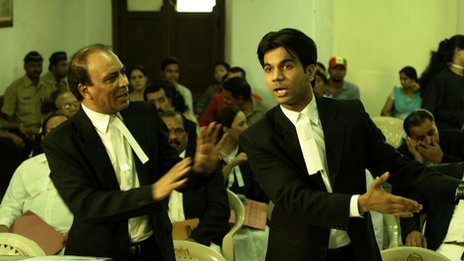
It’s another plus for the film that the court scenes appear realistic, set in dingy surroundings with harried looking judges. A case with a suspected terrorist shows the accused under guard in a metal cage,and only the various legal representatives allowed in the room which I can imagine is exactly how these trials are actually conducted. The verbal battles between Shahid and the various prosecutors, including his old employer Menon are also excellent and keep up the momentum of the film without getting bogged down in Shahid’s oft-repeated mantra “justice delayed is justice denied”.
Shahid

This is a well-made film with sensible and mature treatment of its subject matter.  There are a few stumbles with Shahid’s early life and perhaps a little too much time spent on his developing romance, but on the whole this is a fascinating glimpse into the life of a man who took on the Indian legal system on its own terms and won. I do think it would have benefited from a more documentary style approach and additional information on Shahid Azmi’s cases would have made it seem less of an idealised account.  However it’s still a worthwhile attempt at a serious biopic, and with excellent performances, realistic situations and an intelligent script it’s definitely one I recommend watching.

Raanjhanaa (2013)

Raanjhanaa

Raanjhanaa is not a conventional love story, and its two protagonists are not particularly likeable people, but their very human failings do make it possible to understand their mistakes.  Despite their flaws I wanted their love story to succeed even as it seemed destined to fail. Dhanush never fails to impress with his acting but I was apprehensive about his co-star Sonam Kapoor since I’ve yet to see a convincing performance from her – and I still haven’t.  But to be fair, Zoya’s self-absorption is integral to her character, so Sonam’s wooden and lifeless performance actually suits her character for a large part of the film. However Dhanush more than makes up for Sonam’s rather laboured performance and the support cast are all excellent, making Raanjhanaa a better film than reading Himanshu Sharma’s screenplay would suggest.

Young KundanTeenage Kundan


The film opens with a group of child artists playing the roles of Kundan and his friends.  The kids are charming and in a few short moments they define their characters perfectly, so that each further development makes sense given these childhood traits.  Kundan falls in love with Zoya the very first time he sees her, despite the fact that she is Muslim, he is Hindu, and he’s only about 8 years old. His adoration at first sight develops into a full blown obsession by the time Kundan reaches his teens and his first stumbling attempts to tell the object of his affection how he feels are cringe-worthily appropriate for the ‘stalking = love’ concept that Indian cinema seems to prefer.

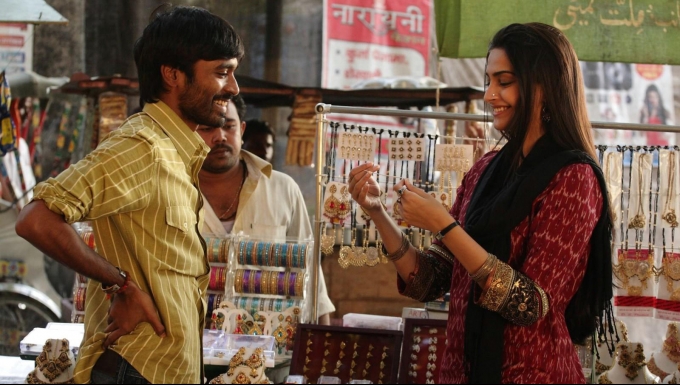
Kundan and Zoya

I’m always amazed at how Dhanush manages to transform himself into a young teenager so effortlessly, appearing suitably gauche and naïve against Sonam Kapoor’s rather clunky attempt at adolescence.  She lacks the vitality that made Shruti Hasan more believable as a teenager in 3, but there is some chemistry between the two actors which helps make the budding romance more credible.  Unfortunately at this point there is the first of too many scenes which involve slashing wrists as a way to prove true love.  It’s one of the things I particularly dislike since suicide as a plot device seems dangerous and irresponsible,  especially considering the statistics on youth suicide in almost every country in the world.  I can cope with the stalking, since Zoya definitely encourages Kundan (and I’ve been through the South Indian Cinema Induction Program) but I feel the wrist slashing is just inappropriate.

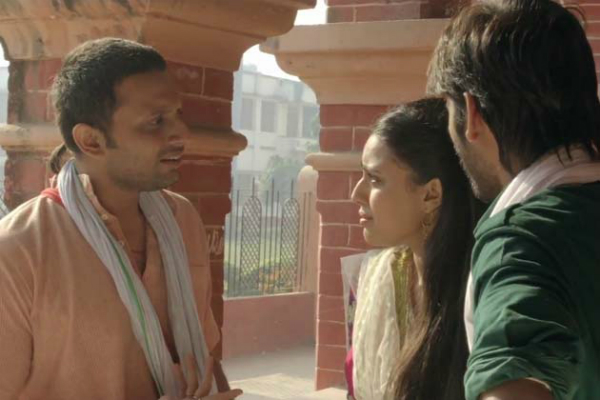
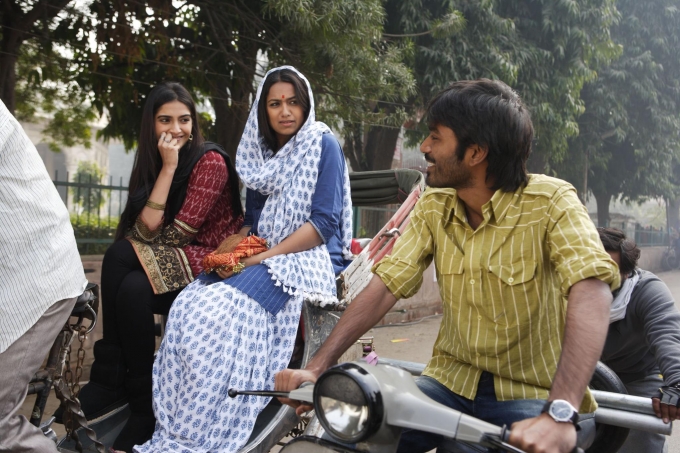
Kundan and MurariRaanjhanaa


The separation of the young lovers follows along fairly predictable lines, but what adds interest is the rival obsession shown by Bindiya (Swara Bhaskar) for Kundan.  Swara Bhaskar is excellent as the girl so obsessed with marrying Kundan that she will do absolutely anything to get his attention. She really deserves to win the guy just for her devotion and ability to put up with Kundan and his best friend Murari (Mohammed Zeeshan Ayyub), but at the same time it’s obvious that Kundan would be a horribly abusive husband.  Swara Bhaskar is full of vitality and energy and lights up the screen whenever she appears which is in stark contrast to Sonam Kapoor’s rather bland Zoya. Mohammed Ayyub is also well cast and does a good job as Kundan’s friend alternating between egging him on, and trying (usually unsuccessfully) to restrain his more dramatic impulses.

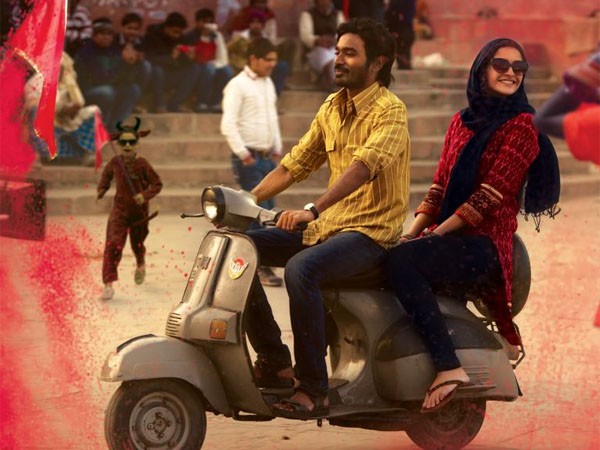
Abhay Deol plays Akram, a student activist angling for election to government and the third member of the love triangle.   While Abhay plays his part well he seems too old to be a convincing student leader, even one who is seriously considering a political career. Still, he does seem to have more to offer than Kundan, as demonstrated by the difference in their respective modes of transport.

Kundan and Zoya scooterZoya and Abhay motorbike


The story seems to lose its way in the second half as the love story gives way to the political campaign and there are a few too many contrived filmi coincidences as Kundan moves out of Benares and into Zoya’s world.  But the changes in both Zoya and Kundan as their circumstances alter are well depicted and the consequences of their actions are shown to be greater than they could ever have imagined. As a teenager, Kundan’s every emotion is clearly visible on his face and his body language also transmits his feelings at every turn.  With the transition to adulthood he becomes more restrained until by the end of the film Kundan is expert at concealing his true feelings and doesn’t allow any of his emotions to colour his conversation with Zoya.  It’s a fantastic performance from Dhanush and director Anand Rai has drawn out every nuance in his character’s behaviour.

Raanjhanaa

After the first few scenes in childhood Sonam Kapoor keeps her stunned indifference expression throughout, but it is apt for Zoya’s personality so it does tend to work. She looks beautiful, but there is too much style and not enough substance in Zoya, particularly compared with Bindiya and even Akam’s sister Rashmi (Shilpi Marwaha).

RaanjhanaaZoya


The music by A. R. Rahman fits perfectly and the dance sequences are well placed in the narrative and generally help to carry the story forward.  Benares looks like almost any other city in North India until there are shots of the river, and then it’s suddenly magical as Natarajan Subramaniam and Vishal Sinha bring the city to life with their cinematography. It’s an impressive debut for Dhanush in Hindi cinema, and he does well with the language too (at least as far as my inexpert ear can tell).  Worth watching for a role that seems to have been made for Sonam Kapoor, an excellent performance from Dhanush and from the rest of the cast and a rather different view of “love”.