Khal Nayak

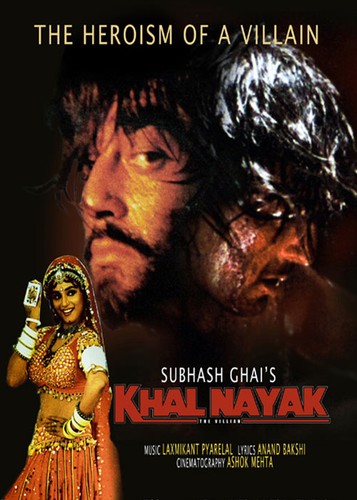
Khal Nayak poster

Subhash Ghai’s Khalnayak is a fairly predictable cops and robbers story twined with references to the Ramayana which adds depth and resonance.  There are some excellent performances, stylish visuals and excellent music. But at a shade over 3 hours, the pace is stately to the point of plodding and there is too much emphasis on the meaning, and not quite enough on the drama.

Ram (Jackie Shroff) is assigned a case to bring down a terrorist organisation. Ballu (Sanjay Dutt) is the poster boy for Roshida’s (Pramod Muthu) gang. When Ballu escapes from jail, Ram is accused of neglecting his duty to go spend time with his girlfriend Ganga (Madhuri Dixit). When what looks like every policeman in India is put on Ballus’ trail with no success, Ganga finds a way to infiltrate the gang. She sees that Ballu is not quite as bad as he seems, although he is far from being misunderstood. Eventually the police close in, and Ganga is caught between Ram, duty, and her empathy with Ballu.

Madhuri looks stunning and delivers a strong and engaging characterisation. There is nothing simpering or weak about prison officer Ganga. When she sees an opportunity to help Ram restore his reputation, she asks for his support. Then she does it anyway. When she sees Ballu needs medical help, she just goes and gets a doctor because it is the right thing to do. Madhuri does some wonderful deliberately bad acting when Ganga, having captivated Ballu, joins the gang and goes on the run.

https://www.youtube.com/watch?v=r4pb2OCfCHs

Then in Aaja Sajan Aaja she is simply incandescent as she dances for her Ram. Madhuri was also lucky as Ganga dresses in Indian attire, not the hideous synthetic 80s gear that Ballu wears when he tries to impress.


Sanjay Dutt is so very good in some scenes that it makes me angry at how bad he is for much of the film. He adopted a range of bizarre grimaces and physical tics that I think were meant to emphasise the animal side of Ballu, but just made him look ridiculous and clumsy. When he dropped the exaggerated mannerisms and just channelled the emotions, he was compelling and raw. While asserting his ownership of Ganga, Ballu accidentally defends democracy and becomes a Nayak for those people. His awakening to being respected and enjoying that feeling was nicely done, even though there was a lot of literal flag waving to make sure the point didn’t escape unnoticed.

Jackie Shroff is perfectly competent as Ram, and only tries to tear his clothes off once so that was good. For my money Ram is the least interesting character. He knows he is right, everyone knows he is right and he is not averse to using extreme force against Ballu to prove how right he is. While there is an interesting dynamic between hero and villain, there is minimal character development for Ram. A relationship between Ganga and Ballu would be a Very Bad Idea but I thought marrying Ram could be a bit suffocating.

The Ramayana elements were more obvious to me on a recent re-watch than when I first saw it, particularly the twists on that narrative. I couldn’t help but compare this with Mani Ratnam’s Raavanan (which I greatly prefer to the Hindi Raavan). In Raavanan, Ram revealed his darker side and could become as Ravana but Khal Nayak seems to say rather that Ravana has the potential to be Rama. I liked that the question of what makes a hero or a villain was articulated and that this was more than a glorification of Rama. Ganga didn’t sway from her beliefs when she was frightened, and kept her faith in Ram. Ram wanted to believe Ganga but society and the law demanded she was still put to trial. I was annoyed that she had to have her virtue validated by a thief and murderer, a man so despicable in the eyes of the law that he had besmirched her just by his proximity but whose word was still worth more than hers. I know she is Sita and he is Ravana, but still. The film plays with some of the conventions especially around the notion of hero and villain. Ram is also helped by Ballu’s testimony, his reputation restored by the hand of a sinner.

Ghai doesn’t quite go the whole hog but he does use a range of staple masala ingredients and has a lush visual style. Ram and Ballu have bloody fights that crash through walls and take to the treetops. There are long lost childhood friends and dreary paeans to motherhood. There are coincidences, speechifying and tearful reconciliations galore. The evil mastermind Roshida has a nasty disposition and lots of cats who do a fabulous job of reacting to stuff.

Rakhee gets a lot of screen time as Arti, not all of it crying. Neena Gupta makes an impression as the striking Champa. Ramya Krishnan is charismatic as Ballu’s girlfriend Sophia, and also gets both versions of the title song. What a waste to have her in such a small role, but how great to have so many powerful actresses in one film. The female characters are strong and quite distinct, but Subhash Ghai stays firmly within the conventions of 90s masala so none of them break the mould of Ma, the friend, bad girl etc.  Oh, and Anupam Kher does his customary shtick as Pandey the prison warden.

There are interesting observations about the conventions of parenting and filial behaviour. Ganga tries to evoke Ballu’s sentimental side by talking wistfully of how much he must love his Ma and how hard it must be for him to live on the run. He calls Ganga out on trying to manipulate him through sentiment, but he rejects that as unimportant to him. Question – If a villain shouts ‘Ma!’ in his sleep and there is no one to hear it, does he have feelings?

Mind you, when Ballu is beating Ram up because why not, Arti hits Ballu for assaulting Ram, Ballu shoves her so Ram belts him for hitting a Ma, then Ballu fights back and Arti comes back at him to stop him using violence.  A move straight out of the Nirupa Roy Filmi Ma Manual.

The songs are extensions or amplifications of the narrative as well as being beautiful and usually pleasingly melodic.

https://www.youtube.com/watch?v=Ftfc_c-zNx8

I am not so fond of that title track, although it does epitomise early 90s style and Ramya Krishnan works that beaded gear for all it’s worth.

Khal Nayak-Fruitbat

I had to pity choreographer Saroj Khan. Between Dutt’s own ‘dance’ style and the outfit given to Ballu in the final song, he looked more like a demented fruitbat. Seeing Ballu and the boys try their seductive dance moves on Ganga was highly amusing. But she choreographed some beautiful dances for Madhuri. I went to see the Temptations Reloaded show up in Sydney last year, and the roof nearly came off when the opening bars of Choli Ke Peeche played.

The first hour of the film could be condensed to around 20 minutes with no great loss, but things get much more interesting once events are set in motion. While it is a visually strong and often darkly dramatic film, the pace suffers from Ghai’s concentration on symbols and stylised elements rather than closely following the emotional arcs of the characters. Very much worth watching, but some patience is required. 3 ½ stars!

Madras Cafe

Madras Cafe

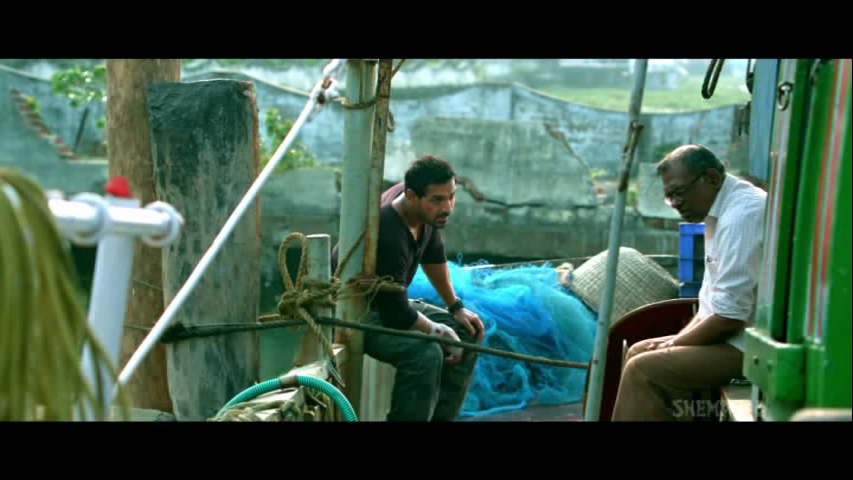
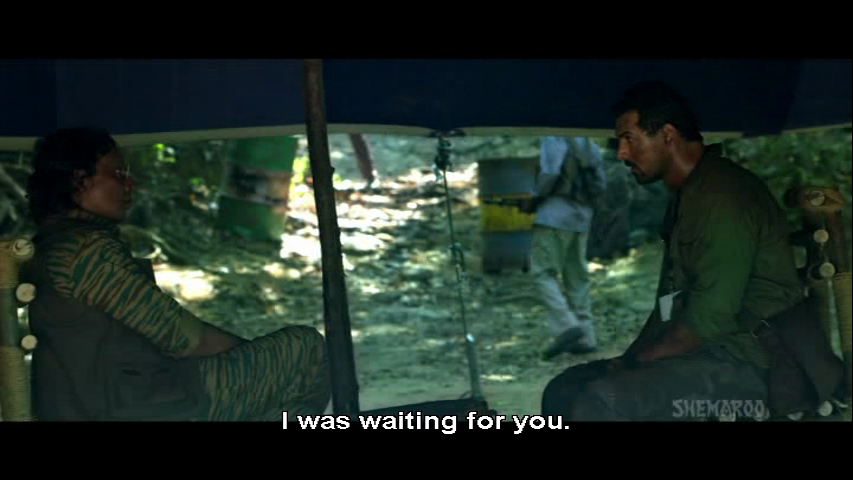
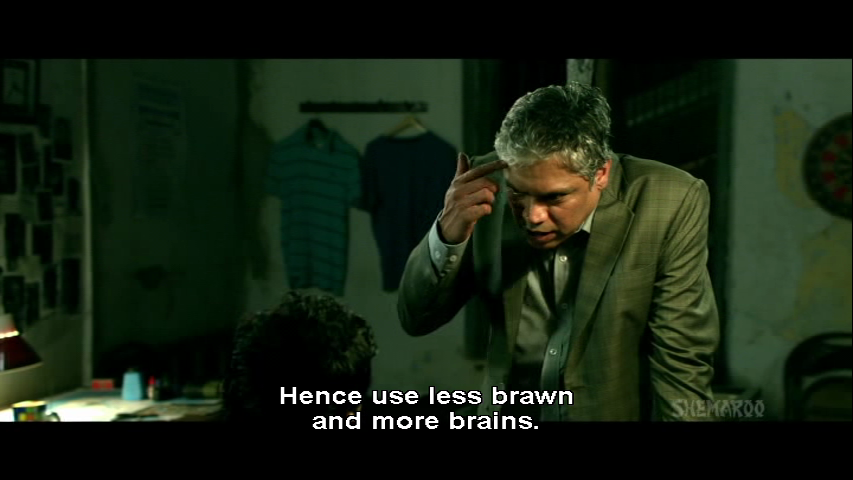
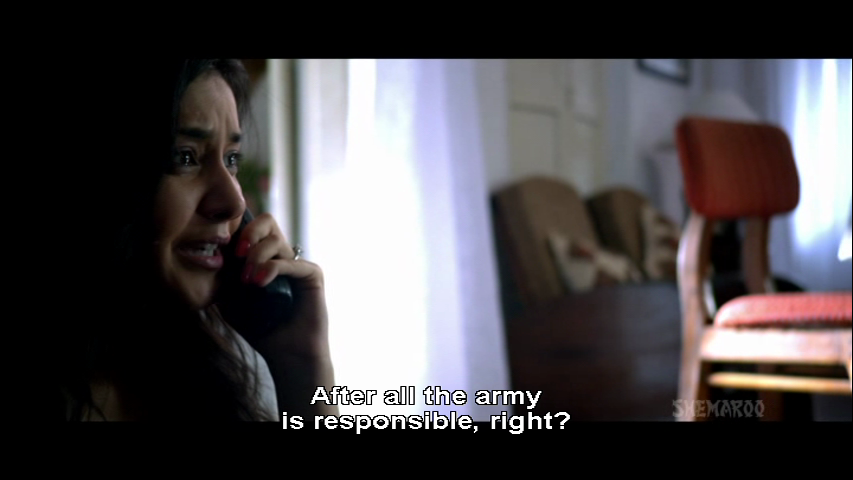
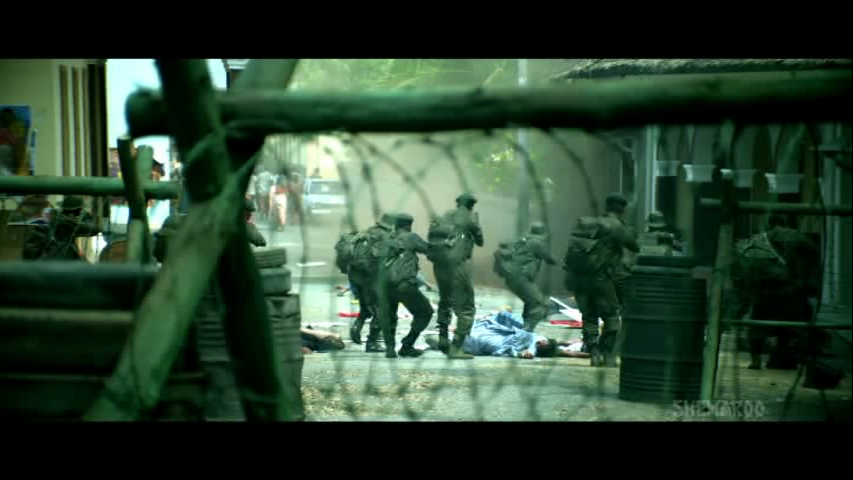
I’m not normally a fan of films that deal with the subject of war, but I found the combination of Shoojit Sircar as director and the backdrop of the conflict in Sri Lanka intriguing enough to warrant watching Madras Cafe.  The film is a world away from his last film, Vicky Donor, but Shoojit Sircar shows a similar attention to detail in this realistic and gritty political thriller.  The film begins with a disclaimer which states that Madras Cafe is a work of fiction, but even with the little I know about the Indian involvement in the Sri Lankan conflict, the story seems heavily influenced by real-life events of the time.  The story deals with the build-up to the assassination of the Indian ex-Prime Minister and owes more to Hollywood drama than the more usual Bollywood tale of an Indian army hero who single-handedly saves the day.  As a bonus, John Abraham is more convincing than expected in the lead role and his performance, along with some excellent cinematography make Madras Cafe well worth a watch.

Madras CafeMadras Cafe

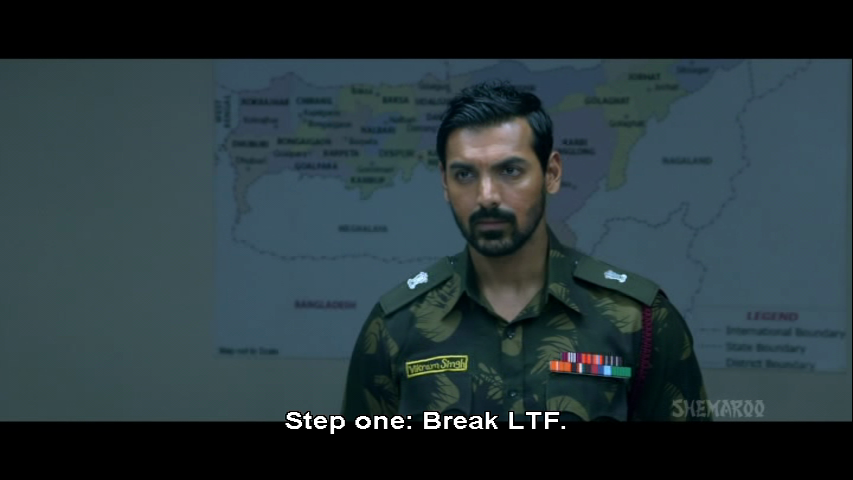
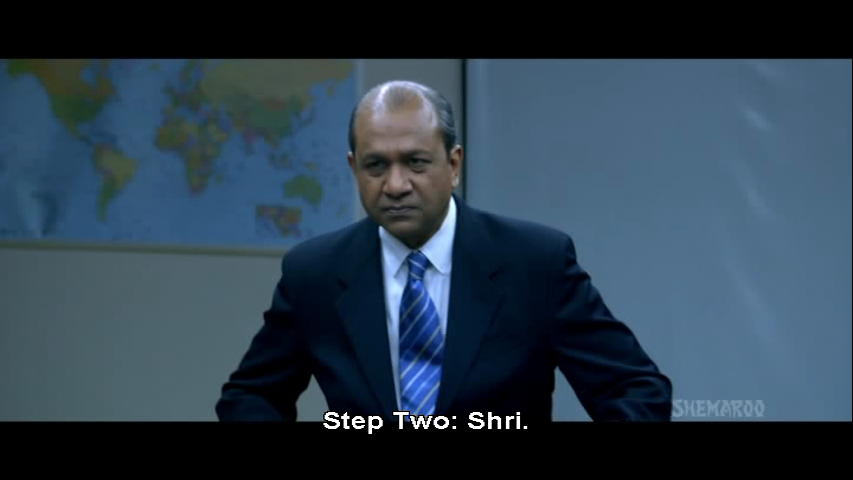
The first half of the film sets up the story, starting with a fairly graphic depiction of the atrocities committed against the Tamil people leading eventually to the development of armed resistance.  It is at times confusing as numerous characters are briefly introduced before the action moves quickly along, but once the whole cast is assembled the story settles down to describe the events leading up to the Prime Minister’s resignation and eventual death.  John Abraham plays the role of Major Vikram Singh, a RAW agent sent to Sri Lanka to ensure elections to secure the peace process go ahead.  To this end he has two aims, to move support away from the head of the Tamil Liberation Force (LTF) and instead to promote the more acceptable (to India) Shri, leader of the Tamil political party TPA.

Madras CafeMadras Cafe

Madras CafeMadras Cafe

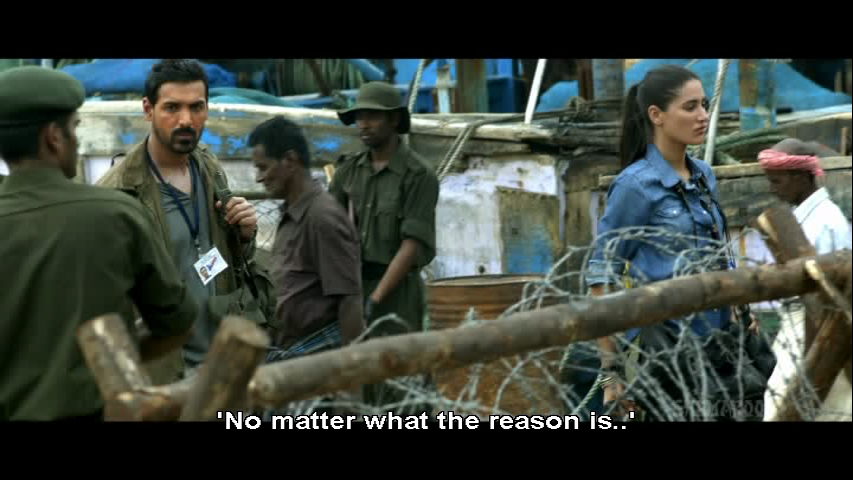
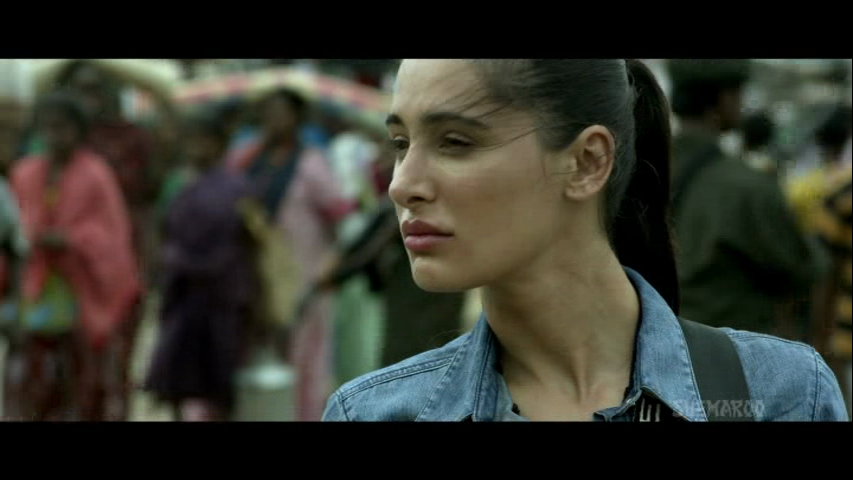
The LTF is led by the charismatic Anna Bhaskaran (Ajay Ratnam), who is ably supported by his inner cadre of Pandyan (Johnson Manjali), his Intel chief; Mallya (Arijit Dutta), deputy leader and army commander; and Rajasekharan (Dinesh Nair), spokesperson and arms dealer. Vikram manages to meet up with Shri (Kannan Arunachalam), who demands weapons for the fight against the LTF, but the mission to deliver these goes wrong and the weapons end up in the hands of the rebel force. Vikram suspects that someone in the Indian RAW group has betrayed them, and so begins a cat and mouse game to identify the traitor while attempting to keep the peace process on track.  During his mission Vikram meets Jaya (Nargis Fakhri), an American journalist based in London, who is in Jaffna to report on the plight of the refugees.  Jaya has a number of informers and sources, who later prove important contact points for Vikram, but otherwise her role seems fairly pointless and not helped by Nargis’s lacklustre performance. The initial meeting between Jaya and Vikram suggested that there may be some conflict between the two over nationalism and journalistic integrity, but this never materialised, perhaps because there is already plenty of conflict onscreen.

Madras CafeMadras Cafe


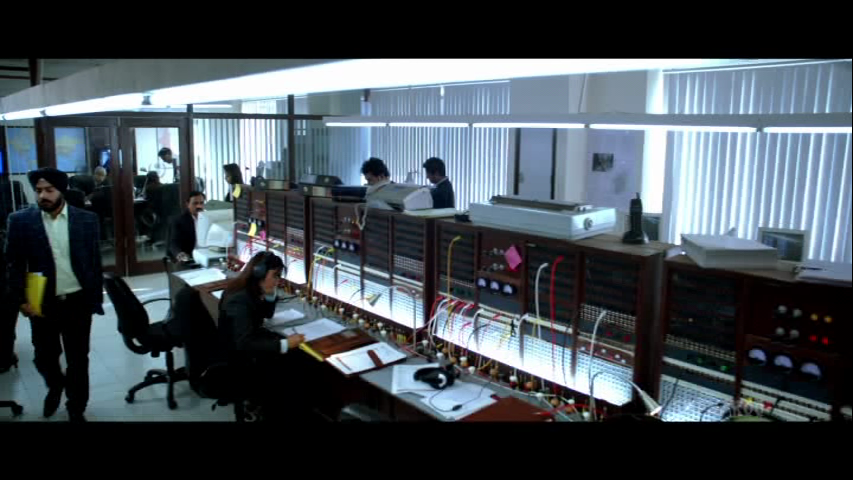
While the traitor is still providing the rebels with details about the Indian army plans, Vikram’s colleague S.P. (Rajeev K. Panday) intercepts wireless transmissions that provide details of an LTF plot to kill the former Indian Prime Minister during his campaign for re-election.  The assassination plot is developed during meetings between Anna’s representative Rajasekharan and nameless Western corporate executives who meet in the Madras Cafe.  The last half hour of the film moves into overdrive as the clock ticks down and Vikram and his boss Robin Dutt (Siddartha Basu) desperately try to put all the pieces together before their time runs out.

Madras CafeMadras CafeMadras CafeMadras Cafe


The screenplay by Somnath Dey and Shubendu Bhattacharya is realistic and gripping, even if you don’t know much about the original story – in fact it may be better if you don’t.  Excellent performances by most of the lead actors, including Prakash Belawadi as Bala, the Indian head of operations in Sri Lanka help to paint a plausible picture of the events leading up to the final assassination.  The pace does pick up in the final half hour although in general the film is kept understated, with a subdued performance from John Abraham, suiting his role as an undercover agent.  He’s perhaps a little too muscular and brawny to be 100% convincing, as I expect undercover agents to be more wiry and less memorable, but his mannerisms and emotions are much better than his previous films and seem fitting for an army officer.  At least there is none of the dreadful melodrama and over the top emoting which often seem to be required for a ‘hero’ role.

Madras CafeMadras CafeMadras CafeMadras Cafe

On the other hand Nargis Fakhri seems completely miscast and never convinces as a war reporter, while her appearance seems even more outlandish than in Rockstar. Rashi Khanna does a better job in her role as Vikram’s wife and the large supporting cast all are well suited to their roles with some excellent individual performances from the various cabinet members, Sanjay Gurbaxani as the Prime Minister and the members of the LTF cell in Madras.

Madras CafeMadras CafeMadras CafeMadras Cafe

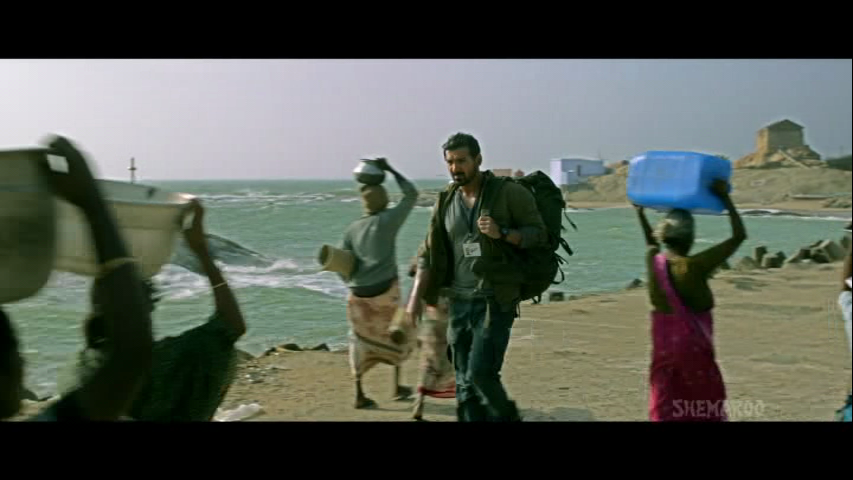
The film looks beautiful despite the subject matter, and the cinematography by Kamaljeet Negi is superb.  There are contrasts between shots of beautiful countryside and scenes of complete devastation caused by the conflict.  The framing is excellent and often characters are shown hemmed in by their surroundings, just another way of showing there is no escape from the consequences of war. My only complaint is that the same two helicopters seem to make their way into a few too many shots, but since I always associate the sound of a helicopter with an army presence (from my childhood growing up in Northern Ireland) this just added more realism for me.

Madras CafeMadras CafeMadras CafeMadras Cafe

There are no songs as such in the film, but the background score by Shantanu Moitra is hauntingly beautiful and fits the imagery well.

Madras Cafe is not a film for everyone and at times is more of a documentary than a drama, however the subtle build-up of tension and attention to detail make for compelling viewing – even if I kept thinking that surely an undercover operative in Jaffna would speak Tamil!  A beautifully shot and well-made film, Madras Cafe is a fictional account that aptly illustrates the horror of conflict and the civilian cost. 4 stars.


Kabhi Khushi Kabhie Gham (2001)

Kabhi Khushi Kabhi Gham

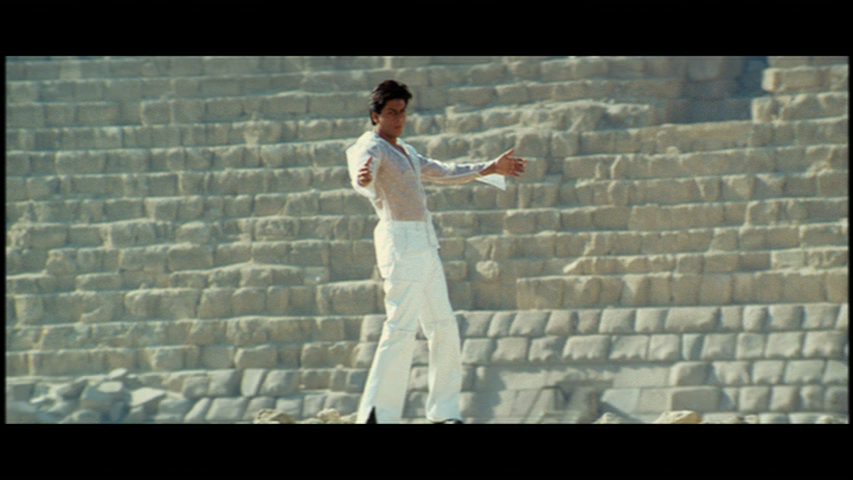
K3G is an indulgence that I only allow myself to luxuriate in occasionally.  While I love the first half of this film, despite all its flaws and typical Karan Johar extravagances, I just wish that the second half came anywhere close to the emotional appeal of the opening melodrama.  Considering the stellar cast it’s particularly disappointing that the whole doesn’t live up to the promise of its parts, but at 3 ½ hours maybe only watching the first half isn’t such an issue.  It also contains my all-time favourite Shah Rukh song with plenty of shots featuring SRK in those lacy see-through shirts, which is probably enough of an explanation for my love of this film, but K3G also brings back memories of learning Hindi and actually starting to understand dialogue without subtitles.  Special for a few reasons then, but this song is still the best part of the film.

For those who haven’t seen K3G, it’s a fairly routine story of your basic multimillionaire family and the ups and downs of their domestic relationships.  The Raichand’s live in a large ostentatious stately home which seems as far removed from India as it is possible to get despite the fact that it’s supposed to be relatively close to a lively market in Chandni Chowk.  It’s the kind of family where running late means having to hop on the helicopter to get home in time for Diwali celebrations, but despite all the lavishness of their lifestyle, it’s a family where there is a lot of love.  This is emphasised in the opening credits as Nandini Raichand (Jaya Bachchan) plays with her young adopted son, but it’s also obvious in the interactions between Rahul (naturally this can only be Shah Rukh Khan) and his father Yashvardhan Raichand (Amitabh Bachchan) as well as in the later scenes with his mother and younger brother Rohan (Kavish Majmudar).

Kabhi Khushi Kabhi GhamKabhi Khushi Kabhi GhamKabhi Khushi Kabhi GhamKabhi Khushi Kabhi Gham


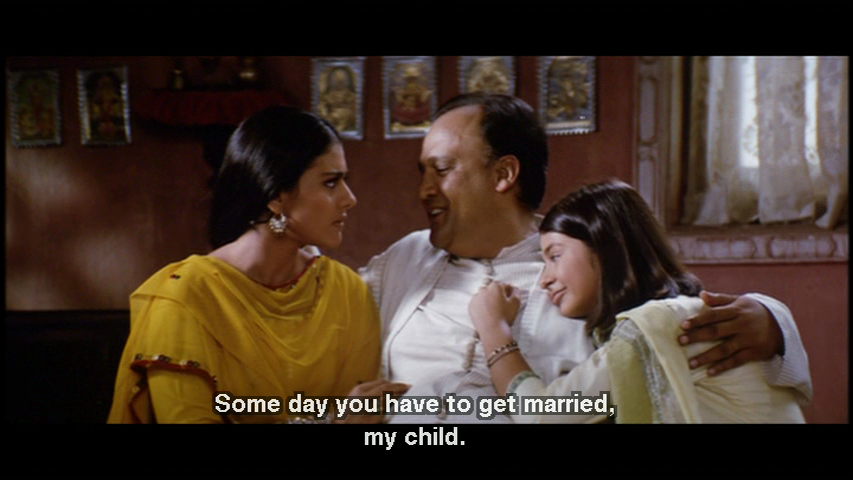
Problems arise when Yash decides that Rahul will marry Naina (Rani Mukerjee) who seems ideal for the position of rich man’s wife entrusted with carrying on the family traditions.  However Rahul has other ideas as he has fallen in love with Anjali Sharma (Kajol), the daughter of a local shopkeeper in Chandni Chowk. Just to keep things in the family, Anjali is the niece of Rohan’s nurse Daijan (Farida Jalal) and has a younger sister Pooja who is roughly the same age as Rohan.  This helps later on in the story, although initially it just seems another way of emphasising the gap between the two families.

Kabhi Khushi Kabhi GhamKabhi Khushi Kabhi GhamKabhi Khushi Kabhi GhamKabhi Khushi Kabhi Gham


The first half of the film sparkles with the romance between SRK and Kajol while the various family relationships add depth and interest to the story.  The two grandmothers, Achala Sachdev and Sushma Seth, ensure a typical Indian family feel despite the Anglicised mansion, while the glaring discrepancies between the Raichand’s home and the (somewhat sanitised) streets of Chandni Chowk are used to good effect.

Kajol is lively and boisterous as Anjali, while SRK is more retrained and less dramatically emotional which helps keep things under control.  There is a smattering of comedy in the romance too, which both SRK and Kajol handle effortlessly, and the appearance of Johnny Lever in comedy uncle mode is thankfully kept to a minimum and doesn’t disrupt the story.  The other characters all fit in too – the young Rohan is petulant and spoilt, just as a rich kid should be, while Anjali’s younger sister Pooja (Malvika Raaj) is bratty and approaching obnoxious at times, which does actually tie in reasonably well with her later persona.

Kabhi Khushi Kabhi GhamKabhi Khushi Kabhi GhamKabhi Khushi Kabhi GhamKabhi Khushi Kabhi Gham


Naturally Rahul chooses love over duty and ends up cast out of the bosom of his family, although he does have Anjali and her sister Pooja as compensation.  Of course, this is a Karan Johar film, so it’s no surprise when we reconnect with Anjali and Rahul ten years later to find that they are living in a large and opulent home somewhere in London, despite the fact that Rahul left with nothing – pretty impressive work!

Kabhi Khushi Kabhi GhamKabhi Khushi Kabhi Gham


But things start to fall to pieces once Kareena Kapoor enters the picture.  This was the first time I’d seen her in a film and it was also the last for a very long time – based solely on this dreadful performance. Hrithik Roshan as the grown up Rohan is also sufficiently unimpressive, seemingly unable to decide between the role of hot and macho student running amok in ridiculously expensive cars, or emotional wreck searching for his brother.  The two completely derail the romance and it’s hard to come up with any reason why Pooja has to dress like a call girl and act like a complete airhead.  The film also dives deep into overindulgent farce as Anjali complains about her son becoming too English (hmm, could this be because they’re living in England and he’s attending an English school?) while Rohan decides that staying with his brother while pretending to be someone else would be a good way to reconcile his father and brother.  Because that would definitely work.

If you can ignore all the self-indulgent weeping from Rohan and the insufferable unpleasantness of Pooja, the rest of the film is endurable, although unbelievably long and drawn out with a ridiculously contrived ending.  Karan Johar goes overboard trying to tug on his target NRI audience’s heartstrings with a rendition of the Indian National Anthem which seems totally out of place, and there are far too many references to ‘loving your parents’.  Even apparently when they don’t love you and repeatedly tell you so.  There are a few moments where the easy flow of the first half is almost recovered, but overall the second half is disappointing at best, particularly after such a good beginning.

Thankfully though there is still SRK, who is as charismatic as always, and the Shah Rukh and Kajol jodi works even while the story around them falls to pieces. If only the whole Kareena Kapoor and Hrithik Roshan storyline had been cut, this would have been a much more enjoyable film, although still not perfect.  Still, I do recommend watching right up until the interval – after that it’s at your own risk!   4 stars for the first half, but only 1 for the second.