Cameraman Gangatho Rambabu

CGRCameraman Gangatho Rambabu sees Puri Jagannadh teaming up again with Powerstar Pawan Kalyan for a tale about one man’s crusade against corrupt politicians with a little help from sidekick Cameraman Ganga.  I first saw CGR in the cinema without subtitles, but since the audience seemed to be appreciative of the dialogue I thought it might improve the film if I could understand what was being said.  And to some extent the DVD subtitles do help, although they also serve to highlight the silliness of the female lead character and a general condescension towards women throughout the story which is less enjoyable.  CGR is a straightforward good guy vs. bad guys story which relies on the Power Star’s presence to keep the action ticking along, but there are a few good fight scenes and some well written interactions between Pawan Kalyan and Prakash Raj in their respective roles which make it worth a watch.

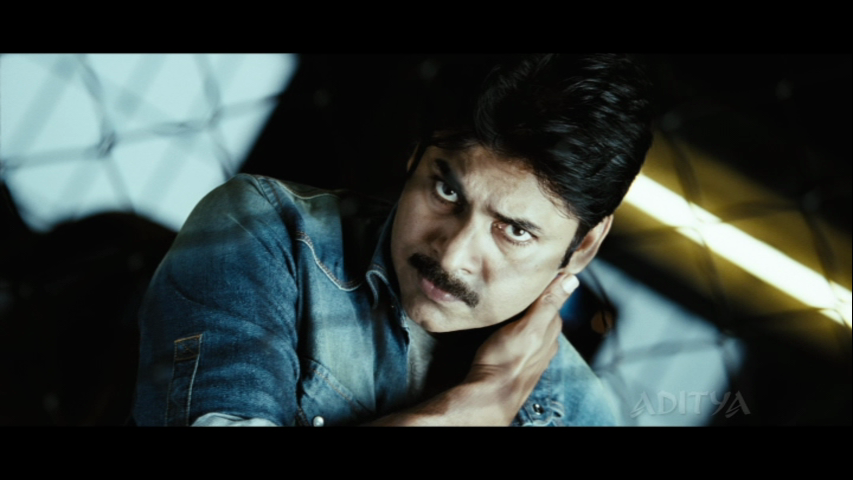
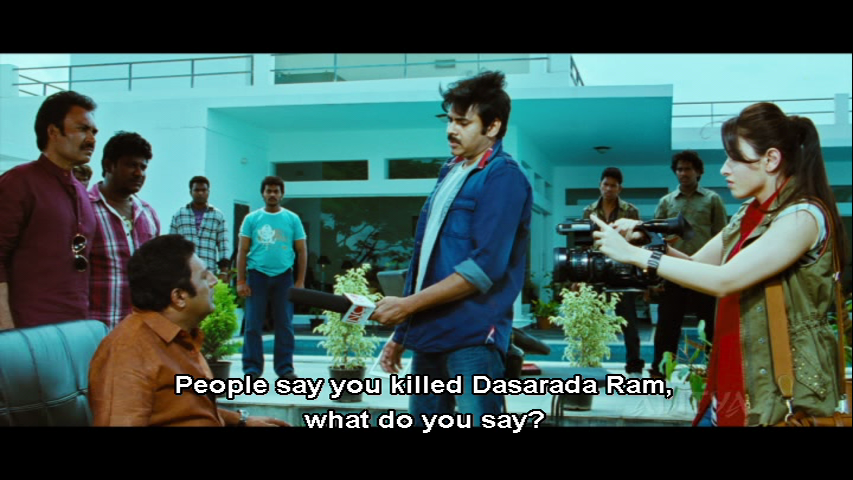
CGRCGRCGRCGRRambabu (Pawan Kalyan) is a mechanic who has superhero tendencies to fight crime, a large mural of Che Guevara on his apartment wall and an idealistic view of a utopian world which he tries to make reality.  To that end he races off to beat wrongdoers into submission whenever he hears of injustice or petty crime on the news and provides assistance to widows, orphaned children and marginalised members of society whether they want it or not. Rambabu’s determination to break up a fight between two rival student groups leads him to feature on the news himself and brings him to the attention of cameraman Ganga (Tamannah).  After a brief meeting, Ganga decides that Rambabu would be perfect as a journalist and despite a conspicuous lack of any training, her station head agrees wholeheartedly giving Rambabu carte blanche to do whatever he wants as a reporter on the news channel.

CGRCGRCGRCGR

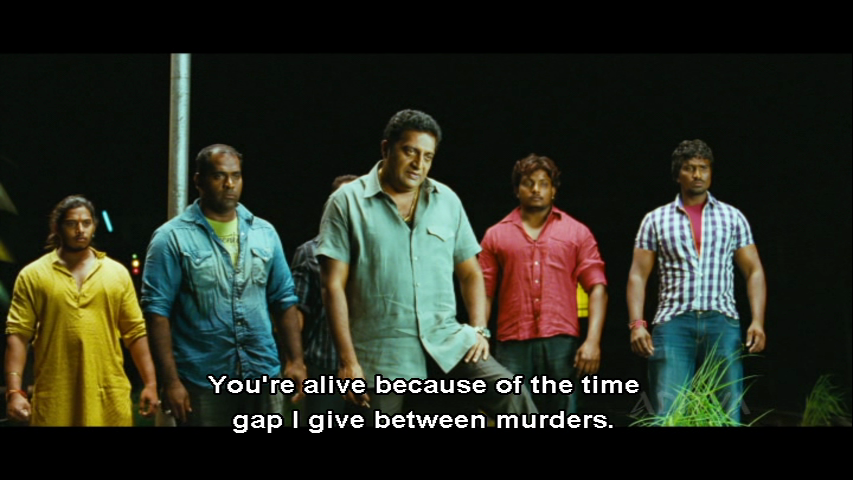
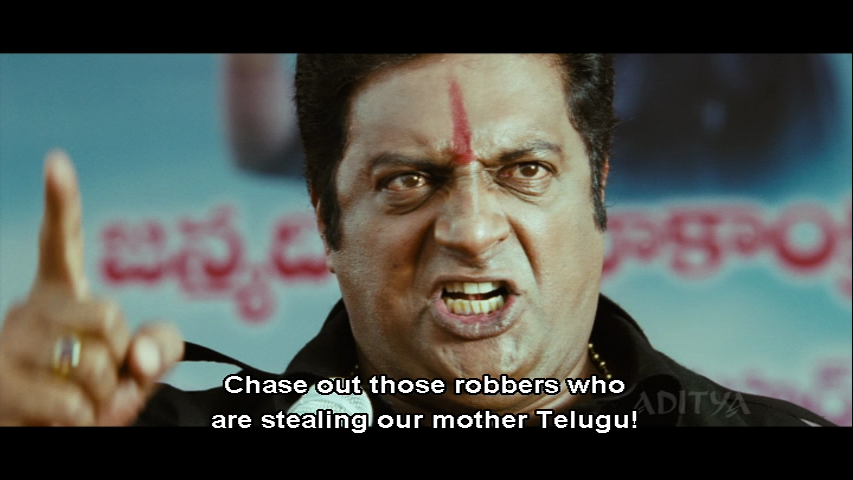
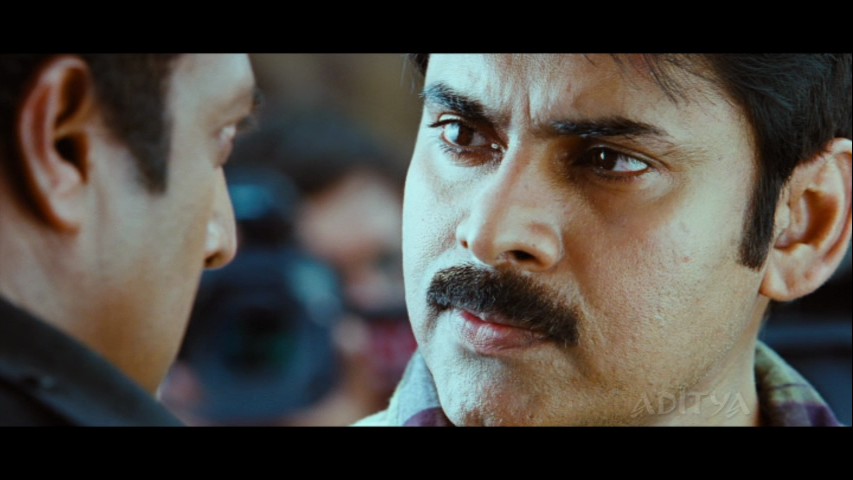
Inevitably this brings him into conflict with politician Jawahar Naidu (Kota Srinivasa Rao) who is prepared to do anything to win back the role of Chief Minister from the incumbent Chandrasekhara Reddy (Nasser).  This looks promising, but since both politicians are one-dimensional caricatures of absolute black and white they end up as rather ineffective characters.  Jawahar Naidu is evil with no redeeming features, prepared to murder, lie and cheat his way back into power while Chandrasekhara Reddy is painted as the perfect CM who is kind, compassionate and honest although at one stage he does confess to an ambition to hang onto his top spot.  Added in to the mix is Jawahar’s equally amoral son Rana (Prakash Raj) who takes over his father’s manifesto when Jawahar suffers paralysis and has to withdraw from active campaigning.  The real battle is the one that develops between Rana and Rambabu and the scenes between these two are generally the best in the film.  Prakash Raj is excellent as he sneers and schemes his way to political success and Pawan Kaylan is zealous and righteous in appropriate amounts as he counters Rana’s various plots.
CGRCGRCGRCGR

Tanikella Bharani also puts in an impressive performance as Jawahar’s brother-in-law and right hand man. He is obsequious and just a little bit creepy as he fawns over Jawahar while making sure that self-preservation is still his number one policy. I also have to mention the excellent décor in Jawahar’s house which was beautiful and made a welcome contrast to his bombastic, over-emotional and over-acted speeches.

CGRCGR

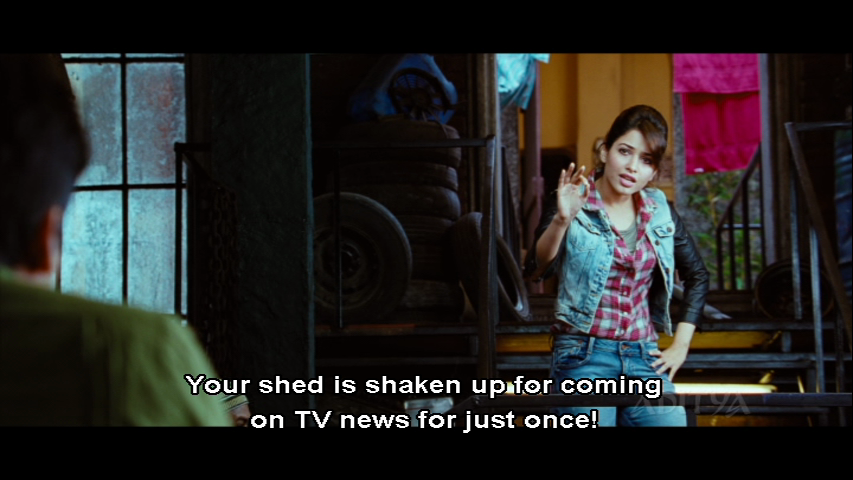
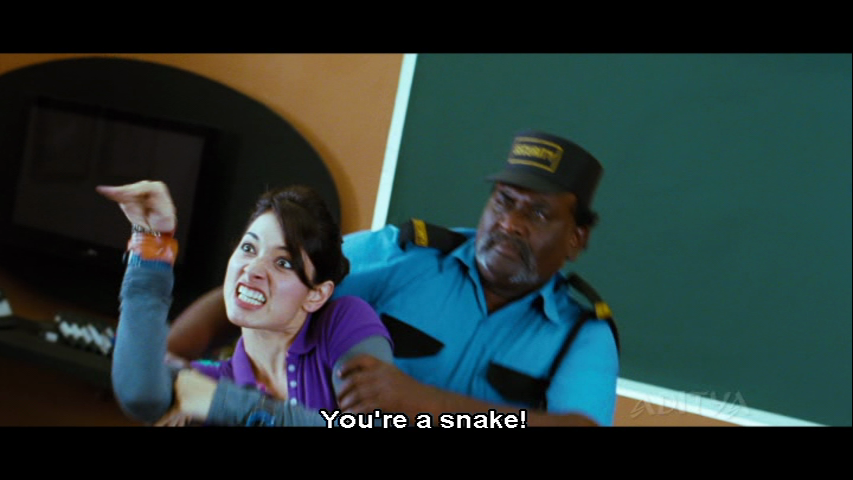
What don’t work as well are the interactions between Rambabu and his various work colleagues including Cameraman Ganga.  Although Ganga has equal billing on the title, in reality the character is only peripherally involved with the action of the story, and her main role is in a rather clunky romance with Rambabu.  Ganga is bratty and immature and her hearty attempts to appear as a “woman in a male dominated career” are unimpressive and implausible.  Her reaction to her rival Smitha (Gabriela Bertante) is also rather too ingenuous although I like Ganga’s accusation that Smitha is a snake.  Smitha does show a number of snaky characteristics but sadly that’s as far as any possible naga connection goes.

CGRvlcsnap-2013-05-28-07h09m45s220

 Smitha is the owner of a rival TV station who snaps Rambabu up when Jawahar forces him out of the news channel. Although I liked the overall idea of Smitha’s character and was hoping for a sharp, slightly unethical businesswoman to add another layer to the plot, the execution failed miserably and Smitha’s character was wasted as basically another love interest.

Ali appears as the head of social interest at the TV channel and there are some inane attempts at comedy which fall very flat.  Later comedy scenes with Brahmi are better, although the placement of some of these seems odd as they break into the action and slow down the film momentum just when it begins to take off in the second half.   The music by Mani Sharma is also nothing special but isn’t helped by lacklustre choreography.  Scarlett Wilson appears in a forgettable item number while the other songs are mainly pictured on Tamannah and Pawan Kalyan.  However this one featuring Gabriela is a little more interesting, since she does get to wear a large hat which seems to fit rather well with the giant mushrooms in the background and I think does help reinforce the snake connection.

The opening titles over news reels of various marches, speeches and events suggests that CGR will be a political thriller, but instead it’s a standard mass movie which doesn’t manage to break out of the usual mould.  There are some good ideas in here but the film needed better editing as it’s too long with too many irrelevant side issues which detract from the main story.  The inability of corrupt politicians Jawahar and Rana to make effective comebacks when questioned by Rambabu feels very contrived since surely politicians should be excellent wordsmiths – or at the very least have PR people who can write their speeches and stop them from speaking out of turn, while Nasser’s Chandrasekhara Reddy is improbably perfect .  The characterisation of Ganga is also irritating and Tamannah is capable of much better than this overacted and disappointing performance from her.

Cameraman Gangatho Rambabu works as a mass masala film, not as a political message movie despite Rambabu socialistic tendencies,  and as such the performances by Pawan Kalyan and Prakash Raj ensure that it’s entertaining enough for a one-time watch. It just could have been so much better. 3 stars.

CGR

Iddarammayilatho

Iddarammayilatho

I haven’t been too impressed with the last few Puri Jagannadh films I’ve seen, but I was hopeful that this latest offering starring my favourite hero might offer something a little different.  But although the film is visually very pretty and both Bunny and Amala Paul do their best with their respective characters, the story has far too many plot holes and is frequently too unbelievable to make Iddarammayilathi anything other than disappointing.  While there is the expected excellent dancing from the stylish star, some good fight scenes and Bunny and Amala make a sweet couple, it’s just not enough to make up for the screechy, irritating Catherine Tresa and a dire comedy track which almost completely derails the film in the second half.

Bunny 2

The film follows Akanksha (Catherine Tresa), the daughter of a prominent politician in  India (Rao Ramesh) who moves to Barcelona to study psychology.  She has a fantastic room which just happens to contain a box belonging to the last tenant.  Inside is a diary which tells the story of a romance between Sanju (Allu Arjun) and the room’s previous occupant, Komali (Amala Paul).  The romance is played out in flash-back as Akanksha talks endlessly to herself about the diary’s revelations and frankly seems far too interested in the details of a stranger’s love life.

Iddarammayilatho

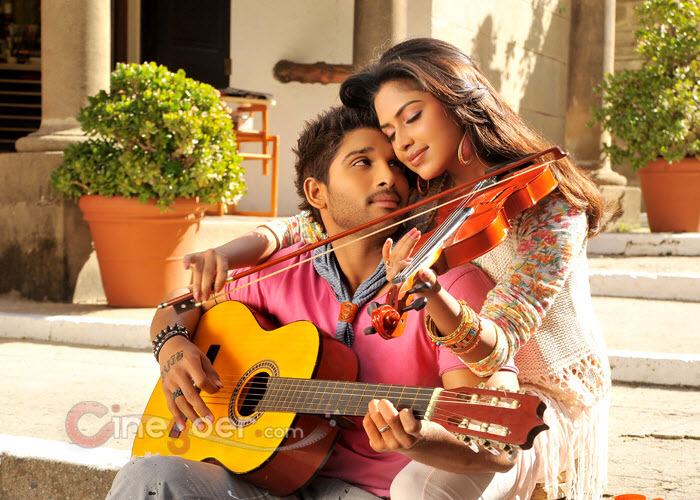
Bunny looks great as Sanju Reddy, a singer/dancer who performs with his band in the streets of Barcelona and is surprisingly successful considering that the band seems to perform exclusively in Telugu in a Spanish/Catalan speaking city.  He’s also pretty nifty when it comes to the obligatory biffo although his prowess in this area is never really explained – but then neither is anything else so at least there is consistency in the lack of elucidation.  Sanju falls in love with Komali who is in Barcelona to learn classical music from Brahmi – again, completely nonsensical but there is even more absurdity to follow.  Amala does a good job as a demure and rather shy violinist apart from being completely unable to fake playing a violin.  She does look stunning though in some beautiful costumes and has good chemistry with Bunny so at least the romance part of the story is believable.

IddarammayilathoIddarammayilatho


For a change I really liked Bunny’s various outfits too, which aren’t as over the top as his last few films and do appear fashionable with a European touch.  Most of the songs by Devi Sri Prasad are fairly average, but the choreography is good if not exceptional and Bunny as always proves he really can dance. However a dance off between the classically influenced Brahmi and the more rock and roll Sanju would have been much better if the backing dancers had been able to keep up with the choreography.  There is a short tribute to Chiru’s Gangleader which got the biggest cheers from the Melbourne crowd, but this was my favourite:

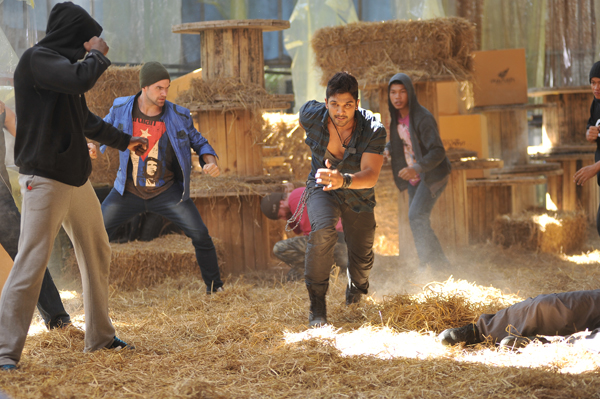
The love story ends abruptly in the diary so Akanksha tracks down Sanju to find out what happened and learns of a tragedy that occurred when Sanju and Komali crossed paths with a gangster (Shawar Ali). Shawar Ali has to be the dullest and most incompetent villain ever and it’s surely only by chance that Komali is the only person who sees him execute one of his gang on an incredibly public beach in broad daylight.  Unbelievably, it takes all the might of his gang of assorted thugs, sword-wielding ninjas and Subbaraju in a rather dapper beanie to deal with one petite classical violinist and her guitar playing boyfriend!

IddarammayilathoIddarammayilathoIddarammayilatho

 While Akanksha shrilly indulges in flagrant scenery chewing and desperately tries to persuade Sanju to fall in love with her, Sanju has his own agenda for revenge which ends up with a surprisingly good and effective plot twist with a flashback to some of those awesome sword fighting techniques from Badrinath.  Overall, apart from the woeful comedy scenes with Brahmi and Ali, the second half moves faster and is a little better than the first, although that may just be that I stopped worrying about the lack of logic and settled back to enjoy Bunny’s dancing and the fact that he does look as if he can actually play a guitar.  The fight scenes by Kecha are also beautifully choreographed and appear more like dancing than fighting, an effect which is heightened by Sanju’s total lack of emotion as he calmly and efficiently despatches everything and everyone that is thrown at him.

Iddarammayilatho

Iddarammayilatho looks beautiful and cinematographer Amol Rathod makes the most of the location in Barcelona, showcasing some of the beautiful buildings in the city, but the film is let down by a complete lack of logic in the story and very little in the way of character development .  Although the cast in general put in good performances, most of the supporting mothers, fathers etc have very little to do and both Subbaraju and Srinivas Reddy are chronically underused.  Brahmi is fine in the first half but the comedy with Ali is totally pointless and almost as irritating as Catherine Tresa.  Perhaps understanding the dialogue might have made Akanksha a more appealing character, but somehow I doubt it.  I still enjoyed the film, but more for the location, action scenes and dance numbers which were all good.  Overall, Iddarammayilatho is worth a look for Allu Arjun fans and anyone who likes movies with pretty scenery and great architecture.

Iddarammayilatho

Muta Mestri

Muta Mestri is a masala film with a message, featuring Chiru with director A Kodandarami Reddy, and dialogues by the Paruchuri brothers. Overall the blend of ideas and drama and action is balanced. The action is full throttle, the dancing energetic, the ladies outfits are frequently hideous and the message is generally one I can get on board with. What works, works well but there are some heavy handed moments and a few assumptions around values that left me cold.

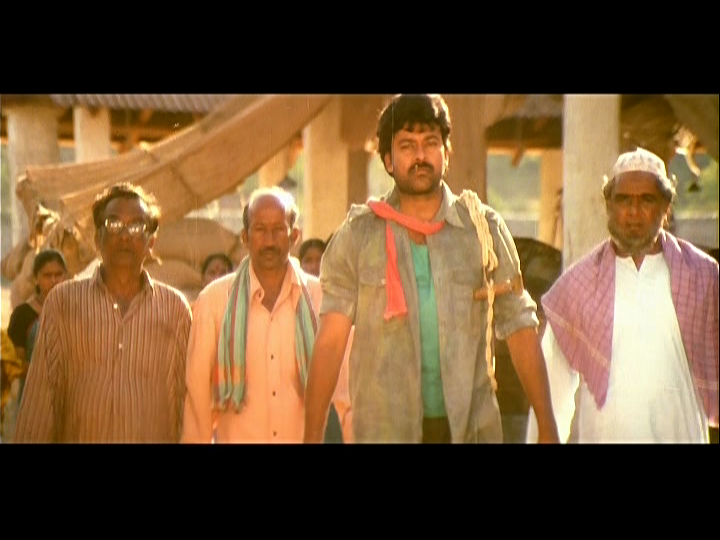
Chiranjeevi is the very patriotic Subhash Chandra Bose, the ‘Labour Contractor’ at a local market. He gets an excellent introduction when Sukkamma bets Brahmi a nudie run that the porters can’t unload waiting trucks in less than 10 minutes.

Whenever Bose arrives by bike, he just lets the bike careen off into the distance. It oozes confidence and a dash of silliness which is perfect for this role. Oh and she loses the bet.

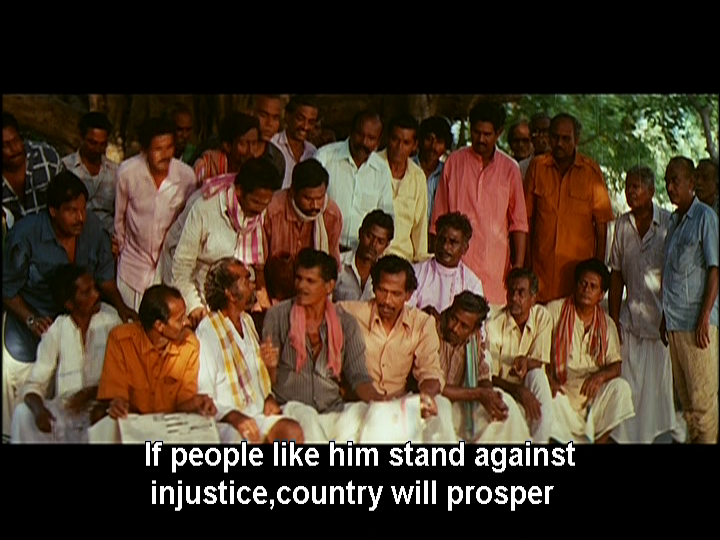
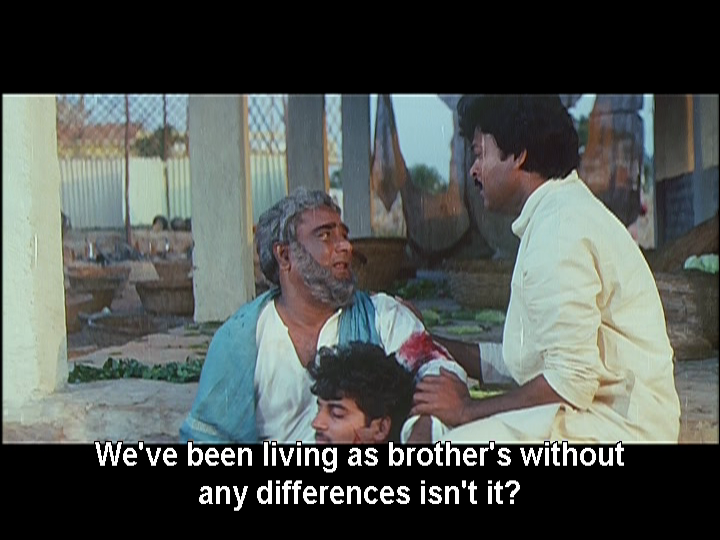
The market is a harmonious community of men, women, Hindus and Muslims all working together. There are some statements to the effect of unity equalling strength.

Allu Ramalingaiah plays a teacher who educates the children about Independence, Gandhian principles and the like and regulars Brahmi and Ali lurk in the support cast too. It’s the India that should be, according to the vision of this film. Kasim is one of the more prominent support characters and he and his son are well liked. They celebrate their Hindu friends’ festivals and the Hindus respect and understand Muslim religious practice. Indeed, knowledge of prayer times sparks a crucial plot development towards the end of the film. Diversity is shown as beneficial, not just something to be tolerated.

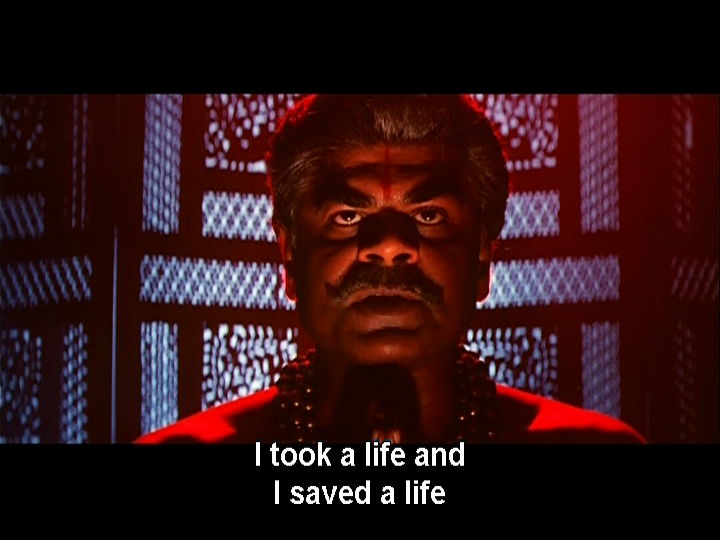
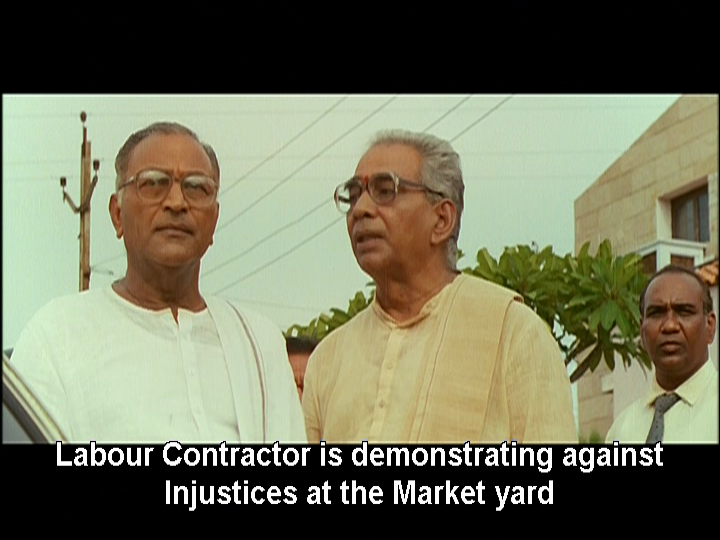
Atma (Sharat Saxena) is the villain of the piece. He is more of an ascetic style of villain, believing he has a relationship with god that allows him room to negotiate indulgence for bad deeds. He wants to use the land the market is on for a new development. The market folks turn to Bose for help and he stages a non-violent protest outside Atma’s house.

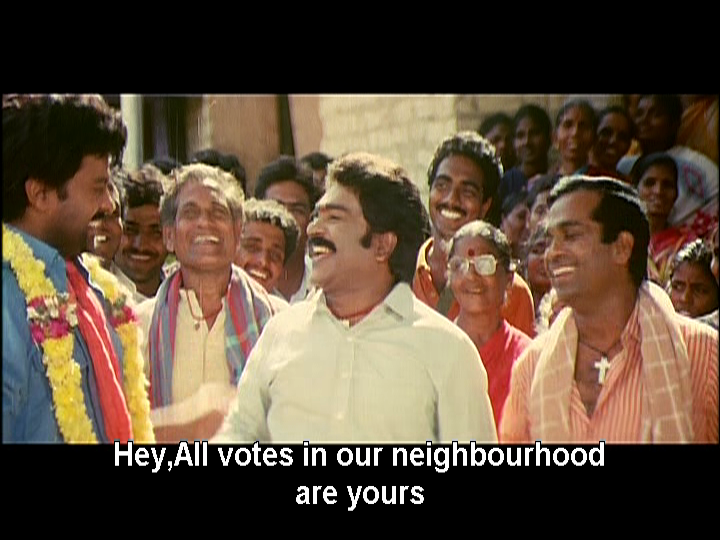
Bose allies with MLA Sundaraiah and the CM (Gummadi) and eventually moves into politics – a position that Atma wanted for his son Dilip. Dilip is the kind of baddie who pulls up outside a school and plays loud crappy music to drown out the pure sweet sound of innocent school children singing the national anthem. And adding insult to injury, he then dances badly in the street. Obviously Bose wil deal with him severely.

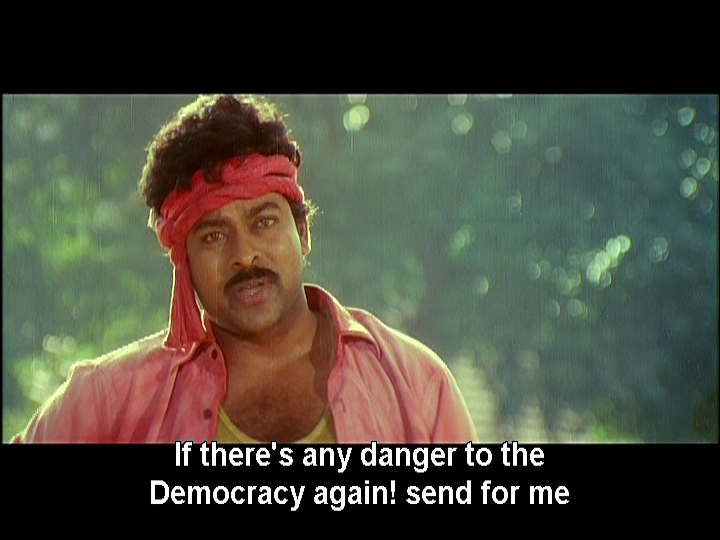
Bose brings a direct and action oriented approach to politics. There is a great sequence of Bose being wheeled from one photo op to another with the emphasis on being seen to feed orphans or plant trees rather than actually doing it. Bose reprimands his advisors and starts making his own decisions based on what he sees as right. He upsets the applecart and the CM loves him for it, as do the people. This is a major theme in the story and there are recurring examples. The film also makes a point about the quality of people in politics, and the shift from people who wanted to change the world to those who just want to profit from it. People have a responsibility to try and fix things, not just leave them for someone else to clean up. For all the idealism Bose spouts, it’s a deeply cynical film.

Atma realises that the only way to hurt Bose is to attack his loved ones and discredit him. Bose realises that he can’t sort out Atma while he is part of the government. It is a similar idea to the cop/vigilante issue raised in other films. Justice is located outside of the legal system and good men can do illegal things as long as they are doing them for the ‘right’ reasons.

The action scenes are energetic and impressive, and Chiru is in excellent form. The fights are fast and athletic, and suit his character’s style. Actually, Bose has multiple fight styles and uses them to entertain people watching him belting the daylights out of the baddies. I liked Bose’s interactions with the other guys at the market and Chiru has a gleam in his eye when he gets into the rousing speeches. His dancing is excellent, and especially when he has the opportunity to go for it.  A lot of the comedy is Bose bumbling his way through the intricacies of political life, and the hassles of being a chick magnet so it isn’t too intrusive even if it is very silly. Chiranjeevi looks great in simple working attire, although he does veer into acid wash denim territory which is less pleasing. The song costumes are an outlet for the frustrated wardrobe team. I keep saying this, but Chiranjeevi is such an accomplished actor. He finds opportunities to give his character more depth and complexity than a mass film may require, making the overall result more engaging and credible.

There are some things I took issue with. Bose’s sister Jhansi gets home late from college and because he sees the neighbours watching, Bose slaps her. There is a tearful repentance that follows, and the upshot is that avoiding reputational damage is the responsibility of women. That scene will come back to haunt Bose in a major way but it left a bad taste in my mouth, especially when Jhansi basically apologised for making him feel the need to hit her. Grrrr. At the same time, Bujamma (Meena) is very forward in chasing Bose and there is no penalty for that. So his sister has to be perfect and virginal but he will marry who he chooses and think no less of her for trying to get her hands on him before the wedding. Sigh.

All of the females in the film are given short shrift. Bujamma is, as Bose repeatedly tells her, loud, crass and stinks of fried food from her snack stall. She keeps trying to transform herself to be more like what he wants but cannot change her nature. Some of it is quite funny, as in a challenge to stay silent for 24 hours, but some of the dialogues are just plain mean. Meena is pretty and lively enough as Bujamma although her performance is a bit grating. Kalpana (Roja) is Bose’s secretary, and as Bujamma sees her the main rival for Bose. Roja doesn’t get much to do apart from stand around and look decorative although she is afflicted with ‘comedy’. Brahmi decides to help Bujamma keep Bose and Kalpana apart by telling Kalpana that after six…she’d better watch out.

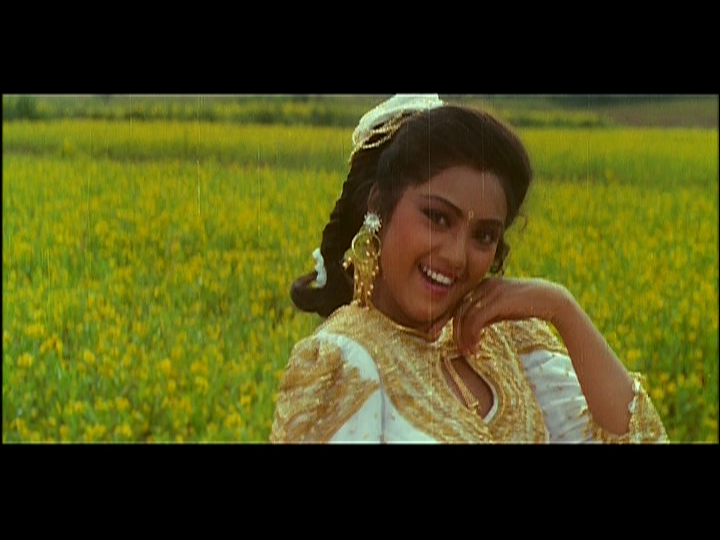
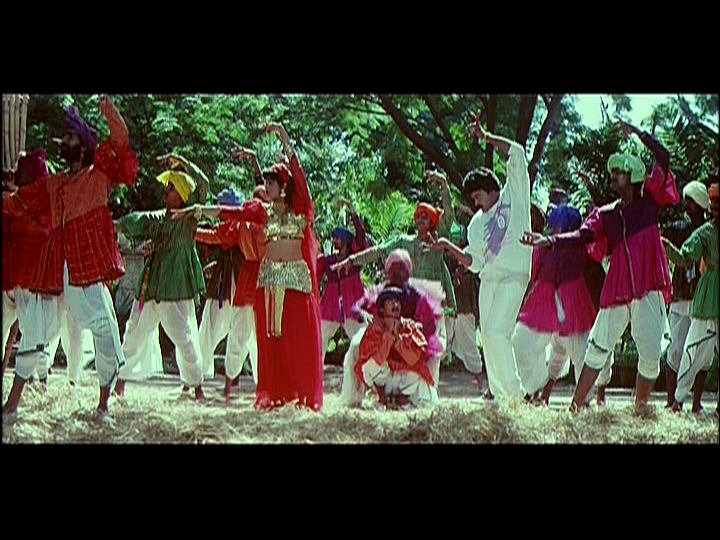
Despite that excellent piece of advice, it’s a stupid and unnecessary diversion as Kalpana keeps fantasising about Bose’s possible sexual advances and fainting all over the place.  Although it did lead to this song:

http://www.youtube.com/watch?v=jcka4KY-8ww

She seems to think that was a nightmare. Ahem. (Note – if you want the film on DVD, the Moser Baer DVD doesn’t include that song but the EVP one does.) Koti’s music is not particularly memorable but the picturisations and costumes made an impression. If that isn’t enough costume WTFery for you, please be my guest:


Despite an escape plan that uses a detailed model, Bose catches up and Atma and Dilip are dealt with in excellent and elaborate style.

If ‘cross-country arse-kicking’ was an Olympic event, Bose would have taken gold (and possibly also silver and bronze). Justice is done, at least for some.

It’s an entertaining enough film, but not quite enough to make me want to watch it too often. There is some substance lurking under the cheese, but I have issues with the treatment of Jhansi in a film that was otherwise very positive about equality and community. See it for Chiru’s dancing, the outfits and the come-uppances. 3 ½ stars.