Manam (2014)

Manam

Manam is a beautiful film and a breath of fresh air in an industry usually dominated by beat-‘em-up heroes and the same old innuendo masquerading as comedy.  Featuring three generations of the Akkineni family and Nageswara Rao’s final screen appearance, it could very easily have tipped into trite sentimentality, but Vikram Kumar’s screenplay keeps the film on track with an novel storyline, sweet romances and genuinely funny comedy.  I have to admit that I almost didn’t buy a ticket when I read that Manam was being advertised as a comedy, since without subtitles most of the humour tends to pass me by (even with subtitles in some cases!) but Manam would have been a watchable and entertaining film even without subs.  As it was, being able to understand the jokes and laugh at the same time as the rest of the audience was excellent.  Long may this trend for subtitled Telugu films continue in Melbourne!

Manam Manam

The film starts in the 1980’s with the unhappy marriage of Radha (Naga Chaitanya) and Krishna (Samantha) who bicker and fight even on the occasion of their son’s sixth birthday.  The very next day they are both killed in a car accident, leaving the young Bittu an orphan and his wish to see them happy together unfulfilled.  This doesn’t seem to have held Bittu back however, as the film moves to the present day, and the now grownup Nageshwar Rao (Nagarjuna) is in Mumbai to receive the Businessman of the Year award.  However, on the flight back to Hyderabad, Nageshwar is seated beside a young man who is the image of his late father, and this begins his crusade to bring his ‘parents’ back together again.  Nagarjuna is absolutely perfect here and his child-like wonder at discovering ‘his father’ is brilliantly portrayed.  The scene is well written too, with the just the right amount of comedy to keep it from cloying sentimentality and Vikram Kumar even manages to make the suggestion of such an occurrence seem perfectly plausible.


Samantha and ChaitanyaManamNageshwar reasons that if his father has been reborn, then his mother must be around somewhere too, and to this end he scours the streets of Hyderabad until he tracks down Priya (Samantha) who is the image of his mother and, luckily for Nageshwar and his plans, she immediately feels a connection.  Again Nagarjuna’s determined search is neatly summarised in just a few shots and the obvious unlikely coincidences feel much less contrived than expected.  It help that both Nageshwar and Priya are very likeable characters and Nagarjuna and Samantha ensure their interactions are full of genuine warmth and respect.

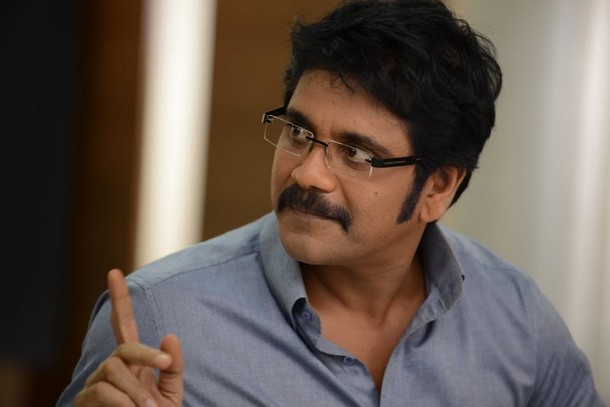
ManamNagarjuna

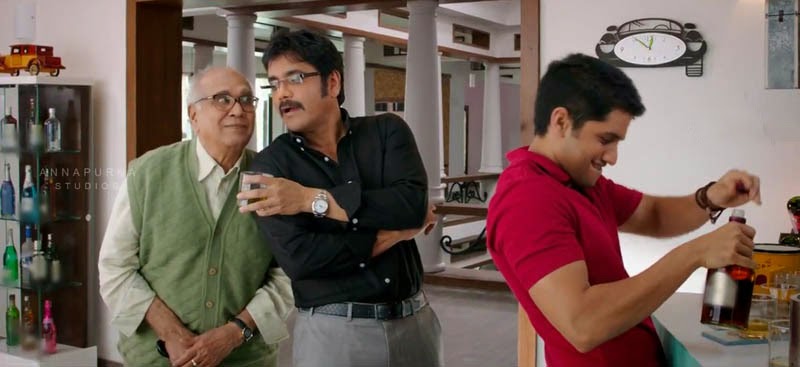
Having found his re-incarnated father and mother, Nageshwar has to find a way to re-ignite their romance.  In the midst of his attempts to bring about true love, Nageshwar finds love himself when Anjali (Shriya) commandeers his car to carry a sick man to hospital.  As it turns out, the older man is Chaitanya (Akkineni Nageswara Rao) who has seen his parents Seetharamudu and Ramalakshmi  reborn as Nageshwar and Anjali.  It’s then his turn to explain the past and try to reunite the lost lovers.
Manam

ANR is the absolute star of the show, and seems to take great delight in playing the octogenarian matchmaker.  He is mesmerising every time he appears, and his facial expressions and reactions to every other character are superb.  For his part, Nagarjuna is quietly competent as Nageshwar Rao with a subtle but effective performance, and his romance with Ramalakshmi in the second half is an absolute delight to watch.  There seems to be something in Temple’s theory that Shriya Saran’s irritation factor is related to the length of her hair, as here she has long hair and is actually pretty good.  Shriya looks beautiful and displays an engaging personality as a 1920’s traditional villager, and she is just as stunning as the cool and efficient Dr Anjali.  I vote Shriya always has long hair in her movies!

Manam

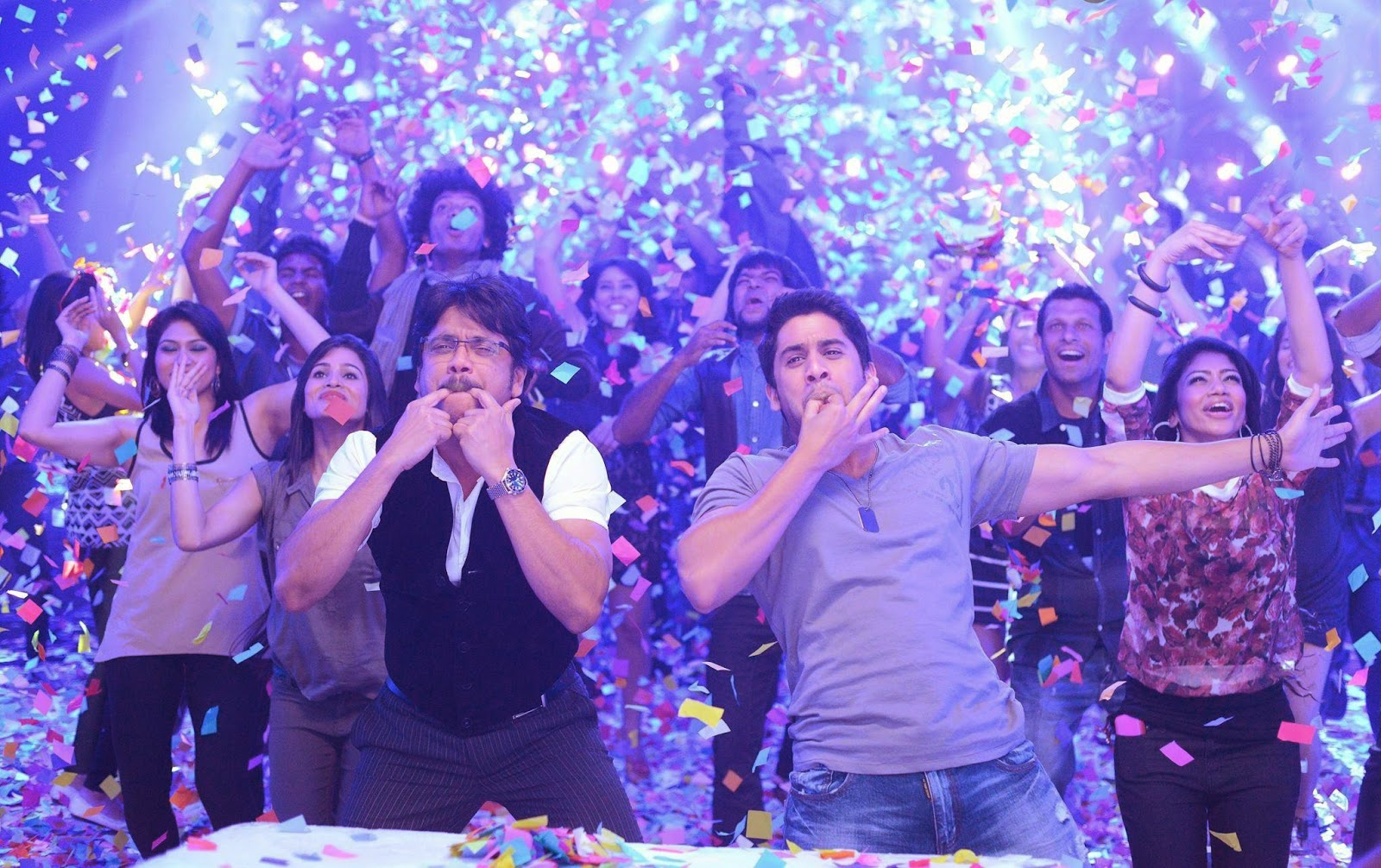
Nagarjuna and Shriya also share good chemistry together, which is sadly conspicuously absent in the romance between Samantha and Chaitanya, although to be fair the script really doesn’t ever let them develop much sparkage except in the way of confrontation.  Despite the lack of passion with Chaitanya, Samantha shines as Priya / Krishna.  She sparkles in her songs, and is full of bubbly enthusiasm as she meets Nageshwara, but her pain at her perceived husband’s betrayal is obvious as is her contempt of Chaitanya’s Nagarjuna.  Chaitanya is also better than usual, although that may be because his role mainly requires him to play a drunk and obnoxious college student which he seems to fit well.  The usual suspects pop up as various mothers, fathers, cousins etc, but do watch out for the brief cameo appearance of Amitabh Bachchan which garnered plenty of cheers from the audience.
Manam

It’s not all perfect though – the inclusion of Ali as a dance teacher is unnecessary and M.S. Narayana’s role is too obvious and crude to fit with the rest of the characterisation.  However Brahmi is good as Nagashwara’s assistant and without any misogynistic humour, he manages a restrained performance that proves he can act perfectly well when required.

Manam benefits from a sweet and  simple telling of a relatively convoluted story.  There are no exciting car chases, no big fight scenes and no cliff-hangers (even though the last few minutes attempt to raise the dramatic tension), but overall it’s an entertaining and watchable film.  All praise must go to Akkineni Nageswara Rao and Nagarjuna for their exemplary performances, but the younger generation hold their own, with even Chaitanya showing that he learnt something from the rest of his family while on set.  Definitely recommended viewing and a last performance to savour from one of the legends of Telugu cinema.

Sahasam

Sahasam-Telugu-Movie-Poster

Who doesn’t love a good treasure hunt and adventure? Chandrasekhar Yeleti and the team who made Sahasam, that’s who! Well, at least they certainly haven’t made such a film so I have to wonder. Loosely drawing inspiration from Hollywood blockbusters like the Indiana Jones franchise and Telugu forebears such as Mosagallaku Mosagadu, this had the potential to be a highly entertaining tale. I expected better from the director of one of my favourites, Anukokunda Oka Roju.

The story centres on a simple and superstitious man who dreams of great wealth. When he finds his grandfather’s old papers he realises there may be a hidden family treasure. Unfortunately for Goutham (Gopichand) the treasure is stashed near his ancestral home in what is now Pakistan (shown in a flashback with Suman as the grandfather). And Pakistan, according to this film, is populated exclusively by terrorists. Even good characters think nothing of abducting people at gunpoint. Goutham crosses paths with Sreenidhi (Taapsee), a religious girl who is organising a pilgrimage to – guess where. He inveigles his way on to the trip and off they go. The second half of the film is the treasure hunt as Goutham tries to find the diamonds before Sultan (an, er, unbridled Shakti Kapoor) and his sidekick Dilawar (Raj Singh Arora) can get their hands on the loot.

Sahasam-the book

Gopichand has the requisite skillset for a Telugu film hero, but the material here is thin at best. The first hour or so is spent proving that Goutham is a bit dim and quite unlucky. You would only need so long to understand that if you were dumber than Goutham. The fight scenes are very athletic (the fake blood budget was fully utilised in many, many dismemberments) and Gopichand was clearly in his element in the thick of the action. Post interval Goutham becomes something of a puzzle solving killing machine with photographic recall which was moderately more entertaining. Goutham’s catchphrase is that he won’t take anything that isn’t his, but if it is his he will never give it up. And that sums him up as a dogged, dour hero rather than a swashbuckling one.

As Goutham wasn’t motivated by the usual romantic notions, Taapsee had even less to do than might be expected from the heroine. I find her appeal inexplicable so that was an excellent result. She does use both her facial expressions (grimacing and simpering) so I suppose that is something of an achievement. To be fair, her big moment was as a goat substitute in a game of buzkashi so there wasn’t a lot of nuance for her to convey. Zara, an ally in Pakistan, was much more effective as a character and her performance was more appealing.

Ali’s character was supposed to be an Indian security expert living in Pakistan but he gave his usual shtick and Qayamat Raju was just an annoyance. Shakti Kapoor is insanely over the top and while I enjoy a properly nasty villain as much as the next person, he spiralled from cunning and ruthless to stupidly petulant and cowardly and finally outright buffoonery. I would not have bet on seeing a worse actor than Abhimanyu Singh in my lifetime but a new contender has emerged in Raj Singh Arora. His idea of intensity is pursed lips and bug eyed staring which has an unfortunately comedic effect when his glued on beard is taken into account. A villain can be crazy but they have to be a credible threat and imbue the dynamic with some menace. Otherwise they are just a jumped up comedy uncle.

If I may name drop, earlier this week I attended a masterclass by the amazing Suhasini. Among other things, she spoke about the difficulty of capturing the expression and spontaneity of the live scene when dubbing dialogues. The sound team in Sahasam decided to get around this by ignoring such details. At one point the dubbing is so bad that the screaming goes on long after Gopichand has shut his mouth, and minutes later vigorous fight noises are dubbed over characters who are doing nothing.

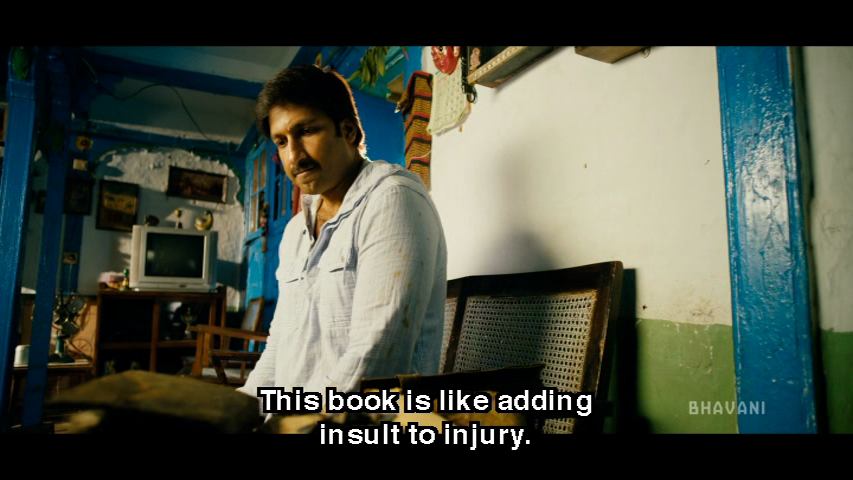
The production design is often excellent, but some clunky CGI does detract from the drama. I liked the scenes set in Goutham’s home as it looked eccentric and colourful but still lived in and real. Ladakh played the role of Pakistan and cinematographer Shyam Dutt used the stunning scenery and harsh light to good effect. Unfortunately Shakti Kapoor and his convoy of thugs are often blocking the view. The ‘olden days’ sequences are blighted by some cheap looking visual effects and inconsistent approach to things like light sources in underground chambers. I found myself being distracted by the similarity of all the spiderwebs in all the caves and wondered if they were bought in bulk.  And apparently the ‘terrorists’ use special bullets that can kill a man but not penetrate a car windscreen. Then there are the other special bullets that can destroy masonry but not harm Gopichand. Sigh.

There are five writers credited (including Chandrasekhar Yeleti) and I wonder if that contributed to the lack of cohesion in the story. There are several tangents that fail to develop into anything substantial or credible and the mood sometimes changes abruptly. The pacing is never quite right and there is no tension leading up to the final scene despite all the ingredients being present.  I read an interview with the director and he mentioned that he felt obliged to change things a bit to suit Gopichand’s image. Perhaps the film would have benefited from some more consideration as to how to incorporate the action hero elements.

https://www.youtube.com/watch?v=9XPuPo4nCFM

The songs by Sri are average and not very memorable. The hero introduction has some visual flair but the songs don’t contribute to the story and the picturisations are nothing special.

It was like watching two really bad movies rolled into one. Sometimes that results in a guilty pleasure that is So Bad It’s Good. Sahasam is only halfway there if you catch my drift… 2 stars!

Sahasam-fugitives

Desamuduru (2007)

Desamuduru

There are a number of reasons why I love this film, although they can be summed up easily as plenty of Allu Arjun and dancing! A lot of work has gone into showing off Bunny’s six-pack throughout the film, and I definitely approve.  In addition, there are some great fight scenes (where Bunny follows the Salman Khan principle of removing your shirt wherever possible), Cinema Chaat favourites Ajay and Subbaraju appear as villains, and it’s one of the very few films where Hansika doesn’t irritate me to the point of switching off.  And there is of course this:

Don’t be put off by the picture – there is nothing of Ali in this clip!

The appeal of Desamuduru definitely lies with the cast and their energetic performances rather than a good storyline or even well-written and believable characters – because it doesn’t have either of those.  Desamuduru was Puri Jannaadh’s follow-up to Pokiri, and perhaps after such an exceptional effort, he just ran out of new ideas.  The plot is paper thin and the story follows a well-used formula without anything novel in the execution.  Perhaps as compensation, the director ups the pace, meaning that the lack of a storyline tends to vanish in the constant confusion of fight scenes and action shots.  At least the high energy ensures that Desamuduru has mass appeal, even if it doesn’t rise to the dizzy heights of Pokiri.

DesamuduruDesamuduru

DesamuduruDesamuduru


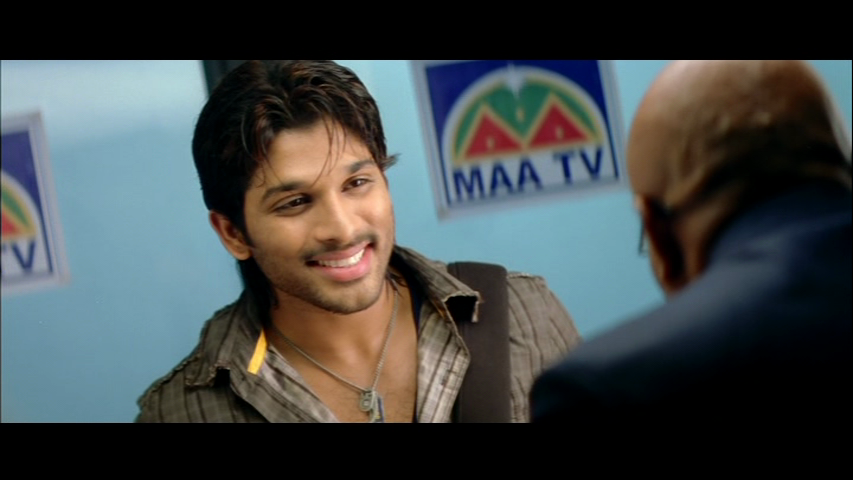
Bunny’s Bala Govind is an arrogant young TV reporter working for his father on the crime beat with Maa TV.  He has a basic idea of what is wrong and right – for instance, killing people is wrong.

Desamuduru

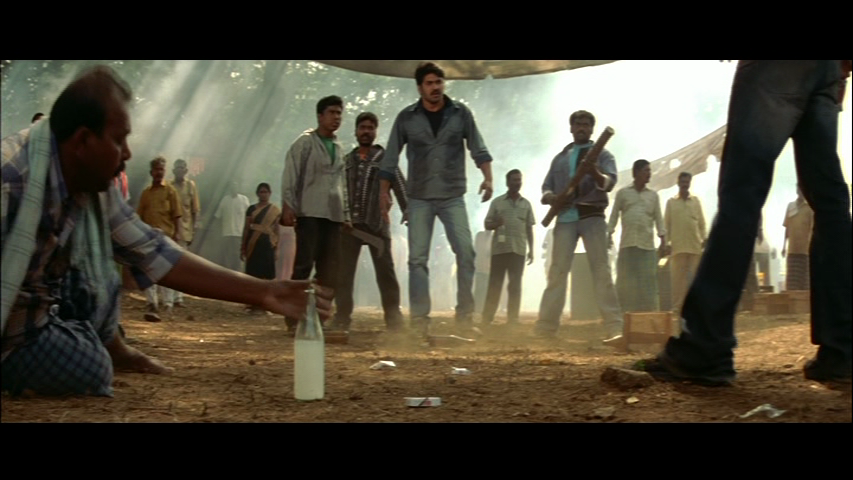
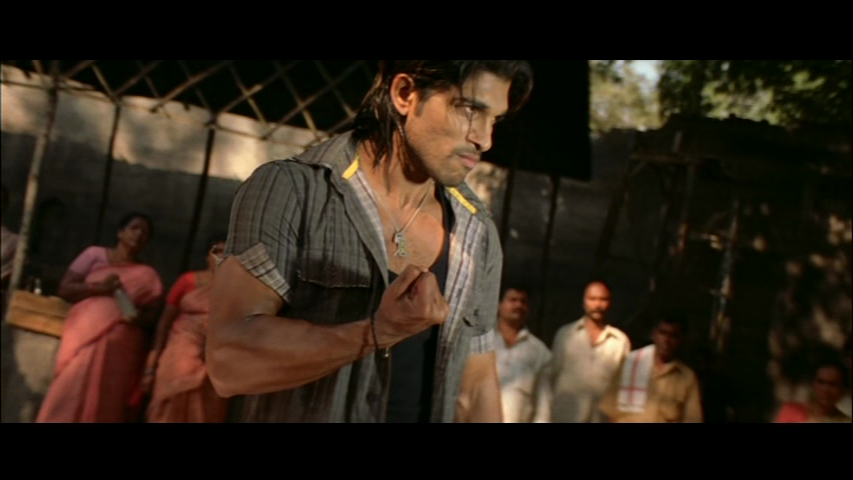
But beating them up within an inch of their lives is apparently perfectly OK.

DesamuduruDesamuduru


Some of the detail in these scenes is excellent – I love how the drunk pulls his bottle of booze out of harm’s way, and how Bunny’s shirt slowly rips as he flexes his muscles – classic!

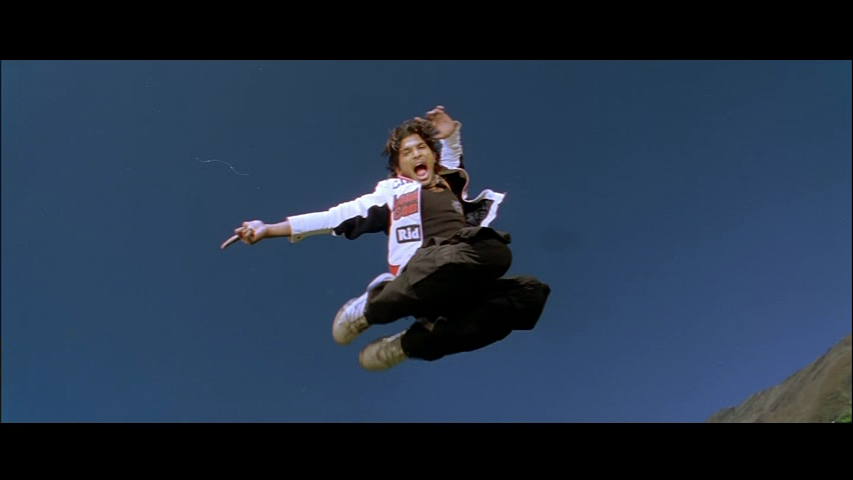
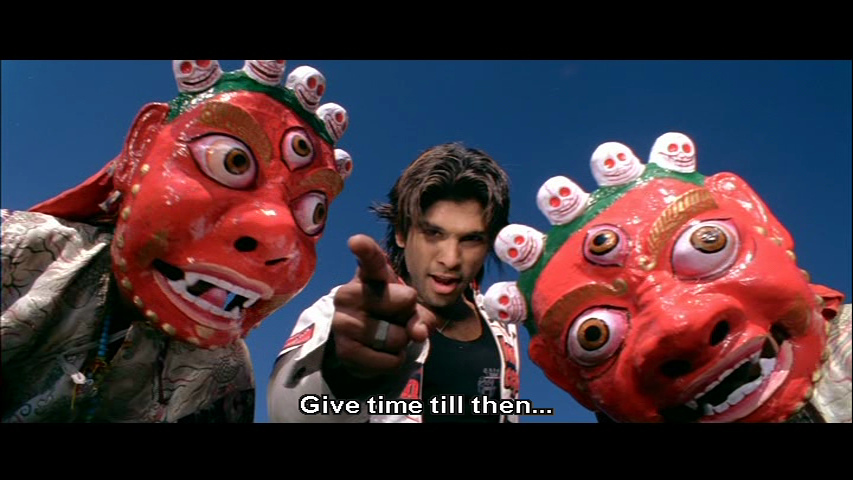
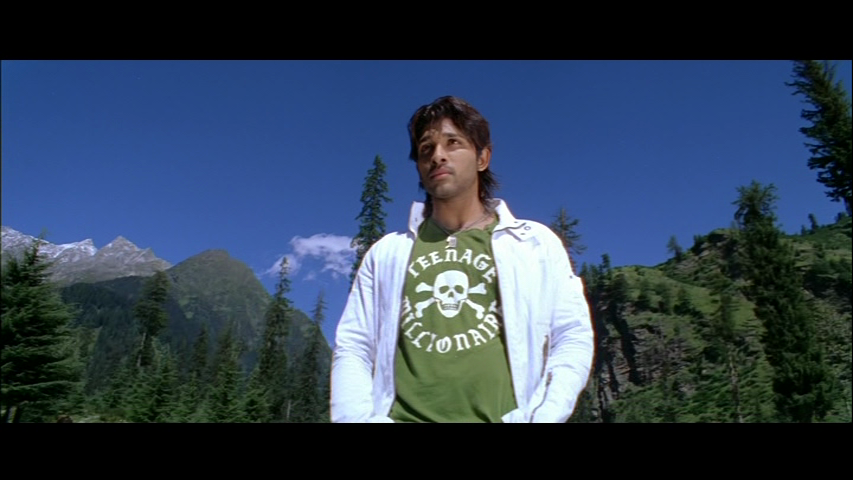
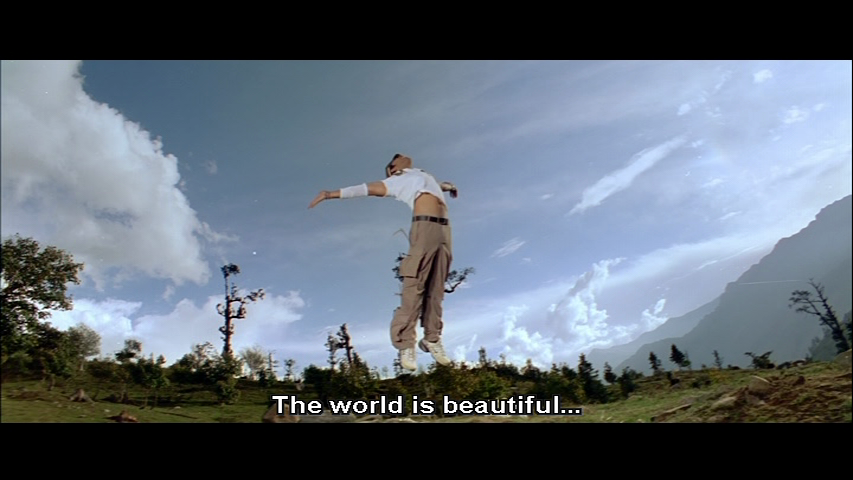
Bala’s latest altercation ends up with Murugan (Subbaraju) in hospital and Bala under threat from Murugan’s father and local gang boss Tambi Durai (Pradeep Rawat).  Bala however escapes to film a travel program in Kulu Manali – a little bit of a change from crime reporting, but apparently travel is where Bala feels he has his calling. Anyway, swapping the mean streets of Hyderabad for the mountains of Himachal Pradesh seems perfectly reasonable, especially when there is a gang of Tamil thugs baying for blood as incentive.  Plus it means we get this song along with a backdrop of snow-clad hills and slightly bemused looking locals.

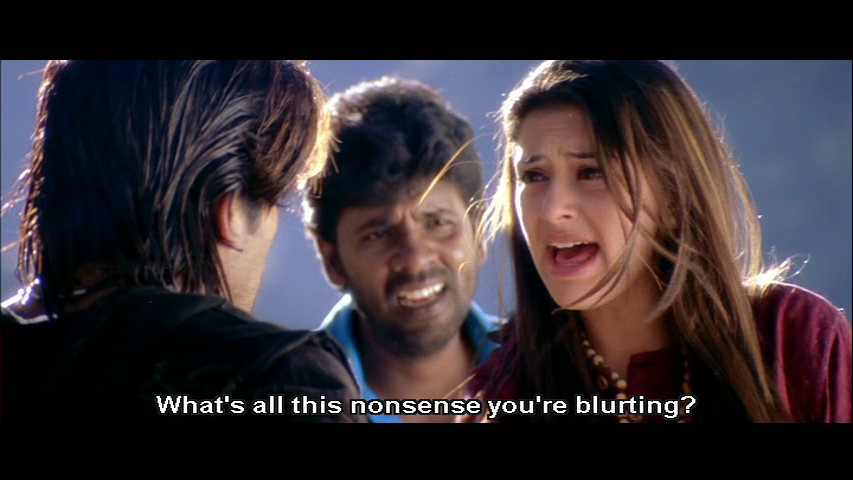
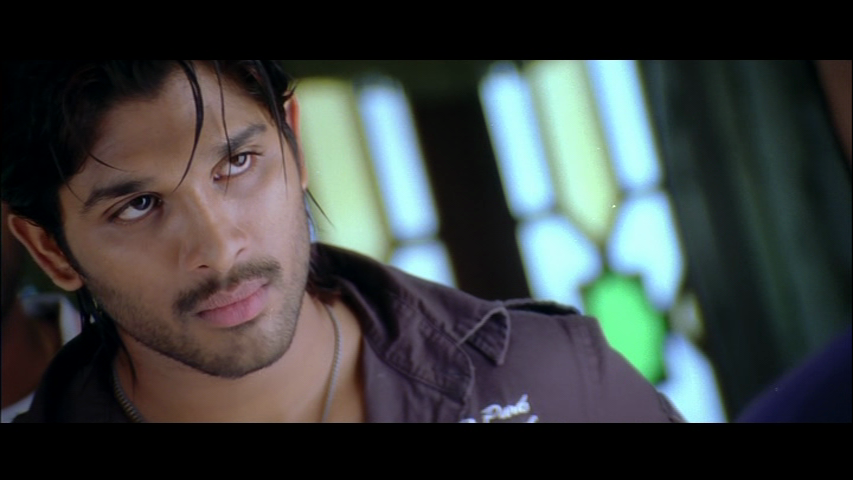
Bala has a traditional Telugu approach to love – see, instantly fall head over heels, stalk and wear the girl down until you can convince her to marry you.  Sigh.  This time the unwilling heroine is Vaishali (Hansika Motwani) who is a Sanyasin and appears completely uninterested in Bala despite his total belief in his own irresistibility. The rest of the word sees Vaishali as a demure and quiet Sanyasin, but this is how Bala see her, which seriously makes me question his fashion sense even in fantasy dance sequence land.

Hansika is surprisingly OK here in a role that doesn’t require her to do very much.  I didn’t particularly  like or dislike her the first time I saw this film, but compared to subsequent appearances I think this is one of her better performances.  She looks suitably demure at the beginning as a Sanyasin and manages to bop around reasonably convincingly in the songs.  Later on in the second half when the romance quotient is reduced to almost zero, she continues to hang in there, and acts appropriately wimpy in the subsequent fight scenes.

DesamuduruDesamuduru


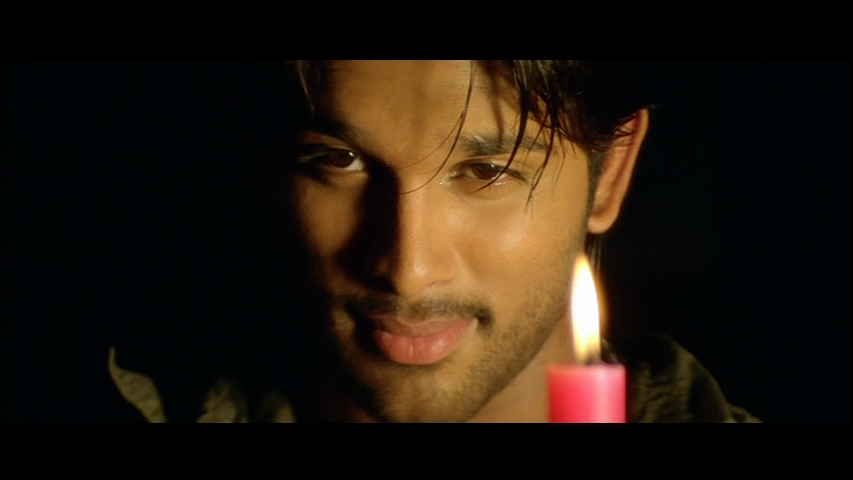
There isn’t a lot of chemistry between her and Bunny, but some of that is down to the plot, particularly since no sooner does Vaishali declare her love than the film switches back to action and fight scenes rather than playing up the romance.  At least that is until we get to the ultimate fan-girl song in Manusuley.  Even the song’s similarity to Dil Se helps bump up the heat factor and when you add in Allu Arjun drenched in litres of oil smouldering at the camera it definitely reaches sizzling hot! Except I tend to think: all that sand with all that oil – ouch!

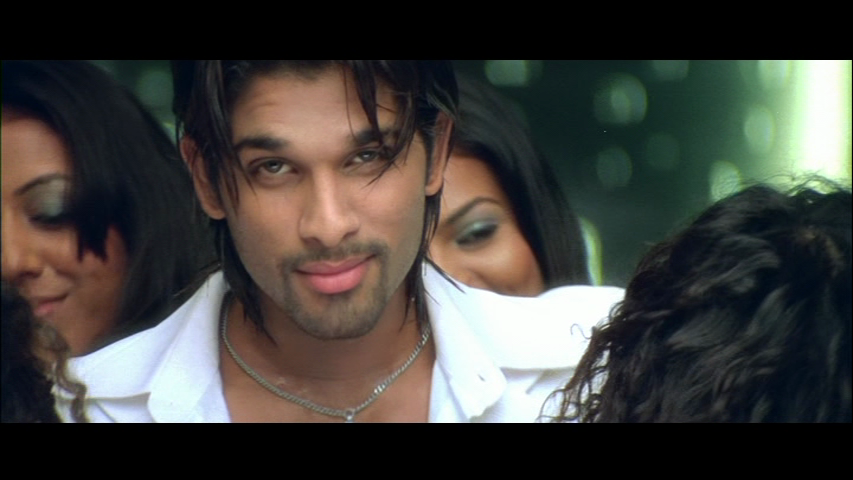
Bunny at least seems to be thoroughly enjoying himself throughout.  He looks very happy to be surrounded by a bevy of beautiful girls in the songs, and in a number of the scenes with Subbaraju and Ajay I’m convinced that they ended up ROFL most of the time.  It’s one of my favourite things about Bunny that he seems to be perpetually about to crack up, so I end up smiling every time – even if it’s totally inappropriate.

DesamuduruDesamuduruDesamuduruDesamuduru


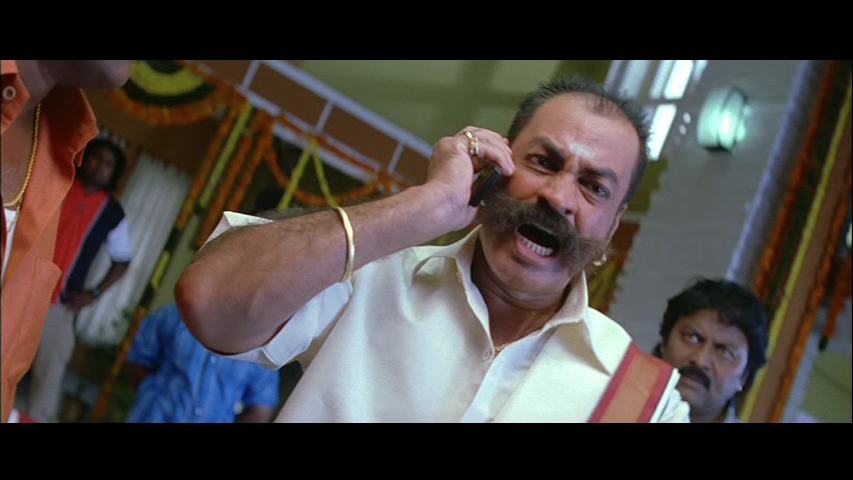
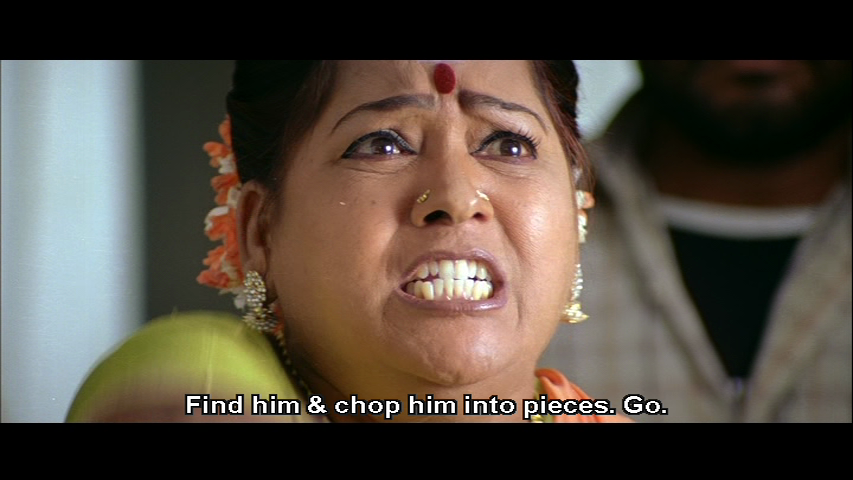
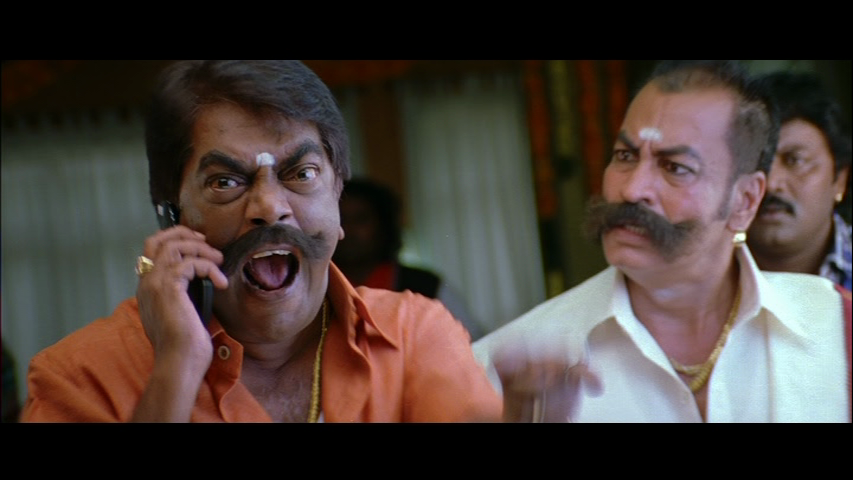
There is a tedious comedy track involving Ali which starts out bad and just gets worse as it goes along, but thankfully that’s it for comedy uncles.  Much better is the comedy provided by the altercations between Subbaraju and Bunny, and the histrionics provided by Telangana Shakuntala as Murugan’s evil mother.  Jeeva also does his evil henchman sidekick while Ajay is excellent as a thug who cannot talk and adds both to the mayhem and the comedy in equal measure.  It all adds up to a lot of this – Reeey!!

DesamuduruDesamuduruDesamuduruDesamuduru


A number of the fight and chase sequences are excellent with some good choreography and wire work,  and it’s just a shame that they aren’t connected together by a better storyline.  There is of course the obligatory item number featuring Rambha which pops up at an odd time and doesn’t add anything at all to the film, but it’s a least one more opportunity to watch Bunny dance.

Desamuduru is a hodge-podge of a film which relies on a charismatic cast, fast action (and even faster dance moves), along with the appeal of beautiful scenery in Manali .  It’s a film I watch over and over again, just for the songs and Allu Arjun’s dancing.  Not just for those shirtless scenes – of course not! It’s not a film for everyone but if you can leave your brain at the door and just sit back for the ride there is plenty to entertain – although judicious use of the FF button makes it even more enjoyable.  Desamuduru gets 2½ stars for story and execution, but 5 stars for enjoyment and re-watch potential!

DesamuduruIt sure is!