Muta Mestri

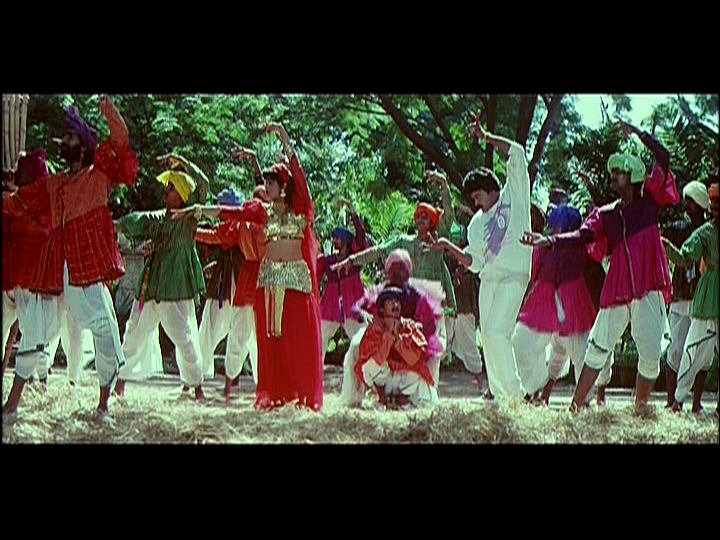
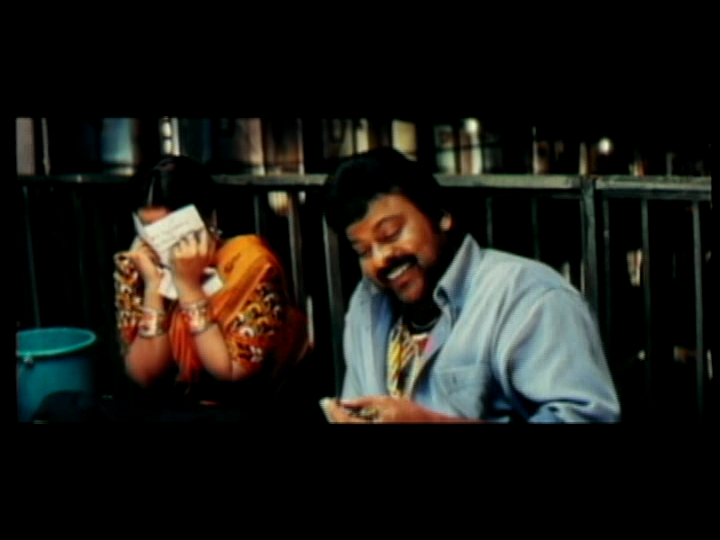
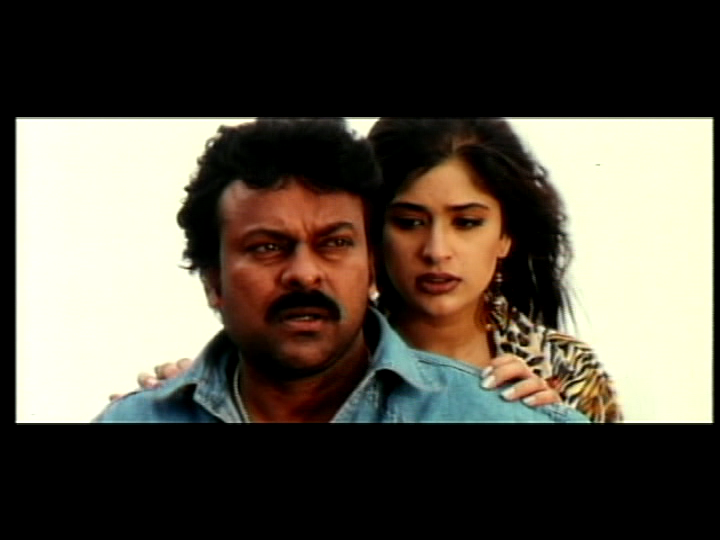
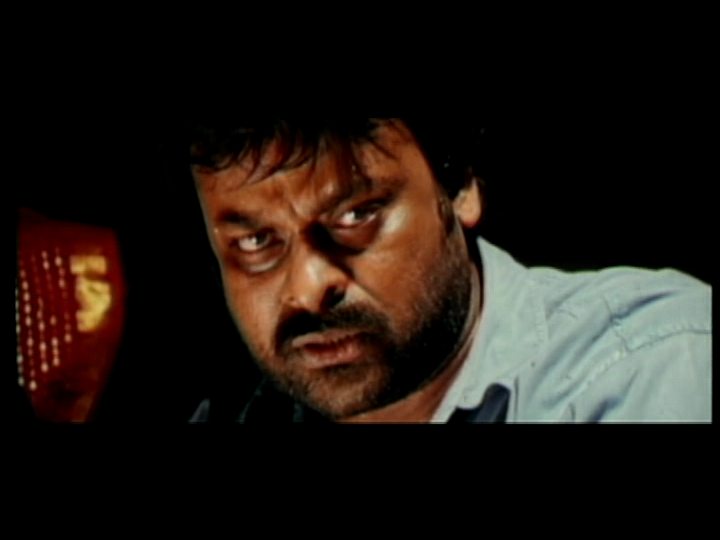
Muta Mestri is a masala film with a message, featuring Chiru with director A Kodandarami Reddy, and dialogues by the Paruchuri brothers. Overall the blend of ideas and drama and action is balanced. The action is full throttle, the dancing energetic, the ladies outfits are frequently hideous and the message is generally one I can get on board with. What works, works well but there are some heavy handed moments and a few assumptions around values that left me cold.

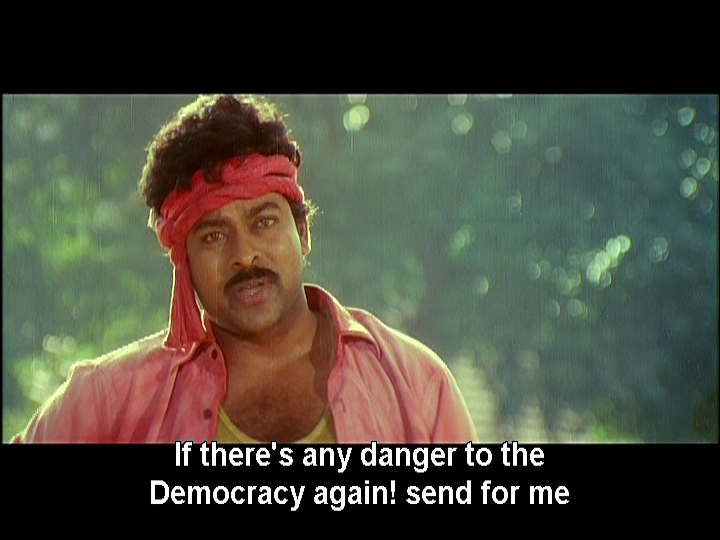
Chiranjeevi is the very patriotic Subhash Chandra Bose, the ‘Labour Contractor’ at a local market. He gets an excellent introduction when Sukkamma bets Brahmi a nudie run that the porters can’t unload waiting trucks in less than 10 minutes.

Whenever Bose arrives by bike, he just lets the bike careen off into the distance. It oozes confidence and a dash of silliness which is perfect for this role. Oh and she loses the bet.

The market is a harmonious community of men, women, Hindus and Muslims all working together. There are some statements to the effect of unity equalling strength.

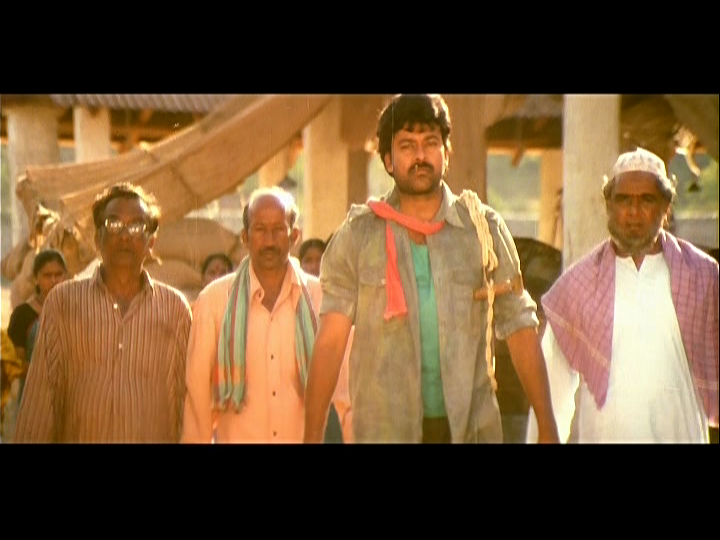
Allu Ramalingaiah plays a teacher who educates the children about Independence, Gandhian principles and the like and regulars Brahmi and Ali lurk in the support cast too. It’s the India that should be, according to the vision of this film. Kasim is one of the more prominent support characters and he and his son are well liked. They celebrate their Hindu friends’ festivals and the Hindus respect and understand Muslim religious practice. Indeed, knowledge of prayer times sparks a crucial plot development towards the end of the film. Diversity is shown as beneficial, not just something to be tolerated.
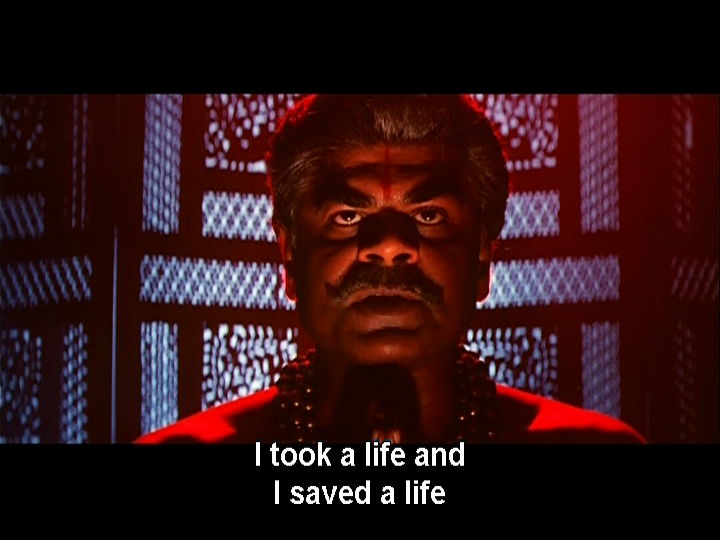
Atma (Sharat Saxena) is the villain of the piece. He is more of an ascetic style of villain, believing he has a relationship with god that allows him room to negotiate indulgence for bad deeds. He wants to use the land the market is on for a new development. The market folks turn to Bose for help and he stages a non-violent protest outside Atma’s house.

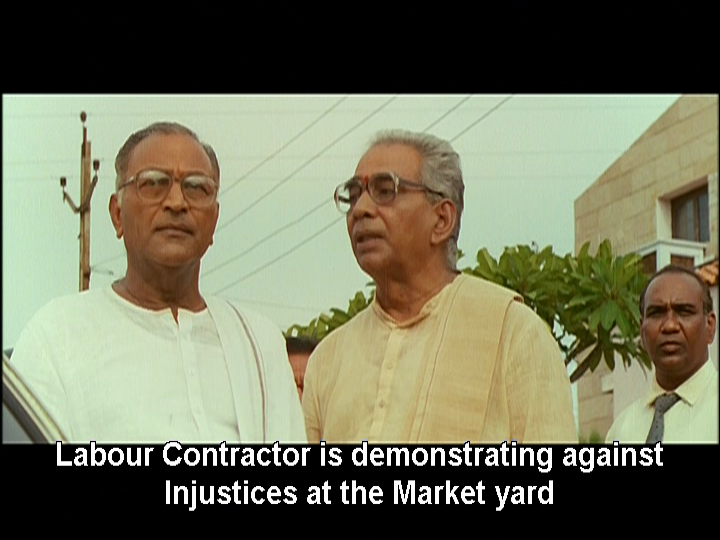
Bose allies with MLA Sundaraiah and the CM (Gummadi) and eventually moves into politics – a position that Atma wanted for his son Dilip. Dilip is the kind of baddie who pulls up outside a school and plays loud crappy music to drown out the pure sweet sound of innocent school children singing the national anthem. And adding insult to injury, he then dances badly in the street. Obviously Bose wil deal with him severely.
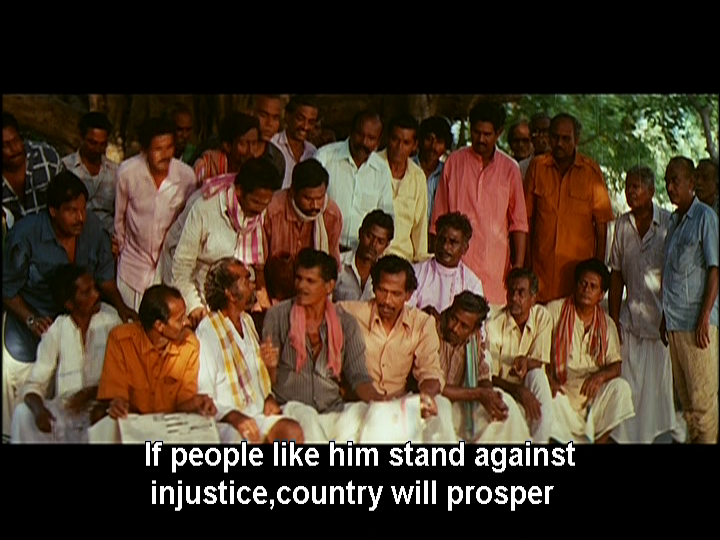
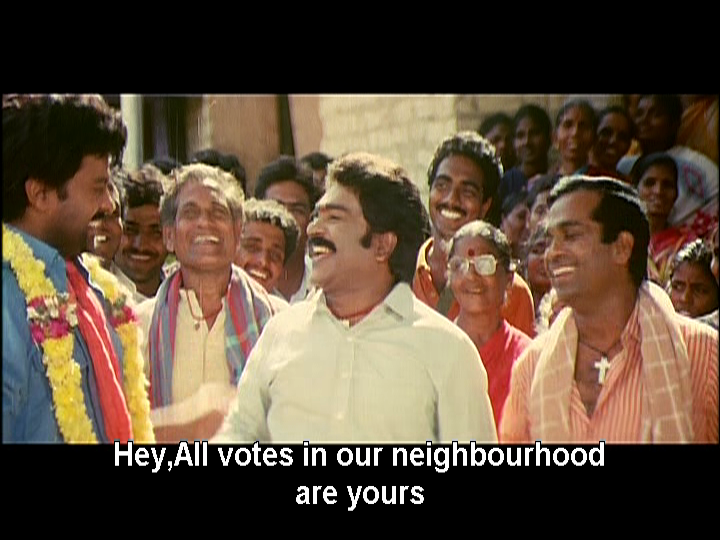
Bose brings a direct and action oriented approach to politics. There is a great sequence of Bose being wheeled from one photo op to another with the emphasis on being seen to feed orphans or plant trees rather than actually doing it. Bose reprimands his advisors and starts making his own decisions based on what he sees as right. He upsets the applecart and the CM loves him for it, as do the people. This is a major theme in the story and there are recurring examples. The film also makes a point about the quality of people in politics, and the shift from people who wanted to change the world to those who just want to profit from it. People have a responsibility to try and fix things, not just leave them for someone else to clean up. For all the idealism Bose spouts, it’s a deeply cynical film.
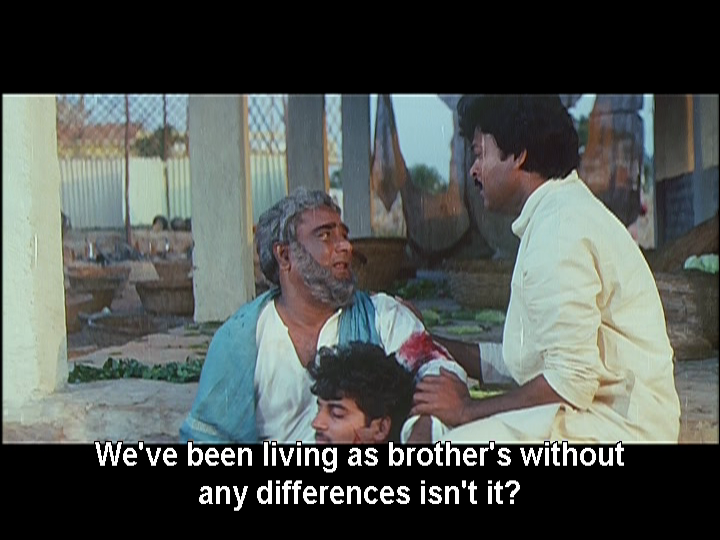
Atma realises that the only way to hurt Bose is to attack his loved ones and discredit him. Bose realises that he can’t sort out Atma while he is part of the government. It is a similar idea to the cop/vigilante issue raised in other films. Justice is located outside of the legal system and good men can do illegal things as long as they are doing them for the ‘right’ reasons.

The action scenes are energetic and impressive, and Chiru is in excellent form. The fights are fast and athletic, and suit his character’s style. Actually, Bose has multiple fight styles and uses them to entertain people watching him belting the daylights out of the baddies. I liked Bose’s interactions with the other guys at the market and Chiru has a gleam in his eye when he gets into the rousing speeches. His dancing is excellent, and especially when he has the opportunity to go for it.  A lot of the comedy is Bose bumbling his way through the intricacies of political life, and the hassles of being a chick magnet so it isn’t too intrusive even if it is very silly. Chiranjeevi looks great in simple working attire, although he does veer into acid wash denim territory which is less pleasing. The song costumes are an outlet for the frustrated wardrobe team. I keep saying this, but Chiranjeevi is such an accomplished actor. He finds opportunities to give his character more depth and complexity than a mass film may require, making the overall result more engaging and credible.

There are some things I took issue with. Bose’s sister Jhansi gets home late from college and because he sees the neighbours watching, Bose slaps her. There is a tearful repentance that follows, and the upshot is that avoiding reputational damage is the responsibility of women. That scene will come back to haunt Bose in a major way but it left a bad taste in my mouth, especially when Jhansi basically apologised for making him feel the need to hit her. Grrrr. At the same time, Bujamma (Meena) is very forward in chasing Bose and there is no penalty for that. So his sister has to be perfect and virginal but he will marry who he chooses and think no less of her for trying to get her hands on him before the wedding. Sigh.

All of the females in the film are given short shrift. Bujamma is, as Bose repeatedly tells her, loud, crass and stinks of fried food from her snack stall. She keeps trying to transform herself to be more like what he wants but cannot change her nature. Some of it is quite funny, as in a challenge to stay silent for 24 hours, but some of the dialogues are just plain mean. Meena is pretty and lively enough as Bujamma although her performance is a bit grating. Kalpana (Roja) is Bose’s secretary, and as Bujamma sees her the main rival for Bose. Roja doesn’t get much to do apart from stand around and look decorative although she is afflicted with ‘comedy’. Brahmi decides to help Bujamma keep Bose and Kalpana apart by telling Kalpana that after six…she’d better watch out.

Despite that excellent piece of advice, it’s a stupid and unnecessary diversion as Kalpana keeps fantasising about Bose’s possible sexual advances and fainting all over the place.  Although it did lead to this song:

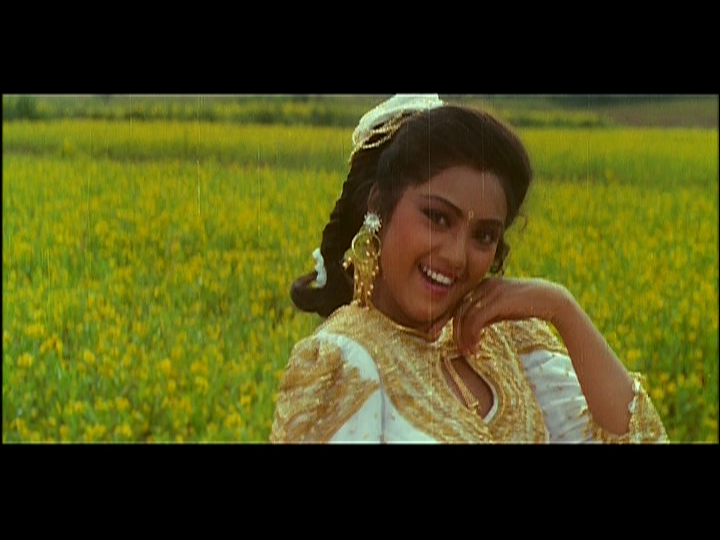
She seems to think that was a nightmare. Ahem. (Note – if you want the film on DVD, the Moser Baer DVD doesn’t include that song but the EVP one does.) Koti’s music is not particularly memorable but the picturisations and costumes made an impression. If that isn’t enough costume WTFery for you, please be my guest:


Despite an escape plan that uses a detailed model, Bose catches up and Atma and Dilip are dealt with in excellent and elaborate style.

If ‘cross-country arse-kicking’ was an Olympic event, Bose would have taken gold (and possibly also silver and bronze). Justice is done, at least for some.

It’s an entertaining enough film, but not quite enough to make me want to watch it too often. There is some substance lurking under the cheese, but I have issues with the treatment of Jhansi in a film that was otherwise very positive about equality and community. See it for Chiru’s dancing, the outfits and the come-uppances. 3 ½ stars.
Kanaa Kanden

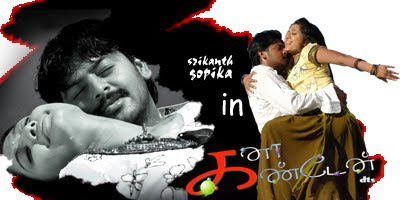
This was K.V. Anand’s directorial debut in 2005, and like his film Ayan it is based on a novel by Subha (D. Suresh and A.N. Balakrishnan). Since Subha were also scriptwriters for the excellent Ko, I had high hopes for Kanaa Kanden, and it doesn’t disappoint. Sure, there are a few flaws and Vivek’s comedy in particular feels forced and often inappropriate, but the performances from the leads are excellent and the story suspenseful and gripping right to the end. What starts out as a love story with the innocent and idealistic hero struggling to make his mark in the world, suddenly becomes a much darker thriller with unexpected twists and a climax that makes use of science as well as some good old-fashioned biffo.  It’s different, often surprising and even manages to make desalination sexy!

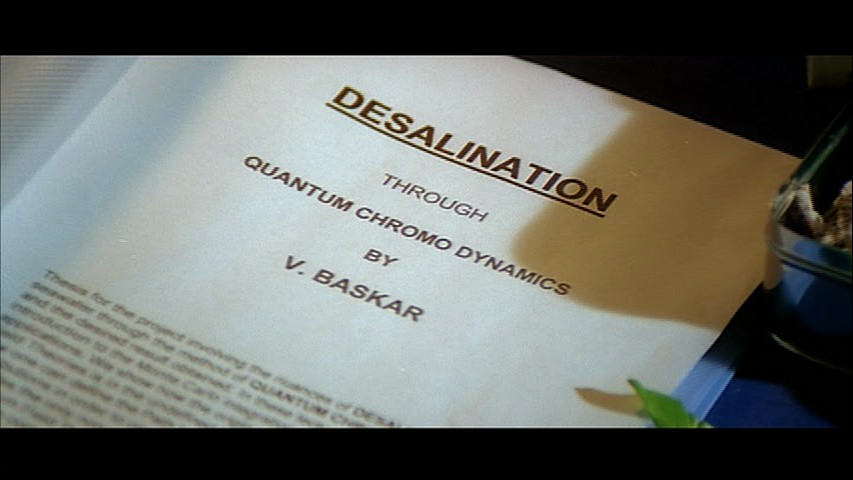
Srikanth is Bhaskar, a rather idealistic PhD student who has found a way to make pure water cheaply from sea-water using the rather improbably titled technique of Quantum Chromo Dynamics. It’s a work of love in many ways as his mother was a water carrier whose labours paid Bhaskar’s way through school and her daily struggles inspired him to find a better way to supply water. He’s also influenced by the water shortages in the city as he sees the people of his neighbourhood queue for the water trucks on a daily basis.

Indeed – what does Quark theory have to do with desalination?! However, it sets the scene for Bhaskar’s rather naïve idea to give his patented technique to the government as a way to provide cheap potable water for everyone, but despite the (eventual) stamp of support from his university he fails to get any government interest in his project. Bhaskar is an everyday guy with a big heart and even bigger ideas, but his innocence seems to work against him in his struggle to realise his dreams. Luckily he has plenty of support from both his glamorous college mentor Vasantha and his new wife Archana (Gopika). Srikanth suits the character of the slightly scruffy scientist and does a great job of blending the characteristics of a typical work obsessed engineer with those of an idealistic dreamer and a guy with a messy bedroom.

The film actually opens with Archana’s wedding, but it’s not Bhaskar who is the groom. Bhaskar has gone back to his village for the wedding of his childhood friend, and if he’s not totally happy about the fact that she is getting married to someone else, he doesn’t give anything away to the bride. But then Archana discovers that her groom is unfaithful and she calls off the wedding, finally leaving with Bhaskar to escape her brother’s anger. Although she moves to Chennai with Bhaskar as his friend, it’s not long before the friendship deepens into romance and the two get married. The romance is sweet and also very uninhibited with Archana just as happy as her husband to initiate kulfi moments (as she calls them).

Both Srikanth and Gopika have some great on-screen chemistry and their relationship is kept realistic with a mix of romance, friendship and just a little conflict. This is the second film I’ve seen with Gopika and she really has a very expressive face. Her reactions are also very natural and she is practical and down to earth opposite to Srikanth’s obsessive scientist.

Bhaskar decides that the only way to get his idea off the ground is to build a prototype factory and let his results speak for themselves. Vasantha has some land which she donates to Bhaskar for his project, but he still has to raise funds for the factory. At this point Archana meets up with an old college friend Madan (Prithviraj) and since he is a business consultant, he offers to help Bhaskar find funding for his project. In what seems to be the answer to Bhaskar and Archana’s prayers, Madan finally offers to lend Bhaskar the money himself, but in reality this is just the start their problems.

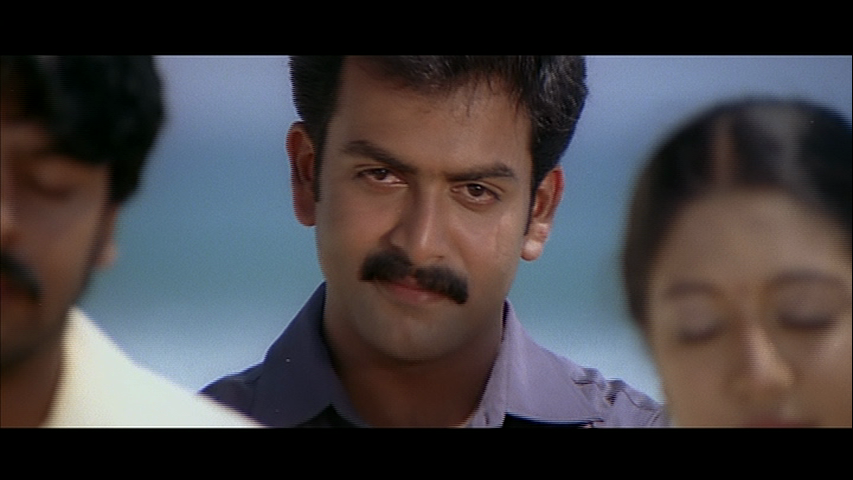
Prithviraj is outstanding in his role as the smooth talking Madan and his ultra-controlled and polished businessman provides a good contrast to the passionate Bhaskar. It’s hard to say much about his character without giving away too much of the story, so I’ll just say that you have to watch to find out why he makes such a good villain and why I ended up loathing Madan.

There are a few plot holes and in particular a decision made by Archana which doesn’t seem to fit into the rest of the story, but the rest is excellent. The only other problem I have with Kanaa Kanden is the comedy track with Vivek which was too long and too obtrusive. Vivek can be funny, and he did have a few one-liners which made me smile, but there was just too much of him in a side-plot which was totally irrelevant to the rest of the story. There are so many clever little touches in the rest of the film that it’s disappointing that K.V. Anand felt the need to include such clichéd comedy. The songs by Vidyasagar are pleasant but fairly forgettable and the item song seems totally unnecessary – particularly since there was very little actual dancing. This one is quite fun though with Bhaskar, Archana and Madan burning up the dance floor and generally looking like they are thoroughly enjoying themselves.

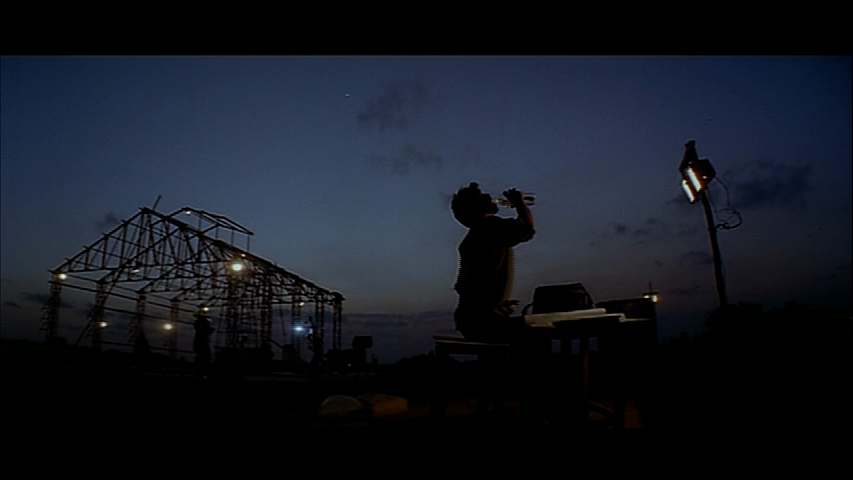
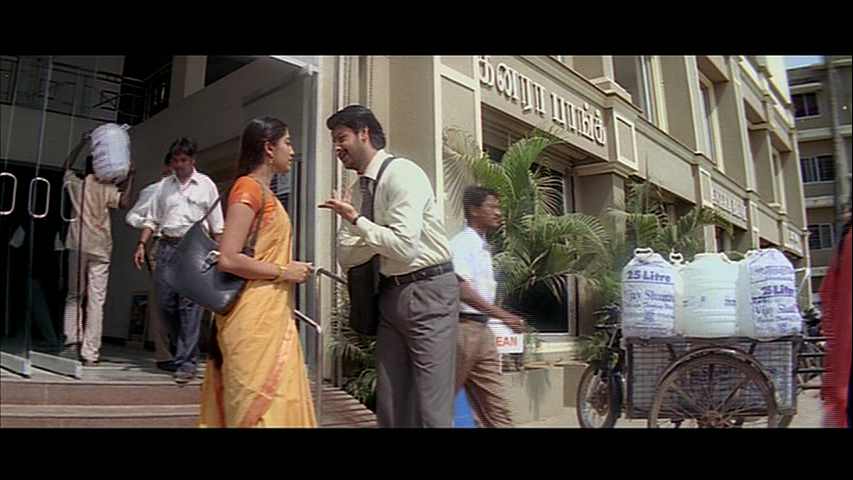
I really liked the theme of water which runs through the film, and the bid to raise awareness of an issue which is a problem in many major cities around the world. To emphasize this central theme, water appeared in some way in many scenes. This was often just in the background, such as the slum children bringing water to the men building the desalination plant, or the bottles of drinking water outside the bank where Bhaskar unsuccessfully applies for a loan. It’s a small touch but one that works very well and shows the amount of detail in the film.

The cinematography by S. Soundar Rajan is excellent and the shots are beautifully framed. There is a fight scene in the forest where the action is all slightly blurred which gives a sense of the confusion and disorientation Bhaskar experiences and is just one of the techniques used to add texture to the film. Worth watching for a more unusual storyline, an earthy and realistic romance and for Prithviraj’s quite detestable villain. 4 stars.
Choodalani Vundi

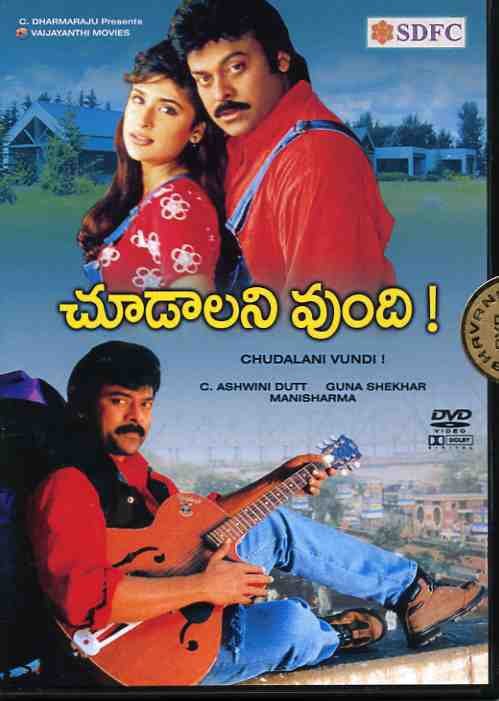
Time for some Chiru masala! Choodalani Vundi has a little bit of everything but mainly has a lot of Chiranjeevi. It’s very much his film the whole way through as he fights and dances his way through the streets of Hyderabad, Kolkata and even spends some time in the jungle. Since it’s an unsubtitled DVD I missed a lot of the humour, but could pick the comedy from the gleam in Chiru’s eyes and Soundarya’s excellent reactions. The usual suspects form the support cast as Brahmi and M.S. Narayana pop up to add some slapstick and Prakash Raj plays the villain of the story in a truly terrible wig. But be warned there is also a small child who is continually terrorised every time he appears on screen (which thankfully isn’t too often) and I just hope the child actor wasn’t scarred for life as a result. The film opens with Ramakrishna (Chiranjeevi) arriving in Kolkata. We know we are in Kolkata because there are trams, wonderful old Colonial style buildings and of course Howrah Bridge – we even get a song about it.

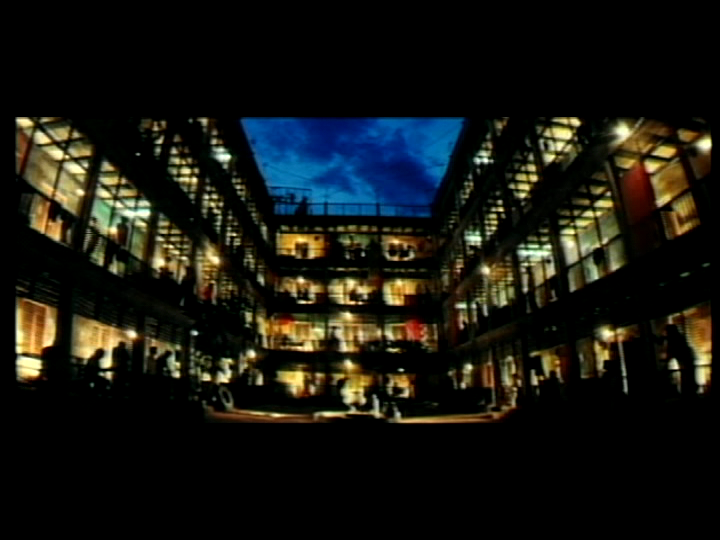
With the help of some friendly locals, Ramakrishna finds a chawl which has a few Telugu speaking inhabitants. The Ravindra apartments seem to be rather ineptly managed by Brahmi and M.S. Narayana and after some friendly banter, they rent out a room to Ramakrishna. However the room has the unfortunate problem of already being occupied by Padmavathi (Soundarya) and she’s not inclined to share. But with a little application of Ramakrishna’s charm, the two seem to reach an agreement and Ramakrishna is free to deal with the reason he came to Calcutta in the first place.


Ramakrishna seems to be looking for someone although he doesn’t seem to be having much success until the day a group of thugs come to shake down the chawl residents. In what seems a lucky break Ramakrishna recognitions one of the gang (Brahmaji) but despite some nifty moves doesn’t manage to catch him in a chase through the streets of Kolkata. That turns out to be rather unfortunate as Brahmaji comes back with a few more mates and in the resulting brawl Ramakrishna is seriously injured. Perfect time for a flashback then. Back in time, and presumably back in Andhra Pradesh, Ramakrishna spots Priya (Anjala Zaveri) on a train and naturally it’s love at first sight. She doesn’t seem to mind his attentions and when he stalks follows her to the next station even seems glad to see him.


I’m not totally clear on why Priya suddenly ends up running down the platform with a gang of thugs chasing her at this point, but it probably doesn’t really matter. Naturally Ramakrishna is on hand to provide a rescue on the back of his trusty motorbike and Priya seems to have no worries about trusting a stalker she has only just met rather than the gang of what turn out to be her father’s men. Mahendra (Prakash Raj), the local don, has plans for his daughter and they quite definitely don’t involve Ramakrishna, so he packs a few SUV’s with machete waving thugs and sends them off in pursuit of Ramakrishna and Priya. This eventually leads to a wonderfully dramatic Thelma and Louise inspired leap from a cliff into the ocean which seems to dispose of our couple in a rather final fashion.


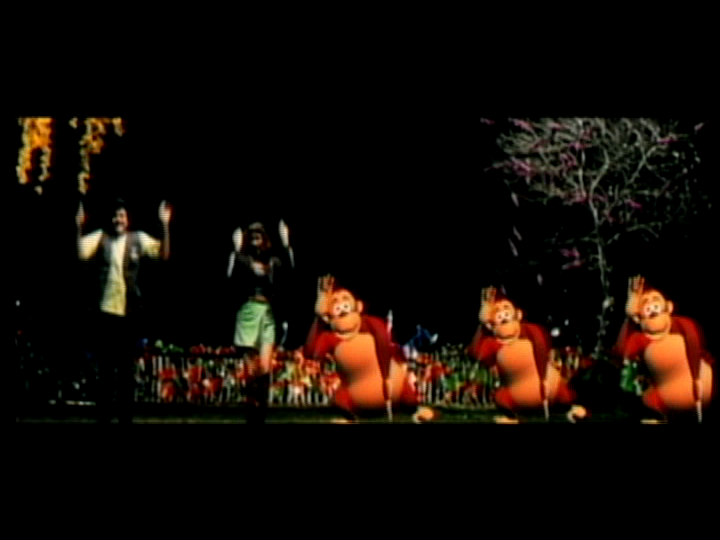
Somewhat surprisingly then, the next scene shows Ramakrishna and Priya living happily in the jungle with their young son, where they spend their days rescuing animals, swimming in their back-yard rock pool and socialising with the natives. There is some Lion King inspired cartoon animation as they sing and dance around the forest but that’s a clue that something bad is about to happen.

And I don’t just mean the animated dancing lions.


Mahendra somehow manages to track the couple down (although how he even knew they were alive a mystery), and he turns up in a helicopter to take his daughter back. The action ramps up several notches as Ramakrishna tries to rescue first his wife, and then his son from the clutches of Mahendra. Ramakrishna is of course an unstoppable one-man army but Priya has some unexpected talents as well. Which do you think is faster – the speeding bullet or Priya?

I’ll give you a clue -it’s not the bullet!

Gunasekhar seems to have thrown almost everything into this film to make sure there is something for everyone. The cartoon characters almost fooled me into thinking it was even child friendly but the subsequent events quite definitely aren’t. But there are lots of chase sequences – on foot, motorbikes, cars, buses, jeeps and even a jeep vs truck chase although stealing a truck that is emblazoned with the words ‘danger – explosives’ does seem to be just asking for trouble and is perhaps just a little bit of overkill. The first half is beautifully shot around Kolkata and focuses on the lives of the people in the apartments. It feels warm and homely and Chiranjeevi and Soundarya have good chemistry in their scenes together. Although we later learn that Ramakrishna is a desperate man searching for his son, this part of the film seems very upbeat and generally happy.

The second half is less successful as Anjali Zaveri seems to spend a lot of time under waterfalls, seductively draping herself around pools, but otherwise doesn’t have much to do. The problem is that there just isn’t much substance to the romance between Ramakrishna and Priya. Their relationship moves very quickly from promising first glances at the train station to very domestic scenes of Ramakrishna chopping wood and Priya looking after a toddler. The romancing in between is confined to one song and those waterfall moments, none of which have much sparkage happening so it’s almost a relief when Mahendra turns up to steal Priya back.


Gunasekhar is much better with action and the various chase sequences and the fight scenes work well. The music by Mani Sharma is generally good and Chiru looks amazing in the songs. The best are those with Soundarya although the choice of backing dancers in this one does seem a little odd. Rather stocky men wearing Lycra cut-off tops with bare mid-riffs wouldn’t have been my choice, but luckily it’s hard to take my eyes off Chiru dancing so I can manage to ignore those wobbling hairy stomachs! (You have been warned!)

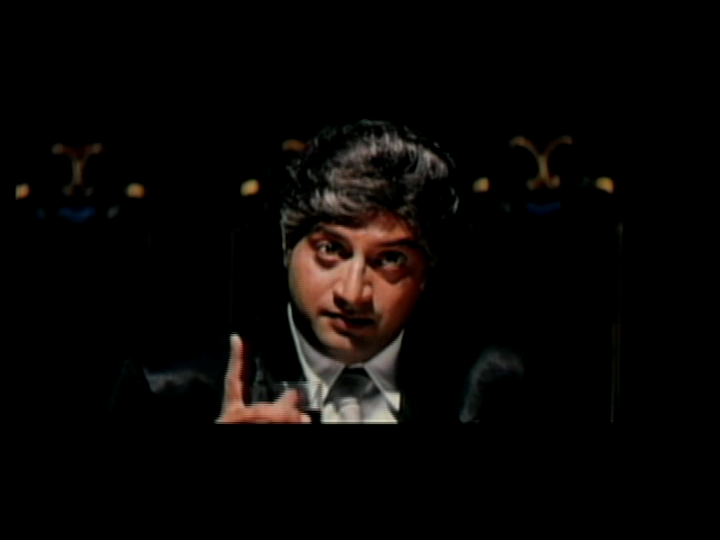
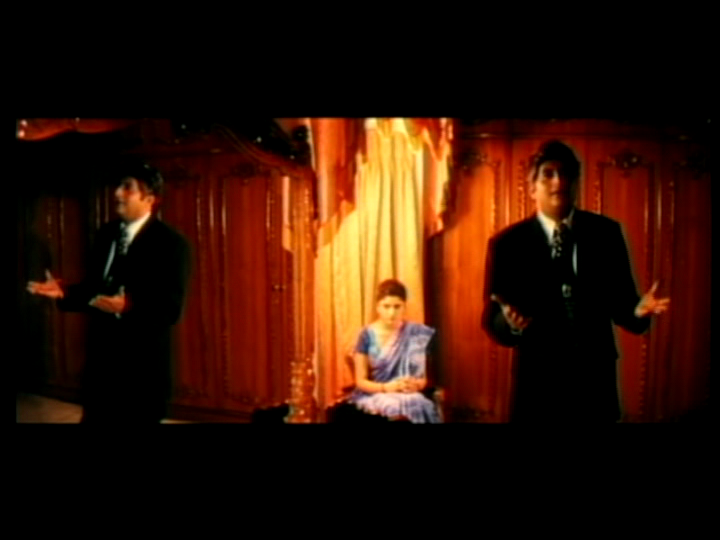
Prakash Raj seemed to be trying a little too hard to be evil at times but once past all the posturing his treatment of his daughter and grandson is suitably chilling and the climax scene with Chiru is excellent. Prakash Bad is always a treat to watch even with all the gun waving and declarations, and I did appreciate that when stressed he chose to sit right underneath a large chandelier rather than anywhere more plebeian. Such style!


Choodalani Vundi is a by-the-numbers masala film. It has the requisite number of songs and fight scenes, and in between there is a mixture of comedy and romance as required by Telugu Filmi Masala Law. And that’s not such a bad thing. The various elements are woven together well and it’s an entertaining watch even if it doesn’t really break any new ground. Chiru is the drawcard, but the rest of the cast provide able support and the change of scenery to Kolkata is refreshing. Plus lots and lots of Chiru screentime! 3 ½ stars.