Ugramm (2014)

Ugramm

A new discovery this weekend – Kannada films are being shown in Melbourne!  I found out about the weekend screening of Ugramm thanks to a message from my Hindi group and Roopesh at Kannada Movies Melbourne.  What’s even better is the news that there are more Kannada releases planned for later on in the year, and if the crop of recent films from Bangalore are anything to go by, they will definitely be worth catching on the big screen.

Ugramm is an action thriller that released in India back in February and has since become a major hit for director Prashanth Neel and its stars Srimurali and Haripriya.  Interestingly for me, the film starts with the story of the reincarnation of Vishnu as the half-man, half-lion Narasimha and provides an explanation of the title, which the film website tells me means ‘momentous anger induced by a great period of tolerance’.  I appreciate that Kannada has one word that says all of that so simply and it does sum up the storyline quite handily too.

Ugramm

After the initial animated explanation there is more background as a young Agastya witnesses his father’s death at the hands of a gangster, and begins his friendship with another young boy, Bala.  At the same time Jai Jagadish (as the heroine’s father) is forced to leave India after exposing the smuggling and criminal activities of gang-leader turned politician Shivarudra Lingaiya (Avinash).  So having set the scene, it’s time for action!  And there is plenty of that.  The modern-day story starts when Nitya ((Haripriya) leaves her father in Sydney to visit her mother’s grave in India.  No sooner does she get off the plane, than gangsters intent on settling the old score with her father kidnap her.  Luckily for Nitya, Agastya (Srimurali) arrives just in the nick of time to rescue her, and ends up taking her home to stay with his mother – what else could he possibly do?

Ugramm

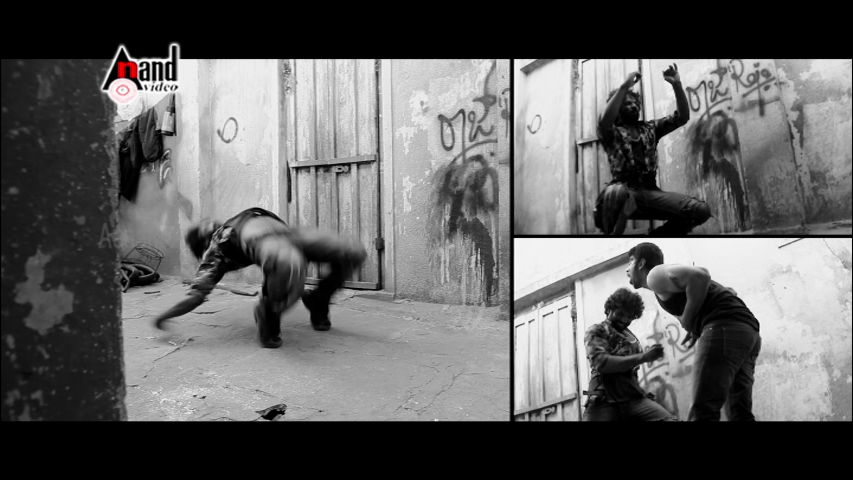
Naturally our hero Agastya is a one-man fighting machine, who knows how to hit his victims so that they go down hard and stay down.  The fight scenes against a succession of different gangsters are completely over the top, but they are well choreographed and Srimurali is suitably grim as the reluctant hero.  That’s the whole ‘momentous anger induced by a great period of tolerance’ bit. The body count is high as many faceless gangsters are repeatedly smashed to the ground to the accompaniment of loud and intrusive background music.  However, like similar scenes in most Telugu movies, the violence is a little too cartoonish to take seriously.  Best of all are the moments where the last few villains standing turn tail and run rather than face Agasta and his momentous anger.

Ugramm

Meanwhile, in between the fight scenes, Nitya has to learn how to cook while dealing with a way of life completely different to how she grew up.  Romance blossoms as Nitya gets instruction in the names of different vegetables from Agastya, and even persuades him to help her cook.  Although Haripriya’s role is relatively small, her character is better developed than most heroines, and she does get the chance to be more than just a pretty face.  Since her character was a girl raised in Sydney I was expecting some totally inappropriate wardrobe choices, but for a change the costume department got it just right.  Haripriya is also a lovely dancer, and I was particularly impressed by her ability to dance convincingly in flip-flops.  There are a few brief glimpse in this song.

There is a brief comedy track based on two other guys living in the house, but I didn’t quite understand exactly what their relationship was to Agastya and his mother, and no subtitles meant that most of it passed me by.  It must have been funny though, as the rest of the audience were laughing at their antics.

The second half moves away from the developing romance between Agastya and Nitya to explain Agastya’s past and how he ended up working as a mechanic and resisting fighting unless there is no other choice.  The fights here are more menacing and there are some genuinely disturbing scenes as gangsters wreak havoc on the locals in the town of Mughor.  There are a plethora of different gangs and they are all equably interchangeable, particularly since a pre-requisite for gang membership seems to be a bad eighties style perm, and an inability to see that attacking Agastya is bound to turn out badly.  Agastya’s youthful friend is another gangster Bala (Tilak Shekar) and the second half focuses on their relationship and the reasons why Agastya finally moved away and got out of the gangster business.

Ugramm

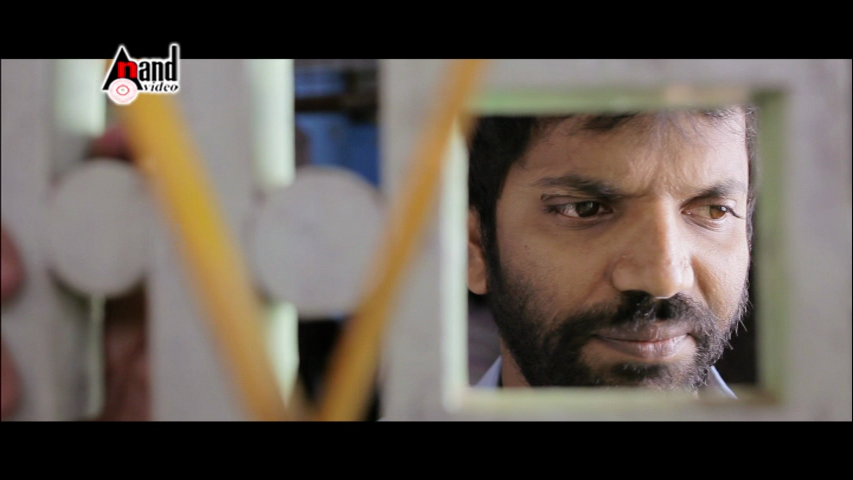
While the tale of a gangster redeemed is not particularly novel, Ugramm delivers a few new twists and overall the story is well told with excellent characterisations and good performances from the main leads.  The added complication of Nitya and her back story helps keep the story from being overcome by the action sequences and actually helps keep everything moving long.  The support actors are also impressive with Atul Kulkarni appearing briefly as  Shivarudra Lingaiya’s son Dheeraj (although I couldn’t quite understand the importance of his character), while Padmaja Rao is good as Agastya’s mother.

Ugramm

Although the background music is at times overwhelming, mainly because it is just too loud, the songs by Ravi Basrur are good and well-placed in the narrative to provide a breathing space from the high energy action scenes.  The film also looks amazing, perhaps not surprising since cinematography is by the well-known Ravi Varman, although the addition of black screens in between the action is distracting and does disrupt the flow at times.

Ugramm is a well made gangster film that does perhaps overdo the violence, but makes up for it with a good storyline, sharp editing and excellent performances.  Definitely well worth a watch for fans of the genre, although if you didn’t manage to catch it at the weekend here in Australia that will mean waiting for the DVD.  Unless of course the recently reported remakes in Telugu and Tamil release here first!

Lucia (2013)

Lucia

Kannada film Lucia premiered at the London Indian Film Festival last year and went on to win the Audience Best Film award.   Watching the film it’s easy to understand why it created such a stir with a story that keeps you intrigued and guessing right up to the last frame.  Writer/director Pawan Kumar has made an intelligent non-linear film, where the boundaries between reality and dreams blur and nothing is really as it seems.  Even more surprising is the fact that the film was crowd-funded and made on a tight budget – hard to believe when every scene drips quality and attention to detail.

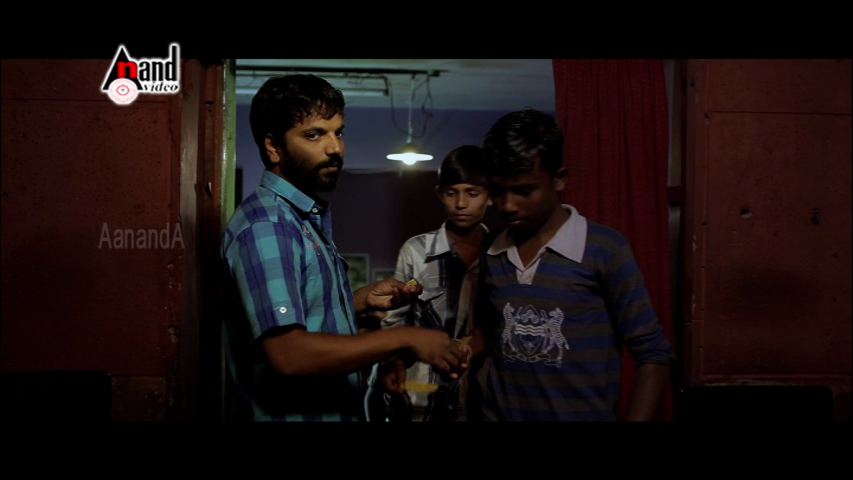
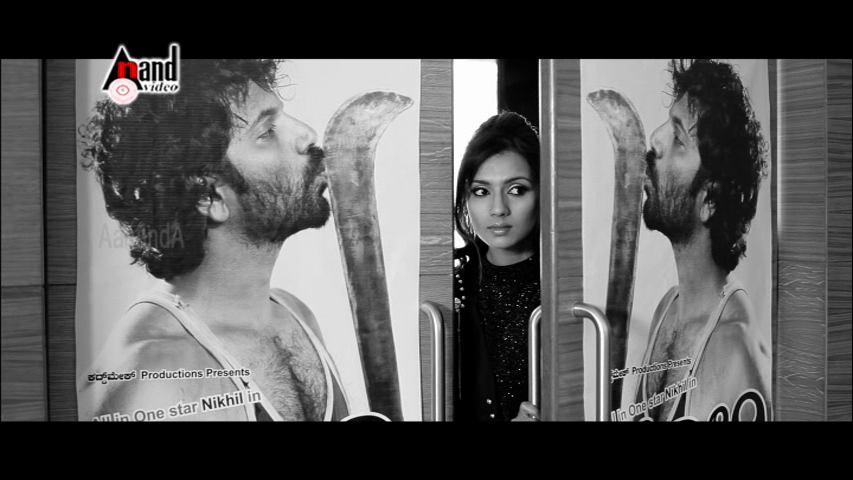
The film charts the story of Nikki (Sathish Neenasam), a torch shiner, or what I would call an usher, in a small run-down cinema.  The owner Shankranna (Achyuth Kumar) mostly treats Nikki as a son, getting involved in his search for a bride while Nikki similarly feels an obligation to look after Shankranna. When we first meet Nikki he is suffering from insomnia, perhaps not surprising as he lives with 4 rather large guys in a small single room.  The cinematography here is excellent, conveying a sense of claustrophobia, sweltering heat and the difficulties of living in such close proximity just with a few brief moments and a shot of a washing line!

LuciaLuciaLuciaLucia


One night, on one of his restless meanders, Nikki meets up with two men who introduce him to Lucia.  Lucia isn’t a person, but rather is the name of a sleeping tablet which has the added bonus of causing lucid dreams.  Soon Nikki is falling asleep anywhere and everywhere, and just as we follow his life while he is awake, we also follow his lucid dreaming.

LuciaLuciaLuciaLucia


Needless to say, in his dreams, Nikki isn’t a torch shiner in a run-down movie theatre, but instead he’s a film hero with a successful career.  Just as often happens in the world of dreams, various people from Nikki’s waking life also show up in his dream world.  Shankranna is his manager for instance, while his room-mates are cameramen and assistants and his real-life fiancée is his girlfriend.  But in this alternate reality Nikki is being chased by some men for money, although it’s not exactly clear who is behind the extortion attempts or why they are after Nikki.  This echoes his waking world, where Shankranna is being threatened by some gangsters who believe he owes them money.

The two stories, waking and dream-world are kept separate and distinguishable as one is filmed in colour, and the other in black and white.  Torch shiner Nikki is an uneducated guy who lives a simple life, but from his interactions with the people around him he seems like a ‘nice guy’. The other Nikki is a star and expects all the privileges that go along with his status, like his own private home theatre and being able to rent an entire bar for a night out.  Pawan’s Kumar’s script and Sathish Neenasam’s acting make the two personalities seem quite different at the outset, although both obviously different sides of the same person, but as the story develops the two Nikki’s become more and more similar.  Star Nikki is clean shaven but adopts a scruffy beard for an item number which makes him look more like torch shiner Nikki, while torch shiner Nikiki shaves off his beard and starts to look like star Nikki to try and impress his fiancée.

vlcsnap-2014-04-14-18h16m49s162LuciaLuciaLucia


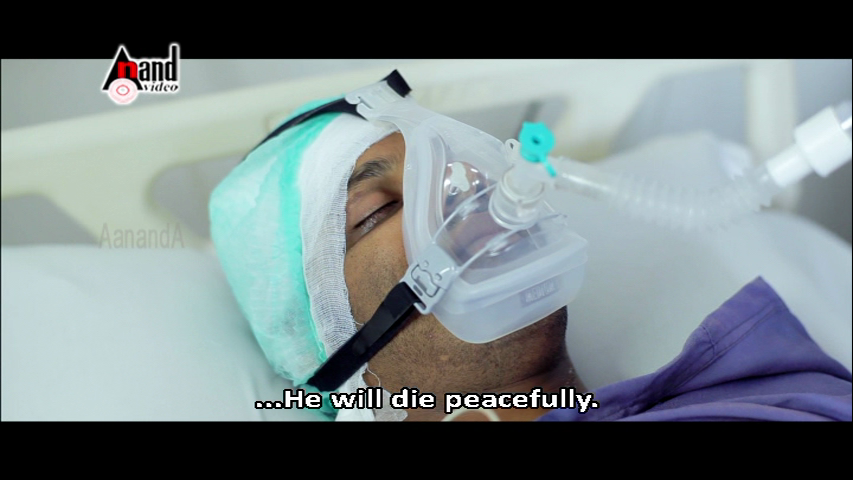
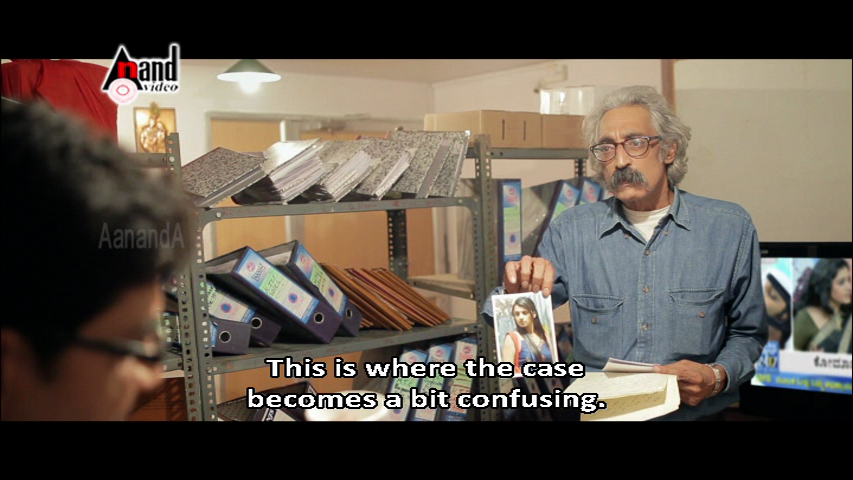
The linking thread is a murder investigation being run by the local Kannada police and a special investigator (Sanjay), who has come from Mumbai.  Concurrent to the two stories, this third narrative shows Nikki lying in hospital in a coma.  There is no information about how he ended up on life support but there are clues along the way with the various violent threats and the way the police investigation focuses on the drug Lucia.  I was impressed to see a more realistic than usual approach to medicine, even spotting the chief investigator using functional MRI scans as part of his research, although much of the diagnoses belong firmly in the realm of science fiction.  However it all fits with the rest of the story and the theme of drug addiction suits the more outlandish sequences.

LuciaLuciaLuciaLucia


One of the reasons the film is so compelling is the way the two worlds blend together while still being completely separate. The same people appear in each although they have different roles.  However the people who support Nikki in one are also supportive in the other, and the bad guys are always the bad guys. There is also the intrigue of wanting to know how Nikki ends up in hospital and who was responsible as the murder investigation slowly builds up clues into a possible solution.  The screenplay is excellent and balances the different tracks perfectly to ensure that there is always something new added to the overall picture but enough mystery to keep up the suspense.

LuciaLuciaLuciaLuciaLuciaLucia


I also can’t praise cinematographer Siddhartha Nuni enough for his amazing camera work and clever framing.  There are some great effects too as the camera slides from one world to another or when the worlds meet through a mirror.  The film looks stunning and there are no signs of the low budget on the technical side.  Another plus is the clever integration of Poornachandra Tejaswi’s excellent songs into the film.  These vary from being part of star Nikki’s filming to standard road trip songs, and yet they all add another dimension to the story.  In fact it’s hard to find any fault with Lucia.  The performances are all spot on and Sathish in particular is very impressive in his portrayal of the two Nikki’s.  His arrogance and selfishness as the star are perfectly balanced by his humility and kindness as the ordinary man.

It’s not just the storyline of the film that’s enthralling.  There are many nuances and issues raised with the theme of drug addictions and references to the loss of self with stardom.  The difficulties of a small single screen cinema are also raised against the backdrop of crime and extortion in the industry.  There is so much going on at many different levels that I seem to see more and more in each scene every time I watch the film, which makes the fifth watch just as captivating as the first.  Lucia is a rare gem of originality and sheer brilliance in an industry that more often relies on stock storylines and formulaic plots.  There is quality in every frame, every performance and every line, making this a film that really shouldn’t be missed. 5 stars.


Beru

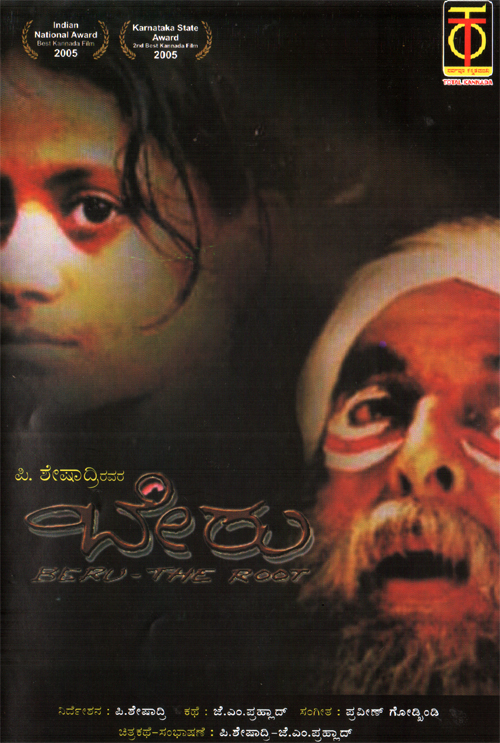
Beru deals with the theme of corruption in local government, but rather than looking at political scheming and the wheeling and dealing of men in charge, the action here focuses on a small rural office and local concerns. Director P. Sheshadri has a background in journalism and documentary film making which is perhaps why he focuses on day-to-day life in a rural community in such a realistic manner. His attention to detail and well-developed characters make Beru an engaging film despite the sometimes heavy-handed symbolism used to get his point across.

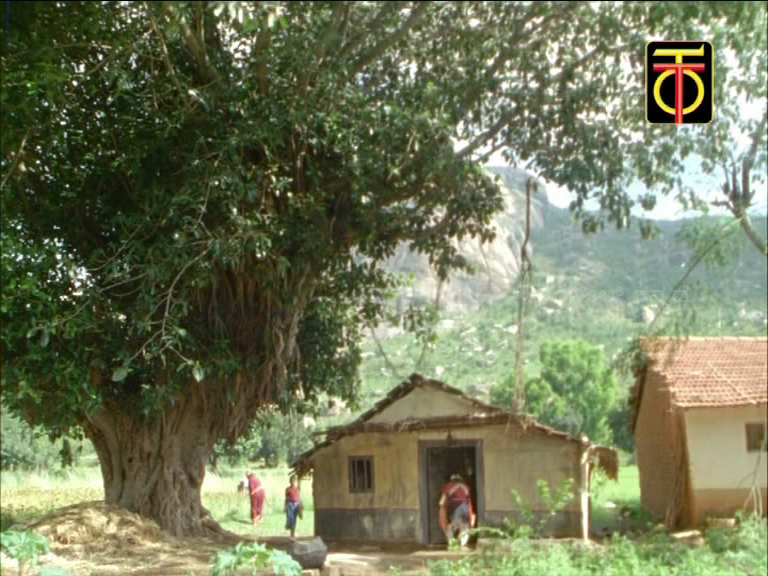
The Root of the title refers literally to the root of a large tree which is threatening the home of local folk artist Goravayya (Venkata Rao) but also symbolically to the deep-seated corruption within the local government office. The film shows that this corruption is so deeply entrenched at even the most fundamental level of administration that by the end it seems totally impossible that such dishonesty can ever be eradicated. However it’s not all doom and gloom. There is plenty of humour in the dialogue by writer J.M. Prahlad and even in some of the more trivial problems faced by the central characters.

Venkateshiah (H.G. Dattathreya) is the head clerk in the government office in Karadigudda and has been filling in for the role of chief officer while they wait for a replacement from Mysore. He is nearing retirement and has the burden of 2 more daughters to marry on what he considers to be a meagre salary.

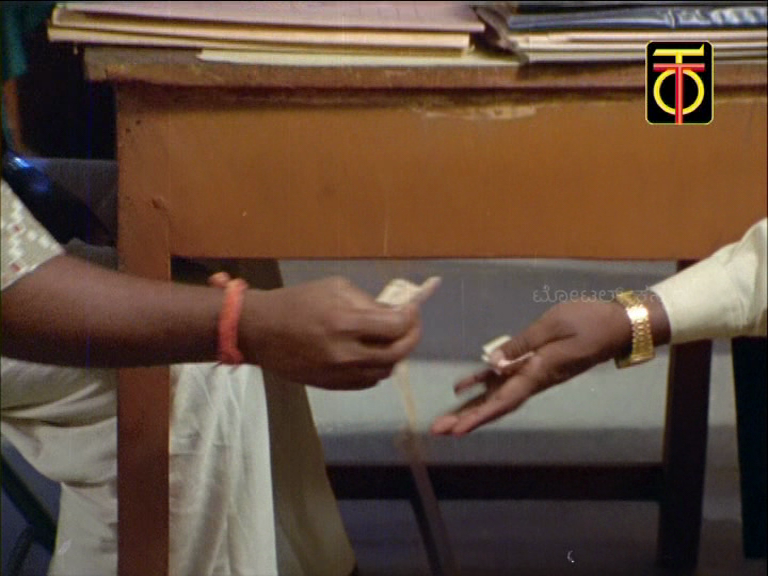
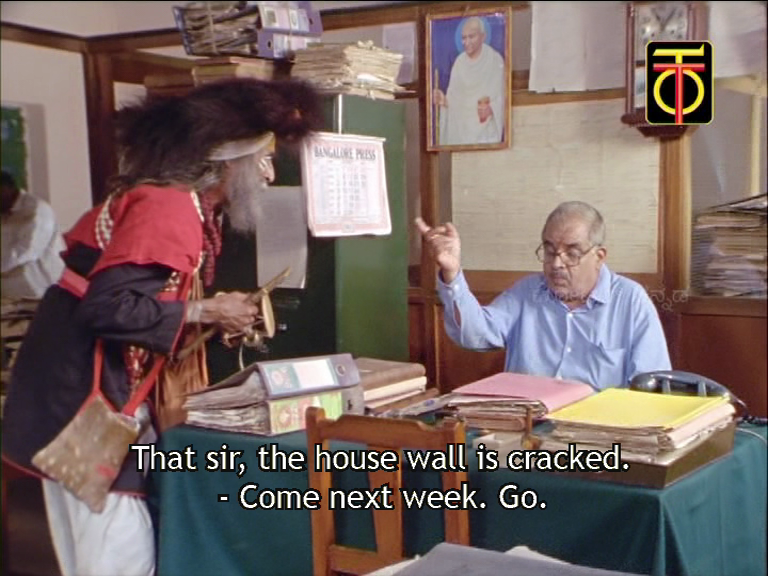
Nothing within the office seems to be done without money passing hands and, as always seems to be the case with any government, reams and reams of paperwork. But with the arrival of new and enthusiastic chief officer Raghunandan (Sucheendra Prasad) it seems as if things may change. Symbolically on his arrival Raghunandan orders the office to be thoroughly cleaned, even going to the extent of taking out his own handkerchief to dust a picture of Gandhi. He’s young, almost painfully honest and his opening speech to his staff is full of ideals, which from their expressions seem unlikely to gain much ground. Once Raghunandan starts going through the books he finds more and more evidence of petty fraud and indications that bureaucracy frequently has taken the place of common sense.

His wife Suma (Neeta) is equally appalled by the government residence that they have been allocated. She is unable to cope with invasions of the local wildlife, and also feels lonely and isolated since she is more used to city life. Raghunandan on the other hand seems to love the local countryside and appears to relish the idea of life away from the crowds of Mysore for a few years. The relationship between Raghunandan and Suma helps to define their characters and also provides a contrast to that of Venkateshiah and his wife, although in the end both wives encourage their husbands in their various deceptions.

At the same time, local folk-singer and Gorava dancer Goravayya is trying to get permission to cut the root of a tree which is threatening to destroy his house. Goravayya has adopted an orphan Gowri and the two go from house to house begging and giving blessings in the name of Shiva. As part of her investiture Gowri has taken oaths not to lie or steal emphasising the vast difference between Goravayya and the government officials he is attempting to deal with. He is a simple man living a simple life and won’t even consider cutting the tree root without permission from the appropriate authority, But every time he tries to approach Venkateshiah or anyone else from the office, he is brushed aside as his problem is not considered important.

After just a few days in his new job, Raghunandan receives word that the minister will be coming to visit and he is required to survey the local inspection bungalow (IB) where the minister will stay. However no-one seems to know anything about the IB, including its location, despite the fact that over the preceding years funds have been sent for both its renovation and upkeep.

Raghunandan refuses to be fobbed off with excuses that the IB is dilapidated and needs to be replaced and insists on finding out the truth. But what he discovers sets his own path down the slippery slope of dishonesty as he succumbs to appeals from his wife and Venkateshiah’s family to hide the truth. He sinks deeper and deeper into the murk of corruption as he tries to deal with increasingly pressing demands from his head office.

Goravayya is enticed to help with promises that this will ensure a speedy resolution to his problem but it becomes very clear that Venkateshiah never had any thought in his head other than to save his own skin.

What appeals about this film is the ordinariness of the characters who react in very human and realistic ways. I believe in the inherent selfishness of people and this is exactly how the majority of the characters act to a greater or lesser extent.  Sucheendra is excellent as the meticulous and fastidious Raghunandan. I think he captures the essence of his character in the way that he always has a glass of water on his desk sitting on a coaster, with another coaster on top to keep out dust and flies. Having a drink of water then becomes something of a ritual and this is the type of attention to detail by Sheshadri that I appreciated. Raghunandan seems to be the quintessential government official in the way he uses a bell to summon the porter or his typist and is totally oblivious to the activities in the main office since he only deals with his immediate subordinate Venkateshiah. I had a summer job in the civil service back when I was a student and this bureaucratic hierarchy is quite familiar!

Dattathreya is also impressive as Venkateshiah and my changing feelings towards his character are a reflection of how well he portrayed the role. Venkateshiah initially appears as a man beset by financial problems which he uses to justify his misappropriation of funds and I initially felt sorry for him. But as he struggles to keep his job and entreats Raghunandan to save his retirement fund, his innate selfishness becomes more and more apparent until by the end his actions are quite revolting. The one jarring note is the way Raghunandan seems to go along with Venkateshiah’s final plans as this didn’t seem to fit into my reading of his character, even allowing for his fall from grace.

All the other actors are excellent in their roles and despite his very simple nature I loved Goravayya and the way he cared for Gowri.  There are only a few songs and they are mainly folk-songs pictured on Goravayya and Gowri which generally fits the story. This song explains why he dresses the way he does and he sings it to Suma after he has frightened her by suddenly appearing at her house. Awesome costume too!

I thoroughly enjoyed this film and can appreciate Sheshadri’s attempt to show just how deeply entrenched corruption seems to be in every aspect of government. Good performances and some lovely shots of the countryside by Ramchandra help to make the most of a simple but effective story. 4 ½ stars.

Temple says:

Beru is heavy handed in visual imagery and the corruption rife in local government is illustrated in many ways – some very effective and some also tedious and repetitive. The rural setting is lovely and the setting and small scale is a highlight. There are some excellent performances but the characters are not by and large people I could care about and their plight was largely self created.

Goravayya and Gowri represent simplicity and honesty, and both the characters and actors are appealing. Thank heaven for that as the rest of the characters are pretty repellent. Raghunandan is a career man who wants to keep his hands clean and make his way up the food chain. While he mouths lines about serving the people, he has nothing to do with the general populace or his staff and spends his time alone in his office or isolated in his home. The slightest whiff of trouble for his own career has him covering his butt and the rules are discarded.  Suma uses family connections to protect Raghunandan’s career and he accepts that easily despite his supposed principles that made him refuse an offer to get him a better posting. Venkateshayya is reprehensible, a craven cheat and liar, yet the film gives implicit approval to at least some of his actions.

I don’t think anyone would be terribly surprised that there is corruption in any government. The many meaningless and unproductive layers of bureaucracy in the Indian civil service are legendary. I was hoping the film would do something more interesting than just cast up examples, but P Sheshadri repeatedly states the obvious without taking it anywhere. Beru drifts somewhere between being a message film and a misery memoir. The message could be ‘Don’t get caught’ or perhaps ‘God helps those who help themselves’. The end effect is a lot like listening to two hours of whinging by a bunch of largely unlikeable and self centred people. 3 stars.