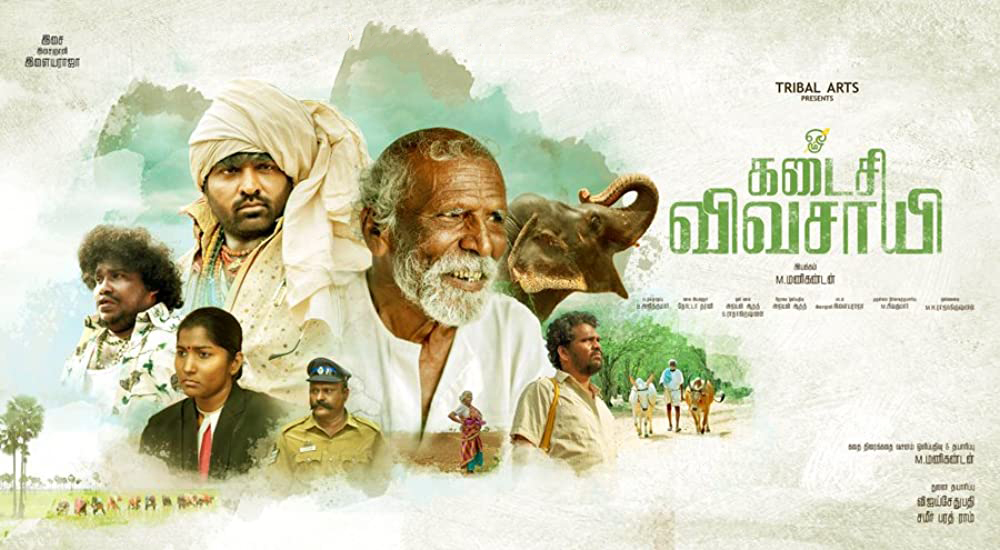
Kadaisi Vivasayi (2022)

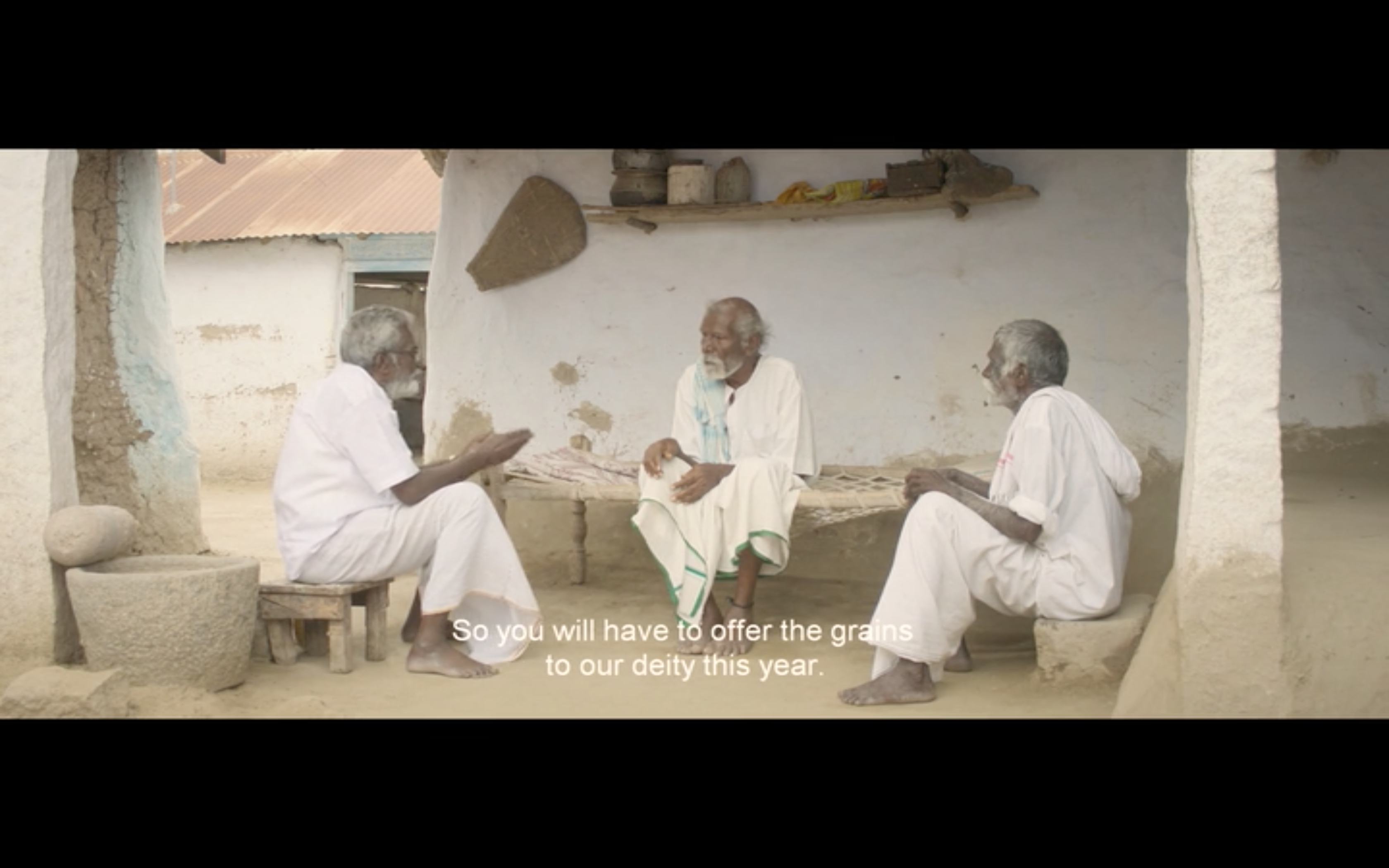
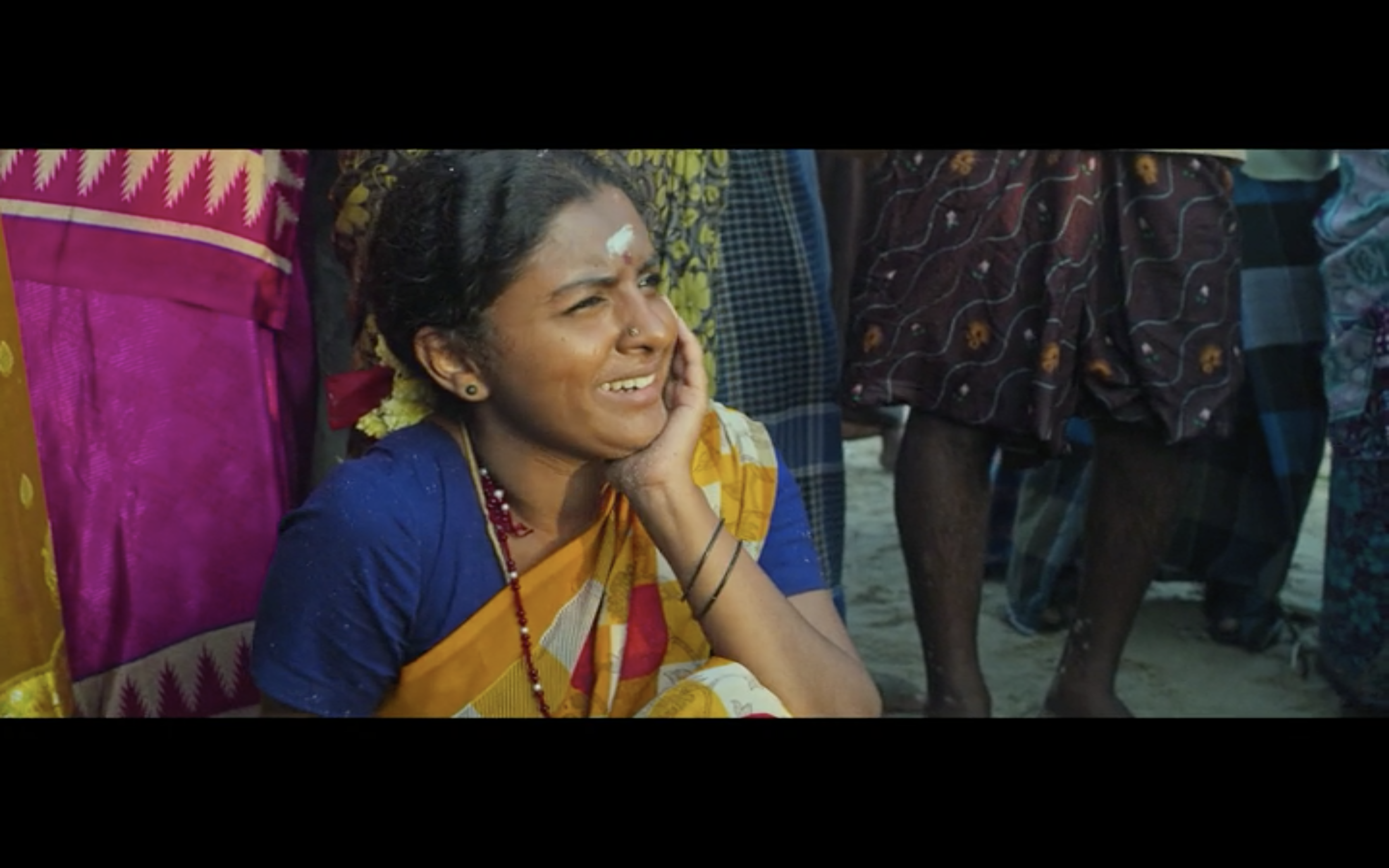
I’ve enjoyed every film from M. Manikandan so far and I’m impressed by the variety of the subjects he tackles. From a reflection on globalisation in Kaakka Muttai to the thriller Kuttrame Thandanai and the very funny Aandavan Kattalai, his films have been entertaining and thought provoking, and Kadaisi Vivasayi is no exception. This time his focus is on an octogenarian farmer and preparations for a ceremony at his village temple. Mayandi (Nallandi) has lived all his life simply, used to back-breaking labour every day and farming using traditional methods. But when an incident forces an unexpected change in his life, the consequences involve everyone in the village.

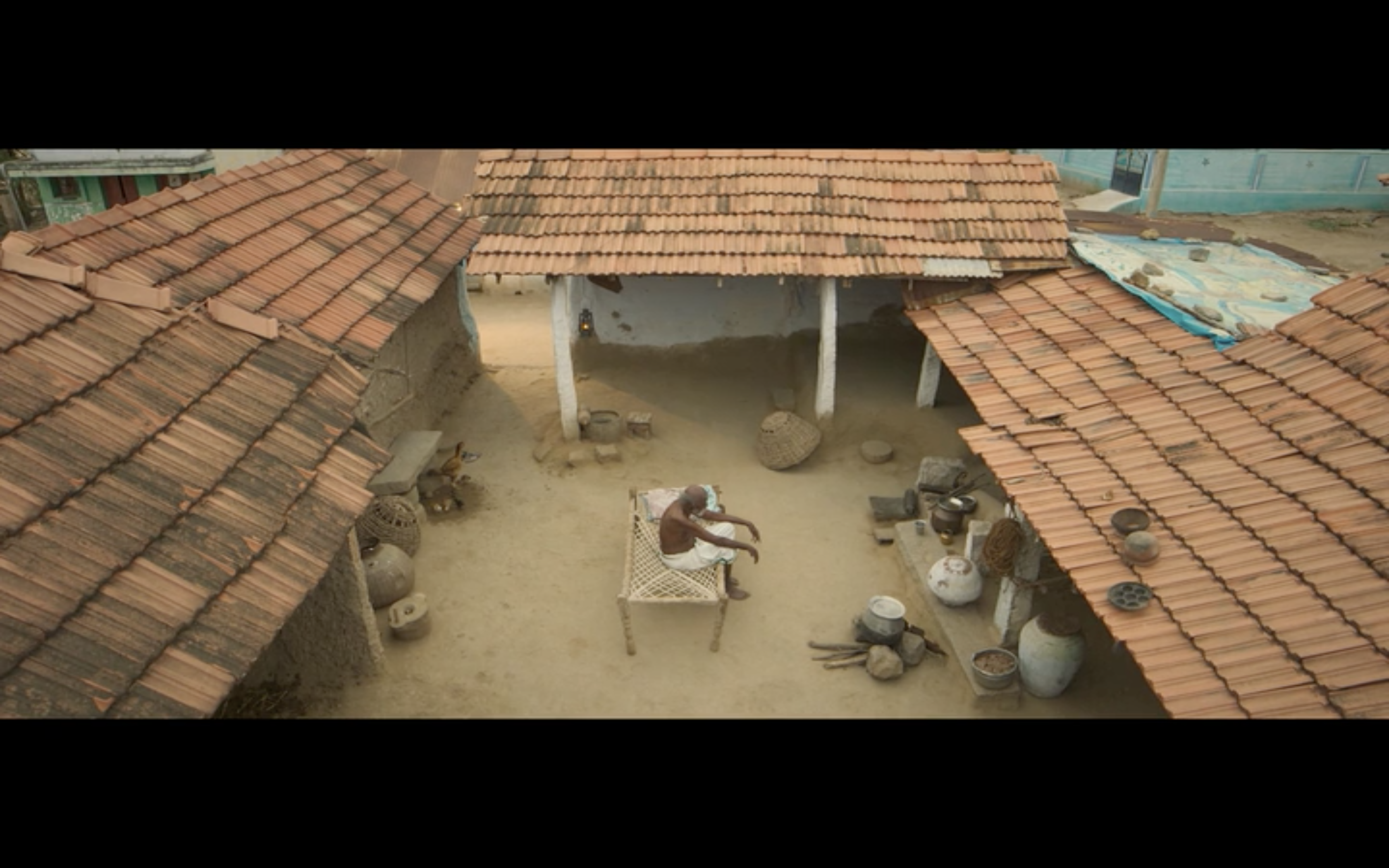
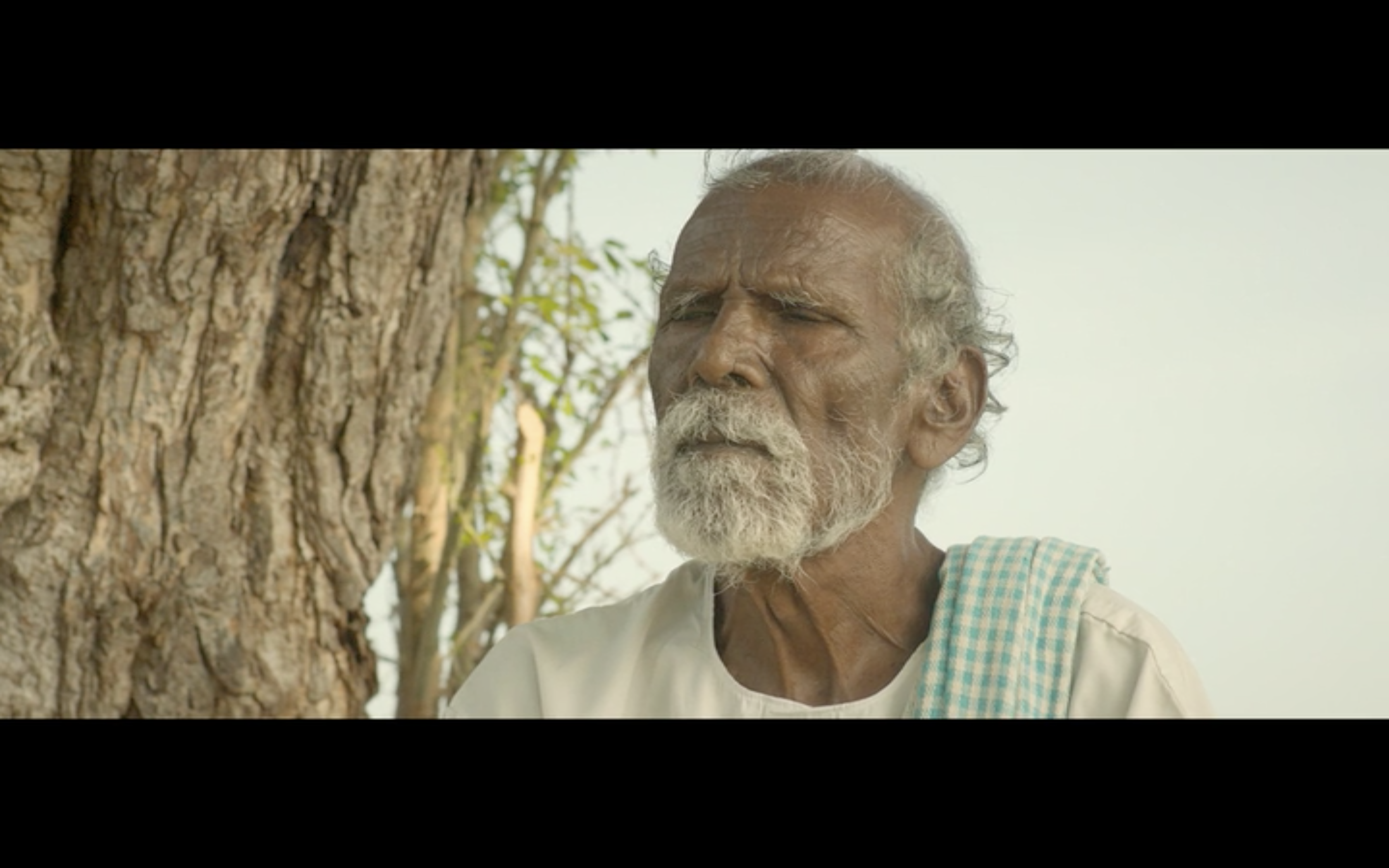
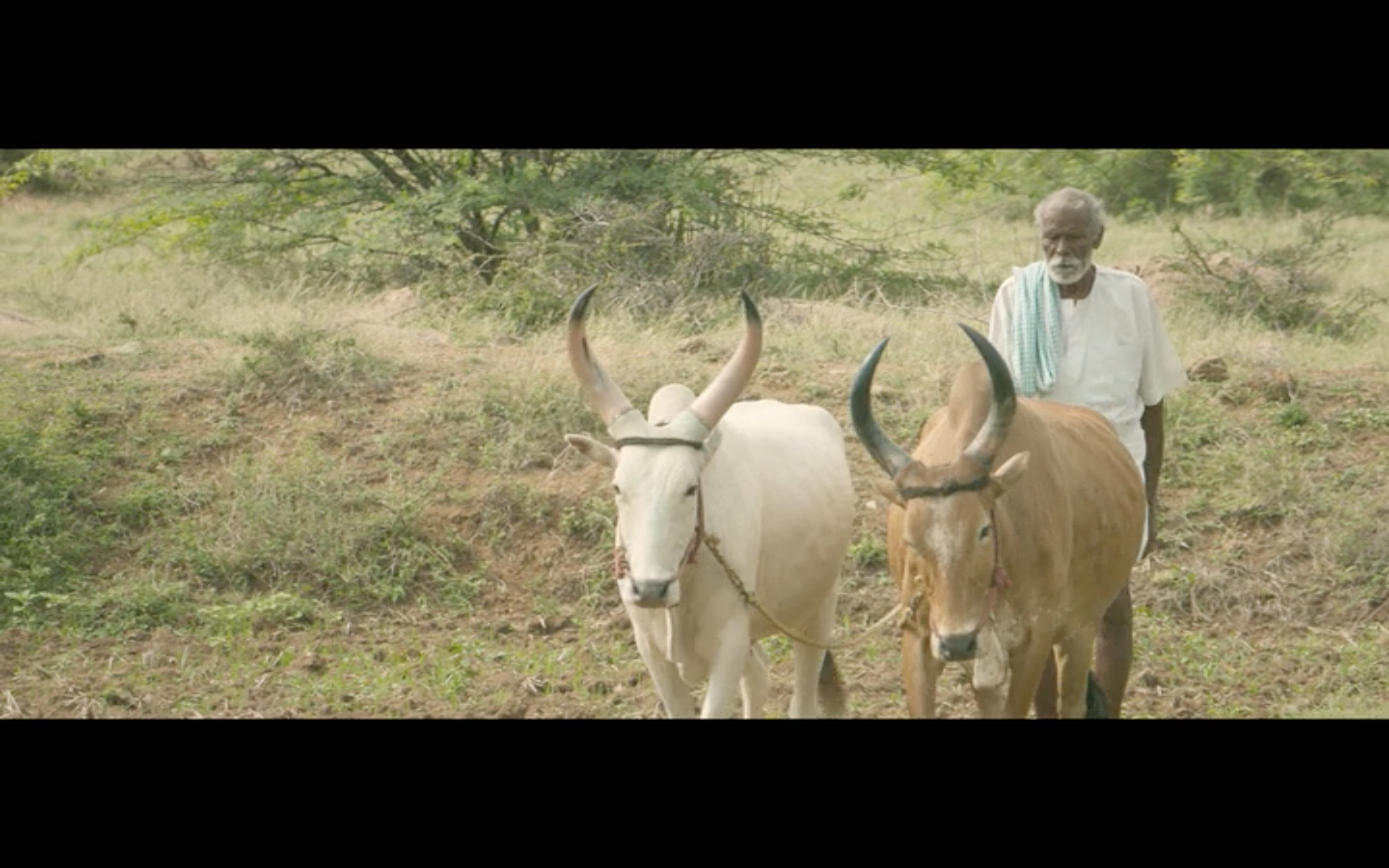
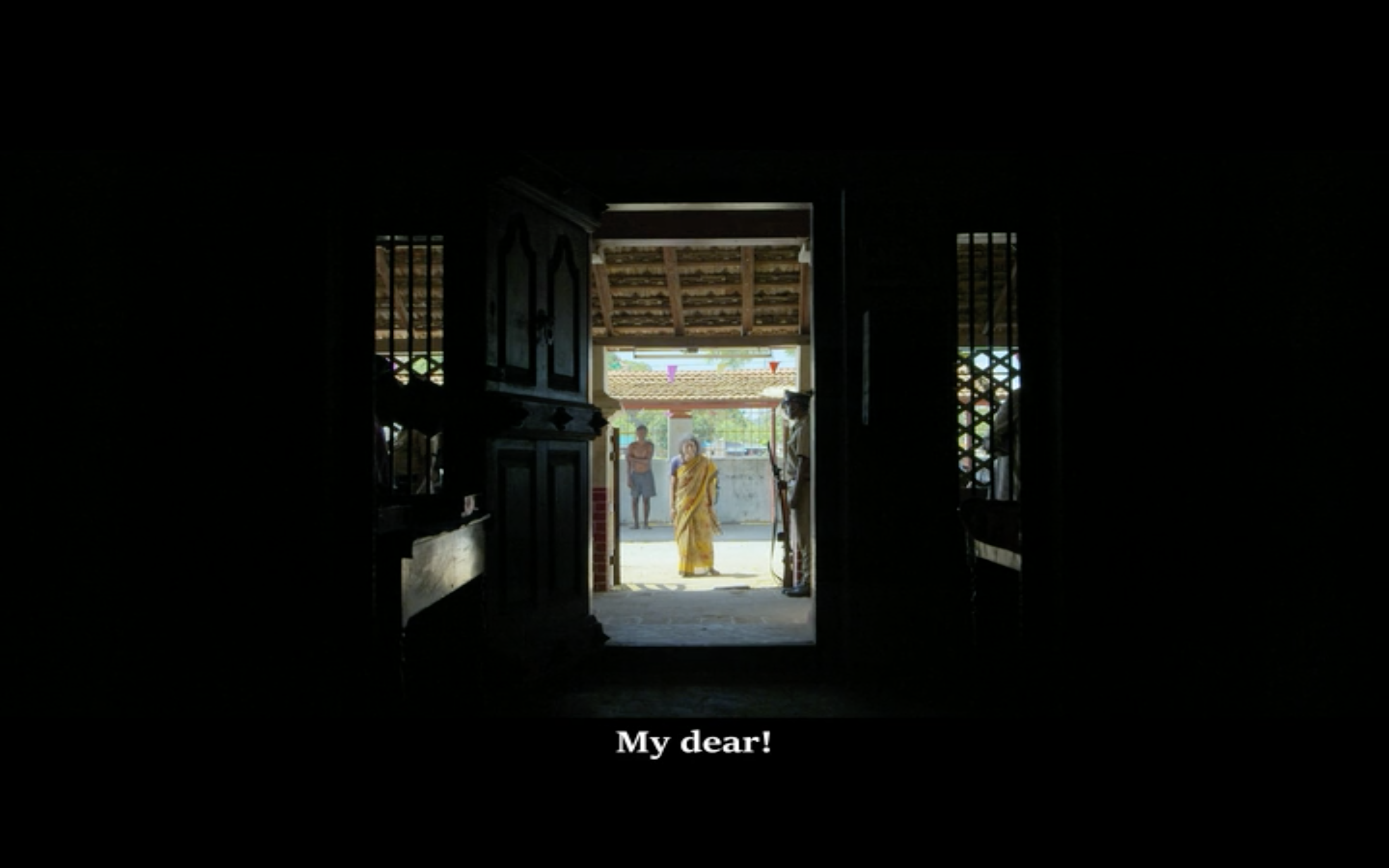
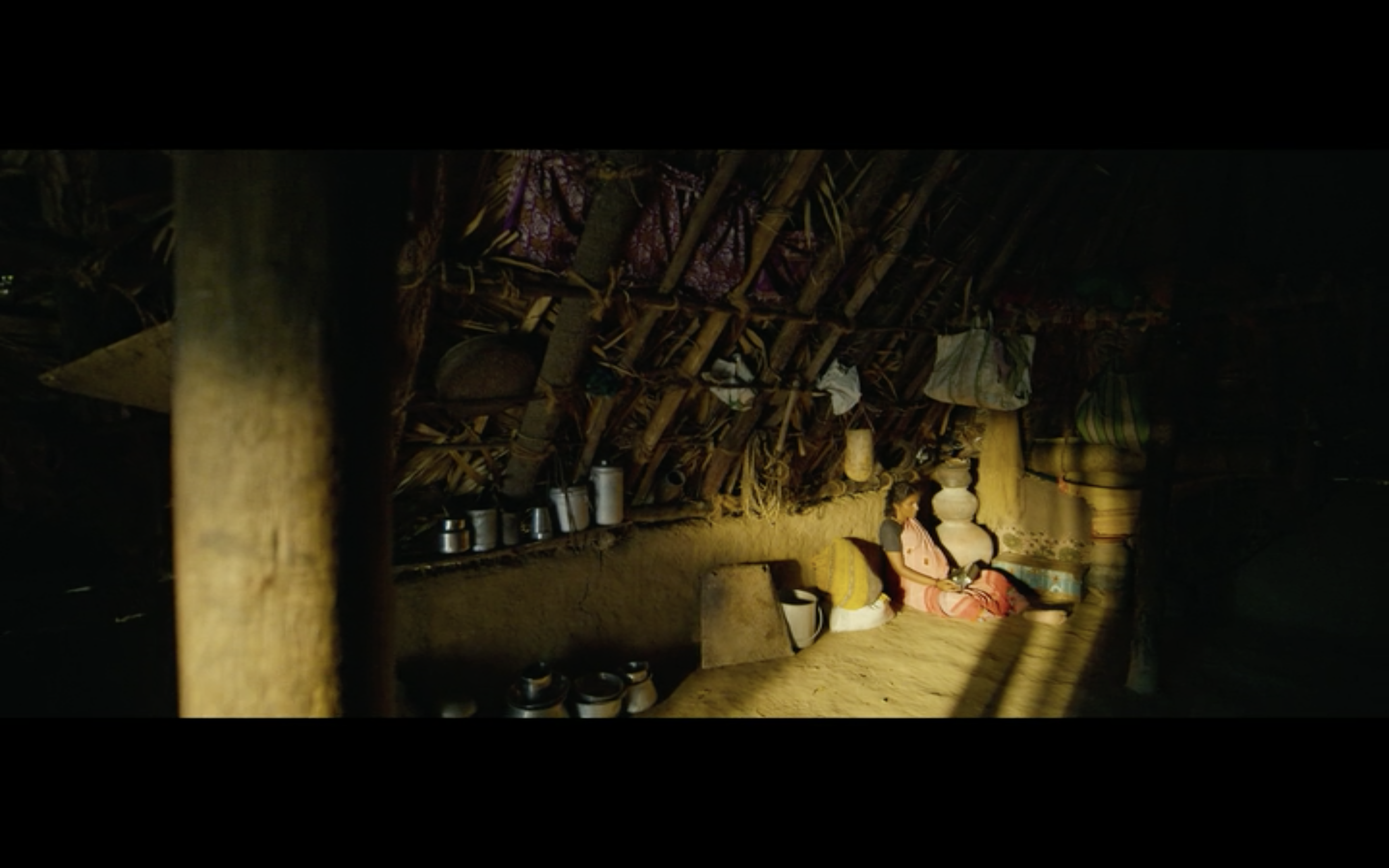
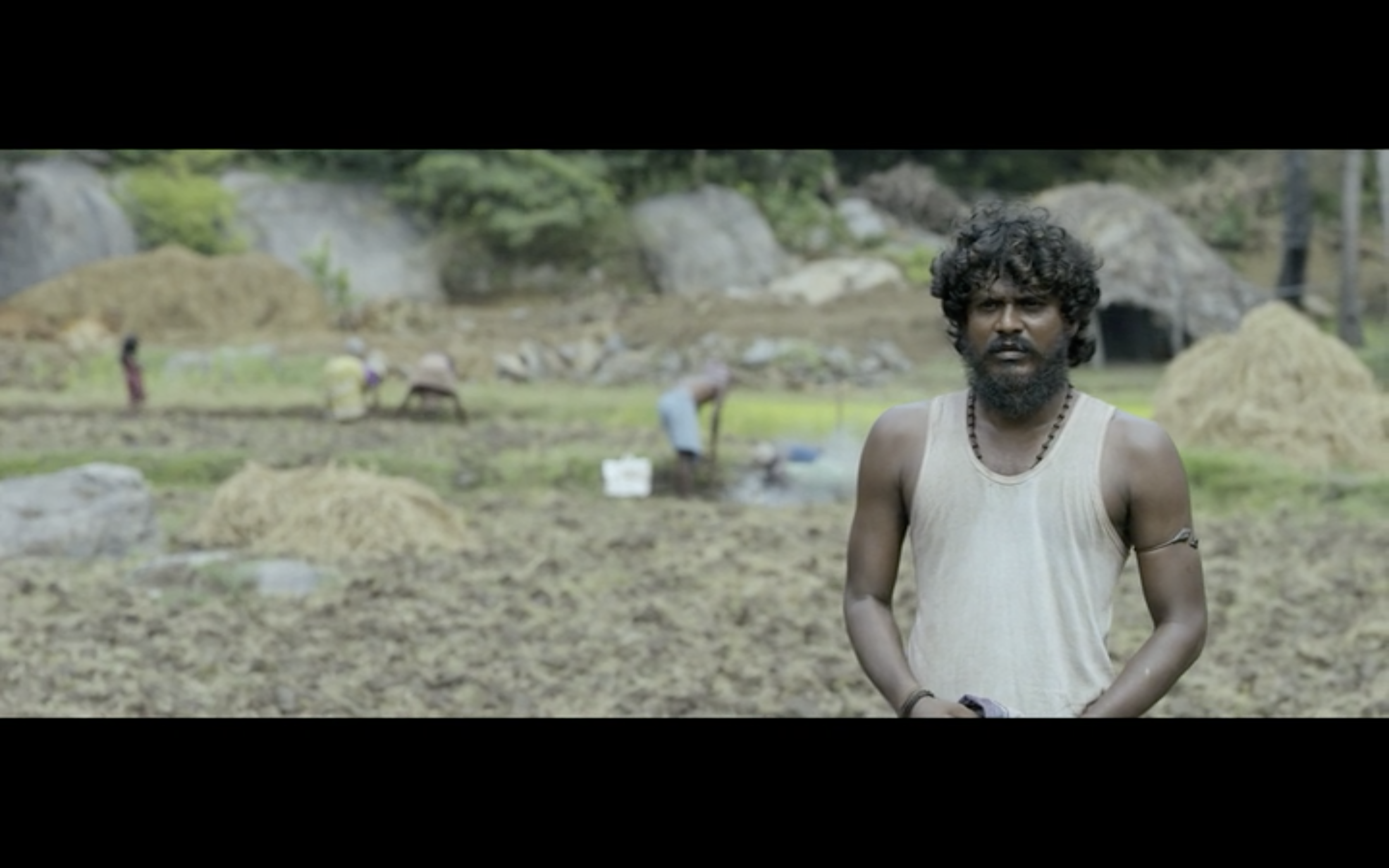
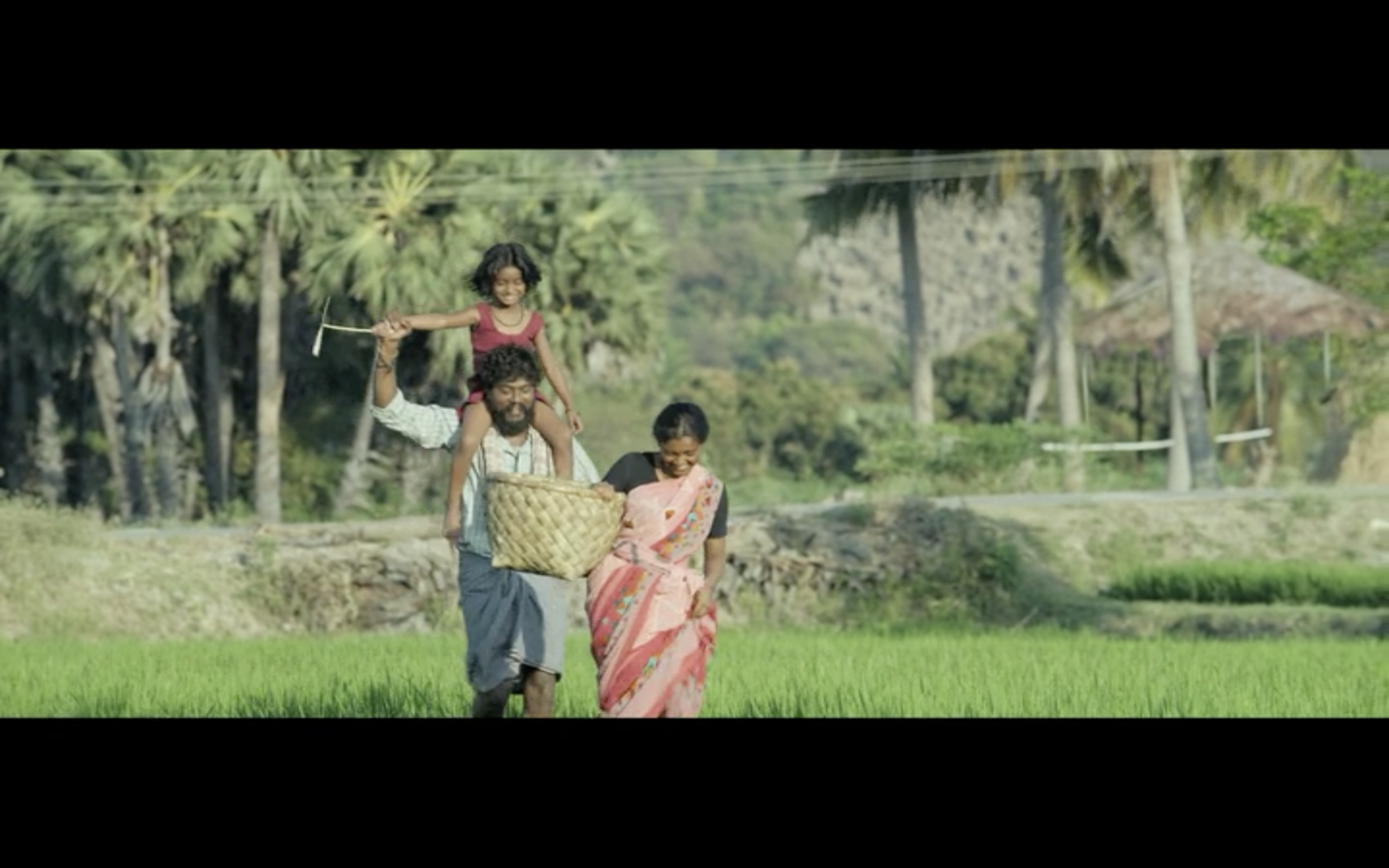
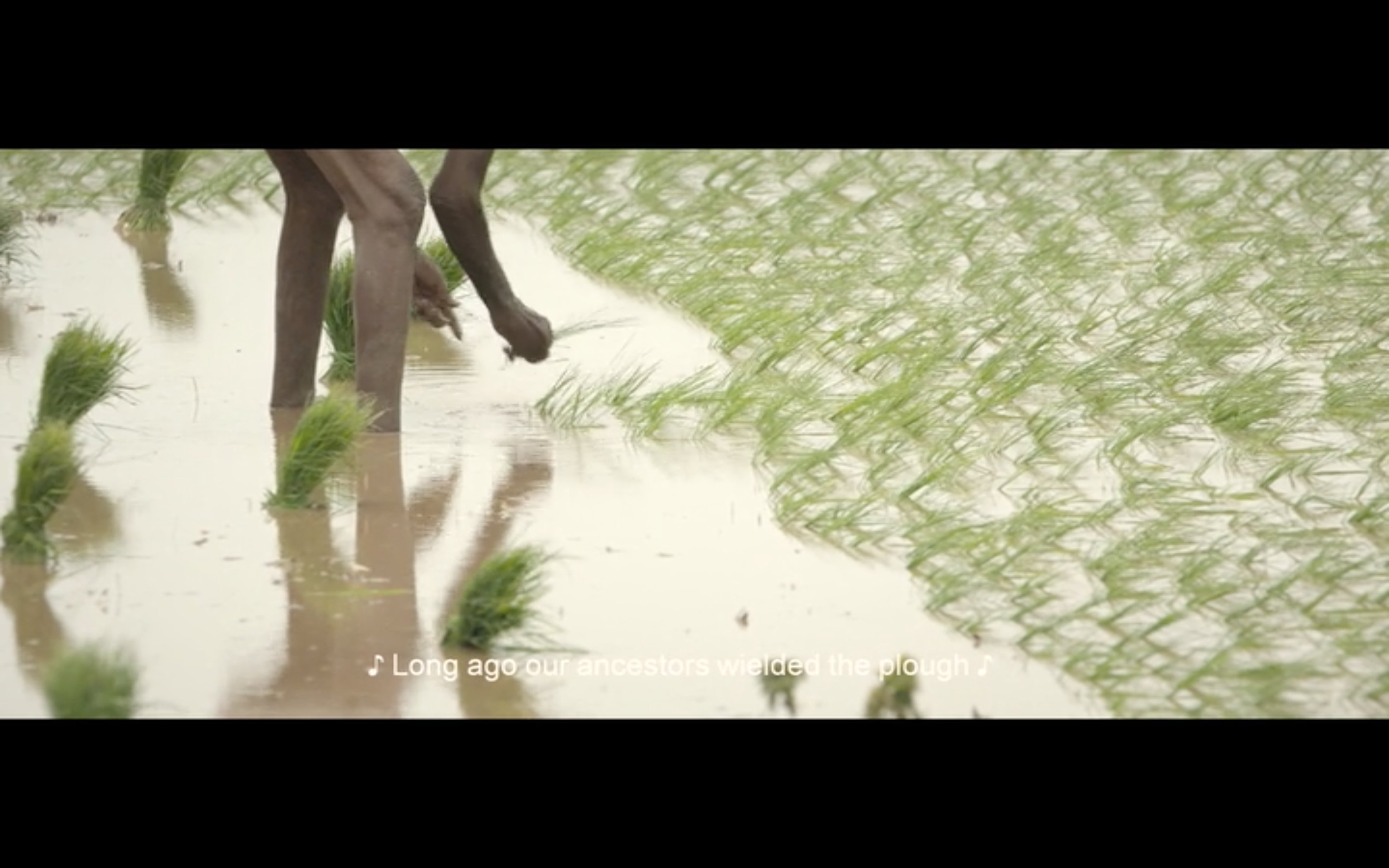
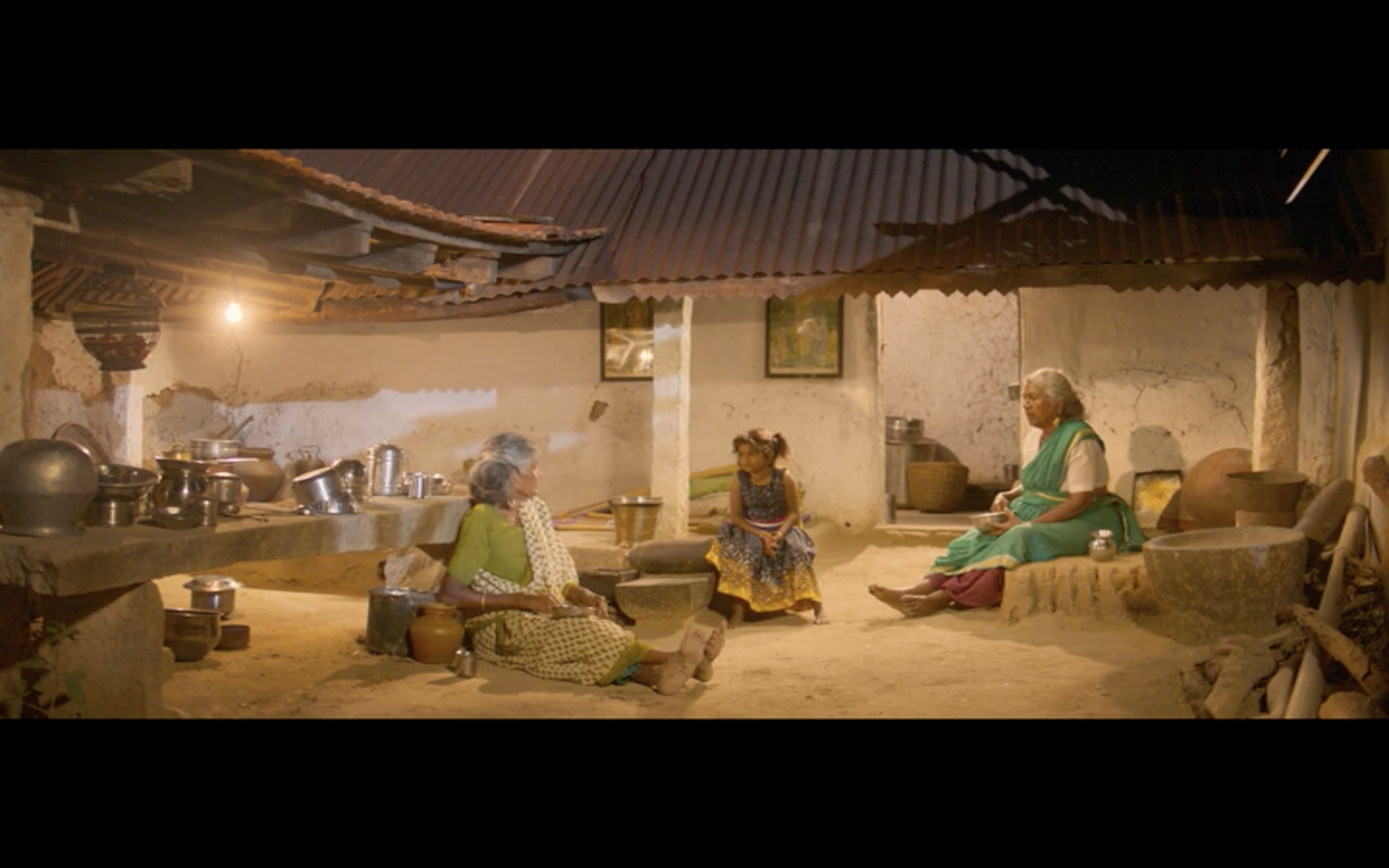
What impresses me most about Kadaisi Vivasayi is the excellent cinematography and the almost documentary feel to the early part of the film as Mayandi, his life and the village are all introduced. When I worked in Tamil Nadu I stayed in small villages, one near Tiruchirappalli (Trichy) and one near Thanjavur, where I saw scenes just like this every day. My family are farmers back in Northern Ireland as well, so this felt like a real step back home for me, especially since my Great Uncle’s farm had no electricity or running water, similar to Mayandi’s house here. Mayandi and his life are introduced by the camera following him through his normal activities. His care of the land and respect for all living things is clear at every stage, while the sheer amount of hard work that he gets through each day is impressive. The slow pace also allows appreciation of the countryside; the shimmer of leaves against the sky, the lush green of new crops and the glory of peacocks, spreading their feathers against the rocks beside the fields are all featured as Mayandi makes his way to the fields.

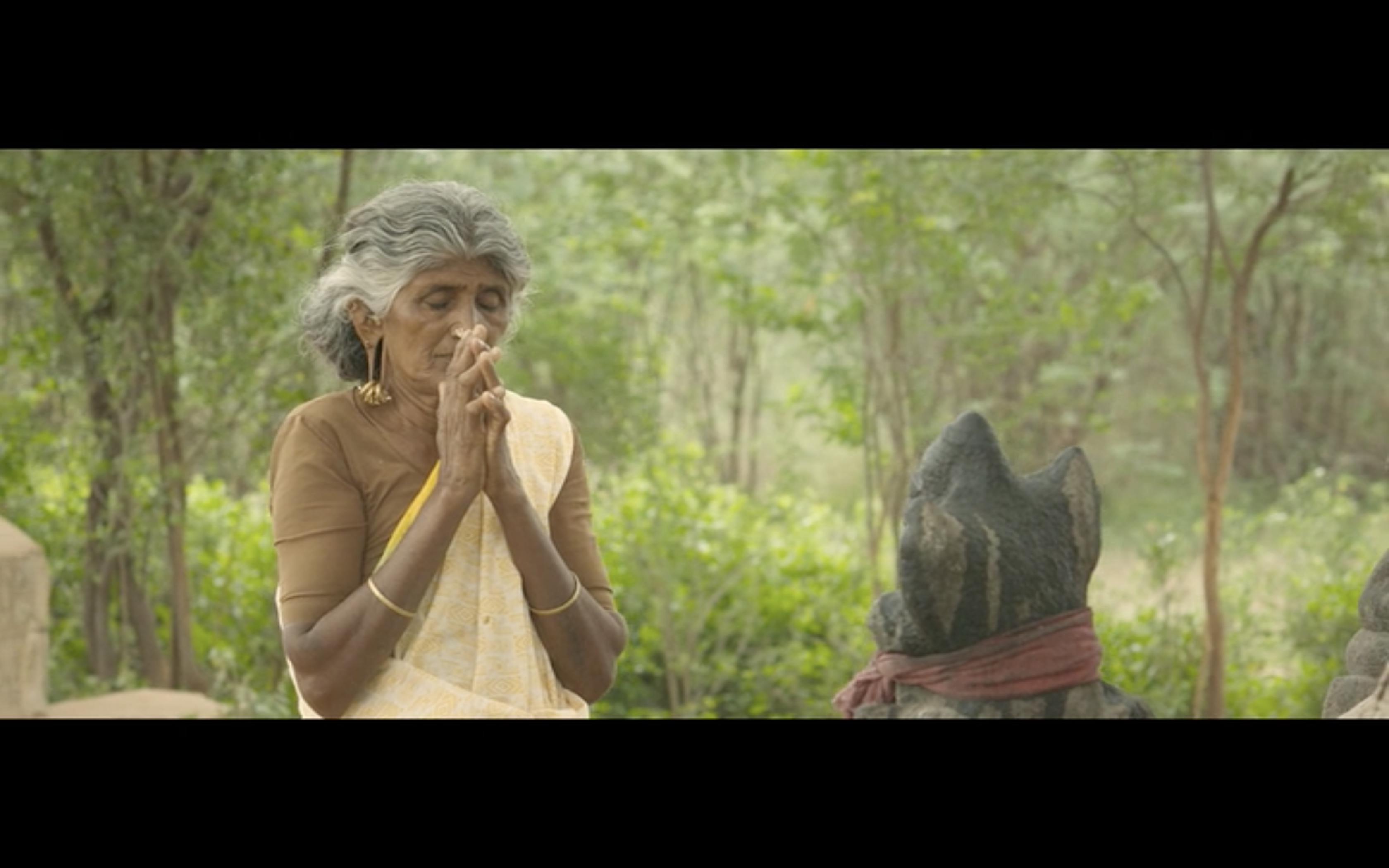
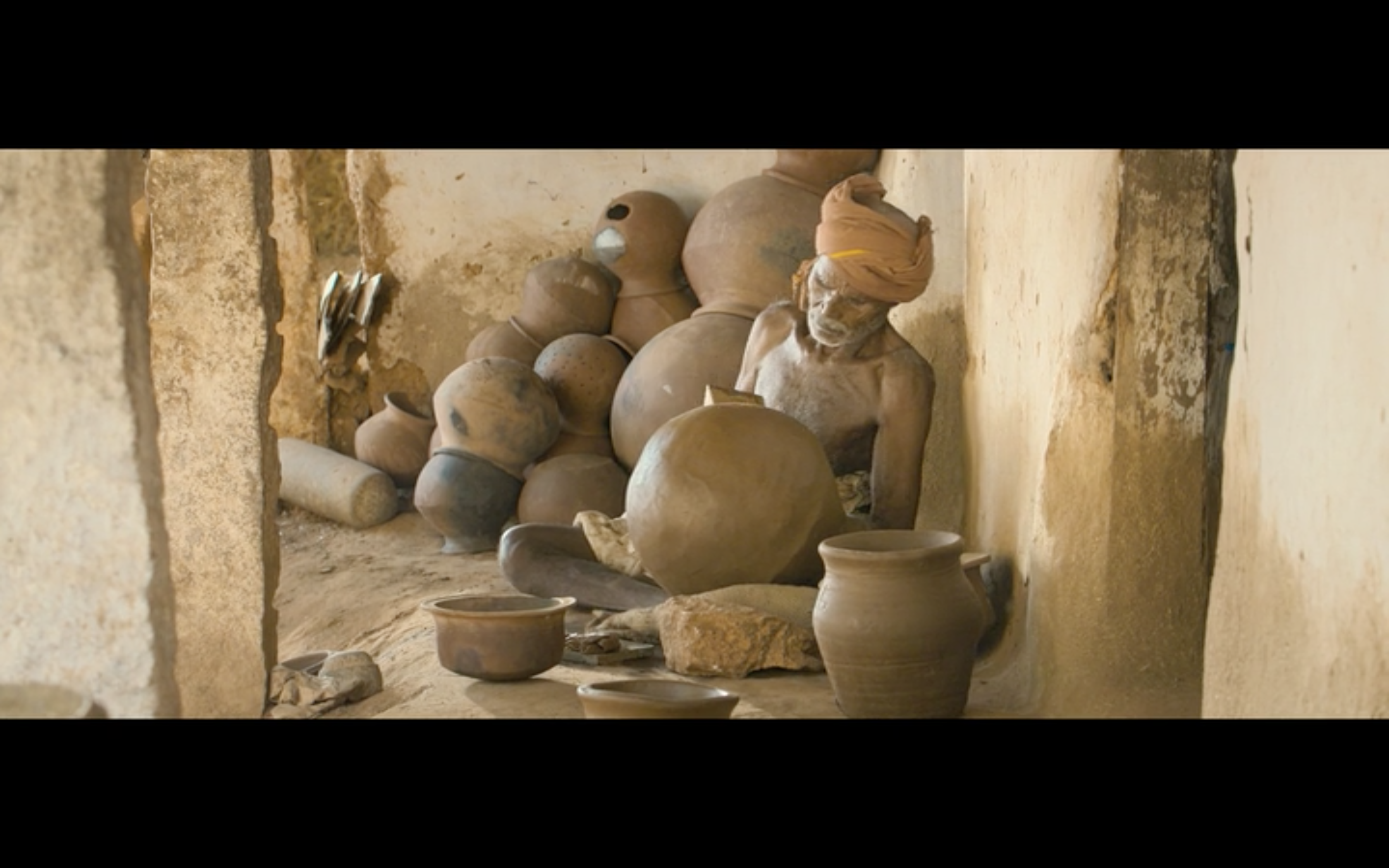
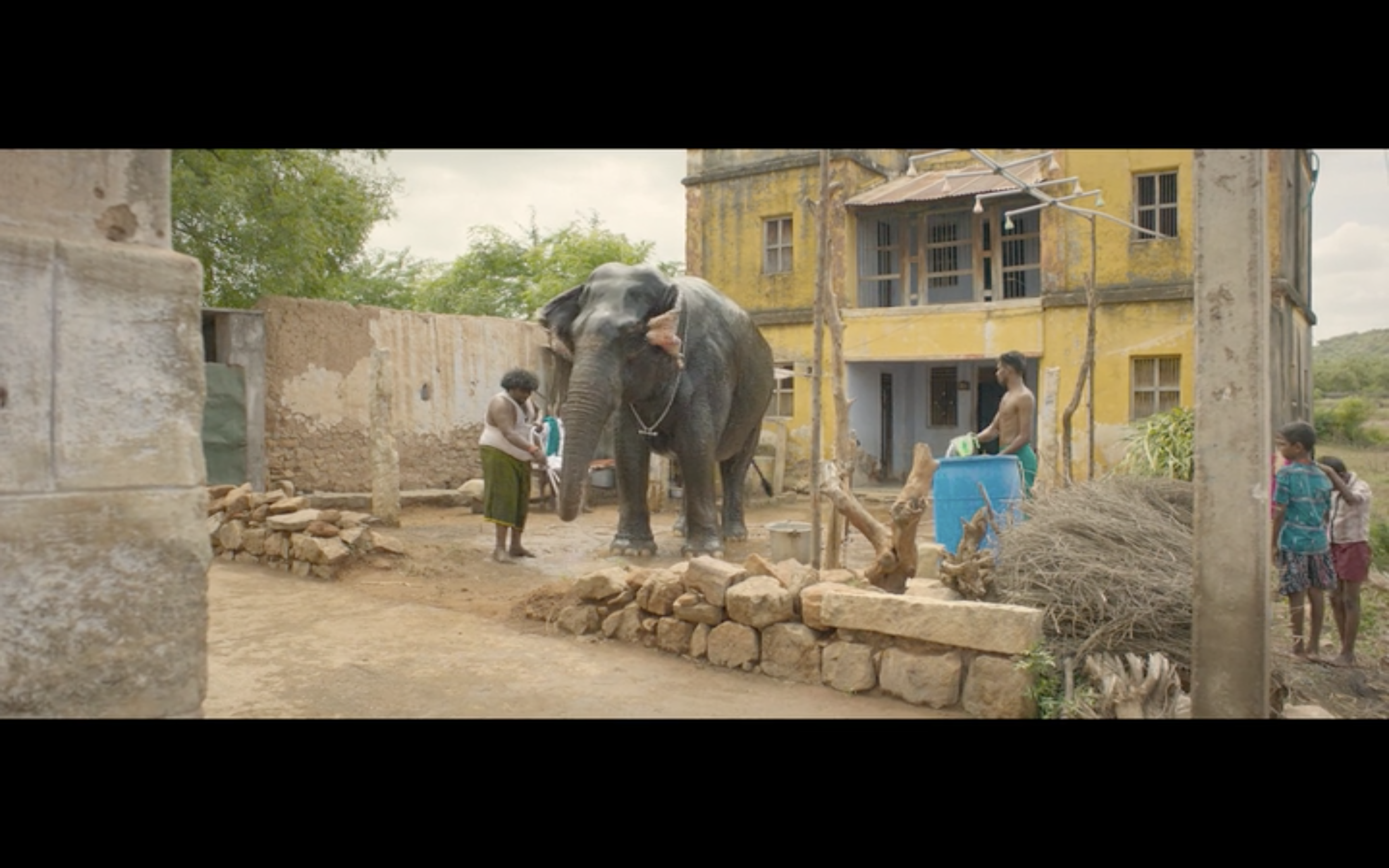
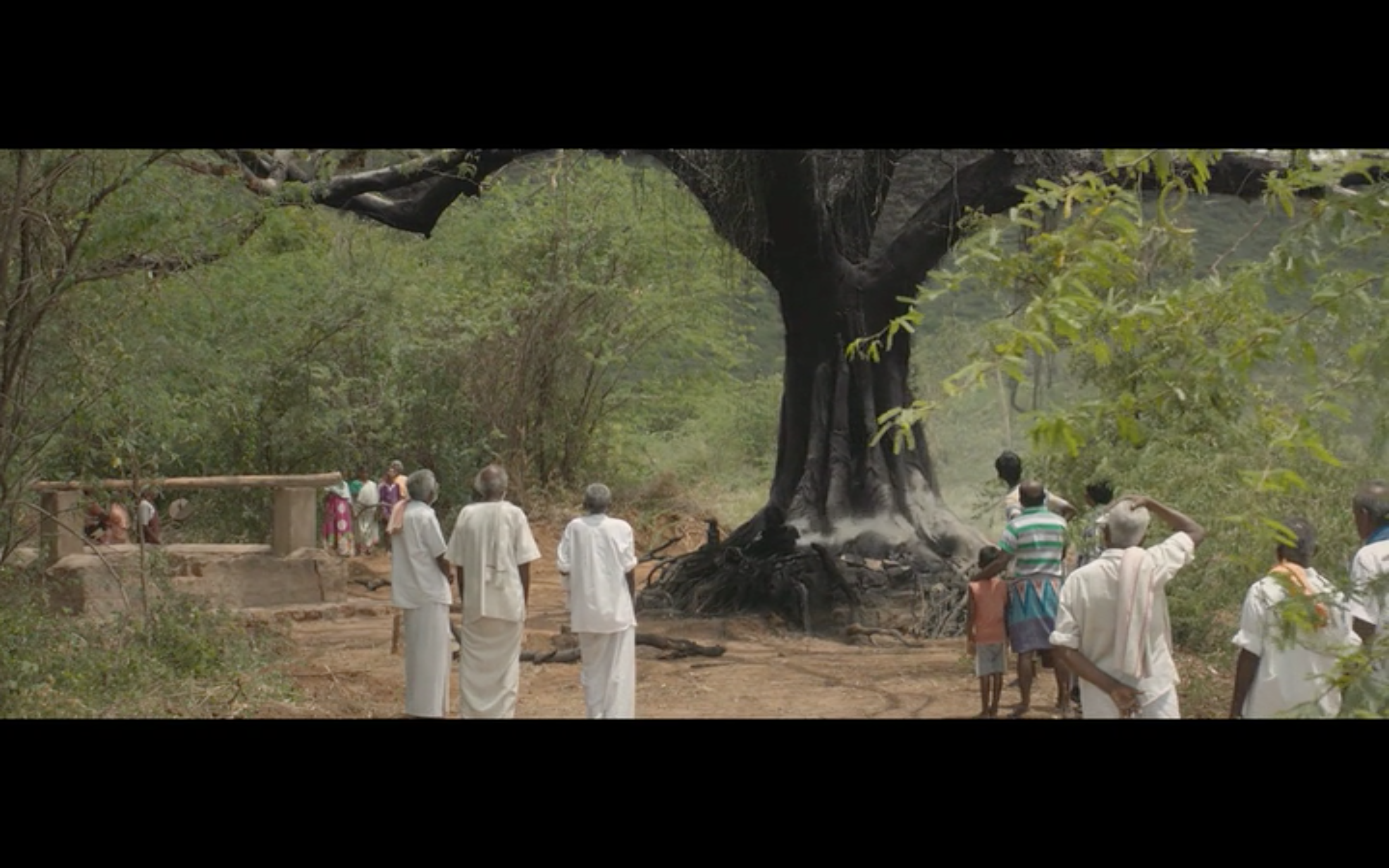
When the village tree is struck by lightning, the elders decide that this is due to not praying at their temple and devise a festival to appease the village god. This involves an offering of rice and as the only farmer left in the village, Mayandi is tasked with producing the first grains needed for the festival. At the same time, the villagers approach the last potter to make the clay pot and horses needed for the ceremony. He too is elderly and frail, and the idea of traditional expertise being lost and time-honoured knowledge squandered as no-one takes up these customary trades underlies the plot of the film. There are caste issues in the village too and most of the villagers have sold their land to developers as the lack of water makes farming unprofitable and just too hard. Once of the villagers (Yogi Babu) has bought an elephant from the proceeds and points out that he makes more money each day from his elephant than he ever did farming. Against this backdrop, Mayandi’s decision to keep farming seems inexplicable, but he explains that without farming, he would have no reason to get out if bed each day. It’s all he has ever known, and it is his life – it is as simple as that.
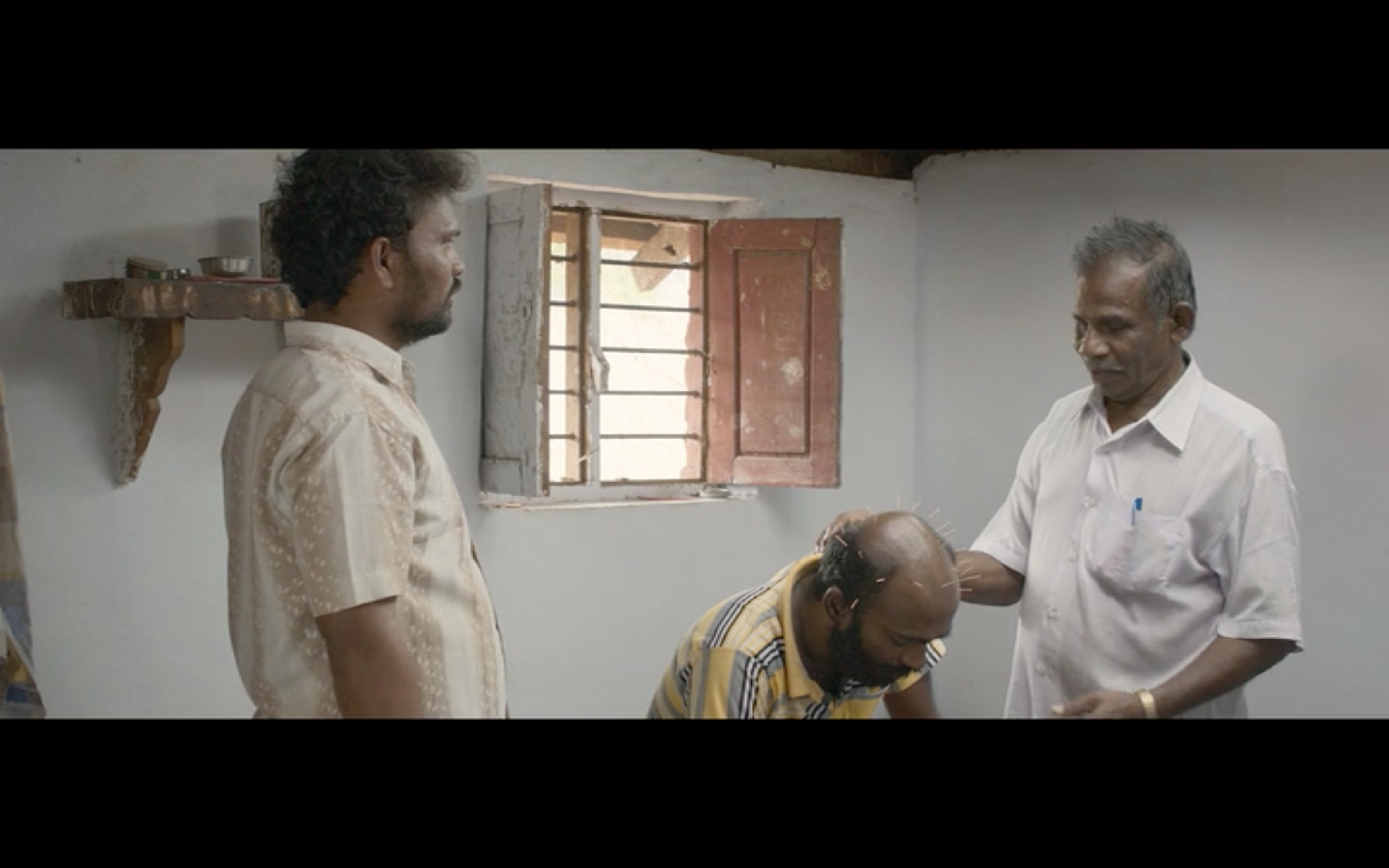
But Mayandi isn’t as sanctimonious as that makes him sound and M Manikandan adds comedy though Mayandi’s interactions with the local shopkeeper who tries to sell him seedless tomatoes amongst other more modern innovations. There is comedy too with Kali Muthu as a bald man so desperate to grow back his hair that he is willing to try any outlandish remedy and a police officer (Kaalaipandiyan) who is consistently mistaken as an electrician, auto-driver and various other professions except his real job.

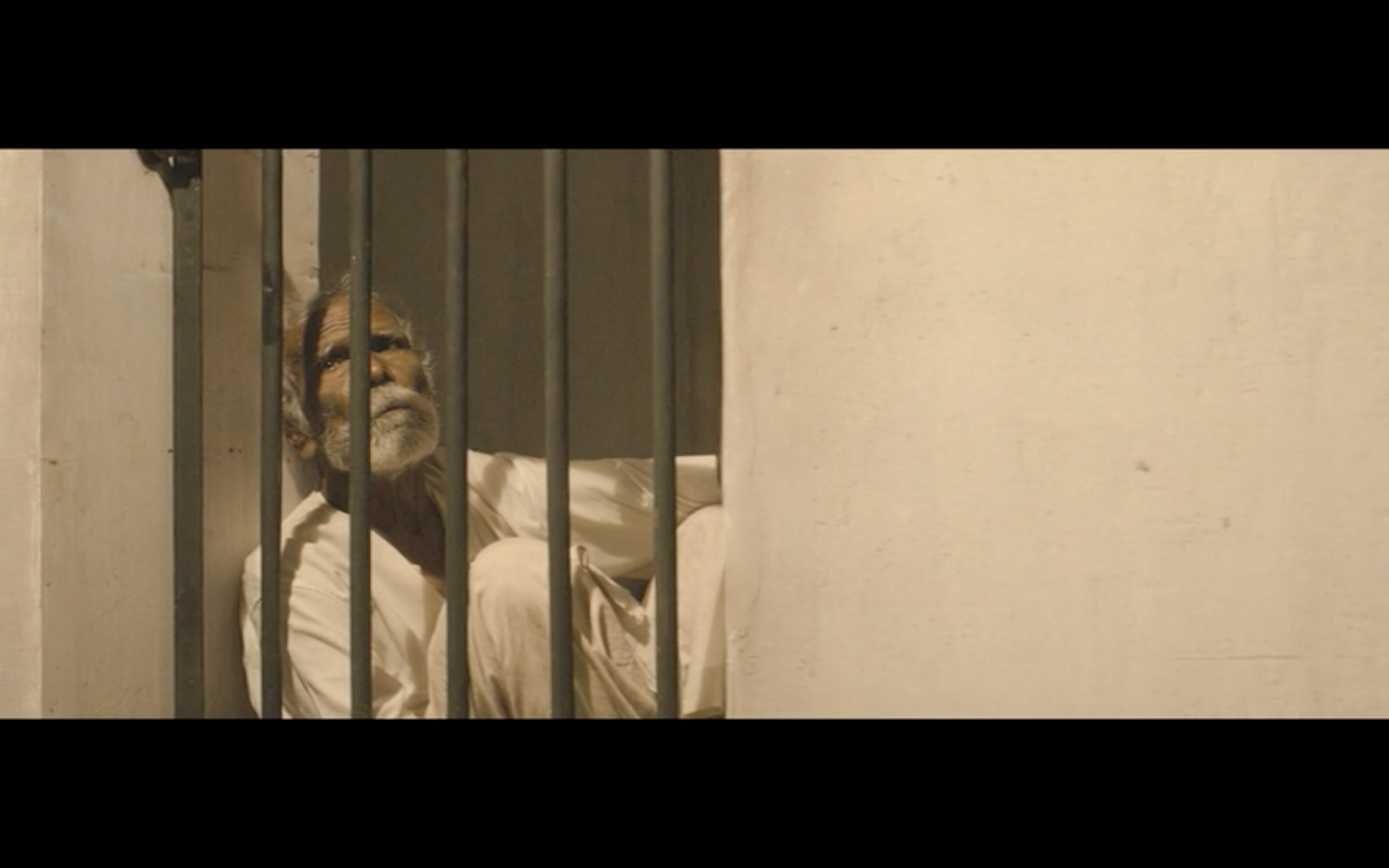
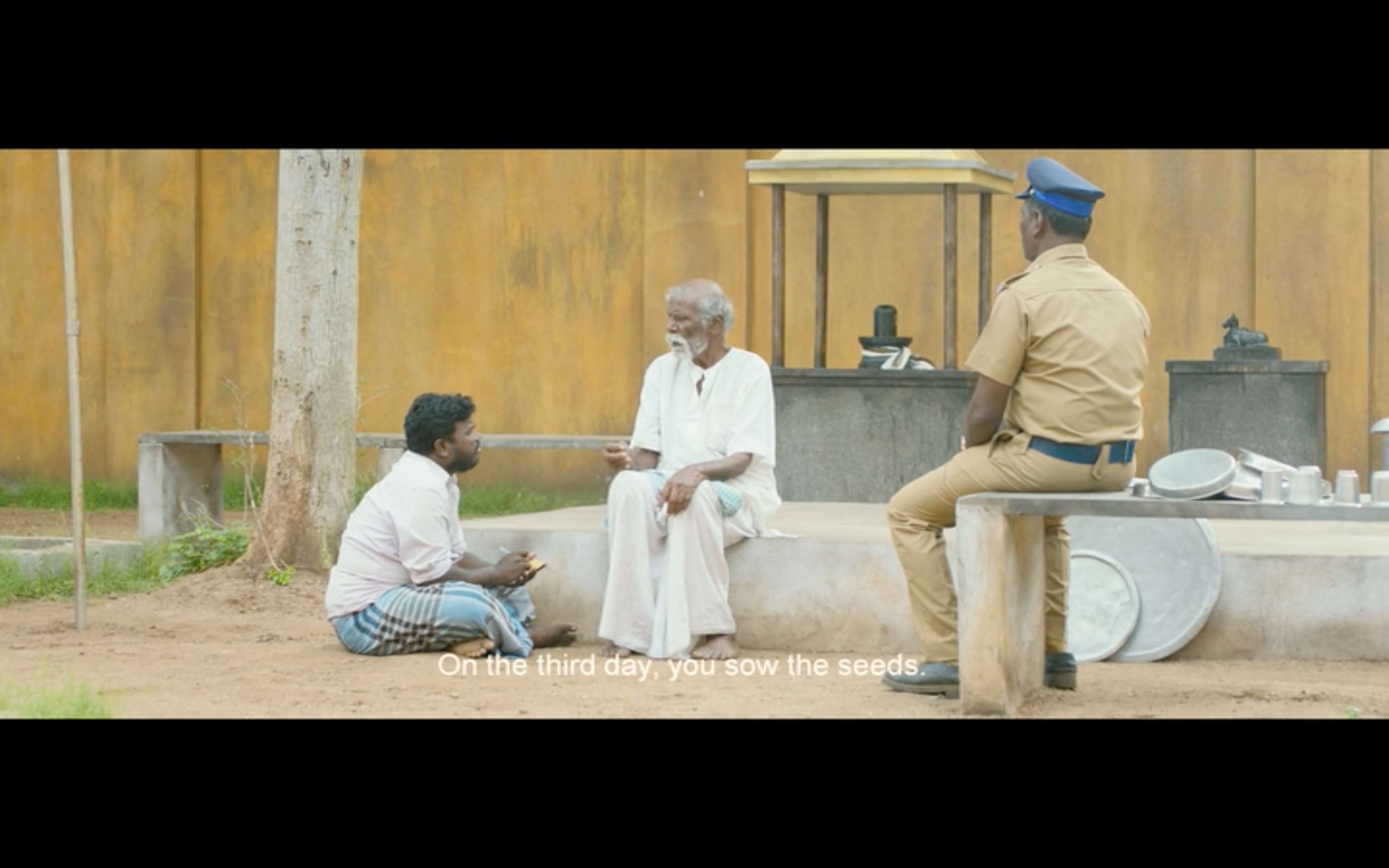
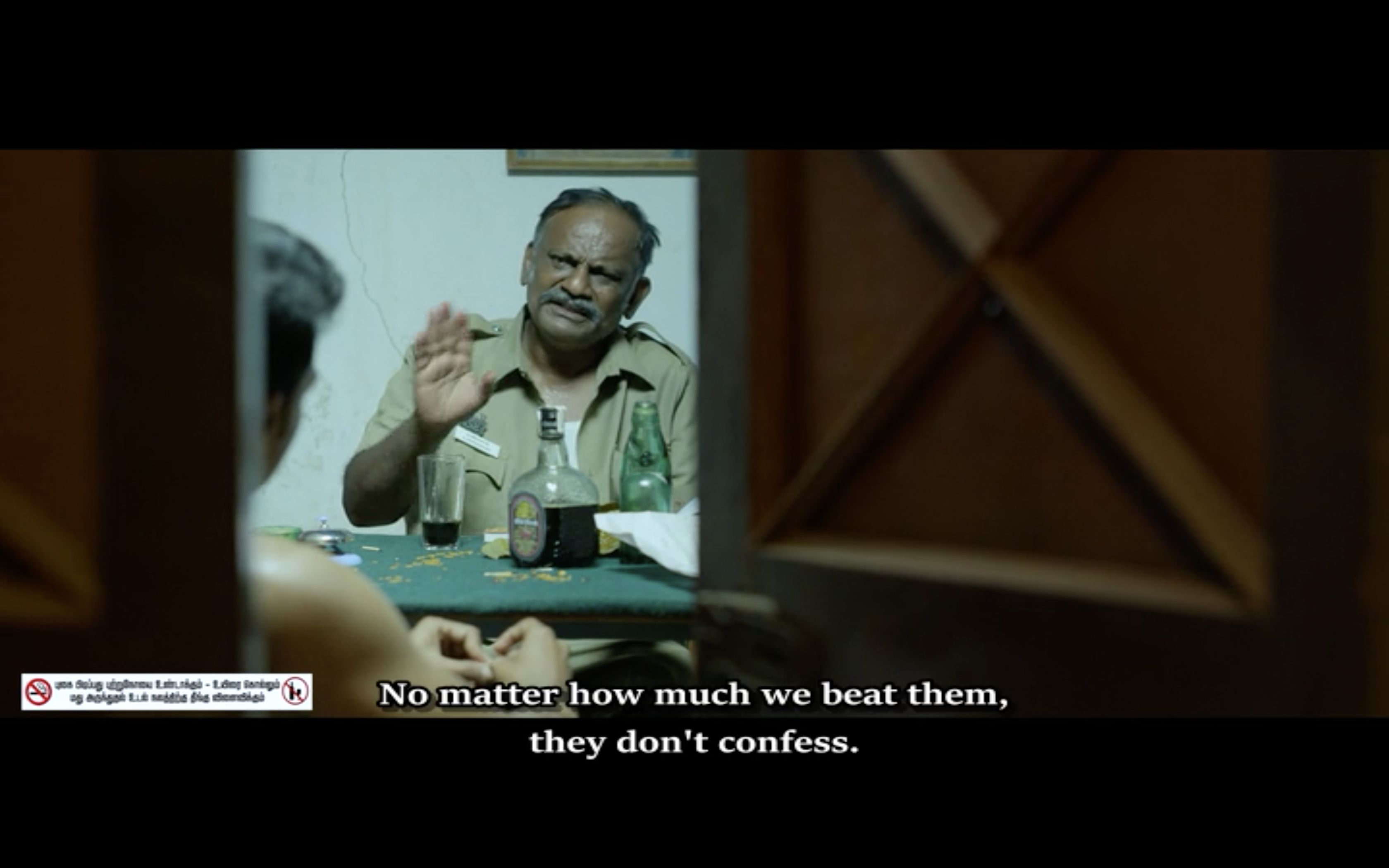
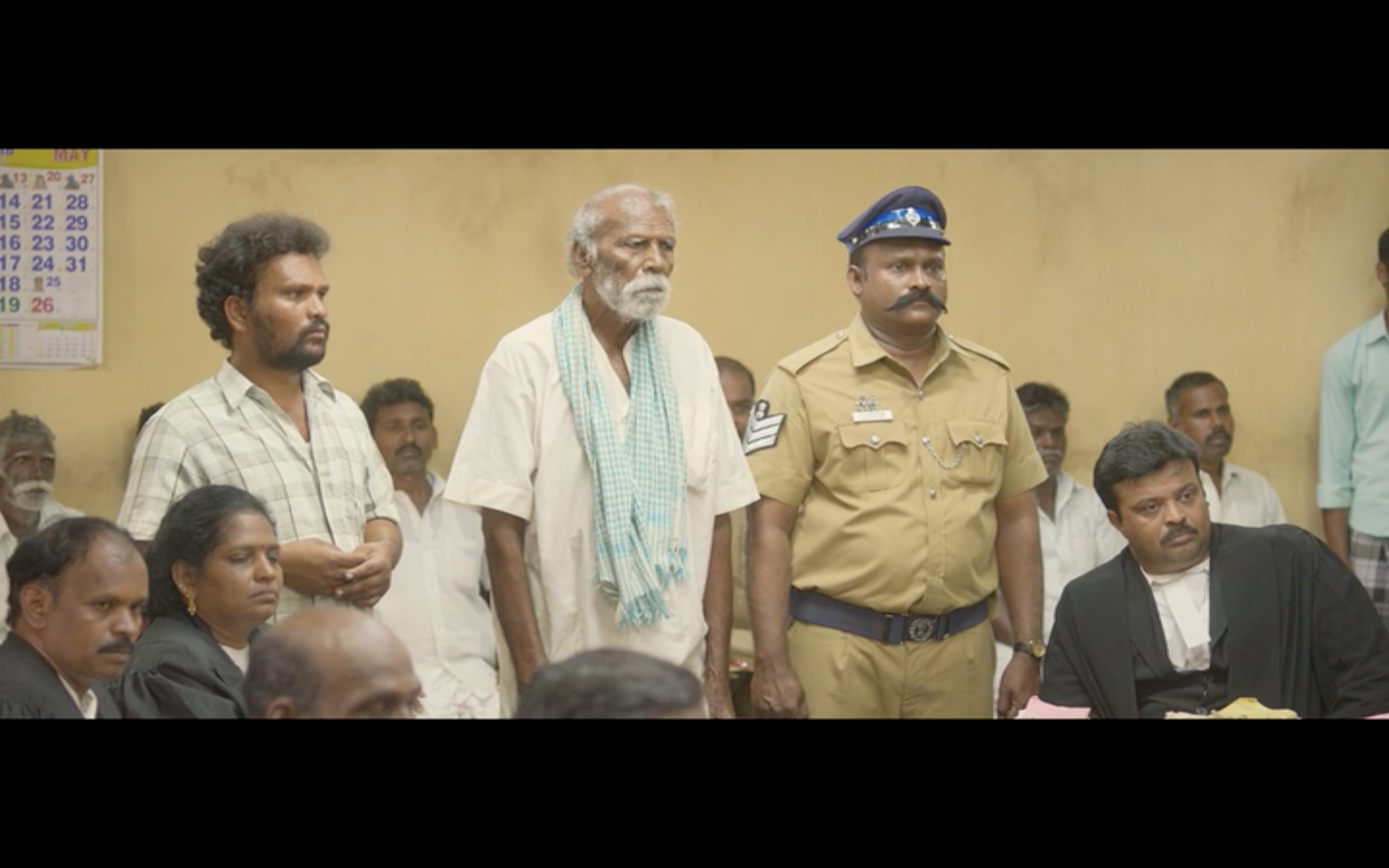
In addition to being old and illiterate, Mayandi is also hearing impaired, so when he is arrested for a crime he clearly didn’t commit, he doesn’t understand what is happening or why he cannot go back to his farm. The farcical nature of the court proceedings is kept grounded by the sympathetic but punctilious judge (Raichai Rabecca Philip) who would like to release Mayandi but is bound by strict rules and has to follow procedure. One story arc follows the police officer who is tasked with looking after Mayandi’s crop and how that allows him to become a more sympathetic character. While in jail, Mayandi also shows one of the other inmates how to grow a plant from seed but despite this brief respite, Mayandi is still lost without his usual day to day routine. Poignantly he can only see the tops of the trees from his cell and is reduced to looking at the sky, waiting to be able to go back to his fields.

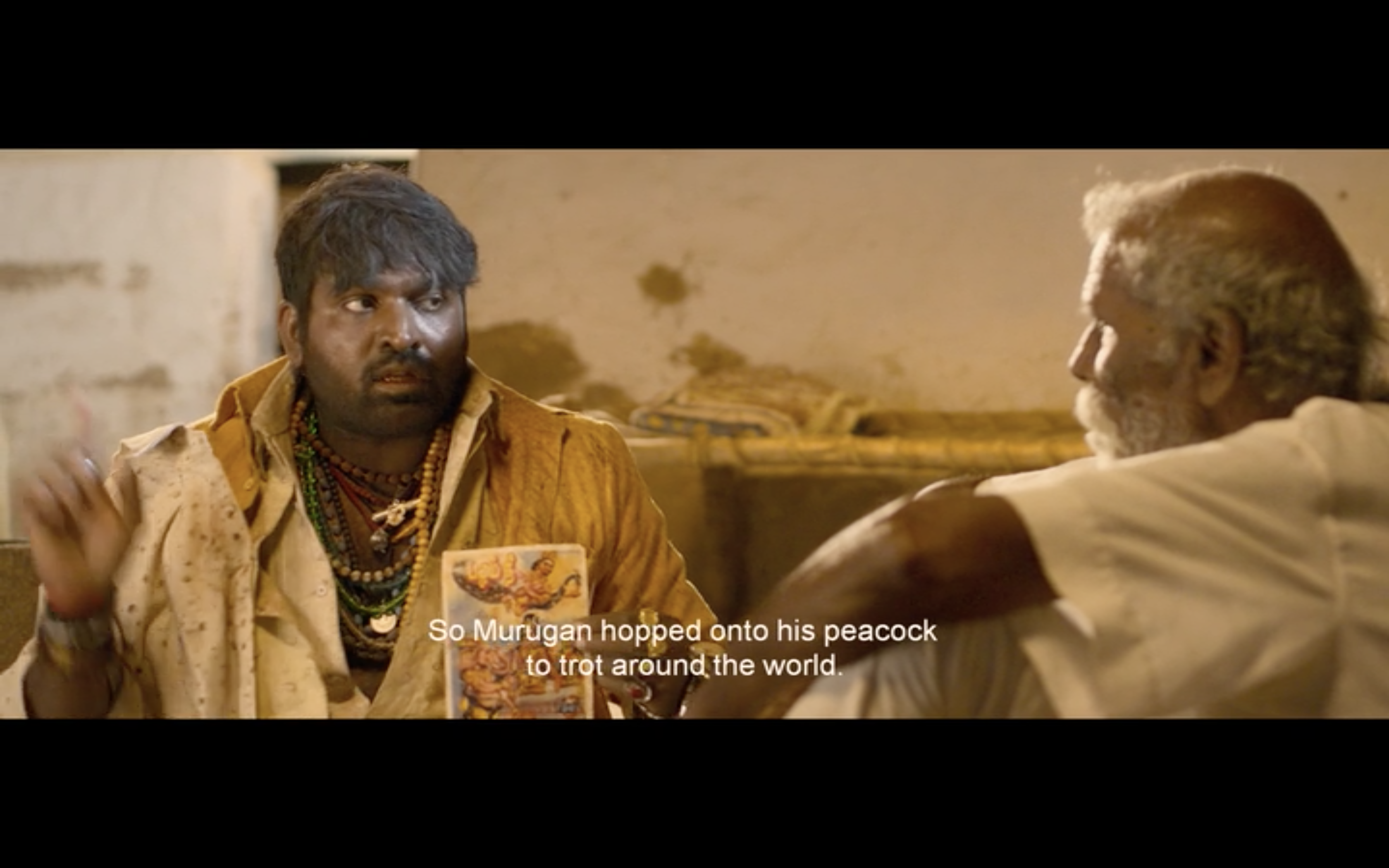
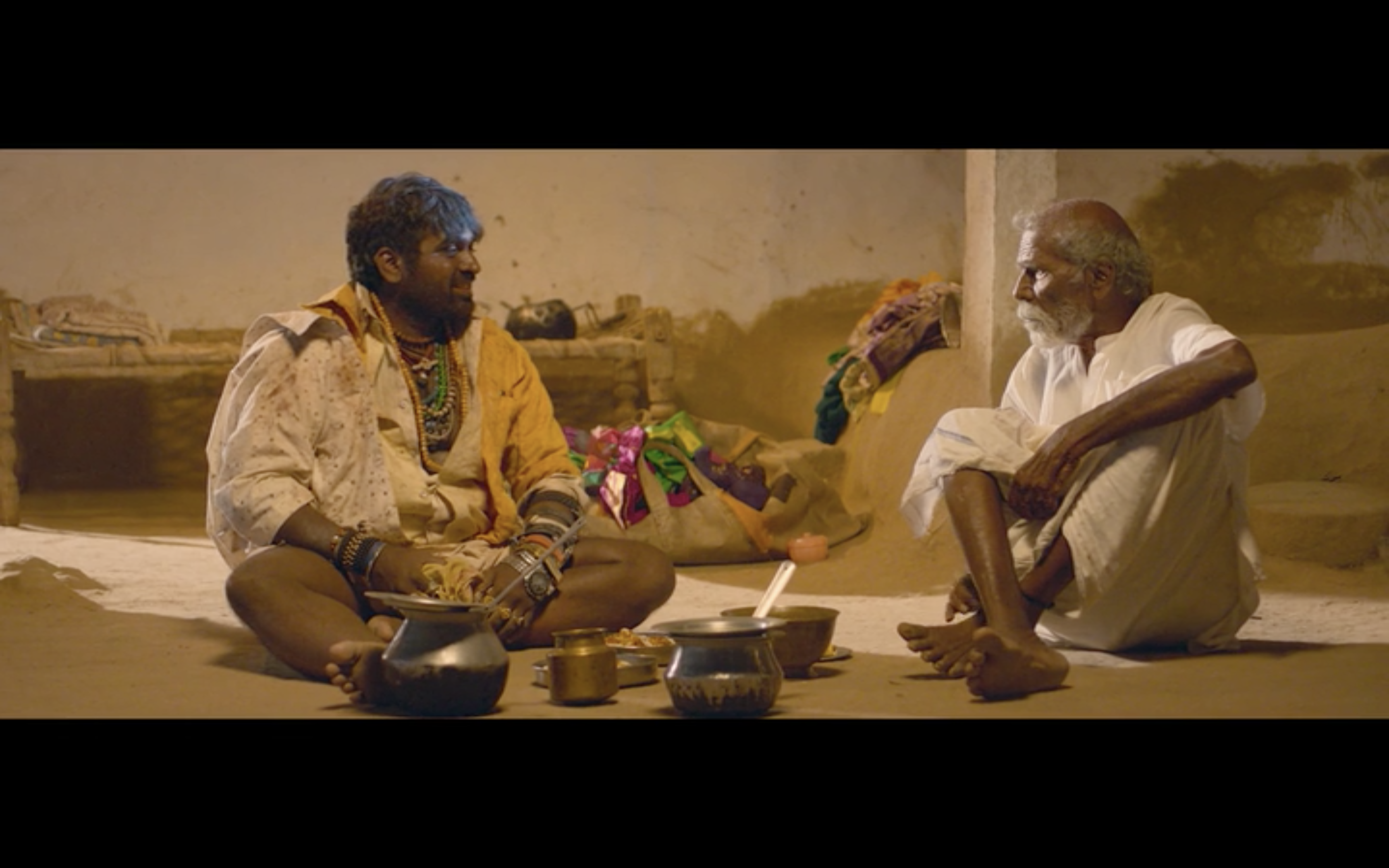
A side plot involves Mayandi’s son Ramaiah (Vijay Sethupathi) who is said to be mentally disturbed following the death of his girlfriend. He is a follower of Murugan and wanders the area with all his possessions in two jute bags. Ramaiah wears numerous broken watches on his arm and appears and disappears randomly, seemingly unaffected by time and the burdens of everyday living. He is a spiritual figure who stops to tell his father about Murugan and it is hinted throughout the film that he is actually the most sane character despite his mental illness. Vijay Sethupathi is excellent and his portrayal here is the main reason why the character works within the film. He conveys an other-worldly quality to Ramaiah and his relationship with the natural world creates a bond with Mayandi who also has a great respect and belief in Nature.

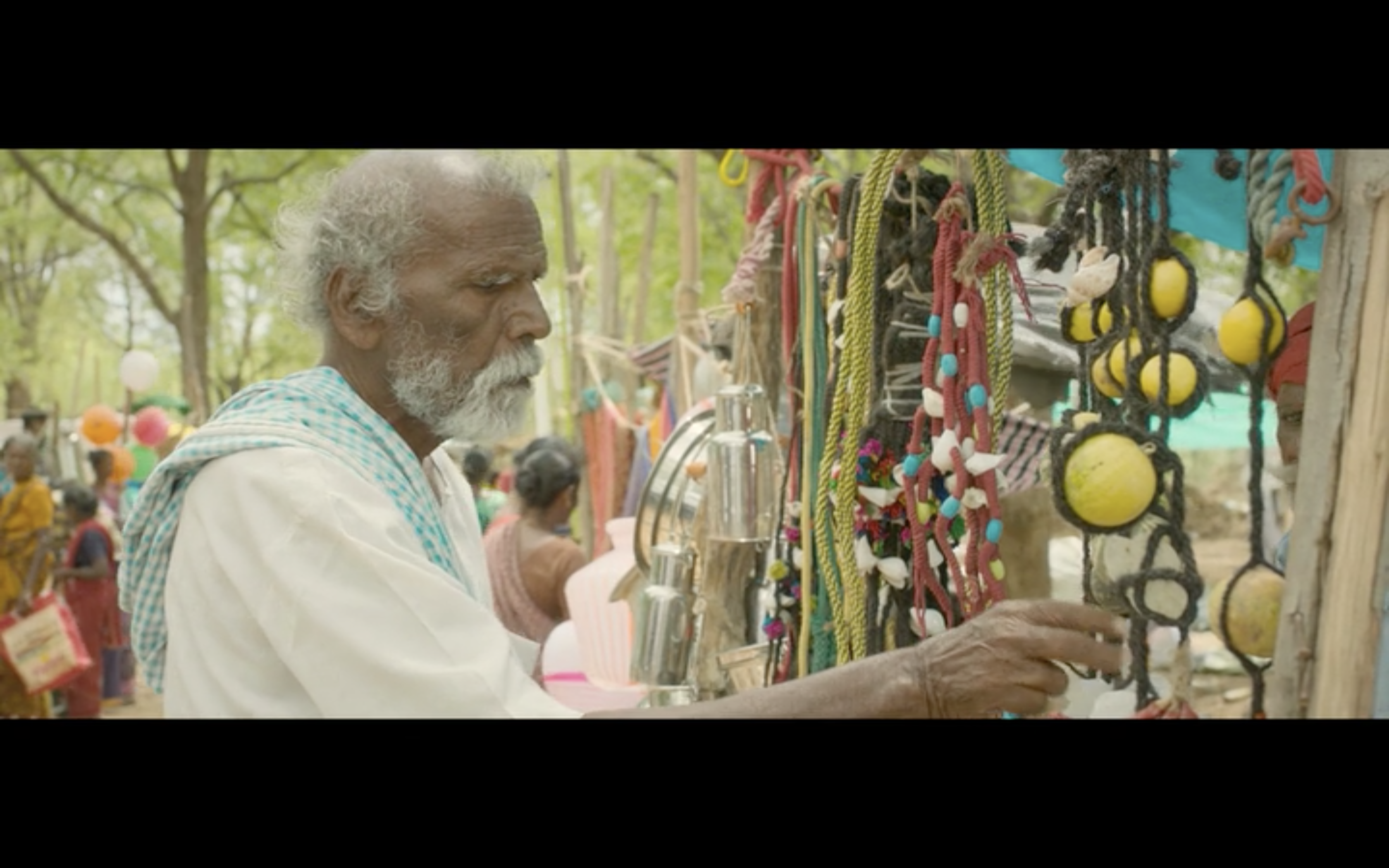
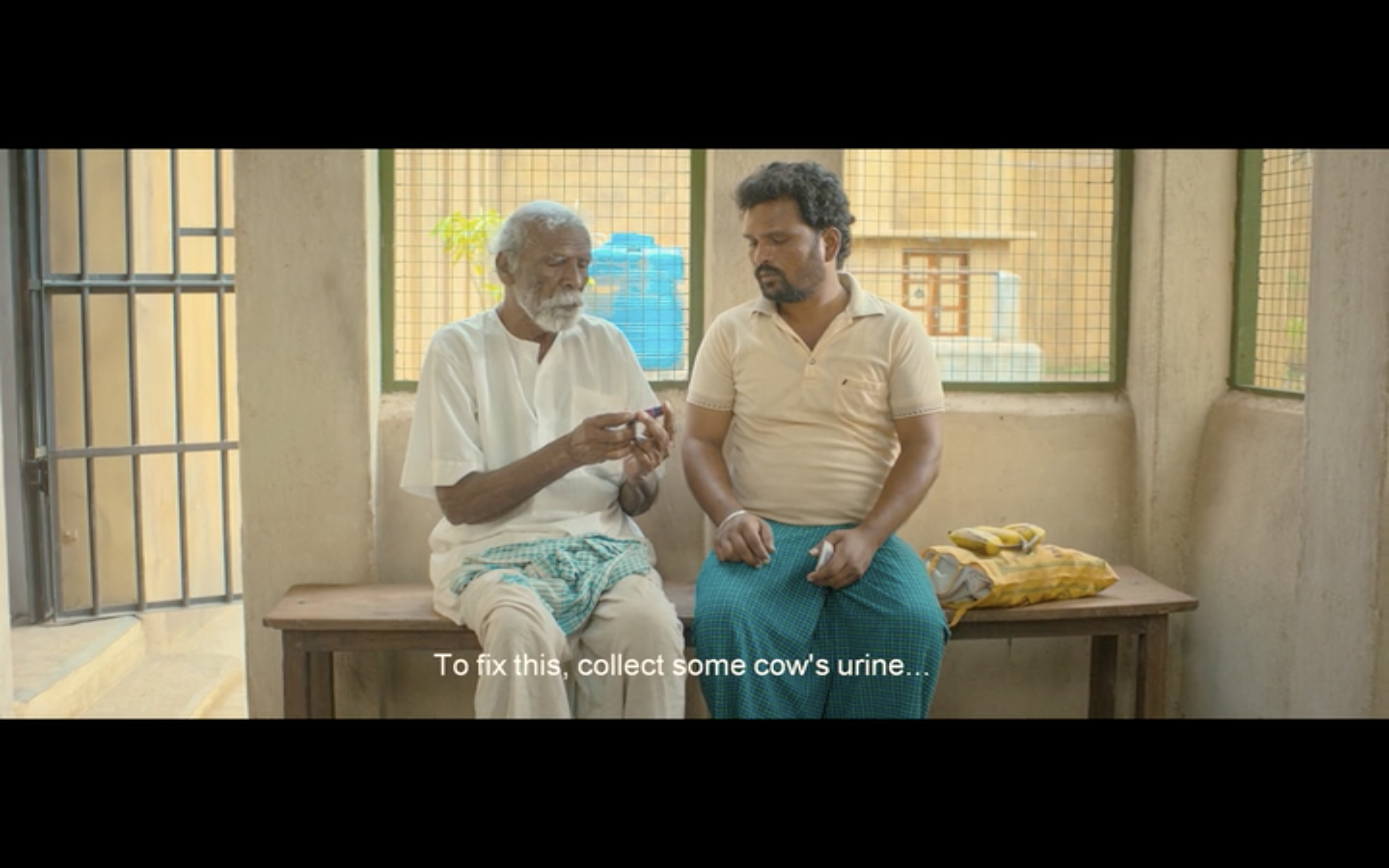
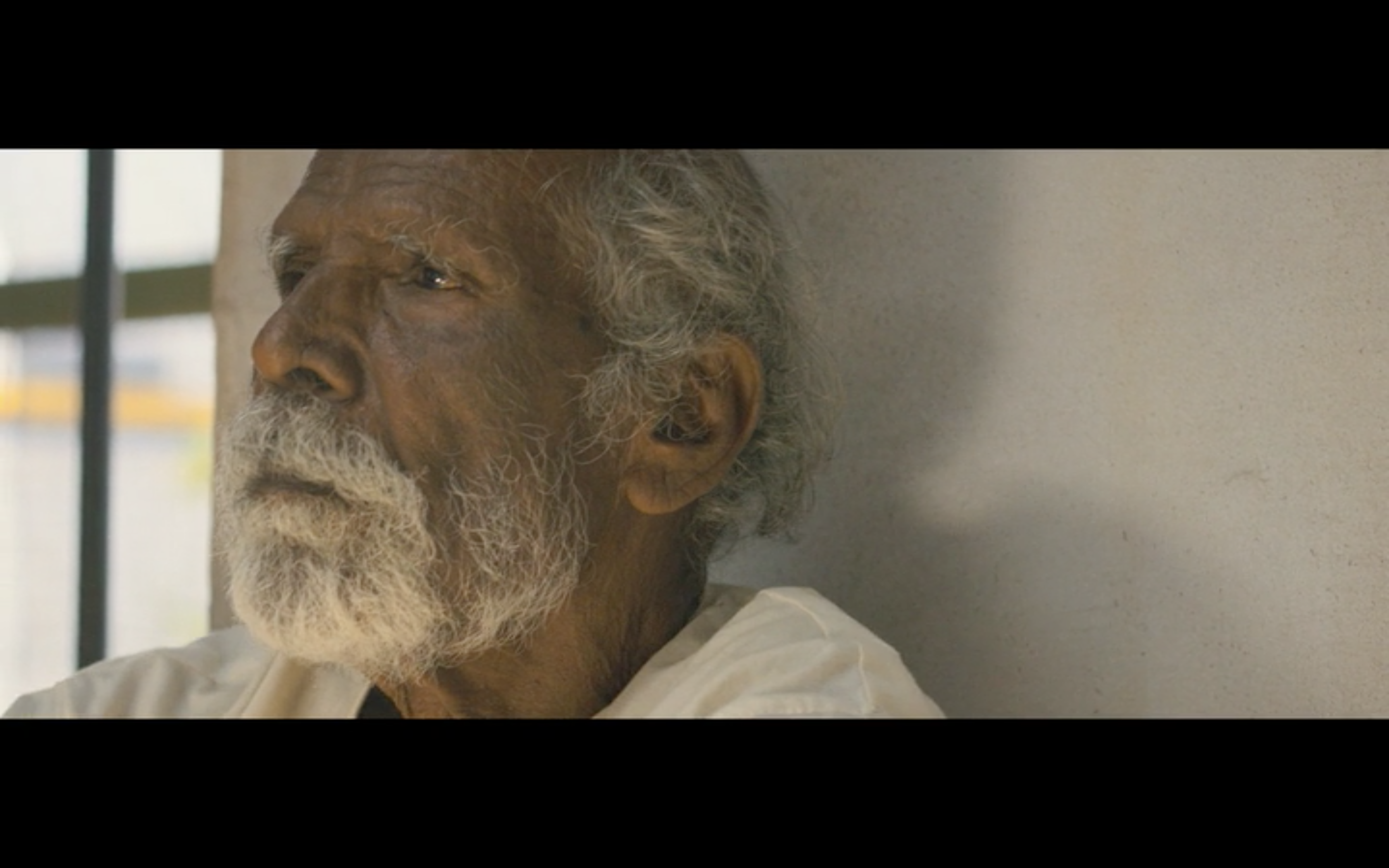
Nallandi was a farmer rather than an actor and here he seems to be just living his life rather than acting throughout the film. He is the archetypal farmer and has a clear connection to the land. One member of his family describes him as someone who always knows when it is going to rain, and Mayandi himself tells the judge that by keeping him in jail she is killing thousands of lives, meaning his young rice seedlings. His face is mostly expressionless which fits the type of man he is playing as does his placid acceptance of everything that happens. Even during arguments in the village square he is quiet and still, clearly seeing the village issues and problems as nothing to do with himHe clearly has no time for anything that doesn’t relate to his work, as is shown when he buys what appears to be a decoration or charm in the village. When stopped by his grandson he explains that it’s actually treatment for snake bite and each part is useful in some way. Mayandi reminds me so much of my Uncle who is similarly quiet and just gets on with things the way he has always done them, without any fuss or bother! 
For much of the film, the background noise is that of nature, the sound of birds and insects, the bells on the cattle and the sound of the wind through the grasses. Santhosh Narayanan’s music suits the film and is used sparingly making it unobtrusive but effective. M. Manikandan touches on a number of social issues but they don’t impinge too much on the film and mostly occur as a brief conversation. A man who is accused of beating his wife is released by the police without charge (it’s not serious!), while Mayandi with his less serious crime is held in jail for weeks. Corruption is the police force is touched on a number of times but the funniest is when the young village girl with dwarfism mentions that she would vote for the judge without being bribed when she scolds the police for arresting Mayandi. All small moments that are effective but don’t overshadow the main story. 
The other members of the cast are excellent and the slow pace of the film suits the storyline. I really enjoyed this film and found it a real delight to watch and a feast for the senses. Enjoyable in every aspect, Kadaisi Vivasayi is simply an excellent film and one I fully recommend watching. 4½ stars
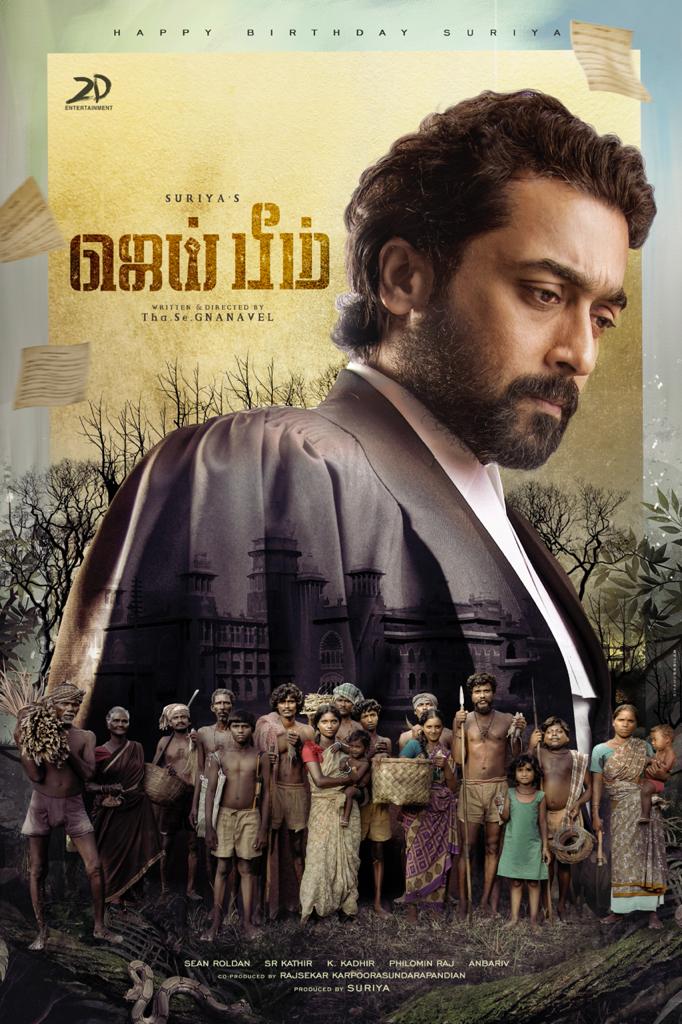
Jai Bhim

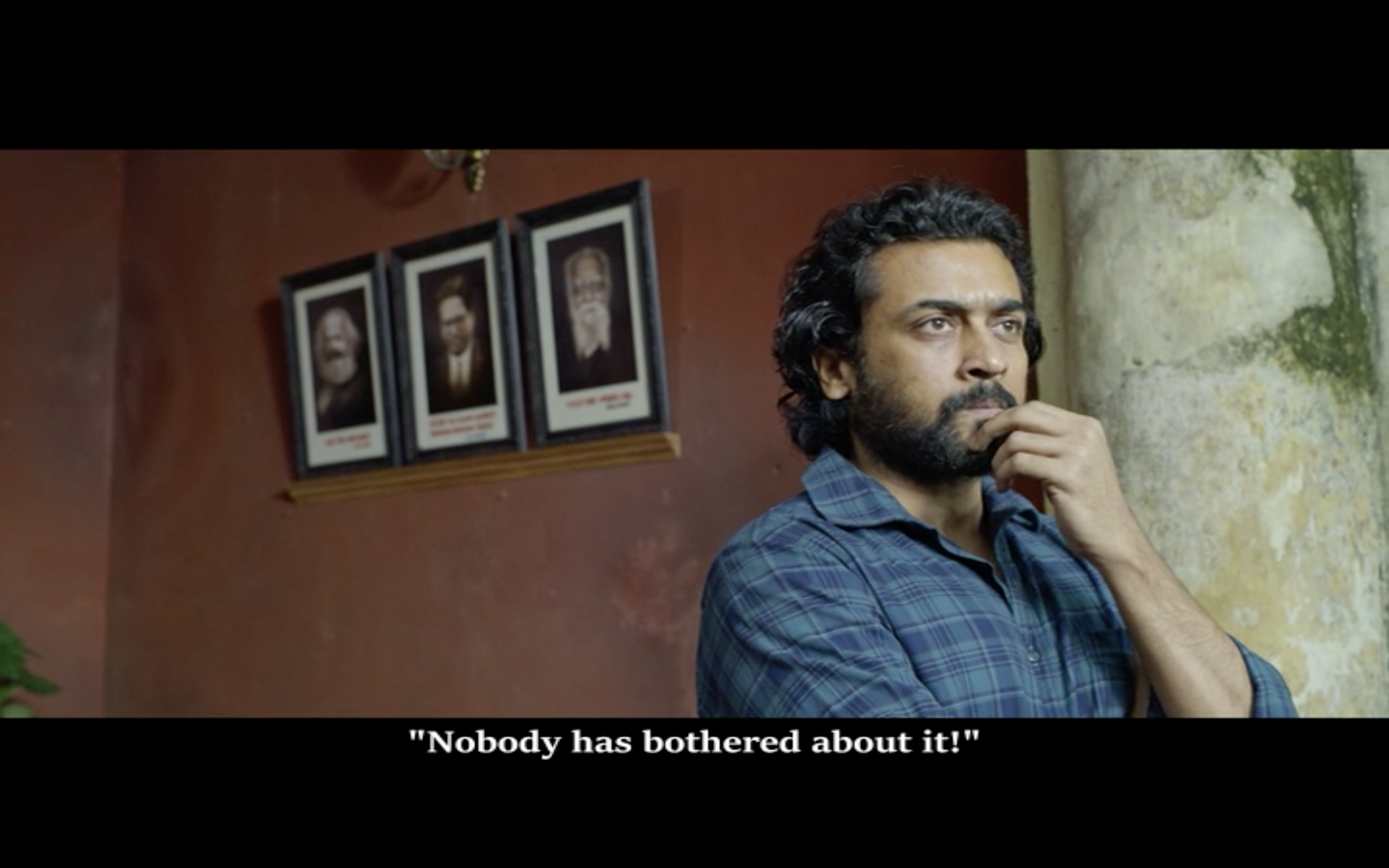
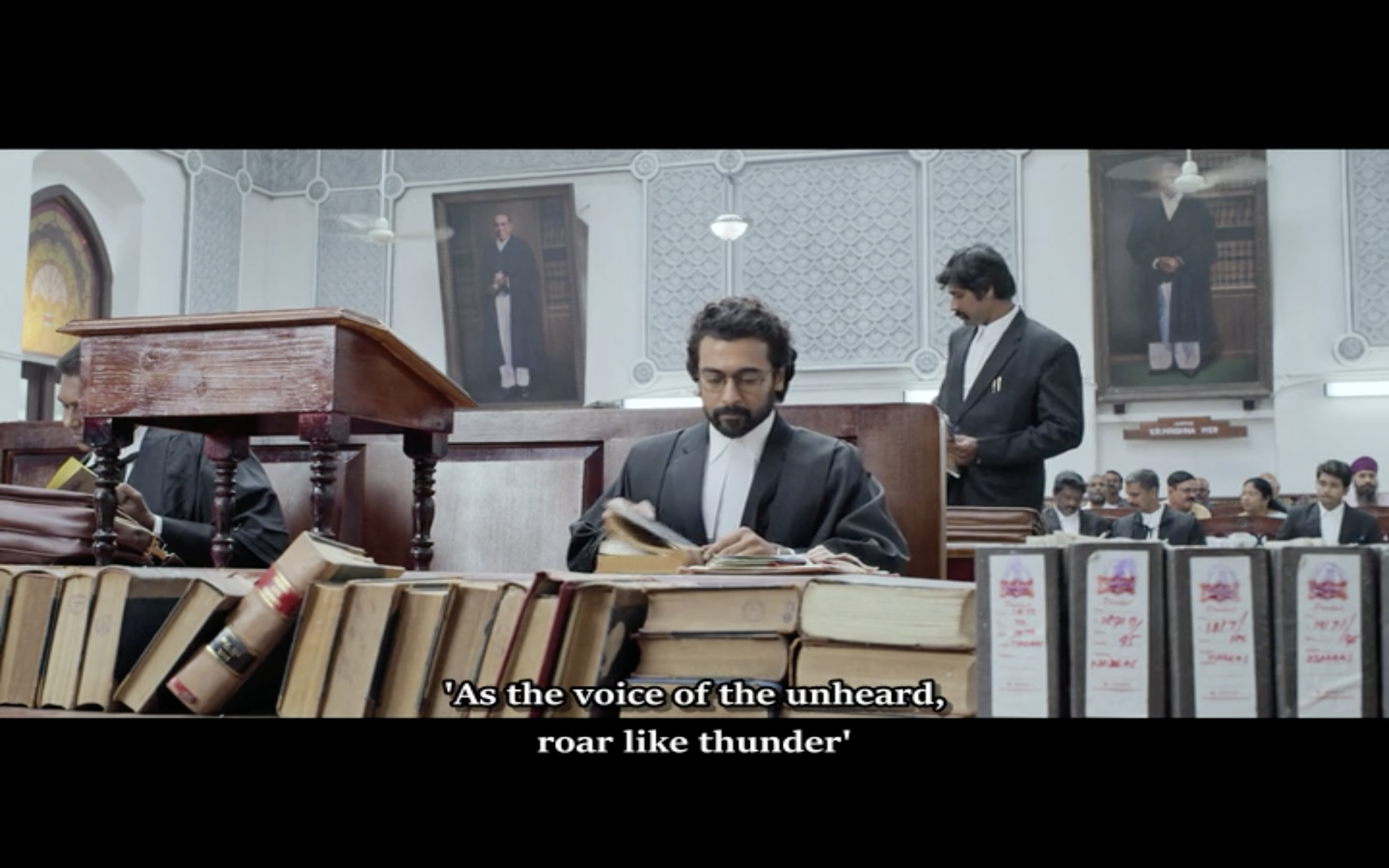
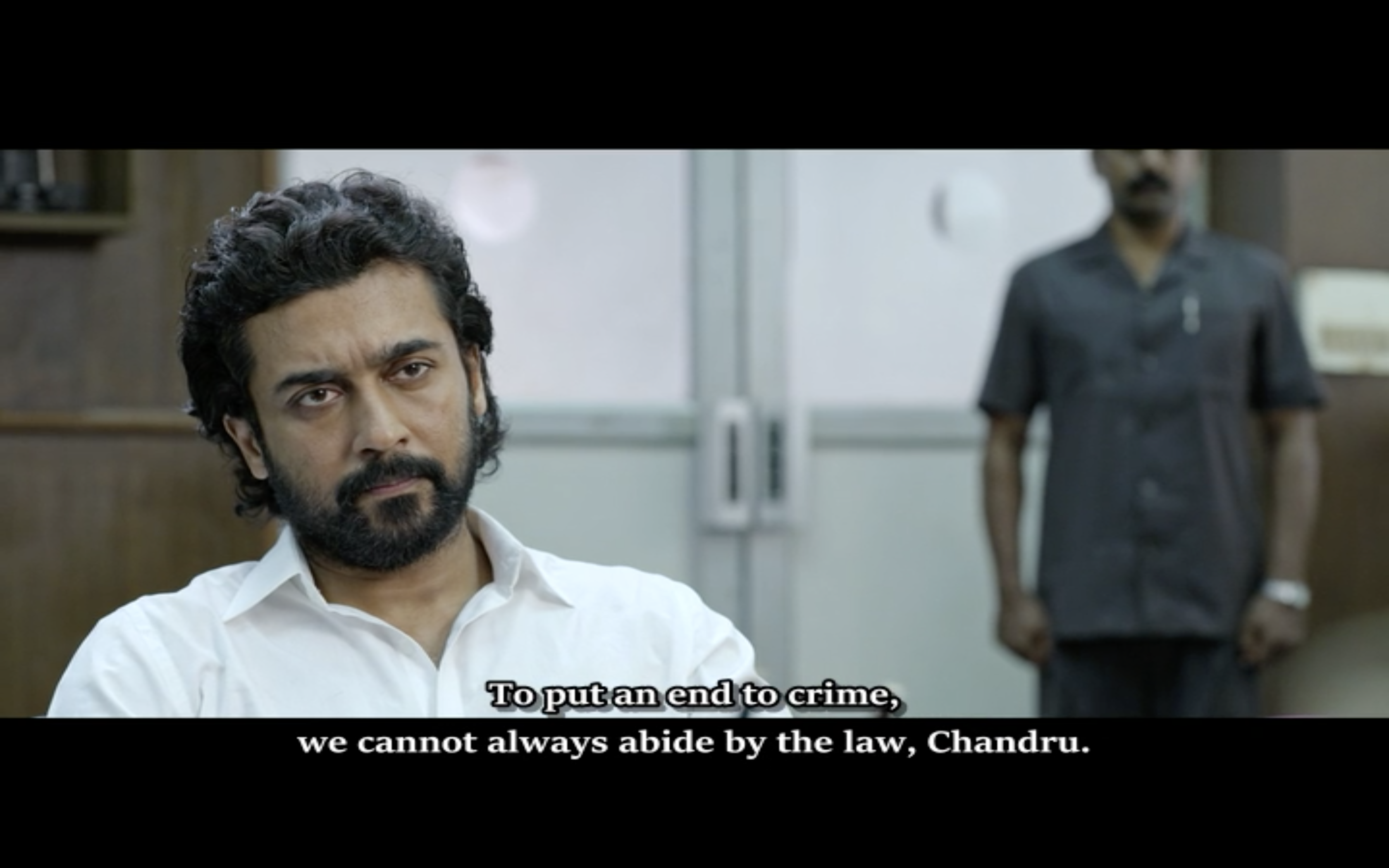
It took me a few weeks to watch this film as I just couldn’t get past the brutalisation of Rajakannu, Sengeni and their families by the police. However, it’s well worth sticking it out past the first hour as the film ends up as an excellent legal drama with superb performances from the entire cast. In particular, Lijomol Jose stands out as a tribal woman fighting for justice against an entire system which discriminates against her at every turn while Suriya excels in a more subdued role as the advocate fighting for justice.

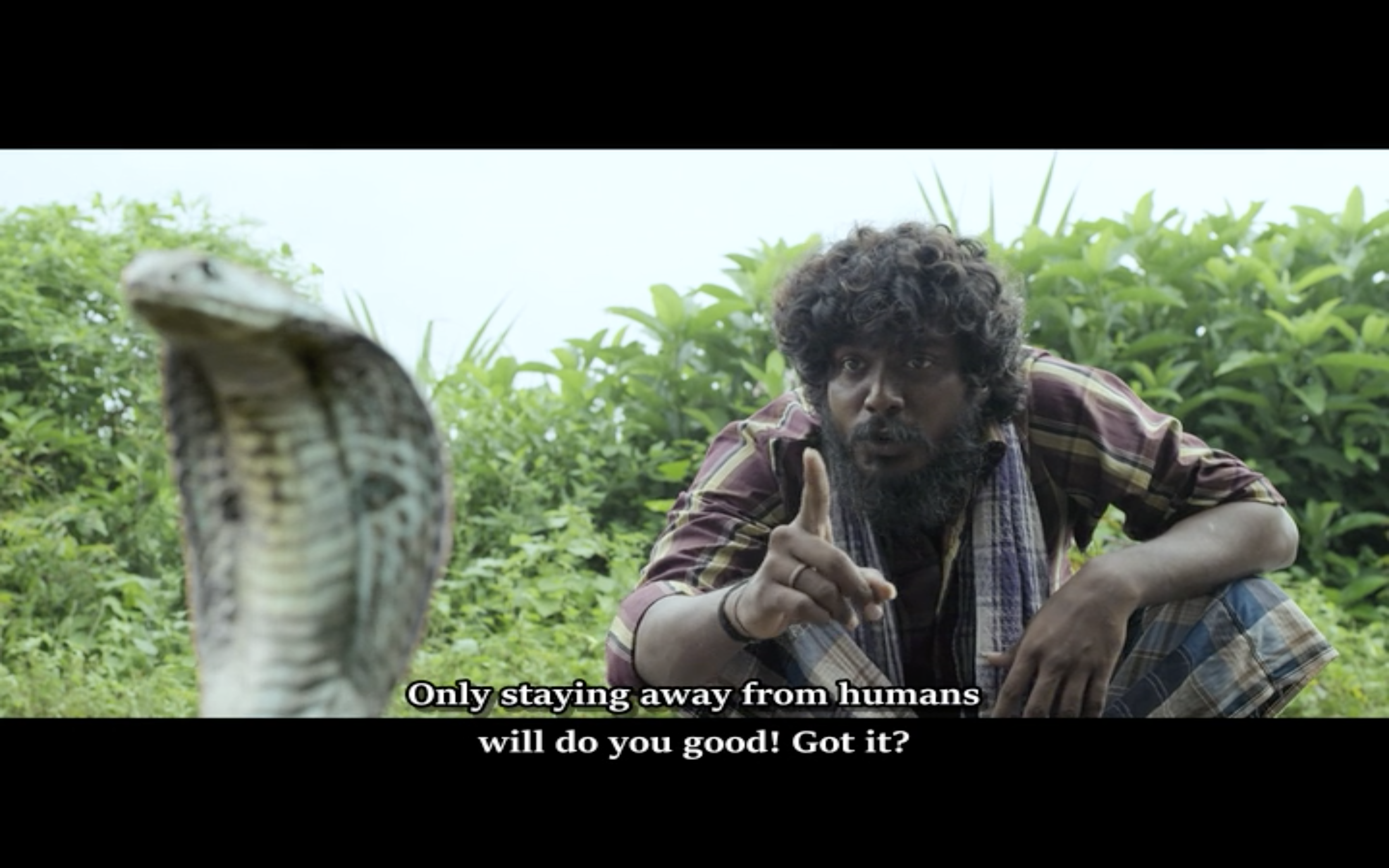
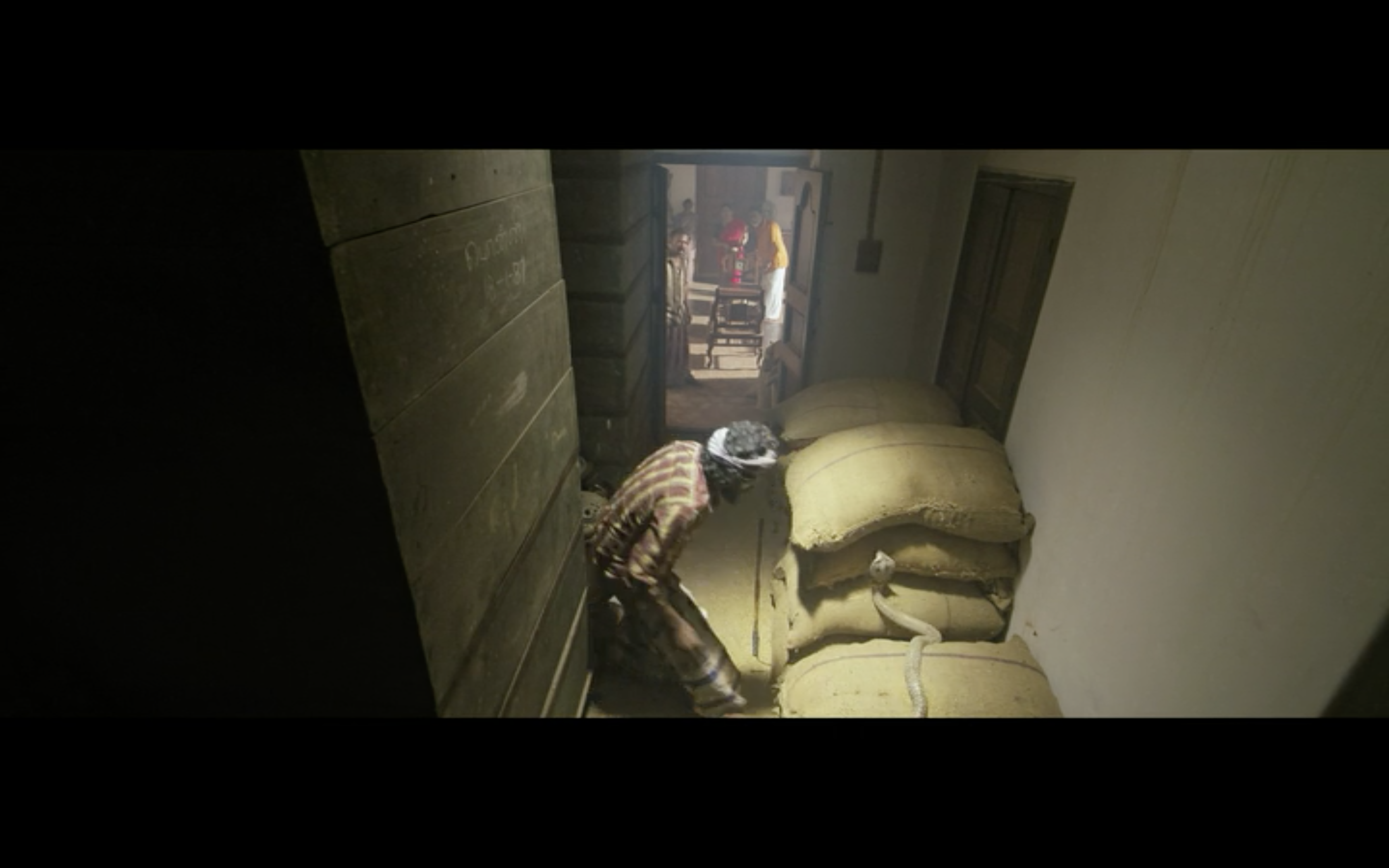
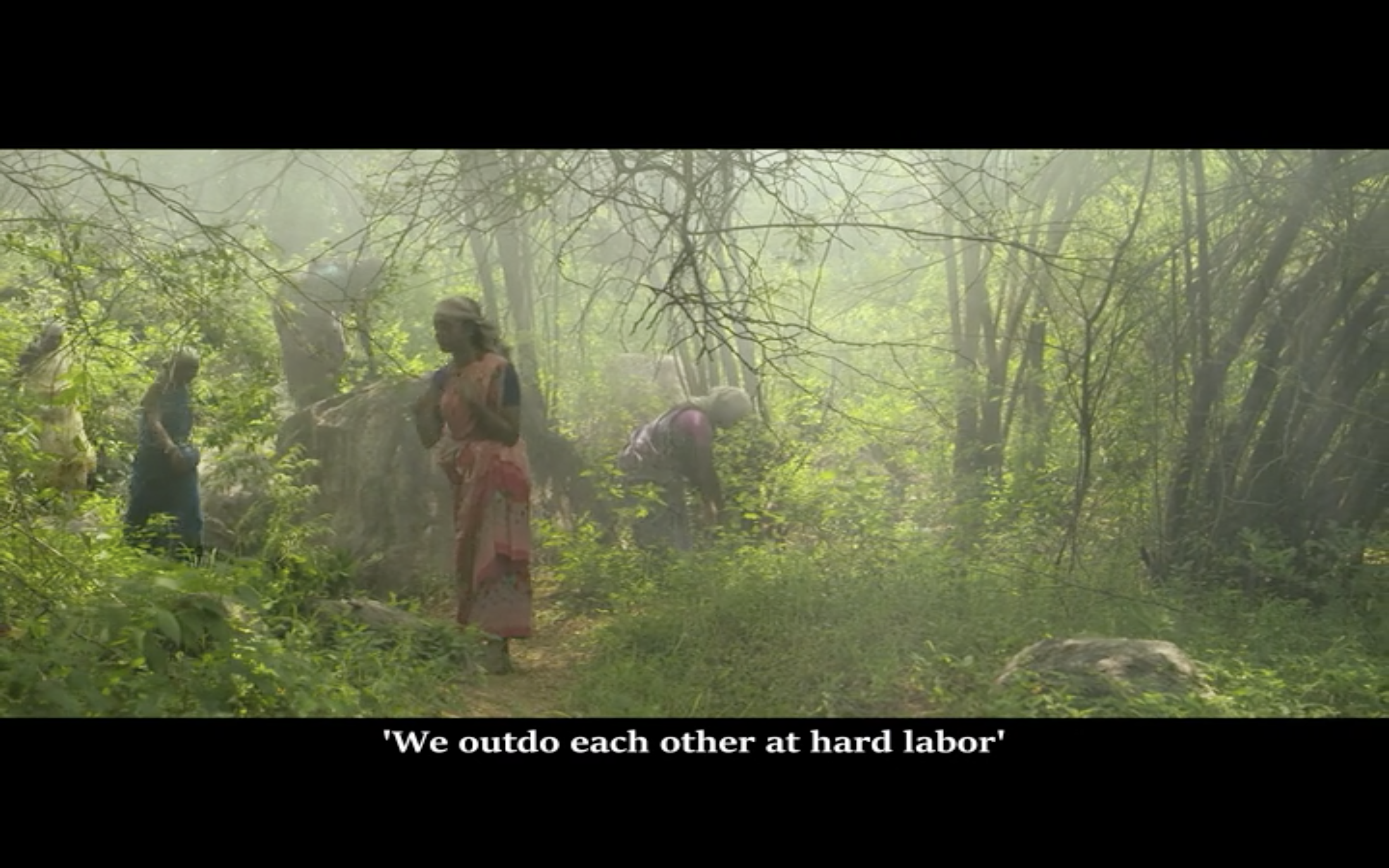
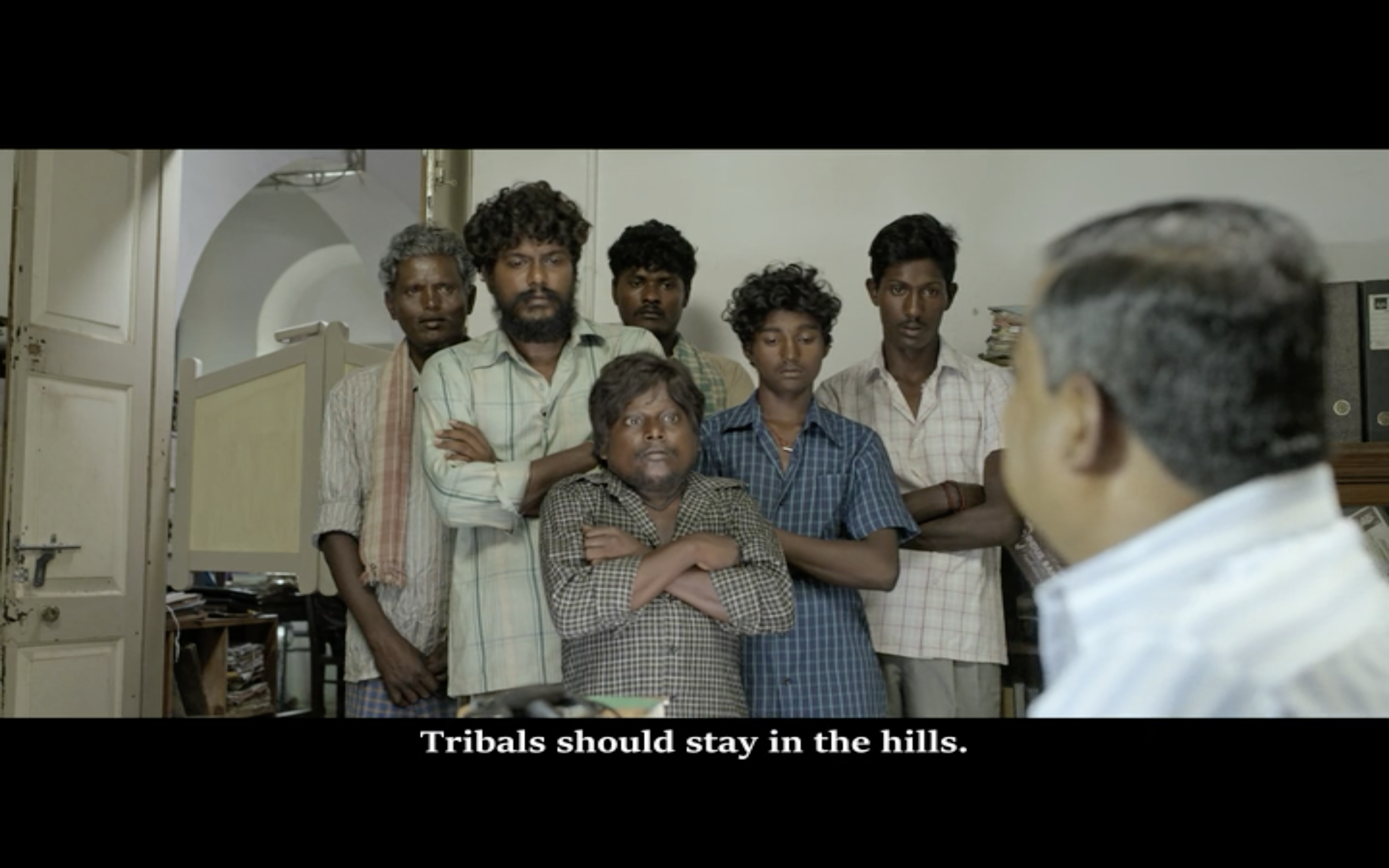
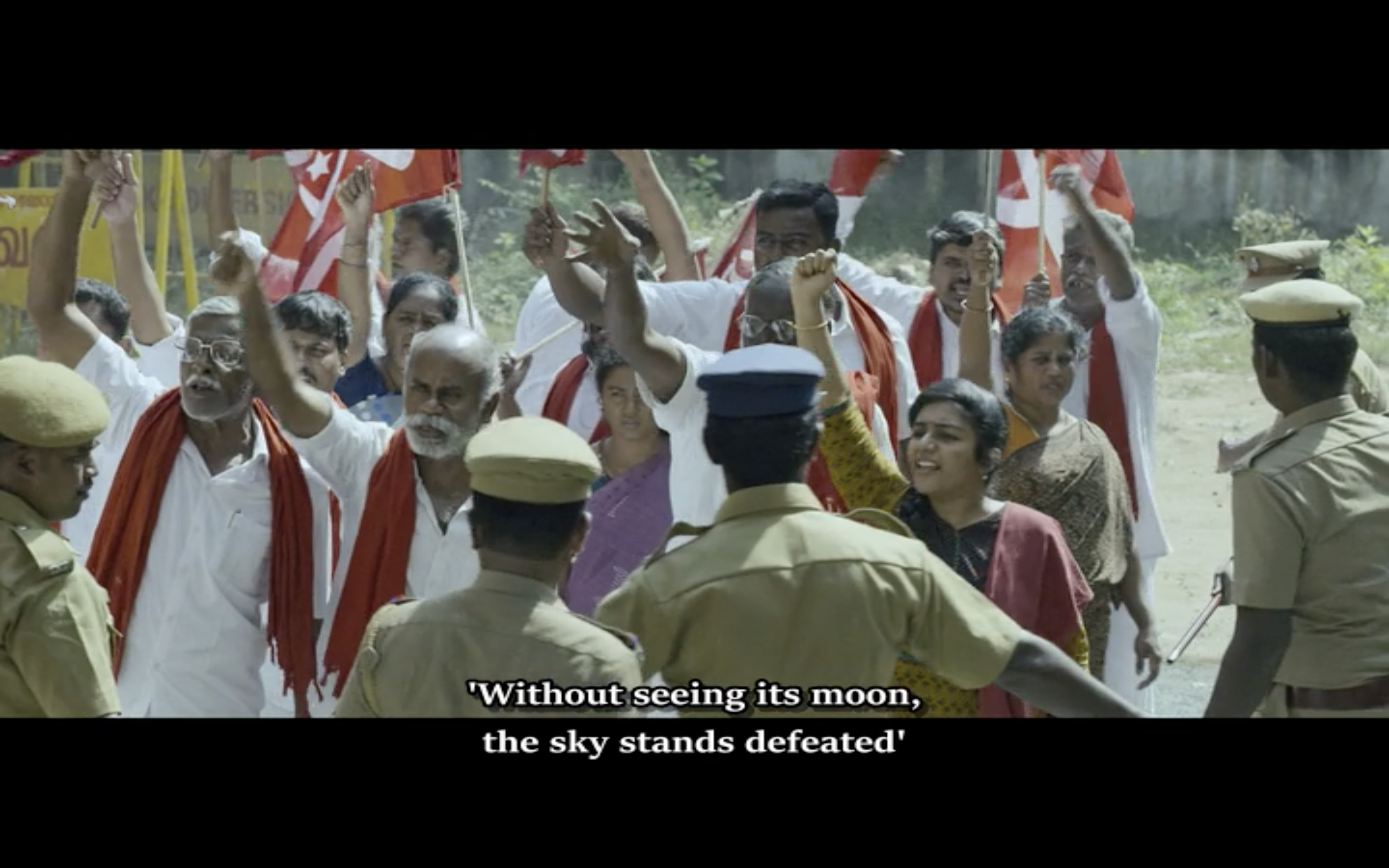
The film starts with a demonstration of wanton discrimination with prisoners being selected to be charged with false cases based on their caste. It’s a short and callous scene that sets the tone for the rest of the film illustrating that there is no mercy and no justice for those who have no social standing or who cannot afford bribes. The film then moves to Rajakannu (Manikandan) and his family trapping rats for the local famers and catching snakes. Although they have been employed by the landowners to carry out this work, they are treated as vagabonds and ruffians, seemingly due to their poverty and inability to rise above their lowly status. The tribal people live in a vicious circle of being unable to obtain the rights other villagers take for granted as they cannot obtain documentation, without which they cannot vote, register for land or tribal grants and are therefore not seen as existing at all.

In the midst of all this callous and barbarous treatment, Rajakannu and Sengeni (Lijomol Jose) hope for a better life, dreaming of one day owning a brick house in the village. It’s somewhat ironic then that Rajakannu has to leave and work as a labourer making bricks while Sengeni is pregnant and stays at home to look after their daughter. However, a jewellery theft at the local headman’s house results in Rajakannu being accused of the crime after he was known to have been at the house to catch a snake, despite being nowhere in the vicinity at the time. As Rajakannu is away at the brick factory, his brother Iruttupan (M. Chinraasu), his sister Pachaiammal (Sujatha), his brother-in-law Mosakutty (Rajendran) and the very pregnant Sengeni are all taken to the police station and tortured to find out his whereabouts. Once they have Rajakannu, the two women are released, but the torture continues for Rajakannu and the other 2 men as the police, Sub-Inspector Gurumurthy (Tamizh), Constable Veerasamy (Supergood Subramani) and Constable Kirubakaran (Bala Hasan) try to beat a confession from them.

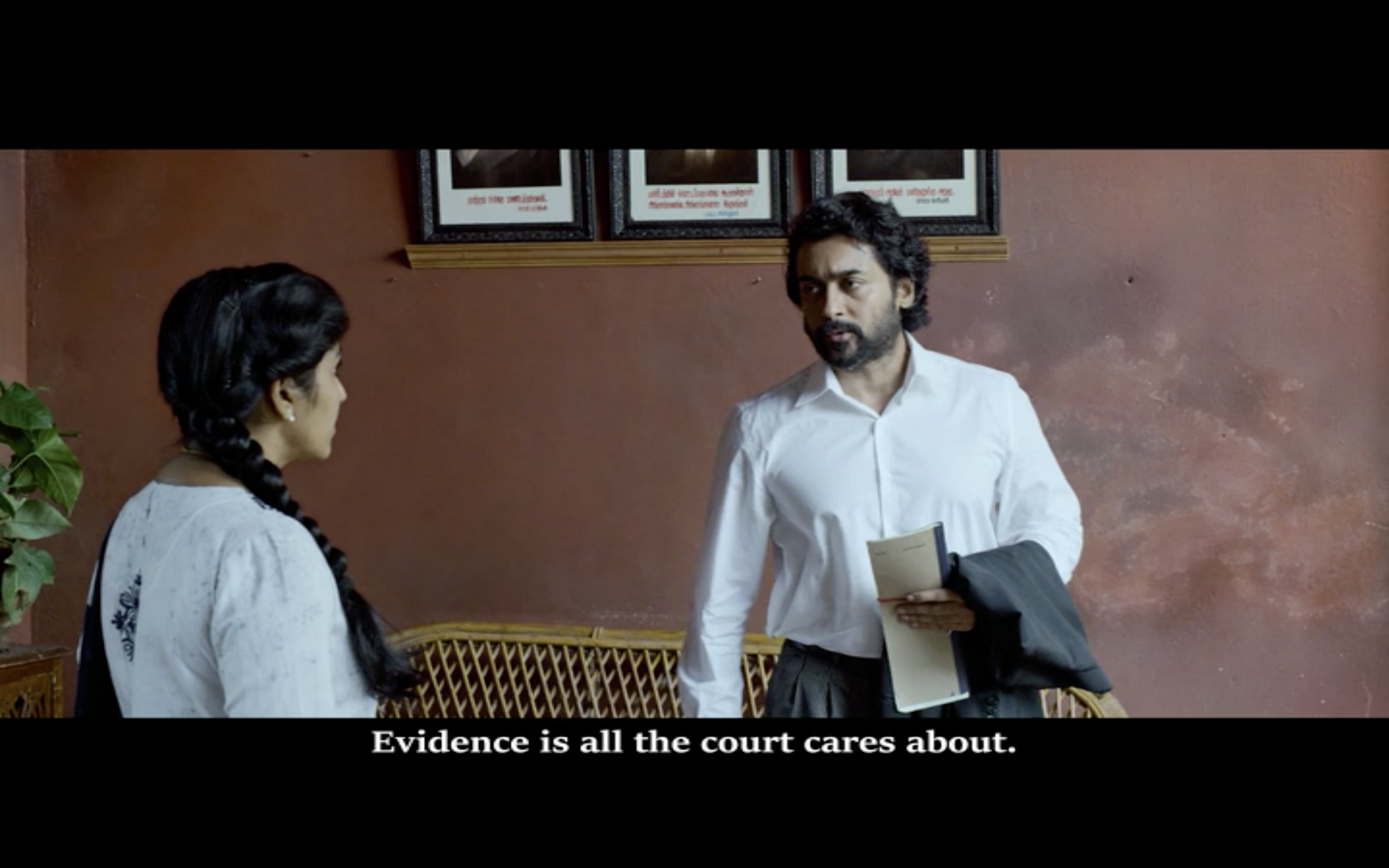
Arriving at the police station the next day, Sengeni is told that her husband Iruttupan and Mosakutty have all escaped, but there is no trace of them anywhere. Desperate, Sengeni enlists the help of Mythra (Rajisha Vijayan), an educated woman who has been teaching the adults to read and write. Mythra also struggles to make her voice heard, but on finding out about a lawyer who fights pro bono for human rights cases she enlists his help for Sengeni. Once Chandru (Suriya) takes the case, Sengeni finally has someone who is listening to her who will fight for her right to justice.

The first hour of the film is unforgivingly brutal and difficult to watch. The torture of the women and men is shown in enough detail to make for gruesome viewing, and it seems to be never-ending. In between the scenes of beating and torture, the general social injustice shown to the tribal people is also shockingly inhumane, particularly since it is shown to be so casual and ingrained with villagers who themselves are living quite poorly. It took a couple of attempts for me to get through this section of the film, as it really is quite horrific and depressing. Thankfully, once the court case starts, there is more optimism and despite the investigation team having to revisit the horrors of the men’s imprisonment and torture, there is respect for Sengeni and her determination to find out the truth. 

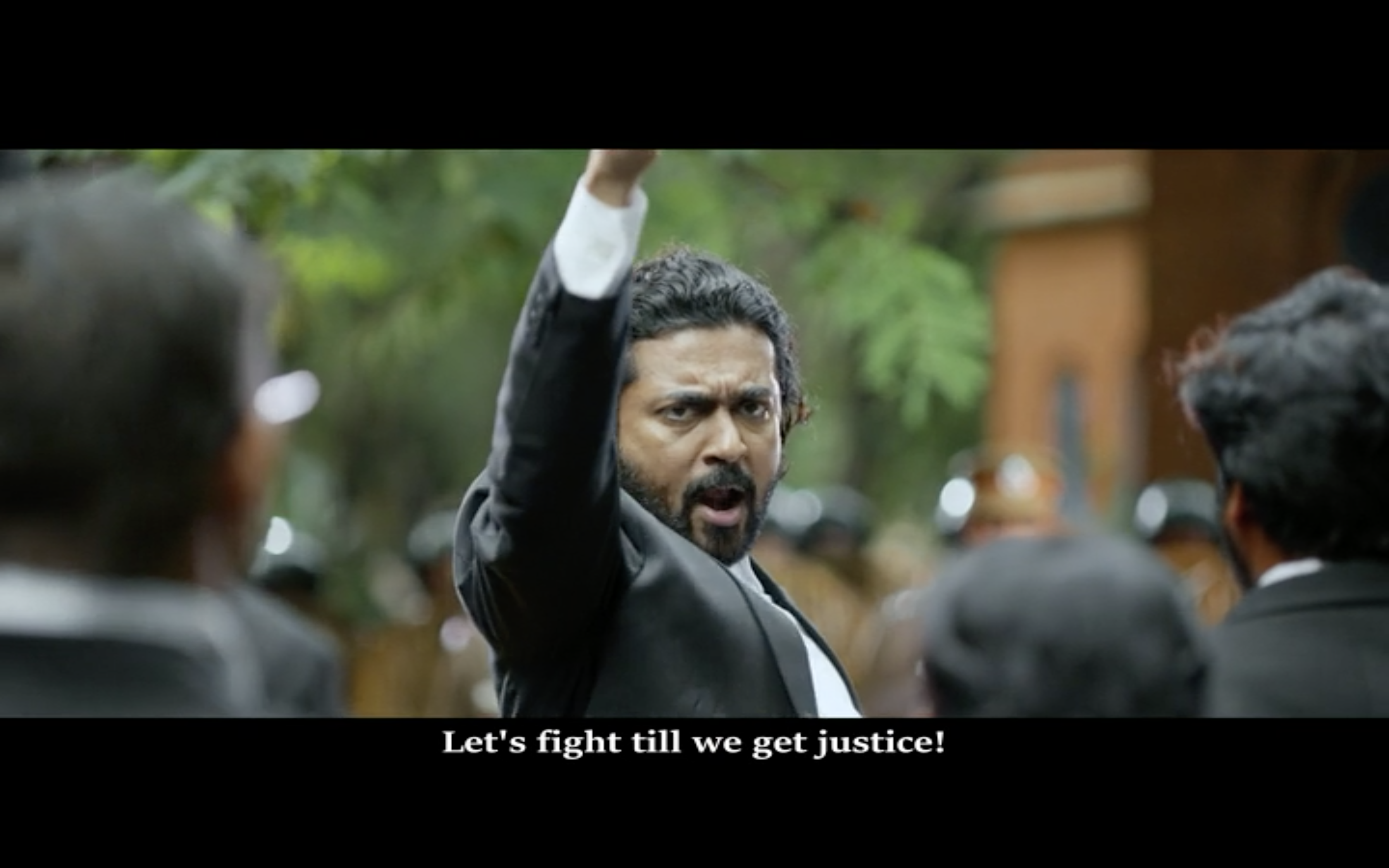
Chandru is assisted by IG Perumalsamy (Prakash Raj) who, despite his dislike of lawyers and support of police brutality, vows to conduct a fair and thorough investigation. As more and more corruption comes to light, Advocate General Ram Mohan (Rao Ramesh) takes over the police defence and attempts to get the case thrown out of court. Perhaps unrealistically, Chandru seems to have little difficulty in getting the judges to see his point of view. He is able to get time to conduct investigations and support for his questioning of witnesses without too much difficulty and his speeches in court are simple and to the point. The drama and suspense is kept for the investigation into what has happened to the 3 men, with Chandru racing across the countryside trying to find witnesses who can discredit the police story. There is also constant pressure on Sengeni to back down which includes more intimidation from the police as well as offers of large amounts of compensation if she will drop the case.

What makes this film for me is the strength and determination shown by Sengeni in the face of so many obstacles. Despite her lack of literacy and knowledge about the legal system, she is steadfast in her desire to find out the truth no matter how impossible it seems. Lijomol Jose is simply brilliant and her portrayal of Sengeni drives home the almost insurmountable challenges faced by someone of her status trying to challenge the state authority. She makes Sengeni’s love for her husband a natural extension of their family life together, and her terror while in the hands of the police, followed by her devastation when Rajakannu disappears is perfectly shown. The character of Sengeni comes alive in her capable hands and she invests the audience in her story at every step.

Suriya is also excellent, although his performance focuses more on Chandru’s determination for justice rather than on flowery court speeches or dramatic discoveries. There is little backstory and no explanation of why he so strongly supports human rights, but despite this he is credible as a lawyer and the more restrained performance suits the story. It also helps to focus attention on Sengeni and the police brutality as the key elements of the film. The contrast between his more humane approach and that of almost everyone else in the film, also emphasizes how endemic discrimination against people like Rajakannu and Sengeni is within the rest of society.  

Director T.J. Gnanavel wrote the screenplay which is based on a true story according to IMDb etc. (Rather annoyingly the subtitles didn’t translate any of the written material on screen, which I think covered this aspect of the film).  While the story is compelling, the overly long and frequently repeated scenes of police brutality and torture seemed unnecessary and at times almost voyeuristic. Perhaps Gnanavel was trying to shock his audience and drive home the issue of police violence, but for me they made the film difficult to watch as the torture scenes went on and on without any end in sight. What I found more shocking was the casual discrimination faced at every turn by the tribal people, something that had a more lasting and significant impact than all the violence shown in the police station because it was more realistic and believable. Despite these issues with the screenplay, the characterisations of the main characters are all excellent and once past the torture scenes the rest of the film works well. Issues of caste and social justice are often harrowing to watch but the overwhelming feeling from Jai Bhim is one of hope and resilience, despite the downbeat start to the film. The music from Sean Roldan is also emotive and fits well with the screenplay while S.R. Kathir’s cinematography impresses with his skill at framing and his contrast between the claustrophobic scenes in the police station and the light and air of the courtroom.

As I wrote at the start, this was a difficult film to watch, which I think was the point T.J. Gnanavel was trying to make. I’m not sure if this was the best approach for such an important subject and I’m sure that making the torture scenes shorter would still get the message across just as well without reducing the impact. If you can make it through the first hour, the rest of the film does impress. Not for the faint-hearted but well worth it for Suriya, Lijomol Jose and the rest of the excellent cast. 4 stars.

Tughlaq Durbar

With cinemas still closed here in Melbourne. I’ve just got round to watching Tughlaq Durbar online. Advertised as a political satire, the film is based on a good initial idea but the story fails to capitalise on this as well as expected. There is plenty of comedy that works well and Vijay Sethupathi is his usual charismatic self, but overall the film fails to engage especially in the second half. 

Singaravelan (Vijay Sethupathi) aka Singam is a fanatical follower of local politician Rayappan (Parthiban) and has been since birth. In fact, he was born during one of Rayappan’s political rallies, and this seems to have imbued the young Singam with a devotion to his leader that surpasses all other ties. Singam’s mother died shortly after giving birth to his sister, Manimegalai (Manjima Mohan) and after their father also dies, the pair are brought up by the local community. However, Singam’s fanaticism causes him to be cruel and unfeeling to his sister, and as a result she stops speaking to him – although it’s not clear if Singam even notices. The worst thing to note about Singam is that he also hates dogs, something that ensures that to me his character appears as black and evil as possible for a small-time political wannabe. 

Despite the best efforts of the party faithful, who have no time for the young upstart, Singam manages to ingratiate himself with Rayappan. After various shenanigans mainly manipulating Rayappan’s right hand man Managalam (Bhagavathi Perumal), Singam manages to be nominated as the candidate for his home area. However, an argument with Managalam at a party celebration results in Singam being hit on the head, with a rather unusual result. 

Somehow the head injury brings about a split personality with a ‘good’ Singam who loves his sister, likes dogs (already he’s won me over!) and is concerned about  the community, and the ‘normal’ Singam who is only interested in keeping Rayappan happy. I loved how this is shown on screen with Singam’s shadow gradually splitting as he walks down an alley way underneath flickering overhead lights. It makes it really clear what is happening, just as Singam’s sudden appreciation of dogs makes it clear that this is a completely different personality. I also appreciated that Singam develops a left eye blepharospasm when his personality shifts, and his best mate Vasu (Karunakaran) finds this a helpful indication of just when Singam is going to do something unexpected.

Having set the scene with a great idea and a couple of excellent segments where ‘good’ Singam takes over to thwart ‘normal’ Singam’s plans, writer/director Delhi Prasad Deenadayalan seems to run out of steam. Once Singam is nominated to run on the party ticket, the film turns into a rather plodding tale of stolen money and the usual corruption associated with politicians. I couldn’t decide if Deenadayalan was trying to make a statement with some of the rambling dialogues or if he just thought that every film based on politicians should make some mention of corruption. Some of the dialogue is brilliant such as that around Rayappan’s need for an unthinking fanatical follower who will do whatever is needed, or Singam’s response to his sister being abused at her workplace. But outside of the comedy, much of the rest is rote and repetitive. 

Particularly disappointing is the sidelining of Manimegalai, especially since she is apparently one of the reasons behind ‘good’ Singam’s plans for the area and a catalyst for change. There was so much more that could have been achieved using the relationship between the brother and sister but after a good start Manimegalai becomes nothing more than the symbol of the difference between ‘good’ and ‘normal’ Singam.

There is also a rather shaky romance with Kamatchi (Raashi Khanna), the daughter of a local money lender that Singam kidnaps for ransom. It’s mostly one-sided with Kamatchi falling for Singam except for 1 song which feels rather out of place with the switch to Singam mooning after Kamatchi. As the standard love interest, the character of Kamatchi is nothing more than a reason for a fight scene, or a way for Singam to get the money he needs.  Overall, it’s the comedy that works best in the film, with the story seemingly taking second place to the set-up of these comedic skits. Vijay Sethupathi, Parathiban and Karunakaran are excellent comedic actors, and all deliver good performances but the lack of a good story means that the film drags once the set up is done. However, Govind Vasantha’s songs and background score are good, especially the more upbeat political rallying number although none are particularly memorable. The film looks good too, and the lightening in particular is superb in many of the sequences adding to the distinction between the two versions of Singam. 

This should have been a much better film, with a good cast, novel idea and good comedic dialogue. But there is no emotional heart to the film, and without a good follow-up plot, good performances aren’t enough to make this anymore than a one-time watch. It’s not terrible, but the most disappointing part is that Tughlaq Durbar could have been so much more. 2.5 stars.