Girl in the Sunny Place (Hidamari no Kanojo)

Girl in the Sunny Place - poster

I knew little about Takahiro Miki’s Girl in the Sunny Place (Hidamari no Kanojo) other than it is a love story with a hint of mystery and the lead actor is one of the dudes from Arashi. I wasn’t expecting much more than a timepass but this is one of my favourite films this year. I’m not going to include any major spoilers but there is a lot to like apart from the plot.

Okuda Kosuke is a junior marketer for RailAD, selling advertising placements in railway stations. At a client presentation he meets his childhood friend, Watarai Mao. She remembers him too and it isn’t long before love blooms again. They are happy together but there is a cloud hanging over the couple. Mao was found wandering naked down the road when she was about thirteen, and has never spoken of her past. Her foster parents are worried that she may have health or psychological problems later in life, and are not sure Kosuke will still accept their girl if things go bad. Kosuke is deeply in love and no obstacle seems big enough to derail his happiness. But when it looks like Mao is getting sick, he starts to ask questions. Things all lead back to their childhood on pretty Enoshima. Is the answer on the island? And who is the old lady who lives up on the hill?
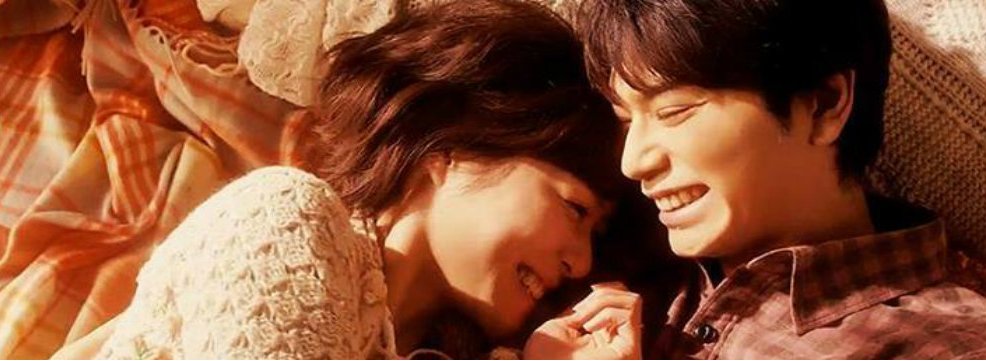
Girl in the Sunny Place - Mao and Kosuke at home

I guessed correctly, and it was a guess, at Mao’s secret past almost immediately. It didn’t detract from the story at all. Clever direction ensures that scenes work beautifully whether you’re wondering “Does she do that because of (the reason)?” or if you’re just thinking she is a bit quirky, or if you don’t notice at all. Once the answer is revealed, the signs and clues planted throughout the film all come together and make sense. The story is really about relationships and how, long after we forget the details, emotional memories can remain. Triggered by a song, an old memento, a glimpse of an old friend, feelings can come flooding back even if we don’t know precisely why. There is also a hint of the supernatural and an otherworldly atmosphere in the island scenes that I found very appealing. The ending is satisfying and moving, but not too neat or predictable.
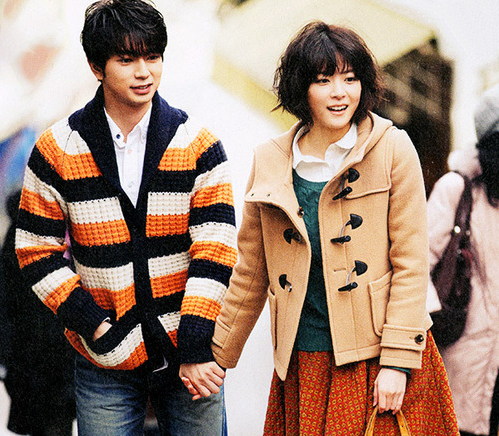
Girl in the Sunny Place - the cardigan

Matsumoto Jun gives a very appealing and natural characterisation. Kosuke starts off as awkward and apologetic; his charm is derived more from nerdy earnestness than his boyband good looks. His happiness in love is endearing and funny as he can’t hide his infectious smile. Growing more assured as the relationship deepens, he opens up to Mao but she is hiding something from him.
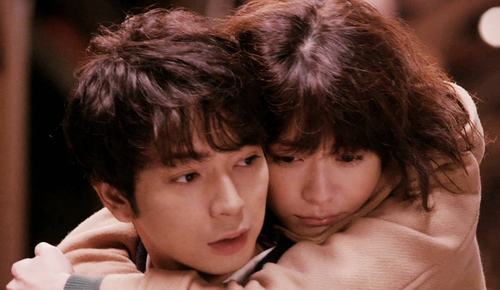
Girl in the Sunny Place - Mao and Kosuke

As Kosuke’s anxiety and concern grows, Matsumoto shows the sadness and fear in a well calibrated performance. The romance is shown rather than talked about so the chemistry and emotional range of the actors is paramount. I really wasn’t expecting subtlety and exquisite timing from someone who generally works at the cheesier end of the entertainment spectrum. He was afflicted with some hideous knitwear, but even that seemed kind of sweet since it was Kosuke wearing it.
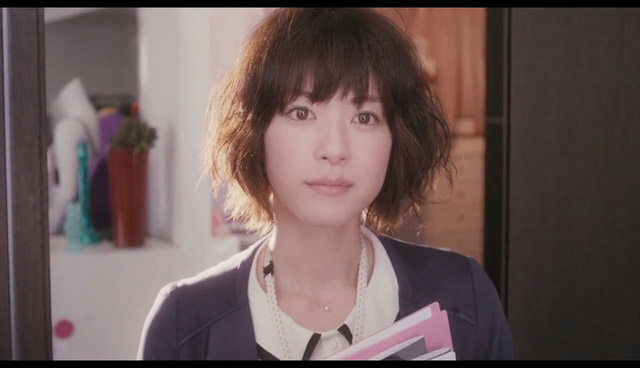
Girl in the Sunny Place - Watarai Mao is smitten

Ueno Juri looks like a live action anime orphan, with huge eyes and slightly retro clothes hanging off her tiny frame. And like many a film orphan she is resilient, cheerful and a tad offbeat. Her energy and unaffected warmth is a lovely foil for Kosuke’s reserve, and she never overdoes the whimsy. The scene when she and Kosuke meet again is almost silent and feels both romantic and gently playful. They both have such beautiful eyes! Kosuke used to protect and teach Mao and now she helps him. She fixes an error in his budget proposal and works with him on a submission. And she made the first move. The ladies in the festival audience gasped and giggled when Mao called Kosuke by his first name! Ueno Juri is convincing both as the lively independent young woman and the one who doesn’t want to admit what she is afraid of. Her rapport with Matsumoto is charming and I could completely believe in the strength of their bond.
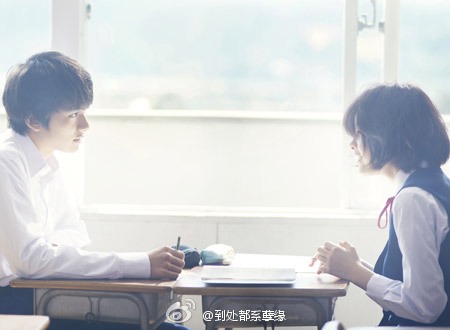
Girl in the Sunny Place - Mao and Kosuke at school

The supporting cast are all excellent. The minor characters add pathos, humour, exposition and drama to the story and director Takahiro Miki balances everything to perfection. I particularly liked Tamayama Tetsuji as the cool Johnny Depp styled Shindo, Mao’s colleague who harboured a crush on her. Kitamura Takumi as young Kosuke and Aoi Wakana as little Mao were also very good, and matched the adult actors closely in appearance and mannerisms.

This is one of the prettiest films I’ve seen in a while. The set interiors are detailed and look lived in by the characters. The lighting is atmospheric and the exterior scenes on Enoshima are gorgeous. The Beach Boys song “Wouldn’t It Be Nice” underpins some key moments and voices the yearning of young love. Silence and ambient sounds are also used to excellent effect, placing the actors to the fore but enhancing the sense of place. The dialogue is heartfelt but not predictable. Rather than saying “I love you” over and over, characters show their intimacy in small things like cleaning their teeth at the same time, or talking about their goldfish, or just snuggling up to talk about stuff.

Apart from the romance there is also a thread of endings and beginnings, of things turning full circle only to open in a new loop. It may sound sappy but I found Hidamari no Kanojo really moving and totally beautiful. Yet another DVD release I’ll be waiting for!

The 17th Japanese Film Festival is running in Melbourne until 8 December – details here:
http://japanesefilmfestival.net/location/melbourne/

Ko Antey Koti

Ko-Ante-Koti-

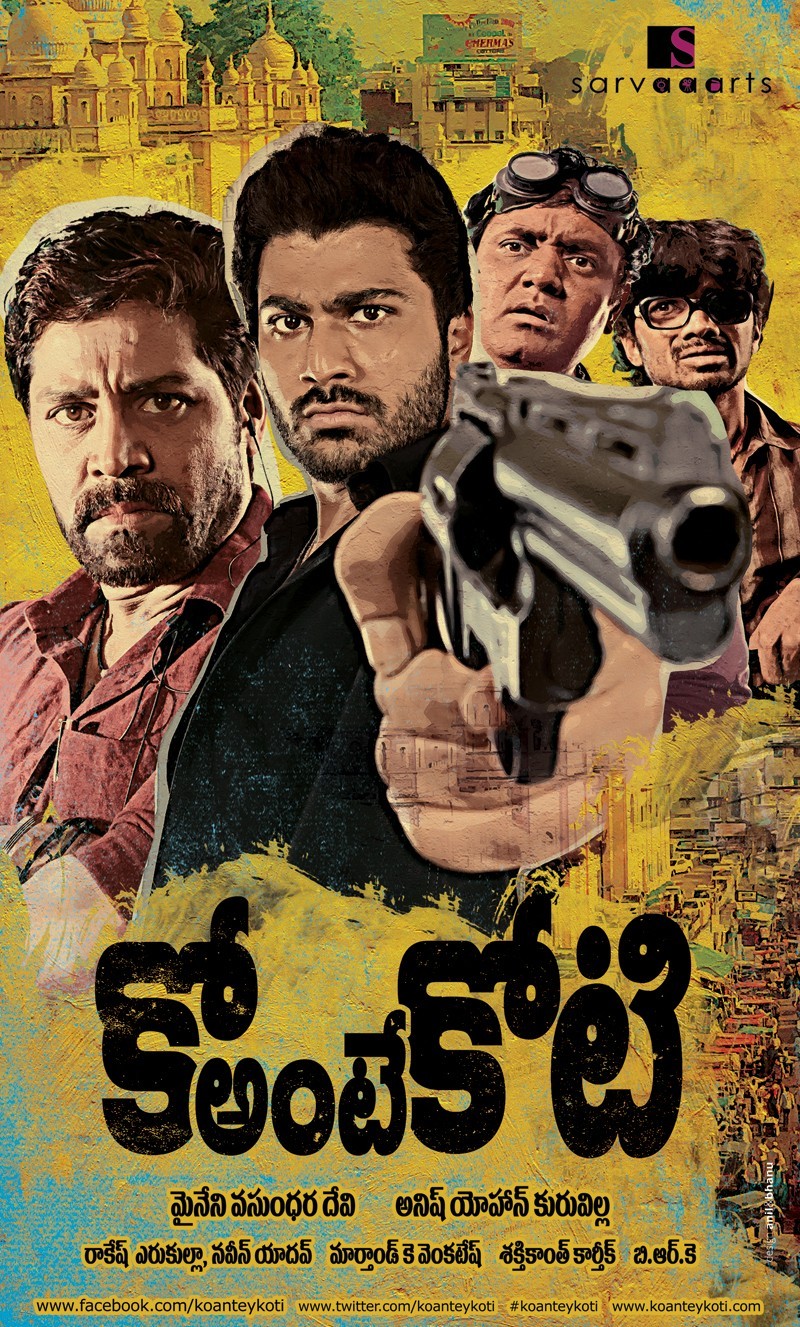
The vintage heist genre has been reinvigorated by the likes of Steven Soderbergh, Guy Ritchie, Choi Dong-Hoon, Abhinay Dey and Akshat Verma. Anish Kuruvilla adds his own stamp with Ko Antey Koti.

The rules of heist films require that the target must be audacious and the very elaborate plan must rely on split second timing and specialist skills. There will be loads of characters with unique talents and many of them are disposable. There must be at least one despicable villain who must have a grievance with the hero. Subplots abound, as do betrayals.  Add family or romantic tensions, a heap of flashbacks, and you’ve got the basics.

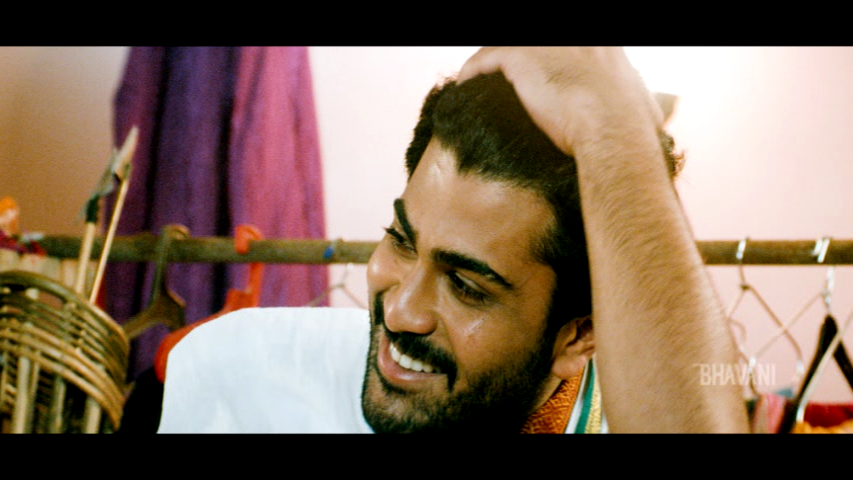
Ko-Antey-Koti-Sharwanand and SrihariKo-Antey-Koti-tired of running

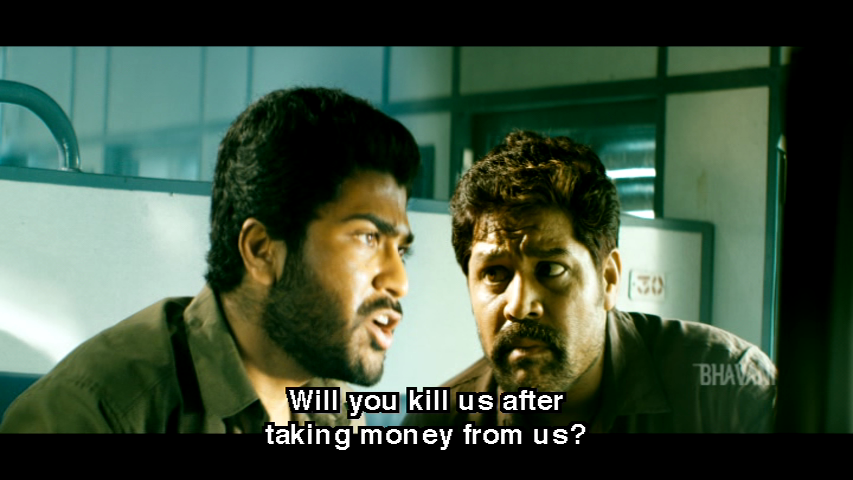
Sharwanand is one of my least favourite Telugu actors but I will grudgingly admit he is improving a bit. He was terrible in the tedious Gamyam (I refuse to let Heather give me my DVD back), he had moments of adequacy in Prasthanam, and he manages to be convincing as Vamsi most of the time. Vamsi seems to be a criminal through lack of motivation to do anything else rather than any commitment to being an outlaw. Sharwanand is perfectly fine in conversational or romantic scenes. When he has to convey powerful emotions he seems to pause for an instant before deciding what expression to use, and so he seems stilted. Having said that, he has good rapport with Priya Anand and their scenes flow very nicely. He generally plays Vamsi as grumpy and whiny, so his lighter moments with Sathya and the troupe or with Chitti and PC are quite endearing.

Ko-Antey-Koti-Sathya rehearsingKo-Antey-Koti-happy times

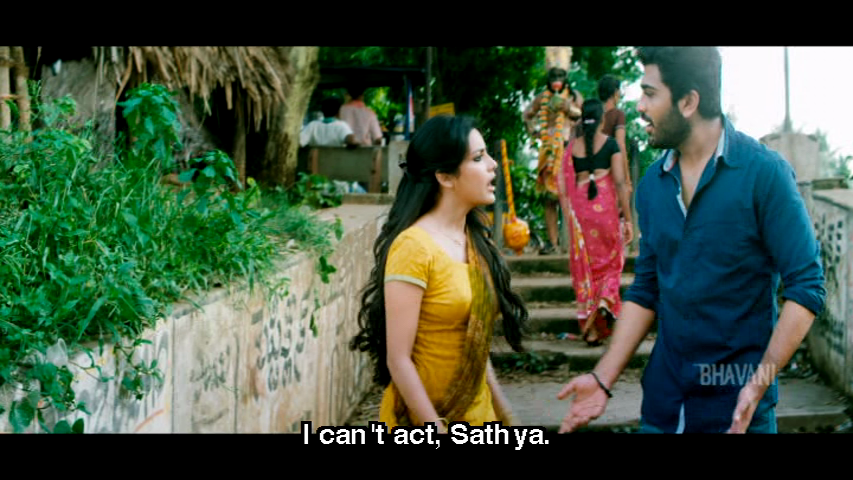
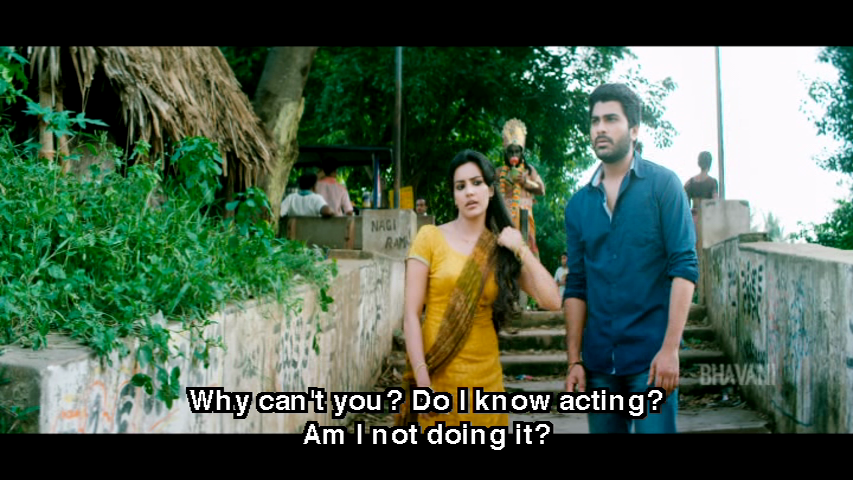
There are few Indian cinema leading ladies that look as though they really could travel by public transport or know their way around a kitchen. Go on. Picture Katrina Kaif catching the 86 tram. Priya Anand has a freshness and natural vivacity that plays to great effect in this role. Sathya is a slightly unusual heroine by Telugu film standards as she has a brain and uses it. She is voluble and a bit too inclined to Do Good through street theatre, but her chatter is often a tactic to bulldoze over any objections.

Ko-Antey-Koti-can't actKo-Antey-Koti-acting

People find themselves doing as she asks even though they had no intention of agreeing. I’m not convinced that her dance students would learn much, but the kids seemed to enjoy leaping about with her. Sathya’s determination to lead a socially responsible life makes sense when more of her family story emerges. Her relationship with Vamsi is complicated by a shared connection neither knows of. The past is hard to escape, even when it isn’t your own.

Ko-Antey-Koti-Maya and the wigKo-Antey-Koti-Maya is angry

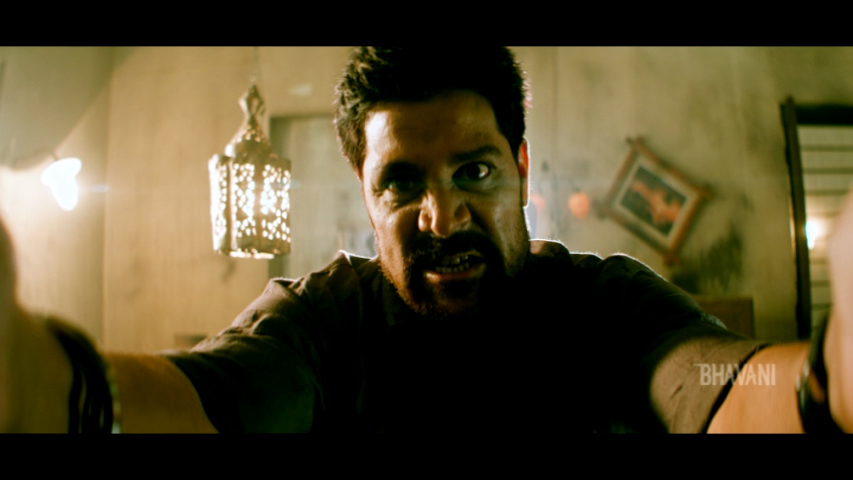
The late Srihari is the criminal mastermind, Maya. Maya is crude and has no love for anything except money. He uses people to get what he wants and has no compunction about terminating an association. Srihari dominates the confrontational scenes with total ease. This works quite well considering Vamsi and the other sidekicks are supposed to be relatively unthreatening. I questioned why he would hire so many idiots but all became clear. Srihari gives Maya a plausible charm, as long as you don’t look too closely at the calculating eyes. And you forgive the dodgy wig. It’s another in a long line of bellowing patriarchal figures for Srihari but he brings it and Maya is a despicable man.

Ko-Antey-Koti-Priya AnandKo-Antey-Koti-Vamsi

The romance between Sathya and Vamsi is developed in ways that are credible yet still entertaining. One of the things I liked most about Kuruvilla’s Avakai Biryani was the way relationships grew and were strengthened through shared small moments, and he is similarly detailed in this story. Even the romantic sideplot with Chitti and a prostitute was funny and a little touching. Sathya helps Vamsi because he needs help, not because she is smitten with insta-love for The Hero. She chooses to be a happy and good-natured girl, and her open heart allows Vamsi the opportunity to see himself as he could be if he made different choices.

Ko-Antey-Koti-sparksKo-Antey-Koti-proposal

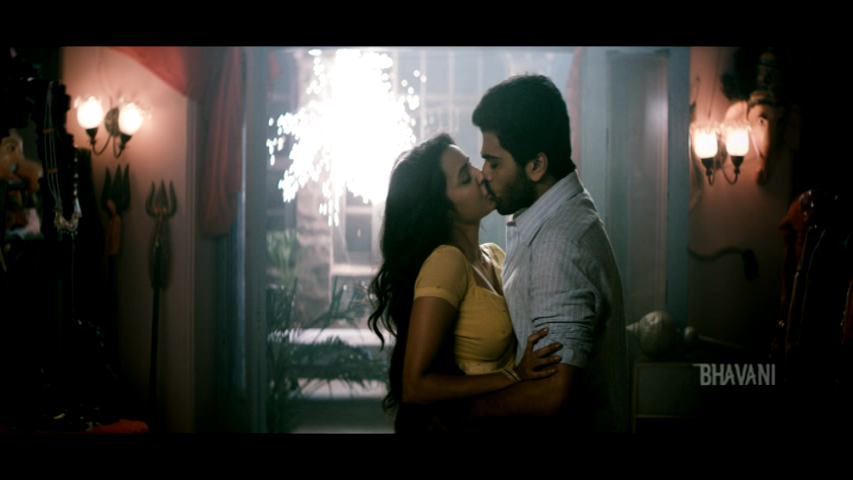
Anish Kuruvilla added some fun flourishes. Sparks literally fly when the couple kiss and no filmi cliché is overlooked as they prance through a gloriously pretty montage. Vamsi acts the part of an actor and proposes on stage, being more honest in his pretence than as himself.

Sex is treated in a non-scurrilous manner. Sathya was actually wearing more fabric when swaddled in her bedsheets than in any of her sarees. I cheer for a heroine who doesn’t have to die immediately after she sleeps with her boyfriend, and it is refreshing to see consensual and mutual attraction between the lead characters.  I also liked that Vamsi acknowledged Sathya’s right to have some input into a critical decision. It wasn’t a grand speech, but a moment that showed their pragmatism and trust in each other.

Ko-Antey-Koti-seedyKo-Antey-Koti-Sathya and Vamsi

Cinematographers Erukulla Rakesh and Naveen Yadav captured the different worlds the characters inhabit. The light is harsher and the shadows deeper in Maya’s criminal milieu, places full of twists and turns, the suggestion of hidden watchers. Vamsi and Sathya fall in love in a much more colourful and soft setting, a rural paradise and open skies that give space for dreams. The final scenes are in an arid landscape as everything is laid bare and no secrets remain. I really liked the styling of the seedy nightclubs, the squalid apartments, the activity humming through the street scenes. There is a strong sense of place and a modern feel to the sharp edits and angles.

Ko-Antey-Koti-PC and ChittiKo-Antey-Koti-comedy

The abundance of incidental characters can mean that characterisations are sketchy. Gluttonous PC (Nishal) and scrawny, one-eyed Chitti (Lakshman) play it as broad as can be. There is no subtlety. Perhaps because of my allergy to Indian film comedy, I was not even slightly sad to see some sidekicks bite the dust early on. If someone minor has a tragic backstory or is the butt of all jokes, do not bet on that character making it to intermission. Corrupt policeman Ranjit Kumar (Vinay Verma) is on the trail of the stolen goods and has his own grudge against Vamsi and Maya. He is a type rather than a realistic or subtle interpretation, but that wasn’t a drawback. The fun of this genre is the guessing and double-guessing rather than delving into a layered psyche.

The songs are used very well and to an extent they amplify characters’ inner lives. I was not overly impressed by the picturesque wandering and montages – I like a big dance number or two. Shakti Kanth has chosen to use different styles of music that match with the action and help build the atmosphere.

It’s refreshing to see a boys own adventure have interesting female characters. There is a little more realism to some of the relationships and there are some gorgeous visuals. The comedy sidekicks are neither funny nor interesting so I tuned out while they were doing their thing. I’m still not convinced by Sharwanand but Priya Anand and Srihari are great. Kuruvilla juggles the elaborate setup and flashbacks in a structured way that feels dynamic but is still logical so I never felt I lost the internal timeline. He’s a realist, especially about traffic and human nature. Well worth a look, especially if you like a more urban gritty thriller. 3 ½ stars!

Goliyon Ki Raasleela Ram-Leela

ram-leela-poster

Goliyon Ki Raasleela Ram-Leela* is mostly what I expected from Sanjay Leela Bhansali. It’s visually lush, with opulent sets, stunning landscapes, gorgeous costumes and lovely people to wear them. The movie opens with a looong stream of credits for Bhansali (producer, writer, director, editor, music director) including acknowledgement that Ram-Leela is inspired by Shakespeare’s Romeo and Juliet. Knowing the story and probable ending in advance raises the question – will the journey be worth it? Well, yes. I was pleasantly surprised to find myself entertained and interested most of the time.

Ram gives Ranveer Singh the opportunity to play both the prancing peacock and the traumatised young man who has been immersed in violence all his life. He makes a Rajnikanth-esque entrance, and springs straight into Tattad Tattad.

The choreography is disappointing – a friend calls it the Dandruff Song because of all the hairography. But based on audience reaction, they got the amount of shirtless shimmying about right. And his chest-oiler must have been working overtime, yet they were not named in the end credits which seems a sad oversight. Ram is obsessed with sex, with enjoying his life (especially sex) and has a cunning plan to take revenge on the enemy Sanedas (by having sex with their womenfolk). He admits that his thinking apparatus may be located in his pants. But Ram is also the one voice asking whether his side, the Rajadaris, should try to stop the cycle of killing. He is a mercurial creature, a natural leader but one with an unpopular message. I really liked Ranveer’s energy, his slightly self-mocking delivery of the deliberately cheesy lines, and his passionate sincerity when he confronted Leela.

Ram Leela Deepika

Deepika Padukone looks stunning and she has also crafted a good performance. This story is very familiar and requires logic suspension which means that the chemistry has to glide over any plotholes. I’ve often felt she struggled to show warmth with some co-stars, not so here. Sparks fly from Leela’s first sight of Ram in a rain of colours at Holi to the verbal sparring as they trade rhyming couplets. Leela is as interested in pursuing this relationship as he is, and she is not afraid to initiate intimacy or sort him out when he misbehaves. She also seems a bit smarter than Ram, and more cognisant of long term consequences. Deepika is convincing throughout, whether playing the giddy Leela falling in lust, dancing her heart out, or as the saddened serious young woman confined by the past.

The minor roles are interesting, especially the key female characters. Supriya Pathak is impressive as Baa, Leela’s mother and the leader of the Sanedas. Ultimately she is the one who will have to decide for the future, and she is a powerful, brooding presence. Richa Chadda plays another of her smart women in a regressive male dominated world (think Fukrey, Gangs of Wasseypur) and she is excellent as Leela’s sister-in-law Raseela. Barkha Bisht plays Ram’s sister-in-law Kesar, and she is equally good. The sisters-in-law give voice to the emotions of both sides. Both are widowed in the same stupid macho incident, and both women remain integral to the story long after their husbands are gone. Sharad Kelkar and Gulshan Devaiah round out the more significant male support roles. I was delighted to see Raza Murad as the Sarpanch even though his role was largely to provide ‘As you know Bob …” exposition. Abhimanyu Singh’s career mystifies me. He’s a terrible actor. He even overacts when he is supposed to be dead! And seeing Priyanka Chopra’s lacklustre item number made me grateful Deepika got the lead.

Ram-Leela Holi

The costumes are not just gorgeous, they reveal something about the characters. Leela wears a modern lehenga but the underskirt is a traditional patterned fabric. Kesar’s dark shawl signifies her position, but it’s lined with a light patterned fabric. Baa wears masses of ostentatiously heavy jewellery, showing her wealth and the strength to hold on to it.

ram leela guns everyhwere

Ram wears floral shirts edged with multi-coloured mini pom-poms and his holster is brightly embroidered. And there are guns EVERYWHERE. Like Leela, he carries his heritage with him. Many of the dances are garba style (showing off the excellent costumes) and most centre around religious celebrations (more colourful folkloric costumes). Everyone lives in old style houses but all the ladies whip out phones to film Ram strutting his stuff.  There is a sense of the ‘modern’ world invading this village where families have feuded for 500 years.

Ram Leela set design

Despite being less hidebound in their views, it doesn’t take much to make Ram and Leela each accuse each other of being a typical Rajadari or Saneda, just like ‘them’ as things turn sour. You don’t have to scratch the surface too hard to reach the inculcated mistrust and stereotypes. But after a cracking start, Bhansali loses control in the second half where the repetition of crisis and non-resolution becomes a little tedious.

I can’t help comparing this to Sunil Dutt’s stunning Reshma aur Shera and Baz Luhrmann’s excellent Romeo + Juliet, and while I like Ram Leela it comes up well short of both. Dutt expressed the tragedy and beauty of a doomed love in Rajasthan with fewer filmi tricks and greater emotional impact and maturity. Luhrmann stuck closely to Shakespeare and was still playful and original. Bhansali gestures towards Romeo and Juliet, mostly in the balcony scene which he recreated quite closely down to the dialogue. But he refers to iconic scenes in his own films as much as he does Shakespeare. He needs to curb the self-indulgence, and to edit with more eye to the story.

I’d definitely recommend seeing this in a cinema for the beauty and visual impact. The songs alone are worth a look and I had fun guessing which choreographer did which. I expected this to look great, and often that is all I get from Bhansali films as I just don’t connect with them. I didn’t expect Ram-Leela to be quite so entertaining and engaging.

*None of the marketing material or cinema listings here in Australia seem to have been changed so the film is still listed as Ram Leela. 

What? You want to see the colourful embroidery and outfits in detail? Here you go. Because I care.

Ram Leela everyone needs a smartphone

Heather says: I wasn’t expecting to enjoy this as much as I did. Sure, I knew it would be beautiful and I’ve been enjoying the soundtrack, but the performances from all the actors put this a notch above the usual SLB film.  Deepika in particular was a revelation and she seems to have been steadily improving with each film.  I used to find her wooden and somewhat tedious, but she really sparkles here in a role that gives her scope to show a number of different emotions as well as the smoking hot chemistry with Ranveer that Temple has mentioned. Phew!  I’ve only seen Ranveer once before and from his initial appearance in  Tattad Tattad I was expecting him to be woeful, but such is not the case.  He rises to the occasion (cough, cough) and is so much better than the 70’s porn star outfits suggest.  His swagger and bravado are just part of his persona and his Ram is full of passion and joy. Best of all though are the support female characters played by Supriya Pathak, Barkha Bisht and Richa Chadda.  As Temple has described, all had meaty roles that allowed them to be real people with varying emotions and motivations which gave more layers to the film.

However, as with every SLB film I’ve seen, Ram Leela could have done with a heavier hand with editing and the last hour had moments where it really did start to drag.  Still – the costumes are sumptuous, the scenery is beautiful and the performances were of a high enough standard that I completely agree with Temple that this is one to see on the big screen.  Ram Leela was much more entertaining than I expected and I thoroughly recommend it as one of the better Hindi films I’ve seen this year.