Operation Diamond Racket

Operation Diamond Racket

Operation Diamond Racket was re-released in Karnataka theatres last year, and that may be the reason why this 1978 film is actually available on DVD with English subtitles. The duo of Dorairaj and Bhagawan produced and directed a number of Bond-style films starring Dr Rajkumar as Agent CID 999, with Operation Diamond Racket being the last, and possibly also the most successful one they made. The story seems to be very loosely based on Diamonds are Forever but is more choppy action and less actual plot than either the Ian Fleming story or the Sean Connery film. Still, Agent CID 999 lives up to the suave spy image and manages to romance several ladies as he fights his way through numerous villains in a diamond smuggling operation to reach the secretive man at the top. The styling and fashions are definitely part of the reason to watch this film, but the best motive is Dr Rajkumar – he is totally awesome! Whether he’s fighting hoodlums, lounging by the pool or fixing up his hair mid-biffo, he does it all with fabulous style and panache! I am totally hooked and have been looking out for more of his films, which seem to be sadly unavailable subtitled. Still, this is a great place to start and even if the film itself isn’t brilliant it does have plenty of spy gadgets and a couple of great songs to help matters along.

The film starts with CID 999 aka Prakash breaking into a safe (after defeating the obligatory bad guy) and taking pictures of the contents using an advanced technology device – a camera with a flash cube attachment. I clearly remember these since I was around in the seventies, and it’s a nice nostalgic moment to see something practical as an essential part of Agent CID 999’s inventory.

Presumably this was the conclusion to Agent CID 999’s previous case as his subsequent meeting with his boss warns of a new danger. Someone is smuggling diamonds, and there are reports of numerous scientists disappearing. Obviously these are connected and Prakash picks up some clues from Sardar, a delivery guy for the smugglers who tries to extort more money from the criminals and is dealt with appropriately. However, before he dies he manages to impart a few words, which are dutifully noted down by marine branch officer Madhu and passed on to Prakash. Luckily for Prakash, Madhu has a very pretty sister Meena (Padmapriya) who turns out to be useful as a sidekick as well as the main romantic interest for the rest of the film. Although she does have plenty of competition as it turns out!

Once Prakash is on the case events move quickly and after tracking down David to a hotel, Prakash cunningly places a listening device on his table under the guise of singing a song. This is awesome for so many reasons. The outfit! The lyrics!! The surreptitious placing of the listening device!!! It just gets better and better and of course during the course of the song, David gets his next set of instruction, just as Prakash and his trusty assistant are listening in.

There are plenty of fights, interludes with various women and Prakash moonlights as a pop singer at a hotel to infiltrate the next part of the gang. I have no reason why this smuggler has a small stuffed bird on his desk, or why he rejoices in the name of Golden Crocodile although it does fit in with the general rather opulent décor of the hotel. He also has an ‘electric chamber’ to dispose of unwelcome guests, but despite all this he’s just one of the many minions involved in the smuggling ring. The various clues lead Prakash to a discovery of diamonds concealed in a shipment of masks and after fighting off yet another bad guy, Prakash heads off to Nepal with Meena on the track of the mysterious head of the diamond smuggling organisation.

Once in Nepal there are car chases and yet more fights, all with the beautiful backdrop of the Himalayas and stunning Kathmandu. Cinematographer P.S. Prakash does a fantastic job of capturing the mountains and the storyline allows for numerous reasons for Prakash to go running off into the hills and into all that gorgeous scenery. Including more songs of course.

I love this part of the film and there are so many places I recognise in and around the Kathmandu valley from my visits to Nepal. Hence the larger number than usual of screencaps, but really this is a beautifully shot film with some wonderful views of the Himalaya.

This slideshow requires JavaScript.

After numerous excursions into the hills around Kathmandu, Prakash finally manages to track down the mastermind behind the smugglers and foil his fiendish plot to rule the world using a remote control beam thingy that can turn everything to ashes. Apparently. The test runs shown didn’t particularly convince me and Prakash managed a better explosion with his handy pocket-sized bomb, but megalomania is apparently blind to these little issues. Prakash does seem rather indifferent to the fate of all the scientists who were after all working with the smugglers involuntarily, but he saves Meena and the world from being ruled by an evil mastermind in a violently red suit, so I guess that was enough for one day.

Overall Operation Diamond Racket is a fair attempt at re-creating a James Bond film and does add in plenty of gadgets, an adequate villains lair and a number of 007 references to add to the fun. Considering the era, most of the special effects work well, and there are only a couple of times where the directors resort to the use of small model cars for the crash scenes – a major improvement over the likes of Surakksha for instance. Dr Rajkumar makes a very charismatic spy, while Padmapriya is more than just a pretty face to be rescued at the end, and holds up her own end of the investigation pretty well. The support cast is also good, although being an assistant to Agent CID 999 does seem to be a risky proposition considering most don’t make it to the end of the film. There are also some wonderful sets which add to the lavish feel and fit into the James Bond styling of the film.

The only problem I have with Operation Diamond Racket is that there are possibly too many fight scenes and diversions in the path to the evil mastermind. The film could easily have been half an hour shorter without losing anything major from the story and cutting a few of the fights would have helped move the plot along. However there is still plenty to enjoy and Rajkumar is the absolute star of the show. Definitely an excellent introduction to his films and one I recommend. 4 stars.

 

Lingaa

Lingaa

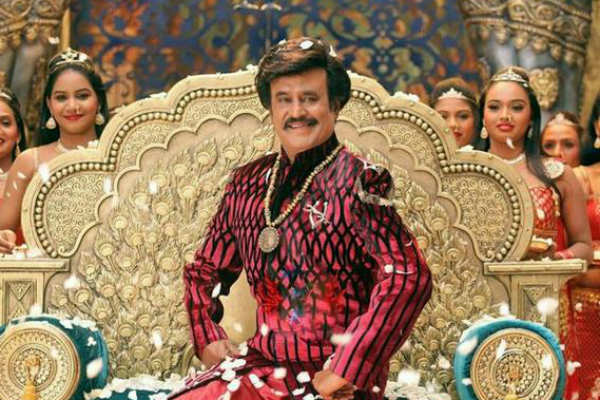
Finally it’s here! Friday was not only the Superstar’s birthday but marked the release of his latest film with director K.S. Ravikumar. There has been plenty of hype and expectation for this film, so did the team who gave us the hits Padayappa and Muthu deliver another blockbuster? Well….. mostly. This is a Rajinikanth film so we all know what to expect, and it goes without saying that the outfits will be stupendous, the songs lavish and attention firmly focused on the star in every scene.There is nothing much new about the story, but that’s not really the point, since it’s the entire spectacle and the heroism that’s important and there is plenty of that to be getting on with. Lingaa delivers most of the Rajni ‘formula’ characteristics we’ve come to expect, and with good performances from Anushka Shetty and Sonakshi Sinha there is plenty to enjoy in full masala style.

Lingaa

The film starts with the exploits of Lingaa (Rajinikanth), a thief and con-artist who, along with his merry band of Santhanam and Karunakaran, attempts a major heist at a jewelry exhibition. His outfits are classy and his concept equally sophisticated but Lingaa is foiled in his attempt to sell the jewels on by journalist Lakshmi (Anushka Shetty). Lakshmi is in search of the grandson of Raja Lingeswaran, the only one who can re-open a temple in her village and who just happens to be our jewel thief Lingaa.  Using tricks and flattery, Laksmi manages to get Lingaa to go to the village but not before she indulges in a full blown fantasy song with Rajnikanth as the pirate king come to recue her and her backing dancers, who perpetrate crimes on the high seas against the ruffle shirt amongst other fashion crimes.

Once in the village, Lingaa is taken aback by the respect shown to his grandfather, but since he himself feels no obligation to the man who lost all the family money, he is content to use the situation purely for gain. However in the course of events, Lingaa learns the full story of Raja Lingeswaran and exactly how he lost his money but won the respect of the people for his life-saving dam. We see all this in flashback mode with Rajinikanth also playing the role of his grandfather, in a beautifully drawn flashback to the 1930’s with period furniture and apparently CGI elephants. No mention though if all the horses, mules and buffalos were CGI too. Back in the thirties Rajni’s love interest this time is village girl Bharathi (Sonakshi Sinha) who has just as epic an imagination as Lakshmi, although she favours a more regal theme in her fantasy.

The thirties track starts with a superb fight scene on a train that features Dev Gill as a freedom fighter and touches on the Independence movement, the corruption and cruelty of the British Collectors, and the blind neglect of the Governors, the inequities of the caste system and the struggles of rural India as the farmers battle drought and flood. It’s a bit of a mish mash of ideas, but through it all Rajnikanth walks tall in some wonderfully spiffy costumes and what must surely be the best collection of sunglasses onscreen ever.

The film looks amazing with obviously no effort spared on the sets and outstanding costuming for Rajinikanth.  There aren’t all that many fight scenes, but they are all well choreographed and fit into the main narrative. The train fight scene is undoubtably the best with Rajni stylishly eliminating a train full of bandits with effortless ease, including a one on one with Rahul Dev on top of the train. The action scenes set in and around the building of the dam are also well filmed and the effects well integrated to give the impression of a truly massive construction.  The songs by A.R. Rahman are a little less successful, but since the dance numbers are mainly dream sequences, the total switch from the story is a little less disruptive. The songs which move the story forward such as the stirring Indiane Vaa more successful and the background music, also by A.R Rahman, is suitably evocative for each era. I do like the songs and actually like them more after seeing the visual to match, even with those ridiculous costumes in Mona Gasoline!

Sonakshi Sinha and Anushka Shetty don’t have a huge amount to do other than as the romance interest for the two Lingeswaran’s, but K.S. Ravikumar does give both of them a few important scenes in their relevant story lines. Santhanam and Karunakaran are also kept mainly in the background and when Brahmi makes a brief appearance early in the film it’s over almost before you realise it’s Brahmi. Still this means the focus is firmly on Rajinikanth and he makes the best use of every moment on screen with one liners, epic speeches and that twinkling smile.

Perhaps the only problem I have with Lingaa is the relative ineffectiveness of the villains, although I did appreciate the very normality of their respected self-interest. In the present day Jagapathi Babu does the honours while in the flash-back the actor playing the British collector is suitably sneery but a little too much of a caricature for me to completely believe in the character. The finale also seems a little rushed, especially since the computer graphics don’t work quite so well here as in the rest of the film. However it’s still Rajni doing several impossible things at once while saving the day and the girl (yet again) so for me it’s fine to accept the glaring unfeasibility of it all and just enjoy the spectacle.

I really enjoyed Lingaa, and loved watching Rajinikanth in the two separate incarnations of Lingeswaran. The comedy and action in the first half is interspersed with the insanely OTT songs while the second half is more sedate in keeping with the thirties backdrop. I am a big Rajinikanth fan which undoubtably colours my opinion, but this was fun and entertaining. Definitely well worth watching for the Superstar and those wonderful sunglasses!

Just as an aside, Lingaa was showing at The Astor here in Melbourne and when I left the cinema I was confronted by a sea of Jake and Elwood Blues lookalikes who were there for the 7pm showing of The Blues Brothers. From one iconic sunglass wearing movie superstar to an iconic  movie – it made my day!


Thegidi

Thegidi

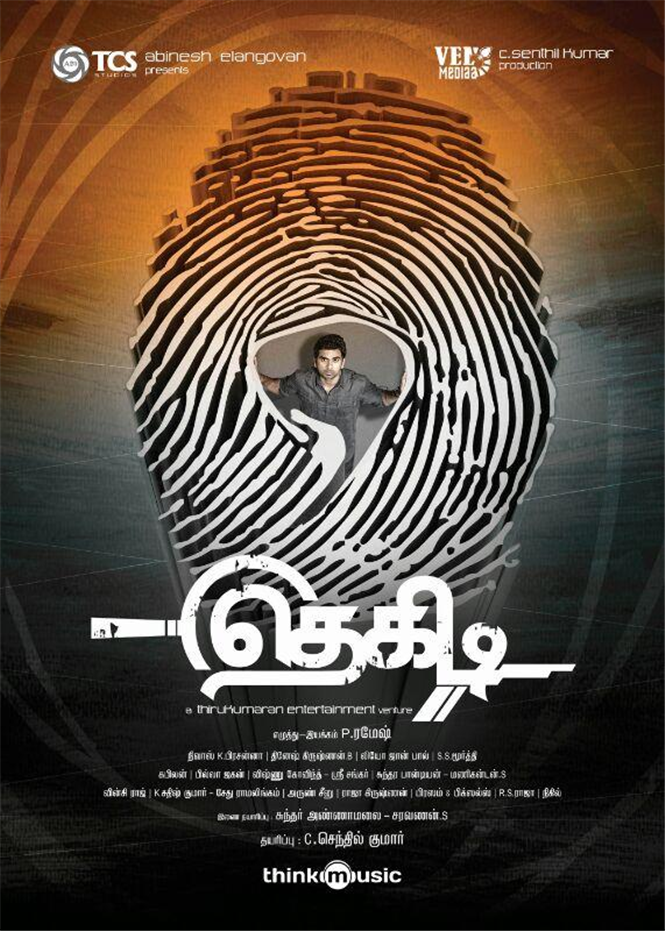
Writer and first time director P Ramesh offers something a little different in his crime drama that delves into the world of surveillance and private detection in Chennai. Despite what the subject matter might suggest, this isn’t a nail-biting thriller but instead Thegidi is a well-written and intelligently constructed mystery, that eschews car chases and fight scenes to focus on better than usual plot development and realistic characterisations. While that may not sound exciting, it’s actually an intriguing story with enough suspense to hold your attention right up to the very end, and just when you think it’s all over there is a tantalising hint of a possible sequel. P Ramesh keeps it deceptively simple while building a detailed plot and at least with the surveillance angle this time the hero really does have a legitimate excuse for stalking the heroine!

The film starts with some excellent opening titles which are evocative of American comic strips and are a great way to set the scene. From this I was expecting a classic ‘lone gumshoe against the rest of the world’ detective story, and allowing for some modern updates that’s pretty much what I got.

Vetri (Ashok Selvan) is a new criminology graduate who accepts a job offer to work for a private detective agency in Chennai. He’s very wet behind the ears and it’s this inexperience and naiveté that play a large role in the events that follow. Vetri’s bosses at the Radical Detective Agency, Sadagoppan (Pradeep Nair) and Sailash (Jayakumar) set him the task of finding out about some  apparently ordinary people with the implication that they are being investigated by their employers.  As the star pupil from his class, Vetri appears to have little difficulty in carrying out his assignments despite hanging around rather conspicuously in stairwells and spending time observing from his car. Ashok Selvan is generally believable as a nerdy and overly idealistic private detective, although he relies heavily on the same two expressions throughout. He’s still quite wooden and inexpressive, but compared to his previous role in Soodhu Kavvum, his lack of expression here is at least more in keeping with the reserved nature of his character. And he does seem to be trying – there are some good moments between Vetri and his mentor, Govardhanan (Rajan Iyer) which help establish Vetri’s character early on and later on between Vetri and his friend Nambi (Kaali Venkat).

Vetri slips up one night while trying to break into an apartment and is spotted by Madhu (Janani Iyer) who suspects that he is a thief. One brief glance has intrigued Vetri and before long he has managed to meet Madhu, convince her of his innocence and the two are well on their way to falling in love. Only in the movies! Of course things get more complicated when Madhu turns out to be one of the people on Vetri’s list of surveillance subjects, especially since getting close to the target is contrary to one of the cardinal rules of his job. The romance here is beautifully handled with Vetri doing the best he can to mess things up and Madhu keeping everything on an even keel. It works because it does feel true to life and there is some good chemistry between the two leads. Janani Iyer is lovely here and she imbues Madhu with plenty of joyfulness and grace while keeping her as an essentially well grounded character. She perfectly conveys her initial suspicions, gradual acceptance and final mistrust and is very convincing in the romance scenes. P Ramesh does give her a relatively substantial role and uses Madhu as a means of further developing Vetri’s personality and making him rather more vulnerable than he first appears.

Around the same time Vetri realises that the people he has been shadowing are dying from a variety of seemingly unrelated causes. Given that Madhu is on his surveillance list Vetri suddenly has a very pressing reason to work out exactly what is going on before she becomes a target too. He’s helped in these endeavours by Nambi who has a more realistic view of the situation and acts decisively while Vetri gets somewhat bogged down in the investigative detail. Kaali Venkat is excellent and has totally nailed the role of best friend and ‘the sensible one’ who unfortunately doesn’t manage to convince Vetri to follow his advice. However, mainly through a series of mistakes, Vetri manages to bring the case to the attention of Inspector Raghuram (V. Jayaprakash) who is astonishingly tolerant of Vetri’s meddling and unusually receptive to his ideas, while competently managing a police investigation into the suspicious deaths. This is where the story starts to get a little more unrealistic, but that’s not a major issue given that the characters themselves stay true to their initial characterisations. P. Ramesh works on building up suspense but the story is relatively simple and we know by the interval exactly who is responsible for the deaths.  There is still a minor build up of tension around Vetri’s impulsive actions and the uncertainty surrounding Madhu and the fledgling romance which could be over before it’s begun due to Vetri’s uncommunicative nature. P. Ramesh also works on fleshing out the motivations for the crime which is well written but again a little predictable given the nature of the people involved.

In addition to the well written screenplay and good performances the film also looks fantastic due to the combination of excellent cinematography from Dinseh Krishnan and some rather nifty set design. I love the clocks on the wall, the pipe and magnifying glass on the shelf and the ibis sculptures in the detective office and there are more intriguing sculptures and decor in almost every room. Many of the shots are beautifully framed with good use of the external environment and quite a few actually serve to increase the tension by isolating Vetri’s eyes and increasing his intensity. It’s clever thinking since his eyes are Ashok Selvan’s best resource and he does manage to convey more emotion through these shots than in his otherwise rather static expressions.

The music by Nivas K Prasanna is mainly sweet and melodic, fitting the romantic mood of the songs but also evoking some suspense in the background score. There are no big song and dance numbers and the songs are used to move the story forward, which works well for the screenplay. Keeping it simple seems to be the guiding force behind everything in Thegidi, from the music to the fight scenes to the story itself and it works a treat.

Director P. Ramesh is another winner of Nalaya Iyakunar, the TV show which going by their recent ‘graduates’ seems to be doing a great job of identifying new talent in Tamil cinema. His experience in short films has stood him in good stead as he shows understanding of the benefit of a good storyline and the importance of believable dialogue, something that many filmmakers never seem to grasp. Thegidi isn’t a fantastic thriller but it is a good story and just as importantly, one which is well told. A little more suspense would not have gone amiss but I really liked the fact that the bad guys (and the hero and his friend too) were really so very ordinary. Definitely worth watching for a different take on a detective story and some good interior design ideas! 4 stars.