Mahira (2019)

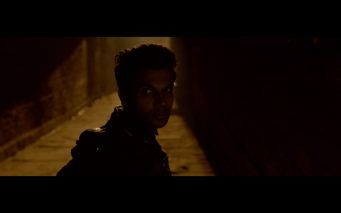
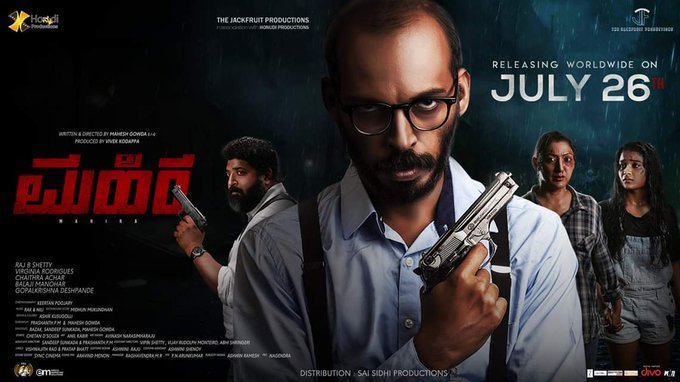
Mahesh Gowda’s debut film is an interesting take on the crime/thriller genre with a story about an undercover agent on the run. The twist here is that the agent is female and she’s on the run with her daughter who knows nothing of her mother’s previous life. Although the pacing is uneven and the story does occasionally falter, overall this is an entertaining watch and if not quite ‘edge of your seat’ it does keep your attention right to the end.

One of the downsides to the film is that the initial introduction to the characters fails to create enough interest. Adya (Chaithra Achar) is a perpetually angry schoolgirl, but there is no explanation as to why she picks a fight with one of her classmates, or why she has such an obstreperous attitude. One scene in particular where she insults a customer at her mother’s restaurant shows Adya as simply rude and obnoxious, which I don’t think was the writer’s intention. Certainly later, she seems to be characterised as more independent and capable, but at least at the start of the film she’s just a spoilt and irritating brat. Maya (Virginia Rodrigues) is better drawn and in just a few scenes we get that she runs a beach-side café, is generally happy and that her daughter is the centre of her world.

It’s quite a shock then when a group of armed men turn up to take her prisoner, just when the Indian Intelligence Department also has their sights set on capturing Maya. Her sudden metamorphosis into a kick-arse agent is reasonably believable and well portrayed on camera, although the reason for her unmasking is a little too trite.

Once Maya is off and running, the film gets much better, particularly as Adya is less feisty and more believably in awe of her mother’s kick-boxing talents. There is a good mix of drama and action as the reasons for Maya hiding away from her former colleagues are gradually revealed. Throughout it all, Virginia Rodrigues does well in the action sequences. After all, if we can believe that a hero can beat up endless gangs of hoodlums, then it’s not much of a stretch to think that a well-trained woman could fight her way out of the various situations Maya finds herself needing to escape. Chaithra Achar is also given greater depth here and truly becomes the emotional support that Maya needs to keep going.

I last saw Raj B. Shetty in Ondu Motteya Kathe where he was excellent as a man desperately in search of a wife. Here, he plays Intelligence Agent Pratap, the man charged with finding and bringing in Maya. Shetty uses his appearance for a few laughs since he doesn’t quite look the part of an agent, but there is little comedy in his dialogue and for the most part he plays Pratap fairly straight. Somehow though he never really fits well into the character despite some good interactions with his boss (Balaji Manohar) and fellow agent Apoorva Soma Saakre. Gopalkrishna Deshpande is excellent as Kashi, a previous colleague Maya turns to for help. He gets the geeky data specialist role spot on and provides just enough information to start the revelations about who Maya really is.

The background score is occasionally too intrusive, but the songs from Nilima Rao and Rakesh U.P. are lovely and fit well into the storyline. The first is beautifully set against the background of Maya and Adya at home by the beach and is a lovely introduction to their relationship, although it takes some time before Adya’s character mellows into the happy daughter seen in the song. What I enjoyed most about the film though was Chethan Dsouza’s excellent action sequences. The fights are well done and kept simple with basic moves that suit the characters. The only miss is a boat chase that doesn’t actually go anywhere and could easily have been skipped.

I love that Virginia Rodrigues isn’t a young, superfit model, but instead looks like she really could be an ex-agent with a teenage daughter. She is excellent in the role, mainly because she can be chillingly ruthless when she has to be, but that is nicely balanced by her maternal side as she takes care of her daughter. I presume that Adya’s belligerence in the opening scenes is meant to be a tribute to her mother’s ‘take no shit’ attitude, but while it doesn’t work for Chaithra Achar’s character, Virgina Rodrigues is able to pull it off easily with just a fleeting glance at whoever has raised her ire. She is just as good in the more emotional scenes too, and it’s her performance that pulls the audience into the otherwise fairly routine story.

Although the story follows a fairly standard path, there are just enough twists to keep things interesting and the eclectic mix of characters also produces a few surprises. There are a few plot holes – mainly around the 4 year timeframe when Maya disappeared which doesn’t seem long enough for Adya to have grown up quite so much – but this could possibly have been a translation error? (I suspect not though, since the subtitles were mostly very clear and easy to read, but sadly the credits didn’t mention who was responsible for subtitling). Overall Mahira is worth watching for excellent performances from the entire cast and Mahesh Gowda’s rather more unusual take on the thriller genre.

Dear Comrade

The opening scenes of Dear Comrade hark back to Vijay Deverakonda’s previous film, Arjun Reddy, but as events unfold it turns out that this is a completely different kind of film. Dear Comrade is a romantic drama that starts off with a love story, but ends up tackling sexual harassment, aiming to shed some light on why women may decide against reporting the crime. While this may make the film sound like heavy going, it’s actually quite the opposite as writer/director Bharath Kamma adds plenty of light-hearted moments along with the sad, while Justin Prabhakaran provides an excellent soundtrack that even means we get to see Vijay Deverakonda dance. There is a lot going on in this film and it’s inevitable that it doesn’t all work, but there is still plenty here to both entertain and hopefully to spark some discussion, even if the message is sometimes obscured behind rather more standard Telugu action fare.

The film starts with a drunk and seemingly demented Bobby (Vijay Deverakonda) desperately trying to get in touch with his ex, Lilly (Rashmika Mandanna). It’s a role Vijay has played many times in the past, but before he becomes too much of a caricature, the film moves into flashback to explain Bobby’s history. Moving back to his student days, Bobby is seen as an impulsive and reactive student union leader who firmly believes that you have to fight to get what you want in life. He’s impetuous and hot-headed with a tendency to argue with his fists just as much as with rhetoric, a stance that makes him unpopular with his college principal and the police but a good friend to have on your side. These revolutionary tendencies are apparently due to his grandfather (Charuhasan) who teaches Bobby what it means to be a comrade. Sure, Bobby fights for what he believes is right, but also mainly because it seems to be something he enjoys doing.

Bobby meets Lilly when her family visit the house next door for her cousin Jaya’s (Shruti Ramachandran) wedding. A nice touch comes from Bobby previously having a crush on Jaya when the two were children, which gives a camaraderie between the two that continues through and has an impact in the second half. This time though it’s Lilly that Bobby starts to develop feelings for, and I love how the tables are turned and it’s Bobby who stares wistfully out of a window while Lilly is (almost) completely oblivious to his presence. The romance is slow to develop, but once it does, there is magic in every moment the two spend together, helped by Justin Prabhakaran’s evocative music. It’s not all smooth sailing though as Lilly has reasons for being wary of someone who gets into as many fights as Bobby, while Bobby can’t figure out if Lilly really likes him or just has her own agenda.

There are some very satisfying moments in this first half, such as the way Bobby finds out that Lilly is a State level cricket player and how his group of friends change their attitude from patronising to respectful once they discover she really can play. It’s nicely done to point out the prejudice without ever feeling spiteful or overly feminist. Lilly’s attitude to Bobby is refreshingly honest and the two have wonderful chemistry together that ensures their romance feels plausibly real. When the breakdown occurs between the two characters it develops organically as Lilly finds she cannot cope with someone so angry and violent, while Bobby can’t understand why she won’t stand up and believe in him as much as he believes in her. Vijay Deverakonda and Rashmika Mandanna were excellent in Geetha Govindam, and they work just as well together here, although in the second half the attention moves more to Rashmika as her character has to face some major challenges in her career.

Everything changes after the interval when Bobby heads off to find himself and hopefully lose his memories of Lilly while doing so. As in all Indian films, a journey of discovery means a motorbike and a trip to Ladakh, but that does mean awesome scenery so I’m not going to complain. But while Bobby has been off recording nature and trying to control his impulsive side, Lilly has had major problems in her life. Unfortunately, the film only shows these briefly once Bobby comes back into her life and Bobby’s actions as he literally kidnaps Lilly from the hospital where she has been recovering don’t seem plausible at all. But just when it seems that Bobby may be the cure Lilly needed to recover, the film takes another turn and we learn the reason behind Lilly’s departure from her promising cricket career.

What does work well here is the portrayal of Lilly’s reluctance to pursue any action against the cricket selector Ramesh Rao (Raj Arjun) who sexually, physically and mentally harassed her. The pressures of family, embarrassment and shame are all clearly portrayed as is the inevitable media reaction and appalling treatment received by Lilly and her family as they try to avoid the storm Bobby creates when he learns the truth. Bharath Kamma completely changes the direction of the film and suddenly the focus is on Lilly and her reluctance to bring any of the harassment out into the open. Bobby’s lack of understanding about why Lilly won’t fight and his frustration and anger is perfectly shown here and this is what makes Dear Comrade such an interesting film. There are few Telugu films that show the consequences of reporting harassment so clearly, and even if Lilly’s experience isn’t quite as bad as what can actually happen in real life, it does at least give some idea of the sort of courage that is needed to go ahead with any accusation of this nature.

For me this is Rashmika Mandanna’s film through and through and she is excellent in a role that requires her to be non-confrontational and frightened. Her reactions are mostly what would be expected of anyone from a similar background put into the same situation, and although I really wanted her to fight back, I could totally understand why she wouldn’t even try. She really gets into the heart and soul of the character and I love how she doesn’t see bobby as her salvation, but instead as the person who just makes her miserable with his demands. In a film industry where the hero isn’t allowed to ever be anything other than the perfect partner, it’s so refreshing to see Vijay Deverakonda take backstage and be exactly what Lilly doesn’t need instead.

On one hand this is a film that deals with relationships and the consequences when one partner thrives on violent confrontations while the other tries as hard as possible to avoid conflicts of any kind. On the other hand, Dear Comrade deals with sexual harassment and the routine abuse that women have to deal with day in and day out. It is a rather male slanted view, but perhaps that’s what is needed to reach the people who need to understand the fear and powerlessness that comes with this type of abuse. At least with the presence of Vijay Deverakonda, well-staged fight scenes and a sizzling romance, there is a good chance that more people will be watching. This was so much better than I expected and despite a few mis-steps and missed opportunities, this is one of my favourite Telugu films this year. Highly recommended.

Stree (2018)

Stree

Amar Kaushik’s Stree starts with the intriguing message that the story is based on a ‘ridiculous true phenomenon’, apparently referencing a folk-tale from Karnataka, but which really could be any one of a number of similar stories world-wide. The film is billed as a horror comedy, and manages to be both funny and scary, which is an excellent achievement in a genre that generally manages one or the other, but rarely both. The story takes place in the wonderfully atmospheric town of Chanderi, making Stree worth watching just for the architecture alone, but in addition, Rajkummar Rao is excellent, Pankaj Tripathi and the rest of the support cast are brilliant, and the blend of social commentary, dark humour and ghostly appearances makes for an unusual but entertaining film.

The basic premise of the story is the annual haunting of Chanderi by a female ghost that preys on the men of the town. For the first four nights of Navratri, Stree calls to any men she sees alone at night stealing them away and leaving behind nothing but their clothes. The best part about this is that she calls their name three times, and if they turn around, she takes that as consent. Naturally then, all the men have to do to be safe is not turn around – but somehow they seem unable to manage this. I love the idea of a female ghost that looks for consent, particularly in Hindi cinema where the men don’t usually give women the same consideration, which is of course the whole point.  But also, and more subtly, there is the message that the men are so desperate for love that they can be easily seduced by the ghost despite knowing the consequences.

Protection from Stree can also be gained by writing a message outside the house asking Stree to come back the following night. Surprisingly the literate Stree obeys, keeping the menfolk safe from her clutches as she continues to follow the directive and return the next night until her time is up. The presence of Stree means that the tables are turned and in this story it’s the men who are terrified and unable to go out alone at night. Some even resort to dressing as women to be able to venture outdoors at night safely, while the rest huddle behind their womenfolk in fear. The film has a lot of these ‘role reversals’ that shine the spotlight on the treatment of women in India. There is even an item song with Nora Fatehi gyrating away in front of a crowd of young men, but at the end she is politely escorted away by bodyguards, totally in control of the situation, while one of the men ends up as Stree’s first victim.

Against the backdrop of the ghost, the film follows Vicky (Rajkummar Rao), a ladies tailor who can gauge his clienteles’ measurements with just a glance, and his romance with an mysterious woman. Despite his obvious talent, Vicky feels that he is destined for bigger and better things, but while he’s waiting for them to happen, he spends his time in Chanderi stitching clothes and hanging out with his friends Bittu (Aparshakti Khurana) and Jana (Abhishek Banerjee). At the start of Navratri, Vicky meets an enigmatic female visitor (Shraddha Kapoor) who has come to the town for the festival, and who commissions Vicky to make an outfit for her. Although his friends are sceptical and even suspect the newcomer may be Stree, Vicky is instantly smitten and ends up on a couple of dubious ‘dates’ with the mysterious stranger. At the same time, Stree has started her annual haunting, although Vicky denies her existence until Jana is one of the men taken by the vengeful spectre. Suddenly Vicky has a reason to find out more about the ghost, and he enlists the aid of local bookstore owner Rudra (Pankaj Tripathi) and even his mysterious girlfriend to track down Stree and rescue the men she has taken.

Part of what makes the film work so well is the humorous dialogue between the three friends and the mix of jokes, physical comedy and deliberate misdirection. When interspersed with some hair-raising moments as Stree creeps up behind yet another victim, the relief gained makes everything seem even funnier and also serves to exaggerate the horror element even more. The first half in particular is well written to blend story development with comedy and horror, and although the repeated attempts to lay the ghost start to drag a little in the second half, there is still enough that is unexpected to give a few shocks right up to the very end. Rajkummar Rao is in his element and he is brilliantly funny as a small-town tailor who is mostly oblivious to the world around him. His reaction to discovering a pretty girl seems interested in him is entertaining and his slave-like devotion to her every wish is cleverly milked for every last drop of humour. Aparshakti Khurana is also excellent as Vicky’s cynical and more sceptical friend, while Abhishek Banerjee is hilarious as the more gullible and susceptible of the trio. I love the contrast between their friendly banter and the more serious discussions going on around them as Stree makes her reappearance into the town while they seem totally oblivious of the danger.

When it comes to the more spooky elements of the story, Shraddha Kapoor does a good job of shrouding her character in mystery without overdoing the ‘silent stranger’ vibe. Although she doesn’t have too much to do other than appear mysterious, her character does keep you guessing, particularly since writers Raj Nidimoru and Krishna D.K. throw in some lovely red herrings (or are they?) along the way. I really enjoyed their previous film Shor in the City, which had a blend of action, violence and comedy, but Stree is a gentler watch that adds more social commentary into the mix. Part of the novelty of the film comes from the tweaking of stereotypical gender roles and the subtle but definite insistence on women’s rights (including the right of a prostitute to insist on the use of a condom) throughout the screenplay.  Although much of the film is very dark, Amalendu Chaudhary makes excellent use of the old buildings as a backdrop, while maintaining a suspenseful atmosphere even during the daylight scenes. Director Amar Kaushil does a good job of keeping everything together with only the odd misstep towards the end of the film.

It’s not a perfect movie, but it’s a good entertainer and the digs at patriarchal society add an extra dimension to the story. Worth watching for clever dialogue, plenty of laughs, a few good scares and excellent performances from the cast. 4 stars.

Stree