Vijetha

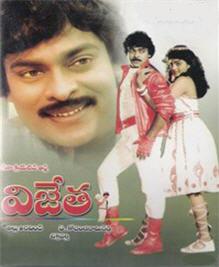
Just to whet everyone’s appetite for the Mega Birthday celebrations and get the party started, Vijetha is  more than just another cheesy masala film from the eighties. In reading about this film on imdb I discovered that Vijetha was just one of the eight films Chiranjeevi released in 1985. I think that this is an amazing number of film releases, but more so when you consider he had even more films released the preceding year, and just as many the following year. Thankfully this means that there are just so many more Chiru films to watch!

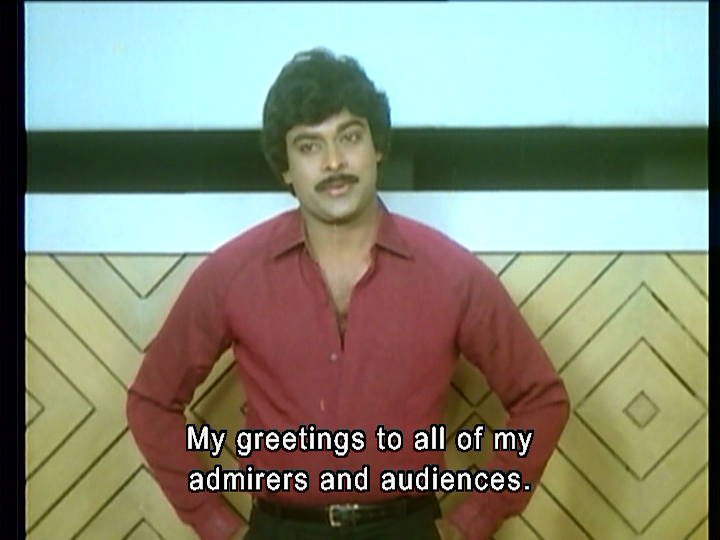
Chiranjeevi won his third Filmfare award for his performance in Vijetha and it’s a departure from his more usual action film. In fact, the movie opens with a message from Chiranjeevi to his fans explaining that the story is about a ‘boy next door’ character rather than an action hero, and it makes a great introduction to the story.
Vijetha tells the story of Madhusudhan Rao (Chiranjeevi), commonly known as Chinnababu, and his rather close-knit, but at times acrimonious family. With the death of his close friend, Chinnababu’s father Narasimham (Somayajulu J. V.) realises that the squabbling which occurs at the funeral may also happen at his own death. He decides to try to finalise the marriage of his youngest daughter Lakshmi as soon as possible, and to that end arranges a marriage with Sri Rangarao’s son Mohan, a doctor in Chicago. Mohan is planning to marry quickly and head back to the USA and it seems like an ideal match for Lakshmi considering her father’s wishes. The problem however, is that Narasimham cannot afford the required dowry, and so he appeals to his sons for help. But apart from his eldest son’s wife Saraswathi, the others are all disinclined to give any money for a marriage which they don’t see as being as important to them as their own comforts. There is much talk of duty and responsibilities but in the end Narasimham sees no other choice but to sell the family home. Finally after various attempts by the brothers to get the house for themselves, Chinnababu manages to save the day by taking a rather unusual and fairly drastic step to get the required funds and ensures his sister’s marriage goes ahead.
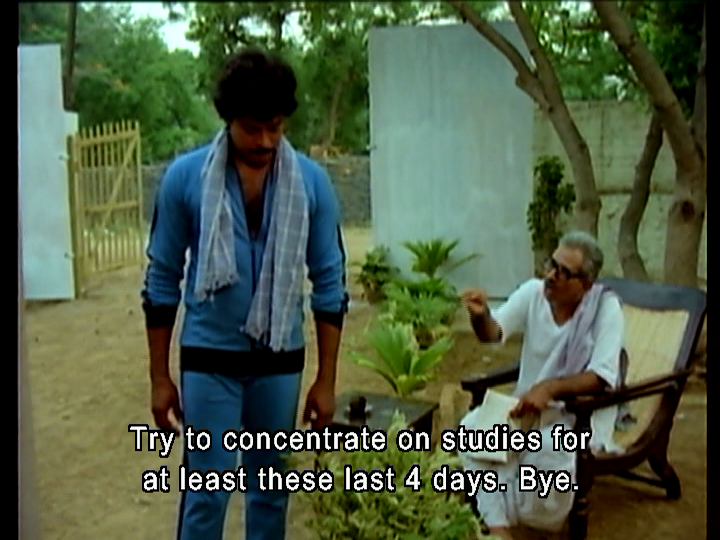
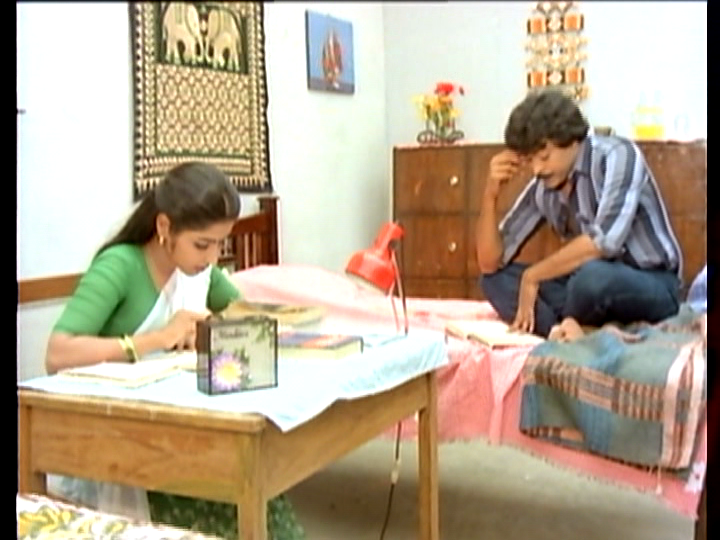
The film feels more like a modern-day soap-opera at times as it focuses on the interactions between the different family members and day-to-day life. Chinnababu is a student and aspiring football star, although his father despairs of him ever getting a job as he prefers playing his sport to studying. His eldest brother’s wife Saraswathi has practically raised both Chinnababu and his sister Lakshmi, and she keeps the peace between father and son. Although he’s perhaps a little deficient in studying, in other ways Chinnababu is a dutiful son – running errands for the other members of the family and supporting his father as much as possible.

Chiranjeevi does an excellent job of capturing the good-hearted if slightly naïve character of Chinnababu and does manage to portray a more normal slice of life rather than his more usual ‘over the top’ heroics. Although we do get some of those as well when Chinnababu comes to the rescue of Priyadarshini and her friends when they are harassed by some youths, and later on when a gang of thugs attempt to rob him. Bhanupriya plays the love interest Priyadarshini and in another departure from the norm, she stalks Chinnababu rather than the other way around. She lies in wait for him, goes to his football practice and is generally irritating in her shrill and persistent attempts to get his notice. In fact Priyadarshini’s character is incredibly annoying in the first part of the film, and the first time I actually liked her was when she encouraged Chinnababu to play football with the thugs (using them as the football) rather than trying to negotiate with them. Chinnababu initially has little time for her and seems appalled when she moves in to the neighbourhood.  However it turns out that a song with some strategically placed cutouts and a large number of cushions is the way to his heart – who knew it would be that simple?

After this, Chinnababu seems to be resigned to his fate (maybe it was the gold pants that did it) and Priyadarshini becomes much more tolerable once she finally has Chinnababu’s attention. Bhanupriya is lovely despite some of her very questionable outfits, and she can at least match Chiranjeevi’s dancing. She must have really annoyed someone in wardrobe though as she has a particularly bad selection of wigs to wear too!


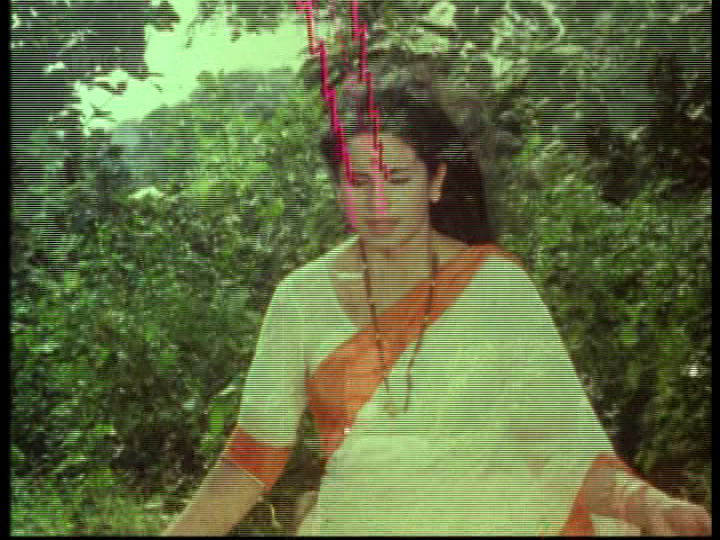
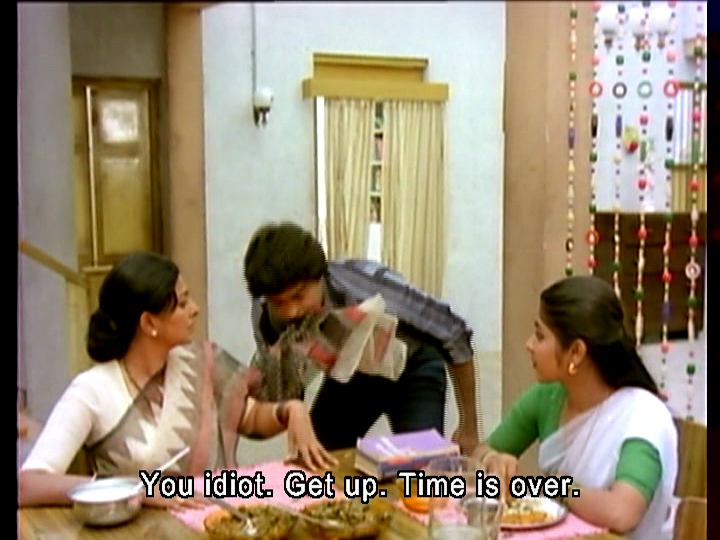
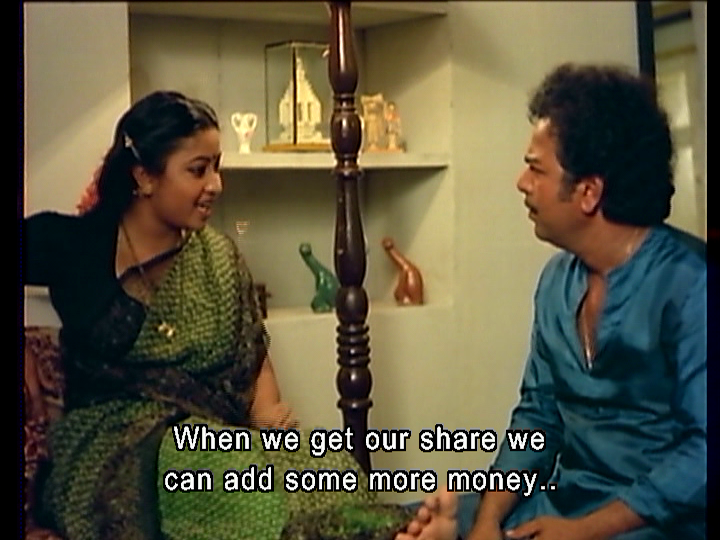
Sharada plays the eldest wife Saraswathi with real grace and poise. Her character works very well as the peacekeeper in the family and her level headedness is very much needed as everyone gangs up on Chinnababu as the only non-worker in the family. There is a classic moment early on in the film where Chinnababu uses her sari to wipe his mouth, and it just goes to show how much she thinks of him as she doesn’t react at all! I also love the set dressing in the film which adds to the ‘family at home’ atmosphere. There are plenty of ornaments, great pictures on the walls and even a medical model later in the film.  I would love to know what the brown and green ornaments behind the couple here are supposed to represent.
The three brothers show different but equally selfish characteristics and are ably aided and abetted by their various wives. The eldest brother (Ranganath) seems to be far removed from the petty squabbles of his siblings and is able to ignore the pleas of his father despite his wife’s more charitable views. The other two brothers are totally ruled by their wives who are wonderfully self-centred and money grabbing. Most of the comedy comes from their antics although veteran comedic actor Allu Ramalingaiah also turns up as a taxi driver who has some humorous dealings with second son and lawyer Narayana Rao (Nutan Prasad). Allu Arvind was the producer for Vijetha and it seems as if he got the whole family involved since his eldest son Bobby is credited as playing the son of Narayana Rao. There seems to be some confusion in some reviews as this film also marks Allu Arjun’s screen debut, but since he was only 2 years old in 1985 I think he actually appears as married sister Shanti’s son. The confusion is likely because of the very stylish sunglasses worn by Bobby below which do seem to be something Bunny would be likely to wear.

The film leans heavily towards family duty and respect but despite these heavy topics it doesn’t drag and keeps a light-hearted tone until near the end. Even then the self-sacrifice of Chinnababu isn’t dwelt on overly much and there is an appropriately happy ending. Director A. Kodandarami Reddy keeps a light touch and stops the film descending into too much sentimentality.  The best parts of the film are the songs by K. Chakravarthy and as ever Chiranjeevi is excellent in a seemingly never ending array of tight lycra outfits. This is my favourite and it seems to serve no other purpose other than letting Chiru strut his stuff – I totally approve!

Although the themes in Vijetha are of duty, responsibility and self-sacrifice, it’s still a fun watch and if nothing else there is the chance to see Chiru in shorts playing football. Some great songs and a very heart-felt performance from Chiranjeevi make it well worth the lack of fast paced action. 3 1/2 stars (it would have been more but Priyadarshini is just too annoying!)

Temple says:

I don’t quite see the opening statement quite the same way Heather did. To me it’s not so much that Chiru is playing a boy next door, as lots of his hero roles are those boys at heart, but he is playing a guy who struggles to assert himself and isn’t really a success at anything despite his potential. I think it is that perceived weakness that Chiru wanted his fans to identify with, and he challenged his detractors who may have thought he was a one trick pony. Mind you, Chinna is heroic in his own way. The short shorts and long socks is a difficult look, especially in yellow which I find is an unforgiving colour, but he manages.

There is some nice social observation tucked in amongst the fluffy filmi fun. This is a family where women have started to work outside the home and their behaviour towards Saraswati is quite masculine in some respects. The father is challenged by his children who have an overwhelming sense of entitlement. Work is hard to come by for the academically average, but class barriers also get in the way – Chinna wasn’t allowed to work as a peon in his brother’s office because it would look bad. Chinna is the product of Saraswati’s intelligent and emotionally supportive upbringing and his father’s strong morality. There is a lot of affection in the family – the father loves Chinna, and had a great time sneaking in to see him play a big match, but the pressure is on to see everyone settled in his lifetime. The question is when do offspring have to take up some family responsibility. It’s similar to, but much less dreary and vomit inducing than, Baghban (one of my most hated films) as the family starts to tear itself apart over money. And nicely symbolic as Chinna and his dad unwittingly compete with each other to save the family finances.

I don’t mind Bhanupriya’s character. Priya is supposed to be a ‘modern’ (i.e. badly dressed, persistent and opportunistic) girl who goes for what she wants. I think her attempts to win Chinna and impress his family are not as funny as they are meant to be, but generally played for laughs and she has good rapport with Chiru. Chinna has the closest relationship with the females in the family, there are lovely scenes as they discuss their hopes and fears together, and Chiranjeevi played Chinna in a natural and low key style. He had a few masala breakouts which I enjoyed immensely, and his flair for comedy is evident. I was so delighted when I recognised the Six O’clock song as I could enjoy it with better dancing (and outfits) and without the accompanying fear of Anil Kapoor from the Hindi version.

As romantic musical sports themed family dramas go, this is one of my favourites. 3 ½ stars.
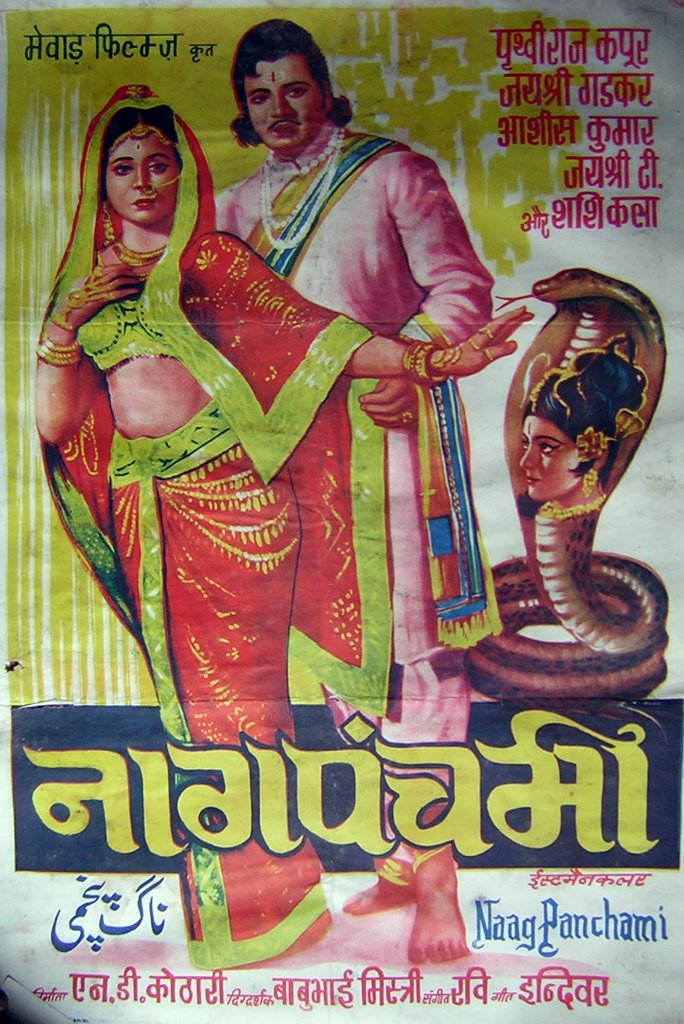
Naag Panchami (1972)

Snakes Galore!

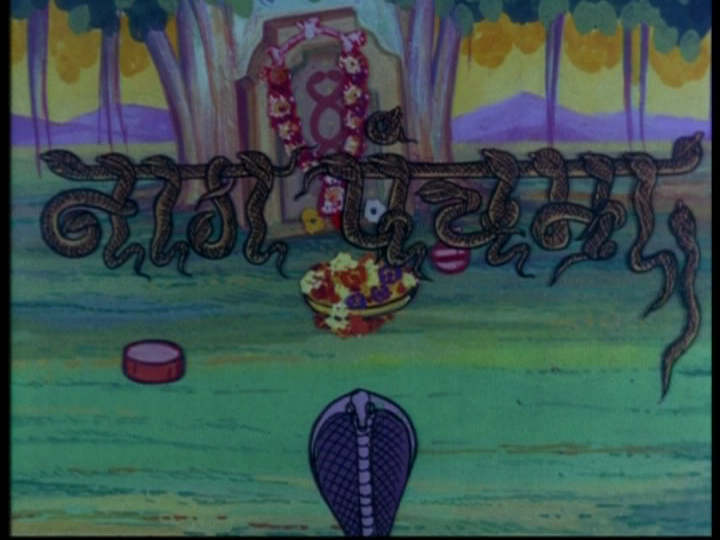
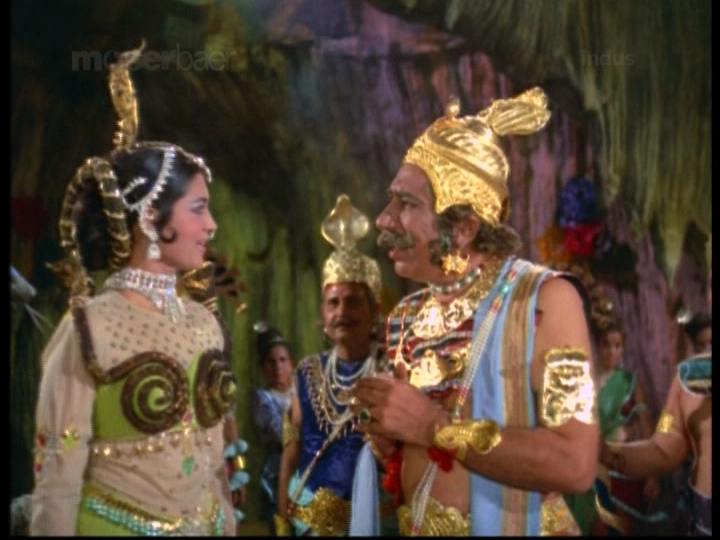
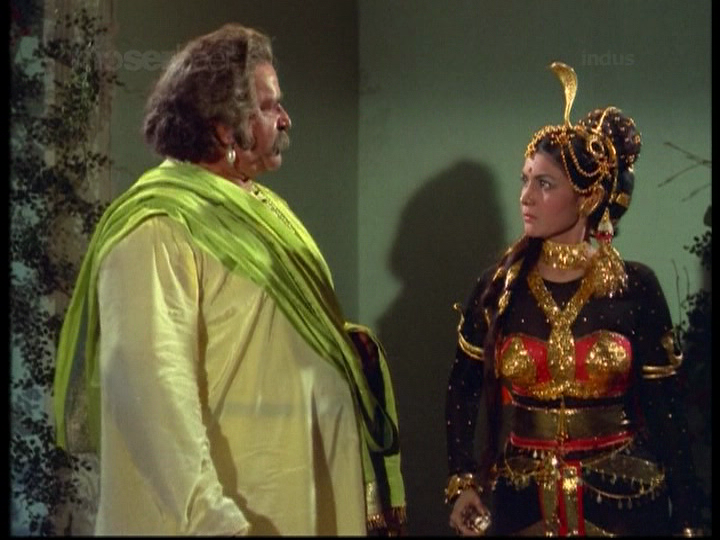
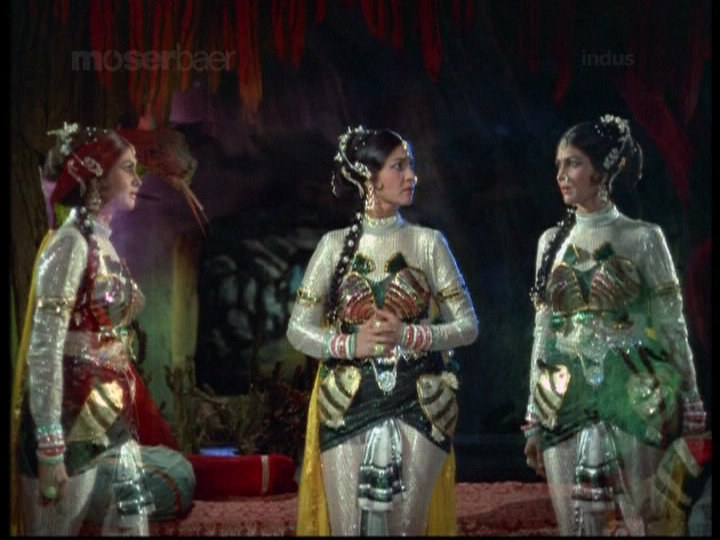
Perhaps as an omen of the awesomeness which is to come, the film opens with some excellent snake animations which include a very snakey title. Love it!This film is a feast for costumes lovers – every outfit seems to have extra glitz, glamour and shine with some really amazing fabrics and accoutrements. Just look at these bodice designs – very apt for the snake goddess and her poisonous serpent sidekick:


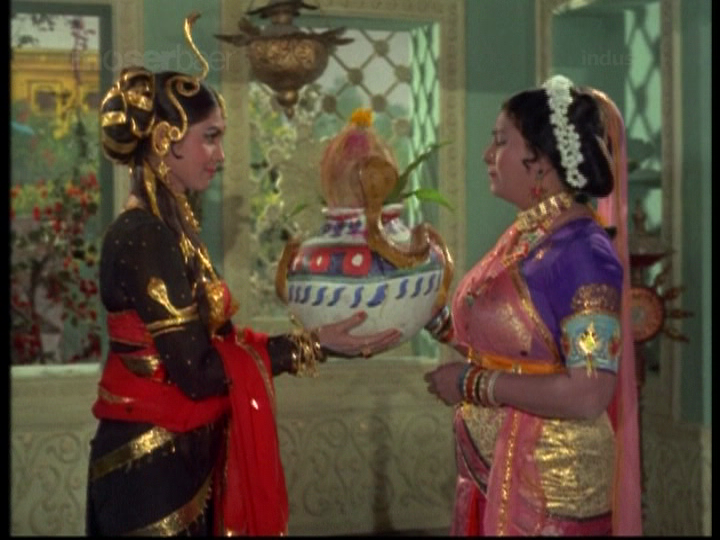
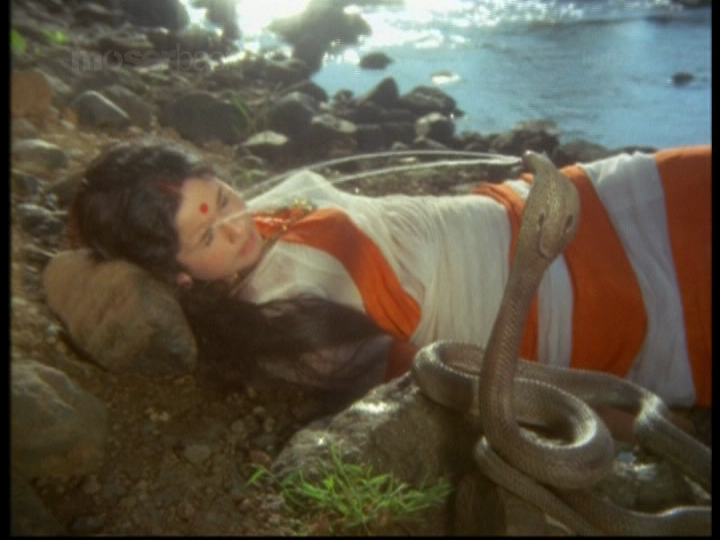
And just for some variation, later on Goddess Mansa decides to try out a fish theme with a wonderful headdress.But there are also plenty of real snakes throughout – not just on the costumes – although the film seems to use a combination of some really quite bad model snakes interspersed with the real thing. These are some of the real ones.

Naag Panchami starts with the rather petulant Snake Goddess Mansa having a bad day. It’s her birthday but she is restless and irritated by her followers in Naglok. Fortuitously Nagraj turns up and she manages to cajole him into revealing the name of her father, who is none other than Lord Shiva. Mansa is thrilled by this news and immediately goes to see her father who takes her to meet her mother and siblings in Khailash. Once there she discovers the existence of ‘the rest of the world’, and decides she wants to be worshiped just like Shiva and the other Gods. To achieve her aim she decides to make Lord Shiva’s chief devotee Chandrakhar her worshiper too, and to that end she appears to him on board his ship and demands his instant worship. But the successful merchant is unimpressed by Mansa and reviles her for her arrogance and presumption.

Various ploys by Mansa to force his worship fail to work and finally she kills all six of Chandrakhar’s sons. Mansa seems to work on the theory that the more insane her actions, the more likely it is that Chandrakhar will devote himself to her, which of course is guaranteed to have the opposite effect entirely. Lord Shiva very wisely declines to get involved so the scene is set to allow Mansa to do her worst.

As part of her long term plan she then approaches Chandrakers wife Alta and gifts her with another son – not really a lot of consolation for the lost of the last six, but then that’s not her ultimate plan. Rivers flow, birds fly and suns set as he grows up incredibly fast to be the handsome and dashing Lakshmindra. Lakshminda crosses paths with the equally daring and beautiful Behula when she is out hunting. Naturally the two fall in love and in next to no time determine to marry.

Meanwhile, Mansa’s chief handmaiden Maithreyi has also married and as husband and wife are cavorting in the forest, Lakshmindra inadvertently runs over her husband in his chariot, killing him instantly.

Unaware of this fresh disaster Lakshmindra is now under threat of death from both Mansa and the vengeful Maithreyi – a situation with plenty of snakey potential. It all becomes very Sleeping Beauty-ish as Mansa turns up to the engagement and threatens Lakshmindra with death on his wedding night. Queue evil laugh Mwah ha ha ha! Even Maithreyi is starting to look a bit worried! To protect his son, Chandraker orders a house to be built of iron to ensure that nothing will be able to enter and kill his son. Now I would have thought that an iron house would be quite impractical , hot in summer and hard to keep warm in winter, and not necessarily the only way to keep snakes at bay. Nevertheless, the newlyweds end up in a supposedly impregnable house on their wedding night. Except of course it isn’t. Maithreyi turns up to seek her revenge, but Behula is resolved to save her husband and manages to convince Maithreyi not to kill Lakshminda.

Sadly though, after Maithreyi leaves, neither Behula nor Lakshmindra think to bung up the hole in the wall and Mansa sends another snake which does manage to complete the job. Not one to be easily defeated, Behula resolves to carry her husband’s corpse on a pilgrimage around various temples in order to revive him. While on her quest, Mansa assails Behula with many really bad special effects including a huge crocodile and lightning induced blindness just to name a few.

We also get to see that not all snakes are bad, or at least not all the time, as Maithreyi turns up to help Behula in her snake form, towing the body to safety and waking Behula up with a nicely placed spray of water. I really do think all of this would have been much easier to accomplish as a human, but probably nowhere near as much fun to watch.

I really enjoyed this film. The costumes are wonderfully sumptious and there is just oh so much evil that Mansa manages to accomplish. The songs are fantastic and with playback singers Asha Bhosle, Kishore Kumar and Lata Mangeshkar and music by Ravi it all sounds beautiful. There is even a great snake dance by Maithreyi as Mansa looks on in her fab fish ensemble – already mentioned by jenni, but I think it deserves to be seen again.

The snakes here do conform pretty much to the standard in the Filmi Snake Spotters Field Guide. There is the less is more approach to clothing, plenty of embellishments and headdresses, great eyes and plenty of snake inspired architecture to pose with. Mansa also has the ability to conjure snakes whenever she is feeling annoyed with someone and flings them around with gay abandon. She becomes more and more maniacal and Shashikala is wonderfully crazy, changing from self-indulgent and immature one minute to totally malevolent and insane in the next.  Her eyes get wider and wider and she is definitely a master of ’the look’. She even talks to herself.

Maithreyi (Jayshree T.) is much less vengeful despite losing her husband, and a much nicer person snake all round. Hers becomes the voice of reason which Mansa of course totally ignores.

Jayshree Gadkar is lovely as Behula. She invests her with grace and determination and plays the devoted wife perfectly. Out of her lavish costumes as the princess she looks beautiful in her plain sari when she is making the pilgrimages around the various temples. The other actors are all fine but are mainly just there as targets for Mansa. Prithviraj Kapoor is suitably imposing as the rich merchant, and Ashish Kumar does a good job as Lakshmendra. Satyendra Kapoor has a small role as Lakshmendra’s friend Vishwavardhan and makes the most of it.

The end involves various Gods and Shiva dancing to shake the world – yet more excellent costumes and ‘bad enough to be really good’ special effects. This is so much more than just another snake movie and I’m rather surprised that it doesn’t seem to have the recognition I think it deserves – if only from aficionados of shiny fabric and bejewelled headdresses. A great film for Nag Panchami Film Fessstival  I love it! 4 stars.

La Cité Des Enfants Perdues

When I am asked to name my favourite film (a very difficult decision) I usually choose this – The City of Lost Children. It doesn’t seem to matter how many times I see it, I still get lost in the amazingly detailed world that directors Jeunet and Caro created. It is a film I have seen many times and will no doubt watch very many more and I still love it.

It tells the story of One, a carnival strongman who looks after his petit frère Denree in a very Victorian styled port city.

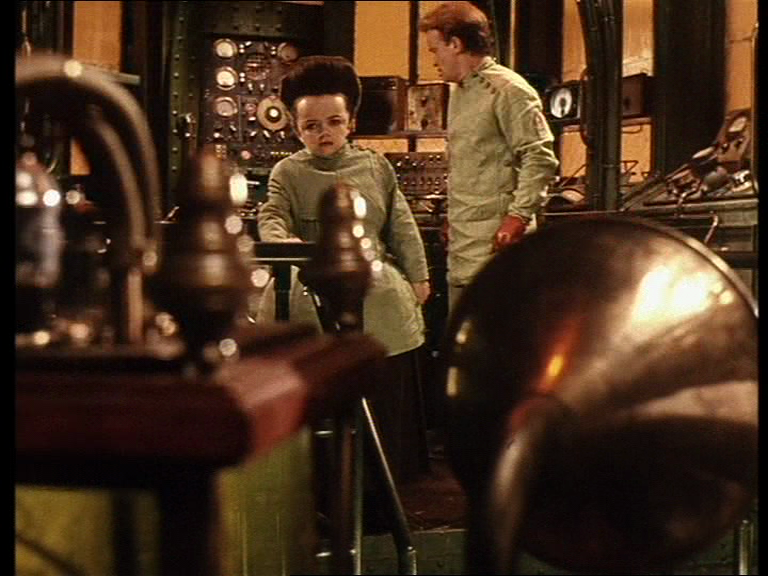
Denree is stolen by the Cyclops, men who put out their own eye to use an electronic version,  and sold to the evil Krank. He is a mad scientist who lives in a fantastical rig in the ocean, along with his dwarf wife, 6 narcoleptic clones and Uncle Irvin, a talking brain in a fish tank. Krank has grown prematurely old because he cannot dream and uses his scientific genius to extract the dreams from the children he steals.


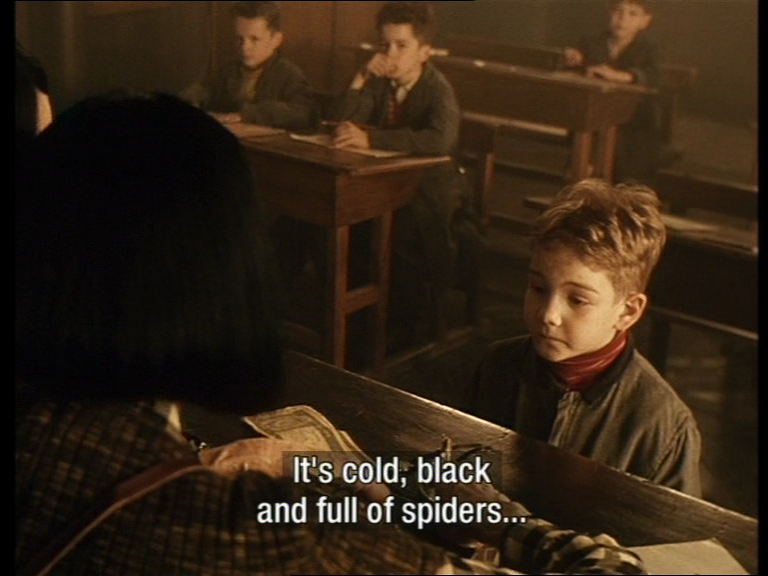
He thinks that these will help stop his ageing, although I would have thought the constant nightmares the children produce would have accelerated the process instead. One sets out to find Denree and along the way is helped by Miette, an orphan who heads a group of child pickpockets and thieves. These thieves in turn are under the rule of the Fagin-like Octopus who appropriates their takings each day and threatens hideous punishments for underachievers – a dark hole full of spiders is certainly my worst nightmare!

Added in to the story are an alcoholic failed side show owner, whose flea circus is used to deliver mind altering drugs and a diver who lives under the sea in the port, salvaging everything that falls into its murky depths.

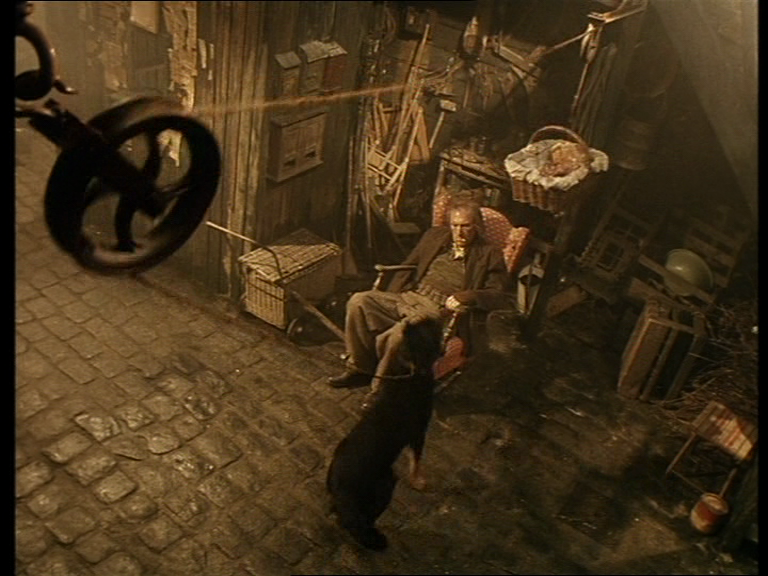
The best part of the film is undoubtedly the visuals (which is why I’ve gone a little crazy on the number of screencaps here!). The harbour city is full of bridges, stairs and swirling fog and emphasizes the Dickensian feel given by the costumes and carnival barkers. This is further alluded to by the Octopus, conjoined twins played by Geneviève Brunet and Odile Mallet, and their team of child thieves. The more futuristic laboratory evokes the writing of Jules Verne in the device used by Krank to extract the dreams and the cranky migraine prone brain in a tank.


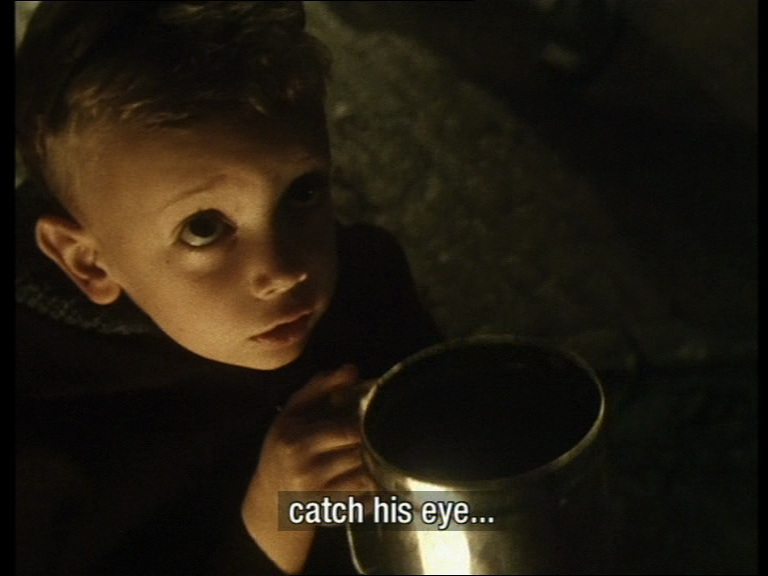
The meeting place of the Cyclops on seems to be designed to look like one of the circles from Hell with a roaring fire and steeply pitched seating at the sides. Along with the bombastic rhetoric of their leader Gabriel Marie (Serge Merlin) it’s very apocalyptic, until they head out around town with a very quaint wagon to pick up the children.  I am intrigued by the Cyclops and their relationship to the old ‘seer’ belief that you can see more clearly by removing your own natural vision. In this case rather than an inner eye they use an artificial eye but sadly the philosophy behind their decision isn’t ever explained or explored in any detail. The device seems to use some kind of sonar and their vision is turned a wonderful green as a result of using this manufactured eye. In reality they are quite pitiable and when it comes down to it, not a very effective fighting force due to the limitations of their mechanical enhancements.


I love the many and varied characters that populate this world. Ron Perlman is perfect as One, the rather simple strongman who speaks in very short declarative sentences. I am very impressed by his accent as he really doesn’t sound American at all, although his rather limited script probably does help. One is a rather tragic figure too. His description of how he was a sailor on whaling ships until he heard the whales singing and subsequently lost his job because his harpoon would always miss is very poignant. He is very protective of his younger brother, even though Denree is an orphan he has adopted, and he takes the same care of Miette despite the fact that she seems much better equipped to take care of him.

Judith Vittet is very good as Miette, the streetwise kid much older than her years. Her competence and quickness of thought is such a contrast to One’s more lumbering presence and it creates an appealing dynamic.  Miette appears to become attracted to the silent strength of One, and it is to Jeunet and Caro’s credit that their relationship never becomes tawdry or sexualised, but remains innocent and sweet throughout the film.
Perhaps the most challenging role in the film is that of the diver and the clones, all played by Dominique Pinon. He has an amazingly mobile and rubbery face and manages to give each clone their own personality as they try to placate Krank, do all the work around the laboratory and argue over who is the ‘original’. As the diver he is wonderfully obscure and insane. This is beautifully illustrated by the way that when he first salvages Miette from the water he merely adds a label to her listing the date and place of her discovery rather than trying to see if he can revive her.

Mirelle Mossé is excellent as the diminutive Mademoiselle Bismuth and Jean Louis Trintignant is wickedly barbed as the voice of Uncle Irvin. He gets some of the best lines and often appears as the voice of reason just to add even more to the unreality of the story. Daniel Emilfork is alternately petulant, childish, terrifying and domineering in an excellent portrayal of the mad genius created by the missing scientist. He makes him a most unattractive character and it’s impossible to feel any sympathy for him and his plight as he really is just evil.

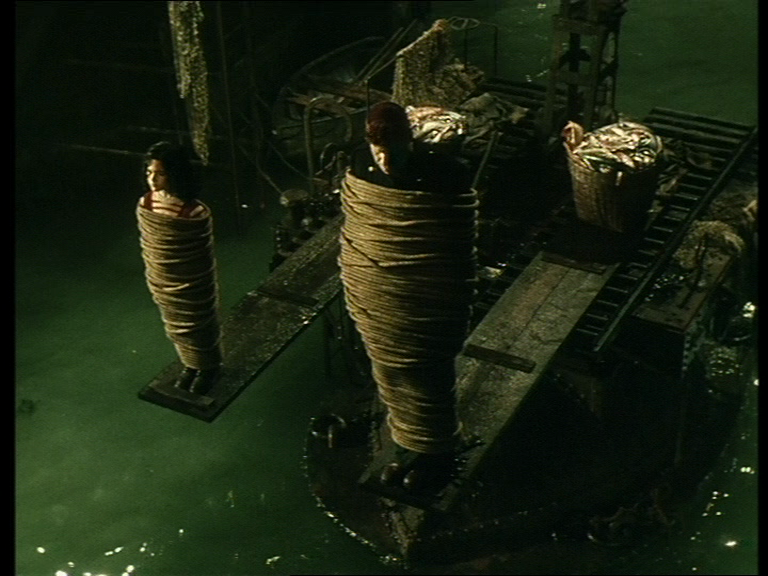
Another feature I love about the film is the intricate methods the characters use to attain their ends. For example, the way the Cyclops use to get rid of Miette and One is to tie them up and put them on the end of a plank over the sea. The plank is anchored at one end by a basket of fish which attracts seagulls, ensuring that the weight of the baskets gradually diminishes and the pair will eventually topple into the sea. Tossing them straight in would have had the same ultimate effect, but wouldn’t have allowed the Cylops to bet on the outcome. Similarly when Miette and her band of thieves are trying to break into a business they uses a complicated method involving cheese and a magnet attached to the tail of a mouse, when the magnet alone would have worked equally well. There are many more of these elaborate devices throughout which add a surreal feel, as if we’re watching an alternate universe where the usual laws of the natural world don’t apply.


The machinations of the Octopus and her partner in crime the Peeler are equally labyrinthine and the idea of using performing fleas to induce mind control over their victims is just another twisted thread in the tale. It’s all just wonderfully bizarre. Geneviève Brunet and Odile Mallet really do appear to be twins and the way they manage to make their hands work as four instead of just two is fascinating.

The costumes suit the rest of the film visuals and are designed by Jean Paul Gautier. The excellent cinematography is by Darius Khondji and Jean Rabasse is the art director who translated Jeunet and Carot’s vision to the screen so beautifully. The music by Badalamenti is haunting, evocative and fits the surreal nature of the film perfectly. I really can’t fault anything in this film. I’ve read other reviews where people have complained that the plot is lacking, or that the film develops very slowly, but I think the story is well developed and that it moves quickly enough that it has taken me numerous viewings to see every detail. And I’m sure there are things I have yet to spot. It’s not for everyone, but if your taste runs to the surreal or bizarre then it’s definitely one to watch. 5 stars.