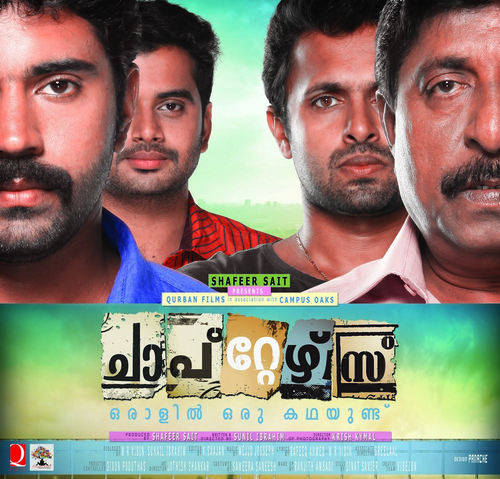
Chapters (2012)

Chapters poster

Writer/director Sunil Ibrahim’s 2012 début film is an interesting watch despite a slow beginning and a story where the emphasis is more on relationships and friendship rather than fast-paced action.  Chapters uses a multi-linear narrative style to tell three separate stories which are broken down into four separate ‘chapters’ – the source of the film title.  The first and third chapters interconnect as do the second and fourth, although the final chapter is more concerned with tying everything together. It made more sense to me on the second watch through as I picked up more of the connections, possibly due to concentrating too much on the occasionally dodgy subtitle first time round.  The focus is on the ordinary lives of ordinary people and although it’s an admirable attempt to make a different type of film, sadly we don’t learn enough about these ordinary people to make them interesting!  However at just under two hours it’s an easy watch and worth a look at least for the third chapter which is the most engaging.
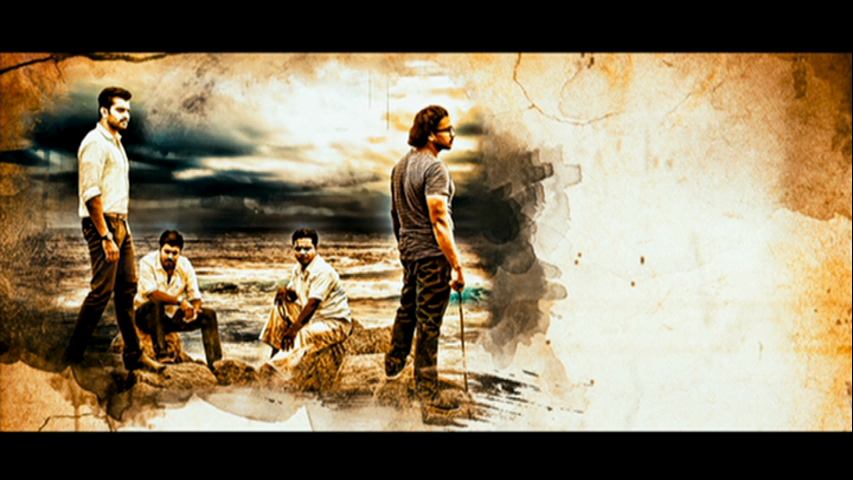
Chapter 1Chapters

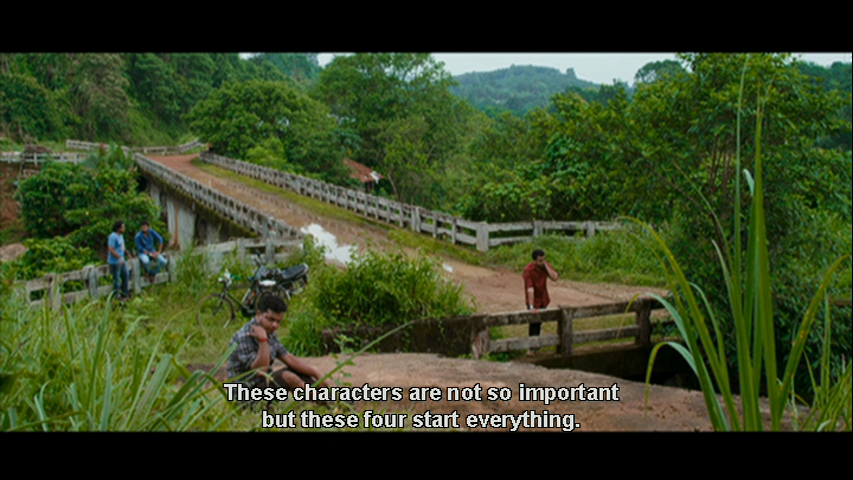
The film starts with a brief preface which sets up the first chapter.  Krishna Kumar (Nivin Pauly) enlists the help of his friends Anwar (Hemanth Menon), Joby (Vijeesh) and Kannan (Dhananjay) to raise some money to help pay for his sister’s wedding.  Rather interestingly his first option is to try for a bank loan, and when that fails the next plan is to try smuggling.  Hm – straight into illegal and criminal activity then without even the possibility of trying to get some work?  Must be the done thing in the Kerala highlands I guess since no-one seems to find this strange at all!  The first chapter deals with the friends attempt to find Nagamanikyam (the legendary snake pearl), to sell and raise money.  This naïve plan isn’t well developed in the narrative and as a result the first chapter feels laboured and unrealistic.  It’s unfortunate as it’s also the longest and the one that sets events in motion for subsequent chapters.  Although the theme of friendship is woven throughout, the individual relationships aren’t explored in any detail either and there never seems to be any reason for Kumar’s friends to sacrifice anything for him.

ChaptersChapters

None of it really makes sense until we get to the final chapter, and although that might work in a film such as Amores Perros, there just isn’t enough action here to justify the lack of character development.  I also found Krishna to be a rather unappealing character who never manages to redeem this initial impression, so perhaps I’m just biased against his story.  The other friends do seem as if they might have more interesting stories, but we don’t ever learn very much about them, and that is the major problem with this chapter.
Chapter 2ChaptersChaptersChapters

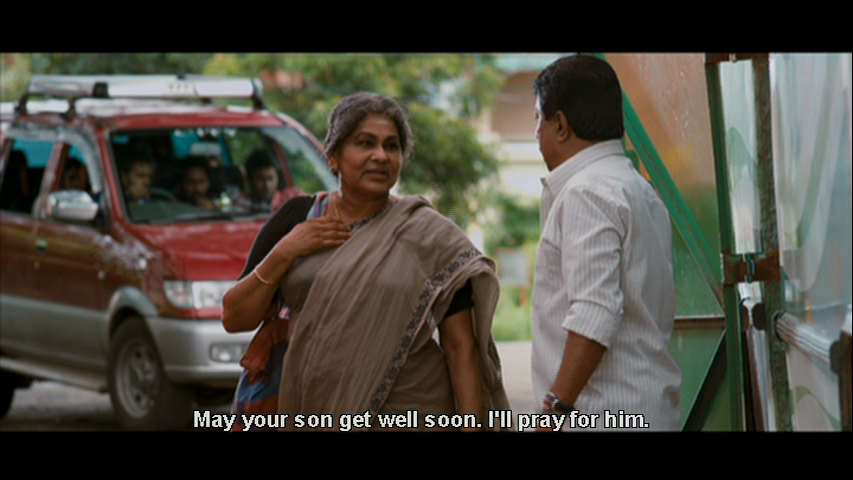
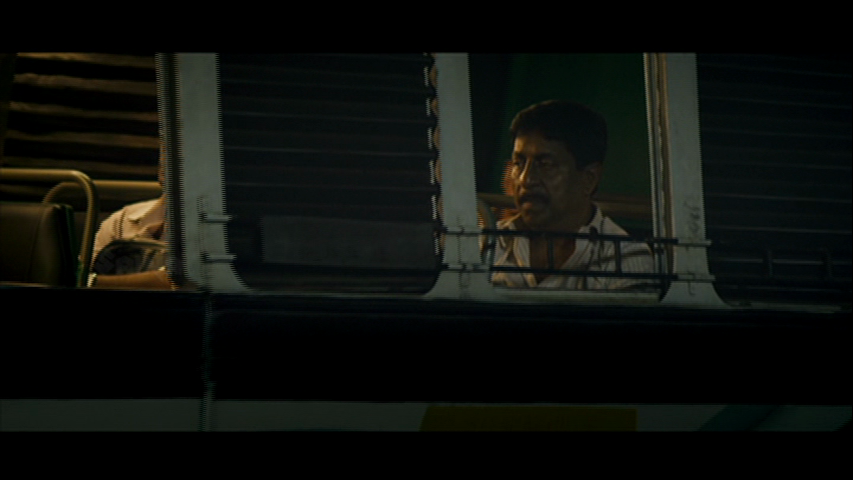
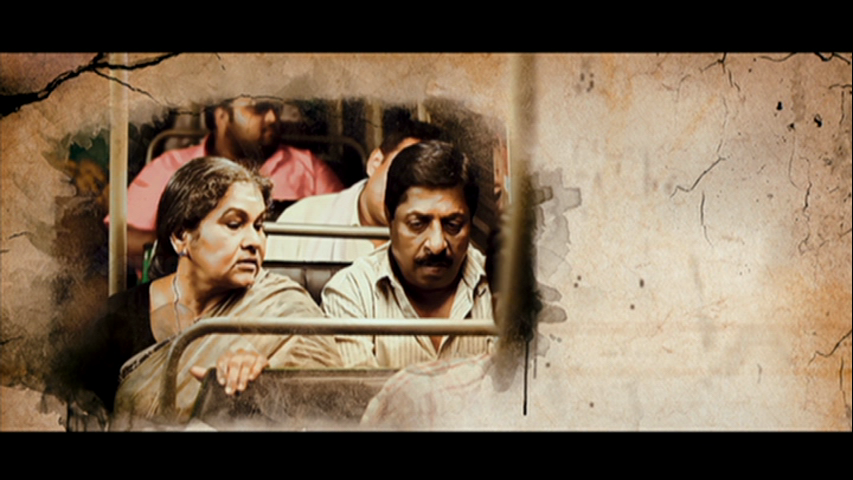
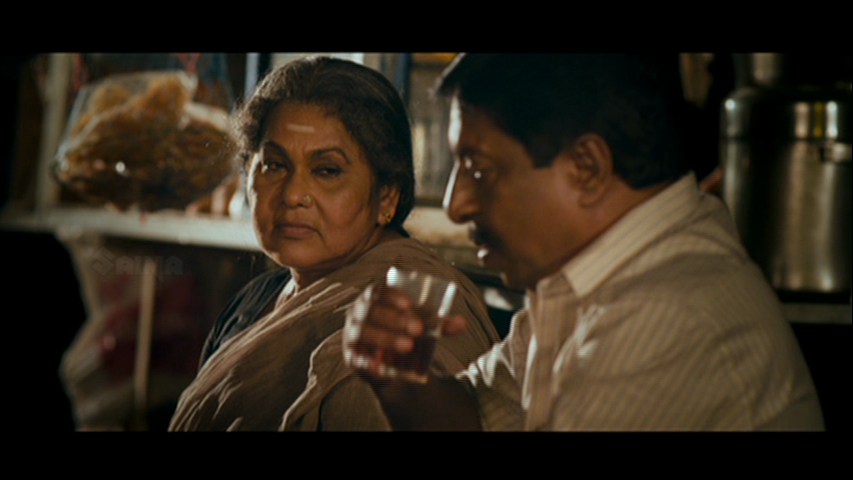
The second chapter tells the story of Sethu (Sreenivasan) and his bus trip to hospital to see his son.  On the way he meets an older woman, played by K.P.A.C. Lalitha, who is also on the way to visit her son, although her story is a little different.  This chapter is short and only seems to provide the background information to set up the last two, however the characters capture interest in their stories and it’s an improvement  after the slow beginning.   We never find out the older lady’s name or anything much else about her, but she is a reminder that there are many stories out there and we only see a small portion of each.  Although not much time is spent with Sethu there is a better sense of his life, his dreams and his problems, which makes his chapter more compelling.  Both Sreenivasan and K.P.A.C.Lalitha are excellent in their roles and as the camera concentrates on their faces while they chat on the bus, more is said by their facial expressions and demeanour than by their words. Maybe it’s a result of these roles being played by more seasoned actors but these characters have more rapport and more of a connection than the others in the story.
Chapter 3Chapters

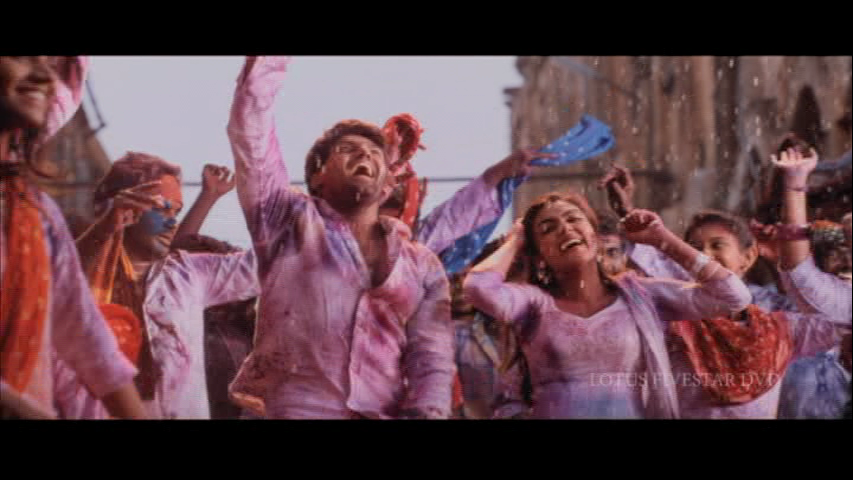
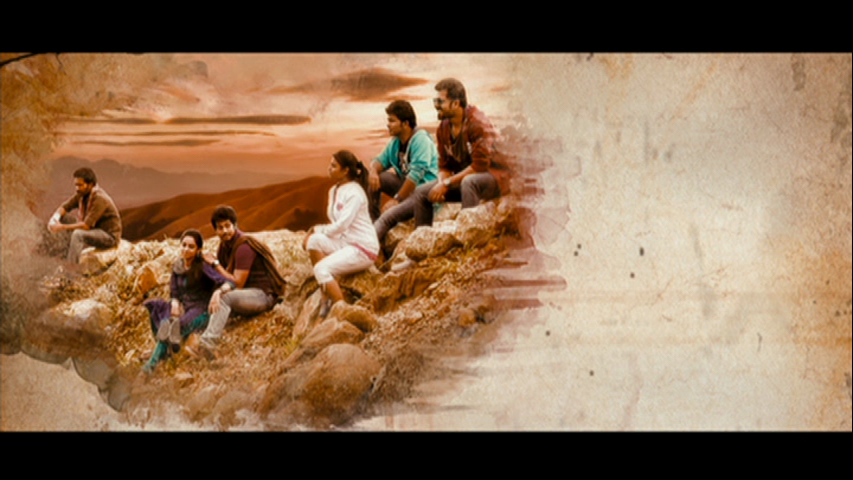
The third chapter tells of an elopement orchestrated by Arun (Vineeth Kumar), Kaanu (Aju Varghese) and Jincy (Riya Saira) for their friends Priya (Gauthami Nair) and Shyam (Rejith Menon).  Arun brings along his friend Choonda (Shine), whom he introduces as a goonda, just in case they run into difficulties and need some muscle.  This is the most interesting story and there is attention to detail in the narrative, although again it suffers a little from lack of development of the various relationships. The obvious outsider in the group is Choonda and Shiny fits well into the role, while the rapport between the others helps to make later events more shocking.  Most of the action focuses on Arun, Shyam and Choonda, while the others have a more peripheral role in the proceedings.  However this lack of depth works here as the friendship theme is only the background reason for these people to be in a particular place at a particular time, allowing them to interconnect with the other characters in the preceding chapters.  More action and a sense of the different connections also help to make this the most appealing of the stories.  This chapter also has a love song which helps to develop the different relationships and as a bonus it features possibly the oddest pen holder I’ve ever seen!

Chapters

Each chapter recounts two particular days from different points of view, which add up to provide the full story.  There are a number of ways to bring this type of film together – one is by driving interest in one or more of the characters and their interconnecting relationships, but here there isn’t enough detail in most of the characters to feel any real rapport.  Another option is to take a piece of action and split it into the component parts, which is more the emphasis here.  Ibrahim doesn’t quite manage to pull it off though, which is mainly due to the slow beginning which doesn’t engage as much as the later chapters.  However once the story does pick up, there is enough interest generated in Sethu and the friends in the third chapter to make a more engaging and interesting film.  Making the first chapter as detailed as the rest would have definitely made this a better film.  As it is, the lack of consequence for the main character in the first section was somehow disappointing, particularly since everyone else seemed to have learned something from their experiences.  However, the actors are all well cast and feel genuine in their roles.  As in most Malayalam films, the cinematography by Krish Kymal is  excellent and the graphics between each chapter are beautifully done and capture the characters in defining moments.    There are two songs and both are used to develop the story, but I didn’t feel either was necessary and they didn’t really add anything more to the film.  Chapters is an interesting début and certainly merits a watch for a different approach to a multi-linear film and in particular good performances from Sreenivasan and the young actors in the third chapter . 3 ½ stars.
Bhairava Dweepam

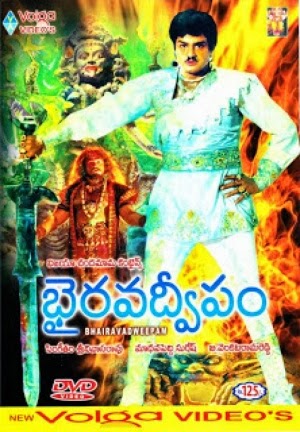
Bhairava Dweepam DVD

Released in 1994, Bhairava Dweepam is a lavish lolly coloured Telugu folk tale. Writer/director Singeetham Srinivasa Rao picked up a couple of awards and the film was both a commercial and critical success. Although I found it quite entertaining, there are a few things I couldn’t help but compare unfavourably with other similar films.

Bhairava-Dweepam-Vasundhara is rejected

The story is easy to follow, which was handy as I haven’t been able to find subtitles. Vasundhara (K.R Vijaya) had a baby, probably out of wedlock but certainly not to the liking of the royal family. When she takes her son to the prince, the father in question, she is turfed out into the stormy night. She has an accident in her small unstable boat and mother and child are separated. Vasundhara is taken in by a kindly hermit who also creates a magical (poorly trimmed fabric) flower that will thrive as long as her son is also alive.

The boy is adopted by a village leader and grows up to be Vijay (Balakrishna). The people rejoiced – except that baby in yellow. Vijay and his sidekick or adopted brother, (Mohan Babu), are out and about doing what boys in folktales do when they spy Padma (Roja). Vijay is instantly smitten and sets about finding his way into the palace to spend more time with her. Unbeknownst to Padma, an evil magician also has his sights set on her. Padma is rendered seriously ill by a spell and Vijay searches for a cure. Along the way he meets his mother but they don’t yet realise their connection. She gives him a protective amulet which comes in very handy. He discovers the nefarious plot and after much travail, confronts Bhairava to set things to rights.

The story is very similar to the gorgeous 1951 film, Patala Bhairavi. And that is where the comparisons start. Where Patala Bhairavi was stunning and NTR was effortlessly charismatic, Bhairava Dweepam is a bit less magical and Balakrishna is more workmanlike in constructing his performance. The special effects in 1994 have not moved on all that much from 1951. I did wonder what my 1994 self would have thought, but in 1994 I had already seen films like Ridley Scott’s Legend (1985). While there were some things about Legend I don’t care for (Tom Cruise for starters), it did look like a magical fairytale and the unicorns are beautiful. Compare and contrast these approaches to prosthetic horse makeup.

While I appreciate the spirit of making do, even if it does result in a grumpy looking horse with feathers stuck on, I was left a little underwhelmed. It was a mixed bag and often more amusing than enchanting.

There are other sequences involving a two headed rubber chicken dragon attacking the flying bed used to whisk Padma to the villain’s cave, some tiny miniature people who help Vijay obtain a magical necklace, a mirror monster in a peekaboo green rubber suit and so much more. It is kind of great but not really good. Ajooba-esque, perhaps. And there are some horse stunts that look horrible. One scene involved Vijay using a stick to trip horses, and not all of them looked like they were going to get up. I deducted Hero points from Vijay on seeing that tactic.

Balakrishna works harder than anyone else in the cast. Vijay is in almost every scene and usually throwing himself into a duel or bounding about rescuing the princess so this is a physically demanding role. If Balakrishna had been paid per leap he would have cleaned up. Vijay helps or liberates a number of magical beings along the way, and they give him valuable assistance in his quest. Balakrishna certainly has the confident swagger down pat even if his dancing is less than impressive. But making a film that is so similar to one of NTR’s acclaimed roles and trying to replicate his style is a big ask. I thought the same when I watched Sri Rama Rajyam. There is nothing wrong with his performance, but he doesn’t have the same expressive quality or panache and so comes off as less engaging. Tarak (NTR Jr) seems to take a slightly different tack by paying a tribute to his grandfather in his films but not trying to mimic him as closely. That allows for more individuality and he has developed a kind of everyman hero persona (with phenomenal dancing skills). Balakrishna is more closely tied to the legacy and so I find it hard to appreciate him as an individual actor, at least based on the handful of his films I’ve seen. Plus he will always be This Guy to me.

Roja is the love interest, Padma Devi. Padma is your standard damsel in occasional distress. She does nothing other than look sparkly, frolic with her handmaidens and wait to be rescued from Certain Death. Roja is pretty and lively, and she handles the numerous songs and dances easily. But I think she would have spent more time in hair and makeup than having to learn her few lines. I did wonder why, since Bhairava required a virgin for his spell, no one thought about how Padma could disqualify herself.

The supporting cast are all good without being outstanding. Rambha has one of the big musical numbers as Yakshini, the owner of both magical necklace and green mirror monster. Giri Babu and Subhalekha  Sudhakar play scheming brothers (and Vijay’s relatives) who not only depose their own father but have their eye on Padma’s kingdom as well.

K.R Vijaya is good as Vasundhara and she does get a couple of quite dramatic scenes, including a classic Nahiin Face Off with Balakrishna.

The design department certainly went for it. Their philosophy could be summed up as ‘all the colours, all the time’. Vijay has an extensive wardrobe of gaudy leggings and tunics, nicely accessorised with an array of ornate boots and matching wristbands. I was particularly impressed with the outfit that had canary boots to match the yellow terry-towelling trim and headband. Perfect for the active hero! Roja is very glittery, as are her attendants. Bhairava’s island cave lair is more impressive from the outside but he does have more than the usual number of talking statues so that was something. There are comedy demons that help Vijay, and they look like something straight out of the kindergarten dress up box.

Bhairava Dweepam is entertaining enough, but having seen it twice now I don’t think I’d invest the time on watching it again. See it for a relatively recent take on the folkloric blockbuster and for the sheer energy and enthusiasm of the cast. 3 stars! (But if you’re a diehard fan of Ajooba, add an extra star!)

Bhairava-Dweepam-Rabbit

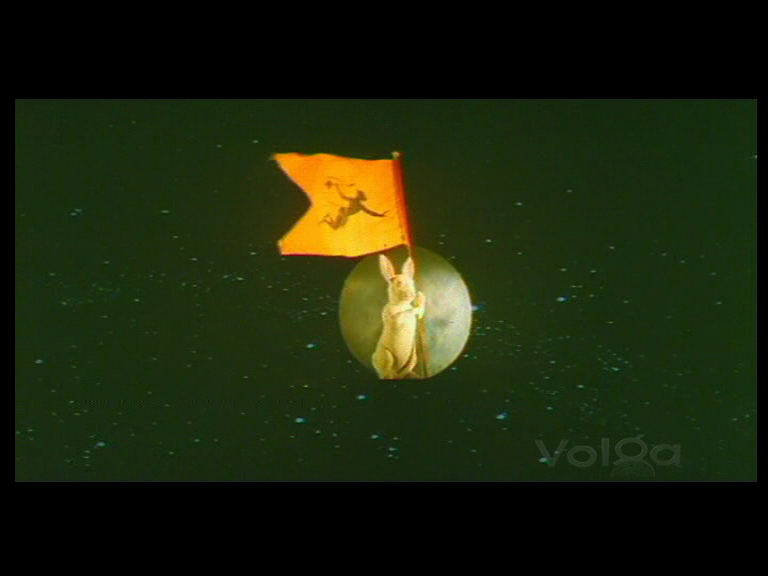
Also – I love this production house emblem.

Raja Rani (2013)

Raja Rani

I didn’t manage to see this in the cinema in Melbourne, but did manage to get a DVD copy with English subtitles.  Rather strangely it was also the only film they had on the bus in Tamil Nadu this year and I ended up watching the opening scenes over 10 times on the way to various villages in TN.  This added exposure gave me enough time to appreciate just how outlandish Nayanthara’s make-up looks, and just how uncomfortable Arya appears in his suit at the opening wedding which is a good precursor to how their relationship develops. In fact, the lead couple are rather uninspiring throughout this film – at least when paired with each other – but thankfully co-stars Jai, Santhanam and Nazriya Nazim are more appealing and their presence does make Raja Rani worth a one-time watch.

Raja RaniRaja Rani


The story starts with the arranged marriage of Regina (Nayanthara) and John (Arya) who are going through the matrimonial motions for the sake of their respective families.  Or so we are told.  Except as the film progresses this wedding seems to make less and less sense.  The couple obviously dislike each other and I cannot see why Regina’s relatively wealthy and cosmopolitan father would agree to marry her to someone like John.  He seems to have neither the requisite high flying job nor appropriate family background for such a match.  However, as completely random as it seems, and despite the lack of any reasonable explanation the wedding goes ahead even with the bride forgetting her prospective partner’s name and both parties complete lack of enthusiasm throughout the ceremony.

Raja RaniRaja RaniRaja RaniRaja Rani


It’s a match that seems doomed to end in divorce.  John spends his days at work and his nights drinking with his friends before returning home, usually to a locked door.  Regina hogs the bathroom, sobs into her pillow at night and generally ignores her husband as much as she can.  It all feels very unrealistic and overly dramatic – after all there is a large couch in the other room where Regina could sleep if she wanted, and surely John could organise a key to their apartment rather than sleep on the doorstep?  All the OTT drama makes it difficult to care about either John or Regina since they are equally obnoxious to each other, and I really had little interest in their relationship.  That’s not to say that Arya and Nayanthara are particularly terrible, but all Arya has to do in the first half hour is pretend to be drunk while Nayanthara doesn’t stop crying or complaining long enough to do anything remotely interesting either.

Thankfully there is relief in sight, but until we get there Santhanam lightens the atmosphere and is mildly amusing as John’s best friend Sarathy.

Finally there is an incident which prompts John to find out a little more about his wife.  There is some very dodgy medicine on display as Regina has an epileptic fit while her husband seems totally incapable of any sensible reaction, although he does eventually manage to call an ambulance.  Needless to say, despite all the thrashing around and foaming at the mouth (sigh – when will Tamil cinema consult a doctor for some plausible medical problems?) Regina manages to come through the whole episode with her make-up and eyelashes intact. That’s a relief!

Raja RaniRaja Rani


However, after being berated by her doctor for not knowing anything about his wife’s condition, John does discover the reason behind her ‘illness’.  Lost love – of course!

The film gets much better when we head to a flash-back to Regina’s first love, although to be fair this doesn’t have the best of beginnings either.  Jai is excellent as love interest Surya, an incompetent call centre employee, and finally there are some real emotions and reasons to empathise with one of the characters.  Regina is as obnoxious as before, but the role of spoilt rich brat suits her better when she’s a student and she does seem to be more tongue in cheek with her tantrums.  Sathyan makes an appearance as Surya’s friend Iyappan and his comedy shtick complements Jai’s weedy persona well enough to make a reasonably funny duo. Although the romance is typically filmy there is some chemistry between the two actors and while we can see the unhappy ending coming, Regina never does and is devastated by losing her first love.

Raja RaniRaja Rani


It turns out that John has his own sob story, and although it’s another predictable run of the mill tale, again it’s a more believable romance with good chemistry between the actors.  In particular Nazriya Nazim is scintillating as Keerthana and she is the best thing about the whole film.  She has an excellent introduction and her cheeky impishness lights up the screen whenever she appears.  She has much more personality and is much livelier than in Naiyaandi, which just goes to show the difference between a well written character and one that basically isn’t!

Raja RaniRaja Rani


Arya is also transformed into a younger, fitter John who is more personable and likeable, and again there is some reasonable chemistry between him and Keerthana.  It’s not all good though – Santhanam suffers under the burden of some terribly bad hair which seems to make him more pathetic and less amusing than in the first half, but it works out for the best as Nazriya has the comedy covered too.

The main problem I have with Raja Rani is that the relationship between John and Regina never generates any appeal or gives an opportunity to feel sympathetic towards the characters.  There are some interesting issues brought up  here but they are dealt with in a shallow and filmi way which results in a lack of connection between the characters and the audience.  There is no apparent reason for the couple’s actions towards each other, considering that they don’t appear to have met before the wedding, and it seems strange that they would behave so badly to each other right from the start.  The concept of an arranged marriage between two people who have both lost their first love has potential but Atlee wastes it by playing the relationship for laughs and never giving his characters a chance to behave like rational adults.  I found it incredibly frustrating to watch  Arya and Nayanthara appear so wooden and lifeless for most of their on-screen time together, when the difference was so obvious when Arya was partnered with Nazriya and Nayanthara with Jai.  A little more time spent on developing the relationship between Regina and John at the beginning along with a more adult treatment of their problems would have made this a more entertaining watch.  However I did enjoy seeing a better performance from Nazriya and I liked the idea behind the film, even if the execution didn’t quite live up to expectations.  3 ½ stars.Raja Rani