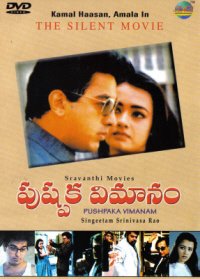
Pushpak

Although made in 1987, Pushpak is a silent film with no dialogue. However there is background noise and a very funky soundtrack. Presumably inspired by the early silent films from the start of the last century, director Singeetham Srinivasa Rao has included plenty of situational and physical comedy but Pushpak manages to be a compelling, if somewhat moralistic drama at the same time.

The story centres on an unemployed graduate played by Kamal Hassan. He lives in a one-roomed apartment on the roof of his building, and spends his days wandering around the streets unsuccessfully looking for work. By chance, he comes across an alcoholic millionaire (Sameer Khakhar) lying at the side of the road and recognises him from an earlier encounter near the Hotel Pushpak.
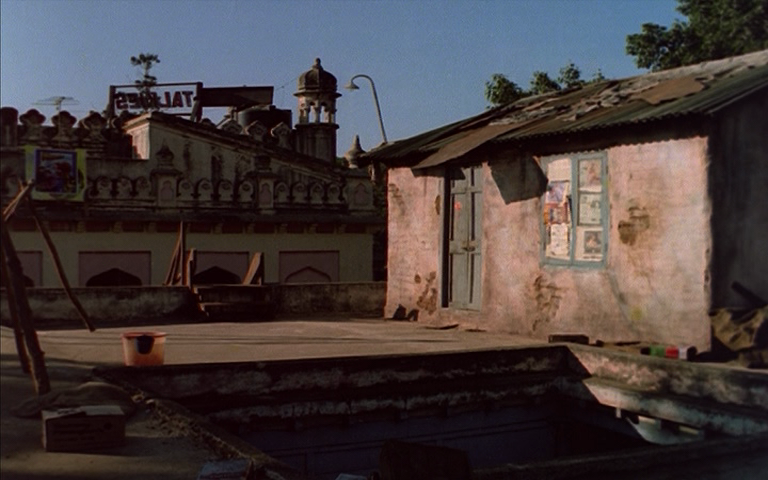
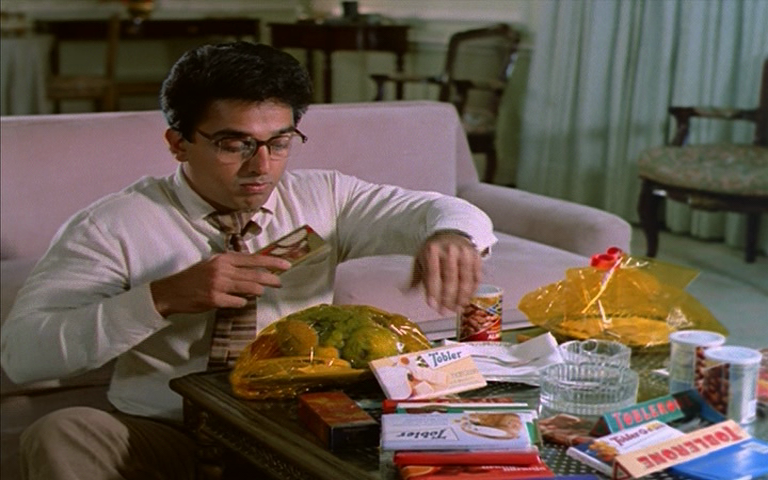
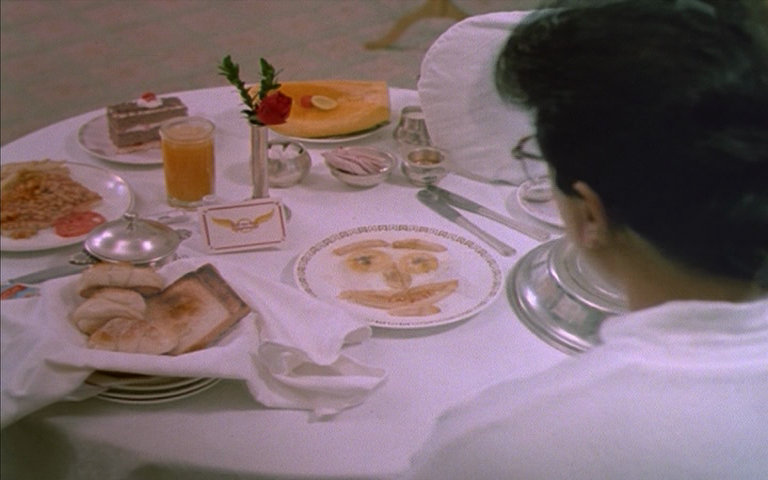
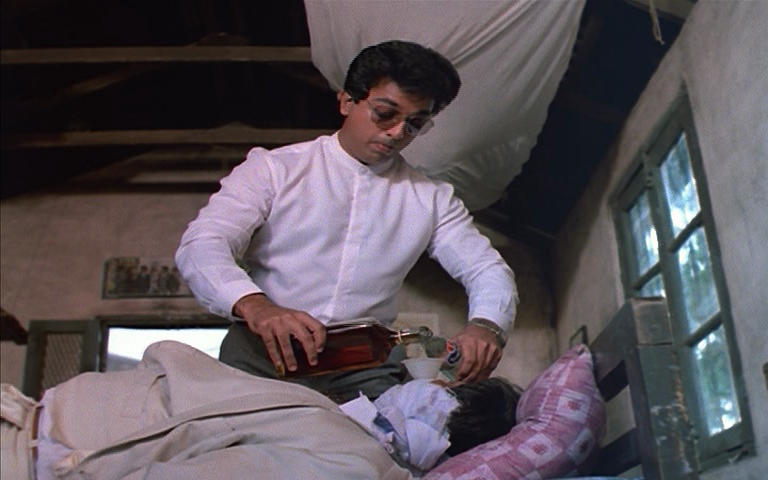
Kamal Hassan decides to kidnap the unfortunate millionaire and carries him back to his meagre apartment where he restrains and gags the unconscious man (although he does thoughtfully turn on the fan), and then heads off to Hotel Pushpak where he assumes the millionaires identity. He sleeps in the millionaire’s room, eats his food and uses his cash to buy smart new clothes. Kamal Hassan is perfect in his indecision as he tries bread sticks, then some nuts and finally cannot decide which chocolate bar to eat – too much choice for someone who has been used to no choice at all. And I love the way they serve breakfast in the hotel.
Clever shots of photographs in both the hotel room and the millionaire’s home allow us to identify the millionaire’s wife, to whom he appears devoted and the millionaire’s best friend, who appears to be devoted to the millionaire’s wife. The two are having an affair and we learn that the best friend has hired an assassin to get rid of the husband for good.

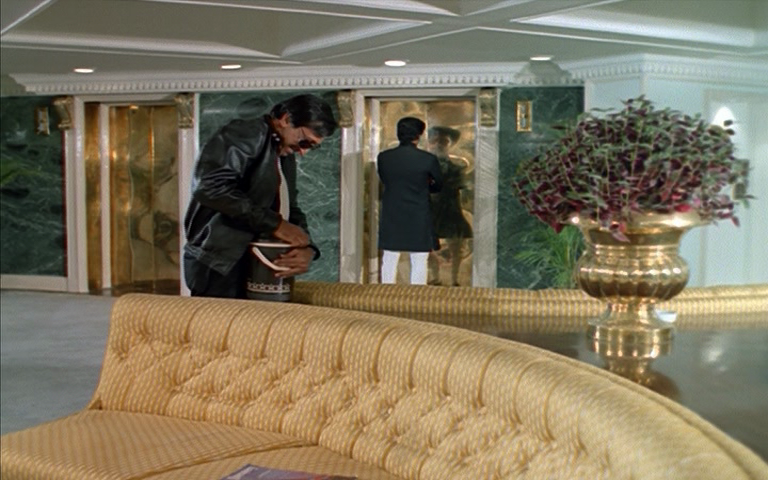
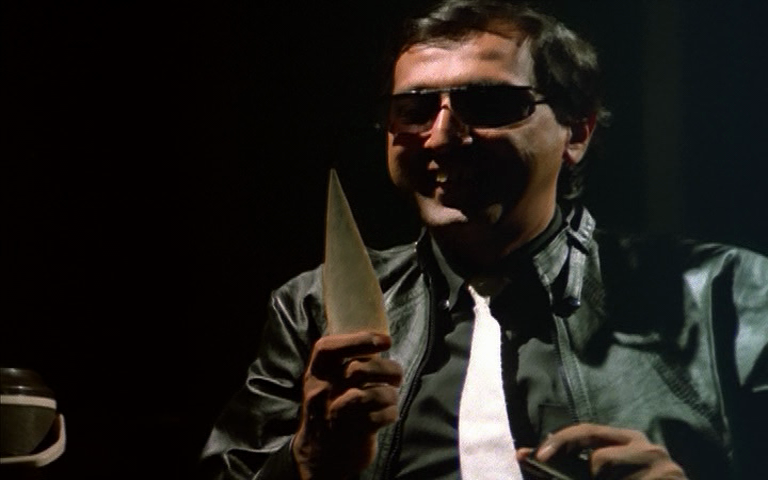
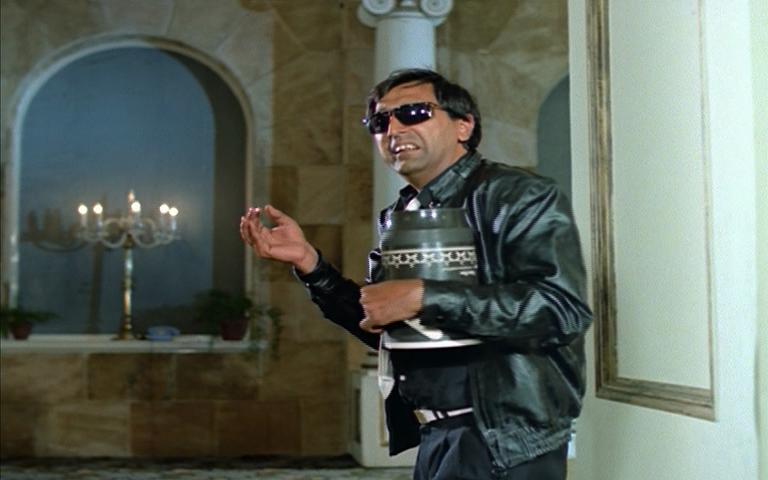
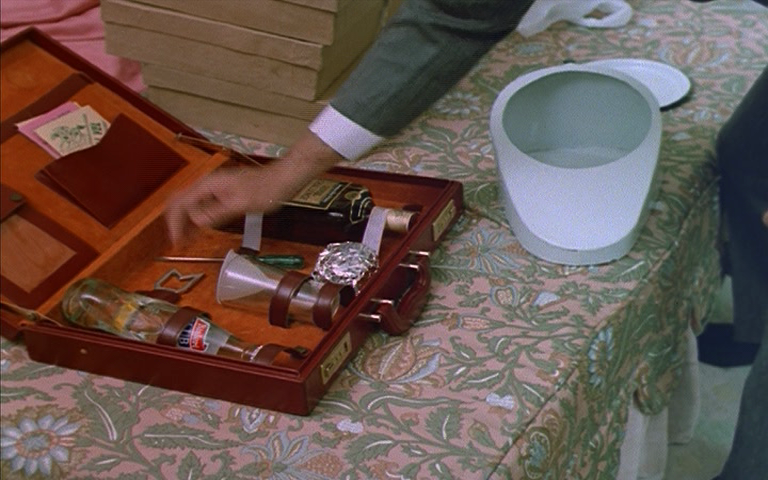
The role of the assassin is played by Tinnu Anand who throws himself into the role and seems to have a great time stalking his target. However as he has only the hotel name and room number, he clearly doesn’t know that he is attempting to kill the wrong man. His weapon of choice is a throwing dagger made of ice which he carries around in an ice bucket (of course!). His efforts to remove the lid of the ice bucket, pull the ice dagger from the mould and then throw and hit his target are wonderfully inept leaving me wondering why he didn’t just bring one of his large collection of guns along as a back-up plan. The daggers also seem rather friable although they work well enough in the dummy he has brought along to the hotel room in order to practice his technique.
Added in to all this farce, there is a rather sweet romance which develops between Kamal Hassan and the hotel magician’s daughter, beautifully played by Amala. The film builds to a moralistic but somewhat poignant ending where everyone appears to have learned that money cannot buy everything and that there is more to life than wealth.

Of necessity the acting in a silent film has to be more obvious when there is no dialogue to explain the reasons behind people’s actions. However the various characters here are explained by a few simple scenes which give a clear understanding of their personality and there isn’t really any heavy-handed overacting by the lead actors. As with many of the early silent films there is a high reliance on slap-stick humour and most of this involves the efforts by Kamal Hassan to keep his prisoner quietly hidden and the assassin’s attempts on Kamal Hassan’s life. There is a lot of toilet humour as Kamal Hassan goes to rather detailed lengths to make sure his prisoner is relatively comfortable throughout his captivity and there is perhaps a little too much detail for it to be really funny. Rather, I was impressed by the ingenuity shown in the ‘waste disposal’ plan, although perhaps this is to be expected in a college graduate.
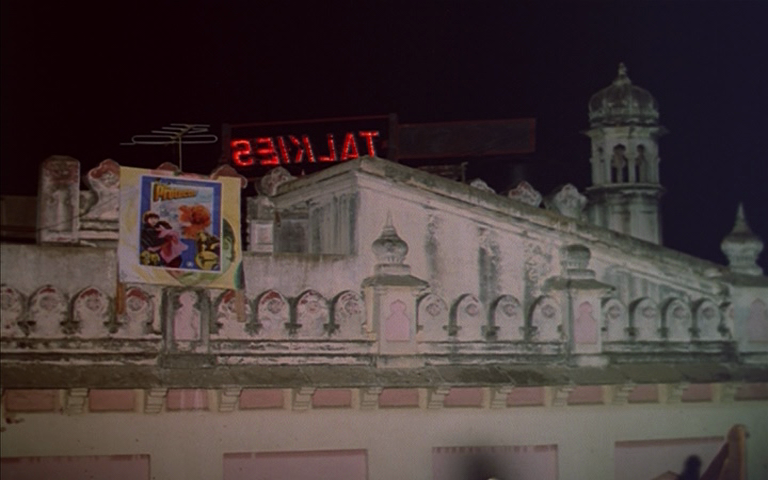
Where the film works best is in the small details. For example the large sign on top of the adjacent cinema which reads ‘Talkies’, and Kamal Hassan flexing his muscles with a Rambo poster in the background above. One of the standout moments in the film is the intricate choreography enacted as a number of building residents vie for the bathrooms in the morning.  
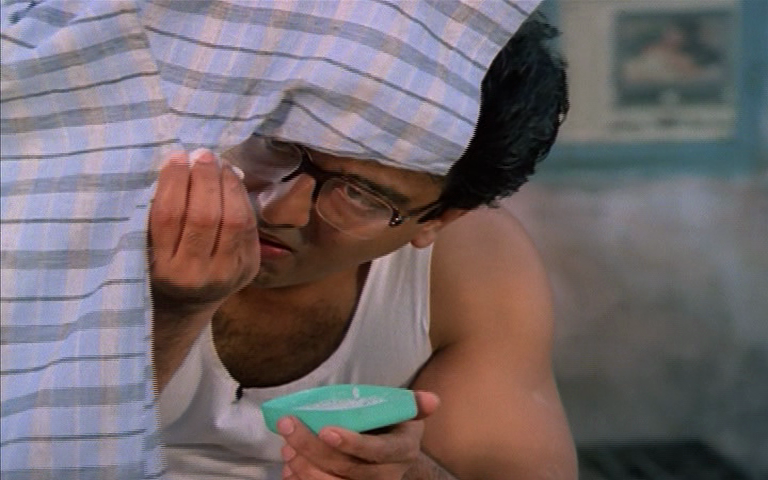
The opening scenes of the film give a snapshot view into the lives of the various residents of the building and also show the type of man Kamal Hassan is. He is not averse to spying on his neighbour as she fixes her sari, carefully washes only the underarms of the shirt he means to wear that day and tries to skip ahead in the employment lines. All these little traits allow us to build up the impression of a man who, when tempted, would possibly be amoral enough to kidnap a man and take over his life.

I also like that frequently there is a reason for there to be no dialogue as part of the storyline and this makes it easy to forget that it’s a silent film. The magician’s daughter and Kamal Hassan communicate by gestures across rooms and from balconies on opposite sides of the hotel as well as when she is onstage with her father, while the millionaire is both drunk and incoherent or gagged.
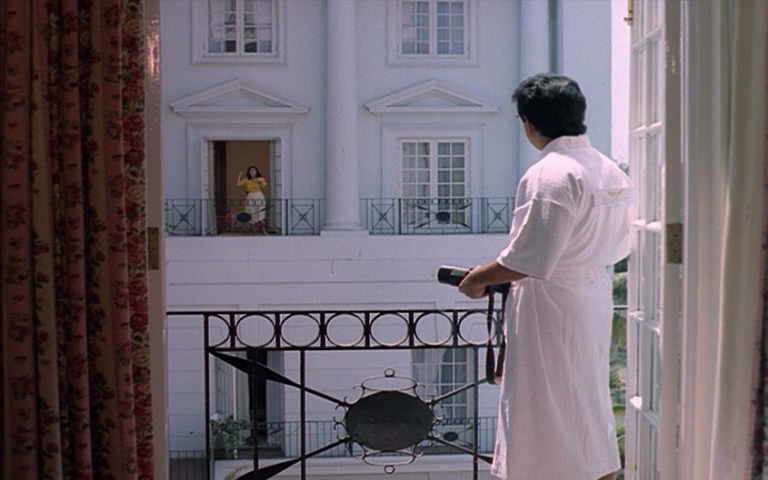
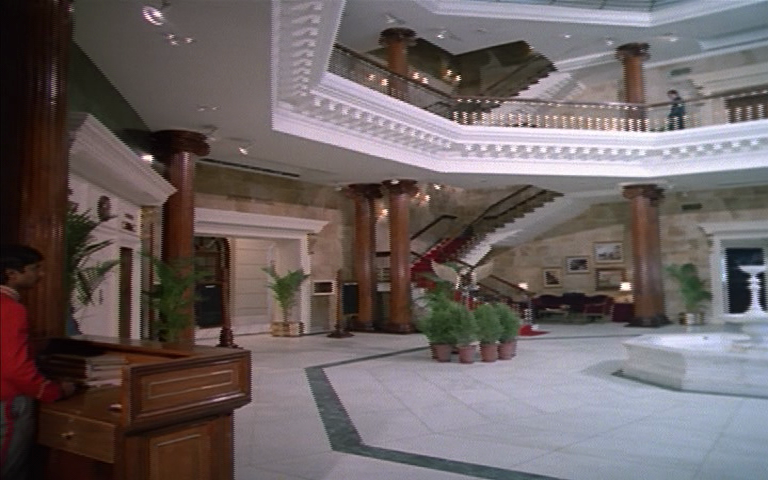
The film looks fantastic and the contrast between the two social worlds is reflected in the different lighting between the rooming house and the hotel. The hotel décor is lavish and there is plenty of attention to detail throughout. I kept wondering if the Windsor Manor Hotel in Bangalore where this was filmed still has all those huge lift lobbies and chandeliers as it looks amazing.

The hotel logo of a circle and wings recurs a number of times, and I agree with other opinions that it is meant to represent dreams and wishes. When an ice-cream is dropped on the ground, it’s Kamal Hassan’s shadow that we see reaching out for the treat, and again it’s fallen right in the middle of the shadow of the hotel symbol. I think that his inner feelings are very well represented in this way.
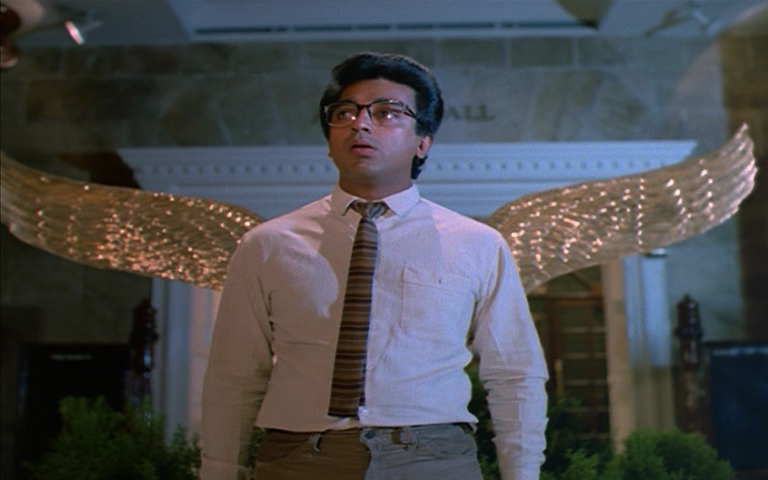
Much is also made of the death of a beggar, who actually has much more money than the unemployed Kamal Hassan, but whose corpse is unceremoniously dumped at the side of the road when his stash is revealed and everyone fights to get a share. This is also contrasted with the death of the hotel owner who has a parade of people who come to mourn him, but their grief isn’t all genuine either. Just in case Kamal Hassan was slow to get the message about money not buying happiness, Amala turns down his offers of clothes and household white goods (yes really!) when he takes her shopping, and asks for a wild flower growing on a ruined building instead.
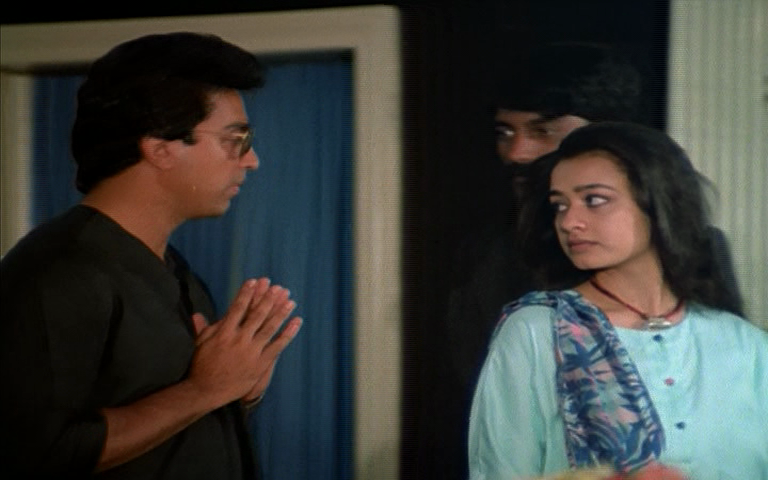
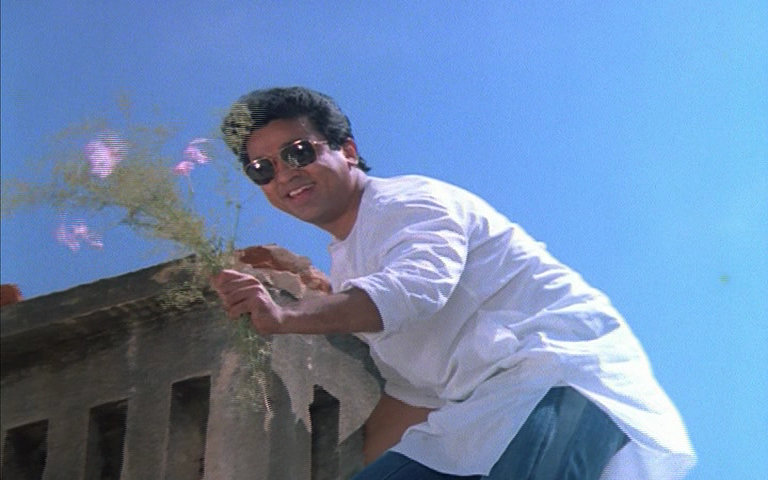
Kamal Hassan is excellent in his portrayal of the unemployed and perpetually unsuccessful graduate, as he manages to express so much very simply without words. His economies with toothpaste and washing powder initially made me a little more sympathetic towards his character and although his treatment of the millionaire was terrible, it was all made a little more believable by the amount of detail shown in the scenes where he was looking after his prisoner.  Amala was beautiful as the magician’s daughter, although as usual for a Tamil heroine, she didn’t really have much to do. She was the moral compass for Kamal Hassan and as such played her role perfectly. Both Tinnu Anand and K. S Ramesh as the magician looked to be having the time of their lives in their roles and I suspect they spent a lot of their time laughing about what they were actually getting to do on-screen.

I do have a few small issues with the film even though overall I think it’s an entertaining watch.  The story is really quite simplistic and without dialogue it occasionally feels like a collection of very good ‘moments’ all strung together with some unnecessarily long repetitive comedic scenes. These don’t really add anything to the story or to my understanding of the characters and tend to just be irritating instead. The long scene where Kamal Hasan dresses up as a hotel employee to give the magician’s daughter some earrings could very easily have been skipped for example. In contrast the inept assassin and the magician scenes are funny and well handled. I also think that keeping someone tied up and insensible with alcohol does seem very extreme and it’s very unlikely that the millionaire would just go home without contacting the police. Especially in this instance where he had evidence that the whole experience wasn’t just an alcohol induced dream. And really while money may not buy you happiness, it certainly can buy comfort which is not to be sneezed at – the overly moral tone in parts was a little overbearing. But there are so many good things about this film that I can ignore these little irritations and just appreciate the acting skills that bring this silent movie to vibrant life. It’s an interesting and quite unusual film and I think that Singeetham Srinivasa Rao and Kamal Hassan deserve praise for attempting something so very different and managing to pull it off in such style. 4 stars.
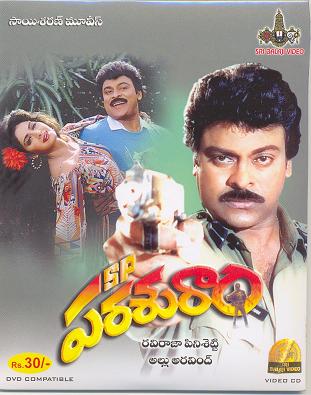

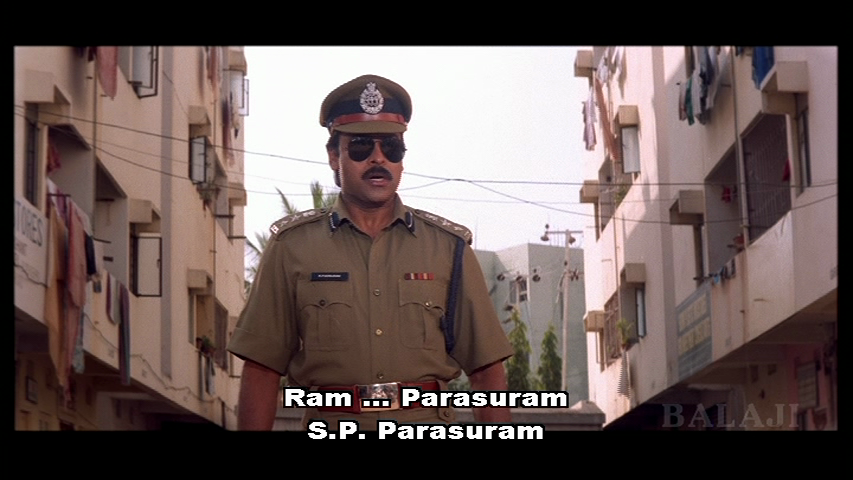
SP Parasuram

My DVD collection has grown more through whim and serendipity than any clear acquisition strategy, and I don’t always come up with gold. This is not a quality film. It probably should be something I refer to as a guilty pleasure, but I feel no guilt! I just love it for its stars, the songs, the outfits, the action, the insane plot twists and the sheer style.

The villain of the piece (played by Sharat Saxena) makes, of all things, snuff films. I really wasn’t expecting that.

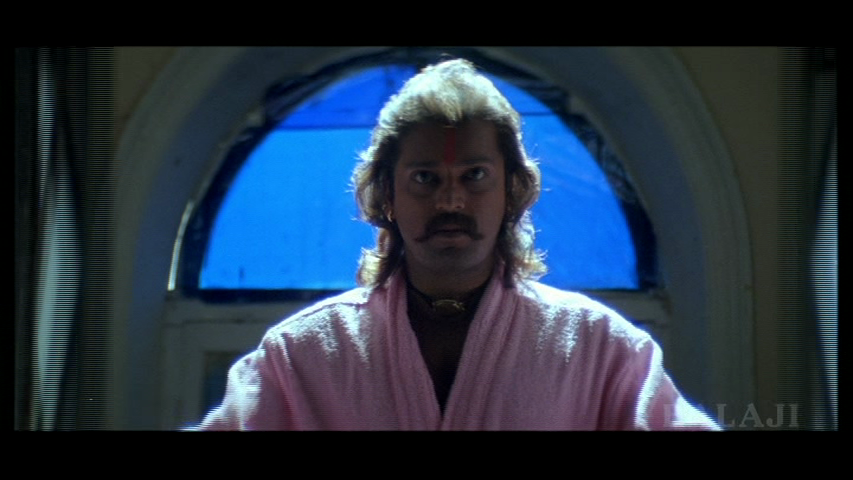
We have two girls drugged and abducted (one raped, both murdered), a confrontation between police and the murderer/rapist/blue film talent (Mahesh Anand seen  here in his fluffy pink dressing gown) and a further show down between SP Parasuram (Chiranjeevi) and Mahesh Anand resulting in the criminal being rendered comatose before the onlookers send Chiru on his way with a polite round of applause and he revs them up about social justice and eliminating corruption. That takes care of the first breathless 10 minutes. And the level of happenings rarely drops for the rest of the film.

SP Ram Parasuram is the righteous cop with a wicked temper, and our hero. Sri Devi is Kumari, a petty con artist and thief. When Kumari is arrested, she spins a colourful tale to escape her cell. Luckily for us, the design team were on fire when they came up with this!

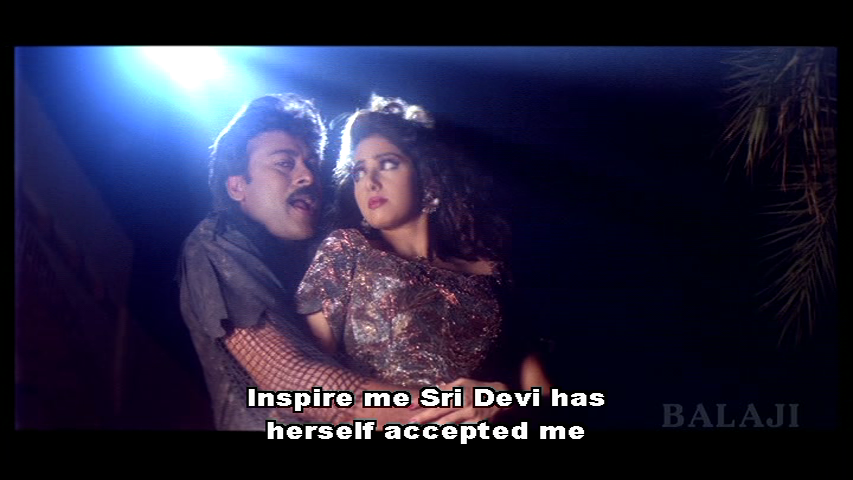
Ram lives with his father, brother and sister in a fabulously decorated mansion and seems to be the bossy one in the family. Kumari breaks in to steal from her persecutor, and perhaps to get an eyeful of this:

Her outfits are also quite eyecatching.

I love this song mostly because I get to see Chiru wearing a Koala print jumper. Maybe he was thinking about his Australian fan base or maybe it’s all the wardrobe guy could find.  The ankle boots, black socks and high baggy pants are not so pleasing, but it was the 90s…And Sri Devi didn’t fare any better.

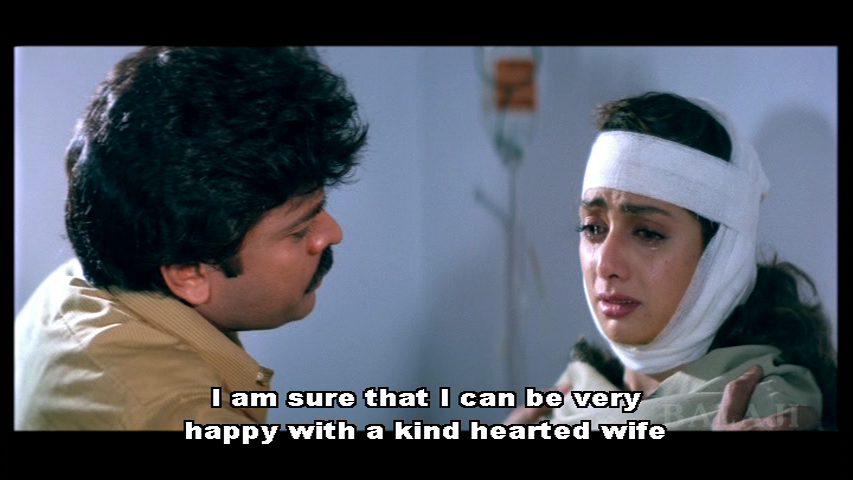
The romance and action intersect when the blue film gang kidnap Kumari who escapes and runs into the only man she can trust. She can identify the gang so there is a lot of interest in shutting her up. A murder attempt renders her blind and temporarily safe as a blind woman is not perceived as a threat. If only they knew as much as I do about incredible filmi medicine they wouldn’t be so sanguine! What with providing security and seeing her and her orphans, Chiru falls under Sri Devi’s spell and they marry. It’s a quick process, as she is still bandaged around her head on the wedding day.

There are double crosses and betrayals all over the place, and a hefty dollop of tension as characters come so close to their doom and yet don’t quite succumb. A corrupt subordinate with a grudge (Devaraj as the sleazy Rayappa) gains advancement and Ram has to put duty ahead of personal desire. His trials don’t end there, but our hero is indomitable, using his precise manners as a weapon. Chiru almost draws blood just with the word ‘Sir’. Circumstances are manipulated to humiliate and undermine him but Parasuram never falters in his dedication although his temper is put to the test. There is some joy in his life as his marriage to Kumari is clearly happy and loving. But joy can be turned to pain and of course the baddies have another shot at eliminating the one witness that could potentially destroy them.

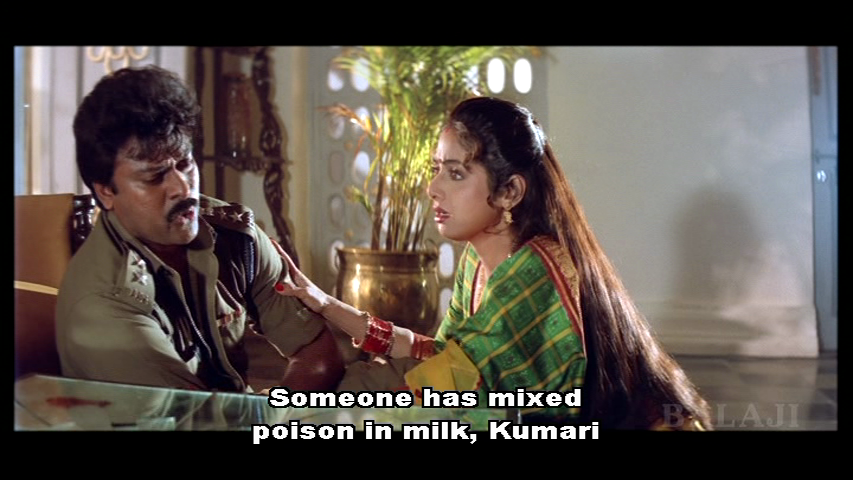
A poisoning attempt (spoiler – it’s unsuccessful), miraculous surgery and a the presence of a gang member in the household keep the drama dialled up to HIGH.

There is also a fabulous dishooming with a shoe when Parasuram is pushed too far. The final blood sweat and tear soaked bone-snapping showdown involves a runaway train and an impressive array of stuntmen flying through the air crying ‘Heeeaaaargh’. So much happens in this film!

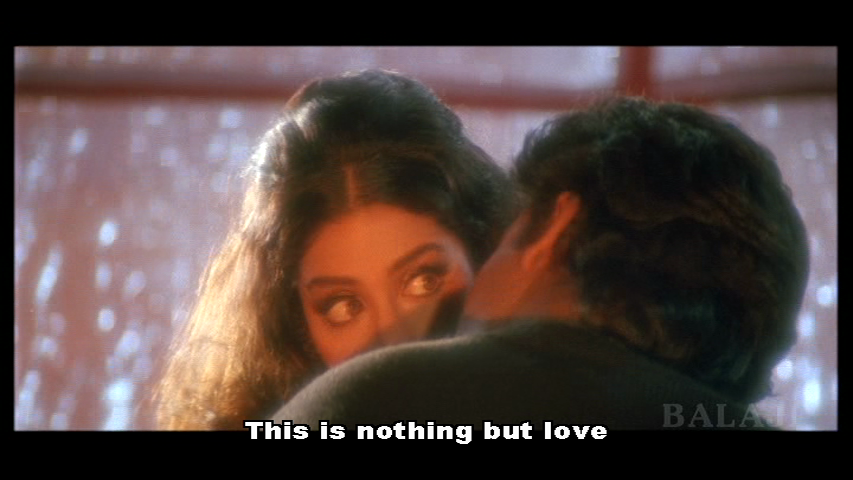
I love Chiranjeevi and Sri Devi so seeing them together is just wonderful. I have no idea if they got along in real life, but they make a beautiful screen couple. The songs look fabulous and they both have such verve in their dancing. The relationship between Parasuram and Kumari is very affectionate and warm, and they are a lot of fun in some of their romantic and domestic scenes. The Paruchuri brothers dialogues strike the right note for this couple. Chiru is just the perfect hero for this kind of film and once again he gives an energised and committed performance. He plays the dramatic scenes with authority but also dives into the silliness in the dance scenes with some outrageous flirting faces. Sri Devi does much more than sit around and look pretty as she also enacts some pivotal scenes. She has great expression in her face and body language and the emotional range of Kumari’s character gives her ample opportunity to show off all her skills. Her charisma more than stands up to Chiru’s and the story feels quite balanced and the characters more fleshed out for having two strong performers at the core.

Brahmi occupies an unnecessary comedy sideplot but doesn’t take up too much time that could be better spent. The supporting cast do the needful, and Devaraj was certainly successful in being sleazy and hateful. Allu Ramalingaiah has a small role as a comedy policeman, and makes an impression in a fun scene with Sri Devi. I’ve seen more of Mahesh Anand than I wanted to (you only got the screencap WITH the dressing gown) but he was very effective as a bad bad man.

The MM Keeravani soundtrack suits the mood and stands up to the onslaught of visual delights. The production values are all up there on screen in stars, sequins and stunts.

This is a film that requires you to strap yourself in and just go with it. I love it and give it 4 and ½ stars!

100% Love

I was hoping that 100% Love would be closer to the Sukumar of Arya 2 (one of my favourite films) than of Jagadam (not a favourite). It wasn’t quite up to that high standard but I still found lots to enjoy including one of the more likeable heroine roles I’ve seen recently.

Chaitanya, son of legend Nagarjuna, is Balu. Balu is a top student, and seems to get his results by bullying the rest of his household into following a routine that works for him. He is arrogant, emotionally immature and sulky. He sneaks cigarettes, berates his fellow students (I can’t really call them his friends) and his world revolves around himself. His cousin Mahalakshmi (Tamannah) comes to stay at the family home and goes to the same college. Initially just a scatterbrained teenage girl she struggles with classes and with her new domestic routine. She has a crush on Balu and doesn’t trouble to hide it from him. Over the first half of the film, Mahalakshmi adopts a punishing study regime imposed by Balu and grows in confidence and ability. The pair become rivals for the top spot, and collude to stop Ajit (Anand) from stealing Balu’s number one ranking. The plotting and scheming means they grow closer. Their feelings are obvious – or is it just an infatuation that will pass?

The question of infatuation versus love is raised over and over, and both characters grapple with the change in their relationship. Mahalakshmi loves her cousin but she has to adjust to his demanding personality, while he seems to be taken aback by his rebellious hormones. Balu dismisses her as a little girl with a crush and doesn’t take his own feelings towards Maha seriously either. Balu cannot deal with anyone outdoing him, and needs constant reassurance that he and only he is the greatest. When Mahalakshmi fails to give him the adulation he wants, and even worse shows admiration for Ajit, he demands that she leave his family home. Post interval, the story shifts to what happens after this rift. Will they get back together or each marry a new partner? Will Balu ever grow up? Things get complicated, and the story gets a little more dramatic but this never strays very far from standard rom-com territory.

Balu is one dimensional for much of the film, but Chaitanya manages to be appealing, adding small flourishes that make Balu more human. However Balu is so self-centred and joyless that the more light hearted moments don’t always fit. Style wise he is a sharp dressed young man which at first seemed at odds with the character, but as a typical overachiever he dedicates himself to also being top ranked with the ladies. Chaitanya’s performance develops more texture as the relationship with Mahalakshmi also deepens and Balu’s emotional range broadens. When the pair have to work together to avert a crisis, Balu falls back into his childish behaviour and it is up to Mahalakshmi to shake some sense into him. Chaitanya worked hard to make foolish Balu more sympathetic in the second half of the story with flickers of facial expression, subtle reactions and changes in the way he looked at his cousin. He seems to lack the physical confidence to really dominate the dance and fight sequences so those scenes were adequate but not noteworthy. For some unknown reason there was a huge cheer in the theatre every time he lit up a cigarette. Strange!

Tamanna is excellent. She captured the energy and body language of the young girl and showed maturity and confidence as time passed and Mahalakshmi became a young woman. Unlike the boys in the theatre I was a bit tired of seeing her navel, but she did look beautiful. And the belly button scenes weren’t sleazy voyeuristic shots, but often formed part of Maha’s plan to unsettle Balu so were played quite knowingly.  Initially Maha’s mannerisms were irritating and affected but those decreased as she grew up, adapted to college and found her feet. Her portrayal of love for Balu was convincing and the dramatic scenes were high on emotion but not overdone. She was full of light hearted happiness in the beginning, so when things went off the rails there was more contrast for Tamanna to work with and she excelled. I’ve only seen her in a couple of films and was really impressed by this performance.

The comedy is mostly integral to the story and so occasionally it is even amusing. Chaitanya and Tamannah had nice timing and they bounced dialogue back and forth with great pace and energy. The audience laughed uproariously throughout some speeches. Comedy uncle (Dharmavarapu Subramanyam) is instantly recognisable by his terrible wig, and MS Narayan heads the college. There are running jokes throughout the film – if you can’t stand the sight of fried chicken this is not the film for you! Another running gag is a funny yet bittersweet Shah Rukh/Kajol joke. There are also six wisecracking kids learning to be geniuses from Balu. They aren’t terrible but I’m not a fan of the cutesy child artists for the most part. It takes an exceptional child actor, probably only Master Titoo in his purple ruffly outfit accessorised with Shashi Kapoor, to make me not long for the DVD fast forward. The supporting cast seemed fine, but I gave them minimum attention as I was concentrating on the dialogue heavy main story. The visual effects are frequently clumsy so I did find them underwhelming.

The songs range from average (Aho Balu) to quirky (A Squared) to excellent (Diyalo Diyala) and Devi Sri Prasad matches the mood and characters well. The choreography is limited for both the leads, with no long shots or protracted sequences. Chaitanya looked like he was concentrating very hard on some steps but he didn’t hold back. Maybe he should book a stint at Bunny Boot Camp before the next film? The ANR and NTR tribute song was short but fun. The execution of the dance steps could have been a little more polished, but Tamanna always looked like she was having a great time. The songs generally fit the story, apart from Diyalo Diyala which I think had the story written to fit it but that was such a good call.

I enjoyed 100% Love more than I expected to. Tamannah stole the show so if you want to see a light romantic comedy with an engaging heroine, this might be just the ticket.