Sye

The first half of Sye is director SS Rajamouli’s take on West Side Story – except that instead of knives two rival college gangs fight it out on the rugby field in a reasonable facsimile of Rugby Union. There is romance but no Romeo and Juliet inspired tragedy and by the second half the film has morphed into a fairly standard sports film, underdogs and inspirational speech included. Sye is Rajamouli’s third film and was another hit, proving that no matter what the subject matter he manages to tell a good story.

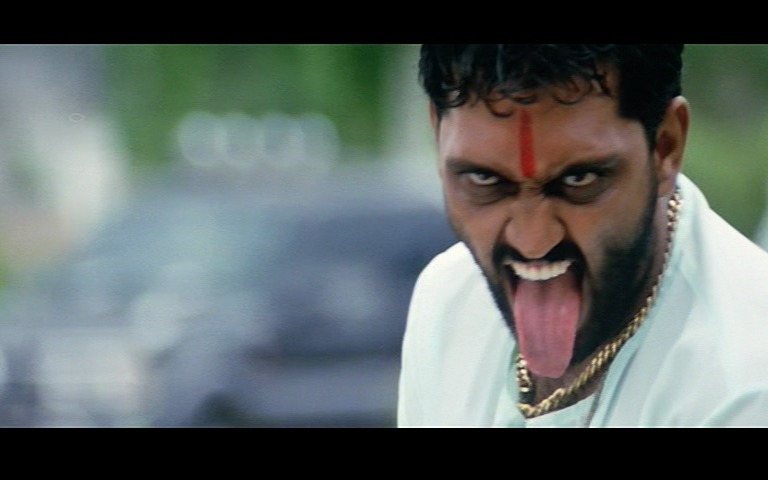
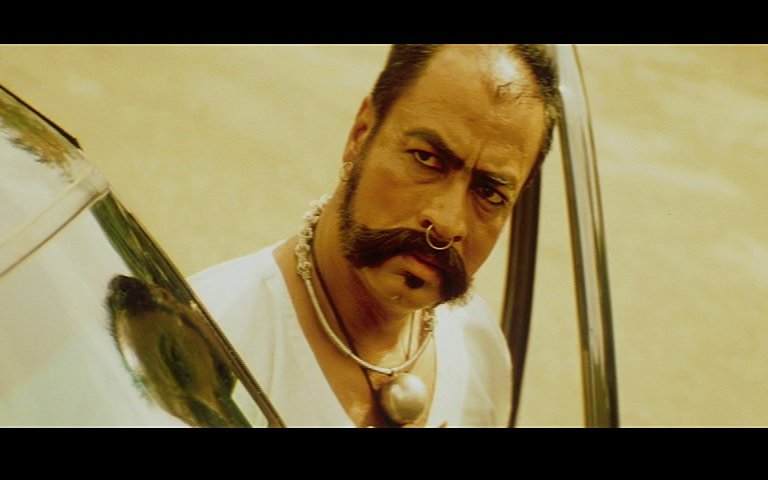
The film begins with a very violent over throw of local don Narayana by Bikshu Yadhav; the wonderfully evil Pradeep Rawat in totally over-the-top villain mode.  This all becomes very relevant later on, but initially seems quite disconnected from what follows. As a bonus though, there is Ajay as one of the gang.
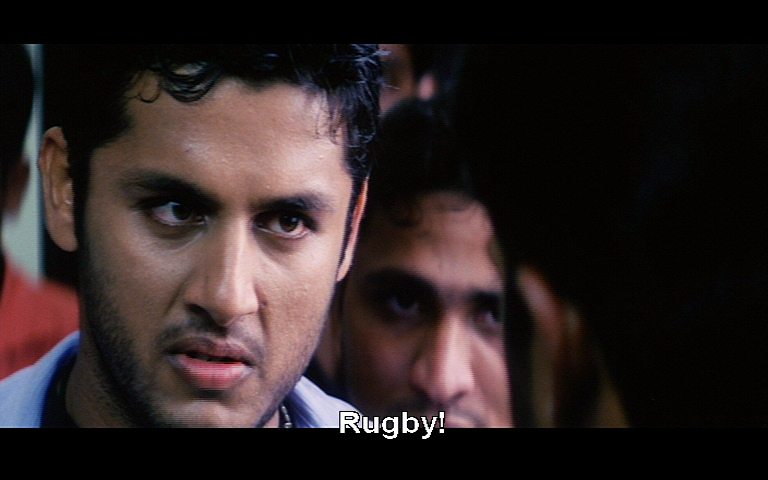
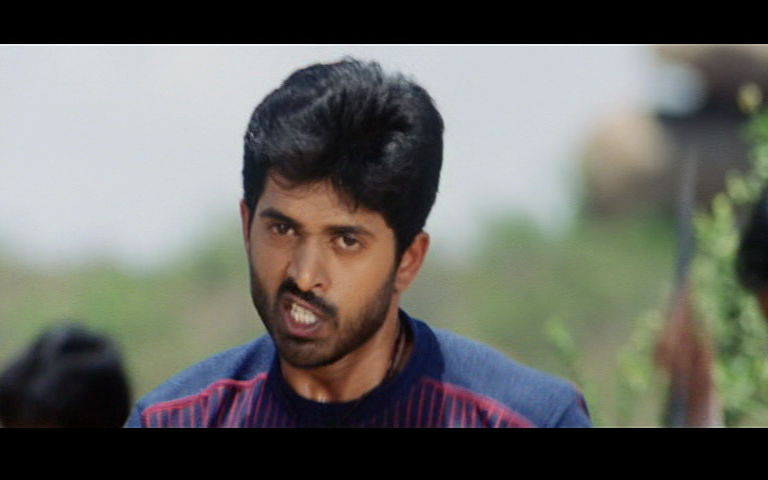
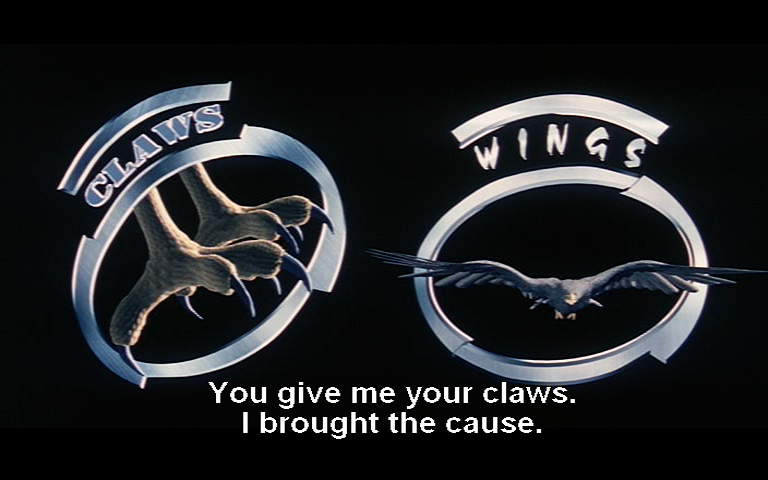
Next we move on to the MK College of Arts and Sciences or, as the film helpfully points out, Arts vs. Sciences. The college is split into two factions; one led by the son of the headmaster, Prithvi (Nitin)and the other by Shashank (Shashank). Science students have taken on the name of Wings and are self-confessed less disciplined than the Arts students: the Claws. I thought this was a little strange as most science students in my experience tend to be the nerdy conformist types – terrible generalisation I know but I was a science student which probably explains a lot! The hero Prithvi and his rival Shashank do a lot of taunting and grimacing at each other but there is very little actual violence – everything is settled on the rugby pitch.
Genelia plays Indu, an Arts student who acts as another point of contention between Prithvi and Shashank. Her introduction starts well enough as this rather cute song where the lyrics are made up of signs and posters Prithvi and Indu see along their route.

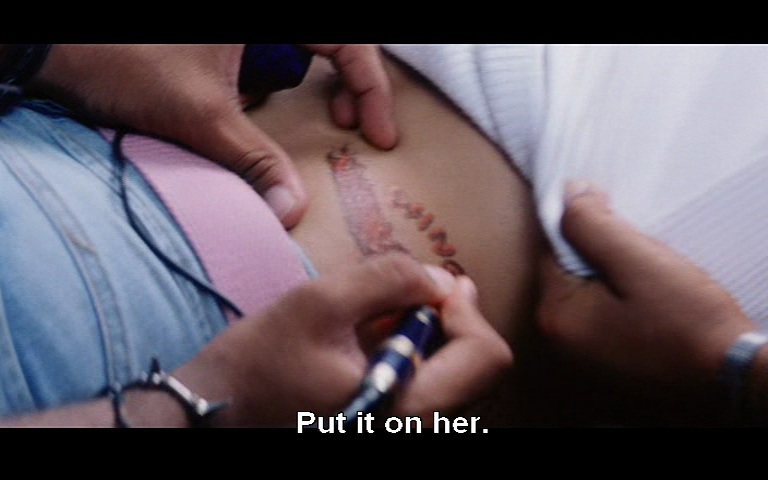
This pleasant introduction is totally ruined by the next scene which is probably the most ridiculous and stupid in the entire film. Getting onto the wrong bus, Indu is pursued and then forcibly tattooed by the rival Wings gang. Yes, tattooed! Never mind the difficulty of tattooing someone against their will when they are struggling, or that it would take more time than the few minutes shown to actual achieve such an intricate design, but then this act of outrage is NEVER MENTIONED AGAIN!!!! This really bothered me as I just couldn’t see that something as permanent and potentially disfiguring as a tattoo wouldn’t cause more of a reaction, but it didn’t seem to bother Indu much at all.
Moving quickly on, since everyone else in the film does, the two gangs take their rivalry onto the rugby field which is where I had my next ‘what the?’ moment. Now I’m a big fan of Rugby Union. It was the sport of choice for the guys at my school in Northern Ireland and I grew up watching the game. My husband also played for many years and it’s still my favourite sport, which was one of the reasons why I wanted to watch this film. But in all my years of watching Union games, I have never seen anything like the scoring system used here. Unless there is a strange form of the game in India (which I really do doubt), I suspect Rajamouli totally made it up. The rest of the game however did seem to mainly follow the usual rules and was fun to watch.

In another plot point that is never totally resolved, the headmaster Satyam pits the two gangs against each other to develop land behind the school as a rugby field, telling them that he will name the ground for whoever finishes first. They must have both finished together as the ground seems to end up as the MK Arts and Colleges ground. Despite Satyam’s good intentions, this accomplishment doesn’t manage to unite the two sides and with Indu rapidly becoming a bone of contention between the two gang leaders, the situation deteriorates further.  I’m not entirely sure why Nitin is wearing a vest underneath a see-through shirt here, but it really doesn’t work. Especially not with the puffy sleeves and a cap.

It all culminates in a huge fight between the two sides which the police try unsuccessfully to break up. Strangely they are about to do this by firing at the limbs of people in the crowd. Really? Whatever happened to other perhaps less potentially fatal options like water cannons or tear gas? Anyway, they don’t get the chance, as Bikshu Yadav (remember him?) shows up asserting his rights to the land, in a rather skilful display of coordinated 4-wheel drive manoeuvring.

It’s never very clear exactly why Bikshu Yadav wants this land so much, but he tortures and kills the legal owner to get it. There is a very unpleasant scene where he threatens a pregnant woman, which was really quite nauseating, but thankfully threats is as far as he goes.

The appearance of an enemy finally gets the Wings and Claws start to work together. You add together wings and claws, and you get Eagles – of course!
Rather sensibly advised by Prithvi, the Eagles decide to fight their enemy by subterfuge rather than by direct opposition. They use a variety of techniques to ruin his drug and alcohol businesses, derail his political career and even manage to stop his nights of passion with his mistress.

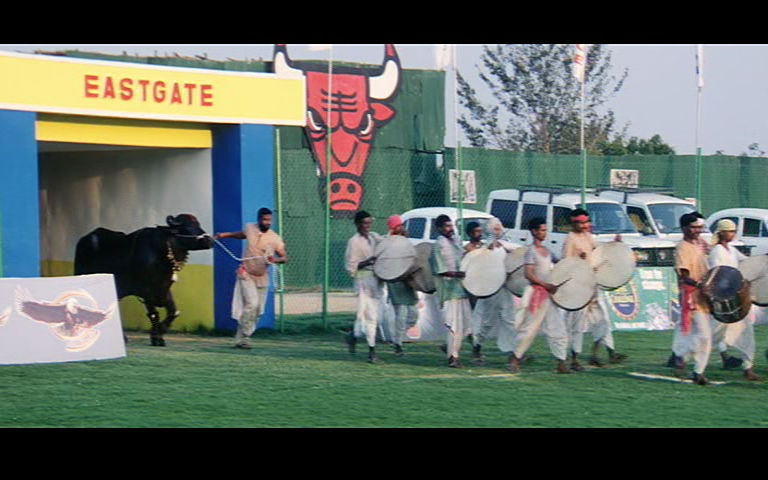
However they are too clever for their own good and are ratted out to Bikshu Yadav  by Venu Madhav, who appears periodically throughout the film in a rather silly comedy role. This leads to a final show down rugby match which is attended by a huge crowd and is also televised. Not only that but they even have a third umpire and there’s even a hakka. I loved the drums and team mascot for the Bulls and the half-time inspirational speech by the Eagles coach. Even if it was a mish-mash from the classics, political speeches and other sporting films – but then again aren’t they all?

The film improves a lot in the second half where there are fewer totally ridiculous moments, and the story is more engaging. There are some clever ideas but overall the film is quite patchy and jumps around between the two different themes. The violence perpetrated by Bikshu Yadav is an abrupt contrast to the college story and for me this keeps disrupting the flow. Genelia really doesn’t have much to do in this film other than be the love interest and the reason for the two gangs to finally fight it out. Her character is annoyingly complacent with the antics of Prithvi and Shashank and finally is almost totally sidelined in the second half of the film. Nitin and Shashank do well as the two college kids, but are totally overshadowed by Pradeep Rawat who revels in as much violence as possible. I am a fan of Ajay and I love to see him turn up as one of the villains, since he always seems to be having such a great time being one of the bad guys. The various actors playing the students do a good job of creating a typical college atmosphere and stalwarts of Telugu cinema Tanikella Bharani and Nassar provide good support for the younger cast.  I was somewhat surprised that one of the songs Chantaina Bujjaina is a remix of the classic Hindi song Duniya Mein Logon Ko from Apna Desh but it didn’t work here quite as well as it might have.

Overall Sye is not a bad film, but it’s not a particularly good film either. Worth watching for the final rugby game which really is the high point and just bumps the film up to 3 stars for me.

Temple says:

I didn’t see any West Side story qualities in Sye, just a bunch of college boys with nothing better to do. Had there been stronger dramatic tension or real animosity between the school factions in the first half this would have been a better film. The rivalry between Arts & Sciences was childish and not terribly interesting as basically, the group members were pretty interchangeable. And to Heather’s point about the Science geeks being the quiet good kids…well, I was an Arts student and the Engineering parties at Melbourne Uni back in the day were legendary. The first half meandered from silly pranks to macho posturing and back again. It wasn’t until the rowdies became the common enemy uniting the college that there was any drama.

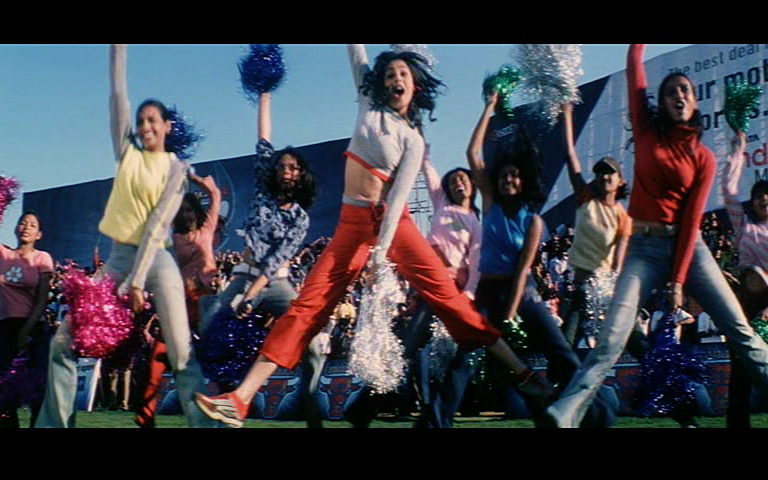
One of many problems I had with Indu’s character was  the supposed love triangle. It didn’t work as Shashank and Prithvi were pretty much the same so it didn’t matter which one got the girl. I actually really liked Genelia’s performance in this – Indu was energetic and engaging, not crazy bubbly. And she tried to dance which is always fun. Unfortunately her character is one of the most stupid I have ever endured. I was glad when Indu stuck to cheerleading in the second half as I was in danger of tearing an eye-rolling muscle. Prithvi constantly tricked her into inappropriate behaviour and it made me dislike the pair of them intensely (her for being so dumb and him for being an arsehole). Nitin and Shashank were, as I said, virtually the same in terms of their characters. Neither of them really stood out, apart from Nitin’s hideous song outfits. Certainly when Pradeep Rawat is in full throttle, I think you need a hero with a bit more testosterone.

And back to the dancing – a friend of ours once tried to teach a dance step with the instruction ‘sit into it lower and try and move like a really sexy duck’. I think perhaps someone said the same to Genelia in the ‘Duniya Mein’ remake but it turned out more funky chicken than sexy duck. I will never forget the look on Jag’s face when she saw the results and I think the choreographer for this may have felt a bit the same.

I have issues with a rugby try that was clearly not a try (especially when it is called a touchdown and is under the Chicago Bulls basketball team logo), as well as the bizarre scoring and some other things which were at odds with the bits they got right. I guess a proper college team played most of the games, which did make it more enjoyable and realistic, although the actors’ rugby scenes were noticeably less believable. The haka was both impressive and so very wrong.

Despite the woeful story Rajamouli has an eye for great set shots and action sequences, and really understands the tempo of a story. This was surprisingly enjoyable at times, but the good bits are few and far between. I give this 2 ½ stars.
Jewel Thief

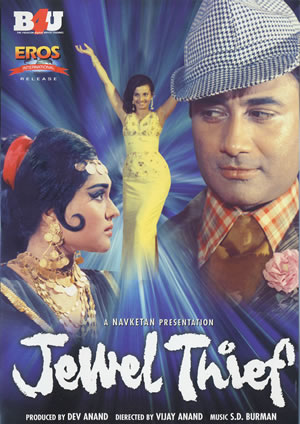
I always enjoy Vijay Anand’s Jewel Thief, mostly for the glorious presence of Tanuja, Vyjayanthimala, Helen and Faryal. The style is groovy Sixties cool, the music is fab and funky and the story is packed with incidents and coincidences.

SD Burman’s soundtrack is brilliant, and the dream playback ensemble of Lata, Asha, Mohd Rafi and Kishore Kumar does the material justice. The title sequence sets the tone; a swinging big band with Krupa-esque drums over an old school cut and paste montage of newspaper headlines that are stuck over real news stories.

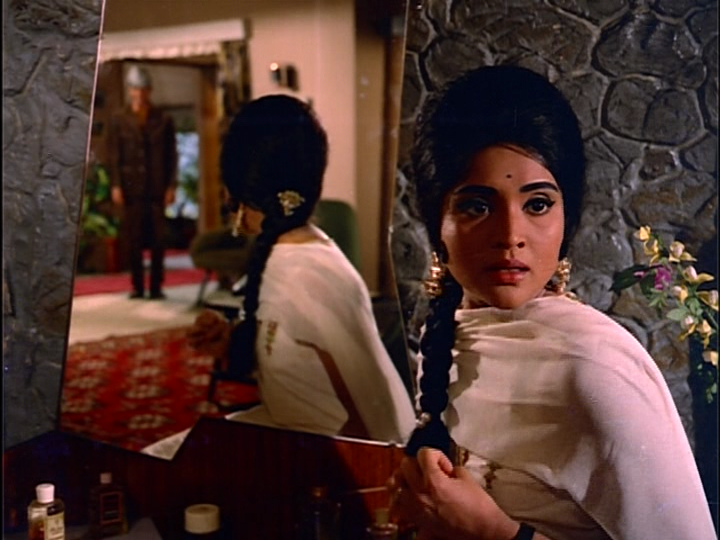
Is it just me, or do these display mannequins look just a little like Nargis?

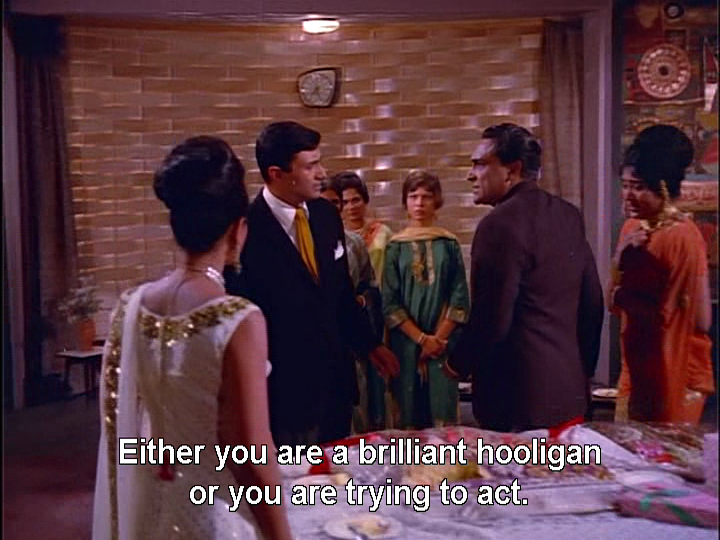
Vinay (Dev Anand) arrives at a jewellers looking for work. His skills dazzle Mr Visambhar Das and his flirting impresses daughter Anju (Tanuja) so he gets the job.  Soon after, he is mistaken for a man called Amar by a number of strangers. At Anju’s birthday party he is confronted by Shalu (Vyjayanthimala) who claims the mysterious Amar is her fiancée and that Vinay is indeed Amar.

This leads to the least suspenseful proof of identity scene ever as Vinay takes over one full minute to remove a shoe and prove he doesn’t have six toes. Did I mention the subtitles on this original DVD are quite peculiar?

Shalu’s brother Arjun Singh is played by the wonderful Ashok Kumar. Arjun seems to want to throw Vinay and Shalu together despite her apparent engagement to another man. He has hidden motives, and gradually more is revealed about his character. It’s a fun performance, and I do have a soft spot for all of the Kumar boys.

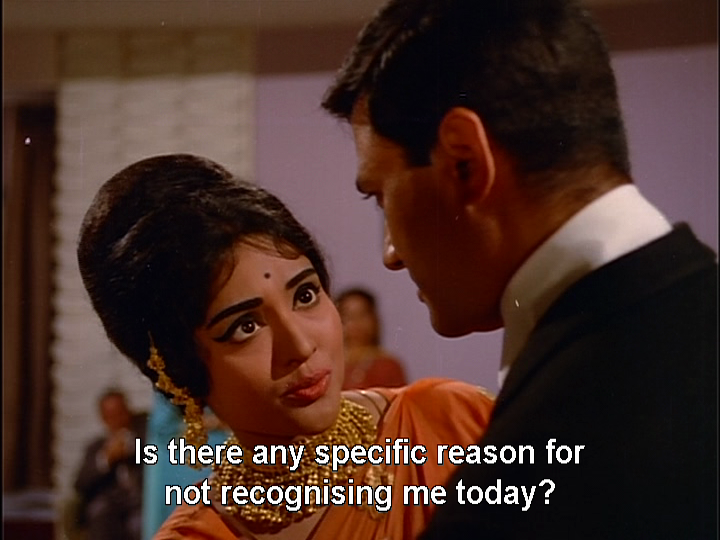
Anju and Shalu vie for Vinay’s affections, which results in some awesome outfits and extreme eyeliner. Tanuja is fun and bubbly, and plays her headstrong character with great gusto. Anju seems to have very few restrictions on her activities but isn’t spoiled by being indulged.

Shalu is the weeping wronged woman, and wants to recreate Vinay in Amar’s image which he initially rejects.  However Shalu is flirtatious and yet reserved, a combination Vinay cannot seem to resist.

Vinay plays both women and seems to have no qualms about his situation. He takes for granted that the girls find him irresistible and will tolerate his peccadilloes. Dev Anand has so many idiosyncrasies that I can never forget it is Dev Anand I am watching. However I do like his seemingly genuine enjoyment of Tanuja’s antics in Raat Akeli Hai, Bujh Gaye Diye. And hurrah for the interior design excellence at Anju’s house which we get to tour in that song. I love the fridge, but the bar steals the show.

Things become more tangled as it appears Amar and Vinay are impersonating each other, sometimes inadvertently. Amar aka the Prince is the Jewel Thief. He is a ladies’ man and a ruthless criminal by all accounts, although one with appalling fashion sense. No one seems sure of which side anyone is one. The plot becomes more and more convoluted, even as nothing really happens.

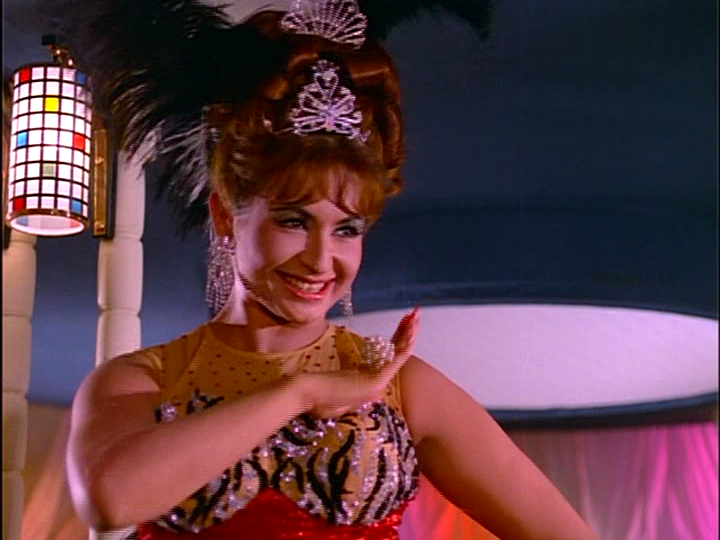
Amar has better taste in women than expected given his shocking taste in clothes. What’s not to love about Helen (playing a character called Helen) making her entrance in a sparkly zebra chicken ensemble complete with crystal beaded tights?

This was one of my first Helen films and whenever I describe vintage Bollywood, I draw on that image. Helen also loves her fridge, to the point of not locating it behind the nifty concealed revolving bar. It reminded me of my grandmother’s kitchen which was built before whitegoods were common so our fridge was plonked against a wall. It took me back to the exciting day when Nan got her first ever washing machine. Sadly I grew up without the groovy bar, but we did have a fair collection of 70s kitsch.

Julie (Faryal) doesn’t seem to have a fridge, but she did have a drinks trolley in one scene.  She is part of the gang and draws Vinay further into their murky designs. With Faryal wearing the entire budget for a key jewel heist scene, I can totally understand why the art team recycled the Nargis busts in the background.

It is a treat to have multiple vamps and heroines of this calibre in a film that lets them all shine. The ladies drive much of the action, providing the clues, motivation and manipulation that ensure Vinay continues to swagger limply in pursuit of Amar. Anju Mahendru also has a small but crucial role as Neena, yet another babe who runs rings around our hero. They are strong, individual women and I love seeing Helen and Faryal do more than an item number. For a fun and informative discussion of vamps, please listen to this excellent podcast by netvixens Beth, Amrita and Memsaab at Masala Zindabad.

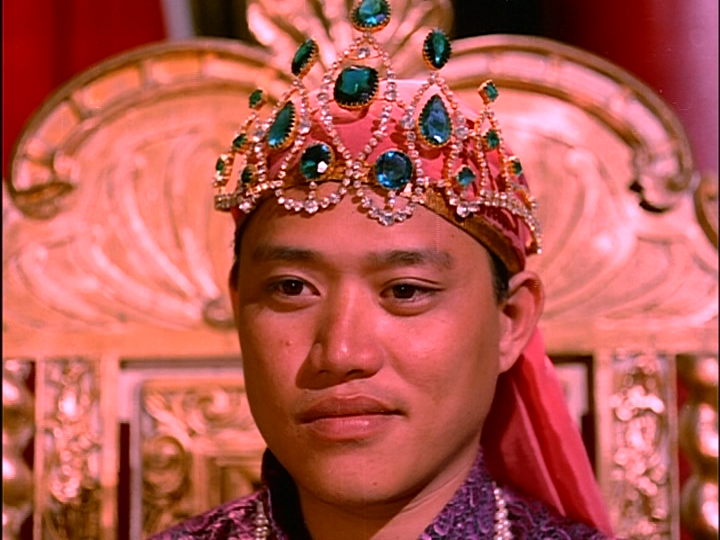
The action moves to Gangtok as Vinay pursues Amar. Dev Anand is slick and superficial; Vinay looks the smooth man of the world but is never really convincing as a man of action. Luckily his dad (Hussain) is a police commissioner so he has resources to call on. Even more complexity in the plot is revealed as Vinay is taken hostage. (It was very thoughtful to provide the lads and ladies of the gang with table tennis. Such a wholesome recreation for evil doers!) The gang is working on one big heist that doesn’t seem to be worth it given that they are making ample money from the smaller crimes that attract less attention. The targeted crown is a bit more Miss Universe than I expected for a prince in Sikkim.

Amar continues to elude Vinay and his dad, but there is plenty else of interest going on. Vyjayanthimala wears a sari covered in furry bobbles for a start, but she has the consolation of a lovely song to emote to.


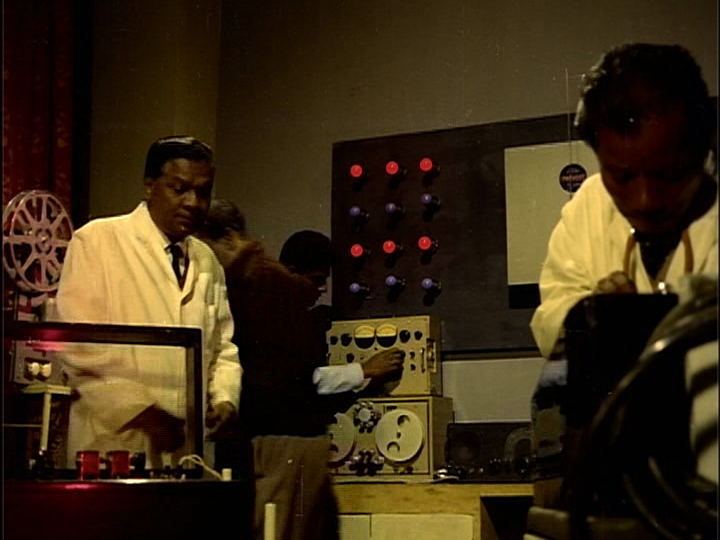
Helen and Julie create confusion as Vinay does a lot of overacting, sometimes intentionally. In a fantastic filmi architectural coincidence the old palace tunnel system was handily located under the captives’ quarters. All it took was Shalu, a rope made from a sari, her handy chisel and mallet plus the good scissors and they were off and running for freedom. The film is full of great secret rooms, sliding panels and amazing design features. But it wouldn’t be truly masala  if the hero escaped right away, and the director had invested in some hi-tech memory modification equipment, so the action returns for more mind altering shenanigans.

And then the deservedly famous Hoton Me Aisi Baat in which Dev Anand has the very good sense to restrict his dancing to posing and scuttling out of Vyjayanthimala’s way.

I don’t want to give the ending away completely but the Jewel Thief’s complex plan comes unstuck remarkably easily. Anju takes her turn at helping Vinay fight the good fight, and all loose ends are tied up in a delightful final scene.

Vijay Anand has created one of my favourite retro masala films. There is so much to enjoy visually, so many fun performances, and great music and dance numbers. What more could I ask for? 4 and ½ stars! (extra points for Helen, small deduction for Dev Anand’s hats).

Heather says:  Jewel Thief was one of my early ‘oldies’ film purchases and I’m pretty sure I bought it because of Helen. Of course not only does Jewel Thief have the incomparable Helen but also the amazing Vyjayanthimala, Tanuja and Ashok Kumar along with Dev Anand. I’m not usually a great Dev Anand fan as I find him much too affected, but he seems to suit the James Bond-esque role he plays here fairly well. He does look to be too old to be a wayward son of the police commissioner though and his mannerisms make it hard to forget that he is Dev Anand rather than the character, but I still think this is still one of his best films.

The best part of this film for me is the music – the soundtrack is fantastic and as Temple has mentioned it has the dream team of playback singers. This is a film where I’d heard and loved the songs before I saw the movie, and they only got better with watching. The sets are fantastic too with plenty of hidden rooms and tunnels as well as some very inspired décor in Helen and Anjali’s apartments – so much to appreciate.

I also love the totally fab costumes. The red dupatta with white fluffy spots all over it that Vyjayanthimala is wearing in the song above is a particular fave, and Tanuja has a great selection of outfits.  Naturally Helen shines (and sparkles!) in that department as well, and one of the gang has a rather eye catching black jacket with large white pockets. Where do they find this stuff – actually I do know the answer to that as I went shopping in Chennai earlier this year! Dev Anand is a little too ‘corduroy’ in some scenes for me (clothes and attitude), but his collection of hats helps to make up for that. I particularly like that the jewellery was by Parikh Novelty house, which sounds exactly where I need to go shopping, and that there was just so much of it!

The story aims to be a mystery/thriller and I think in general it works fine for the mystery but not quite so well in the thriller part. There just isn’t very much suspense – at least not once we get past the sock removal. (Just as an aside, I seem to have a different copy toTempleas I have rather more boring subtitles which sadly refer only to toes.) But perhaps I’m just too distracted by the costumes, the jewellery, the interiors and the dancing! The story moves along well though and there are plenty of twists which generally make sense, even if the final scheme does turn out to be more complicated than it really needed to be. Adding in electro-shock treatment was particularly inspired, and I did enjoy Dev Anand’s grimacing throughout the procedure. Brilliant!

All the actors are excellent throughout and it is a real treat to see so many great performers together in a better than usual story. The end is just a little disappointing, but there is still plenty to enjoy in this very stylish film . 4 stars from me.

Aa Naluguru

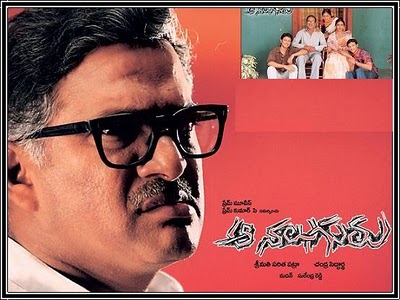
Aa Naluguru is a quirky little film about the rather unbelievably good Raghu Ramaiah and his rather unbelievably bad family. According to my subtitles, the four people of the title are those four people in your life that you must look after so that they will be inclined to carry your coffin after you die – quite a sensible idea really. However as the film unfolds it seems that it may also refer to the four members of Raghu Ramaiah’s family who make his life so difficult, or maybe even to his four friends and co-workers who also have a large influence on him. The film is a little slow to start and perhaps overly moralistic, but succeeds for me mainly due to fantastic performances by Rajendra Prasad and Kota Srinivasa Rao.

Raghu Ramaiah is an editor who is a great philanthropist, giving half of his earnings to his wife and children and the other half to the poor.  He is very idealistic and believes that nothing is as important as love and compassion which means that he is constantly fighting against the corruption, greed and intolerance he sees every day in his community. His best friend Subrahmanyam (Subhalekha Sudhakar) has no such problems. He pays bribes and seems content to ignore the injustices he sees around him. Raghu Ramaiah’s other friend is the miserly money-lender Kotaiah who is happy to tell everyone that his only interest is money, and is a man so mean that he rations absolutely everything at home.

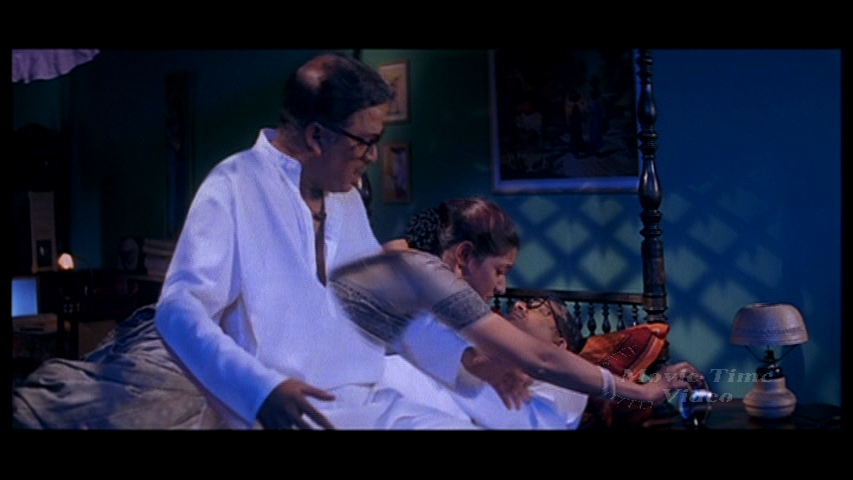
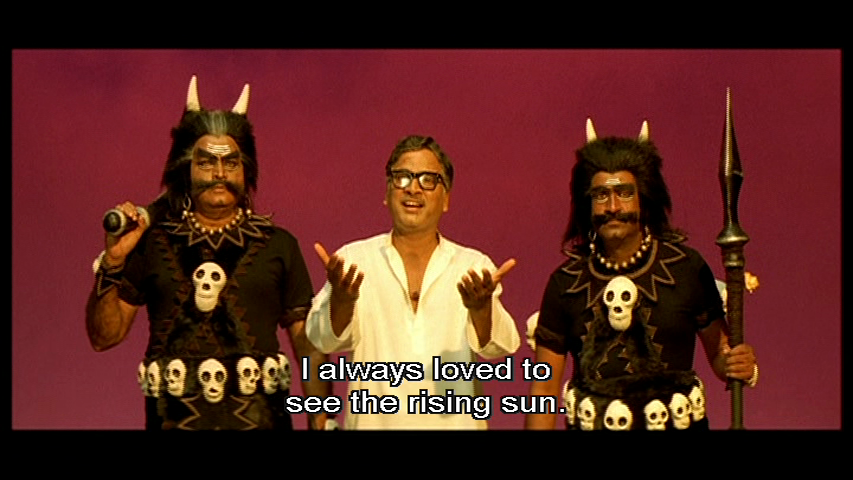
We meet Raghu Ramaiah at the end of his life, when two demons pop up in his bedroom to take his soul to hell.  This was just a little unexpected – firstly because I hadn’t expected a mythological aspect to the story but secondly why take his soul to hell when he had led such an exemplary life – or then again had he? Raghu Ramaiah turns out to be a little vain at any rate as he wants to be able to watch the mourners at his funeral. He successfully pleads with the demons to be able to stay longer on Earth, but this turns out to be a mistake since no-one seems to mourn him at all. As the demons ridicule him for this lack of affection from his family and friends he shows them scenes from the last few months of his life which explain the reaction to his death.

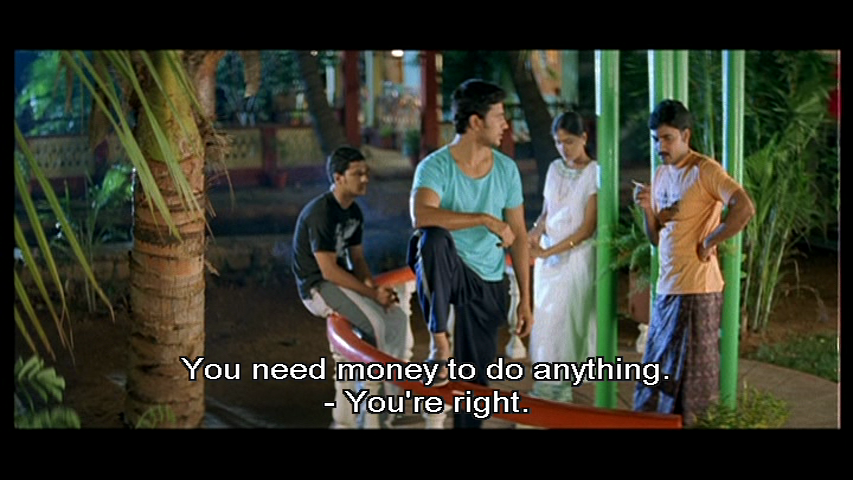
His children are all only concerned with money as they think this is what they need to achieve their selfish wants and desires. The eldest son Shekar (Raja) wants to become an SI in the police, but although he has passed all the necessary exams he finds that he can only get the job by paying a bribe.  Chinna, the younger son, wants to bribe a University to accept him into an Engineering course since he hasn’t got good enough grades to be accepted on his own merits.  Indra and her husband want to leave and start a new life overseas as he has no job, and doesn’t seem to be particularly worried about getting one.

They all keep pressing their father for money while he insists that they should be able to get by on their own merits, and in particular not pay bribes just because everyone else does.  However Raghu Ramaiah’s ideals are not accepted by his family and finally his son-in-law decides to capitalise on his father in law’s good name and start a finance company to cheat people.  This is the last straw, and Raghu Ramaiah finally breaks down at this threat to his reputation.  He borrows money from his friends and uses this to pay his children what they feel they are owed. After he dies, his sons and his son-in-law run away to avoid having to pay back the money their father has borrowed.

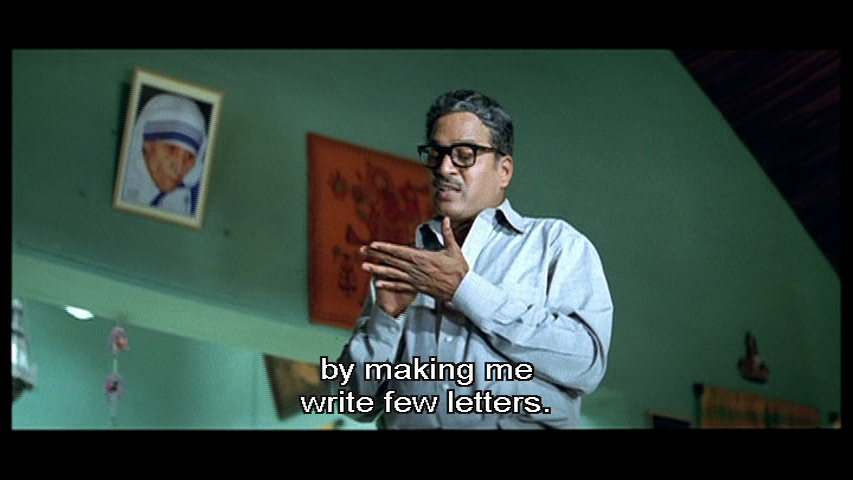
Note the prominent placement of Mother Theresa’s picture seen here over Raghu Ramaiah’s shoulder.

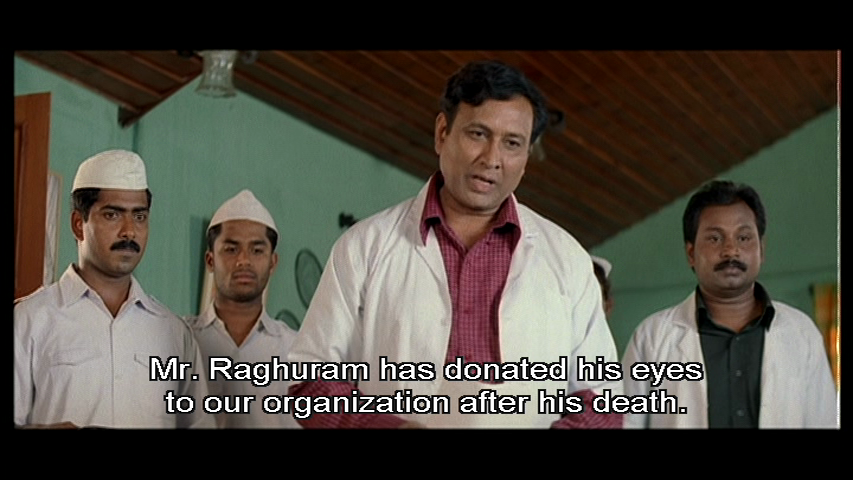
There is a great moment when medics come to collect Raghu Ramaiah’s eyes which he has donated, although this also brings to light the true circumstances of his death. But a story that involves eye donation is always a plus for me.

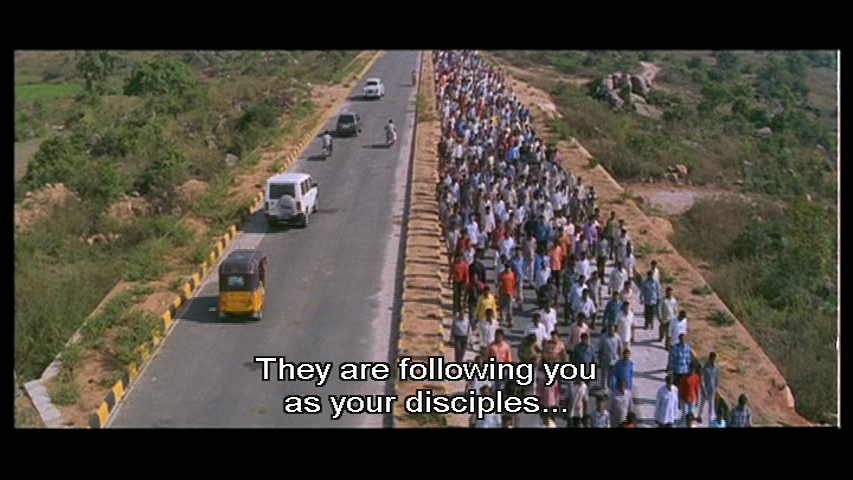
The rest of the film deals with the funeral and I have to say that no matter how many times I watch this film, the final scenes always make me cry. The simple outpouring of emotion at the funeral is very well done, and the grief in the loss of a man seen as a great humanitarian is very heartfelt.

There are a few problems with the story, written by Madan and the director Chandra Sidhartha. Raghu Ramaiah seems to be a very idealistic representation of a compassionate man and the story initially is very simplistic and moves slowly. It’s understandable that his family is frustrated with his overly charitable nature, although their demands for money and general lack of respect also seem unrealistic. Perhaps the director found this necessary to get his point across, but I think the same points could have been made more subtly. I don’t believe that anyone could be so overly benevolent to the detriment of their own family or adhere so rigidly to such morals. However while these flaws could have made Raghu Ramaiah very one-dimensional, Rajendra Prasad rounds out his character with a really fantastic performance. The interactions with his family are very well portrayed with a mixture of frustration, love and anger giving a more naturally human feel to the character despite the rather stilted language. Of course that could be the fault of the subtitles. Still, without the presence of Rajendra Prasad I don’t feel that this film would have had the same impact at all. Kota Srinivasa Rao is excellent as the miserly Kotaiah and the interaction between these two characters is the best part of the film. Aamani was good in her portrayal of the wife stuck in the middle, trying to keep everyone happy and failing, and it was interesting to see Raja in a more negative role.

While there aren’t very many songs in this film, the slow and sad version of the title song is used frequently as a background theme. But this fast version at Indra’s wedding does have some dancing at least.

Despite the problems I have with the story and the somewhat idealistic characterisations, the performances more than make up for these shortcomings for me. This is a film I’ve watched a number of times and still love the ending.  A film made by the performances and emotional final scenes and as such gets 3 1/2 stars from me.

Temple says:

I hate this film. I can’t decide if it is an amateurish attempt or a deliberately manipulative effort that insults the intelligence of the audience. I do need to discuss the plot as it is the supposed ‘twist’ that particularly annoys me, along with some poor writing.

I will leave a gap.

.

.

Now if you want to avoid the spoiler, keep scrolling until you see the next puppy.

Raghu Ramaiah committed suicide. He did this with no real sense of crisis apart from his customary self pity, and just after borrowing loads of money from various friends and associates. His death effectively dropped his family and friends in a hole as the loans were a bit shady and his wife had no means of repaying them. The grown up children were presented as selfish caricatures, constantly shocked by their father’s decisions (they were also slow learners – I mean, he NEVER didn’t put charity first). Surely he wouldn’t have expected them to look after his widow properly. He abandoned his philosophy and his vows to his wife in what was portrayed as a fit of pique. Now, this is a shocking action for a holier-than-thou too-good-to-be-true philanthropist so I was expecting some unfolding of his character or past that would illuminate his choice. None was forthcoming. He sat on his cloud, hoping to see how much he was missed and trying to hide the truth from his demon companions. This vanity and selfishness might also have made for interesting character development but was brushed aside. Chandra Sidhartha decided to make this man a role model and have everyone awash with tears at his funeral. So is the take out from this, kill yourself if people disagree with you and then they’ll all be sorry? None of it held together for me as there was insufficient motivation for him to drink poison and no satisfactory exploration of the repercussions, followed by a glorification of a very flawed and slightly unpleasant character. The sickly sentimental ‘boo-hoo we’re not worthy of such a great man’ ending was infuriating.

.

.

.

OK so now I have that rant out of my system. Rajendra Prasad did give a good performance. I was really hoping that a movie featuring the actors who are usually in supporting roles would be good as it is lovely to see them take the spotlight for a change. The scenes between Rajendra Prasad and Kota Srinivasa Rao are effective, and Rohit and Aamani were good in their supporting roles. I give this 1 star, only because some of the actors tried really hard.