Grahanam

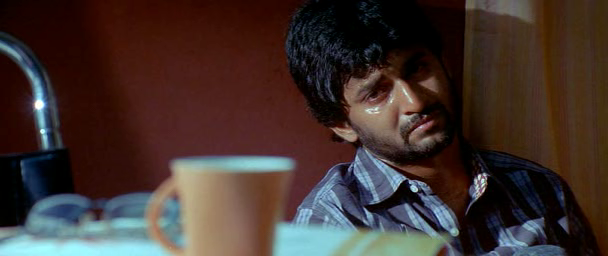
Grahanam is about superstition, mistrust and sex. The story is based on a novel by Telugu writer Gudipati Venkatachalam, also known as Chalam, adapted and directed by Mohan Krishna Indraganti. The story follows the aftermath of superstition made fact by belief.
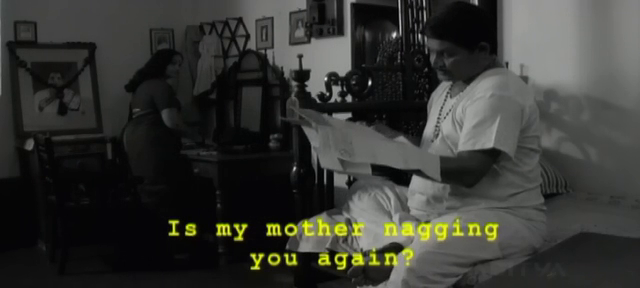
Set in a village in the recent past, the story has a timeless feel. Saradamba (Jayalalitha) is the wife of Swamy (Tanikella Bharani). They are the premier family in the village, and she is renowned for her charity and community support. Kanakayya (Monish Thallavajhula) is a poor boy with academic promise. Saradamba provides a meal for him each day, and is clearly fond of him. She is a strong advocate for education, and encourages the villagers to send all their children to school.
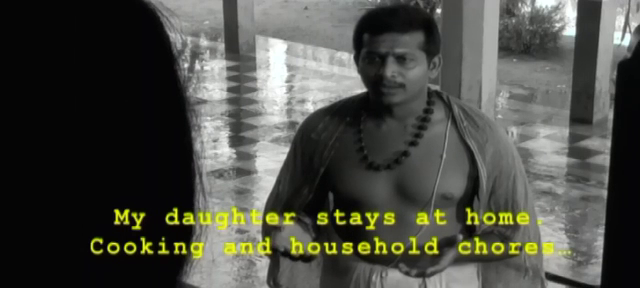
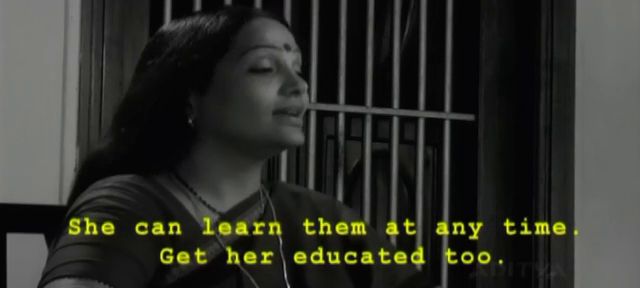
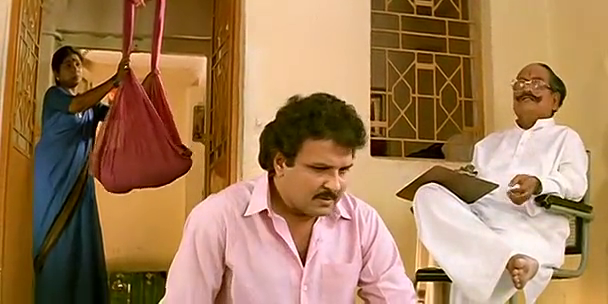
Swamy lets his wife deal with the daily routine, trusting her to do the right thing for the family prestrige.  Sarada is adept at biting her tongue when her mother-in-law is demanding, and has a strong sense of duty. Their relationship seems happy enough, and there is certainly a strong physical chemistry. They joke about his tyrant of a mother, tease each other about their marriage and seem to be compatible. Sarada is not above flirting to get her own way, but Swamy doesn’t appear to mind one bit.

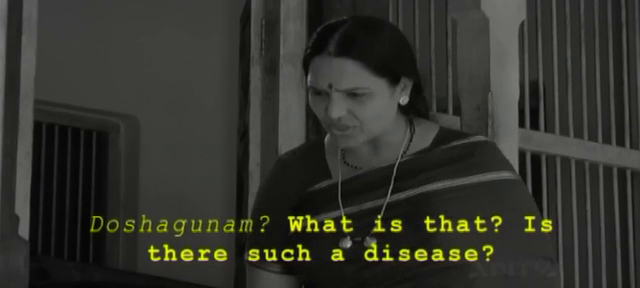
All seems tranquil. But Kanakayya falls ill with a fever and conventional medicine doesn’t seem to be helping. His uncle suggests consulting Gopayya (Sundaram Thallavajhula), a Kali devotee from the next village, who is purported to be able to cure mystery illnesses. Gopayya’s diagnosis is the catalyst for major drama. He says Kanakayya is sick with ‘doshagunam’, explained as an illness caused by having sex with an older woman.

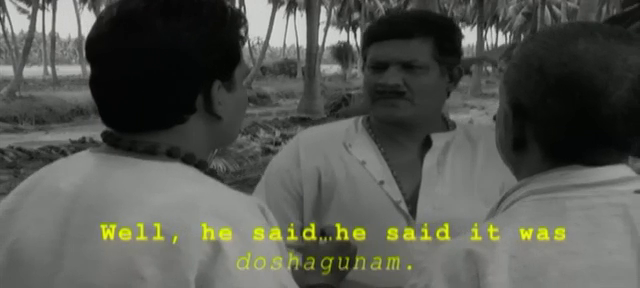


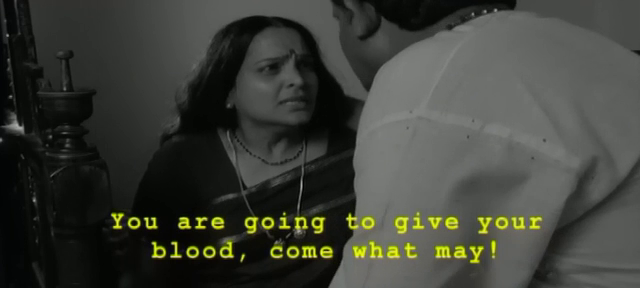
No one seemed to have heard the word before, but before long it is bandied about as though it is an established fact. Kanakayya’s parents reject the idea that their son would have done anything immoral, but he continues to sicken. In desperation, they seize on the cure Gopayya prescribes – a cure that requires blood from the thigh of the woman who ‘infected’ him.

Suspicion falls on Saradamba and all the small kindnesses that used to be evidence of her charity and good nature are now seen as proof she seduced the boy. Lapses in protocol are twisted to show she was betraying her husband. Swamy is plagued by doubts. He accuses her of lying, of whoring behind his back and ruining his prestige. Sarada denies the accusations, but is she really as innocent as she claims?

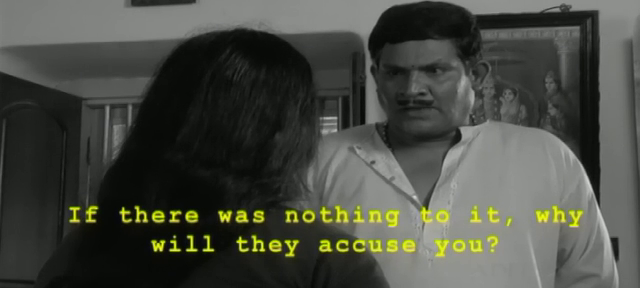
The crux of the story is that a rumour, a suspicion, a superstition can take on a life of its own. Women are spoken of as impure, carriers of sin and ruin. Their sexuality is toxic and men cannot save themselves from a predatory woman. People are all too ready to believe the worst and seemingly only because she is female. Once Saradamba is accused, she is attacked verbally and physically. The damage done is real, regardless of the reason. But why are people so ready to believe in ‘doshagunam’ and to accuse a previously blameless woman?

The story develops through a flashback structure, narrated by Surya as Doctor Raghu. This allowed me to work out the internal chronology of the story. The black and white film does give a sense of things happening a long time ago, but the events are quite recent. I thought this device worked well as it made the point that while Saradamba and Kanakayya’s story may be set twenty or thirty years ago, it’s not that remote from the present day.  A short segment in colour adds a dreamlike note and made me question my assumptions about some relationships.


Tanikella Bharani is excellent as Swamy. He shows the doubts and frustration gnawing away and the bitterness that creeps into his marriage. His confrontations with Sarada are threatening and venomous. Even though I thought Swamy was a fool at times, I could see the way the rumours poisoned his mind, and his resistance disappeared. It’s an unsympathetic role in many respects but he gives Swamy a dimension of sweetness that made me see what Saradamba saw in her husband, and made their estrangement even more painful. And after seeing him play uncle, sidekick or victim in so many films I really liked seeing him in a leading role for a change.
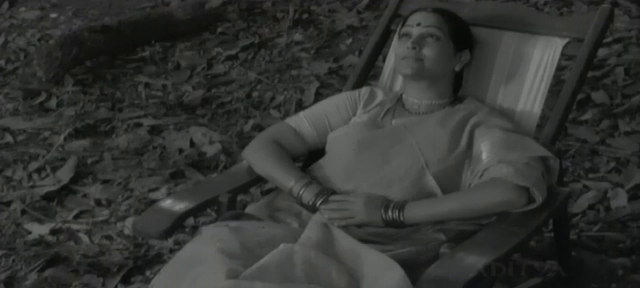
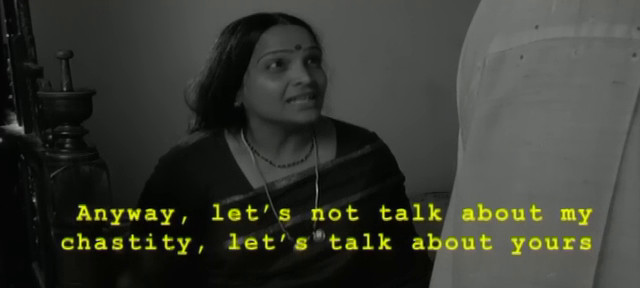
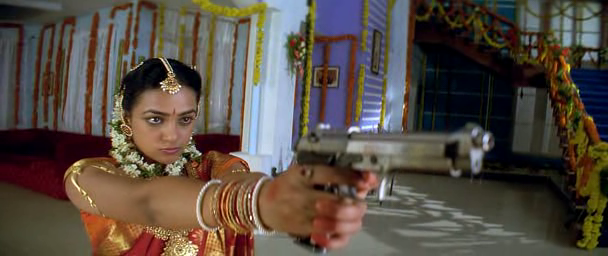
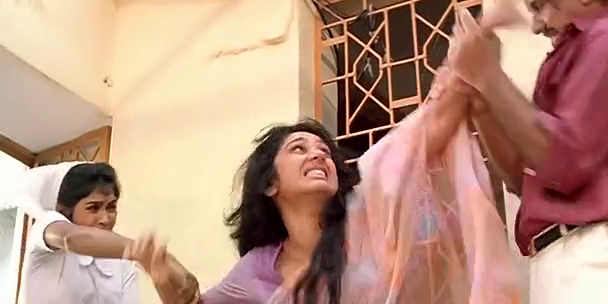
Jayalalitha is well cast as Saradamba. She has an earthy sensuality and a physical confidence that suits her character, and she dominates the film. When she is on the verge of losing her home and family she seems almost feral – all teeth and claws.  The confusion and indignation are evident but Jayalalitha also creates some ambiguity with her reactions and expressions. Those slight hesitations and the glimpses of behaviours that could be open to different interpretations or doubt were really well done. It meant that the story was a bit more complex than a ‘pure woman is besmirched by rumour’, even though my sympathies lay with Saradamba. I questioned whether I completely believed her, if she had done anything ‘wrong’, and if she had seduced the boy did that warrant what was happening.
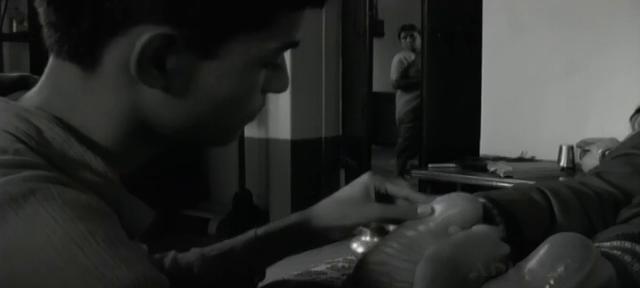
The black and white film is very atmospheric but the garish yellow subtitles on my DVD were a bit distracting. The interiors and doorways provide a frame or concealment, alluding to the secret lives of characters. Even the ornately carved bed changes from bed to barrier over time. The physical environment is used to illustrate the mood and emotion of the inhabitants. The camera sometimes sneaks up behind characters, sometimes settles in amongst a group of people talking or takes on the role of an observer judging what it spies. It adds a dynamic note to what is a very dialogue based movie.

I can’t opine as to whether it is a good adaptation of the original story, but there is a literary flavour to the dialogue and the concepts are clearly articulated. The dialogues are strong and meaningful, and reveal a lot about the people speaking. Mohan Krishna Indraganti seems to have an interest in what makes people tick and there are also scenes with no dialogue where small interactions, or reactions, speak volumes. I have seen Ashta Chamma and Golconda High School and I think his translation of story to screen is becoming more assured. I like his interest in everyday type people, and seeing what they do when confronted with a challenge or problem. The supporting cast are all very good but the focus is on Jayalalitha and Tanikella Bharani.

This isn’t the kind of film I want to watch every day as it is a bit self-consciously artsy and I alternated between being depressed and angry as I watched it. But I was interested to see a non-commercial Telugu film, and to see character actors take on leading roles. The story kept my attention, and made me think as well as made me want to throw things at the screen. It won a swag of awards and I can see why so many people have recommended it to me. 3 1/2 stars.

Katherine at Totally Filmi is coordinating a month long celebration of women in Indian cinema. Links will be collated at Delicious so keep an eye on that page for lots of other articles and blog posts to be added throughout March.
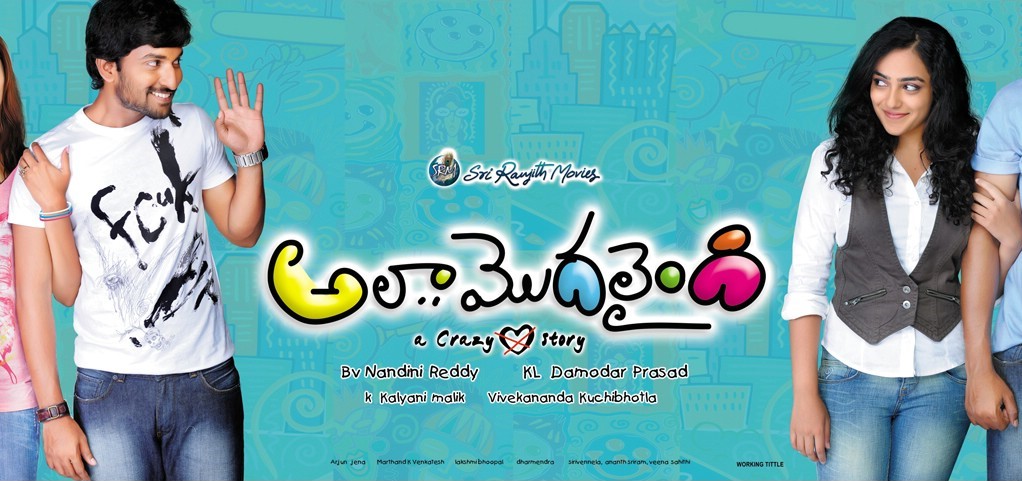
Ala Modalaindi

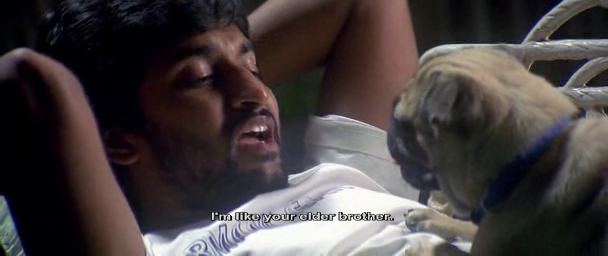
Ala Modalaindi is a romantic comedy, full of improbable happenings and twists. There are songs, misunderstandings, mistaken identities, fights, significant jewellery and even a dog who helps change the course of the story. But there are also characters I like and can relate to with a view of relationships that seems fairly healthy and positive. I particularly enjoy the way director/writer Nandini Reddy plays with filmi conventions and delves into the bag of tricks to give a simple story some zing.

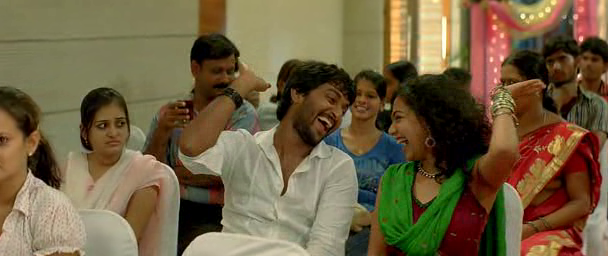
So. A young man meets a young lady at a wedding where their exes are marrying each other, and they get drunk and messy.

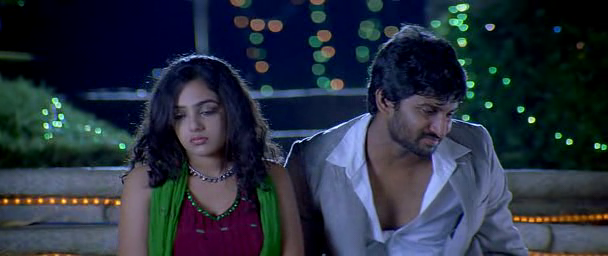
I really love that the next day they could talk to each other, be embarrassed, laugh it off and that was it. No judgements were made relating to alcohol or failed affairs. Gautham and Nithya cross paths again, and a warm friendship develops. His feelings deepen but he is reticent; struggling to know when to speak out and not sure what he really wants to tell her. She has her own complications that emerge over time. It is obvious that they make a good couple, but will they ever get it together? Guess away, dear reader.

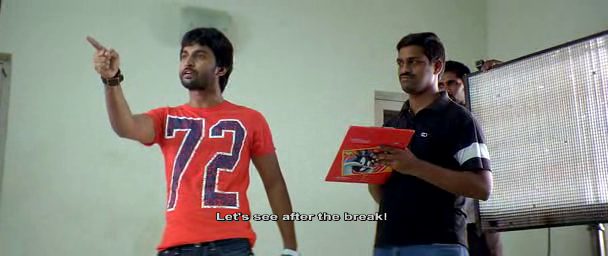
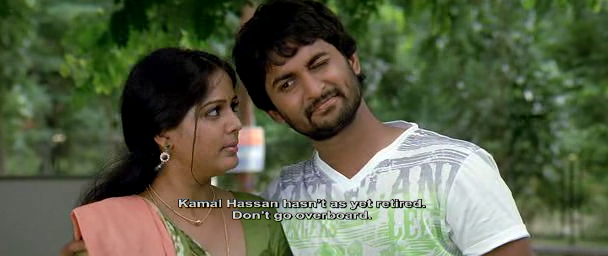
Gautham is a director on a news program. He has family, good friends, failed romances and a flair for the dramatic. The story is mostly told from his perspective, so I felt that I got to know him better, and I appreciated Nithya through his eyes as he came to understand her more. Nani is an appealing guy next door kind of hero. I think it’s his dimples. Plus he seems to have a sense of the ridiculous that was very endearing in this role. But Nani doesn’t play Gautham as all happy and smiling.

I found his portrayal of Gautham’s grief really moving. I could relate to the things that triggered his tears, and sadness permeated his body language at times. When he realises what he wants to do about his feelings, he does it. His journey takes some crazy detours, but that was part of the fun, not a silly distraction. I also like Gautham’s developing self awareness through the story. He really does change in some significant ways, and learns to recognise and deal with the parts of his own nature that he doesn’t like.

Gautham’s mother Revathi (Rohini) is my new favourite filmi ma. It is so nice to see good parenting in a close mother-son relationship (maybe I’ve been watching too much 70s Nirupa Roy). Some of my affection for Gautham stems from seeing him with his mum. He has context, a background that had helped make him the guy he is. She is an intelligent, positive woman who had been widowed when her kids were in their early teens. She advises Gautham that you can either dwell on the past and be sad about your loss, or remember all the good things and take that happiness into your future. It was a clever scene as it was not just about her own past, but advice for her boy on how to move on.

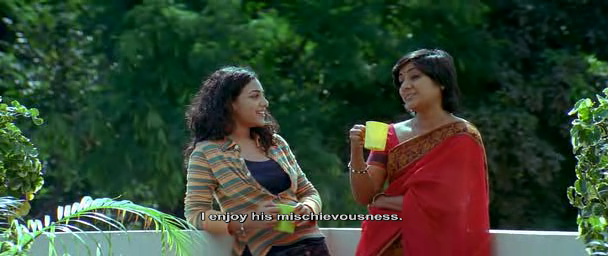
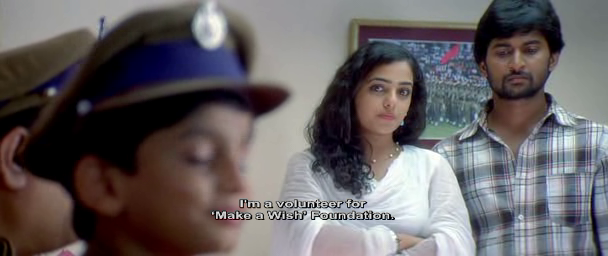
Nithya is a good example of how to make a character happy and bubbly but not a Manic Pixie Dream Girl. Like Gautham, Nithya has a family, friends, work and ideas about more than love and romance. She is smart and emotional, opinionated but not rude. There are issues in her life that bring some more complexity to a fundamentally sunny nature. When Nithya realises she has made a mistake, she takes the decision and deals with the consequences. She is no passive wallflower waiting for the hero. Her qualities are sometimes shown in small almost insignificant moments, sometimes in big filmi set pieces. Nithya Menon is a perfect fit for the likeable role, using her expressive face and vocal modulation to great effect. And how good is it to see someone who isn’t the stereotypical leggy model with a maximum range of two expressions? Nithya is a pocket Venus with oodles of talent, also dubbing for herself and singing on a couple of tracks.

Nithya has a close relationship with her easy-going dad (Uppalapati Narayana Rao). Her mum (Pragathi) is worried about getting Nithya married and what must people think. On the surface it seems like a difficult marriage but Nandini Reddy shows that this couple aren’t at war, they just irritate each other a bit. Nithya asks her dad if he ever considered divorce and they chat about commitment. Her mum joins them and whinges about her dramatic family, but then they all start smiling and their pleasure in being together is evident. People have to work at getting along sometimes.

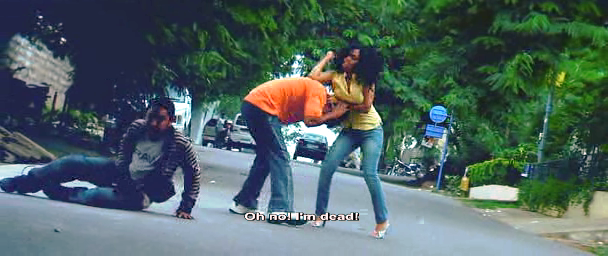
It’s not that the plot is unpredictable, but the way things happen is delightfully offbeat. In one of the obligatory fight scenes, Nithya takes on the loafers and belts the bejesus out of them as Gautham watches on. Gautham and his family are movie fans and use filmi terms in conversation. Nithya makes fun of Gautham’s job, doing dramatic voiceovers of everyday events. It’s a playful style.

The film is cohesive, and is well balanced between character and incident driven scenes. The dialogue is peppered with pop references, but it doesn’t seem too try-hard. People generally look and sound the way I would expect them to. It put me in mind of Basu Chatterjee’s romantic comedies a little, just the flavour of the dialogue and the middle class settings. I have some minor issues. There is a gay joke that made me sigh just a little at Nani wearing pink and mincing about to Kajra Re.  And there were some dubious medical shenanigans, only one of which was purely for humour.

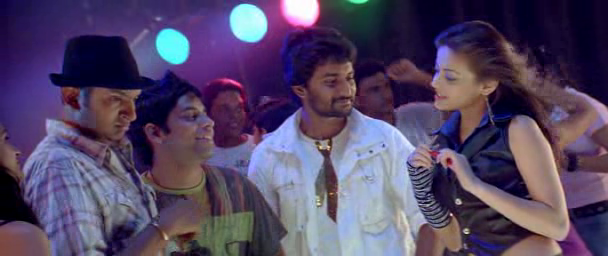
The music (by Kalyani Malik) is average, but the song picturisations are where low production values seem most evident. I just can’t help thinking that two backing dancers is less than optimum, even if they do ninja up for the occasion. The choreography is very achievable for those inclined to have a dance-along at home.

There were a few less familiar faces in the support cast. Gautham’s friends are fun and not the usual anonymous followers. They all had jobs and commitments and their own points of view. Their conversations provide most of the humour and there is no separate comedy track as everything eventually ties back into the main plot. Villainous stalwart Ashish Vidyarthi has a pivotal yet stupid role as the shady John Abraham (mercifully wearing a lot more than his namesake). I don’t for the life of me understand why Sneha Ullal still has a film career.

Her ‘sexy’ face looks more like she has acute gastric pain and she is not that good an item girl. But, leaving aside the why, even her character Kavya becomes more sympathetic as the film unfolds.

I do not subscribe to the belief that an upbeat ending is intrinsically less worthy or realistic than a tragic ending, and this is a film that provides a near perfect balance of substance and entertainment. Ala Modalaindi is a pleasant and engaging romantic comedy, with a great cast making the most of strong writing and character development. 4 stars!

Heather Says: Ala Modalaindi starts with a version of Que Sera Sera over the opening credits and since it’s one of my favourite songs from my childhood, I was smiling even before the action got underway. And my smile just got bigger and bigger. The introduction of a kidnapping right at the beginning was a novel way to start proceedings and it proved to be an excellent start to a rather different take on the romantic comedy genre.  But where the film really won me over was in its likeable main characters and a storyline that was plausible, funny and entertaining.

Nani is hapless enough to be funny as the jilted boyfriend at his ex-girlfriends wedding and he just gets better as the film unfolds. His delivery in the comedy scenes is excellent and he is just as good in the more emotional scenes. I like the way that he uses his posture and facial expressions to get the most out of his scenes and doesn’t rely solely on the dialogue. He’s believable as Gautham and he does make a very sympathetic hero, even if he’s not the one who gets involved in the fight scenes!  I knew I had seen Nithya Menen somewhere before, but it took a little time before I realised she appeared in Aidondla Aidu and that she even sang one of my favourite songs in that film. She’s even more impressive here and does a very good job with her portrayal of the feisty Nithya.

It’s rare to see a good Telugu movie where not only the heroine, but most of the female characters have very strong roles which are just as important to the storyline as that of the male hero. Nathya’s behaviour is very natural and while her character is out-spoken and vivacious she never becomes annoying. Director Nandini Reddy develops all her characters with attention to what would be likely ways for them to react and each character has a valid reason for their inclusion into the story. No superfluous comedy uncles lurking in the background for instance, which is yet another reason to like the film! I loved Rohini in particular as Gautham’s mother and wished she had a little more time on-screen. In fact the entire supporting cast were just as good as the main leads and even if Sneha Ullal was a little more glamorous than my local vet, I think she made a reasonable attempt to be more than just a pretty face.  I didn’t like her character and the item song left me cold but there were some moments where she did make me laugh. I do like Ashish Vidyarthi though and the way his character became embroiled in the final scenes made his presence in the film totally worthwhile for me, despite sometrepidationabout his character early on. It was good to see him in something a little different from his more usual bad guy persona too.

Ala Modalaindi is an intelligent and funny film, and although not all of the twists and turns work it’s generally an enjoyable watch.  4 stars from me.

Aapathbandavudu

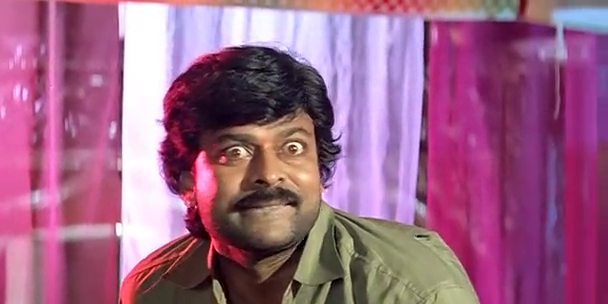
Aapathbandavudu is a melodrama by K Vishwanath that has a bit of action, a ‘will they won’t they’ romance, ‘medicine’ found only in films and some lovely MM Keeravani songs. The memorable performances by Chiranjeevi and Meenakshi Seshadri make their characters likeable and their predicaments seem meaningful. Even with the tear soaked dialogues, dubious plot devices and inexplicable decision making, it is very entertaining, sometimes funny, and often moving.  I admit my love of Chiru helped me get past the ‘oh no they didn’t!’ moments but there are interesting ideas and dialogues that help balance out the excesses.

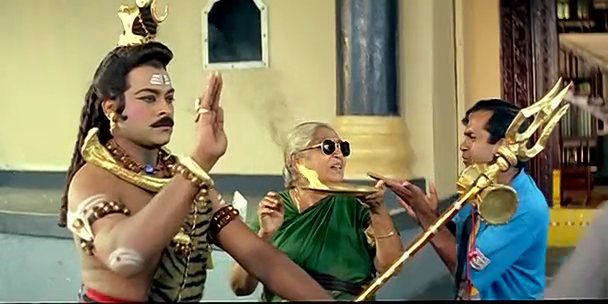
Good hearted low caste Madhava (Chiranjeevi) is attached to school teacher/poet (Jandhyala, who also wrote the dialogues) and his family. Apart from cow herding, Madhava is also the preferred Lord Shiva in district theatricals. Do not try and usurp his role – or this could happen to you:

Sigh. Did I mention this is a visually pleasing film?

Camera angles reflect the sense of elevation Madhava feels when he is compared to Lord Shiva, and he glows with pride at embodying the deity. But he is a country boy at heart and when his cow Ganga goes into labour his first thought is to get her off the train and into some privacy so she won’t be stressed. It’s a dynamic role that gives Chiranjeevi ample scope to use his mass hero shtick as well as delivering a nuanced performance. Most of the laughs come from situations and dialogues as well as Chiru’s knockabout physical comedy.

But I didn’t really need Madhava hamming it up in bovine (or ursine) ‘speech’.

People exploit Madhava’s generosity to make him fix their problems, but as Hema (Meenakshi Seshadri) says, it is usually him who pays the consequences. Despite his simplicity, Madhava is not stupid. He can find a loophole in an instruction as well as any lawyer, such as promising not to lay a hand on someone and still managing to rough them up. He takes on a local bigwig and employs a fighting style possibly inspired by Hanuman as well as Shiva, complete with his own vengeful song. In turn, the politician resorts to elaborate and inefficient methods to try and get Madhava out of the picture – including an attack by an enraged bull (mostly a fibreglass prop), and a murder attempt in a rigged performance. Luckily Hema realises what is going on and takes the guise of Shakti to protect Shiva. I love his dancing from around 5 minutes onwards as Shiva’s rage is unleashed.

But seriously – what is it with the rabbits?

Madhava has always called Hema a goddess, and when they dance as Shiva and Parvati he sees her as his goddess. He is very aware of the barriers between them.

Meenakshi gives Hema a distinct character and intelligence, and her emotional development is well portrayed. She is becoming physically as well as emotionally drawn to Madhava, and is both disturbed and excited by these feelings.  Hema tells Madhava she wishes he had the sense to understand what is in people’s minds, but he doesn’t. There is yearning and dreaming on both sides.

The first section is mostly rural romance with a caste barrier and a few dishooming fights, and I really didn’t expect the twist to take the form it did. Have a happy song before things get dark.

Hema’s father dies suddenly in the middle of a ceremony to honour Madhava. Chiru is brilliant as he shows the overwhelming emotions surging through the grief stricken and furious Madhava. He crafts a clay lingam and berates Shiva for his neglect despite all the prayers and offerings.  A kindly priest points out that just as Madhava could destroy what he had made, man is god’s creation and god has a right over our lives too. That seems to comfort him, but Hema is just devastated.

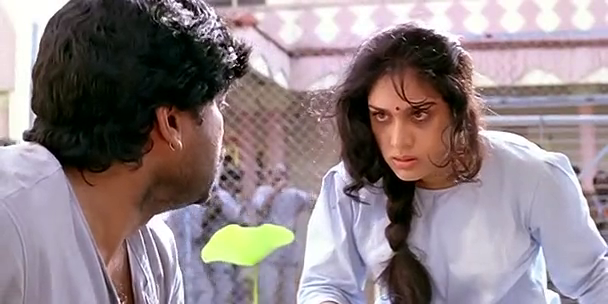
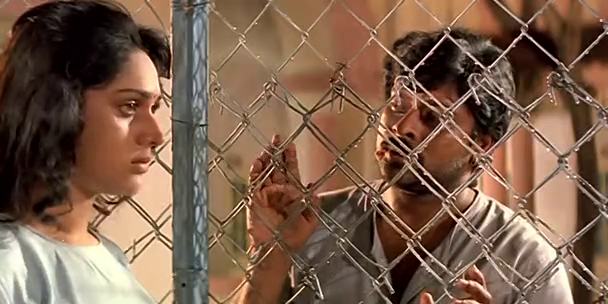
While Madhava is away, Hema visits her sister Lalita (Geetha) and baby niece. She is assaulted by her lecherous brother-in-law and Lalita is killed when she tries to intervene. The police are paid off and that is that. The shock, her grief over her father and sister, fear of a repeat attack – all these things cause Hema to become unstable. She exhibits extreme aggression towards men and is committed to a psychiatric hospital as her family cannot cope. Apparently a punch-up and a food fight is all it takes to fake insanity, so Madhava is soon an inmate and watching over Hema. Most of the inmates act happy and childlike and mental illness is made to seem harmless.

Rape and mental illness should not be used as cheap entertainment fodder, and there are disturbing abuses of power by characters in the film. What I liked was that other characters found these incidents as reprehensible as I did, and tried to get some justice. The mental patients had a right to decent treatment. Hema wasn’t blamed for being attacked or having a breakdown, and her family never abandoned her. There was some empathy shown for the damaged people. Not everything was swept under the carpet, but the powerlessness of the average person in the story was so frustrating.

Meenakshi plays traumatised Hema as intensely angry and determined to fight any perceived threat, which includes all men. When the drugs kick in she becomes empty eyed and withdrawn. She can’t recognise Madhava as her friend but she does eventually recognise she can trust him. When a staff member tries to rape Hema, Madhava defends her and is given shock treatment as the doctors think he is psychotic.  He is further accused of being the rapist, and his suffering is palpable as is his desperation to help her.

Chiranjeevi adds an extra layer of pretence as he switches from Madhava to Madhava (over)acting crazy, and there is a marked deterioration in his appearance once he is an inpatient.  On that note, while the idea of Chiru dressing up and having himself delivered to me in a box has some appeal, this costume may have caused the more fragile patient to have a bit of a setback. But the dancing is great!

Madhava manages to spend some time with Hema and uses a very ugly doll to reignite her memories of home and loved ones, sparked by a favourite lullaby. Compared to some of the other goings on in the asylum that struck me as quite sensible and therapeutic, and indeed she is soon released.

Madhava is left beset by fear and sadness. He has given everything he can, including selling his herd to get money to help the family, and may have ruined his own life. He berates himself for his stupidity in a powerful speech to his reflection, but can’t see any way out of this mess, or the asylum.

The ending is so filmi incredible but I still found myself on the edge of my seat. Just how could it possibly work out? And why on earth were so many people overcome with bad luck and bad judgement all at once?

There are no comedy uncles as such. Brahmanandam is Madhava’s friend and provides some physical comedy but largely this is a straight character role for him and they share a nice rapport. Allu Ramalingaiah as the uncle resents Madhava’s position in the family and has a sharp tongue when voicing his disapproval. Like Brahmi, his role is dramatic, not the comedic turn I expect from him. Sarath Babu as Sripati wants to do what is right, and is the sympathetic ‘other guy’. There is something reassuring about Sarath Babu and having him as a friend does seem to make the good guys that much more resilient. Jandhyala is very fatherly, and suits his role as the unfashionable teacher and poet who refuses to cheapen his art.

The emphasis is more on characters than causes although the film does say something about caste, dowry and other facets of society. It is wildly melodramatic, but the writer and actors invest in the central characters and there is plenty to enjoy along the way.

My DVD cover says this is a ‘must see movie before you die’. I’m not sure about that, but I encourage you to at least look at the song clips. The village scenery is pretty and beautifully filmed, the music is lovely and the dancing is excellent. But really, this is all about the performances by Chiru and Meenakshi and they won me over from the start.

3 ½ stars!

Sorry Chiru.  4 stars?

4 stars!

PS – thanks tolly for the recommendation all those months ago – where are you tolly? It’s been ages!