Brahmotsavam (2016)

Brahmotsavam

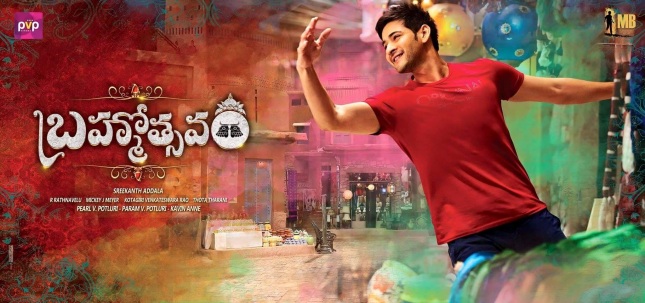
Srikanth Addala’s Brahmotsavam is a real mishmash of a film, where random family scene follows random family scene with the emphasis on feel-good values and upbeat emotions rather than anything inconvenient like a storyline. This is one film where the subtitles didn’t seem to help at all and much of the dialogue made absolutely no sense, but a few other audience members explained that not only were the subtitles inaccurate, but that the script was fairly random too and they were just as confused. It doesn’t help that most of the characters don’t have actual names but are called brother, brother-in-law or sister-in-law (and there are a lot of them), making Brahmotsavam less of a celebration and more of a memory test. Mahesh is always watchable and the strong cast are all charismatic, but with nothing much actually happening over more than two and a half hours, Brahmotsavam is sadly uninspiring.

The film starts with a family celebration, which I think was a wedding but could have been almost anything – maybe just breakfast – given the families propensity for breaking into song and dance at any moment.  Whatever the occasion, Sathyaraj likes to ensure that the whole family celebrate it together – that’s all his brothers, their wives, children and his brother-in-law Rao Ramesh. Everyone is sickeningly happy all the time except for Rao Ramesh who suffers from intense (but understandable) familiyitis and resents Sathyaraj’s success with the paint factory he runs. Naturally everyone in the family works at the paint factory when they’re not singing and dancing around the family home, and they’re all deliriously happy to be working there too. It’s actually a little odd to see Mahesh in such ultra-happy family mode for most of the film, but when he sheds the happy and has to show a range of emotions he really is excellent. More of this would have made for a better and more enjoyable film.

Just to add to his individuality a small animated figure appears to speak to Rao Ramesh any time he is particularly exasperated with his brother-in-law. Since most of the time this imaginary figure berates him for his lack of appreciation for Sathyaraj and the family gatherings this has the effect of making Rao Ramesh even more miserable and less willing to participate. After the first 15minutes I was totally on Rao Ramesh’s side and could completely understand how the continual en masse family gatherings could very easily make anyone want to run screaming for the hills as fast as possible. Rao Ramesh is much more tolerant however and manages to last almost until the second half before he snaps and leaves the family group.

As part of the celebrations, Kajal arrives from Australia for a few months and her father decides it would an excellent idea if she stayed with Sathyaraj and his family rather than spend the time with her own relatives. She’s gorgeous and confident, and Mahesh is smitten the moment he sets eyes on her. However, since she lives in Australia where the accepted practice if you like someone is to tell them you’re interested, Kajal is rather taken aback by someone staring relentlessly at her at every available opportunity without speaking. Living in the same house makes it ridiculously easy for Mahesh to stalk Kajal without appearing to do so but after a few uncomfortable moments Kajal seems intrigued by her silent admirer. The romance progresses as expected but despite Mahesh and Kajal seeming to get on well together, Kajal decides that she wants more from life than to be the wife of a paint manufacturer and decides to move on. She has ambition and is prepared to sacrifice what’s basically a holiday romance for her in order to ensure her dreams come true. I like this assertiveness in her character and Kajal is appropriately confident in the role, while still remaining respectful to the family and her father. It’s a good performance and I like this more mature and sensible Kajal.

Luckily for Mahesh, Samantha turns up in slightly manic friendly overdrive mode and the pair set off pair set off around India in the search for Mahesh’s roots. One of the first family members he meets is the hapless Vennela Kishore and the couple decide to drag him along with them on their road trip. It seems strangely unnecessary but at least Vennela Kishore and Samantha speak to each other which does help to make sense of the second half. Samantha is just a little too zany to be convincing but her energy does help lift the second half. The problem here is a lack of definition for her role and a fluffy backstory that does little to establish her character.

The biggest issue with Brahmotsavam is the addition of too many random scenes which are only peripherally connected to the main ‘plot’ (such as it is) and don’t serve any purpose. For example, at one point Mahesh and his parents are talking by video connection to his sister in the UK. His mum is showing off various sarees while Mahesh teases his sister and the talk finally comes round to how much they miss her and wish she was there. Big family moment – lots of tears, virtual hugs and emotion. And then that’s it – she’s never mentioned again. So much of the film starts with an apparent purpose and then fizzles out without ever going anywhere, making it difficult to work out what (if anything) is relevant.

The first half is also very song heavy with most of the songs coming one after another with little reprieve, including one where Mahesh and his backing dancers frantically try to get insects out of their clothes. That is definitely one of the high points and got the most cheers from the fans in the audience, but possibly not for the choreography. The second half settles down to a standard road trip and there are fewer songs which makes this part of the film flow more smoothly. It’s still a series of random encounters, but at least that does fit in more with the idea of a journey to find yourself while Samantha keeps everything moving along nicely.

There are a few positives to the film. The songs by Mickey J Meyer are good if oddly placed, and Gopi Sundar’s background music is generally effective and not too intrusive. The film looks beautiful and R Rathnavelu’s cinematography captures the warmth of the family home and the stunning landscapes as Mahesh and Samantha travel around India. All the main leads are fine, if somewhat incomprehensible for much of the film, and Mahesh certainly delivers in terms of emotion but the star of the show is undoubtedly Rao Ramesh with his grumpy and often bewildered demeanour. However, the lack of a comprehensible storyline and the random pointlessness of many scenes means that Brahmotsavam is probably best enjoyed on DVD where it’s possible to skip the vague dialogue, watch the songs and admire the beautiful scenery without worrying about the deficiencies in the story.

Goonda (1984)

goonda

A sophisticated archaeological dig uncovers a priceless idol. Numerous criminal gangs swoop to claim the prize, and the title of Best Gang Ever.

There are men in red shirts v men in white pants v overgrown scouts in khaki.  And then a relatively svelte man in black ninjas his way onto the scene – cartwheeling and backflipping like he’d just invented acrobatics. Who could it be?!?

Chiranjeevi teams up with A Kodandarami Reddy again for a mass film with a few little tweaks on the standard formula. There are multiple identities, daring deeds, family histrionics, a significant mole, and a lot of prancing around in parks.

Kalidas (Chiranjeevi) is the up and coming star of a crime gang. Kali is confident and quite happy with his lot which seems to include Mohini (Silk Smitha), the chief’s daughter. He has a fearsome reputation, a tight perm, and blue contacts. He represents the meritocracy while the leader’s nephew Kasi prefers nepotism to ensure his career progression. He and Kali have an excellent and yet not very good at all blindfolded fight to the (almost) death which I found oddly compelling and quietly soporific.

The lair is a cave with odds and ends of lounge furniture picked up on hard rubbish collection day. And despite being top secret and underground, apparently anything that goes on is clearly audible in Kali’s lounge room. A series of unfortunate events triggered by the jealous Kasi sees Kali leave gang life to go straight.

Kali rebrands himself as Raja a pop singer with much better hair, and coincidentally meets SP Anand (Satyanarayana Kaikala) on a train. Cue flashback and the genial policeman is Raja’s father, back when he was a little boy called Ravi.

Goonda-tragedy

Ravi was involved in an accident resulting in a neighbour losing his sight, and his furious dad chased him down the road firing warning shots over his head. So I can kind of understand the kid being terrified of his father catching up with him. Raja saves SP Anand from goons sent to kill him, and SP Anand makes Raja stay in his home. Will they ever recognise him? Will he tell them? Will they overcome evildoers and lively happily ever after?

Raja gets a job at the nightclub owned by baddie Kasiram (Allu Ramalingaiah), where Jaya (his childhood intended played by Radha) sings. I do enjoy a bit of disco yoga classical fusion.

I am less in love with Chiru’s wardrobe, which seems to be sourced from the ladies floral blouse department.

While growing closer to Raja, Jaya reveals her intense hatred of Ravi, the child who destroyed her family. Raja decides he has to win her love as his new self, and fix everyone else’s life into the bargain. Will they ever recognise him? Will he tell them? Will they overcome evildoers and lively happily ever after?

Thankfully Raja likes to get his shirt off, so Jaya recognises the Significant Mole. After some angst and a little bit of PR from the gossipy doctor, she and Raja resolve their differences. Love arrives differently for us all. Sometimes it is wearing a Blondie t-shirt.

Raja decides to secretly protect his dad, although he still won’t tell his family who he is. But Dharmaraju has tracked down Kasi, a witness to Raja’s past. Will they ever recognise him? Will he tell them? Will they overcome evildoers and lively happily ever after?

Raja utilises his old Kalidas skills to get the money for Jaya to settle a debt, and he is the anonymous benefactor behind a sudden offer of an eye transplant to restore her dad’s vision. Raja’s fighting style is as flamboyant and flexible as ever, so the action scenes are loads of fun. There is an excellent train sequence where it is clearly Chiru himself (at least for most of the time), leaping from carriage to carriage and flinging his opponents to the winds.

As is often the case in Telugu films, justice is not clear cut and may reside outside of the legal system. SP Anand has to deal with the consequences of his temper, both in the past and now he knows his son has returned. And Raja has to pay for Kalidas’ actions. I liked that no one really escaped from themselves. It’s a good way to mesh a family drama with a revenge motif.

The multiple identities give Chiru a good excuse to switch up the wardrobe options and he imbues each character with a different emotional tone. Kali is never conflicted about being a crook, and his change of lifestyle was more to please his father figure. He certainly managed to heal his wounded heart in record time. Poor Mohini – forgotten in just one dance sequence. Raja has firm views on Jaya’s brother Srinu being a wastrel and tells him he has no right to eat if he doesn’t earn his own way. Which is interesting in light of his criminal past but maybe he saw that as honest work, and better than taking money from a WOMAN. The horror! His views on the role of women are typical of the age and genre, but he does understand why Jaya mistrusts him and that he needs to give her evidence before she would change her mind.  And despite his love for his estranged family, Ravi also sees that his father was very unfair. He doesn’t examine his own decision to jump off a bridge too closely, but you can’t have dazzling insights into everything.

Jaya has a bit of backbone, and Radha always has good chemistry with Chiru. When she realised who Raja was, she was furious and articulate in rejecting him. And when she changed her views, she was again articulate and clear in what she wanted to happen with their relationship. She is a typical filmi heroine but I could respect that she was making some of her own decisions. The wardrobe team do torment her in some dance sequences, and I suspect they even repurposed Kali’s perm wig. In a way she is the character that triggers Raja into action. He could have made do with seeing his family occasionally under the guise of friendship, but he fell for Jaya and so he had to do something to gain her trust and affection.

Allu Ramalingaiah and Rao Gopal Rao are the muddling but nasty crims who run the club and there is an ongoing subplot of both stupidity and cruelty at their behest. There is also a large cast of supporting goondas, many of whom seemed most animated in their death scenes. Satyanarayana Kailkala and Annapoorna do what they have done so very many times as Ravi/Kali/Raja’s parents. Silk Smitha’s role was small but she did get to wear some fabulous sequinned shorts so she made an impression.

Despite being full mass formula, Goonda is a bit more low key and contemplative than some of Chiru’s other hits. The music and choreography is a bit lacklustre, especially considering that Chiranjeevi and Radha were no slouches in the dance department. The set design and costumes also show the spirit of making do. I think they spent all the big bucks on the train. See this for truth, justice, and two kinds of Chiru! 4 stars!

Sarrainodu

Sarrainodu

If all you want in a movie is plenty of gory fight scenes and a couple of good tunes then Sarrainodu is probably the film for you. But on the other hand, if you prefer a cohesive story with an actual plotline, semi-plausible romance and an attempt at more than one-dimensional stock characters, then best to steer clear. The one saving grace in Sarrainodu is Allu Arjun, who manages to entertain even while playing a violent, psychopathic stalker who nonetheless is actually the hero.

Bunny is Gana, ex-military, although ‘ex-‘ exactly what is never specified in a general vagueness that afflicts every character.  Gana spends his days bashing up offenders his lawyer uncle Sripathi (Srikanth) has failed to bring to justice in court, much to the frustration of his father (Jayaprakash) who feels he should be doing something more worthwhile with his life. The rest of the family dramatics follow Telugu Mass Movie Formula No 1, with the addition of a comedy track featuring Gana’s sister-in-law (Vidyullekha Raman), a Tamilian obsessed to the point of mania with sambar and Brahmi as a philandering brother-in-law. Neither of the two comedy tracks is funny and Brahmi’s sleazy character is particularly off with little relevance to the rest of the film but then that’s nothing unusual for this type of film.

With some nice symmetry, while Gana is belting the living daylights out of gangsters to reclaim land they appropriated, uber-villain Vairam Dhanush (Aadhi) is cheerfully slaughtering villagers to grab their land for his pipeline project. Vairam likes the sound of his own voice and witters on about ‘background’ as if the concept may have some significance to the plot later on. Perhaps it was meant to, but since the background of neither Gana nor Vairam (or anyone else for that matter) is given anything more than a brief mention, Vairam’s insistence on the concept makes little sense.

As a villain, Aadhi has a good sneer and appears appropriately nasty, but his character is so one-dimensional that Vairam himself has very little impact. He’s evil purely for the sake of being evil and naturally (adhering to TMMFNo1) he’s rich and privileged with the Chief Minister as his father and a large criminal network at his beck and call. Aadhi tries hard to give Vairam some personality but he has little to work with and his villain pales beside the spectacle of Gana’s righteous fury.

Gana falls in love with Hansitha Reddy (Catherine Tresa), oddly cast as a very unlikely MLA, and decides to follow the usual path to true love (TMMFNo1 again) by stalking the girl until she falls for his charms. This is even less viable than usual given that as an MLA Hansitha has the wherewithal to send Gana about his business, but bizarrely she declares her love for him instead. The path to true love is not smooth however and there is a complication in the form of Maha Lakshmi (Rakul Preet Singh), who falls heavily for Gana when he rescues her from Vairam’s thugs. Sadly neither of the romances works well at any point in the film and there is zero chemistry between Bunny and his two leading ladies, probably due to a lack of screen time together and therefore little opportunity for any relationships to develop.

Bunny is on top form here and single-handedly manages to hold the film together despite the many flaws and gaping holes in the barely-there plot. Whether he’s fighting or dancing he looks amazingly fit, and effortlessly switches between his devotion to Hansitha and his uncontrollable fury when he sees injustice against the helpless. As always he looks awesome in the song sequences where every dance routine features excellent footwork, amazing energy and that trademark Bunny grin. S.S. Thaman’s songs are catchy and memorable too, and the choreography is well suited to showcase the stylish star. He gets to wear some incredibly bright and colourful costumes and fares rather better in the wardrobe department than Catherine Tresca and Rakul Preet Singh, who both suffer from the curse of inappropriately skimpy Western style costumes in the songs, although both look stunning for the rest of the film. Anjali has a better time of it with her guest appearance in the item song blockbuster – which I love for many reasons, not the least of which being that one of the backing dancers is totally rocking a cool pair of specs – you go girl!

The other aspect of Sarrainodu that works well is the action, with fight sequences that are well imagined and expertly staged despite being incredibly violent and completely over the top. Where else would you have a fight scene on roller blades for example, or a wonderful stand-off by the hero beating numerous thugs while the participants in Puli Kali leap energetically around the fight? Most of the action contains a lot of slow-motion, but this highlights the choreography and showcases the small vignettes in the background – the bystanders, a horse bucking as it runs past and the portentously displaced gravel with every one of Gana’s footsteps. And it’s just as well that the action sequences are good as there are a lot of them – Gana spends most of the film fighting in increasingly violent and bloody encounters, throwing thugs around like confetti at a wedding and inflicting maximum damage on Vairam’s crime empire.

Boyapati Srinu adds almost every possible masala ingredient in this mish-mash of a film, but fails to provide a coherent plot or any rationale to his characters. I love a good mass entertainer – I don’t expect great character development or logic and realism in the plot, but there does need to be an actual plot and some sort of reason for the antagonism between the hero and the villain.Sarrainodu does not succeed by any of those criteria and yet I still enjoyed the film. The fight scenes are excellent, the dance sequences well worth watching and Allu Arjun puts in a magnificent performance that just about manages to overcome all the flaws in the film. One for the fans sure, but if you’re a fan this is Bunny at his best and that’s all that’s needed.