Thiruvilayadal

Thiruvilayadal is a wonderfully embellished pastel confection of a film, supported by a powerful performance from Sivaji Ganesan as Shiva. Thank you to Suja and Ajit for their enthusiastic recommendations. I am also very grateful to the rajshritamil channel on Youtube for making the film available with subtitles. Suja asked how meaningful or interesting a vintage devotional film would be to a non-Hindu? The answer is – very!

I was raised Catholic which, as a friend said recently, is the glitzy end of Christianity. Catholicism incorporates numerous saints, some having their own specialities or areas of influence so the faithful can pray to the one best placed for their situation. They are identifiable by different visual elements and props, often referencing a gruesome means of death if the saint had been martyred. So the colour, pageantry, stylised imagery and iconography of a devotional film are familiar elements for me even though the philosophy and faith are different. One of the biggest differences is something I remarked on after watching Mayabazar. The relationship with God as depicted seems a lot more direct and personal than I am used to. And Shiva is not immune from displaying vanity and caprice as well as humour and tolerance, so I found it a more human interpretation of God.

I suspect more than one team was responsible for the subtitles. Why? Lord Shiva speaks like this occasionally:

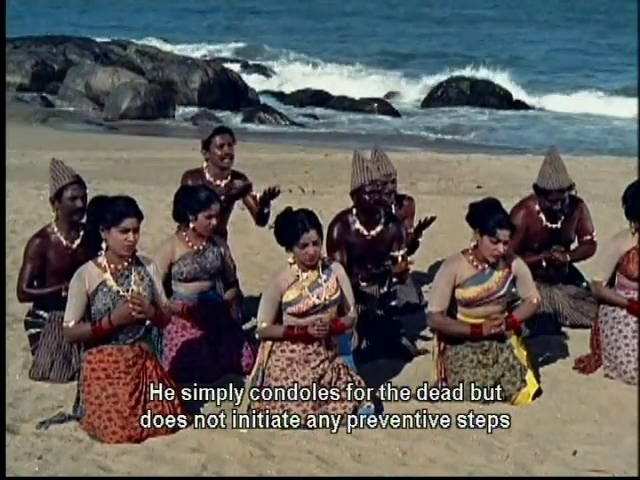
While fisherfolk in a rustic village complain thus:
Anyway, the story begins as a resplendent Shiva (Sivaji Ganesan) receives the praise of his devotees, including his wife Parvati (Savitri), which promotes that groovy mood.

Even divine families have their squabbles and a contest between Ganesh and Murugan ends when Ganesh uses his erudition to define the question and win the prize. Murugan is incensed by losing to his sibling and leaves home. Parvati tries to persuade Murugan to return, and explains that it is Shiva’s way to test his devotees.

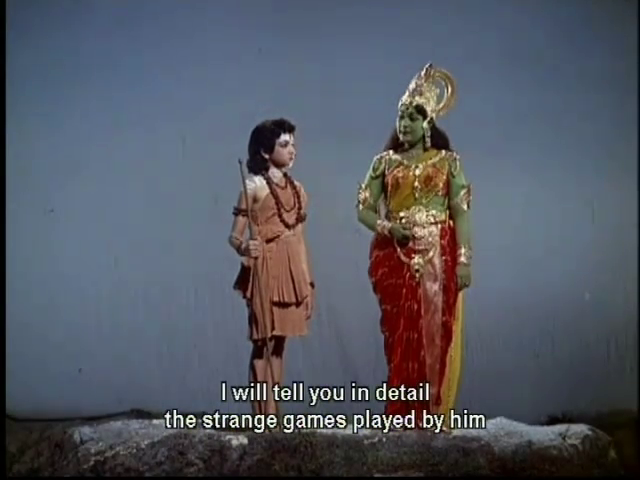
She narrates several stories of Shiva’s ‘games’ to persuade her son that there was no insult intended. The stories are very entertaining and the format allows different aspects of Shiva to be explored in array of visually delightful settings. Again, the theme of God testing the faith of an individual is a familiar one to me, but the style and methodology do differ.

Shiva tests the knowledge (and ego) of a renowned scholar and teases a poor poet. Both get their rewards, but for Shiva the reward seems to be the fun of the game.

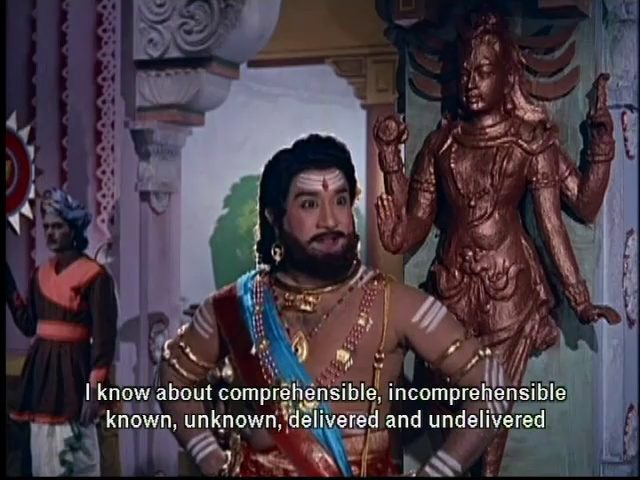
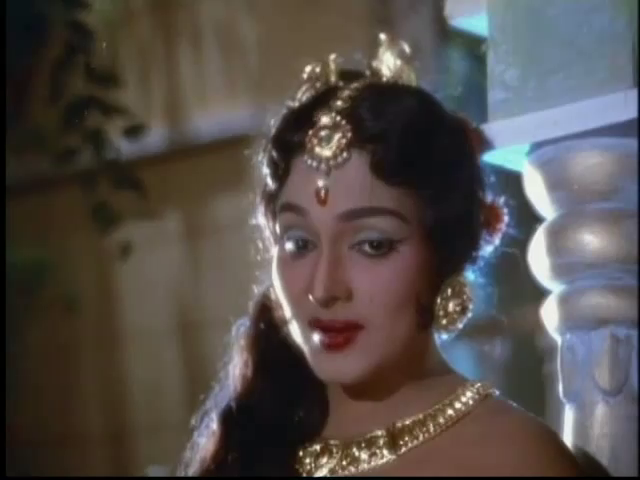
And for the viewer, we get an answer to the vexing question ‘Does a woman’s hair possess a natural perfume?’ Muthuraman and Devika are lovely as the King and his glamorous queen, and their ornate palace is stunning.
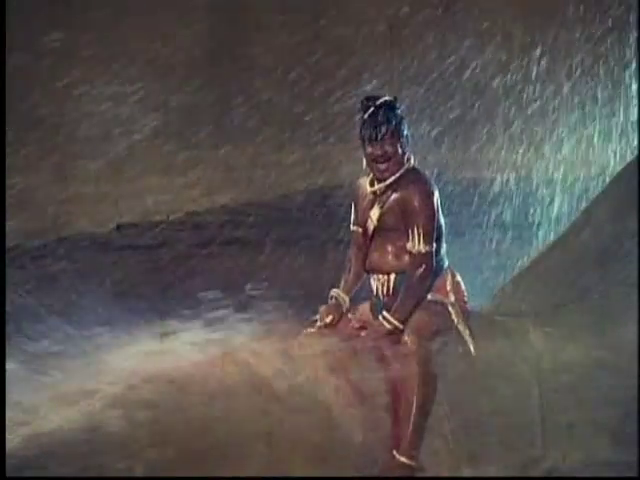
Sivaji Ganesan revels in the role, exuding a majesty and playfulness that makes him compelling. He is not what I would call handsome but he is absolutely magnetic. His larger than life style is perfect for Shiva. I love this song, performed by Shiva posing as a firewood vendor. An arrogant musician challenges the Tamil court to best him, and the kingdom is at stake. Shiva sets up outside the musician’s residence and psychs him out before the contest by singing a song so perfect it stops the birds in the air and the waves in the ocean. Even if you don’t love the music as much as I did, watch this clip for Shiva’s exuberance and joy in creation and art, and his pleasure in being really annoying.

Savitri is regal and composed as Parvati. She has endured Shiva’s whims for aeons. She is his equal in temper, but he wields his destructive power without fear of consequences where she is more restrained. Once, after momentarily diverting her attention from her husband to her son, she was punished by being born in a fishing village with no memory of her divine nature. I think that was a harsh reward for good parenting. Parvati showed herself to be a leader in a human incarnation while in the village. I also enjoyed seeing Manorama as one of her girlfriends.

Of course Shiva wasn’t going to let anyone else win his wife in the ‘he who is bravest’ competition, so he appeared as a mysterious heroic fisherman.
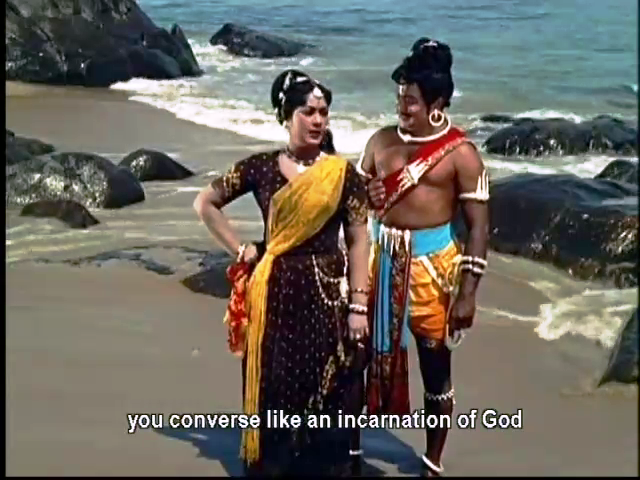
Their flirting was cheesy but lots of fun. And this episode includes one of my favourite filmi things. A shark fight! Admittedly it is more like a rubber whale with dentures in some shots, but look upon the mighty beast and despair!


Shiva defeated the shark, won the girl and kindly restored her to her former glory.

The comedy is character driven and fits into the main narrative. Nagesh plays a poor poet who becomes a pawn in Shiva’s game. His mix of rapacity and naivete is funny without being too much. Shiva’s answers to questions by mortals are often a witty partial truth or play on words. It’s a sprightly and engaging film.

The subtitles are generally very good but I did have some questions about the translations. The balance of Shiva and Shakti is the subject of one story, with neither being able to exist without the other – the balance of opposing forces. After a squabble over her father Shiva uses his power as the destroyer and Parvati/Shakti’s lifeforce is vanquished. (The dance of destruction is dramatic but not terribly accomplished.)
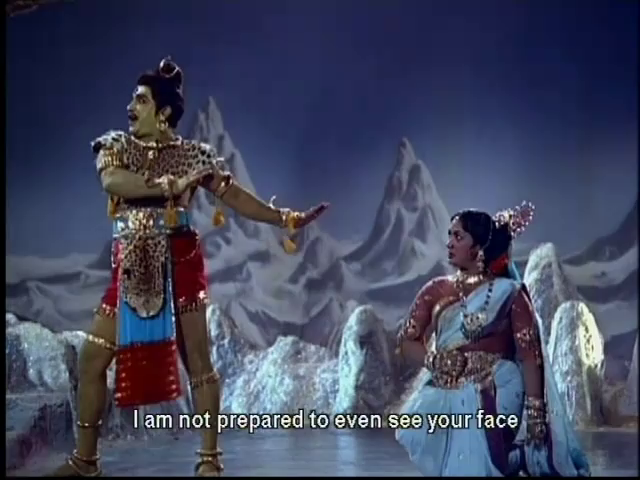
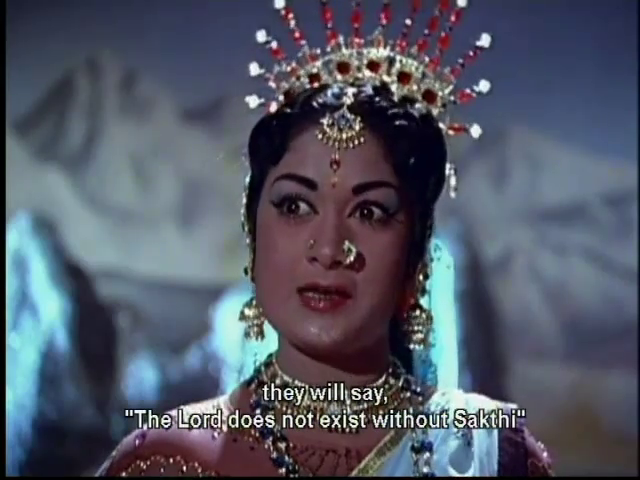
The senior gods intervene and remind Shiva that without her the world becomes barren and dark and he relents and restores her. There are a couple of dialogue exchanges about how all women must submit to their husbands that seem at odds with the theological position. I wonder if it was translation that chose ‘submit’ when the actual word was more nuanced, or if it reflects other beliefs. This image seems to support a balance rather than the dominance of one aspect suggested by the script.

There is a strong theme of the purity and beauty of Tamil language and culture and Shiva rewards those who love and protect the tongue. Many key supporting characters are Tamil scholars and are accorded great respect and some indulgence by the gods. Since this is from the 60s maybe the positioning of Tamil culture and language as superior and preferred by the gods was a reflection of the Dravidian movement or other factors? I’m sure someone will tell me.

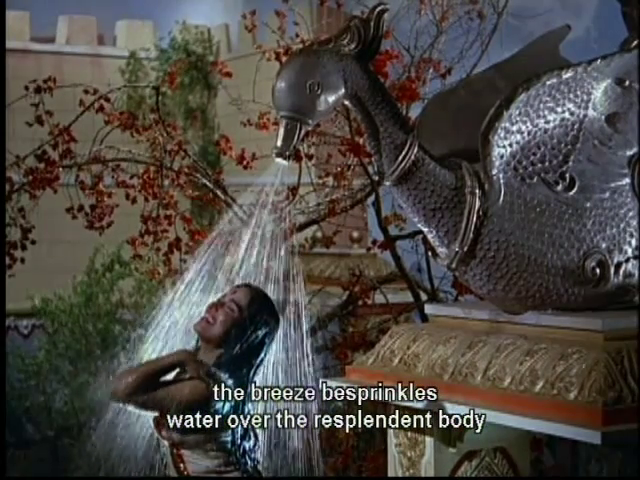
K.V Mahadevan’s music is not only enjoyable but is integral to the stories. The art design is just wonderful. There is such a wealth of beautiful detail, right down to treasures like the fish themed musical instruments and a fabulous bird shower.
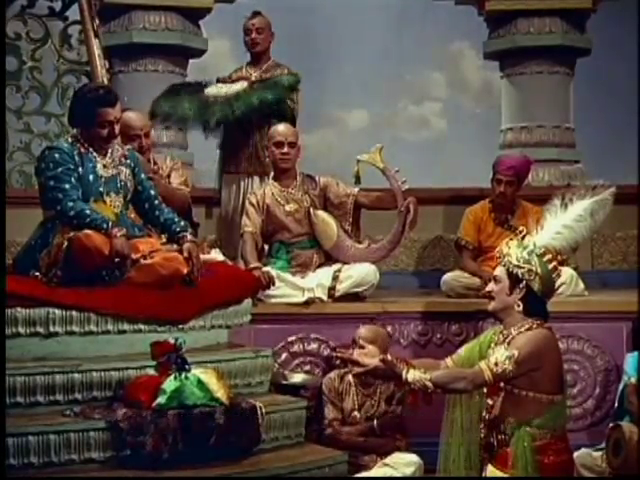
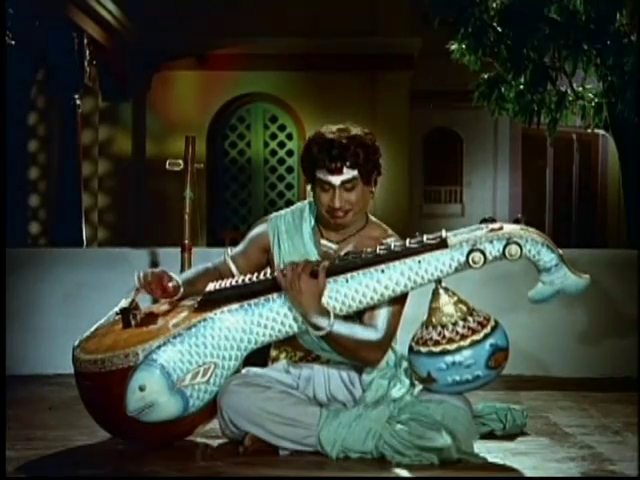
The central performers are brilliant, the stories are engaging, and it is a pleasure to see and listen to. There is so much to enjoy in Thiruvilayadal whether you watch it as a colourful entertainment or with a more philosophical analysis. 5 stars!

Heather says: This is a simply a beautiful film. The colours are amazingly bright and it is incredibly iridescent and sparkly throughout. From the opening song and dance until the very end it is captivating with beautiful music and stunning performances. I think this was the first film I saw with Sivaji Genesan and he seems to be the perfect person to play Lord Shiva. He has such charm and brings so much character into the role. I particularly love his Tandava dance after the death of Sakthi where his facial expressions are superb and I love that he dances with his eyes. My dance teacher keeps telling me this is how to dance properly, and this is the perfect example of how much it brings to the performance. Even if as temple points out he’s not technically perfect otherwise. My favourite story is the one about the musician Hemanathan and the song above where there are multiple Lord Shiva’s playing different musical instruments is brilliantly done. Considering the film was made in the sixties and the special effects were presumably rather limited, it’s all put together very well and creates a magical effect every time I see it. And I totally agree with Temple’s comments about the subtitles – the ‘I feel groovy’ perhaps is showing the influence of the sixties, but some of the rest I have no explanation for at all.

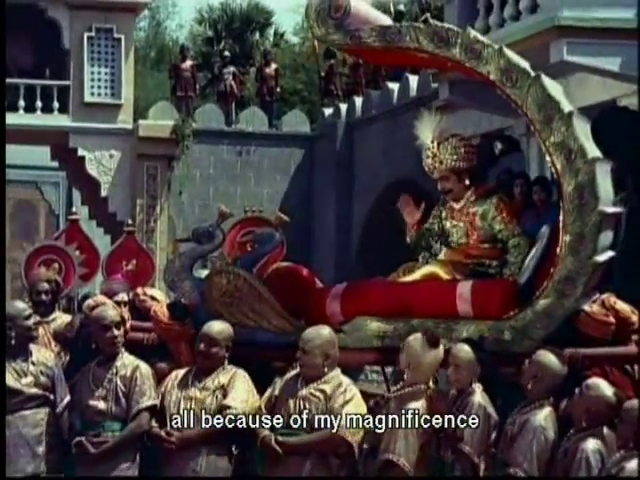
There is at times so much detail in the film that at times it distracts a little from the main action for me. The backing musicians during Hemanathan’s performance have amazing facial expressions and really get into the music. I tend to end up watching them and the various other servants and hangers-on rather than concentrating on the lead characters. But then again, so much of the detail is charming. There is the fish tika on Kayarkani’s forehead as the fisherman’s daughter, the wonderful peacock chariot that carries Hemanathan to the Pandian King and Shiva’s third eye that blinks just to name a few.

Thiruvilaiyadal is an absolute classic, and as a friend said when we were discussing the film, it’s one to watch again and again. 5 stars.

Sivaji (2007)

Sivaji is a wonderfully over-the-top film celebrating all things Rajinikanth. There are references to the superstar’s previous films and to his own life, plenty of classic Rajni style and he’s present in almost every frame. Sivaji also features stunning sets for the songs and a myriad of different looks for Rajinikanth throughout the film. While the story has an interesting plot involving corruption, the screenplay gets somewhat tangled in the numerous set-ups to introduce the next song or fight scene.  But in the face of so much else that is fantastic, the disjointed nature of the story doesn’t seem to matter. When the first song is as much fun as this, then the film is already a winner for me. This features Nayantara in a cameo role along with an incredible number of  men with round, jiggling painted bellies – I love it!

The film opens with Sivaji returning from the USA with truck-loads of money and deciding to set up a University and Hospital where everything will be available to the poor for free. His grand plans are opposed by local businessman Adisheshan (Suman) who blocks him at every turn. To make Sivaji’s life more difficult there is the practice of bribes and kick-backs that seems to be built in to the system at every stage. Despite his unwillingness to play along, Sivaji has no choice but to fall in line and pay everyone off if he wants to get his hospital and university built. I’m quite sure that all these people in yellow hats were the inspiration for minions in Despicable Me – or at least they should have been.

Ultimately this works to Adisheshan’s advantage when he contrives to have Sivaji arrested and charged in court. There Sivaji admits that he paid bribes to get permission to build and ends up losing everything. This might have been the end of the Sivaji foundation, but Adisheshan is the one person in Tamil Nadu who has no idea who he’s really dealing with and he rashly mocks his defeated enemy.  This sparks Sivaji’s quest for revenge, and the 1 rupee coin Adisheshan tosses at him to start his begging career becomes a talisman and also funds the start of the fight back. Sivaji devises a cunning plan to restore his finances and bring about Adisheshan’s downfall at the same time.

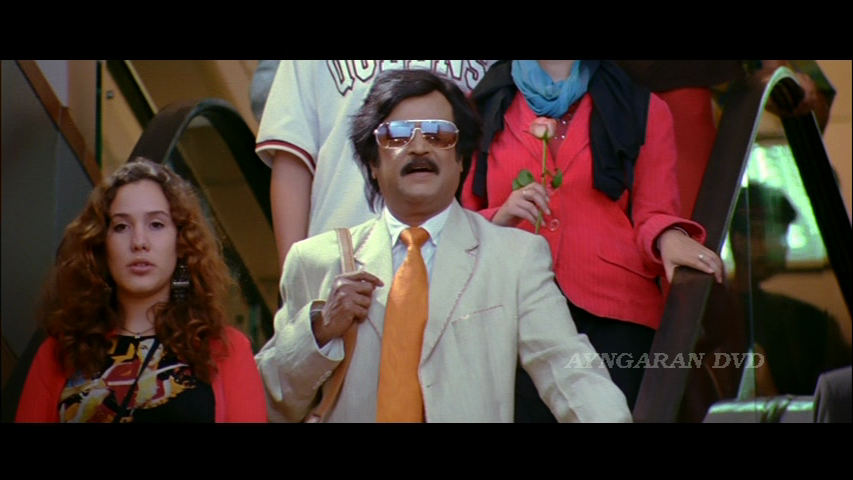
Rajinikanth is truly in his element here as the crusading Sivaji. He still has his trademark tricks, but this new  health conscious Sivaji spruiks the ‘cigarettes are bad for you’ message, catching mints and tossing his sunglasses instead of cigarettes. It’s all a little contrived, but the tricks are so much a part of any Rajni film that Sivaji would seem incomplete without them. There areplenty of fight scenes, and these are well choreographed by Peter Hein. The final showdown features some Matrix style action and Rajinikanth pulls it off with great style. If he has slowed down a little in some of the fight scenes and songs, well, that’s understandable but it’s barely noticeable. As well as the romantic songs, there is a fabulous sequence where Rajinikanth impersonates Sivaji Ganesan, MGR and Kamal Hassan and he gets really gets the mannerisms of the different stars very well.

During the course of his crusade against corruption, Sivaji meets and falls in love with Tamizhselvi (Shriya) and despite her family’s initial reluctance and dire predictions of disaster from the priest, the two go ahead and get married. Thankfully Shriya is much less annoying than usual, perhaps because she is totally overshadowed by Rajinikanth, but I stand by my previous observations that the more clothes she wears the less irritating she is. Her main raison d’être here is to look pretty in the songs which she does very well.

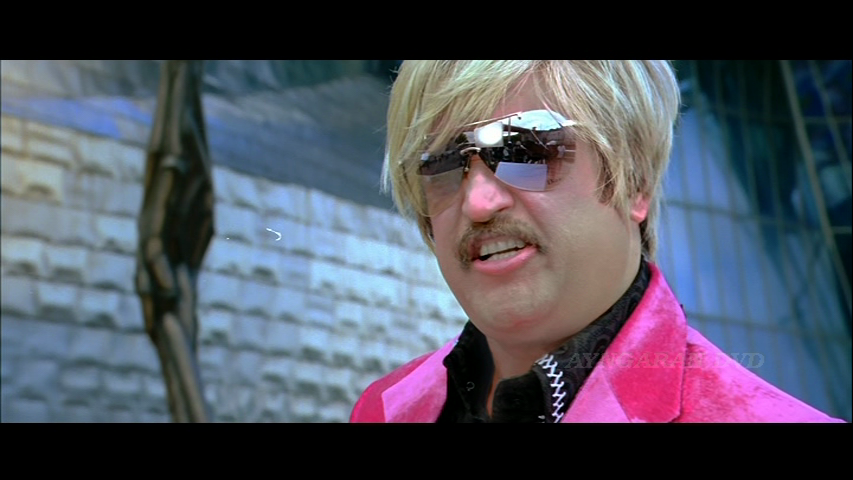
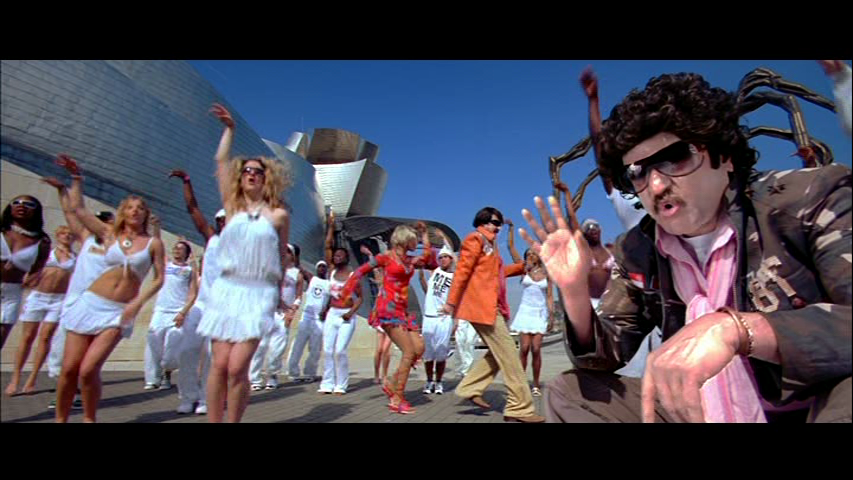
Other than her presence in the songs, Tamizhselvi is the ‘perfect Tamil girl’ of Sivaji’s dreams and that ensures plenty of traditional outfits and a fairly restrained performance, making her more tolerable than usual. Someone in wardrobe really does have a grudge against her though because she does appear in some of the worst outfits I’ve seen in the song ‘Style’.  I’m not quite sure what to make of this song for many reasons. As a song extoling style it has some truly dreadful costumes and the whole white-skinned Rajni just seems very wrong. I’m always perplexed by the quest for paler skin in India, but then I’m equally as baffled by the drive for tanned skin among Europeans. I don’t like the melody or the lyrics of this song at all, but it does feature an incredible selection of amazing wigs for Rajni and is worth watching for that alone. Pick your favourite style!

And the contrasting faces of Shriya.

While the film deals with the theme of corruption, there is still plenty of comedy along the way. Although much of the humour comes from Rajinikanth and his various mannerisms, Vivek is excellent in his role as Sivaji’s uncle Arivu and provides many funny moments. Even though I’d normally cringe at Arivu’s match-making technique of parading girls in front of Sivaji, Arivu’s character is self-aware enough to make this funny rather than crass.  There is more slapstick comedy in the scenes with Tamizhselvi’s family who disapprove of Sivaji and his exuberant family. The actor playing Tamizhselvi’s father (Pattimandram Raja) has some excellent expressions and I love the way he looks as if he smells something bad every time he sees Sivaji.

On the other hand, Suman’s Adisheshan is a very mild mannered villain without any real evil tendencies. Although I’m sure this is meant to make sure that all eyes are firmly on Sivaji, he still seems rather unimpressive in comparison. His demeanour however is quite realistic as a businessman with political leanings and his reasons for opposing Sivaji are understandable considering how much the free hospital and university will cut into his profits. His methods of opposition are also consistent with his character and perhaps S. Shankar is trying to point out that corruption can be present in even the most reasonable appearing businessman.

The second half of the film relies more heavily on the effects and gimmicks, and it’s disappointing that Vivek’s character gets more sidelined. But it’s still a lot of fun to watch mainly due to Rajinikanth’s performance. The music by A. R Rahman is excellent apart from the Style song mentioned previously, and the high budget of the film is easily explained by the song picturisations. The sets and costumes are totally fabulous and both Thotta Tharani as art director and K. V. Anand as cinematographer deserve the awards they received for their work. There are guest appearances by a number of established Tamil stars including Raghuvaran and Manivannan and  the support cast are all very competent, although generally overshadowed by the superstar.

Although Endhiran (S. Shankar’s latest film with Rajinikanth), had a bigger budget and even more special effects, I prefer Sivaji. The story is engaging despite the way it jumps around and Shankar shows corruption within government systems in a way that seems quite plausible. Even though the one man crusade requires a leap of faith, it is after all Rajni and so anything is possible. It’s one to watch for the lavishness of the sets and the larger than life presence of Rajinikanth. And for all those wigs! 4 stars.

Temple says: Sivaji is what I have come to think of as a typical Shankar blockbuster in that it is all spectacle and very little plot. I think Heather is being overly kind in saying there is a theme to the story as I see it more as a collection of ideas that never really develops. Shankar introduces statements about corruption, the brain drain overseas as bright graduates pursue careers outside of India, the returning NRI and how they navigate between worlds, the obsession with all things American being seen as ‘better’ than local, the clash between tradition and modern living and the nostalgic ideals that may no longer exist. All interesting, and yet there is no real exploration of these notions as there is too much else happening. We move from fight to song to comedy to spectacular song and rarely pause for breath. It’s hugely entertaining, but it doesn’t really bear analysis.

Rajnikanth is in excellent form and this is his film from go to whoa. Sure he is way older than his character, but it somehow works as he deadpans his youthful dialogues, daring you to not believe,  and throws himself into the action with gusto. The fights have been tailored to suit him, and the music shop sequence is one of my all time favourites from any film industry. Shriya can range from terrible (e.g. Kanthaswamy) to pretty good,  and this is one of her better performances. She handles the comedy really well  (I love her expressions in the “Chandramuhki” sequence), isn’t completely overshadowed by Rajni, and does justice to the massive song sets and costumes. And she manages to look like she isn’t staring intently at Rajni’s wigs in the romantic moments so I decided Shriya may be a better actress than I had previously thought.

See this for the spectacular sets and design, for a Superstar who can dominate the hyperactive pace and attention grabbing visuals, for the music (except Style) and for the filmi equivalent of a crazy amusement park ride. You’ll be dizzy and none the wiser at the end, but it was so much fun while it lasted. 4 stars!

Mayakkam Enna

Going to see Mayakkam Enna was a whole new adventure since not only did the film not have subtitles, but it was also showing at a cinema somewhere out in the suburbs on a university campus. Thankfully I found my way to a very bijou but comfortable cinema and was very happy to discover that they sold plenty of snacks at half time – I will be back!

I expected a lot from Mayakkam Enna since the team of Dhanush and his brother Selvaraghavan have made some of my favourite Tamil films together. And I wasn’t disappointed. My only complaint is that I really did miss subtitles for this one. The audience were laughing and applauding for a lot of the dialogues and I wanted to know what was being said to get such good reactions.

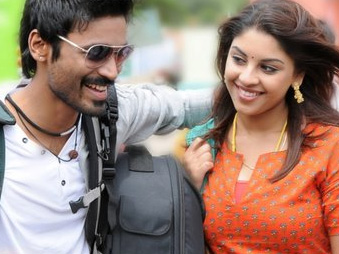
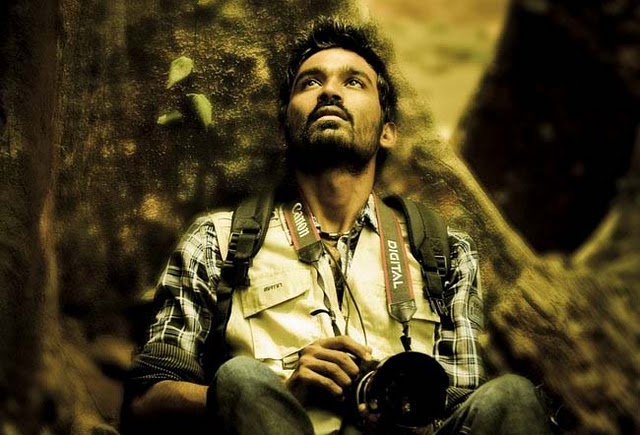
Karthik Subramaniam (Dhanush) is an aspiring wildlife photographer with a supportive group of friends, who all appear to live together in a house with its own bar. Excluding the bar, I could really relate to this, as I had a similar set of friends back in my final undergraduate year. We all lived together and went everywhere as a group so I had an idea of the changes caused by adding a new person to this dynamic.  Karthik’s best friend is Sunder (Sunder Raman) and as expected the gang aren’t too welcoming to his new girlfriend Yamini (Richa Gangopadhyay).To make things worse, Yamini and Karthik don’t get on at all and constantly dig at each other. While I missed the dialogues that generated a lot of laughter from the audience, there were a few barbed comments that really didn’t need translation as both Richa and Dhanush did a good job in getting their feelings across.

Over time however their enmity turns to attraction, leading to a love triangle with Sunder blissfully unaware of his girlfriend’s change in her attitude to Karthik .

Meanwhile Karthik is slowly compiling a portfolio of wildlife shots in between running around taking pictures of weddings and tourists at local temples. His role model is award winning wildlife photographer Madhesh Krishnaswamy (Ravi Prakash) and Karthik is determined to get a job with him to learn from the best in the business.  However Krishnaswamy has no interest in nurturing Karthik’s career and repeatedly sends him away with scathing comments about his work. I have to admire Karthik’s persistence as he gets no encouragement whatsoever from his hero but still keeps trying to get that elusive ‘perfect picture’ which will persuade Krishnaswamy to give him a job. The shots in the countryside are absolutely stunning here and cinematographer T. Ramji captures the wildlife flawlessly. These visually stunning moments are in sharp contrast to the much more claustrophobic scenes between Karthik, Yamini and Sunder and this accentuates the tension in their relationships well.

The first half of the film concentrates on the love triangle and despite the subject matter, there are plenty of light hearted moments along with the drama of the relationships. The pace is fast and the dialogues seem snappy and well suited to the action. The second half is much darker as it documents Karthik’s slide into alcoholism and his emotional breakdown as he is unable to come to terms with the events that unfold. While this part of the film is slower, it does feature an excellent portrayal of despair by Dhanush, although he is matched by Richa’s fantastic depiction of a loyal and long suffering wife.

Although this is Richa’s debut in Tamil cinema, her previous performances in Telugu films have been impressive and she is even better here in a role that seems to have been made for her. The two actors have plenty of empathy together and each complements the others performance.  Apart from Sunder none of the other actors get very much screen time but all seemed to do well enough in their roles.

While Mayakkam Enna is in some respects a typical Selvaraghavan film, focusing as it does on darker emotions, Karthik is a much less damaged lead character than I’ve seen in his other films. Karthik doesn’t appear to have had an abusive childhood and is a well-liked and popular person with a large and warm circle of friends. This makes his descent into depression and substance abuse all the more shocking since he does have a strong support network. It also makes him a more realistic and sympathetic character, although in reality I don’t think anyone would have put up with his self-pity for quite as long as they did here.

The music by G. V. Prakash Kumar is another high point of the film, particularly since Dhanush sings on two of the tracks. I loved the soundtrack when I first heard it, and the songs fit well into the film, althoughI think the picturisation of Kadhal en Kadhal is a little strange. I loved the cartoon characters in Voda Voda though and this is a great song.

While the film does become overly dramatic in the second half it’s still enjoyable due to the strong performances. But please, someone take that long-haired wig Dhanush wore in the closing scenes and burn it! It’s terrible and really doesn’t suit him at all. That aside, Mayakkam Enna is definitely worth watching on the big screen and both Dhanush and Richa are fantastic. I think that with subtitles this could become one of my favourite Dhanush films – I loved it.