7 Aum Arivu

After reading all about the buzz with 7 Aum Arivu, this was the film I was most looking forward to watch this Diwali. Especially since we had the promise of English subtitles for the first time for a Tamil film in a mainstream cinema release here in Melbourne. However there was so much hype in the build-up to its release that it was almost inevitable that it would fail to meet my high expectations. Despite an interesting concept and a generally good cast, the film pacing is slow with too many gaping plot holes to be anything more than just an OK watch. But there are some good points along the way and finally seeing a Tamil film in the cinema (with subtitles) is a definite plus. This is the first time I’ve seen Surya on the big screen and he certainly makes a good impression. The action scenes are well shot and I’m always happy to see a heroine who is capable of more than hand wringing, sobbing and looking helpless. I just wish they had spent more time on the actual plot and less on the set-up which takes up most of the film.

The film starts with an almost documentary style depiction of the life of Bodhidharma – the 5th century Tamilian monk who reputedly was the founder of the Shaolin temple in China. The documentary feel comes mainly from the interview style used and the lecturing voice-over as 150 years is neatly compressed into 20 minutes. The entire story is treated as factual although a quick internet search shows there appear to be a number of different versions around and no clear agreement on Bodhidharma’s lineage. But that really doesn’t matter here as the point is to illustrate Dharma’s expertise in war craft, medicine and hypnotic techniques, which these opening scenes do very well. Surya is perfect as the Pallava prince who journeys to China to become the ‘blue-eyed barbarian’. Yes, I did notice the blue contact lenses. Much is also made of the fact that people in China know exactly who Bodhidharma was while the Indians interviewed had never heard of him. This lack of knowledge of Tamilian heritage and history by people in India is pointed out a few times throughout the film and does become a tad wearing after a while.

Once the story of Bodhidharma has been established, we are transported back to the present day where an assassin has, rather improbably, been sent from the Chinese government to deal with a troublesome scientist and to initiate something called Project Red. The assassin Dong Lee (Johnny Tri Nguyen) is the top student of Kung Fu from the Shaolin temple and apparently an expert in all forms but seems to prefer the use of hypnosis where possible.

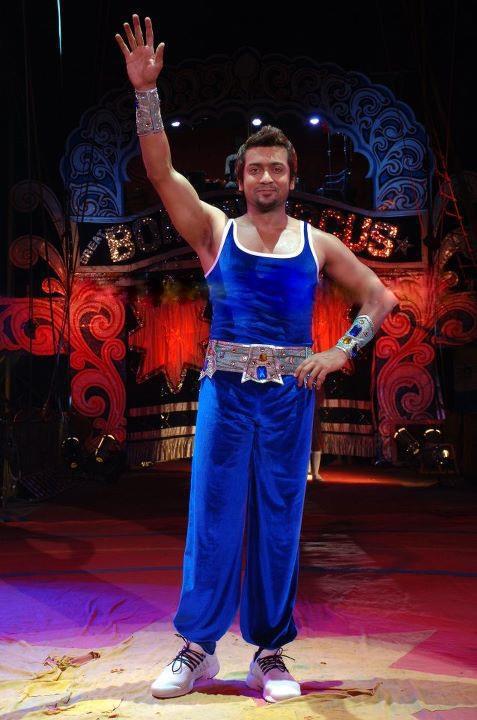
The scientist in question is Subha Srinivasan (Shruti Hassan), a researcher in the field of genetics whose work involves manipulating genes to resurrect DNA encoded attributes such as the fighting techniques and medical prowess displayed by Damo. Subha has tracked down the descendent of Damo who is most likely to be suitable for a little gene manipulation and he just happens to be the circus performer and general layabout Aravind (Surya). While Aravind thinks he has managed to trick Subha into meeting him to further their relationship, in fact she has been stalking him for over a year and has a scary collection of his discards including a tooth brush to show for it. It makes a change for the hero to be the victim of some determined stalking and I liked this deviation from the norm. Strangely Aravind is not as upset by the stalking as he is by the realisation that Subha doesn’t love him but just wants to get at his genes. Although from my SI filmi education so far I thought that stalking was supposed to prove true love but maybe I’ve just got it all wrong?
Not only has Subha been collecting Aravind’s DNA, but has compounded her dishonesty by stealing  a book from the local museum to further her research. It’s no surprise then to discover that her project doesn’t get past the local ethics committee although their reasons for rejecting her are more based on her youth and lack of kow-towing to their authority rather than her actual unethical approach to research. I found a lot of the science very funny since I do actually work as a medical researcher, often alongside geneticists, so have more than a passing knowledge about the subject. So while a lot of the science is very dodgy and eventually becomes implausible, it does have some basis in fact and it’s a relief not to have too much dumbing down of the subject matter. However the most unrealistic part of the film for me is Shuba’s apparently unlimited source of funds for her research – now that really was unbelievable!

Having learnt that Subha was only interested in him as a human lab rat, Aravind is devastated and mopes around theatrically (well he is a circus performer) until he finds out about the threat from Project Red. Dong Lee is also trying to assassinate Subha and decides Aravind needs to be removed too in order to guarantee the success of his mission. In between saving Subha and trying to save the world, Aravind barely has time for Subha to genetically transform him into Bodhidharma.

The first section of the film detailing Bodhidharma’s exploits in China is definitely the best part of the film. There is very little dialogue and Surya makes the most of his very expressive eyes to convey the various trials Bodhidharma has to undergo. While copious amounts of research appear to have gone into the making of the film, in this section it has paid off and it makes for a strong opening. Sadly though this isn’t maintained. The story has a lot of potential as it mixes science fiction with a disaster movie theme and a dash of Indian masala romance but it doesn’t quite gel. The plot rambles over the first half and it takes far too long to find out exactly what Project Red is and why Subha is a threat to the Chinese. The romance doesn’t work very well as a plot point and there is very little chemistry between the two leads. However I think this is intentional as Subha tries to keep her distance from someone she essentially sees as a walking experiment but there was a lot of time spent developing this non-relationship which slowed the story. There also doesn’t seem to have been any need to make Aravind a circus performer other than to make Surya learn a few new tricks since the whole circus background is totally abandoned in the second half.

Shruti Hassan is fine as the researcher and committed geneticist. She has plenty of passion and is able to convey the obsession necessary for Subha’s research although this does make her lack of enthusiasm in her romance with Aravind more obvious. She is particularly good in the confrontation scenes – those with the research committee and also with Dong Lee. Her character is strong, decisive and capable all of which she handles with ease.

Johnny Tri Ngyugen has excellent presence as the villain and exudes chilly menace. However there is a little too much reliance on his super hypnosis and not enough good old fashioned kick-ass kung fu for my liking , and this  slows down the action sequences. In one scene, where he hypnotises a large number of innocent bystanders and sends them after Aravind and Subha like destructo-robots, he keeps attacking for much longer than any respectable villain should allow before realising that the technique isn’t working and a change of tactics is in order. Perhaps it’s my over exposure to Southern Indian cinema but Peter Hein is an excellent action choreographer and I wanted to see more actual fighting between Dong Lee and Aravind. The few fights they had were worth waiting for though and I did enjoy the final sequence despite the overtones of Crouching Tiger, Hidden Dragon.

The soundtrack by Harris Jayaraj is great and I do love the songs, but while they are generally well pictured they don’t fit easily into the narrative and only serve to further disrupt the story. The exception to this is the first song ‘ Oh Ringa Ring’ which is fun and a good introduction to the character of Aravind. The songs are however the only time Aravind and Subha have any chemistry together so perhaps that’s one reason for leaving them in.

The screenplay by director A. R. Murugadoss is the main problem with 7 Aum Arivu as the film takes so long to get going once it moves to the modern era, and then is full of plot holes and unlikely scenarios. The last few minutes are dedicated to moralising about history and having pride and belief in your ancestry referring back to the lack of knowledge in India about the life of Bodhidharma. It seems very ‘Hollywood’, which seems to feel the need to deliver a sermon along with a happy ending, and didn’t seem to fit into a film which ends up being more masala than perhaps is intended. It’s still worth watching for the opening scenes and good performances from the leads, but just don’t expect too much from the actual story.

Pithamagan

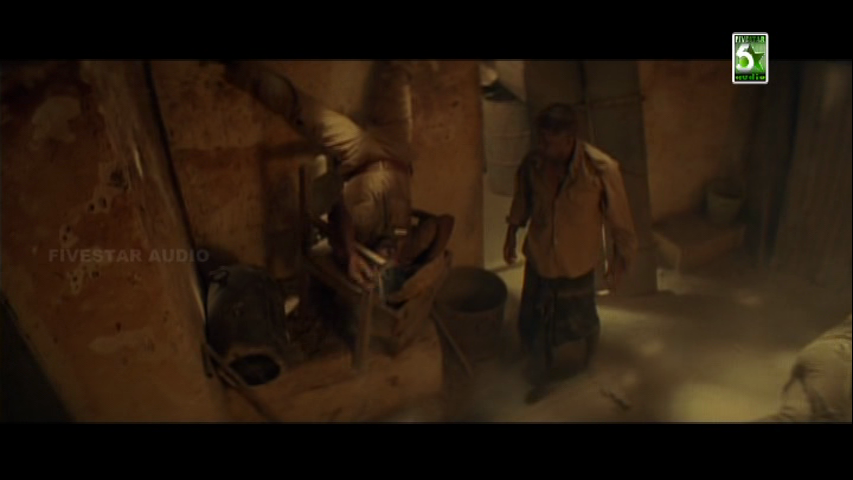
Pithamagan is not a film for the faint hearted. Like other Bala films, it deals with society’s poorest and most disadvantaged – in this case, he delves into the world of cremators, petty con artists and drug pedlars.  And yet it’s very watchable, with excellent performances from Vikram, Suriya and the rest of the cast making Pithamagan much more than just another film about the miseries of being poor and outcast.

The focus of the film is the relationship between Chittan, an orphaned cremator and Sakthi who is a small time criminal. Chittan is born in a graveyard and brought up there by the cremator who seems to do his best for the child. However Chittan grows up to be unable to deal with society; he cannot communicate in words, and is unable to understand the basic tenets of normal behaviour.

After his guardian dies, Chittan ventures into the local town where he creates mayhem before being rescued by Golmathi, a local cannabis dealer. He ends up following Golmathi home, and since she has a kind heart and feels sorry for another orphan like herself, she helps him to find a job. This turns out to be at a cannabis farm and when it is raided by police, Chittan ends up in jail. There he meets Sakthi who also feels sorry for Chittan and tries to help him cope with life inside prison. Sakthi is a petty crook who runs street tricks and confidence games which seems to have given him a performers approach to life. He has a sunny disposition and a positive outlook despite his circumstances and occasional rather interesting dress sense.

After Sakthi is released from jail he works with Golmathi to secure Chittan’s release, and along with Manju, a student who was once victim to Sakthi’s confidence tricks, the friends then spend most of their time together. They work on improving Chittan’s appearance and behaviour, and try to get him away from the drug trade with mixed results.  However, the local drug baron has other ideas and the final conclusion is as bloody and gruesome as you might expect.

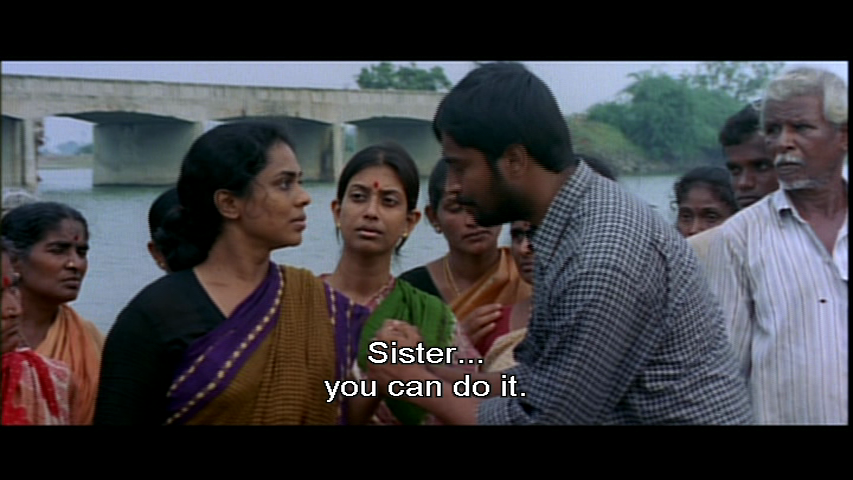
While the story itself is rather predictable, overall the film works well and this is down to the chemistry between Vikram and Suriya. Vikram seems to be able to take any disability and make it instantly realistic. I really believed that he was blind in Kasi and here he is totally convincing as the mentally disturbed Chittan. His facial expressions are just perfect and he really does appear to be totally wild and uncontrolled. It’s hard to define exactly what Chittan’s problem is, but as a scientist (and brain researcher!) I’m immediately intrigued and want to analyse the cause of his condition.  Is he simply a wild child – raised without the benefit of society and therefore unable to function within its rules? Or is it more organic and he has a functional neural developmental problem? I tend to favour the latter as the cremator who took him in was able to speak and obviously had some idea of how to interact with the townspeople. So the total inability of Chittan to communicate and relate seems to be something more than just growing up with little social contact. It also doesn’t explain why he was able to fight so well, but obviously that was essential to the plot and we can’t ask for too much realism I guess. I love that he left the policeman upside down in the shot below – the fight scenes really were good in this.

I also find it interesting that in so many of Vikram’s films, his character is somewhat crazed, and he is completely convincing each time! But as good as Vikram’s performance here is, I think that Suriya manages to equal it. This is the first film where I have really ‘got’ Suriya’s appeal. I’ve seen him in a number of films and while I thought he was good as the cop, or the good guy, or even as the bad guy, I’ve never felt that he’s been anything more than that . But Suriya is absolutely fantastic in this film. He is funny and charming, and breathes life into the story. Most of the comedy comes from Sakthi and his various cons, and without this balance Pithamagan would have been very grim indeed. Suriya’s character has plenty of flaws but at heart he is kind and his relationship with Chittan allows this side of his character to flourish.

Sakthi’s friendship with Chittan is cleverly developed throughout the story and makes it credible that the two would end up as constant companions. Chittan seems initially perplexed by Sakthi’s benevolence towards him but soon realises the benefit of a friend. And later, Chittan’s obvious jealousy when Manju is spending time with Sakthi is both childlike and logical since Sakthi has become the centre of his world.

Sangitha is perfect as Golmathi with her paan-stained lips and philosophical approach to life. Her character is another orphan and her initial pity for Chittan seems similar to how she would feel for a stray dog. But as a drug dealer and someone who is shunned by the local community (unless they want her product), she is able to empathise with his alienation and is the first person to start opening up his world. Golmathi’s emotions and reactions are all plain to see on her face which helps make her character much more sympathetic.

On the other hand, the first time I watched this film I really didn’t like Laila’s character and felt that she over played the schoolgirl. But on re-watching, I think she was supposed to be a fun character with a sense of adventure and an awareness of the possibilities of life which was intriguing to Sakthi. However I think Manju is a much less believable character than the others, and her presence is often more irritating than anything else. Initially her father seemed to be quite strict, even taking her to the jail to beg for Sakti’s forgiveness for her actions, which in itself seemed a really strange thing to do. But then later on in the story, her family seem to let her do whatever she wants, despite knowing that the man she is involved with is a convicted criminal. They do turn up to support Manju in the end, by which time it seems to be too late and is perhaps just a way to make a contrast to the other characters  whose only family is each other. Manju’s presence also provides another dynamic to the relationship between the two men since she becomes a barrier between them. But my biggest issue with her character is her inability to articulate what had happened to Sakthi, and this is a major flaw in the story for me. While I’m quite sure that in real life people become too distressed to be able to communicate, here it just didn’t seem to suit her personality, even allowing for her youth. It was also just a bit too over the top and filmi for a story that relies so much on gritty realism – at least for most of the film.

There is one other odd note, which is the protracted interlude with Simran. This completely changes the nature of the film and lasts just a bit too long. In fact it reminded me of the Hindi film Shakti, where Shah Rukh Khan turns up for an item song and ends up taking over a large part of the final scenes. While the song here is fantastic, and I love it, it stops the flow of the story and the subsequent scenes initially feel out of place as the pace abruptly changes again. But here it is anyway, since both Simran and Suriya are brilliant and it’s very funny.

I think Pithamagan is an excellent film despite a few flaws with the pacing. The friendships are successfully portrayed and the action is fast and well choreographed. Vikram’s grunting and animal noises are interesting and effective, and so much better than his singing which is absolutely brilliant in its tonelessness. I wonder just how hard Vikram had to work to make it sound that bad! The music by Ilayaraja is quite beautiful but not particularly memorable, especially since it’s often used as a backdrop for more of the story. Overall though it’s the performances that make this film worth watching and I would recommend it for Vikram and Suriya who are both outstanding. 4 stars.

Aayutha Ezhuthu

A little bit of research informs us that Aayutha Ezhuthu was supposed to be a call to the youth of the nation to take up politics and generally to encourage political awareness. We really don’t know if this was true, since this film seems to show that life in politics is apt to be short, violent and fraught with danger. In addition, the wily politician who sets up the main characters seems to be thriving through his various corrupt dealings, so perhaps the film serves more to show what the problems are within the system. Aayutha Ezhuthu uses the converging storylines of three characters to set the scene and their subsequent interactions form the rest of the story. As the story unfolds the film becomes more of a straight ‘good guys’ vs. ‘bad guys’ although it’s not totally clear who exactly are the ‘good guys’ here.

The film opens with three main characters following their own storylines in traffic on a bridge. The same scene is shown from the viewpoint of each of these three and, after each vignette, we are shown that same character’s life in the few months prior.

First we meet Inba, played by Madhavan in an uncharacteristically brutal role for him.  He is a thug, who works for his brother mainly ensuring a local politicians campaign runs smoothly. Inba beats his wife and almost casually chooses violence over any other form of social interaction. Inba’s current employer, Selvanayagam the local politician played by Bharathiraja, is the spider in the centre of the web.  He employs Inba to police his rallies, and is in direct conflict with the second character in the drama, Michael.  Through their involvement with each other, the third, Arjun is drawn into the fray.

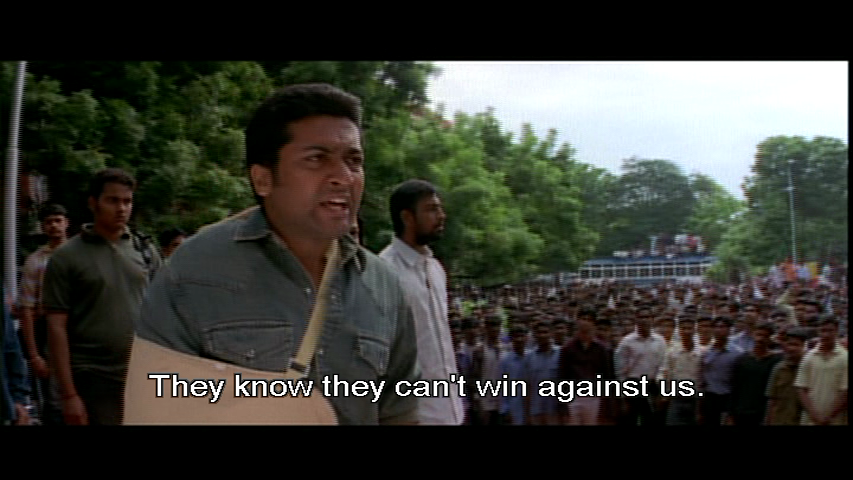
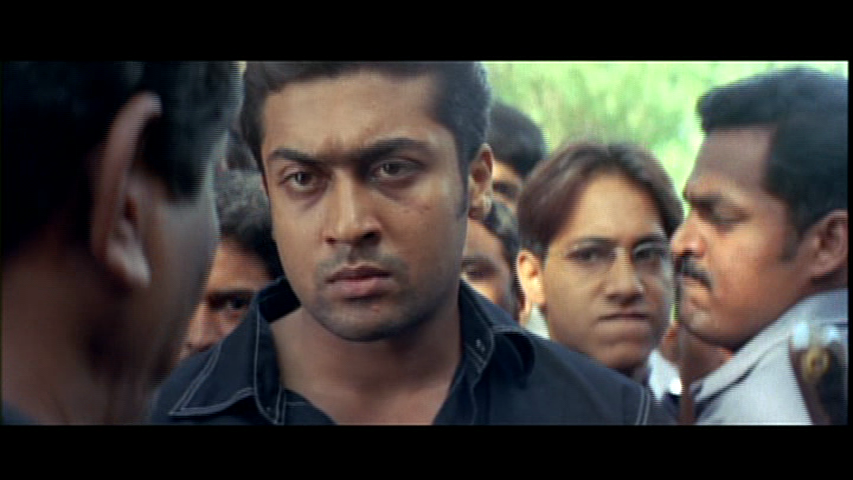
Suriya plays Michael Vasanth, a student, apparently a mathematical genius and also a political activist.  Not for him the more normal student methods of agitation such as demonstrations or debates, he prefers to be more direct in his approach and encourages retaliatory action.  This brings him into direct conflict with Selvanayagam and thus ultimately with Inba.  Suriya also seems out of place in his role.  He is muscular and obviously powerful, which doesn’t fit the image of a serious scholarship winning student.  His solution to problems faced by local villagers seems to be almost as confrontational as Inba’s violent tactics.  He appears belligerent and selfish as we see him brush off his mother’s concerns and treat his girlfriend badly. Although it is quite conceivable that students will use such extreme tactics, as has frequently been seen in many countries of the world, this approach just felt wrong with these characters. Perhaps this was partly an issue with the subtitles which may not have conveyed the dialogues accurately, but Michael came across as a very unpleasant character and his political aspirations felt more self-serving and less for the public good than perhaps was intended.

The final character in the drama is Arjun, played by Siddharth.  A playboy who has just finished his studies and plans to head to the US, Sid at least seems to fit the role he has been given.  His approach to life seems much more in keeping with his character and his pursuit of Meera, while typically filmi does feel much more genuine than Michael’s relationship.  By a series of coincidences all three are on the same bridge at the same time.  Inba uses this opportunity to get rid of Michael by shooting him, which sends him falling into the river past Arjun’s shocked gaze.

The storylines all converge at this point, and the aftermath of the confrontation is played out to its bloody and somewhat inevitable conclusion given the arrogance and brutality of the main characters.

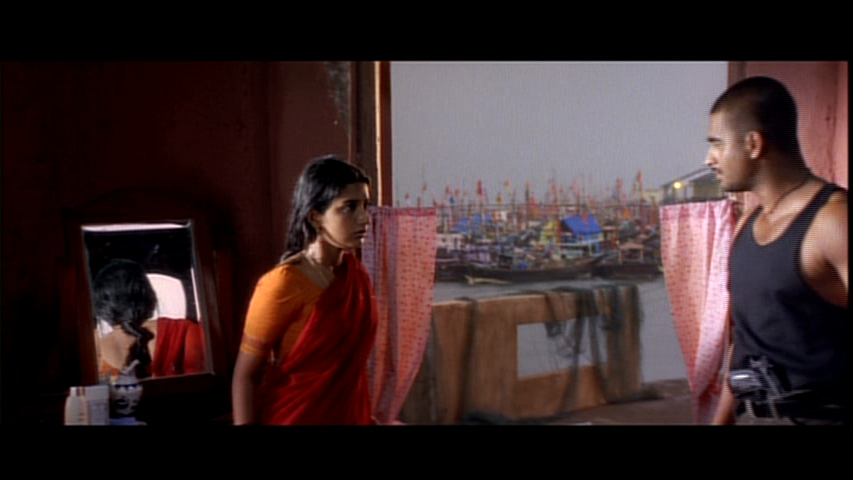
What are much more interesting about this film are the female characters.  Although she is regularly abused by Inba, his wife Sasi is a very strong personality who is determined to wean him away from his brother’s influence and stop his forays into crime. Their relationship is very realistically portrayed by Meera Jasmine who is fantastic as the battered wife. Despite her family’s objections to her husband, Sasi enlists them to help get Inba a job, so she obviously has great powers of persuasion.  Madhavan’s scenes with her are the best in the film and she was very compelling in her performance. Trisha in her role as Meera is less of a driving character, but she is part of the reason why Arjun changes his playboy ways as he slowly falls in love with her.  She is convincing and effective in the initial scenes, but towards the end of the film she appears to be sidelined. Esha Deol plays Geetha, who is involved with Michael.  There is a lot of potential in their relationship as he doesn’t want to get married and asks Geetha to move in with him instead.  This opportunity to look at the issues surrounding marriage and commitment is squandered as the theme is never really developed further.  Geetha lies to her parents and to Michael’s mother and never really becomes anything other than the woman in Michael’s life.

However these three women, as well as the various female characters that stand for election in the story, seem to be at least an attempt to show women as other than just the pretty wife, girlfriend or daughter.  There is more meat to their roles here, although it’s not sustained and ultimately only Sasi makes a lasting impact.

Because of the belligerence behind Michael’s actions it’s hard to see him as one of the good guys.  The virtual worship of him by the other students contributes to the impression of arrogance and he imposes his will on everyone around him without any seeming thought to the consequence.  Despite his thuggish ways, Inba appears as the more sympathetic character as he is genuinely trying to change his ways, but cannot get out of the cycle of violence he has lived with all his life.  The supporting characters all seem to have their own agendas as well, keeping the whole feel of the film as one of corruption and deceit.  The only genuine people seem to be the villagers caught up in the struggle for their village. While the film tries to be a statement on youth and politics, the end result seems to disregard Michael’s supposed motivation and political ambition and highlight the futility of anything other than corruption and violence as a means to achieve and hold on to power.  The secondary plot line of Inba’s attempts to escape his violent lifestyle is much better handled. While Meera Jasmine is the standout performance, both Trisha and Esha Deol ultimately aren’t given enough screen time to be effective.  A special mention for Sriman who played the character of Dilli, and was excellent in his role as Inba’s conscience.

Heather says: I really didn’t like this film.  For me it may have worked better if the casting of Madhavan and Suriya had been the other way round.  I found that Suriya didn’t fit the image of a student at all. He is too old and not convincing, while Madhavan in his role switches between mayhem and maniacally happy.  This didn’t seem to fit either the characters lifestyle or generally bleak prospects.  As a man recently released from prison, with a pregnant wife and no real job aspirations other than working for his brother, the ‘crazy happy’ was difficult to swallow.  Some of this was to show the reason why his wife stayed with him, and indeed some of these scenes were much less overdone.  This may have been a directorial decision as Abhishek Bachchan appears very similar in his characterisation of Beera in Raavan. I stuck with the film mainly because of the relationship between Inba and Sasi which was very well portrayed. Siddarth’s character was also quite watchable, and overall the story was interesting, but I was very tempted to fast forward every time Suriya was on screen. I have liked him in the other films I have seen him in and was horrified by him in this.  I really wanted his character to die as quickly as possible, just so that I did have to suffer through his flexing and belligerence.  I wish I had liked this film more but thought it was a potentially good story that for me was ruined by bad choices in the cast and poor directorial decisions. 2 1/2 stars from me.

Temple says:  This is another film that, like Leader, is well made but not likeable. I have issues with the character of Michael and his immunity from consequences. Everyone around him is made to pay for his activism but he escapes with a few flesh wounds. Surya was unappealing as he seemed to show only the arrogance of Michael and gave me nothing to respect in that character. Unlike Heather, I really liked Madhavan’s performance in this. I thought he really made sense of Inba and Sasi’s relationship, and showed the complexity of his character. He was boyishly impulsive, and casually brutal in turns. He showed the pressure Inba felt to be a man’s man and ignore his wife unless they were behind closed doors. Their relationship was compelling as Meera Jasmine showed the gamut of attraction and repulsion depending on which side of her husband’s nature was dominating.  I didn’t get the impression he was ‘crazy happy’, he was just a thoughtless guy who wanted what he wanted, and was happy so long as things ran his way. I thought the whole cast, with the exception of Surya, did a good job and made the most of their roles. I did have to laugh (a lot) at the idea of Esha Deol teaching French though! So, while I don’t like the inherent message that corruption is OK as long as you say you mean well, I do think this film was compelling and well made. The only disappointment was the lack of follow through on what seemed to be interesting roles for women. 4 stars from me.