Gair Kaanooni

Gair-Kanooni-Title Gair Kaanooni is a cracktastic masala film that I overlook far too often. Director Prayag Raj was responsible for the story or screenplay of many of my favourites – Ajooba, Mard, Geraftaar, Coolie, Suhaag, Dharam Veer, Parvarish, Amar Akbar Anthony – so that should tell you what you need to know about plot and logic. Plus it has a killer cast.

This slideshow requires JavaScript.

Just look at the lineup in the opening credits! (Question: Who is Sunny Bee? I love them just for the name but know nothing about them.)

Gair-Kanooni-Don't moveGair-Kanooni-they start revenge young

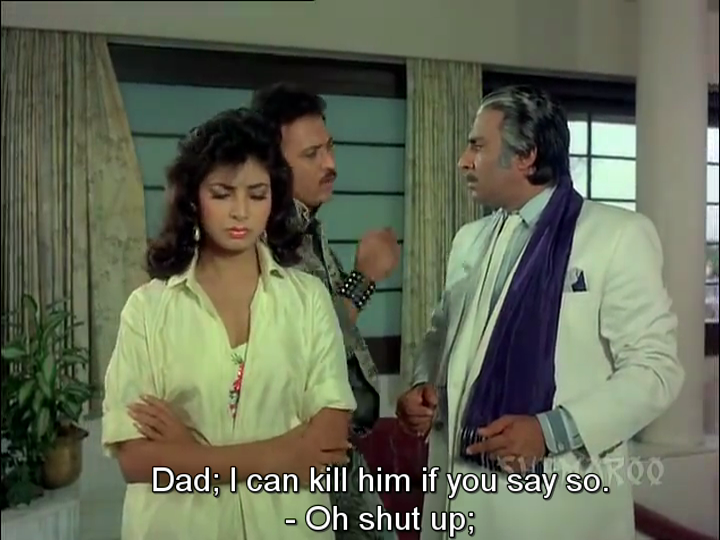
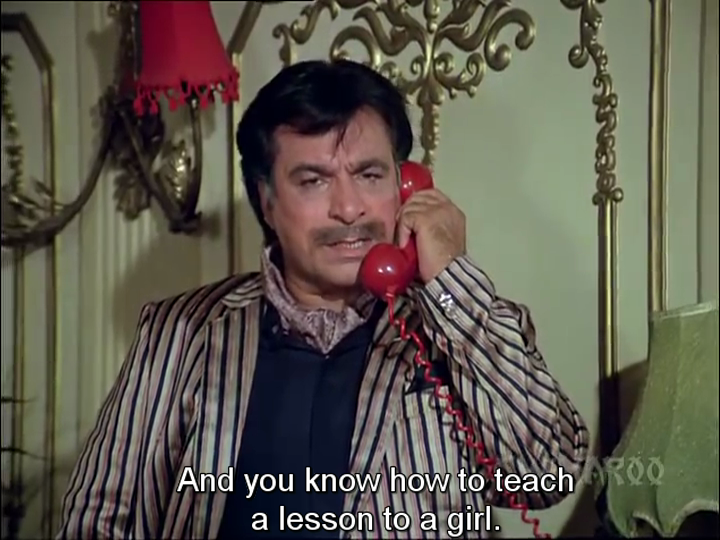
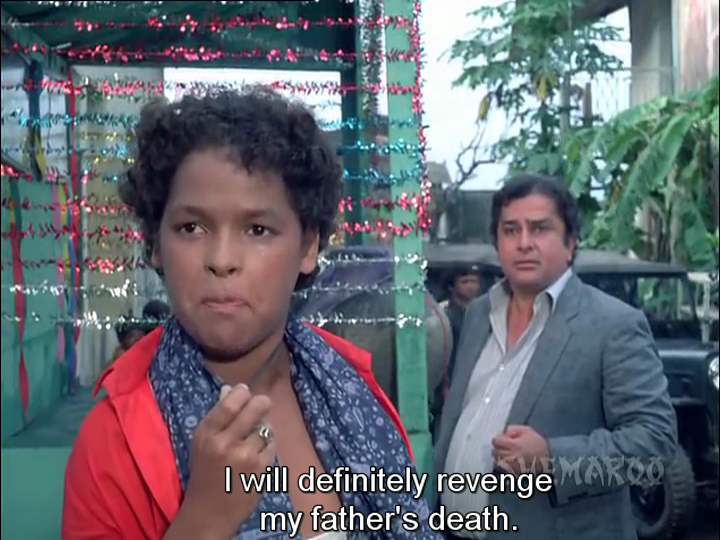
Kapil Khanna (a portly Shashi Kapoor) is a zealous policeman out to bring down underworld don D’Costa (Ranjeet). He leans on an informer, and sadly the goodhearted crook Azam Khan (Rajinikanth) is killed (stabbed AND electrocuted) by D’Costa and Dalal (Kader Khan) leaving an orphaned son. Meanwhile Mrs Khanna and Mrs Dalal are both in the maternity hospital. When Mrs Dalal has a baby girl, D’Costa repays his friend by switching the ‘worthless’ girl for a newborn boy – The Khanna’s son. Oh lord. Three kiddies to keep track of and we haven’t even started…Kapil Khanna rejects the infant girl and demands his son back. He will not accept his ‘daughter’ and sends her off to be raised by strangers, paying what he needs to but not giving her any familial affection or contact. Travel through time and we have Laxmi (Sri Devi), a petty thief introduced in a lovely song as she fleeces worshippers at a temple. Hey, she is Laxmi after all (or so she reasons). Om Narayan is the son of Kapil Khanna who has been raised by Jutawala Dalal, and Rajinikanth is back as Azam’s son Akbar Khan. Of course they cross paths and naturally, vengeful hijinks ensue.
Gair-Kanooni-Kapil KhannaGair-Kanooni-Shashi and Sri Devi

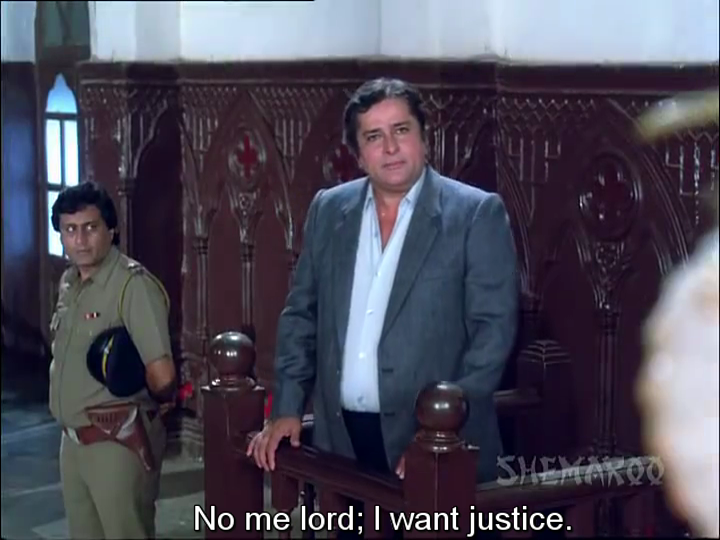
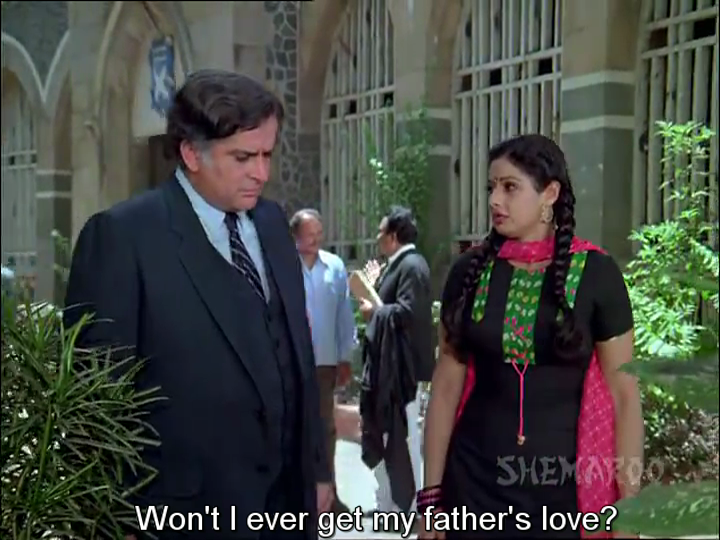
Shashi is, dare I say, a bit past it as Kapil Khanna but he knows his way around and has mastered the art of bromance. There is lots of “Yeh jhoot hai!” and insistence on setting things right. Kapil cannot accept Laxmi as, to him that means giving up on his son and leaving his wife’s last wish unfulfilled. Shashi kind of phones it in but every now and then he shows a gleam of vintage Kapoor masala style. I like his scenes with Rajinikanth, especially when they compete with dialogues to see who can be more pompous.
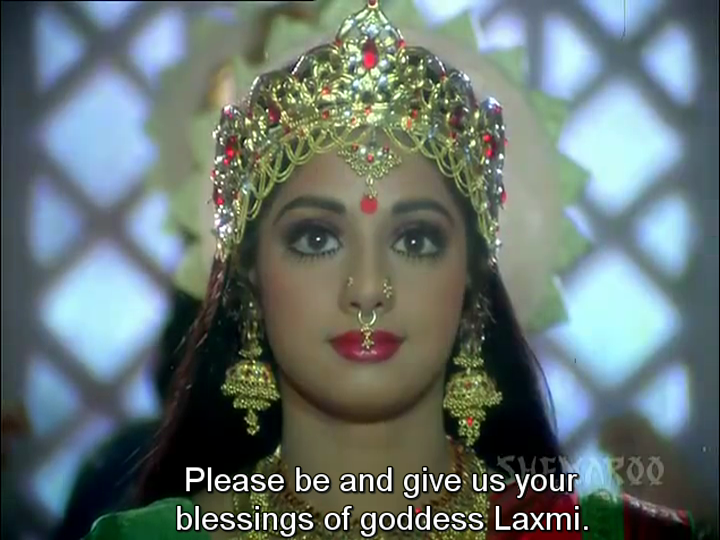
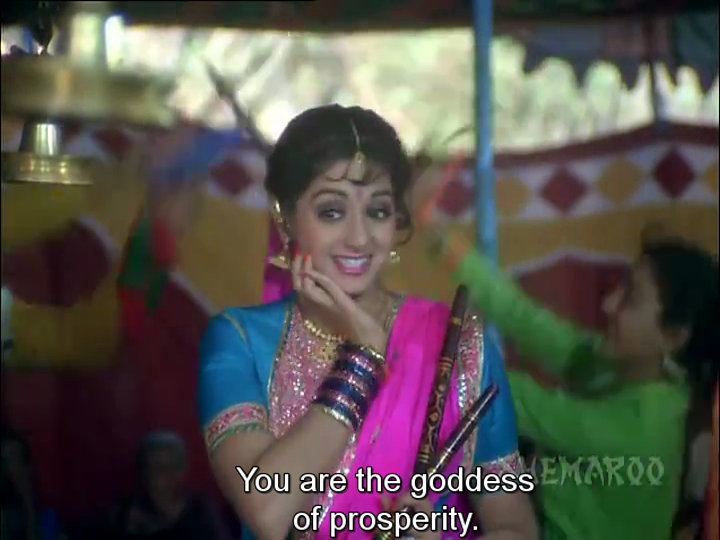
Gair-Kanooni-Sri Devi as LaxmiGair-Kanooni-Laxmi is her namesake

Sri Devi is perfectly cast as Laxmi. Fostered by Bantho (Aruna Irani) and Nathulal (Satyendra Kapoor) Laxmi imbibes her guardians’ world view and skillset. (Nathulal is the man who went to jail for killing Azaam Khan, just in case we needed a Sign that there were going to be Coincidences and Revelations.) Laxmi makes her money via illegal means but she is not a bad person at heart. Similar to other roles Sri Devi essayed – Kumari in S.P Parasuram, Seema in Roop Ki Rani Choron Ka Raja and even Seema in Mr India – Laxmi is brave, funny and generally smart with interludes of ditziness. Her focus is on getting by and doing what she needs to do to survive.

Gair-Kanooni-Sri Devi

Laxmi falls for Om but their romance is a lesser subplot compared to the goings on between the villains. She describes him at one point as her friend and her future husband, which I liked.

That song has to be one of the most eye-popping introductions ever. Govinda is partly overshadowed by Rita’s (Kimi Katkar’s) hideous skirt, but still! Om and his dad have a scam whereby he accepts dowry and then weasels out of the marriage. Like Laxmi, Om isn’t an actively bad person but he doesn’t try too hard to stay on the straight and narrow. Generally he sails through all fine and dandy until he falls in love for real. At least Laxmi had an equally flexible approach to ethics so they were well suited. Govinda is a great choice in this kind of role – lots of colour and movement. It needs an actor who just goes all in for the entertainment factor and he does that, boots and all.
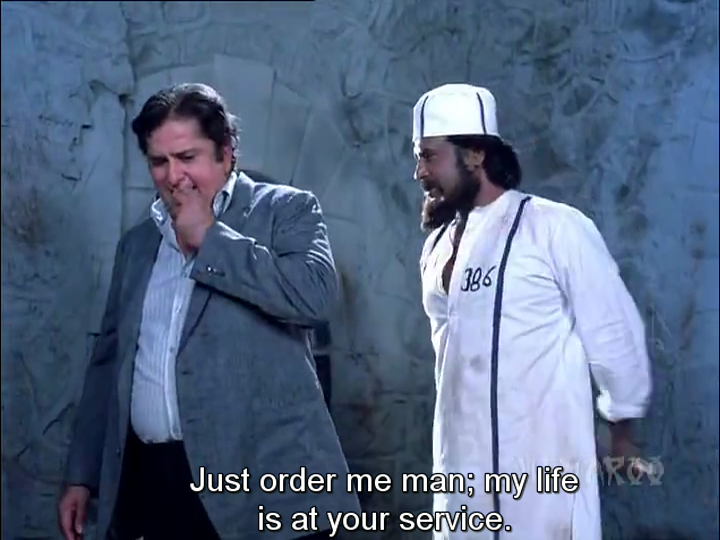
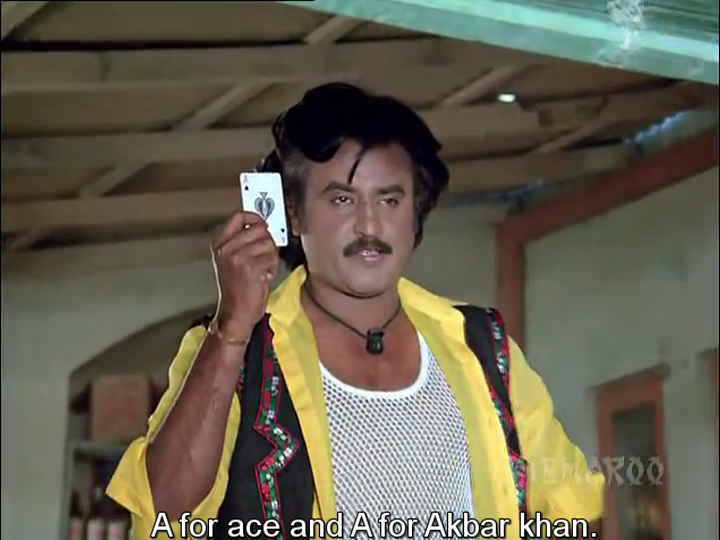
Gair-Kanooni-Shashi and RajnikanthGair-Kanooni-Rajini as Akbar

Often I feel Hindi film-makers missed the point of Rajini – they either cast him as a bit of an idiot (like in Hum) or a grim chain-smoking vengeful type. He is such a great actor and he can handle any kind of filmi ridiculousness with aplomb. Initially I expected his appearance as Aazam to be it, and was lamenting the wasted opportunity. But who better to play vengeful son of Rajnikanth than Rajini himself! Akbar is the grown up son and soon gets tangled up with the plot, quickly finding out who the real bad guys are. Rita (Kimi Katkar) falls for him despite his harsh criticism of her morals as apparently evinced by her skirt length and his generally bleak outlook on life.

Rajini gets to declaim elaborate threats and back them up with flashy fighting (choreographed by Judo Rathnam, who did such amusing work in Geraftaar). I especially love one dramatic escape where he launches himself head first through a breeze-block wall. Amazing. Dancing is not his forte however so it is good that the total entertainment burden does not rest on his shoulders.

Ranjeet and Kader Khan play their usual villainous types and they are truly, irredeemably, despicable. D’Costa and Dalal are locked in a dysfunctional relationship where neither likes or trusts the other but just can’t walk out. There is a large supporting cast but they are a bit lost behind the histrionics of the main protagonists.

Gair-Kanooni-Govinda and KimiGair-Kanooni-soot free Kimi Katkar is feisty and over-accessorised as Doctor Rita, and I like her spirited self defence and addiction to ruffles. Tej Sapru has a very small role as D’Costa’s son Tony, prone to acid wash denim and hissy fits when he isn’t allowed to go kill people. Aruna Irani is memorable as Bantho who takes pride in her adopted daughter’s thieving abilities.

Gair-Kanooni-Shashi and Govinda

There are misunderstandings, confrontations and tearful confessions galore. The song lyrics often express what is happening or how characters see things, which I find refreshing and relevant compared to some modern efforts. Plus it must be helpful to the other characters to have things explained so melodically. Resolution arrives through forced proximity (jail is good like that) and … ‘tribal’ disco.

That song wasn’t such a good idea really, but it is memorable. Plus a kidnap and forced kidney donation brings the rest of the family together. And I have left out so much!

Sure, Shashi Kapoor in blackface is unnerving but Sri Devi and Govinda, a Bappi Lahiri soundtrack and Rajnikanth in dual roles make this pretty special. See it for the cast, the song picturisations and the the plot that hits the point of ridiculousness and accelerates, cheering itself on towards WTFery. 3 ½ stars!

Gair-Kanooni-no words

Kandan Karunai

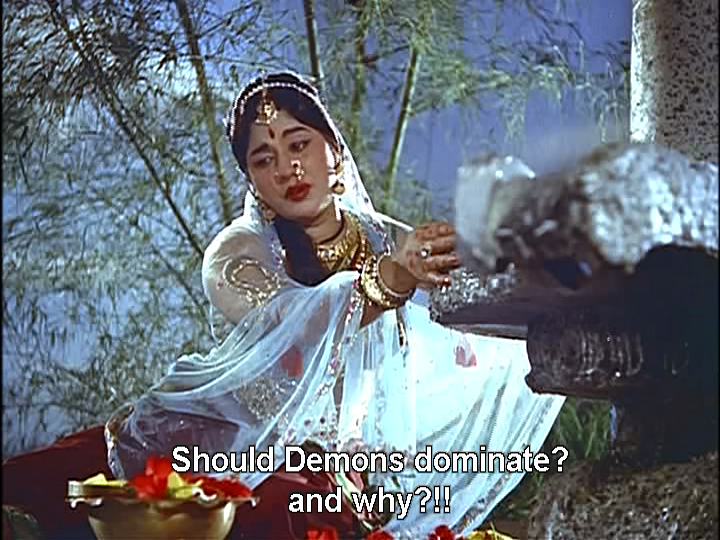
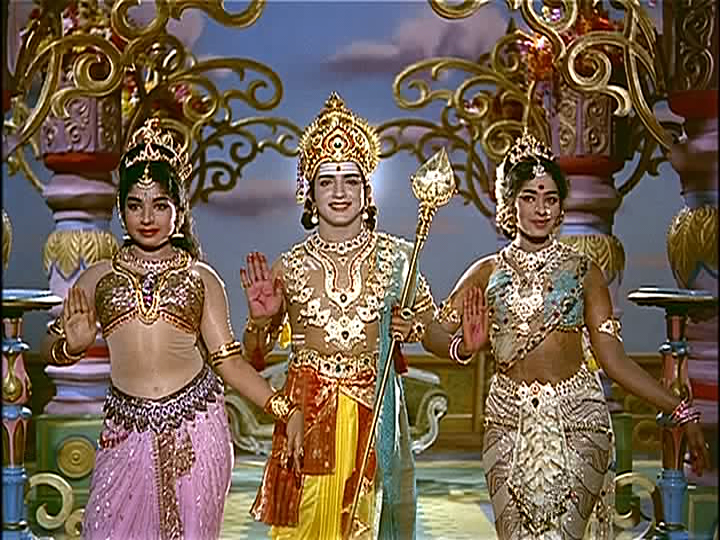
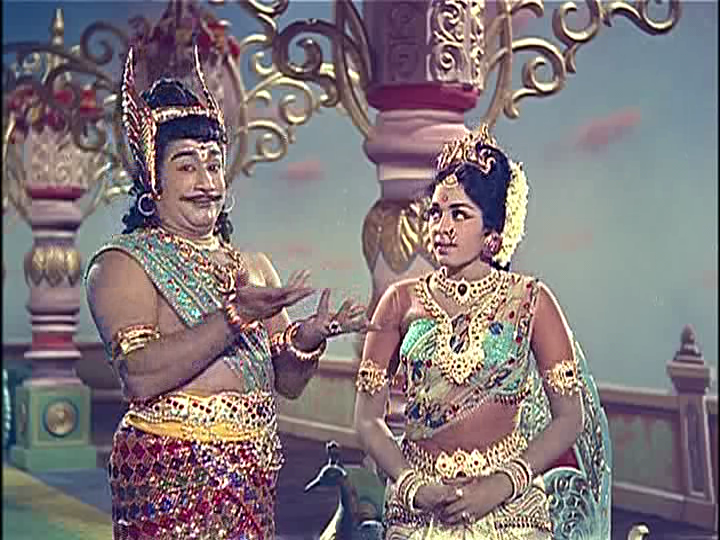
This is one of the few Tamil mythological films by A. P. Nagarajan that I’ve been able to find on DVD with English subtitles, and despite its sometimes pedestrian and almost documentary-like telling of key events in Lord Murugan’s life, it’s still worth a watch mainly due to the great cast and an excellent soundtrack.  The film covers the major incidents which define Lord Murugan and his place in the Hindu pantheon and it gives a good insight into why he is often regarded as the God of Tamils. Despite his more minor role Sivaji Ganesan is the star of the show but Gemini Ganesan, Savitri and various other stars of the time make an appearance, including an incredibly cute 4-year-old Sridevi in her first ever role as the young Murugan.  There are plenty of glittery costumes and even more sparkly jewellery set against some incredibly colourful sets which prove that there are no colours which clash in India. It’s garish but pretty and personally I’d like to see every army adopt the gold boots worn with such aplomb by Sivaji’s Veerabaghu.

The film starts with a devotional song to Lord Murugan by renowned singer and actress K. B. Sundarambal who appears in her characteristic role of Avvaiyyar.  She introduces the story of the demon king Surapadman (Ashokan) who is terrorising the people of heaven but cannot be killed due to a boon he and his people received from Lord Shiva.

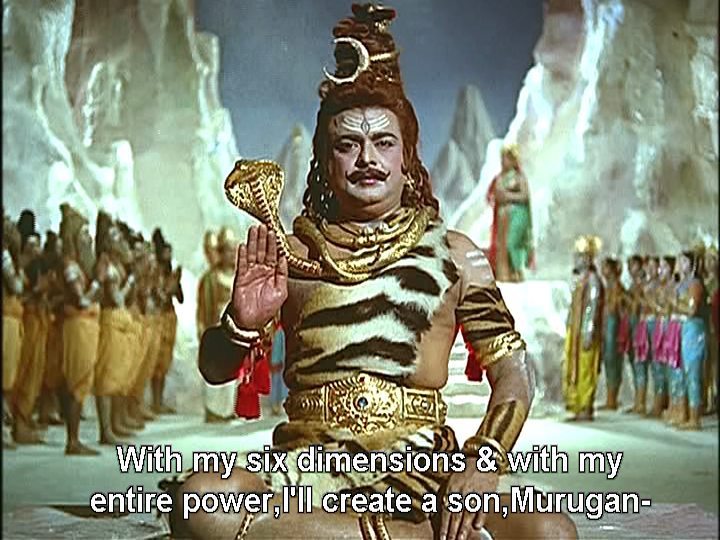
When Surapadman’s sister Ajamugi attempts to kidnap the king of the heavenly people’s wife Indrani (S. Varalakshmi) as a present for her brother, subsequent events force Lord Shiva to become involved. Rather than kill the demons directly he creates a son to deal with Sundarambal but gets rather more than he bargained for with Murugan.

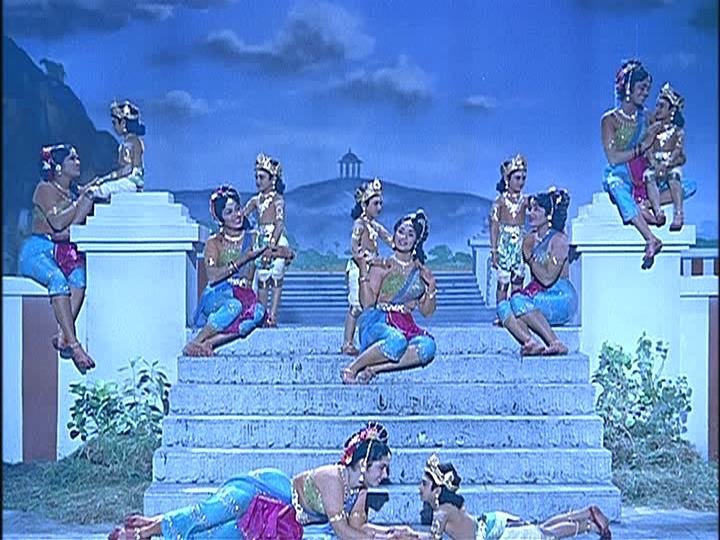
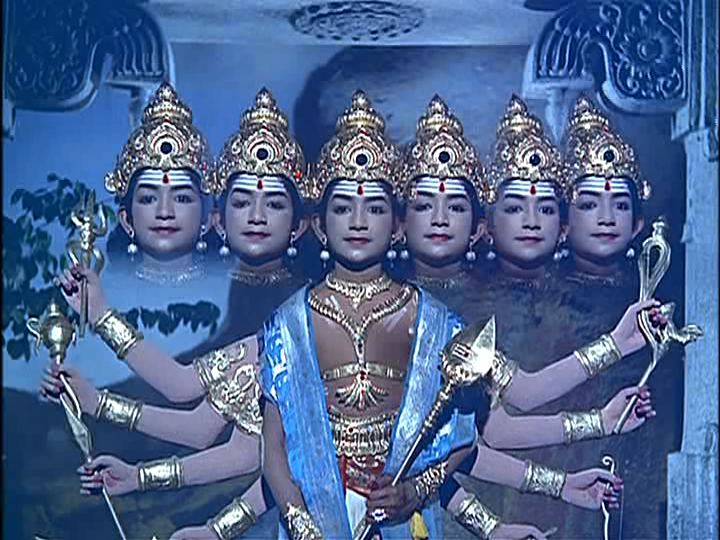
Murugan is clever, even as a child and faced with six divine girls as potential nannies, he rather practically splits into six versions of himself so that they each have a child to look after.  Later his mother Parvati reunites all of the children to create the god with six faces while the divine girls are rewarded by being transformed into stars. These first few stories dealing with the young Murugan are mainly told in song, although when there is dialogue Master Sridhar as the young Murugan holds his own in scenes with the older actors Gemini Ganesan as Shiva and Savitri as Parvati.

The adult Murugan is played by Sivakumar who sadly doesn’t give Murugan much personality at all,  and he plays the role rather passively.  However the ‘good man’ Veerabaghu, who comes to help Murugan in his war against the demons, provides plenty of attitude and Sivaj Ganesan brings the film to life in this role.  He acts first of all as a messenger from Lord Murugan to Surapadman, defying the demon’s arrogance by creating his own throne and servant girls when Surapadman denies him a chair.  He is instrumental in instructing Lord Murugan how to fight the various demons and later he gets to strut around in his wonderful gold boots as the army celebrates Murugan victory.

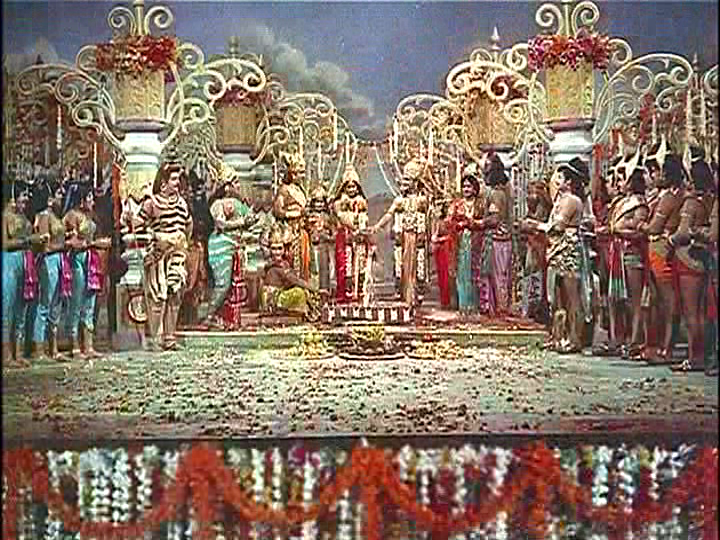
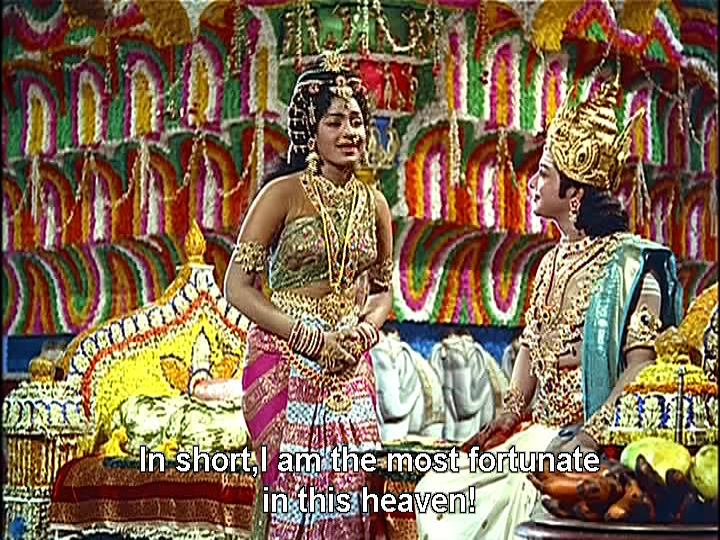
The latter half of the film deals with Murugan’s two marriages.  The first of these is to Indira’s daughter Deivanai (K. R. Vijaya) who manages to stay cool when faced with the riot of colour that accompanies her marriage and subsequent first night with Lord Murugan.

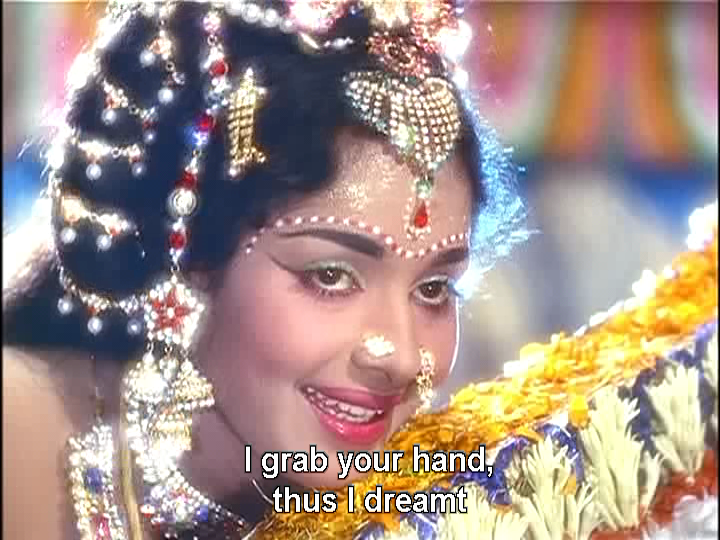
The explanation of marriage and a woman’s place in society sounds incredibly patronising, particularly when Deivanai is told that she has to remain faithful to her husband while Murugan goes off and finds a second wife.  However, since the basic theme of an obedient wife still seems to be expounded as the ideal even in India to-day it probably sounds more reasonable to its intended audience, particularly back in 1967 when the film was made.  Deivanai is still understandably outraged when Murugan comes back with Valli and there are some funny moments as Veerabaghu has to deal with the two angry women, which he does with great charm and lots of sparkle.  K. R. Vijaya looks beautiful but doesn’t have much scope to do anything else as her character is very one-dimensional.  Jayalalitha as Murugan’s second wife Valli has a better role with a little more substance including this lovely introduction.

Valli is the daughter of a tribal chief and her friends include Manorama and Tamil comic actor Nagesh who provide a little relief from all the noble deeds and dramatic pronouncements of the other characters.  Jayalalitha is charming and her Valli is graceful and elegant even in her simple village girl persona which translates well to her rise in station as the consort of Lord Murugan.

The film is very stylish and looks beautiful but lacks the warmth of other Nagarajan films I’ve seen, particularly in the character of the older Lord Murugan.  Perhaps it’s because Murugan has outgrown the mischievousness and arrogance which livened up the early scenes and it’s hard to portray worthiness and knowledge as being anything other than a little dull. Sivakumar is pleasant enough but is eclipsed by Sivaji who has much more presence.  The battle scenes are very stylised and the demons don’t ever look to stand much of a chance against Lord Murugan and his trusty spear, although the internal squabbles in Surapadman’s court are well portrayed.  I really liked the actress who played Ajamugi who got her outrage and vindictive nature across very clearly.

The music by K V Mahadevan won him a National Award and it’s definitely  a highlight of the film with some beautiful vocals by P. Susheela in many of the songs.  This film worked more for me as an explanation of some of the symbolism I’ve seen on my visits to temples in Tamil Nadu, and a synopsis of Lord Murugan’s life, although of course I always enjoy a film with lots of sparkle! Worth watching for the songs, Sivaji and the younger Murugan – 3 stars.

English Vinglish

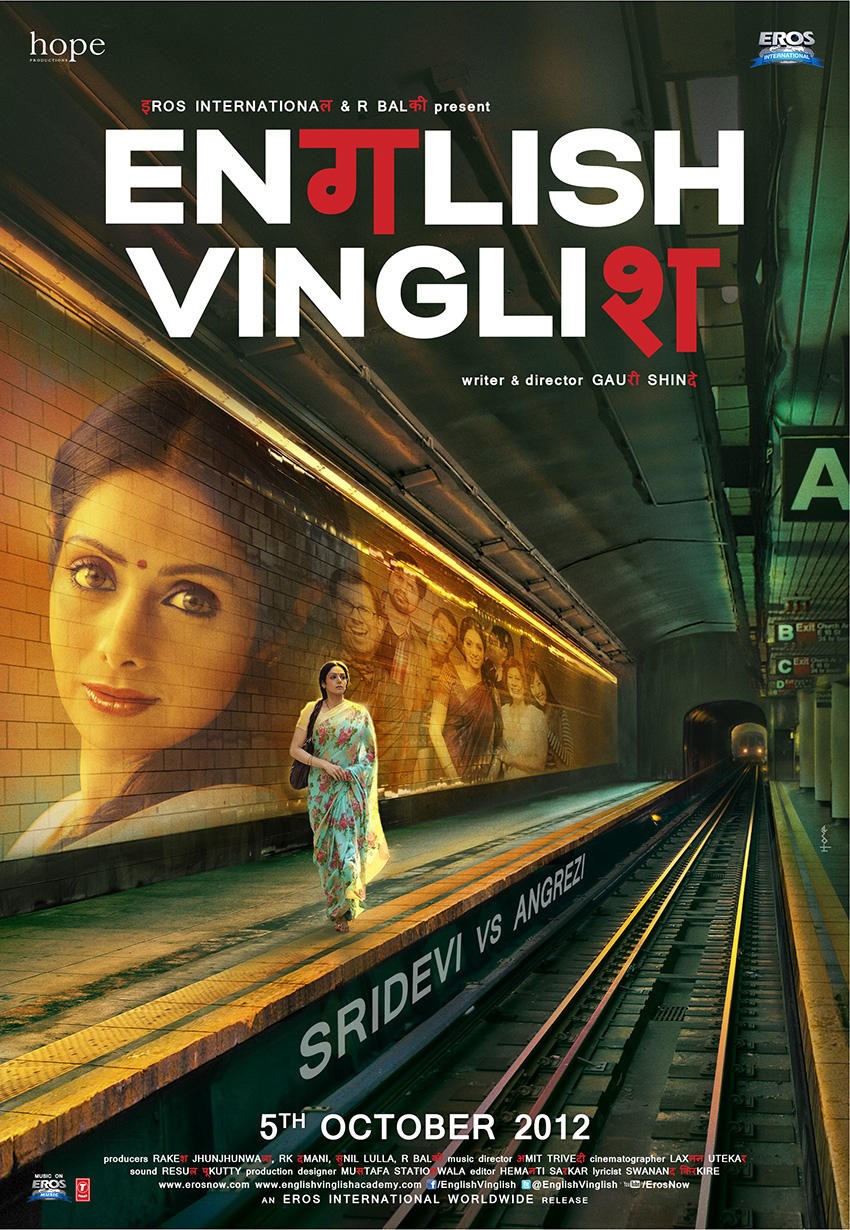
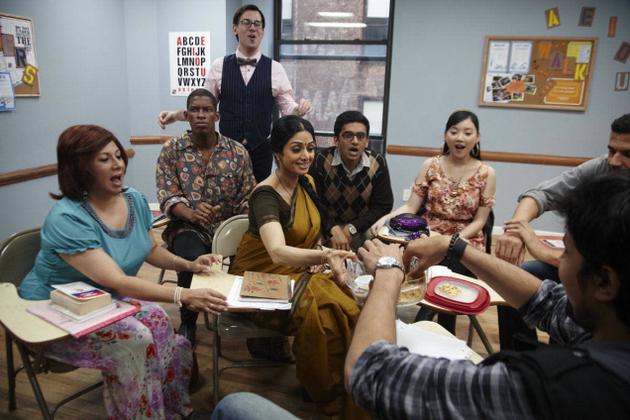
Finally Sridevi returns to films! A low key and female centric family drama, English Vinglish allows ample opportunity to show off her great range and perfect timing. Gauri Shinde has written a nice story with a whiff of “Shirley Valentine” about it, and directs with assurance.

Shashi (Sridevi) is a wife and mother, taken for granted by her family – husband Satish (Adil Hussain), bitchy teenage daughter Sapna (a very convincing Navika Kotia) and son Sagar (the endearingly cheeky Shivansh Kotia). She is a good cook and keeps a lovely home as well as running a business making and selling ladoos, barely having a moment to herself. Shashi is accomplished and loving, but that is what is expected of her so she gets no credit for that. The family mock her for her lack of polish and poor English. The cheap shots are also a way of father and daughter bonding and excluding Shashi. Shashi is gracious and rarely retaliates, instead letting her beautifully expressive eyes show the pain.

When Shashi’s New York based niece Meera is about to be married, Shashi is sent ahead of her family to help with the preparations. Nervous at leaving her kids and husband, she is forced to go where she can be useful. Again, her feelings are ignored for the sake of convenience.

Shashi stays with her sister and niece Radha (the sparky Priya Anand) and spends her days missing her family at home. Daunted by America and feeling left out, Shashi secretly enrols in a dodgy “Learn English in 4 Weeks” class.


This is where the film detours into “Mind Your Language” territory. Taught by David (played by one of the worst actors I have ever seen, and I am including Mimoh in that list) and along with her fellow students, Shashi begins to come out of her shell. One of the students keen to get her right out of her shell is the dishy French chef, Laurent (Mehdi Nebbou). The tentative stirrings of romance between Laurent and Shashi are very well played even if his lines are cheesy.

The rest of the class start off as a collection of broad stereotypes, but the actors develop their characters really nicely. Sumeet Vyas, Rajeev Ravindranathan and Maria Romano are particularly good fun. I also liked the way food played a role in communication and relationships.

The story isn’t really about learning English as a road to happiness, but it is about getting your mojo back and gaining the respect of your loved ones. There is a theme of English language undermining Hindi and excluding people in their own country, but really she could have taken a pottery class or something else.


Much as I cheered when Shashi managed to navigate her way into the city or order a coffee, and I loved seeing her grow in self esteem and happiness, I have a slight problem with the character. She was so passive aggressive, even considering of her lack of confidence. Why make Radha cover for her so she could sneak to class? Why not just ask her sister to keep it quiet as a surprise for the family or at least not ask Radha to be an accomplice. Telling Laurent about her family in Hindi seemed at least partly a lie by omission rather than purely an outpouring of the heart given their level of conversational skills. Her final speech was two-thirds guilt-trip inducing perfect filmi Ma (and the opposite of the real situation) and finally one-third honesty about what she believed was needed for happiness. It made me like her less than I wanted to and I felt heavily manipulated at times as she is clearly meant to be the morally good person in the frame.


Shashi lost me at times, but Sridevi never did. Her performance was beautifully nuanced. As her self-confidence grew, Shashi’s expressions became less guarded and her eyes lit up. When Sridevi smiled she was radiant. I really wanted Shashi to be happy, despite my reservations. I think this was more about Sridevi than Shashi though – I am so happy to see her working in films again.

The music by Amit Trivedi mostly ranges from bland to twee. I’ve never been a big fan of his and the tweedly emo guitar thing is not my style. The songs are mostly in the background or used in montages of Shashi looking sad. It was all appropriate to the tone of the film but I won’t be listening to the soundtrack anytime soon.

Whether it was Gauri Shinde or former co-star Sridevi who won him over, Amitabh Bachchan makes a fun appearance. He plays a rambunctious man of the world and gave Shashi some much needed confidence and sensible advice. Priya Anand is a standout. I liked her sassy style in her debut (Leader) and she was very natural as the lively college student Radha. Adil Hussain is also excellent as the thoughtless Satish, and the children are perfect for their roles. Maybe too perfect – that girl is a right little cow. The random extras at the wedding were energetic and got into the dances.

The visual design is excellent. Shashi’s house in Pune looked lived in and real, even if her saris were a bit too fabulous. I drooled over some of her outfits; all of them in fact, except the dark pink one (I don’t like pink) and the mauve (it was a bit too shiny). The NRIs lived in a very American suburban house with Indian touches in the decor. It was a nice representation of their life abroad and the connection to home.

I saw this with four friends and at least three of them cried several times during the movie and we all laughed a lot. It’s a film I would have loved to see with my mother and then go out with her for coffee. It’s a well crafted film, with a good story and some fine performances. Despite some issues, I highly recommend it. Welcome back Sridevi!