Drishyam (2013)

Drishyam

I started to watch Drishyam late one night intending to just watch the first half, but found I couldn’t tear myself away until I’d seen all 2 hours and 44 minutes of the film – it’s that kind of movie.  Although it starts simply enough by drawing a picture of a fairly conventional family, it develops into a fascinating thriller where it’s difficult to predict exactly what will happen next.  The very ordinariness of the family makes their reactions and those of the other characters unexpected, while the developments in the plot are surprising at every turn.  There are a few moments where the story falters a little, but overall it’s intelligently written to show the effects of a sudden crisis and how important it is for a family to stick together when faced with adversity. Great performances by all the cast and beautiful cinematography contribute to make Drishyam compelling viewing and it’s definitely one of the best Malayalam films I’ve seen recently.

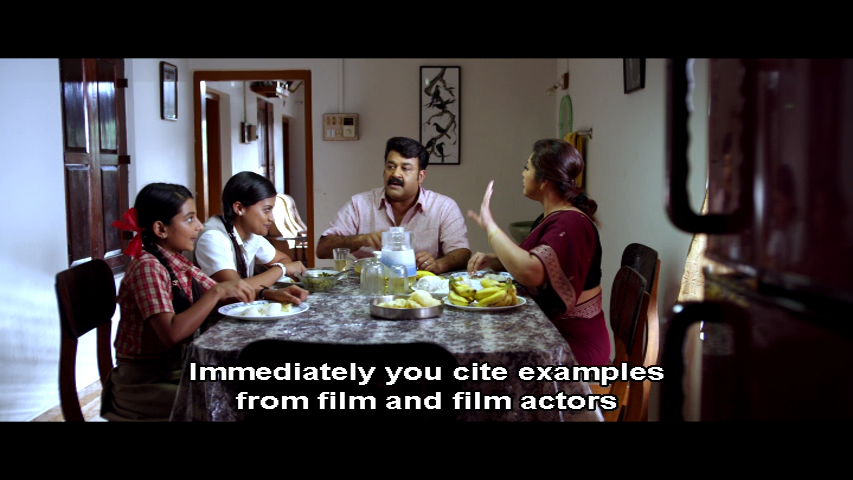
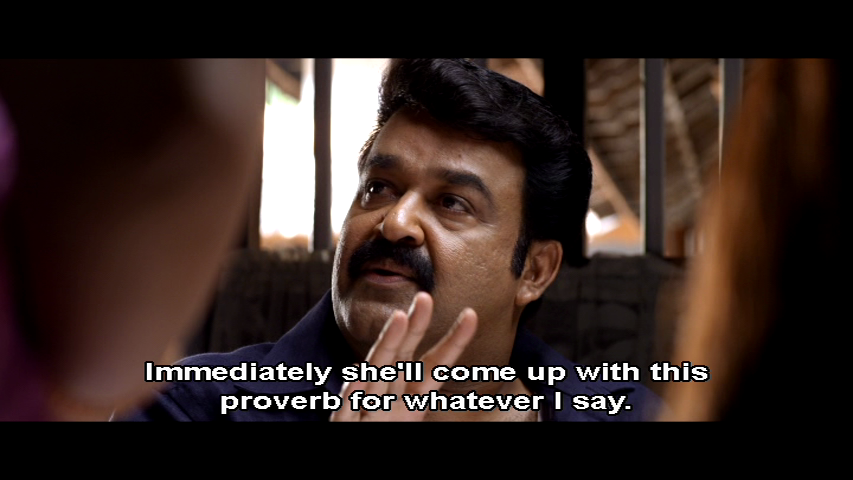
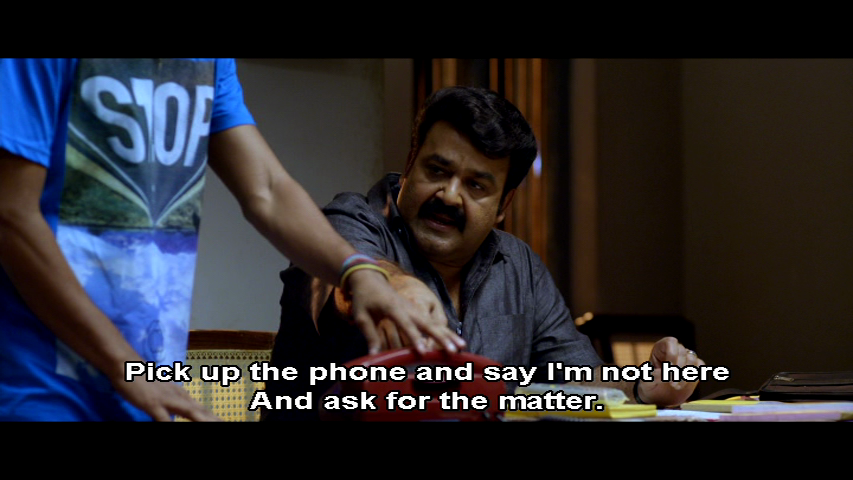
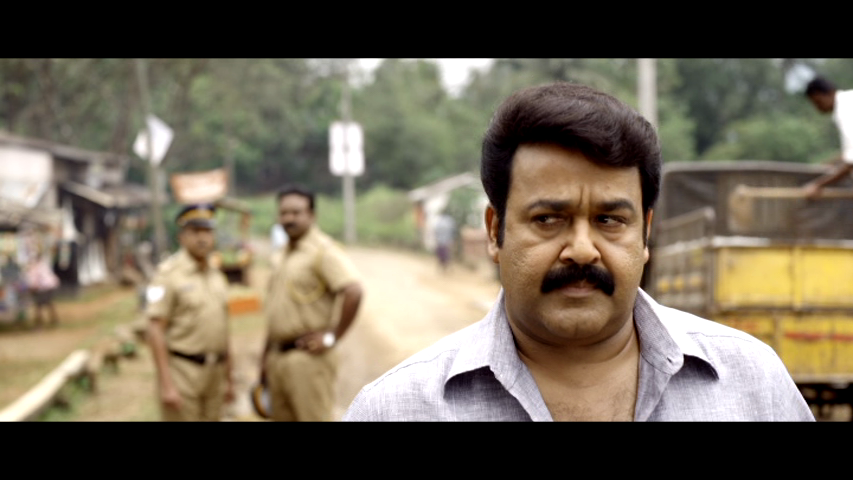
The film has a fairly slow beginning as writer/director Jeethu Joseph spends the first hour developing the characters of George Kutty and his family, focusing on their day to day interactions with each other and various other people they meet.  George Kutty (Mohanlal) operates a cable TV business in a small village near Thodupuzha.  He’s an orphan who never made it any further than 4th standard at school, but he has a wealth of knowledge gleaned from watching films all night long in his office.

DrishyamDrishyamDrishyamDrishyam

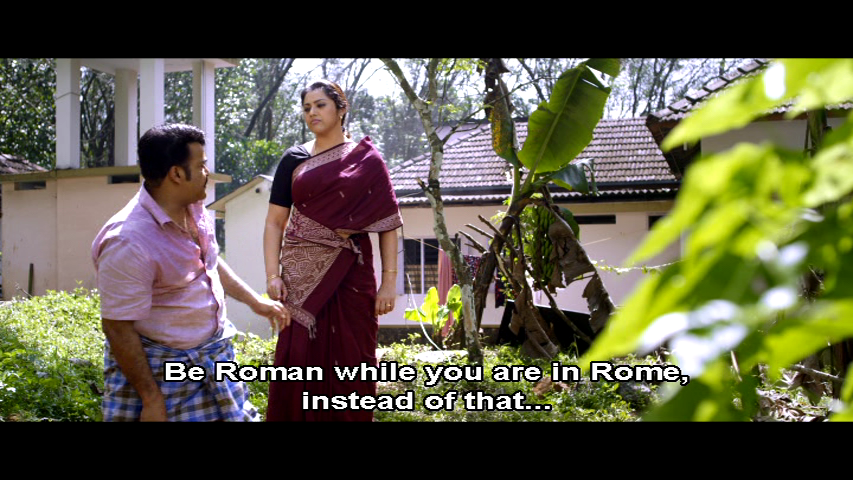
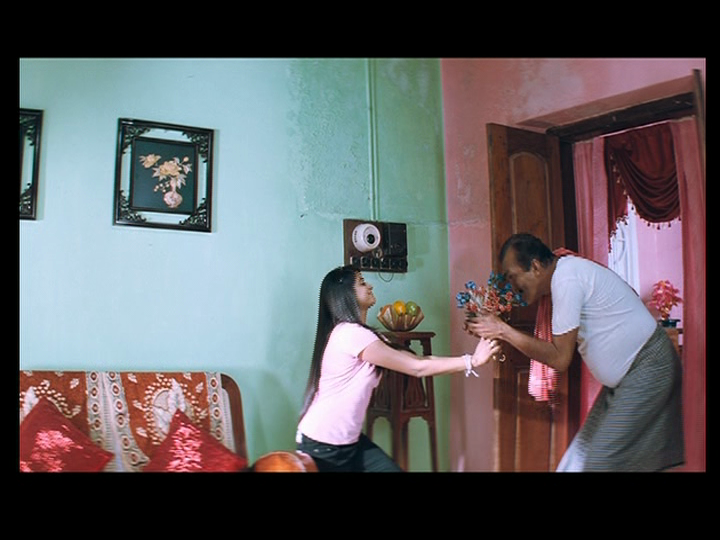
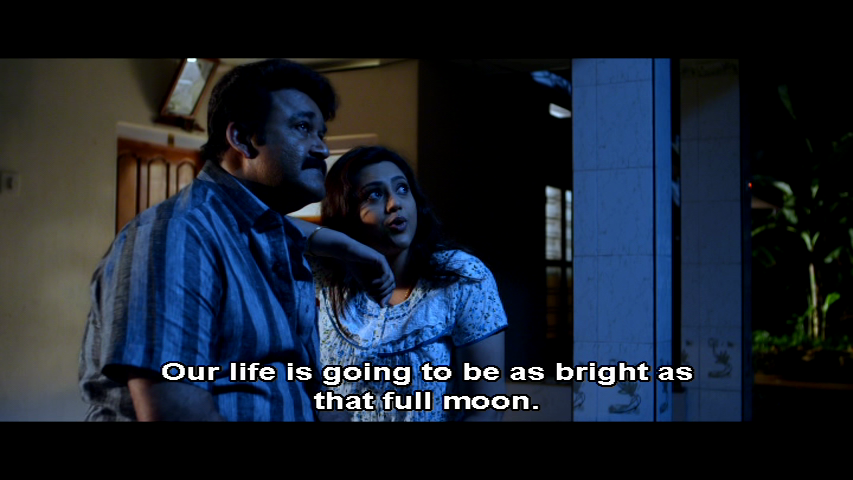
George Kutty is married to Rani (Meena) who generally seems content with her life despite putting up with her husband’s absences at night and his obsession with saving money.  They have two children, Anju (Ansiba Hassan) and Anu (Esther), and the family lives in a pretty house surrounded by banana trees and woodland. It all seems, if not idyllic at least comfortable and happy, although there are of course the dull routines and petty squabbles that occur in any family.  Jeethu Joseph uses each family member’s small ambitions to round out their characters and define their relationships while gradually building up the background for the rest of the story.  What also stands out is that despite the bickering and George Kutty’s somewhat eccentric lifestyle, there is a lot of love in the family and the marriage is built on very solid ground.
DrishyamDrishyamDrishyamDrishyam

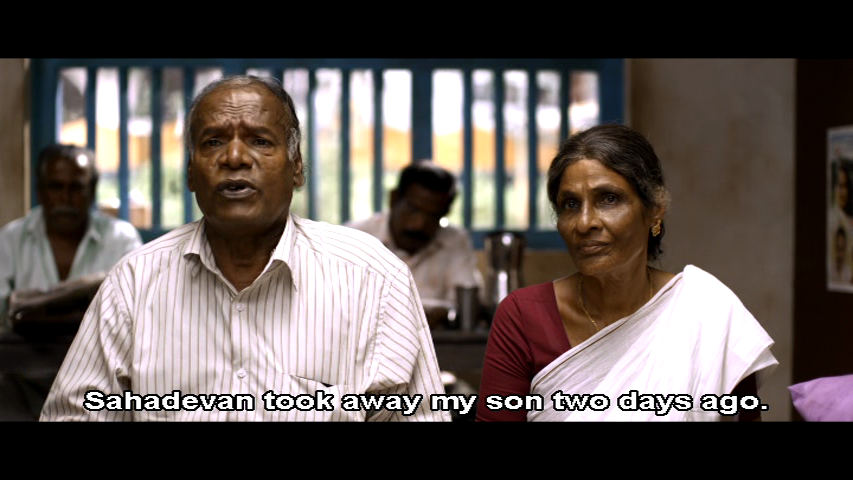
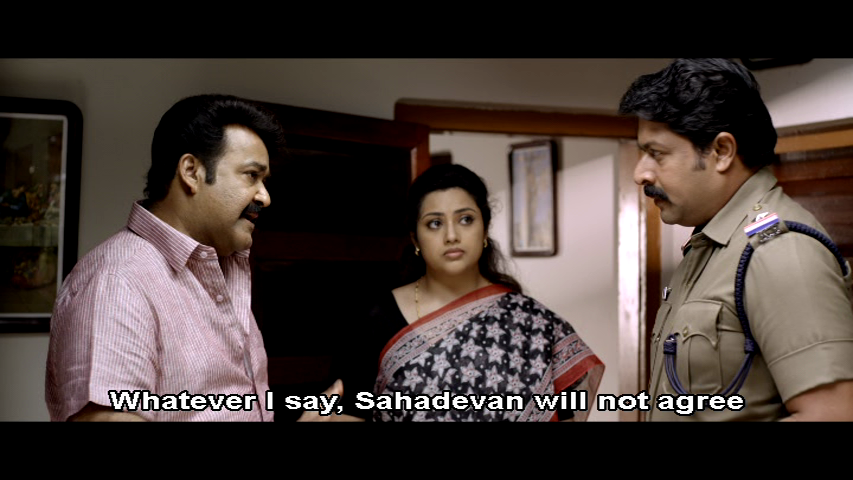
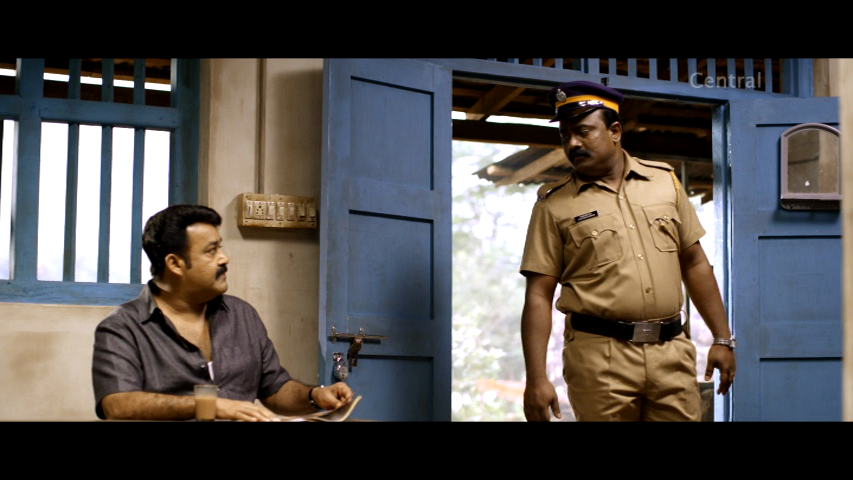
When not in his office or sitting at home, George Kutty spends his time in a local tea shop where he uses his knowledge of films to solve other people’s problems and if that just happens to antagonise the moderately corrupt Constable Sahadevan (Kalabhavan Shajohn), so much the better.  Sahadevan is a bully who extorts money through a variety of petty schemes and his character is best summed up by a brief scene where he happily steals money from a man whose child is in hospital.  Such a nasty man, and beautifully played by Kalabhavan Shajohn who does a fantastic job of displaying Sahadevan’s mean-spirited character and giving his emotions free rein. Part of the intrigue of the story is that this dishonest policeman becomes the unlikely pursuer of justice although his methods are definitely unethical and disturbing.
DrishyamDrishyamDrishyamDrishyam

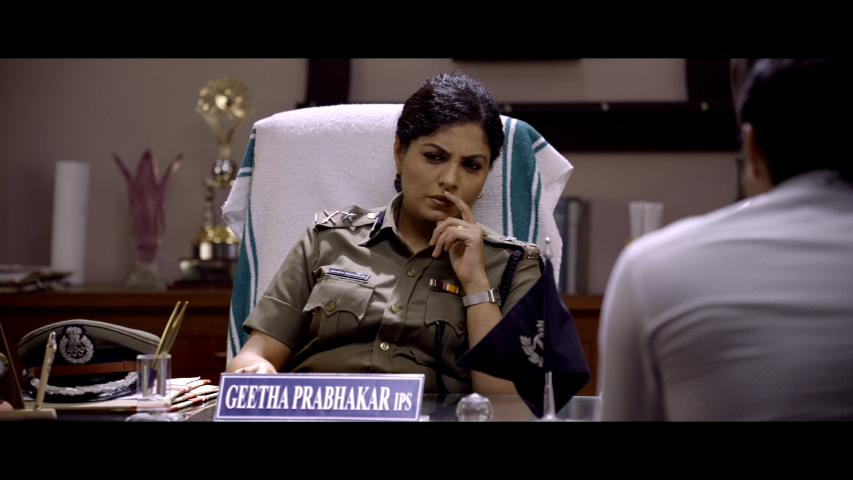
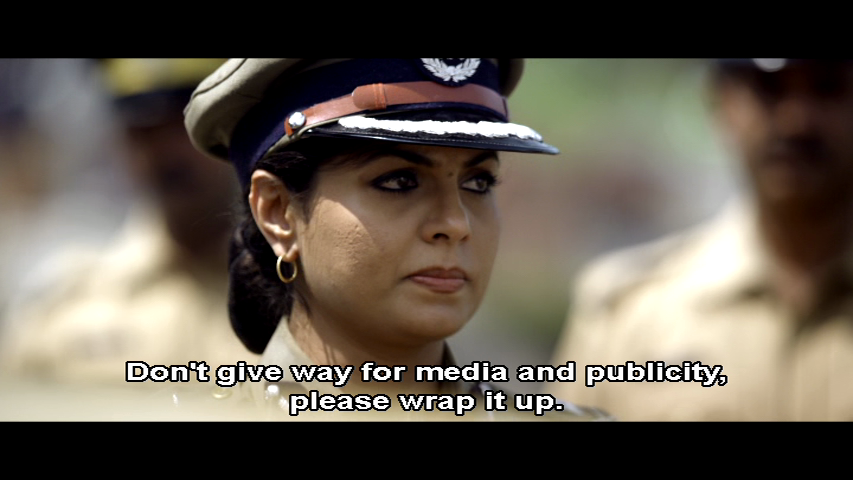
While the first half of the film introduces George Kutty and his family, the second half deals with what happens when the police suspect they are complicit in the disappearance of the Inspector General’s son.  Geetha Prabhakar (Asha Sarath) plays the part of the IG, and it’s a pleasant surprise to have a high ranking female officer as a main character.   Perhaps this is as a counterbalance to George Kutty’s firmly held belief that a woman belongs at home, but it also brings a very different dynamic to the film.

DrishyamDrishyamDrishyamDrishyam

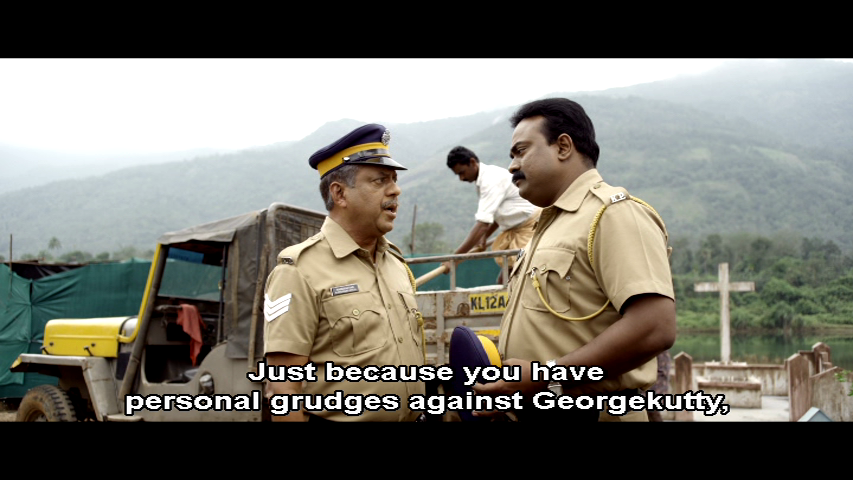
Geetha is the one making all the decisions while her husband (Siddique) is the voice of reason and conciliation in the background.  The missing Varun Prabhakar (Roshan Basheer) is a typically spoilt rich kid, and there is the inevitable cliché here that rich kids are bad, while kids from lower and middle socio-economic backgrounds are always good and righteous. Geetha doesn’t believe George Kutty’s version of events and is determined to prove that his family are lying even though the local police officers (with the exception of Sahadevan) are convinced of George Kutty’s innocence and are reluctant to get involved.
DrishyamDrishyamDrishyamDrishyam

It’s mesmerising and even though the audience knows the true sequence of events, subsequent outcomes are impossible to anticipate as everyone brings their own needs and responsibilities into the mix.  Keeping to the thriller aspect of the film, there are only 2 songs in the whole film.  Both are well used to describe George Kutty and the dynamics within the family.  The first shows them on a happy shopping expedition while the second illustrates the change in family attitude when the police start to suspect they may have something to hide.  This is the first happy song which does an excellent job of summing up the family and their personalities.

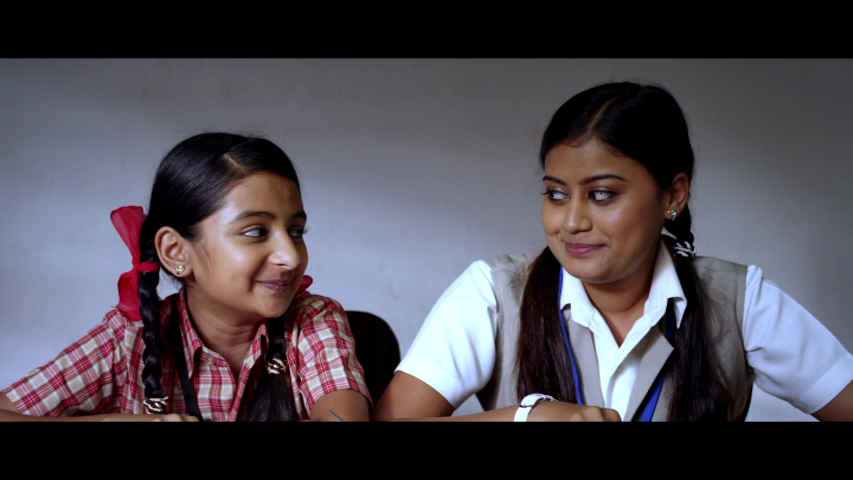
Part of the film’s effectiveness is due to the high standard of acting from all involved.  Mohanlal is outstanding as are the two young actors who play his daughters.  Meena, Asha Sarath and Kalabhavan Shajohn are all also excellent and from Sahadevan’s brutal interrogations and shifty plotting to Geetha’s desperate attempt to balance her police persona with a mother’s concern for her missing son, the actions all feel genuine and typical of the characters involved. The dialogue seems natural, even with the barrier of subtitles, and the only apparent misstep occurs at the very end where Geetha appears to act a little out of character.  However it’s a small thing and does allow the story to be completely wrapped up Hollywood style.  Personally I would have liked a little less explanation and have been left to form my own theory, but that could be just me.

DrishyamDrishyamDrishyamDrishyamThe film is beautifully shot by cinematographer Sujith Vasudev and once the family is under suspicion the threat of prison is accentuated by the number of shots behind barred windows.  There are also some good contrasts between George Kutty’s family and the extended ‘family’ of the police and the lone outsider of Sahadevan.  By the end of the film a number of small throwaway moments are shown to have more significance than they appeared to have at the time, which shows just how effective good story development and intelligent writing can be.  Everything was there to be seen for anyone who looked, but the film shows that what we see can be easily manipulated and misinterpreted when it is outside expectations. Definitely recommended viewing but be warned not to start watching too late at night as it’s impossible to stop!  4 ½ stars.
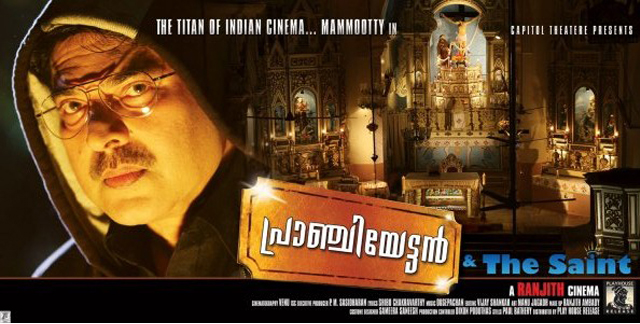
Pranchiyettan and the Saint

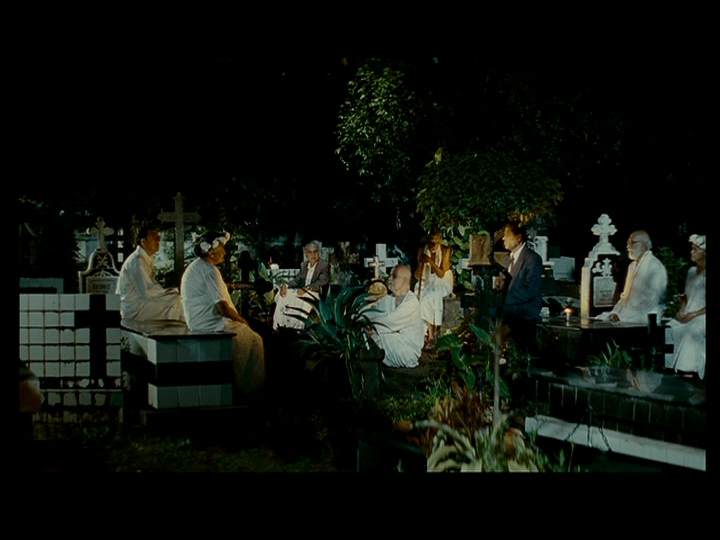
Pranchiyettan and the Saint was one of a number of Mammootty films recommended to me after I watched Kutty Srank. It sounded quite different and since the film won a number of awards it quickly moved to the top of the pile. It’s a quirky film about the attempts of successful rice merchant Chirammal Enashu Francis (Mammootty) to get rid of his nickname and command more respect within his community. The film opens with Pranchiyettan paying his respects to his ancestors who appear as ghosts in the churchyard. Leading on with the spiritual theme, the icon of St Francis comes to life when Pranchiyettan goes into the church to pray and the subsequent story is told as a series of flashbacks as Pranchiyettan explains the circumstances around his visit to the church that night.

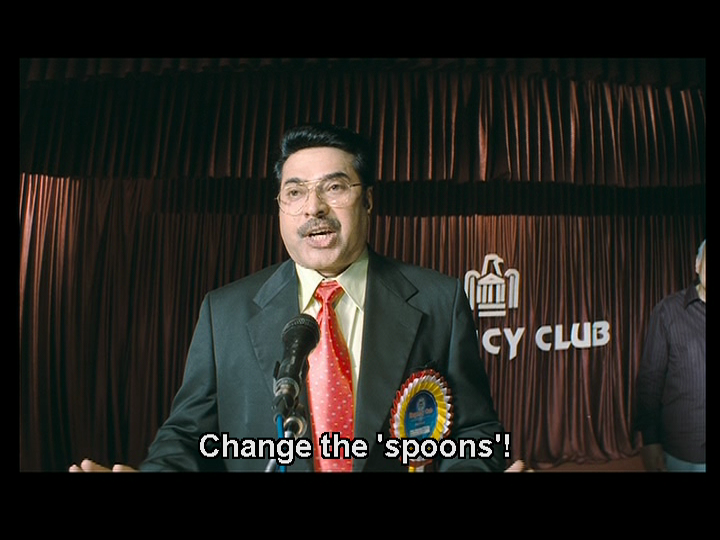
The first half of the film deals with Pranchiyettan’s attempts to become more recognised. In this he is ably abetted by Vasu Menon (Innocent) whose schemes inadvertently fail when reality doesn’t quite manage to live up to his vision. First there is a local club election which Pranchiyettan loses to his childhood rival Dr Jose. Next there is a welcoming ceremony for a celebrity which Pranchiyettan has sponsored, but again he is pushed out of the limelight and forced to take a back seat – literally. Finally he decides to try and buy a Padma Sri award and bribes some local politicians. But as may be expected, they take his money and run, leaving him in exactly the same position as before.

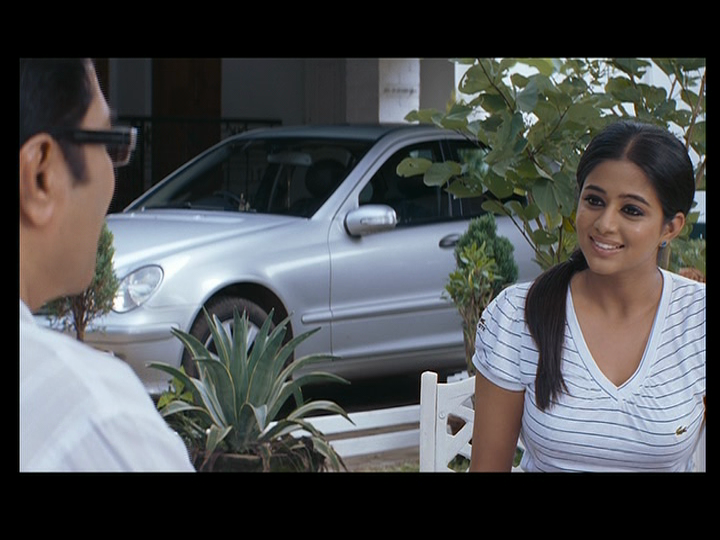
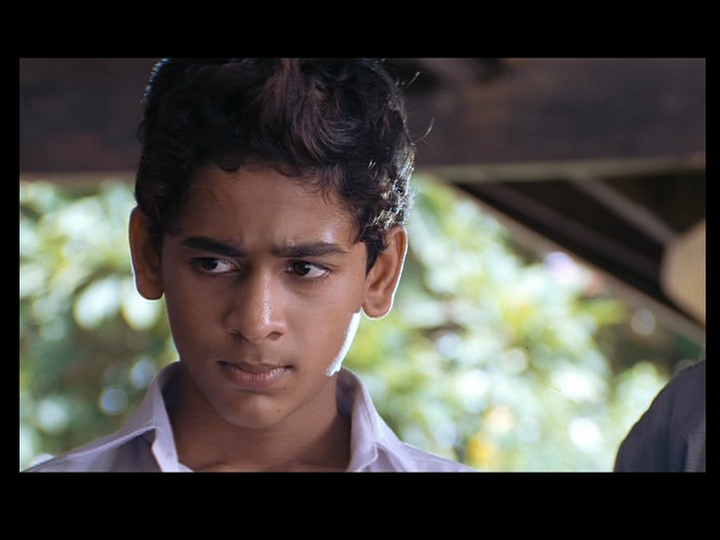
The film takes a lighter turn in the second half when Pranchiyettan meets a real life Padmashree (Priyamani). Although her name is the same as the award, Pappy is a feisty interior decorator with problems of her own. She gives Pranchiyettan a painting and ends up decorating his house so that there is an appropriate place to hang it. Finally Pranchiyettan tries to help his old schoolmaster achieve his goal of a 100% pass rate for his students by helping a young boy Pauli to graduate. In the course of this endeavour he starts to realise what is really important and seems to be on track to find contentment at last.

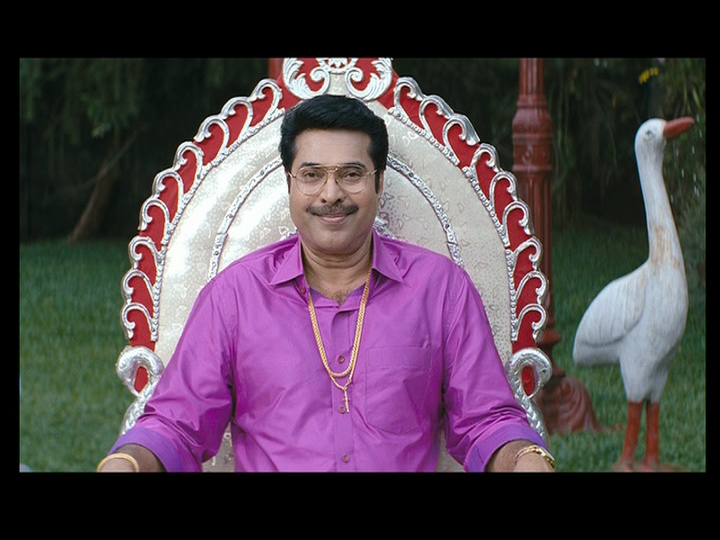
The film focuses more on relationships and characters rather than following a plot driven narrative. In fact it is more of a collection of stories although there is a progression of sorts with each sequence of events.  Mammootty is excellent as the nice guy who just can’t get a break. From his school days onwards he never had the sneaky gene that would have allowed him to fight back against people like the wily Dr Jose. He has remained true to his schoolyard love and seems stuck in the same mindset that he had as a student. He feels inadequate which he puts down to never finishing his schooling and tries to compensate with other achievements and public recognition. It seems doomed to failure, since his lack of confidence means he relies on other people’s ideas which don’t really seem to reflect his personality.

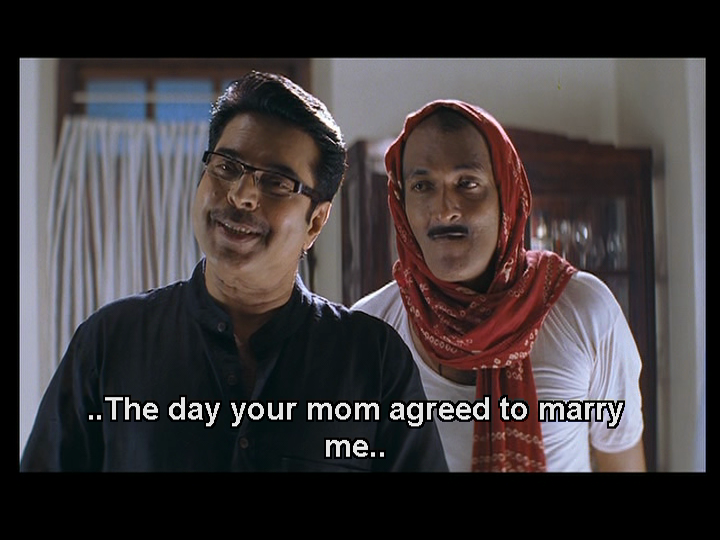
Innocent does a good job with the character of the ever helpful friend who comes up with more and more schemes to try and get Pranchiyettan the recognition he craves. There is plenty comedy between the two in their expressions and mannerisms as much as in the dialogue, and Ranjith has made their relationship feel very natural just like an old and good friendship should be. During the course of the various schemes Ranjith pokes gentle fun at exclusive clubs, corrupt politicians and the self-grandiose behaviour of dignitaries at reception functions. It’s all very ordinary and down to earth which makes Pranchiyettan a very appealing character.

Priyamani is lovely as the interior decorator Pappy. Her character has drive and purpose which makes her much more than just a romance interest. The only song in the film is pictured on Pappy and her conversion of Pranchiyettan’s home and it’s a refreshing change of pace in the film. She also upgrades his wardrobe at the same time and even gets him a new pair of glasses. I love these little attentions to detail and the very natural way that Ranjith allows his characters to interact. The final story with Pauli is marred a little by the inclusion of some comedy with a hapless tutor played (Jagathy Sreekumar). This really isn’t needed as the story already has plenty of much more subtle humour, and the actual drama of Pauli’s story is much more engaging.

My favourite character though is Pranchiyettan’s cook Ayyappan, played by Sasi Kalinga. He has a wonderfully expressive face and the humour from his character is very droll. Again it is the everyday normality of the characters and their actions which appeals and both Ayyappan and Supran (Tini Tom) as Pranchiyettan’s driver are used to very good effect. They play well off each other and Pranchiyettan to give a really believable dynamic. The other support actors are all very good in their smaller roles. Siddique appears only briefly as Dr Jose where he takes every opportunity to have a dig at Pranchiyettan. But he has affection for his old friend which comes across in some of the later scenes. Khushboo is perfect as Dr Omana, the wife of Dr Jose, and Sivaji Guruvayoor has a small role as the headmaster of Pauli’s school. The idea of St Francis as the confessor figure to whom Pranchiyettan spills out his problems is a clever idea and helps to link the different stories together.

The film relies heavily on Mammootty’s performance and without his presence I don’t think this film would have worked quite as well as it does.  But an excellent performance from him and the rest of the cast do make this an film very worth watching.  3 ½ stars.

Temple says:

If you’re one of those who believe all South Indian films are noisy, gory and lacking subtlety, this might be the film to set you straight. It’s a gentle character study with parallels to the life of St Francis of Assisi, who also plays a supporting role. St Francis was the son of a wealthy man, and became drawn to God and the Church following an illness.  Several of his attempts to promote the Church went awry as he didn’t really think things through. St Francis failed when he tried to make things happen, but seemed to succeed when he simply lived his values of acceptance, charity and humility. Mammootty gives CE Francis aka Pranchiyettan aka Pranchi a sadness that helps make his needy attention seeking more sympathetic. Ari Pranchi is the son of a successful man, and he also fails when he tries to force things to happen. When he follows his true heart the results are different, and this opens his life up. Despite the apparent mismatch between Priyamani and Mammootty, their romance is appealing as it plays more as a trusting affection and partnership. I really like Priyamani and while not all of her films have been great, I have enjoyed every performance of hers I’ve seen. Pappy learns to trust the solid businessman who can see a solution to her unsolvable problem but who isn’t too proud to take her advice in the areas she knows best. Their scenes are fun and heartwarming as Mammootty shows the awkward stirrings of flirtatiousness contrasting with the confident sass of Priyamani. And you know she transforms his home from tasselled pink brothel curtains to sleek monochrome modern lines. I mourned the loss of colour for a moment, but only as a viewer – living in the icecream coloured house would have done my head in and may have contributed to Mammootty’s sour expression at times. I hope she left some of the statues and icons of St Francis though. The story with Pauli was designed to show Pranchi’s generosity, but I could have done without all the ‘comedy’. Those scenes actually had the effect of making Pauli seem like an incorrigible little git and not worth the effort. But saints have more patience for such things. And the message, which is not subtle, is a nice one. Don’t stress about rewards and titles – live with generosity of spirit and help out where you can.

It’s a slight story in many respects but the structure of the narrative, the iconography and saintly presence, and the character development  make it engaging and memorable. Add great performances by Mammootty, Priyamani and supporting artists like Sasi Kalinga and I think it’s a winner. 4 stars!