Bheema

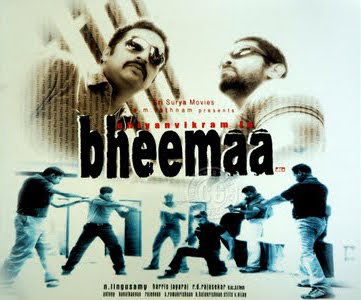
Bheema centres on the key players in a gang and their interactions with rivals and police in Chennai. It’s quite a sanitised version of the criminal underworld, and little detail  is revealed about the nature of how these guys make a living. But it has two fantastic actors at the forefront, a delightful bromance, and a focus on characters that makes the who and why of the story more interesting than the what.
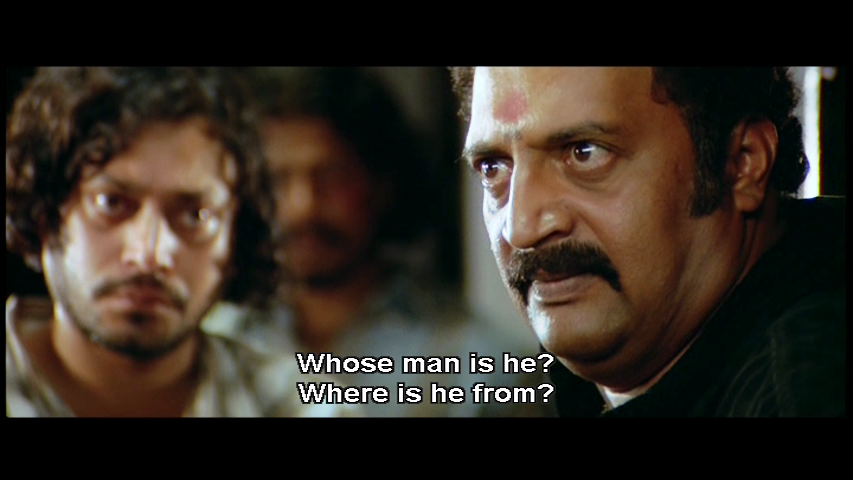
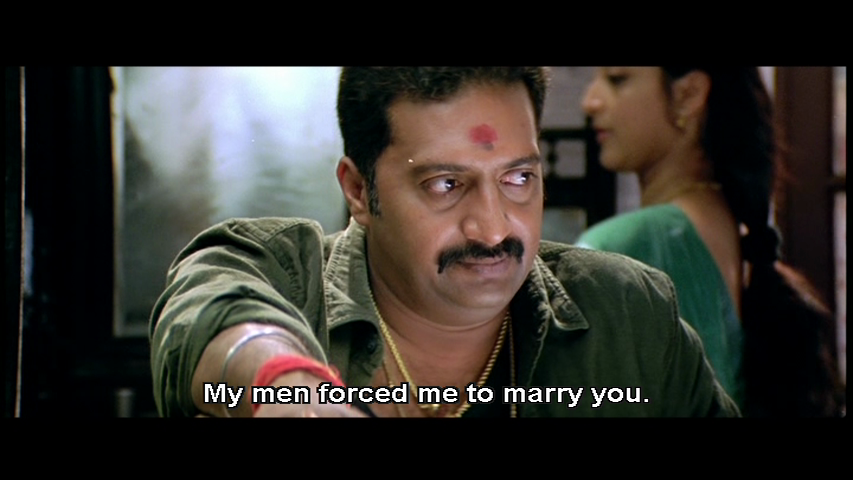
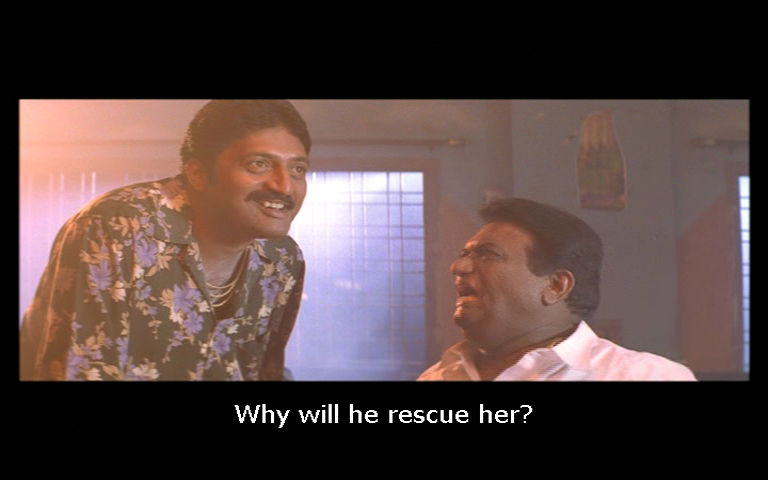
Chinna (Prakash Raj) is the local hard man. He started small in a small town and has risen to become one of the biggest crimelords in Chennai. His business dealings are never overtly discussed but he is presented as a ‘good’ gangster. He looks after the defenceless, his guys don’t attack women and children, and he plays by ‘the code’. Prakash Raj is perfectly cast. He makes Chinna likeable, roguish, aggressive and menacing by turns. Chinna is under threat from an old associate (Raghuvaran) and has an uneasy and crumbling detente with the local police. Things are getting tougher, but he is not one to back down. There is a lot more to the character than just being a figurehead, and I liked the glimpses into Chinna’s past, his conversations with old advisors, his wife, even the police, that showed different facets. He thought through the consequences, he reacted emotionally to some situations and I could understand the loyalty Chinna inspired because he seemed real yet powerful. I always enjoy seeing Prakash Raj in a more substantial role, and this is one of my favourites.

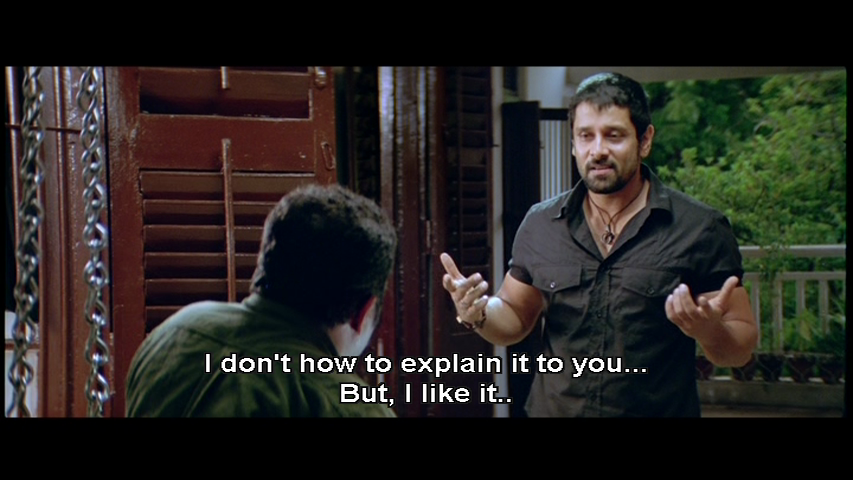
Sekar (Vikram) is an enigmatic figure, shadowing Chinna and despatching his enemies before Chinna can. The reason for his obsession eventually emerges via flashback, and it reinforces the notion that justice is not delivered by the law, and what makes a man is the ability to beat the living daylights out of another man. Sekar believes in instant justice, delivered as he sees fit. Even the police in Bheema argue that they can’t operate with the constraints of bureaucracy and low budgets, and have to break the rules to achieve what they see as justice. Sekar is given the name Bheema by the police in recognition of his strength and his role in Chinna’s life.

Sekar’s sole ambition was to one day join Chinna, his role model for strength and justice and a more satisfying father figure than his ineffectual policeman dad. I’ve often wondered why characters stick with their gangleader and don’t just leg it when things get crazy. Writer Sujatha provides a backstory and motivation that gives more to these guys than just being the good baddies. Vikram switches effortlessly from the full throttle action sequences to gazing mistily at Chinna or quarrelling with Shalu, and his physicality suits the invincible Sekar. Vikram’s rapport with Prakash Raj is one of my favourite things about the film and they play off each other very well.

It’s a man’s world, and sometimes in unexpected ways. Vikram steals the focus from the item girl in this song, and Prakash Raj is the one to be almost upskirted.

What sets Bheema apart from other grim gangster fairytales is characters having a life, or at least ideas, outside of the job. Chinna was in love with Padma but they drifted apart. Sekar, ever the loyal lieutenant, reunites them.

Prakash Raj does some delightfully girly fidgeting and stammering, and can’t hide either his happiness or trepidation at marrying his old flame.

Padma (Lakshmi Gopalaswamy) is gorgeous and her scenes with Chinna have a warmth and maturity that suits the slightly older lovebirds. They talk about the risks of her being part of his life, and she is firm in her assertion that she has no illusions. I found the dialogue rather flowery but the emotions came through and they seemed to have a deep mutual affection. He talks to Padma about Sekar, since Sekar is like family and Padma is in charge of the household. She and Chinna make fun of Sekar when they find out he is turning into a gooey romantic wittering about flowers, and their playful banter is another glimpse into the relationship.

Sekar loses his focus on being a thug when he starts to think of love and  Shalini (Trisha). He knows that his priorities have shifted and he can’t rely on himself to be as focussed, fearless and impulsive as he once was.  Chinna lets Sekar go, in a scene more like a breakup than an exit interview.

Unfortunately, Shalini (Trisha) is stupid and irritating for almost all her time in the story. I’m not sure why Indian film heroines characterise innocence by appearing to be dim-witted but Shalu is dumb as a box of rocks and about as interesting. Sekar falls through the roof into her courtyard one night, landing on her. Because of this, she decides he is the one, manufacturing reasons to be near him and imagining they share likes and dislikes based on absolutely no evidence. I did find her stalking Sekar mildly amusing just because it is a bit of turning the tables, but that was all I could see in her favour until quite late in the piece.

Once Sekar succumbs, Vikram and Trisha generate some chemistry and that made their relationship seem vaguely plausible. I liked that they had playful but still intimate scenes together as things developed, and it helped make up for the brain-dead start.

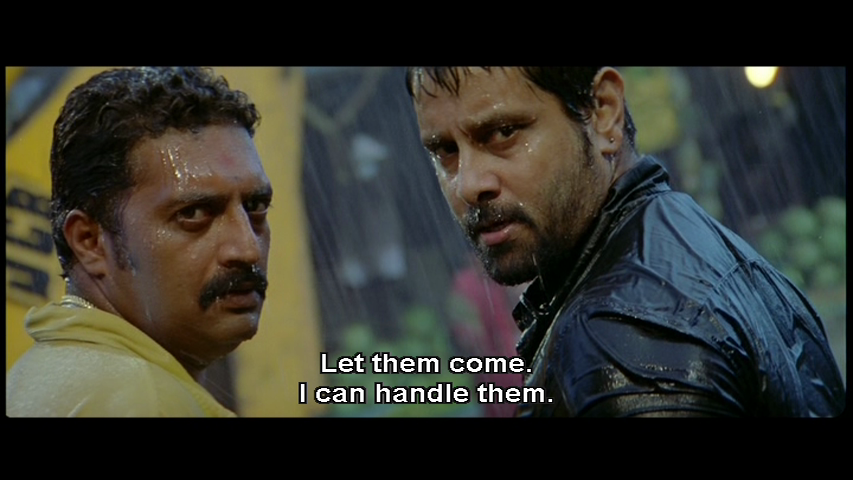
Chinna is a surprisingly sentimental old school don and sometimes that works against him, as he plays by rules others are starting to disregard. Sekar idolises Chinna and can’t abandon his old boss but feels compelled to take Shalini away. Once the other players sense weakness in Chinna, they start closing in. How will it all work out?

There are indicators. Shafi is in the support cast in Chinna’s gang. And Shafi does tend to play characters that bite the hand that feeds them. Also, I have developed a theory. In the imaginary Tamil Film Writing School in my mind, the compulsory class on ‘Ways to End a Film – Traditional (aka Everyone Dies (Rape Optional)’ is well attended. The final elective class ‘Ways to End a Film – Creative Writing (aka ‘No Rape, No Murder – stop being so lazy and think of something else’) falls the day after the big end of year dinner and people are either too hungover or they’ve already got enough credits to graduate, so most students don’t go. Thus there is generally one ending for a Tamil film, regardless.

I quite like the songs by Harris Jayaraj, but the picturisations of the romantic duets seem to exist mostly as a safe channel for the wardrobe department to vent their creativity.

The support cast includes so many reliable character players but the focus isn’t on them and I barely paid any heed to Ashish Vidyarthi, Tanikella Bharani, Shafi, or Raghuvaran among others. Chinna and Sekar dominate the story and Prakash Raj and Vikram likewise dominate the performances.

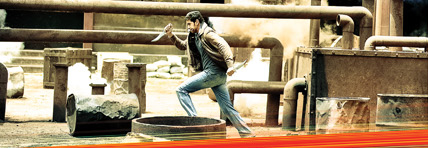
Linguswamy has directed an action packed film that doesn’t feel hurried or slapdash, and it is very satisfying to a point. The ending was a disappointment and yet almost exactly what I expected. The action scenes are typically excellent as is standard for this genre. There were some nice little extras – when Sekar belted a group of guys with a metal pipe, they chimed like bells as they dropped. The editing is good and the quick cuts and occasional use of effects enhance the sense of urgency or disorientation. It’s a very competent film and a pleasure to watch.

If you’re lukewarm on the South Indian gangster genre, this could be well worth a look. It has better than usual characterisations, some excellent performances and good production values. And one of the best filmi bromances. 3 ½ stars!
Heather says: I’m a fan of Tamil gangster films and usually enjoy anything by N. Linguswamy, but Bheema was rather disappointing all round. Instead of the usual well-developed storyline and strong characterisation I expect from such an accomplished director, Bheema staggers from fight scene to overdone fight scene without any real justification for the characters acting in the way they do. Rahguvaran is ineffectual as the ‘evil’ don Periyavar and his feud with ‘gangster with a concious’ Chinna seems clichéd and unimaginative. The second part of the film which concentrates on the new Police Commissioner and his vendetta against the gangs is more convincing but still seems formulaic and just not that interesting. The relationship between Chinna’s new lieutenant Sekar and the rest of the gang could have been made into something more exciting but instead it’s thrown in towards the end to try and spice up the climax. Something which only works to a limited extent. However, it’s good to see that Shafi continues his quest to always play the smarmy, self-satisfied sycophant and he does his usual thing here as one of Chinna’s men to good effect.

Despite the issues I have with the story, Bheema is saved to some extent by the excellent performances from Prakash Raj and Vikram who both breathe life into the film. I agree with Temple that their camaraderie feels very genuine and the interactions between the two do much to make up for the dreariness of the plot. Vikram’s character is very much the strong silent type and he does a good job with the rather dour Sekar, but Prakash Raj steals the show as the gangster with a heart. His romance is perfectly played and he brings out a human side to Chinna making him much more than just another world-weary gangster. Despite his good performance, Vikram looks rather over muscled here and I confess that I prefer him in more character driven roles such as in Pithamagan and Kasi where he has more range to work with. The one-man indestructible army of Sekar was just a little bit too much to take, especially with the distracting musical sound effects and overly loud soundtrack during the fight scenes.   The implausible relationship between Shalini and Sekar was another disappointment and the two never felt comfortable together –  odd, considering the considerable chemistry the two actors shared in Saamy. In fact there is much more sparkle between Chinna and Sekar!

Bheema does have a good soundtrack and there are moments where the film starts to grab your attention, but sadly they’re just not sustained. Worth watching once for Vikram and Prakash Raj but that’s all. 2 ½ stars.

Varsham

I do really like Prabhas. He always seems to be a little surprised to be the hero of any film and with his height and general gangliness he has a ‘St Bernard puppy’ type of cuteness that is very endearing. Even though his films seem to follow a similar pattern, he brings enough personality to each character that I’m usually happy to watch no matter how many plot holes or illogical scenes there seem to be and this film does have a few of those.

Varsham is a typical Prabhas action/romance movie. The story involves two guys fighting over the heroine like dogs over a bone, with each one growling ‘she’s mine’ at appropriate intervals. But when one of those two is Prabhas and the other is Gopichand it’s suddenly a lot more fun. Add in Prakash Raj as ‘Prakash Bad Dad’ and it’s much more entertaining than it first sounds.

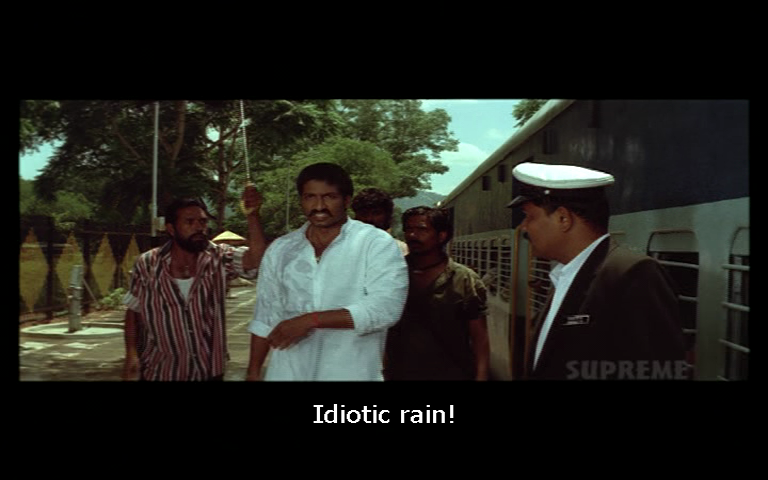
Trisha plays Sailaja, the girl who both Venkat (Prabhas) and Bhadranna (Gopichand) lay claim to. Sailaja is a fun-loving girl who adores the rain, and I fully understand and endorse her compulsion to dance in it at every possible opportunity. Venkat and Bhadranna first both see her at a train station where their train has been delayed. Once the rain starts Sailaja leaps out onto the platform to dance with total child-like abandon. She follows the ‘dance as if no-one is watching’ creed, despite the fact that everyone is actually watching her and this is a very fun song with plenty of dorky moves by Trisha. There’s a great pigeon move in here too and I’m very impressed by Trisha’s grasp of the bird-impression genre of dance step.

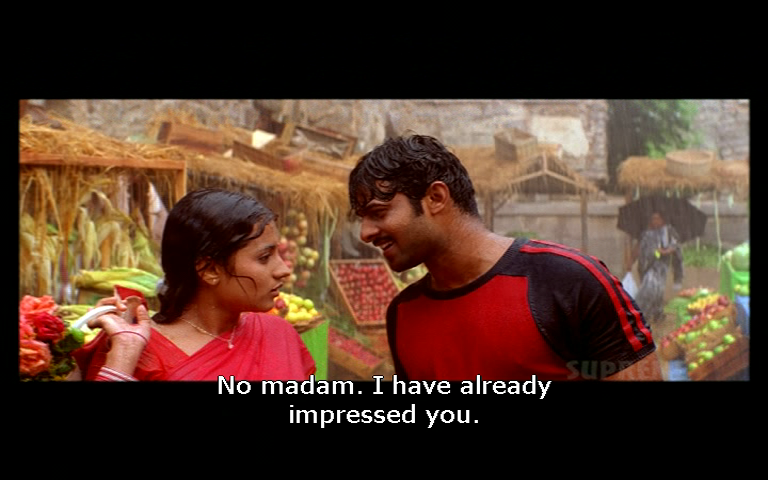
Venkat and Sailaja are separated as the train moves off, but find each other the next time precipitation hits their local market in Warangal. Since the rain seems to bring them together they make a pact to meet again when it next pours. However, just as the rain clouds form again there is the small problem of Bhadranna who has come to Sailja’s house to arrange marriage with her.

Sailaja’s father Ranga Rao (Prakash Raj) is a drunken gambler who wants to make the best use possible of his daughter to fund his chosen life style. But while Bhadranna has schemed to put Rango Rao in his debt, trying to use his weakness for gambling to force Sailaja into marriage, Rango Rao is one step ahead.  Luckily, a film producer has seen Sailaja and is desperate for her to act as his latest heroine. This will naturally pay extremely well, plus hopefully be a source of revenue for years to come, so Ranga Rao is in no hurry to marry his daughter off. And despite appearances, Ranga Rao is wilier than Bhadranna gives him credit for.

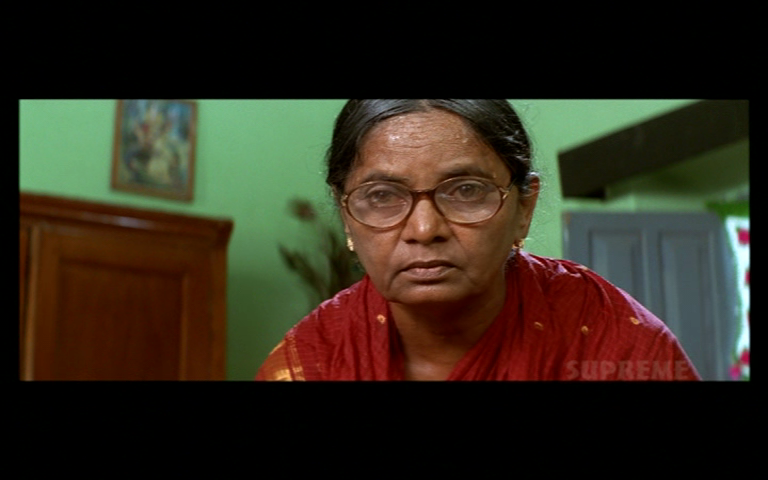
He plays Venkat and Bhandranna off against each other, reasoning that he can use Venkat to get rid of Bhandranna and therefore his debt, and then separate Sailaja and Venkat. This is exactly the path he follows and even when his daughter is later kidnapped by Bhadranna he’s still tries to make the situation turn out to his advantage. Luckily for Sailaja she has the support of her feisty and opinionated grandmother who has a very low opinion of her son-in-law. It’s also a pretty accurate one. Sailaja’s mother is a bit of a wet blanket and unable to take a stand against her scheming husband, whereas her grandmother actively supports her relationship with Venkat and obstructs  Bhandranna as much as she can.

Bhandranna doesn’t stand a chance though – he has entirely the wrong opinion about the rain. Unlike Venkat who has a much better appreciation of the things that matter to Sailaja.

Although the story itself is nothing new, the appeal here lies in the performances of Prabhas and Trisha who really do bring their romance to life. They have great chemistry, especially in the songs and the love story comes across as natural and unforced. After all as Sailaja puts it, Venkat is tall and handsome – what more does a girl need? Their first meetings in the rain are beautifully captured and make good use of the hazy lighting. In the later scenes Prabhas is all action, which he does so well, especially with the great fight scenes choreographed by Peter Hein. But Sailaja fights back too and isn’t at all a typical sobbing heroine. I really like her characters attitude even if she is a little too gullible when it came to her father and too ready to believe the worst of Venkat. I also appreciate the references to the Ramayana throughout the story. The kidnap theme is a straight take from the Aranya Kanda, but there are plenty of other references. These range from Bhandranna trying to change the outcome of the story in a re-enactment at his mansion, to the final showdown involving a large Ravana cutout, which all add yet more layers to the story. I love the songs by Devi Sri Prasad and they are generally well placed in the movie. The best are those with Venkat and Sailaja in the rain, although I do like the multi coloured chicks in this song, and both Prabhas and Trisha look to be having fun.

But despite my love of Prabhas, Prakash Raj is the scene stealer as the selfish and greedy father. He has a habit of running his tongue over his crooked canine tooth while he is scheming and it becomes quite mesmerising after a while, acting as a gauge of just how manipulative he is planning to be . Ranga Rao also has a collection of very loud shirts and the combination is enough to put him into the ‘bad dad’ faction even before he starts his fake suicide attempts and general bribery of his daughter. Jayaprakash Reddy as the producer aids and abets Ranga Rao’s plans in order to get his film made and the two have some of the funniest scenes in the film.

There is a small separate comedy track involving Sunil as Venkat’s friend Jagan and his quest for romance. Since Sunil is another favourite and the comedy is inoffensive and not too intrusive it doesn’t detract from the rest of the film for me. Ajay also turns up as one of Prabhas friends which is another point in this films favour although his character is of the blink and you’ll miss him variety.

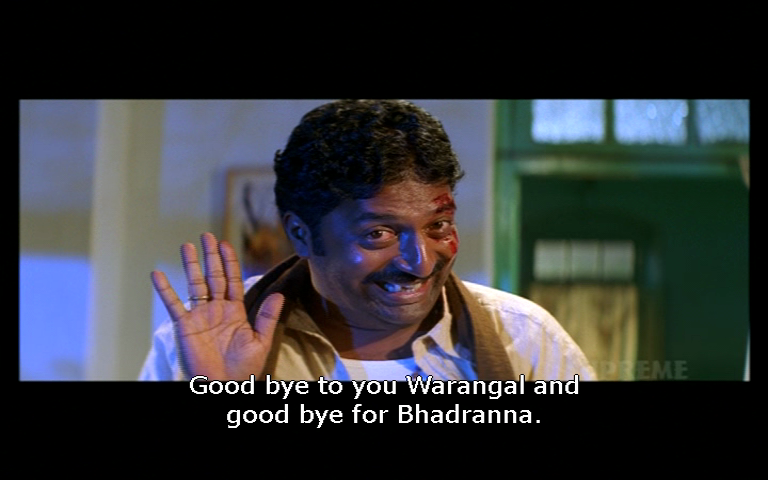
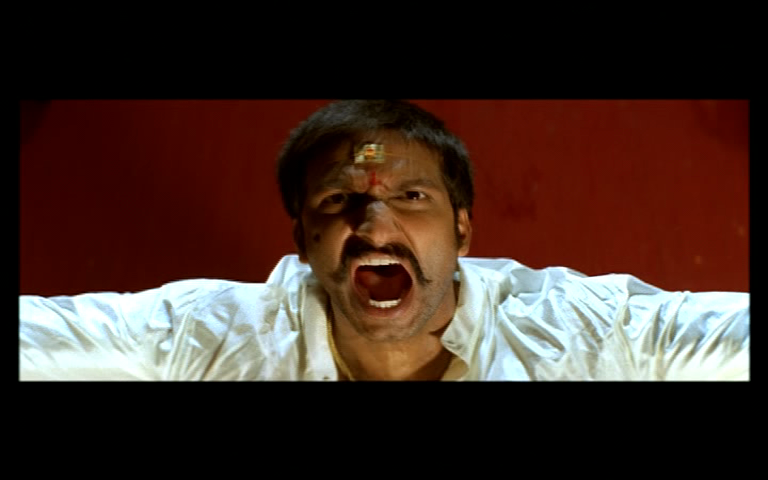
Varsham is the first time I’ve seen Gopichand act, and I think he’s excellent as the villainous Bhadranna. He’s not overtly evil, but you just know he’s the sort of person who pulled wings off flies as a child. OK, killing his father was the first clue, but most of the time he’s rational and normal until you look at his eyes, or he suddenly snaps and casually kills someone. Bhadranna is the centre of his world and the sooner everyone around him realises that and falls into line, the easier it will be for them.  Shafi has a small but important role here as Bhandranna’s step-brother Kasi, and he’s sleazy  and fanatical enough to make his initially pitiful character quite obnoxious by the end. It seems to be his special talent.

Great songs, crazy fight scenes (Venkat has amazing bullets that manage to flip jeeps), Prakash-Raj-bad-dad and a very sweet romance make this one of my favourite Prabhas movies. It’s worth watching for the beautiful rain shots alone but Trisha and Prabhas are excellent together in this film.  4 stars.

Temple says:

The structure of the simple story was quite good, and I like the overt Ramayana references. Bhadranna demanding that the local actors change the script to allow Ravana to tie the nuptial thread around Sita’s neck was just one of many signals that he was the real deal when it came to insane villainy. But the heroic Prabhas was just as demanding. Venkat was the type of hero who expects to be worshipped and he had no tolerance for people questioning him. In many respects there isn’t that much difference between hero and villain as they are both self centred and moody. Prabhas has a very likeable presence when he isn’t sulking or killing people, while Gopichand has a harder edged energy. It was the actors who made that dynamic work as apart from flagging Venkat as ‘poor but honest’ and Bhadri as ‘eeeeevil but artistic’, there was little else in the script to develop the characters. The small scale of the drama and the characters’ dreams made the film a little more engaging and plausible. The character actors were pretty good and helped paper over some of the plot holes just by being believable in their supporting roles. Prakash Raj was good but not great. I found his characterisation fluctuated between extremes of buffoonery and cunning and it didn’t feel cohesive. If he had dialled it down a little in some scenes, the sly con artist and schemer aspects of Ranga Rao would have been more convincing. My first thoughts on seeing Trisha cavorting around in the rain went along the lines of  ‘Hello..an escaped mental patient.’ Why do Indian film directors seem to associate carefree innocence with behaviour that is borderline crazy? And that is pretty much the last thought I gave to Trisha. She was adequate but I think almost any actress could have delivered that performance. There is rather a lot of kissing (seen and implied) although there is minimal chemistry between the stars, even with Trisha licking melon pulp off Prabhas’ face.

The songs are colourful, and Prabhas and Trisha incurred the wrath of the wardrobe team in some of the picturisations which made them extra entertaining. Prabhas’ signature dance steps seem to be stomping or undulating and he often got to do both. Sometimes while wringing wet. There are some nice little details in the design, and I liked seeing Bhadranna still using a gramophone – so stylish and retro. The action scenes were good, and I appreciated Venkat’s dedication to leaving no car unturned in one encounter. Prabhas is very comfortable as an action man, and tackles the fight scenes with gusto.

This is a pretty run of the mill romantic drama and while it was a perfectly acceptable timepass, there is little to set Varsham apart. 3 stars.

Dookudu

Another Adventure Without Subtitles! Dookudu is the much awaited release for ‘Prince’ Mahesh Babu and we knew it would be huge. We arrived early for the 8.30pm show, which gave us the opportunity to watch the staff deal with the problem of getting the first show crowd out through the 700 or so people crowding into the small foyer. Once people emerged, the waiting audience clapped and cheered them like they were rockstars, and it was a very festive atmosphere. As one lady said  – why come to the cinema unless you’re going to have a good time?

It was about 10pm before the film finally started, not that anyone was complaining. There was plenty of cheering, accompanied by the sounds of tearing newspaper, as everyone got ready for Mahesh’s appearance.  There was discussion about whether there might be the odd flash of elbow (Yes there was, and even a glimpse of princely tummy) and just how many shirts can Mahesh Babu wear and still manage to fight? (There is apparently no limit to what Mahesh can do, or how many shirts he can wear.)

The film starts with politician Shankar Narayan (Prakash Raj) who is so well loved by the people that we know he’s heading for a gruesome end. Sure enough he’s attacked and left for dead by his rivals who include Kota Srinivasa Rao, Sayaji Shinde and various other Telugu film baddies. Somehow Shankar survives, in a coma and hidden in a secret location, and he finally comes round some years later to a changed world. His son Ajay (Mahesh) is a policeman rather than a politician as his father had planned, a number of his friends and colleagues are dead and the family have moved out of their old house. However the doctor instructs Ajay not to shock or distress his father in any way, for example by telling him the truth, as this will be bad.

Mahesh is introduced in full throttle action hero style, complete with title song. He takes on a room full of bad guys with nothing but his comic timing, guns and a whole lot of biffo.  Ajay is a super cop – invincible and fearless. He is also quite prepared to play outside the legal system if that is what it takes. After one such scene we did have a quick discussion about the omnipresent singlet under all the layers of shirts, and whether it was actually bulletproof. Whatever the reason, the bad guys consistently fail in their efforts to eliminate our hero, while he has no such issues dealing with them. Mahesh can convincingly portray a furious rage in a very low key acting style, and he is also more than capable of bantering dialogue with the comedy uncles. It’s a role tailor made for him, and while he wears his police uniform a little on the baggy side the character is a perfect fit.

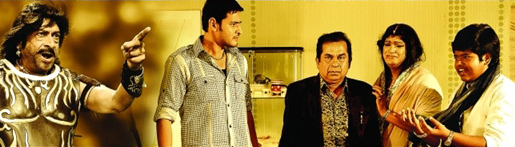
Ajay does a deal with Brahmi who’s taken over their house and in the process convinces him that he’s taking part in a reality TV show which forms a large part of the comedy in the film. Ajay pretends to be a politician and keeps his life as a policeman secret from his father, while all the time plotting revenge on his fathers attackers. It’s no wonder Ajay is always on a short fuse – he must be exhausted from all the pretending. And the killing.

Ajay finds out through another investigation that mafia boss Nayak (Sonu Sood) was involved in the assault on Shankar. It looks at first as if Sonu is about to reprise his role in Ek Niranjan as the stylish and psychotic villain, but sadly his wardrobe fails to deliver. Despite the nice cravats and the random and occasional application of grey to his hair and moustache, Nayak is a subdued and fully clothed villain who just loves his little brother a bit too much.  We enjoyed the Sheila ki Jawani dance break and we think Sonu did too, but it was shortlived. Most of the posturing is left to his faithful sidekicks played by Ajay and Subbaraju. That’s fine with us since they’re both Cinema Chaat favourites and we did enjoy watching the satin shirted Subbaraju try to mime to his boss that Mahesh was really an undercover policeman. Oh for a pen when you need one…

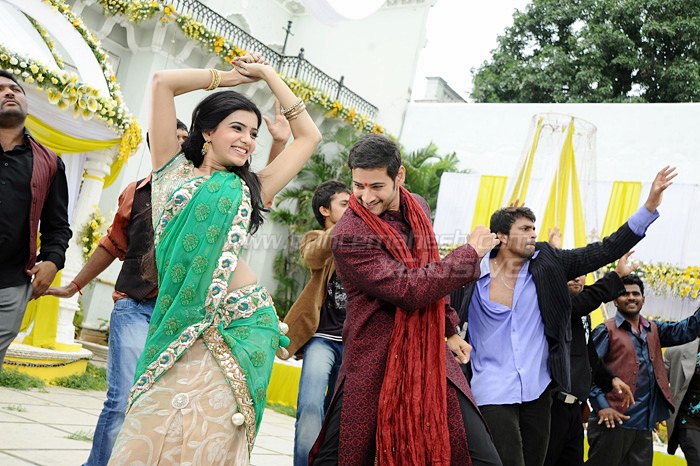
Along the way, Ajay takes his gang of trusty colleagues to Turkey, apparently just so he can say ‘Operation Istanbul’ as there is no other discernible reason for the location. He meets Prashanthi (Samantha), a fashion designer and, unknown to him, daughter of his clownish boss (Nasser). While Ajay and Prashanthi have the usual confusions before falling in love there is no substance to Samantha’s role and she’s soon side lined. There is little chemistry between Samantha and Mahesh, maybe because they spend hardly any time together on screen. Samantha looks beautiful, and wears whatever the costume department have dreamed up. That seems to be her sole purpose in the film as she doesn’t actually do anything.

There was more comedy with M S Narayana and one very funny skit where he took off a number of films including Magadheera and Robot. A little comedy can go a long way, but here it was integrated into the main story and with Mahesh adding to the comedy dialogue there were parts that were very funny, even to us non-Telugu speakers. The rest of the audience were roaring with laughter throughout the speeches. Master Bharath put in an appearance too. Was he necessary? Probably not. And yes there were some unfortunate stereotypes masquerading as comedy, but for the most it was entertaining.

The supporting cast was very strong, if largely underutilised. Shafi, Tanikella Bharani and Sudha had little to do, and Satya Krishnan was given maybe one line of dialogue. It’s a big budget film when you can hire some of the best and then not do anything with them!

The action sequences are excellent, and it’s hard to go wrong with a good impaling. Sreenu Vaitla has come up with several ways of illustrating the ‘eye for an eye’ concept, all of them extremely gory. The camera work and special effects were great and added impact on top of the already impressive stunts. We enjoyed the flashes of lightning when Ajay was beating Nayak to a pulp, and the changes of tempo in the film speed that underpinned the dramatic tension.

The song picturisations were less successful, and the songs by S.S Thaman are not so memorable on their own. Mahesh can dance reasonably well so it was disappointing not to see more use being made of his skills, and we wondered who decided it was a good idea to give him Abhishek Bachchan’s choreography. Chulbuli Chulbuli was spectacular with plenty of feathers and some enthusiastic backing dancers, although clearly ‘inspired’ by Kilimanjaro. The nightclub song lacked a good item girl but made very good use of the male backing dancers, grinning madly in satin pants and ruffles,  and had a giant guitar shaped light-up floor so that was pleasing. We must also congratulate the set designer for the impressive selection of chandeliers and lamps, especially the chandelier in the hospital ward.

Dookudu has a charismatic hero in a strong if silly storyline, and it is a technically excellent film in the mass entertainment style. It might not be the greatest film ever made, but it was  really fun to watch, especially with the awesome Melbourne audience.