Badlapur & Theevram

As I was watching Sriram Raghavan’s Badlapur I was struck by a number of similarities to Theevram, a Malayalam film I’d watched just a few weeks before, so it seemed appropriate to write about them together. Both are films based on a story of revenge where the hero is forced into action by his perceived lack of justice, and both star an up-and-coming young actor surrounded by an experienced and proficient support cast. While Badlapur focuses on the obsession of revenge and the destructive consequence to Raghu (Varun Dhawan), Theevram is a more straight forward drama with Harsha (Dulquher Salmaan) playing a game of cat and mouse with Police Inspector Alexander (Sreenivasan) as he exacts his revenge. Both are good films in their own right but while I prefer Badlapur’s more ambiguous storyline, Dulquher Salmaan just pips Varun Dhawan in his portrayal of a man driven to the absolute extreme for revenge.

The story of Theevram is told in a non-linear fashion, and is actually based on a couple of real life murder cases. Sreenivasan plays a respected police officer who has an unfortunate dislike of autopsy although there is nothing lacking in his detective skills. He’s paired with a younger officer, the more impetuous Ramachandran (Vinay Forrt) and the two make a good team. The film begins with Harsha’s revenge and it’s not until later that we discover why he has been driven to this extreme. At the start we don’t know if he is a good guy or a serial killer, as without any explanation he systematically tortures and kills a man in his plastic coated cellar. His actions seem to be at odds with his day-to-day life as a piano teacher, however once Inspector Alexander comes to call it becomes clear Harsha was the victim of a crime. Most of the film is shot with dull and muted colours, but once a flashback sequence starts, explaining what has happened to Harsha to turn him into this cold and methodical man, suddenly the colours are full and rich. A rather obvious metaphor but one which is very effective.

Harsha’s wife Maya (Shikha Nair) was murdered by a company driver Raghavan (Anu Mohan) for her complaints about his speeding with her in the car. Her murder is pre-meditated and brutal, with Raghavan severing her head from the body to attempt to delay identification. He’s quickly arrested and sentenced to life imprisonment for his crime while Harsha struggles to cope with life without Maya. However, just as Harsha is starting to get on with his life, the circumstances of Raghavan’s family life allow the murderer to obtain an early release from jail. Very early. In fact he only spends 4 years behind bars before being allowed his freedom. Harsha and his friends Dr Roy (Vishnu Raghav) and Nimmy (Riya Saira) decide that Raghavan must die for his crime and set about planning the perfect murder.

Theevram rather controversially takes the view that murder for revenge is perfectly justified if the legal system has failed to properly punish the offender for his crime. Writer and director Roopesh Peethambaran delivers a story of vigilantism where the cold-blooded murder of a criminal is depicted as a good solution, and even acknowledged as such by the police. I can’t say that I agree with this view or with portraying Harsha as a hero for what he does, but the story is gripping and the plot cleverly developed. The contentious treatment of Raghavan is perhaps a way to start a discussion about such issues, and it’s interesting that he isn’t a completely black character. Raghavan does appear to try to look after his disabled wife and seems to be trying to turn over a new leaf after his release from jail. However his behaviour towards Nimmy suggests that the change may only be surface deep and he still has a poor attitude towards women.

Badlapur is a darker film where the lines between right and wrong are blurred and revenge is shown to be a weight dragging Raghu down. The first few minutes are brilliantly filmed, with a shot of a street, with people going their everyday business and the only sounds heard the traffic going past and snatches of conversations as vegetables are bought and gossip exchanged. However in the background there is a robbery, and as the two criminals leave the bank they force their way into a car parked outside where Misha (Yami Gautam) is just loading in her young son and her groceries. During the subsequent chase Robin falls out of the car, while Misha is shot and killed. While one of the robbers manages to escape, Liak (Nawazuddin Siddiqui) is left to face the music. After his wife’s murder, Raghu becomes a haunted and driven man, obsessed with finding Liak’s partner whom he believes fired the fatal bullet. However in reality the opposite is true. Liak was the man who, in the heat of the moment shot and killed Misha, although he never confesses, insisting that he was just the driver.

15 years later when Liak is diagnosed with terminal cancer Raghu is persuaded to plead for Liak’s early release in the hope that he will run to his old partner in crime. Raghu’s bereavement turns him into a cold, hard man who rapes and abuses Liak’s girlfriend Jhimli (Huma Qureshi) as part of his revenge. He’s so obsessed with the idea of finding the man behind his wife’s death that he lives a miserable life, alone and in fairly dismal circumstances. The tragedy has become what has defined the man and it seems as if only his plans for revenge keep him going.

Here, revenge is shown as something that corrupts. Raghu becomes more despicable than his enemy, killing Liak’s partner Harman (Vinay Pathak) and wife Kanchan (Radhika Apte) in cold blood. Liak himself is shown as a rather grey character, who seems to have more of a life than Raghu, despite spending most of it behind bars.

Dulquher Salmaan and Varun Dhawan both do an excellent job as young men devastated by their loss. The problem I have with Varun’s character is that it takes 15 years before he manages to achieve his revenge, and it seems unlikely that he could have maintained his rage so long. Varun tries hard but doesn’t quite manage to pull off playing a man in his forties although he does convey his preoccupation with finding Liak’s partner and his disconnection from normal life very well. Dulquher has an easier time of it, as his character only has to wait 4 years to exact revenge, and his protagonist is easier to dislike. Dulquher is also a man who has managed to move on with his life and although his world is duller without Maya, he would have been content to let Raghavan rot in jail if he’d just stayed there. His revenge is coldly plotted with great attention to detail but there seems to be little rage left – in fact little emotion at all.

Both films are made even better by their excellent support cast. Badlapur would have been less substantial and the revenge less ambiguous without the excellent Nawazuddin Siddiqui and his nuanced performance as the main antagonist. Sreenivasan doesn’t have such a consequential role, but his support and that of Vinay Forrt rounds out the story and ensures a satisfying plot. The films are brutal, both in the violence they depict and in the exposure of such deep despair but there are lighter hearted moments in both and it’s not all doom and gloom. There is just enough light to allow the shade space to deepen and both directors have paced their films well. The strength of both Badlapur and Theevram is in the portrayal of emotions and it’s heartening to see two young actors bring so much depth to their roles. I enjoyed both these films and recommend them for a combination of fine performances, strongly written characters and good storytelling. 4 for both.


Shor In The City

Shor in the City didn’t get a cinematic release in Melbourne, which was very disappointing to those of us who had been following updates on twitter. Good reviews, an interesting cast line up and compelling trailer meant that I got the DVD as soon as it was released, and watched it almost straight away. It’s a film that would look great on the big screen, with some beautiful shots of Mumbai and the Ganesh Chaturthi celebrations, but the storyline and excellent performances make it a very worthwhile DVD watch as well.

The film takes place over  Ganesh Chaturthi  and follows three stories which are not interlinked, although there is one character who is involved in all three. Interestingly the opening credits state that all the events in the film are inspired from newspaper articles, which at times made me wonder exactly what does get reported in Mumbai. It’s a slice of life in the city and seems to be a very realistic serving.

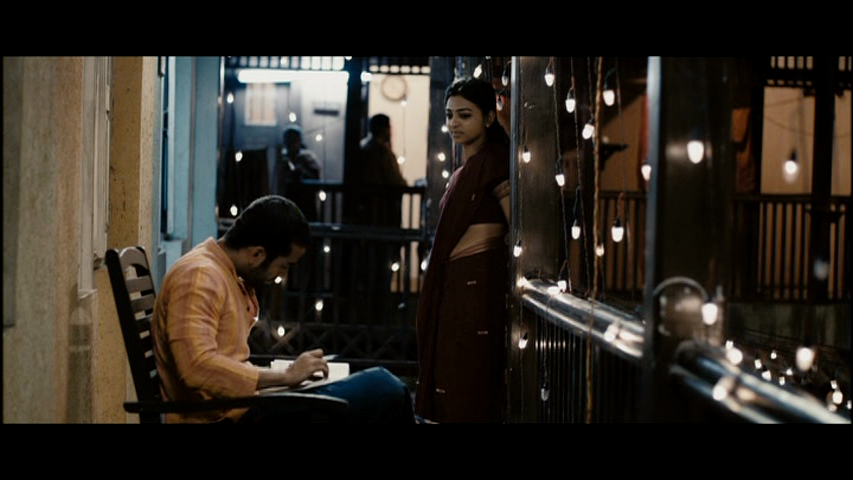
The first story centre around Tilak (Tusshar Kapoor) and his two friends Ramesh (Nikhil Dwivedi) and Mandook (Pitobash). While Tilak runs a business illegally copying and publishing books to sell at traffic intersections, his two friends seem to be mainly engaged in petty theft and other small crime. Tilak is also recently married and the relationship with his new wife Sapna is one of the standouts of the film. Their initial awkwardness around each other and the slow development of their relationship is very well portrayed. I would have to say that this is probably the best performance by Tusshar Kapoor that I have seen – I can’t remember much about him in other films, but he really impressed me here. Radhika Apte is excellent as Sapna and the chemistry between the two is develops realistically as their relationship evolves. This is the second time I’ve seen Radhika Apte (she was in Onir’s excellent I Am) and she shows her versatility here with a completely different but equally compelling performance.


The film follows the lives of the three friends as they kidnap a writer to steal his latest manuscript, try to get rid of some guns and a bomb that they have stolen and finally get involved in a bank robbery. Nikhil Dwivedi is totally crazy as Mandook and while he portrays the type of person that you would hope never to meet in real life, on-screen he is funny and infuriating in equal measures. Ramesh is somewhat overshadowed by the force that is Mandook, but the relationship between the three feels very natural and true to life. Whether it is riding around on a motorbike taking surreptitious pictures of girls or hanging out in a bar taking pictures of themselves writer/ directors Raj Nidimoru, Krishna D K and writer Sita Menon really seem to have got these three right.


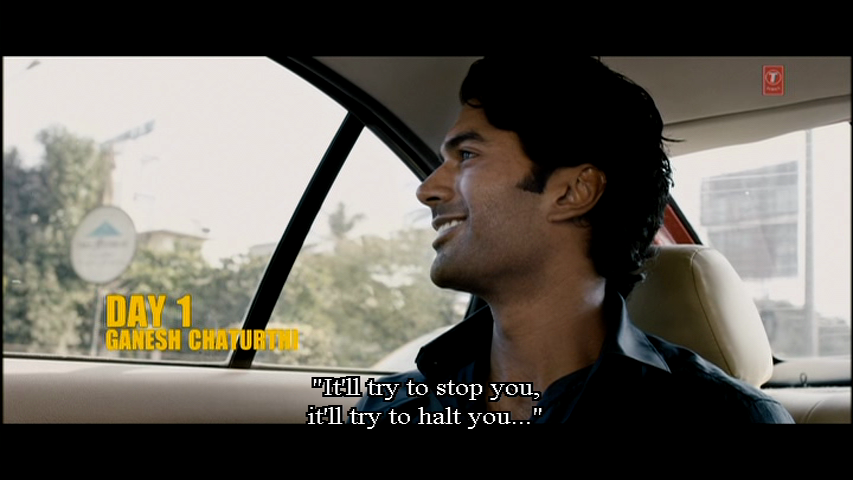
The second story revolves around Abhay, an NRI from the USA who has come to Mumbai to set up a small business. His shock and incredulousness at the number and extent of the bribes he has to pay is understandable, but things take a much darker turn when a couple of extortionists – Premal (Zakir Hussain) and his boss Hemraj (Suresh Dubey) – turn up demanding he pay protection money. They threaten him and his new model girlfriend Sharmili (Preeti Desai) and his helplessness is compounded when he cannot get the answers he wants from the police. Sendhil Ramamurthy looks out of place enough to be perfect for this role. He is an American actor who has appeared in a number of TV shows, but I hadn’t ever seen him before so he fitted the part well for me. His attempts at Hindi before lapsing back into frustrated English are just brilliant and remind me so much of my attempts to communicate in India! The last part of his story is a little less believable but it’s still an engrossing watch.


I liked the contrasts in Abhay’s story. Firstly the contrast  between his work life; trying to set up a business, dealing with IT issues, dealing with his employees and the extortionists and then his more Western style life clubbing and shopping with his girlfriend. Again the story is very realistic and there is a moment where Sharmili spots a poster of herself and her reaction of – look there’s me! – is spot on. Then the contrasts between the noise of Ganesh Visarjan and the quiet of Abhay’s apartment, and of his initial excitement at being in Mumbai gradually changing as the realities of his situation kick in. But what really impressed me here was a scene where Abhay’s employee speaks to his wife on the phone about eating dinner with his boss just before Hemraj walks in. The detail about his phone conversation makes his employee a very real person and the distain with which he is subsequently treated serves to accentuate the viciousness of the extortionists. This attention to small details occurs throughout the film and I think this is why it feels true to life and works on a number of different levels.


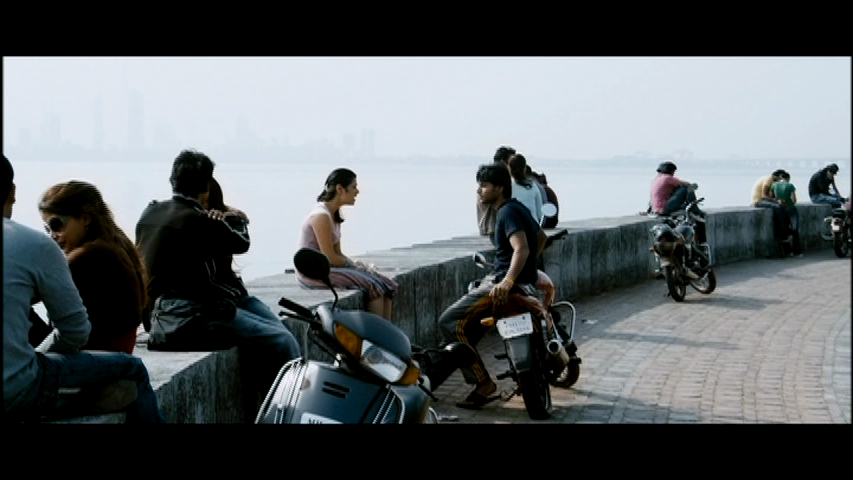
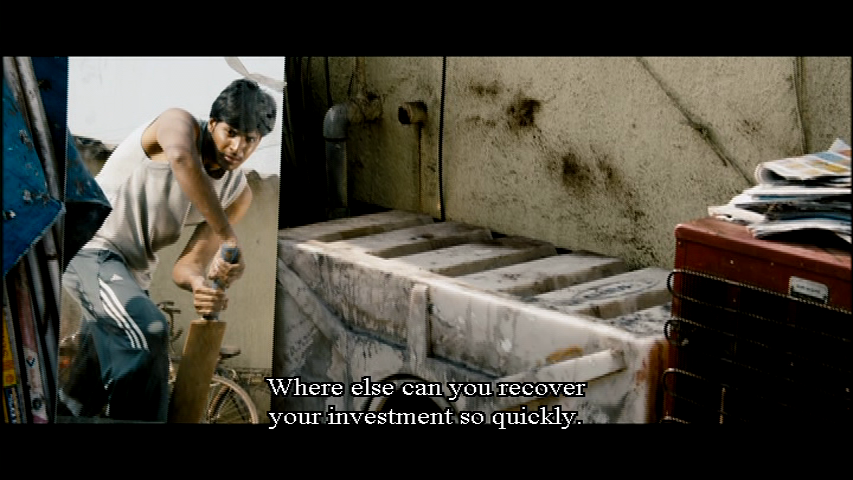
The final story involves Sawan, a talented cricketer who is trying out for the under 22 team. He quickly realises that skill and talent are only going to get him so far, and that to get into the team he will need to bribe the selector. But he doesn’t have the kind of money it takes, and to add to his troubles his girlfriend Sejal (Girija Oak) is being pressured into a marriage by her family and is constantly asking for his help. The scenes between Sawan and Sejal again feel very realistic and their situation a common one. Judging by the number of couples in this scene at any rate!


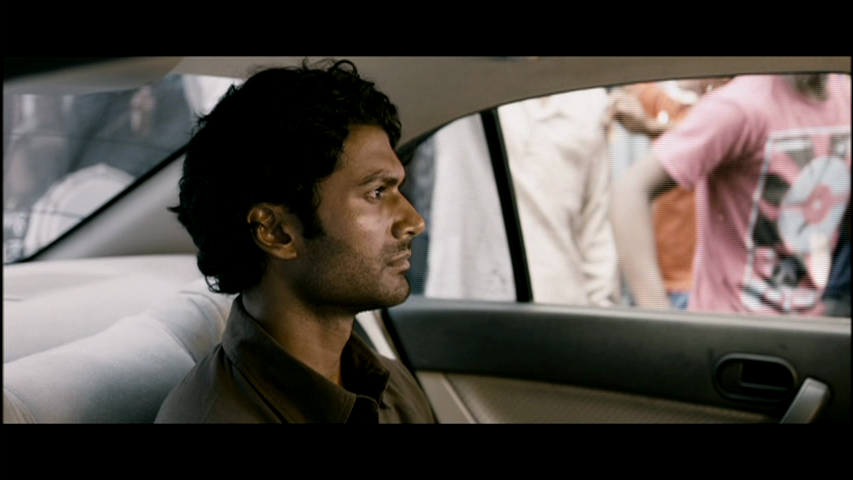
I was very keen to see Sundeep Kishan here since he was excellent in his Telugu debut Prasthanam, and I wasn’t disappointed.   Sundeep is totally believable as Sawan and perfectly fits the role of the aspiring cricketer who knows enough about life to understand the selection bribery, but still wants to believe that the game is above such taints. At one point he says to his friend, ‘Have I been speaking in Telugu?’ which my subtitles rather strangely translate as, ‘What have I been saying all this time?’, but it did make me smile.  I liked the way he practices his game on the roof using a mirror and the natural rapport he has with his sister when she asks him to look after his nephew. His solution to his money crisis is rather drastic, but his attempts to deal with Sejal are the responses I can imagine any young man in his situation making and it’s all very believable.

Sawan’s friend Tipu is the one character who appears in all three threads of the film. He’s a ‘fixer’ who is responsible for organising crowds for demonstrations and riots, buying and selling of various commodities and many other illegal activities. Amit Mistry plays the role with plenty of humour and has a diverse collection of shirts.

The cinematography is excellent and Mumbai itself becomes another character in the film. We see a number of different sides to the city with shots from above and across the water as well as the loud and exuberant street scenes of the Ganesh Chaturthi festival. The festival acts as an underlying beat and the crowds and noise press heavier and heavier as the film progresses.


The music is also excellent and fits well into the narrative. The opening number is suitably loud and brash, and Saibo is a beautifully sweet.  There are no big song and dance scenes which really weren’t necessary here and in fact would have totally derailed the story. The lack of an item number in the night club scene is very appreciatively noted!

The film is a great look at a slice of Mumbai life and the writers are to be congratulated on taking a number of stories and making them all work together so well. Each of the actors seems to fit their character and it’s one of those films where I keep noticing more and more clever detail on repeated viewing. The end is less successful in some respects although the final resolutions over the end credits are brilliant. Watch for some great performances, clever story writing and to find out why karma really is a bitch. 4 ½ stars.

Temple says:

Shor In The City isn’t totally successful in my book, but it is a lot to ask that all the stories succeed equally- and they don’t. Most of the let down is in Sendhil Ramamurthy’s storyline. It’s just too pat. He is the perfect NRI having the perfectly frustrating and confronting return to India, meets the perfect model girlfriend on arrival, lives in the perfect apartment with the perfect luxe lifestyle, suffers the perfect stereotypical rip-off and commits the perfect crime in payback. For me, it lacks the subtlety and emotional hook of the other characters’ stories, and I just didn’t buy it completely. I have to confess, I think he is very decorative but a pretty ordinary actor. I sat through the truly awful “It’s A Wonderful Afterlife” which is a very unfunny ‘comedy’ in which Sendhil played one of the leads so I was predisposed to feeling a tad jaundiced. But I think his character and performance also suffer in the comparison to the other two guys. Sundeep Kishan is perfect casting as Sawan with his mix of confidence and self doubt that made him choose unwisely at times. Sundeep seems very natural and his timing and rapport with the other actors feels really spontaneous. I was amazed by Tusshar Kapoor who was sweet and awkward and fun as Tilak. I’d never rated him much as an actor but this was a really moving performance in a role that has great range but also needs a lot of restraint. His scenes with his brand new wife were beautifully judged, and his excitement about books and reading (baffling to his sidekicks) was totally endearing. I liked the way Sawan and Tilak provided a nice contrast and tension with the good boy maybe going bad, and the bad boy who decides to change directions.

It’s a very pleasing film on a visual level and does convey the manic bustle and also the quiet reflective corners of Mumbai. The use of locations was great and it added a buzz to the scenes out in the streets, as well as the intimate domesticity up on rooftops and balconies as characters looked out on the sprawling city. Ganesh imagery is everywhere, and I don’t think it’s a coincidence that Tilak is able to move on after catching the benign gaze of the god who removes obstacles. It’s a fast paced film that looks and sounds great. The writing is good, and the story is rarely dull. There is a little too much coincidence and some heavy handed visuals but overall I like it a lot.  3/12 stars.