Govindudu Andarivadele

Govindudu Andarivadele

Soaring melodrama, fantastically colourful sets and Prakash Raj are the stand-outs from GAV. Add in Charan, who has definitely improved on his emoting, and you have the bones of Krishna Vamshi’s family drama that mostly delivers what it promises. There are plenty of emotional scenes as Abhiram (Charan) attempts to reunite his family in England with the rest of his estranged relations in India, and of course there’s some local trouble and a romance thrown in for good measure. While most of the film seemed to live up to Krishna Vamshi’s preoccupation with family values, there are a few scenes here that seem to be a hold-over from a less pc era, and stand out as glaringly sexist and just plain wrong. However the rest of the film is entertaining enough despite a storyline so overused that the lack of subtitles was really never an issue!

The story opens with a déjà vu from K3G as Abhiram demonstrates just how well he can play rugby when the opposing team fail to follow the rules of the game and actually attempt to tackle. Real rugby players end up covered in mud and crushed under a few tons of Welsh full-back in my experience, but apparently not in Vamshi’s world. Abhiram lives in a very nice pad in London with his father Chandrasekhar (Rehman) and his little sister whose name I didn’t catch. Unfortunately Chandrasekhar misses out on an appointment to be Dean of Medicine at a London University and interprets this as karma due to an old rift from his own father.  No academic politics in Vamshi’s world either then, I presume!

Overnight Abhiram decides that he will be the one to make all right for his father, and heads off to India to do what he can to bring the families back together. Sadly though, he doesn’t take time to remove his rather odd pony-tail which I can only assume must have been an attempt to look ultra-hip and cool – London-ishtyle. Not my favourite look for Charan, but it did grow on me as the movie went on.

GAV - Charan

Things definitely look up once Abhiram makes it to India, does all the usual touristy things, and then heads off to his grandfather’s village. Following the standard family reconciliation template, Abhiram makes contact with the rest of his family anonymously by pretending to be a visiting agricultural student who wants to learn from family patriarch Balaraju (Prakash Raj). Balaraju runs his family and the village with a benevolent but very traditional hand while stopping his brother (Kota Srinivasa Rao) from clearing and developing the area. Living in the wonderfully pink and majorly over-decorated mansion is also Chandrasekhar’s wastrel brother Bangari (Srikanth): a man with an unfortunate propensity for mesh singlets and garish shirts. Oh, and he drinks, gambles and tries to kidnap and rape his potential bride, Chitra (Kamalinee Mukherjee). This is one of those scenes that really should never have made it in to a film in this day and age, and it does feel completely anachronistic with the rest of the story. Equally disturbing is Abhiram’s use of some photographs he has taken of his cousin Satya (Kajal Agarwal) dancing in Western clothes as a way to blackmail her. This is straight out bullying and sexual abuse, and I find it hard to believe this got past the censors in an otherwise ‘family-friendly’ film. Thankfully Satya does manage to effectively deal with Abhiram’s harassment, but it makes their subsequent romance initially less believable and Abhiram appear as a bit of a prat.

The rest of the film is much better, and that’s mainly due to excellent performances from Prakash Raj and Charan. Prakash Raj is perfect as Balaraju and he knows exactly how to play the strict but compassionate head of a large family. He never puts a foot wrong and wrings every possible drop of emotion out of his time on screen. He even manages to make stick fighting and motorbike riding emotional events, as he unknowingly bonds with his grandson. Jayasudha is just as good as Abhiram’s grandmother, and again she manages to take her overly emotional scenes and tame them down to something more realistic and believable.

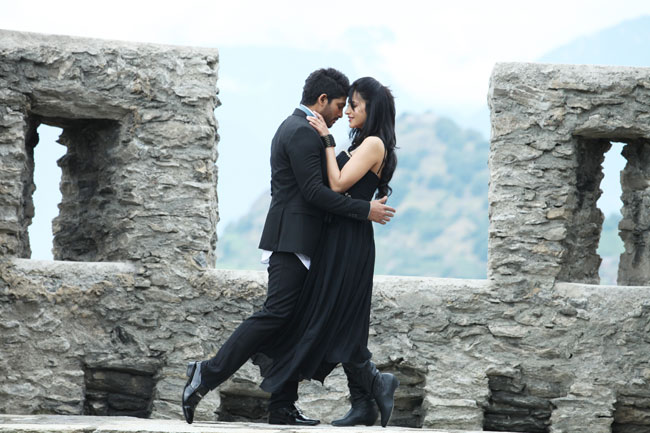
Charan gets a chance to show that he can play more than just an action hero and he definitely rises to the challenge. His Abhiram has more shading than other characters I’ve seen Charan play, and he conveys plenty of emotion and feeling in his speeches, even though I couldn’t understand a word! Despite the initially rocky start, there is plenty of chemistry and some major sparkage in the romance between Abhiram and Satya. Charan is one of the few actors that interacts well with Kajal in this respect and their romance really does light up the screen. Charan does manage to stick close to his real love though, as seen in this song mainly set in and around Petra. I wonder if it’s written into every contract that he must get at least one scene with horses? Kajal gets rather short-changed in the choreography here, although Charan doesn’t actually get to dance much either and sadly most of the songs have more emoting than dancing.

The rest of the cast are all capable and fit well into their roles. Rao Ramesh, Posani Krishna Murali and Adarsh Balakrishna are part of Kota Srinivasa Rao’s opposing family but never feel terribly menacing. Adarsh’s character is mainly just very shouty and aggressive, and the various fight scenes, which appear to have been structured around rugby tactics, aren’t up to Peter Hein’s usual high standard. The film looks gorgeous though. The pink palace is amazing – Satya has a stunning peacock painting on her wall, and most of the other rooms are similarly adorned with fantastical artwork and gorgeous furniture. I would live there!
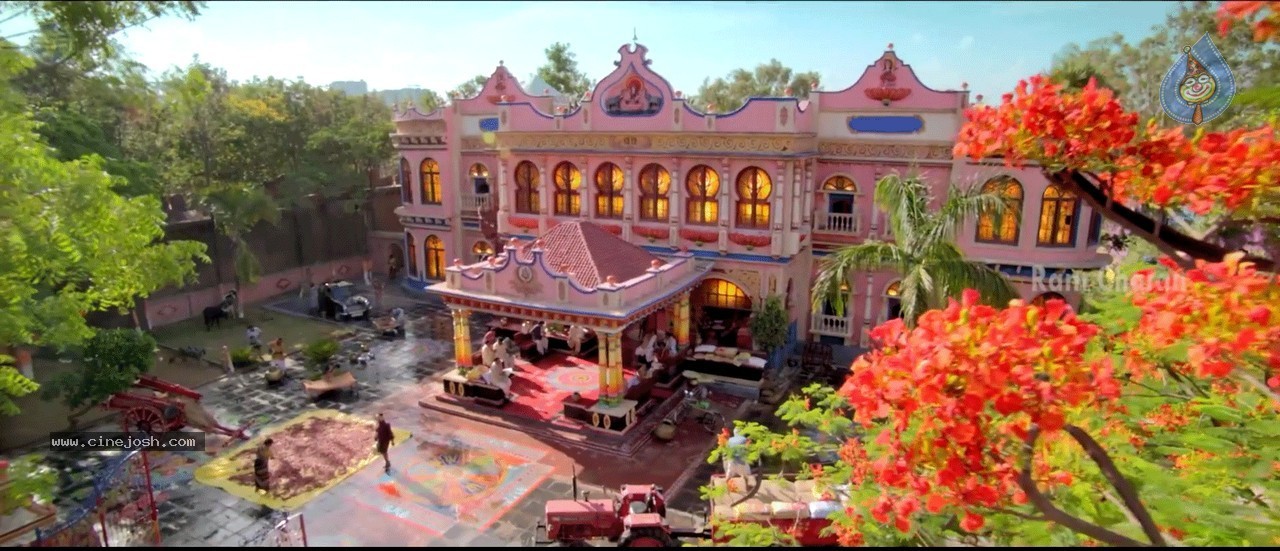
GAV - the pink palace

The emotional quotient does head into overload at times and the ending is particularly excessive, but that doesn’t really seem to matter since the whole point of the story is overblown sentiment. As a straightforward family drama GAV works well enough despite the cliché-ridden storyline and the strong performances help push it over the line. Well worth watching for Prakash Raj and Charan, particularly when you can marvel at the wonders of the pink palace as a bonus.

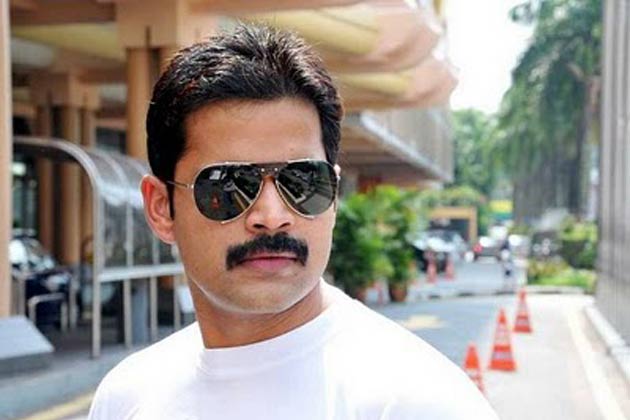
Race Gurram (2014)

Race Gurram

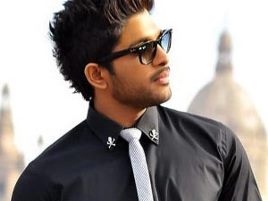
Race Gurram was very nearly a non-starter in Melbourne, but at the 11th hour the distributors managed to find a venue and the race was on!  Better still, there were English subtitles – even for the songs – a first for Telugu cinema here in Melbourne, but hopefully not the last.  So, with a small but luxurious cinema, subtitles and the promise of Allu Arjun for just over 2 ½ hours, was the experience worth all the effort to get the film onscreen? Definitely!  Race Gurram is a mass entertainer that doesn’t break away from standard masala fare, but still manages to leave you laughing at the end.  That’s thanks mainly to strong performances from Bunny and Brahmi, while the usual suspects who make up the rest of the cast are a bit more hit and miss.

Apart from Allu Arjun’s introduction with a herd of horses and a few brief dialogues between our hero and the main villain, I’m not entirely sure why the film is called Race Gurram.  It has nothing whatsoever to do with the race track, and instead is a tale of acrimony between two brothers, Ram (Shaam) and Lakshman (Allu Arjun).

Race GurramRace Gurram


Ram is the elder and more sensible brother. He’s an ACP and is the standard morally upright policeman that Telugu films like to use as a sacrificial lamb.  Lakshman prefers to be called Lucky, because apparently it sounds ‘cooler’, which is probably enough of a clue to his feckless and irresponsible character.  The interactions between the two brothers are one of the strengths of the film and Shaam and Bunny make their exchanges seem natural and realistic.  Their arguments are just petty and immature enough to ring true, and when the situation escalates after a few more personal jibes, Lucky’s response is also in keeping with his personality. The way their relationship develops later in the film is also well handled, even if Lucky’s revelations before the interval do seem a little forced.   The tables are turned when Lucky finds out that someone else is targeting his brother and while it’s OK for Lucky to humiliate and fight with his brother, it’s not on if someone else tries to do the same.  It’s typical boy logic, but at least it gets Lucky on to the right side in the war against goon turned politician Shiva Reddy (Ravi Kishan).

Race Gurram

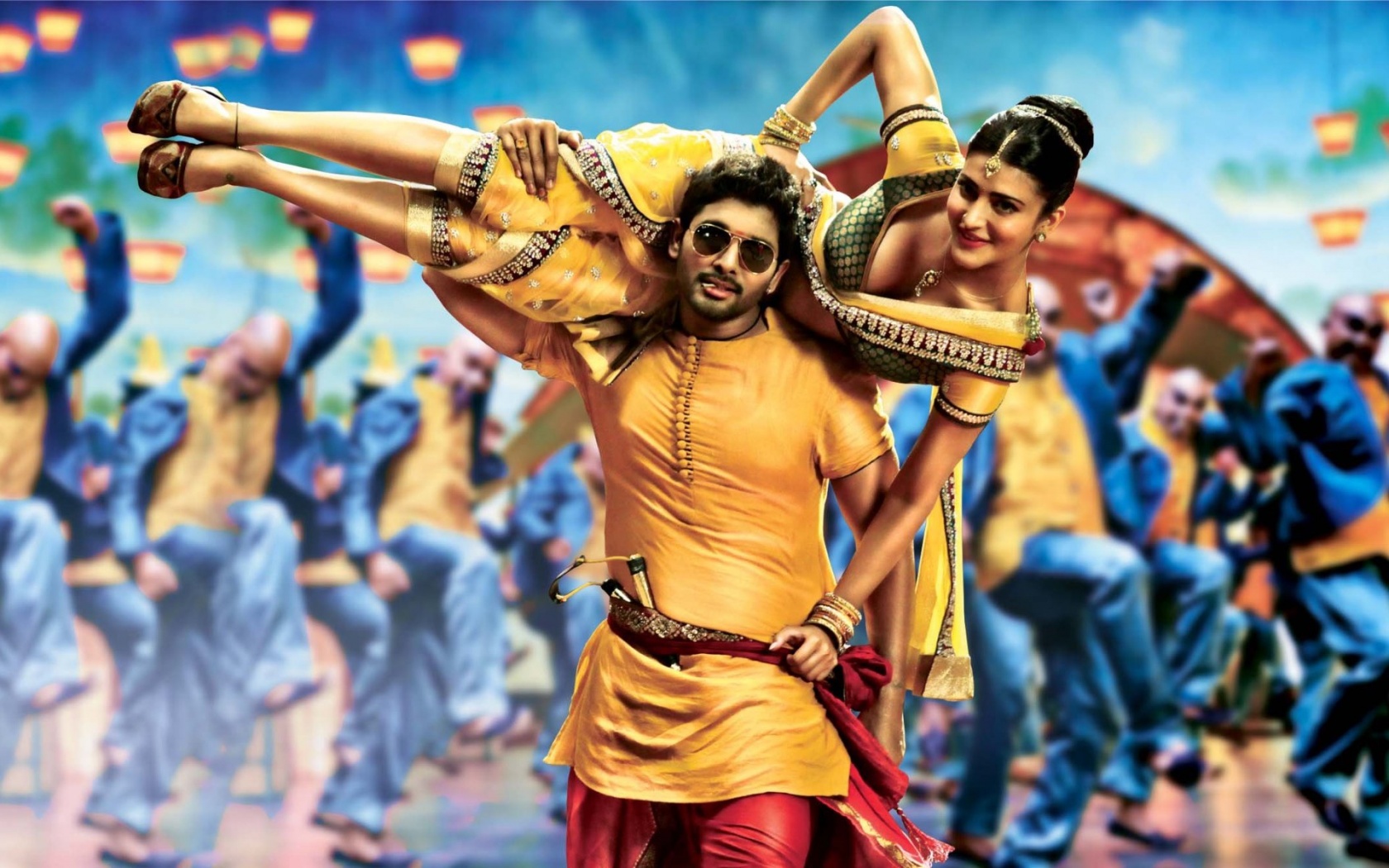
Shruti Haasan appears as Spandana, Lucky’s love interest, and at first seems to have an interesting role as a devotee of yoga who only shows her emotions on the inside.  But once she hooks up with Lucky, her usefulness to the plot seems to evaporate as her ability to emote increases, and she’s relegated to mainly appearing in the songs.  At least Shruti gets to actually dance rather than just pose and gyrate like Debi Dutta in the unimpressive opening number, and she does look great even if she doesn’t get to say much in the second half.

Another disappointment is Shiva Reddy and the whole plot against Ram and Lucky.  Although there are some good moments, overall Shiva Reddy is too much of a caricature villain to be properly offensive, and his machinations to become a minister are laughably inept. Ravi Krishnan never seems to get his teeth into the role, and mostly plays it for laughs with plenty of grimacing and sneering rather than any real maliciousness.  The knock-on effect is that the fight sequences don’t work as well as they should against such an ineffectual hoodlum and even throwing Mukesh Rishi in as Shiva Reddy’s somewhat nastier father doesn’t improve the situation. However, the usual suspects including Kota Srinivasa Rao, Posani Krishna Murali, Sayaji Shinde and even Prakash Raj as Spandana’s father all add enough to the mix to keep the action moving along well.

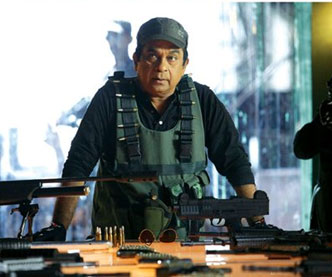
The second half introduces Brahmi as Kill-Bill Pandey, a name which does infer the usual dire slap-stick that Brahmi often relies on for comedy.  But such is not the case – Kill-Bill Pandey has great lines and an actual proper role in the story. And he’s really funny!  Seriously! Bunny and Brahmi work well together too, as Lucky comes to realise just what he has done by releasing Kill-Bill Pandey as head of a special police force on the unsuspecting Hyderabad public.  It makes for a much better ending than expected and has to be one of the best performances I’ve seen from Brahmi in recent times.

Race Gurram

I was expecting great things from the songs despite the fact that the soundtrack didn’t sound too special on first listen, and overall I wasn’t disappointed.  Apart from the first number which appeared out of nowhere without any particular point and had very little actual dancing by Bunny, the choreography was excellent.  Placement was generally odd and mostly there was no effort to place the songs within the storyline, but who really cares when it’s Bunny dancing? The stylish star looked, well, stylish, and as always his dancing was superb, particularly with Shruti Hassan in the larger group routines. Bunny always looks to be having such a good time when he’s dancing and his energy is incredibly infectious, so no matter how ridiculous the sudden appearance of Spandana and Lucky in the snow-covered fjords of Norway seemed, it was impossible not to enjoy the show.

Race GurramRace Gurram

Race Gurram does suffer from a rather rambling screenplay, and at times the film gets bogged down with irrelevant odds and ends that taper off into nothing.  Apart from the feuding brothers, the family moments are a tad cloying and overdone, and a heavier hand with the editing wouldn’t have gone amiss.  However, Bunny and Brahmi together make for a surprisingly entertaining finale that was certainly well appreciated by the Melbourne crowd.   Well worth a watch for their combined antics

Race Gurram

Kanchivaram

Kanchivaram (2008)

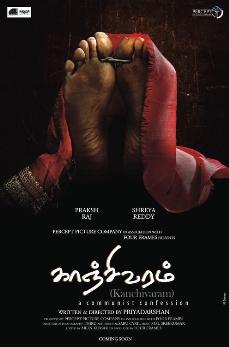
Kanchivaram is a slice of life social drama that largely rests on an excellent performance by Prakash Raj. Priyadarshan eschews the broad almost hyper style more common in his Hindi comedies and delivers a thoughtful and subdued film.

The film opens with a prelude explaining the significance of wearing silk at marriage and on death, and that the weavers were never in a financial position that would allow them to wear the fabric they wove. Vengadam (Prakash Raj) is an exceptional weaver and a natural leader in his community. A visiting writer (Sreekumar) introduces the village men to communism. Vengadam initiates collective bargaining for the weavers, which leads to a lengthy strike. But he had also promised that his daughter would be married in a silk sari, impossible to manage when he is not working. He steals silk, a hank at a time, and secretly weaves the sari he promised her. The conflict between his political and personal ideals and his love for his family is the root of the story.

The story is presented as a series of flashbacks. Vengadam is paroled from jail and travels back to the village by bus, with sounds and incidents on the journey triggering his memories of earlier times. This structure allowed me to concentrate on what was happening now, and to absorb the emotion of the story rather than wondering what would happen. His story unfolds from his marriage, birth of his daughter, the death of his wife and eventually the reason for his incarceration. The breaks in the flow as Vengadam was recalled to himself on the journey just sharpened the contrast between the bluff confident weaver and the broken man on the bus.

Priyadarshan frames the story in the political context of the rise of Communism before party membership was legalised. He efficently sets the scene of the industrial arrangements, the workers dependency on the factory, the clandestine political activism, in just in a few scenes. There are visual cues as to how things stand. The factory owner usually appears sitting or standing on a dais at a higher level than the workers. The communist writer who raises the political awareness of Vengadam and Sarathy skulks around in the dark, fearful of the police.

I’m always interested in industrial relations and the evolution of employee rights and the law so that aspect was appealing. And I particularly liked the villagers reaction to some social theatre – initially passive but on their feet and cheering like any mass movie audience when the ‘blood’ spatter started.

Prakash Raj is wonderful as Vengadam. Whether playing the younger carefree newlywed or the damaged man released on parole he is completely convincing. Vengadam has most of the dialogue in the film but many scenes rely purely on reactions and body language and Prakash Raj nails it. Often political leaders are depicted as single minded zealots, but Vengadam is more human. He understands his why wife is upset by the promise to see his daughter married in silk. He realises his daughter is in love with Ranga and goes to ask for the marriage to be arranged. He knows that when he takes a stand and strikes there will be consequences. And he knows what he is doing when he breaks the strike. Prakash Raj shows these internal struggles and questions and Vengadam’s eyes reflect his turmoil. I’m often intolerant of those who throw their families or friendships under the bus of ambition but this is more complex as Vengadam is not motivated by pure selfishness. He stole silk to weave something beautiful for his daughter, to break the cycle of not having. I could like him even as I rolled my eyes at his obsession with the sari.

Shriya Reddy is excellent  as Annam, Vengadam’s wife. Priyadarshan seems to have a knack for persuading actresses to tone down the glamour (as with Lara Dutta in Billu). Annam is smart, has opinions and politely challenges her husband in private when she thinks he has gone too far. From the initially awkward moments when Annam first comes to her new home, Shriya shows the growing affection and the playfulness in the marriage. Annam doesn’t have much dialogue so much of their closeness and the tensions in the relationship had to be conveyed through glances, the tilt of a head, the set of her shoulders.

She dies after being trampled in a crowd out to see the landlord’s new car, another symbol of the gulf between the workers and owners. Her final anguish is over whether Vengadam will be able to raise their daughter and he does his best to reassure her in his own way.

Family and village ties are revealed in many small interactions so the supporting cast are important and most are very good. I particularly like Jayakumar as Sarathy, Vengadam’s friend and one-time political ally. His rapport with Prakash Raj was excellent, and their friendship felt believably warm. I liked their stilted meeting to discuss getting their children married to each other that ended in affectionate hugs and relieved laughter. The deterioration of their relationship was shown simply but the pain on both sides and the definitive nature of the break was clear. Shammu is engaging and likeable as Vengadam’s daughter Thamarai. I do a certain amount of teeth gritting when I see little daughters made to replace their dead mothers in the home, but Thamarai was a distinct person and not just a household slave. She went to school for a while, then took sewing lessons, and her dad wanted her to be happy. So for a filmi girl in 1948 with no Ma, I thought she had it pretty good. Until things went wrong.

Kanchivaram-Bad actor lovely sariThere is an English character played by a truly bad actor. Well, I am not sure if the brightly over-enunciated yet almost expressionless dialogue delivery is his own style or was required by the director. There are so many good actors working across many Indian film industries yet the ‘English’ are almost uniformly laughable and seem to be reading at a pre-school level.  Who is casting these people?

The colour palette is simple and very effective throughout. The day to day scenes are muted and mostly use neutral and earth tones. The bus trip is drenched in the pale blues and grey of rain and twilight. Scenes at night are touched with the golden flicker of lantern flames. The flash of opulent silks highlights the gulf between the weavers and the eventual owners of those stunning garments, and punctuates the drama with bursts of saturated jewel tones. There are recurring motifs like the sickle, used as an emblem of communism and as a blade. Thiru’s camerawork uses lots of tight close ups of the actors and despite the dark interiors and low lighting in some scenes he catches every expression and gesture.

Despite the period and politics of the setting, Kanchivaram can be watched as a personal and intimate story rather than a didactic message film so I was impressed by his handling of those elements. But I’m not completely sold on the ending. The sensitivity of the characterisation and performances is what stands out for me. The film is available on YouTube with subtitles. 3 ½ stars!