Polladhavan (2007)

Polladhavan

Frustratingly the only copy I have ever been able to find of Vetrimaaran’s debut film is a relatively poor quality VCD  that doesn’t have English subtitles. It’s particularly annoying knowing how well written the dialogues were in Aadukalam (even via subtitles) and I’m sure there is much I have missed in Polladhavan as a result of not understanding the language. However the story is still clear and easy to follow, with plenty of scenes that suggest a similar attention to developing the flawed characters and their relationships as in Vetrimaaran’s subsequent film.  Although there is much that initially seems familiar about the story, as the film progresses it breaks away from the typical gangster film mould and becomes as much about family as the struggle between Prabhu (Dhanush) and the gangsters who have stolen his beloved motorbike. There is plenty of tension and suspense, and the path to the final bloody showdown is rather more convoluted than expected. It’s a good story, entertainingly told and really deserves to be more readily available to a wider audience.

Dhanush appears in his by now very familiar role as Prabhu, an unemployed layabout, content to spend his days playing carom and hanging out with his friends Kumar (Karunas) and Sathish (Santhanan) or annoying the local bike dealers by repeatedly viewing a Pulsar motorbike. He has no hope of ever being able to afford the object of his desire but continually attempts to get a cheaper price along with a long instalment plan for payment and seems convinced that he will one day be the proud owner of the latest model. Nothing wrong with having a dream!

Prabhu is at odds with his father (Murali) who wants him to get a job, but is supported by his mother (Bhanupriya) who slips him money behind her husband’s back. There are the usual family arguments about money and Prabhu’s failure to contribute to the household, but things change after Prabhu confronts his father following a drunken night out. Prabhu accuses his father of not supporting his attempts to find work compared to his friends whose fathers who have paid bribes or bought them a start in their chosen career. Although this seems a very strange argument to me, it strikes a nerve with Prabhu’s father and he cashes in the money set aside for his daughter’s wedding and gives it to Prabhu instead.

Naturally Prabhu immediately goes and buys the bike.

What is interesting is the way this argument and Prabhu’s subsequent purchase of the motorbike change the family dynamic.  While Prabhu’s mother accuses him of wasting the money, Prabhu’s father supports his son’s right to do whatever he chose, even if he doesn’t agree with that choice. The family arguments feel realistic and plausible and Prabhu’s conviction that his bike will help him get a job seems typical of any young man in similar circumstances. Body language is key and Vetrimaaran uses different angles and distance shots to convey the changing relationships. It helps give the film an authentic sense of a typical family which makes the subsequent scenes of violence a complete and striking contrast.

Amazingly Prabhu’s purchase has the desired result and he manages to get a job, further aiding his reconciliation with his father. The development of their relationship is shown in small moments such as when his father chases away the neighbourhood children playing on the bike, or by his father’s smile when he sees job adverts circled in the newspaper.  It’s effective and develops relationships while avoiding a big family make up scene that would only have interrupted the flow.

As well as dreaming about owning a motorbike, Prabhu has spent the last 2 years infatuated with a girl he sees at the local bus stop. The bike and his job give Prabhu the confidence to finally approach Hema (Divya Spandana) and after a shaky start the two begin a relationship. However, after a good beginning with plenty of humour and promising signs of a personality for Hema, once the action ramps up the romance is relegated to the background with Prabhu’s first love (his motorbike) taking precedence in the story.

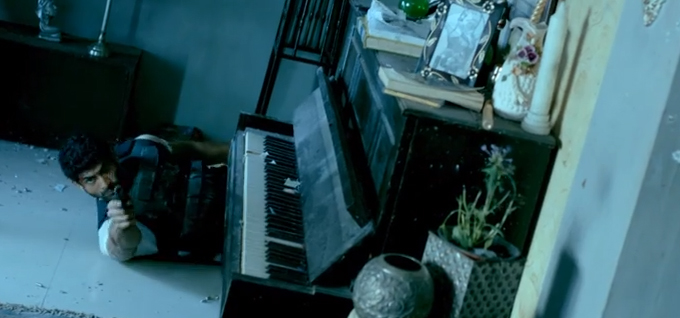
As things are going well for Prabhu, in a semi-parallel storyline local gangster Selvam (Kishore) has problems with his younger brother Ravi (Daniel Balaji). Selvam deals in drugs and is involved in various other illegal activities as he runs his area with help from his best friend Out (Pawan). Ravi wants a bigger role in his brother’s endeavours despite his quick temper and apparent general unsuitability for any responsibility. Prabhu crosses paths with Ravi a few times in chance encounters, but most notably on a night when the gang is involved in a murder and Prabhu’s bike is stolen. The two events may, or may not be connected but Prabhu really doesn’t care – he just wants his bike back!

Some of the best scenes occur when Prabhu’s search takes him to different crime operations with a fascinating look at how bikes can be hidden and smuggled around the country. These brushes with the shady side of Chennai bring Prabhu into closer contact with Selvam and his brother Ravi, and the situation escalates as Prabhu discovers exactly what has happened to his bike.

Dhanush gets everything just right here in his portrayal of a young man gradually developing maturity and responsibility but easily distracted by events around him. His spiral into violence is clearly shown as a reaction to circumstance with the infatuation with his bike a convincing reason for the decisions he makes. I had friends who were just as obsessed with their bikes (and I have to confess to a certain amount of obsession with my own!) so it totally makes sense to me that Prabhu would go to such extremes to get his bike back. Ravi is a more typical Tamil film gangster, but his brother Selvam is an interesting character who seems to be a ‘gangster with a conscience’. The interplay between Ravi, Selvam and Out is well done, and once Prabhu is added in to the mix, the story evolves quickly with plenty of suspense thrown in for good measure.

The final scenes revert to more typical gangster film fare with the inevitable final showdown, but Vetrimaaran keeps it interesting by giving his bad guys realistic personalities and reasons to act in the way they do. The fights are short, bloody and more convincing than usual which also avoids sensationalising the gangster element of the story. Although there are a few fights where Prabhu defeats 3 or 4 henchmen, at least it is only 4 rather than 20, and Ravi isn’t a big burly guy either so his fight sequences with Prabhu seem slightly more credible. Apart from the rather Salman Khanesque way Prabhu loses his shirt in the final fight, which is a little OTT but is also a lot of fun too!

While the fight scenes work well, the songs are less successful. Although the music by G.V. Prakash Kumar is catchy enough, the picturisation and choreography are generally mediocre and mostly the songs don’t fit well into the narrative. However the rest of the film looks good, at least from what I could see from my poor quality copy, and the strong cast all deliver good performances. Vetrimaaran’s strengths lie in developing characters with depth and attention to detail in building relationships, and both are used to maximum effect here.  The story may not always flow as well as it could but when it comes to the characterisations and the overall plot, everything works perfectly. The screenplay rarely lags and there are enough twists and surprises to keep the film engaging right to the very last frame. While Polladhavan may not be perfect it is a great first film for Vetrimaaran and well worth watching for a gangster film with a difference. 4 stars.

Arrambam (2013)

poster 1

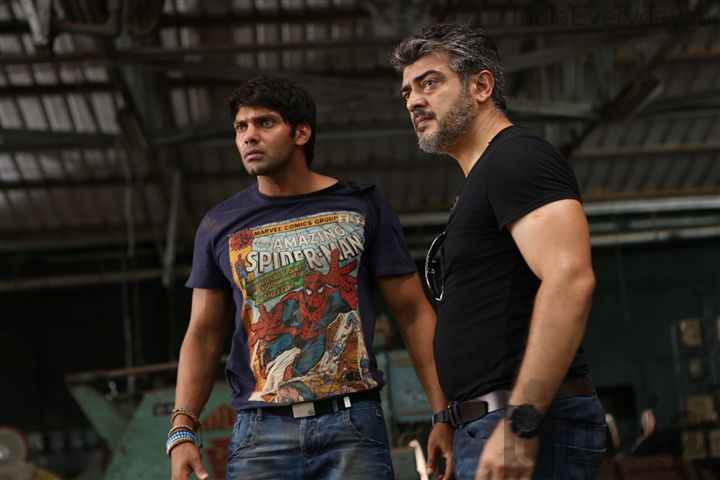
Arrambam is yet another Southern Indian film to use Mumbai as its backdrop, but really this action thriller could be set anywhere and still have the same impact.  Although there are a few Mumbai landmarks seen, the story is less about the location and more about the motivations behind the lead character’s quest for revenge, so despite Om Prakash’s excellent cinematography the background just isn’t important.  The action takes off immediately from the opening frames and there’s no time to take a breather until well into the second half. It’s fast, furious and best of all lots of fun as Ajith and Arya take on corruption in politics, the police force and basically just about everywhere!  There’s an excellent extended guest appearance from Rana Daggubati and even Nayanthara gets a chance to get in on the action and show off her ruthless side.  On the minus side, the songs aren’t too inspiring and there are a few gaping plot holes, but there is enough going on to make Arrambam an entertaining mass masala flick despite the lack of logic.

ArrambamArrambamArrambamArrambam

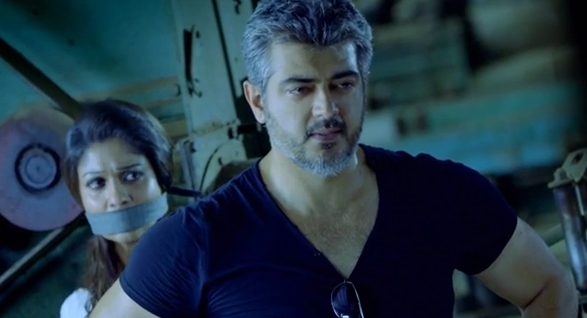
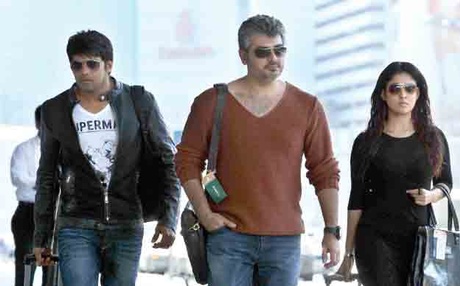
The film opens with a series of bomb blasts in Mumbai, and Police Inspector Prakash (Kishore) is charged with tracking down this Mumbai, and Police Inspector Prakash (Kishore) is charged with tracking down this latest terrorist.  The man they are looking for is Ashok Kumar (Ajith), who has an unusual recruitment scheme to enlist the help of computer expert Arjun (Arya).  Also involved in Ashok’s master plan are his sidekicks Maya (Nayanthara) and Mango (Krishna) who assist Ashok with kidnapping Arjun and forcing him to hack into a number of computer networks.

Arrambam

Despite this rather inauspicious beginning, Arya’s character actually adds some light relief to the film, starting with a flashback sequence to explain why Ashok targeted him in the first place.  This features Arya heavily made up and wearing a fat suit as a stereotypical computer nerd at college.  Even with his daunting appearance and apparent flatulence, Arjun is still pretty popular due to his ability to hack into the college computer system and change grades as required for the other students. However when he encounters Anita (Taapsee Pannu) and decides that she is his soul mate, he’s inspired to exercise and loose the flab.

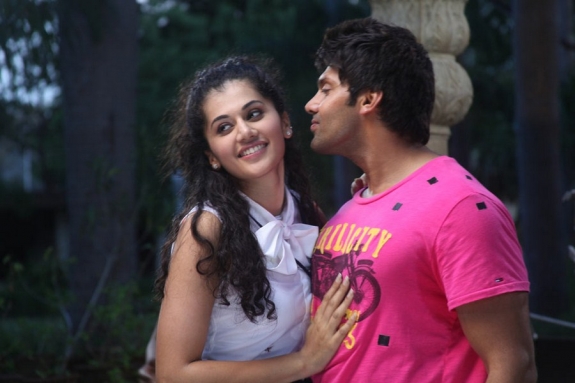
During a rather disconcerting song where a now trim and fit Arjun sprouts blue wings for no apparent reason, he manages to woo the girl and ends up heading to Mumbai for a job interview.  One which doesn’t turn out anything like the way he expected.  Arya still keeps the nerd mentality even though he’s updated his fitness levels and appears suitably geeky throughout while also managing to keep up with the action.  It’s helped by his choice of T-shirts, but he gets the attitude right and his lack of awareness of the world around him is absolutely classic. Taapsee is ditzy and rather shrill as his reporter girlfriend but thankfully she’s not on screen often enough to be too annoying.

ArrambamArrambam


While Ashok keeps telling his various victims to ‘keep it simple’, he himself makes things incredibly complicated by kidnapping Arjun and using threats against Anita to force Arjun’s compliance.  The first half keeps the thrills coming as Arjun attempts to escape and inform Inspector Prakash about Ashok and his criminal activities while trying not to endanger his girlfriend.

But of course that’s only part of the story and the second half involves a long flashback where Ashok’s motives are explained and suddenly the tables are turned.  The fast pace of the first half isn’t maintained and the film slows down considerably in the second, but there are still some good action sequences including a shoot-out sequence with Ashok’s old partner Sanjay (Rana Daggubati) and a high speed boat chase in Dubai.

Arrambam

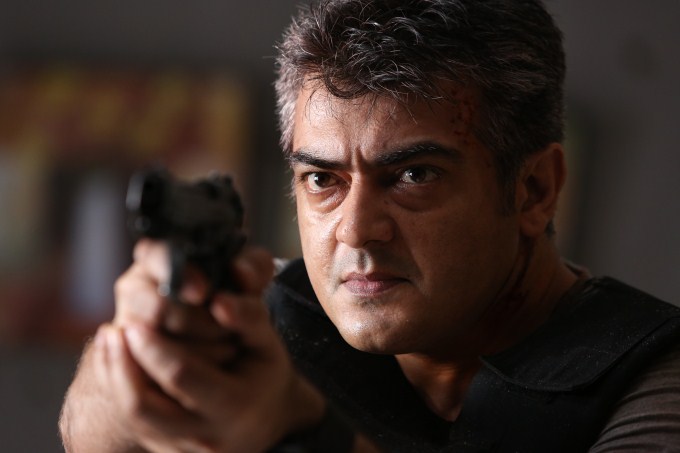
Ajith is in his element here and writer/director Vishnu Vardhan has kept Ashok’s character deliberately ambivalent while making sure he has plenty of charisma and charm.  Ashok punctuates the end of his sentences by putting on his sunnies (which at least lets you know the conversation is over), and he is always über cool and classy despite his terrorist activities.  The relationship between Ajith and Arya also works well although the sequences with Rana and Ajith stand out as some of the best in the film.  The camaraderie between the two actors feels very genuine and it’s easy to believe that they are long term friends and partners with their teasing banter and rapport during police operations.

ArrambamArrambam

While Taapsee really is the drama queen the corrupt Home Minister Rane (Mahesh Manjrekar) describes, many of the other female roles have a strong presence.  Nayanthara gets to threaten, bluster and fight in many of her scenes and does an excellent job, keeping her fight sequences realistic and looking suitably athletic to carry it all off, while Suman Ranganathan is also very good in her small role.  I’m always happy to see Atul Kulkarni pop up although his role as the chief of police doesn’t really give him much scope here, and the rest of the supporting cast are equally kept mainly in the background.  Although I like Yuvan Shankar Raja’s soundtrack, the songs don’t work well in the film mainly because they disrupt the flow of the story. The item song featuring Akshara Gowda is particularly painful and seems completely pointless since it really doesn’t suit her character of the home minister’s daughter at all.  I don’t think that such a fast paced action thriller needs any songs other than the background score but at least the Holi song had more energy and made a little more sense in the context of the story.

Overall, I really enjoyed Arrambam.  It’s fast paced, slick and stylish with plenty of action and I loved that one of the female characters was involved in the mayhem too. You go girl! The excitement and tension of the first half isn’t sustained through the second, but with Rana added in to the mix the action is still full on. Worth watching for Ajith and Arya as long as you can ignore the lack of logic and just sit back and enjoy the ride!

Ajith boat

Aadukalam

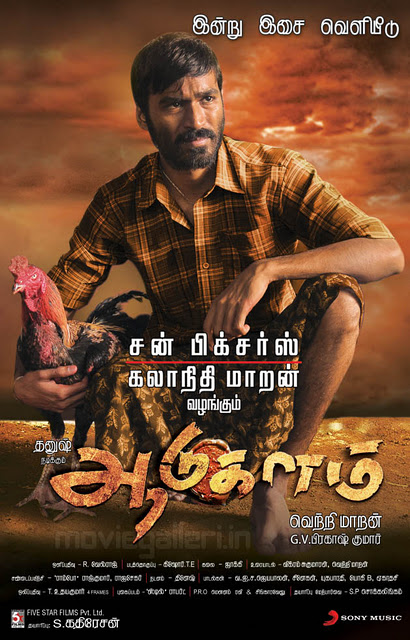
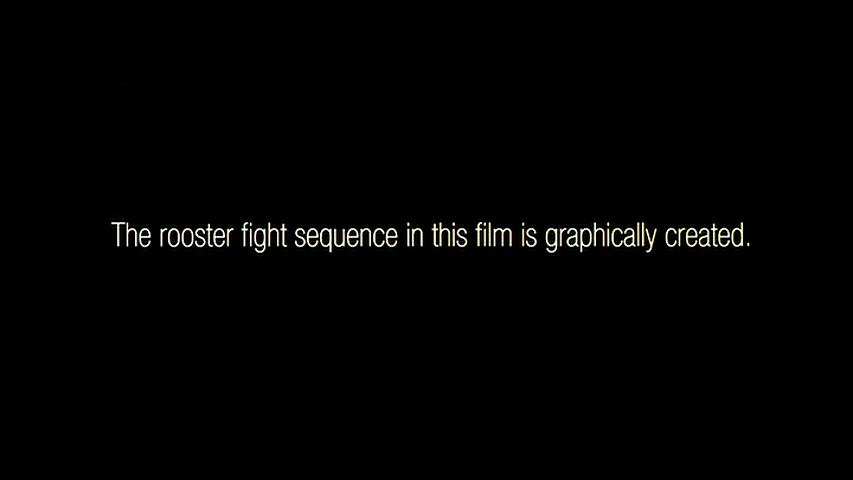
I first saw Aadukalam when it released in the cinema and despite the lack of subtitles was so completely drawn into the story that I didn’t want the film to end. I was very surprised that I enjoyed it so much since the film centres around cockfighting, which is something I abhor and wasn’t keen to watch on-screen. It was really only the Vetrimaran and Dhanush connection that got me through the door, but I’m so glad that it did. While the film didn’t change my views on the subject it was a lot more watchable than I anticipated, helped considerably by this statement in the opening credits and the fact that the cockfighting scenes were quite clearly CGI.

The film focuses on the relationships between the main characters and how these change as their circumstances alter. Alliances are made and broken, and pride and prestige are the driving forces behind the actions of Pettaikaran (V. I. S. Jayabalan) and his chief rival in the cockfighting scene, police inspector Rathinasamy (Nareyn).

The film is set near Madurai in a small town where Pettaikaran breeds and trains roosters for cockfighting. He is aided in this venture by three men; Ayub (Periyakaruppu Thevar) who stitches the roosters back together after the fights, Durai (Kishore) who provides financial support and Karuppu (Dhanush)who sets the roosters for fighting. Karuppu seems to look upon Pettaikaran as his father, while Pettaikaran is grooming Karuppu as his successor, so the two appear to have a close relationship, making later events all the more shocking.

The first half of the film deals with Rathinasamy’s attempts to force Pettaikaran to take part in a cockfighting tournament so that he can finally win over his main opponent. Pettaikaran however knows that Rathinasamy will stop at nothing to win and refuses to take part in any further matches despite major provocation.  However Rathinasamy is as corrupt as he is determined and he finally manages to set up the final showdown. The stakes are high – apart from all the money to be won, the loser will have to shave his head and moustache and, almost as a secondary consideration, they will also have to give up cockfighting for good.

The prize money isn’t important to either of these two men, but is rather more important for Karuppu. He lives with his widowed mother who has dreams of buying back the mortgage to their house, while Karuppu has dreams of a different kind involving an Anglo-Indian girl he has met. He falls in love with Irene (Taapsee) and his love takes the usual form of stalking until he finally manages to work up the courage to speak to her. Irene is horrified by his declaration and her initial reaction is very natural and honest. Sadly it’s also the only scene where Taapsee manages to convince in her acting. The romance feels clunky and awkward, and the actors seem to feel uncomfortable with each other as well. Taapsee is very wooden and lifeless, and there is never any good reason why a well-educated girl from a good family would fall in love with a scruffy uneducated villager like Karuppu.

While Dhanush is more convincing in his obsession with Irene, he’s a little too arrogant for me to fully believe in his love. His passion is much more for his idea of Irene, and once having made his decision that she is the right girl, he is determined to marry her more to flatter his ego rather than because of any genuine feelings for her.

Partly to pay back money he owes Irene, Karuppu takes his rooster along to the tournament despite the fact that Pettaikaran had earlier told him to put the bird down. As a result, Pettaikaran distances himself from Karuppu and tells everyone who will listen that his rooster will not win. So when it does in fact win all 3 fights and Karuppu takes home the grand prize, Pettaikaran is humiliated by this loss of his reputation and sets out for revenge.

While the first part of the film deals with the rivalry between Pettaikaran and Rathinasamy, the second half deals with the machinations of Pettaikaran as he seeks his revenge on Karuppu. Jayabalan is amazing as the aging champion and his character is beautifully etched in shades of grey. The change from his initial, more moral stance where he refuses to fight Rathinasamy knowing that he is risking the lives of his assistants by doing so, is beautifully contrasted with his change in ideals as he starts to plot and plan against Karuppu. His manipulations of the faithful Durai and the treatment he metes out to his young wife grow ever more disturbing, but still quite believable as he is determined to ruin Karuppu in every way that he can to soothe his battered ego.

Dhanush is also excellent as the rather naïve Karuppu. His relationship with his mother is well depicted and the love and frustration between the two is very evident. His scenes with Pettaikaran are among the best in the film, although Karuppu’s relationship with Durai is also well portrayed and the two actors have a great rapport. Dhanush has done a number of these village type roles but here he totally becomes the character of Karuppu and I think deserves the National Award he won for his performance. His final realisation of just how he has been betrayed by the man he considered as his father is brilliant and throughout he effortlessly conveys his emotions without going to extremes. Vetrimaran has come up with characters that are essentially very ordinary with normal human emotions of petty jealousy and pride and made a story that works so well because it deals with them in such a realistic way.

The other actors in supporting roles are all excellent with some very good characterisations. Meenal as Pettaikaran’s wife is fantastic and while Periyakaruppu Thevar doesn’t have a large role he is very effective and paints his character fully in just a few short scenes. Nareyn is suitably immoral and villainous as Rathinasamy and it’s a shame that he vanishes from the story in the second half. I can’t find out who played the role of Karuppu’s friend but I though he was great and will keep a watch out for him in other films.

While most of the action involves roosters fighting there are a few human fight scenes which are more of the push and shove variety rather than the carefully choreographed and highly fictionalised fight scenes more usually seen. They also rely on the use of various stones, buildings and tree stumps to do any actual damage to the various opponents until the last few scenes, which are choreographed to imitate the cockfights from earlier. Cinematographer Velraj does an excellent job with the many night scenes, often involving fights, and it’s quite easy to make out what is going on.

The music by G. V. Prakash Kumar works well in the film but apart from Yathe Yathe it’s not particularly memorable and doesn’t stand out. This is probably all to the good as the songs don’t detract from the story and are used more to further develop the characters.

Aadukalam is certainly not a pretty story and there is no happy ending for anyone. It deals with the darker emotions of pride and jealousy and shows just how easily these can run out of control with deadly consequences. It’s a well made film with a great story and outstanding performances and despite the rather iffy romance, I thoroughly recommend it . 4 ½ stars