Chori Chori (1956)

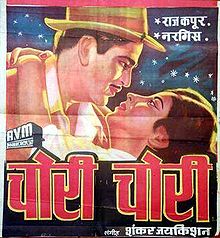
I grew up watching RKO and MGM musicals, and have always loved that kind of film with snappy dialogue, lush soundtracks, stylised visuals and excellent casting. I am a bit resistant to the remake in general – I tend to think that if a film was great first time around, why mess with it. So I was surprised by how much I like Chori Chori. It is ‘inspired’ by the 1934 Frank Capra film ‘It Happened One Night’ starring Clark Gable and Claudette Colbert, and has the legendary jodi of Nargis and Raj Kapoor at the fore, directed by Anant Thakur. Chori Chori seems to me to be the perfect balance between slick Hollywood and heart on sleeve Bollywood.

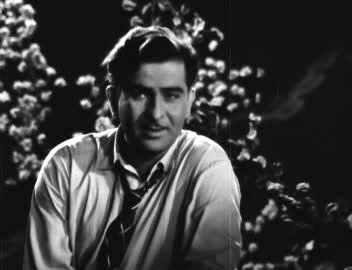
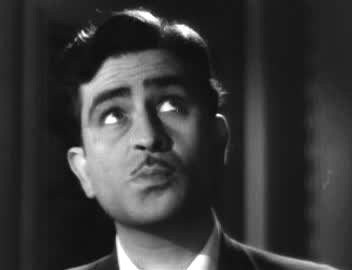
One of my great friends often says ‘Raj Kapoor was sleazy…and not in a good way’ which never fails to crack me up and is the thing that pops into my head when I see him.  I didn’t ‘get’ Raj Kapoor til I saw this film and drew the connection to the Gable style of Hollywood hero that used equal measures of smarm and strong-arm to win the day. I’m still not a huge fan, but I can at least glimpse what it was that makes him such a significant figure in the Hindi film industry.

Nargis is Kammo – spoilt daughter of the super wealthy Ghirdarilal (Gope). She is determined to marry the dashing pilot Suman (Pran!) but her father is sure Suman is only after the dollars not his daughter. She jumps ship and swims to shore, determined to make her way to Bangalore and Suman’s arms. I have to say she showed some moxy in pawning a diamond ring to fund her travels, but the white net sari she bought with the proceeds struck me as wildly impractical for a long bus trip.

Also bound for Bangalore is struggling journalist Sagar (Raj Kapoor). The two loathe each other on sight and of course we know that can only mean true love is round the corner. Sagar is reluctantly drawn into helping Kammo, caught by his chivalrous nature, curiosity and later by his attraction to her. He wears a western suit and hat, slightly the worse for age, and his look could have been lifted straight from Hollywood Central Casting. He represents the heroic battler, trying to make a decent living while keeping his morals intact. He cuts a deal with Kammo – he will help her get to Bangalore and Suman, and he will reap a financial reward when he sells his story.
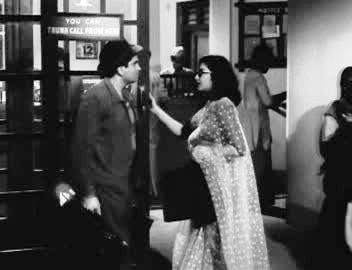
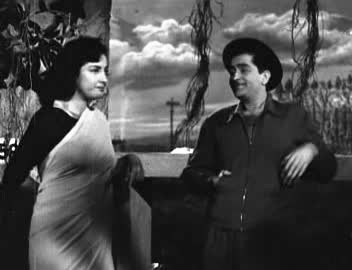
Ghirdarilal places adverts offering a reward for anyone who returns Kammo to him. Thus there is ample opportunity for a host of minor characters (including Johnny Walker) to join the treasure hunt, and a catalyst for throwing the sparky leads together.

As they travel incognito, scenes cut away to Suman who is shown to be a gold-digger with an eye for dancers. This is not bad for the viewer as we get to enjoy a very nice classically inspired dance, but we already know which man Kammo should marry.
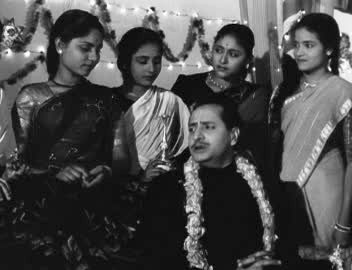
Kammo and Sagar miss their bus, and continue to travel together under the pretence of being married. Raj is only carrying a small valise and yet I lost count of how many pairs of stripy pyjamas he seemed to have packed. Mind you, Nargis seems to amass a decent collection of saris along the way so it’s probably only fair that Sagar has an extensive range of sleepwear. The pyjamas were quite significant in ‘It Happened One Night’, but rather than share a single pair of pjs this couple get matching his n hers. Lots of them. Perhaps the wardrobe team had the day off when someone came up with Kammo’s alluring night attire.
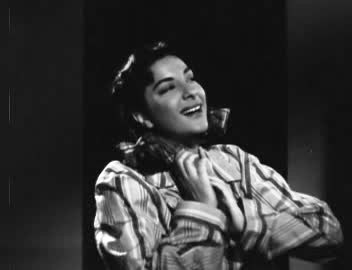
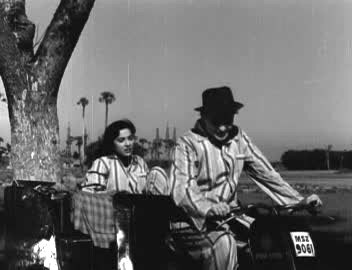
They encounter suspicion and adversity and their own growing feelings. Sagar wanted the story and maybe the money, and Kammo wanted Suman – neither of them wants to acknowledge what is changing between them. They offer each other small kindnesses – the loan of the ubiquitous pyjamas, a blanket thrown towards a sleeping Raj – and lots of snark. The dialogue by Agha Jani Kashmiri is sharp and delivered with perfect timing. These two really are a match for each other and the chemistry is sizzling.

It’s all quite predictable down to the last twist and turn but it is still compelling. Nargis is stunning in her portrayal of the feisty Kammo. She isn’t afraid to articulate her feelings for Sagar, whether in song or dialogue, and challenges his reticence. In one scene, heartbroken Kammo walks through a storm and Nargis exudes grief so profound it outshines all the environmental theatrics. It is a bit irritating, although perfectly in tune with the era, after such an independent start Kammo appears to realise she should never have defied her father or left her home, although that may be her own idea of a necessary penance.

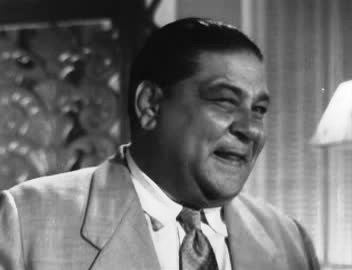
Kammo’s relationship with her father was perplexing. Kammo was spoilt rotten and certainly lacked for nothing in the material sense. He locked her up to stop her marrying Suman and really did not believe that anyone would marry ‘baby’ for anything other than his money. He was devastated when she disappeared but trusted Kammo to tell him as much as she wanted to on her tearful return. So I kind of blame Ghirdarilal for making Kammo susceptible to Suman’s flattery as she was seeking approval she didn’t get at home. But he also made her the kind of brat that needed a reality check. Oh these filmi parents!
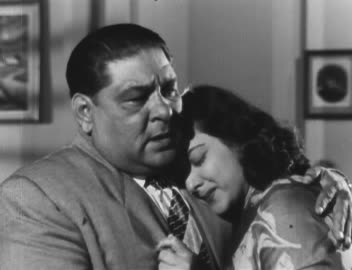
Raj Kapoor seems content to mostly allow his leading lady to dominate, and is fairly low key. Until the puppet song which I think was designed to allow him to release all the repressed over-acting. He spouts a lot of philosophy about the joys of the simple life, which seems to impress Nargis. I’d have more faith in that if Sagar had ever lived anything other than a simple life and so could make a valid comparison, but I’m a cynical viewer not a filmi heroine.
A disquieting note throughout is the equation drawn between marital status and the individuals’ threshold level for physical violence. One scene has a landlord test whether Sagar and Kammo are married by smacking Sagar around. The fact that he doesn’t flinch is accepted as proof he must be married to her! Slaps fly in this film, and while they are generally shown as a symptom of passion, it’s still a bit disconcerting and causes me to remind myself this is the 50s. For those wondering, Nargis lands some excellent shots, which I enjoyed, but on the downside the women in Chori Chori are generally portrayed as the aggressors in domestic violence.

The music is used to perfection in this film. Each song acts to illuminate the innermost thoughts of the characters singing or those observing the performance. Shankar-Jaikishan have the perfect big band sound for the romantic duets, and the orchestration is lush as befits this story. The songs show a range of musical influences and are very well integrated into the narrative. And who doesn’t swoon just a bit on seeing Asha Bhosle, Lata Mangeshkar, Manna Dey and Mohammad Rafi all on a soundtrack?

The classic visual devices from ‘It Happened One Night’ appear throughout Chori Chori – particularly the wall Sagar creates in their shared rooms by draping a blanket over a rope, those stripy pyjamas, and the cramped bus trip. It’s a fairly faithful remake, adapted to suit its audience’s sensibilities, and the changes don’t weaken the story.

Raj and Nargis are stunning and deliver beautifully nuanced performances. With the frisson of their legendary affair in mind, the romance on screen seemed that much more compelling as I wondered what was acting and what was revelation. The film has style, beautiful cinematography, lovely songs and strong performances. I give it 4 stars! Temple
 

Geraftaar

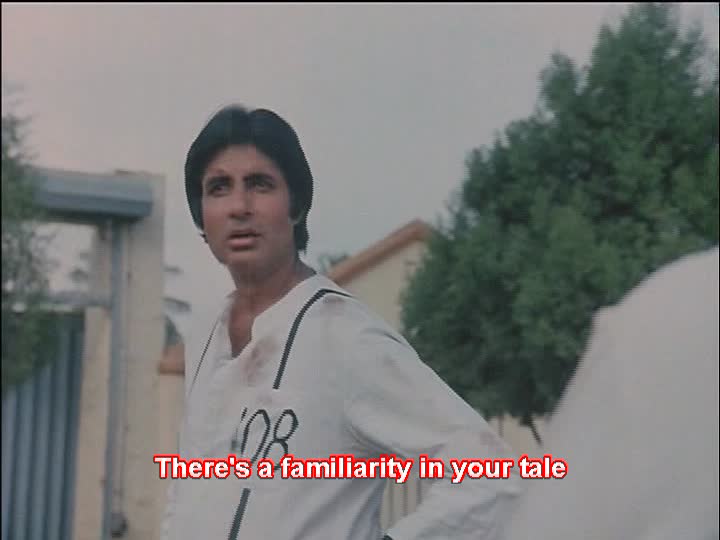
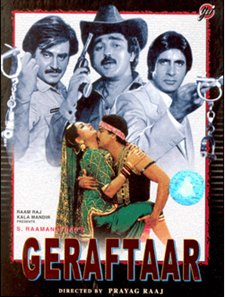
Geraftaar is not just a simple tale of two brothers separated at birth as this film manages to incorporate almost every Hindi film cliché.  There is the long suffering mother, a significant song, brothers and sisters, fathers and sons, a significant necklace and to top it all off death by bulldozer. As if that wasn’t enough we have not one, not two, but three heroes.  Kamal Hassan, Amitabh Bachchan and Rajnikanth appear together although unfortunately not all on screen at the same time.

Karan Kumar Khanna is a brat of a child, but still doesn’t deserve to be framed for his father’s murder. Adding to his misery, the real killers convince him that he may have been responsible. Nirupa Roy, in true filmi Ma style, instantly believes that he did indeed kill his father.  Karan runs away and tries to kill himself.

This allows his brother Kishan to grow up free from his teasing at least.  Kishan grows up into Kamal Hassan. Working as a stuntman in the film industry he has big dreams of making it as a hero but struggles to get paid the basic rate for his work.

His personal life is no more successful. After a rather unpromising start, he finally marries the unbelievably spoilt and self-centred Anuradha.  Anu is played by Poonam Dhillon, who does a very good job of making her character initially unappealing.

Back to those clichés!  Anu’s brother is a gangster and is involved with a number of shady businessmen, who were also responsible for the death of our heroes’ father.  They devise a plot to frame Kishan for the murder of his dancer friend Lucy, (but unfortunately not before she does a really bad version of flashdance), and he ends up in jail.  Coincidence rules and thanks to that significant song he manages to find Karan, although he doesn’t know who Karan is.

Karan (now the much taller and much more serious Amitabh Bachchan) explains why he is in prison though a series of flashbacks that pick up from his failed suicide attempt.  We learn that he was found by a Muslim boy, and taken in by him and his mother.  Both boys grew up to be police inspectors, but Hussein (Rajnikanth) was killed by Vijay, the police commissioner’s son.  Karan is in love with Vijay’s sister Geeta, played by Madhavi in a role that involves quite a bit of fisticuffs!   So we have a symmetrical arrangement of two good(ish) girls who both have evil brothers plotting against our heroes who are long-lost-brothers. There are various jail breaks, song breaks, court dramas, deaths by bulldozer (yes, more than one) and the inevitable family reunion, so that all ends well.

There are some great things about this film.  Inspector Geeta gets to join in for a lot of the fight scenes and does a really good job.  Rajnikanth is excellent as the cigarette tossing Inspector Hussein and manages a suitably dramatic and filmi ending – defiantly smoking his cigarette to the bitter end.

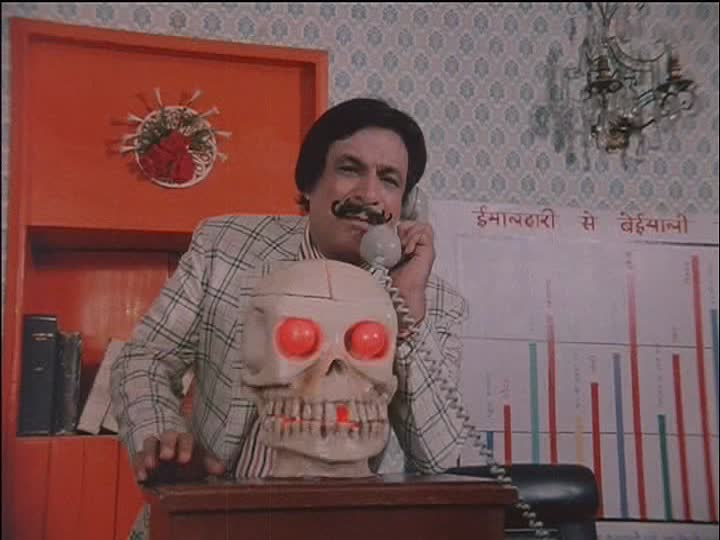
The gang are the comedy relief and manage some funny moments in their convoluted plans.  Kader Khan has a really insane moustache, and is clearly the head villain as he has a talking skull that gives him advice!

The scenes of Karan and Kishan singing and wandering around what appears to be a very nice open-plan prison are well done and the drama of their meeting is well handled.

The character of Anu is initially unlikeable and shows no empathy for anyone.  She tricks Kishan into believing she loves him (and his Ma) and then humiliates him in front of her friends — all because she couldn’t stand the idea that he wasn’t interested in her.  In revenge, he insists on marrying her before sending Anu back to her brother’s house so she can be trained to be a worthy bride. This deception on both sides leaves Kishan’s Ma in hospital as she crumbles under the weight of so much bizarre behaviour. Anu has an epiphany and  magically morphs into the perfect wife, praying to die before Kishan and wait for him in the afterlife.

Neither of the female leads show any regret about their brothers – either for the life they lead or when they both suffer the consequences for their wrong-doing.  Geeta initially tries to reason with her brother Vijay, but doesn’t seem at all happy to find that reports of his death were premature.  Anu is shown vowing to cast aside her other relationships and accept Kishan as her husband but that was part of her deception so it wasn’t clear if she decided a vow was a vow, or if some other change of heart took place. The rest of the film is dedicated to family so this lack of feeling from the sisters towards their respective brothers did seem odd.

Kamal Hassan turns in a very good performance as Kishan but is upstaged by Amitabh in the second half. The two heroines do what they do, but don’t really have much to work with although they both get to participate in the action in the final scenes. Nirupa Roy with her trademark knuckle bite is once again the dramatic filmi mother.  The music by Bappi Lahiri leans heavily towards disco – this was filmed in 1985 – but the significant song Aana Jaana Laga Rahega is lovely and sung beautifully by Shabbir Kumar and Bappi Lahiri himself. Kader Khan, Ranjeet and Shakti Kapoor play their usual stock characters and once again reap the benefit of a well funded wardrobe department. The fight scenes are very amusing.  Although sped up to a ridiculous degree they still look quite leisurely. Perhaps the fights composer, credited as Judo Rathnam, was really a tai chi expert.

Heather says: I started this film a few times before I finally managed to watch it to the end.  I find the first half drags, and the character of Anu was so annoying that I ended up shouting at the screen.  But the whole tempo of the film changed at the appearance of Amitabh and Rajnikanth, so it was well worth making it to the second half – thank-you Temple for insisting I finish it!  Rajni steals every scene he is in. Despite the fact that this is a special appearance with only a small role, he made the most of every second and I loved every single one of them!  Amitabh was overly dramatic which made him somewhat more comic  than I think was intended, but seemed to fit the general feel of the film.  I couldn’t really take death by bulldozer seriously and spent most of the film laughing at the melodrama of it all.  When I wasn’t getting annoyed by Anu at any rate.  I enjoyed the songs and thought that the comedy track was well written in, and had some very funny moments.  I have the feeling they couldn’t decide if this was meant to be a drama, a comedy or an action film, but instead of adding everything to make it full masala it just ended up switching from one style to the other and was just that little bit less satisfying.  That little bit of Rajni helped make it more palatable. This film gets 3 stars from me.

Temple says: I agree with Heather that the director couldn’t quite decide how to spread out the masala ingredients in Geraftaar—so I think they decided Kamal Hassan got the comedy (mostly), Amitabh took drama and Rajnikanth was the action man. Which made for an uneven, albeit wildly entertaining, film. Bulldozers are not a weapon for the spontaneous killer, so the build up to get to the death by moving equipment was overly complicated and really made the film drag. And how some of the victims didn’t see it coming is just beyond me. The three heroes did an excellent job, especially Amitabh and Rajni as their roles had more substance and, I can’t believe I am going to use this word in relation to this film, logic. The heroines were OK for their under-written and sketchy roles and Madhavi looked like she was right into the biffo in the final scenes. I do have to give an extra cheer for Kamal Hassan’s dancing duel in his featured song. Its worth seeing Geraftaar just for the star cast. It’s a bit of a chore to hang in there til the action kicks in, but it is worth it. I give this 3 and 1/2 stars. It gets extra for the skull with glowing eyes and for Kamal Hassan’s dancing.

Sawan Bhadon

From the kaleidoscope opening credits to the beehive hairstyles and groovy costumes, Sawan Bhadon has a very sixties vibe.  It is usually described as Rekha’s  debut Hindi film and was a box office hit for her. We originally watched this on the strength of the description on the DVD cover which read “This is a fun Bollywood flick full of beehive hairdos, lots of mascara, and some great dance numbers! The music is tops too!”

Let’s get the plot out of the way now. Spoilers galore to follow!

The film opens with prodigal son and all round wet blanket Vikram (Navin Nischol) returning from five years abroad. He immediately sets about telling his stepmother and sister how to dress, accessorise and generally live their lives, demanding his inheritance and insisting on some social justice in the village. Before Vikram turned up stepmother Sulochana (the shamelessly over the top Shyama) was busily squandering the family fortune on booze and wigs.  They host extravagant entertainments, and despite their reluctance to welcome Vikram home, it provides an excellent excuse for another party, fab new outfits, hairdos and a great dance number.

So Sulochana has him killed (the old time bomb in the car trick). You can imagine her surprise when he returns from the dead to once again claim his inheritance and thwart Shyama’s goal of owning more wigs than Dolly Parton and and Rajnikanth combined.

Naturally, she has him killed (the old thermos full of poisoned milk trick).

But does he die? By this time it is no surprise at all to find out Vikram is alive and well (unlike his stepmother!). So that’s it really. All’s well that ends well. The fun, as usual, is in how we get to the clifftop denouement and what people wore along the way.

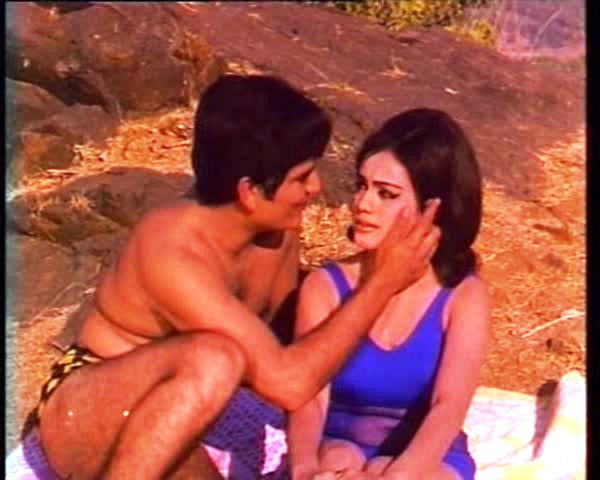
Rekha looks so young and almost unrecognisable in this film. She is Chanda, who enters the film rescuing Vikram from local thugs, a gang including her brother played by a subdued Ranjeet. Chanda is essentially a good girl who knows what society expects of her and her class, but she is no pushover. She is feisty, opinionated and brash. And of course she falls for Vikram, the wealthy landlord. Their romance is sweet, clandestine, a bit silly and never sleazy. Her mother supports Chanda in refusing a proposal from seedy drunk Dabarilal (Vikram’s uncle) and Chanda knows she will not be sold to the highest bidder. Unlike so many of her later roles, Rekha is very much the good bad girl. She has an outrageous beehive and emphatic eyeliner, but her colourful saris remain firmly in place.

Jayshree plays Dolly – the bad bad girl. Or is she? She is young, beautiful, wealthy and indulged and pretty much does as her mother wants her to do. Just as Chanda is feisty yet essentially conventional, Dolly is glitzy and cheap yet still a little girl at heart. She is being romanced by creepy Madan, who claims to have a cultural dance centre and sponsors touring dance groups. This is all a front of course for his plan to corrupt and ruin as many young ladies as he can, and Dolly’s mother seems perfectly happy with her prospective son-in-law. Their affair is seedy, dishonest and potentially destructive for Dolly as she evades his attempts at seduction.

Sulochana approves of the lounge lizard Madan and his flashy lifestyle and doesn’t see the sleaze under the surface. Vikram can’t see anything good in the spoiled little sister he has neglected for years and just wants her to be a biddable child. She is surrounded by people who don’t really value her, and seems to be attracted to anyone who compliments her. Dolly is selfish but not as malicious as her mother and uncle, and seems to have a revelation towards the end of the film when she wears a much more conservative sari and matching good girl hairdo.

The girls provide much of the interest and colour in the film, and their performances are so enjoyable. Their roles remain opposites until the very end of the film. At one stage Rekha and her mum move into the ancestral home and Dolly and her mum are treated like unwanted guests. Their stories seem to be parallel versions of the same girl meets boy tale, and as one character ascends her counterpart faces adversity.

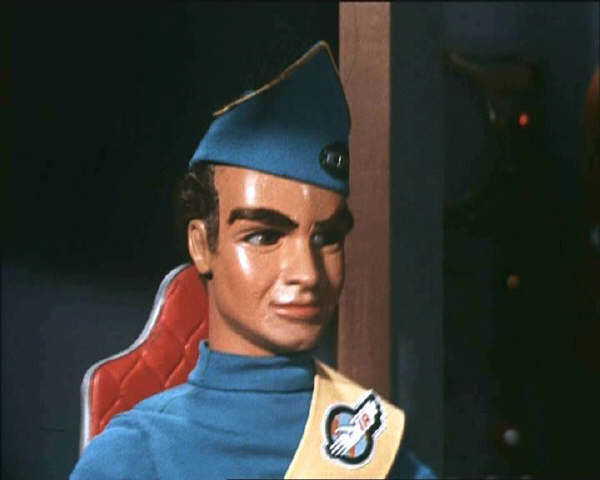
Navin Nischol looks like he modelled for Thunderbirds. He essentially has to play the straight man to all the mad masala spiced characters around him, and he does an adequate job.

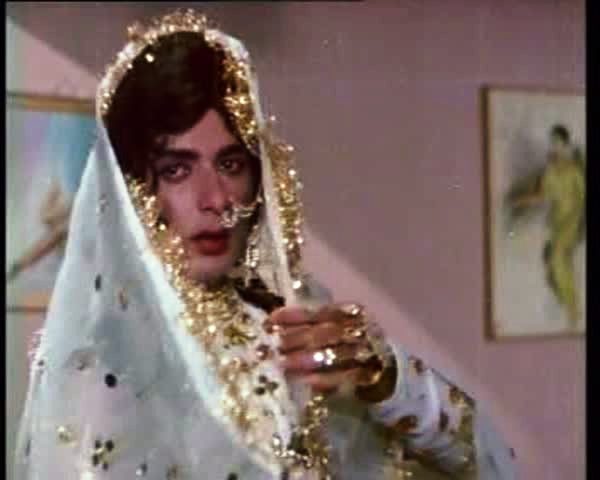
He is not a flashy dancer, a dashing heart-throb, or a convincing fighter. But he is game for a drag number, and for that we give him massive cheers!

Iftekhar is wasted in the support cast. He has nothing to do other than look like a crook, but he does that very well. All the support cast are fine for what little they have to do in this romping murder mystery musical romance.

This is a film celebrating sixties fashion, make-up and hairstyles.  Dolly and her mother look amazing in their selection of groovy salwars, saris and frocks.  The village girls are pure filmi delights with their immaculate grooming and stylish makeup. The party scenes give a chance for the wardrobe team to go all out on the bling, and makeup obviously had a field day with the actresses. Its fun looking at this film after seeing Endhiran as it really makes Rajni’s wig collection look very restrained indeed. For an excellent review and a wonderful gallery of screencaps, check out Memsaab’s post.

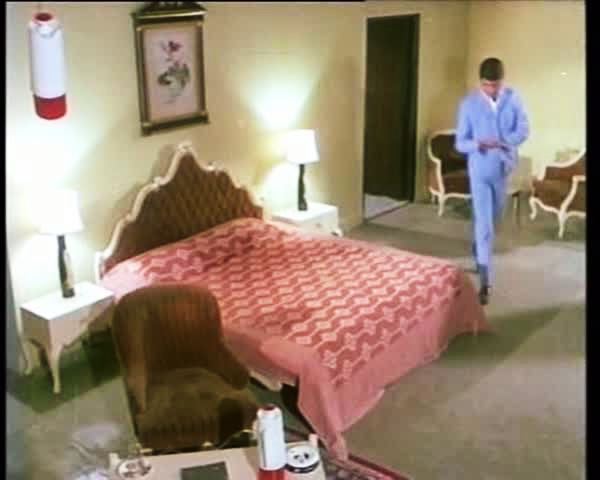
The plot is very silly but it did hold our interest mostly due to the likeable cast. The final fight scene just went on and on and on and on….and then it went on again. It was a bit too much to have Vikram pop out of a coffin shaped box and start chasing the bad guys, especially when wearing a powder blue polyester suit. There is only so much disbelief we can suspend. The songs are fun and the overall visual design is great.

Heather says: Having bought this film solely because of the description on the back of the DVD, I was delighted to find out it was such a fun movie to watch.  The fashions and hairstyles are fab and make the film a real visual treat.  It certainly lived up to the promise on the cover! Dolly’s antics are hilarious and Vikram seems to be as unstoppable as Cher.  The plot makes no sense whatsoever, and yet it’s somehow enthralling – if only to see just how many attempts on his life Vikram can survive.  Madan is quite determined in his dedication to Dolly, or rather to her supposed fortune and provides a nice air of sleaze.  The film really does belong to the girls though – all play very strong characters which is a lovely change from the more usual hero-centric films of the time.  Shyama is fantastic as the women who will let nothing stop her in her quest to own more artificial hair than anyone else.  Rekha shines as the village girl, and proves right from the beginning of her career that she sure can act.  I love the soundtrack by Sonik Omi and the whole sixties vibe to the film.  Such a fun movie – I give this 4 stars.

Temple says: I also bought this DVD purely on the strength of the cover and the blurb. It’s so nice to find truth in advertising! Its a very stylish effort, and always a pleasure to watch. The performances are mostly fun, although Navin Nischol will never be the hero of my dreams. Wooden is a kind description. Rekha was lovely and charming in this sympathetic role. I really enjoyed seeing her in such a girly avatar for a change. Shyama was impressively insane in her role and really made an impression. I do like an evil stepmother on film and she was one of the best! This is the film that taught me the very useful phrase “Yeh Vikram nahin hai!” so it will always be special to me! It’s fun, but ultimately not a stellar example. I give it 3 stars.