Surakksha

As a suitable end to silly season, we sat through one of the most ridiculous films we have found in recent times. While we have to conclude that it was immensely silly, it was also quite fab!

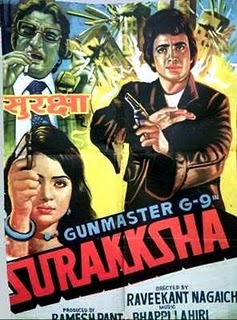
Surakksha features the exploits of Agent Gopi aka Gunmaster G9, (Mithun Chakraborty) a Bond inspired character with a memorable theme song.

There is a plot, but it hardly seems relevant as the director/producer Raveekant Nagaich and writer Ramesh Pant seem to take their favourite scenes from a number of Bond movies (as well as a few other classics) and string them together in no particular sequence. These random episodes are glued together with some outlandish effects (more on those later) and usually showcase Mithun in the tightest whitest flares he can squeeze himself into.

While we’re talking about the pants,  they did inspire some lengthy discussion. Not only are they incredibly tight, they also have the largest bell bottoms we have seen. Surely this must make sneaking into buildings, cemeteries, warehouses and various other assorted locations difficult – not to mention the problems caused when dancing on the beach. And we suspect a constant flapping noise from the enormous flares would have undermined his attempts at stealth, even if the yards of fabric remained unseen. However Mithun seems unconcerned by this choice of clothing, while we feel it may explain some of the dance moves. Or then again, maybe not. We concluded that Amitabh is a man who can wear tight white flares and actually carry them off. Mithun can’t.

In fact, generally the outfits were rather wonderful with an abundance of pleather in various shades and some nifty pantsuits. We owe this bounty to Bhanu Athaiya and their team! Mithun also seems to be either waxed to within an inch of his life, or perhaps is just not a particularly hairy man. For whatever reason he really was quite shiny in his (fairly frequent) shirtless scenes. Since we didn’t have to keep track of the plot (the writers hadn’t so why would we?), we had time for this philosophical pondering.

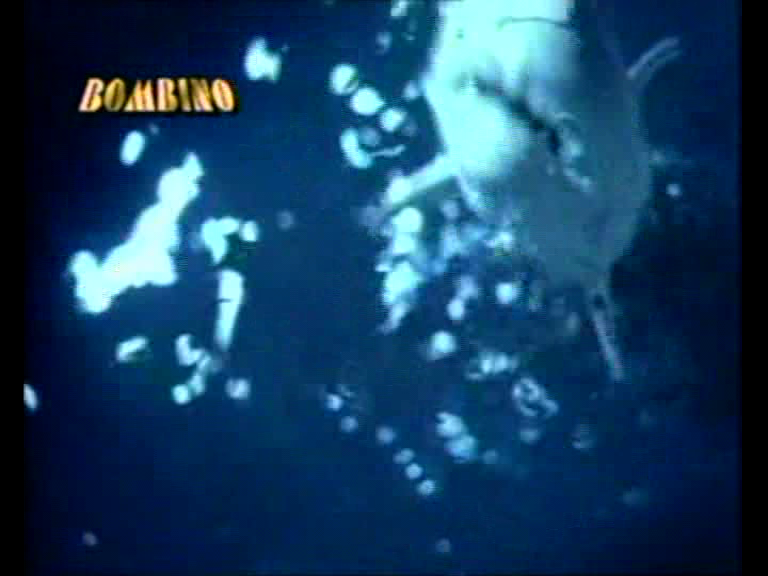
Other highlights of the film are the amazing leaping animals and their sound effects. Who knew that sharks can both sound like dolphins and growl (well OK, other than anyone who has seen Chatrapathi) as they leap from the water in search of their prey. There is also a diminutive snake that manages to make impressively athletic lunges at Mithun as he ably fends it off with a dish lid.  Sadly the snake doesn’t growl, but does manage to leave considerable damage in the plasterboard thanks to its amazing leaping skills and velocity. It was sad to see the snake dispatched by means of a pillow and a toilet – that snake deserved better than being flushed.
We don’t think ‘enjoyed’ is the right word to describe our reaction, but the nightclub dance number featuring Aruna Irani and some fabulous decor is very memorable.


Overall the effects are spectacularly bad with any number of toy cars and trucks being employed to demonstrate the amazing properties of Gunmaster G9’s chosen mode of transport, the talents of the design team and the effects of combustion.

Although G9’s car is small, and rather impractical considering the number of women he attempts to fit in at the beginning of the film, it does boast the usual accoutrements essential for any spy about town. There are pop-up guns, a device to pour oil on the road, one to squirt soapy water on a pursuers windscreen, and of course a parachute for those moments when you find yourself driving off the edge of a cliff because you haven’t been looking where you are going. Doctor Who fans will also be delighted by the appearance of what looks like a sonic screwdriver (but sounds like a jackhammer), a particularly useful device if you find yourself interred in a polystyrene grave.

There were also a couple of toy boats that looked Significant, but we never did learn their fate as we had a few technical difficulties. Despite the best efforts of the DVD player and computer to spare us the full film, we managed to soldier on. With two copies of the DVD and Temple’s technical skills we were not going to be beaten by some inanimate electronic equipment!  The copies we had also suffered from being a VCD with no subtitles, but as we mentioned, the plot really didn’t seem to be the point of this film anyway. It did lead us to discover that Mithun mumbles – he was really very hard to make out, while the other actors were much clearer although still never really made any sense.

Iftekhar plays the head of the organisation Mithun works for and checks in periodically to see what his spy is up to; generally warning him to stay away from women, and fretting when he doesn’t call on time. Mithun’s love interest is ably played by Ranjeeta Kaur who does a good job of keeping a straight face throughout the more bizarre of Mithun’s dance moves. At times we did wonder what the choreographer’s direction could possibly have been!
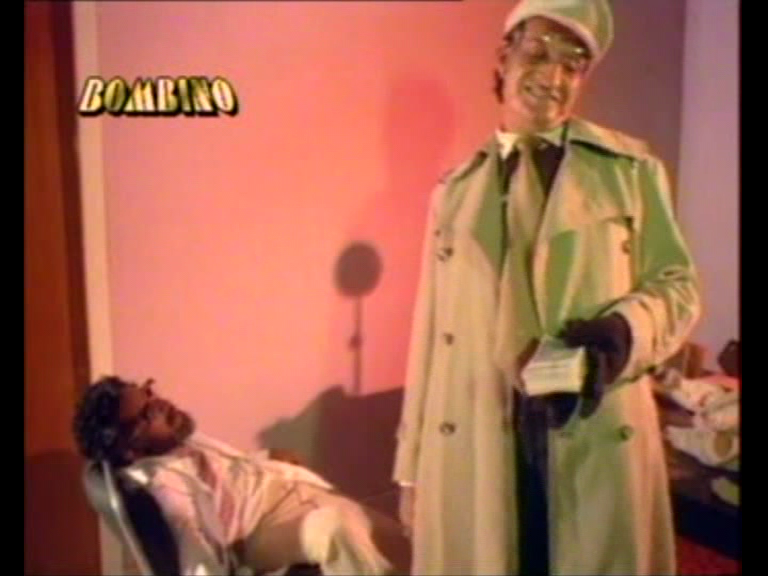
The story involves the hunt for G9’s colleague, Jackson, kidnapped by the nefarious Hiralal (Jeevan obviously enjoying himself as the villain and bearing a resemblance to Dick Dastardly in this screencap) and his glamorous sidekick Neelam (Mala Jaggi). These two are mere lackeys of the real bad guy – the mad scientist Dr Shiva (?) who lives in an underwater lair seemingly surrounded by giant goldfish. The lair is very well appointed, complete with a robot controlled by the buttons on Dr Shiva’s metal hand and amazingly ineffectual female guards armed with red plastic guns (or hairdryers).

To ensure everyone turns up for the final showdown, Jackson’s wife and son have been kidnapped along with Mithun’s trusty sidekick Kabari (Jagdeep as the comedy relief). We have yet more action as air ducts are explored (children do have their uses) and crutches are reassembled into a ‘machine gun’ (hello Day of the Jackal!) – although it looked much more like a shotgun to us but what do we know. We are not the Gunmaster G9. Like any well schooled villain Dr Shiva pontificates about his plans for world domination using his death ray thingy that appears to be able to cause gigantic waves. Or something. It really doesn’t matter because we know that Gunmaster G9 will save the day, get the woman and exasperate his boss.

Everyone spends a really long time explaining their secret plans to anyone who will listen, before a dance off between G9 and Hiralal to settle the question of…well, we don’t know for sure, but we do know Jeevan lost. Mithun then has to fight several champions in several fighting styles (hello Bruce Lee!) although no one seemed particularly committed to the biffo.

The music is by Bappi Lahiri and is really quite terrible although often unforgettable as we tried to work out which song he had copied so badly. This was such a terrible film we have decided we absolutely must have a better copy with subtitles to really be able to get the full effect and to fully appreciate our favourites, the snake and the shark. And we both love a good lair and a death ray thingy contraption:

Many thanks to the people who inspired us to watch this masterpiece: take a bow Shalini Akhil and Memsaab! An absolute classic of the So Bad Its Good variety!

Temple says: I can’t think how I have gone so long without seeing this. Really – it has everything and more, and yet sort of adds up to so much less. I love the film makers determination to make a Bond film with no Bond, no budget and no idea how to replicate the style, and it really is very entertaining. I am a fan of Bond, and could happily pick out scenes lifted from Goldfinger, You Only Live Twice and Live and Let Die to name a few.  Heather had to put up with me cheerfully predicting what was to happen and I have to give this to Ramesh Pant – he knows his Bond too. Iftekhar was excellent as the equivalent of M and Jeevan excelled as the evil flunky.  There is something delightfully optimistic about a death ray thingy made mostly from tin foil and tupperware and that just makes me happy. Unfortunately the VCD we had didn’t allow for good screencaps so we can’t show you the real magnificence of the set design and the ‘special’ effects. I think you’ll just have to watch this for yourself! 3 stars from me, maybe 3 and 1/2 if I’d had a glass or several of wine.

Heather says: This was a fabulous fun film for all the best reasons. There were super sets and seventies decor, amazing outfits, dreadful choreography and the worst special effects I have seen for a very long time. I really loved some of the lights and lamps, and at one point there were exactly the same tiles as my parents had in their bathroom back in the seventies – just fab! I’m not such a big Bond fan as Temple – I do like the movies but the last time I watched most of them was years ago –  but to me, apart from the lack of cocktails, this film had every bit of 007 squeezed in. A bit like Mithun and those pants – no more could possibly fit! There were time bombs, listening devices, a machine that spat out strips of paper for no apparent reason and of course the end-of-the-world-death-ray-wave-maker machine. This film really deserves no stars whatsoever – it actually is that bad, but I give it 4 stars for the whole experience. One to watch with friends who can appreciate the finer details!

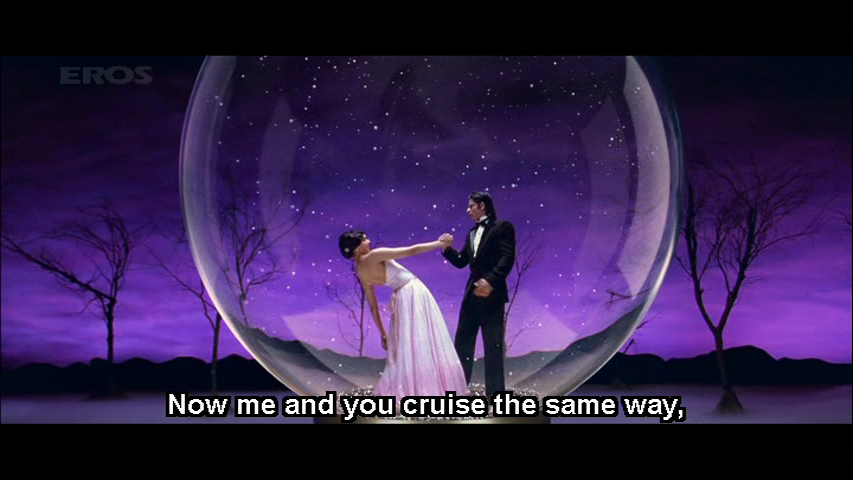
Om Shanti Om

Farah Khan is one of the very few directors currently working in Bollywood who is making our kind of masala movie.  We loved Main Hoon Na and since her next project, Tees Maar Khan, is about to release it seems fitting to start our Christmas silly season with one of the last great masala films we saw in the cinema – Om Shanti Om (OSO).

SRK plays Om Prakash Makhija, a junior artiste who, along with his friend Pappu (Shreyas Talpade), is struggling for work in Hindi films in the seventies. The film opens with a wonderful take on Rishi Kapoor’s Om Shanti Om from Karz which foreshadows the reincarnation romance drama musical about to unfold.  There is some clever use of the original footage and we felt right from the beginning that we were going to love this! The retro setting also lets Farah Khan and Red Chillies show off some fab CGI work in their tribute to past filmi legends.

Om falls in love with one of the big stars of the time, Shantipriya or Shanti, played by Deepika Padukone.  Naturally, since this is after all Bollywood, such a romance is destined to face obstacles, as Shantipriya is a big star and Om is a nobody.

There are some wonderful scenes where Om woos Shanti, both heart-wrenchingly romantic and hilarious, particularly the scenes when he pretends to be a Southern Indian film star breaking into Bollywood. This was fun at the time, but even better now that we have had the opportunity to see where Farah took her inspiration from! Shanti is secretly married to sleazy Mukesh Mehra (Arjun Rampal) and this of course presents both a barrier to Om’s happiness, and a great opportunity for some excellent SRK emoting.

Inevitably, Om discovers Shantipriya’s secret and his heart is broken.  Again Farah Khan manages to take some poignant moments and intersperse them with some classic filmi devices to make the resulting song both sad and funny.

Since Om is the hero, he still fights to save Shanti when Mukesh determines she must die to protect his own career.  Om is badly injured in the confrontation and dies (eventually) in a nearby hospital, at the exact same time as big star Rajesh Kapoor’s wife is delivered of a son. A son who has a mysterious birthmark that looks a lot like a significant tattoo. Yes!

This baby grows into Om Kapoor; a spoilt self-indulgent actor resting on his father’s laurels and a trial to all who know him. Adored by his fans, he feels that he can do no wrong until he remembers his past life, grows up a little and resolves to bring about justice for his lost love, Shantipriya.

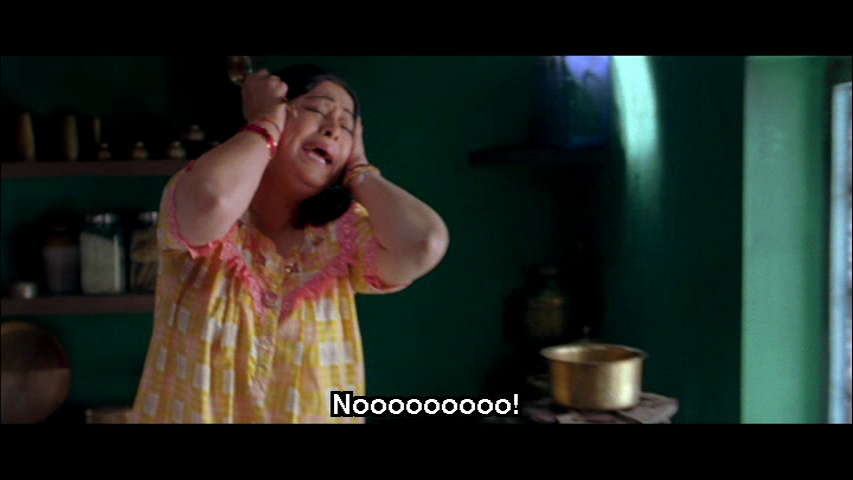
There is plenty of comedy, particularly for anyone who knows something about the films, actors and different factions in Bollywood.  There are many sly digs at the industry’s predilection for nepotism, all tongue in cheek and very funny! SRK is not exempt from Farah’s sharp wit: as he arrives for a film shoot, one of the bystanders comments “I thought he’d be taller”. Kirron Kher is in fine form as Om’s ‘filmi’ mother, and she has some fabulous scenery chewing moments. Shreyas Talpade and SRK have some fun scenes together and really seemed to enjoy hamming it up as junior artistes.

Although a lot of the humour is contained in the dialogues, there are plenty of physical gags, and even the sad scenes have an element of comedy.  While Farah Khan is poking fun at the very typical filmi devices, she is also acknowledging these older films that she clearly loves.  OSO is a paean to these masala greats and we were inspired to track down many of the scenes she referenced.

There is also plenty of drama.  While most of the scenes are deliberately over-acted to get as many laughs as possible, there were some genuinely moving moments.  The scenes between Om and his ‘filmi ma’ and his friendship with Pappu were given as much care and emotion as the romantic scenes with Shanti and the confrontations with Mukesh.  The film loses momentum a little towards the end, but only for a moment and it soon picks up the pace with the final Andrew Lloyd-Webber inspired showdown.

The entire film seems to have been written to display SRK at his best.  He brings every nuance of the role to life and manages seemingly effortlessly to turn scenes from happy to sad to totally ridiculous and have us following along accepting every ridiculous turn of the plot.

This was Deepika Padukone’s debut film and Farah Khan seems to have gotten much more out of her than any directors since.  Although she is wooden in her earlier scenes as Shantipriya, she suits her modern day character of Sandy better and she comes to life in the songs.

The support actors, in particular Shreyas Talpade and Arjun Rampal are well cast in their roles. Being a Farah Khan film, of course the songs are exceptionally well choreographed and filmed.  One of the things we appreciate Farah for is her determination that her leading men should be objectified as much as, if not a little more than, the glamorous heroines. She outdoes herself with Dard-e-Disco which has hilariously bad lyrics (apparently she kept telling Javed Akhtar to make his lyrics worse) and is full of gratuitous shots of SRK in, emerging from, and being doused with, water.

Any good masala film must also have great costumes, and OSO delivers in this regard.  The outfits from the 70’s are thoroughly of their period and stunning in their garishness and we loved them.  Shantipriya wears some beautiful clothes and the depiction of Om as an actor means we get to see him in an array of costumes.  There are plenty of fight scenes too, with the best reserved for the Southern Indian film episode.

Much of the film industry seems to have got behind Farah with her multi-starrer song Deewangi Deewangi.  It was a fantastic feat to get so many actors to take part, and we had great fun spotting some of the stars of yesteryear and their signature moves.  The satire on the Filmfare awards was partly filmed during the actual ceremony and it is very good humoured of both Filmfare and the array of famous actors to take part. We weren’t quite so enamoured of Bappi Lahiri’s singing on the red carpet but he is a legend in his own blinged up disco way.

The story of OSO is perhaps predictable, but the great performances and the exceptional production values more than make up for that.  We are quite sure that there are a lot more jokes in there that we just didn’t get, despite repeated viewings.  At the end of this film, we both looked at each other immediately said  ‘What the fish? Again – we want to watch it again!’

Heather says: I think I saw this film at least 5 times in the cinema. Farah is excellent at showcasing her obvious love of cinema, and while she pokes fun at the entire industry it’s not with any malice. As a director she seems to know exactly what her audience wants and then delivers. Although her story doesn’t make much sense that’s not what I remember from the film. Its much more about the humour, the costumes and the excellent performances on screen. Being a huge SRK fan I can (and have) watched him in really dreadful bad films, but it is so refreshing to watch him where the director knows how to get the very best out of every scene. I totally loved the songs by Vishal-Shekkar, and they still make me smile and dance when I play them to-day. The continual references back to older films were a huge plus, and the clever re-working of old clips in Dhoom Tana was fantastic! Everything works well together; the casting is right, fantastic songs and costumes, great choreography and all tied together by a great script. Om Shanti Om is exactly what masala means for me, including the lack of logic in the plot! Please Farah, can we have some more? 5 stars

Temple says: This film is like the very best kind of Easter Egg hunt. Everywhere you look there are sparkly little treats and jokes, and beautiful tributes to other much-loved films. I really enjoyed the nod to every filmi cliche that could possibly be used, and the cheerful ransacking of seminal images from Hindi films of the past. I also loved seeing Pyarelal back up in the credits and on the red carpet! The performances really were very good, from the headline stars to the smallest special appearance and I felt that all the performers shared a love of the 70s film industry and it’s products, so they seemed to give it their best. For all the cheesy fluff, the film-making team also did a very intelligent thing with the Om Shanti equation in the modern era by not making it a romance. Om had no intention of, um, completing his earlier relationship with the newer model, just of seeing justice done for his past life’s true love. It made me a lot more willing to sit through repeated viewings of the slightly draggy second half as there wasn’t that squick factor. I also enjoyed seeing SRK revel in his ability to portray unpleasant characters – he was cold, calculating and quite repellent as OK in some scenes, and got to use more than his lauded five expressions.

Farah Khan has great attention to detail and everything from the costumes (where on earth did they find all those fabulous fabrics?)  to the music suited her vision perfectly. And the now trademark exuberant closing credits were a perfect finish to a great journey and sent the cinema audience out on a high. I loved being swept up in this, and feeling that little bit clever for recognising some of the references. Would you appreciate this film if you knew nothing about its source materials? Yes, I think so. It has so much colour, energy, heart and humour that there is something for everyone. Well, no machetes but I can’t really begrudge that tiny lack. And I was certainly inspired to go find or re-watch some of the classic scenes pilfered for use in OSO. Farah Khan as brand ambassador for Masala Pradesh? She’s got my vote! 5 stars!

Udaan

Udaan was the first Indian film in seven years to be selected for the ‘Un Certain Regard’ section at the Cannes Film Festival, and also won the Best Audience Award and Best Music Score at the Giffoni Film Festival. Sadly the film didn’t have a cinematic release in Australia, which is unfortunate as I think it is the best Hindi film I have seen so far this year. Overall Udaan is a simple story brilliantly told with some fantastic performances by the young and inexperienced leads.

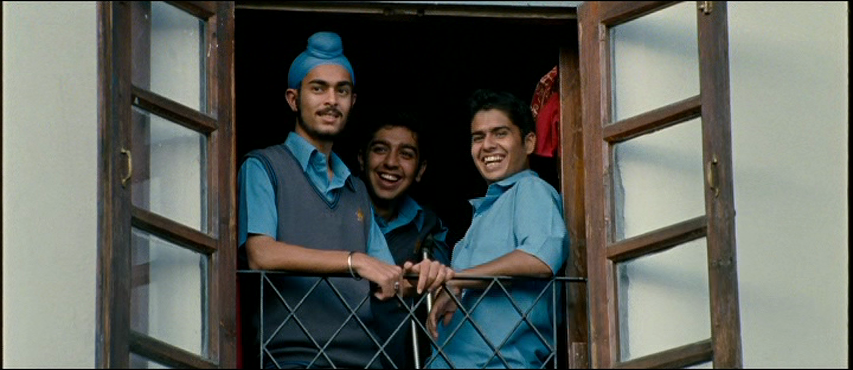
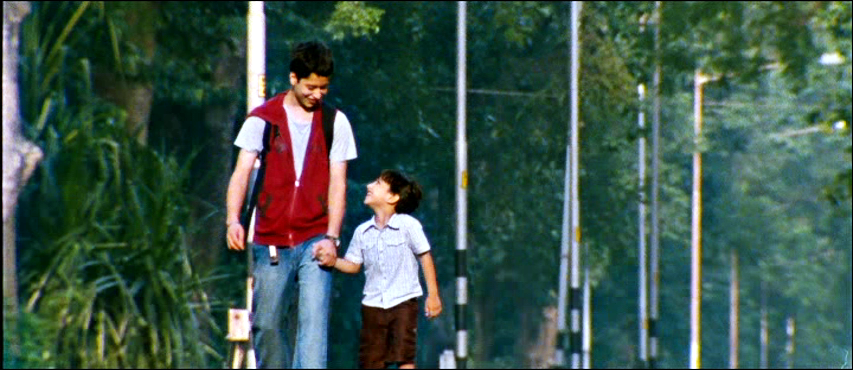
Rohan is a seventeen year old who has been at boarding school in Shimla for 8 years. In that time he has not been home, nor has his father or any of his family visited him. His friends are his surrogate family and they follow the ‘all for one and one for all’ motto. Their various escapades, including a late night trip out to see am adult movie, result in their expulsion from the school and Rohan has to finally return home to Jamshedpur. His father barely acknowledges his arrival at the train station, not speaking a word, and leaves Rohan to drag his trunk across the platform and up the stairs into their flat  by himself. 

Once home, Rohan finds that while he was at school his father had married again and he has a six-year-old step-brother Arjun. The relationship between them is off to a bad start as neither knows of the others existence, and as the bigger and older brother, Rohan totally pushes Arjun aside. 

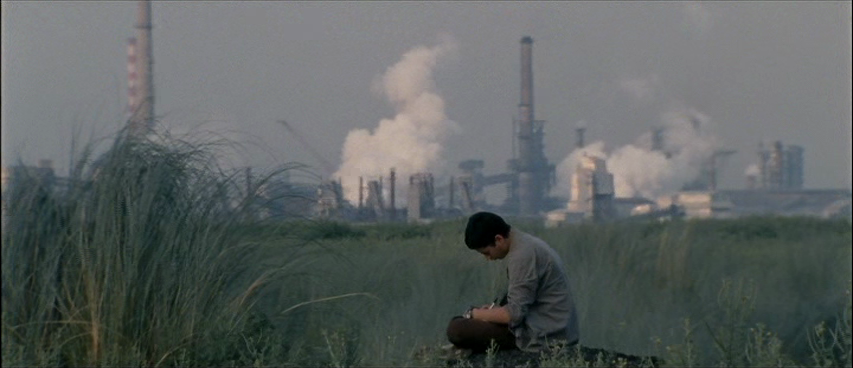
Rohan’s relationship with his father, never a happy one, deteriorates further as Bhairav Singh decrees that Rohan will work in his factory in the morning and attend engineering college in the afternoon.  Rohan wants to be a writer, and throughout the film we hear his poems and stories. When he is looking after his step-brother in hospital, everyone crowds around to hear his stories, so we believe that he really would be able to make it as a writer despite his young age.  Engineering however is not his calling and he struggles continually. He tries to be the son his father wanted and perseveres with his studies, but he is only seventeen and the lure of his writing is too strong to be ignored.  He skips school to sit in the fields and write, so inevitably fails his courses.  

His father is an authoritarian bully, an alcoholic, and is determined that his son will follow in his footsteps and take over the foundry.  He is continually disappointed by Rohan’s seeming failures and physically and verbally abuses him.  He also forces Rohan to run and train with him daily, trying to mould him into the man he wants him to become.  His treatment of his younger son is equally appalling and results in the two step-brothers finding some common ground. Bhairav has a younger brother, Jimmy who has a happy but childless marriage, and he becomes an ally for Rohan in his attempts to get his father to accept his writing.  But Jimmy has issues of his own with his brother and cannot stand up to him when it comes to the two boys.  Rohan rebels by stealing his father’s car and heading off to the bars in Jamshedpur where he goes drinking with some new friends. Rohan has to decide if he will stay, become an engineer and end up like his father, or leave to try to realise his ambition.  As his step-brothers fate also seems to lie in his hands, this is not an easy decision to make.

For me, the film works so well because Rohan’s dilemma is very realistically portrayed.  Like most of us, he wants his father to approve of him and he tries very hard to win this approval.  He can remember how much his mother loved him, and is desperate for some feeling from his father. Rohan’s rebellions seem very typical of a teenager, and his reaction to his step-brother rings true.  The issues of alcoholism and abuse are dealt with in a very matter of fact way.  There is no attempt by director Vikramaditya Motwane to either sensationalise or underplay the brutality and cruelty in the relationships between Rohan, Arjun and their father. The harsh reality of the story is allowed to speak for itself and it is to the director’s credit that the film is such a moving and poignant story.  

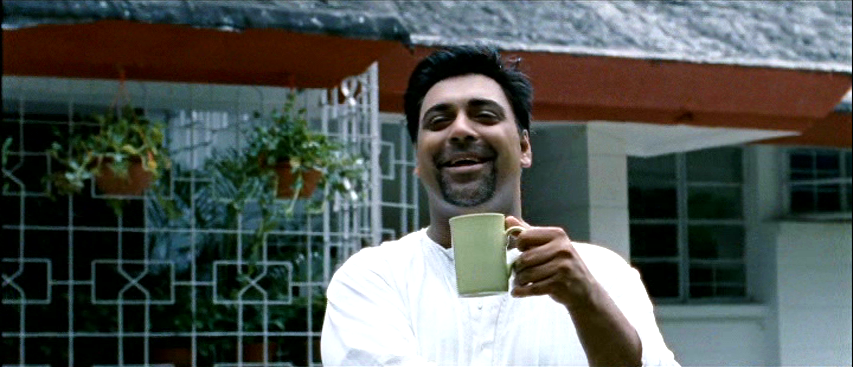
The performances by Rajat Barmecha as Rohan and Aayan Boradia as Arjun are extraordinary.  Both are flawless in their roles and we really feel the developing relationship between them.  For such young and inexperienced actors they have given truly excellent performances. The experienced actors also can be credited with some very good acting. Ronit Roy is fantastic as Rohan’s father, Bhairav Singh.  He keeps his expressions grim when dealing with his sons and while at work, but is animated, smiling and laughing with his friends. His alcoholism is always hidden from the rest of the world and he keeps his treatment of his sons an equally well guarded secret. Ronit Roy manages to convey so much of his character through these basic themes and with minimal changes in his expressions. Ram Kapoor also does a great job with his role as Jimmy.  He manages to make his character affable and ineffectual with some nicely underplayed acting.

The film has plenty of symbolism, which gives it a very European feel. The school as Shimla is set in the forest, and the transition on the train to the industrial sights of Jamshedpur makes a sharp contrast.  Shots of Rohan’s father are often framed by the barbed wire fence surrounding their home, and his scenes are often dark and heavy in feeling.  My favourite of these moments is probably Rohan’s T-shirt which states Love Happiness, but when he sits down it folds to read Lose Happiness. An excellent find by the wardrobe department!  The music by Amit Trevedi won an award at the Giffoni Film Festival and is beautiful and haunting.  Although often part of the background, a number of the songs also serve to move the film forward and are very well placed to do this. The last song is just perfect and a lovely memorable end to the film. 

There is nothing to find fault with in Udaan.  The screenplay by Vikramaditya Motwane and Anurag Kashyap is excellent, and the dialogue, going by my basic Hindi and the subtitles, seems appropriate for the story.  A sad film, but one which touches the heart and I totally loved it. 5 stars.  Heather