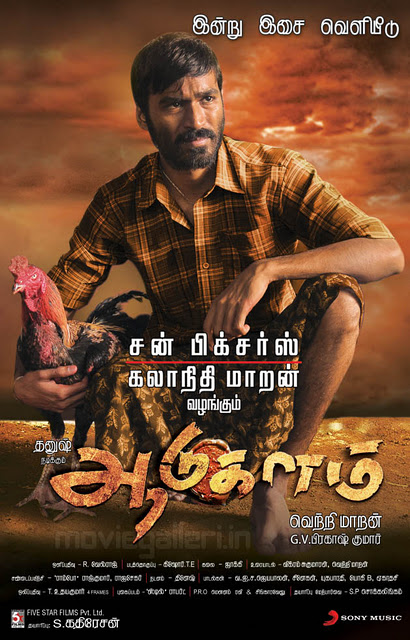
Aadukalam

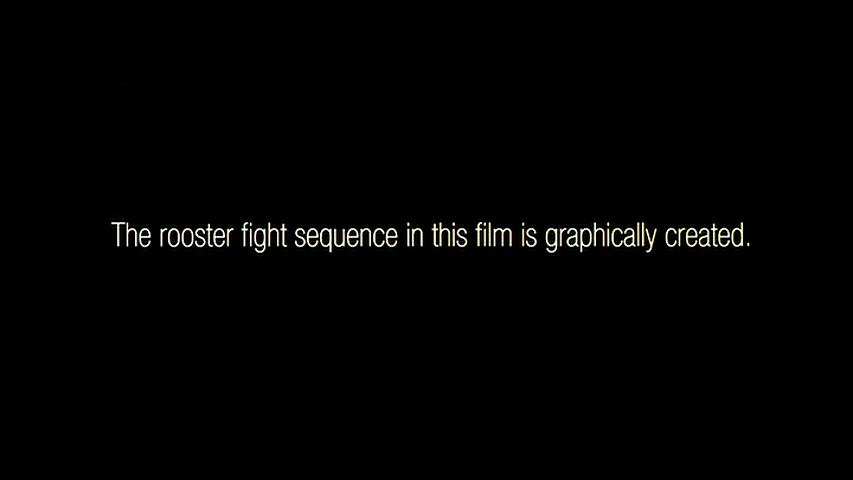
I first saw Aadukalam when it released in the cinema and despite the lack of subtitles was so completely drawn into the story that I didn’t want the film to end. I was very surprised that I enjoyed it so much since the film centres around cockfighting, which is something I abhor and wasn’t keen to watch on-screen. It was really only the Vetrimaran and Dhanush connection that got me through the door, but I’m so glad that it did. While the film didn’t change my views on the subject it was a lot more watchable than I anticipated, helped considerably by this statement in the opening credits and the fact that the cockfighting scenes were quite clearly CGI.
The film focuses on the relationships between the main characters and how these change as their circumstances alter. Alliances are made and broken, and pride and prestige are the driving forces behind the actions of Pettaikaran (V. I. S. Jayabalan) and his chief rival in the cockfighting scene, police inspector Rathinasamy (Nareyn).

The film is set near Madurai in a small town where Pettaikaran breeds and trains roosters for cockfighting. He is aided in this venture by three men; Ayub (Periyakaruppu Thevar) who stitches the roosters back together after the fights, Durai (Kishore) who provides financial support and Karuppu (Dhanush)who sets the roosters for fighting. Karuppu seems to look upon Pettaikaran as his father, while Pettaikaran is grooming Karuppu as his successor, so the two appear to have a close relationship, making later events all the more shocking.

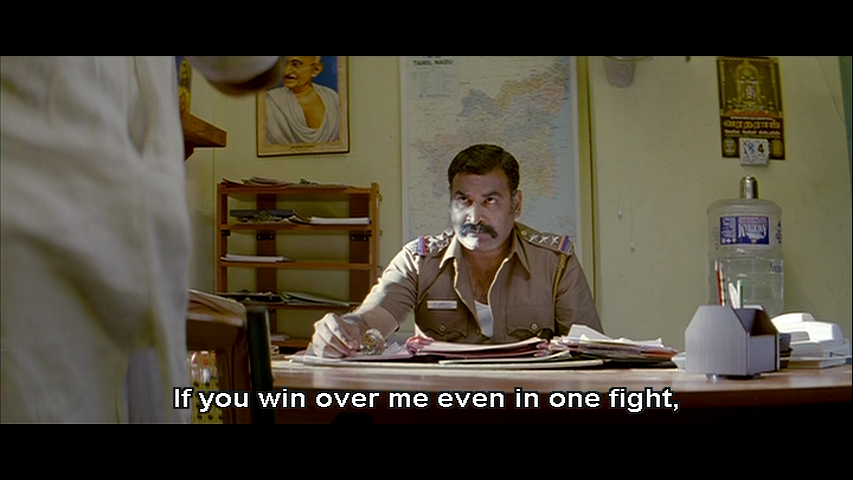
The first half of the film deals with Rathinasamy’s attempts to force Pettaikaran to take part in a cockfighting tournament so that he can finally win over his main opponent. Pettaikaran however knows that Rathinasamy will stop at nothing to win and refuses to take part in any further matches despite major provocation.  However Rathinasamy is as corrupt as he is determined and he finally manages to set up the final showdown. The stakes are high – apart from all the money to be won, the loser will have to shave his head and moustache and, almost as a secondary consideration, they will also have to give up cockfighting for good.
The prize money isn’t important to either of these two men, but is rather more important for Karuppu. He lives with his widowed mother who has dreams of buying back the mortgage to their house, while Karuppu has dreams of a different kind involving an Anglo-Indian girl he has met. He falls in love with Irene (Taapsee) and his love takes the usual form of stalking until he finally manages to work up the courage to speak to her. Irene is horrified by his declaration and her initial reaction is very natural and honest. Sadly it’s also the only scene where Taapsee manages to convince in her acting. The romance feels clunky and awkward, and the actors seem to feel uncomfortable with each other as well. Taapsee is very wooden and lifeless, and there is never any good reason why a well-educated girl from a good family would fall in love with a scruffy uneducated villager like Karuppu.

While Dhanush is more convincing in his obsession with Irene, he’s a little too arrogant for me to fully believe in his love. His passion is much more for his idea of Irene, and once having made his decision that she is the right girl, he is determined to marry her more to flatter his ego rather than because of any genuine feelings for her.

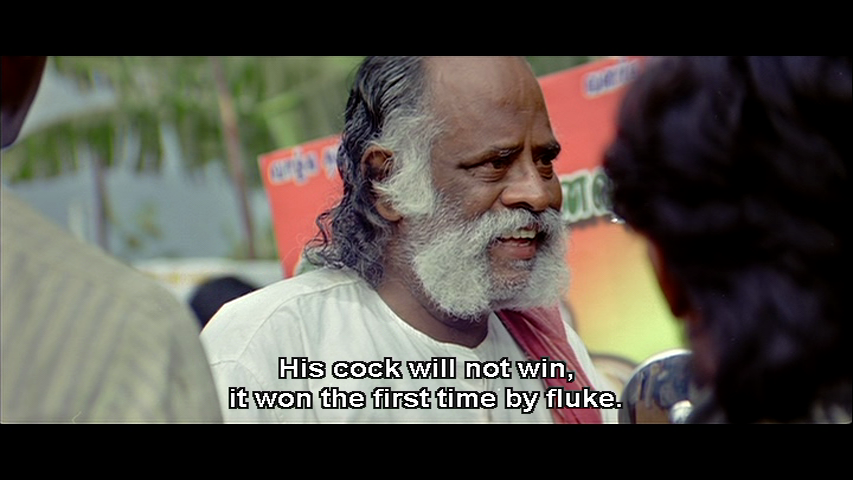
Partly to pay back money he owes Irene, Karuppu takes his rooster along to the tournament despite the fact that Pettaikaran had earlier told him to put the bird down. As a result, Pettaikaran distances himself from Karuppu and tells everyone who will listen that his rooster will not win. So when it does in fact win all 3 fights and Karuppu takes home the grand prize, Pettaikaran is humiliated by this loss of his reputation and sets out for revenge.

While the first part of the film deals with the rivalry between Pettaikaran and Rathinasamy, the second half deals with the machinations of Pettaikaran as he seeks his revenge on Karuppu. Jayabalan is amazing as the aging champion and his character is beautifully etched in shades of grey. The change from his initial, more moral stance where he refuses to fight Rathinasamy knowing that he is risking the lives of his assistants by doing so, is beautifully contrasted with his change in ideals as he starts to plot and plan against Karuppu. His manipulations of the faithful Durai and the treatment he metes out to his young wife grow ever more disturbing, but still quite believable as he is determined to ruin Karuppu in every way that he can to soothe his battered ego.

Dhanush is also excellent as the rather naïve Karuppu. His relationship with his mother is well depicted and the love and frustration between the two is very evident. His scenes with Pettaikaran are among the best in the film, although Karuppu’s relationship with Durai is also well portrayed and the two actors have a great rapport. Dhanush has done a number of these village type roles but here he totally becomes the character of Karuppu and I think deserves the National Award he won for his performance. His final realisation of just how he has been betrayed by the man he considered as his father is brilliant and throughout he effortlessly conveys his emotions without going to extremes. Vetrimaran has come up with characters that are essentially very ordinary with normal human emotions of petty jealousy and pride and made a story that works so well because it deals with them in such a realistic way.

The other actors in supporting roles are all excellent with some very good characterisations. Meenal as Pettaikaran’s wife is fantastic and while Periyakaruppu Thevar doesn’t have a large role he is very effective and paints his character fully in just a few short scenes. Nareyn is suitably immoral and villainous as Rathinasamy and it’s a shame that he vanishes from the story in the second half. I can’t find out who played the role of Karuppu’s friend but I though he was great and will keep a watch out for him in other films.

While most of the action involves roosters fighting there are a few human fight scenes which are more of the push and shove variety rather than the carefully choreographed and highly fictionalised fight scenes more usually seen. They also rely on the use of various stones, buildings and tree stumps to do any actual damage to the various opponents until the last few scenes, which are choreographed to imitate the cockfights from earlier. Cinematographer Velraj does an excellent job with the many night scenes, often involving fights, and it’s quite easy to make out what is going on.

The music by G. V. Prakash Kumar works well in the film but apart from Yathe Yathe it’s not particularly memorable and doesn’t stand out. This is probably all to the good as the songs don’t detract from the story and are used more to further develop the characters.

Aadukalam is certainly not a pretty story and there is no happy ending for anyone. It deals with the darker emotions of pride and jealousy and shows just how easily these can run out of control with deadly consequences. It’s a well made film with a great story and outstanding performances and despite the rather iffy romance, I thoroughly recommend it . 4 ½ stars


Venghai

Venghai is the latest offering from writer and director Hari and although it follows a fairly predictable path it’s still a reasonably entertaining film.

The story is set in a small town somewhere in Tamil Nadu, but presumably not too far from Trichy since the action moves there for some time. Veera Pandi is a well respected figure in the area and feels it’s his responsibility to look after the wellbeing of the local people. He is aided in this by the members of his family, including his son Selvam (Dhanush) who tries to follow in his father’s footsteps. All seems well until the arrival of a new MLA in the form of Rajalingham (Prakash Raj) who sees his position purely as a way to make money. He is corrupt, greedy for power and wealth, and wastes no time in his bid to take control of the area. Veera Pandi tries to keep Rajalingham in check but he can see the way things are going and in an attempt to stop his son becoming involved in the inevitable battle, sends Selvam off to Trichy.

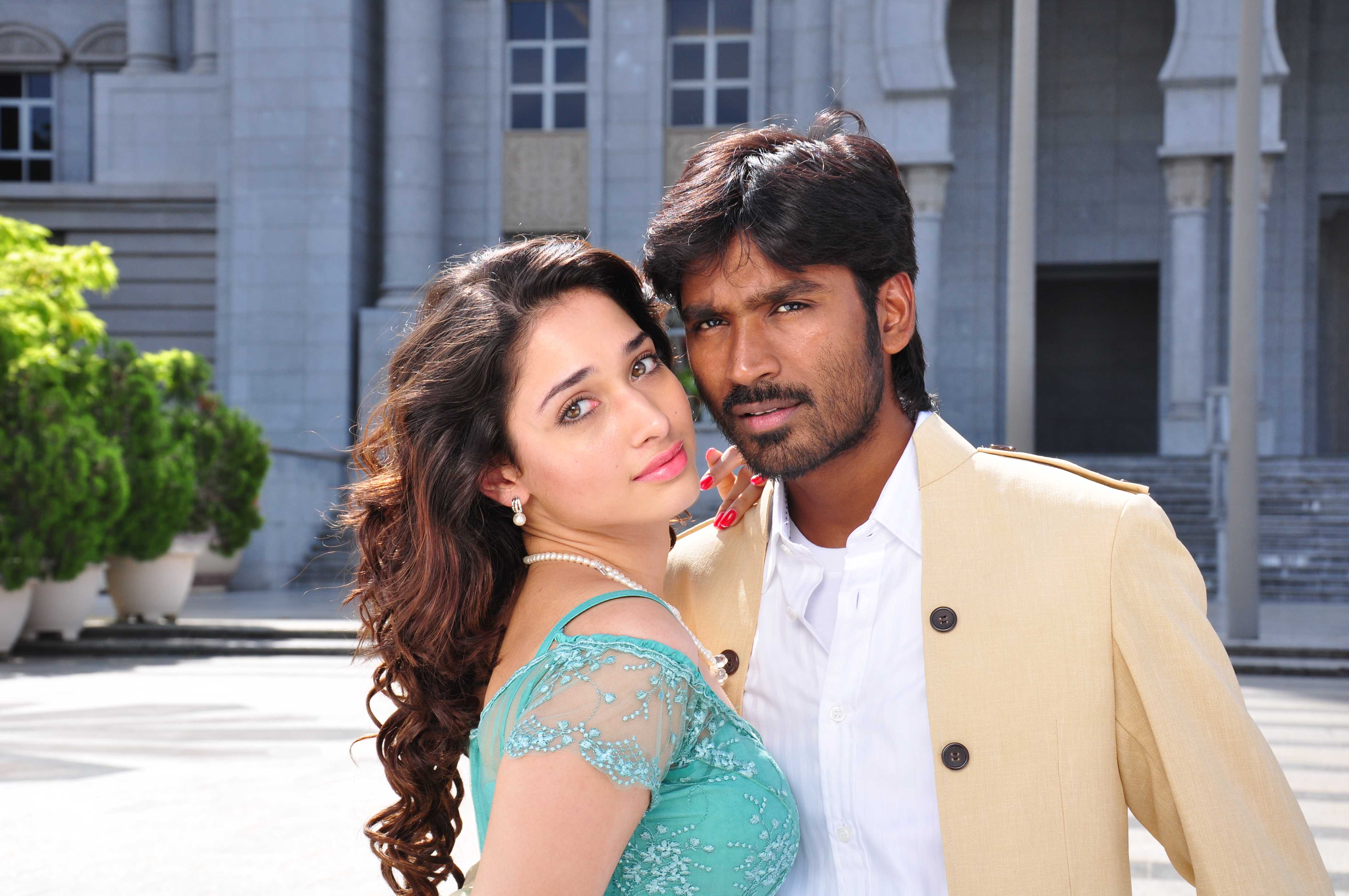
Although he should be safe enough working for his uncle, Selvam soon becomes involved in another stand-off between local gangsters in Trichy who also seem to have some connection back to Rajalingam. Once in Trichy, Selvam sees Radhika (Tamannaah), and exhibits amazing powers of memory and facial recognition as he realises she is a girl he used to know many years ago in school. As may be expected, Selvam falls in love with Radhika even although she wants nothing to do with him and spends most of her time trying to get rid of him. However, after a few song and dance routines in exotic locations, and watching him throughly beat the gangsters at her college, she starts to change her mind and reciprocate his feelings. There is more to her change of heart than first appears though, and it turns out that Radhika has her own private agenda involving Veera Pandi and needs Selvam to help achieve her goal. In the end Selvam has to deal with Radhika and the local thugs before he can attempt to put an end to Rajalingam’s plans to eliminate his father.

The story is a predictable hero against bad guys with added in love interest, which does have one advantage of making it easier to follow the story without subtitles. It works as an entertainer because of the excellent performances by the lead actors. Prakash Raj is fantastic as the corrupt politician and makes the most of his bad guy persona. He swaggers around, generally looking angry as he schemes his way to more power. I think it may be to make sure that we know he’s the villain, but Rajalingham sports a really unusual moustache with rounded ends. I apologize for the quality but this is the only picture I could find. I think you will agree that it makes quite a statement and is pretty spectacular. A couple of his henchmen have mo’s which match so I’m taking it as a method of recognition for the bad guys rather than a fashion statement, but it could very well be both.

Dhanush does a good job as the son trying to follow his father’s wishes but drawn into the fight despite his best efforts. He is excellent in the scenes with his father and although I have no idea what they are saying, the emotion comes through very well. Raj Kiran is also good as Veera Pandi and the two have some effective father-son moments. Less successful is the romance between Selvam and Radhika. Tamannaah’s performance is very flat in the first half and she really only comes to life in the songs. This makes the contrast much more obvious, as when the action switches back to the romance she loses all of the vivacity which makes her so attractive when dancing. In addition, there is no chemistry between the lead pair at all. Some of this is possibly due to Radhika’s initial reluctance to recognise Selvam, but it never gets any better and it’s hard to understand why Selvam would want to continue the relationship once her true motives are revealed. Tamannaah is better in the second half when there is more for her character to get her teeth into, but it is still a very lifeless performance from an actress who has been much better in a number of other films.

I really liked the sound track by Devi Sri Prasad when I first heard it, and the songs are generally well pictured, although the person responsible for Tamannaah’s outfits has a lot to answer for. The general brief seems to have been to make sure her navel is exposed at all times! Despite some of these questionable wardrobe choices Tamannaah does look beautiful and the songs are definitely the best parts of her performance. I do think it was a little strange to go to Malaysia and then stick to a few shots of buildings and bridges as the location isn’t terribly obvious and could really have been anywhere. However the best parts of this film for me are the locations in Trichy. I work near Trichy for a few weeks every year and really love the city. So when I see the Rock Fort Temple, main bus station and St Joseph’s college it’s as exciting as seeing my home town up on screen. Judging by the reaction there were a few people from Trichy in the crowd as well!

The fight scenes are generally well choreographed and although it’s rather unbelievable to see Selvam singlehandedly take out an entire gang of thugs, at least he does it with the help of machetes, posts, sticks and any other weapon that comes to hand. There is a probably unnecessary comedy track which features Ganja Karuppa as Selvam’s friend in Trichy. As usual I missed most of the comedy as it was in the dialogue, but the two actors play well off each other and the physical comedy was reasonably funny although it really doesn’t add anything to the story.

Although the film follows a very well used storyline, the journey to get to the inevitable showdown at the end is reasonably entertaining, thanks mainly to Prakash Raj  and his gang of merry men. Not a bad film but definitely could have been better.

Athu Oru Kanakalam

Athu Oru Kanakalam has all the right ingredients to be a good film, but despite an acclaimed director, an interesting storyline and impressive performances from the cast it doesn’t all come together as it should. The film begins by exploring the issues of class and the pressure of social expectation which is interesting and engaging, but then it loses direction after the interval and the end is basically a disappointment.

Srinivasan (Dhanush), nicknamed Cheenu, is the only child of middle class parents and spends his days lazing around with his friends after finishing his degree. He is lazy, spoilt and petulant seemingly as a result of his mother’s indulgence. His father Ganeshan (Delhi Ganesh) is a strict disciplinarian with a tendency to violent outbursts as he berates Cheenu for his apathy and lack of enthusiasm with job hunting. Cheenu insists that he is nothing like his father and is obviously afraid of him, but as we see when he is out with his friends, he has exactly the same violent temper and tendency to strike out when he is angry. Cheenu’s mother is sidelined throughout the film and rarely gets a chance to speak. Mostly she is helpless and unwilling to intervene between father and son.

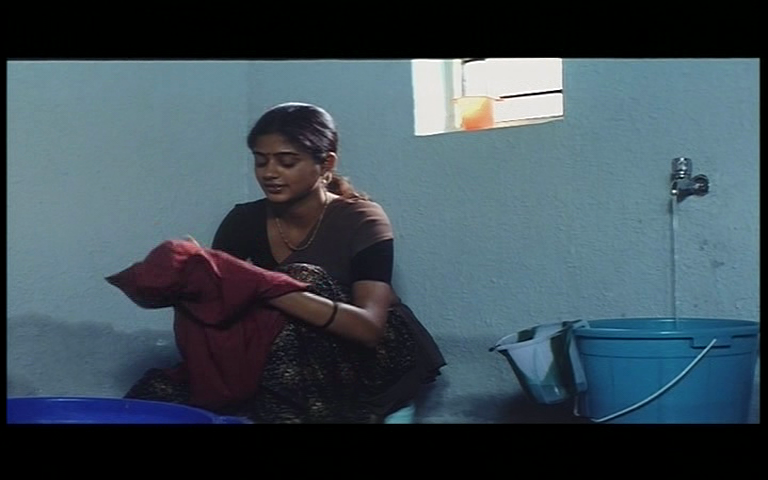
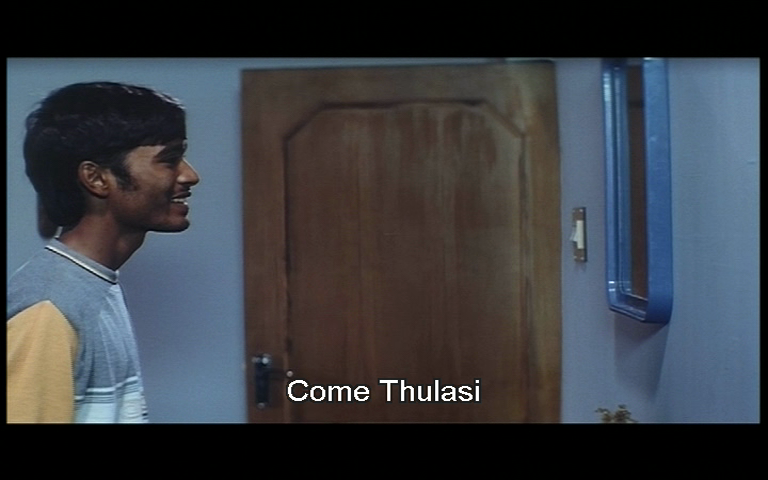
When his parents go away for a few weeks, the family maid Satya (Kalai Rani) is unwell and sends her daughter Thulasi (Priyamani) in her stead. Cheenu and Thulasi were friends as children and while Thulasi is obviously still attracted to Cheenu, he initially doesn’t recognise her. Although younger, Thulasi is more mature than Cheenu. She is also very aware of her social status and despite her attraction to him acts like any proper young servant girl should. On the other hand, he behaves like any typical young man when faced with a pretty girl, and his gauche reactions seem very natural.

In the space of the few days they have, they end up falling in love and into a committed relationship –this is the dream period of the film title. Balu Mahendra shows their romance developing in a song and doesn’t spend much time on it. It’s obvious they are in love and Cheenu is determined to marry Thulasi, we don’t need to know any more about it than that. This is a lovely song, and I’m sorry I can’t find a better quality version.

Cheenu tells his friends a little about his romance, but doesn’t introduce them to Thulasi and actually hides her in the bathroom when one of his friends visits. He seems ashamed of his relationship with a girl from a lower class. It’s hard to decide if this is also partly because he is trying to hide the relationship from his father as Cheenu is very well aware that he will not approve. The difficulties of an inter-class relationship are well explored and developed despite the initial romance not being given the same treatment, and the pair’s behaviour is realistic in this context. The development of Cheenu’s character here is convincing and Dhanush is believable as the young man realising that he will have to change his ways and actually get a job if he wants to marry against his family’s wishes. Priyamani is exuberant in her role as Cheenu’s lover and the change in her outlook as she realises the obstacles they have to face appears genuine and natural.

When Cheenu’s father does discover the relationship his reaction is predictable and dramatic, and Cheenu responds in kind. He vows to marry Thulasi despite the opposition from their respective families and the disapproval of his friends. It looks as if the romance may be the making of Cheenu but before he can follow through with his plans, he ends up in jail after a night out drinking with his friends.

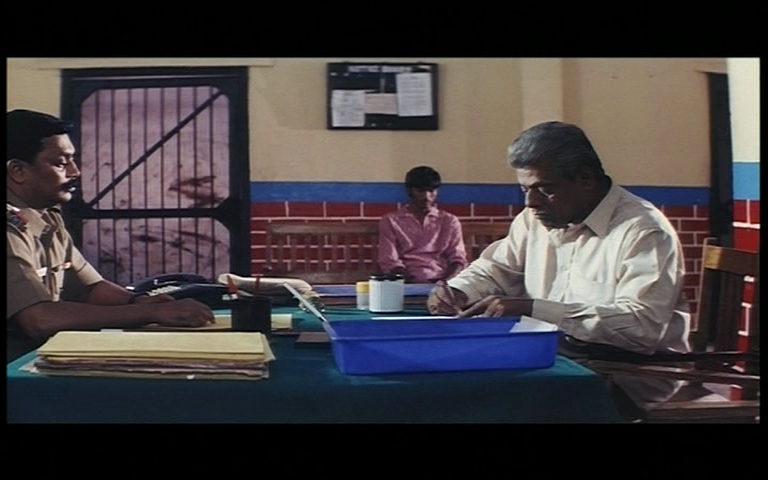
When Ganeshan decides to teach his son a lesson and leave him in jail overnight his plans go badly wrong as Cheenu kills another prisoner and consequently receives a prison sentence for murder. I like the fact that although the prison term is obviously a plot point to keep the lovers separated, there is a strong emphasis on the consequence of violent behaviour. Despite the death being an accident, Cheenu has to acknowledge the result of his action and although unapologetic, he accepts that he has to pay for his mistake.

From such a promising beginning, the second half of the film loses the realism that kept the story interesting. The director starts to rely on prison clichés with brutal film guards, sympathetic fellow prisoners and a fairly ridiculous fight scene. Naturally there is an opportunity for Cheenu to escape just when he has found out that Thulasi is in dire straits and he absolutely has to go to her. Another problem is that Thulasi’s role is greatly reduced and she only appears on screen to cry and plead with various policemen and prison guards. Priyamani is wasted in these scenes and although she does her best there is very little she can do to make her character less of a caricature. The end is particularly disappointing as the film seems to be building up to a dramatic conclusion that never actually happens.

Despite the issues I have with the second half of the film, there are some good points. Dhanush does an excellent job of conveying the fear and trepidation of a young naïve man sent to prison. Cheenu’s interactions with the other prisoners are an interesting contrast to his relationship with his father and despite the clichés the prison scenes never descend into farce. There are quite a few jokes referring to the skinniness of Dhanush throughout the film, and most of the humour has a light touch. It is also good to see intelligent police officers who don’t search aimlessly for an escaped prisoner but actually investigate and have a reasonable plan to capture Cheenu.

The music by Ilayaraja is beautiful and haunting but is used mainly as a way to show some of the story: the childhood friendship between Thulasi and Cheenu, their romance and Cheenu’s relationship with his mother. One exception is the first song which is a bizarre item number with nothing to do with the story. It is purely an excuse for a skin show from Tejashree with some rather lewd lyrics (even in subtitles) and the film would have been improved by its absence.

I was disappointed in this film. While it kept my interest and was perfectly watchable, mainly due to the lead actors performances, it should have been so much better. I enjoyed seeing two of my favourite actors together and they did have an onscreen chemistry which helped make the romance more believable. While the film succeeds in the most part to be realistic it would have benefitted from a tighter second half and a more exciting climax – but perhaps that wouldn’t have been as true to life. Then again, it may just be that I’m not used to a Tamil drama actually having a (nearly) happy ending!  3 ½ stars