100% Love

I was hoping that 100% Love would be closer to the Sukumar of Arya 2 (one of my favourite films) than of Jagadam (not a favourite). It wasn’t quite up to that high standard but I still found lots to enjoy including one of the more likeable heroine roles I’ve seen recently.

Chaitanya, son of legend Nagarjuna, is Balu. Balu is a top student, and seems to get his results by bullying the rest of his household into following a routine that works for him. He is arrogant, emotionally immature and sulky. He sneaks cigarettes, berates his fellow students (I can’t really call them his friends) and his world revolves around himself. His cousin Mahalakshmi (Tamannah) comes to stay at the family home and goes to the same college. Initially just a scatterbrained teenage girl she struggles with classes and with her new domestic routine. She has a crush on Balu and doesn’t trouble to hide it from him. Over the first half of the film, Mahalakshmi adopts a punishing study regime imposed by Balu and grows in confidence and ability. The pair become rivals for the top spot, and collude to stop Ajit (Anand) from stealing Balu’s number one ranking. The plotting and scheming means they grow closer. Their feelings are obvious – or is it just an infatuation that will pass?

The question of infatuation versus love is raised over and over, and both characters grapple with the change in their relationship. Mahalakshmi loves her cousin but she has to adjust to his demanding personality, while he seems to be taken aback by his rebellious hormones. Balu dismisses her as a little girl with a crush and doesn’t take his own feelings towards Maha seriously either. Balu cannot deal with anyone outdoing him, and needs constant reassurance that he and only he is the greatest. When Mahalakshmi fails to give him the adulation he wants, and even worse shows admiration for Ajit, he demands that she leave his family home. Post interval, the story shifts to what happens after this rift. Will they get back together or each marry a new partner? Will Balu ever grow up? Things get complicated, and the story gets a little more dramatic but this never strays very far from standard rom-com territory.

Balu is one dimensional for much of the film, but Chaitanya manages to be appealing, adding small flourishes that make Balu more human. However Balu is so self-centred and joyless that the more light hearted moments don’t always fit. Style wise he is a sharp dressed young man which at first seemed at odds with the character, but as a typical overachiever he dedicates himself to also being top ranked with the ladies. Chaitanya’s performance develops more texture as the relationship with Mahalakshmi also deepens and Balu’s emotional range broadens. When the pair have to work together to avert a crisis, Balu falls back into his childish behaviour and it is up to Mahalakshmi to shake some sense into him. Chaitanya worked hard to make foolish Balu more sympathetic in the second half of the story with flickers of facial expression, subtle reactions and changes in the way he looked at his cousin. He seems to lack the physical confidence to really dominate the dance and fight sequences so those scenes were adequate but not noteworthy. For some unknown reason there was a huge cheer in the theatre every time he lit up a cigarette. Strange!

Tamanna is excellent. She captured the energy and body language of the young girl and showed maturity and confidence as time passed and Mahalakshmi became a young woman. Unlike the boys in the theatre I was a bit tired of seeing her navel, but she did look beautiful. And the belly button scenes weren’t sleazy voyeuristic shots, but often formed part of Maha’s plan to unsettle Balu so were played quite knowingly.  Initially Maha’s mannerisms were irritating and affected but those decreased as she grew up, adapted to college and found her feet. Her portrayal of love for Balu was convincing and the dramatic scenes were high on emotion but not overdone. She was full of light hearted happiness in the beginning, so when things went off the rails there was more contrast for Tamanna to work with and she excelled. I’ve only seen her in a couple of films and was really impressed by this performance.

The comedy is mostly integral to the story and so occasionally it is even amusing. Chaitanya and Tamannah had nice timing and they bounced dialogue back and forth with great pace and energy. The audience laughed uproariously throughout some speeches. Comedy uncle (Dharmavarapu Subramanyam) is instantly recognisable by his terrible wig, and MS Narayan heads the college. There are running jokes throughout the film – if you can’t stand the sight of fried chicken this is not the film for you! Another running gag is a funny yet bittersweet Shah Rukh/Kajol joke. There are also six wisecracking kids learning to be geniuses from Balu. They aren’t terrible but I’m not a fan of the cutesy child artists for the most part. It takes an exceptional child actor, probably only Master Titoo in his purple ruffly outfit accessorised with Shashi Kapoor, to make me not long for the DVD fast forward. The supporting cast seemed fine, but I gave them minimum attention as I was concentrating on the dialogue heavy main story. The visual effects are frequently clumsy so I did find them underwhelming.

The songs range from average (Aho Balu) to quirky (A Squared) to excellent (Diyalo Diyala) and Devi Sri Prasad matches the mood and characters well. The choreography is limited for both the leads, with no long shots or protracted sequences. Chaitanya looked like he was concentrating very hard on some steps but he didn’t hold back. Maybe he should book a stint at Bunny Boot Camp before the next film? The ANR and NTR tribute song was short but fun. The execution of the dance steps could have been a little more polished, but Tamanna always looked like she was having a great time. The songs generally fit the story, apart from Diyalo Diyala which I think had the story written to fit it but that was such a good call.

I enjoyed 100% Love more than I expected to. Tamannah stole the show so if you want to see a light romantic comedy with an engaging heroine, this might be just the ticket.

Pournami

I’ve become quite fond of Prabhas. Not in a ‘he’s so hot‘ fangirly way. But he is likeable on screen and his presence in a film does seem to promise a commitment to entertainment.  Pournami is colourful, visually pleasing, sentimental and rather silly. Just what I have come to expect from Prabhas in fact!

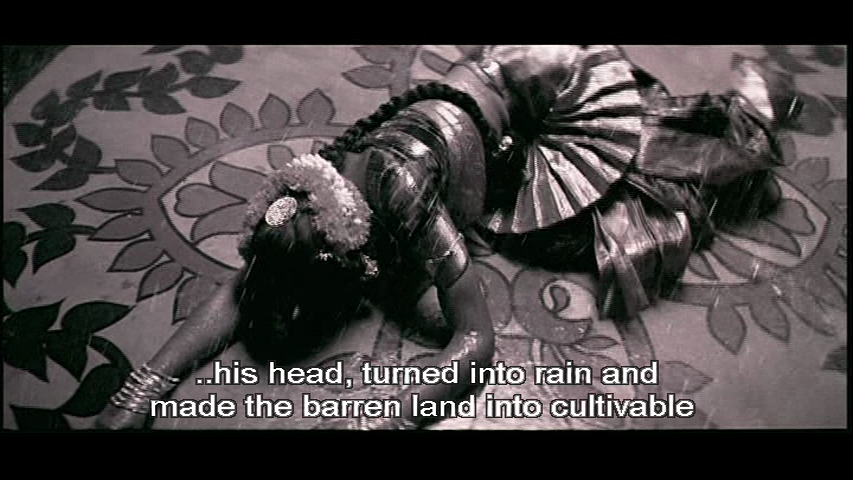
The film opens in 1953 and centres on a family with a long affiliation to a local temple. Many years back there had been a drought that threatened the livelihood of all in the surrounds. One woman had the strength and stamina to dance for Lord Shiva and was rewarded with rain. From that date, her family repeated this ritual every 12 years and her female descendants were trained to dance.

So it was a bit of a surprise to me that it all came as a surprise to the girls in the 1953 family that the eldest daughter, Pournami, was going to have to perform the ritual in 10 years time. Surely it might have rated a mention during dance lessons? Continuing the journey through time, we emerge in the 60s or thereabouts. Pournami has gone missing before the ritual must be performed. Her sister Chandrakala always wanted to dance but was overlooked. Chandrakala is now played by Charmme and she is reasonably convincing in the dance sequences. She is a Cinderella type figure – persecuted by her horrible stepmother, teased by local bullies and overlooked by many.

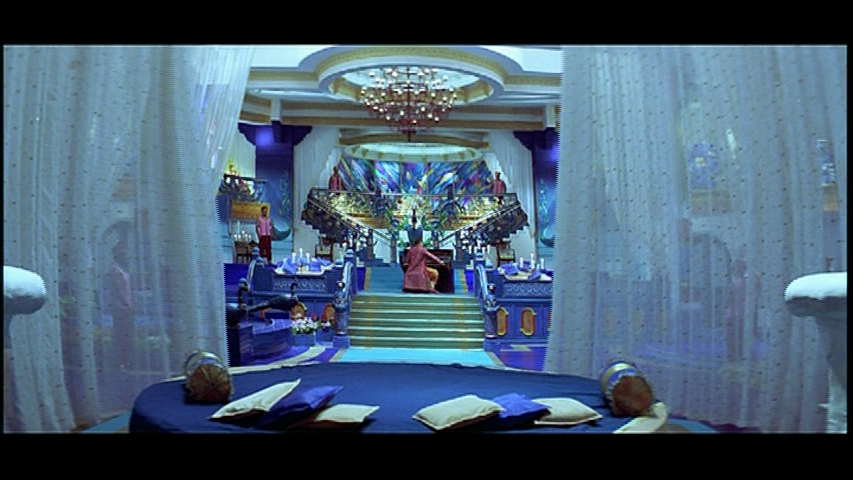
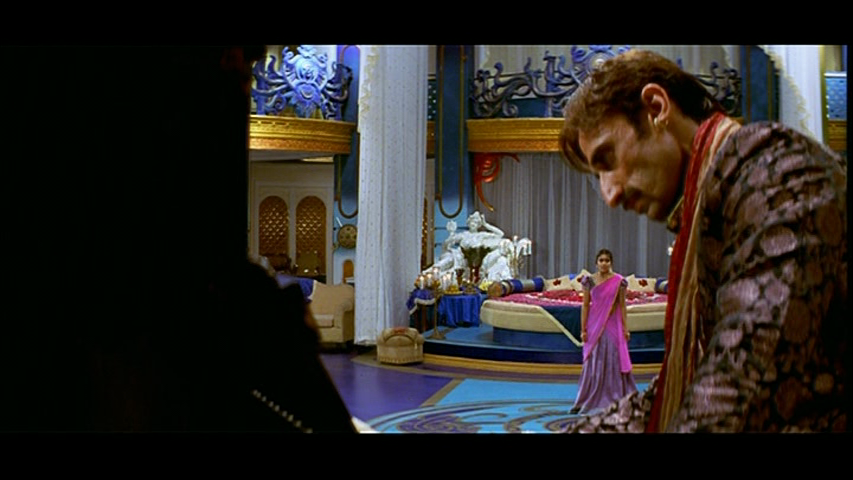
But where is the drama? Hello evil landlord! I do not in any way approve of evil landlords intent on deflowering young ladies who should be saving their strength to dance for Shiva. However, Rahul Dev has an excellent palace, a resident orchestra and generally believes himself to be a god or at least the equal of one. It is all highly entertaining. Pournami did a runner to avoid being kidnapped by Rahul Dev and he is now intent on claiming her sister.

But where’s the hero? Hello Prabhas in eye-catching plaid pants and rock n roll rebel attitude. Adding to the fun, we learn he is an ‘English Dance’ teacher, Sivakesava. Hmm…is that a Significant Name? Sivakesava rents room with Charmme’s family and opens his dance school.

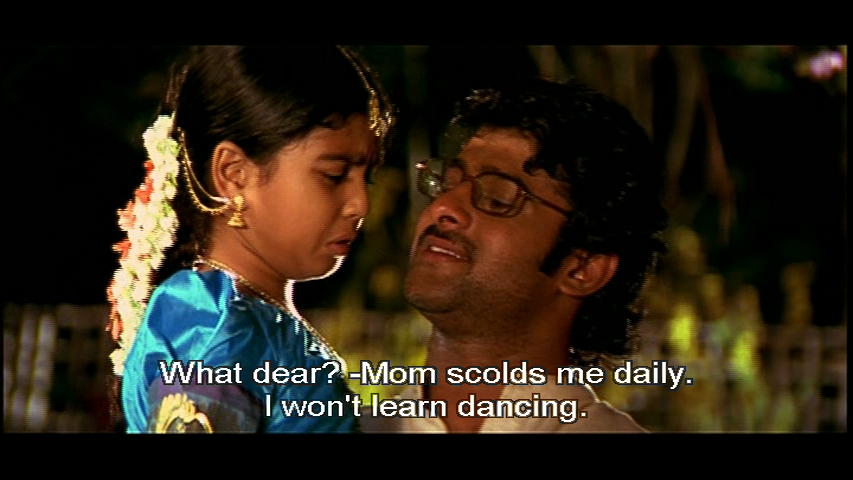
In between dance classes and dodging the local nymphomaniac, he encourages Charmme to dance, sometimes with quite amazing results. He seems to have mysterious powers over Chandrakala – little things like making her teeth glow in the dark and resisting her attack snake. But he uses his powers for good, and for fixing fuses, so we need not be alarmed on her behalf. I was amused by his gramophone – it’s just not rock n roll as I know it!

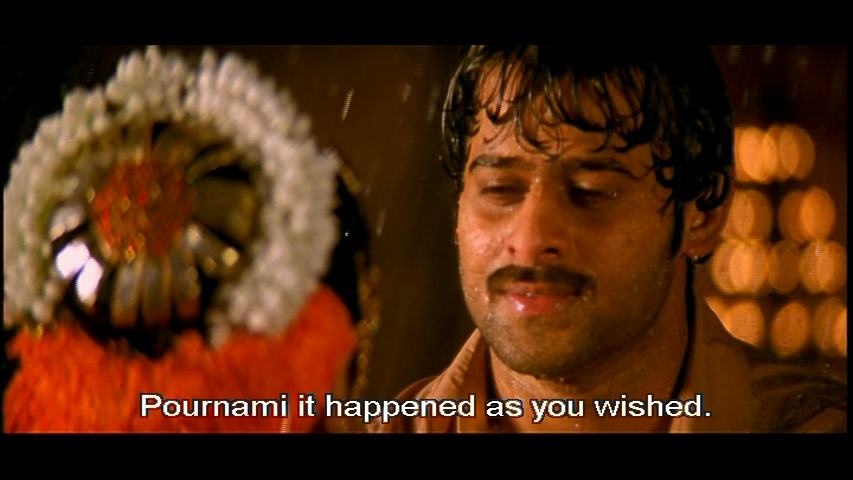
All the threads seem to be drawing together, but why? Who is Sivakesava and why is he intent on protecting the upcoming ritual? An extended flashback reveals that he met and fell in love with Pournami (played by Trisha) after she fled the village. She had joined a troupe of travelling performers, and her amazing dance talent, or perhaps her skimpy outfit, caught his eye. Pournami continues to practice her classical dance in her spare time. In a very pretty scene under the full moon, she gives ample evidence that the odds of pleasing Lord Shiva will be improved if she doesn’t dance for him.

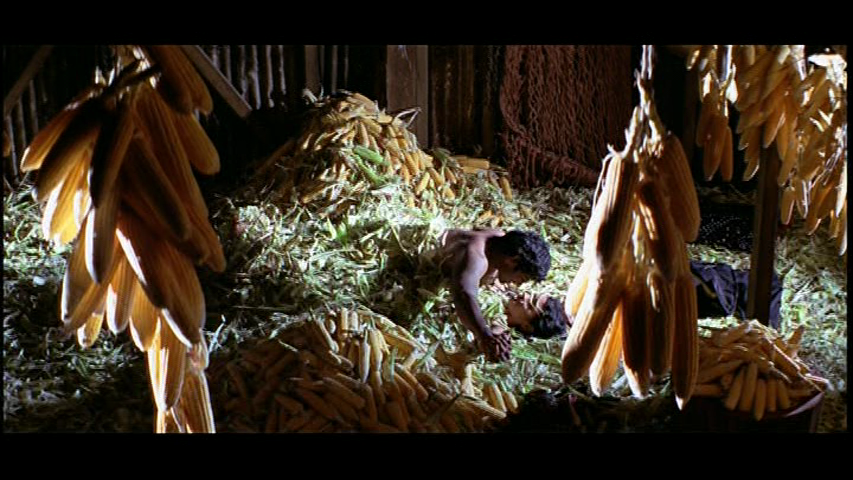
It turns out that Sivakesava was from a family who had a blood feud with the other big family in the region. He was sworn to avenge his brother and then would no doubt be hunted down in turn. Pournami became a victim in this feud, sacrificing herself to save her husband on their wedding night. The wedding night scene may mean I never look at corn in quite the same way ever again. Yes, that was corn with a c.

His past life continues to pursue him, never giving him a clear path to his heart’s desire or letting him subside into anonymity.

Chandrakala is abducted by Rahul Dev and he shows why he needs that piano and keeps an orchestra on standby. There is nothing funny about kidnap and rape in reality, but when the villain is improvising a melody to the tempo of Charmme’s footsteps it is very entertaining and adds to the cartoonish effect, as does his balletic fighting style. Naturally Kesava comes to her rescue again, and his actions cement her feelings for him.

Thus the other crucial episode unfolds – Kesava feels compelled to tell Chandrakala about his past with Pournami and why people from his old life, particularly his fiancée Mallika (Sindhu Tolani with a terrible hairdo), are still pursuing him. Chandrakala takes up the challenge to dance at the festival, motivated by love of her sister, of her father and for Kesava.

The finale at the temple is visually stunning and yet daft in equal measures. Which really sums up the whole film so it is perfect.

Although Pournami’s name and presence infuse the film, Trisha is overshadowed by Charmme and Prabhas. This is mostly due to the structure of the film – her story is told in isolation from the present time drama and we aren’t so involved in her relationships with anyone other than Sivakesava. In a film about dancers, Prabhu Deva gave Trisha some beautiful picturisations but her dancing was not as strong as Charmme’s and that aspect didn’t convince me. She looked lovely and her acting was as convincing as the role allowed. When Pournami appears to take over during the final dance it is shown as a way for everyone, including her spirit, to find closure. Trisha uses her very expressive face to communicate her sorrow and joy at this final encounter with her loved ones.

Charmme irritated me in the first half of the film, but I think she was meant to be a troubled teenager who was a bit bratty so I suppose that was a win. Her portrayal of a growing love for Sivakesava was done well, and I could see her puzzlement and annoyance turning to appreciation of the man who supported and protected her. She was a little tougher than your average filmi heroine, and her demonstrated snake wrangling skills make her more than a match for the average thug. Although the hero had to step in and help her finish the ritual, his help would have been for nothing if she hadn’t had the fortitude to keep going and stay focussed. Finally, she saves Kesava’s life and through that act wins the right to his future as his past finally lets go. I felt a bit sad for Chandrakala at the end as once again she will be the understudy for her sister, only this time in life.

Despite the story being ostensibly about the girls, this is a Prabhas film. He is at the centre of all the action and subplots, and once he arrives in town he is on screen for most of the film. He is convincing as both the kick arse hero and the misty eyed lover, and seems to have fun in the retro dance sequences. His relationship with both the heroines was played well, and there is a marked difference in his interaction with each of them. It’s a typically fun Prabhas performance. And his costumes… They make a statement all on their own.

The supporting cast were fine, with Rahul Dev, Brahmaji and Mukesh Rushi the standouts. Sunil is sweetly funny as Pournami’s brotherly friend and Ajay is reliable as a local thug. The soundtrack by Devi Sri Prasad is enjoyable and suits the story. Of course the songs are a visual delight as I expect from a Prabhu Deva film. The sets, the costumes, the locations are all beautiful and add a fairytale quality.

The film has a happy ever after ending, with signs of the new generation ready to maintain this lovely tradition. With any luck they’ll have a new landlord before the next festival!

See Pournami if you like the stars, plaid pants, excellent set design, pretty song picturisations and a dollop of overacting. I give this 3 and ½ stars.

Jagadam

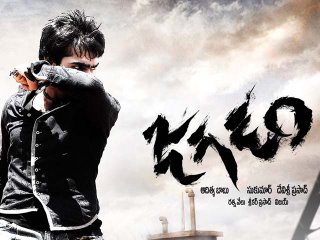
Ram’s second film, Jagadam, is a dark and violent gangster film and is certainly very different from his debut role in Devadasu. Supposedly loosely based on the Brazilian film City of God, it’s less an exposé of gangland life but purports to be a moralistic tale of the consequences of violence.

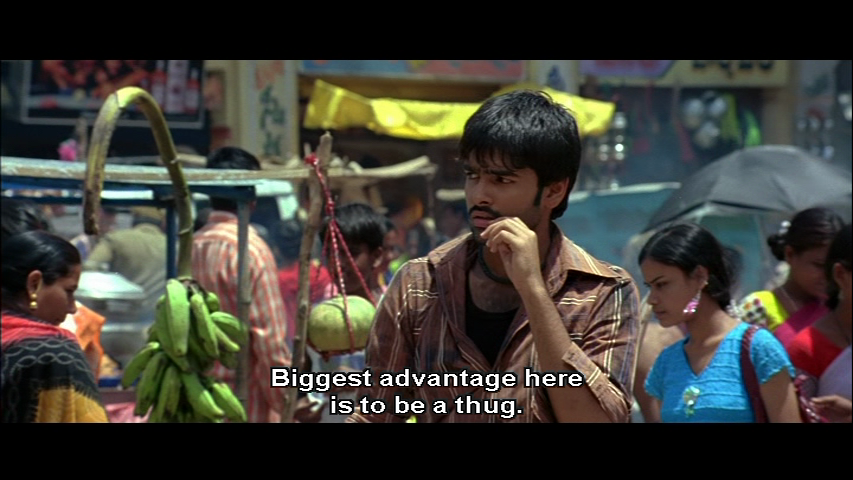
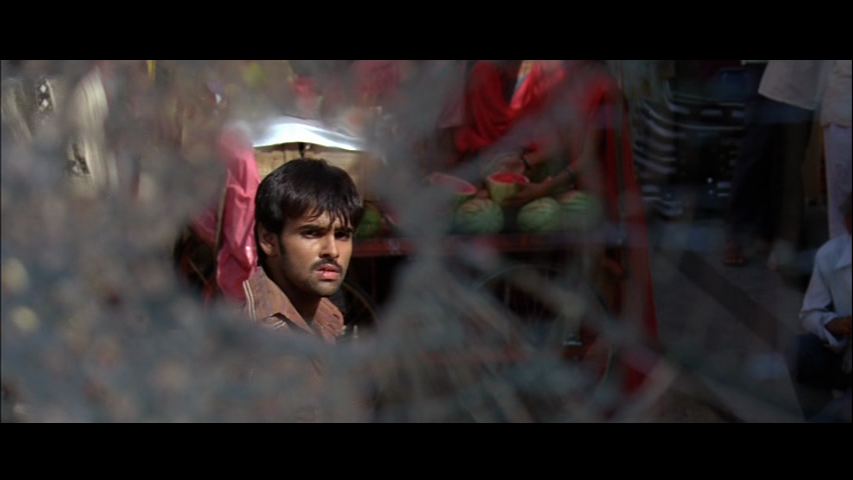
Ram plays Seenu, a wannabe rowdy who becomes fascinated by violence as a child.  Perhaps this is because the area around him is rife with thugs and petty crime, or maybe just because he is a rather warped child. The local community, including the corrupt police, both fear and revere the rowdies who control the area. Seenu dreams of becoming like his hero, the local Don, Manikyam (Pradeep Rawat).

Seenu has a talent for fighting which comes in handy as he works his way up the ranks from small time thugto head his own group of initially ineffectual youths.  His recklessness and lack of anything approaching common sense is amply demonstrated in one of the early scenes when his gang is outnumbered by a knife-wielding mob. Seenu is the only one who doesn’t retreat and ends up at the front of the group – the position that, in his eyes, makes him the leader. As such he is prepared to fight and of course, since he is the hero, wins against such impossible odds.

All of this is fairly normal gangster fare, but the film introduces some more interest in the character of Seenu’s younger brother Chinna. He idolises his brother and is fascinated by his knives and guns. The way in which this adulation is used to develop the story line in the later scenes is one of the strengths of the film, which otherwise is yet another blood soaked gangland war saga.

In the middle of Seenu’s rise to notoriety, he falls in love with Subbalakshmi (Isha Sahni). Subbalakshmi appears to be an intelligent girl; after all she is a Mahesh fan, albeit an obsessed one. Unfortunately director and writer Sukumar has given her every single characteristic we deplore in a filmi heroine. She is whiney, irritating and not just totally useless but an actual liability in a fight. She wears skimpy clothes when wandering round unsavoury areas at night. And as the final insult, Subbalakshmi tells Seenu that when a girl says no, she doesn’t actually mean it. At this point we were ready to slap her ourselves.

Why she falls in love with Seenu is a mystery as well, since he is totally inept in wooing her. He follows the usual stalker method and just assumes that since he likes her she will automatically love him back. Sadly, this does seem to be her only motivation, although perhaps his willingness to dress up in the latest Mahesh costume she bought for him was a factor. She also has an interesting, if not recommended technique for removing a foreign body from Seenu’s eye – hm!

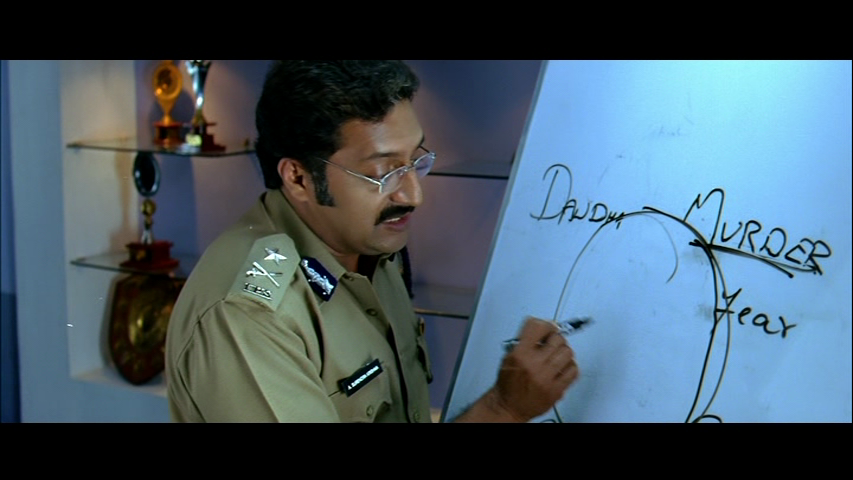
We do like that the intermission is called an interruption, but it does mark the point where the film starts to lose its way a little. Seenu eventually has a falling out with Manikyam and ends up crossing machetes with Manikyam’s source of political funding; the industrialist Yadav, slimily portrayed by Satya Prakash. The story is totally unbelievable at this point as the difference between the well equipped seasoned killers employed by Manikyam and Seenu’s youthful gang is ludicrous. However this doesn’t stop various members of the community approaching Seenu for his rather simplistic aid. Meanwhile Chinna has been avidly following his brother’s exploits and admiring his lifestyle, much in the same way that Seenu idolised Manikyam.  When finally Seenu heads off to kill Yadav, his younger brother wants to watch but events do not unfold as anyone anticipated. This does however mean that we get to see Prakash Raj in his familiar cop avatar expounding truth and justice and using a white board to illustrate the ‘cycle of violence’.

Ram plays the cocky and arrogant character of Seenu with ease. He manages to bring enough of his chirpy ‘boy next door’ persona to the rather dark role and makes Seenu a more sympathetic character despite his arrogance and obsession with violence. Seenu’s friends are from the usual pool of young actors, and in the main they manage to bring some individuality to their various characters. Pradeep Rawat is good in his fairly small role as Manikyam, and gives his scenes some badly needed menace. Ravikumar Chowdary also turns in a convincing performance as Ladanna in the first half, but disappears towards the end of the film. Ragubabu and Saranya are rather wasted as Seenu’s parents and Satya Prakash has very little to do in his role as Yadav. Isha tries, but her character has few redeeming features so she has to settle for pouting and crying in equal measures.

The music by Devi Sri Prasad is fine but not particularly memorable. Ram is a good dancer and the choreographer has utilised his skills well in the songs. We are happy to see that he shows plenty of commitment to the chicken step and is not afraid to dance while totally covered in mud. It’s always good to see this level of dedication even if it doesn’t totally make sense.

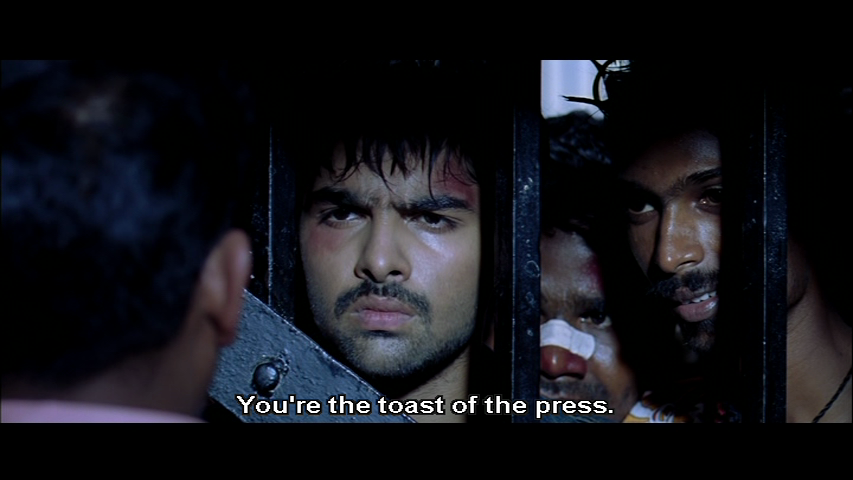
Overall the film doesn’t succeed as an edgy drama, nor does it succeed in its supposed anti-violence message . The moralistic tone at the end fails since it doesn’t seem as if Seenu will ever have to pay for his actions. Within the cycle of violence there is a sense that Seenu could stop any time he wants to, but at heart he is still that kid fascinated by killing. While it starts as an interesting attempt and is worth a watch for Ram’s performance, the film ultimately fails to rise above the standard gangland shoot ‘em up fare.

Heather says: Jagadam tries to be different and send a message about the inevitable consequences of violence. It just doesn’t succeed, as the story still glorifies aggression and shows that a life of crime gets you the girl, plenty of money and adulation from your peers. Take away the gang fights and there is really very little of substance left. The romance is just uninteresting and there is no chemistry between Seenu and Subbalakshmi. I really didn’t care about the couple at all and thought it detracted from what could have been a much edgier drama. Ram’s performance is what makes this watchable and I think he does an excellent job of showing the arrogance and sense of indestructibility that many young people display. His anguish at the end as he realizes the price he has had to pay for his lifestyle is well portrayed and believable. But then it’s promptly diluted by the horrific fight scene immediately afterwards. The sympathy shown by the police chief is at odds to the rest of the film as well, although it does fit better with the pacifist message that seems to have been intended. I’m professionally qualified to say that the best way to remove a foreign body from an eye is not to lick it. Be warned – saliva and eyes should never come into contact! Overall the film just fails to be anything other than average, so it gets 3 stars from me.

Temple says: This is 2 and a bit hours of ‘meh’. Once again, it seems the message the film is supposed to contain is not the message I get;  it glorifies violence, showing it to be the solution to many problems and the province of heroes. I know Seenu loses people he cares about but, as he hasn’t developed any sense throughout the film, there doesn’t seem much hope for character transformation despite a scene supposed to convince us of his redemption. Prakash Raj made the most of his character and opportunities but clearly his whiteboard was wasted on the director! Ram is quite memorable, partly because of his likeable presence, but mostly because of his annoyingly asymmetrical shirts. I don’t think contrast piping and looking like you’ve got your buttons done up wrong is really going to strike fear into your enemies or impress the ladies, but the costume designer had other ideas. Despite a handful of scenes that were strong and sometimes moving, the film just wasn’t grim enough to make the violence angle feel real and wasn’t entertaining enough for it to be a good popcorn film. The overt statement of the anti-violence message was at odds with the implied approval of the hero’s character and decisions. It just didn’t get the balance of light and dark right for my tastes. I give it 2 and 1/2 stars, mostly because despite seeing it twice now I can’t recall much outstanding or noteworthy apart from Ram, those shirts, and the eyeball licking scene. And that’s probably not a recommendation.