Jagadeka Veeruni Katha

Jagadeka Veeruni Katha

Jagadeka Veeruni Katha (1961) is a sumptuous fantasy drama directed and produced by K.V Reddy. It stars NTR with B Saroja Devi, L Vijayalakshmi, Jayanthi and Bala as the love interests, is loaded with songs and is beautiful to look at. It’s also around 3 hours long, clearly made for a time when a more meandering pace was appreciated.
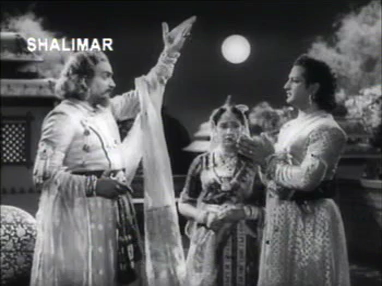
Jagadeka-Veeruni-Katha-Pratap and parents

The plot can be loosely described as follows. Prince Pratap (NTR) defies his parents and leaves the kingdom in search of love. His dream women are the devakanyas who represent the elements of Air, Water, Fire and…Snakes. Indra Kumari (B Saroja Devi), Nagini (L Vijayalakshmi), Varuna Kumari (Jayanthi) and Agni Kumari (Bala) like to bathe in a decorative pond, gossiping and singing the day away. Pratap finds them, but in return for his unwanted attention Indra Kumari turns him into a statue. Pratap’s mother goes into devotional overdrive and Parvathi (Kannamba) answers her plea. Pratap is restored to his princely self and Parvathi gives him the tip-off that if he stole Indra Kumari’s clothes, she would be stranded on earth and have to marry him. Marriage duly accomplished, he sets off with new wife and newly acquired best friend Rendu Chintalu (Relangi) to a neighbouring kingdom.

Jagadeka-Veeruni-Katha-ThreesokananduJagadeka-Veeruni-Katha-Men in drag

Threesokanadu (Rajanala Kaleswara Rao) is a petulant brat of a ruler and wants whatever he can’t have, including Indra Kumari. Devising numerous ploys to send her husband off on missions to Nagalokam and elsewhere, all he succeeds in is getting the remaining devakanyas hitched to Pratap. I don’t know why he thought dressing in a saree would help his cause. Relangi and Ekasa (Girija) have a comedy subplot in which they thwart the king’s plans and generally bicker.
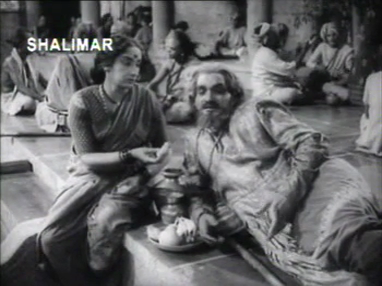
Jagadeka-Veeruni-Katha-hard times

Meanwhile, back in Pratap’s home his brother has conspired to overthrow the Maharaju and Maharani (Mukkamala Krishnamurthy and Rushyendramani), who are now living on the streets. Eventually they get wind of Pratap’s whereabouts and a tearful reunion is on the cards. The devakanyas trick their mother-in-law and get Indra Kumari’s saree back and leave for the heavens.

Jagadeka-Veeruni-Katha-wild with griefJagadeka-Veeruni-Katha-change of heart

Pratap goes wild with grief and the ladies seem to miss him too. Indra and the other lords of various heavens test Pratap and eventually he gets his wives back. Happy days.
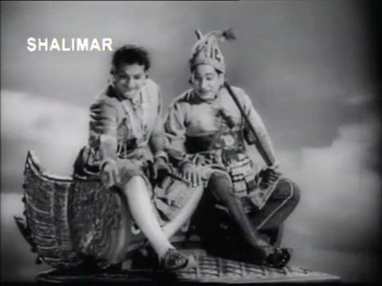
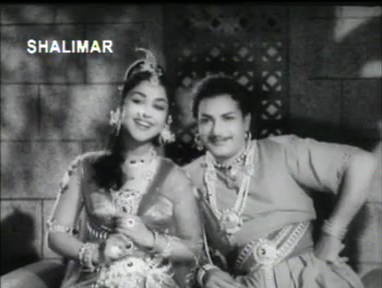
Jagadeka-Veeruni-Katha-NTR and RelangiJagadeka-Veeruni-Katha-NTR and Saroja Devi

It’s NTR’s film from go to whoa and he could do this kind of role in his sleep. Pratap is the perfect prince and goes from swooning to swashbuckling in the blink of an eye. He gets all the big speeches and a couple of key songs, and NTR dominates all his scenes. He always has a nice rapport with Relangi, and I liked them together as they showed the more human side of Pratap with a bit of humour.  Relangi’s character gets to do some useful and sensible things in amongst all his comedy bumbling too.

B Saroja Devi is the leading lady and does get the majority of screen time, but her character is not really developed beyond being designated as a heavenly beauty. The warmth in her interactions with the other devakanyas, and her chemistry with NTR is largely drawn from her own performance and not the script as far as I could tell.

Jagadeka-Veeruni-Katha-Indra Kumari and NaginiJagadeka-Veeruni-Katha-Pratap and Indra Kumari

One of my favourite filmi dancers L Vijayalakshmi gets a little bit of dialogue and a few not very snakey dances, but the other wives are not given a lot to do in the story. They all look stunning in their sparkly costumes, and I found their scenes together more lively than the ones where they had to stand around simpering at Pratap.

Given the heavenly origins of the leading ladies and the divine interference by Parvathi, there is lots of scope for special effects and magical plot developments. The devakanyas all have distinctive modes of arriving at their bathing spot. Nagini turns into a snake when her mood sours.

And faced with the demands of multiple wives, Pratap is magically cloned so he can spend quality time with his spouses.

Comedy demons perform a range of useful services, including transforming into a flying divan. Pratap is changed at different times into a statue and a baby. Aside from Marcus Bartley’s stunning camerawork with his trademark moonlit scenes, I was struck yet again by the skilful use of the limited 1960s technology to create some really effective illusions. There’s nothing that would fool today’s CGI savvy audience, but the sequences are creative and are perfect for the fable of a prince on a quest.
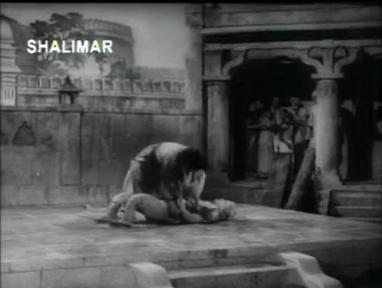
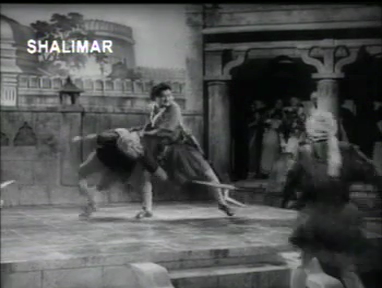
Jagadeka-Veeruni-Katha-lifelike rag doll 1Jagadeka-Veeruni-Katha-lifelike rag doll 2

Except maybe not the rag doll dummy used in some fight scenes.

The music by Pendyala Nageswara Rao is lovely and it feels like someone breaks into song every few minutes. The only character who does much by way of dancing is L Vijayalakshmi as Nagini. When Pratap arrives in her kingdom, this is how he is greeted.

And there are some lovely duets as well as more devotional songs.

The set design is lavish with all the intricate decorative motifs I’ve come to expect from this era and genre, including fabulous animal themed furniture and fittings. Plus some excellent work from the hat department. The film is available without subs on YouTube. I’ve also managed to track down an unsubtitled VCD, but the picture quality is poor. I can only imagine what it might have been like with a decent print and sound. Really Telugu film industry – get your act together and do something about these classics!

Considering so many things happen in this film, it’s almost remarkable how few of the incidents are essential to the plot. But if you can spare the time for a rambling adventure with a charming cast, gorgeous music, and beautiful visual design this is a sheer pleasure. 4 stars! (A small deduction for general crappiness of the print, irritatingly big watermark on that crappy print, and because comedy demons are to fantasy films what comedy uncles are to modern movies – a plague and a pox.)
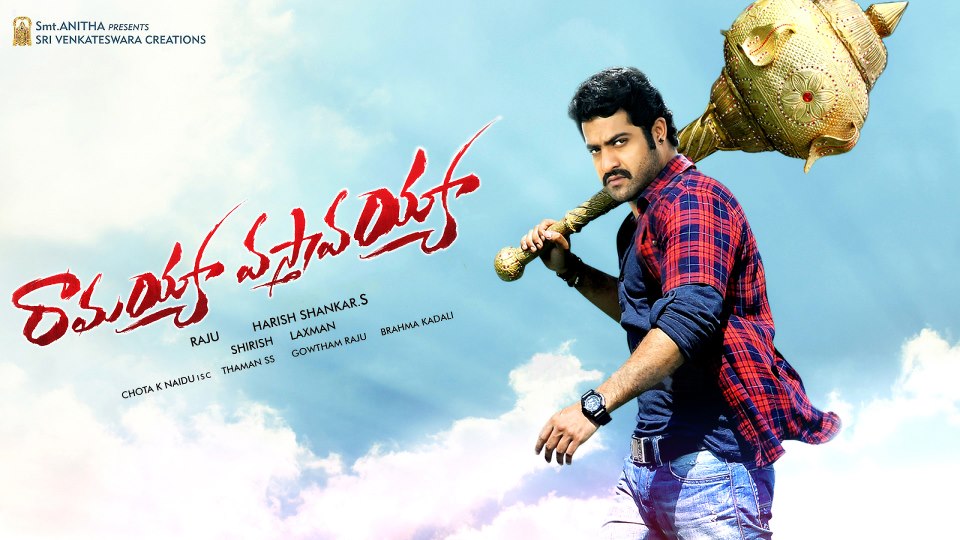
Ramayya Vastavayya (2013)

Ramayya Vasthavayya

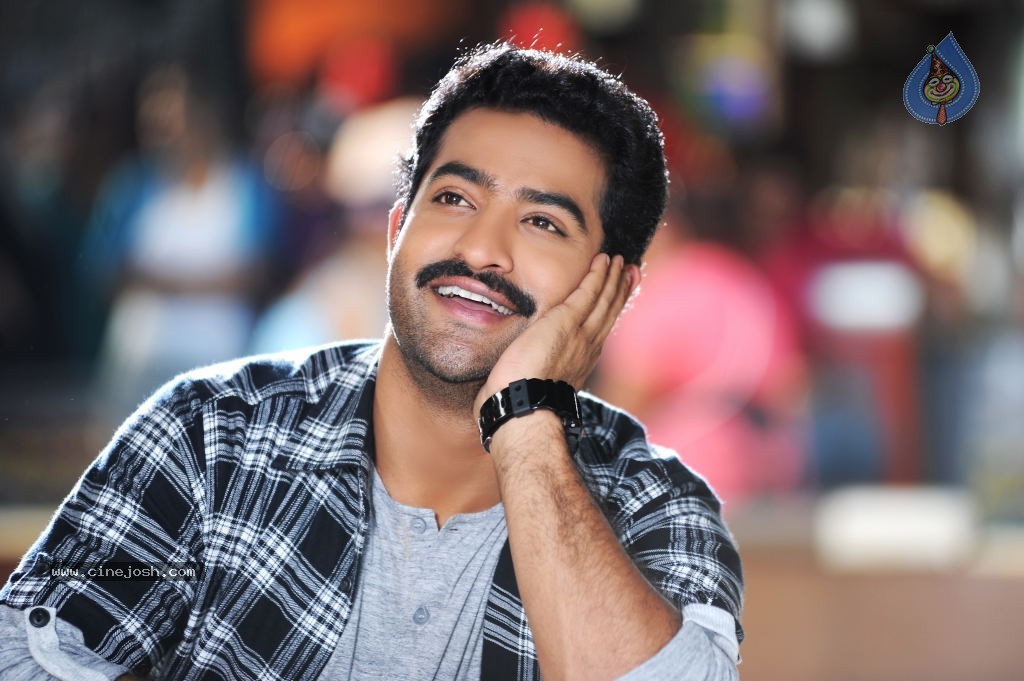
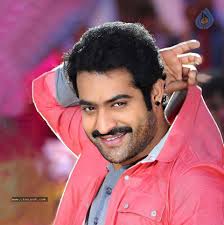
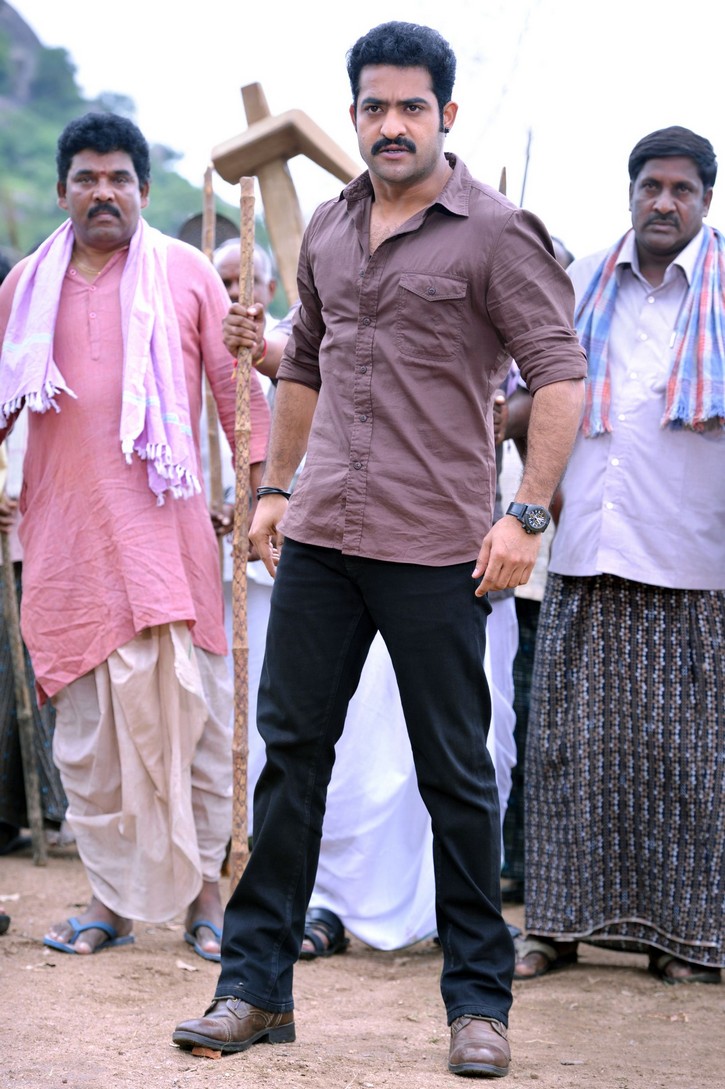
It seems like a very long time since the last NTR Jr. film and since I read some speculation about Tarak’s ‘new look’ I was interested to see exactly what Harish Shankar had come up with.  However the ‘new look’ is really just the old look, except for the odd moment on horseback which I admit was pretty cool.  And there were some groovy new shades.  But otherwise Ramayya Vastavayya sticks to the same old formula with the usual faces reprising roles they have played a million times before. Ultimately not even the actors seem to be able to rustle up much enthusiasm and although Tarak and Samantha both work hard and deliver good performances, the film is still let down by the clichéd storyline and stereotypical characters.

Ramayya VasthavayyaRamayya VasthavayyaRamayya Vasthavayya


The first half of the film is generally entertaining since it focuses on the developing romance between Nandu (NTR Jr) and Akshara (Samantha).  The romance aspect was perhaps enhanced by the fans behind throwing rose petals along with the usual strips of paper, but at least it made for a pleasingly more fragrant trip back to the old Chinatown cinemas in Melbourne.  As I’ve come to expect (yawn), Nanu sees Akshara one day while hanging out with his buddies at a coffee shop and falls instantly in love.  Akshara is not quite so sure and the ensuing comedy as Nandu tries to win her heart with a variety of schemes is amusing enough to overcome the usual discomfort of the’ stalking = true love’ theme.  

 Ramayya VasthavayyaRamayya Vasthavayya

Rohini Hattangadi pops up as an aunt of some sort to Akshara and her older sister and although her role is small and fairly gratuitous she still steals the limelight every time she appears.Presumably to appeal to a wider audience, there are numerous references back to classic films, the most blatant being Tarak’s entry scene.  Most of these are fairly obvious and seem contrived to ‘fit’ into the storyline, and I’m sure there are more that I missed (hopefully more subtle) by not understanding the dialogue.  

Samantha looks gorgeous and there is only one attempt by the notorious Telugu shoe designer to make her look ridiculous so I’m presuming she must be a favourite with wardrobe.  However, Akshara is a standard Telugu heroine, whose only purpose is to make the hero look good and is otherwise completely one dimensional, which seems a complete waste of Samantha’s talents. Still, she does get to dance and there is good chemsitry between Samantha and NTR Jr. which makes their interactions more enjoyable to watch.

Tarak’s Nandu seems a fairly typical hero – there are the requisite commanding dialogues laced with a modicum of modesty and comedy, excellent dancing skills and the ability to defeat numerous opponents by the mere flexing of a muscle or two accompanied by a snarling grimace.  As always, Tarak delivers exactly what is expected of him with plenty of animation and charisma, but since he’s playing the same character he has played in his last few films it feels stale and completely predictable.  The only really up side are the songs which feature better than usual choreography and excellent dancing from both Tarak and the backing dancers.  I loved the addition of spectacles as part of the costumes for one of the songs and the music by S. Thaman was generally catchy and effective, and at least better than the recent crop of new releases.

Ramayya Vasthavayya

After the interval, Nandu moves on from bouncing people off wall, floors and sundry items of furniture to hacking people apart with increasingly bloodier and even more poorly choreographed fight scenes.  I’m not sure who is responsible for the action for Ramayya Vastavayya, but they seem to have taken inspiration from episodes of Tom and Jerry rather than anything that remotely resembles a feasible fight scenario.  The gore content rises but it’s so ridiculous that even the various severing of limbs has little impact, particularly since the fights are so obviously staged and formulaic to begin with.

Ramayya Vasthavayya

The second half also moves the action to the countryside for Akshara’s sister’s wedding and attempts to explain the antipathy between Akshara’s father Nagabhushanam (Mukesh Rishi) and two assassins (Ajay – yay!) who tried to kill him at the beginning of the film.  This involves a lengthy flashback with Shruti Haasan as Nandu’s previous fiancée Amullu, but it’s dull, overlong and Shruti and NTR Jr. have absolutely zero chemistry together.  To make matters worse, P. Ravi Shankar appears as a stereotypical evil and lecherous politician with mannerisms straight out of the ‘Villains for Dummies’ handbook and, inevitably, Kota Srinivasa Rao appears as his equally evil father. Doesn’t he ever get tired of playing the same role?  Adding to the stereotypes, Tanikella Bharani appears as Amullu’s father, Saranya Ponvannan as her mother and M.S. Narayan briefly appears in a throwaway role which adds absolutely nothing to the plot.  Harish Shankar tries to evoke American crime shows by tying together moments from the first half with explanations later in the film, but it looks clumsy and is generally ineffective.

Ramayya VasthavayyaRamayya Vasthavayya

Ramayya Vastavayya disappointingly doesn’t cover any new ground and Harish Shankar sticks to a very well-worn formula without adding anything novel.  With such a tired screenplay and an abrupt change of pace in the second half, it’s really only the songs that appeal despite generally good performances from the actors.  NTR Jr. is as good as ever, but even with his energy and the appeal of two heroines Ramayya Vasthavayya is really a film solely for the fans.  Still, it’s worth watching at least once for the dancing, which is excellent and much better than the film deserves.

Chattaniki Kallu Levu

Chattaniki Kallu Levu poster

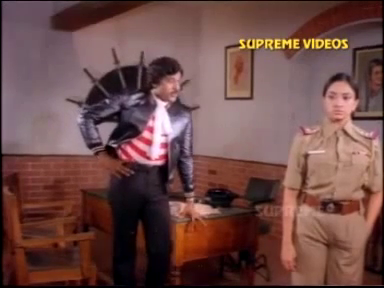
Chiranjeevi and Lakshmi star as siblings out for vengeance against the three men who killed their father and older sister and tortured the rest of the family. Durga (Lakshmi) grows up to be a police inspector, while Vijay (Chiru) takes a more DIY approach to justice. It’s not a ground-breaking story but I liked that director S.A. Chandrasekhar kept the focus on social justice and how different laws apply to different people.

Chattaniki Kallu Levu-gravesChattaniki Kallu Levu-oath

After making an entrance swearing vengeance by two graves, Chiranjeevi is quite low key for much of the film as he only has one job. Vijay is pretty much on task for the revenge all through the story, and even his romance with Rekha (Madhavi) ties into that main plot thread. He is extremely self confident and never seems to question whether his is the right path. He often undermines his sister’s career and that seems to be OK with his mother. Vijay has no discernable occupation other than being the hero so I was a bit impatient with his attitude to Durga, but they are both obsessed with getting their own idea of justice.

Chattaniki Kallu Levu-LakshmiChattaniki Kallu Levu-interior design

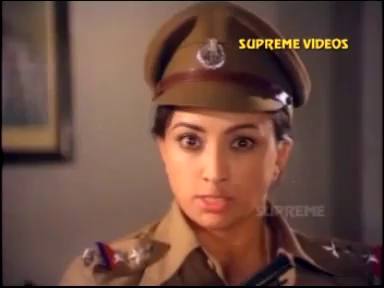
Lakshmi is Durga, a police inspector who demands that the legal system provide justice for her. She is an interesting character as she has a lot of the same traits as Vijay – the confidence, the belief that hers is the only righteous way, and putting her priority (the law) ahead of her sibling. Lakshmi mostly has to scowl and shout, occasionally breaking the routine with a bit of shock horror or a rare smile. It’s not a complex performance but I admired the strength of her character and liked that she didn’t resort to getting shrill or calling her brother for help. She took everyone on and believed she could win.

Chattaniki Kallu Levu-family

The long suffering Ma (Pandari Bai) is often caught between her bolshie children and just seems to want a quiet life after all the death and mayhem.

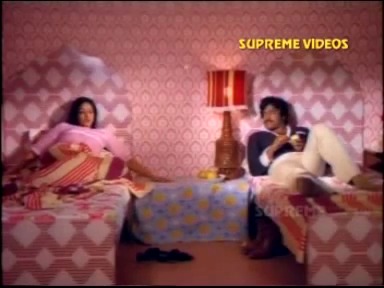
Chattaniki Kallu Levu-Vijay and DurgaChattaniki Kallu Levu-the kids room

Maybe she should have given them separate bedrooms. Or less seizure-inducing décor.

Chattaniki Kallu Levu-Rekha at workChattaniki Kallu Levu-Madhavi off duty

Madhavi is the nightclub dancer Rekha, and being an adventure without subtitles I think I missed the explanation about how she ended up at the cabaret. She lived with her father or maybe uncle, and seemed to have a clear delineation between work and home life.

She certainly didn’t tolerate anyone treating her as a whore and was quick to threaten any disrespect with a chappal. Madhavi and Chiru have nice rapport and I liked that Vijay seemed to accept Rekha without the need to tell her off about her situation or blame her for being a skanky item dancer. Durga doesn’t like Rekha and clearly thinks she is no better than she ought to be. The tension between the two women mostly originates in Durga’s judgemental nature. Rekha seems quite content with her lot, and is happy to abet Vijay as he realises the man who abducted and attacked her is the man with coke bottle glasses who helped kill his father.

Chattaniki Kallu Levu-the killers

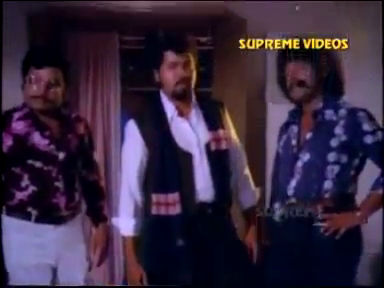
There are a few surprises in the plot, mostly in Vijay’s elaborate execution set-ups. He recognises his intended victims by some very odd idiosyncrasies, and uses their weaknesses. I am not sure exactly why John (Hemasundar) the very short sighted guy had pigeons, a dog and – horror of horrors – a scrawny kitten let loose in his apartment before being sent into traffic minus his glasses. I suppose it made a change from generic biffo. Janardhan (Ceylon Manohar) had a revolting habit of flicking cigar ash into his glass and drinking it, so he deserved to die just for that. But Vijay got him so drunk he was easily dealt with. I also liked that his obliging corpse would shuffle around in the bathtub to make sure it was in shot as required. The third killer Javed (Kannada Prabhakar) was a serial rapist and murderous villain, so again no need to feel conflicted over his imminent demise. The thing I found most intriguing was the unresolved conflict between Vijay and Durga. She was unapologetic and disapproving to the end, with no sign of the usual capitulation to the man of the family.

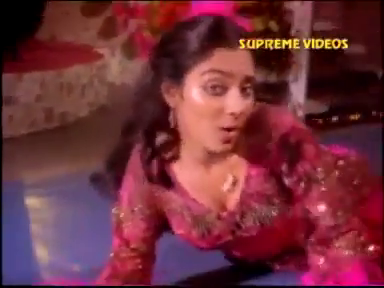
Vijay and Durga get almost equal screen time, but he gets most of the songs. Not saying that is a good thing, but I do like a bit of sequinned revenge disco, especially with disguises. Even with the, er, décor at this classy (?!) establishment.

The title song is set over a montage of contrasts between the rich and poor. And a cat and (dead) rodent. I’m used to seeing lots of chickens or rabbits in Telugu films but this one is more cat centric.

Now can anyone tell me, was 1981 a big year for the zipper in Indian fashion? Madhavi is abducted by one of the baddies and he gleefully has at her multi-zippered playsuit. Chiru sports a very peculiar onesie with feature zippers that is not exactly flattering to the stockier gentleman.

And he wears many very disappointing beige outfits, often with extensive sweat marks that seem to indicate a bit too much synthetic fibre.

The fight scenes are numerous and very energetic. There is a vague martial arts flavour to some of the fight choreography and no prop survived unscathed.

The film also uses a lot of stills montages – particularly for the final courtroom scene. I guess they ran out of Chiru hours and just decided to wing it. It works well enough, and I did find the lawyers posturing highly amusing.

Probably a film for the Chiranjeevi completists, I still found a few things that were unusual or interesting enough that I’ve been thinking about the movie for a while. So many Telugu films locate justice outside of the legal system but the sibling dynamic was an interesting lens through which to view the different perspectives. Chiru, Lakshmi and Madhavi are accomplished and deliver strong characterisations and a range of emotions. It’s not a masterpiece but it’s a good example of Chiranjeevi’s vigilante style hero that became such a trademark. 3 ½ stars!

Chattaniki Kallu Levu-Chiru