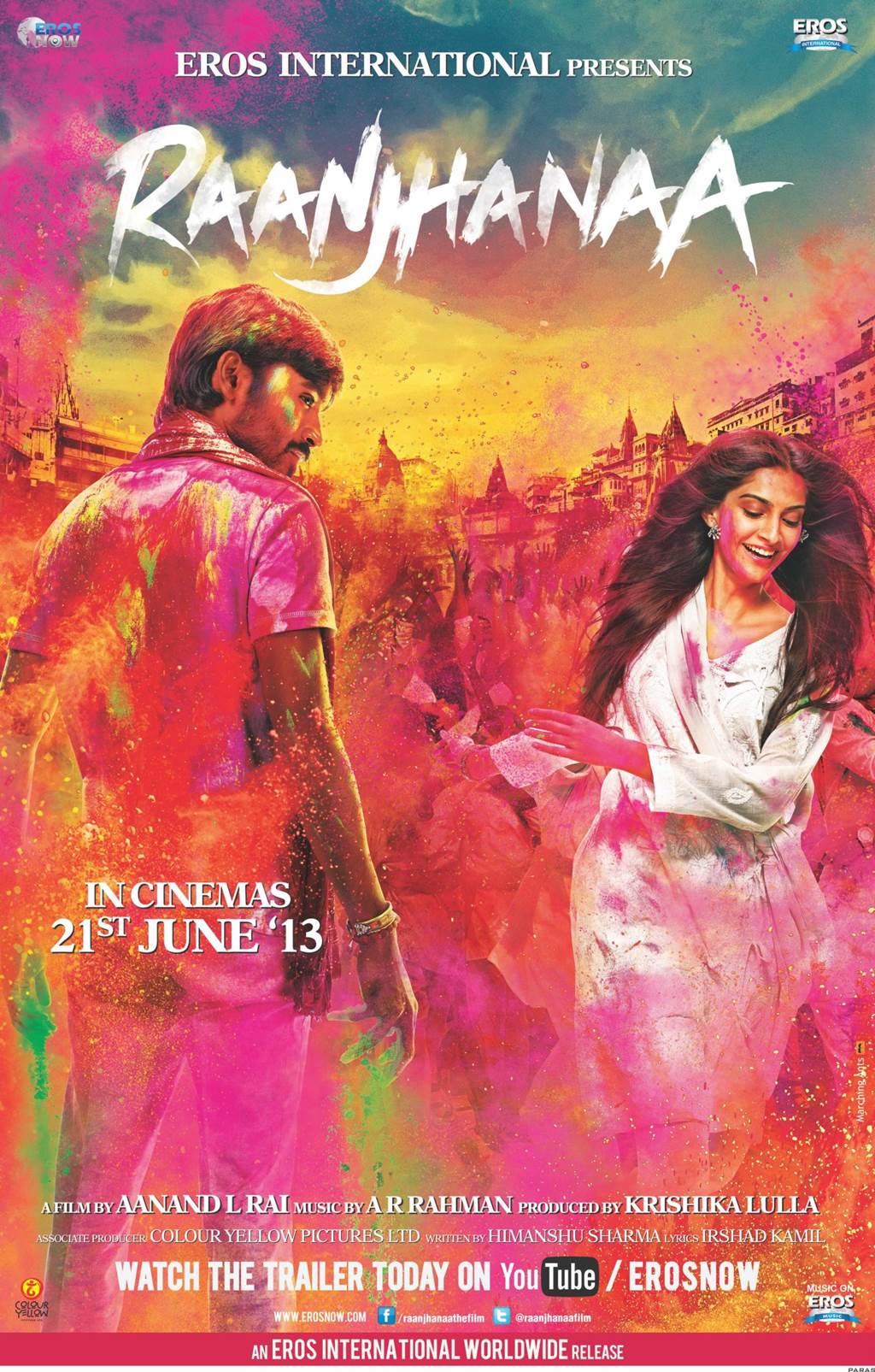
Raanjhanaa (2013)

Raanjhanaa

Raanjhanaa is not a conventional love story, and its two protagonists are not particularly likeable people, but their very human failings do make it possible to understand their mistakes.  Despite their flaws I wanted their love story to succeed even as it seemed destined to fail. Dhanush never fails to impress with his acting but I was apprehensive about his co-star Sonam Kapoor since I’ve yet to see a convincing performance from her – and I still haven’t.  But to be fair, Zoya’s self-absorption is integral to her character, so Sonam’s wooden and lifeless performance actually suits her character for a large part of the film. However Dhanush more than makes up for Sonam’s rather laboured performance and the support cast are all excellent, making Raanjhanaa a better film than reading Himanshu Sharma’s screenplay would suggest.

Young KundanTeenage Kundan


The film opens with a group of child artists playing the roles of Kundan and his friends.  The kids are charming and in a few short moments they define their characters perfectly, so that each further development makes sense given these childhood traits.  Kundan falls in love with Zoya the very first time he sees her, despite the fact that she is Muslim, he is Hindu, and he’s only about 8 years old. His adoration at first sight develops into a full blown obsession by the time Kundan reaches his teens and his first stumbling attempts to tell the object of his affection how he feels are cringe-worthily appropriate for the ‘stalking = love’ concept that Indian cinema seems to prefer.
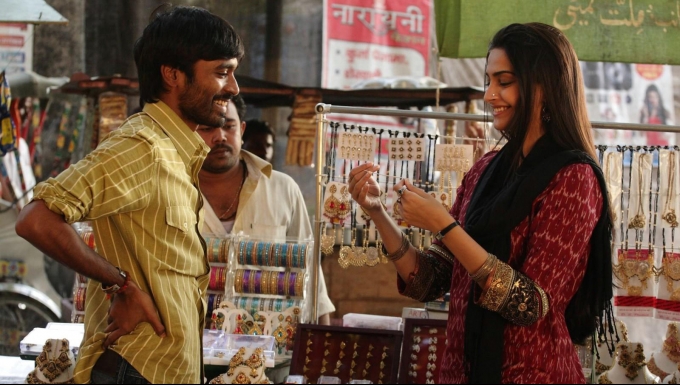
Kundan and Zoya

I’m always amazed at how Dhanush manages to transform himself into a young teenager so effortlessly, appearing suitably gauche and naïve against Sonam Kapoor’s rather clunky attempt at adolescence.  She lacks the vitality that made Shruti Hasan more believable as a teenager in 3, but there is some chemistry between the two actors which helps make the budding romance more credible.  Unfortunately at this point there is the first of too many scenes which involve slashing wrists as a way to prove true love.  It’s one of the things I particularly dislike since suicide as a plot device seems dangerous and irresponsible,  especially considering the statistics on youth suicide in almost every country in the world.  I can cope with the stalking, since Zoya definitely encourages Kundan (and I’ve been through the South Indian Cinema Induction Program) but I feel the wrist slashing is just inappropriate.

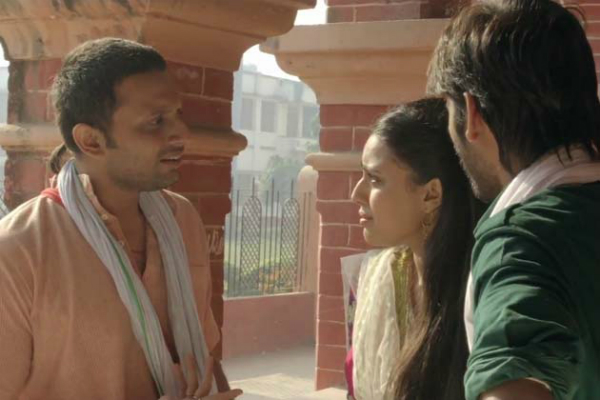
Kundan and MurariRaanjhanaa


The separation of the young lovers follows along fairly predictable lines, but what adds interest is the rival obsession shown by Bindiya (Swara Bhaskar) for Kundan.  Swara Bhaskar is excellent as the girl so obsessed with marrying Kundan that she will do absolutely anything to get his attention. She really deserves to win the guy just for her devotion and ability to put up with Kundan and his best friend Murari (Mohammed Zeeshan Ayyub), but at the same time it’s obvious that Kundan would be a horribly abusive husband.  Swara Bhaskar is full of vitality and energy and lights up the screen whenever she appears which is in stark contrast to Sonam Kapoor’s rather bland Zoya. Mohammed Ayyub is also well cast and does a good job as Kundan’s friend alternating between egging him on, and trying (usually unsuccessfully) to restrain his more dramatic impulses.

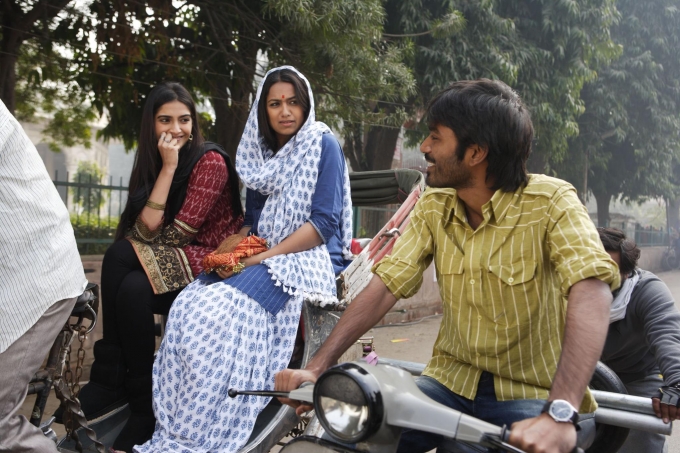
Abhay Deol plays Akram, a student activist angling for election to government and the third member of the love triangle.   While Abhay plays his part well he seems too old to be a convincing student leader, even one who is seriously considering a political career. Still, he does seem to have more to offer than Kundan, as demonstrated by the difference in their respective modes of transport.
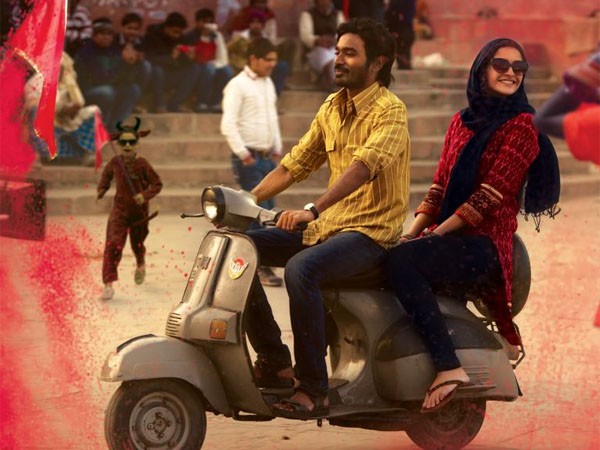
Kundan and Zoya scooterZoya and Abhay motorbike


The story seems to lose its way in the second half as the love story gives way to the political campaign and there are a few too many contrived filmi coincidences as Kundan moves out of Benares and into Zoya’s world.  But the changes in both Zoya and Kundan as their circumstances alter are well depicted and the consequences of their actions are shown to be greater than they could ever have imagined. As a teenager, Kundan’s every emotion is clearly visible on his face and his body language also transmits his feelings at every turn.  With the transition to adulthood he becomes more restrained until by the end of the film Kundan is expert at concealing his true feelings and doesn’t allow any of his emotions to colour his conversation with Zoya.  It’s a fantastic performance from Dhanush and director Anand Rai has drawn out every nuance in his character’s behaviour.

Raanjhanaa

After the first few scenes in childhood Sonam Kapoor keeps her stunned indifference expression throughout, but it is apt for Zoya’s personality so it does tend to work. She looks beautiful, but there is too much style and not enough substance in Zoya, particularly compared with Bindiya and even Akam’s sister Rashmi (Shilpi Marwaha).
RaanjhanaaZoya


The music by A. R. Rahman fits perfectly and the dance sequences are well placed in the narrative and generally help to carry the story forward.  Benares looks like almost any other city in North India until there are shots of the river, and then it’s suddenly magical as Natarajan Subramaniam and Vishal Sinha bring the city to life with their cinematography. It’s an impressive debut for Dhanush in Hindi cinema, and he does well with the language too (at least as far as my inexpert ear can tell).  Worth watching for a role that seems to have been made for Sonam Kapoor, an excellent performance from Dhanush and from the rest of the cast and a rather different view of “love”.

Jab Tak Hai Jaan

Jab Tak Haai Jaan is a slow, deliberate romance with lush visuals, improbable events and attractive people that persist in their beliefs long after a period of reflection and reconsideration is warranted. A typical Yash Raj film in many respects, with the notion that love is all you need, it sheds some of the YRF dated coyness when exploring a modern romantic relationship. Maybe it’s affection for the Yash Raj heyday or sadness for the recent passing of Yash Chopra, but despite some issues with the story, I found the style appealing and almost timeless.

Shah Rukh Khan is Samar Anand, an introverted bomb disposal expert who chases after death. Katrina Kaif is his first love, Meera, a rich girl caught between being dutiful and being happy. Anushka Sharma is Akira, the ambitious young journalist who stumbles across Samar and decides his story must be told. Samar’s early romance is revealed via a diary Akira finds. I really liked the way the plot was constructed initially but when the love stories intersect Aditya Chopra unleashes all the daft medical and action plot twists he could fit on what was left of the post-it note he wrote the screenplay on. But until that all started to unravel, I was caught up in wondering how it would be resolved and who would get the happily ever after ending.

In some respects Shah Rukh was more convincing as 28 year old livewire Samar than Katrina was as his 21 year old girlfriend. That is less evident in stills so I ascribe that more to his energy and performance than just makeup and styling. Samar was too good to be true as he navigated life in London and juggled multiple menial jobs, being everyone’s friend. But the floppy-haired puppy enthusiasm was punctuated with some sarcasm and smoulder that gave him more bite. Shah Rukh’s dancing in Ishq Shava exposed his weakness in current dance styles. I thought it could have been choreographed and shot better to support the illusion of his youth.

The 38 year old Samar in 2012 was a different man, and I could see why a bright young girl like Akira would be attracted to him. He was worlds away from her usual flighty boyfriends and had an intensity that matched her own drive. The stubble, rougher haircut and a more determined physicality made soldier Samar a more daunting and attractive presence. He portrayed the transition of a man in love from the first flush of hope to the cold anger of a passion denied. The romantic scenes between Meera and Samar are quite frank and acknowledge the physical relationship without being sleazy. There were many opportunities for Shah Rukh to overact and he took very few of them. Samar is a perfectly unreal hero but Shah Rukh puts the heart in his character.

Katrina was disappointing after some good performances in recent films, and lacked warmth and expression. I could understand Meera’s character but rarely felt much for her. Meera and Samar were very convincing as the newly in love who imagine they are too cute for words but are actually a bit sickening to everyone around them. They lived in a bubble of romantic fantasy. Katrina as the 10 years older Meera was more effective as her reserved demeanour and greater fabric to skin ratio gave her more substance. Her decision making was still flaky and for someone who is supposed to have such a strong religious affiliation her lying to Samar was questionable. I was raised a Catholic so the idea of giving up something to show God you meant business is quite familiar. While I don’t share the belief I could recognise it as something people I know do as a matter of course. Only not to such a filmi extreme.

Anushka was let down by some truly stupid behaviour by her character but leaving that aside, her acting was excellent. Her warmth and rapport with SRK was lovely. They had some nice scenes talking about love and what it meant to them, and a believable affection developed between Akira and Samar. She spends time following Samar about on his work – defusing bombs! as if! – and of course she falls for him. Akira was a modern city girl with a career on her mind and not a chiffon sari in sight. I did wish she would wear more appropriate clothes in some scenes as she seemed to live in micro-shorts regardless of climate or custom. Mind you, Anushka has the legs for it. As the ‘other woman’ corner of the triangle, Anushka gave Akira a real sense of possibility, of being a viable alternative to the past love in Samar’s life. She spoke up for what she wanted in life and love.

The final section of the film is loaded with so much improbable melodrama and outright WTFery that the love story is swamped. I don’t want to get too spoilery but can anyone imagine a scenario in which a suspected bomb is found in London and a brown skinned man muttering about Semtex and fuses is allowed to casually wander in and assist the police? The drama could have been heightened without all the silliness and sidetracks.

The supporting cast occupy so little of the story that if you don’t take to the Big 3, there is little respite. Rishi and Neetu play small but important roles, and Akira has a fun fanclub of soldiers in the Bomb Disposal Squad. Anupam Kher is mercifully restrained as Meera’s dad.

The scenery in Ladakh and Kashmir is superb and one of the reasons I would recommend a big screen viewing of this film. London is presented as a beautiful and slightly magical city, the perfect backdrop for a fairytale love. There are nods to YRF classics that enhance the vintage filmi mood and it’s all a bit dreamlike.

Musically this is a bit disappointing but I think that is more to do with the placement and the picturisations than the actual songs by AR Rahman. Saans is reprised several times (happy as I am to gaze at SRK in a wet t shirt, or less) and Heer was a non-event. There is little dancing, and what there is lacks good choreography (or suitable dancers). I just don’t think a ra-ra skirt or a silly hat compensates for not doing the steps justice.

I must be getting nostalgic in my old age. Despite all the faults I found much to sink into and enjoy in Jab Tak Hai Jaan. See it for a charismatic and committed performance from Shah Rukh, the bright and beautiful Anushka and the lavish visuals. Do stay for the tribute to Yash Chopra over the closing credits.

Heather says: I’m a Shahrukh fan, so of course I was going to enjoy Jab Tak Hai Jaan no matter how ridiculous the plot, but what surprised me was just how much I absolutely loved it! Sure, there were problems with the story, mainly due to the dodgy medicine and bomb defusing Temple mentioned, but Yash Chopra really did have a gift for displaying human emotions and portraying love as a grand and enduring passion without forgetting that love can also be small, petty and selfish. The classic Yash Chopra motifs are here; a love triangle of sorts, separation and sacrifice and that’s what makes it come together so well for me.  Of course it helps that Shahrukh was back on form with effortless transitions between the happy and jovial Samar during his relationship with Meera and the more silent, reflective and stoic soldier when he meets Akira. The little flashbacks to his previous character with the occasional joke work perfectly and his chemistry with Anushka was great.  Not so with Katrina who was stiff and wooden despite the promise of the earlier scenes.  I don’t think either her styling or the character helped, but she just wasn’t convincing as Meera and she’s another actress I’ve added to my ‘must not be allowed to cry in a film’ list!  Anushka on the other hand was scintillating and looked incredibly beautiful. Her life and energy was infectious and her part of the story (apart from some dodgy Discovery Channel moments) worked very well.

As Temple says, the film looks magnificent is worth watching for the scenes in Ladakh and Kashmir alone. But more than that, there are solid performances and a return to classic Bollywood romance that can’t help but enchant. Sadly it is the end of an era, but with Jab Tak Hai Jaan, Yash Chopra has proved that he really was the ‘King of Romance”.

Sivaji (2007)

Sivaji is a wonderfully over-the-top film celebrating all things Rajinikanth. There are references to the superstar’s previous films and to his own life, plenty of classic Rajni style and he’s present in almost every frame. Sivaji also features stunning sets for the songs and a myriad of different looks for Rajinikanth throughout the film. While the story has an interesting plot involving corruption, the screenplay gets somewhat tangled in the numerous set-ups to introduce the next song or fight scene.  But in the face of so much else that is fantastic, the disjointed nature of the story doesn’t seem to matter. When the first song is as much fun as this, then the film is already a winner for me. This features Nayantara in a cameo role along with an incredible number of  men with round, jiggling painted bellies – I love it!

The film opens with Sivaji returning from the USA with truck-loads of money and deciding to set up a University and Hospital where everything will be available to the poor for free. His grand plans are opposed by local businessman Adisheshan (Suman) who blocks him at every turn. To make Sivaji’s life more difficult there is the practice of bribes and kick-backs that seems to be built in to the system at every stage. Despite his unwillingness to play along, Sivaji has no choice but to fall in line and pay everyone off if he wants to get his hospital and university built. I’m quite sure that all these people in yellow hats were the inspiration for minions in Despicable Me – or at least they should have been.

Ultimately this works to Adisheshan’s advantage when he contrives to have Sivaji arrested and charged in court. There Sivaji admits that he paid bribes to get permission to build and ends up losing everything. This might have been the end of the Sivaji foundation, but Adisheshan is the one person in Tamil Nadu who has no idea who he’s really dealing with and he rashly mocks his defeated enemy.  This sparks Sivaji’s quest for revenge, and the 1 rupee coin Adisheshan tosses at him to start his begging career becomes a talisman and also funds the start of the fight back. Sivaji devises a cunning plan to restore his finances and bring about Adisheshan’s downfall at the same time.

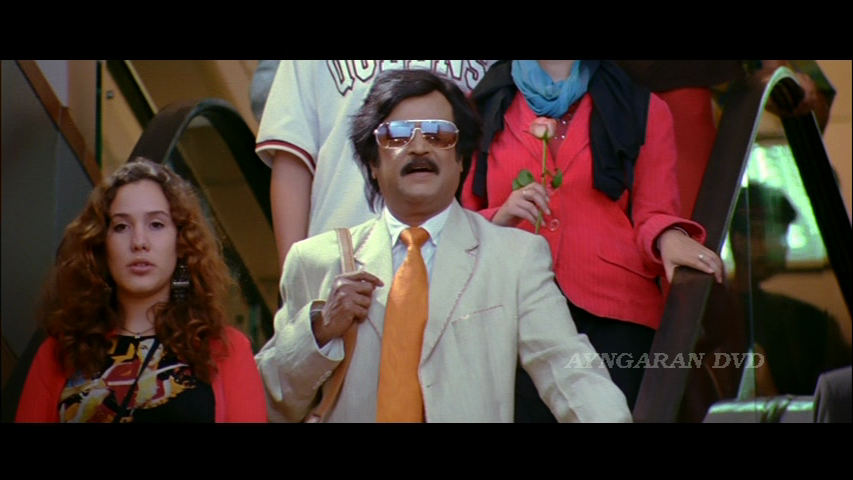
Rajinikanth is truly in his element here as the crusading Sivaji. He still has his trademark tricks, but this new  health conscious Sivaji spruiks the ‘cigarettes are bad for you’ message, catching mints and tossing his sunglasses instead of cigarettes. It’s all a little contrived, but the tricks are so much a part of any Rajni film that Sivaji would seem incomplete without them. There areplenty of fight scenes, and these are well choreographed by Peter Hein. The final showdown features some Matrix style action and Rajinikanth pulls it off with great style. If he has slowed down a little in some of the fight scenes and songs, well, that’s understandable but it’s barely noticeable. As well as the romantic songs, there is a fabulous sequence where Rajinikanth impersonates Sivaji Ganesan, MGR and Kamal Hassan and he gets really gets the mannerisms of the different stars very well.

During the course of his crusade against corruption, Sivaji meets and falls in love with Tamizhselvi (Shriya) and despite her family’s initial reluctance and dire predictions of disaster from the priest, the two go ahead and get married. Thankfully Shriya is much less annoying than usual, perhaps because she is totally overshadowed by Rajinikanth, but I stand by my previous observations that the more clothes she wears the less irritating she is. Her main raison d’être here is to look pretty in the songs which she does very well.

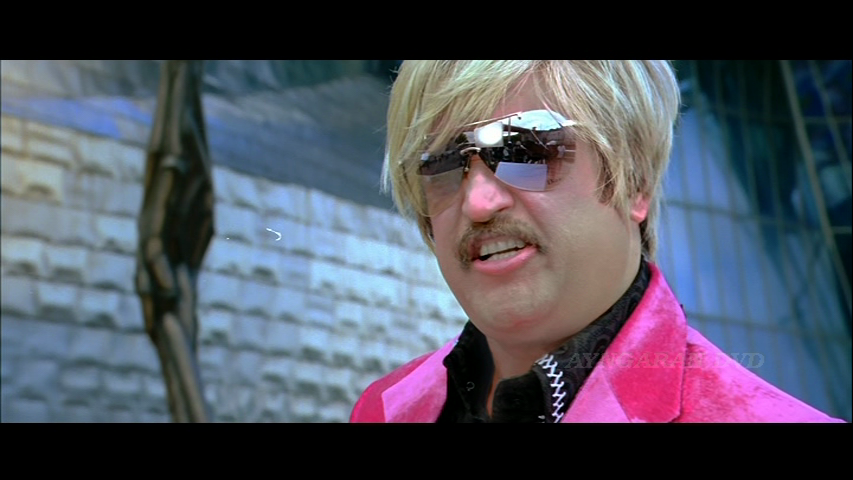
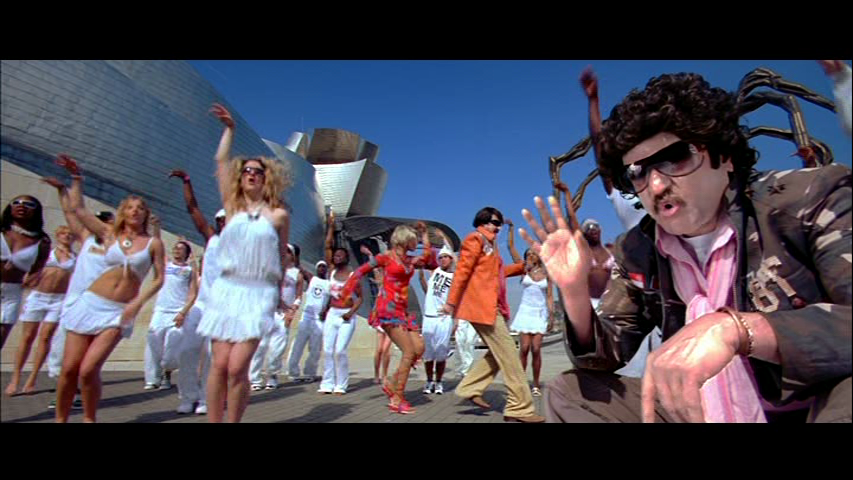
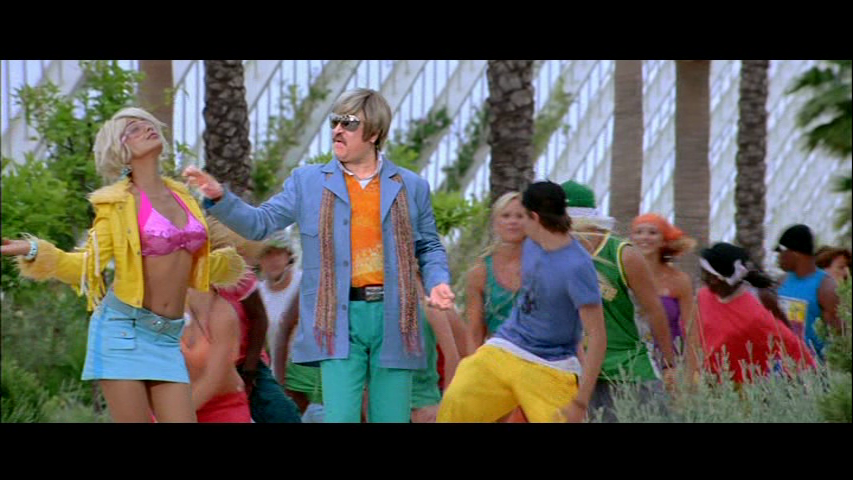
Other than her presence in the songs, Tamizhselvi is the ‘perfect Tamil girl’ of Sivaji’s dreams and that ensures plenty of traditional outfits and a fairly restrained performance, making her more tolerable than usual. Someone in wardrobe really does have a grudge against her though because she does appear in some of the worst outfits I’ve seen in the song ‘Style’.  I’m not quite sure what to make of this song for many reasons. As a song extoling style it has some truly dreadful costumes and the whole white-skinned Rajni just seems very wrong. I’m always perplexed by the quest for paler skin in India, but then I’m equally as baffled by the drive for tanned skin among Europeans. I don’t like the melody or the lyrics of this song at all, but it does feature an incredible selection of amazing wigs for Rajni and is worth watching for that alone. Pick your favourite style!

And the contrasting faces of Shriya.

While the film deals with the theme of corruption, there is still plenty of comedy along the way. Although much of the humour comes from Rajinikanth and his various mannerisms, Vivek is excellent in his role as Sivaji’s uncle Arivu and provides many funny moments. Even though I’d normally cringe at Arivu’s match-making technique of parading girls in front of Sivaji, Arivu’s character is self-aware enough to make this funny rather than crass.  There is more slapstick comedy in the scenes with Tamizhselvi’s family who disapprove of Sivaji and his exuberant family. The actor playing Tamizhselvi’s father (Pattimandram Raja) has some excellent expressions and I love the way he looks as if he smells something bad every time he sees Sivaji.

On the other hand, Suman’s Adisheshan is a very mild mannered villain without any real evil tendencies. Although I’m sure this is meant to make sure that all eyes are firmly on Sivaji, he still seems rather unimpressive in comparison. His demeanour however is quite realistic as a businessman with political leanings and his reasons for opposing Sivaji are understandable considering how much the free hospital and university will cut into his profits. His methods of opposition are also consistent with his character and perhaps S. Shankar is trying to point out that corruption can be present in even the most reasonable appearing businessman.

The second half of the film relies more heavily on the effects and gimmicks, and it’s disappointing that Vivek’s character gets more sidelined. But it’s still a lot of fun to watch mainly due to Rajinikanth’s performance. The music by A. R Rahman is excellent apart from the Style song mentioned previously, and the high budget of the film is easily explained by the song picturisations. The sets and costumes are totally fabulous and both Thotta Tharani as art director and K. V. Anand as cinematographer deserve the awards they received for their work. There are guest appearances by a number of established Tamil stars including Raghuvaran and Manivannan and  the support cast are all very competent, although generally overshadowed by the superstar.

Although Endhiran (S. Shankar’s latest film with Rajinikanth), had a bigger budget and even more special effects, I prefer Sivaji. The story is engaging despite the way it jumps around and Shankar shows corruption within government systems in a way that seems quite plausible. Even though the one man crusade requires a leap of faith, it is after all Rajni and so anything is possible. It’s one to watch for the lavishness of the sets and the larger than life presence of Rajinikanth. And for all those wigs! 4 stars.

Temple says: Sivaji is what I have come to think of as a typical Shankar blockbuster in that it is all spectacle and very little plot. I think Heather is being overly kind in saying there is a theme to the story as I see it more as a collection of ideas that never really develops. Shankar introduces statements about corruption, the brain drain overseas as bright graduates pursue careers outside of India, the returning NRI and how they navigate between worlds, the obsession with all things American being seen as ‘better’ than local, the clash between tradition and modern living and the nostalgic ideals that may no longer exist. All interesting, and yet there is no real exploration of these notions as there is too much else happening. We move from fight to song to comedy to spectacular song and rarely pause for breath. It’s hugely entertaining, but it doesn’t really bear analysis.

Rajnikanth is in excellent form and this is his film from go to whoa. Sure he is way older than his character, but it somehow works as he deadpans his youthful dialogues, daring you to not believe,  and throws himself into the action with gusto. The fights have been tailored to suit him, and the music shop sequence is one of my all time favourites from any film industry. Shriya can range from terrible (e.g. Kanthaswamy) to pretty good,  and this is one of her better performances. She handles the comedy really well  (I love her expressions in the “Chandramuhki” sequence), isn’t completely overshadowed by Rajni, and does justice to the massive song sets and costumes. And she manages to look like she isn’t staring intently at Rajni’s wigs in the romantic moments so I decided Shriya may be a better actress than I had previously thought.

See this for the spectacular sets and design, for a Superstar who can dominate the hyperactive pace and attention grabbing visuals, for the music (except Style) and for the filmi equivalent of a crazy amusement park ride. You’ll be dizzy and none the wiser at the end, but it was so much fun while it lasted. 4 stars!