Double Seat (2015)

Sameer Vidwans’ Double Seat tells the story of newlyweds Amit (Ankush Choudhary) and Manjiri (Mukta Barve) starting out their married life in Mumbai, a city where space comes at a premium.

The film opens with a montage of a luxury resort honeymoon passing in lazy days, huge beds with drifts of crisp white linens, peace, and privacy. And then Amu and Manjiri arrive at his home in a chawl in Mumbai where they share a very compact apartment with his parents and brother Alpesh. Amu seems content with the way he lives, but maybe he just needed some encouragement. Manjiri is a pocket rocket, excited by achieving her dream of moving to Mumbai and her career in insurance sales. She sees nothing wrong with taking the occasional calculated risk and having aspirations. And so as they get to know each other, the dream of getting their own home is born.

I like the way the relationship between Amit and Manu is portrayed. They genuinely like each other and they’re dead keen to spend time alone together. They get around the limited privacy by texting each other, even in the same room, with little in jokes and hints. They get each other’s humour and enjoy talking about their hopes and dreams. They go out on late night dates, checking out the homes of the rich and famous, and talking about wonders like having a bath in your flat. Amit never wants Manjiri to change. He enjoys her cheerful blend of ambition and pragmatism, and encourages her. I loved how achievable and relatable some of her dreams were – like getting her first pair of jeans or learning to drive. She doesn’t want things out of greed as much as she wants to make the most out of her opportunities. Being so close to his parents, who are very warm towards her, still has an effect on Manjiri as time passes. She becomes a little less demonstrative and more concerned about what other people might think. She still gives as good as she gets, but she seems stifled.

Amit sees that change and doesn’t like it one bit, partly because it’s killing his nascent sex life. But he too has been squashing some of his aspirations and wishes in order to avoid causing ructions at home. I love the way Amu raises the subject of getting their own place, and how it’s what he needs and not just a thing to make his new wife happy. And then Manju falls pregnant. Both actors deliver likeable and well calibrated characterisations. When things take a turn for the worse Ankush Choudhary nails the blend of self-pity and fear that drives Amit to behave in a disappointing way. Mukta Barve gives Manjiri a spirit and energy that dims at times but is never really overcome. And I liked seeing a nod to realistic pregnancy with Manjiri looking more and more tired and uncomfortable as her due date drew closer.

Nothing ever runs that smoothly, or we wouldn’t have a 2 hour 20 minute film. There are a couple of incidents and scenes in the latter part of the film that I felt were a bit too clunky, but by and large the focus stays on the relationships and domestic life. Amu and Manjiri have some issues but realise they need commitment and communication to resolve their problems. And when financial woes hit, there is little blame or hysteria. Instead of wailing and moaning, Manju tells Amit to get his tears out today because tomorrow they start anew. But he has to remember he has not failed and he did nothing wrong by trying. Some people are a tad more dramatic than others, and some take a little longer to show up with practical support, but they get through things by coming together.

Vandana Gupte as Amit’s mother is delightful. She is very supportive of Manjiri having a job, but she is accustomed to certain rules for living so there is a little bit of friction between the kids and her husband. She usually aims her complaints at Amit though, expecting him to communicate the expectations to Manjiri. She bonds with her daughter-in-law over the mega popular soap Chhakuli Mami. And when she accepts the move will happen, she gets right on board to help the kids out. Her entrepreneurial spirit fires up and she takes to business like a duck to water. Vidyadhar Joshi is the mercurial and comfortable self-centred father and good at showing the wounded dignity that lies under some of his more inflammatory remarks. He’s not bad, he’s not horrible, he’s really quite friendly and tolerant to a point. But when his son wants move up in the world it exposes a tension between the generations and opens up a lot of anger and disappointment that Amit has been dutifully suppressing. He does come round to seeing that his son just wants to fulfil a dream. And as an almost full time dreamer himself, that is something dad can understand.
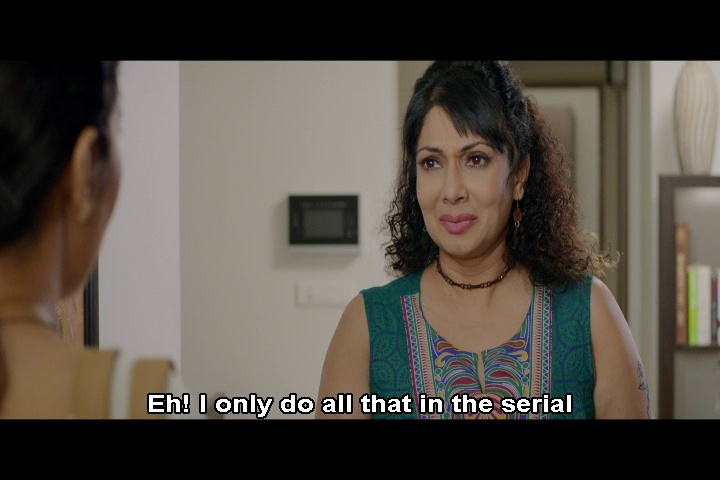
The remaining support cast are all good. I liked the contrast between Amit’s policeman buddy (Sandeep Pathak) and his wife with Amit and Manjiri’s relationship. Asawari Joshi plays the lead on the addictive soapy and appears as a kind of chain-smoking guardian angel for Manjiri. Shivani Rangole has a small role as Sapna whose proud and supportive grandfather was intent she complete her studies and get a good job.

This reminded me a little of the excellent Love and Shukla, although I like the couple’s dynamic more in Double Seat. See it for a thoughtful and engaging exploration of evolving values and relationships in the big city hustle. 4 stars!
Article 15

Article 15

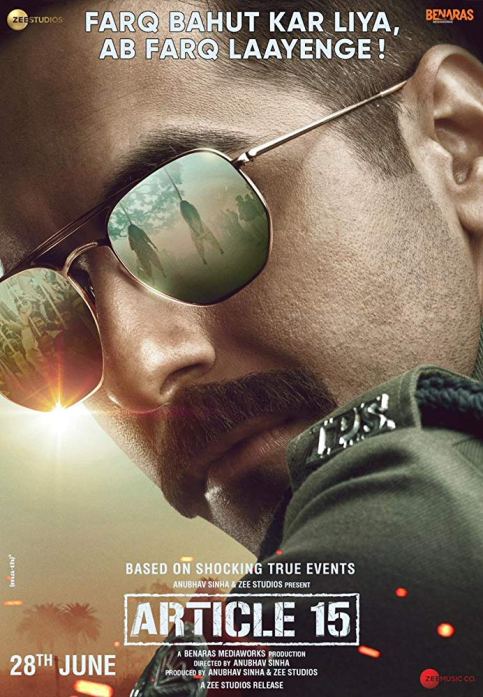
As the opening scenes scrolled across the screen, my first thought was that Anubhav Sinha’s drama was a period piece, but it didn’t take long to realise that the shocking events portrayed are straight out of today’s newspapers. The old-fashioned cars and equally archaic attitudes seem to be a blast from the past, but the reality is that the attitudes and events portrayed in the film are occurring every day, and not just in India either. The film follows new IPA officer Ayan Ranjan as he investigates the disappearance of three girls in a village in Uttar Pradesh. The police are disinterested, largely because the girls are from a lower caste and there is little incentive for them to solve the crime. On the contrary, once two of the girls are found hanging from a tree, there appears to be more gain in framing the girls’ fathers rather than risking their corrupt allies in a full-blown investigation. With an excellent cast, insightful dialogue and an uncomfortable and confronting storyline, Article 15 is a challenging depiction of the problems faced by a large number of people every day of their lives.

Ayan Ranjan (Ayushmann Khurrana) is a young IPA officer posted to Lalgaon in Uttar Pradesh, where he is taking over from the retiring long-term incumbent. The film opens with Ayan in his sleek car travelling smoothly towards Lalgaon while he chats on the phone to his girlfriend Aditi (Isha Talwar). He mentions the clean air and how beautiful the countryside is while his driver relates tales from folklore, but his arrival at the village quickly plunges Ayan back into real life. Outside of the cocoon of his car, Lalgaon is far outside Ayan’s previous experience. This is an area where Ayan’s privileged upbringing works against him, where he doesn’t understand the social hierarchy or how deeply local prejudice is entrenched, and where his principles that probably seemed so straight forward in the city, suddenly have to deal with the day-to-day reality of life in rural India. The soundtrack over Ayan’s arrival is Bob Dylan’s blowing in the wind – the words make sense once you realise that this experience will either be the making of Ayan, or it will leave him disillusioned and broken. Either way, he will understand what kind of a man he really is.

Ayan is at loggerheads with the senior police officer Bhramadatt (Manoj Pahwa) almost immediately as the police brush off the families of the missing girls. Gaura’s (Sayani Gupta) sister is one of those the missing and she is able to convince Ayan of the seriousness of the situation, explaining that the missing teenagers had gone to ask for a wage rise of 3 rupees. Ayan is sure that something sinister has happened, but he is hindered by his lack of understanding of the caste system and of how it affects everything in the small community. For him it’s simple: the girls are missing – register the case. But for the police who have to live in the community while senior officers come and go, it’s more about balancing the different factions and appeasing those who are willing and able to pay their bribes. The girls are simply too low in the social order to warrant any notice and worse still, their lives are considered disposable and therefore of no value. The situation gets worse when the bodies of two of the girls are found the next morning and the autopsy shows they had both been raped. Bhramadatt tries to intimidate the doctor (Ronjini Chakraborty) but Ayan gets to her first and manages to secure her support for an investigation which becomes ever more dangerous, eventually leading to Ayan’s suspension and own investigation by CBA officer Panikar (Nassar).

Ayan’s gradual realisation of the true consequences of casteism and the deeply ingrained prejudices is one of the key points of the film. He arrives in Lalgaon aware that issues of caste and inequality exist as abstract injustices that he has read about but which have never touched him personally. But being drawn into the hunt for the men who have raped and murdered the girls, leads Ayan to new realisations and opens his eyes to the hierarchical squabbles all around. Gaura provides Ayan with the information that he needs to begin to understand the deep social divide, while conversations with Jatav (Kumud Mishra), a police officer who himself is a Dalit, and Gaura’s partner, revolutionary leader Nishad (Mohammed Zeeshan Ayyub), provide further insights. Nishad is the villagers champion, well-educated and articulate, but unable to gain any ground with the authorities dues to his low caste status. Jatav on the other hand believes in working with the system but is hampered by his colleagues’ inability to see past his low social status.

While Ayan conducts his investigation, events in the background echo real events and provide further evidence of prejudice and discrimination. One of the local politicians is attempting increase his supporter base and gain the Dalit vote by supporting a Brahmin-Dalit alliance. But there is no real benefit for the villagers in his proposed plans and Nishad and his supporters see the alliance as a betrayal of the community rights, leading to clashes and a Dalit strike. This gives one of the most memorable and effective scenes in the film that drives home the truly terrible working conditions for these people. As the strike takes hold the sewage in the police station starts to back up and overflow into the streets. As Ayan arrives one morning, there is a geyser of foul brown water fountaining up into the police yard, which resolves into a man surfacing from the drain with a load of the sewage material that has been blocking drainage. After dumping this he resubmerges. I just couldn’t believe that someone would have to do such a dangerous job without a protective suit, breathing apparatus and a safety line. Honestly, for me this is the most horrific and confronting scene in the film – even more shocking that the hanging bodies of the girls and the later revelations about their murder – mostly because no-one even seems to notice that this man is risking his life in such terrible conditions just to clean out a drain. With this one scene Anubhav Sinha seems to have captured everything that is wrong with the current system, and the murders are simply the extra dressing on the top.

What I like is that Ayan isn’t the all-conquering hero who storms in and solves the issue while the locals watch on dumb-founded. He makes mistakes and at times seems completely clueless about what is happening. It’s the local people who have the knowledge and impetus to find out what happened, Ayan just provides them with an authority to work under and a framework for the investigation. I also like that no-one is pictured as being all good or all bad, but simply as normal people who have their own share of faults (although perhaps Bhramadatt really is just evil!). With Article 15, Anubhav Sinha seems intent on educating his audience, pointing out just how the atrocities we read about can happen when human life is held so cheaply. But at the same time he’s not accusatory nor is he preaching, but rather simply pointing out what is, and then letting us judge these problems for ourselves. Ewan Mulligan’s excellent cinematography adds atmosphere and although Mangesh Dhakde’s background score is at times overly intrusive, for the most part the music is effective.

As someone who has only ever seen India’s caste system from the outside and who has no real understanding of the societal problems, this film is a real eye opener. The everyday situations I have seen when working in medical camps are explained so clearly here, and perhaps this film should be required viewing for anyone planning to travel to India. There is mysticism here along with the undeniable beauty of the countryside that sits uneasily beside filth, corruption and pollution. But the real triumph is in the depiction of the different characters who represent the broad spectrum of society and illustrate that there is some good and some bad in us all. A powerful and well-made film, Article 15 is not easy viewing but it is memorable and incredibly effective in getting its point across. Highly recommended for excellent performances and for shining a light on real social problems that have no easy answers.

Unda (2019)

Unda

Unda is an understated police drama set in the northern regions of India during an election. Reportedly based on a true story, the film follows a group of policemen from Kerala who are sent to safeguard voting in a remote rural area of Chhattisgarh supposedly under attack by Maoists. Mammootty sheds his star persona in the role of a police sub-inspector and is joined by an excellent support cast of assorted police, local villagers and Indo-Tibetan Border Police. With an under-prepared and inexperienced group of men facing challenges far beyond their previous experience, the film explores the differences that divide India as well as exploring the similarities that should provide unity.

The film starts in Kerala with the police team led by C.I. Mathews Anthony (Ranjith) packing up their equipment and heading north by train. But their problems start when they arrive and find their transport to the camp has been delayed. When it does turn up, instead of buses the men are put into open trucks and taken to the local ITBP camp. But here they find that there isn’t room for all of them, and SI Manikandan (Mammootty) is sent off with his small group of men to a cabin in the woods near to a small village. Once there, the men are confused by the situation and totally oblivious to the differences between their own state and the area they find themselves. Local ITBP officer Kapil Dev (Bhagwan Tiwari) does his best to explain, while his Commandant (Chien Ho Liao) is simply frustrated by their lack of knowledge. To add insult to injury, the team have no supplies. Expecting to pick up ammunition and weapons on site, Mathews and his team are dismayed to learn that all they will have is the equipment they brought. Although they send an emergency request home, it seems unlikely that anything will reach them in time, and there are rumours of Maoists throughout the area.

The police are a disparate group and argue amongst themselves as they are frightened, far from home and disadvantaged by their inability to speak the language. Despite having been a police officer for many years, Manikandan has never had to fire his gun or deal with the kind of sustained tension he has to endure in the camp. His men have their own issues too. One of the police officers has a young wife who is about to have their first baby, while another is constantly on the phone to his new fiancée. Jojo (Shine Tom Chacko) is going through an acrimonious divorce caused by his infidelity. Although he keeps calling his wife, it’s not until he is faced with death that he manages to apologise for his treatment of her, and of course by that time it is far too late. Biju (Lukman) is dealing with prejudice from his colleagues because he comes from a lower caste. Although it’s passed off as ‘joking’, the hurt and alienation that the abuse causes is well portrayed and hopefully will raise some awareness that prejudice is never a ‘joking’ matter.

While Kapil Dev tries to teach the men how to survive in Chhattisgarh by turning off the lights late at night, avoiding mines in the area and keeping a low profile, the local villagers also prove a point of contention. After using up all their water by washing, the police seem totally oblivious to the hardship they have caused. When the local headman Kunalchand (Omkar Das Manikpuri) comes to explain their situation, the police are suspicious and suspect him and his family of being Maoists. But as Kunalchand later complains after his son is taken away by the ITPB and he himself is beaten by masked men, the authorities accuse the villagers of being Maoists, and the Maosits accuse them of collusion with the security forces. Whatever happens, Kunalchand and the villagers will never win and the harsh reality is that they are gradually being forced out of their homes.

When trouble comes, it isn’t Maoists who bring death and destruction – for all the talk, no Maoists are ever seen. Instead it’s corrupt politicians and their thugs who cause the biggest problem and who almost succeed in overcoming the badly outnumbered police force. The lack of support from their own leaders, corruption in the local government and lack of experience of the men themselves all conspire to put the police team in a very precarious position indeed. But it’s their own personal demons that are the biggest barriers they need to overcome.

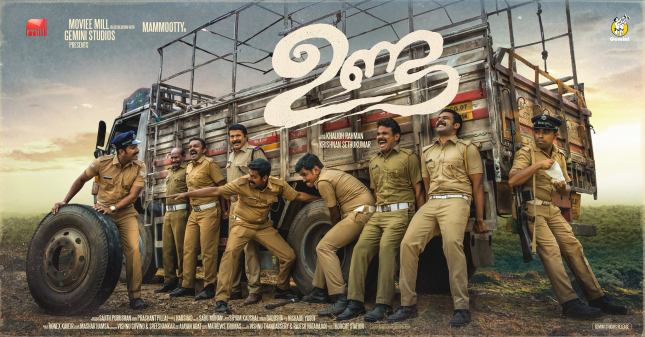
Unda is a slow burn of a film. Most of the action consists of normal everyday activity such as patrolling the area, getting the camp ready for election day and Mankikandan’s trips back to the ITPB base to follow up on his desperate request for more bullets. Even when there are explosions or gunshots in the night, it’s the reactions of the men that are the focus of the film, rather than the activity in the woods surrounding the camp. In many ways this is more a film about India, but one contained within a tale about a group of Keralan police in a more Northern state. The big issues of language, caste, tribal rights, corruption and terrorism are all brought in to the screenplay as the small group of displaced policemen try to carry out their duties in the most hostile circumstances they have ever faced. The breakdown within the members of the group as they are subject to the constant threat of death from the Maoists and to the contempt of the ITBP is a key point, as is the camaraderie that develops between them as a result of their circumstances. This intermingling of personal issues with the weightier ones of politics and social justice is well done and although there are a few missteps, for the most part the screenplay by Khalid Rahman and Harshad works well. There are well-written moments of comedy and a good blend of personal and group-related drama. Overall, Unda is a good solid drama, well written with excellent performances and directed with a steady hand by Khalid Rahman. Well worth watching and highly rcommended.