Bigil

Atlee’s latest film is a mix of the good, the bad and the ugly. The good is Vijay, who shines in a double role despite the rambling and overlong story; the bad is the general misogyny of the screenplay where it takes a man to bring success to a female team who were already heading to the India Finals; and the ugly is some awful fat-shaming which Atlee and fellow screen-writer S. Ramana Girivasan seem to feel is acceptable as motivation. The story follows a retired football player who sets aside his gangster persona to coach a women’s football team, but despite some superficial similarities this is no Chak De. However, getting past the bad and the ugly, Rahman’s music is good, the dancing excellent and there is one part of the story which is more than simply token feminism. For a mass entertainer for the holiday season Bigil isn’t a bad option – it’s just that it’s not anywhere near as good as it could have been.

Michael, aka Bigil (Vijay) is a state level football player who is apparently talented enough to get into the national team. His father Rayappan (also Vijay) is a gangster in Chennai who is savvy enough to push his son towards athleticism and away from rowdyism, recognising that this will inspire others in the neighbourhood. Rayappan is a typical filmi gangster – out to defend the poor and marginalised against everyone trying to exploit them, chief of which is a rival gang, headed by Alex (I.M. Vijayan) and his son Daniel (Daniel Balaji). But neither Rayappan nor Bigil understand the internal politics of football in India which works against his success, and when Rayappan is killed, Bigil gives up his dreams and return to being plain Michael, head of the rowdies in his area and defender of the helpless.

When Michael’s friend and Tamil Nadu women’s football team coach Kathir (Kathir) is injured, Michael is persuaded to take on the task of coach instead. Something the women resent since they blame Michael for Kathir’s injury – which is totally true. The women need a coach in order to be able to compete, but although much of the film takes place in Delhi at the football championships, this is never about the women’s team and their battle to overcome poverty and adversity to win. In Atlee’s film the women are incapable of making it by themselves and need Michael to show them how to train effectively and ultimately goad them towards victory. Michael is able to convince a conservative husband to let his wife compete, persuade Anitha (Reba Monica John) to take off her face scarves and play after she is assaulted with acid and induce Vembu (Indhuja) and Thendral (Amritha Aiyer) to play together as a team. All while simultaneously dealing with gang attacks from Daniel and internal attacks from the Head of the Football association J.K. Sharma (Jackie Shroff). The assumption that the women need a strong and capable man to lead them to victory is condescending and patronizing, but Atlee breezes past this issue so that Vijay can be seen to be a sensitive, caring and motivating kind of guy. Up until he wants Pandiyamma (Indraja Shankar) to get angry out on the field and uses fat-shaming insults to get her there. Not cool at all, and really incredibly disappointing that in 2019 this kind of behaviour is being legitimised by a major star in a big budget film.

That’s the most of the bad and the ugly out of the way – and the rest is the good. Vijay smiles and dances his way through inspirational numbers, kicks a football around the field and beats up the bad guys with plenty of energy and joie de vivre. The fight scenes involve the usual ‘one man-against-the-masses’ sequences, but they are well staged and the stunts are generally impressive. The football action is almost as good, although it does look staged and filmi, particularly compared to films such as Sudani from Nigeria where the action is more realistic.  However Atlee gets points for getting women’s football onto mainstream screens, and for promoting the game as one that everyone can play. It’s also good to see some recognition of the challenges faced by the team members, despite most of these being glossed over and only mentioned in Michael’s motivational speeches. There are two exceptions – Gayathri (Varsha Bollamma) is shown as having to overcome a prejudiced and narrow-minded family situation, although again it’s her husband who makes the decision and allows her to play. Anitha has a much better story as the acid-attack survivor who has to come to terms with her injury and loss of confidence as a result.

The best parts of the film have nothing to do with the women’s team, but instead are focused on Michael and his relationship with his father. As Rayappan, Vijay is simply superb and totally convinces as an older don trying to do his best for his family and his area. The relationship between father and son is beautifully written and the effects well done to allow both Vijay’s to converse together, hug and generally interact as if they were together in reality. The conversations between the two reveal much about both characters, and it’s this emotion that is more truly inspirational than any of the plot around the football team. Here there is some of the best acting from Vijay, where he isn’t a superstar, but instead simply a father trying to do the best for his son (naturally with some great actions sequences too) but there is light and shade to the character and Vijay does an excellent job in portraying these shadows as well as the strengths of the character. Michael is a more typical Vijay ‘hero’ persona, but there is still some depth and again Vijay is excellent in the role.

Naturally there is also a romance, this time a physiotherapist who comes with Michael to help the team in Delhi. Angel (Nayanthara) has rejected a number of marriages while waiting for Michael to come to his senses and marry her, but apart from this show of spirit, she’s a typical Tamil filmi heroine who just has to look pretty for the songs and support her man through thick and thin. Nayahthara does what she can with the role, but it’s thin pickings despite some good comedy in her introduction. This would have been a much better film if Nayanthara had been the coach and the gangster thread between Michael and Rayappan a side theme, but I guess that’s a little too much to ask for.

The film does look fantastic and the song sequences in particular are brilliantly picturised. There is plenty of colour and A.R. Rahman’s music fits beautifully into the action. Rekhs (aided by Harini) comes through with brilliantly translated song lyrics and even translations of written signs that are significant for the plot. Directors and producers take note – this is how you subtitle a film for an international audience – it makes all the difference when subs are in idiomatic English and easy-to-read yellow.

Atlee does throw everything into this film, and as a result some of the threads simply don’t work within the larger context of the story. Although Jackie Shroff is the main villain, he’s never very threatening, and Daniel Balaji gets a much better storyline and resolution for his character too. He makes a great villain and his flawless performance is one of the highlights of the film. Meanwhile, Yogi Babu and Vivek indulge in some unnecessary slapstick, but the comedy from G. Gnanasambandam and George Maryan is subtler and funnier as a result. The film is at its best when focused on Vijay and this is where Atlee excels. He knows how to make his leading man look good, and how to keep the action exciting. Worth watching for Vijay, the excellent dancing and action scenes and for the colourful spectacle of it all.
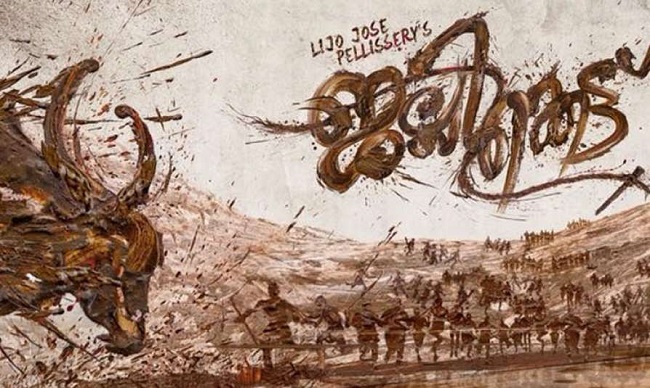

Jallikattu (2019)

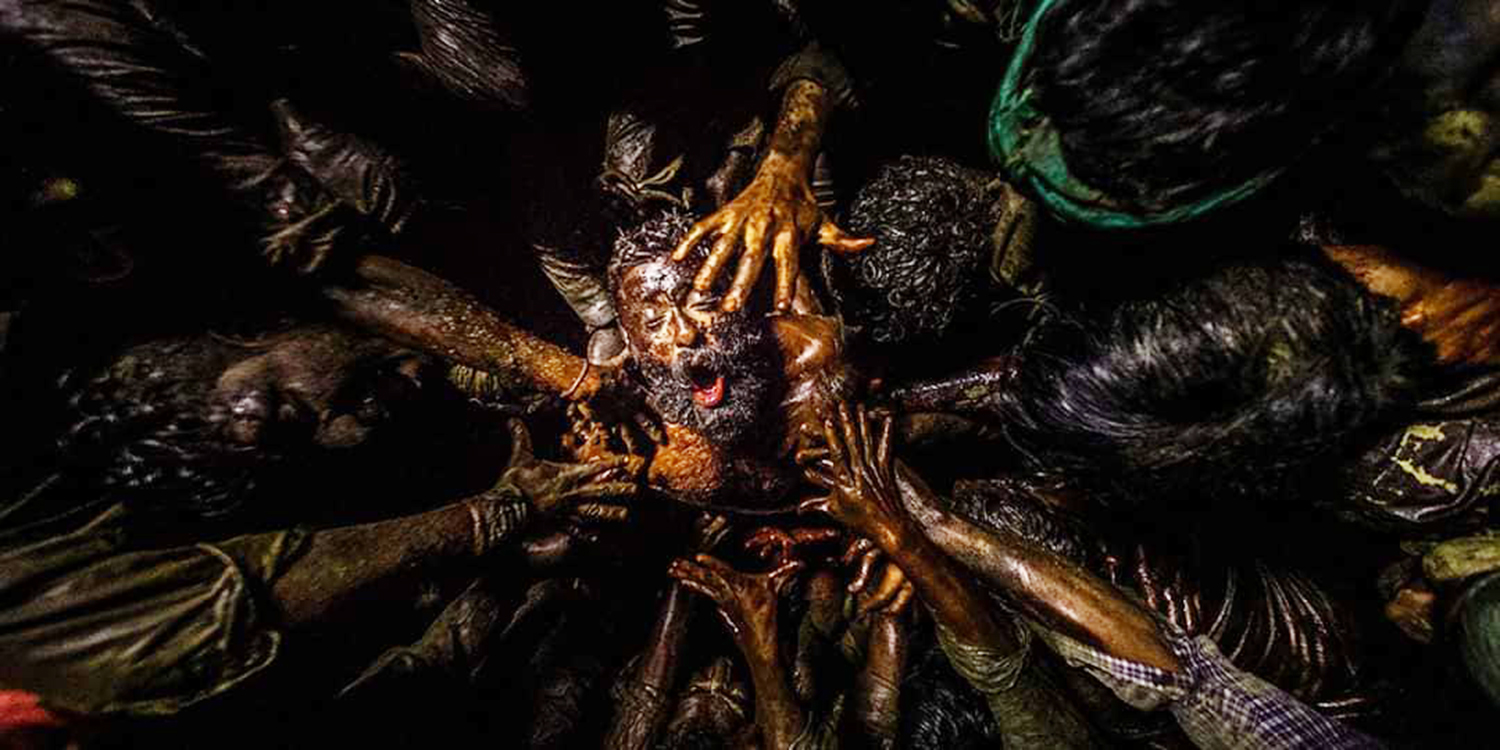
Jallikattu starts with a chorus of household noises that gradually give way to the birdcalls and insect sounds of the forest. But the peace is quickly disrupted by the chaotic cacophony of groups of men chasing after an escaped buffalo. The pace is frenetic as the buffalo damages crops, buildings and people, old rivalries between enemies are renewed, and the entire male population of the village descend into a kind of primitive madness as they chase after the beast. It’s a potent mix of petty rivalries, domestic and social clashes, underscored by masculinity at its most base, all combining to make Jallikattu a feast for the senses and above all, a wild ride of a film.

After the quick cuts of the opening section, the film introduces the various characters in the village. Varkey (Chemban Vinod Jose) is the butcher who dispenses chunks of fresh meat to a predominately male clientele alongside his helpers, chief of which is Antony (Antony Varghese). Also notable in the early scenes are a police officer (Tinu Pappachan) who is seen abusing his wife (Pravitha Vijayan) although she seems able to fight back quite effectively, and the rich but unpopular Kuriachan (Jaffer Iddukki). As the only supplier, Varkey is asked to provide the meat for Kuriachan’s daughter’s engagement party but when the time comes to slaughter the buffalo, Antony slips up and the animal escapes, starting a madcap chase to capture the beast. Initially it’s just Antony and Varkey running through the fields, but the situation quickly escalates as the buffalo damages crops and the local church before setting a haystack on fire and destroying a couple of small businesses in the village. It’s impressive work for one buffalo and the trail of destruction just gets bigger and bigger as the chase continues.

To try and catch the animal, the villagers first rally together, but the arrival of a group from a neighbouring village sparks the first signs of serious conflict. Adding to the heady mix of testosterone is local hunter Kuttachan (Sabumon Abdusamad), who has recently been released from jail and is keen to extract revenge on the man who put him there – Antony. Kuttachan arrives to his own cheerleading soundtrack, provided by the villagers, and along with his aggressive attitude it seems likely that more blood will be spilled before the buffalo is captured.

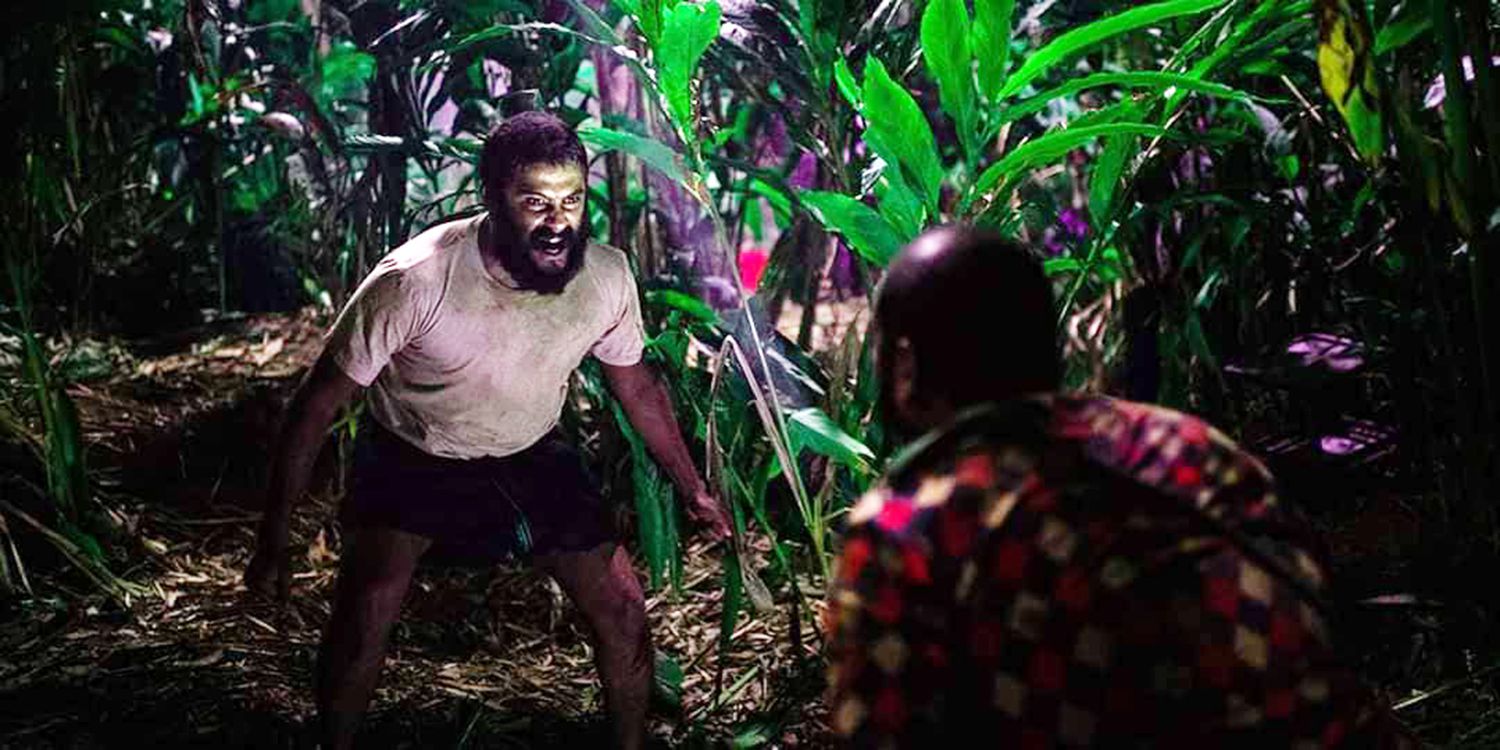
As more and more men gather and take up torches and crudely carved wooden spears to hunt the buffalo, the night forest comes alive with streams of light and the sounds of the hunt. The buffalo is heard more than seen – a shadow in the night, occasionally a tossed body or the flash of horns, but mostly there is only the rustle of grass and sound of hooves. In the brief moments when the animal is actually visible, the animatronic buffalo is realistic and convincing to the point where I was happy there was a disclaimer at the start of the film given the level of escalating violence doesn’t bode a happy end for the buffalo. It’s great work from the whole team and the combination of art director Gokul Das and cinematographer Gireesh Gangadharan ensure the buffalo is a central presence despite the mainly fleeting glances.

The film is more about the frenzy of the chase and the sounds and images of men on the hunt rather than a story involving specific characters. The stories around Kuttachan, Varkey and Antony are for the most part short vignettes and the main focus is on the rising blood frenzy of the crowd. Even when there is a brief interlude after the buffalo falls into a well, some of the men are seen killing and cooking a chicken, and the threat of violence is never far away as the different groups clash. With such a male dominated cast there is little scope for any female characters, and only Varkey’s daughter Sophie (Santhy Balachandran) has any real role to play. Her interaction with Anthony requires a screen warning about violence towards women, but despite the character’s attempts to appear manipulative, I felt that she was more resigned to her fate in a village full of such machismo men. The rest of the women seem to be either secretly laughing at the men (given the mostly inept and ham-fisted attempts to catch the buffalo), or just indifferent to their antics. In a sort of ‘watching the children play’ attitude, the women gossip and cook tapioca while mostly ignoring the warnings to hide inside their houses to escape the buffalo.

Probably the most impressive part of the film is the soundtrack – both the music and the ambient sounds are brilliantly integrated into the action and serve to heighten the tension of the chase. Prashant Pillai’s soundtrack underscores the wild excitement of the hunt and the vocal chants sound almost like anthems to the gods of the forest. Along with the stunning visuals, either soaring high above the forest or deep inside the chaotic action, the sounds are vital in conveying the blood-lust and violence simmering in the crowd.

The end is appropriately cataclysmic and while the symbolism may be a tad heavy-handed at times, it’s the overall spectacle that impresses. However, this isn’t a film for everyone. Violence simmers at every turn, frequently boiling over into blood-lust and naked aggression, while the themes are belligerently masculine and at times even misogynistic. But as in Lijo Jose Pellissery’s previous film Ee. Ma. Yau., there is still humour even in the darkest moments of the film. Indeed, this may perhaps be the point – that for all their aggression, the men’s behaviour is so ridiculous that it becomes comical when seen from outside the maelstrom of the hunt itself.

The frenetic pace of the film and incessant beat of the soundtrack sweep you along with the action and leave little room for anything other than wonder at Lijo Jose Pellissery’s vision. Toxic masculinity aside, the film is a departure from standard Indian cinema and as such deserves to be seen by a wider audience. Different and challenging, Jallikattu is well worth watching on the big screen if you can.

Asuran (2019)

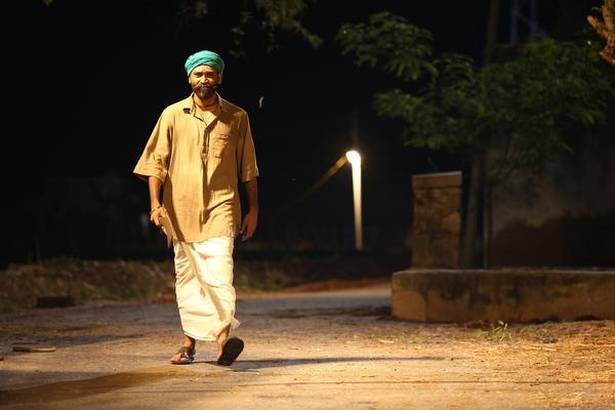
Vetrimaaran’s latest film Asuran is a graphic and violent tale of oppression and intimidation of a small landowner and his family, but it’s also a story of revenge, survival and of the fight for justice in an unjust world. Dhanush is in his element, playing both Sivasaamy, an ageing and broken-down small freehold farmer and also his younger self in a flashback that explains how he ended up as a pacifist. The rest of the cast are just as good, including Ken Karnuas as Sivasaamy’s son and Manju Warrier as Sivasaamy’s wife. Asuran seems set to be another Vetrimaaran classic as yet again he has captured the flavour of rural Tamil Nadu while telling a rousing story, this time adapted from Poomani’s novel, Vekkai.

The story starts quietly, with Sivasaamy (Dhanush) and his youngest son Chidambaram (Ken Karunas) wading through a river in the middle of the night. Sivasaamy urges caution, explaining to his reluctant son why they are walking in the river, rather than on the road (it’s to hide their tracks). At one point as the water is gradually getting higher, Chidamabaram complains that his bombs will get wet. I thought this was likely a euphemism for something else, but surprisingly, as clearly demonstrated later, what he’s carrying are indeed explosive devices! As the father and son slowly make their way deeper into the forest, Vetrimaran shows the searchers, hunters and police who are on their trail, while in the other direction, Sivasaamy’s wife Pachaiamma (Manju Warrier) and daughter are also running to hide. At this point Sivasaamy seems confident and capable – he knows how to hide their trail and how to keep silent, unlike Chidambaram who seems to be singularly clueless, wandering off, lighting fires and generally making himself far too visible.

Gradually we discover why the family are in flight as, in flashback, the film shows the family’s struggle against the rich Vadakkoran Narasimha (Aadukalam Naren) who wants their small plot of land. This leads to clashes between Vadakkoran’s men and Sivasaamy’s older son Murugan (Teejay Arunasalam) who wants to fight back and cannot understand his father’s servile attitude. Even Pachaiamma grabs up a sickle to defend herself, but Sivasaamy urges caution and tries to ignore the provocations, including the death of one of the family dogs. Murugan is frustrated by his father’s faintheartedness and responds by aggression and violence, although mostly as a result of threats and taunts from Vadakkoran’s men. It’s obvious that neither Sivasaamy’s approach, not his son’s aggressiveness will work against the upper class Vadakkoran who has the law and the power of his money on his side, and this futility underpins all of the action in the film. The violence escalates until Murugan is murdered in a particularly gruesome and bloody manner which starts to tear the family apart. Chidambaram is only 16 and cannot understand the class politics that make his father unable to act, but instead regards him as a coward. As a result, to try and alleviate his mother’s grief, Chidambaram attacks Vadakkoran, leading to the family’s midnight flight.

Dhanush is simply amazing as the older and broken Sivasaamy. His subjugation at every turn is perfectly nuanced to make us feel his pain and despair as Sivasaamy struggles to keep his family safe. His alcoholism is part of the whole picture of a deeply flawed man, while the contempt of his sons and stoicism of his wife is shown to cut deeply. Murugan and Chidambaram deride their father for his cowardice but Pachaiamma and her brother (Pasupathy) have a much better idea of the situation, and although they don’t always approve, they tend to support Sivasaamy’s approach. However, when Murugan is killed, Pachaiamma can no longer support her husband’s viewpoint with matters coming to a head when Chidambaram seeks his revenge. The family drama is beautifully written with the emotions raw and realistic, while the relentless persecution from Vadakkoran seems unnecessarily harsh but also very plausible.

Despite Chidambaram’s low opinion of his father, he’s still young enough to rely on him during their flight. But when they are cornered at the end of the first half, it’s Chidambaram who is shocked when his father finally picks up a stick and fights back in spectacular style. It’s massy, but loads of fun and the fight scene is well staged to make Sivasaamy’s sudden prowess believable.

The second half starts with a flashback to Sivasaamy’s youth, and once again his subjugation by a rich local landlord which ends with the death of his family including his activist brother (Subramaniam Siva) and his fiancée Mariyammal (Ammu Abhirami). This time the divide is more about caste but the outcome is the same despite having lawyer Venugopal Seshadri (Prakash Raj) on their side. While the story is compelling and a bitter statement on the realities of being poor in rural India, it’s the characterisations that stand out in Asuran. Ken Karnuas is fantastic in a role which requires him to be naïve, passionate and impulsive but then have to grow up really fast. Manju Warrier is a rock steady presence beside her husband, until her son is murdered and her world comes crashing down. Her grief roils off the screen in waves of pain in the distressingly realistic scene where Muruguan’s body is discovered. The visuals hit hard, and the acting is simply superb throughout. Although his time onscreen is short, Teejay Arunasalam makes an impact in a powerful performance of a young man determined to defend his family at all costs.


The film looks amazing as Velraj captures the stunning scenery around Tirunevelli. The cinematography emphasises the isolation when Sivasaamy and Chidambaram flee into the forest, but also captures the heart of rural India and the wonderful colours associated with different crops. The film soundtrack from GV Prakash Kumar is also excellent while the songs are perfectly matched to the action on screen. There is also clever use of sound, where during an action scene, all the music stops and there is just the sound of breathing, which works very well to focus attention on the protagonist and let us wonder what is going on in his mind, right at that very second.  Vetrimaaran keeps the romance sections short and the fight scenes bloody and violent, but it all fits snugly into the narrative despite a somewhat rushed feeling of the ending. Thanks are also due to the subtitler for using yellow font and being clear and concise – sorry I didn’t catch who was responsible for these.

Asuran combines father and son relationships with village power politics and the result is a powerful societal film that also has the warmth and intimacy of a more personal story. The performances are all amazing and as always I am stunned by how Dhanush can transform between a feisty young man in his early twenties to an older fifty-plus worn down farmer and be totally convincing in both roles. Wonderful actors, a compelling story and stunning scenery all combine to make this one of the best Tamil movies so far this year. Don’t miss it!