Anbe Sivam

Anbe Sivam is a film that many people recommended to me and since it stars two of my favourite actors, it was one I quickly moved up the ‘to be watched’ pile. The film has as its basis the themes of politics and religion, but it doesn’t take itself too seriously and there is plenty of comedy along with all the drama.  The viewer is taken on as much of a journey as the two protagonists and although the film details their endeavours to make their way to Chennai it’s not just the physical travel which is explored. The film was directed by Sundar C while Kamal Hassan wrote the screenplay and even sang on a couple of the songs. Anbe Sivam has a more unusual storyline for a Tamil film, and although there are one or two clichéd characters and a few unlikely coincidences, overall it’s an entertaining watch. Kamal Hassan and Madhavan make a great team and both give excellent performances.

The film starts in Bhubaneswar airport in Orissa where Anbarasu (Madhavan) and Nallasivam (Kamal Hassan) are stranded due to the rains. Anbarasu works as a film maker in the world of advertising and since he despises the part of his name which refers to love, he prefers a shortened from of his name A. Aras. Initially Aras mistakes the bespectacled and physically handicapped Sivam for a terrorist wielding a pipe bomb, when in fact Sivam is armed with nothing more deadly than a cucumber.

A.Aras is as much of an idiot as his name sounds. He’s arrogant, quick to make judgments and quite convinced that he is always right. Sivam is a man afflicted with a paralysed right arm, one leg shorter than the other and an abundance of facial scars following an accident. He also has thick glasses and a facial tic which impressively Kamal Hasan manages to keep going throughout the whole movie. However, after his confrontation with the authorities Sivam explains to Aras that most terrorists don’t look like him at all, but instead are more likely to look handsome like Aras.

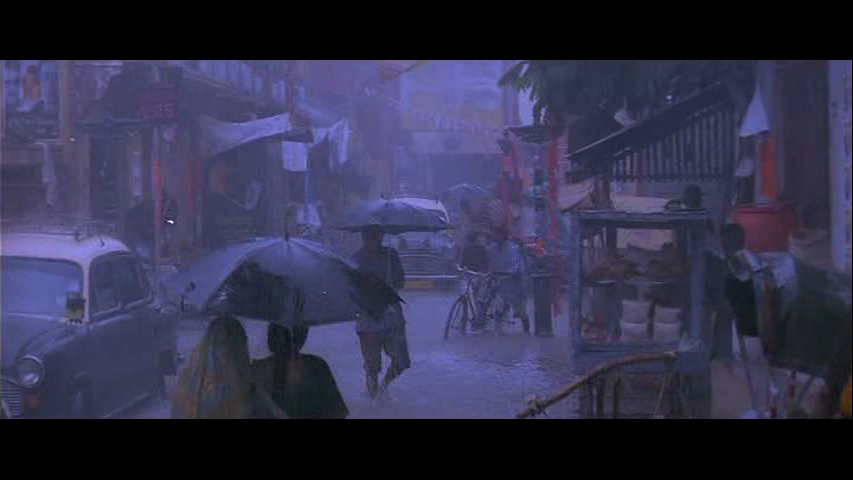
After all flights are cancelled Aras ends up unwillingly sharing a room with Sivam. Although Aras sneaks out early the next morning he still doesn’t manage to evade his unwelcome travelling partner as Sivam catches up to him in a flooded train station. Again Sivam comes to the rescue of the more impetuous Aras and aids him in his onward journey to Chennai. There are some beautiful shots throughout the film and the scenes here of the rain drenched streets and the countryside from the bus are excellent.
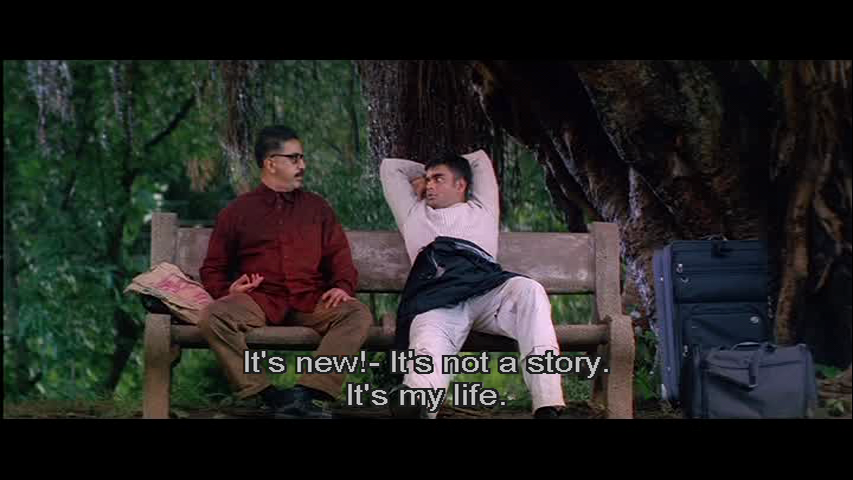
The duo end up taking a bus and a train on their quest to get to Chennai and along the way Sivam is unfailingly cheerful, chatty and full of unsolicited advice which drives the more reserved Aras crazy. Aras distrusts  Sivam and is rude and even callous in his continual attempts to get rid of Sivam, but his efforts backfire every time. This leads to a lot of comedy which, although often quite slapstick, is well-integrated into the story and is really quite funny. The conflict between the two allows discussion of their opposing views on almost every topic but most commonly Sivam’s communist beliefs. The dangers and benefits of globalisation and multi-national companies are touched on while the clash between Aras’s belief in capitalism and Sivam’s in socialism is an ongoing theme.
As they wait for the train back to Chennai, there is a long flashback which explains some of Sivam’s beliefs and how he came by his disabilities. An unscarred and healthy Sivam organises and takes part in street plays as a way to spread his message of equality and rights for workers. The main person ridiculed in these street plays is the rich and outwardly religious industrialist Kandaswamy Padayachi who is in conflict with Sivam as he refuses to give his workers adequate pay. Sivam meets his daughter Balasaraswathi and after some initial conflict the two end up falling in love. She persuades Sivam to paint a picture in her father’s factory as the fee for his art work will help fund further communist activity. His painting cleverly includes a large amount of communist imagery and I was intrigued to learn that both this scene and the painting itself were influenced by Diego Rivera’s mural at the Rockefeller Centre. Dolce and Namak’s excellent review notes a number of links between Dali’s work and the imagery depicted throughout the film too.

This part of the film is however the least satisfying and goes on a bit too long. Kiran Rathod is rather unsatisfactory as the rich daughter although I can’t decide exactly why, but she never engages any sympathy for her character. The love story seems very trite and there is no chemistry between the two actors here at all.Nasser as Kandasamy Padayachi is a typical evil factory owner although the duality of his evil deeds while continually offering prayers to Shiva was an interesting trait. There is a rather odd fight scene with Sivam using an umbrella as a weapon which doesn’t quite fit with the rest of the story although it is well choreographed. An earlier scene where the theatre group’s performance is broken up by the police is much more realistic and convincing, and this later confrontation seems unnecessary and more contrived. However the flashback does give insight into why Sivam looks at the world with his glass half full attitude despite his disabilities.

As the rest of their journey unfolds, Aras gradually becomes more compassionate, eventually becoming involved in the struggle to save a young boy’s life following a train accident. Sivam explains his belief that anyone who shows compassion and love to their fellow-man is themselves a god turning the more usual statement ‘God is Love’ neatly around. The last scenes are particularly powerful and moving and Sivam’s unfailing goodness does give the impression that he may indeed be a god. Albeit a flawed and very human one.
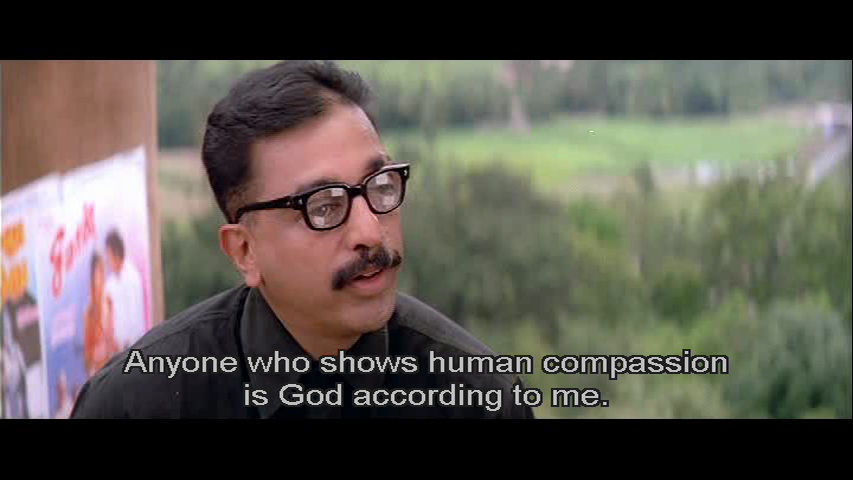
What really makes this such a good film are the performances from Kamal Hassan and Madhavan. Kamal Hassan plays Sivam with humility and warmth as a basically good man, but one who is not above playing tricks on his travelling partner. He’s also expressive and vehement in his role as an activist but rather more obtuse when it comes to personal emotions. The change in his character as a result of his injuries is very well depicted and despite his many irritating habits, Sivam is a very sympathetic character. Madhavan does well to hold his own against such a performance from Kamal Hassan. He has a great sense of comedic timing and his scenes with Kamal Hassan are compelling. Sivam is the person you really don’t want to sit beside you on the bus and Madhavan’s increasing frustration and anger is understandable and totally believable. His gradual change as he is exposed to the realities of life in rural India is also convincing and well portrayed. Perhaps the only odd note is his sudden desire to adopt Sivam as his older brother as this seems a rather sudden jump from just wanting him at his wedding. The coincidence that both men love the same woman is also a little unbelievable but for the purposes of the story I’m willing to ignore it. Uma Riyaz Khan appears in a small but very effective role as Mehrunnisa, a member of the theatre troupe and Santhana Bharathi is also well utilised as Padayachi’s enforcer. Both characters have more involvement with the story than first appears and I really enjoyed their contributions. The music by Vidyasagar doesn’t stand out particularly but it does fit well into the film and the songs seem to flow very naturally out of the dialogue. The title song, which appears as a recurring theme, is the most effective and haunting. This clip is fairly graphic and does reveal quite a bit of the story around Sivam’s injuries so skip it if you don’t like blood or don’t want to know more about what happens.

Anbe Sivam is a film I’ve now seen three times and I get more out of it on each viewing. Everything seems to have a second meaning, and that duality is reflected in the fact that the main characters are all known by two different names. It’s a fascinating film and it raises some interesting questions about love and the nature of God. I add my recommendation to all those people who advised me to watch it. 4 stars.

Loins of Punjab Presents

 I originally sought out Loins of Punjab Presents because I really like Nina Paley’s Sita Sings The Blues  and read that my favourite shadow puppet, otherwise known as Manish Acharya, had made a film. I watched it with a hint of sadness and regret in light of his untimely death. But that didn’t stop me enjoying this lovely mockumentary with a near perfect balance of sweetness and acidity.

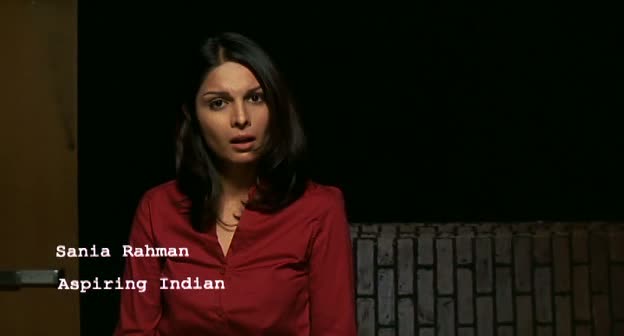
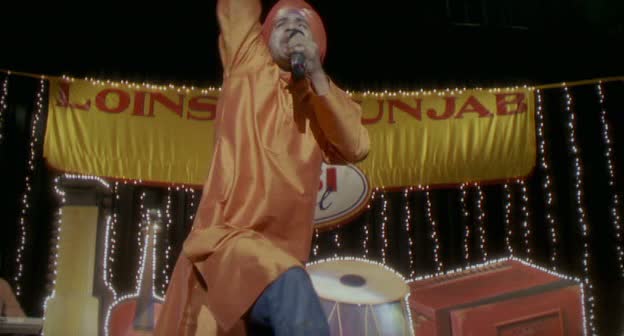
The film takes place around a singing competition, ‘Desi Idol’, sponsored by the Loins Of Punjab company. A local news crew is on site shooting a story about the competition. Their presence allows characters to talk directly to the camera, and the captions add some pithy observation. The characters are introduced out in the wild, but then observed at close quarters in the hotel where the competition is based. There is a villain, a hero, romance, drama, tears and laughter. Mostly laughter.

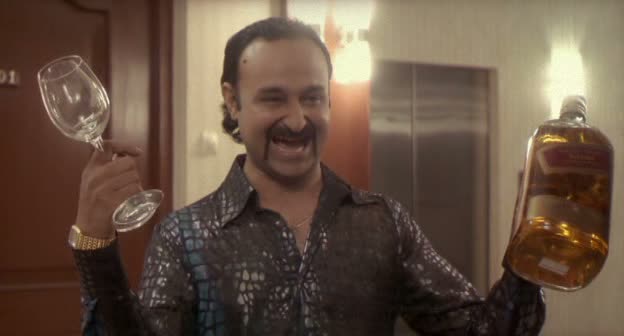
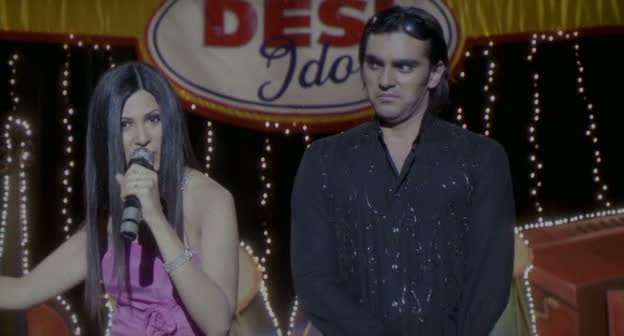
The master of ceremonies is the wonderfully repulsive and Gypsy Kings obsessed Mr Bokade (Jameel Khan). He is horrible yet noble when it counts. He just has no idea, and it is oddly delightful to see his unswerving belief in his own magnetism.

Bokade’s mangled explanation of insiders and outsiders and race relations is pure gold, and somehow it made perfect sense. His bewildered sidekick is the offical representative of the Loin King, the very anxious Mr White (Kunaal Roy Kapur).

Manish Acharya not only directed and co-wrote, he stars. Vikram Tejwani is the nice guy, a sensible businessman whose job has been outsourced to India. He likes to plan ahead, using his time wisely.
He researches film heroes and based on his data believes in the power of Amitabh Bachchan to appeal to all generations and to the judges. Manish Acharya gave Vikram a wry sense of humour that made him really endearing.

Sania Rehman (Seema Rahmani) is a struggling actress who decides that it might be easier to trade on her hitherto neglected Indian heritage and make it big in Bollywood. Her knowledge of Hindi is limited to a few phrases learned by rote and some filmi songs. She bluffs her way through and while her mistakes and vulnerability are usually played up for fun, she is a sympathetic character.

Seema Rahmani managed to play an average actress brilliantly, and subtly show the difference between Sania and Sania acting. It was clever and very funny.

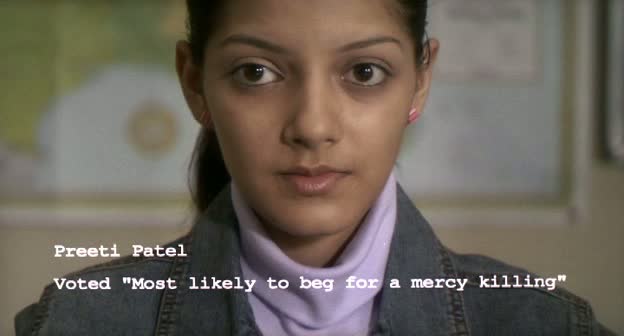
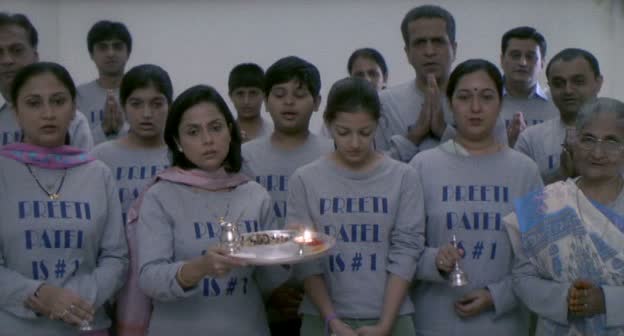
Preeti Patel (Ishitta Sharma) is talented, and overwhelmed by her large family and their expectations. Her parents are ambitious, protective and trot out every old chestnut about ambitious, protective parents.


Quiet and mousy when she isn’t singing, as soon as she takes the stage she lights up. Singing is an escape, and Preeti has the talent – does she have the will? Much of her performance relies on reaction and expression rather than dialogue or fireworks.

Josh Cohen (Michael Raimondi) is the white boy who loves India. He is naive, idealistic and frankly a bit of a drip. Not only did he ‘find himself’ in India,  he also found love with Opama Menon (Ayesha Dharker). He invented Joga, a ludicrous combination of jogging and yoga that is probably being sold on a cable TV station as I write this, and the couple are out to sell the big idea and make their fortune.

Opama is fond of Josh but not so happy with the negativity she encounters from other Indians when they see her with him. The singing competition brings out her insecurities as she is thrown into an almost all Indian environment and the judgements fly thick and fast. When Opama tells Josh to choose between Joga and music, their relationship is also in the balance.

Josh also has to face up to some aggro as people question whether a potential Desi Idol should in fact be desi. It shakes his rosy notions of being at one with everyone, but is resolved in an appropriately filmi way.

The wild card is Turbanotorious BDG (Ajay Naidu). He is angry, urban and loud and travels with his African-American partner Otto (Kory Bassett). I read a few reviews that described them as ‘best friends’ but I say, based on the loud and proud demands for a queen sized bed and the public handholding and other incidents, they were more than just friends.

Ajay Naidu played it loud and abrasive mostly, but his relationship with Otto and his family showed another side to the character. His response to being judged on appearance or first impressions is in your face aggression. And his insane energy turned the whole show upside down at a crucial point. Lesson to judges – do not even think about eliminating the Turbanotorious BDG! This clip isn’t in the film as such, but it is animated by Nina Paley so that seems very fitting:

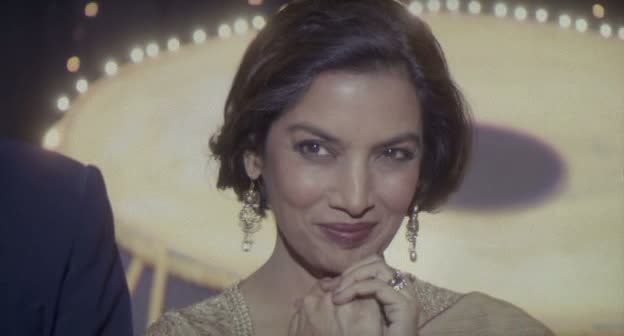
I promised a villain and this film delivers. Shabana Azmi is socialite Rrita Kapoor, the shark amongst the minnows.

She is determined to get one up on her rival by winning the competition and donating the winnings to charity. Rrita is polite, elegant, and always has a gleam of malice in her eyes. Her murmured hints and compliments derail the opposition and she cuts a swathe to the final showdown. I always like seeing Shabana in her rare masala film appearances, and she seems to be having a lot of fun as the posionous Rrita. But can a villain ever win in a Bollywood inspired film?

The three judges, played by Samrat Chakrabarti, Sanjiv Jhaveri and  Avantika Akerkar are dead ringers for the washed up and wannabes that infest reality TV. And I must give a special mention to Rani Bansal and Dhruv Singh who played the terrible Eurovision style MCs – they nailed the stilted pointless banter.

Shaan did a special appearance that got him the very special guest chair. I personally would have preferred a seating arrangment that didn’t include electrical wiring. Alexx O’Nell hammed it up as a hotel manager, but the rest of the supporting cast played it more or less straight and suited the fly-on-the-wall style of film.

The easy option would have been to sketch broad outlines and take a few cheap shots. Anuvab Pal and Manish Acharya gave it more love than that and allowed the actors to flesh out the characters. The laughs are all the sweeter for seeing people overcome their pain or sadness. The same jokes often deliver a rebuke for the human race’s apparently endless capacity for stupidity. When Sania and Vikram start stumbling towards romance, they seem genuinely shy and awkward, not just funny. When Turbanotorious BDG is told he is out of the competition, Ajay Naidu looks straight down the barrel of the camera with silent despair. An unassuming man called Saddam Hussein loses his job in the post 9/11 tide of fear and he and his wife struggle with the unfairness of it all. And there is a running gag with a paranoid elderly white man who thinks he has stumbled into a nest of terrorists. There’s commentary but it doesn’t derail the comedy.

The script plays with a lot of Hindi film tropes including the Angry Young Man. In one of my favourite scenes Vikram challenges Bokade who had disqualified Sania (at Rrita’s behest) because she didn’t really speak Hindi. Inspired by the Big B, Vikram launches into an impassioned plea about the diversity and democracy that is India, and when logic fails he appeals to the emotions. Then he caps it off with a bit of a song and dance before meekly resuming his seat. It is glorious!

And that is what I loved about Loins Of Punjab Presents. It takes filmi cliches and stock characters and translates them into something close to real life. There is a feeling of playful affection for the filmi heritage that really worked for me. There is also a bit of a wink, or maybe it was an eyeroll, that saves it from being too sweet for my palate. I’m a cynic who likes a good laugh and this delivers. If only there had been a proper big retro dance number. 4 stars!

PS – if you’re the kind of person who likes to know what happens to your favourite characters after the film, the end credits will make you very happy.

Oosaravelli

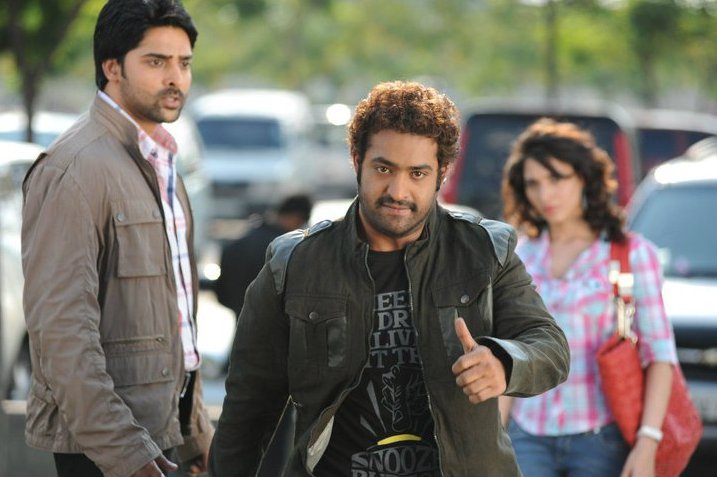
Oosaravelli had it’s first showing on Thursday, so perhaps it wasn’t too surprising that the cinema was only a third full for the Friday night showing. We still had an appreciative audience in Melbourne with a few whistles for Tarak’s entrance and plenty of laughs at the comedy dialogue, but it was generally more subdued than we’ve become accustomed to in our regular adventures without subtitles.

Oosaravelli is basically a revenge movie. It takes a while to get to the explanation but the set up is entertaining and both Tarak and Tamanna make an impression. Tarak is Tony – he has his name helpfully tattooed on his neck just in case he ever forgets, or maybe it’s a concession to help those of us who don’t understand Telugu and are occasionally confused as to who is who by the fast paced dialogue. We start by learning the anatomy of the human body with an animation which I think is supposed to imply that Tony is a man with all the right parts to be the ultimate hero, or maybe it really was just a quick biology lesson while waiting for the hero’s entrance.

Tony is a man with a large collection of scarves and bandannas who seems to be a small time thug with big time ambition. He meets Niharika (Tamanna) in Kashmir where they have both been kidnapped by insurgents who seem determined to dispose of their hostages one by one. Tony helps Niharika escape but rather carelessly loses her as they run off into the forest. Later, back in Hyderabad, Tony has tracked Niharika down only to find that she is in love with a guy called Rakesh, who is less than impressed with Tony’s appearance.

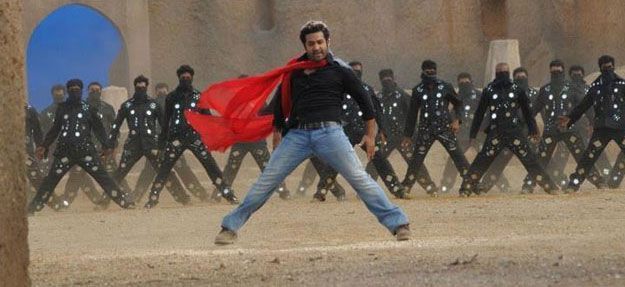
Along the way Tony has various dealings with a gang of the usual suspects including Jayaprakash Reddy and Murli Sharma who are united in their truly dreadful fashion sense, although the pink stripped shirt with teddy bears was a favourite. This stylishness  doesn’t last though as Tony moulds them into ‘Men in Black’ after beating them up with a bag full of baseball bats – just as his father showed him. Back when he was alive that is. The gang is further intimidated when the ghost of Tony’s father turns up to join in a drinking session but after that, ghost dad is eerily silent until part of the explanation for events later on in the second half. We do get some bedazzled ninja backing dancers though as some compensation.

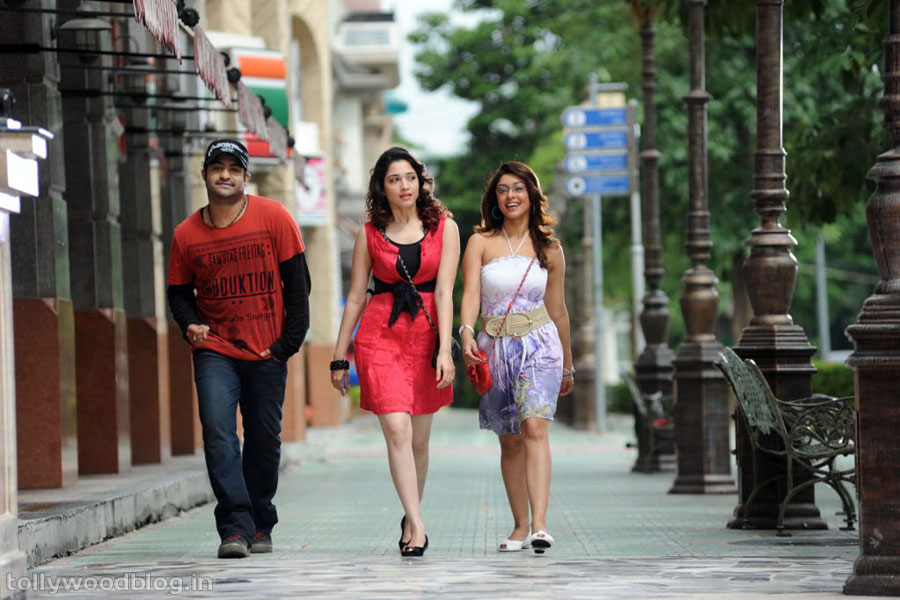
Tony continues his pursuit of Niharika by getting her evicted from her flat and then setting her up in his house. They decide to be ‘just friends’ although Niharika’s friend Chitra (Payal Ghosh) is sure this is a bad idea. Sure enough Tony finds out that Rakesh is a bad guy and is up-to-no-good. He’s in league with his uncle, don Azzu Bhai (Prakash Raj), and along with his father and friend is involved in some shady deals including arms and diamond smuggling. There is a brief glimpse of CinemaChaat favourite Ajay before he is sadly disposed of but otherwise every usual bad guy seems to turn up as a member of one gang or another.  For some reason one of Tony’s gang turns against him and delivers him up to Rakesh as the wannabe don who’s muscling in on their territory. Right about now is when Tony turns from a mildly affable joker to a totally psychotic killer who wipes out the entire gang in a matter of minutes with some impressive moves with a mallet. I was also suitably amazed by the hook which didn’t manage to tear through Tony’s shirt collar, but moments later was put to good use to impale one of the villains.

Just when we think – yay – crazy killer Tarak and wait for more blood to spill without really caring why, it all starts to make sense as there is a flashback revealing exactly who Niharika is and the reason for Tony’s involvement in the first place. But then it’s back to annihilation of all the bad guys although it’s not always clear if they are actually dead or not as a few people take a lot of killing. And death is not at all well diagnosed even by the medical professionals involved.

The highlight of the film is definitely Tamanna. She is excellent in all her different personas throughout the film – as the ditzy fashion designer and girlfriend, the harrowed victim and as the vengeful sister. She has real passion and belief in her character and it shows. A truly brilliant performance from her which also includes some excellent dance moves. It’s hard to compete with Tarak who is such an excellent dancer, but she manages to draw eyes away from him in a couple of songs.

Generally the soundtrack is enjoyable although Devi Sri Prasad has recycled one of his songs from the recent Dhanush starrer Venghai in Dandiya India. Tarak is good as the deranged killer Tony who has a soft spot for Niharika and seems to manage the switch between comedy and action well judging by the audience reaction. Payal Ghosh is also excellent as Niharika’s friend and it does seem as if the girls get the better dialogues and story-line this time round. A lot of the comedy centres on Tony’s gang of thugs and without understanding the dialogue I found this tended to drag. It was also slightly disappointing when ghost dad failed to make a reappearance after a promising beginning.

There are quite a few funny moments which probably aren’t supposed to be funny – such as Tony trying to hide behind a see through curtain, and where people who are dead manage come back to life to manage that one last important sentence. Or in the case of Tony’s dad, a 3 page monologue. It’s a fun film with plenty of action and blood. But even better it has a heroine who actually gets a proper story and gets to do something more than just look pretty. More of that please.