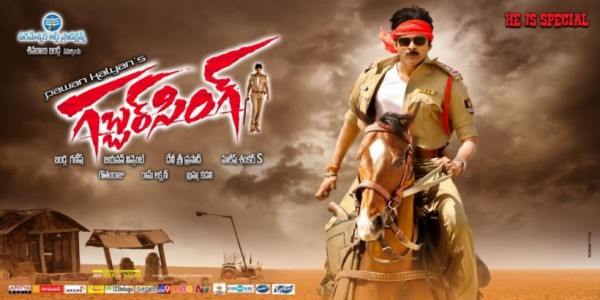
Gabbar Singh (2012)

Pawan Kalyan fans in Melbourne seem to be the loudest, the most enthusiastic and to prefer shredding rather than recycling their newspapers. The air was full of strips of paper right from the opening moments of Gabbar Singh and the paper storm continued well into the second half. A packed cinema, cheerleaders up the front to lead us in our favourite Pawan Kalyan chants as everyone pushed and shoved their way in and plenty of whistles and cheers meant a great start to another adventure without subtitles.

It’s a novelty to watch a Southern remake of a Hindi film since so often the shoe is on the other foot and after Osthe in Tamil, Gabbar Singh is the Telugu version of Dabangg. The film follows the same basic plot, but many of the other roles have been limited to allow more focus on Pawan Kalyan’s character. It’s his film the whole way through and while he has the charisma and capability to carry it off, the story loses much of its focus by dropping the back stories of Gabbar Singh’s wastrel brother and the conflicts within their family.
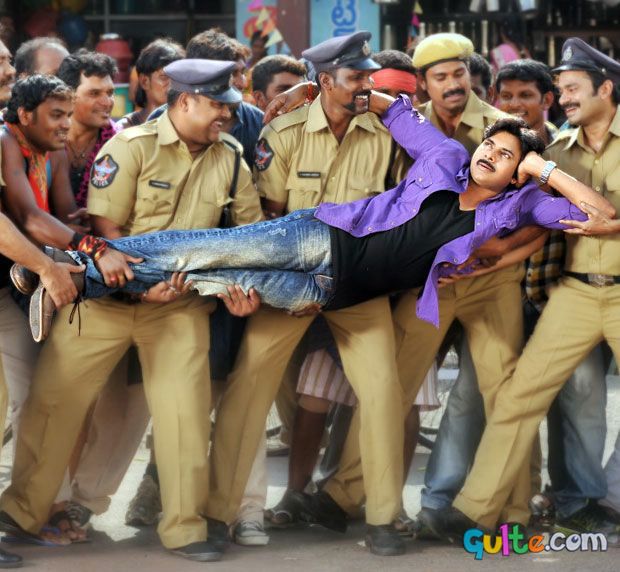
We start with young Venkat Ratnam Naidu and his stormy relationship with his adopted father Naidu (Nagineedu) who had married Venkat’s mother Suhasini after she was widowed. Naidu prefers his own son and makes no secret of the fact which gives Venkat a huge chip on his shoulder and a somewhat argumentative personality. Venkat ends up running away from his family, but returns years later as a police officer with the assumed name of his childhood hero, Sholay’s Gabbar Singh. He returns in style, renaming the police station after himself and single-handedly annihilating a gang of bank robbers after chasing after them on horseback so it seems safe to say that he’s not mellowed in the intervening years.

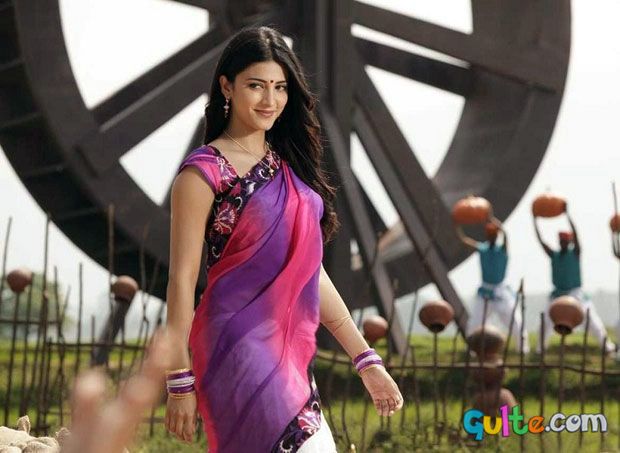
It’s not long before Gabbar Singh clashes heads with local rowdy Sidappa Naidu (Abimanyu Singh) and the feud between the two forms the plot for the rest of the film. In between all the gunfights and general mayhem, Gabbar Singh falls in love with Bhagya Lakshmi (Shruti Hassan) but her role is even more reduced than that of Rajo in Dabangg and Bhagya only appears briefly in a few scenes and a couple of dance numbers. Her friend, ably played by Gayatri, has almost as much screen time and judging by the audience reaction, seems to get the better lines too. Kota Srinivasa Rao pops up as Bhagya’s father but again the role has very little scope and he barely has any input.
Sidappa has political aspirations and Gabbar Singh disrupts his attempts to fund his career through various robberies and corrupt deals. Sidappa’s response is to have his henchmen beat him with clubs which is rather extreme but doesn’t really have too much of an effect on his arch nemesis. Abhimanyu Singh’s Sidappa is a typical Telugu goon and doesn’t have any of the flamboyance or appeal of Sonu Sood’s Chhedi Singh so the villain of the story is rather disappointing. As too is the item song. Although Malaika and the backing dancers did their best, Kevvu Keka just isn’t as catchy as Munni Badnam. I was also very disappointed that Ajay as Gabbar Singh’s brother only made a very brief appearance since he’s one of my favourite actors and I was hoping for more from him.

However the film was made totally worthwhile by a scene where Gabbar Singh forces the usual crowd of rent-a-goons to participate in a session of antakshari. This has to be the funniest piece of cinema I have seen this year and it had the crowd on their feet cheering for more! Generally the dialogue seemed to be of high quality since many of the lines had the audience applauding and both Ali and Brahmi’s comedic roles got plenty of appreciative cheers. Since I didn’t understand the dialogue I focused on the myriad of excellent details instead, such as the gun hood ornaments on Gabbar Singh’s 4WD and the incredibly happy and enthusiastic backing dancers. There is a reason why men in flak jackets are not often seen dancing and it’s a point well illustrated in the first song. Generally though the songs are good and Devi Sri Prasad’s music suits the feel of the film.
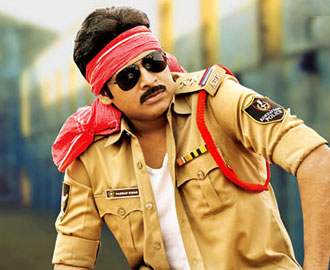
There is very little of Chubul Pandey in Pawan Kalyan’s Gabbar Singh. None of the mannerisms are there, although Gabbar Singh has plenty of the same chutzpah. The sunglass tricks are reserved for Brahmi apart from an opening scene where Gabbar Singh tosses his sunnies onto a colleagues face with impressive accuracy.  There are a few moments in one song in Switzerland where the normally smooth and co-ordinated Pawan Kalyan does seem to be channelling Salman Khan’s dance style, but thankfully not for long. I did feel sorry for Shruti Hassan dancing in the snow in sandals though.
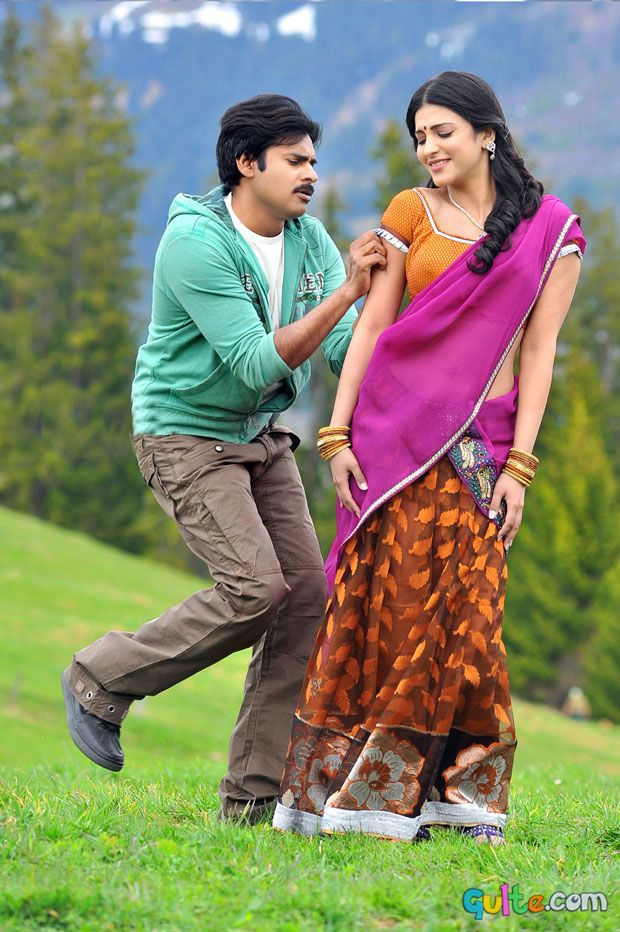
The reason that Dabangg was such a hit was that it was a Southern style film incorporating plenty of the masala elements which have sadly been missing in Bollywood for some time with a hero who suited the part. Once that novelty element is removed and the film changed to a Southern locale and hero, the story is similar to most other Telugu films. The impact is further lessened by the South’s familiarity with the use of machetes, 4WD’s that roam in packs and acrobatic fight scenes and so Gabbar Singh doesn’t stand out in the same way as Dabangg, although it is more successful than Osthe. Harish Shankar has changed the screenplay to make the film suit his leading man and Pawan Kalyan is excellent as the unorthodox police officer in a rather more orthodox story. Gabbar Singh is still well worth a watch for his performance and I’ll definitely be looking out for the DVD to finally understand the dialogues and for that brilliant antakshari scene!
Mozhi

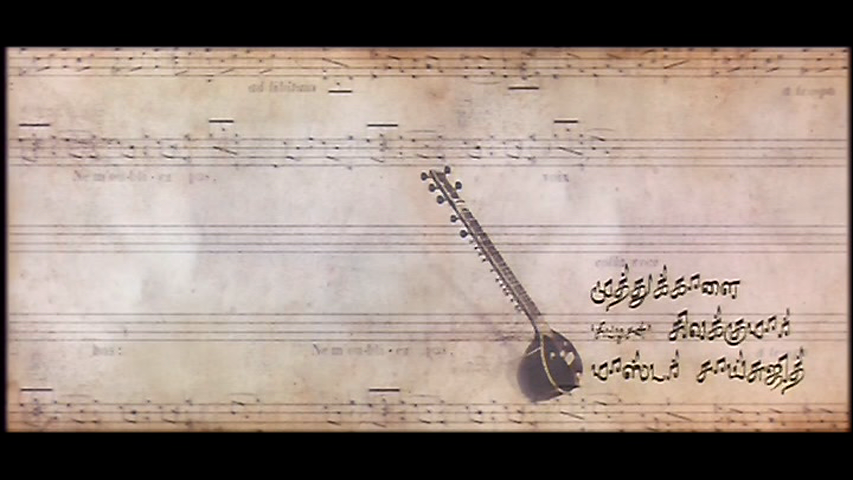
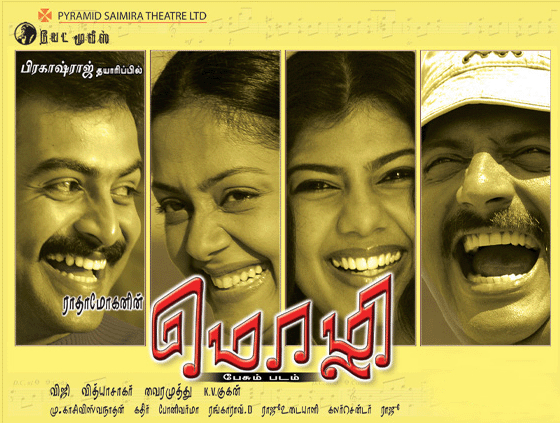
Mozhi starts with some beautifully animated music unfolding across the screen and it’s an excellent lead in to a romantic comedy that never hits a flat note. With a cast featuring Prithviraj, Jyothika, Prakash Raj and Brahmi along with very competent support actors it’s an absolute treat to watch and the story, although simple, provides plenty of scope for their combined talents.  There are plenty of genuinely funny moments along with a few tear-jerkers, but it’s the characters and in particular the bromance between Prakash Raj and Prithviraj that really stands out and makes this film something special. The two have great chemistry here and whether they’re at work together or out celebrating, their relationship feels warm and genuine, and this sincerity underlies the entire movie.

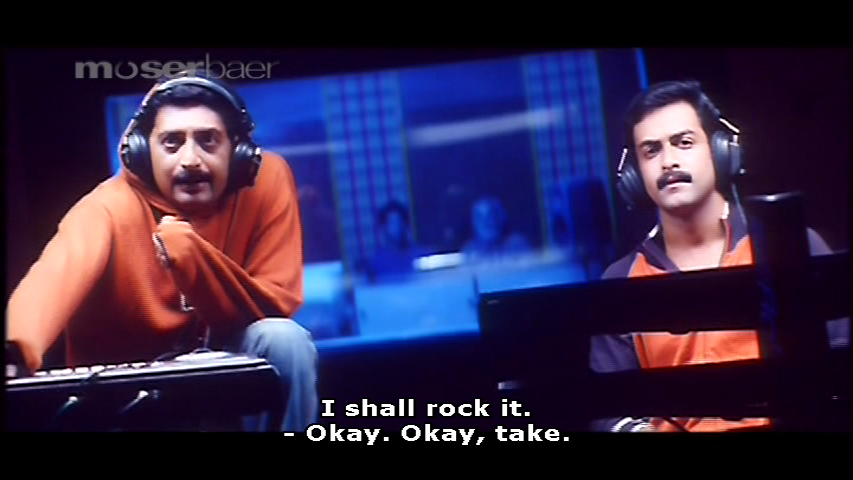
The film tells the story of the romance between Karthik (Prithviraj) and Archana (Jyothika) but woven through is the relationship between Karthik and his best friend Viji (Prakash Raj) as well as glimpses into the lives of other people in their apartment block. Karthik and Viji work in the film industry under Vidyasagar; also the name of the real-life music director and composer for the film. I love that Tamil cinema uses the film industry as part of the background setting without making it glamorous or over dramatic, but instead portrays the work as just another job – albeit rather a well-paid one. Karthik and Viji are seen adding music to a film clip and director Radha Mohan uses this opening scene to beautifully illustrate the difference when a silent scene is set to music. This becomes significant later on as the story develops and it’s a technique throughout the film to add more depth and layers to the characters.

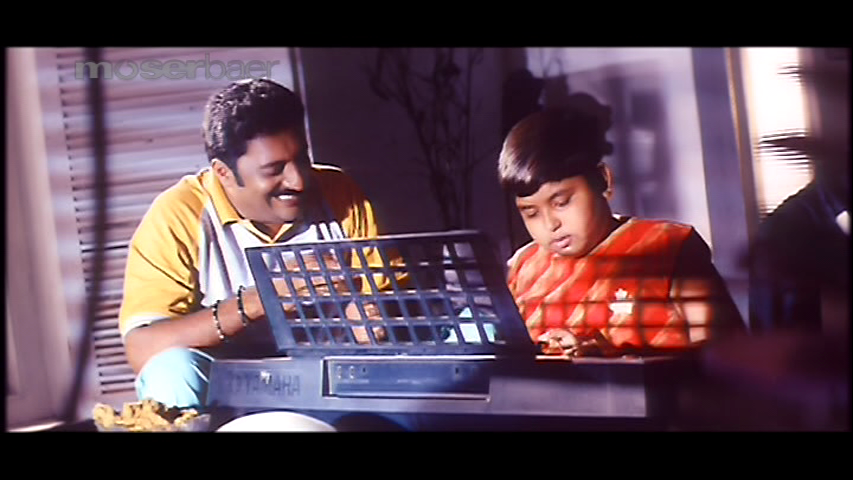
Karthik and Viji move into an apartment together in a block of flats managed by V. Ananthakrishnan (Brahmi), and almost straight away they are at odds with the flat manager as he informs them that bachelors are strictly not welcome. This sets up some of the comedy in the film but for a change Brahmi’s role is fairly substantial and he’s not the main focus of the humour. Instead Prakash Raj and Prithviraj handle most of the comedy between them, and they do an excellent job. One of my favourite scenes is where they both repeatedly crack-up in a lift after visiting Brahmi in hospital, but there are so many funny scenes with the two together and they both seem to be having a great time. This is such a good song with both of them dancing and again, they seem to be thoroughly enjoying themselves.

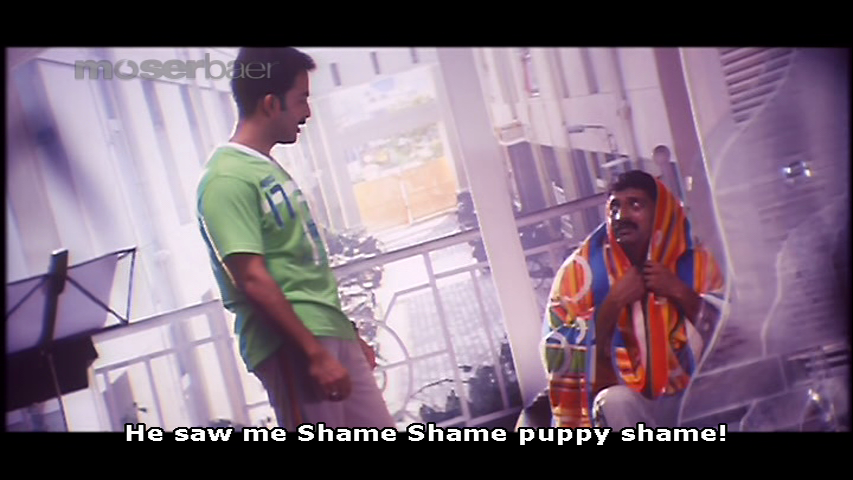
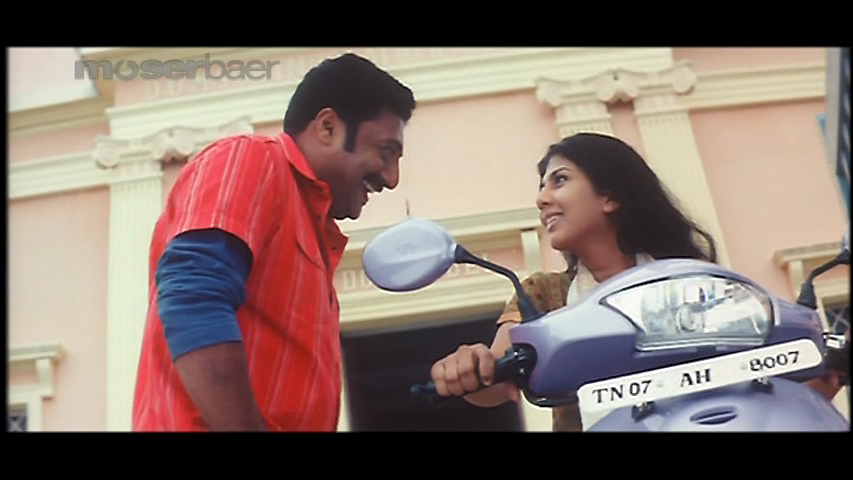
Another bonus comedy moment is watching Prakash Raj wearing only a towel dancing in gay abandon to the strains of Hava Nagila,the consequence of which also gave me a new Indian idiom to add to my vocabulary! Apologies for the poor quality of the screen caps, but the film quality isn’t great and Prakash Raj just doesn’t stop!

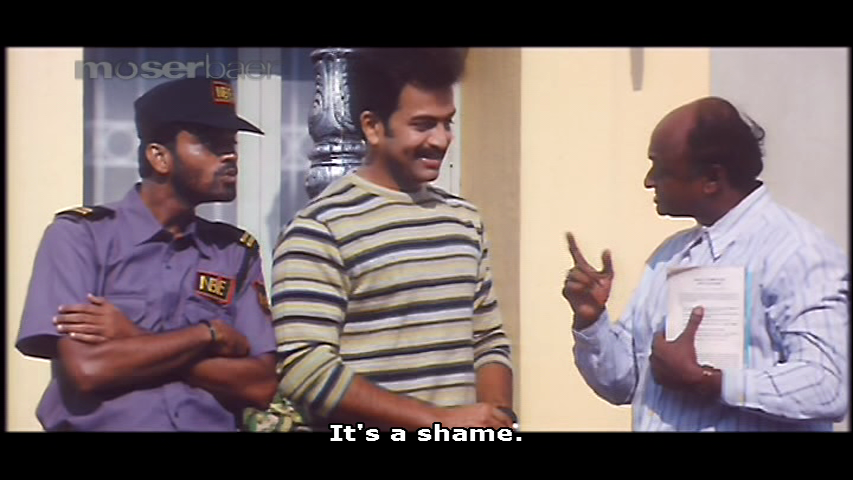
Dismayed at the prospect of losing their flat which they have very snazzily decorated with some fantastic sculptures, the two conspire to get round Ananthakrishnan. The obvious answer is for one of the two to get married, but Karthik is a romantic and believes that he will see lights and hear bells when he finds his true love. While Viji is more sceptical he’s not in any rush to get married either so the two try various strategies to ingratiate themselves with the landlord.  Along the way they meet some of the other characters in the building and with each vignette more of their personalities are revealed. It makes for an air of realism in the film as the various other inhabitants go about their usual daily routines. The security guard (Balaji), Ananthakrishnan’s level-headed wife Janu (Sriranjani) and his gluttonous son add some more comedy along with Preethi (Neelima Rani) who has eyes only for Karthik. M.S. Bhaskar plays the role of a professor whose mind has been stuck in the eighties since experiencing a personal tragedy and his sad story is used to reveal more of Karthik’s own generous nature.  Everyone’s little idiosyncrasies are all used to good effect and each character has something to add to the story.

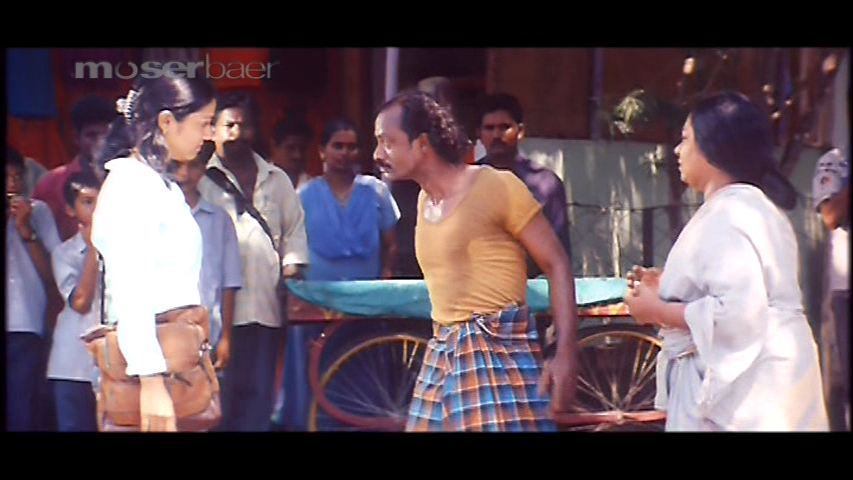
Karthik first sees Archana in the street beating up a vegetable seller for abusing his wife. It’s an unusual introduction and as well as being the only fight in the whole movie, it’s a pleasant change for the hero to admire the heroine’s dishooming capabilities. Karthik gets his lights and bells and immediately falls in love with Archana which is one of the few totally filmi moments.

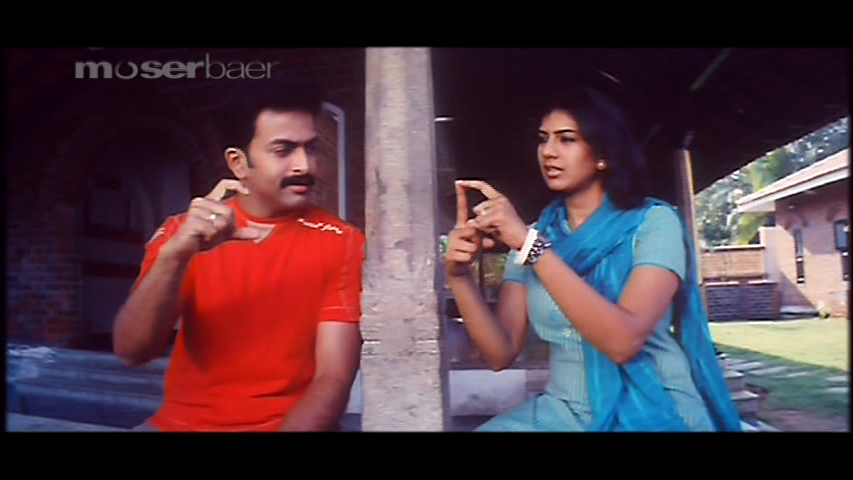
After the delight of finding that Archana lives in his block of flats, Karthik discovers that she is a deaf-mute who has a major chip on her shoulder after her parents’ marriage fell apart. In an effort to learn more, Karthik meets Archana’s friend Sheela and learns sign language to be able to communicate. However the path of true love doesn’t run smoothly and Karthik is left teary and broken-hearted as Archana firmly refuses to entertain the thought of marriage.

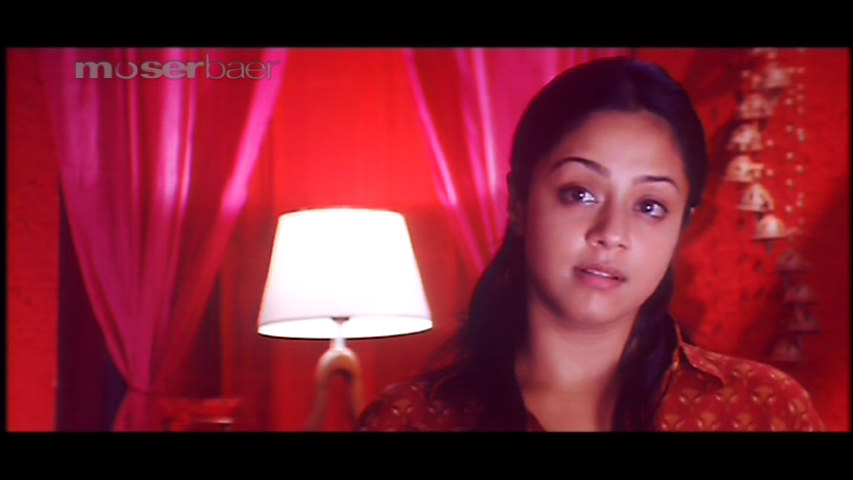
This was Jyothik’s last role before she retired from acting and it really seems such a loss when she brings such a rich characterisation to her role as here. Jyothika uses her incredibly expressive eyes and various facial expressions to convey her feelings and nicely avoids the temptation to overdramatise to get her message across clearly. It’s impressive to watch Archana’s character develop as she doesn’t have any dialogue in the film and everything is communicated by expressions and gestures. And yet it’s clear to see Archana slowly evolves from a very angry and bitter young woman into someone who learns to see past her own insecurities. Karthik tries to understand her world and help her understand his, but since he goes about this by having Viji stuff his ears full of cotton wool it’s perhaps not surprising that he ends up totally misunderstanding her.

Apart from her ever present anger and commitment issues, Archana is portrayed as a very normal young woman with a steady job who just happens to be deaf and dumb. It’s a different take on disability and Archana’s perception that she is just a person who ‘speaks’ silence rather than a language of words is interesting.  Karthik’s acceptance of Archana with all her flaws and prickly nature is a measure of his maturity and common sense and if his enthusiasm leads him to make mistakes in their relationship, he is able to rethink and change his approach. All of which makes them seem like any typical young couple which makes it easy to understand and connect with their feelings. While Prakash Raj is excellent as Karthik’s friend, Swarnamalya is perfect as Sheela. Her character’s practicality and common sense serve as a contrast to Archana’s more emotional responses but she is still very sweet and looks beautiful as the romance between her and Viji develops.

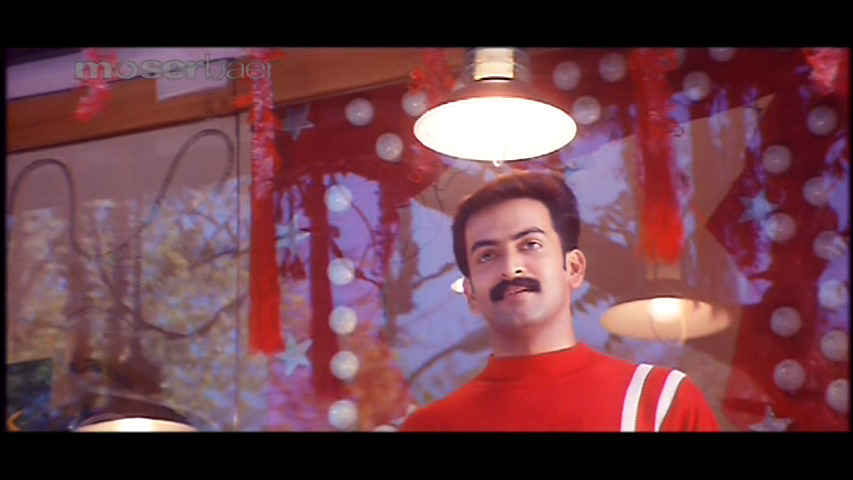
There is so much I love about this film. The characters are wonderful and there are so many well-written scenes with clever and snappy dialogue. The songs are beautiful and this is probably my favourite melody while the picturisation neatly sums up the relationship bewteen Archana and Karthik.

Despite only recently having acquired the DVD with subtitles (and a very big thank-you to Temple and Suja for the recommendation), Mozhi has quickly become one of my favourite films and I’ve watched it numerous times already. It’s very funny and it makes me laugh time after time, but there are plenty of poignant moments too which keep the film very balanced. Excellent performances from all involved and an interesting storyline make this a very watchable film that I highly recommend. 5 stars!

Temple says:

There are many things I really like about Mozhi, and one is the very appropriate theme of language and communication. Jyothika in particular is wonderful at conveying so much by expression and sign, showing that language isn’t just about words.  So there are lots of really nice moments of communication and understanding or misunderstanding.

Prakash Raj is a delight, and I always like to see him do a bit more than his usual Prakash Dad or Prakash Bad roles. But this is Jyothika’s film in my opinion. She owns every moment she is on screen, and Archana is such a vivid character as result of her seemingly effortless performance. I was almost annoyed when Archana started to ‘speak’ via voiceover when Karthik found he understood her as she was so good at communicating without words. I’m not convinced by Prithviraj – I find he ranges from bland to adequate, and he only seemed to shift gears in a couple of scenes in this film.  Some of my reservations are down to the writing as everything is a bit too neat and too easy for Karthik. He adapts to people’s quirks and differences with barely a pause for breath, everyone instantly believes him and helps him with Archana, he learns sign language very quickly and with few errors, and almost turns into Mother Teresa. Archana’s personality was so complex and real that Karthik was flimsy in comparison, and he didn’t show much depth until quite late in the film.  Archana’s friend and colleague, Sheela (Swarnamalya) was a much more interesting character. Archana and Sheela were both bright capable women, and were a good balance for each other. The bromance between Viji and Karthik was a bit hit and miss due to me not finding Karthik particularly believable but has its moments. I was much happier when Viji found someone else to love (even if her wedding outfit was completely hideous)!

Unfortunately most of the comedy is dire. I found myself speculating, quite against my will, as to what Brahmi could have seen when Prakash Raj’s towel dropped that would have him almost hospitalised with conniptions. There are fat jokes, Prithviraj hamming it up in a wheelchair and other really dumb schoolboy stuff that was tedious and unnecessary.

See it for an interesting story idea, Jyothika in brilliant form, and Prakash Raj kicking his heels up in a fun role. 3 1/2 stars.

Subhalekha

Once again, dodgy VCD quality and no subtitles mean that I have probably made up a lot of the story. But it is the characters (and actors) who made Subhalekha so enjoyable for me, not just the plot.

It’s a K. Viswanath film, so there is a message. In this case it is dowry, shown in this film as an outdated and bad practice. This is illustrated through montages of newspaper stories as well as incidents in the story. He targets men in particular castes and professions and their demands for a high price, particularly when they have no financial need. But he doesn’t go completely filmi and say love is all you need. Arranged marriage is not the issue – it’s the financial pressure of high dowry demands that can cause massive debt and stress on families. The relationships in the film develop in a believable way (well, most of them), and it seems that the marriages based on mutual respect and affection will probably work out. There is also some very nice character based humour to enliven the story, and I really enjoyed it.

Murthi (Chiranjeevi) is a waiter at a big hotel. He is naturally helpful and generous but not a push over. Unless the one menacing him is a dog. I’ve noticed something in a few Telugu films now – the overdubbing of animals by what is clearly a guy in a studio saying ‘Raaargh’. But don’t take my word for it.

Chiru dances his way to safety, catching the eye of Rao (Arun), an industrialist staying at the hotel. As a result, Rao casts Murthi as the hero of an advert for Allwyn fridges. This clip shows Chiru’s experiments in various classical dance styles, and is that ad within the film.

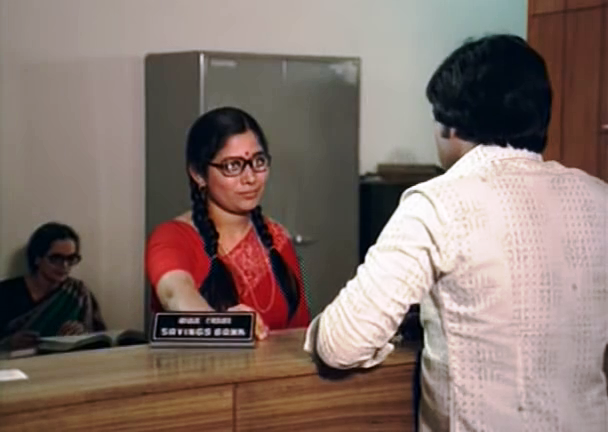
I like the exuberance, the vague attempt at accuracy and the expression on Chiru’s face throughout. I just love watching him dance. I laughed a lot in one scene when a lady in the bank started babbling over the ‘lovely, beautiful, wonderful’ Allwyn Hero when he came in to cash a cheque.

That would be me! And I’d totally buy that fridge.

Murthi exudes music and energy, singing his way through the day and even using song as conversation. He seems to be reasonably educated and working as a waiter was probably not his dream, but he does it well and picks up on opportunities. He deals with family problems, negotiates corrupt officialdom and is an everyman. Chiranjeevi gives Murthi a genial and easy going charm, with glimpses of the pride and self confidence that keep him going. That earnest vulnerability is worlds away from the mass hero style, and so endearing.

Also in the bank and checking Murthi out is Sujatha (Sumalatha). She is a serious young lady, a college lecturer, not a glossy glam heroine. She is due to be married to Mohan (Girish). The wedding negotiations stall over dowry. Her intended is from a rich family and has no need of money. Her father is forced to agree to the price, but Sujatha delivers a dressing down to prospective father-in-law Adisseshaya (Kaikala Satyanarayana) and the marriage is off. I really liked Sumalatha in Khaidi and she is impressive in this role too.  While being primped for her meeting with Mohan she brushes off her sister saying she wants to be what she is. Sujatha is resourceful, copes with setbacks and sometimes needs help, and is never a doormat. She and Chiranjeevi make a good couple, and I really liked their little disagreements and playful scenes.

Sujatha is sacked from her job and her parents throw her out when they decide she is having an affair with Murthi. Murthi is delighted she stood up for herself against the politician who refused to help his family. So he helps her find accommodation and they live in an idyllic version of poverty, with him acting as Sujatha’s household help. After insulting Adisseshaya, Murthi also loses his job, copping a beating along the way. Murthi uses his connections with Rao to get them both jobs – they never just give up. He might look after Sujatha, but she is an independent woman with her own earnings and a sense of worth. Murthi wants to see her settled, so approaches Rao who agrees to marry Sujatha. All this despite me knowing that Murthi loves her and she loves him. But I had faith it would all be set to rights.

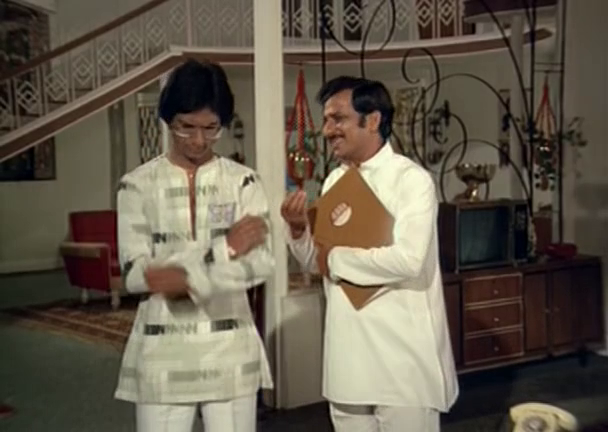
It isn’t just the central couple that have their moments. Sujatha’s sister Lakshmi (Tulasi) is an impulsive and extroverted girl. She spots the ultra groovy Murali (‘Subhalekha’ Sudhakar), Adisseshaya’s other son – really, how could you miss him in those trousers? She is smitten and he cannot resist. They are mostly a comedy diversion, but since their antics are actually moving the plot along I quite liked them. Plus Murali’s dance moves are just hilarious (as is the decor in his room). Even though the sight of him made me giggle, Murali is a strong willed young man and sticks to his guns. Murali and Lakshmi conspire to prove a point and sort their families out, showing surprising sneakiness. I dither between thinking they are perfect for each other and wondering what will happen when disco dies or their hormones settle. But I enjoyed most of their scenes and thought they both had fun with their characters.

Mohan –the original groom for Sujatha – also has a surprise for his dad. While everyone was running around like headless chickens, he went and got married to Murthi’s sister. He did what he thought was right, and avoided his father’s veto by not asking for permission. The younger generation in the film are educated and have opportunities, so they are able to challenge outmoded practices.

The film is firmly anchored in realism and there is very little glamour or fancy apart from the characters’ own mild daydreams. The houses, workplaces and clothes all seem appropriate and not too new. There are nice interior details, and someone in the hotel had a thing for feature walls. The humour is integrated into the story and characters and there is little pointless comedic shtick. When Murthi returns to his village, he sees a line of people outside his home, and suspects something bad has happened. But they are only lining up for food his grandmother (Nirmalamma) is giving out. The scene unfolds beautifully with tears, overacting, and laughs, showing Murthi at home and his relationship with his family. Rallapalli and Allu Ramalingaiah have smallish roles but provide good foils for Murali and Murthi. I really liked the way the story plays out, and how the different characters all come back into the picture at the end.

KV Mahadevan’s music is pleasant. I never wanted to fast forward through the songs but I really can’t recall any individual melodies. This is not a big song and dance type of movie and the music does match the story and mood. I can only assume the lyrics also reflected what was going on.

This is such a restrained and well judged film I had to check again that it was indeed the same director that made the far less sensible Aapathbandhavudu! The last few minutes lost me a little as the story was resolved by booming voiceover while the action continued. I would have preferred letting the characters do the talking, but it is a satisfying film.

See it for a nicely balanced romance with a social message and of course for the excellent Chiranjeevi. 4 ½ stars! (A small deduction for the dire picture quality which annoyed me greatly).

Heather says:

Right from the very opening scene Subhalekha is a mesmerising film and surely only Chiranjeevi could make a small incident with a dog into such an entrancing piece of cinema. The story flows smoothly from one scene to the other and despite my very poor quality VCD copy, the quality of the film editing stands out. It’s very disappointing that Subhalekha isn’t available with subtitles, as although the basic story is relatively easy to follow, I am sure that I missed so much from not understanding the dialogues. There are quite a few long speeches where, although the general idea comes across due to the way the character speaks, it’s very frustrating not to know the details, especially since everything points to the dialogues being well written.

Chiranjeevi is excellent as the faithful and kind-hearted Murthi but Sumalatha puts in just as strong a performance. I found her scenes when she defies her prospective father in law gripping, despite the fact that I didn’t understanding a word! As much as I enjoyed the developing relationship between Murthi and Sujatha, the romance between Sujatha’s younger sister Lakshmi and Mohan’s brother Murali was easier to understand and probably for that reason their interactions were some of my favourite moments in the film. With his snazzy clothes and the huge over-sized glasses, so typical of the times, ‘Subhalekha’ Sudhakar was perfect in his role as the hip and trendy younger brother, and Tulasi was lovely as the rather feisty and adventurous Lakshmi. I also appreciated the quarrels between Murali and his father, and the declarative way Murali ended every argument with “I love her!” made me grin every time. I enjoyed all of the songs in this film, but my favourite was one pictured on Lakshmi and Murali as they cavorted around on the beach. It was only just overshadowed by Chiru’s excellent fridge advertising which was brilliant but not quite long enough for me. Just a little Chiru classical dance is never enough and I wanted more!

Films with a social message can often end up with too much preaching and not enough actual story, but that certainly isn’t the case here. The characters all seem to have genuine reasons for acting the way they do, even Adisseshaya is following convention rather than just being difficult and greedy (although of course he is that too), and it is all feels true to life. I do wish though that more discussions in real life could be held in the form of song in the way that Murthi communicates here.

This is such an excellent film that I am amazed it hasn’t been restored and re-released with subtitles. Despite the often poor quality of the VCD, Subhalekha is well worth a watch for some great performances and a well told story. Plus of course no-one does shy and bashful as well as Chiru! 4 ½ stars.