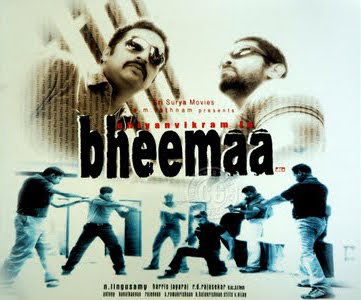
Bheema

Bheema centres on the key players in a gang and their interactions with rivals and police in Chennai. It’s quite a sanitised version of the criminal underworld, and little detail  is revealed about the nature of how these guys make a living. But it has two fantastic actors at the forefront, a delightful bromance, and a focus on characters that makes the who and why of the story more interesting than the what.
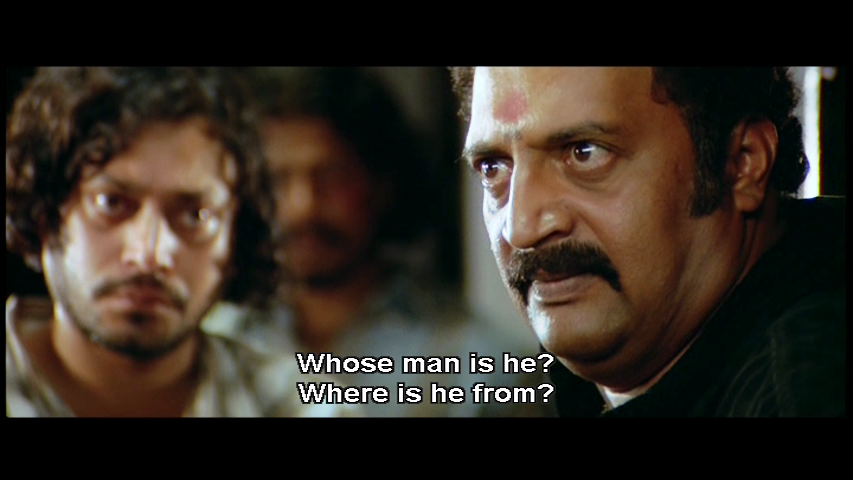
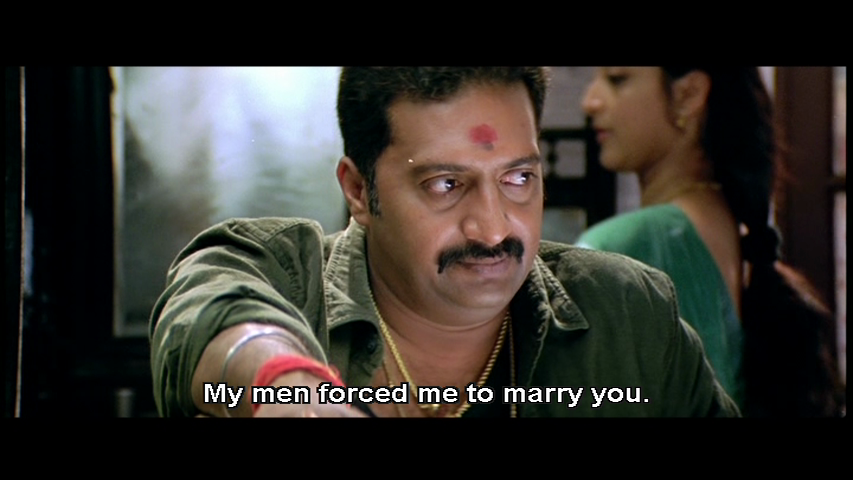
Chinna (Prakash Raj) is the local hard man. He started small in a small town and has risen to become one of the biggest crimelords in Chennai. His business dealings are never overtly discussed but he is presented as a ‘good’ gangster. He looks after the defenceless, his guys don’t attack women and children, and he plays by ‘the code’. Prakash Raj is perfectly cast. He makes Chinna likeable, roguish, aggressive and menacing by turns. Chinna is under threat from an old associate (Raghuvaran) and has an uneasy and crumbling detente with the local police. Things are getting tougher, but he is not one to back down. There is a lot more to the character than just being a figurehead, and I liked the glimpses into Chinna’s past, his conversations with old advisors, his wife, even the police, that showed different facets. He thought through the consequences, he reacted emotionally to some situations and I could understand the loyalty Chinna inspired because he seemed real yet powerful. I always enjoy seeing Prakash Raj in a more substantial role, and this is one of my favourites.

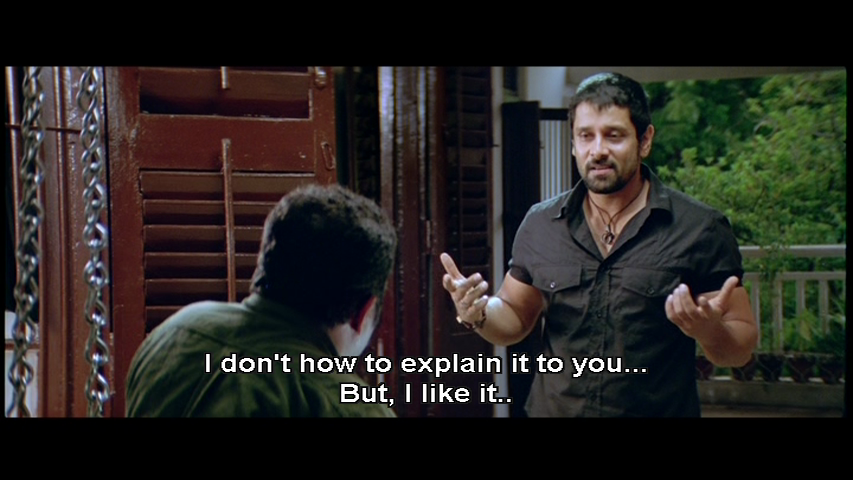
Sekar (Vikram) is an enigmatic figure, shadowing Chinna and despatching his enemies before Chinna can. The reason for his obsession eventually emerges via flashback, and it reinforces the notion that justice is not delivered by the law, and what makes a man is the ability to beat the living daylights out of another man. Sekar believes in instant justice, delivered as he sees fit. Even the police in Bheema argue that they can’t operate with the constraints of bureaucracy and low budgets, and have to break the rules to achieve what they see as justice. Sekar is given the name Bheema by the police in recognition of his strength and his role in Chinna’s life.

Sekar’s sole ambition was to one day join Chinna, his role model for strength and justice and a more satisfying father figure than his ineffectual policeman dad. I’ve often wondered why characters stick with their gangleader and don’t just leg it when things get crazy. Writer Sujatha provides a backstory and motivation that gives more to these guys than just being the good baddies. Vikram switches effortlessly from the full throttle action sequences to gazing mistily at Chinna or quarrelling with Shalu, and his physicality suits the invincible Sekar. Vikram’s rapport with Prakash Raj is one of my favourite things about the film and they play off each other very well.

It’s a man’s world, and sometimes in unexpected ways. Vikram steals the focus from the item girl in this song, and Prakash Raj is the one to be almost upskirted.

What sets Bheema apart from other grim gangster fairytales is characters having a life, or at least ideas, outside of the job. Chinna was in love with Padma but they drifted apart. Sekar, ever the loyal lieutenant, reunites them.

Prakash Raj does some delightfully girly fidgeting and stammering, and can’t hide either his happiness or trepidation at marrying his old flame.

Padma (Lakshmi Gopalaswamy) is gorgeous and her scenes with Chinna have a warmth and maturity that suits the slightly older lovebirds. They talk about the risks of her being part of his life, and she is firm in her assertion that she has no illusions. I found the dialogue rather flowery but the emotions came through and they seemed to have a deep mutual affection. He talks to Padma about Sekar, since Sekar is like family and Padma is in charge of the household. She and Chinna make fun of Sekar when they find out he is turning into a gooey romantic wittering about flowers, and their playful banter is another glimpse into the relationship.

Sekar loses his focus on being a thug when he starts to think of love and  Shalini (Trisha). He knows that his priorities have shifted and he can’t rely on himself to be as focussed, fearless and impulsive as he once was.  Chinna lets Sekar go, in a scene more like a breakup than an exit interview.

Unfortunately, Shalini (Trisha) is stupid and irritating for almost all her time in the story. I’m not sure why Indian film heroines characterise innocence by appearing to be dim-witted but Shalu is dumb as a box of rocks and about as interesting. Sekar falls through the roof into her courtyard one night, landing on her. Because of this, she decides he is the one, manufacturing reasons to be near him and imagining they share likes and dislikes based on absolutely no evidence. I did find her stalking Sekar mildly amusing just because it is a bit of turning the tables, but that was all I could see in her favour until quite late in the piece.

Once Sekar succumbs, Vikram and Trisha generate some chemistry and that made their relationship seem vaguely plausible. I liked that they had playful but still intimate scenes together as things developed, and it helped make up for the brain-dead start.

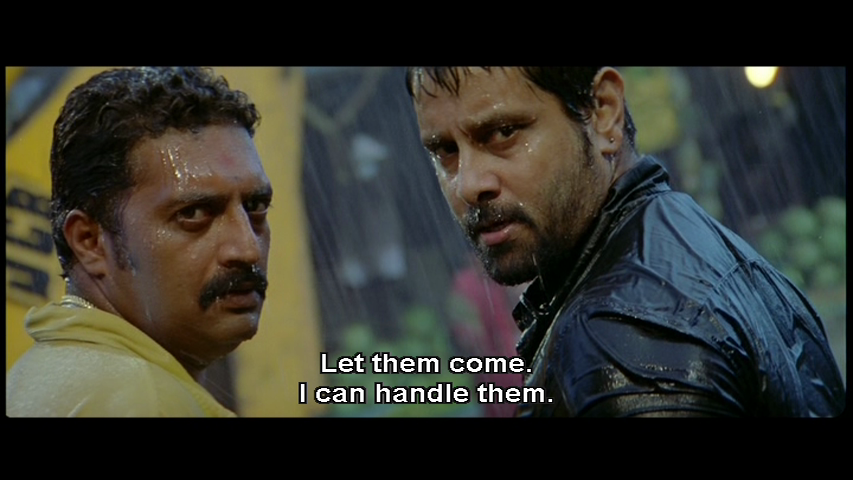
Chinna is a surprisingly sentimental old school don and sometimes that works against him, as he plays by rules others are starting to disregard. Sekar idolises Chinna and can’t abandon his old boss but feels compelled to take Shalini away. Once the other players sense weakness in Chinna, they start closing in. How will it all work out?

There are indicators. Shafi is in the support cast in Chinna’s gang. And Shafi does tend to play characters that bite the hand that feeds them. Also, I have developed a theory. In the imaginary Tamil Film Writing School in my mind, the compulsory class on ‘Ways to End a Film – Traditional (aka Everyone Dies (Rape Optional)’ is well attended. The final elective class ‘Ways to End a Film – Creative Writing (aka ‘No Rape, No Murder – stop being so lazy and think of something else’) falls the day after the big end of year dinner and people are either too hungover or they’ve already got enough credits to graduate, so most students don’t go. Thus there is generally one ending for a Tamil film, regardless.

I quite like the songs by Harris Jayaraj, but the picturisations of the romantic duets seem to exist mostly as a safe channel for the wardrobe department to vent their creativity.

The support cast includes so many reliable character players but the focus isn’t on them and I barely paid any heed to Ashish Vidyarthi, Tanikella Bharani, Shafi, or Raghuvaran among others. Chinna and Sekar dominate the story and Prakash Raj and Vikram likewise dominate the performances.

Linguswamy has directed an action packed film that doesn’t feel hurried or slapdash, and it is very satisfying to a point. The ending was a disappointment and yet almost exactly what I expected. The action scenes are typically excellent as is standard for this genre. There were some nice little extras – when Sekar belted a group of guys with a metal pipe, they chimed like bells as they dropped. The editing is good and the quick cuts and occasional use of effects enhance the sense of urgency or disorientation. It’s a very competent film and a pleasure to watch.

If you’re lukewarm on the South Indian gangster genre, this could be well worth a look. It has better than usual characterisations, some excellent performances and good production values. And one of the best filmi bromances. 3 ½ stars!
Heather says: I’m a fan of Tamil gangster films and usually enjoy anything by N. Linguswamy, but Bheema was rather disappointing all round. Instead of the usual well-developed storyline and strong characterisation I expect from such an accomplished director, Bheema staggers from fight scene to overdone fight scene without any real justification for the characters acting in the way they do. Rahguvaran is ineffectual as the ‘evil’ don Periyavar and his feud with ‘gangster with a concious’ Chinna seems clichéd and unimaginative. The second part of the film which concentrates on the new Police Commissioner and his vendetta against the gangs is more convincing but still seems formulaic and just not that interesting. The relationship between Chinna’s new lieutenant Sekar and the rest of the gang could have been made into something more exciting but instead it’s thrown in towards the end to try and spice up the climax. Something which only works to a limited extent. However, it’s good to see that Shafi continues his quest to always play the smarmy, self-satisfied sycophant and he does his usual thing here as one of Chinna’s men to good effect.

Despite the issues I have with the story, Bheema is saved to some extent by the excellent performances from Prakash Raj and Vikram who both breathe life into the film. I agree with Temple that their camaraderie feels very genuine and the interactions between the two do much to make up for the dreariness of the plot. Vikram’s character is very much the strong silent type and he does a good job with the rather dour Sekar, but Prakash Raj steals the show as the gangster with a heart. His romance is perfectly played and he brings out a human side to Chinna making him much more than just another world-weary gangster. Despite his good performance, Vikram looks rather over muscled here and I confess that I prefer him in more character driven roles such as in Pithamagan and Kasi where he has more range to work with. The one-man indestructible army of Sekar was just a little bit too much to take, especially with the distracting musical sound effects and overly loud soundtrack during the fight scenes.   The implausible relationship between Shalini and Sekar was another disappointment and the two never felt comfortable together –  odd, considering the considerable chemistry the two actors shared in Saamy. In fact there is much more sparkle between Chinna and Sekar!

Bheema does have a good soundtrack and there are moments where the film starts to grab your attention, but sadly they’re just not sustained. Worth watching once for Vikram and Prakash Raj but that’s all. 2 ½ stars.

Howrah Bridge (1958)

Hurrah for Helen!

The only thing I knew about Howrah Bridge was that it featured Helen’s famous item number Mera Naam Chin Chin Chu, and that was the reason I picked it up in a collection of classic Black and White films. Although Helen’s appearance is a highlight, there is plenty more to enjoy, including great performances by Madhubala, Ashok Kumar and Om Prakash as well as some beautiful songs featuring Asha Bhosle and Mohammad Rafi. The story moves along at a steady pace without any unnecessary diversions from the main plot and despite knowing ‘whodunit’ from the opening scenes there is still intrigue and anticipation as events don’t unfold quite as expected.

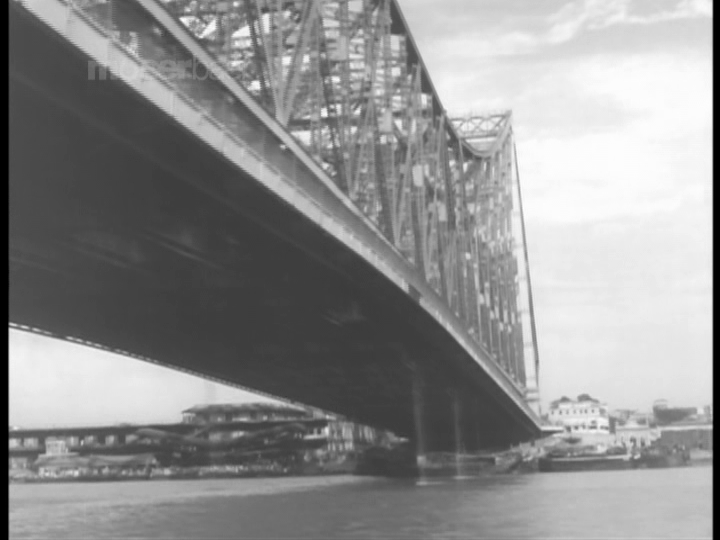
Howrah Bridge is an Indian take on film noir, although the story is perhaps not as dark and the characters less ambiguous than in the classic American films of the forties and fifties. However it follows the basic path of a crime drama with a leading lady of somewhat questionable background, and a villain who happily disposes of anyone who stands between him and his fortune. The lighting is generally subdued in film noir style and director Shakti Samanta makes excellent use of shadows to highlight the more dramatic moments in the film. While most of the action takes place in a number of seedy hotels and dimly lit streets in Calcutta, Howrah Bridge appears from time to time and looms effectively over the characters as well as providing the location for the climax chase.

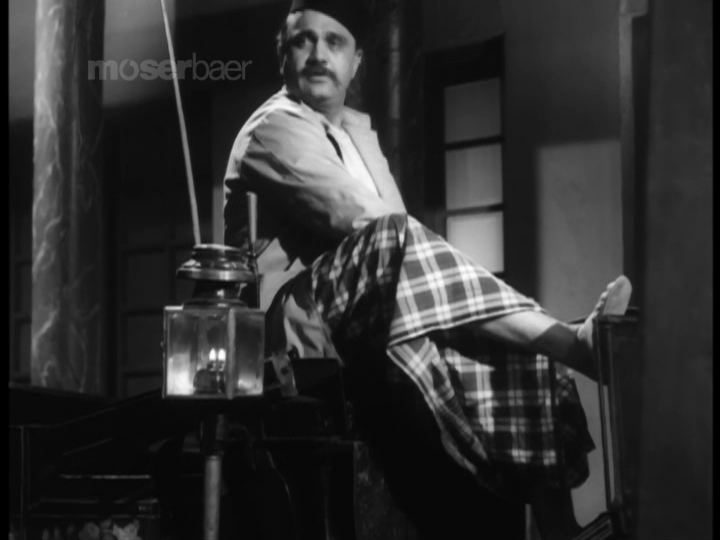
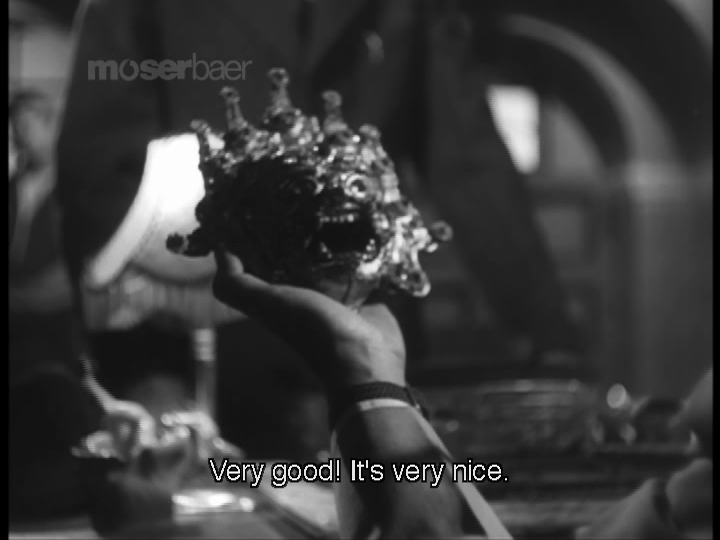
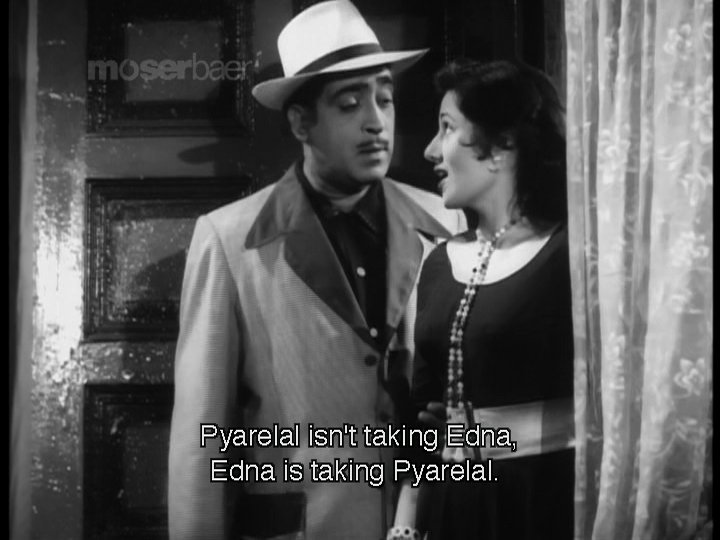
The film starts with the theft of an heirloom from Prem Kumar’s family in Rangoon. It turns out that the jewel encrusted dragon mask has been stolen by eldest son Madan (Chaman Puri), who has taken it to Calcutta to sell to the villainous Mr Chang (Madan Puri). Mr Chang wants the dragon but doesn’t want to pay for it, so he arranges for his chief henchman Pyarelal (K.N. Singh) to dispose of Madan and steal the dragon. Hearing of his brother’s murder, Prem Kumar (Ashok Kumar) heads to Calcutta to try to recover his family heirloom and en route he meets up with Uncle Joe (Dhumal) and his beautiful niece Edna (Madhubala) who sings and dances in Joe’s hotel. Prem is dismissive of Edna and her dancing while she is piqued by his resistance to her charms which gives her at least one reason to pursue Prem when she meets him again in Calcutta.

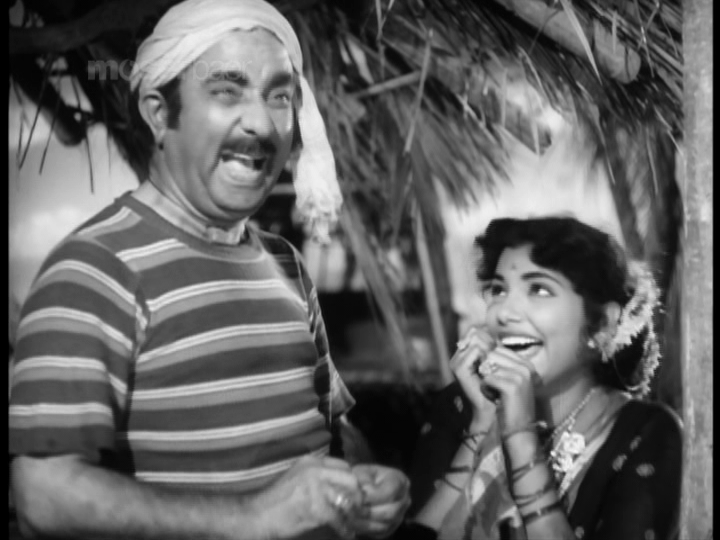
Prem hooks up with Tangewala and old employee Shyamu (Om Prakash) and together they attempt to unravel the mystery surrounding Madan’s death and the disappearance of the dragon mask. This involves Prem assuming the name of Rakesh and following in his brother’s footsteps on the night of his murder while Shyamu uses the opportunity to get commissions from as many people as possible along the way. Added in to the mix of characters are Shyamu’s opium smoking nephew Bhiku who saw the murderers on Howrah Bridge, and his cheerful fiancée Chhamia who add some more conventional Bollywood drama to the story. I always love shots of newspapers and did pause to read the other headlines and the ads!

Madhubala plays the role of an Anglo-Indian, perhaps to explain her Western style clothing and account for her less than respectable position as a singer and dancer in her Uncle’s hotel. While she doesn’t do very much dancing, she is convincing as a singer doing her best to entertain the crowd and attract the attention of Prem. She looks beautiful in swishy skirts and Chinese tunics, and gives Edna charm and vulnerability despite her profession and unsavoury connections to the local criminals.

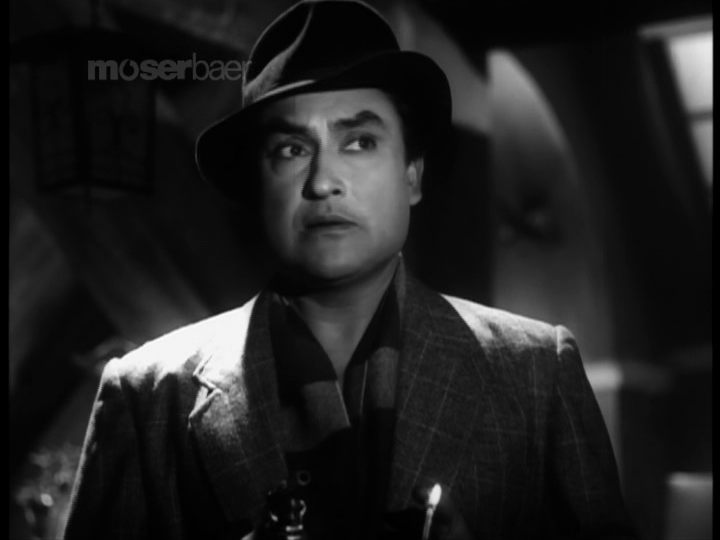
Some of the noir element creeps in here as Edna obviously knows about the various shady deals going on between Uncle Joe and Mr Chang. Her attempts to lure Prem to the hotel seem initially to be to expose him to some theft or extortion attempt perhaps in revenge for his previous treatment of her. Prem is also less than honest as he encourages Edna’s advances to learn more about the smuggling gang run by Mr Chang and Pyarelal. But that’s about it for any noir-ish character ambiguity and rather quickly a real and genuine attraction forms between the two. After a few cups of tea and a boat trip on the river (a Bollywood staple always guaranteed to result in romance) Edna confesses her love for Prem. While Prem does take a little longer to declare his love, the relationship feels warm and affectionate with excellent chemistry between the two actors.  Ashok Kumar is always a very competent actor and here he shows his romantic side while Madhubala looks gorgeous and seems to relish her role as Edna turns sleuth and starts to help Prem with his investigation.

The other characters all fit their parts well. Madan Puri’s Mr Chang is an interesting villain and somewhat different from the usual swaggering, self-confident bully seen in most Bollywood films. He has a limp and walks with a cane, demonstrates a number of affected mannerisms and speaks Hindi softly in a high-pitched voice with a touch of an accent to accentuate his Chinese origin. Chang demonstrates a cold and callous nature when he casually orders the deaths of various lackeys he feels may be a threat but becomes agitated and afraid when he knows that the cops are on his trail. It’s an excellent portrayal and provides a good contrast to K.N. Singh as Pyarelal who plays his role as a more conventional gangster very competently. The oriental touches suit the overall look of the film and of course Helen is perfect (and looks so very young and totally stunning too) as the wonderful Chin Chin Chu when she dances in Mr Chang’s hotel.

The music by O.P Nayyar fits the feel of the film perfectly and ranges from romantic duets to a very jaunty song Shyamu sings as he drives through Calcutta. Mehmood and his sister Minoo Mumtaz also pop up in a fun song at a wedding where Mehmood indulges in some excellent uncle dancing.

I really enjoyed Howrah Bridge and wasn’t surprised to find that it was directed by one of my favourite directors from this era. I liked the touches of film noir and the variation between light and shade in Chandu’s cinematography, although it’s possible some of the dim lighting may just be due to some deterioration in the film with age. Madhubala is always a pleasure to see in any film and she tends to steal the show whenever she appears. While Ashok Kumar is an actor I enjoy watching, he really does suit this type of role and I think this made me appreciate his performance rather more than usual. I was a little disappointed that despite secret doors and an intricate hiding place for his safe, Mr Chang didn’t have a suitably villainous lair, but the dimly lit room with its statues and heavy furniture was probably more in keeping with his character. It’s not the most exciting story but with excellent performances by some of the most renowned actors of the day, it’s a film worth watching for more than just Helen’s fab appearance. I give Howrah Bridge 4 stars.

Temple says:

I am a huge admirer of Ashok Kumar and have been gradually working my way through his filmography. Of course, Helen in any appearance also pushes a film up the to-be-watched pile. And I’d watch Madhubala if she was watching paint dry so I had high hopes when I first watched this. Sadly, the stars and the songs are really the only highlights for me. Ashok Kumar and Madhubala have a delightful chemistry and their scenes together crackle with life and are full of emotion. Unfortunately the story is not particularly interesting as it is obvious what will happen and who will do what. The pace is leisurely at best, and there is just not enough tension as things plod along so my attention kept skipping to what I knew was going to happen down the track. I found the villains characterisations particularly unimpressive and they lacked purpose – they were just generic bad guys and the addition of all the silly mannerisms did nothing to make Chang more credible or threatening. I do like a lot of the supporting cast, especially Om Prakash, but they generally aren’t doing enough in terms of the story to hold my interest. The songs are excellent, and Madhubala can certainly work the camera!

I watched the movie again last week and I found it quite dull. Unless Ashok or Madhubala was on screen, preferably both, or it was one of the fabulous songs I was itching for the fast forward. I am happy I have seen it as it is often referenced as a classic of its era, but it’s not a favourite for me and I think it is just an OK film. I would recommend or rewatch a number of other films released around the same time – for instance the thriller 12 O’Clock, Madhumati or for a change of pace, Chalti Ka Naam Gaadi – over this. 3 stars.

Lakshyam

Lakshyam is a highly entertaining mishmash of romance, comedy, action, politics and family drama. It succeeds largely because of the casting – Jagapathi Babu, Gopichand and Anushka in particular do a fine job – and some skilful writing and direction that balance all the elements.

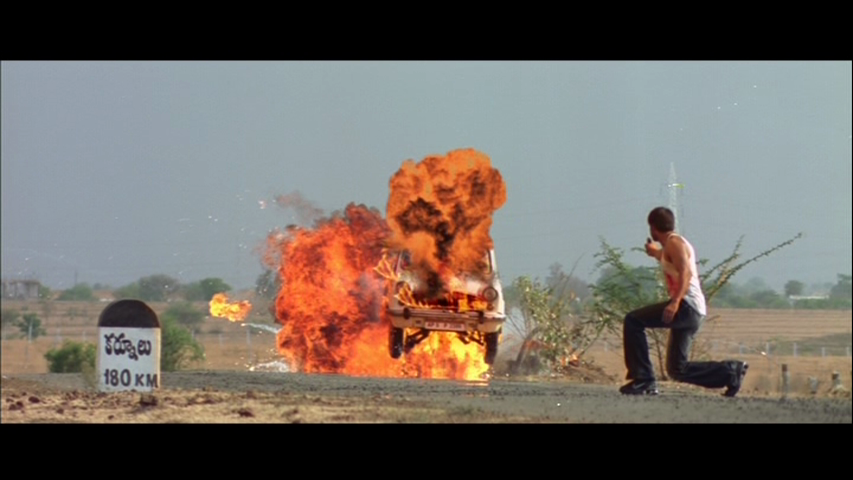
The film opens with a girl running away from her own wedding. She looks so pretty and pristine as she scoots off across town, eventually making a rendezvous with a bloody and battered man. I was intrigued by the look of happy pride on her face when he efficiently blew up a car, shot a policeman and then hopped on the back of her moped. I wondered how they got to this point, and what was going to happen next. With a bit of time travel, we get to the chronological start of the story. The film is very well constructed, and the flashback and current day sequences flow well. There are some pleasingly playful references to filmi clichés and the cast seem to enjoy the improbable shenanigans.

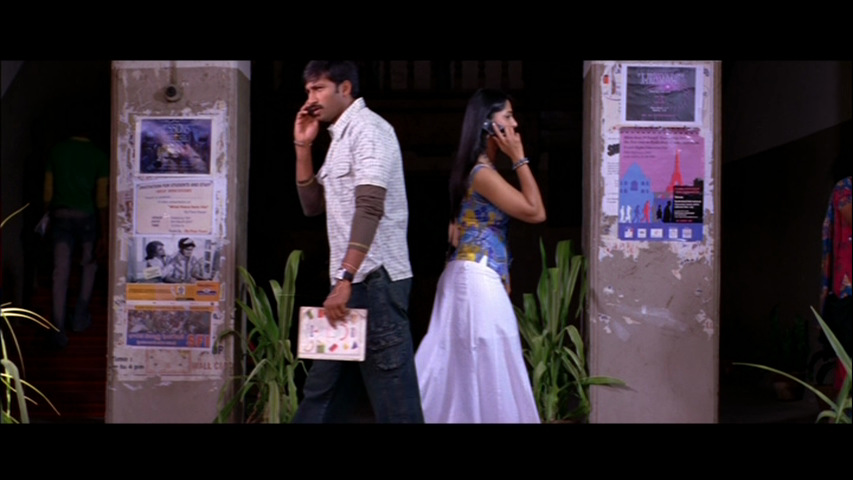
Anushka is Indu, a modern uppity type of college girl. She has a very specific list of demands for a prospective husband and seems to think it is perfectly reasonable to share this with a young child on the train. Pinky immediately decides to set Indu up with her uncle, Chandu. He has his own, very different, list of required qualities and even the kid knows it’s not likely to work.

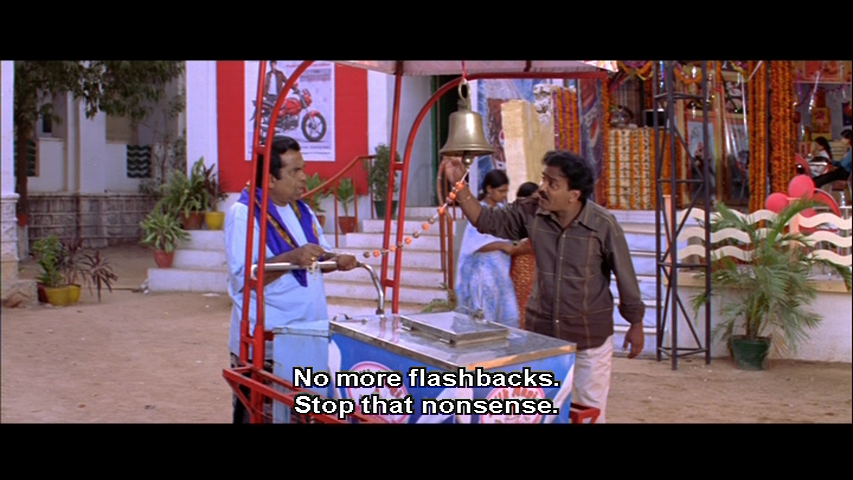
Anushka is one of my favourite current day actresses (yes, actress not ‘heroine’), and she is quite good in this role. Her character has some silly and selfish moments, but underneath it she is a likeable young woman. At the very least she knows when to apologise for her mistakes, so she is not too bratty. Indu is a Telugu heroine so of course if anything goes wrong she is reliant on any and every man within 20 metres of her for help and a solution. But the helpless female act is balanced with Indu cheekily pretending to be a gangleader’s sister and using his name to get her own way. This leads her into conflict with the cool dude on campus, Chandu. So she calls her little train friend’s uncle to sort him out. Yes – Chandu again. So there is a romantic comedy of errors as Chandu takes on Chandu and tries to bluff his way through. The silliness is increased with Brahmi and Venu Madhav battling each other for control of the student canteen.

My reason for picking this film a while ago was that I hadn’t seen Gopichand in a lead role and I was curious. He does well and seems to be a good generalist in terms of Hero Skills. He can act a bit, dance a bit, fight a bit, and has an engaging onscreen presence. His introduction scene is vintage hero stuff – he is chained and dangling upside down in a police lockup. But with a single bound he frees himself and escapes to wreak havoc. The college romance scenes don’t work quite so well as the later more energetic action sequences but he and Anushka do have chemistry and he gets right into hamming it up. And let me applaud a song with a backup dancing Spiderman.There is not enough of it around.

Chandu and Indu eventually fall in love and actually tell each other so they then just have to deal with all the usual obstacles – telling his family, her disapproving dad, and of course a crazed psychopath who happens to be a mad inventor. Chandu also gets caught in the fallout of his brother’s activities. He is a man of action, and takes a direct approach to solving problems. Although I did like that he sometimes cowed his opponent just with a graphic description of what he would do, so had no need of the actual biffo. You can have your cake and eat it too – a non-violent solution that incorporates a violent fantasy sequence. Gopichand is well able to match the changing tone of the film from the fluffy  romance to the revenge driven action and drama.

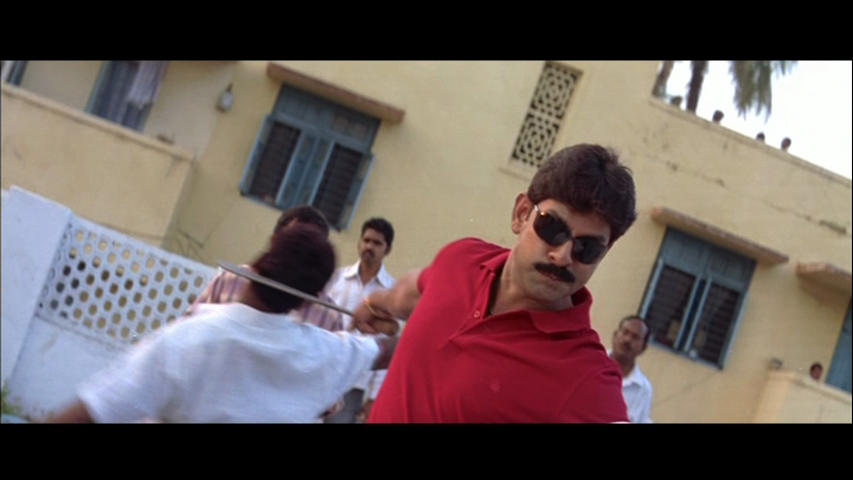
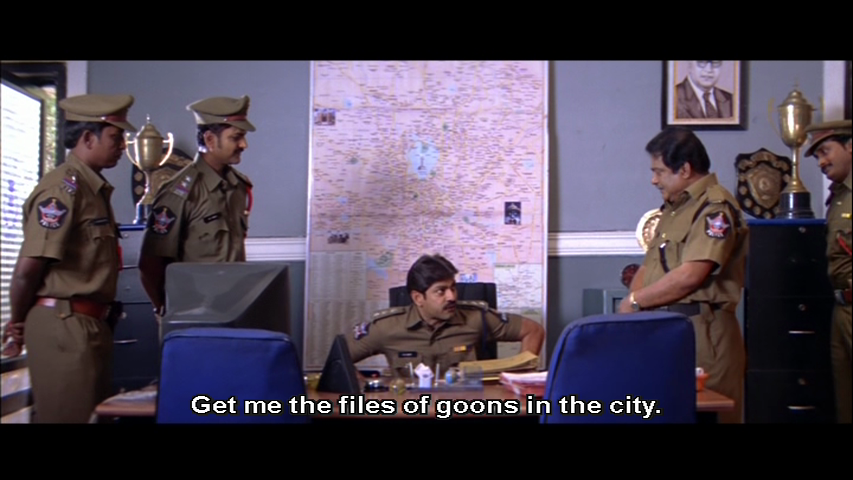
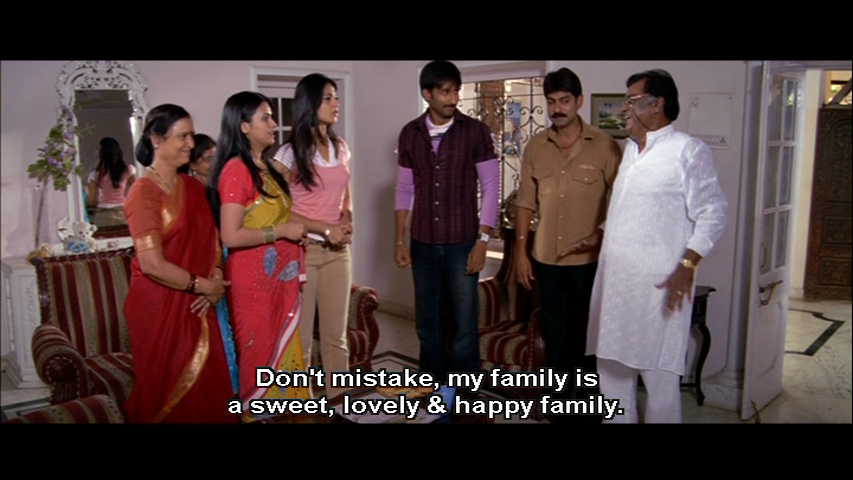
Chandu’s brother is Inspector Bose – Jagapathi Babu. He is an honest, crusading policeman and of course is wildly unpopular with the underworld. Newly transferred to Hyderabad, Bose takes on Section Shankar, Indu’s ‘brother’, a thug protected by senior police. I like Jagapathi Babu and this role is a good fit for him. Bose is a cop but also a family man and has a competitive relationship with his brother and his journalist father (Kota Srinivasa Rao) so there is lots of scope for his offbeat style.

The brothers have different approaches but are not forced into a separation or battle for whose philosophy should win, and I really liked seeing that more natural sibling rivalry. They were great mates as well as brothers, and the family scenes were fun. Bose and his wife (Kalyani) have a very affectionate relationship, and it is a nice domestic environment. But Bose also has a kickarse side and Jagapathi Babu gets his own action sequences, including some excellent use of coconuts as both defense and offense. He is also the victim of one of the most elaborate assassination attempts I can recall seeing. I was muttering “What? He’s not dead – yet? What!” as the drama kept unfurling.

It’s interesting that once again the law is shown as helpless in the face of crime and they rely on people like Chandu to get things done. Dharmavarapu Subramanyam is cast as an honest cop, and his comedic skills are used to help the story as a bumbling but good guy. Even Ashish Vidyarthi as the DIG makes it clear that the police need to rely on subterfuge to even compete let alone succeed, so there is an oddly defeatist note to the brother’s battle with Section Shankar and his corrupt cop associate (Devaraj).

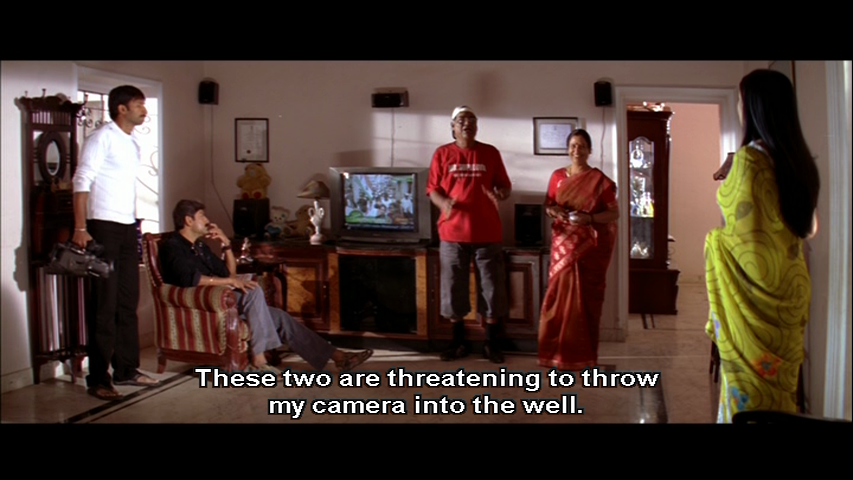
I was moderately alarmed when I read the long list of ‘comedy uncles’ in the cast, but Srivas and writers Gopimohan and M Rathnam do an excellent job of balancing the story elements and allowing a lot of the humour to emerge in a more natural style. Kota Srinivasa Rao is in good form as the newsman father who believes he might possibly be in charge of his household. Venu Madhav and Brahmi have a running battle which keeps them from bogging down the rest of the story, and when they do interact with the rest of the characters it is usually fun. And there are some amusing touches – a fixer for Section Shankar has gunfire as his ringtone, one rowdy knocks himself out in a fight, and there are lots of little reactions and one-liners that liven things up.

The song picturisations are nothing out of the ordinary and neither is Mani Sharma’s music, but they are executed and placed well. Anushka is not much of a dancer although she does give her dance performances some energy and excellent facial expressions. I would say Gopichand’s natural genre might be ‘uncle dance’ and he does it pretty well. He certainly looked like he had fun dancing, and it added another degree of contrast to his vengeful brother aspect. And he seemed quite unperturbed by some of the shirts bestowed upon him.

Lakshyam does strain the credibility muscles more than a few times, but it is such an entertaining and well paced effort that I just go with the flow. The cast are good and are given characters with a little bit more depth than I expected. There are convoluted schemes, a deathtrap, peculiar decision making – all the trappings of a good potboiler. The writing is clever and kept me smiling if not laughing out loud. And the baddies got their various comeuppances in suitable style. It was all quite satisfying.

Give it a go! 3 ½ stars.